The Law Offices of Anidjar and Levine assists victims with urgent medical documentation, evidence preservation, and claims for compensation after hidden crash injuries. Internal bleeding may not appear immediately, so prompt hospital evaluation, imaging, and continued care are crucial to both health and causation.
Counsel can use medical records, witness accounts, crash evidence, and expert analysis to connect the collision to organ damage, lost income, pain, and future treatment.
Learn more from a Miami Car Accident Lawyer.
The sections that follow explain these issues further.
Main Takeaways
- Seek emergency evaluation immediately after a Miami crash if you have bruising, abdominal pain, dizziness, or fainting, because internal bleeding can worsen without early symptoms.
- A Miami internal bleeding car accident lawyer can use hospital records, imaging, and physician notes to prove the crash caused hidden injuries.
- Preserve evidence by photographing the scene, vehicle damage, visible injuries, and collecting witness information, police report details, and all medical records.
- High-speed, side-impact, seat belt, and airbag crashes can cause concealed liver, spleen, lung, or abdominal injuries requiring continued monitoring and follow-up care.
- You may recover compensation for emergency treatment, hospitalization, lost income, pain, and long-term impairment caused by crash-related internal bleeding.
How We Can Help With Your Miami Internal Bleeding Car Accident Injury Claim
After a Miami car accident, an internal bleeding claim often requires immediate legal attention because the injury may not be apparent at the scene, yet it can lead to severe medical complications and substantial financial loss. Legal counsel can assist by organizing records, preserving evidence, and communicating with insurers so injured people and their families can focus on recovery and caring for others.
A Miami car accident injury lawyer also helps document Emergency transfers, diagnostic testing, treatment timelines, and related Hospital bills. Through careful case management, counsel can identify responsible parties, calculate present and future losses, and prepare a clear demand supported by medical and financial proof. If insurers delay, dispute, or undervalue the claim, the firm can pursue stronger negotiation and, when necessary, file suit within applicable deadlines. Throughout the process, the representation remains service-minded, attentive, and practical, helping clients protect stability, obtain fair compensation, and move forward with greater confidence after a serious collision.
Understanding Miami Internal Bleeding Car Accident Injury Cases


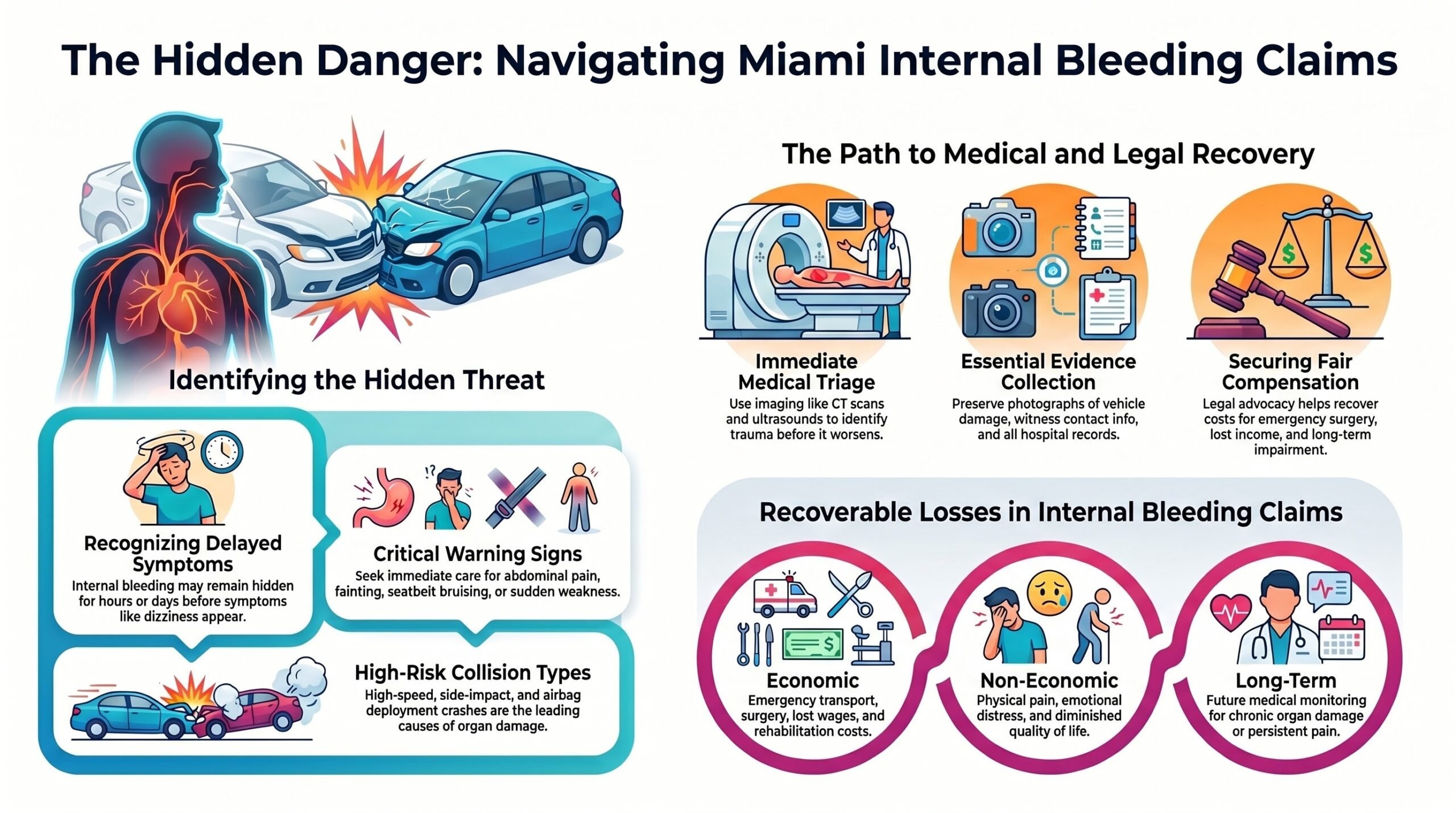
Internal bleeding car accident injury cases in Miami present distinct medical and legal issues because the harm may remain hidden for hours or even days while the injured person’s condition worsens. Unlike visible wounds, internal hemorrhage may develop without immediate warning signs, making prompt evaluation vital for protecting health and preserving evidence. Emergency records, imaging studies, and physician observations often become central in showing when symptoms emerged and how the trauma progressed.
OUR CONSULTATIONSARE FREE
START YOUR FREE CASE REVIEW

From a legal perspective, these claims require careful documentation and a disciplined presentation of facts. Attorneys often work with treating doctors, trauma experts, and forensic reconstruction professionals to connect the crash forces with the internal injuries identified afterward. This process helps establish causation, explain delayed symptoms, and address insurers’ arguments that the condition originated elsewhere. A clear understanding of these cases supports families, caregivers, and advocates who seek accountability, appropriate treatment, and resources that help injured people recover with dignity and long-term stability.
Common Causes of Miami Internal Bleeding Car Accident
Several collision scenarios are commonly associated with internal bleeding after a Miami car accident. High-speed collisions and side-impact crashes often generate substantial force, while seat belt trauma and airbag deployment injuries can also cause significant internal damage. Identifying these common causes helps frame how internal bleeding may occur even when outward injuries appear limited.
High-Speed Collisions


Consider high-speed collisions among the most dangerous causes of internal bleeding in Miami car accidents, because the force generated at higher speeds can cause severe damage to blood vessels and organs, even when external injuries appear limited. In these events, velocity impacts place immense stress on the body, often harming the liver, spleen, lungs, or abdominal cavity. Shortened reaction times also reduce opportunities to brake, maneuver, or lessen the crash force before contact occurs.
For those committed to protecting others, understanding this risk can support quicker medical evaluation and safer driving practices. Internal bleeding may develop without obvious symptoms at first, yet worsen rapidly. Prompt assessment after a serious crash can help identify hidden trauma, guide treatment, and reduce the likelihood of preventable complications for injured Miami motorists and passengers.
Side-Impact Crashes
Side-impact crashes present a distinct threat because the sides of a vehicle offer far less protection than the front or rear structure, leaving occupants more exposed to blunt-force trauma. In a lateral impact, crash forces are concentrated over a smaller area, potentially damaging internal organs and blood vessels without immediate external signs.
These collisions often occur at intersections, parking lot exits, and roadways where drivers fail to yield or disregard traffic signals. Vehicular intrusion may compress the chest, abdomen, or pelvis, creating conditions for hidden bleeding that worsens before emergency symptoms appear. Prompt medical evaluation serves injured individuals and their families by identifying complications early and guiding appropriate treatment. Careful documentation of how the crash occurred also helps professionals understand the mechanism of injury and the full extent of harm.
Seat Belt Trauma
Not all internal bleeding injuries result from direct contact with a door or dashboard, because the force of a restraint system can also leave significant internal damage in a serious collision. During abrupt deceleration, seatbelt compression may injure the abdomen, chest, or pelvis, especially when crash forces are severe or the body is poorly positioned. Medical providers often view restraint bruising as an important warning sign because visible marks can accompany bleeding involving organs, blood vessels, or soft tissue beneath the skin.
These injuries may not be immediately obvious at the scene, yet they can worsen over the following hours without prompt evaluation. A Miami car accident lawyer serving injured people may help families understand how documented symptoms, imaging results, and timely treatment records support a claim arising from seat belt trauma after a collision.
Airbag Deployment Injuries
During a serious collision, airbag deployment can reduce the risk of catastrophic harm, yet the force of inflation may still contribute to internal bleeding in certain crashes. When an occupant sits too close to the steering wheel or dashboard, the rapid expansion may strike the chest or abdomen with substantial pressure. That impact can damage organs, rupture blood vessels, or worsen hidden injuries caused by the crash itself. In some cases, improper deployment timing increases the likelihood of trauma, especially during angled impacts or secondary collisions.
Residue from the airbag chemical may also irritate the skin and lungs, complicating emergency assessment. Those assisting injured people should recognize that pain, swelling, dizziness, or fainting after deployment may signal internal bleeding and require prompt medical evaluation, careful monitoring, and immediate treatment.
Legal Rights of Miami Internal Bleeding Car Accident Injury Victims
Many Miami car accident victims with internal bleeding have important legal rights under Florida law, particularly when another party’s negligence caused or contributed to the crash. These rights may include compensation for emergency treatment, hospitalization, lost income, diminished earning capacity, pain and suffering, and other losses tied to the injury. When insurers dispute severity or causation, Victim advocacy becomes especially important for protecting vulnerable individuals and families.
Miami crash victims with internal bleeding may have strong legal rights to compensation, especially when negligence and insurer disputes complicate recovery.
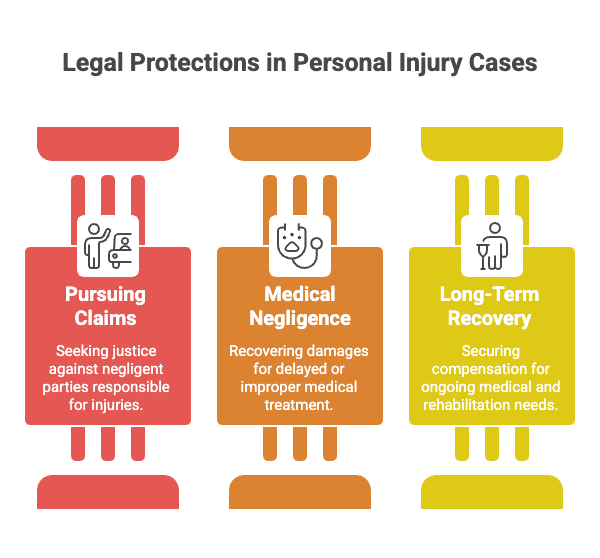
Key legal protections often involve:
- Pursuing claims against negligent drivers, employers, vehicle owners, or other liable parties
- Seeking damages when a delayed diagnosis or improper treatment amounts to Medical negligence
- Preserving the right to recover for long-term disability, rehabilitation needs, and future medical care
Florida law also imposes deadlines, insurance requirements, and comparative fault rules that can affect recovery. In service-oriented communities, understanding these rights helps injured people make informed decisions, uphold accountability, and secure resources needed to recover and continue caring for others after a serious collision.
Steps to Take After a Miami Internal Bleeding Car Accident Injury
After a Miami car accident involving suspected internal bleeding, immediate emergency medical care is the first priority, as prompt evaluation can be crucial to the injured person’s condition and recovery. It is also important to preserve and document crash evidence, including photographs, witness information, and medical records, because these materials may later support an insurance claim or legal case. Once urgent medical needs are addressed, contacting a lawyer can help protect the victim’s rights and provide guidance on the next appropriate steps.
Seek Emergency Care
Because internal bleeding may not produce immediate or obvious symptoms, prompt emergency care is crucial following a Miami car accident. A prudent response prioritizes health, allowing medical professionals to assess hidden injuries before conditions worsen. Immediate evaluation in an emergency room supports rapid diagnosis, observation, and treatment when internal damage is suspected.
First responders and hospital staff typically follow triage protocols to identify urgent needs and prioritize care efficiently. They may recommend imaging, laboratory testing, and close monitoring for changes in blood pressure, pulse, or abdominal tenderness. Pain management should be addressed carefully, since discomfort can mask serious complications. If ambulance service is needed, transport logistics should be coordinated without delay to protect the injured person and reduce avoidable risk. Early intervention often improves outcomes and preserves the ability to recover from others later.
Document Crash Evidence
Once immediate medical needs are addressed, attention should turn to preserving evidence from the Miami car accident as thoroughly as circumstances allow. Careful documentation may help protect the injured person and support a clear account of what occurred. Photographic preservation should include vehicle damage, skid marks, debris, roadway conditions, traffic signals, and visible injuries. If safe to do so, notes should record the time, location, weather, and any statements made by drivers or passengers.
Names and contact details of witnesses should be gathered promptly, since memories often fade. Brief witness interviews can help identify important facts about speed, lane position, or driver conduct before impact. A copy of the police report number should also be obtained. Thoughtful evidence collection serves not only personal recovery but also the broader interest of accountability and community safety.
Contact A Lawyer
In the days following a Miami car accident involving suspected internal bleeding, prompt legal guidance can help preserve vital evidence and protect the injured person’s interests while medical treatment continues. A lawyer may coordinate witness statements, obtain surveillance footage, and communicate with insurers to reduce added strain on the family.
During a free consultation, the attorney can evaluate immediate concerns, explain potential claims, and outline a clear fee structure. This early guidance often helps families make informed decisions that support both recovery and accountability. Counsel may also advise against recorded statements, premature settlements, or gaps in documentation that could weaken a case. By acting promptly, the injured person and supportive loved ones place themselves in a stronger position to pursue compensation needed for medical care, stability, and continued service to others.
How a Miami Internal Bleeding Car Accident Injury Lawyer Can Help You
A Miami internal bleeding car accident injury lawyer helps by moving quickly to identify the full extent of the injury, preserve essential evidence, and connect the medical findings to the collision. This support often includes coordinating records, reviewing possible Medical negligence, and guiding families through urgent decisions with steadiness and purpose. Legal counsel also assists with Financial planning concerns by clarifying available compensation and protecting resources needed for care and household stability.
A lawyer may provide help through several focused actions:
- Gathering hospital records, imaging results, crash reports, and witness statements before critical details are lost.
- Working with medical and accident experts to explain causation, liability, and the immediate seriousness of internal injuries.
- Handling insurer communications, valuing damages accurately, and advocating for fair recovery that supports responsible caregiving.
Through careful case preparation, a lawyer serves injured people and their loved ones by reducing confusion, strengthening the claim, and allowing attention to remain on treatment and immediate recovery needs.
Long-Term Effects of Miami Internal Bleeding Car Accident Injuries
Internal bleeding injuries from Miami car accidents may produce lasting medical complications that extend well beyond the initial emergency. In many cases, chronic organ damage and persistent pain continue to affect recovery, treatment needs, and overall physical stability. These long-term effects can also reduce daily function, limiting a person’s ability to work, manage routine tasks, and maintain prior levels of independence.
Chronic Organ Damage
Neglecting internal bleeding after a Miami car accident can lead to chronic organ damage, particularly when reduced blood flow or prolonged pressure deprives vital tissues of oxygen. Over time, injured organs may recover incompletely, leading to progressive fibrosis, reduced function, and permanent structural changes that affect daily life and the ability to care for others.
The liver, kidneys, lungs, and intestines are especially vulnerable when concealed hemorrhage creates vascular compromise or inflammation. Even after the initial trauma appears resolved, scar formation and impaired circulation can limit filtration, digestion, breathing, or metabolic stability. Some individuals later face organ insufficiency that requires extensive monitoring, medication, or surgical intervention. Early evaluation, careful follow-up, and prompt treatment remain crucial because timely care may prevent irreversible damage and protect long-term health and personal independence.
Ongoing Pain Issues
Often, ongoing pain develops after concealed bleeding from a Miami car accident causes lasting irritation, nerve involvement, or pressure-related tissue injury that does not fully resolve with initial treatment. This pain may persist in the abdomen, chest, back, or pelvis, and it can fluctuate in intensity as damaged structures recover imperfectly. Some individuals experience tenderness, burning sensations, or deep aching that continues long after emergency care ends.
Medical providers often recommend careful monitoring, Pain management strategies, and regular follow-up to identify complications that may sustain discomfort. In service-minded communities, recognizing these symptoms early can support compassionate advocacy and timely care. Lifestyle adjustments, including modified activity, improved sleep habits, and nutritional support, may also help reduce pain triggers while promoting steadier recovery and preserving overall well-being over time.
Reduced Daily Function
Beyond the immediate recovery period, reduced daily function may become a significant long-term consequence when concealed bleeding from a Miami car accident damages muscles, nerves, or vital organs and limits normal movement. Survivors may experience reduced mobility that interferes with walking, lifting, driving, household tasks, and consistent employment. These impairments often create daily limitations that affect independence, family responsibilities, and the ability to care for others in meaningful ways.
When fatigue, weakness, or impaired coordination persist, ordinary routines can require assistance, adaptive equipment, or ongoing therapy. Medical providers may recommend rehabilitation plans designed to restore strength and preserve function, yet progress can remain uneven. Careful legal evaluation may help document these losses, ensuring that the full impact on work, service, and personal responsibilities is recognized in any claim or settlement process.
Proving Liability in Miami Internal Bleeding Car Accident Injury Cases
Establishing liability in a Miami internal bleeding car accident injury case requires a careful showing that another party’s negligent conduct directly caused the collision and the resulting internal injuries. This often involves proving duty, breach, causation, and damages through police reports, witness statements, crash reconstruction, surveillance footage, and prompt medical records documenting concealed trauma.
Because internal bleeding may worsen without immediate symptoms, causation can be disputed unless the evidence clearly links the crash to the condition. Skilled attorneys often rely on expert testimony from trauma physicians and accident experts to explain how forces from impact produced organ damage or hemorrhaging. In some cases, allegations of medical malpractice may arise if a delayed diagnosis or improper treatment aggravated the injuries, though the central focus remains on the original negligent driver.
By assembling clear evidence and credible professional opinions, a claimant strengthens the ability to pursue accountability and secure resources that support recovery, family stability, and continued service to others in the community.
Dealing With Insurance Companies After a Miami Internal Bleeding Car Accident Injury
In the aftermath of a Miami car accident involving internal bleeding, communications with insurance companies require caution, precision, and a clear understanding of the claim’s medical and legal significance. Adjusters often seek recorded statements, broad authorizations, or quick settlements before the full extent of injury is known. A careful approach protects the injured person and preserves resources needed for recovery and family support.
Medical records, physician opinions, and documented expenses should guide every response. Clear organization helps prevent misunderstandings and supports accurate valuation. Attention to Claim timelines is crucial because delayed notice or incomplete submissions may create avoidable disputes. Policy negotiation should focus on documented losses, future treatment needs, and the seriousness of hidden trauma. Consistent communication, respectful firmness, and complete records can reduce opportunities for undervaluation.
Many families also benefit from legal guidance to manage insurer contact, protect privacy, and ensure fair treatment while they focus on mending and serving those who depend on them.
What to Expect During a Miami Internal Bleeding Car Accident Injury Claim Process
A Miami internal bleeding car accident injury claim often begins with immediate medical documentation, which helps connect the injury to the collision and establishes the severity of the condition. The process typically continues with an insurance claim investigation, during which evidence is closely reviewed, and hidden injuries must be supported by clear medical records, imaging, and expert evaluation. From there, the claim may proceed to settlement negotiations or, when liability or damages remain in dispute, to trial.
Immediate Medical Documentation
Shortly after a Miami car accident, immediate medical documentation often becomes one of the most important parts of an internal bleeding injury claim. Emergency records can show when symptoms began, how physicians evaluated the condition, and why urgent care was necessary. In many cases, immediate imaging helps identify hidden trauma that may not appear during an initial examination.
Clear records also support continuity of care. Hospital notes, test results, prescriptions, and discharge paperwork can establish the seriousness of the injury and the need for follow-up treatment. When families are focused on protecting a loved one, organized documentation can reduce confusion and help medical providers coordinate services effectively. A thorough paper trail often strengthens the overall claim by clearly and consistently connecting the collision, the diagnosis, and the medical response, with documented timing.
Insurance Claim Investigation
During the insurance claim investigation, carriers typically begin by reviewing the accident report, medical records, photographs, witness statements, and any available video evidence to determine how the collision occurred and whether the internal bleeding injury is consistent with the reported impact. Adjusters may request recorded statements, inspect vehicle damage, and compare timelines to identify discrepancies. In more serious crashes, they may consult accident reconstruction experts to better understand force, angles, and points of contact.
A surveillance review may also be used to verify post-accident activity, especially when losses are substantial. Throughout this stage, careful organization of records helps present an accurate picture of events and supports a fair evaluation. For families focused on helping an injured loved one, understanding this process can reduce confusion and encourage timely, informed cooperation with reasonable insurer requests.
Proving Hidden Injuries
Proving internal bleeding after a car accident often requires more than showing visible trauma, because these injuries may develop beneath the surface and worsen before clear symptoms appear. Medical records, emergency evaluations, and physician notes often help establish when the condition likely began. Because delayed symptoms can confuse the timeline, careful documentation becomes vital.
A Miami internal bleeding claim may also depend on diagnostic evidence, including scans, lab results, and follow-up treatment notes. Imaging challenges sometimes arise when early tests appear normal despite ongoing internal harm. In those situations, later findings, expert opinions, and consistent symptom reporting may help connect the injury to the collision. Individuals who act promptly, seek continued care, and preserve evidence are often better positioned to demonstrate the seriousness of hidden injuries and support accountability for harm caused.
Settlement Or Trial
Once the medical evidence begins to show how internal bleeding developed and affected the injured person, the claim often moves into a separate phase focused on resolution, either through settlement negotiations or trial preparation.
During this stage, counsel evaluates damages, liability disputes, future care needs, and settlement timing. A fair settlement may spare the injured person additional strain, conserve resources, and allow support to reach the family sooner. If insurers minimize the harm or deny responsibility, trial preparation becomes necessary. That work may include expert testimony, exhibit development, witness preparation, and careful study of jury dynamics. In service-oriented representation, the focus remains on securing accountability and meaningful compensation, while protecting dignity throughout the process. Each path requires patience, organized evidence, and decisions guided by the injured person’s long-term well-being.
Compensation for Miami Internal Bleeding Car Accident Injury Damages
Accountability often begins with a clear assessment of the losses caused by a serious collision and the internal bleeding injuries that follow. In Miami, compensation may address emergency treatment, surgery, hospitalization, rehabilitation, medical costs, and the practical support a household needs while an injured person stabilizes and pursues emotional recovery.
A careful valuation also considers income interrupted by recovery, reduced future earning capacity, transportation to appointments, home assistance, and other documented burdens directly tied to the crash. When internal injuries cause lasting complications, compensation may reflect the ongoing need for monitoring, follow-up care, and accommodations to help restore daily functioning.
An attorney typically gathers records, consults qualified medical professionals, and presents evidence that connects the collision to each claimed loss. This process serves injured individuals and their families by seeking resources that support recuperation, preserve dignity, and reduce preventable hardship. Thorough documentation strengthens credibility and improves the likelihood of a fair result overall.
Economic vs Non-Economic Damages in Miami Internal Bleeding Car Accident Cases
Miami internal bleeding car accident claims often involve both economic damages, such as medical expenses, lost income, and future treatment costs, and non-economic damages, including pain, suffering, and diminished quality of life. The distinction between these categories can materially affect the overall value of a claim and the evidence required to support it. Establishing that value typically depends on medical records, employment documentation, expert opinions, and other proof that connects the injury’s impact to measurable and non-measurable losses.
Economic Damage Categories
Several categories of economic damages may arise in a Miami internal bleeding car accident case, each tied to measurable financial loss caused by the injury. These commonly include Medical billing for emergency transport, trauma care, imaging, surgery, hospitalization, consultant visits, medication, and follow-up treatment.
Economic damages may also include Wage loss when the injured person cannot work during recovery or must reduce hours because of medical restrictions. In more serious cases, diminished earning capacity may apply if long-term limitations affect future employment. Other recoverable losses can involve rehabilitation costs, in-home assistance, transportation to appointments, and necessary medical equipment. Property damage, including vehicle repair or replacement, may also be included when supported by records. Careful documentation helps families, advocates, and legal professionals pursue compensation that restores financial stability and supports responsible recovery planning.
Non-Economic Losses
Beyond documented financial losses, a Miami internal bleeding car accident claim may also involve non-economic damages, which address the personal harm that does not appear on bills or wage records. These losses reflect the human impact of a serious injury and recognize how a person’s daily life, relationships, and sense of well-being may change after a collision.
Non-economic damages may include physical pain, emotional distress, mental anguish, inconvenience, scarring, disability, and reduced enjoyment of life. In severe cases, family members may also experience loss of companionship when injuries alter the care, support, and connection once shared within the household. For those committed to caring for others, these damages acknowledge that recovery involves more than finances. They recognize dignity, suffering, and the lasting personal consequences serious injuries can impose.
Proving Damage Value
Establishing the value of damages in an internal bleeding car accident case requires clear evidence that links the collision to both measurable financial loss and substantial personal harm. Economic damages are commonly proven through medical bills, wage records, rehabilitation costs, and future care projections supported by forensic valuation. These figures help demonstrate the practical burden placed on injured individuals and the families who support them.
Non-economic damages require a different method. Courts and insurers may consider medical findings, pain journals, testimony from loved ones, and expert opinions to assess suffering, emotional distress, and diminished quality of life. Although pain monetization is inherently imperfect, careful documentation can present a responsible estimate. A thorough damages presentation promotes accountability, helps restore stability, and supports resources needed for meaningful recovery and continued service to others.
When a Miami Internal Bleeding Car Accident Injury Case Goes to Trial vs Settlement
In a Miami internal bleeding car accident injury case, the decision to proceed to trial or settle often depends on the strength of the medical evidence, the extent of disputed liability, and the long-term financial impact of the injury. Settlement is often favored when diagnostic records, physician opinions, and treatment history clearly connect the collision to the bleeding injury and projected care needs.
Trial becomes more likely when insurers challenge causation, minimize symptoms, or argue that a delayed diagnosis reduced the seriousness of the claim. In those circumstances, counsel may present trauma surgeons, radiologists, and economic experts to explain hidden injuries and future losses. Trial may also be necessary when settlement offers do not reflect diminished earning capacity, extensive hospitalization, or permanent complications. Jury perceptions can influence both sides, especially where visible suffering is limited but internal harm is severe. A service-minded legal approach evaluates whether litigation or settlement will better protect the injured person’s recovery and stability.
The Statute of Limitations for Miami Internal Bleeding Car Accident Injury Cases
Whether a Miami internal bleeding car accident injury claim ends in settlement or proceeds to trial, the time allowed to file suit can determine whether any recovery remains available at all. Florida law generally imposes strict filing deadlines for negligence actions, and missing them can bar compensation even when injuries are severe and well-documented.
Because internal bleeding may worsen after the collision, careful attention to the nuances of the statute is vital. Certain deadline exceptions may apply, including limited situations involving minors, incapacity, or delayed discovery of related harm. In some matters, claim tolling can pause the running of time, but only under specific legal circumstances. Accurate medical records often play a central role in establishing when symptoms appeared, how the condition progressed, and whether an exception may be argued. A service-minded approach values prompt action not for advantage alone, but to preserve evidence, ensure accountability, and support the injured person’s ability to obtain care and achieve financial stability.
When to Contact a Miami Internal Bleeding Car Accident Injury Lawyer
When should legal counsel be contacted after a Miami collision causes suspected internal bleeding? Contact should occur as soon as emergency care is underway and the injured person is medically stable. Internal injuries can worsen quickly, and Emergency timelines often affect both treatment records and available evidence. Early communication helps preserve crash reports, witness accounts, photographs, and insurer correspondence before details are lost or disputed.
Prompt contact is also appropriate when Secondary symptoms appear after the initial evaluation, such as dizziness, abdominal pain, weakness, fainting, or unusual bruising. Families who seek assistance early are often better positioned to support the injured person, coordinate records, and respond responsibly to insurance requests. If hospitalization, surgery, or intensive monitoring becomes necessary, reaching out during that period is still appropriate through a trusted relative or representative. The goal is not delay, but timely action that protects the person’s health interests, documentation, and ability to pursue accountability within Florida’s legal deadlines.
Why You Need an Experienced Miami Internal Bleeding Car Accident Injury Lawyer
Secure legal guidance from an experienced Miami internal bleeding car accident injury lawyer because these claims often involve urgent medical questions, delayed symptom development, and significant disputes over causation and damages. Internal bleeding injuries may worsen quickly, while insurers may argue that symptoms came from unrelated conditions or later events.
Experienced counsel helps protect the injured person’s ability to obtain resources needed for recovery and continued care. A lawyer can coordinate medical advocacy, organize records, and present clear evidence linking the collision to hidden trauma, emergency treatment, future complications, and financial loss. Strong representation also helps families and caregivers understand legal duties while they focus on serving the injured person and supporting medical decisions.
When negotiations fail, an attorney’s litigation strategy becomes vital for addressing contested liability, expert testimony, and the full value of damages. In serious cases, informed legal action can strengthen accountability, preserve crucial evidence, and promote outcomes that support mending, stability, and long-term well-being.
How to Choose the Right Miami Internal Bleeding Car Accident Injury Lawyer for Your Case
In choosing the right Miami internal bleeding car accident injury lawyer, careful attention should be given to experience with severe crash claims involving delayed symptoms, emergency treatment, and disputed medical causation. A qualified lawyer should demonstrate a record of handling catastrophic injury cases, coordinating expert review, and presenting clear evidence of trauma-related complications.
Selection should also consider communication, responsiveness, and a commitment to serving injured people with dignity throughout recovery. Strong Medical advocacy is especially important when insurers challenge hospital findings, diagnostic imaging, or the need for follow-up care. The lawyer should explain Attorney fees plainly, including contingency arrangements, litigation costs, and how settlements are distributed. Reviews, case results, and professional standing may help assess credibility, while a thoughtful consultation can reveal whether the lawyer listens carefully and acts with purpose. The right choice is one who combines legal skill, compassion, and disciplined preparation in the service of a client’s long-term well-being.
About The Law Offices of Anidjar & Levine
A law firm’s qualifications, approach to client service, and record of handling serious injury claims often shape the outcome of a car accident case as much as the underlying facts. In Miami internal bleeding cases, The Law Offices of Anidjar & Levine presents itself as a resource for injured people and families seeking attentive legal help.
The firm’s history reflects a practice focused on personal injury representation, including motor vehicle collisions involving catastrophic harm. Its attorneys emphasize responsive communication, individualized attention, and practical guidance throughout the claims process. This service model may appeal to those who value advocacy rooted in care for others and a commitment to easing burdens during recovery.
Publicly available client testimonials often highlight accessibility, professionalism, and consistent follow-through, which are important qualities when urgent medical and financial concerns are present. For individuals evaluating representation, the firm’s stated dedication to client support and pursuit of compensation may be relevant considerations in a serious Miami internal bleeding car accident claim.
Frequently Asked Questions
Can Internal Bleeding Symptoms Appear Days After a Car Accident?
Yes, internal bleeding symptoms can appear days after a car accident. In some cases, delayed hemorrhage develops gradually, and occult symptoms may remain unnoticed until the condition worsens. A careful observer should watch for dizziness, abdominal pain, weakness, fainting, or unusual bruising. Prompt medical evaluation serves the injured person and protects others who depend on timely care. Early assessment helps clinicians identify hidden injuries before they become life-threatening complications.
What Medical Tests Detect Internal Bleeding After a Crash?
Medical tests that detect internal bleeding after a crash include CT scans, Focused assessment with sonography for trauma, and other Ultrasound exams to identify fluid or organ injury. Physicians may also order blood tests and X-rays to support evaluation. When imaging remains inconclusive, but concern persists, Diagnostic laparoscopy can directly examine abdominal organs. Prompt testing helps care teams identify hidden injuries early, guide treatment responsibly, and protect the patient’s recovery and safety.
Are Children More Vulnerable to Internal Bleeding in Car Accidents?
Yes, children are generally more vulnerable to internal bleeding in car accidents. Their smaller anatomy provides less physical protection for critical organs, and their weaker tissues can tear or bruise more easily during sudden impact. Because symptoms may be subtle at first, careful observation and prompt medical evaluation are crucial. Those serving injured families should recognize that children can deteriorate quickly, even when external injuries appear limited initially.
Can Seat Belts Cause Internal Bleeding Injuries During Collisions?
Yes, seat belts can cause internal bleeding during collisions, though they remain crucial safety devices that save many lives. In high-force impacts, seatbelt trauma may compress the abdomen or chest, injuring organs and blood vessels. Lapbelt syndrome can occur when the belt rides too high, increasing the risk of abdominal and spinal harm. Those assisting injured individuals should recognize hidden symptoms promptly, because internal bleeding may worsen quickly without immediate medical evaluation.
What Warning Signs Require Immediate Emergency Care After a Crash?
Immediate emergency care is required after a crash when a person shows loss of consciousness, severe dizziness, increasing abdominal pain, or sudden shortness of breath. These signs may indicate internal injury, blood loss, or compromised breathing, all of which demand urgent evaluation. Prompt medical attention protects the injured person and supports those seeking to serve others responsibly, because early treatment can prevent rapid deterioration and improve the chance of recovery.
—————————
Internal bleeding after a Miami car accident presents serious medical and legal concerns that demand prompt attention. Victims may face delayed symptoms, substantial treatment costs, and intricate insurance issues.
By understanding their rights, preserving evidence, and seeking timely legal guidance from a Miami Car Accident Lawyer, injured individuals can better protect their interests.
The Law Offices of Anidjar & Levine provides experienced representation focused on accountability, fair compensation, and the careful handling of serious injury claims from the beginning.