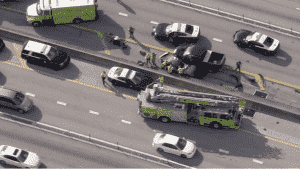
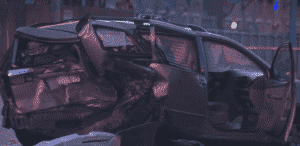
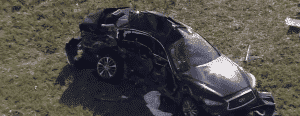
Law Offices of Anidjar and Levine evaluates the sequence of impacts, preserves photographs, witness accounts, and medical records, and works to identify every liable driver or insurer in a chain reaction collision.
These claims often involve disputed fault, hidden injuries, and competing insurance narratives. Counsel can manage communications, document losses, and pursue compensation for medical care, lost income, property damage, and pain-related harm.
The sections that follow explain the claim process, legal rights, and important steps after a collision. Learn more from a Miami Car Accident Attorney.
Main Takeaways
- Move to safety, call 911, use hazard lights, and help vulnerable passengers if a Miami chain-reaction crash poses immediate danger.
- Photograph vehicle positions, damage, skid marks, debris, signals, weather, and collect witness contact information before the scene changes.
- Get prompt medical evaluation for hidden injuries like whiplash, concussion, or internal trauma, and keep complete treatment records.
- Liability in chain-reaction crashes may involve one or more drivers, requiring review of police reports, damage patterns, footage, and reconstruction evidence.
- A Miami chain-reaction car accident injury lawyer can help prove fault, handle insurers, and pursue compensation for medical bills, lost income, and pain and suffering.


How We Can Help With Your Miami Chain Reaction Car Accident Injury Claim
In the aftermath of a chain-reaction collision, injured parties often face overlapping insurance claims, disputed liability, and medical expenses that begin to accumulate immediately. Effective legal guidance helps restore order by organizing records, preserving evidence, and managing communication with insurers and providers, allowing families to focus on recovery and on serving those who depend on them.
A Miami car accident injury lawyer provides structured post-crash support from the earliest stages of a claim. Counsel evaluates documentation, coordinates necessary information, and develops a clear strategy tailored to the client’s losses and recovery needs. Through careful insurance negotiations, the attorney seeks fair compensation for treatment costs, lost income, and other measurable damages, while protecting the client from tactics that seek to reduce or delay payment.
The firm also monitors deadlines, prepares persuasive demand materials, and, when needed, advances the claim toward litigation. This disciplined approach offers dependable advocacy, practical guidance, and meaningful relief during a difficult period for injured people.
OUR CONSULTATIONSARE FREE
START YOUR FREE CASE REVIEW

Understanding Miami Chain Reaction Car Accident Injury Cases
Chain-reaction collisions in Miami often present injury claims that are more complex than ordinary rear-end crashes because several drivers, insurers, and impact points may be involved in a single event. In these matters, legal analysis often centers on how force traveled through the line of vehicles and whether each impact caused separate or aggravated injuries.
Careful review of police reports, medical records, photographs, witness statements, and vehicle damage can help clarify liability and the full extent of harm. Miami traffic patterns may also influence how these events are interpreted, particularly when congestion, limited stopping distance, and lane positioning affect what each driver could reasonably observe or avoid.
Understanding multi-vehicle dynamics is crucial when evaluating comparative fault, insurance coverage questions, and the relationship between visible damage and physical injury. A thorough, service-minded approach seeks fair recovery while respecting the needs of injured people, families, and the broader community after serious roadway events.


Common Causes of Miami Chain Reaction Car Accident
Several recurring factors contribute to chain-reaction crashes in Miami, particularly in dense traffic conditions where tailgating leaves little room to respond safely. Distracted-driving crashes and sudden stops ahead frequently trigger multi-vehicle impacts, as even a brief lapse in attention can cause a driver to strike the vehicle in front, setting off a chain reaction of collisions. Speeding in rainstorms further increases this risk by reducing traction and extending stopping distance, which can make an already unstable traffic situation far more dangerous.
Tailgating In Heavy Traffic
Tailgating in heavy traffic often sets the stage for chain reaction collisions on Miami roads, especially when drivers leave too little space to respond to sudden stops. In dense traffic, even minor speed changes can ripple backward through several vehicles and cause severe injuries.
Aggressive tailgating reduces the margin for safe braking and places every nearby motorist at greater risk. Poor gap perception also contributes, as some drivers misjudge following distance and assume traffic will keep moving steadily. When congestion tightens, that assumption fails quickly. A single abrupt brake application may trigger a sequence of impacts involving innocent drivers who had little ability to avoid harm.
Recognizing this pattern helps community-minded readers understand why maintaining space is not merely courteous but a practical duty that protects passengers, families, and the broader public.
Distracted Driving Crashes
Distracted driving frequently initiates multi-vehicle collisions in Miami when a motorist looks away from the road, diverts attention to a phone, or becomes mentally disengaged from changing traffic conditions. Even a brief distraction can prevent a driver from noticing lane changes, merging vehicles, braking patterns, or nearby texting pedestrians. In dense urban corridors, that lapse may trigger a sequence of impacts affecting many families.
Responsible roadway conduct requires sustained attention, lawful use of devices, and respect for everyone sharing Miami’s streets. Drivers who rely on a phone mount may reduce manual interference, but visual or cognitive distraction can still remain dangerous. Community-minded prevention includes limiting in-car conversations, setting navigation before travel, and pulling over when communication is necessary. These simple precautions help protect passengers, cyclists, pedestrians, and fellow motorists from preventable harm daily.
Sudden Stops Ahead
Triggering chain-reaction crashes in Miami, sudden stops ahead can leave following drivers with too little time and distance to respond safely, especially in congested traffic corridors where speeds and spacing change rapidly. When one vehicle brakes abruptly for merging traffic, turning vehicles, roadway obstructions, or pedestrian activity, the risk of a multi-vehicle collision increases markedly. Drivers who maintain safe following distances, remain attentive, and anticipate changing conditions are better positioned to protect others from harm.
Proper brake maintenance also matters because worn components can lengthen stopping distance at pivotal moments. In addition, visibility issues caused by glare, heavy traffic, or obstructed sightlines may prevent motorists from recognizing a sudden slowdown in time. Careful, service-minded driving practices can reduce preventable crashes and strengthen safety for everyone on Miami roads.
Speeding In Rainstorms
During Miami rainstorms, speeding sharply increases the likelihood of chain reaction collisions by reducing tire traction, extending stopping distances, and limiting a driver’s ability to respond to changing traffic conditions. Wet pavement increases the risk of hydroplaning, while reduced visibility makes it harder to judge brake lights, lane changes, and roadway hazards ahead.
When one vehicle loses control or cannot stop in time, following drivers often have too little space to avoid impact. This danger grows on crowded Miami roads, where traffic flow can shift quickly during severe weather. A careful, service-minded approach to driving requires slower speeds, greater following distance, and steady attention to surrounding vehicles. By respecting road conditions and protecting fellow motorists, drivers help reduce preventable harm and lower the chances that a single mistake will trigger multiple collisions across several lanes.
Legal Rights of Miami Chain Reaction Car Accident Injury Victims
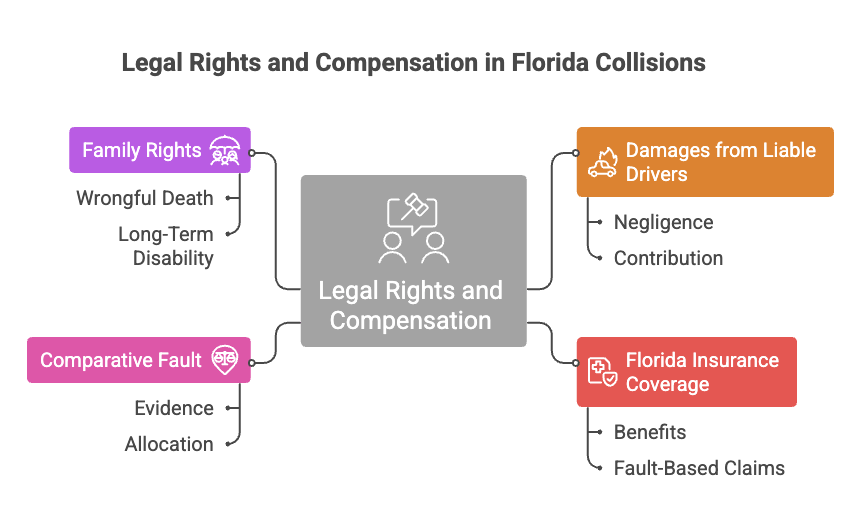
In the aftermath of a chain-reaction collision in Miami, injured parties may have important legal rights under Florida law, including the right to seek compensation from one or more negligent drivers whose actions contributed to the crash. Those rights often include recovery for medical expenses, lost income, property damage, and pain-related losses, as well as addressing Insurance disputes and Medical liens that may affect final compensation.
After a Miami chain reaction crash, victims may pursue compensation for injuries, losses, insurance disputes, and medical lien issues.
- Victims may seek damages from each liable driver whose negligence contributed to or worsened the collision.
- Florida insurance coverage may provide benefits, yet fault-based claims can remain available in serious injury cases.
- Evidence may establish comparative fault, which can influence how compensation is allocated among multiple parties.
- Families serving injured loved ones may also have rights connected to wrongful death or long-term disability losses.
Because multi-vehicle crashes create overlapping claims, legal guidance often helps ensure fair treatment and supports accountability for all parties involved under applicable Florida law.
Steps to Take After a Miami Chain Reaction Car Accident Injury
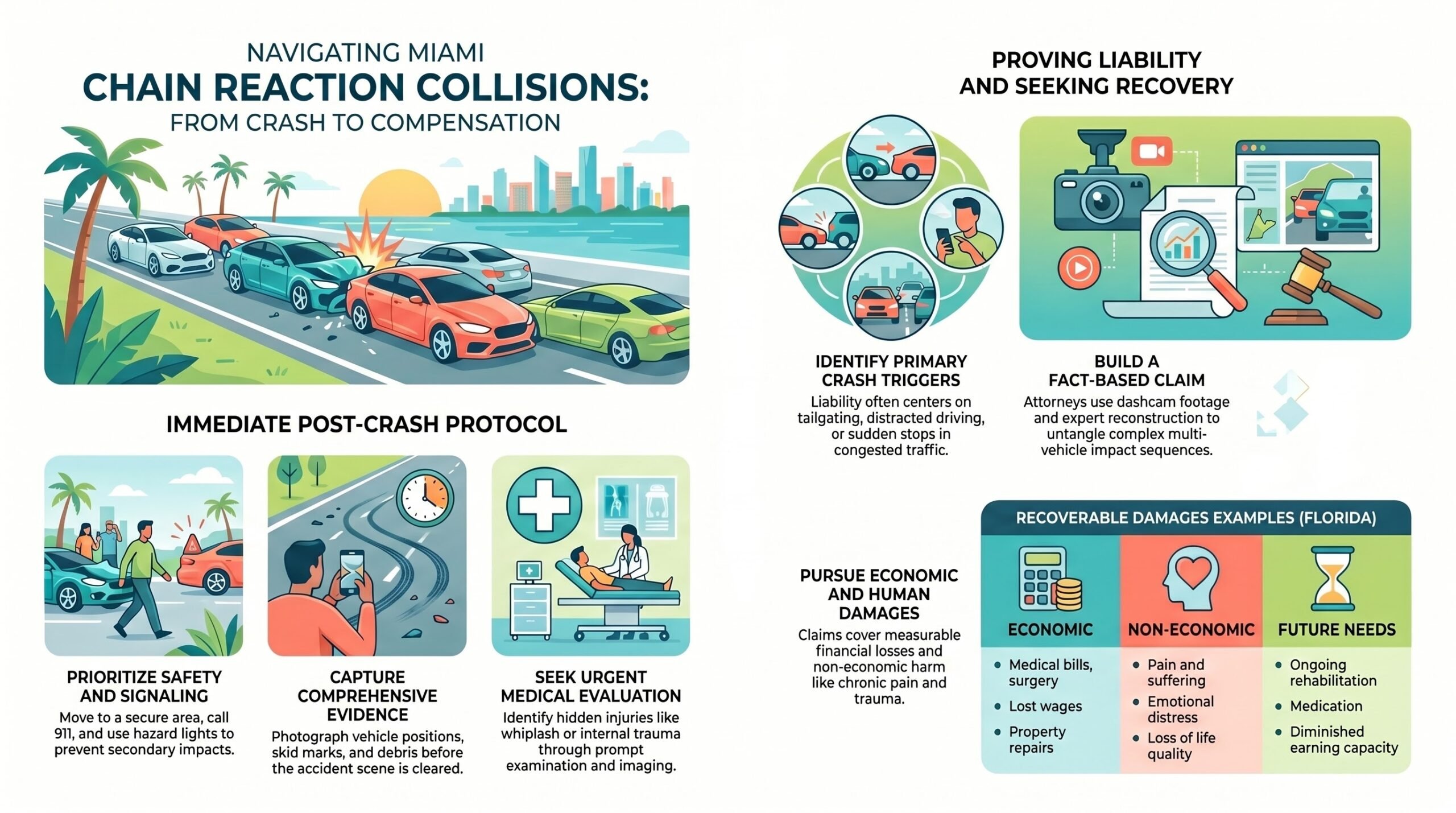
After a Miami chain-reaction car accident, immediate safety should be the top priority, including moving to a safe location when possible and contacting emergency services. The scene should then be carefully documented through photographs, witness statements, and notes that preserve the sequence of impacts and visible damage. Medical evaluation should follow without delay, as prompt assessment can identify hidden injuries and create records that may later support an injury claim.
Ensure Immediate Safety
At the scene of a Miami chain-reaction collision, immediate safety should take priority over all other concerns. Those involved should assess urgent dangers, including traffic flow, fire, fuel leaks, and unstable vehicle positions, before taking further action. If movement is safe, vehicles and occupants should be directed away from travel lanes and toward secure areas.
When relocation is not possible, hazard signaling becomes critical to protect injured persons and approaching motorists. Emergency flashers, reflective triangles, and visible warnings can reduce the risk of additional impact. Occupants who can move should identify safe evacuation routes, assist children, older adults, and disabled passengers, and remain alert to secondary collisions. Calling 911 promptly supports medical response and traffic control, while calm cooperation helps safeguard everyone at the scene until first responders arrive.
Document The Scene
Scene documentation preserves vital evidence that may later clarify how a Miami chain-reaction collision unfolded and which parties contributed to the sequence of impacts. Individuals can serve others well by carefully recording vehicle positions, skid marks, debris patterns, traffic signals, weather, and road conditions before those details change.
They should gather photographic evidence from multiple angles, including close views of damage and wider images showing lane placement and surrounding intersections. Basic scene measurements, such as distances between vehicles, impact points, and resting locations, may also assist future reconstruction efforts. Witness names, contact details, and brief statements can be noted respectfully, while preserving accuracy.
The time, date, and any visible hazards should also be documented. Thorough records often support insurers, attorneys, and investigators in pursuing accountability and protecting affected families and community members.
Seek Medical Evaluation
Why does prompt medical evaluation matter so much in a Miami chain reaction collision? Injuries such as whiplash, concussions, and internal trauma may not appear immediately, yet delayed symptoms can worsen and complicate recovery. A timely examination helps protect health, creates a clear treatment record, and supports those caring for family members and others who depend on them.
After leaving the scene safely, an injured person should visit an emergency room, urgent care center, or primary physician without delay. Providers can identify hidden conditions, recommend imaging, and issue instructions that reduce further harm. If pain persists or specialized treatment is needed, a consultant referral may follow. Following medical advice, attending appointments, and keeping records demonstrate responsible action and strengthen any future insurance or legal claim after a serious multi-vehicle crash.
How a Miami Chain Reaction Car Accident Injury Lawyer Can Help You
Untangling a chain-reaction crash often requires a careful legal strategy because liability may be divided among several drivers, insurers, and other parties. A Miami chain-reaction car accident injury lawyer helps injured people pursue fair compensation while preserving evidence and documenting losses.
Through Liability assessment, counsel reviews police reports, witness statements, vehicle damage, roadway conditions, and insurance policies to identify each responsible party.
- Investigates the sequence of impacts and secures photographs, video, repair records, and expert analysis.
- Communicates with insurers to prevent harmful statements and keep the claim focused on verified facts.
- Builds a Settlement strategy that reflects medical expenses, lost income, property damage, and other measurable harms.
- Prepares for litigation when necessary, advocating with discipline so clients can focus on family, recovery, and service to others.
This guidance offers structure during confusion, promotes accountability, and supports informed decisions. Effective representation can reduce delays, strengthen negotiations, and protect the injured person’s interests throughout the legal process.
Long-Term Effects of Miami Chain Reaction Car Accident Injuries
Chain reaction car accidents in Miami can produce injuries that continue to affect a person long after the initial crash and immediate medical treatment. Many individuals face chronic pain, persistent emotional trauma, and a reduced ability to manage routine tasks at home, at work, and in public settings. These long-term effects often influence medical needs, financial stability, and overall quality of life, making careful legal and medical evaluation crucial.
Chronic Pain Challenges
Following a Miami chain reaction collision, chronic pain can persist long after visible injuries appear to have recovered, affecting the neck, back, shoulders, and joints in ways that interfere with daily function. Some individuals experience stiffness, reduced mobility, headaches, or nerve-related discomfort that limits their ability to work, care for others, and perform other service-centered responsibilities.
Effective Pain management often requires coordinated medical care, physical therapy, medication oversight, and consistent documentation of symptoms over time. These records may become important when Insurance disputes arise, especially if an insurer questions the severity or duration of ongoing problems.
A careful legal review can help connect medical findings, treatment needs, and practical limitations to a claim’s value. By addressing chronic pain early and thoroughly, injured people may better protect their health, stability, and ability to continue helping others.
Lasting Emotional Trauma
In the months after a Miami chain reaction collision, emotional trauma may remain even when physical injuries begin to improve. Survivors may experience fear, irritability, sleep disruption, and intrusive memories that affect peace of mind and relationships. Some develop post-traumatic stress, especially when the crash involved multiple impacts, confusion, or visible injuries to others.
A service-minded community should recognize that these reactions are not a weakness. Emotional harm can alter trust, increase vigilance, and create attachment difficulties with spouses, children, or close friends. Individuals may avoid traffic, withdraw from meaningful connections, or struggle with guilt after seeing others hurt. Early counseling, consistent support, and informed legal guidance can help protect dignity while encouraging recovery. Care that honors emotional suffering is often crucial after serious multi-vehicle accidents and collisions.
Reduced Daily Function
Beyond emotional distress, many survivors of Miami chain reaction collisions face a lasting reduction in daily function that affects work, household tasks, mobility, and personal independence. Physical pain, neurological symptoms, and orthopedic limitations can make routine responsibilities markedly harder to manage. Many individuals experience limited mobility, difficulty lifting, driving, standing, or completing errands without assistance from family members or caregivers.
These impairments often lead to reduced productivity in the workplace and at home, especially when concentration, stamina, or coordination are compromised. Over time, diminished function may require ongoing therapy, adaptive equipment, or changes to employment and living arrangements. For those committed to caring for others, these losses can be especially disruptive because injuries may hinder their ability to serve loved ones and participate fully in community, family, and charitable responsibilities.
Proving Liability in Miami Chain Reaction Car Accident Injury Cases
Determining fault in a Miami chain reaction collision often requires a careful reconstruction of how each impact occurred and whether one driver’s negligence set the sequence in motion. Liability may rest with the first rear driver, a middle driver who followed too closely, or multiple parties whose combined actions produced harm.
To establish responsibility, attorneys and investigators examine police reports, vehicle damage patterns, skid marks, traffic camera footage, and electronic data when available. They also assess witness credibility, because differing memories can affect how the event is understood. In more intricate crashes, expert reconstruction may clarify speed, stopping distance, lane position, and the order of impacts.
Florida negligence principles allow injured people to seek accountability from each party whose careless conduct contributed to the collision. A thorough liability analysis helps protect injured individuals while promoting fairness, community safety, and responsible conduct on Miami roads for all residents and visitors alike.
Dealing With Insurance Companies After a Miami Chain Reaction Car Accident Injury
After a Miami chain reaction car accident, communication with insurance companies often becomes complicated quickly because several drivers, carriers, and competing versions of events may be involved. Adjusters may request recorded statements, broad medical authorizations, or quick settlements before the full extent of harm is understood. A careful, service-minded approach helps protect injured people while preserving accurate information.
Insurance representatives may rely on claims negotiation tactics designed to limit payouts, shift fault, or minimize injuries. They may also cite policy exclusions to deny coverage for certain benefits, especially when multiple vehicles and policies overlap. Thorough documentation, consistent statements, and organized records of treatment, expenses, and lost income can reduce opportunities for dispute.
It is often beneficial for injured individuals to respond thoughtfully, avoid speculation, and review all communications closely. When advocates step in, they can help ensure insurers address the claim fairly, honor contractual obligations, and give proper consideration to the injured person’s needs and recovery.
What to Expect During a Miami Chain Reaction Car Accident Injury Claim Process
A Miami chain reaction car accident injury claim typically begins with the initial filing, followed by a structured investigation into how liability is assigned among multiple drivers. The process often includes a careful review of medical records, treatment history, and other evidence used to connect the injuries to the collision. As the claim progresses, settlement negotiations may unfold over weeks or months, depending on the intricacy of the facts, the severity of the injuries, and the insurers involved.
Initial Claim Filing
In the early stages of a Miami chain reaction car accident injury claim, the filing process typically begins with prompt notice to the appropriate insurance carriers, followed by the collection of basic facts, medical records, and crash documentation. This first step helps preserve rights and supports an orderly response focused on care, accountability, and service to those affected.
A representative or attorney often prepares the initial claim forms, confirms policy information, and tracks the claims deadline to avoid unnecessary delay. Accuracy matters because incomplete submissions can slow benefits or create preventable disputes. Supporting materials may include treatment summaries, repair estimates, wage loss information, and photographs. In some situations, filing fees may apply if related legal paperwork becomes necessary. Careful organization at this stage can strengthen communication and promote a more efficient claims experience for everyone involved.
Liability Investigation Steps
Once the initial claim has been submitted, attention typically turns to the liability investigation, in which insurers, attorneys, and other parties examine how the chain-reaction collision occurred and which driver or drivers may bear legal responsibility. This stage often includes reviewing police reports, photographs, vehicle damage patterns, traffic camera footage, and roadway conditions.
Adjusters and legal teams may conduct witness interviews to compare accounts, identify inconsistencies, and clarify the sequence of impacts. In more intricate crashes, professionals may use scene reconstruction to evaluate speed, following distance, braking, and lane position before each collision. Service-minded legal counsel often helps organize records, preserve evidence, and communicate respectfully with all parties. A careful investigation can protect injured people, support fair accountability, and reduce disputes over fault among multiple drivers and insurers.
Medical Evidence Review
During the medical evidence review, insurers and legal representatives closely examine treatment records to determine how the chain reaction crash affected the injured person and whether the reported condition is consistent with the collision. They compare emergency care notes, follow-up evaluations, diagnostic test results, and physicians’ opinions to ensure continuity and accuracy. Medical records help establish timing, symptom progression, and the connection between impact forces and specific injuries.
An imaging review may include X-rays, CT scans, or MRI results to identify fractures, soft tissue damage, or spinal trauma. Providers may also assess prior conditions to distinguish new harm from preexisting concerns. Careful review supports a fair understanding of the person’s needs, promotes responsible advocacy, and helps those assisting the injured individual present clear, well-documented evidence of injury severity, the need for treatment, and expected recovery needs.
Settlement Negotiation Timeline
After the medical evidence has been organized and reviewed, the settlement negotiation timeline generally begins with the insurer’s evaluation of liability, damages, and the overall value of the chain reaction crash claim. Adjusters commonly compare records, repair estimates, wage loss proof, and witness statements before making an initial offer. Counsel then responds with documented counterarguments designed to protect the injured person’s interests and encourage a fair resolution.
Several timeline milestones may shape progress, including requests for additional records, discussions about comparative fault, and review of future treatment needs. Meaningful negotiation often involves measured exchanges rather than one immediate agreement. Settlement benchmarks are assessed as each offer is tested against medical costs, lost income, pain, and long-term impact. If negotiations stall, mediation or litigation may become the next responsible step.
Compensation for Miami Chain Reaction Car Accident Injury Damages
Accountability becomes especially important in Miami chain-reaction collisions, where multiple impacts can result in extensive medical expenses, lost income, property damage, and long-term pain and suffering. Compensation often depends on careful investigation, insurance analysis, and prompt documentation that clarifies how each collision contributed to the injured person’s overall losses.
A thorough claim may address emergency treatment, follow-up care, rehabilitation, prescription costs, vehicle repairs, and rental reimbursement while transportation is unavailable. It may also consider wage interruption, reduced work capacity, and obligations created by medical liens after treatment. Because several drivers, insurers, and policy limits may be involved, fair recovery usually requires coordinated evidence, witness statements, crash reports, photographs, and physician opinions.
Legal guidance can help families and community-minded individuals protect resources, avoid premature settlements, and pursue a result that reflects the full scope of harm caused by the chain reaction event. Early action often strengthens documentation, preserves leverage, and supports a more complete financial recovery.
Economic vs Non-Economic Damages in Miami Chain Reaction Car Accident Cases
In Miami chain reaction car accident cases, damages are generally divided into economic losses, such as medical expenses, lost wages, and property damage, and non-economic losses, such as pain and suffering or diminished quality of life. The value of non-economic harm is often more difficult to measure, requiring careful review of the injury’s severity, duration, and effect on daily functioning. Establishing the full scope of combined damages typically depends on medical records, employment documentation, expert opinions, and other evidence that connects both financial and personal losses to the collision.
Economic Damage Categories
For victims of a Miami chain-reaction collision, economic damages refer to the measurable financial losses caused by the crash, while non-economic damages address the human impact that does not have a fixed dollar amount. Economic damage categories commonly include emergency care, hospitalization, surgery, rehabilitation, medication, and projected future treatment. They also cover lost wages when injuries prevent a person from working, as well as diminished earning capacity when long-term limitations reduce future income.
Property loss is another major category, including vehicle repair or replacement and damage to personal items inside the car. In cases involving extensive recovery, transportation to medical appointments, household assistance, and other out-of-pocket expenses may also qualify. Careful documentation of these losses helps families, advocates, and legal representatives pursue fair financial recovery after a serious crash.
Non-Economic Loss Valuation
Clarity is especially important when valuing non-economic losses after a Miami chain-reaction collision, because these damages compensate for harm that is real but not directly documented by bills or receipts. Courts and insurers generally examine how injuries affect daily functioning, relationships, emotional stability, and overall quality of life. This assessment may include pain valuation, loss of enjoyment, anxiety, sleep disruption, and lasting limitations that alter a person’s independence or ability to care for others. Because these harms are personal and less visible, careful description matters.
Credible medical observations, consistent symptom reporting, and testimony about changed routines can help frame the extent of suffering in a respectful, service-minded way. A thorough valuation seeks fairness, recognizing that compassionate recovery encompasses both financial losses and the human cost of injury borne by victims and their families.
Proving Combined Damages
Damage proof in a Miami chain-reaction collision often requires a side-by-side presentation of economic and non-economic losses, because the full impact of an injury claim cannot be measured through invoices alone. Attorneys and claims professionals typically assemble medical bills, wage records, rehabilitation estimates, and future care projections, then pair them with testimony describing pain, emotional strain, disability, and reduced quality of life. In multi-vehicle cases, evidence apportionment becomes crucial, since each driver and carrier may dispute which impact caused specific harm.
Clear timelines, expert opinions, and consistent treatment records help connect injuries to each collision event. Effective coordination among multiple insurers also supports fair valuation by reducing conflicting positions and preventing duplicate or omitted losses. This structured approach serves injured people, families, and the broader community by promoting accurate compensation and responsible resolution.
When a Miami Chain Reaction Car Accident Injury Case Goes to Trial vs Settlement
In many Miami chain reaction car accident injury cases, the path toward settlement or trial depends on how clearly fault, causation, and the extent of the claimed injuries can be established. When evidence is organized, witnesses are credible, and medical records consistently connect each impact to each injury, insurers often favor settlement. Settlement may help injured people receive support sooner, reduce litigation costs, and avoid the uncertainty that can burden families seeking stability.
A trial becomes more likely when multiple drivers dispute responsibility, experts disagree, or insurers undervalue the harm despite substantial evidence. In those circumstances, counsel may develop a careful trial strategy focused on the sequence of impacts, comparative negligence, and the full human consequences of the collision. A judge or jury may then determine damages. Even after a verdict, post-trial motions or a verdict appeal can extend the process. Each route should be evaluated by whether it best advances accountability, fair compensation, and meaningful recovery for those affected.
The Statute of Limitations for Miami Chain Reaction Car Accident Injury Cases
After a chain reaction collision in Miami, the time allowed to file a personal injury claim can materially affect whether compensation remains available at all. Florida law sets filing deadlines that generally govern when an injured person may pursue damages, and missing that period can bar recovery regardless of the claim’s value.
In multi-vehicle crashes, careful attention to the nuances of the statute is especially important. The date of the accident often starts the clock, yet certain facts, including wrongful death issues, claims involving minors, or circumstances affecting the discovery of injuries, may alter how deadlines apply. Insurance negotiations do not automatically pause the statutory period, and relying on informal assurances may place a family’s financial stability at risk.
Preserving the ability to seek accountability serves not only the injured person, but also dependents and others affected by the loss. For that reason, prompt documentation, organized records, and a clear understanding of applicable time limits remain crucial following a Miami chain-reaction accident.
When to Contact a Miami Chain Reaction Car Accident Injury Lawyer
At the earliest practical stage, contacting a Miami chain-reaction car accident injury lawyer can help preserve evidence, clarify liability among multiple drivers, and prevent procedural errors that may weaken a claim. Immediate consultation is often appropriate after emergency medical needs are addressed, especially when several vehicles, conflicting accounts, or severe injuries are involved.
Prompt contact may also be advisable when insurers request statements, settlement papers arrive, or pivotal records must be secured. Evidence preservation is especially important in chain reaction collisions because vehicle positions, electronic data, surveillance footage, photographs, and witness memories can change or disappear quickly.
A timely legal review can help identify all potentially responsible parties and organize documents to support a fair claims process. Families seeking to care for injured loved ones may benefit from early guidance to meet reporting deadlines, document losses, and respond thoughtfully to communications. Acting without unnecessary delay can support accountability and reduce avoidable complications during recovery and rebuilding after a serious collision.
Why You Need an Experienced Miami Chain Reaction Car Accident Injury Lawyer
Untangling a chain reaction collision often requires experienced legal analysis because liability may be divided among several drivers, commercial entities, or other responsible parties. An experienced Miami chain-reaction car accident injury lawyer helps identify every contributing factor, preserve time-sensitive evidence, and address insurers’ efforts to minimize valid claims. This guidance supports injured people and families seeking accountability while remaining focused on recovery and service to others.
Experience also matters when medical records, crash reconstruction, witness statements, and traffic footage must be organized into a coherent Case strategy. Skilled counsel can evaluate comparative fault issues, calculate present and future losses, and present facts clearly during negotiations or in a Miami courtroom. Effective representation reduces avoidable mistakes, strengthens compliance with filing deadlines, and protects clients from accepting inadequate settlements. In intricate multi-vehicle crashes, seasoned legal advocacy provides structure, informed judgment, and a disciplined approach to advance fair compensation and responsible resolution for all affected parties.
How to Choose the Right Miami Chain Reaction Car Accident Injury Lawyer for Your Case
In selecting counsel for a chain reaction collision claim, an injured person should focus on qualifications that directly affect the outcome of a complicated case. Relevant factors include documented experience with multi-vehicle crashes, knowledge of insurance disputes, and a record of organized case preparation under pressure.
A careful review should also consider communication practices, professional reputation, and trial readiness. Counsel who can explain liability issues clearly may better guide clients and witnesses in ways that support truthful, service-minded advocacy. Familiarity with local court procedures and the perspectives of Miami jurors can also matter when fault is divided among several drivers.
Fee structures warrant close attention as well, because transparent terms help families plan responsibly while pursuing compensation. Reviewing testimonials, disciplinary history, and resources on accident reconstruction may further clarify whether a lawyer can handle the medical, technical, and human issues that often define serious chain-reaction claims with care.
About The Law Offices of Anidjar & Levine
Client-focused representation defines The Law Offices of Anidjar & Levine, a firm known for handling personal injury matters with disciplined preparation and close attention to each case’s practical demands.
In Miami chain-reaction collision claims, the firm emphasizes responsive communication, timely investigation, and practical guidance designed to support injured people and the families who care for them.
Its approach reflects a service-minded perspective that values dignity, accountability, and steady advocacy throughout the legal process.
The firm’s history shows continued work on behalf of accident victims facing medical costs, lost income, and uncertainty after serious crashes.
Attorneys and staff focus on building organized claims, gathering records, consulting qualified experts when needed, and pursuing fair results through negotiation or litigation.
Client testimonials often highlight accessibility, compassion, and clear explanations, qualities that matter to people seeking to protect others while rebuilding stability.
This combination of preparation and attentive service explains why many injured individuals consider the firm a dependable legal resource.
Frequently Asked Questions
Can I Recover Damages if an Out-Of-State Driver Caused the Chain Reaction?
Yes, damages may often be recovered when an out-of-state driver causes a chain-reaction collision. Recovery usually depends on proving negligence, causation, and the extent of losses, while addressing jurisdictional issues involving where the claim should be filed. Courts may also evaluate choice of law questions to determine which state’s rules apply. Careful legal review helps injured parties protect their rights, support their families, and effectively pursue fair compensation.
How Are Rental Car Claims Handled After a Miami Chain Reaction Crash?
Rental car claims after a chain reaction crash are typically handled through the liable driver’s insurer, though coverage may also involve the renter’s personal policy or the rental company’s protections. Adjusters usually review fault, damages, vehicle inspections, and policy terms before approving payment. Claimants may seek rental reimbursement for transportation needs during repairs. Careful documentation, prompt notice, and cooperative communication often help all parties resolve the matter efficiently and fairly.
What if a Chain Reaction Accident Involved a Rideshare Vehicle?
If a chain reaction accident involved a rideshare vehicle, liability depends on the driver’s status in the app at the time of impact. Rideshare liability may involve the driver’s insurer, the company’s policy, or both, depending on whether a passenger was present or a trip was accepted. Surge pricing does not usually affect fault, but trip records and coverage limits can materially influence compensation, claims handling, and service to injured parties.
Can Dashcam Footage Help Prove Fault in a Multi-Vehicle Collision?
Yes, dashcam footage can help prove fault in a multi-vehicle collision. It may show vehicle speed, lane position, braking, traffic signals, and the sequence of impacts, which supports reliable impact analysis. Recordings from dashboard cameras can clarify conflicting accounts and identify negligent conduct. When preserved properly, this evidence may assist insurers, attorneys, and courts in reaching fair outcomes that better serve injured parties and others affected by the incident.
Are Passengers Entitled to Compensation After a Chain Reaction Accident?
Yes, passengers are often entitled to compensation after a chain-reaction accident because they rarely share fault for the collision. Passenger claims may be brought against one or multiple negligent drivers, depending on how the events unfolded. In some cases, vicarious liability may also apply, such as when an employer is responsible for a driver’s conduct. Careful documentation and prompt legal review help protect the passenger’s right to meaningful recovery.
—————————
Chain reaction collisions in Miami often involve intricate liability issues, overlapping insurance claims, and significant injuries.
Victims benefit from understanding their rights, preserving evidence, and obtaining legal guidance as early as possible.
A qualified Miami Car Accident Attorney can assess the facts, protect the claim, and pursue appropriate compensation.
Anidjar & Levine provides experienced representation for those seeking clear direction and strong advocacy after a serious multi-vehicle accident.