Law Offices of Anidjar and Levine helps protect an injured person’s rights after a serious intersection crash by preserving evidence, coordinating medical records, and handling insurance communications.
Counsel may investigate traffic signals, witness accounts, vehicle damage, and fault issues, including comparative negligence under Florida law.
Legal guidance also supports claims for medical expenses, lost income, property damage, and pain and suffering.
The sections below explain the process, crucial deadlines, and practical next steps. For more information, visit Miami Car Accident Attorney.
Main Takeaways
- Seek immediate medical care after a Miami intersection crash to detect hidden injuries and create records supporting your injury claim.
- Preserve evidence by photographing vehicle positions, signals, damage, skid marks, injuries, and collecting witness and police report information.
- A Miami intersection accident lawyer investigates causes like red-light violations, distracted driving, speeding, and failure to yield to prove fault.
- Consistent treatment and organized records help document chronic pain, mobility limits, emotional distress, lost income, and other long-term damages.
- An injury lawyer can manage insurers, value your losses, and negotiate a settlement focused on your recovery and financial stability.


How We Can Help With Your Miami Intersection Car Accident Injury Claim
After a Miami intersection collision, injured individuals often face immediate medical concerns, insurance pressure, and uncertainty about how to protect a valid injury claim. Effective legal support centers on reducing that burden so clients can focus on recovery and caring for their families. Counsel may coordinate records, preserve essential evidence, and obtain Witness statements before memories fade. They may also communicate with insurers, prevent harmful recorded statements, and track deadlines that could affect recuperation.
A disciplined approach also includes carefully evaluating losses, organizing documentation, and presenting a clear demand supported by facts. This service helps insurers understand the full impact of the crash and encourages fair Settlement negotiation.
When necessary, counsel can prepare a case for court while continuing to pursue efficient resolution. Throughout the process, the goal remains service-driven: protecting the injured person’s interests, promoting accountability, and helping restore stability after a serious intersection accident in Miami.
OUR CONSULTATIONSARE FREE
START YOUR FREE CASE REVIEW

Understanding Miami Intersection Car Accident Injury Cases
In the context of Miami traffic collisions, intersection accident injury cases often present distinct factual and legal issues that require close examination. These matters frequently involve careful review of roadway layout, vehicle positions, witness accounts, and official records to understand how the event unfolded and how injuries affected those involved.
A proper evaluation often centers on intersection dynamics, including lane configuration, turning movements, sight lines, and the sequencing of traffic signals. Legal analysis may also consider whether drivers, passengers, pedestrians, or cyclists had rights that were compromised at the time of impact. Medical documentation, scene evidence, and electronic data can help connect the collision to physical harm and ongoing limitations.
Because these cases can affect a person’s ability to care for family, work consistently, and support the community, a disciplined case review serves an important purpose. It helps identify accountable parties, clarify damages, and promote outcomes that reflect both fairness and public responsibility.
Common Causes of Miami Intersection Car Accidents
Several recurring factors contribute to intersection collisions in Miami, often turning routine traffic movements into serious injury events. Red-light violations, distracted driving, failure to yield, and speeding through intersections are among the most common causes identified in these cases. Each of these behaviors can reduce reaction time, disrupt right-of-way expectations, and markedly increase the likelihood of a crash.
Red Light Violations
Red light violations remain a leading cause of serious intersection collisions in Miami, where heavy traffic, distracted driving, and impatient decision-making often combine with dangerous results. When motorists enter an intersection after the signal changes, they place other drivers, cyclists, and pedestrians at substantial risk of harm.
These crashes often occur at high speeds and can produce severe injuries because the crossing traffic has little time to react. Compliance with pedestrian signals and turning restrictions helps protect vulnerable road users and promotes orderly traffic flow. Drivers who ignore red lights frequently misjudge timing, distance, or right-of-way, creating preventable dangers for everyone nearby.
For those committed to community safety, recognizing the seriousness of these violations supports stronger habits, greater accountability, and safer intersections throughout Miami for residents, visitors, and families alike each day.
Distracted Driving Errors
Distraction undermines safe driving at Miami intersections, where motorists must continuously monitor signals, surrounding vehicles, pedestrians, cyclists, and sudden traffic changes. Even brief lapses can prevent timely braking, lane control, and awareness of hazards developing from several directions.
Common distracted driving errors include texting, adjusting in-car infotainment systems, eating, grooming, and interacting with passengers. These behaviors divert visual, manual, or cognitive attention at the precise moment when careful observation is crucial.
In busy urban corridors, a driver looking away for only seconds may miss a stopped vehicle, a changing light, or a person entering a crosswalk. Such negligence often causes preventable collisions that injure families, workers, visitors, and other community members. Careful, attentive driving remains a basic duty owed to everyone who shares Miami’s roads.
Failure To Yield
One of the most frequent causes of Miami intersection collisions is a driver’s failure to yield the right of way when traffic laws or surrounding conditions require caution. This conduct often occurs during left turns, at stop signs, or when entering traffic from private roads or parking lots. In many cases, right-of-way confusion leads a motorist to proceed without adequately checking for approaching vehicles, cyclists, or pedestrians.
Such mistakes can place others in immediate danger and disrupt the orderly movement that intersections require. A failure to yield may also reflect impatience, poor judgment, or limited awareness of traffic controls. Careful adherence to yielding rules helps protect vulnerable road users and supports a safer community. When drivers honor these duties, they reduce preventable harm and better serve everyone.
Speeding Through Intersections
Accelerating through intersections is a common factor in many Miami collision claims because excessive speed reduces the time available to observe traffic signals, judge gaps, and respond to sudden hazards. Drivers who rush yellow lights or enter cross streets too quickly place passengers, pedestrians, and neighboring motorists at unnecessary risk.
The danger increases when congestion, weather, or limited intersection sightlines obscure approaching vehicles, cyclists, or people crossing on foot. In high-speed roundabouts, excessive pace can also undermine lane discipline and make merging decisions less predictable. From a public safety perspective, careful speed control supports everyone using the roadway and helps prevent severe injuries.
When investigators review these crashes, they often find that a modest reduction in speed could have preserved reaction time, reduced impact forces, and protected the broader community from avoidable harm.


Legal Rights of Miami Intersection Car Accident Injury Victims
In the aftermath of an intersection collision in Miami, injured victims may have important legal rights under Florida law, including the right to pursue compensation for medical expenses, lost income, property damage, and pain and suffering when another party’s negligence caused the crash.
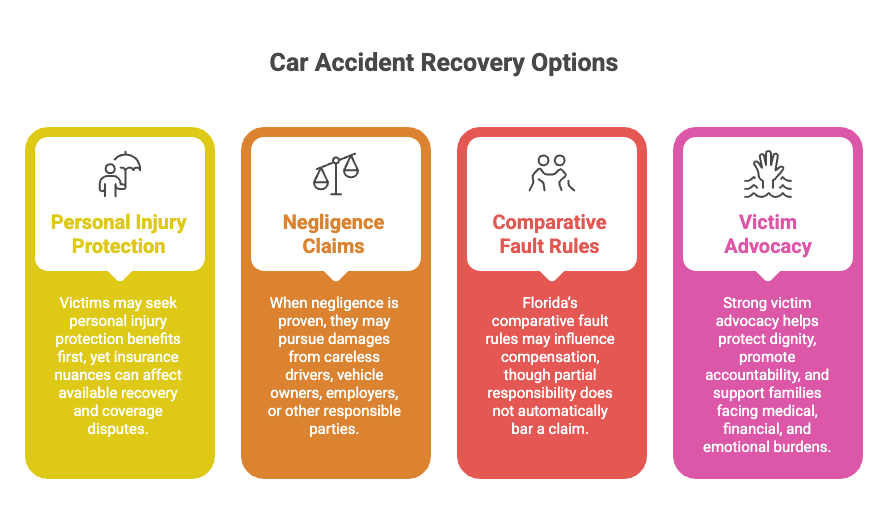
- Victims may seek personal injury protection benefits first, yet insurance nuances can affect available recovery and coverage disputes.
- When negligence is proven, they may pursue damages from careless drivers, vehicle owners, employers, or other responsible parties.
- Florida’s comparative fault rules may influence compensation, though partial responsibility does not automatically bar a claim.
- Strong victim advocacy helps protect dignity, promote accountability, and support families facing medical, financial, and emotional burdens.
These rights may also extend to wrongful death claims when a fatal intersection crash harms surviving relatives. A careful legal review can clarify liability, applicable deadlines, and the full scope of recoverable damages under Florida law for injured people.
Steps to Take After a Miami Intersection Car Accident Injury
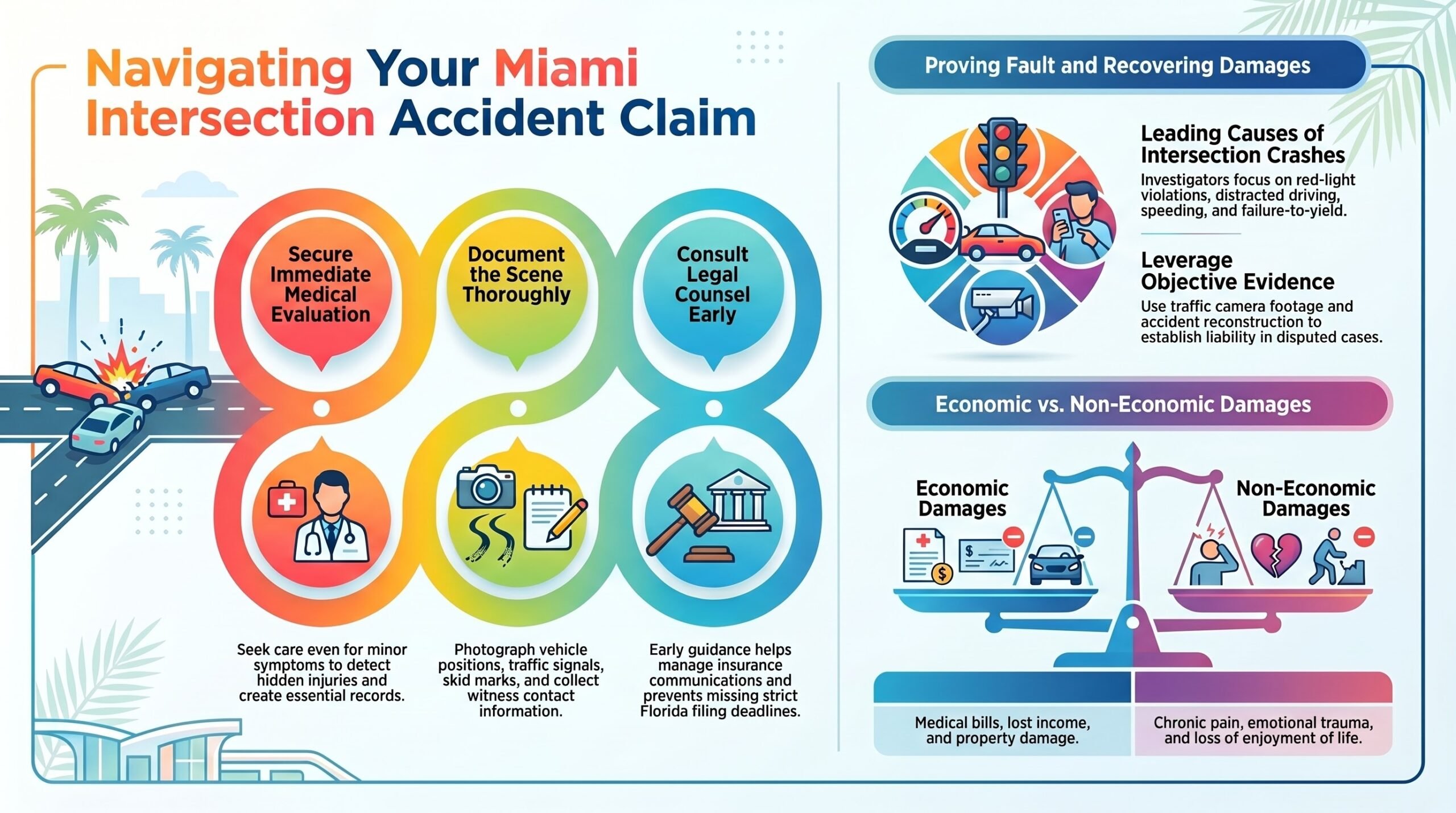
After a Miami intersection car accident injury, prompt medical attention should be secured first, as early evaluation protects both health and any future claim. The crash should then be carefully documented, including photographs, witness information, and official reports, to preserve crucial evidence. Legal counsel should also be contacted as soon as practicable, since timely guidance can help protect rights and support an informed course of action.
Secure Medical Attention
Seek prompt medical evaluation, even when injuries appear minor, because collision-related trauma can present delayed symptoms that become more serious without timely care. Early assessment helps protect health, supports emergency stabilization, and reduces the risk of complications that could affect future well-being and service to loved ones.
After an intersection crash, injured individuals should accept transport when advised or visit an emergency room, urgent care center, or physician as soon as possible. Medical professionals can identify concussions, internal bleeding, soft tissue damage, fractures, and spinal injuries that may not be obvious at the scene. They can also recommend pain management, activity restrictions, and follow-up care tailored to recovery needs.
Following medical guidance consistently promotes recovery, improves long-term outcomes, and helps injured people regain the capacity to care for their families, coworkers, and the broader community.
Document The Crash
Medical care should be followed by careful documentation of the intersection collision, because accurate records can preserve facts that may fade quickly and support any later insurance claim or legal action. Photos should capture vehicle positions, damage, skid marks, debris, traffic signals, weather, and visible injuries. Notes should record the time, location, lane directions, and any statements made at the scene.
If possible, those involved should obtain contact information for witnesses and request witness statements while memories remain fresh. Copies of the police report number, insurance details, and medical discharge papers should be organized in one place.
Simple traffic diagrams can also clarify how the crash occurred, especially in intricate Miami intersections. Thorough documentation helps insurers, medical providers, and others responsible for care understand what happened and respond effectively.
Contact Legal Counsel
In the days following a collision at a Miami intersection, consulting legal counsel can help protect important rights and prevent avoidable mistakes during the claims process. Early legal consultation may clarify reporting duties, insurance communications, medical documentation, and filing deadlines under Florida law.
Counsel can evaluate liability issues, preserve evidence, and address insurers’ attempts to limit recovery before injuries are fully understood. When a family is focused on recovering and supporting others affected by the crash, professional guidance may reduce confusion and strengthen decision-making.
If immediate representation is unavailable, an attorney referral may help identify qualified counsel with relevant experience in intersection accident claims. Prompt contact also allows counsel to coordinate records, witness statements, and repair estimates, creating a more organized foundation for settlement discussions or, if necessary, litigation later.
How a Miami Intersection Car Accident Injury Lawyer Can Help You
Navigating the aftermath of a collision at a busy Miami intersection often requires more than filing an insurance claim, particularly when fault is disputed or multiple drivers are involved. A lawyer helps injured people protect their rights while pursuing outcomes that support families and communities.
After a crash at a busy Miami intersection, legal guidance can protect rights when fault disputes and multiple drivers complicate recovery.
- Counsel investigates police reports, witness statements, traffic footage, and vehicle data to identify negligence, including speeding, distracted driving, or vehicular malfunction.
- Counsel manages insurer communications, calculates medical costs, lost income, and property damage, and works to prevent undervalued settlements.
- Counsel connects clients with appropriate care documentation, including records related to post-accident PTSD, so the full harm is clearly presented.
- Counsel prepares a claim for negotiation or court, organizing evidence and deadlines so clients can focus on recovery and responsibilities to others.
Through organized advocacy, a Miami intersection car accident injury lawyer provides structure, accountability, and informed guidance when the legal and practical demands of sudden collisions quickly become overwhelming.
Long-Term Effects of Miami Intersection Car Accident Injuries
Miami intersection car accident injuries may produce consequences that continue long after the initial medical treatment ends. Victims often face chronic pain challenges and emotional trauma effects that interfere with daily functioning, employment, and overall stability. In many cases, lasting mobility limitations further reduce independence and require ongoing rehabilitation or long-term care.
Chronic Pain Challenges
Often, chronic pain becomes one of the most disruptive long-term consequences of injuries sustained in a Miami intersection collision, particularly when the crash causes damage to the neck, back, shoulders, or joints. Persistent discomfort may limit mobility, interfere with sleep, and reduce a person’s ability to work, care for family, or assist others in daily life.
Over time, ongoing symptoms can contribute to chronic fatigue, weakened physical endurance, and repeated medical appointments. Effective pain management may require coordinated treatment, including physical therapy, medication oversight, diagnostic imaging, and lifestyle adjustments.
Some individuals also face flare-ups that complicate routine tasks and prolong recovery. Because chronic pain can affect nearly every area of functioning, careful documentation, consistent care, and informed legal guidance often become important when evaluating the full impact of intersection accident injuries.
Emotional Trauma Effects
Beyond the physical burden of chronic pain, many individuals injured in a Miami intersection collision experience lasting emotional trauma that affects daily functioning and overall recovery. Some develop post-traumatic stress, marked by intrusive memories, heightened vigilance, and persistent anxiety when traveling through busy roads or hearing sudden sounds.
These emotional effects often strain family relationships, diminish work performance, and reduce the ability to participate in community responsibilities. Sleep disturbances may further weaken concentration, patience, and decision-making, creating additional barriers to recuperation. In many cases, emotional distress also contributes to depression, social withdrawal, and a loss of confidence in ordinary routines.
Care focused on counseling, consistent support, and timely legal guidance can help injured individuals protect their well-being, restore stability, and pursue the resources needed for meaningful long-term recovery.
Lasting Mobility Limitations
After a serious intersection collision, lasting mobility limitations can alter nearly every part of an injured person’s daily life. Damage to the spine, hips, knees, or nerves may reduce strength, balance, and coordination, making walking, standing, and climbing stairs difficult. Many individuals require ongoing rehabilitation, assistive devices, and home modifications to preserve safety and independence.
These changes often affect employment, family responsibilities, and the ability to participate in community service or caregiving roles. In severe cases, chronic pain and restricted movement create long-term dependence on others for transportation and personal tasks. Care providers and advocates should recognize that mobility loss carries financial, physical, and practical consequences. A careful legal evaluation can help document future treatment needs and secure resources that support dignity, stability, and continued participation in everyday life.
Proving Liability in Miami Intersection Car Accident Injury Cases
How is liability established when a Miami intersection collision involves conflicting accounts and multiple potential causes? Attorneys and investigators examine the full factual record to determine whether a driver breached a duty of care and caused harm.
Useful evidence often includes traffic camera footage, vehicle damage patterns, skid marks, signal timing data, electronic records, and medical documentation. Careful attention to witness credibility can clarify disputed details about speed, right-of-way, distraction, or sudden lane changes.
When the sequence of events remains unclear, accident reconstruction may help explain angles of impact, stopping distances, and driver reaction times. Liability may rest with one driver or be shared among several parties under Florida comparative fault principles.
Road design defects, obstructed signage, or malfunctioning signals can also contribute to the analysis. A thorough, service-oriented legal approach helps injured people and their families understand what happened, identify responsible parties, and pursue accountability with accuracy, fairness, and dignity.
Dealing With Insurance Companies After a Miami Intersection Car Accident Injury
Many injured people find that the insurance process becomes complicated soon after a Miami intersection collision, especially when adjusters request recorded statements, dispute the extent of injuries, or attempt to assign fault before the evidence is fully reviewed.
In these situations, careful communication often protects both recovery and financial stability. Insurance representatives may seem cooperative, yet their evaluations commonly focus on limiting payouts under the policy. A disciplined approach includes preserving medical records, repair estimates, photographs, wage documentation, and all written correspondence. Clear organization supports accurate policy negotiation and helps prevent misunderstandings that can undermine a valid claim.
Service-minded families often benefit from prompt legal guidance when questions arise about coverage, comparative fault, or insurer tactics. Counsel can manage communications, review settlement language, and monitor claim timelines so injured people avoid unnecessary pressure.
This support allows individuals to prioritize treatment, assist loved ones, and make informed decisions that reflect dignity, responsibility, and the broader needs of those who depend on them.
What to Expect During a Miami Intersection Car Accident Injury Claim Process
A Miami intersection car accident injury claim typically begins with immediate post-crash actions, including medical evaluation, accident reporting, and preservation of available evidence. It then proceeds with the insurance claim investigation, in which documentation, witness statements, and accident details are reviewed to assess fault and the extent of damages. From there, the process often turns to proving liability and losses, followed by settlement negotiations or, when necessary, formal litigation.
Immediate Steps After a Crash
In the moments immediately following a collision at a Miami intersection, the actions taken can materially affect both physical recovery and the strength of an injury claim. Priority is generally given to safety, emergency assistance, and prompt medical evaluation, even when symptoms appear minor.
Helpful next steps often include photographing vehicles, roadway markings, traffic signals, and visible injuries. Accurate witness collection may support a clearer account of how the crash occurred, while careful documentation of pain, treatment, and expenses can preserve important details.
Consistent medical follow-ups also matter because gaps in care may complicate recovery and the presentation of damages. A police report is typically requested, and damaged property should be preserved when possible. Throughout this period, organized records and calm decision-making can better position an injured person to pursue accountability and serve loved ones well.
Insurance Claim Investigation
Several stages usually define the insurance claim investigation after a Miami intersection crash, and each can affect the timing, value, and direction of an injury case. Insurers commonly begin by reviewing the crash report, photographs, recorded statements, vehicle damage, and available medical records. They may request authorizations, inspect the vehicles, and compare timelines for consistency.
Adjusters also examine coverage issues, including limits, endorsements, and policy exclusions, because those terms can shape what benefits may be available to injured people and their families. In more complex collisions, insurers sometimes consult engineers or forensic reconstruction experts to evaluate impact angles, signal patterns, or roadway conditions.
Throughout the investigation, communications, documentation, and deadlines matter. Careful, organized responses often help support a more efficient process and better protect the interests of those seeking recovery and assistance.
Proving Fault And Damages
Establishing fault and documenting damages often become the central tasks in a Miami intersection car accident injury claim, because compensation usually depends on showing how the crash occurred and how the injuries affected the person involved. Evidence may include police reports, witness statements, traffic camera footage, vehicle damage, and medical records.
In more disputed cases, expert testimony and forensic reconstruction can help explain speed, signal timing, visibility, and impact angles. Damages are usually supported through treatment notes, diagnostic imaging, employment records, and professional opinions regarding recovery needs. Careful proof serves not only the injured person but also promotes accountability and safer conduct within the community.
By organizing evidence clearly and consistently, the claim process can present a reliable picture of responsibility, physical harm, financial loss, and the practical effects on daily life.
Settlement And Litigation
Once fault and damages are supported with clear evidence, the claim generally moves into the settlement and litigation phase, where insurers and opposing parties evaluate exposure and dispute the amount owed. During this stage, counsel typically presents demand packages, reviews policy limits, and weighs medical updates, wage loss documentation, and future care needs. Many claims resolve through negotiation, and effective mediation strategies can help parties identify practical solutions that protect injured people and support family stability.
If settlement efforts fail, a lawsuit may proceed through pleadings, discovery, depositions, motions, and possible trial. Throughout the process, deadlines, evidence preservation, and witness preparation remain important. A court judgment may conclude the case, although appeal options can extend the timeline. Careful guidance helps clients make informed decisions while pursuing fair compensation and accountability.
Compensation for Miami Intersection Car Accident Injury Damages
Accountability often begins with a clear understanding of the damages an injured person may recover after a Miami intersection collision. Compensation may cover emergency treatment, follow-up care, rehabilitation, lost income, reduced earning capacity, property loss, and other documented consequences resulting from the crash. Careful review of records helps establish a fair pain valuation while accounting for medical liens that may affect the final recovery and distribution of funds.
A thorough claim also considers future needs arising from lasting injuries, including ongoing therapy, medication, assistive devices, transportation to treatment, and household support. When families are trying to serve and protect one another, a complete damage assessment can provide practical stability during a difficult period. Attorneys often work with physicians, vocational experts, and life care planners to measure the full impact of the collision.
By presenting organized evidence and credible projections, counsel can pursue compensation that reflects the injured person’s present condition, anticipated recovery path, and long-term care responsibilities.
Economic vs Non-Economic Damages in Miami Intersection Car Accident Cases
Miami intersection car accident claims often involve two categories of compensable harm: economic damages and non-economic losses. Economic damages generally include measurable financial costs, such as medical expenses, lost income, and property damage, while non-economic damages address less tangible harm, including pain, suffering, and diminished quality of life. The value of either category depends on the strength of the evidence, the seriousness of the injuries, and the ability to connect the claimed losses to the intersection collision.
Economic Damages Explained
In many intersection collision cases, economic damages refer to the measurable financial losses caused by the crash, while non-economic damages address the human consequences that do not come with fixed price tags. These damages typically include emergency care, hospital bills, surgery, rehabilitation, medication costs, transportation to appointments, property damage, and other documented expenses tied directly to the incident.
They may also include lost wages when injuries prevent a victim from working during recovery, as well as diminished capacity and future earnings if long-term limitations affect employment. In service-minded communities, understanding these categories helps families pursue fair compensation with clarity and purpose. Attorneys often rely on medical records, invoices, repair estimates, employment documentation, and expert analysis to calculate these losses accurately and present a well-supported claim during settlement negotiations or litigation.
Non-Economic Losses Overview
Recovery after an intersection collision often involves losses that cannot be measured by receipts or wage statements. These non-economic damages address the human effects of injury, including physical discomfort, emotional distress, mental anguish, inconvenience, and diminished enjoyment of daily life. In Miami intersection cases, such harms may affect both the injured person and close family relationships.
A legal claim may also recognize loss of consortium when injuries disrupt companionship, affection, or household support. Although pain valuation is often discussed in relation to these damages, non-economic losses are broader than pain alone. They reflect changes in dignity, independence, and the ability to participate fully in family, work, and community service. This category seeks to acknowledge harms that are real, serious, and deeply consequential, even when no invoice exists.
Proving Damage Value
Establishing the value of damages requires more than identifying the categories of harm at issue. In Miami intersection collision cases, economic losses are often shown through medical bills, wage records, repair estimates, and future care projections. Non-economic losses, including pain, emotional distress, and loss of enjoyment, require careful damage valuation grounded in credible evidence.
Attorneys often assemble treatment histories, employment documentation, and statements from family members to present a complete picture of the injured person’s losses. When long-term impairment, reduced earning capacity, or ongoing psychological effects are involved, expert testimony may help connect the crash to projected consequences.
Courts and insurers examine whether the claimed amounts are supported, reasonable, and consistent with the person’s daily limitations. Clear proof helps secure resources needed for recovery, stability, and continued service to others.
When a Miami Intersection Car Accident Injury Case Goes to Trial vs Settlement
Determining whether a Miami intersection car accident injury case proceeds to trial or resolves through settlement depends on the strength of the evidence, the extent of the injuries, and the parties’ willingness to accept reasonable terms. Attorneys typically assess liability, review medical records, consider witness statements, and evaluate insurance positions before advising on a course that protects the injured person and promotes accountability.
Settlement is often preferred when the fault is clear and the damages are well documented. Effective Settlement tactics may secure compensation sooner, reduce expenses, and limit uncertainty for families seeking stability and continued care. A trial becomes more likely when insurers dispute fault, challenge treatment, or undervalue the lasting harm.
In those circumstances, counsel prepares exhibits, expert testimony, and arguments designed to explain losses fully and respectfully. Jury dynamics also matter because community perspectives can influence how negligence, credibility, and suffering are understood. A careful evaluation of risks, resources, and service-oriented goals helps determine whether trial or settlement better advances a just outcome for all involved.
The Statute of Limitations for Miami Intersection Car Accident Injury Cases
In Miami intersection car accident injury cases, the statute of limitations sets the legal deadline for filing a lawsuit, and missing that deadline can bar an injured person from pursuing compensation in court. Florida law generally provides a limited period to bring negligence claims arising from intersection collisions, so careful attention to statutory deadlines is vital to protecting the right to seek accountability.
This time limit serves important public purposes. It encourages timely investigation, preserves witness memory, and helps ensure that evidence remains available for a fair resolution. However, not every case follows the same timeline. Certain tolling exceptions may pause or extend the filing period in limited circumstances, such as issues involving incapacity or other legally recognized barriers.
Because facts can affect how these rules apply, injured people and those assisting them benefit from understanding the governing timeline early. Respecting filing requirements supports an orderly process and helps prevent avoidable loss of legal remedies for those seeking justice and recovery.
When to Contact a Miami Intersection Car Accident Injury Lawyer
After an intersection collision in Miami, contacting a car accident injury lawyer as early as possible can help protect an injured person’s legal and financial interests. Prompt action is often important when injuries require medical care, fault is disputed, or important evidence may disappear within days.
An immediate consultation may be appropriate after emergency treatment, especially when police reports, witness statements, photographs, and medical records must be preserved and reviewed carefully. Early legal contact can also help an injured person understand deadlines, document losses, and avoid preventable mistakes during insurance notification and related communications.
If the crash involved multiple vehicles, a commercial driver, a pedestrian, or a bicyclist, early guidance is often prudent. Families seeking to serve and support an injured loved one may also benefit from timely direction, while recovery remains the central priority. In many cases, waiting too long can complicate record gathering, claim preparation, and the fair evaluation of accident-related damages and losses.
Why You Need an Experienced Miami Intersection Car Accident Injury Lawyer
Prompt contact with counsel often lays the groundwork, but the value of representation depends greatly on the lawyer’s experience with Miami intersection collision claims. Intersection crashes frequently involve disputed signals, turning movements, multiple vehicles, and serious injuries. An experienced attorney can identify liable parties, preserve surveillance footage, and organize medical records before vital evidence is lost or altered.
Such experience also matters because Miami cases are shaped by Local statutes, insurance requirements, and procedural deadlines that can affect recovery. A seasoned lawyer understands how police reports, traffic camera data, roadway design, and witness statements interact in proving fault. When injuries are severe or future care is uncertain, Expert testimony may be necessary to explain causation, treatment needs, and financial losses.
Effective representation helps families pursue accountability, secure resources for recovery, and reduce avoidable delays. In service to injured people and their communities, experienced legal advocacy supports fairness, stability, and informed decisions during a difficult period.
How to Choose the Right Miami Intersection Car Accident Injury Lawyer for Your Case
For injured motorists and their families, selecting the right Miami intersection car accident injury lawyer requires careful attention to qualifications, case experience, and communication practices. A prudent evaluation begins with reviewing the attorney’s history of handling intersection collision claims, including disputed liability, serious injuries, and insurance negotiations. Professional standing, trial readiness, and knowledge of local courts also matter.
During client interviews, families should ask how the lawyer investigates crash scenes, obtains witness statements, and works with medical providers to document losses. Clear explanations about strategy help clients understand how the case may serve both recovery and accountability. It is also wise to compare fee structures, including contingency percentages, litigation costs, and billing policies for expert witnesses or records.
Responsiveness remains vital because timely updates reduce confusion and support informed decisions. Ultimately, the strongest choice is a lawyer who combines proven results, organized advocacy, and respectful service focused on the injured person’s long-term well-being and legal objectives.
About The Law Offices of Anidjar & Levine
With a focus on client service and injury representation, The Law Offices of Anidjar & Levine assists people harmed in Miami car accidents through each stage of the legal process.
The firm handles accident investigations, communication with insurers, damage assessment, and litigation preparation while maintaining clear contact with injured individuals and their families throughout each matter.
Its attorneys and staff approach representation with attention to practical needs, including medical coordination, case updates, and timely responses to questions.
This service model reflects an understanding that legal advocacy can support recovery and help families regain stability after a serious intersection collision.
Public information about the firm often highlights client testimonials that describe responsiveness, professionalism, and consistent guidance.
The Law Offices of Anidjar & Levine also emphasizes community outreach, reflecting a broader commitment to service beyond individual claims.
That combination of legal representation and civic involvement presents a firm profile centered on accountability, accessibility, and meaningful assistance for injured people.
Frequently Asked Questions
Can Weather Conditions Affect Liability in a Miami Intersection Car Accident?
Yes, weather conditions can affect liability in an intersection car accident. Liability often depends on whether each driver adjusted reasonably to poor visibility, rain, flooding, or road debris. A driver who failed to slow down, use headlights, or maintain control may bear greater responsibility. However, hazardous conditions do not excuse negligent conduct. Courts and insurers generally examine speed, signals, braking distance, and overall caution when determining how responsibility should be fairly apportioned.
What if the Other Driver Was Uninsured or Underinsured?
If the other driver was uninsured or underinsured, recovery may still be available through the injured person’s uninsured motorist coverage, subject to policy limits. A careful review of all applicable insurance is vital, including household policies and other potential sources of compensation. If damages exceed available coverage, a direct claim against the at-fault driver may be considered, though collectability often becomes a practical concern when determining the most effective course.
Can Traffic Camera Footage Help Prove My Intersection Accident Claim?
Yes, traffic camera footage can substantially strengthen an intersection accident claim. Traffic surveillance may show signal phases, vehicle positions, speed, and right-of-way violations with objective clarity. Red light footage can help establish whether a driver entered unlawfully, failed to yield, or struck another vehicle during a protected turn. It may also support witness statements, challenge inaccurate accounts, and assist insurers or counsel in pursuing a fair, service-minded resolution.
How Much Does It Cost to Hire an Intersection Accident Lawyer?
Hiring an intersection accident lawyer often costs nothing upfront, because many firms use contingency fees and collect payment only after a recovery. Some attorneys may instead charge hourly rates, though that approach is less common in injury matters. A careful review of the fee agreement helps families and advocates plan responsibly. Clear pricing, case expenses, and percentage terms should be fully explained so injured parties can pursue justice while protecting resources.
What if I were injured as a Passenger in the Accident?
An injured passenger may pursue compensation from one or more liable parties, including either driver, depending on fault and insurance coverage. Recovery can include medical expenses, lost income, and pain-related damages. Seatbelt use may affect the evaluation of injuries and defenses raised by insurers. If treatment is delayed or unpaid, medical liens may attach to any settlement. Prompt documentation and legal review help protect the passenger’s rights and recovery.
—————————
Intersection accidents in Miami often produce serious injuries, disputed liability, and significant financial strain.
A clear understanding of legal rights, prompt action after a crash, and careful attorney selection can materially affect the outcome of a claim.
The Law Offices of Anidjar & Levine assists injured individuals by evaluating the facts, protecting essential evidence, and pursuing appropriate compensation.
With support from a skilled Miami Car Accident Attorney, victims are better positioned to address medical costs, lost income, and the broader consequences of the collision.