

A motorcycle crash in Daytona Beach can destroy your health and finances in an instant — we preserve the evidence and fight for every dollar you deserve.
The Law Offices of Anidjar & Levine helps injured riders protect claims after serious Daytona Beach motorcycle crashes. Legal support may include prompt investigation, evidence preservation, insurer communication, medical record review, and documentation of lost income.
These claims often involve distracted driving, unsafe lane changes, speeding, impaired driving, roadway hazards, and comparative fault arguments.
Compensation may cover medical care, rehabilitation, lost earnings, pain, and reduced quality of life.
To learn more about related legal options, visit our Daytona Beach Personal Injury Lawyer page.
What Is a Motorcycle Accident Personal Injury Claim?
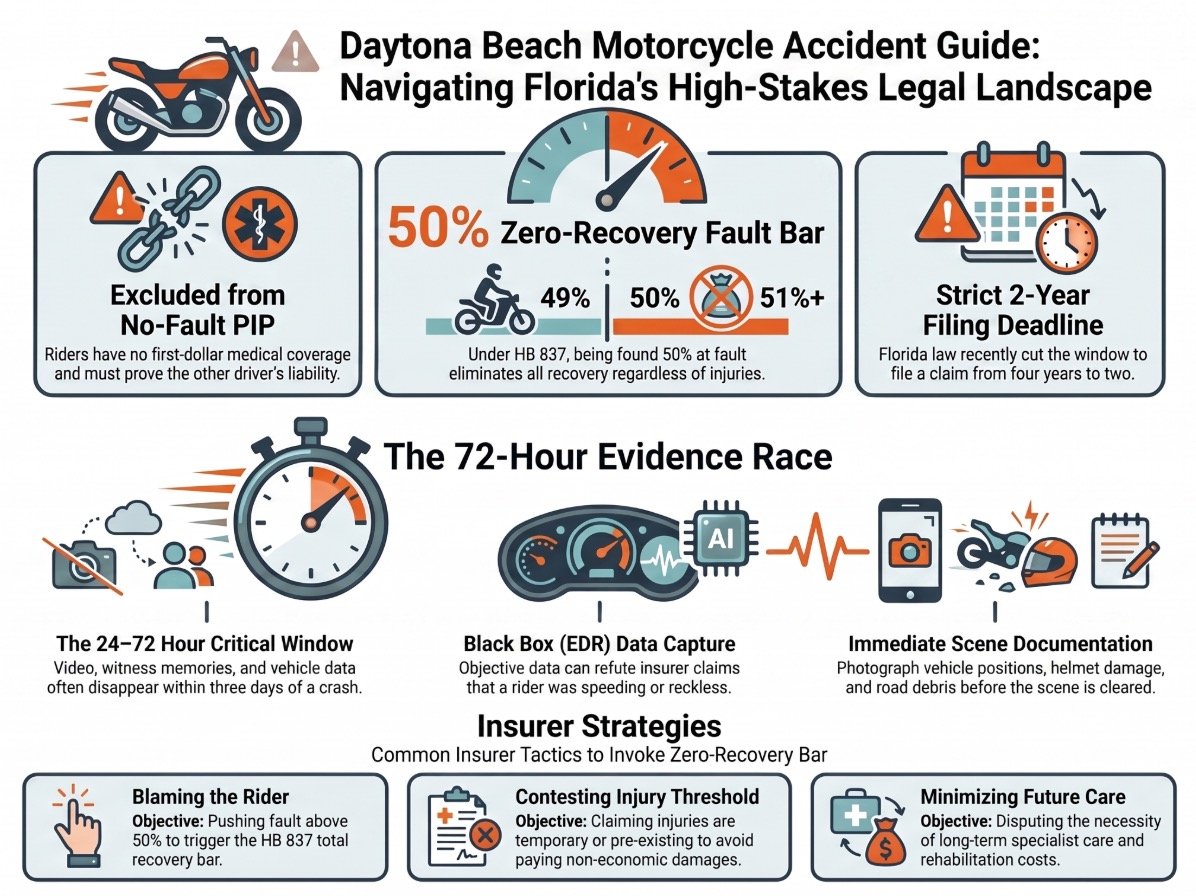
A motorcycle accident personal injury claim is a legal action brought by a rider or passenger who suffers physical, financial, or emotional harm as a result of another driver’s negligent or wrongful conduct. Unlike passenger vehicle drivers, motorcyclists in Florida are excluded from the no-fault PIP system — meaning injured riders cannot collect PIP benefits from their own insurer after a crash. They must instead rely on the at-fault driver’s bodily injury liability coverage, their own MedPay policy (if purchased), or their uninsured/underinsured motorist coverage. To recover full compensation, the injured rider must prove that the responsible driver owed a duty of care, breached it through distracted, impaired, or reckless driving, and directly caused the crash and resulting harm, including medical expenses, lost income, pain, and future care needs.
Florida law requires riders to meet the serious injury threshold — permanent injury, significant and permanent disfigurement, or death — to recover non-economic damages against an at-fault driver. Under HB 837 (2023), the filing deadline is two years, and any party found 50% or more at fault may be barred from any recovery at all. Daytona Beach’s status as the home of Bike Week and Biketoberfest significantly increases rider crash exposure during peak event periods — making early evidence preservation and legal consultation essential after any serious motorcycle crash in Volusia County.
Main Takeaways
- A Daytona Beach motorcycle accident lawyer can investigate crashes, preserve evidence, and identify liable drivers or other responsible parties.
- Legal help can manage insurer communications, prevent harmful recorded statements, and address coverage disputes or claim delays.
- Florida motorcyclists are excluded from PIP — compensation depends on the at-fault driver’s bodily injury coverage, MedPay, or uninsured motorist coverage.
- Strong claims rely on medical records, crash reports, witness statements, photos, video, and proof of lost wages.
- Florida’s two-year filing deadline and 50% comparative fault bar under HB 837 make early legal consultation critical for every injured rider.
How We Can Help With Your Daytona Beach Motorcycle Accident Injury Claim
Protecting a motorcycle accident claim in Daytona Beach often requires prompt investigation, careful evidence preservation, and a clear understanding of Florida injury law. A legal team can assist by identifying key evidence — including crash reports, witness accounts, roadway conditions, medical records, and available video footage. This work helps preserve facts before memories fade, scenes change, or documents become difficult to obtain.
Counsel may also communicate with insurers, evaluate coverage, and address insurance disputes that can delay fair compensation. By organizing medical documentation, proof of lost income, and liability evidence, the attorney helps present a complete claim that reflects the harm suffered. This support allows injured riders and their families to focus on recovery, caregiving, and daily responsibilities. Through careful preparation and steady advocacy, legal representation can help protect the claimant’s interests, reduce procedural mistakes, and pursue accountability from responsible parties under applicable Florida law.
Because Florida motorcyclists are excluded from PIP, understanding the interplay between bodily injury liability coverage, uninsured motorist protection, and MedPay is essential from the first day after any serious crash.
For background on how Florida’s insurance system works: Florida PIP Insurance Explained.
Understanding Daytona Beach Motorcycle Accident Injury Cases
Because Daytona Beach attracts heavy motorcycle traffic — especially during Bike Week, Biketoberfest, and peak tourist seasons — motorcycle accident injury cases here often involve detailed questions of fault, roadway conditions, and insurance coverage. These claims require careful review of medical records, crash reports, witness statements, and available photographs or video. For injured riders and families seeking justice, a structured legal response can help protect dignity, financial stability, and access to necessary care.
A Daytona Beach motorcycle accident case may also involve comparative fault defenses, which attempt to reduce recovery by alleging the rider shared responsibility. Careful investigation can address these claims with documented facts rather than assumptions. Police evidence preservation is also important, because roadway measurements, officer observations, citations, and scene documentation may later support liability arguments. When handled with diligence, these cases can provide accountability, promote safer conduct, and help injured individuals receive fair consideration under Florida law after serious harm.
Daytona Beach Motorcycle Accident Injuries: What the Numbers Tell Us About Rider Vulnerability on Volusia County Roads
Motorcyclists face a fundamentally different risk profile than passenger vehicle drivers, and the numbers make clear why Daytona Beach motorcycle accident claims demand immediate, aggressive legal action. According to the FLHSMV 2022 Florida Traffic Crash Facts, Florida recorded 401,523 total crashes and 3,535 traffic fatalities statewide — with motorcyclists disproportionately represented in the fatality category because riders have no surrounding vehicle structure to absorb crash forces. NHTSA data shows that distracted driving killed 3,308 people nationally in 2022 — and distraction is a leading cause of the failure-to-yield and unsafe lane change collisions that injure motorcyclists across Daytona Beach’s intersections and coastal corridors.
Florida’s HB 837 (2023) reshaped every motorcycle accident claim by cutting the filing window to two years and imposing a 50% comparative fault bar — and because insurers routinely blame motorcyclists for crashes caused by negligent drivers, this zero-recovery threshold has become a primary defense tactic in virtually every Daytona Beach rider injury case. Unlike car accident claims, Florida motorcyclists are excluded from PIP — meaning riders have no no-fault first-dollar medical coverage and must prove the at-fault driver’s liability to receive any compensation at all.
Crash scene evidence — photographs, surveillance footage, witness accounts, and vehicle EDR data — typically begins degrading within 24 to 72 hours, making immediate preservation the single most important action after any serious motorcycle crash in Daytona Beach.
Common Causes of Daytona Beach Motorcycle Accident Injuries
Motorcycle accidents in Daytona Beach often result from preventable driver conduct, roadway decisions, and violations of traffic safety laws. Common causes include distracted driver collisions, unsafe lane changes, speeding and reckless driving, and impaired driving crashes. Understanding these factors helps clarify how liability may arise and why a careful investigation is necessary after a serious motorcycle collision.
Distracted Driver Collisions
When a driver looks away from the road for even a few seconds, a motorcyclist can be placed in immediate danger. Phone distraction, navigation screens, eating, or conversations can delay recognition of a rider’s presence and reduce reaction time. In Daytona Beach, where traffic may include visitors, commuters, and event crowds, distracted driving can create serious hazards at intersections. A driver who fails to notice a traffic signal, a stopped motorcycle, or an approaching rider may cause a collision with severe consequences. Those who serve injured riders often examine phone records, witness accounts, and vehicle data to identify inattention. Careful investigation can help establish how distraction contributed to the crash, support accountability, and guide the injured person toward necessary medical, financial, and legal recovery after a preventable event.
Unsafe Lane Changes
Inattention is not the only driver behavior that places riders at risk, as unsafe lane changes can also cause sudden and severe motorcycle crashes in Daytona Beach. Motorists may fail to check blind spots, signal properly, or judge the smaller profile of a motorcycle before moving into another lane. These errors are especially dangerous near intersections, where visibility may already be limited by traffic, signage, or turning vehicles. Although helmets and protective gear can reduce certain injuries, they cannot prevent a collision caused by careless merging. A commitment to full-lane scanning also supports safer roadway decisions, because attentive drivers who look carefully before changing lanes are more likely to protect all road users — including motorcycle riders traveling in adjacent lanes or nearby traffic.
Speeding and Reckless Driving
Although many collisions involve ordinary driving errors, speeding and reckless driving often make motorcycle accidents in Daytona Beach far more serious. Excessive speed reduces reaction time, increases stopping distance, and magnifies the force of impact on riders who have limited physical protection. Reckless conduct — including aggressive passing, tailgating, and ignoring traffic controls — can place motorcyclists in situations where safe avoidance becomes nearly impossible. Those who serve injured riders should recognize how roadway behavior, traffic density, and event-related congestion may influence crash severity. Safety helmet use can reduce head injury risks, yet it cannot prevent harm caused by a driver’s disregard for basic safety duties. Liability often turns on this conduct, and the physical evidence at the crash scene — skid marks, debris paths, and impact angles — can confirm what speed and behavior were involved at the moment of collision.
Impaired Driving Crashes
Impaired driving is another major factor that can turn a motorcycle crash in Daytona Beach into a catastrophic event, particularly after late-night activity, tourism-related gatherings, or motorcycle events that increase traffic volume. Alcohol, drugged driving, fatigue, and mixed substance use can slow reaction time, reduce lane control, and impair judgment around vulnerable riders. Even with responsible helmet use, a motorcyclist may suffer severe harm when an impaired driver drifts, turns left unsafely, or fails to yield. Poor roadway lighting can further limit visibility, making early detection of riders more difficult. Law enforcement efforts — including sobriety checkpoints — serve an important public safety role by discouraging impaired operation. After such crashes, careful investigation helps identify negligent conduct and supports accountability for injured riders and affected families.
Your Legal Rights After a Daytona Beach Motorcycle Accident
After a motorcycle accident in Daytona Beach, injured riders and passengers may have the right to pursue compensation when another party’s negligence caused or contributed to the crash. These rights may include recovery for medical care, lost income, pain, rehabilitation needs, and reduced quality of life. Careful action helps protect a claim and supports those serving injured families with diligence.
Prompt legal action can help protect recovery rights after a Daytona Beach motorcycle accident — and is especially critical because Florida motorcyclists are excluded from PIP and must prove the at-fault driver’s liability to receive any compensation at all.
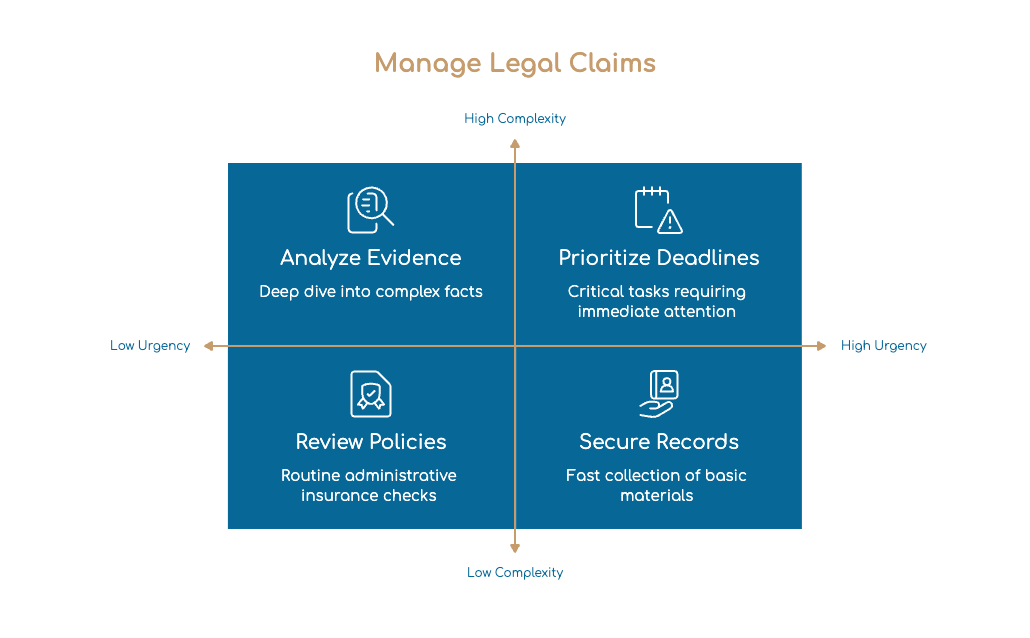
- Statute deadlines can determine whether a claim may proceed, making prompt legal guidance necessary.
- Evidence preservation may include damaged helmets, roadway photographs, medical records, and vehicle inspection materials.
- Insurance coverage should be reviewed carefully, including bodily injury, uninsured motorist, and available liability policies.
- Witness credibility may affect how insurers, courts, or opposing parties evaluate the facts.
A Daytona Beach motorcycle accident lawyer can assess available remedies, communicate with insurers, and help ensure the injured person’s rights are carefully protected throughout the process.
Why Do Daytona Beach Motorcycle Accident Injuries Happen?
On Daytona Beach roads, motorcycle accident injuries often happen because riders have limited physical protection when negligent driving, unsafe road conditions, or hazardous traffic patterns lead to a collision. Drivers who fail to yield, follow too closely, change lanes without checking blind spots, or drive while distracted can place motorcyclists in immediate danger. Speeding and impaired driving also reduce reaction time, making severe impact more likely.
Local conditions may increase risk, especially during events, holidays, and peak tourism periods. Busy roads lead to sudden stops, lane confusion, and aggressive driving. Unfamiliar out-of-state drivers may misjudge motorcycles in traffic. Poor lighting, loose sand, uneven pavement, and debris can further contribute to crashes — and Daytona Beach’s coastal road network and high-volume intersection corridors along US-1, A1A, and International Speedway Boulevard place riders in regular contact with distracted, unfamiliar, and sometimes impaired drivers throughout the year. These factors underscore why prevention, awareness, and responsible roadway conduct remain critical for every road user who shares the road with motorcyclists in Volusia County.
What Should You Do After a Daytona Beach Motorcycle Accident Injury?
After a Daytona Beach motorcycle accident injury, the injured rider should take measured steps to protect health, evidence, and legal rights. Prompt medical care, careful documentation of the crash, and preservation of relevant records can affect both recovery and any future claim. Contacting an attorney early may also help to ensure that insurance issues, liability questions, and filing deadlines are handled properly.
Seek Medical Care
When a motorcycle crash causes injury in Daytona Beach, prompt medical care should be the immediate priority. Emergency response personnel can evaluate visible trauma, stabilize serious conditions, and determine whether transport to a hospital is necessary. Even when injuries appear minor, a medical professional should assess the rider, because internal injuries, concussions, and soft tissue damage may worsen without attention.
Timely care also helps document injuries clearly and reliably, which can support later insurance or legal needs. Delayed treatment may allow symptoms to progress and raise questions about the cause or severity of the harm. After the initial visit, follow-up care should be completed as directed — including specialist appointments, therapy, imaging, or medication plans — to promote recovery and protect the injured person’s well-being.
Document the Crash
At the crash scene, careful documentation can preserve important details that may be difficult to recover later. If safely possible, the injured rider or a trusted helper should photograph vehicle positions, skid marks, road debris, weather conditions, visible injuries, and damage to the motorcycle. Images of nearby signs, lane markings, and signals may help identify traffic light violations or other unsafe conduct. Witness names, phone numbers, and brief statements should be recorded accurately and respectfully. Police report information, responding officer names, and emergency service details should also be saved. Photographs of helmet condition, including cracks, impact marks, and damaged components, may further show the force and angle of impact and support a clear account of what occurred.
Contact an Attorney
In the days following a Daytona Beach motorcycle accident injury, contacting an attorney can help protect the rider’s rights before evidence is lost or insurance decisions are made. Legal guidance allows injured riders to focus on treatment, family needs, and community responsibilities while a professional evaluates liability, damages, and available coverage. An attorney may obtain crash reports, preserve witness statements, and communicate with insurers to prevent harmful recorded statements. Early guidance also covers insurance claim deadlines, documentation requirements, and the importance of consistent medical follow-up. For those committed to serving others, timely representation helps ensure that the claim is handled with order, dignity, and accountability, while protecting the resources needed for recovery and future care after a serious collision.
Critical Evidence in a Daytona Beach Motorcycle Accident Injury Case
Critical evidence can shape the strength of a Daytona Beach motorcycle accident injury case, particularly when liability and damages are disputed. Key materials often include police crash reports, accident scene photos, witness statements, medical treatment records, and vehicle electronic data. Each item may help establish what happened, who was responsible, and how the injuries affected the rider’s recovery.
Police Crash Reports
After a motorcycle collision in Daytona Beach, the police crash report often becomes one of the first records reviewed in an injury claim. This report may identify drivers, witnesses, insurance details, roadway conditions, citations, and the officer’s initial observations. Under Florida roadside protocols, officers document crucial facts that can help clarify how the crash occurred and whether a traffic violation contributed to the injuries.
For an injured rider, the report can guide later investigation, but it is not always complete or final. Attorneys may compare it with medical records, witness statements, and other materials to correct errors or address missing details. Careful evidence preservation includes obtaining the report promptly, reviewing names and dates, and noting any inaccuracies for follow-up before insurers rely on them heavily in evaluating fault and comparative negligence arguments.
Accident Scene Photos
At the crash scene, photographs can preserve details that may disappear within hours — including vehicle positions, skid marks, debris fields, traffic signals, road defects, weather conditions, and visible injuries. Photos may help a legal team evaluate how the collision occurred, identify contributing hazards, and respond to insurance challenges with organized visual support. Clear images of motorcycle damage, helmet condition, roadway layout, and nearby signs can assist those working to protect an injured rider’s recovery. When available, footage from businesses, traffic cameras, or residential systems may further support the photographic record. These materials can also help assess consistency in later accounts. Prompt collection is often important, because cleanup, repairs, weather, and routine overwriting may quickly remove valuable visual information.
Witness Statements
Photographs may show the physical aftermath of a collision, but witness statements can provide context about how the events unfolded. Neutral observers may describe vehicle speed, traffic signal status, lane position, evasive actions, or whether a driver appeared distracted. In a Daytona Beach motorcycle injury case, these accounts can help clarify disputed facts and support a fair evaluation of responsibility. Promptly collecting names, contact information, and written or recorded statements helps preserve details before memories fade. A lawyer may compare witness accounts with police reports, roadway evidence, and other documentation. Reliable statements can strengthen advocacy for an injured rider while promoting careful, accountable service to all parties involved.
Medical Treatment Records
In a Daytona Beach motorcycle accident injury case, medical treatment records often provide the clearest link between the crash and the rider’s physical harm. Emergency reports, diagnostic imaging, surgical notes, therapy records, and physician evaluations help show the nature, severity, and progression of injuries. These records also document pain complaints, mobility limits, work restrictions, and future care needs, which may influence an insurance settlement.
When reviewed with witness documentation, medical records can confirm how the collision affected the injured rider’s daily life and long-term stability. Consistent treatment strengthens credibility, while gaps in care may invite disputes from insurers. Accurate records also assist attorneys, medical providers, and advocates who seek to serve injured people with fairness, diligence, and respect throughout the claims process after a serious motorcycle crash.
For a detailed explanation of how medical records shape the value of every motorcycle injury claim, read “Why Medical Records Matter in Personal Injury Cases.”
Event Data Recorder (EDR) Evidence in Motorcycle Accident Cases
In motorcycle accident cases where a motor vehicle caused the crash, the other vehicle’s Event Data Recorder (EDR) — its black box — may capture pre-crash speed, braking force, throttle input, and steering angle in the seconds before impact. This objective data can confirm or refute an insurer’s claim that the injured rider was at fault for the collision — and is especially powerful in disputed-fault motorcycle cases where the insurer is actively trying to push comparative fault above 50% to invoke HB 837’s zero-recovery bar. We send formal spoliation letters immediately upon retention to prevent EDR data from being overwritten before it can be extracted and analyzed.
Learn more about how black box data protects your claim: How Black Box Data Can Help Your Car Accident Case.
Long-Term Effects of Daytona Beach Motorcycle Accident Injuries
Motorcycle accident injuries in Daytona Beach may create long-term consequences that extend well beyond initial medical treatment. Chronic pain conditions, cognitive and emotional effects, and physical limitations can interfere with daily functioning and overall stability. These injuries may also reduce earning capacity, making careful evaluation of future losses critical in an injury claim.
Chronic Pain Conditions
Although some injuries appear to recover after a Daytona Beach motorcycle accident, chronic pain can remain for months or years and affect nearly every part of an injured rider’s life. Persistent back, neck, joint, or nerve pain may limit mobility, reduce work capacity, and require ongoing medical treatment, therapy, or medication. These conditions can be difficult to document when imaging appears normal, making alternative proof important through treatment records, pain journals, expert opinions, and consistent reports from caregivers. A careful legal review may also identify insurance bad faith tactics — including delayed evaluations, minimized symptoms, or unfair reliance on incomplete records. For those committed to serving injured riders, recognizing chronic pain as a serious long-term harm helps support fair compensation, continued care, and meaningful stability after trauma.
Cognitive and Emotional Impact
Pain is not the only long-term consequence that may follow a serious Daytona Beach motorcycle accident, as cognitive and emotional harm can also alter an injured rider’s daily functioning. Head injuries may affect memory, concentration, judgment, and impulse control, making ordinary responsibilities more difficult to manage. Traumatic stress can also develop after a violent collision, especially when the rider recalls the impact, medical treatment, or fear of death.
These effects may create obstacles to recovery that caregivers, advocates, and legal professionals should recognize with care. An injured person may experience guilt and isolation, withdraw from family, or struggle to trust traffic situations again. Careful documentation of mood changes, sleep disruption, confusion, and behavioral shifts can help show how the accident affected the person beyond physical injuries and medical bills. According to the Mayo Clinic, traumatic brain injury — one of the most common consequences of motorcycle crashes — can cause long-term complications affecting memory, behavior, and physical function that may not be fully apparent in the weeks immediately following the accident.
Reduced Earning Capacity
When serious injuries limit a rider’s ability to return to the same job duties, reduced earning capacity may become one of the most significant long-term consequences of a Daytona Beach motorcycle accident. These losses may affect workers who can no longer lift, stand, travel, concentrate, or perform skilled tasks at their previous level. Reduced earning capacity differs from missed wages because it measures future income that may never be earned. A careful review may include medical restrictions, employment history, vocational assessments, and projected career growth. Within economic damages, this category can support fair compensation for diminished stability and independence. A thoughtful settlement strategy should account for the injured person’s need to support family, contribute to the community, and maintain dignity despite lasting physical or cognitive limitations after recovery.
Proving Liability in Daytona Beach Motorcycle Accident Injury Cases
Because Florida motorcycle crashes often involve disputed accounts, proving liability in a Daytona Beach motorcycle accident injury case requires a careful evaluation of how the collision occurred, who violated a legal duty, and what evidence connects that conduct to the rider’s injuries. Liability may rest on a driver who failed to yield, followed too closely, drove while distracted, ignored traffic signals, or exercised unsafe care near a vulnerable motorcyclist.
Useful proof often begins at the accident scene, where photographs, skid marks, vehicle positions, roadway conditions, and witness statements can clarify fault. Police reports, medical records, helmet damage, repair estimates, and insurance documentation may also help establish the sequence of events and the severity of harm. In some cases, experts may review impact angles or visibility factors. A careful legal review protects injured riders, supports accountability, and helps ensure that those responsible for preventable harm are identified through reliable evidence and sound analysis.
For context on how Florida values motorcycle and vehicle accident injury claims, read “Average Car Accident Settlement in Florida.”
Dealing With Insurance Companies After a Daytona Beach Motorcycle Accident Injury
After a Daytona Beach motorcycle accident, insurance companies often begin evaluating the claim before the injured rider fully understands the extent of the injuries, financial losses, or available legal options. Adjusters may request statements, medical authorizations, or quick settlements that appear helpful but can limit fair recovery. A lawyer can serve the injured person by managing communications, reviewing coverage, and preserving the rider’s ability to seek appropriate compensation.
Careful attention is especially important when reviewing policy exclusions, disputed coverage issues, or language that could reduce benefits. Effective negotiation strategies may include documenting medical needs, wage losses, motorcycle damage, and future care requirements with accuracy and consistency. The goal is not conflict for its own sake, but a fair resolution grounded in evidence and responsibility. When representatives act with professionalism, they help protect injured riders from unnecessary pressure while allowing the claim to be presented with dignity, precision, and purpose.
What to Expect During a Daytona Beach Motorcycle Accident Injury Claim Process
A Daytona Beach motorcycle accident injury claim typically begins with an initial case evaluation, where liability, injuries, and available insurance coverage are reviewed. The process then moves into evidence gathering and insurance settlement negotiations, both of which can substantially affect the value and direction of the claim. If a fair resolution cannot be reached, filing a lawsuit may become necessary to pursue appropriate compensation through the court system.
Initial Case Evaluation
During an initial case evaluation, a Daytona Beach motorcycle accident lawyer reviews the facts of the crash, the extent of the rider’s injuries, available insurance coverage, and the evidence needed to support a claim. This meeting helps identify immediate concerns, including medical treatment needs, wage loss, and possible responsibility for the collision. The lawyer may also consider whether Florida traffic violations contributed to the accident, such as unsafe lane changes, speeding, or failure to yield. Insurance claim preparation begins with understanding policy limits, notice requirements, and potential disputes that may affect recovery. The evaluation also gives the injured rider or family a clear view of the claim process, expected timelines, and practical next steps, while promoting informed decisions and responsible advocacy focused on restoring stability.
Evidence Gathering Process
From the outset of the claim, the evidence gathering process helps establish how the motorcycle accident occurred, who may be legally responsible, and what losses resulted from the crash. This stage may involve collecting crash reports, medical records, photographs, repair estimates, roadway data, and helmet or motorcycle inspection details. Careful witness identification may also locate drivers, passengers, pedestrians, or nearby business personnel who observed relevant events. Each source can help clarify impact points, traffic signals, visibility, speed, and post-crash conduct.
For injured riders, organized documentation supports accountability while respecting the broader goal of protecting public safety. The information collected also informs an insurance negotiation strategy by clearly and verifiably demonstrating liability and damages. Thorough preparation helps reduce uncertainty before later claim decisions are made.
Insurance Settlement Negotiations
Once the available evidence has been organized, insurance settlement negotiations typically focus on liability, injury severity, medical treatment, lost income, property damage, and the long-term effect of the motorcycle crash. Insurers may review medical records, repair estimates, wage documentation, witness statements, and crash reports before responding to a demand. A careful policy limits analysis helps identify available coverage and whether compensation may be constrained by the responsible party’s insurance. During this stage, representatives may exchange offers, clarify disputed facts, and assess future care needs with patience and diligence. The settlement timeline can vary based on treatment progress, documentation quality, and the insurer’s evaluation practices. Effective negotiation seeks a fair resolution while respecting the injured person’s recovery, family responsibilities, and need for stability after a serious Daytona Beach collision.
Filing a Lawsuit
If settlement negotiations do not resolve the claim, filing a lawsuit may become necessary to preserve legal rights and pursue compensation through the civil court system. In Daytona Beach motorcycle accident cases, litigation begins with a complaint outlining negligence, injuries, and requested relief. The defendant then responds, and both sides exchange evidence through discovery. Attorneys may gather medical records, expert opinions, witness statements, and crash documentation to refine damages calculation and strengthen trial preparation. Throughout this process, settlement strategy remains important, because responsible resolution can still serve the injured person’s needs without trial. If the case proceeds, the court may address motions, schedule mediation, and prepare for jury selection. Each step requires organization, accuracy, and steady advocacy to secure a fair recovery.
Compensation for Daytona Beach Motorcycle Accident Injury Damages
Securing compensation after a Daytona Beach motorcycle accident often requires a careful assessment of the injured rider’s economic losses, physical harm, and long-term personal impact. Legal support may help ensure that the claim reflects the full scope of harm caused by negligent conduct, rather than a narrow valuation shaped by early settlement pressure.
Insurance adjuster tactics can include requesting recorded statements, minimizing injury severity, or suggesting the rider shared fault without adequate proof. Thorough case preparation helps protect injured riders from these practices. Evidence preservation — including crash reports, medical records, witness information, photographs, repair estimates, and helmet or vehicle damage — can strengthen the claim and support a fair resolution.
Compensation may also account for ongoing treatment needs, reduced independence, and disruptions to family responsibilities. A well-documented claim allows advocates to serve the injured person’s interests with diligence, accuracy, and respect for the recovery process after serious harm.
Economic vs. Non-Economic Damages in Daytona Beach Motorcycle Accident Cases
In Daytona Beach motorcycle accident cases, damages are generally divided into economic losses — such as medical bills and lost wages — and non-economic losses, including pain and emotional suffering. Economic damages are typically supported by records, invoices, and employment documentation, while non-economic damages require careful evidence of the injury’s broader impact. Proving both categories with accuracy is critical to establishing the full value of a motorcycle accident claim.
Medical Bills and Lost Wages
The financial impact of a Daytona Beach motorcycle crash includes both economic and non-economic damages, and each category plays a distinct role in a personal injury claim. Medical bills and lost wages are economic damages, supported by records, invoices, pay statements, and employer verification. These losses may include ambulance charges, emergency treatment, surgery, rehabilitation, medication, medical equipment, missed work, reduced hours, and diminished earning capacity. A thorough claim also considers future treatment costs and long-term income disruption when injuries limit service, caregiving, or employment duties. Expert witness analysis can explain projected care expenses or vocational limitations. Precise documentation helps ensure the injured rider’s financial recovery reflects measurable losses.
Pain and Emotional Suffering
Beyond documented medical expenses and wage loss, a Daytona Beach motorcycle accident claim must account for pain and emotional suffering as non-economic damages. These losses may include chronic discomfort, reduced mobility, anxiety, sleep disruption, loss of enjoyment, and the strain placed on family relationships. For injured riders, such harm can affect service to a household, workplace, or community in ways that financial records cannot fully describe. In severe crashes, wrongful death claims may also address survivors’ grief, loss of companionship, and the absence of guidance once provided by the deceased. During settlement negotiation, insurers often minimize these human consequences, making careful valuation necessary. A well-prepared claim recognizes that dignity, stability, and daily function are central concerns after a motorcycle collision for every seriously injured client.
Proving Your Damages
When a motorcycle crash causes financial and personal harm, proving damages requires more than stating that losses occurred. Economic damages may include medical bills, rehabilitation costs, lost wages, reduced earning capacity, and property damage. Non-economic damages address pain, emotional distress, loss of enjoyment, and changes in daily life. A careful legal review organizes evidence of damages — including records, invoices, employment documents, photographs, medical opinions, and testimony from those who provide care or support.
In Daytona Beach motorcycle accident cases, this evidence helps connect each loss to the collision, rather than to unrelated conditions. Future losses also require informed evaluation, especially when injuries affect long-term treatment, work, or independence. By presenting complete proof, an attorney helps injured riders seek compensation that reflects both measurable expenses and human consequences.
When a Daytona Beach Motorcycle Accident Injury Case Goes to Trial vs. Settlement
Although many motorcycle accident injury claims in Daytona Beach resolve through settlement, some cases require trial when the parties cannot agree on liability, the severity of injuries, or the value of damages. Settlement may provide a more efficient path for an injured rider, reducing delay while preserving resources for medical care, family support, and recovery needs. However, a fair resolution often depends on careful trial preparation, including organized evidence, medical documentation, witness accounts, and a clear presentation of losses.
Expert testimony may help explain injuries, crash mechanics, future treatment needs, or diminished earning capacity. As a case develops, settlement timing can affect both strategy and outcome, especially when new evidence clarifies the risks of trial. Strong preparation may also increase negotiation leverage, encouraging insurers to reassess inadequate offers. When settlement remains unjust, trial allows a judge or jury to evaluate the evidence and determine appropriate compensation.
Florida Laws That May Affect Your Daytona Beach Motorcycle Accident Case
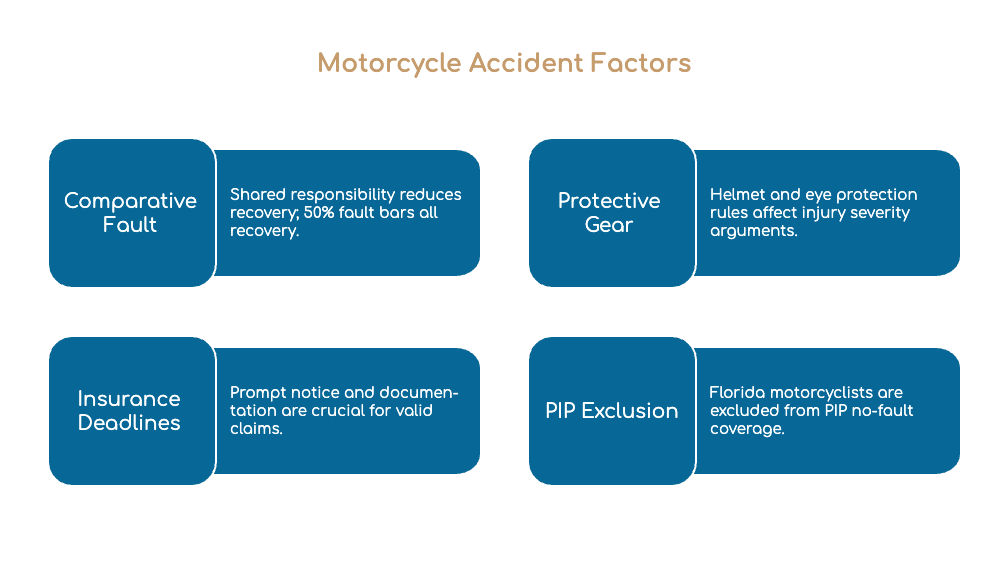
Florida law can substantially influence how a Daytona Beach motorcycle accident case is evaluated, negotiated, and resolved. These rules shape responsibility, available compensation, and the evidence needed to serve an injured rider’s best interests.
- Comparative fault may reduce recovery when evidence shows the rider shared responsibility, such as through speed, lane position, or visibility concerns. Under HB 837, reaching 50% fault bars all recovery entirely.
- Helmet and eye protection rules can affect arguments about injury severity, especially when head trauma or facial injuries are disputed by the opposing insurer.
- Insurance deadlines require prompt notice, careful documentation, and timely responses to ensure valid claims are not weakened by avoidable delays.
- Florida motorcyclists are excluded from PIP no-fault coverage — making liability evidence, witness accounts, and medical records especially important to securing any compensation at all.
A lawyer may review police reports, medical findings, roadway conditions, and insurer communications to identify which laws apply. This careful legal assessment helps protect the injured person while promoting accountability and responsible resolution.
The Statute of Limitations for Daytona Beach Motorcycle Accident Injury Cases
For an injured motorcyclist in Daytona Beach, the statute of limitations sets a strict deadline for filing a personal injury lawsuit after a crash. In Florida, most negligence-based injury claims must be filed within 2 years of the accident under HB 837 (effective March 24, 2023). Missing this deadline can prevent the injured person from seeking compensation through the courts, regardless of the severity of the harm suffered.
This filing period is separate from insurance claim deadlines, which may require prompt notice to insurers soon after the collision. Timely action helps preserve records, witness accounts, medical documentation, and other facts that may support a fair evaluation of the claim. Comparative negligence factors may also affect the amount recoverable if the motorcyclist is found partly responsible for the crash. Because deadlines and fault issues can shape the outcome, careful attention to timing serves the injured person, the family, and the broader pursuit of accountability within the community.
How a Daytona Beach Motorcycle Accident Lawyer Can Help You
Evaluating the legal and financial consequences of a motorcycle crash requires a careful review of the facts, the injuries, and the available sources of compensation. A Daytona Beach motorcycle accident lawyer can organize that process with disciplined attention to the injured rider’s needs and the family members who may be providing daily care.
- Reviewing police reports, medical records, and scene photographs to build reliable timelines of evidence.
- Identifying liable parties, including negligent drivers, commercial operators, or entities responsible for unsafe road conditions.
- Responding to insurance denials, settlement delays, and requests that may undervalue pain, lost income, or future treatment.
- Developing a trial strategy that clearly presents the rider’s losses — from impact and recovery to long-term disruption.
Through these services, counsel can help protect the claim’s value while allowing caregivers, relatives, and community support systems to focus on practical assistance and recovery.
When to Contact a Daytona Beach Motorcycle Accident Lawyer
In the aftermath of a motorcycle crash, an injured rider should consider contacting a Daytona Beach motorcycle accident lawyer as soon as immediate medical needs are addressed. Early contact helps protect the rider’s ability to seek fair support while preserving important details before memories fade, vehicles are repaired, or records become difficult to obtain.
Prompt guidance is especially important when medical treatment delays arise, because gaps in care can affect how injuries are evaluated. A lawyer may also advise the rider on documenting symptoms, missed work, and daily limitations in a consistent manner. If an insurer begins to question fault, requests recorded statements, or offers a quick settlement, timely legal communication can help prevent harmful decisions. Riders should also seek guidance after insurance claim denials or coverage disputes. Acting early allows the injured person, family members, and caregivers to focus on recovery while important deadlines and communications are handled with care.
Why You Need an Experienced Daytona Beach Motorcycle Accident Lawyer
Because motorcycle crashes often involve severe injuries, disputed liability, and biased assumptions about riders, an experienced Daytona Beach motorcycle accident lawyer can provide vital guidance from the outset. Counsel can help protect an injured rider’s interests while allowing family members, caregivers, and community supporters to focus on recovery and practical needs.
Effective representation begins with evidence preservation — including crash scene details, vehicle damage, roadway conditions, and available video footage. Prompt witness contact can also prevent important accounts from being lost or weakened over time. A lawyer may coordinate medical documentation to connect injuries, treatment, limitations, and future care needs with the crash, creating a clearer record for insurers or opposing parties.
An experienced lawyer can also develop a settlement strategy that accounts for medical expenses, lost income, pain, long-term impairment, and service responsibilities affected by injury. At Anidjar & Levine, that experience is anchored by Glen Levine’s Board Certification in Civil Trial and the firm’s AV Preeminent rating from Martindale-Hubbell — credentials that matter most when insurers invoke anti-rider bias and HB 837’s 50% fault bar to try to eliminate a legitimate claim entirely.
How to Choose the Right Daytona Beach Motorcycle Accident Lawyer for Your Case
After understanding the value of skilled legal representation, the next step is selecting a Daytona Beach motorcycle accident lawyer whose background matches the demands of the case. A careful choice begins with reviewing experience in motorcycle crash claims, knowledge of local roads, and the ability to address serious injuries with disciplined case preparation. The lawyer should demonstrate a clear client communication process, so injured riders and their families know how updates, questions, and decisions will be handled.
Ask specifically about Board Certification in Civil Trial and an AV Preeminent rating — independently verified credentials that distinguish serious litigation preparation from general practice. A suitable attorney should also explain settlement strategy planning, including how evidence, medical records, lost income, and future care needs may influence negotiations. This helps clients evaluate whether the lawyer is prepared to pursue fair compensation while protecting the client’s long-term interests. The right lawyer provides guidance, reduces confusion, and supports informed decisions during a difficult legal and recovery process.
Real Reviews From Our Clients!
Maddie Dalby ★★★★★
“After I was hit by a distracted driver while riding near Daytona Beach, the other driver’s insurer immediately tried to blame me for the crash. I had serious injuries and no idea what my rights were. Anidjar & Levine stepped in immediately, preserved the evidence, got the police report corrected, and built a case that proved the other driver caused the accident. They communicated with me every step of the way and fought hard for a settlement that covered my medical bills, my lost income, and my long-term care. I am so grateful I called them when I did.”
Richard Powers ★★★★★
“I was riding during Bike Week when another driver made an unsafe lane change and knocked me off my motorcycle. The injuries were severe and the insurance process was overwhelming. Anidjar & Levine handled everything — the evidence preservation, the insurer negotiations, the medical documentation — while I focused on recovering. They were always available, always professional, and always genuinely cared about what I was going through. The result they achieved gave me real financial stability during a very difficult recovery.”
Christopher Kull ★★★★★
“My motorcycle crash in Daytona Beach left me with injuries I am still recovering from. The other driver’s insurance company offered me almost nothing, claiming I had contributed to the accident. Anidjar & Levine took my case, investigated thoroughly, and countered every argument the insurer made with documented evidence. They kept me informed throughout the entire process and never made me feel like just another case. I cannot recommend them highly enough — they truly went to bat for me.”
About The Law Offices of Anidjar & Levine
Founded in 2005 by Marc Anidjar and Glen Levine, the firm began as a two-person operation working out of a construction office conference room. Over the past 20 years, that modest start has grown into one of Florida’s most recognized personal injury practices — with more than $1 billion recovered in settlements for injury clients across the state. We bring that same determination and depth of experience to every motorcycle accident case we handle in Daytona Beach.
Marc Anidjar — Senior Partner
Marc Anidjar oversees the day-to-day operations of the firm and has settled thousands of cases — including motorcycle accident matters, distracted-driver claims, and catastrophic-injury cases — over nearly two decades of practice. He earned his Bachelor of Science from the University of Florida in 1999 and his Juris Doctor from Nova Southeastern University, Shepard Broad School of Law in 2003. His client-centered approach ensures that every injured rider receives attentive, organized, and results-focused representation from the first consultation through final resolution.


Glen Levine — Senior Partner
Glen Levine is a founding partner who oversees all of the firm’s litigation, including motorcycle accident cases where insurers invoke anti-rider bias and HB 837’s comparative fault bar. In 2019, Mr. Levine became Board Certified in Civil Trial — the highest level of evaluation by the Florida Bar. He is consistently AV Rated by Martindale-Hubbell, the highest preeminence designation the service awards. AVVO has rated Mr. Levine 10 out of 10 (“Superb”). He received the “Lawyer of Distinction” designation in 2017, 2018, and 2019; was named to Florida Trend Magazine’s “Legal Elite” list in 2017; was recognized by the Miami Herald as a Top Rated Lawyer in South Florida in 2015; and was a finalist in the personal injury category for “South Florida Leaders in the Law” in 2013.
With more than 50,000 clients served and 419 years of combined legal experience across our team, we have the resources and depth to handle motorcycle accident cases of any complexity in Daytona Beach and across Volusia County. Our results reflect that commitment: we recovered more than $20 million for a single family in Jacksonville and secured more than $6 million for another family in a separate case. We also obtained a recovery for a family in Broward County that was recognized as one of the top ten settlements of the year in Florida.
Our team includes lawyers, investigators, and medical and legal support professionals who thoroughly investigate each case and pursue the full value of every client’s losses. With two board-certified civil trial lawyers on staff, your motorcycle accident claim is backed by the highest credentials available under Florida law. We are available 24 hours a day, 7 days a week, with offices in Fort Lauderdale, Miami, West Palm Beach, Fort Myers, Tampa, Orlando, and Jacksonville.
We are also deeply invested in the communities we serve. For 15 years, we have participated in Christmas on Las Olas, and we proudly sponsor the KISS Cares radiothon, raising money for Joe DiMaggio Children’s Hospital. We also support the Scripps Howard Foundation’s “If You Give a Child a Book” campaign, MADD, the Jewish Federation, Special Compass, and dozens of other local causes across Florida. We proudly sponsor the Miami Dolphins, Miami Heat, Florida Panthers, and Tampa Bay Lightning.
Past results do not guarantee a similar outcome in future cases. Each case is evaluated individually based on its unique facts and circumstances.
Frequently Asked Questions
Can I Switch Lawyers During My Motorcycle Accident Case?
Yes, a person may change lawyers during a motorcycle accident case. The transition depends on case status, upcoming deadlines, and court requirements. The client should review the legal fee agreement, confirm any costs or liens, and ensure the new attorney can act promptly. A careful transition protects the claim, preserves service to injured parties, and helps maintain professional, organized advocacy without disrupting important negotiations or litigation obligations.
Will My Case Affect My Motorcycle Insurance Premiums?
A motorcycle accident case may affect insurance premiums, depending on fault, claims history, and insurer guidelines. Insurers evaluate risk after reported losses, even when a rider acted responsibly. Premium increases are more likely if the insurer assigns fault or pays a significant claim. Those serving injured riders should encourage careful documentation, accurate reporting, and policy review, since each carrier applies underwriting rules differently after an accident.
Can Out-of-State Riders File Claims in Daytona Beach?
Yes, out-of-state riders may file claims in Daytona Beach when an accident occurs there. Jurisdiction rules generally allow Florida courts and insurers to address crashes within the state, regardless of the rider’s residence. Prompt notice to the rider’s insurer is important, as policy deadlines may apply. Those assisting injured riders should encourage documentation, medical evaluation, and timely legal guidance to protect available benefits and rights.
Do Motorcycle Passengers Have Separate Injury Claims?
Yes, motorcycle passengers may have separate injury claims when another party’s negligence causes harm. Passenger rights often allow claims against the motorcycle operator, another driver, or other responsible entities, depending on the evidence. In serious cases, separate lawsuits may be necessary to protect medical, wage, and recovery interests. Those assisting injured passengers should ensure fault, coverage, and damages are carefully evaluated before any settlement is accepted or released.
What if I Was Injured During Bike Week in Daytona Beach?
If injured during Bike Week, an individual may have a valid claim depending on fault, available insurance, and event conditions. Dense traffic, impaired drivers, crowd-related injuries, unsafe premises, or delayed emergency care access may affect liability. Prompt medical evaluation, photographs, witness details, and incident reports help preserve evidence. Those serving injured riders should encourage documentation, timely treatment, and legal review to protect recovery rights and identify responsible parties.
How Long Do I Have to File a Motorcycle Accident Claim in Florida?
Under Florida’s 2023 tort reform (HB 837, effective March 24, 2023), most personal injury claims — including motorcycle accident claims — must be filed within 2 years of the accident. Wrongful death actions must also generally be filed within two years from the date of death. These deadlines apply even when treatment is ongoing, or insurance negotiations are active. Missing the deadline can permanently bar you from compensation, regardless of injury severity or fault.
How Does Florida’s Modified Comparative Fault Rule (HB 837) Affect My Daytona Beach Motorcycle Accident Claim?
Florida’s modified comparative fault rule (effective March 24, 2023) directly affects how much you can recover after a motorcycle accident in Daytona Beach. Under HB 837, if you are found 50% or more at fault for the accident, you recover nothing — regardless of the severity of your injuries or medical costs. Insurers routinely blame motorcyclists for crashes caused by other drivers, arguing the rider was speeding, not visible enough, or riding improperly — because reaching the 50% bar eliminates the entire claim. This built-in anti-rider bias, combined with the zero-recovery threshold, makes early evidence preservation and legal consultation essential to protecting your full recovery after any serious motorcycle crash in Daytona Beach.
A Daytona Beach motorcycle accident can create serious medical, financial, and legal challenges. Qualified legal representation can help injured riders protect their rights, evaluate available compensation, and seek accountability from negligent parties.
The Law Offices of Anidjar & Levine provides focused guidance throughout the claims process — from investigation to settlement negotiations or litigation — and a Daytona Beach Personal Injury Lawyer can help injured people understand their legal options.
Injured riders should act swiftly, preserve evidence, and seek legal support to ensure their case is handled with diligence, strategy, and informed judgment.

