The Law Offices of Anidjar and Levine helps back injury car accident victims protect evidence, establish fault, and connect spinal or soft tissue injuries to the crash through medical records, imaging, witness statements, and expert analysis.
A Miami Car Accident Lawyer also manages insurer communications, addresses comparative negligence issues, and pursues compensation for treatment costs, lost income, pain, and future care needs.
Main Takeaways
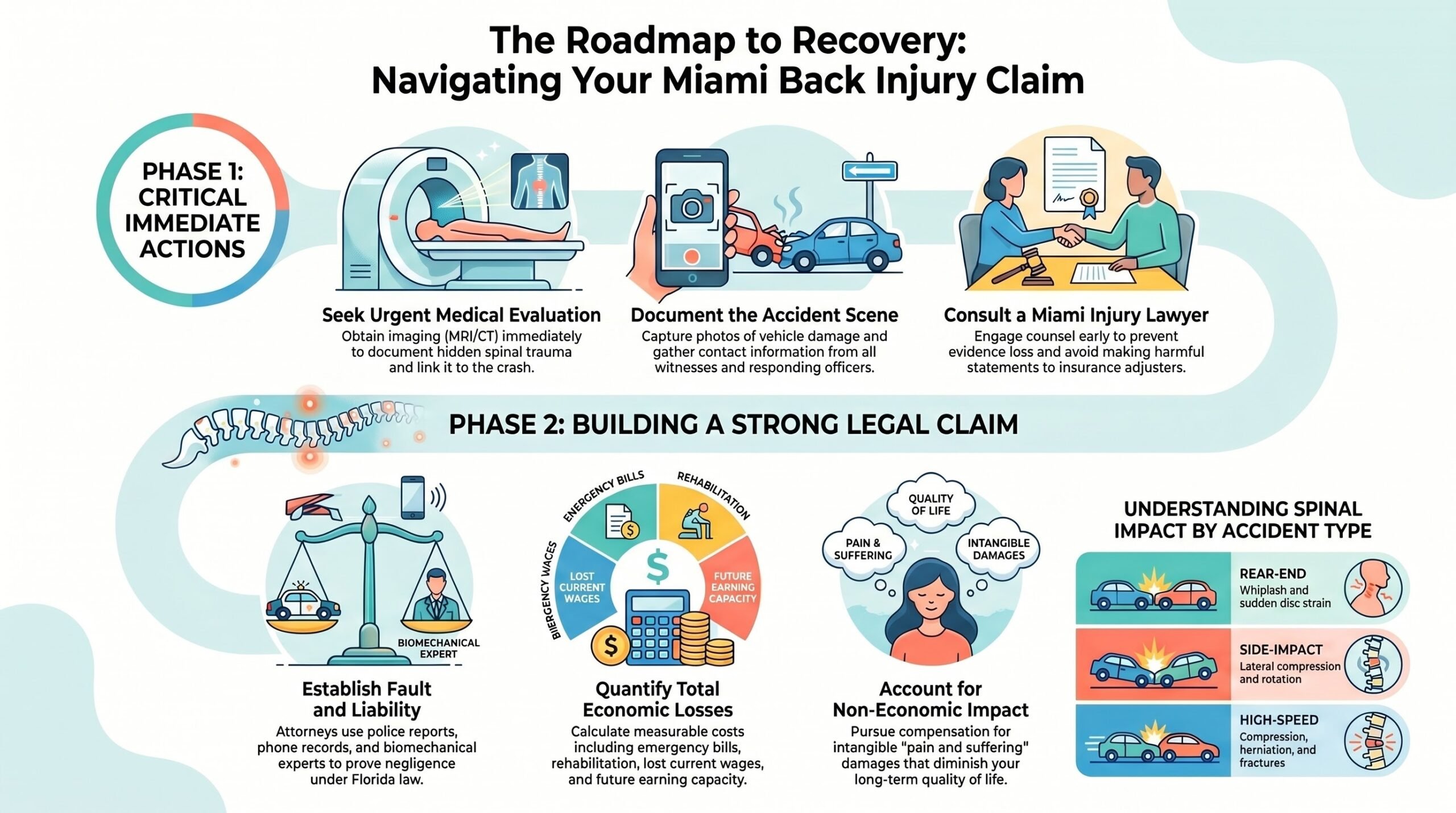
- A Miami back injury car accident lawyer investigates the crash, preserves evidence, and identifies all liable parties under Florida comparative negligence rules.
- Strong claims rely on prompt medical evaluation, imaging, and consistent records linking the collision to back pain, disc injury, or nerve irritation.
- Common crash types like rear-end, side-impact, and high-speed collisions can cause whiplash, herniated discs, fractures, and chronic spinal pain.
- An attorney gathers police reports, photos, witness statements, phone records, and expert testimony to establish fault and explain the mechanics of injury.
- A lawyer handles insurer communications, values medical costs and lost income, and pursues settlement or litigation if necessary.
How We Can Help With Your Miami Back Injury Car Accident Injury Claim
Guide through the claims process with informed legal support, as a Miami back injury car accident lawyer can evaluate the facts of the collision, identify liable parties, and determine the full scope of damages connected to the injury. Through careful case management, counsel helps injured people and their families pursue resources that protect health, stability, and the ability to care for others.
Legal support often includes gathering medical documentation, securing crash reports, interviewing witnesses, and organizing evidence in a clear, persuasive manner. Counsel also communicates with insurers, addresses disputed facts, and monitors settlement timelines so important deadlines are not overlooked. When necessary, the attorney coordinates with medical providers and financial professionals to present a complete picture of losses. This structured approach allows clients to focus on treatment and daily responsibilities, while the legal team advances the claim with diligence. The objective remains practical service: reducing burdens, preserving rights, and pursuing a fair financial recovery under Florida law.
Understanding Miami Back Injury Car Accident Injury Cases


In the aftermath of a collision, Miami back injury car accident cases often involve both medical intricacy and legal questions that require careful analysis. These matters frequently turn on timely diagnosis, documented symptoms, and a clear connection between the crash and the injured person’s condition.
OUR CONSULTATIONSARE FREE
START YOUR FREE CASE REVIEW

Evaluation commonly includes imaging studies, physical examinations, and expert opinions regarding spinal biomechanics. Such evidence helps distinguish soft tissue trauma, disc involvement, nerve irritation, and aggravation of prior conditions. Attorneys and healthcare providers must review records closely to understand functional limits, treatment needs, and expected recovery.
From a legal standpoint, successful claims depend on credible evidence, consistent reporting, and thorough proof of damages. This may include medical expenses, lost income, rehabilitation needs, and pain-related limitations affecting daily service to family and community. Careful case preparation also supports broader injury-prevention efforts by emphasizing accountability, safer practices, and informed responses when serious back injuries disrupt a person’s ability to serve others.
Common Causes of Miami Back Injury Car Accident


Several crash scenarios are frequently associated with back injuries in Miami car accidents, each involving distinct patterns of force and trauma. Rear-end collisions, side-impact crashes, and high-speed highway wrecks often place significant stress on the spine, while distracted driving accidents continue to contribute to many of these harmful events. A clear review of these common causes helps explain how serious back injuries occur and why liability questions often arise afterward.
Rear-End Collision Impact
A significant number of back injury claims arise from rear-end collisions, where the abrupt force of impact can jolt the spine beyond its normal range of motion. In these events, whiplash mechanisms may strain muscles, ligaments, and discs, leaving injured people with pain that interrupts work, caregiving, and daily service to others.
Rear-end crashes often create hidden damage because symptoms may develop gradually after the adrenaline of the accident fades. Careful evaluation of seatbelt biomechanics can help explain how restraint forces interact with the torso, lower back, and pelvis during sudden deceleration. Medical records, imaging studies, and prompt treatment frequently become crucial in linking the collision to lumbar or thoracic injuries. A clear understanding of these dynamics supports accountability and helps affected individuals pursue resources for recovery and continued community support.
Side-Impact Crash Forces
Side-impact collisions present a different pattern of spinal stress than rear-end crashes, often exposing the torso and lower back to abrupt lateral force with less structural protection at the point of impact. In these events, spinal kinematics may involve sudden bending, rotation, and compression that strain discs, facet joints, muscles, and supporting ligaments.
The injured person may not recognize the full extent of harm immediately, especially when pain develops gradually after the crash. Seatbelt dynamics can reduce ejection risk, yet they may also concentrate force across the pelvis and trunk as the body moves sideways. For families seeking to help an injured loved one, early evaluation often matters, as prompt documentation can link symptoms, imaging findings, and functional limitations to the collision. Careful legal guidance can then support recovery needs and accountability.
High-Speed Highway Wrecks
High-speed highway wrecks can impose intense forces on the spine, especially when a vehicle experiences sudden deceleration, multiple impacts, or violent rotation at freeway speeds. These collisions often produce compression, herniation, fractures, or soft tissue trauma that may not be immediately obvious to those trying to help injured occupants.
On Miami expressways, chain-reaction crashes, highway rollovers, and collisions near bridge overpasses can magnify the danger. Greater speed increases stopping distance and impact energy, leaving less room for protective response and more opportunity for catastrophic back injury. Occupants may be thrown against restraints, twisted within the seat, or subjected to jarring rebound after the initial strike. For families, caregivers, and advocates seeking to serve others well, prompt medical evaluation and careful documentation can support treatment, recovery planning, and protection of legal rights.
Distracted Driving Accidents
Distracted driving crashes frequently place vehicle occupants in danger of significant back injury because delayed perception and reduced reaction time often prevent effective braking or evasive movement before impact. In Miami traffic, cellphone distraction and roadside texting commonly contribute to rear-end collisions, side impacts, and lane-departure events that transmit force through the spine, muscles, and discs. Even moderate crashes can produce herniated discs, soft tissue strain, or aggravated preexisting conditions, leaving injured people unable to work or care for others.
Careful documentation of the distraction, witness observations, phone records, and crash scene evidence often becomes important when establishing responsibility. A lawyer serving injured clients may evaluate medical findings, preserve evidence, and pursue compensation to support treatment, rehabilitation, lost income, and the practical needs of families recovering after a preventable collision.
Legal Rights of Miami Back Injury Car Accident Injury Victims
Under Florida law, individuals who suffer back injuries in Miami car accidents have the right to pursue compensation when another party’s negligence caused or contributed to the crash. These rights may extend beyond basic no-fault benefits when injuries are serious, permanent, or substantially life-altering. In some cases, related claims may involve workers’ compensation after a job-related collision or landlord liability if unsafe property conditions worsened harm.
Florida law may allow Miami car accident victims with serious back injuries to pursue compensation beyond no-fault benefits.
Key legal interests often include:
- Payment of medical expenses, rehabilitation, and future treatment needs.
- Recovery of lost income, reduced earning capacity, and related financial losses.
- Compensation for pain, suffering, and diminished quality of life.
- Accountability for negligent drivers, employers, vehicle owners, or other responsible parties.
Florida law also protects the ability to seek fair consideration from insurers and courts. When rights are properly asserted, injured people may secure resources that support recovery, stability, and continued service to their families, workplaces, and the broader Miami community.
Steps to Take After a Miami Back Injury Car Accident Injury
After a Miami back injury car accident, prompt medical care is generally the first priority, as early evaluation can safeguard both health and the record of injury. It is also important to document the accident scene carefully, including vehicle damage, road conditions, visible injuries, and any available witness information. Once these immediate steps are addressed, contacting a Miami lawyer can help guarantee that legal rights and potential claims are properly evaluated.
Seek Immediate Medical Care
In the moments following a Miami car accident, obtaining immediate medical care is a vital step for anyone with possible back injuries. Prompt evaluation helps identify hidden trauma, reduce complications, and protect long-term health. An emergency assessment may reveal spinal strain, disc damage, or nerve involvement that is not immediately apparent at the scene.
Medical professionals can recommend imaging, pain control, and activity restrictions suited to the person’s condition. Following those instructions carefully supports recovery and helps prevent further harm. A timely follow-up appointment is equally important because some symptoms worsen after adrenaline fades or inflammation increases. Continued care also creates a clear treatment history, which can be important when others are working to support the injured person’s needs. Seeking prompt attention reflects wisdom, responsibility, and concern for everyone affected.
Document The Accident Scene
Medical attention should be followed by careful documentation of the accident scene, because early evidence can help clarify how the collision occurred and how a back injury may have developed. If the injured person is physically able, useful steps include taking photographic evidence of vehicle damage, road conditions, debris, traffic signals, and visible injuries. These details may preserve facts that later change or disappear.
It is also helpful to gather witness statements from bystanders who observed the impact, vehicle movements, or immediate pain complaints. Names, phone numbers, and insurance information should be recorded accurately, along with the time, location, weather, and any responding officers. When families and caregivers assist with these tasks, they help protect the injured person’s ability to explain what happened clearly and responsibly later.
Contact A Miami Lawyer
As a practical next step, prompt contact with a Miami lawyer can help preserve legal rights and organize the claim before pivotal evidence is lost. Counsel may coordinate records, witness statements, insurance notices, and deadlines to reduce confusion during recovery. This guidance can also help a family secure fair compensation while remaining focused on care and service to others.
A lawyer familiar with Miami collisions may identify local resources that support treatment, transportation, and documentation needs. During a free consultation, the injured person can ask about liability, medical proof, and communication with insurers. Early legal review often strengthens the claim by preventing harmful statements and incomplete filings. Timely representation also promotes accountability, helping responsible parties address the harm caused and encouraging a more orderly path toward resolution.
How a Miami Back Injury Car Accident Injury Lawyer Can Help You
Many car accident victims with back injuries face more than physical pain; they also confront mounting medical bills, lost income, and uncertainty about their legal options. A Miami back-injury car-accident lawyer helps by organizing evidence, protecting rights, and guiding families through legal timelines with clarity and purpose. Such representation often supports people who want stability, accountability, and resources for proper spinal rehabilitation after a collision.
A lawyer may assist by:
- Investigating the crash, gathering records, and preserving proof of fault.
- Calculating damages, including treatment costs, wage loss, and related expenses.
- Handling insurers, answering disputes, and seeking a fair settlement.
- Preparing a strong claim for court if negotiations do not resolve the matter.
Through these steps, counsel can reduce administrative burdens and allow injured individuals to focus on recovery and service to loved ones. Careful legal guidance also helps prevent procedural mistakes that could weaken an otherwise valid claim.
Long-Term Effects of Miami Back Injury Car Accident Injuries
Miami back injury car accident injuries may produce lasting consequences that extend well beyond the initial recovery period. Many individuals experience chronic pain challenges and reduced mobility, which can interfere with daily functioning, employment, and overall independence. These persistent limitations often contribute to emotional distress and financial strain, making the long-term impact of such injuries a serious concern.
Chronic Pain Challenges
Often, chronic pain becomes one of the most disruptive long-term effects of a back injury suffered in a car accident, persisting long after fractures, disc damage, or soft tissue trauma would typically be expected to recover. For many injured individuals, ongoing discomfort may stem from nerve damage, spinal inflammation, or unresolved structural complications that continue to affect daily well-being and emotional health.
This persistent condition often requires careful pain management, including medical monitoring, rehabilitative care, and consistent documentation of symptoms over time. Those who support injured people should recognize that chronic pain is not always visible, yet it can steadily diminish quality of life, concentration, sleep, and the ability to fulfill personal and family responsibilities. A thorough legal and medical response may consequently be crucial in addressing these lasting burdens effectively.
Reduced Mobility Impact
In the aftermath of a serious car accident, reduced mobility can become a lasting consequence of a back injury, limiting movement in ways that extend far beyond the initial recovery period. Ordinary tasks may require markedly more time, planning, and physical effort each day.
Individuals with spinal damage or lingering soft tissue trauma may struggle to bend, lift, stand, or walk without pain and instability. Their ability to assist family members, participate in community service, or maintain regular responsibilities can be diminished. Mobility aids may become necessary to support safer movement and reduce further strain. In some cases, Home modifications, such as handrails, ramps, or adjusted bathroom features, help preserve independence and daily function. These practical adjustments often play a crucial role in promoting safety, dignity, and long-term quality of life overall.
Emotional And Financial Strain
Over time, the long-term effects of a back injury can extend well beyond physical discomfort, creating substantial emotional and financial strain. Persistent pain, disrupted sleep, and limited independence often affect Mental health, leading to anxiety, discouragement, and social withdrawal. Family members may assume added caregiving duties, which can alter household roles and increase stress for everyone involved. Financial pressure also tends to grow as medical bills, rehabilitation costs, transportation expenses, and lost income accumulate.
For individuals committed to supporting others, these burdens may hinder their ability to work, volunteer, or consistently care for loved ones. Careful Budget planning becomes crucial in managing treatment costs and daily obligations while preserving stability. In many cases, timely legal guidance helps injured people pursue compensation and protect their long-term well-being and recovery.
Proving Liability in Miami Back Injury Car Accident Injury Cases
Establishing liability in a Miami back injury car accident case requires clear proof that another party’s negligence caused the collision and directly contributed to the victim’s spinal or soft tissue injuries. This process often begins with police reports, photographs, witness statements, and medical records that connect the crash to the reported back condition.
Attorneys may also examine traffic camera footage, vehicle damage, skid marks, and phone records to show careless driving, distraction, speeding, or failure to yield. In many matters, expert testimonies from accident reconstruction specialists and physicians help explain how the impact occurred and why the injuries are consistent with the event. Florida’s comparative negligence rules may also affect recovery when more than one party shares responsibility, making factual accuracy especially important. By carefully organizing evidence and presenting a coherent timeline, legal counsel can help demonstrate accountability, protect the injured person’s interests, and support a claim grounded in service, fairness, and responsibility to the broader community.
Dealing With Insurance Companies After a Miami Back Injury Car Accident Injury
Once liability evidence has been assembled, attention often turns to the insurance process, where back injury claims are frequently contested, narrowed, or undervalued. Adjusters may question the severity of spinal harm, attribute pain to prior conditions, or seek statements that limit recovery. Careful documentation, consistent medical records, and measured communication can help protect the injured person’s interests while preserving dignity and credibility.
A service-minded approach emphasizes honesty, patience, and thorough preparation. Insurance representatives often rely on records, billing summaries, and claim timelines to assess exposure and reserve amounts. Prompt responses are helpful, yet rushed answers can create confusion or unfair concessions. Thoughtful policy negotiation may address treatment costs, wage loss, and ongoing limitations without overstating damages. Those assisting injured individuals should encourage organized records, respectful correspondence, and caution before signing authorizations or accepting quick payments. Clear advocacy during insurer contact can reduce misunderstandings and support a fairer evaluation of a serious back injury claim.
What to Expect During a Miami Back Injury Car Accident Injury Claim Process
A Miami back injury car accident claim process typically begins with an initial case evaluation, during which the facts of the collision, the extent of the injury, and potential liability are assessed. It then proceeds by collecting medical evidence and communicating with insurers, as these materials often shape the value and direction of the claim. Depending on the strength of the evidence and the parties’ positions, the matter may conclude through settlement negotiations or continue to trial.
Initial Case Evaluation
Reviewing the facts at the outset allows a Miami back injury car accident lawyer to assess the strength of a claim, identify potential liability issues, and determine what evidence will be needed to support compensation. During a free consultation, the attorney typically reviews the collision details, insurance information, witness accounts, and any available photographs or reports. This early evaluation helps clarify whether another party may be legally responsible and whether comparative fault could affect recovery.
The lawyer also explains the basic claim process, outlines a preliminary case timeline, and answers practical questions so the injured person and supportive family members can make informed decisions. Fee arrangements, communication expectations, and immediate next steps are usually addressed. A careful initial review promotes organized advocacy and helps ascertain that the claim begins with purpose, accuracy, and service.
Medical Evidence Collection
How medical evidence is gathered often determines the direction and value of a Miami back injury car accident claim. Providers typically document symptoms, physical limitations, treatment plans, and progress from the earliest visit forward. Consistent medical records help show whether pain, reduced mobility, or nerve involvement developed soon after the collision and continued over time.
Diagnostic support is also important. Physicians may order X-rays, MRIs, or CT scans in accordance with established imaging protocols to identify herniated discs, fractures, or soft-tissue damage. Claimants are often advised to attend follow-up appointments, complete prescribed therapy, and report changes accurately. In service to a fair outcome, careful collection of reports, billing statements, specialist assessments, and rehabilitation notes creates a clearer picture of injury severity, functional impact, and the care reasonably required for recovery.
Insurance Claim Negotiations
Expect insurance claim negotiations to begin once medical treatment records, accident documentation, and proof of losses have been assembled into a demand package. Insurers typically review liability, injury severity, treatment timelines, and wage loss evidence before responding with questions, requests, or an initial offer.
During this stage, advocates often communicate with adjusters, clarify disputed facts, and present updated records that reflect ongoing back pain, limitations, and care needs. The process may involve declining settlements that undervalue recovery, future treatment, or diminished earning capacity. Attention is also given to policy limits, available coverages, and any liens that could affect net compensation. Clear negotiation serves injured people by seeking resources that support recovery, stability, and continued service to family and community. Patience and careful documentation generally strengthen the claim and improve bargaining position.
Settlement Or Trial
When negotiations do not produce a fair resolution, a Miami back injury car accident claim may proceed toward settlement finalization or litigation. Counsel evaluates medical evidence, future care needs, and liability strength before advising whether acceptance serves the injured person and family.
Settlement can provide timely funds, privacy, and reduced stress, especially when mediation benefits include candid discussion, risk assessment, and structured compromise. If the insurer remains unreasonable, trial preparation begins with witness review, exhibit organization, and a careful jury strategy designed to explain how the back injury affects work, treatment, and daily service to others.
Throughout either path, legal representation continues to protect deadlines, present damages clearly, and encourage informed decisions. The goal remains a lawful outcome that supports recovery, accountability, and the injured person’s ability to continue helping those who depend on them.
Compensation for Miami Back Injury Car Accident Injury Damages
In the aftermath of a Miami car accident, compensation for back injury damages may include both economic and non-economic losses, depending on the severity of the condition and its effect on the injured person’s daily life. Recoverable amounts often reflect medical treatment, ongoing care, prescription costs, and the need for spinal rehabilitation after disc injuries, fractures, or soft tissue trauma.
Compensation may also account for diminished earning capacity when pain, limited mobility, or surgical recovery prevents a return to prior employment. In some cases, vocational retraining becomes necessary so that the injured person can continue to provide for dependents and contribute to the community in a meaningful way. A careful claim also considers future treatment needs, home assistance, transportation to appointments, and adaptive equipment that supports safer daily functioning.
Thorough documentation, credible medical opinions, and a clear presentation of how the injury changed ordinary responsibilities can strengthen the demand for fair compensation and promote long-term stability for injured families.
Economic vs Non-Economic Damages in Miami Back Injury Car Accident Cases
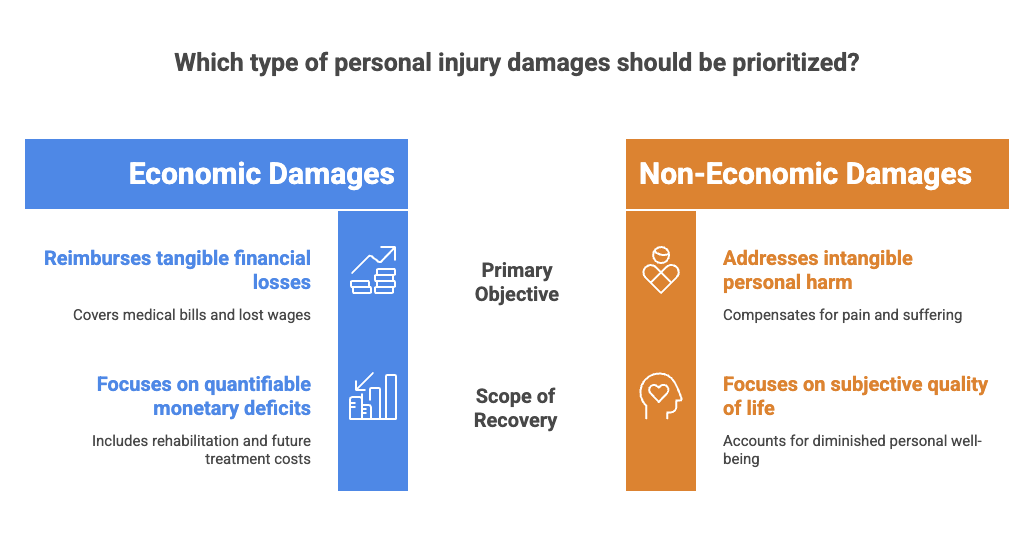
In Miami back-injury car-accident cases, damages are generally divided into economic and non-economic categories, each addressing a different type of loss. Economic damages commonly include medical expenses, rehabilitation costs, lost wages, and reduced earning capacity, while non-economic damages concern pain and suffering, physical limitations, and diminished quality of life. Establishing these damages often requires medical records, employment documentation, expert opinion, and other evidence that connects the back injury to the claimed losses.
Economic Damage Categories
Beyond the immediate physical effects of a back injury, a Miami car accident claim often involves two distinct categories of compensation: economic damages and non-economic damages. Economic damages address measurable financial losses that can be documented through bills, receipts, employment records, and repair estimates.
In Miami back injury cases, these losses commonly include emergency care, hospitalization, diagnostic imaging, rehabilitation, medication, and future medical treatment. They may also include lost wages when an injured person cannot work during recovery or must accept reduced duties. If the injury limits long-term earning capacity, the projected loss may also be included. Property damage is another economic category, covering vehicle repairs or replacement and the cost of repairing or replacing other personal items damaged in the crash. Careful documentation helps guarantee these tangible losses are presented accurately and responsibly.
Non-Economic Losses Explained
Separate from documented financial costs, non-economic damages address the personal harm a back injury causes in everyday life after a Miami car accident. These losses reflect suffering that cannot be measured by invoices, yet they often shape a person’s ability to work, rest, serve family, and participate in community life.
In back injury cases, non-economic damages may include physical pain, emotional distress, loss of enjoyment of normal activities, and reduced companionship within close relationships. Pain valuation considers how persistent discomfort, limited mobility, and disrupted sleep affect daily functioning over time. Grief compensation may also apply when the injury contributes to profound emotional loss, including the sadness tied to changed roles, diminished independence, or the inability to care for others in familiar ways. Such damages recognize human consequences beyond financial recovery.
Proving Back Injury Damages
Establishing damages in a Miami back injury car accident case requires more than alleging pain or listing expenses, because each category of loss must be supported by credible evidence that connects the collision to the harm claimed. Economic damages often include medical bills, rehabilitation costs, lost income, and reduced earning capacity, all verified through records, employment data, and expert analysis.
Non-economic damages are less tangible, yet equally significant for those seeking fair accountability and support for recovery. These losses may involve physical suffering, emotional distress, sleep disruption, and diminished daily function. Strong medical documentation helps show the injury’s severity, duration, and treatment course. Testimony from physicians, family members, and the injured person may also assist in quantifying pain, illustrating how the back injury has affected work, service, and ordinary life.
When a Miami Back Injury Car Accident Injury Case Goes to Trial vs Settlement
In many Miami back injury car accident claims, the question of whether a case will settle or proceed to trial depends on the strength of the medical evidence, the extent of disputed liability, and the parties’ willingness to place a value on long-term harm. During settlement negotiation, insurers often review diagnostic imaging, treatment history, and physician opinions to assess future care needs and lost earning capacity.
A case may resolve without a jury trial when liability is clear, and both sides recognize the practical benefits of avoiding delay, expense, and uncertainty. Trial becomes more likely when insurers dispute causation, challenge the severity of spinal injuries, or minimize pain that affects work, family responsibilities, and service to others. In that setting, counsel may present expert testimony, vocational analysis, and a day-in-the-life evidence to demonstrate how the injury limits continued caregiving and community involvement. The chosen path should reflect informed judgment, careful preparation, and a commitment to fair accountability.
The Statute of Limitations for Miami Back Injury Car Accident Injury Cases
After a Miami car accident causes a back injury, the time allowed to file a lawsuit becomes a pivotal legal issue that can determine whether compensation remains available at all. Florida law sets firm deadlines for personal injury actions, and missing them can bar recovery even when medical evidence is strong. For families focused on service, stability, and responsible care, understanding these limits supports informed action and protects resources for recovery.
Several nuances of the statute can affect how the deadline is calculated. The general filing period may differ depending on when the crash occurred, whether wrongful death is involved, or whether the injured person is a minor or legally incapacitated. Certain filing exceptions may pause or alter the clock in narrow circumstances, such as delayed discovery of facts or concealment by a responsible party. Because courts apply these rules strictly, careful attention to dates, records, and procedural requirements remains vital in Miami back injury claims.
When to Contact a Miami Back Injury Car Accident Injury Lawyer
Often, the most prudent time to contact a Miami back injury car accident injury lawyer is soon after the collision, particularly when pain, limited mobility, or questions about fault begin to affect medical and financial decisions.
Prompt contact may also be appropriate when emergency care is followed by ongoing treatment, missed work, or uncertainty about insurance communications. Early intervention can help preserve records, document symptoms, and organize practical steps while the injured person focuses on recovery and service to family, work, or community. It is also wise to seek expert consultation when back pain appears days later, when diagnostic imaging is recommended, or when a preexisting condition may complicate the claim.
If multiple vehicles were involved, liability is disputed, or settlement pressure begins quickly, timely legal guidance becomes especially important. Reaching out before signing releases, giving recorded statements, or accepting payment may help prevent avoidable setbacks and support more informed, responsible decisions for everyone involved thereafter.
Why You Need an Experienced Miami Back Injury Car Accident Injury Lawyer
Recognizing the value of experienced legal counsel is vital when a car accident causes back injuries that may involve complex diagnoses, extended treatment, and disputed liability. An experienced Miami back injury car accident injury lawyer helps protect the injured person’s ability to obtain resources needed for recovery, stability, and continued care.
Such representation is important because back injuries are often underestimated by insurers, despite lasting pain, mobility limits, and future medical costs. A seasoned lawyer understands how medical records, expert opinions, and accident evidence must work jointly to present a clear claim. Local knowledge also matters, since familiarity with Miami courts, insurers, and procedural expectations can strengthen case development. In addition, knowledge of Verdict trends can help frame realistic damage assessments and support informed decisions throughout the process.
By managing negotiations, documenting losses, and addressing attempts to minimize harm, experienced counsel provides structure and advocacy that can better serve injured individuals, their families, and communities.
How to Choose the Right Miami Back Injury Car Accident Injury Lawyer for Your Case
Selecting the right Miami back injury car accident injury lawyer requires more than confirming that an attorney handles personal injury matters. A careful review should consider experience with spinal and soft tissue claims, courtroom readiness, and the ability to explain legal options clearly to injured people and their families.
A thoughtful choice also involves evaluating communication practices and professionalism. The attorney should set realistic Client expectations, respond promptly, and show respect for the client’s medical recovery, financial concerns, and long-term needs. Reviewing case results, professional standing, and testimonials may help identify consistent service and dependable advocacy. Fee structures should be discussed early, including contingency terms, litigation costs, and how expenses are handled if compensation is not recovered. An informed decision supports not only the injured person’s interests, but also the well-being of those who rely on that individual for care, stability, and continued service to others within the community.
About The Law Offices of Anidjar & Levine
The Law Offices of Anidjar & Levine serves injured individuals in Miami by providing legal representation focused on car accident claims, including cases involving back injuries that may require extensive medical care and ongoing evaluation. The firm approaches each matter with attention to the client’s physical, financial, and practical needs, recognizing that recovery often depends on timely legal support and clear communication throughout the claims process.
Its Firm history reflects sustained work on behalf of accident victims across Florida, with an emphasis on accessible service and responsive counsel. The attorneys and staff assist with case investigation, insurance communications, loss documentation, and the pursuit of compensation to support treatment, rehabilitation, and stability for affected families. Client testimonials frequently describe professionalism, compassion, and diligence, offering insight into the firm’s service-centered approach. For those seeking to help injured people rebuild their lives after serious collisions, the firm offers a structured, experienced legal resource in Miami today.
Frequently Asked Questions
Can I Switch Doctors During My Back Injury Claim?
Yes, a claimant can switch doctors during a back injury claim, though the decision should be handled carefully. It is generally wise to notify the insurer, attorney, and current physician before changing providers. Preserving medical continuity is important because gaps in treatment or inconsistent records may affect a claim’s value. A well-documented changeover helps protect credibility, supports ongoing care, and better serves everyone involved in the recovery process overall.
How Do Pre-Existing Back Conditions Affect My Case?
Pre-existing back conditions can affect a claim by shifting focus to whether the incident caused a measurable worsening rather than a wholly new injury. In such matters, pre-existing aggravation may still support recovery when the record shows increased symptoms, additional limitations, or new treatment needs. Clear medical testimony is often crucial to distinguish prior issues from accident-related harm. Careful documentation helps decision-makers evaluate the claim fairly and responsibly.
Will Social Media Posts Impact My Injury Claim?
Yes, social media posts can affect an injury claim. Insurers and defense counsel may review public content for statements, photos, or activity that appear inconsistent with reported limitations. Privacy concerns do not prevent careful scrutiny of accessible material, and deleted posts may raise separate issues involving evidence preservation. A prudent claimant serves the process best by limiting online activity, avoiding commentary, and preserving existing content for counsel’s review and guidance.
Can I Recover Damages if I Wasn’T Wearing a Seatbelt?
Yes, damages may still be recoverable if a seatbelt was not worn. Under comparative liability, compensation can be reduced if seatbelt compliance would likely have lessened the injuries, but recovery is not automatically barred. Courts and insurers often examine whether the other driver caused the crash and whether nonuse materially increased harm. A careful legal assessment helps injured individuals pursue fair compensation while protecting the interests of those they serve.
What if Symptoms Appear Days After the Accident?
Symptoms that appear days after an accident may still indicate a compensable injury, and prompt medical evaluation is crucial. Delayed inflammation can mask serious harm in the hours immediately following a collision. Latent nerve pain may also emerge gradually, especially with soft tissue or spinal trauma. Careful documentation, timely treatment, and consistent reporting help protect both health and any future claim. Early attention also supports others involved in coordinated care and recuperation.
—————————
Back injury claims arising from Miami car accidents often involve substantial medical, financial, and legal issues. A clear understanding of liability, damages, and required evidence can materially affect the outcome of a case. By acting promptly and securing experienced legal representation, injured individuals place themselves in a stronger position to protect their rights and pursue fair compensation.
The Law Offices of Anidjar & Levine provides focused guidance and advocacy as a trusted Miami Car Accident Lawyer for those steering through the aftermath of a serious back injury accident.