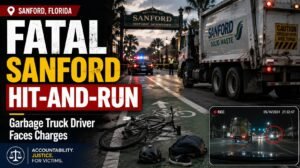
Hit by a semi or commercial truck on I-95, I-4, US-1, or a Volusia County road? Carriers move fast to control the evidence. We preserve it, pursue every liable party, and fight for full recovery.
The Law Offices of Anidjar & Levine helps injured people investigate truck crashes, preserve pivotal evidence, identify responsible parties, and pursue compensation.
A Daytona Beach Personal Injury Lawyer may handle claims involving the truck driver, motor carrier, maintenance provider, manufacturer, or insurer.
Legal counsel can organize medical records, lost-income documentation, witness accounts, electronic data, and vehicle records while managing insurance communications.
Prompt guidance may also help protect against incomplete evaluations and procedural deadlines.
Further information explains truck accident causes, legal rights, evidence, and selecting appropriate representation.
Main Takeaways
 A Daytona Beach truck accident lawyer can evaluate liability, injuries, damages, and available legal options after a serious collision.
- Legal support may include preserving evidence, identifying responsible parties, and organizing medical records and lost-income documentation.
- Potentially liable parties may include the truck driver, motor carrier, maintenance provider, manufacturer, or other entities.
- Important evidence includes crash reports, photographs, electronic logging data, inspection records, cargo documents, surveillance, and medical records.
- Prompt medical care, consistent insurer communication, and early evidence preservation can help protect injury or wrongful-death claims.
How We Can Help With Your Daytona Beach Truck Accident Injury Claim
When a truck accident causes serious injuries, an experienced Daytona Beach truck accident lawyer can provide structured legal guidance throughout the claim process. The lawyer may help preserve evidence, identify responsible parties, and organize records that clarify medical needs, lost income, and related losses. This support allows injured people and their families to focus on recovery while a representative communicates with insurers and other involved parties.
The legal team can also assess whether roadway conditions, driver conduct, vehicle maintenance, helmet safety, or pedestrian impacts contributed to the incident. When a death occurs, guidance regarding Wrongful death claims may help surviving relatives understand available remedies and documentation requirements. Attention to legal deadlines is crucial because missed filing periods can limit or eliminate potential recovery. A careful review of applicable coverage, witnesses, reports, and treatment information supports informed decisions and fair negotiations. Through diligent service, counsel helps protect each client’s interests while maintaining respect for affected families and the broader community.
Understanding Daytona Beach Truck Accident Injury Cases


Truck accident injury cases in Daytona Beach often involve multiple sources of evidence, insurance policies, and potentially responsible parties. A claim may require examination of medical records, employment losses, vehicle damage, witness statements, and applicable trucking regulations. The injured person’s condition, treatment needs, and long-term limitations can notably affect the value and direction of the case.
OUR CONSULTATIONSARE FREE
START YOUR FREE CASE REVIEW

Legal strategy planning helps identify responsible entities, preserve crucial evidence, and present damages in an organized manner. Potential parties may include a truck driver, carrier, owner, maintenance provider, or another business, depending on the available facts. Insurance claim tactics should focus on accurate documentation, timely communication, and careful review of coverage rather than premature settlement decisions.
A qualified legal professional can help protect an injured individual from inconsistent statements, inadequate evaluations, and procedural deadlines. This guidance also supports families seeking fair assistance while medical recovery continues. Each case requires an individualized assessment because liability, damages, and available insurance may differ substantially.
Common Causes of Daytona Beach Truck Accident


Truck accidents in Daytona Beach may result from driver fatigue, speeding, reckless driving, or other unsafe decisions behind the wheel. Improper cargo loading can destabilize a truck, while poor vehicle maintenance may contribute to brake, tire, or mechanical failures. Identifying the cause is important when evaluating liability and the circumstances of an injury claim.
Driver Fatigue
Driver fatigue is a significant cause of Daytona Beach truck accidents, particularly when commercial drivers operate for extended periods without adequate rest. Long shifts, irregular schedules, overnight routes, and pressure to meet delivery deadlines can reduce alertness and impair judgment. The sleep deprivation impacts may resemble alcohol impairment, affecting concentration, memory, coordination, and the ability to recognize changing roadway conditions. Fatigued drivers may struggle to maintain lane position, overlook signals, or fail to perceive hazards in time. These driver response delays can prevent evasive action when traffic changes suddenly or another road user requires assistance.
Federal hours-of-service rules are designed to limit excessive driving, but violations, inadequate scheduling, and untreated sleep disorders may still contribute to dangerous conditions. Identifying fatigue as a contributing factor can help protect injured people and promote accountability.
Speeding And Reckless Driving
Exceeding safe speeds or operating a commercial vehicle recklessly can cause severe Daytona Beach truck accidents because large trucks require greater distances to stop and more time to respond to changing traffic conditions. Speeding may prevent a driver from avoiding pedestrians, merging vehicles, or sudden roadway hazards. Reckless conduct can also include aggressive lane changes, following too closely, distracted operation, and traffic signal violations. Investigators may review electronic driving records, roadway markings, surveillance footage, and Truck stop inspections to determine whether safety rules were disregarded. Evidence preservation is crucial because vehicle data, camera recordings, and physical conditions may change or disappear. Eyewitness interviews can clarify the truck’s speed, movements, and driver behavior. Careful investigation helps injured people and their families understand what occurred and pursue appropriate support through established legal channels.
Improper Cargo Loading
When cargo is improperly loaded, secured, or distributed, a commercial vehicle may become difficult to control and more likely to cause a serious Daytona Beach truck accident. Unbalanced freight can shift during turns, braking, or sudden lane changes, affecting handling and increasing rollover risks. Loose materials may fall onto the roadway, creating hazards for motorists, pedestrians, and emergency responders. Federal and state safety requirements generally call for a documented Safety checklist, vehicle inspection, and proper securing before a truck begins its route. Careful load distribution also helps maintain stability and protects tires, brakes, and suspension components from excessive strain. When these precautions are overlooked, affected individuals may face significant injuries and property damage. A thorough investigation can identify whether loading practices contributed to the collision and help preserve accountability for those harmed.
Poor Vehicle Maintenance
In addition to improper cargo loading, poor vehicle maintenance can contribute to a serious Daytona Beach truck accident. Commercial trucks require consistent servicing because their size and operating demands can magnify mechanical problems. Brake system failures may prevent a driver from stopping safely, particularly in congested traffic or near pedestrian areas. Tire blowouts can cause sudden loss of control, debris hazards, or collisions with nearby vehicles. Overlooked inspections may allow worn components, fluid leaks, defective lights, or suspension problems to remain undiscovered. Maintenance records, inspection reports, and repair histories can help establish whether a carrier followed applicable safety requirements. When neglected maintenance contributes to harm, responsible parties may include the trucking company, maintenance contractors, or vehicle owners. A careful review can support injured people and promote safer transportation practices.
Legal Rights of Daytona Beach Truck Accident Injury Victims
Truck accident injury victims in Daytona Beach may have legal rights to pursue compensation for medical expenses, lost income, property damage, and pain and suffering. Understanding these rights can help injured people protect their interests while pursuing necessary care and fair treatment.
 Victims may seek compensation from responsible parties when evidence establishes legal liability.
- Medical treatment timelines should be documented carefully, including diagnoses, referrals, prescriptions, and follow-up appointments.
- EMT documentation needs may include ambulance reports, observed symptoms, initial assessments, and treatment provided at the scene.
Prompt medical attention supports both recovery and accurate documentation of injuries. Victims should preserve bills, wage records, photographs, witness information, insurance correspondence, and other relevant materials. They should avoid recorded statements or settlements before understanding the potential value of their claims. A qualified attorney can evaluate available evidence, identify applicable insurance coverage, communicate with insurers, and pursue negotiations or litigation when appropriate. Serving injured community members requires respect, clear explanations, and protection against avoidable procedural mistakes. Legal deadlines may apply, so timely consultation remains important even when injuries initially appear manageable.
Why Do Daytona Beach Truck Accident Injuries Happen?
Daytona Beach truck accident injuries commonly result from driver error, unsafe trucking practices, hazardous roadway conditions, or mechanical failures. Fatigued, distracted, impaired, or improperly trained drivers may misjudge traffic, follow too closely, or lose control of a large commercial vehicle. Excessive speed and aggressive maneuvering can magnify the force of a collision.
Companies may contribute by encouraging unrealistic delivery schedules, neglecting supervision, or failing to maintain vehicles. Inadequate inspections can leave defective brakes, worn tires, steering problems, or unsecured cargo unresolved. Roadway hazards, including construction zones, standing water, poor lighting, and damaged pavement, may further increase crash risks. Weather can compound these dangers by reducing visibility and traction.
Understanding the cause is important for victim protection because evidence may identify every responsible party and reveal preventable negligence. It can also support a sound settlement strategy by clarifying injury severity, financial losses, and applicable safety violations. Attorneys often examine records, vehicle data, witness accounts, and maintenance histories to establish accountability for affected individuals and families.
What Should You Do After a Daytona Beach Truck Accident Injury?
After a Daytona Beach truck accident injury, the injured person should seek immediate medical care, even if symptoms initially appear minor. Documenting the accident scene, including vehicle damage, road conditions, and witness information, can help preserve important evidence. Promptly contacting a truck accident lawyer may also protect legal rights and support a thorough evaluation of potential claims.
Seek Immediate Medical Care
When a person experiences pain, dizziness, bleeding, or other symptoms following a collision involving a commercial vehicle, immediate medical care should be obtained, even if the injury initially appears minor. A medical professional can identify hidden trauma, begin appropriate treatment, and create records connecting the condition to the crash. Prompt evaluation may also prevent complications and support a person’s recovery.
Following medical instructions, attending recommended appointments, and reporting new or worsening symptoms are important steps. If transportation or cost creates barriers, injured people may ask hospitals, community organizations, or insurers about available assistance. Emotional support resources may also help survivors and families manage fear, grief, or stress after a serious collision. In fatal cases, medical and related records can assist with evaluating wrongful death damages. Medical attention should remain the first priority.
Document The Accident Scene
Preserving evidence at the accident scene can help establish how a Daytona Beach truck collision occurred and identify the parties responsible. If safety permits, an injured person or witness should photograph the roadway from multiple angles. Accident photography guidelines generally include recording traffic signals, lane markings, weather conditions, debris, and nearby signs without entering dangerous areas. Documenting visible hazards, such as potholes, poor lighting, spilled materials, or obstructed views, may clarify contributing conditions. Photographs should show the overall scene and closer details, while avoiding alteration of objects. Preserving skid marks can be important, so no one should drive over or clean them before authorities complete their work. Capturing vehicle damage from several angles, including broken parts and interior impacts, can also preserve valuable information. Witness names and observations should be recorded promptly.
Contact A Truck Accident Lawyer
Promptly contacting a Daytona Beach truck accident lawyer can help an injured person protect evidence, understand available claims, and avoid procedural mistakes that may affect recovery. Counsel can review medical records, photographs, witness information, and trucking company materials before important evidence disappears. A lawyer may also communicate with insurers, preventing an injured person from making statements that could be misinterpreted or weaken a claim. Legal guidance can help Establish Fault Responsibility by examining driver conduct, maintenance records, loading practices, employer policies, and regulatory compliance. Counsel may further Negotiate Medical Bills, address insurance disputes, and evaluate compensation for treatment, lost income, property damage, and continuing care. Prompt representation supports an orderly process and allows the injured person to focus on medical recovery while protecting the interests of others affected.
Critical Evidence in a Daytona Beach Truck Accident Injury Case
Critical evidence can establish how the collision occurred, who may be responsible, and the extent of the claimed injuries. A Daytona Beach truck accident lawyer may review the police accident report, black box data, witness statements, and medical documentation for consistency and proof.
Important sources include:
 Police reports documenting crash conditions and preliminary findings
- Black box data and witness accounts concerning speed, braking, and driver conduct
- Medical records connecting the accident to diagnosed injuries and treatment needs
Police Accident Reports
Following a Daytona Beach truck accident, the police accident report may serve as important evidence in an injury claim. Officers typically record the collision location, vehicle positions, apparent damage, weather conditions, witness statements, and citations issued at the scene. Although the report does not determine legal responsibility by itself, it can help establish a reliable timeline and identify issues requiring further investigation. The report may also preserve references to dashcam footage, nearby surveillance, or photographs collected by responding officers. Medical records and injury documentation can be compared with the report to clarify how the collision affected the injured person. A Daytona Beach truck accident lawyer may review the report for inaccuracies, omissions, or conflicting accounts, then seek supplemental statements and other supporting evidence when necessary to protect the claimant’s interests.
Black Box Data
When a commercial truck is involved in a Daytona Beach collision, its electronic control module and other onboard systems may contain valuable evidence about the vehicle’s operation before impact. These devices can record speed, braking, engine performance, wheel-position inputs, seat-belt use, and other data surrounding the crash. Properly preserved records may help determine whether Driver distraction, fatigue, excessive speed, or mechanical problems contributed to the event. They may also reveal conduct associated with Florida traffic violations, including following too closely or disregarding traffic signals. Because trucking companies may control access to this information, prompt legal action can help preserve relevant electronic records and prevent alteration or loss. Qualified professionals can obtain, interpret, and compare the data with physical evidence, vehicle damage, and applicable safety regulations to support a fair injury evaluation.
Witness Statements
Witness statements can complement black box data by providing firsthand accounts of what occurred before, during, and after a Daytona Beach truck collision. Independent observers may describe traffic conditions, vehicle positioning, speed, lighting, driver behavior, and the sequence of impacts. Their accounts can help clarify disputed facts, identify potential safety violations, and preserve details that may fade as time passes.
A legal representative may promptly identify witnesses, obtain contact information, and secure written or recorded statements while recollections remain reliable. Statements from passengers, nearby motorists, pedestrians, first responders, and business employees may each provide distinct perspectives. Careful interviewing should remain respectful and avoid leading questions, especially when witnesses are distressed. These accounts can also support Medical documentation tips and ongoing treatment planning by establishing how the collision occurred and explaining why prompt medical evaluation was reasonably necessary, without replacing professional medical evidence.
Medical Documentation
Medical documentation is critical evidence in a Daytona Beach truck accident injury case because it connects the collision to the claimant’s physical condition, treatment, and prognosis. Emergency department records, diagnostic images, physician notes, prescriptions, and rehabilitation reports can establish when symptoms began and how seriously injuries affected daily activities. Consistent medical care also helps address arguments that a condition resulted from a prior incident or unrelated cause.
Claimants should provide complete records, follow treatment instructions, and accurately document missed appointments or continuing symptoms. Bills and treatment estimates may support compensation for medical expenses, rehabilitation, and loss of earning capacity. In wrongful death claims, medical records can clarify the decedent’s final treatment, suffering, and related expenses. Organized documentation allows legal professionals to present a reliable account while helping injured people and families pursue appropriate support.
Long-Term Effects of Daytona Beach Truck Accident Injuries
Truck accident injuries may produce chronic pain conditions that continue long after initial treatment and interfere with daily activities. Ongoing medical treatment, including rehabilitation, medication, or follow-up procedures, can create lasting healthcare needs. These physical challenges may also contribute to emotional distress and financial strain from lost income, reduced earning capacity, and accumulating expenses.
Chronic Pain Conditions
When injuries from a Daytona Beach truck accident fail to resolve, they may develop into chronic pain conditions that persist for months or years. These conditions can include persistent back, neck, shoulder, joint, or nerve pain, sometimes accompanied by weakness, sleep disruption, and reduced mobility. Chronic discomfort may limit employment, household responsibilities, transportation, and participation in community or family activities. A careful record of symptoms, functional limitations, and medical assessments can help demonstrate how the collision affected daily life. Pain treatment options may vary according to the injury and could involve medication, physical therapy, counseling, or other approaches recommended by qualified providers. Insurance claim delays can create added hardship when bills accumulate and earning capacity declines. Legal guidance may help protect a person’s interests while these lasting effects are evaluated.
Ongoing Medical Treatment
Although some injuries from a Daytona Beach truck accident improve with initial care, others require ongoing medical treatment to manage lasting physical limitations or prevent further complications. Treatment may include follow-up examinations, prescription management, physical therapy, occupational therapy, injections, or corrective procedures. Medical professionals may also monitor traumatic brain injuries, spinal damage, fractures, and internal injuries for changes that require prompt intervention.
Rehabilitation planning should reflect the injured person’s current abilities, anticipated recovery, and need for adaptive equipment or assistance with daily activities. Consistent attendance at appointments and compliance with medical instructions can help document recovery and reduce preventable setbacks. Providers may prepare care forecasts addressing future treatment costs, including continued therapy, consultations with experts, medications, and possible surgery. Such records help clarify the medical services required to support long-term recovery.
Emotional And Financial Strain
Long-term injuries from a Daytona Beach truck accident can create substantial emotional and financial strain for injured people and their families. Persistent pain, reduced mobility, and dependence on others may contribute to anxiety, depression, and disruption of family responsibilities. Lost wages, continuing treatment, rehabilitation, and necessary home modifications can place lasting pressure on household resources.
Liability disputes may delay compensation, particularly when trucking companies, drivers, and insurers present conflicting accounts. Evidence regarding comparative negligence can also affect recovery, even when another party caused most of the harm. Concerns about insurance bad faith practices may arise if claims are unreasonably delayed, undervalued, or denied. A carefully developed settlement strategy can address documented losses, anticipated medical needs, and emotional consequences while supporting a fair resolution for the injured person and those providing critical care.
Legal Term Defined
What Is Negligence in a Daytona Beach Truck Accident Case?
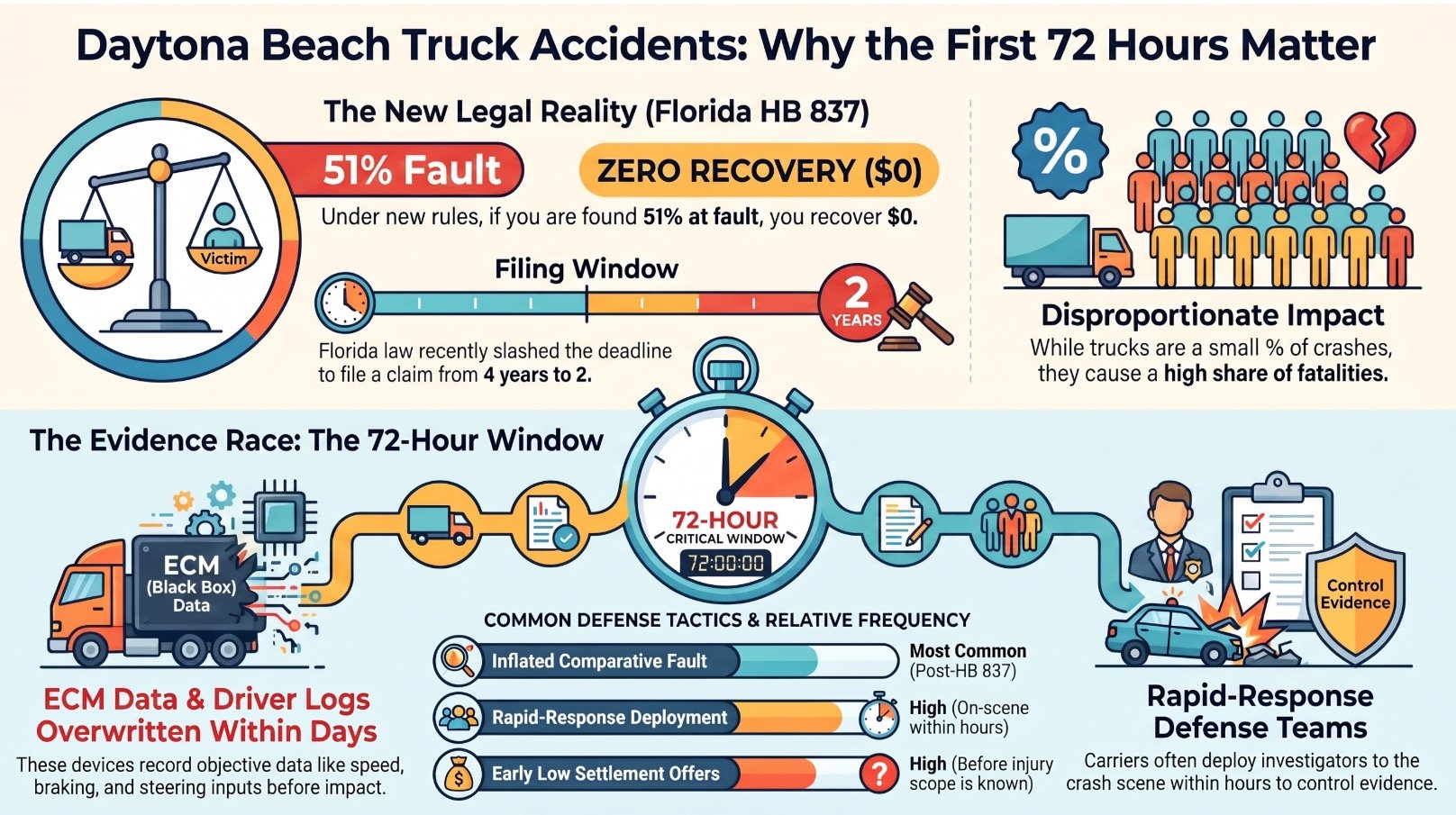
Negligence in a Daytona Beach truck accident case requires proving four elements: duty (commercial truck drivers and motor carriers owe a heightened duty of reasonable care to all other road users on I-95, I-4, US-1, and every Volusia County roadway under both Florida law and federal Motor Carrier Safety Regulations); breach (the driver, carrier, or another party failed that duty through hours-of-service violations, excessive speed, distracted driving, defective brakes, improper cargo loading, negligent hiring, or deferred vehicle maintenance); causation (the breach directly caused the crash and the injuries the client sustained); and damages (the injured person suffered measurable losses, including medical bills, lost income, property damage, pain and suffering, and future care needs). Florida HB 837 (2023) added a critical layer: under the modified comparative fault rule, if the injured person is found 51% or more responsible, they recover nothing. Trucking-defense firms and commercial carrier insurers know this threshold well and routinely deploy accident reconstruction experts, driver statements, and selective use of ECM data to build comparative fault arguments against injured Daytona Beach drivers and passengers.
Proving Liability in Daytona Beach Truck Accident Injury Cases
Proving liability in a Daytona Beach truck accident injury case requires establishing that another party’s negligence caused the collision and resulting harm. Liability may involve a truck driver, motor carrier, maintenance provider, manufacturer, or another responsible entity. The injured person generally must show that the party owed a duty of care, breached that duty, and caused legally recognized damages.
Relevant proof can include crash reports, photographs, electronic logging data, vehicle inspection records, cargo documentation, surveillance footage, and medical records. Evidence preservation is critical because physical evidence and electronic data may be altered, lost, or routinely deleted. Witness credibility can greatly influence how investigators, insurers, and courts evaluate conflicting accounts.
A careful trial strategy connects the evidence to each required element of negligence while addressing comparative fault arguments. Attorneys serving injured people may also use qualified accident-reconstruction and medical experts to explain causation and damages. Insurance negotiation depends on this factual foundation, although liability analysis should remain independent, thorough, and focused on obtaining fair accountability for the injured person.
Truck ECM and EDR Evidence in Daytona Beach Truck Accident Cases
Commercial trucks are equipped with an Engine Control Module (ECM), sometimes referred to as a black box, along with EDR functionality that records vehicle speed, brake application, throttle position, steering input, hours of service, and driver activity in the minutes and seconds before a crash. According to NHTSA, this data is among the most objective evidence available in any commercial truck collision and can confirm or contradict a driver’s account of what happened.
The critical window is short: motor carriers often return crashed trucks to service, overwrite ECM data, or dispute preservation requests within days. Our firm sends legal spoliation letters immediately after being retained, demanding preservation of the truck, its ECM, driver logs, dispatch records, maintenance history, and post-crash inspection data. Because federal Motor Carrier Safety Regulations govern retention of many trucking records, an experienced Daytona Beach truck accident firm must act within the first 24 to 72 hours to preserve the evidence needed to prove carrier negligence.
Dealing With Insurance Companies After a Daytona Beach Truck Accident Injury
After a Daytona Beach truck accident injury, dealing with insurance companies requires careful communication and a clear understanding of the available coverage. An injured person may communicate with the trucking company’s insurer, personal automobile insurer, or other carriers whose policies could apply. Each insurer may request statements, medical records, employment information, and documentation of expenses. Responses should remain accurate, consistent, and limited to relevant facts. An insurer’s early settlement offer may not reflect continuing treatment, lost income, or the policy limits available for a serious injury. Before accepting payment or signing a release, an injured person may benefit from reviewing the proposal with a qualified attorney. If the insurer issues a coverage denial, the reasons should be requested in writing and examined against the policy language and applicable law. A claim appeal may require organized evidence, timely submissions, and focused legal arguments. Careful recordkeeping and respectful communication can help protect the injured person’s interests while preserving resources for necessary care.
What to Expect During a Daytona Beach Truck Accident Injury Claim Process
A Daytona Beach truck accident injury claim typically begins with an initial case evaluation to assess liability, injuries, damages, and available legal options. The process may then involve collecting accident reports, medical records, witness statements, and other evidence before insurance claim negotiations begin. If negotiations do not produce a fair resolution, the matter may proceed toward a settlement agreement or trial.
Initial Case Evaluation
During an initial case evaluation, a Daytona Beach truck accident lawyer examines the circumstances of the collision, the extent of the injuries, and the potential sources of liability. This discussion allows the injured person to describe the event, medical consequences, employment disruption, and immediate concerns without pressure to make premature decisions. The lawyer may explain how a liability investigation could address the truck driver, carrier, maintenance providers, or other responsible parties. General guidance about evidence preservation helps prevent accidental loss of important information while the claim develops. The lawyer also assesses possible challenges, including an insurance denial or disputes regarding causation and damages. Finally, counsel may outline a settlement strategy, litigation risks, likely timelines, and available options, enabling the prospective client to make informed decisions and pursue fair treatment.
Evidence Collection Process
Building on the initial case evaluation, the evidence collection process establishes the factual foundation for a Daytona Beach truck accident injury claim. Investigators may document vehicle damage, roadway conditions, traffic signals, lighting, weather, and visible injuries through photographs, measurements, and scene inspections. Medical records, treatment notes, employment documentation, and witness statements can clarify the injury’s extent and its effect on daily responsibilities. Trucking records may include driver logs, inspection reports, maintenance histories, cargo information, and electronic data. Prompt spoliation preservation requests can direct involved parties to retain relevant materials before routine deletion or alteration occurs. Evidence protection also requires secure storage, organized documentation, and careful handling of originals. By preserving reliable information, the process helps counsel evaluate causation, responsibility, and damages while supporting a fair resolution for the injured person.
Insurance Claim Negotiations
Once the available evidence establishes the nature of the collision and resulting injuries, insurance claim negotiations focus on determining the value and responsibility associated with the Daytona Beach truck accident. A representative may review policy limits, liability findings, medical billing, lost income, and anticipated treatment. The insurer may request records, question the extent of injuries, or issue a Coverage denial based on disputed facts or policy language. Demand letters typically organize supporting evidence, explain damages, and identify a proposed resolution without overstating the claim. A careful negotiation strategy addresses incomplete investigations, improper reductions, and attempts to shift responsibility to the injured person. Throughout this process, clear communication helps protect the claimant’s interests and supports informed decisions. Documentation should be preserved, deadlines monitored, and responses evaluated against the available evidence and applicable coverage.
Settlement Or Trial
If settlement negotiations do not produce a fair resolution, the injured person may need to evaluate whether pursuing a truck accident lawsuit is appropriate. Counsel can assess medical records, lost income, vehicle damage, and evidence preservation efforts before recommending settlement or trial. Comparative negligence may affect the amount recoverable if the defense argues that the injured person contributed to the collision. A settlement offers greater predictability and usually resolves the matter without testimony, although it requires accepting an agreed payment. Trial provides an opportunity to present disputed facts to a judge or jury, but it involves additional time, expense, and uncertainty. Throughout either path, the legal team should communicate clearly, protect the client’s interests, and pursue compensation that supports recovery while encouraging accountability for unsafe commercial trucking practices.
Compensation for Daytona Beach Truck Accident Injury Damages
Compensation for Daytona Beach truck accident injuries may cover medical expenses, lost income, reduced earning capacity, property damage, and the physical pain and emotional distress caused by the collision. The recoverable amount depends on the evidence establishing liability, injury severity, treatment needs, and the lasting effects on daily life and employment. A careful claim may include documented transportation costs, rehabilitation expenses, and other losses directly connected to the crash. When a fatal collision occurs, eligible surviving relatives may pursue Wrongful death damages for funeral costs, lost financial support, and the loss of companionship. Insurance carriers must evaluate claims fairly and comply with applicable policy obligations.
Evidence of insurance bad faith, such as unreasonable delays, inadequate investigations, or improper denials, may support additional legal remedies under Florida law. An attorney can assess available coverage, preserve relevant records, communicate with insurers, and pursue compensation that reflects the client’s needs while protecting the interests of injured people and their families.
Economic vs Non-Economic Damages in Daytona Beach Truck Accident Cases
Economic damages compensate documented financial losses, including medical expenses, lost income, property damage, and future treatment costs. Non-economic damages address less quantifiable harm, such as pain and suffering, emotional distress, and diminished quality of life. Comparing these categories requires evaluating the available evidence, the injury’s lasting effects, and the circumstances that support each valuation.
Economic Damages Explained
Economic damages represent the measurable financial losses a person sustains after a truck accident in Daytona Beach. They commonly include emergency treatment, hospital bills, prescription costs, rehabilitation, and future medical care. Medical proof, such as invoices, diagnostic records, and physician opinions, helps connect those expenses to the collision and establish their reasonable value.
Lost wages may also qualify when injuries prevent work, reduce earning capacity, or require time for appointments and recovery. Transportation costs, necessary equipment, and household services can be included when supported by reliable documentation. Pain management expenses may continue long after initial treatment, making updated records important.
A careful claim timeline organizes bills, employment records, and treatment milestones. Insurers may dispute causation, necessity, or pricing, so complete evidence helps representatives serve injured people effectively and pursue accurate compensation.
Non-Economic Damages Explained
When a truck accident causes lasting physical or emotional harm, non-economic damages address losses that do not have a fixed financial value. These damages may include physical pain, emotional distress, loss of enjoyment, disfigurement, inconvenience, and reduced quality of life. They can also reflect the effect of permanent limitations on family relationships, personal independence, and daily activities. Unlike medical bills or lost wages, these injuries require careful documentation and a clear explanation of how the collision changed the injured person’s life. Comparative negligence may reduce recovery if the injured party contributed to the accident, making accurate evidence especially important.
In developing a settlement strategy, counsel may present medical opinions, personal accounts, and testimony from people who observe the claimant’s ongoing difficulties. The objective is fair recognition of harm.
Comparing Damage Valuations
A truck accident claim in Daytona Beach typically involves two distinct categories of damages that are evaluated as a pair but valued differently. Economic damages are documented through financial evidence, including medical bills, lost wages, rehabilitation expenses, and repair cost estimates. These figures generally provide a measurable foundation for settlement negotiations and trial presentations. Non-economic damages address harms without precise invoices, such as pain, emotional distress, reduced quality of life, and permanent impairment. Their valuation requires consideration of the injury’s severity, recovery period, and effect on daily responsibilities. Comparing both categories helps ensure that compensation reflects the claimant’s complete losses rather than immediate expenses alone.
Counsel may also assess Insurance dispute timelines, policy limits, liability evidence, and future damages while advocating for a fair result that supports recovery and protects affected families.
When a Daytona Beach Truck Accident Injury Case Goes to Trial vs Settlement
Although many Daytona Beach truck accident injury claims resolve through settlement, some proceed to trial when the parties cannot agree on liability or the value of the damages. Settlement strategy may provide a faster, more predictable resolution, allowing an injured person to address medical needs and financial obligations without prolonged litigation. However, accepting an offer requires careful assessment of documented losses, future care, and the strength of available evidence.
Trial readiness becomes important when negotiations stall or the opposing party disputes responsibility. Attorneys may present testimony, medical records, accident evidence, and expert opinions to explain how the collision affected the injured person and family. During closing arguments, each side connects the evidence to its requested outcome. Verdict considerations include credibility, causation, damages, and the possibility that the jury may award more or less than proposed in settlement. A decision to settle or proceed should reflect informed advice, practical needs, and the individual’s interests rather than pressure or speculation.
Florida Laws That May Affect Your Daytona Beach Truck Accident Case
Florida law can affect nearly every aspect of a Daytona Beach truck accident claim, including liability, available damages, filing deadlines, and the parties responsible for payment. Florida’s modified comparative negligence rule may reduce compensation when an injured person shares fault, while exceeding the applicable threshold can bar recovery. Liability framework comparisons may also distinguish claims against a truck driver, carrier, owner, broker, manufacturer, or maintenance provider.
Federal trucking regulations can establish safety duties concerning driver qualification, hours of service, vehicle inspections, cargo securement, and alcohol or drug testing. Florida statutes and agency rules may provide additional requirements for licensing, insurance, and roadway conduct.
Important considerations include:
- Negligent hiring, supervision, or retention by a trucking company.
- Vicarious liability for conduct occurring within employment.
- Economic and noneconomic damages supported by medical, employment, and other records.
A careful review can promote accountability and help protect injured people, families, and communities. Counsel may also assess available insurance coverage, corporate relationships, and evidence preservation obligations before settlement discussions proceed.
Daytona Beach Truck Accident Claims: What the Numbers Reveal About Crash Victims in Volusia County
The scale of truck accident harm on Volusia County roads is significant. According to FLHSMV 2022 Florida Traffic Crash Facts, Florida recorded 401,523 total crashes, 3,535 fatalities, and more than 253,888 injuries in a single year. Large-truck collisions represent a small percentage of total crashes but a disproportionately high share of catastrophic and fatal injuries because of the mass and force difference between a passenger vehicle and a fully loaded commercial vehicle. Volusia County sees heavy commercial traffic along the I-95 corridor and I-4 near the coast, and NHTSA reported 3,308 distraction-related fatalities nationally in 2022 alongside high rates of large-truck involvement in interstate corridor crashes.
Florida HB 837, effective March 24, 2023, fundamentally changed every Daytona Beach truck accident claim. The law cut the filing window from 4 years to 2 years and replaced pure comparative fault with a modified rule: if an injured person is found 51% or more at fault, they recover nothing. Commercial motor carrier insurance defense teams, which are often already on scene within hours of a serious Volusia County truck crash, use this threshold to build fault-shifting arguments against injured drivers and passengers before the crash victim has even completed initial medical evaluation.
Crash scene evidence, including truck ECM downloads, driver logs, dispatch records, surveillance from I-95 corridor cameras, and witness accounts, degrades or disappears within 24 to 72 hours. Carriers can move damaged trucks quickly, overwrite ECM data through subsequent engine starts, and lose critical dispatch and hours-of-service records. Immediate legal action and evidence preservation are the foundation of every successful Daytona Beach truck accident claim under Florida’s post-HB 837 rules.
Florida PIP Coverage and Daytona Beach Truck Accident Claims
Florida requires most motor vehicle owners to carry at least $10,000 in Personal Injury Protection (PIP) coverage, which pays 80 percent of reasonable medical expenses and 60 percent of lost wages regardless of who caused the accident. To activate PIP benefits, injured people must seek medical treatment within 14 days of the crash.
However, PIP has serious limits in truck accident cases. It covers only $10,000 in total benefits and does not compensate for pain and suffering. Catastrophic truck-crash injuries often exhaust PIP within days. To sue an at-fault trucking company for full damages, Florida law requires that your injury meet the serious injury threshold: a permanent injury, significant and permanent scarring or disfigurement, or death. Because truck crashes commonly cause exactly these severity levels, stepping outside the no-fault system and pursuing a liability claim against the trucking company, its insurer, cargo shipper, or vehicle manufacturer is the only realistic path to full recovery.
The Statute of Limitations for Daytona Beach Truck Accident Injury Cases
Timely filing is critical in Daytona Beach truck accident injury cases because Florida’s statute of limitations generally restricts how long an injured person has to bring a lawsuit. Under current Florida law, a negligence claim is generally subject to a two-year deadline, although exceptions may alter the calculation. The period may involve different rules when a wrongful death, government entity, or minor is involved. An injured person should identify the accident date, medical consequences, and potentially responsible parties without delay. Missing the deadline can result in dismissal, regardless of the seriousness of the injuries or strength of the claim. Negotiation timelines do not automatically extend the filing period, so settlement strategy should account for the litigation deadline rather than assume discussions preserve rights. Early evidence preservation is also important because records, vehicle data, witness recollections, and inspection materials may become unavailable. Potential liability defenses and factual disputes further support prompt evaluation before critical deadlines expire.
How a Daytona Beach Truck Accident Lawyer Can Help You
A Daytona Beach truck accident lawyer can help protect an injured person’s legal rights while developing the evidence needed to pursue compensation. The lawyer can evaluate medical records, crash reports, photographs, witness accounts, and available trucking-company information to establish responsibility and document losses. A careful Truck crash settlement strategy may address medical expenses, lost income, reduced earning capacity, property damage, and continuing care.
Key services may include:
- Investigating driver conduct, vehicle maintenance, loading practices, and employer policies.
- Coordinating Florida evidence preservation efforts, including requests for electronic logs, onboard data, surveillance footage, and inspection records.
- Communicating with insurers and opposing parties so that statements and negotiations do not undermine the injured person’s position.
The lawyer can also consult qualified professionals when medical, engineering, or financial opinions are necessary. By organizing the claim and presenting reliable documentation, counsel helps decision-makers understand both immediate harm and long-term consequences. This support allows families, caregivers, and community advocates to focus on recovery while the legal process proceeds with accountability and disciplined preparation.
When to Contact a Daytona Beach Truck Accident Lawyer
When a truck collision causes injury, uncertainty about fault, or substantial property damage, the injured person should contact a Daytona Beach truck accident lawyer as soon as reasonably possible. Early consultation can help protect legal rights while important information remains available. Commercial trucking companies and insurers may begin investigating immediately, making prompt guidance valuable for an injured person and the people assisting with recovery.
A lawyer can identify time-sensitive concerns, including medical documentation, insurance communications, vehicle inspections, and applicable filing deadlines. Prompt action may also support the collection of Truck Accident Evidence, such as photographs, electronic logging data, maintenance records, driver qualifications, and roadway surveillance. Preserving Witness Statements is equally important because recollections can become less precise as time passes. Individuals should avoid speculating about responsibility or accepting a settlement before understanding the claim’s potential value. Even when injuries initially appear minor, symptoms may develop later. A timely consultation allows the circumstances to be evaluated carefully and supports informed decisions without disrupting necessary medical treatment.
Why You Need an Experienced Daytona Beach Truck Accident Lawyer
Because commercial truck crashes often involve multiple parties and extensive records, an experienced Daytona Beach truck accident lawyer can provide focused legal analysis that an injured person may be unable to manage alone. Counsel can identify potentially responsible drivers, motor carriers, maintenance providers, manufacturers, and other entities while evaluating how their conduct contributed to the collision. Prompt Truck evidence preservation may protect electronic logs, onboard data, inspection reports, surveillance footage, and communications that could otherwise disappear or be altered. An experienced attorney can also coordinate with investigators, medical professionals, and accident reconstruction experts to develop a clear account of liability and damages. Through a thoughtful Insurance negotiation strategy, counsel can address commercial coverage, assess settlement offers, and resist pressure to accept inadequate compensation. This representation allows an injured person and family to focus on recovery and serving one another while legal responsibilities are handled diligently. It also supports informed decisions grounded in documented facts, applicable law, and the long-term effects of the injuries.
How to Choose the Right Florida Personal Injury Lawyer for Your Case
The decision should begin with careful review of relevant experience, case history, and the lawyer’s ability to handle the specific type of injury, insurance dispute, or liability question involved in the claim. A suitable attorney should demonstrate organized case preparation, sound judgment, and a genuine commitment to protecting the client’s well-being while pursuing fair compensation. Ask specifically about their experience with Florida’s HB 837 comparative fault rules and how they approach fault disputes with insurers. Also ask about Board Certification in Civil Trial and an AV Preeminent rating from Martindale-Hubbell, independent credentials that confirm the highest levels of professional excellence and courtroom readiness.
Client communication is another essential measure. The lawyer should explain options clearly, provide timely updates, and answer questions with honesty and respect. This approach helps injured people make informed decisions during a difficult period without feeling pressured or confused about what is happening with their case. Potential clients should also review fee agreements carefully before signing anything, understanding contingency arrangements, potential expenses, and how costs may affect the net recovery. By evaluating experience, communication, availability, and fee structure, an injured person can select counsel prepared to serve their interests with diligence, integrity, and professional care throughout the full life of the claim.
About The Law Offices of Anidjar & Levine
Founded in 2005 by Marc Anidjar and Glen Levine, the firm began as a two-person operation working out of a construction office conference room. Over the past 20 years, that modest start has grown into one of Florida’s most recognized personal injury practices, with more than $1 billion recovered in settlements on behalf of injury clients across the state. We bring that same determination and depth of experience to every Daytona Beach truck accident case we handle.
The Law Offices of Anidjar & Levine represents individuals and families seeking legal guidance after serious truck accidents in Daytona Beach. The firm evaluates each matter carefully, recognizing that commercial collisions may involve trucking companies, insurers, maintenance providers, and other responsible parties. Its Truck accident scope includes reviewing crash reports, medical records, vehicle damage, employment information, and available evidence concerning liability and losses.
During a client consultation, attorneys can discuss the circumstances, explain potential legal options, and identify steps that may protect a claim. The process is intended to provide clear information while allowing injured people and families to make informed decisions. The firm’s approach emphasizes preparation, communication, and attention to the practical effects of a collision, including medical treatment, income disruption, and long-term care concerns.
Marc Anidjar, Co-Founder & Personal Injury Attorney
Marc Anidjar co-founded the firm in 2005 and has spent two decades representing seriously injured people throughout Florida. He is Board Certified in Civil Trial Law by The Florida Bar, a distinction held by fewer than 3 percent of Florida attorneys, and holds an AV Preeminent rating from Martindale-Hubbell, the legal industry’s highest peer-review recognition for professional excellence and ethical standards.
Glen Levine, Co-Founder & Personal Injury Attorney
Glen Levine co-founded the firm alongside Marc Anidjar and has represented injury clients across Florida for more than 20 years. He holds an AV Preeminent rating from Martindale-Hubbell and is committed to clear communication, thorough case preparation, and protecting each client’s right to full and fair compensation after a serious injury.
Frequently Asked Questions
Can I Afford a Daytona Beach Truck Accident Lawyer Without Paying Upfront?
In many cases, a person can hire a truck accident lawyer without paying upfront. The attorney may accept a contingency fee, receiving payment only if compensation is recovered through settlement or trial. This arrangement should clearly explain the percentage, case expenses, and responsibility for costs if the claim is unsuccessful. Some firms also offer payment plans for limited expenses. Prospective clients should request a written agreement and compare terms before proceeding with representation.
Will My Truck Accident Case Affect My Immigration Status?
A truck accident case generally does not affect a person’s immigration status simply because a claim is filed or compensation is sought. However, how it affects visas may depend on criminal charges, immigration violations, employment authorization, or statements made during proceedings. Legal protections explained by a qualified attorney can help preserve injury rights without creating unnecessary immigration risks. The individual should obtain coordinated advice from an experienced personal injury lawyer and immigration counsel before making significant decisions.
Can Family Members Attend Meetings With My Truck Accident Attorney?
Family members may attend meetings with a truck accident attorney if the client and attorney agree. However, confidentiality limits should be explained before family involvement begins, because conversations including third parties may affect attorney-client privilege. The client should identify trusted relatives and clarify their role, whether providing support, translating, or sharing information. The attorney may also request private discussions to protect the client’s interests and obtain complete, candid answers.
What Should I Bring to My Initial Lawyer Consultation?
For an initial lawyer consultation, the prospective client should bring an evidence checklist, including photographs, videos, vehicle damage records, insurance correspondence, and relevant messages. A police report, witness list with contact information, and medical records can help establish what occurred and the resulting injuries. Employment or income documentation may support lost-wage claims. The client should also provide identification, policy details, and a written timeline, while preserving all original evidence for careful review.
Can I Change Lawyers if I’M Unhappy With My Current Representation?
Yes, a client can generally change lawyers if dissatisfied with communication, strategy, or service, although timing and case circumstances matter. Before switching counsel, the client should review the fee agreement, identify termination procedures, and ask about outstanding costs or liens. The client should notify current counsel in writing and arrange an orderly transfer of records. Court approval may be required in some matters, so professional guidance can protect the client’s interests.
What is the statute of limitations for Daytona Beach truck accident cases?
Under Florida HB 837, effective March 24, 2023, most negligence-based truck accident claims must be filed within 2 years from the date of the crash. Missing this deadline permanently bars recovery regardless of how strong the underlying facts are. Certain claims against government entities or involving federal jurisdiction may require written notice within even shorter windows.
Who can be held liable in a Daytona Beach truck accident case?
Truck accident liability is often more complex than a passenger vehicle crash. Potentially responsible parties may include the truck driver, the motor carrier (trucking company), the truck’s owner (if different), a cargo shipper who improperly loaded or secured freight, a maintenance contractor, a parts manufacturer for defective equipment, and, in some cases, the broker who arranged the shipment. Our attorneys investigate every layer of the trucking operation.
How does Florida HB 837 affect Daytona Beach truck accident cases?
Florida HB 837 (effective March 24, 2023) made three critical changes: the statute of limitations was cut from 4 years to 2 years, modified comparative fault now bars all recovery if the injured person is found 51% or more at fault, and the law limited certain evidence about medical billing. Immediate legal action, evidence preservation, and experienced representation are more important than ever.
Daytona Beach and Volusia County Local Resources
The following local resources may help injured people and their families in the days and weeks after a serious accident. If you are experiencing an emergency, call 911 first.
Hospitals and Emergency Care
- Halifax Health Medical Center — Level II Trauma Center · 303 N Clyde Morris Blvd, Daytona Beach, FL 32114 · 386-254-4000
- AdventHealth Daytona Beach — 301 Memorial Medical Pkwy, Daytona Beach, FL 32117 · 386-231-6000
- Halifax Health — Port Orange — 1041 Dunlawton Ave, Port Orange, FL 32127 · 386-763-4181
- AdventHealth New Smyrna Beach — 401 Palmetto St, New Smyrna Beach, FL 32168 · 386-424-4937
Police and Highway Patrol
- Daytona Beach Police Department — 129 Valor Blvd, Daytona Beach, FL 32114 · Non-emergency: 386-671-5100
- Volusia County Sheriff’s Office — 123 W Indiana Ave, DeLand, FL 32720 · 386-254-1550
- Florida Highway Patrol — Troop D (Central Florida) · 407-737-2213
- Request a Florida Crash Report (FLHSMV)
Courts and Legal Services
- Seventh Judicial Circuit Court of Florida — Volusia County Courthouse, 101 N Alabama Ave, DeLand, FL 32724 · 386-257-6000
- Volusia County Clerk of the Circuit Court · 386-736-5915
Mental Health and Crisis Support
- 988 Suicide & Crisis Lifeline — 24/7 free confidential support · 988
- 211 Volusia/Flagler — 24/7 helpline for crisis, counseling, and community resource referrals · 211
- SMA Healthcare — 1220 Willis Ave, Daytona Beach, FL 32114 · 386-947-1200
- Halifax Health Behavioral Services · 386-425-3939
Victim Services and Additional Support
- Volusia County Victim Services — 24-hour crisis line · 386-254-1500
- Florida Department of Health in Volusia County · 386-274-0500
- Florida Department of Financial Services — Consumer Insurance Help · 877-693-5236
Truck accident claims in Daytona Beach often involve serious injuries, complex multi-defendant liability, and aggressive commercial carrier defense.
A Daytona Beach Personal Injury Lawyer from The Law Offices of Anidjar & Levine can evaluate the crash, identify every responsible party, preserve ECM and dispatch evidence, and pursue compensation for medical expenses, lost wages, and other damages.
Prompt legal guidance can help protect an injured person’s rights and strengthen the claim.
Those harmed in a Volusia County truck collision should consider contacting an experienced attorney for a confidential case review.
Real Reviews From Our Clients!
“An 18-wheeler ran me off I-95 near Daytona Beach and left me with two broken vertebrae and months of rehab. The trucking company was already blaming me before I got out of the hospital. Anidjar & Levine got the ECM data preserved, tracked down the driver’s hours-of-service violations, and secured a settlement that covered every medical bill and lost income.”
— Brandon T., Daytona Beach
“After my crash with a delivery truck in Port Orange, the carrier had its own investigators on scene the same day. I felt completely outmatched until I called Anidjar & Levine. They took over immediately, dealt with the carrier’s defense team, and made sure I did not sign anything I would regret.”
— Christina L., Port Orange
“My husband was killed by a semi that ran a red light on US-1. I had no idea how to hold the trucking company accountable. Anidjar & Levine handled everything with compassion and professionalism, and pursued the driver, the carrier, and their insurers together. The settlement will support our family for years.”
— Patricia S., Ormond Beach