
The Law Offices of Anidjar and Levine can help Jacksonville car accident victims with fractures and broken bones document fault, preserve evidence, and pursue compensation for medical care, lost wages, and daily limitations. These claims often require crash reports, photos, witness statements, imaging results, orthopedic records, wage documentation, and insurance communications. Legal guidance may also address delayed symptoms, surgery, rehabilitation, and future recovery needs. Learn more from a Jacksonville Personal Injury Lawyer about how these cases are evaluated, documented, and pursued after a serious crash.
Main Takeaways
- A Jacksonville car accident fractures lawyer can organize medical records, wage losses, insurance communications, and crash evidence.
- Fracture claims may involve ER care, imaging, orthopedic treatment, surgery, casts, hardware, rehabilitation, and follow-up visits.
- Broken bones can result from high-speed crashes, rear-end impacts, motorcycle collisions, pedestrian accidents, rollovers, or seat belt trauma.
- Delayed fracture symptoms can occur when swelling, adrenaline, or soft-tissue injuries mask pain and mobility problems.
- Claim value depends on documented medical bills, work limitations, future care needs, daily impacts, and verified insurance evidence.


How We Can Help With Your Jacksonville Car Accident Fractures & Broken Bones Injury Claim
After a Jacksonville car accident causes fractures or broken bones, a personal injury claim often requires careful documentation of the injury, the crash circumstances, and the full financial impact. A law firm can assist by coordinating medical records, treatment histories, wage loss information, and insurance communications, while ensuring the injured person’s needs remain central to every decision. Evidence preservation may include securing crash reports, photographs, witness statements, vehicle data, and any available video before critical evidence becomes unavailable. Attorneys may also evaluate how the fracture affects daily responsibilities, caregiving roles, mobility, and future recovery needs. This organized approach supports a Settlement strategy grounded in verified losses rather than assumptions or insurer convenience. Counsel can prepare demand materials, respond to adjuster challenges, and identify when negotiations do not reflect the claim’s value. Through disciplined advocacy, the legal team helps protect the injured person’s dignity, stability, and access to fair compensation after serious harm.
OUR CONSULTATIONSARE FREE
START YOUR FREE CASE REVIEW

Understanding Jacksonville Car Accident Fractures & Broken Bones Injury Cases
When a motor vehicle collision results in a fracture or broken bone, the injury may involve more than immediate pain and emergency treatment. These cases often require careful review of medical findings, treatment plans, work limitations, and long-term effects on daily responsibilities. In Jacksonville, a fracture claim may involve emergency care, imaging studies, orthopedic treatment, surgery, rehabilitation, and follow-up appointments. Each step can affect the value and direction of the claim.
A well-developed case also depends on accurate insurance documentation, including medical bills, provider notes, wage records, and communications with insurers. These materials help demonstrate how the injury has affected the person’s ability to work, care for family members, and meet community obligations. Compensation timelines may vary based on recovery progress, the level of dispute, and the completeness of records. Careful case management helps protect the injured person’s position while supporting a fair evaluation of present and future losses after a serious bone injury.
Common Causes of Jacksonville Car Accident Fractures & Broken Bones
Fractures and broken bones in Jacksonville car accidents often result from severe forces placed on the body during high-speed vehicle collisions and rear-end crash impacts. Motorcycle and pedestrian accidents also present a significant risk, as victims have limited protection against direct contact with vehicles, pavement, or surrounding objects. In some cases, seat belt trauma may contribute to bone injuries, particularly when crash forces are concentrated across the ribs, shoulder, or collarbone.
High-Speed Vehicle Collisions
High-speed vehicle collisions often produce severe forces that exceed the body’s ability to absorb impact, making broken bones a common and serious injury in Jacksonville car accidents. When vehicles travel at elevated speeds, occupants may suffer fractures to the arms, legs, ribs, pelvis, skull, or spine due to rapid deceleration and violent movement within the cabin. Driver distraction can increase the likelihood of these crashes, especially when motorists fail to monitor traffic, road conditions, or changing signals. Distracted driving, including phone use or inattention, reduces reaction time and limits a driver’s ability to avoid hazards. For those serving injured individuals, understanding these causes helps identify preventable conduct, document the severity of harm, and support appropriate legal action after a serious collision in Jacksonville.
Rear-End Crash Impact
Although rear-end crashes are often viewed as less serious than other collisions, the force of impact can cause significant fractures and broken bones in Jacksonville car accidents. When a vehicle is struck from behind, occupants may be thrown forward and then pulled back, placing severe stress on the spine, ribs, wrists, arms, and facial bones. Bracing against the steering wheel or dashboard can increase the risk of fracture, especially during sudden, unexpected impacts.
These crashes may also cause whiplash symptoms, which can mask more serious injuries and delay proper evaluation. Medical providers often assess pain, swelling, loss of mobility, and imaging results to determine the recovery timeline. For injured individuals, careful documentation supports treatment decisions and helps advocates serve them accurately, with dignity, and with practical guidance after a preventable collision.
Motorcycle And Pedestrian Accidents
Motorcycle and pedestrian accidents in Jacksonville often involve even greater exposure to direct impact than rear-end collisions, which can lead to severe broken bones and complicated recovery needs. Riders and walkers have limited physical protection, so collisions may fracture legs, arms, wrists, ribs, hips, or facial bones. These injuries can arise when drivers fail to yield, turn without checking blind spots, speed through crosswalks, or ignore traffic controls. Bicycle collisions may create similar harm, particularly when vulnerable road users are struck by heavier vehicles. School zone injuries also require careful attention, because children may suffer fractures while walking, riding, or crossing near buses and traffic. Legal review can help identify unsafe conduct, document medical consequences, and connect injured people and families with recovery resources.
Seat Belt Trauma
When a crash forces the body against a restraint system, a seat belt can prevent fatal ejection while still causing significant trauma to the chest, ribs, clavicle, sternum, pelvis, or spine. These injuries often occur when sudden deceleration concentrates force on bones and soft tissues, especially in high-speed collisions or due to improper belt positioning. Service-minded responders, caregivers, and advocates should recognize that visible bruising may indicate underlying fractures or internal injuries that require prompt evaluation. Seat belt injury myths can discourage necessary medical care, yet the presence of injury does not mean the restraint failed or should have been avoided. Proper use of restraints remains necessary because it reduces the risk of catastrophic harm. In Jacksonville crashes, careful documentation of belt placement, symptoms, imaging, and treatment helps clarify the causation of injuries and supports a fair legal assessment.
Don’t Wait. Call Our Florida Personal Injury Lawyers Now!


Legal Rights of Jacksonville Car Accident Fractures & Broken Bones Injury Victims
After a Jacksonville car accident, victims who suffer fractures or broken bones may have the right to pursue compensation when another driver’s negligence caused the crash. These rights may include payment for medical care, lost wages, reduced earning capacity, and pain and suffering related to daily limitations. Legal claims can also address Pain management options, rehabilitation needs, and future treatment when recovery is incomplete.
In serving injured individuals with dignity, a lawyer may help document:
- Emergency rooms, casts, and surgical hardware.
- Missed workdays and unpaid household obligations.
- Follow-up visits, therapy schedules, and mobility aids.
- Insurance dispute tactics that delay fair payment.
Victims are generally expected to preserve records, follow medical advice, and avoid statements that may harm their claim. A careful legal approach can protect their interests while helping them seek resources needed for recovery, stability, and continued service to family, workplace, and community after serious injury.
Why Do Jacksonville Car Accident Fractures & Broken Bones Injuries Happen?
Fractures and broken bones in Jacksonville car accidents often occur because the body is exposed to sudden force, compression, twisting, or impact that exceeds the strength of the bone. High-speed crashes, side-impact collisions, rollovers, and abrupt stops can drive limbs, ribs, hips, or facial bones into hard surfaces, safety restraints, airbags, or vehicle structures. Pedestrians, bicyclists, and motorcyclists face added risk because they have limited protection from direct trauma.
These injuries may also result from bracing before impact, being crushed inside a damaged cabin, or striking the pavement after ejection. Delayed symptoms can occur when swelling, adrenaline, or associated soft-tissue injuries initially mask a fracture. A medical evaluation may later reveal the need for rehab, surgery, or extended immobilization. A List of common insurers may become relevant when coverage questions arise, especially if billing disputes develop between medical providers, health plans, and auto carriers while injured people seek recovery support and rehabilitation.
What Should You Do After a Jacksonville Car Accident Fractures & Broken Bones Injury?
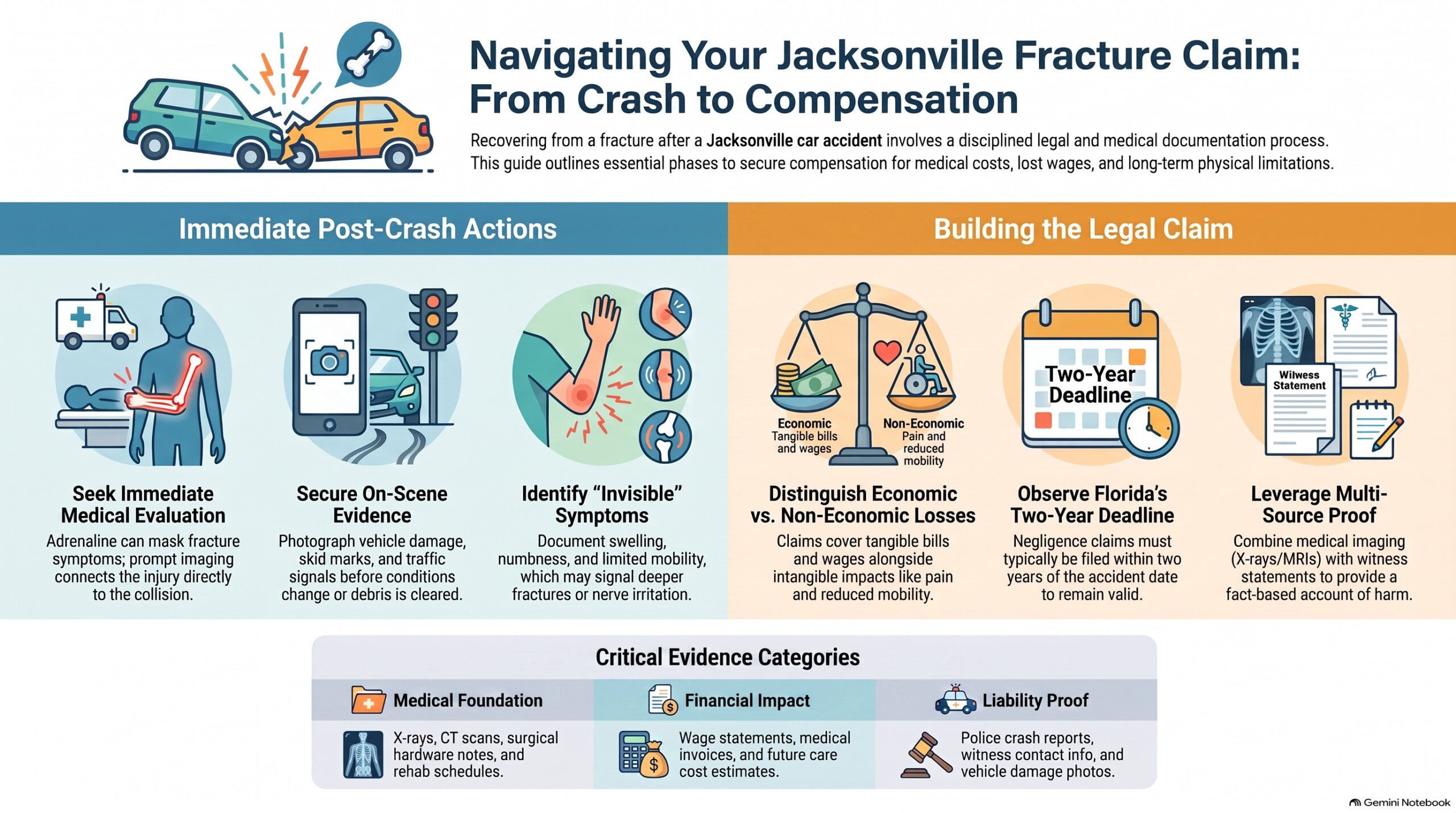
After a Jacksonville car accident causes fractures or broken bones, the injured person should seek immediate medical care to diagnose injuries and begin treatment. Evidence from the crash, including photographs, witness information, and medical records, should be preserved to support any future claim. A lawyer may then evaluate liability, insurance issues, and available compensation based on the documented facts.
Seek Immediate Medical Care
When a crash causes a suspected fracture or broken bone, prompt medical evaluation should be treated as a priority, even if the injury does not appear severe at the scene. A person may need emergency care, imaging, stabilization, or referral to an orthopedic expert. Medical professionals can identify fracture symptoms, including swelling, deformity, limited movement, bruising, numbness, and pain that worsens with pressure or motion. Early treatment helps reduce complications, supports recovery, and allows caregivers, family members, and advocates to respond responsibly to the injured person’s needs. Timely care also addresses the urgency of legal documentation, as medical records can help link the injury to the collision and establish its severity. Delays can create health risks and may invite disputes about cause, severity, or necessary treatment later.
Document Accident Evidence
Medical treatment should be followed by careful preservation of evidence, because the condition of the vehicles, roadway, and injury documentation can change quickly. A responsible helper may photograph vehicle damage, skid marks, traffic signals, debris, weather conditions, and visible injuries when it is safe to do so. A brief photograph checklist can support orderly collection and reduce the risk of missed details. Names, phone numbers, insurance information, license plates, and witness observations should be recorded accurately. Injury documentation should include discharge papers, diagnostic imaging references, prescriptions, mobility aids, and notes about pain, limitations, and missed work. Damaged clothing, broken personal items, and repair estimates should be saved. This careful recordkeeping may help clarify how the collision occurred and how fractures or broken bones affected daily life after the crash.
Contact A Lawyer
With evidence preserved and treatment underway, legal guidance may help an injured person understand deadlines, insurance issues, and the value of a fracture or broken bones claim. A Jacksonville car accident lawyer can review fault, assess medical documentation, and identify damages tied to treatment, lost income, pain, mobility limits, and future care needs. Counsel may also support evidence preservation by securing records, photographs, witness statements, crash reports, and vehicle data before important information is lost. Through insurance negotiation, an attorney can address adjuster requests, challenge undervalued offers, and present a claim that reflects the full impact of the injury. This guidance helps injured people pursue Fair compensation while focusing on recovery, family responsibilities, and the practical needs of those who depend on their continued care and stability.
Critical Evidence in a Jacksonville Car Accident Fractures & Broken Bones Injury Case
In a Jacksonville car accident case involving fractures or broken bones, essential evidence often determines how clearly fault, injury severity, and financial losses can be proven.
Main evidence may include:
1. Accident Scene Documentation, such as skid marks, debris, and roadway conditions; 2. Medical Records and Imaging, including X-rays, CT scans, and treatment notes; 3. Witness Statements, capturing observations before and after impact; 4. Vehicle Damage Evidence, showing collision force and points of contact.
Along with these materials, these records create a structured record that may support a stronger injury claim.
Accident Scene Documentation
After a serious collision, accident scene documentation can become decisive evidence in a Jacksonville car accident claim involving fractures or broken bones. Careful records may help clarify how the crash occurred, which parties were present, and what hazards contributed to impact forces. A complete Photographic Timeline should capture vehicle positions, roadway markings, debris fields, traffic signals, weather conditions, visible damage, and nearby surveillance sources before conditions change. Witness names, officer information, tow details, and notes about statements heard at the scene may also support a later investigation.
Scene Safety remains the top priority for everyone involved. Documentation should occur only when it can be done without increasing danger or obstructing emergency responders. Organized evidence allows advocates, insurers, and courts to assess responsibility more accurately.
Medical Records And Imaging
Medical records and imaging establish the clinical foundation of a Jacksonville car accident claim involving fractures or broken bones. Emergency room charts, orthopedic evaluations, surgical notes, and therapy records show the nature, timing, and progression of the injury. X-rays, CT scans, and MRI studies help confirm whether trauma caused a fracture, displacement, soft-tissue involvement, or complications affecting recovery. Careful verification of MRI results can strengthen the link between the diagnosed harm and the collision, especially when symptoms develop or worsen after the impact. These records also help compare treatment findings with Florida roadside documentation, creating a clearer sequence from crash to diagnosis. For those committed to serving injured individuals, organized medical proof supports fair evaluation, responsible advocacy, and informed decisions regarding damages, future care, limitations, and accountability under Florida law.
Witness Statements
When a Jacksonville car accident results in fractures or broken bones, witness statements can provide critical context that medical records alone cannot supply. Neutral observers may describe traffic signals, driver behavior, road conditions, and the injured person’s immediate pain or limited movement. These accounts can strengthen accident documentation by connecting the crash event to the resulting orthopedic injuries. Attorneys evaluate eyewitness reliability by considering the witness’s location, visibility, attention, consistency, and possible bias. Prompt collection is important because memories can fade and details may change over time. Clear statements from passengers, pedestrians, nearby workers, or responding individuals may help confirm how the injury occurred. For those serving injured clients, careful witness review supports a fair presentation of facts, responsible advocacy, and informed decisions during claims or litigation.
Vehicle Damage Evidence
Although medical findings establish the nature of fractures, vehicle damage evidence can help explain the force, direction, and mechanics of a Jacksonville car accident. Crumpled panels, broken glass, bumper intrusion, airbag deployment, and frame distortion may show how an impact occurred and whether the collision was severe enough to cause the claimed injuries. Careful documentation through photographs, repair records, inspections, and preservation letters can protect this evidence before vehicles are altered or destroyed. Skid mark analysis may further clarify braking, speed, and evasive action, especially when liability is disputed. In motorcycle or bicycle collisions, Helmet injury evidence can connect impact points to head, neck, or facial trauma. When evaluated responsibly, evidence of vehicle damage helps advocates serve injured people by presenting a clearer, fact-based account of the harm.
Don’t Wait. Call Our Florida Personal Injury Lawyers Now!
Long-Term Effects of Jacksonville Car Accident Fractures & Broken Bones Injuries
Fractures and broken bones from Jacksonville car accidents may cause lasting complications, including chronic pain that interferes with daily functioning. Some victims also experience reduced mobility, particularly when injuries affect the hips, legs, spine, shoulders, or wrists. These long-term effects may require future medical care and ongoing therapy, and should be carefully evaluated when appraising the full value of an injury claim.
Chronic Pain Complications
After a serious Jacksonville car accident, broken bones may continue to cause pain long after the fracture appears to have recovered. Chronic pain can result from nerve irritation, joint involvement, hardware placement, scar tissue, or abnormal stress on surrounding tissues. For injured individuals who serve families, coworkers, or communities, persistent pain may interfere with rest, concentration, caregiving duties, and reliable participation in daily responsibilities. Medical care may include post-surgical rehabilitation, pain management, imaging studies, injections, or referral to specialists to assess lingering complications. Documenting these symptoms is important because pain that seems invisible can still reflect a serious, lasting injury. A Jacksonville car accident fractures and broken bones lawyer may evaluate how chronic pain affects work, treatment needs, and long-term personal stability after a collision.
Reduced Mobility Issues
When a broken bone repairs improperly or affects nearby joints, the injured person may experience reduced mobility that lasts well beyond the initial recovery period. Limited range of motion can make walking, lifting, driving, or performing household duties difficult, creating daily barriers to independence and service to family or community. In serious cases, stiffness, weakness, or altered posture may prevent a return to prior employment, especially when work requires standing, carrying, or repetitive movement. These limitations may support a Long Term Disability claim when functional loss is well documented. Vocational Rehabilitation may also become important, helping the person identify suitable work within physical restrictions. A careful evaluation of reduced mobility helps illustrate how a fracture has affected the person’s practical abilities, responsibilities, and economic stability following a Jacksonville collision.
Future Medical Needs
Reduced mobility often signals a broader need to examine the medical care a fracture victim may require in the months and years ahead. Serious breaks may require follow-up imaging, orthopedic evaluation, pain management, or additional procedures if the bones do not heal properly. Surgery recovery can extend well beyond the initial hospital stay, especially when plates, screws, or joint damage are involved. Some individuals may need assistive devices, home modifications, or ongoing therapy to restore safe movement and independence. Rehabilitation costs may also continue as strength, balance, and range of motion are rebuilt over time. For those serving injured clients, careful documentation of future treatment needs helps protect access to necessary care. A complete assessment can support fair compensation for medical expenses that may arise long after the collision.
Proving Liability in Jacksonville Car Accident Fractures & Broken Bones Injury Cases
Because fractures and broken bones often result from significant force, proving liability in a Jacksonville car accident case requires a careful review of how the collision occurred and who failed to use reasonable care. Proving negligence may involve showing that a driver was speeding, distracted, impaired, followed too closely, ignored traffic controls, or otherwise acted unsafely.
Evidence of fault can include police reports, witness statements, traffic camera footage, vehicle damage, skid marks, roadway conditions, and expert reconstruction. Medical records also play an important role in establishing causation, linking injuries to the crash rather than to another event or a prior condition. This connection helps demonstrate that the fractured wrist, broken leg, rib injury, or other trauma resulted directly from the negligent conduct.
A thorough liability review serves injured people by identifying responsible parties, preserving critical proof, and supporting a claim that reflects the true harm caused by the collision. Strong proof creates a fairer path toward accountability.
Dealing With Insurance Companies After a Jacksonville Car Accident Fractures & Broken Bones Injury
After liability evidence has been gathered, insurance companies often become the primary gatekeepers to financial recovery for fractures and broken bones caused by a Jacksonville car accident. Their decisions may affect medical care, wage replacement, and resources needed to support an injured person’s household. First-party coverage should be reviewed promptly, including state PIP benefits, because early benefit coordination can reduce delays in treatment payment and preserve stability for families.
Insurers may request medical records, injury descriptions, prior health information, and statements about the crash. Each response should be accurate, consistent, and limited to relevant facts. Adjusters also evaluate policy limits, which can determine whether the available coverage is sufficient to cover surgery, rehabilitation, mobility equipment, and long-term impairment.
When benefits are reduced, delayed, or refused, claim denial appeals may be necessary. Careful documentation, organized medical evidence, and clear communication help protect the injured person while promoting a fair, responsible resolution.
What to Expect During a Jacksonville Car Accident Fractures & Broken Bones Injury Claim Process
A Jacksonville car accident fractures and broken bones injury claim typically begins with an initial case evaluation, followed by careful collection of medical evidence. The process often includes insurance claim negotiations, where liability, treatment costs, lost income, and long-term impairment may be assessed. If a fair resolution cannot be reached, the claim may proceed toward settlement discussions or trial.
Initial Case Evaluation
During the initial case evaluation, a Jacksonville car accident lawyer reviews the circumstances of the crash, the nature of the fractures or broken bones, available medical records, insurance coverage, and any evidence that may affect liability or damages. This meeting helps determine whether the claim can support the injured person’s needs while honoring the broader duty to seek fair accountability. The lawyer may ask about lost income, daily limitations, caregiving burdens, and how the injury affects service to family, work, or community. Damages proof is considered early, including employment impact, repair records, and documented expenses. The lawyer also assesses witness credibility, including consistency, perspective, and potential bias. This evaluation guides strategy, identifies urgent deadlines, and clearly explains possible next steps to the client.
Medical Evidence Collection
Medical evidence collection often becomes the foundation of a fractures and broken bones injury claim, because it connects the crash to the diagnosed injuries, treatment needs, pain levels, and long-term limitations. In Jacksonville cases, this process may include emergency records, imaging reports, orthopedic evaluations, surgical notes, prescriptions, therapy records, and physician opinions about future care. Secure evidence handling helps preserve accuracy, confidentiality, and credibility, especially when records must be reviewed by legal teams, medical providers, and claim representatives. A careful insurance documentation strategy also helps organize treatment dates, missed appointments, work restrictions, and recovery progress without overstating the injuries. When collected with discipline, these materials allow the claim to reflect the patient’s actual burden, support responsible advocacy, and help decision-makers understand the full medical impact.
Insurance Claim Negotiations
After medical evidence has been organized, insurance claim negotiations typically focus on liability, injury severity, treatment costs, lost income, and the long-term effects of fractures. Insurers may review police reports, witness accounts, photographs, and vehicle damage analyses to determine how the collision occurred and whether the claimed injuries are consistent with the impact. Liability proof remains central, because disputed fault can reduce or delay compensation under Florida law. Adjusters also examine whether treatment was timely, necessary, and related to the crash. For injured residents seeking stability for their families, careful documentation helps present needs clearly and respectfully. A lawyer may communicate with insurers, respond to requests, and protect the claimant from statements that could weaken the claim while negotiations continue. Records should remain consistent and complete throughout.
Settlement Or Trial
When negotiations do not resolve a Jacksonville car accident fracture or broken bone claim, the next step may involve continued settlement discussions or formal litigation. Attorneys assess liability, medical documentation, permanent limitations, and future care needs to determine whether settlement serves the injured person’s interests. Insurance negotiation tactics may include delayed responses, disputed causation, or undervalued damages, so careful evaluation remains crucial. If litigation proceeds, pleadings, discovery, depositions, and mediation may follow before trial. A focused Trial evidence strategy may present crash reports, imaging studies, physician testimony, wage records, and testimony from caregivers or witnesses. The goal is to show how the injury affects daily service, work, family responsibilities, and long-term stability. Settlement avoids the risk of trial, while a trial may be necessary when the insurer refuses fair compensation.
Compensation for Jacksonville Car Accident Fractures & Broken Bones Injury Damages
Because fractures and broken bones often require extensive treatment and recovery time, compensation in a Jacksonville car accident claim may include far more than the initial emergency room bill. A claim may address ambulance transport, diagnostic imaging, surgery, casting, rehabilitation, follow-up visits, medication, mobility aids, and necessary home support. When an injured person serves family, clients, patients, students, or the community, these losses can disrupt important responsibilities and daily care.
Compensation may also account for Missed Work, reduced earning ability during recovery, and time spent attending medical appointments. Fracture cases often require Pain Management, including prescriptions, therapy, injections, or expert care, especially when healing is delayed or complications develop. Documentation is essential and includes medical records, wage statements, treatment plans, and physicians’ opinions. A Jacksonville attorney may evaluate the full impact of the injury, coordinate evidence, and pursue recovery that reflects the person’s treatment needs and practical limitations.
Economic vs Non-Economic Damages in Jacksonville Car Accident Fractures & Broken Bones Cases
In Jacksonville car accident cases involving fractures and broken bones, damages are often divided between economic losses, such as medical bills and lost wages, and non-economic losses, such as pain and emotional suffering. Economic damages usually rely on records, invoices, and employment documentation, while non-economic damages require a careful assessment of how the injury affects daily life. Proving the full value of both categories is important to presenting a well-supported claim for compensation.
Medical Bills And Wages
Calculating damages after a Jacksonville car accident involving fractures or broken bones requires a clear distinction between economic and non-economic losses. Medical bills and lost wages are economic damages because they can be supported through records, invoices, and employment documentation. These losses may include emergency care, surgery, hospitalization, orthopedic treatment, physical therapy, medication, medical devices, and follow-up visits. Wage losses may involve missed work, reduced hours, diminished earning capacity, or job reassignment during recovery. When injuries require Disability accommodations, related costs may also be evaluated as part of the financial impact. In severe cases, fractures may contribute to long-term disability, affecting future income and workplace stability. Careful documentation helps establish the full monetary burden and supports a fair claim for necessary financial recovery.
Pain And Emotional Losses
Financial records can show what a fracture or broken bone costs, but they do not fully capture how the injury affects daily life, physical comfort, and emotional stability. Non-economic damages address pain, suffering, inconvenience, and the loss of normal routines after a Jacksonville car accident. A person may endure limited mobility, dependence on caregivers, and frustration from being unable to serve family, work, or community as before. Sleep and recovery may suffer when pain interrupts rest or medical restrictions make ordinary movement difficult. Anxiety and trauma can also follow the crash, especially when driving, riding, or returning to the accident scene causes distress. These losses recognize that healing involves more than medical treatment, and that human dignity, peace, and participation in daily responsibilities may be seriously disrupted.
Proving Damages Value
Proving the value of damages after a Jacksonville car accident requires evidence that connects the fracture or broken bone to both measurable financial losses and the broader disruption caused by the injury. Economic damages may include ambulance bills, surgery, rehabilitation, medication, mobility devices, lost wages, and reduced earning capacity. Loss calculation should be supported by medical records, employment files, expert opinions, and receipts that show the true financial burden placed on the injured person and family.
Non-economic damages require proof of pain, emotional distress, loss of independence, and limitations on daily activities or service to others. Insurance documentation, physician notes, witness statements, and recovery journals may help show how the injury changed ordinary life. Strong proof allows damages to be presented with accuracy, dignity, and credibility.
When a Jacksonville Car Accident Fractures & Broken Bones Injury Case Goes to Trial vs Settlement
Trial-readiness often determines whether a Jacksonville car accident case involving fractures or broken bones resolves through settlement or proceeds before a jury. Insurers may negotiate fairly when liability, medical causation, and damages are supported by organized evidence. When offers fail to reflect surgery, rehabilitation, lost income, or lasting limitations, continued litigation may better serve the injured person’s interests.
A disciplined trial preparation strategy includes witness development, expert review, medical record organization, and clear presentation of how the fracture affects daily life and service to family, work, and community. Settlement remains appropriate when compensation is reasonable and avoids unnecessary delay, expense, and uncertainty. Trial may become necessary when fault is disputed, damages are minimized, or Insurance denial appeals do not correct an unjust position.
Attorneys evaluate risks, jury presentation, medical proof, and negotiation history before recommending either path, always focusing on accountability, practical recovery, and the client’s long-term stability after serious injury.
Florida Laws That May Affect Your Jacksonville Car Accident Fractures & Broken Bones Case
Whether a Jacksonville car accident fracture case settles or proceeds to trial, Florida law shapes the value, timing, and available recovery at every stage.
Several rules guide how evidence is gathered, fault is measured, and insurance resources are identified for an injured person’s care.
- Comparative Negligence may reduce compensation if the injured person is assigned some fault, making careful investigation critical.
- Insurance Disclosure rules can require relevant policy information, helping counsel understand available coverage for surgery, therapy, and future limitations.
- Florida’s no-fault system may require initial use of personal injury protection benefits, even when another driver caused the crash.
- Seat belt evidence, medical documentation, and crash reports may affect how insurers evaluate fractured bones and related losses.
A lawyer representing the injured must apply these rules with discipline, so that recovery reflects the true burden carried by the person and their family.
Don’t Wait. Call Our Florida Personal Injury Lawyers Now!
The Statute of Limitations for Jacksonville Car Accident Fractures & Broken Bones Injury Cases
Because filing deadlines can determine whether compensation remains available, the statute of limitations is a crucial issue in Jacksonville car accident cases involving fractures and broken bones. In Florida, most negligence claims arising from crashes must be filed within two years of the accident date. Missing this deadline may prevent an injured person from seeking damages, even when medical records show serious harm.
Fracture cases often require careful timing because treatment, rehabilitation, and long-term impairment may unfold slowly. Still, the legal clock generally continues to run. Families, caregivers, and community-minded advocates should recognize that prompt action can protect both personal recovery and accountability. Comparative Fault rules may also affect the value of a claim, making early review of crash facts important. Evidence Preservation steps, including saving medical records, photographs, witness information, and repair documents, can support accurate evaluation before the deadline expires. Timely attention helps preserve fairness and legal rights for injured parties.
How a Jacksonville Car Accident Fractures & Broken Bones Lawyer Can Help You
After deadlines and evidence concerns are identified, a Jacksonville car accident fractures and broken bones lawyer can help organize the claim, evaluate liability, and pursue compensation that reflects the full impact of the injury.
This assistance may include careful coordination with medical providers, insurers, and accident investigators while the injured person focuses on recovery and family responsibilities.
- Medical proof is gathered, including imaging reports, surgical records, therapy notes, and physician opinions describing pain, limitations, and future care needs.
- Liability is examined, using crash reports, photographs, vehicle damage, roadway conditions, and community witness collection to show how the collision occurred.
- Insurance claim timelines are monitored to help prevent missed submissions, incomplete responses, or pressure to accept an undervalued settlement.
- Damages are presented clearly, including lost income, reduced mobility, transportation needs, household strain, and the quiet burdens placed on caregivers.
Through this work, the lawyer helps protect dignity, stability, and access to fair recovery.
When to Contact a Jacksonville Car Accident Fractures & Broken Bones Lawyer
When a car accident causes fractures or broken bones, legal guidance should be considered as soon as medical care is underway and the injured person’s condition has been stabilized. Early contact can help ensure that immediate needs are addressed without overlooking important deadlines, insurance communications, or documentation requirements.
Emergency room urgency often means families focus on treatment, pain control, and arranging support for daily responsibilities. During this period, a lawyer may provide practical guidance while allowing caregivers and loved ones to remain focused on the injured person’s recovery and comfort.
Prompt consultation is also important when injuries require surgery, casting, physical therapy, or extended time away from work. Evidence preservation tips may include keeping discharge papers, photographing visible injuries, saving damaged personal items, and identifying witnesses before memories fade. Contact should be made before recorded statements are given or settlement discussions begin, especially when fault, medical costs, or long-term limitations remain uncertain.
Why You Need an Experienced Jacksonville Car Accident Fractures & Broken Bones Lawyer
Early legal contact is important, but the experience of the lawyer handling a fracture or broken-bone claim can greatly affect how the case is evaluated, documented, and resolved. Serious fractures often require imaging, surgery, rehabilitation, work restrictions, and future medical planning. An experienced Jacksonville car accident lawyer understands how to connect these needs to the collision, present damages clearly, and address insurer efforts to minimize the injury.
Skilled representation is also important because liability disputes can shape the outcome of compensation. Under Florida’s comparative fault system, any assigned share of responsibility may reduce recovery, making careful investigation and evidence preservation necessary. A lawyer familiar with these claims can review crash reports, medical records, witness information, and expert opinions to support the injured person’s position. The lawyer can also manage the Insurance claim timeline, helping avoid missed deadlines, incomplete submissions, or premature settlements. This guidance allows injured individuals and their families to focus on repairing, recovery, and stability.
How to Choose the Right Jacksonville Car Accident Fractures & Broken Bones Lawyer for Your Case
The right Jacksonville car accident fractures and broken bones lawyer should have a clear record of handling serious injury claims, not merely general accident cases. Selection should begin with evaluating experience in crashes involving fractures, surgeries, long-term rehabilitation, and disputed insurance claims. A qualified attorney should understand how broken bones affect mobility, employment, caregiving duties, and daily service to others.
Client communication is also important. The lawyer should provide timely updates, clearly explain legal options, and ensure the injured person understands each stage of the claim. Strong communication helps families make informed decisions during a difficult recovery period.
Fee transparency should be reviewed before representation begins. A dependable lawyer should explain contingency fees, case costs, and any financial responsibilities in writing. Prospective clients should also consider professional reputation, trial readiness, and the ability to gather medical evidence, accident reports, and witness statements that support a full and fair recovery.
About The Law Offices of Anidjar & Levine
After evaluating what to look for in legal representation, injured individuals may consider how The Law Offices of Anidjar & Levine aligns with those standards.
The firm represents car accident victims in Jacksonville, including those facing fractures and broken bones that affect work, mobility, and family responsibilities.
Its approach centers on organized case management, careful Injury Documentation, and consistent Client Communication.
Attorneys and staff gather medical records, accident reports, witness information, and evidence of financial losses to support each claim.
This structure helps clients focus on recovery while the firm addresses insurers, deadlines, and legal filings.
For individuals committed to serving their families, workplaces, and communities, dependable legal guidance can reduce uncertainty after a serious collision.
The Law Offices of Anidjar & Levine works to pursue compensation for medical care, lost income, pain, and related damages, while maintaining professional support throughout the legal process from consultation through resolution.

Frequently Asked Questions
Can Broken Bones Worsen if Treatment Is Delayed?
Yes, broken bones can worsen when care is postponed. Delayed treatment may lead to misalignment, increased swelling, infection risk, or bone deterioration, especially when a fracture compromises blood flow or affects nearby joints. The Risk of complications, recovery delays, and long-term loss of function can rise without proper evaluation. Those assisting an injured person should encourage prompt medical assessment, careful immobilization, and follow-up care to support safe recovery and prevent avoidable harm.
What Doctors Treat Car Accident Fractures in Jacksonville?
Car accident fractures in Jacksonville are commonly treated by emergency physicians, orthopedic surgeons, trauma doctors, radiologists, and rehabilitation providers. Emergency fracture diagnosis often begins in an ER or urgent care, where imaging is used to identify the injury. Orthopedic care options may include casting, bracing, surgery, pain management, and physical therapy. Providers serving injured patients coordinate treatment to restore function, prevent complications, and support safe recovery after serious collision-related bone injuries.
How Long Does a Car Accident Fracture Take to Heal?
A car accident fracture typically heals within six to twelve weeks, though the healing timeline depends on the bone’s location, severity, age, health, and treatment compliance. Intricate fractures may require surgery and longer recovery. Care teams often support patients through immobilization, follow-up imaging, rehabilitation, and pain management strategies that promote safe function. Those serving injured individuals should encourage medical evaluation, consistent appointments, and careful activity restrictions to reduce complications.
Will I Need Surgery for My Broken Bone Injury?
Surgery may be required when a fracture is displaced, unstable, open, involves a joint, or risks damaging nerves or blood vessels. A physician determines the necessity of surgery through examination and imaging. Less severe breaks may mend with casting, bracing, rest, and careful monitoring. Recovery timelines vary by bone, injury severity, age, and overall health. Those supporting the injured person should encourage prompt care, follow-up visits, and adherence to treatment instructions.
Can I Recover Damages for Visible Scarring After Fractures?
Yes, an injured person may recover damages for visible scarring after fractures when the scarring results from another party’s negligence. Compensation eligibility may include medical treatment, corrective procedures, pain, emotional distress, and reduced quality of life. A Jacksonville statute may affect filing deadlines and available claims, so careful documentation is crucial. Serving the injured requires timely evaluation, photographs, medical opinions, and clear evidence showing how the scarring impacts daily life.
—————————
A Jacksonville car accident involving fractures or broken bones can lead to significant medical, financial, and personal challenges.
Injured victims may benefit from consulting a Jacksonville Personal Injury Lawyer to understand their rights, document damages, and pursue compensation from liable parties.
The Law Offices of Anidjar and Levine provide thorough case preparation, negotiation, and litigation when necessary.
Taking prompt legal action may help preserve evidence, strengthen a claim, and support recovery under Florida law.