The Law Offices of Anidjar and Levine helps an injured person protect legal rights, prove fault, and pursue compensation for medical expenses, lost income, property damage, and pain and suffering. Counsel investigates distracted driving, speeding, impairment, weather, and other contributing factors, then preserves records, witness statements, medical documentation, and electronic evidence.
A Miami Car Accident Lawyer also manages insurer communications and negotiations while preparing for litigation if needed.
The sections that follow explain the process, rights, and strategic considerations.
Main Takeaways
- A Miami car accident injury lawyer investigates fault using police reports, photos, witness statements, medical records, and available surveillance or vehicle data.
- Common crash causes include distracted driving, speeding, drunk driving, poor weather, and complex pedestrian or bicycle interactions at busy intersections.
- To recover compensation, you must show that another party owed a duty, breached it, and directly caused your injuries and losses.
- Prompt medical treatment protects your health, documents injuries, and strengthens claims involving hidden trauma, ongoing care, or long-term complications.
- Compensation may include medical bills, lost income, vehicle damage, pain and suffering, and future treatment or reduced earning capacity.
How We Can Help With Your Miami Car Accident Injury Claim
After a Miami car accident, effective legal representation can play a decisive role in the outcome of an injury claim. A dedicated legal team helps injured individuals protect their well-being, preserve important records, and meet procedural deadlines. It also coordinates communication with insurers, medical providers, and other parties, reducing stress so families can focus on recovery and serving one another.


Professional guidance often extends beyond paperwork and negotiations. Counsel may help organize evidence of treatment needs, document lost income, and support access to post-accident rehabilitation resources that strengthen long-term stability. Careful attention is also given to financial planning, especially when injuries interrupt employment or create ongoing care costs. By evaluating damages thoroughly and presenting a clear account of harm, legal advocates work to secure support that reflects the client’s present and future needs. This structured assistance allows injured people to make informed decisions, maintain dignity, and pursue recovery with confidence and purpose.
Understanding Miami Car Accident Claim Injury Cases
OUR CONSULTATIONSARE FREE
START YOUR FREE CASE REVIEW

A Miami car accident injury claim typically centers on whether another party’s negligence caused measurable harm and what compensation may fairly address those losses. In practice, these cases require careful review of medical records, repair estimates, witness statements, and insurance information to determine the full extent of injury and financial impact.
Under Miami traffic laws, claim evaluation often depends on duty, breach, causation, and damages. Attorneys and insurers examine whether a driver failed to act reasonably, whether that failure led directly to injury, and whether documented losses justify payment. Evidence may include photographs, police reports, treatment notes, employment records, and expert opinions. Pedestrian safety concerns can also shape liability analysis when a collision involves crosswalks, visibility, or right-of-way obligations.
Car Accident Claim Injury. A service-minded legal approach emphasizes accuracy, respect, and accountability, helping injured individuals pursue recovery while supporting families, communities, and the broader public interest through lawful, responsible resolution and fair compensation.
Common Causes of Miami Car Accident Claims


Several recurring factors contribute to Miami car accident claims, and each can markedly affect liability and damages. Distracted driving, speeding, reckless behavior, and drunk driving remain leading causes of serious collisions, while poor weather conditions often increase the likelihood of preventable crashes. A clear understanding of these common causes helps frame how accident claims are evaluated and pursued.
Distracted Driving Risks
Frequently, distracted driving plays a central role in Miami car accident claims because even a brief lapse in attention can prevent a driver from reacting to changing traffic conditions. These incidents often arise when motorists focus on texting, adjusting in-car infotainment systems, eating, or speaking with passengers instead of watching the road.
In dense Miami traffic, distraction also increases the danger to bicyclists and texting pedestrians who may already be difficult to anticipate near intersections, crosswalks, or parking areas. From a public safety perspective, attentive driving reflects care for neighbors, visitors, and families sharing the roadway. Evidence in these claims may include phone records, surveillance footage, witness statements, and vehicle data showing delayed braking or lane departure. Careful investigation helps establish how inattention contributed to preventable harm and resulting losses.
Speeding And Recklessness
Speeding and reckless driving also account for a substantial share of Miami car accident claims, particularly on congested streets, highways, and busy intersections where drivers must respond quickly to surrounding traffic. When motorists ignore safe following distances, change lanes abruptly, or disregard signals, they increase the likelihood of severe collisions and preventable injuries.
These cases often involve conduct that shows indifference to others’ safety, including aggressive passing, weaving through traffic, and road rage incidents. Evidence such as surveillance footage, witness statements, skid marks, and vehicle data may help establish fault and demonstrate how excessive speed contributed to harm. Strong speed limit enforcement, combined with patient and responsible driving habits, helps protect families, pedestrians, cyclists, and other road users who depend on shared roads to travel each day safely.
Drunk Driving Collisions
Impaired driving remains one of the most dangerous causes of Miami car accident claims, because alcohol and drugs can weaken judgment, slow reaction time, and reduce a driver’s ability to control a vehicle safely. These collisions often produce severe injuries, substantial property loss, and lasting hardship for families seeking stability and recovery.
In many cases, investigators examine police reports, witness statements, toxicology findings, and any breathalyzer refusal to determine liability. Evidence may also include video footage, crash reconstruction, and observations regarding a bar patron who was overserved before getting behind the wheel. A careful legal review can help injured people pursue accountability, identify all responsible parties, and secure resources for medical care, lost income, rehabilitation, and other support that promotes recuperation and community well-being.
Poor Weather Conditions
Complicated roadway conditions in Miami, combined with poor weather, can quickly undermine visibility, traction, and overall vehicle control, creating circumstances that lead to serious collisions. Heavy rain, standing water, and sudden storms often reduce visibility, delay braking, and increase the risk of hydroplaning, especially on congested streets and highways.
Drivers are expected to adjust their speed, increase their following distance, and strengthen their hazard perception when roads become slick or obscured. When they fail to respond prudently, collisions may injure pedestrians, passengers, cyclists, and other motorists who depend on responsible conduct. In many claims, weather does not excuse careless behavior; instead, it highlights the need for heightened caution. A careful legal review may determine whether a driver ignored known dangers, failed to maintain control, or violated a duty to protect others on Miami roadways.
Legal Rights of Miami Car Accident Claim Injury Victims
In the aftermath of a Miami car accident, injury victims retain important legal rights that may affect both their financial recovery and their access to medical care.
These protections are designed to promote fairness, preserve dignity, and support informed decision-making while claims proceed.
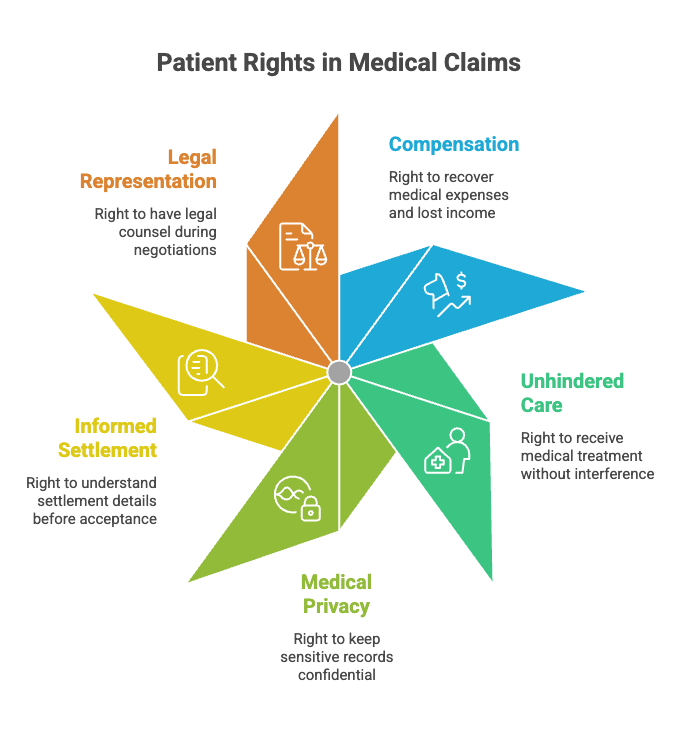
- The right to seek compensation for medical expenses, lost income, pain, and other related losses.
- The right to receive care without unnecessary interference from insurers or opposing parties.
- The right to medical privacy limits the disclosure of sensitive records beyond what the claim reasonably requires.
- The right to understand settlement timelines, policy limits, and legal options before accepting payment.
- The right to legal representation, ensuring communications and negotiations remain focused on just outcomes.
When these rights are respected, injured individuals are better positioned to protect their well-being and serve their families responsibly. A clear understanding of legal protections often strengthens accountability and encourages more equitable resolutions for all parties involved.
Steps to Take After a Miami Car Accident Claim Injury
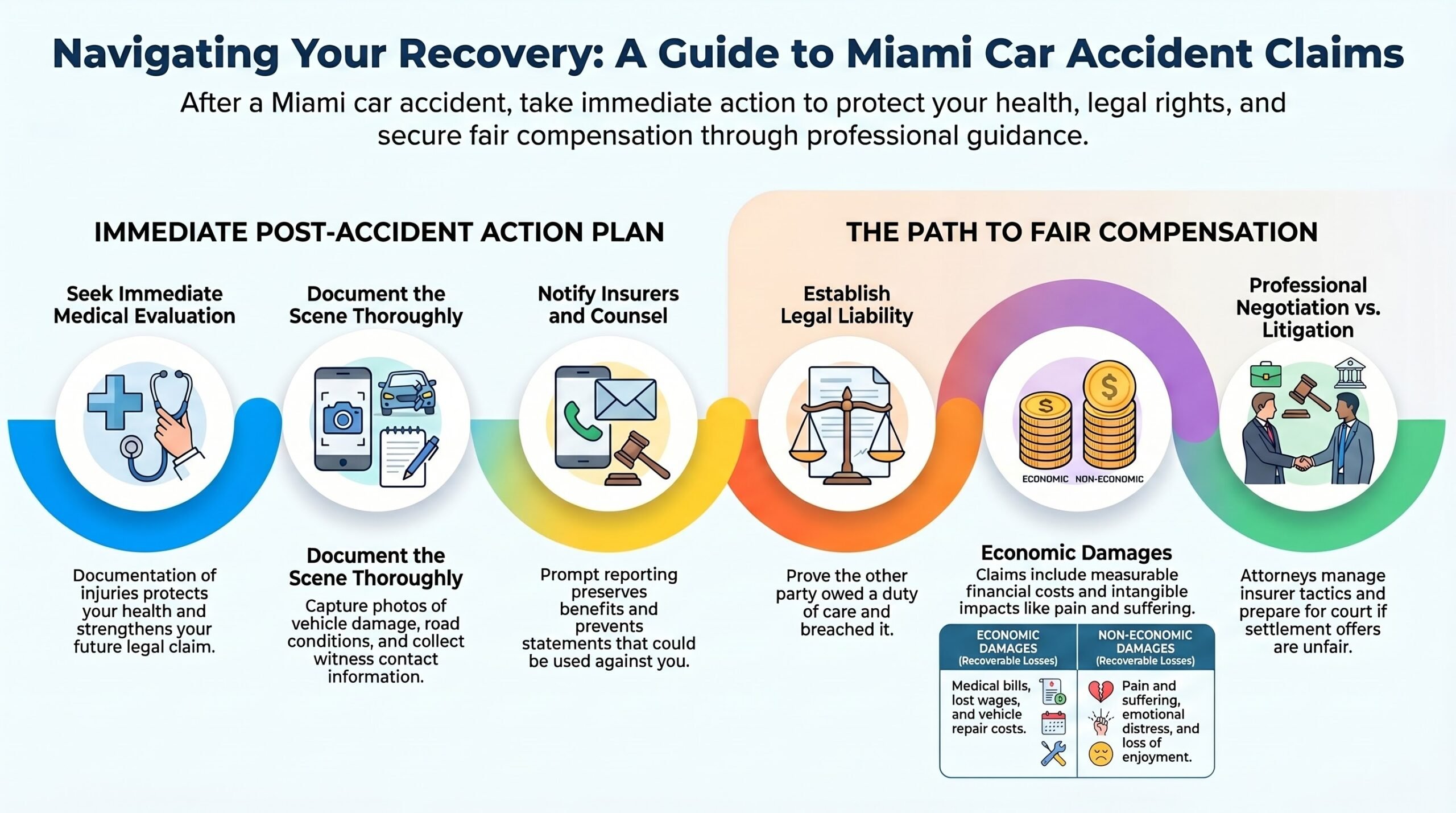
After a Miami car accident claim injury, the first priority is to seek immediate medical care, both to protect health and to create a clear record of the harm endured. Attention should then turn to documenting the accident scene, including vehicle damage, visible injuries, roadway conditions, and any available witness information. It is also important to promptly notify insurers and consult legal counsel, as early guidance can help preserve rights and support the claims process.
Seek Immediate Medical Care
Prompt medical evaluation is often one of the most important steps a person can take following a Miami car accident injury. Even when symptoms seem minor, hidden injuries may worsen without urgent treatment, delaying recovery and increasing risk to long-term health. A physician can assess pain, mobility limitations, and internal trauma, then recommend appropriate testing, medication, or consultant referral. Early diagnosis also helps create a clear medical timeline, which may become important when demonstrating the extent of harm and the need for support.
Those who wish to protect their well-being and continue serving their families or communities should follow all medical advice carefully. This includes attending follow-up care appointments, filling prescriptions, beginning therapy if recommended, and reporting any new or worsening symptoms promptly to treating providers without delay.
Document The Accident Scene
Medical treatment addresses physical harm, while careful documentation of the accident scene helps preserve facts that may later support a Miami car accident injury claim. If safety permits, a person should record the scene promptly and methodically. Clear photographic evidence may include vehicle positions, damage, skid marks, traffic signals, roadway debris, weather conditions, and visible injuries. Images taken from multiple angles often provide a more complete account.
It is also helpful to identify nearby witnesses and respectfully request witness statements, along with names and contact information. Notes should capture the time, location, lane direction, and any observations about driver behavior. This organized approach serves the broader goal of protecting truth, supporting accountability, and helping injured people present an accurate record of what occurred after a serious Miami collision.
Notify Insurers And Counsel
In the days immediately following a Miami collision, notice should be given to the appropriate insurance carriers without unnecessary delay, because most policies impose reporting requirements that can affect coverage and claim handling. Prompt insurer notification helps preserve benefits, opens the claim file, and creates a record of the incident for later review. Facts should be reported accurately, without speculation, while copies of correspondence should be retained.
Timely engagement of counsel is also prudent when injuries, disputed liability, or significant losses are involved. Legal counsel can protect rights, coordinate communications, and help prevent statements that may be misunderstood or used unfairly. This step often supports a more orderly process for everyone affected, including family members seeking stability and caregivers focused on recovery. Careful reporting and informed guidance strengthen the foundation of a responsible claim.
How a Miami Car Accident Claim Injury Lawyer Can Help You
Navigating a car accident claim in Miami often requires more than filing paperwork, as a skilled injury lawyer can evaluate liability, protect the claimant’s rights, and manage communications with insurers from the outset.
Counsel also helps organize records that support emotional recovery and proper medical follow-up, allowing injured individuals to focus on family, work, and community responsibilities.
- Investigates the collision, gathers evidence, and identifies responsible parties.
- Calculates damages accurately, including medical bills, lost income, and property loss.
- Handles insurer communications to reduce pressure and prevent harmful statements.
- Coordinates with providers to document treatment, prognosis, and necessary care.
- Negotiates firmly for fair compensation and prepares litigation when needed.
Through careful guidance, a Miami car accident claim injury lawyer brings order to a stressful process. This support helps claimants make informed choices, meet deadlines, and pursue accountability in ways that respect their well-being and their desire to continue serving others.
Long-Term Effects of Miami Car Accident Claim Injuries
Miami car accident injuries may produce long-term consequences that extend well beyond the initial recovery period. Common issues include chronic pain complications, lasting emotional trauma, and a reduced earning capacity that can affect financial stability over time. These ongoing effects often play a significant role in the value and intricacy of a car accident claim.
Chronic Pain Complications
Lingering pain after a car accident can extend far beyond the initial diagnosis, affecting an injured person’s physical function, ability to work, and overall quality of life. Chronic pain may arise from soft tissue damage, spinal injuries, nerve compression, or joint trauma, and it often persists despite initial treatment. In many cases, daily tasks become difficult, sleep is disrupted, and mobility declines over time. Effective care may require coordinated medical evaluation, physical rehabilitation, Neuropathic management, and Pain psychology to address persistent symptoms and improve long-term functioning.
Service-minded advocates often recognize that these complications can reduce independence and create ongoing financial strain through repeated treatment needs and diminished earning capacity. Thorough documentation, consistent treatment, and careful legal assessment help demonstrate the lasting burden chronic pain places on accident victims and their families.
Emotional Trauma Effects
Enduring emotional trauma after a car accident can be as disruptive as physical injury, affecting mental health, relationships, and the ability to recover ordinary routines. Survivors may experience post-traumatic stress, recurring fear, sleep disturbance, irritability, and emotional withdrawal. These effects often burden families, limit social engagement, and weaken confidence in daily travel.
Compassionate care is often necessary because anxiety disorders may develop gradually, sometimes appearing after visible injuries have begun to mend. A person may avoid driving, relive the collision through intrusive memories, or struggle with concentration and trust. When these symptoms persist, counseling, trauma-informed therapy, and consistent support can help restore stability. Careful documentation of emotional harm also strengthens a claim by showing how profoundly the accident altered long-term well-being and community participation.
Reduced Earning Capacity
Beyond the psychological toll of a collision, serious injuries may also limit a person’s ability to earn income for years after the event. When persistent pain, loss of mobility, or cognitive impairment interferes with regular job duties, a worker may be forced to reduce hours, change roles, or leave the profession entirely. These consequences often extend beyond immediate lost wages and create a deeper career impact that affects advancement, benefits, and long-term financial security.
In Miami car accident claims, reduced earning capacity refers to the diminished ability to generate income in the future, even when some employment remains possible. Careful documentation, vocational analysis, and medical evidence can help demonstrate how injuries alter work performance. Such proof supports fair recovery, which can help injured individuals continue serving their families and communities.
Proving Liability in Miami Car Accident Claim Injury Cases
Establishing liability in a Miami car accident injury claim requires clear evidence that another party owed a duty of care, breached that duty, and directly caused the resulting harm. This analysis often begins with police reports, photographs, witness statements, medical records, and scene documentation. When facts are disputed, expert testimony may help explain vehicle damage, roadway conditions, accident reconstruction, or the medical connection between the collision and the injuries.
Florida law also requires careful consideration of comparative negligence, which may reduce recovery if the injured person shares responsibility for the crash. A thorough review consequently examines speeding, distraction, impairment, traffic violations, maintenance failures, and weather-related visibility issues. Attorneys and investigators serving injured individuals often assemble timelines, preserve electronic data, and identify surveillance footage before it is lost. Strong proof of liability not only supports accountability but also helps families pursue resources needed for treatment, stability, and continued care after a serious accident in Miami.
Dealing With Insurance Companies After a Miami Car Accident Claim Injury
After a Miami car accident, communications with insurance companies often shape the value and direction of an injury claim. Insurers may request recorded statements, medical authorizations, or quick settlements before the full extent of harm is known. A careful, service-minded approach helps protect injured people and the families who depend on them.
Insurance representatives often appear cooperative, yet policy tactics can limit payouts or shift blame. Claimants benefit from keeping records of calls, emails, treatment, and repair estimates because documentation supports accuracy and accountability. They should review coverage terms closely and avoid speculation when answering questions about injuries or fault. Attention to claim timelines is also important, since delays can affect benefits and create unnecessary disputes.
When communications become confusing or burdensome, legal guidance can help maintain fairness, preserve evidence, and encourage respectful treatment. This measured response serves not only the injured person but also the broader goal of responsible recovery and community stability after serious collisions.
What to Expect During a Miami Car Accident Injury Claim Process
A Miami car accident injury claim typically begins with prompt reporting, medical evaluation, and the filing of an initial claim with the appropriate insurer. The process then centers on gathering evidence and documentation, including accident reports, medical records, witness statements, and proof of damages, followed by negotiations with the insurance company. If a fair resolution is not reached, the claim may proceed to settlement discussions or litigation, depending on the strength of the evidence and the extent of the injuries.
Initial Claim Steps
Navigating the initial stages of a Miami car accident injury claim typically involves reporting the collision, obtaining a medical evaluation, and notifying the applicable insurance carrier within the required timeframes. These early actions help protect injured individuals while allowing insurers to open the claim and explain immediate responsibilities under Florida law.
From a service-minded perspective, prompt attention supports both personal recovery and fair treatment for everyone involved. Claimants are generally expected to provide basic initial documentation, confirm contact information, and follow insurance timelines carefully. They may also receive claim numbers, policy details, and instructions regarding communication with adjusters. Legal guidance can help clarify obligations, prevent avoidable missteps, and keep the process orderly. In many cases, early organization creates a more stable path toward resolution and continued support for those affected.
Evidence And Documentation
Once the claim has been opened and immediate reporting steps have been addressed, attention usually turns to gathering evidence and organizing documentation that supports both liability and the extent of the injuries claimed.
At this stage, careful recordkeeping serves an important purpose. Police reports, scene photographs, vehicle damage images, and witness statements can help clarify how the collision occurred. Medical records, treatment notes, diagnostic results, and pharmacy receipts often demonstrate the nature of the injuries and the care required. Employment records may also be collected when lost income affects a household’s stability and ability to care for others.
A lawyer commonly reviews timelines, correspondence, and repair estimates to identify inconsistencies and preserve relevant facts. Thorough documentation allows those assisting injured people to present a clear, responsible, and well-supported account of the harm suffered.
Insurance Negotiation Process
With the supporting records assembled, the insurance negotiation process typically begins with a formal demand that outlines the facts of the collision, the injuries sustained, the medical treatment received, and the financial and personal losses being claimed. The insurer then conducts a policy overview, reviews liability, examines medical records, and may request clarifying information or recorded statements.
During this stage, representatives often compare documentation against internal valuation methods and applicable coverage limits. Communication may involve several rounds of offers and counteroffers, with each response guided by updated evidence and careful damage assessment. Claimants are often encouraged to remain organized, responsive, and consistent because orderly cooperation can help protect the integrity of the claim. Although settlement timelines vary, prompt submission of complete materials generally supports more efficient evaluation and more informed negotiations for everyone involved.
Settlement Or Litigation
In many Miami car accident claims, cases conclude through settlement, but litigation may be necessary when liability is disputed, damages are undervalued, or the insurer fails to make a reasonable offer. Settlement often provides faster resolution, reduced stress, and greater certainty for injured parties seeking resources to recover and support their families. Settlement timelines vary based on medical treatment, evidence, and the insurer’s responsiveness.
When negotiations fail, filing suit may protect the claimant’s interests and encourage fair valuation. Litigation allows formal discovery, witness testimony, and court review of disputed facts. However, Litigation costs, court scheduling, and procedural demands can substantially extend the process. Careful legal guidance helps individuals weigh efficiency against accountability, while maintaining focus on recovery, financial stability, and the broader goal of securing just compensation for those affected.
Compensation for Miami Car Accident Claim Injury Damages
Accountability often begins with a clear understanding of the compensation available after a Miami car accident. In many claims, compensation is intended to restore stability after a harmful event and to support an injured person’s ability to care for family, fulfill responsibilities, and continue serving the community. A careful review of losses often includes medical expenses, lost income, rehabilitation costs, property damage, and anticipated future care needs.
A Miami car accident claim injury lawyer typically evaluates records, bills, employment information, and expert opinions to estimate the full scope of recoverable damages. This process helps prevent insurers from minimizing the claim or overlooking ongoing consequences. Compensation may also address transportation to treatment, household assistance, and modifications required after serious injuries. When documentation is thorough and deadlines are met, a claim is better positioned for a fair outcome. Clear valuation protects both immediate needs and long-term recovery after a collision.
Economic vs Non-Economic Damages in Miami Car Accident Claim Cases
Miami car accident claims commonly involve both economic damages, which cover measurable financial losses such as medical bills and lost income, and non-economic damages, which address less tangible harm such as pain and suffering. Understanding the distinction is important because each category serves a different purpose in evaluating the full impact of an injury. Establishing the value of either type of damage typically requires clear documentation, credible evidence, and a careful assessment of how the accident affected the claimant’s life.
Economic Damages Explained
Clarity is essential when distinguishing economic from non-economic damages in a Miami car accident claim, because each category serves a different purpose in measuring loss. Economic damages refer to measurable financial harm supported by bills, records, receipts, and employment documentation. They are intended to restore the claimant to the position that existed before the collision.
Common examples include emergency care, hospital treatment, rehabilitation costs, medications, lost wages, diminished earning capacity, and property losses such as vehicle repair or replacement. In serious cases, future medical expenses and ongoing supportive services may also be calculated. A careful review of invoices, pay history, and expert projections helps establish value with credibility. This structured approach promotes fair compensation and supports families seeking stability while continuing to care for others after a disruptive accident.
Non-Economic Losses Defined
Perspective becomes especially important when evaluating non-economic losses in a Miami car accident claim, because these damages address harm that does not appear on invoices or payroll records. They concern the human consequences of injury, including pain and suffering, emotional distress, diminished enjoyment of daily life, and lasting inconvenience. Such losses recognize that recovery involves more than repaying bills or replacing income.
In many cases, non-economic damages also reflect the effect an injury has on close relationships and the ability to provide care, companionship, and support. That is where loss of consortium may arise. Within a service-minded community, these damages acknowledge the ways an accident can limit a person’s presence, independence, and contribution to others. They consequently represent a crucial part of a complete view of injury in Florida car accident claims.
Proving Damage Value
Accuracy governs the process of proving damage value in a car accident claim, because both economic and non-economic damages must be supported by credible evidence rather than assumption. Economic damages are commonly established through medical records, wage statements, repair invoices, and a reliable damage appraisal. These materials help quantify measurable losses and clarify how the collision affected daily responsibilities and service to others.
Non-economic damages require a different showing. Pain, emotional distress, diminished enjoyment of life, and lasting limitations are often demonstrated through treatment notes, professional opinions, and testimony from those who observe the claimant’s condition. When injuries create future losses, projections from medical or vocational experts may be necessary. A careful, evidence-based presentation strengthens negotiations and helps assure compensation reflects the full scope of harm.
When a Miami Car Accident Claim Injury Case Goes to Trial vs Settlement
Determining whether a Miami car accident injury case will proceed to trial or resolve through settlement depends on several practical and legal factors, including the severity of the injuries, the strength of the evidence, disputed liability, and the parties’ willingness to negotiate. In many claims, settlement negotiation is preferred because it can reduce delay, expense, and stress while providing injured people with financial support sooner.
A case may move toward a jury trial when the insurer denies fault, challenges medical treatment, or refuses to offer compensation that reasonably reflects losses. Trial can also become necessary when witness accounts conflict or expert opinions differ on causation and future care needs. Although a trial may present uncertainty, it can provide a structured forum for presenting evidence and seeking a fair result. Careful preparation, honest case evaluation, and a service-minded approach to advocacy often influence whether a resolution occurs before court or after the jury reaches a verdict.
The Statute of Limitations for Miami Car Accident Claim Injury Cases
After a car accident in Miami, the time allowed to file a personal injury lawsuit is controlled by Florida’s statute of limitations, and missing that deadline can bar recovery regardless of how serious the injuries may be. For injured people and families trying to serve and protect one another, this rule warrants careful attention from the outset.
Florida law sets filing deadlines that may differ based on the facts, the parties involved, and the type of damages claimed. Certain nuances of the statute can affect how the clock is calculated, including cases involving minors, delayed discovery, or claims against government entities. There may also be limited filing exceptions, but they are narrow and should not be assumed. Waiting too long can weaken evidence, complicate witness testimony, and reduce the ability to pursue just compensation. A timely, well-documented claim better supports accountability, helps preserve important rights, and allows injured individuals to focus on recovery while responsibly addressing the legal process.
When to Contact a Miami Car Accident Claim Injury Lawyer
Seek legal guidance as soon as an accident causes injury, disputed liability, or contact from an insurance adjuster, because early involvement by a Miami car accident claim injury lawyer can help protect evidence, preserve deadlines, and prevent avoidable mistakes. Prompt action is especially important when medical treatment begins, witnesses are identified, or vehicles are repaired or removed.
An early consultation is also appropriate when a family faces mounting expenses, uncertainty about required reports, or pressure to give recorded statements. Timely communication allows counsel to monitor filing periods, gather photographs, secure records, and support evidence preservation before details fade. It also helps an injured person understand immediate responsibilities without making assumptions that could hinder a claim.
Even when injuries seem minor, legal contact may be prudent if symptoms worsen, fault remains unclear, or several parties are involved. Reaching out promptly creates structure, encourages informed decisions, and promotes a careful response focused on service, accountability, and recovery.
Why You Need an Experienced Miami Car Accident Claim Injury Lawyer
Because Florida car accident claims often involve disputed facts, evolving medical evidence, and aggressive insurance tactics, an experienced Miami car accident claim injury lawyer provides structure and informed advocacy at each stage of the process. That guidance helps injured people pursue fair outcomes while remaining focused on recovery, family responsibilities, and the broader needs of those who depend on them.
Experience matters because liability, damages, and causation must be developed with care. A seasoned lawyer can coordinate records, review treatment issues that may resemble medical malpractice disputes, and present losses in a clear, credible manner. This includes documenting property damage, lost income, future care needs, and non-economic harm. Strong legal representation also improves communication with insurers, counters attempts to minimize injuries, and protects deadlines that can affect the claim’s value. In serious cases, informed advocacy supports accountability, encourages safer conduct, and helps clients secure resources needed to restore stability and continue serving others with confidence.
How to Choose the Right Miami Car Accident Claim Injury Lawyer for Your Case
How should an injured person evaluate legal representation in a crowded market where many firms advertise similar results and broad experience? A careful selection process often begins with reviewing a lawyer’s focus on car accident claims, courtroom readiness, and record of responsive communication. Reputation within the legal community and among former clients can also reveal professionalism, integrity, and reliability under pressure.
Client interviews provide a practical way to assess whether counsel listens carefully, explains options clearly, and respects the client’s goals. An injured person may also compare how firms discuss evidence gathering, insurance negotiations, medical documentation, and case timelines. Clear explanations of Contingency fees are equally important because they help families understand financial risk before representation begins. Strong legal guidance should combine skill with compassion, allowing injured individuals to pursue fair compensation while remaining attentive to recovery, family responsibilities, and the broader well-being of those who depend on them during a difficult season.
About The Law Offices of Anidjar & Levine
Among Miami personal injury firms, The Law Offices of Anidjar & Levine is recognized for representing injured clients in car accident matters with a service model that emphasizes accessibility, case preparation, and direct client support. The firm focuses on responsive communication, careful investigation, and practical guidance so injured people and their families can pursue recovery with confidence and dignity.
Its approach reflects a commitment to service, helping clients understand legal options, insurance issues, medical documentation, and the progress of their cases at each stage. Information drawn from firm history shows sustained work on behalf of accident victims across Florida, with attention to both legal strategy and personal needs. Publicly available client testimonials often describe professionalism, timely updates, and a willingness to answer questions clearly.
For those seeking counsel after a Miami collision, the firm presents itself as a resource organized around accountability, preparation, and compassionate advocacy, qualities that can support informed decisions during a difficult period for many injured individuals.
Frequently Asked Questions
How Are Attorney Fees Structured for Miami Car Accident Injury Cases?
Attorney fees are commonly structured on a contingency percentage, meaning payment is owed only if compensation is recovered. In many injury matters, the percentage depends on whether the case settles early or proceeds into litigation, and a fee cap may apply under governing rules. Case costs, such as records or experts, are often separate from attorney fees. This arrangement can help injured people pursue accountability while preserving access to legal support.
Can I Switch Lawyers During My Miami Car Accident Claim?
Yes, a claimant may change counsel during an active car accident claim. The decision should be made carefully, with attention to timing, case strategy, and any existing fee disputes between attorneys. New counsel typically handles file transfer and notice requirements, helping protect the claimant’s interests and continued service to others affected. Before proceeding, the claimant should review the representation agreement, ask direct questions, and confirm how fees may be allocated later.
Will My Car Accident Settlement Affect Government Benefits Eligibility?
A car accident settlement may affect eligibility for government benefits, especially means-tested programs that impose strict asset limits. Medical expense allocations, lost wage portions, and how funds are received can influence whether benefits continue, are reduced, or stop. Those responsible for protecting household stability often review the settlement structure carefully. Professional guidance may help preserve eligibility, guarantee proper reporting, and support continued access to vital public assistance where the law permits.
How Long Should I Keep Medical and Repair Records After Settlement?
Medical and repair records should generally be kept for at least seven years after settlement, though longer retention may be prudent for minors, permanent injuries, or future disputes. Sound record retention supports benefit reviews, insurance questions, and potential tax implications. A person acting in service to others should preserve settlement papers, bills, receipts, and correspondence in an organized file. State laws and individual circumstances may justify keeping records indefinitely in some cases.
Can Non-U.S. Residents File Miami Car Accident Injury Claims?
Yes, non-U.S. residents may file Miami car accident injury claims when negligence caused harm, provided they meet Florida filing requirements and preserve supporting evidence. Their immigration status usually does not bar a civil claim, though Visa implications may affect travel, testimony, or case logistics. Insurance reciprocity can influence available coverage when foreign policies apply. Careful documentation, prompt medical care, and qualified legal guidance help protect rights and support responsible recovery efforts.
—————————
A Miami car accident injury claim can involve significant legal and financial issues, particularly when liability, damages, and insurance disputes arise. Injured parties benefit from understanding their rights, preserving evidence, and seeking legal guidance as early as possible. With experienced representation, claimants are better positioned to pursue fair compensation for medical costs, lost income, and other losses.
The Miami Car Accident Lawyer team at Law Offices of Anidjar & Levine provides focused legal support to individuals navigating the aftermath of a serious Miami car accident.