A Miami brake failure car accident injury lawyer helps protect a claim by preserving the vehicle, maintenance records, crash-scene evidence, and electronic data before evidence is lost. Law Offices of Anidjar and Levine can investigate whether the cause was driver neglect, poor repairs, or a defective brake component, then pursue compensation for medical expenses, lost income, and other damages.
Prompt legal guidance from a Miami Car Accident Lawyer also helps manage insurer communications and deadlines. ‘
The sections below explain the process, rights, and crucial evidence in greater detail.
Main Takeaways
- Seek immediate medical care after a Miami brake failure crash to identify hidden injuries and create records linking your injuries to the collision.
- Preserve evidence by photographing the scene, saving damaged brake parts, securing towing records, and avoiding repairs before expert inspection.
- A lawyer can investigate maintenance records, recalls, onboard data, and brake components to determine whether drivers, repair shops, or manufacturers are liable.
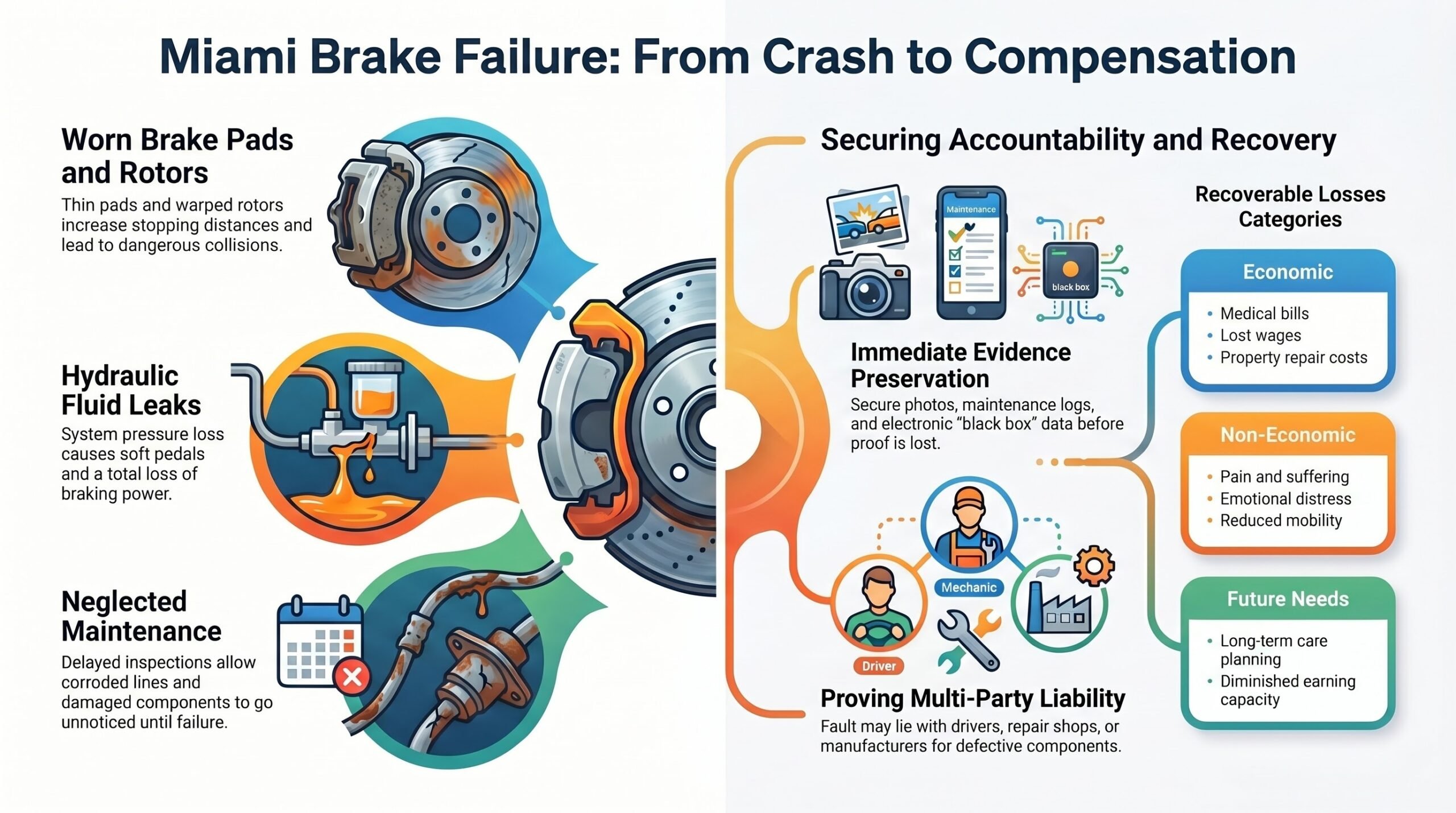
- Common causes of brake failure include worn pads, fluid leaks, defective parts, warped rotors, and neglected maintenance, which can increase stopping distance or eliminate braking power.
- You may recover compensation for medical bills, lost wages, pain and suffering, and other losses through insurance claims or a lawsuit.
How We Can Help With Your Miami Brake Failure Car Accident Injury Claim
After a brake failure collision in Miami, injured individuals often face immediate medical concerns, mounting financial pressure, and difficult questions about fault. Effective legal support begins with organized guidance that protects health, income, and the ability to pursue fair recovery while families focus on stability and service to one another.
A qualified legal team can coordinate evidence preservation, obtain crash reports, secure vehicle inspection records, and communicate with insurers on the client’s behalf. Counsel also helps clients follow emergency protocols, document treatment, and avoid mistakes that may weaken a claim. Through careful review of lost wages, medical expenses, and future needs, representation provides structure during a difficult period. Attorneys monitor claim timelines, prepare persuasive submissions, and negotiate from a position grounded in facts. When necessary, they assemble expert support and a litigation strategy designed to protect the injured person’s interests. This assistance allows clients to concentrate on recovery, caregiving, and rebuilding their daily lives.
Understanding Miami Brake Failure Car Accident Injury Cases


Building on the role of legal guidance, a clear understanding of Miami brake failure car accident injury cases begins with how these collisions are investigated and why liability is often more complex than it first appears. Attorneys, insurers, and experts commonly review vehicle damage, maintenance records, electronic data, witness statements, and roadway conditions to determine what occurred and who may bear responsibility.
OUR CONSULTATIONSARE FREE
START YOUR FREE CASE REVIEW

These cases often require careful evaluation of several duties owed to the public. A driver may be examined for reasonable conduct before and during the event, including attention to brake inspection and compliance with safety obligations. Other parties may also be assessed when records, repairs, or warnings are disputed. Medical documentation, crash reconstruction, and financial losses help link the incident to the claimed injuries. In a community-minded context, driver education also matters because informed motorists are better prepared to recognize danger, respond responsibly, and help create safer roads for everyone traveling in Miami each day.
Common Causes of Miami Brake Failure Car Accidents
Several mechanical and maintenance-related issues commonly contribute to brake failure car accidents in Miami. These causes often include worn brake pads, hydraulic fluid leaks, defective brake components, and poor vehicle maintenance, each of which can greatly reduce stopping ability. A clear understanding of these factors helps explain how brake system problems develop and why they may lead to serious collisions.
Worn Brake Pads
Brake pad deterioration is one of the most common reasons a vehicle’s braking system loses effectiveness, creating dangerous stopping conditions on Miami roads. As pads wear down, the material that creates friction becomes too thin to slow the vehicle safely and consistently.


Routine inspection of pad thickness helps identify unsafe wear before braking performance declines further. A proper squeal diagnosis may also reveal metal indicators contacting the rotor, signaling the need for immediate service. If ignored, worn pads can reduce stopping power, increase stopping distance, and contribute to collisions that injure drivers, passengers, pedestrians, and other road users. In a community-focused setting, timely maintenance protects not only the vehicle’s occupants but also everyone sharing the roadway. Responsible care of brake components remains an important part of public safety and accident prevention.
Hydraulic Fluid Leaks
Hydraulic fluid leaks present another common source of brake failure in Miami car accidents, because the braking system depends on sealed pressure to operate correctly. When fluid escapes, pedal response may soften, stopping distance may increase, and drivers may lose the ability to protect passengers, pedestrians, and others sharing the road.
Careful maintenance helps reduce these dangers. Brake fluid testing can reveal declining fluid condition, while leak detection may identify wet lines, pooling beneath the vehicle, or a sudden drop in fluid levels. Reservoir inspection also serves an important role, since an unusually low level may signal pressure loss somewhere in the system. Contamination prevention matters as well, because moisture or debris can compromise braking performance and place the public at unnecessary risk. Prompt evaluation supports safer travel for everyone in Miami.
Defective Brake Components
Component-related defects can create sudden and dangerous braking problems in Miami traffic, particularly when worn, poorly manufactured, or improperly installed parts interfere with normal stopping performance. Defective pads, damaged lines, and Faulty calipers may prevent even pressure from reaching each wheel, causing pulling, grinding, or delayed stopping when quick action is needed.
Rotor warping can also undermine braking stability by creating vibration, uneven contact, and longer stopping distances. In some cases, defective master cylinders or anti-lock braking components may fail without warning, leaving drivers unable to respond safely in crowded conditions. These failures place passengers, pedestrians, and nearby motorists at risk, especially on busy streets and highways. Careful investigation after a collision may reveal whether a defective brake component contributed to the crash and resulting injuries for everyone involved.
Poor Vehicle Maintenance
Not every brake failure stems from a defective part; neglected maintenance can create a similarly dangerous loss of stopping power on Miami roads. When owners delay inspections, worn pads, leaking fluid, corroded lines, and damaged rotors may go unnoticed until a collision occurs. Poor tire maintenance can worsen the danger by reducing traction and increasing stopping distance, especially during sudden braking in traffic or rain. Even battery care matters, because electrical issues in modern vehicles can impair warning systems and related safety functions.
A service-minded legal review often considers whether missed maintenance contributed to the crash, harmed passengers, or exposed others to preventable risk. Regular upkeep protects drivers, supports safer streets, and reflects a responsible commitment to the well-being of everyone sharing the road each day.
Legal Rights of Miami Brake Failure Car Accident Injury Victims
Accountability often becomes a central legal issue after a Miami brake failure collision, because injured victims may have the right to pursue compensation from any party whose negligence contributed to the crash. Florida law may allow recovery for medical costs, lost income, pain and suffering, and other related losses. Depending on the facts, liable parties may include drivers, vehicle owners, repair shops, manufacturers, or parts distributors.
These claims also support consumer protection and public awareness by exposing unsafe practices that may endanger others.
- Victims may seek damages tied to physical, financial, and emotional harm.
- Liability may rest on negligent maintenance, defective parts, or careless operation.
- Product liability laws may apply when brakes fail because of design or manufacturing defects.
- Insurance coverage disputes may arise, requiring careful legal analysis.
- Wrongful death rights may exist when a brake failure crash causes a fatal injury.
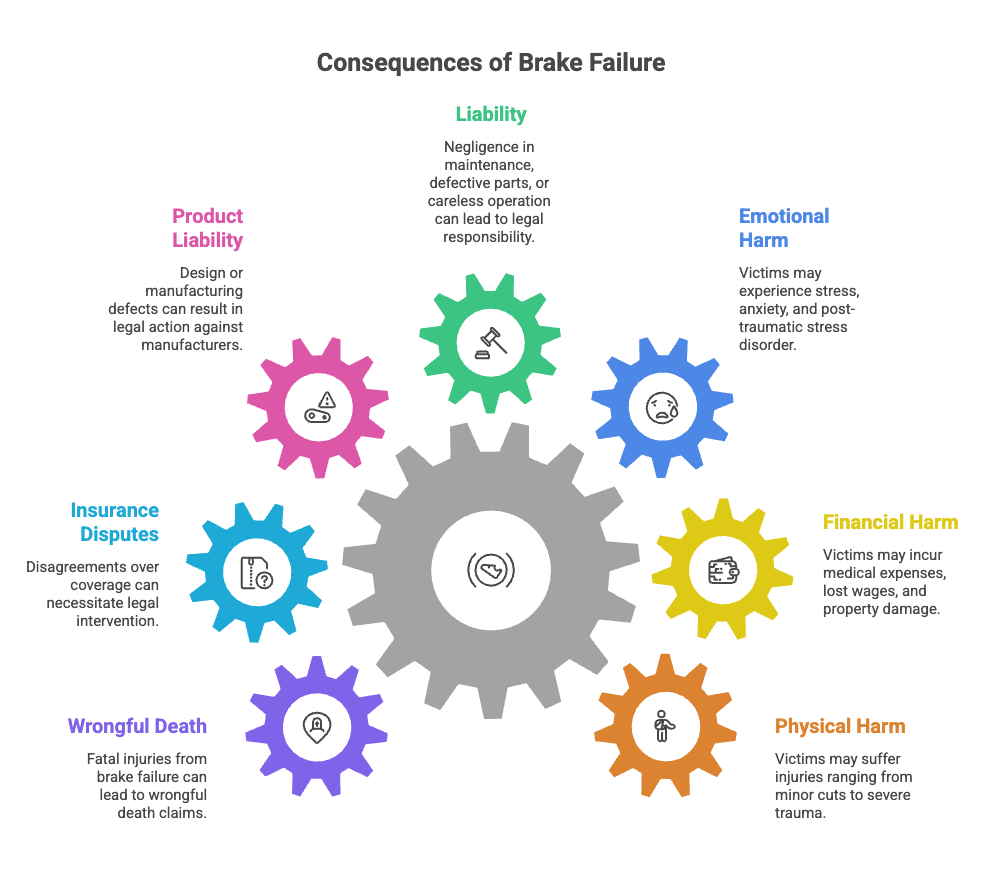
A careful legal evaluation helps identify responsible parties and uphold the broader duty of protecting the community.
Steps to Take After a Miami Brake Failure Car Accident Injury
After a Miami brake failure car accident, the injured party should seek immediate medical care to safeguard their health and create a clear record of the injuries sustained. It is also important to preserve crash scene evidence, including photographs, witness information, and vehicle damage, because these details may support a future claim. Prompt contact with a Miami lawyer can help ensure that legal rights are protected and that the matter is properly evaluated from the outset.
Seek Immediate Medical Care
In the moments following a Miami brake failure collision, obtaining immediate medical care should be treated as a priority, even when injuries do not appear severe at first. Adrenaline can mask pain, while internal trauma, concussions, and soft tissue damage may worsen without prompt attention from qualified professionals.
An emergency assessment helps identify hidden injuries and creates a timely medical record that connects symptoms to the crash. Paramedics, urgent care providers, or emergency room physicians can evaluate breathing, neurological function, fractures, and bleeding. Thereafter, follow-up monitoring remains equally important, especially if headaches, dizziness, back pain, or emotional distress emerge in the hours or days that follow. Responsible action protects health, supports recuperation, and better equips injured individuals to continue serving their families, workplaces, and communities with stability and care.
Preserve Crash Scene Evidence
Prompt medical treatment protects physical well-being, and the preservation of crash-scene evidence protects the factual record of a Miami brake-failure collision. If conditions permit, involved parties should secure photograph documentation of vehicle positions, skid marks, roadway defects, debris fields, warning lights, and visible brake components before movement or repair alters conditions.
They should also request witness statements from bystanders, passengers, and nearby workers while memories remain fresh and before contact information is lost. Damaged parts, maintenance receipts, towing records, and event data should be retained through careful chain-of-custody practices, reducing later disputes over alteration or contamination. When possible, the vehicle should remain unmodified until qualified inspection occurs, because forensic preservation can reveal hydraulic leaks, worn pads, failed lines, or defective components. Accurate evidence collection supports accountability, community safety, and informed assistance for injured people.
Contact A Miami Lawyer
When brake failure causes a serious collision in Miami, timely consultation with a qualified car accident lawyer can help protect legal rights and guide pivotal early decisions. Counsel can assess potential claims against negligent drivers, repair facilities, manufacturers, or other responsible parties, while helping preserve records that may benefit injured victims and their families.
During a client consultation, the attorney typically reviews the facts of the crash, medical treatment, insurance communications, and available evidence. This meeting also allows questions about the firm’s experience, case strategy, and fee structure, so informed choices can be made with confidence. Early legal guidance may reduce the risk of harmful statements to insurers and support compliance with filing deadlines. By contacting a Miami lawyer promptly, injured individuals may be better positioned to pursue accountability and meaningful recovery under Florida law.
How a Miami Brake Failure Car Accident Injury Lawyer Can Help You
After a brake failure crash, a Miami brake failure car accident injury lawyer can provide essential guidance by evaluating the circumstances of the collision, identifying potentially liable parties, and preserving evidence before it is lost or altered. Through careful investigation, counsel may determine whether negligence involved a driver, a repair shop, a manufacturer, or a vehicle distributor.
This support helps injured people pursue accountability while focusing on emotional recovery and financial planning for their households and communities.
- Reviews crash reports, maintenance records, and vehicle defects
- Coordinates with experts to document mechanical failure
- Handles insurer communications and settlement negotiations
- Calculates medical costs, lost income, and property damage
- Prepares a strong claim for litigation if needed
A lawyer also explains legal options in clear terms, meets filing deadlines, and protects clients from unfair blame. By managing procedural burdens, legal counsel enables injured individuals and families to direct more energy toward caregiving, service, and the restoration of stability after a serious Miami collision.
Long-Term Effects of Miami Brake Failure Car Accident Injuries
Brake failure car accidents in Miami can produce lasting injuries that extend well beyond the initial recovery period. Victims may face chronic pain, emotional trauma, and reduced mobility, each of which can interfere with daily functioning, employment, and overall quality of life. These long-term effects often require continued medical care and careful legal evaluation when determining the full scope of damages.
Chronic Pain Challenges
Persisting long after the collision itself, chronic pain is one of the most disruptive long-term effects associated with Miami brake failure car accident injuries. For many injured individuals, Chronic pain limits mobility, complicates daily responsibilities, and reduces the ability to support family, work, and community obligations with consistency.
Effective Pain management often requires coordinated medical care, rehabilitation, and careful monitoring over time. However, Treatment barriers may arise through delayed diagnoses, limited specialist access, insurance disputes, or transportation difficulties, all of which can prolong suffering and hinder recovery. Sleep disruption is also common, as ongoing discomfort may interfere with rest, weaken concentration, and slow physical healing. In service-oriented households, these challenges can affect not only the injured person but also those who depend on that person’s steady care and practical assistance.
Emotional Trauma Impact
Enduring emotional trauma can alter an injured person’s daily functioning just as markedly as physical harm. After a Miami brake failure collision, an individual may experience fear, intrusive memories, sleep disruption, and persistent vigilance in ordinary settings. These symptoms can reflect post-traumatic stress, which often interferes with concentration, work performance, and the ability to feel secure.
The effects frequently extend beyond the injured person. Family members, caregivers, and colleagues may observe irritability, withdrawal, or sudden emotional reactions that were not present before the crash. Relationship strain can develop when loved ones misunderstand these changes or struggle to provide consistent support. Thoughtful legal guidance recognizes these invisible injuries, and careful documentation may help demonstrate how emotional suffering affects stability, independence, and overall quality of life over time.
Reduced Mobility Issues
Alongside emotional harm, long-term physical limitations may notably alter an injured person’s independence after a Miami brake failure collision. Reduced mobility can affect walking, standing, lifting, and other routine tasks that support employment, caregiving, and community involvement. Some individuals require ongoing rehabilitation to preserve strength, balance, and coordination, while others face permanent impairments that limit daily function. In many cases, assistive devices such as canes, walkers, or wheelchairs become necessary for safety and participation.
Families may also need to consider home modifications, such as ramps, handrails, widened doorways, or accessible bathrooms, to help restore dignity and reduce risk. These changes often entail financial and practical burdens, while also underscoring the importance of coordinated medical care, supportive planning, and informed legal guidance after a serious, preventable crash.
Proving Liability in Miami Brake Failure Car Accident Injury Cases
Establishing liability in a Miami brake failure car accident case requires more than showing that a vehicle could not stop in time. A careful inquiry must identify why the braking system failed and whether a driver, a repair shop, a manufacturer, or a parts supplier contributed to the event. Useful evidence may include maintenance records, recall notices, inspection reports, onboard data, and photographs of damaged components, including brake-by-wire systems.
To serve injured people responsibly, legal teams often work with engineers, mechanics, and accident reconstruction experts. Their expert testimony can explain whether worn pads, leaking fluid, faulty installation, defective design, or ignored warning signs caused the crash. Florida comparative fault principles may also affect the analysis if multiple parties share responsibility. Prompt preservation of the vehicle is often vital because repairs or disposal can destroy proof. When evidence is gathered methodically, a clearer picture emerges of who failed in a duty of care and why.
Dealing With Insurance Companies After a Miami Brake Failure Car Accident Injury
Often, dealings with insurance companies after a Miami brake failure car accident become complicated long before the fault is fully understood. Adjusters may request statements, medical authorizations, or repair records while injured people are still seeking treatment and trying to support their families. Careful communication helps protect accuracy, preserve dignity, and prevent misunderstandings that could affect coverage evaluations.
A disciplined claim strategy usually emphasizes complete documentation, consistent reporting, and measured responses to insurer inquiries. Records of symptoms, vehicle damage, lost income, and maintenance history can strengthen credibility and assist those working to secure fair support for everyone affected. Settlement timing also matters. Early offers may appear helpful, yet they can overlook ongoing medical needs, future limitations, or questions about brake defects and maintenance responsibility. Thoughtful review of policy language, damage assessments, and recorded communications can reduce avoidable disputes. By approaching insurers with preparation and restraint, injured individuals and their advocates place service, accountability, and long-term well-being at the center of every decision.
What to Expect During a Miami Brake Failure Car Accident Injury Claim Process
A Miami brake failure car accident injury claim typically begins with an initial case evaluation, during which the facts, damages, and potential legal options are assessed. The process then focuses on gathering evidence, establishing liability, and managing insurance claim negotiations to determine whether fair compensation can be obtained. If a satisfactory resolution is not reached, the matter may proceed to settlement discussions or litigation, depending on the circumstances of the case.
Initial Case Evaluation
At the outset of a Miami brake failure car accident injury claim, the initial case evaluation focuses on determining how the brake malfunction occurred, who may be legally responsible, and whether the available evidence supports a viable injury claim. During this stage, counsel typically offers a free consultation to learn the basic facts, review injuries, and identify immediate concerns affecting the claimant and others involved. A structured evidence checklist may be introduced to help preserve documents, photographs, repair records, and medical information in an organized, service-minded manner.
The evaluation also considers timelines, insurance notice requirements, and the practical impact of the collision on the injured person’s ability to work, care for family, and continue serving the community. This careful review helps clarify expectations and next steps for everyone involved thereafter.
Evidence And Liability
Careful development of evidence and liability issues typically shapes the direction of a Miami brake failure car accident injury claim. Attorneys generally begin by securing maintenance records, repair invoices, inspection reports, electronic data, and witness statements. Photographs, roadway measurements, and vehicle preservation can support forensic analysis of brake components, driver actions, and crash dynamics.
Liability may extend beyond the driver to a repair shop, parts manufacturer, fleet owner, or other responsible party. A thorough review often examines whether poor maintenance, defective parts, negligent inspections, or unsafe driving contributed to the collision. Florida’s comparative negligence principles may also affect how fault is apportioned when multiple acts combine to cause harm. Strong evidence helps clarify responsibility, protect injured people, and support a claim grounded in facts, accountability, and service to the broader community.
Insurance Claim Negotiations
Navigating insurance claim negotiations after a Miami brake failure collision often requires patience, documentation, and a clear understanding of how insurers evaluate liability and damages. Adjusters commonly review repair records, inspection reports, medical documentation, witness statements, and policy terms before discussing compensation. A careful claims strategy helps present losses accurately and keeps the focus on the harmed party’s immediate needs and long-term recovery.
Effective negotiation tactics often include organized evidence, consistent communication, and prompt responses to insurer requests. Representatives may question causation, compare statements, or challenge the extent of injuries and vehicle damage. For families focused on serving and supporting others, a disciplined approach can reduce confusion and free up time for caregiving responsibilities. Professional guidance often helps identify undervalued damages, clarify coverage issues, and maintain a fair, informed dialogue throughout negotiations.
Settlement Or Litigation
In many Miami brake-failure accident claims, the path forward may lead either to a negotiated settlement or, when liability and damages remain in dispute, to formal litigation in court. Attorneys typically evaluate medical records, review evidence, expert opinions, and insurance positions before advising the next step.
During settlement dynamics, both sides exchange demands, supporting documents, and risk assessments. A fair resolution may provide timely compensation, reduce stress, and help injured people focus on recovery and family responsibilities. If insurers minimize losses or deny fault, a stronger litigation strategy may become necessary. Litigation can involve filing suit, conducting discovery, taking depositions, and presenting evidence before a judge or jury. Throughout either process, careful advocacy supports accountability, protects legal rights, and seeks resources that help injured individuals rebuild stability and continue serving their communities.
Compensation for Miami Brake Failure Car Accident Injury Damages
Accountability becomes central when evaluating compensation for Miami brake failure car accident injury damages. Recovery often begins with careful documentation of medical costs, lost wages, rehabilitation needs, prescription expenses, and the practical consequences of transportation limits during treatment. A thorough claim reflects how the collision disrupted daily responsibilities and reduced the injured person’s ability to support family, work, and community obligations.
In Miami brake failure cases, compensation frequently depends on credible evidence, timely reporting, and a clear connection between the defective braking event and the injuries claimed. Attorneys, insurers, and fact finders typically review repair records, crash reports, witness statements, electronic vehicle data, and physician opinions when valuing a case. They may also consider future care requirements, diminished earning capacity, and household service losses when those harms can be supported. Careful legal advocacy helps protect injured individuals while promoting responsibility among negligent drivers, manufacturers, maintenance providers, and other parties whose conduct contributed to preventable harm.
Economic vs Non-Economic Damages in Miami Brake Failure Car Accident Cases
In Miami brake failure car accident cases, damages are generally divided into economic and non-economic categories, each serving a distinct role in a claim. Economic damages typically include measurable losses such as medical expenses, lost income, and property damage, while non-economic losses often involve pain and suffering, emotional distress, and reduced quality of life. Establishing the value of either category requires clear evidence, including financial records, medical documentation, and other proof showing how the accident affected the injured person.
Economic Damage Categories
After a brake failure collision in Miami, economic damages are the measurable financial losses an injured person may recover, while non-economic damages address harms that do not have a fixed dollar amount. These losses often include emergency care, hospitalization, surgery, medication, rehabilitation, medical equipment, transportation to treatment, repair costs, and lost wages.
Economic damages may also cover reduced earning capacity when injuries limit future work, as well as property replacement, household services expenses, and other out-of-pocket costs directly tied to the crash. In serious cases, long-term care planning and projected medical needs may become central components of a claim. Careful documentation, such as bills, pay records, estimates, and expert evaluations, helps establish these amounts. A thorough assessment supports fair recovery and promotes practical assistance for injured individuals and the families who support them.
Non-Economic Losses
Intangible harm often defines the most lasting effects of a Miami brake-failure collision, even though these losses cannot be measured by invoices or wage records. Non-economic losses concern the human consequences that follow serious injury, including physical suffering, emotional distress, anxiety, reduced mobility, and diminished enjoyment of daily life.
In service-oriented legal advocacy, these harms are recognized as deeply important because they affect how an injured person relates to family, work, and community. Pain valuation addresses the severity and persistence of suffering, while life disruption reflects the ways ordinary routines, relationships, independence, and personal fulfillment may be altered. In Miami brake-failure cases, non-economic damages are recognized as real, substantial, and often enduring losses, even when no bill or receipt can fully capture their impact on victims.
Proving Damage Value
To establish the value of damages in a Miami brake failure car accident case, clear evidence must connect each claimed loss to the collision and show its financial or personal impact with reasonable certainty. Economic damages often include medical bills, rehabilitation costs, lost income, diminished earning capacity, and property damage. These losses are commonly supported by invoices, employment records, repair estimates, and forensic valuation when future expenses or reduced work ability are disputed.
Non-economic damages address pain, emotional distress, disability, disfigurement, and loss of enjoyment of life. Because these harms are not measured by receipts, persuasive proof may include treatment notes, photographs, daily limitations, and testimony from family members. In contested matters, expert testimony from physicians, economists, or vocational experts can help present a fair and service-minded valuation for injured individuals.
When a Miami Brake Failure Car Accident Injury Case Goes to Trial vs Settlement
In many Miami brake failure car accident injury claims, the decision between settlement and trial depends on the strength of the evidence, the extent of the injuries, and the parties’ willingness to dispute liability and damages. When records clearly connect brake defects, negligent maintenance, or delayed repairs to severe harm, settlement often becomes more practical. Fair Settlement timing may also depend on medical improvement, expert opinions, and insurance evaluations.
A case is more likely to proceed to trial when insurers undervalue losses, deny fault, or challenge causation. In those situations, careful Trial tactics may include preserving vehicle evidence, presenting mechanic testimony, and explaining long-term care needs in a structured way that supports full accountability. Trial may also be necessary when multiple parties, such as drivers, repair shops, or manufacturers, shift blame. Although settlement can reduce delay and expense, a trial sometimes provides the strongest path to accountability and full compensation for injured people and their families.
The Statute of Limitations for Miami Brake Failure Car Accident Injury Cases
After a Miami brake failure crash, the statute of limitations becomes a pivotal issue because it sets the legal deadline for filing a personal injury lawsuit. In Florida, this period generally limits how long an injured person has to seek accountability and recover compensation for harm caused by another party’s negligence.
Careful attention to filing deadlines helps preserve evidence, protect witnesses, and support fair outcomes for everyone affected. However, nuances of the statute can alter the timeline. Certain facts, such as delayed discovery of an injury, a claim involving a government entity, or a wrongful death action, may create different rules and shorter notice requirements. Missing the applicable deadline can bar recovery entirely, regardless of the seriousness of the injuries or the strength of the underlying claim.
For individuals committed to serving their families and communities, understanding these time limits supports responsible decision-making and promotes the orderly resolution of brake-failure accident claims under Florida law.
When to Contact a Miami Brake Failure Car Accident Injury Lawyer
Statutory deadlines are only one part of protecting a brake failure accident claim, because early legal involvement often affects the quality of evidence, the identification of liable parties, and the ability to respond to insurer tactics. Contact is often appropriate once emergency medical needs are stabilized and basic safety concerns are addressed. Prompt guidance can help preserve vehicle evidence, repair records, electronic data, and scene information before they are lost, altered, or discarded.
Early consultation is also important when there are serious injuries, disputed fault, commercial vehicles, suspected maintenance failures, or possible manufacturing defects. In these situations, timely post-accident documentation and organized witness outreach may support a fuller understanding of what occurred and who may bear responsibility. Families seeking to protect injured loved ones and act responsibly toward others may benefit from obtaining legal direction before giving recorded statements, authorizing broad releases, or accepting quick settlement offers that may not reflect the claim’s true value.
Why You Need an Experienced Miami Brake Failure Car Accident Injury Lawyer
Because brake failure claims often involve overlapping questions of driver conduct, vehicle maintenance, parts performance, and corporate responsibility, experienced legal representation can be important to a thorough investigation and a well-supported injury claim. An experienced Miami brake failure car accident injury lawyer can identify liable parties, preserve vital evidence, and coordinate with qualified experts when mechanical defects or negligent servicing are suspected.
Experience also matters when insurers dispute fault or minimize harm. Skilled counsel can organize records, evaluate medical documentation, and present damages clearly within the case timeline, helping injured people and their families focus on recovery and service to others. A lawyer with substantial experience in brake failure cases can anticipate procedural issues, address comparative negligence arguments, and pursue compensation that reflects present and future losses. Careful communication and consistent case management also strengthen client trust, which is indispensable when a claim requires patience, accuracy, and informed decision-making at each stage of the legal process.
How to Choose the Right Miami Brake Failure Car Accident Injury Lawyer for Your Case
Selecting the right Miami brake failure car accident injury lawyer requires careful attention to experience, case focus, and professional judgment. A qualified lawyer should understand brake defect claims, vehicle maintenance issues, and the evidentiary demands involved in proving liability. Reviewing prior case results, courtroom readiness, and knowledge of Florida injury law can help identify counsel prepared to protect injured individuals and the families who rely on them.
Practical considerations also matter. Prospective clients should look for clear communication, timely responsiveness, and attorney compatibility, since collaboration often lasts months or longer. Fee transparency is equally important, especially when evaluating contingency arrangements, litigation costs, and the explanation of expenses before representation begins. A careful review of client testimonials, disciplinary history, and consultation quality can further clarify whether a lawyer approaches each matter with integrity and a commitment to service. Choosing thoughtfully supports not only a stronger legal strategy but also a more respectful and dependable client experience throughout the process.
About The Law Offices of Anidjar & Levine
In evaluating legal representation after a brake failure collision, The Law Offices of Anidjar & Levine presents a practice focused on personal injury matters and the demands of serious motor vehicle accident litigation. The firm is recognized for guiding injured people and families through urgent legal and practical concerns with disciplined case preparation and responsive communication.
Its work in Miami reflects attention to evidence, liability analysis, insurance negotiations, and the full effect of injuries on daily life. For readers who value service to others, the firm’s approach emphasizes accessibility, respect, and steady advocacy during a difficult period.
Publicly available client testimonials often highlight timely updates and a willingness to answer questions clearly. In reviewing firm milestones, observers may note sustained experience in accident claims, a visible community presence, and an established record of representing crash victims. Taken collectively, these qualities present a law firm positioned to support informed decisions after a serious brake failure accident.
Frequently Asked Questions
Can Brake Failure Accidents Involve Vehicle Recalls or Manufacturer Defects?
Yes, brake failure accidents can involve vehicle recalls or manufacturer defects when defective components, poor design, or inadequate warnings contribute to the loss of braking function. In such matters, investigators may review service bulletins, prior complaints, and recall history to assess manufacturer liability. If a recall existed or should have been issued, recall litigation may arise. Careful legal and technical evaluation helps injured individuals protect others and pursue accountable parties.
How Do Black Box Records Help Prove Brake Failure?
Black box records help prove brake failure by preserving event data that shows speed, pedal application, throttle position, and system responses before impact. This information may reveal whether braking algorithms functioned properly or whether the brakes failed despite driver input. For those seeking to protect and serve injured people, such records provide objective evidence. They help experts reconstruct the crash, assess mechanical issues, and confidently distinguish equipment failure from operator error.
Can Weather or Flooded Roads Contribute to Brake Failure?
Yes, weather and flooded roads can contribute to brake failure. In wet conditions, water may reduce braking efficiency, increase stopping distance, and affect traction. Flooded roads can saturate brake components, delay response, and increase the risk of hydroplaning, making vehicle control more difficult. A careful review of road conditions, vehicle maintenance, and post-collision evidence helps determine whether weather played a substantial role and supports efforts to protect others from similar harm.
What Maintenance Records Are Useful After a Brake Failure Crash?
Useful maintenance records after a brake failure crash include service invoices, inspection reports, repair orders, parts replacement receipts, and owner logs. These documents help establish whether the vehicle received proper care, when brake components were last serviced, and whether prior warnings existed. A careful review can assist those seeking accountability and safer outcomes for others. Records from dealerships, independent mechanics, and fleet managers may also clarify patterns of neglect or recurring defects.
Are Commercial Trucks More Prone to Brake Failure Accidents?
Commercial trucks are often more prone to brake failure accidents because they carry heavier loads, travel longer distances, and depend on rigorous maintenance. When inspections are skipped or repairs are delayed, risks increase substantially. Industry regulations are designed to reduce these dangers, yet violations still occur. In many cases, commercial negligence contributes to worn brake components, overheating, or air brake defects, creating preventable hazards that can seriously endanger motorists and communities.
—————————
Brake failure accidents in Miami often involve intricate questions of negligence, vehicle maintenance, and liability. Injured individuals may benefit from understanding their legal rights, preserving evidence, and seeking prompt legal guidance after a collision. With experienced representation, a claim can be evaluated thoroughly and pursued with a focus on compensation for medical costs, lost income, and related damages.
A Miami Car Accident Lawyer from the Law Offices of Anidjar & Levine provides knowledgeable support for those steering the aftermath of a serious brake failure accident.