The Law Offices of Anidjar and Levine will protect your health and financial rights after an Orlando car crash that caused internal bleeding by securing immediate medical care, documenting every injury, and preserving evidence for a strong claim.
Our team maintains thorough records, coordinates with specialists, and navigates insurance claims to maximize compensation for medical expenses, lost wages, pain, and future needs.
We also guide you through the four-year statute of limitations and handle all procedural steps, so you can focus on recovery while we build your case. Continue to discover how our knowledge can secure the outcome you merit. For more information, visit our Car Accident Lawyer in Orlando.
Main Takeaways
- Seek an attorney experienced in Orlando car‑accident cases involving internal bleeding and medical malpractice.
- Verify the lawyer’s track record of securing fair compensation for emergency surgery, ongoing care, and lost wages.
- Confirm the attorney can coordinate medical experts to link your internal injuries directly to the crash’s sudden deceleration forces.
- Ensure the lawyer will handle insurance negotiations and, if necessary, litigate within Florida’s four‑year statute of limitations.
- Choose a lawyer who prioritizes thorough documentation—photos, medical records, and expert reports—to strengthen your claim.
How We Can Help With Your Orlando Internal Bleeding Car Accident Injury Claim
When you’re facing an internal bleeding injury from a car accident in Orlando, we recognize how overwhelming the medical and legal complexities can become. Our team steps in to streamline the claim process, ensuring you receive the care and compensation you merit. We begin by reviewing all medical records to identify any signs of medical negligence and document how delayed or improper treatment may have worsened your condition.


Simultaneously, we negotiate your insurance claim on your behalf, leveraging our expertise to secure a fair settlement that reflects both current expenses and future needs. Throughout, we maintain open communication, explaining each step and answering questions promptly. Our commitment to serving others drives us to protect your rights while you focus on recovery. By combining diligent case analysis with strategic negotiation, we aim to alleviate financial stress and uphold the standards of justice you merit.
Understanding Orlando Internal Bleeding Car Accident Injury Cases
OUR CONSULTATIONSARE FREE
START YOUR FREE CASE REVIEW

If you’ve sustained internal bleeding from a car accident in Orlando, understanding the legal nuances of your case is vital for securing proper compensation. We explain how to assess injury severity, document medical treatment, and link physical harm to the accident. Our team reviews police reports, hospital records, and expert testimony to establish causation and quantify damages.
We also address post-traumatic stress that often follows life‑threatening injuries, ensuring mental health impacts are factored into settlement calculations. When insurance disputes arise, we negotiate assertively, challenging denials and lowball offers with evidence‑based arguments. By outlining the procedural steps—from filing a claim to litigation—we help you steer deadlines, disclosure requirements, and discovery processes.
Our focus remains on protecting your rights and maximizing recovery, allowing you to concentrate on recuperating while we manage the intricate legal landscape. This all‑encompassing approach empowers you to pursue justice confidently.
Common Causes of Orlando Internal Bleeding Car Accident Injuries


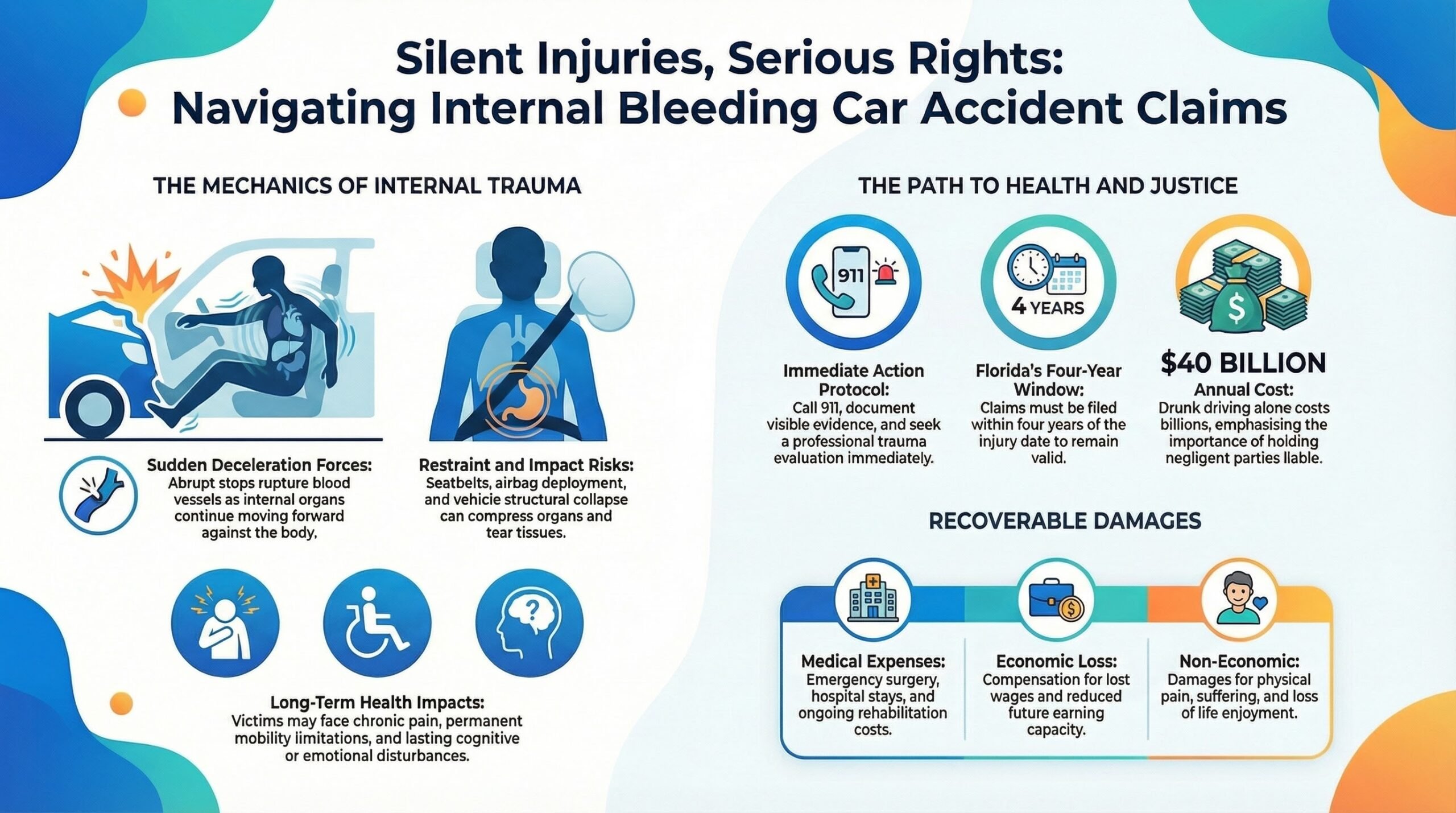
We see that sudden deceleration impacts often cause internal bleeding by forcing the body forward against restraints. Seatbelt restriction injuries and airbag deployment trauma can both compress essential organs, while vehicle structural collapse adds crushing forces that exacerbate internal damage. Understanding these mechanisms helps us assess liability and guide effective treatment plans.
Sudden Deceleration Impacts
Although many drivers assume that a crash is always dramatic, the most frequent source of internal bleeding in Orlando car accidents is a sudden deceleration impact, where the vehicle’s forward momentum stops abruptly, and the body continues moving forward. We explain that this rapid stop creates whiplash mechanisms that strain neck tissues and can cause brain shear as the brain lags behind the skull.
The resulting internal forces rupture blood vessels in the abdomen, chest, or head, leading to hidden but life‑threatening bleeding. We advise victims to seek immediate medical evaluation, even if external injuries seem minor, because early detection of internal trauma improves outcomes. Our team monitors these cases closely, ensuring that victims receive thorough care and the compensation they merit.
Seatbelt Restriction Injuries
While sudden deceleration creates the primary forces that rupture internal vessels, the way occupants are restrained can amplify those injuries. We observe that a lap belt alone often allows the torso to flex forward, concentrating stress on the abdomen and lower spine, which can tear mesenteric vessels and cause internal bleeding. When a shoulder restraint is added, it limits forward motion but can create a shearing effect across the chest, especially if the belt is positioned too high or too low.
This combination may compress the rib cage, transmitting force to internal organs and worsening hemorrhage. We stress that proper belt positioning—low across the hips and snug across the shoulder—reduces these risks. Our guidance helps victims understand how seatbelt restraints contribute to severe injuries, enabling better prevention and more accurate legal assessment.
Airbag Deployment Trauma
Airbag deployment can instantly convert kinetic energy into a high‑velocity blast of gas, propelling the cushion into the occupant’s torso within milliseconds. It’s clear that this rapid impact often leads to thoracic contusion, as the expanding bag strikes the chest wall with considerable force. In many cases, the same force creates an airbag facial injury, bruising or lacerating the face when the driver’s head is too close to the steering column.
We explain that these injuries result from sudden pressure changes and the bag’s rigid material, which can compress internal organs and rupture blood vessels. Understanding these mechanisms helps us assess the severity of internal bleeding, guide appropriate medical intervention, and support victims in seeking the compensation they merit.
Vehicle Structural Collapse
When a vehicle’s frame collapses during a collision, the resulting deformation creates a confined space that can crush occupants and tear internal organs, leading to severe internal bleeding. We recognize that compromised crumple zones and loss of roof integrity intensify this risk, as energy is no longer absorbed but forced into the passenger compartment. In such events, the structural failure redirects forces onto the chest and abdomen, rupturing vessels and damaging organs.
We advise victims to seek immediate medical evaluation, even if pain seems mild, because internal bleeding can develop silently. Our team documents the extent of structural damage, correlates it with injury patterns, and pursues compensation for the life‑altering consequences. By understanding these mechanisms, we can better protect and serve those affected.
Causes of Car Accidents
One of the most common causes of internal bleeding is car accidents. According to the Centers for Disease Control and Prevention (CDC), over two million injuries occur yearly due to vehicle accidents, costing billions of dollars.
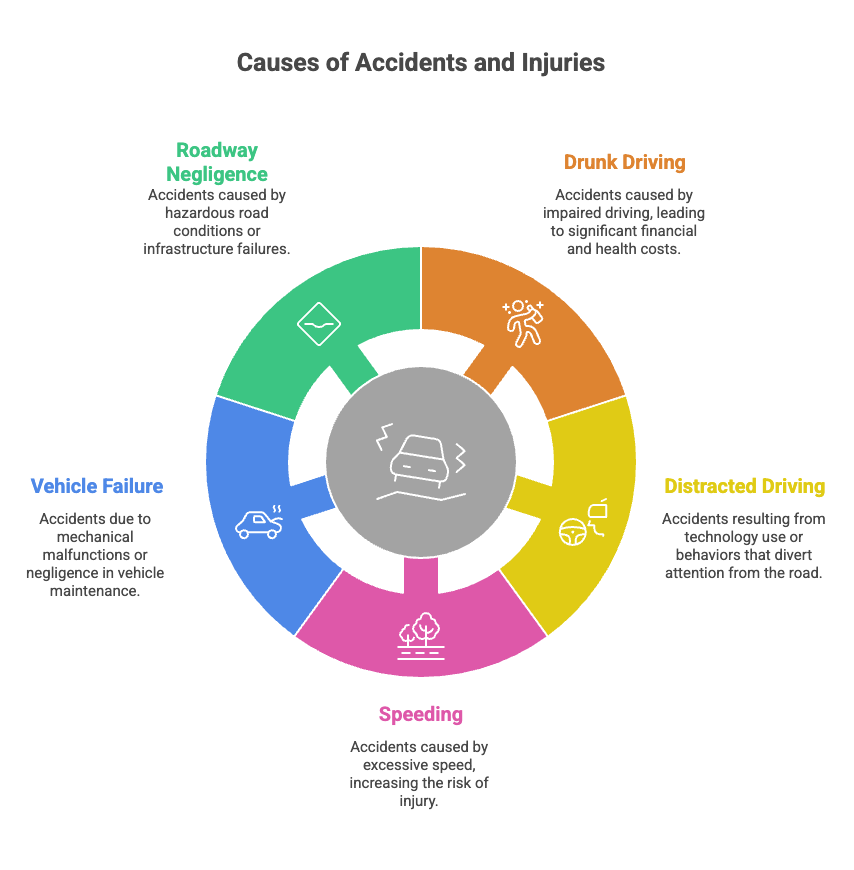
Depending on the circumstances of your accident, another party could be held liable for your suffering. Some common factors contributing to car accidents include, but are not limited to, the following:
- Drunk Driving: The National Highway Traffic Safety Administration (NHTSA) estimates that the cost of drunk-driving accidents alone is more than $40 billion annually. If you suffered at the hands of a drunk driver, you could recover compensation for your internal bleeding treatment and related healthcare expenses.
- Driving While Distracted: Distracted driving refers to the use of technology and other behaviors that take a driver’s attention away from the road. If your accident involved a distracted driver, they could be liable for your suffering and loss.
- Speeding: If another driver was speeding, their carelessness could have led to your injury and internal bleeding.
- Vehicle Failure: Sometimes cars fail, and while it is not uncommon for a random mechanical malfunction to cause an accident, negligence may also be at play. If another party failed to inspect their car or took to the road with a knowingly defective vehicle, their negligence could have caused your accident.
- Roadway Negligence: Failing to salt or plow a road during a snowstorm, a malfunctioning traffic light, an unfilled pothole, or a stop sign that is not visible are all examples of how roadways can become hazardous, leading to accidents and injury.
Remember that you have options if you think another party could have contributed to your accident and suffering. A team member will be available to answer any questions about the legal process.
- Compensation for lost wages
- Reimbursement for legal fees
- Damages for pain and suffering
- Punitive damages
- Expenses for a wrongful death lawsuit
Our experienced team of Orlando internal bleeding lawyers can help you understand your rights and pursue all available forms of compensation. We will fight for your best interests every step of the way.
Legal Rights of Orlando Internal Bleeding Car Accident Injury Victims
If you’ve sustained internal bleeding after a car crash in Orlando, you possess specific legal rights that protect your health, finances, and future well‑being. We must recognize that these rights empower us to seek compensation for medical expenses, lost wages, and pain and suffering. Understanding the legal landscape helps us hold responsible parties accountable, especially when medical negligence or insurance disputes arise.
By acting collectively, we can guarantee that the justice system works for victims and that care recipients receive the support they merit.
- The right to immediate medical evaluation and treatment, regardless of fault.
- The right to demand thorough documentation of injuries for future claims.
- The right to pursue compensation for damages caused by medical negligence.
- The right to resolve insurance disputes through negotiation or litigation when necessary.
Steps to Take After an Orlando Internal Bleeding Car Accident Injury
We should call emergency services immediately to secure professional care and protect the scene, then document our injuries and any evidence while it’s still fresh. Prompt medical evaluation is crucial, not only for health reasons but also to establish a clear record for any future legal claims. By following these steps, we protect our rights and strengthen our case from the outset.
Call Emergency Services Immediately
We must act swiftly and dial emergency services the moment we recognize internal bleeding after a car accident, because every second counts in preventing life‑threatening complications. We follow the 911 protocol, remaining calm while providing the dispatcher with clear, concise details about the crash location, number of victims, and visible signs of internal bleeding.
The dispatcher will offer guidance on how to position the injured party safely, advise on any immediate first‑aid measures we can perform, and reassure us that professional help is en route. While waiting, we keep the victim still, monitor breathing, and avoid moving them unless absolutely necessary, trusting the dispatcher’s instructions to preserve critical signs. This coordinated response maximizes survival odds and reflects our commitment to protecting others.
Document Injuries and Evidence
Because timely documentation can make the difference between a successful claim and a lost one, we begin by recording every visible injury and the surrounding evidence as soon as it’s safe to do so. We first note the location, size, and color of bruises, cuts, or swelling, and we write a concise description of any pain or discomfort. Next, we secure photographic evidence using a smartphone or camera to capture each injury from multiple angles and the crash scene, vehicle damage, and any debris. We also gather medical documentation, such as emergency‑room reports, triage notes, and any initial test results, ensuring that each record is signed and dated. By meticulously preserving this information, we strengthen the factual foundation for any future claim.
Seek Prompt Medical Evaluation
Documenting the injury promptly and obtaining professional medical care are vital steps after an Orlando internal bleeding car accident. We advise you to seek immediate evaluation, because early diagnosis can prevent complications and strengthen your legal claim. Contact emergency services or visit a trauma center where physicians will conduct a thorough assessment and order diagnostic imaging, such as CT scans or ultrasounds, to reveal internal bleeding that may not be visible externally.
We recommend sharing your accident report and any witness statements with the medical team to make certain a complete record. Follow all prescribed treatment plans, attend follow‑up appointments, and keep detailed logs of symptoms and medical expenses. This disciplined approach protects your health and preserves necessary evidence for future proceedings.
How an Orlando Internal Bleeding Car Accident Lawyer Can Help You
When internal bleeding occurs after a car accident, the medical urgency and legal intricacy demand immediate, knowledgeable assistance; our team of Orlando internal bleeding car accident lawyers promptly evaluates the case, coordinates with healthcare providers, and safeguards your rights. We appreciate that an emergency response is vital, so we act swiftly to document injuries, secure medical records, and preserve evidence.
Our proficiency in insurance negotiation guarantees that insurers receive accurate, thorough claims that reflect the true cost of treatment and lost wages.
By walking alongside you, we translate intricate legal procedures into clear actions, allowing you to focus on recovery while we protect your interests.
- We gather and organize medical documentation, creating a vivid timeline of care.
- We liaise with physicians to confirm the severity of internal bleeding.
- We draft persuasive demand letters that illustrate the impact on your life.
- We negotiate with insurers to secure fair compensation and prevent undervaluation.
Long-Term Effects of Orlando Internal Bleeding Car Accident Injuries
We recognize that chronic pain often persists long after the initial injury, requiring ongoing management strategies that can affect daily routines. Over time, many survivors experience mobility limitations that gradually reduce their ability to perform routine activities and maintain independence. Additionally, the emotional and cognitive impact of internal bleeding can lead to lasting anxiety, memory difficulties, and reduced concentration, all of which warrant careful attention.
Chronic Pain Management
Managing chronic pain after an Orlando internal‑bleeding car accident requires a thorough, long‑term strategy that addresses both physical and psychological dimensions of recovery. We guide clients through pain neuroscience education, helping them understand how the nervous system amplifies discomfort, thereby reducing fear and improving coping. Our approach integrates pacing strategies that encourage activity bursts balanced with rest to prevent flare‑ups while maintaining functional capacity.
We collaborate with multidisciplinary teams, including physical therapists and psychologists, to tailor interventions that align with each individual’s goals and responsibilities. By monitoring progress and adjusting plans, we make certain that pain management remains proactive and sustainable, fostering resilience and empowering clients to serve others without compromise. This systematic, evidence‑based methodology safeguards long‑term well‑being.
Mobility Limitations Over Time
Although internal‑bleeding car accidents in Orlando often appear resolved after acute care, their long‑term impact on mobility can evolve subtly yet markedly. We observe that scar tissue and joint stiffness may gradually limit range of motion, especially as patients age, compounding the natural decline in mobility. Over time, reduced endurance can hinder daily tasks, prompting the need for assistive devices such as walkers, canes, or orthotic supports.
We recommend early assessment by physical therapists to identify progressive deficits and to prescribe appropriate interventions. By integrating structured exercise programs and ergonomic adaptations, we help clients maintain independence and mitigate future complications. Our guidance emphasizes proactive monitoring and timely equipment adjustments to preserve functional mobility throughout recovery.
Emotional and Cognitive Impact
When internal‑bleeding injuries from a car accident persist beyond the initial recovery phase, they often trigger lasting emotional and cognitive disturbances that can interfere with daily life and work performance. We observe that many clients develop post-traumatic amnesia, struggling to recall events that occurred around the incident, which erodes confidence and hampers decision‑making. Cognitive fatigue often follows, leading to mental exhaustion after brief tasks and reducing productivity.
These effects can strain relationships, diminish motivation to help others, and compromise professional responsibilities. By recognizing these patterns early, we can guide patients toward targeted therapy, structured rest periods, and supportive workplace accommodations. Our goal is to mitigate the long‑term impact while preserving the individual’s capacity to serve and contribute meaningfully.
Proving Liability in Orlando Internal Bleeding Car Accident Car Accident Injury Cases
If we’re determined to establish liability in an Orlando internal‑bleeding car‑accident case, we must first gather concrete evidence that links the defendant’s negligence to the victim’s injuries. We start by securing police reports, eyewitness statements, and dash‑cam footage that pinpoint the moment of impact. Next, we obtain medical records that document internal bleeding and correlate the timing of symptoms with the collision.
By consulting a medical expert, we can demonstrate that the injuries could not have arisen without the crash, ruling out unrelated health issues. We also examine vehicle inspection reports for faulty brakes or tires, which may indicate negligence. In parallel, we assess comparative negligence, evaluating any contributory actions by the plaintiff that could reduce recovery.
When medical malpractice is alleged, we differentiate between treatment errors and injuries caused directly by the accident. This systematic approach guarantees we build a compelling, evidence‑based case for our clients.
Compensation for Orlando Internal Bleeding Car Accident Damages
Because internal bleeding can lead to significant medical expenses and long‑term health impacts, we must carefully assess all categories of damages that a victim may recover in an Orlando car accident case. First, we calculate the total of medical bills, including emergency care, surgeries, follow‑up appointments, and any ongoing therapy required to treat internal injuries.
Next, we evaluate lost wages, accounting for the time the victim missed work during recovery and any future earning capacity reduced by lasting health effects. We also consider pain and suffering, which reflects the physical discomfort and emotional distress endured. Additionally, we assess loss of enjoyment of life, recognizing that severe injuries may limit everyday activities.
By systematically documenting each loss, we build a thorough compensation package that restores the victim’s financial stability and supports their long‑term wellbeing. Our approach guarantees that every recoverable element is pursued with diligence and skill.
The Statute of Limitations for Orlando Internal Bleeding Car Accident Injury Cases
Although the clock starts ticking the moment the accident occurs, Florida law gives us a four‑year window to file a claim for internal bleeding injuries sustained in an Orlando car crash. We must act promptly because the statute of limitations begins on the date of injury, not when symptoms appear. In many cases, internal bleeding may be discovered months later, yet the deadline does not shift.
We advise clients to gather medical records, witness statements, and police reports as soon as possible to preserve evidence. When insurance denials arise, we can intervene before the filing period expires, ensuring that claimants’ rights remain protected. Likewise, if medical malpractice contributes to delayed diagnosis, the four‑year limit still applies, though certain exceptions may extend the timeframe.
Our role is to monitor these deadlines, file the necessary pleadings, and safeguard the opportunity for full compensation before the statutory bar closes.
Why You Need an Experienced Orlando Internal Bleeding Car Accident Lawyer
When a car crash causes internal bleeding, the medical complexities and legal nuances demand more than a generic approach, and we recognize that only an experienced Orlando internal bleeding car accident lawyer can navigate through these challenges effectively. We emphasize that internal injuries often require emergency surgery, intensive care, and ongoing therapy, each generating detailed records that must be interpreted accurately.
Our team reviews every medical report to identify possible medical malpractice, ensuring that negligent care is not overlooked. We also manage multifaceted insurance disputes, negotiating with carriers who may undervalue claims or delay payments. By leveraging our knowledge of local statutes and precedent, we protect your right to fair compensation while preserving the integrity of your case.
Our commitment to serving victims means we act decisively, coordinate with experts, and present a cohesive narrative to maximize recovery and minimize the burden on you and your loved ones.
How to Choose the Right Orlando Internal Bleeding Car Accident Lawyer for Your Case
Selecting the right Orlando internal‑bleeding car accident lawyer begins with evaluating their specific experience handling severe trauma cases and their track record of securing substantial settlements for victims. We advise you to examine each candidate’s portfolio of similar injuries, noting how often they achieve full compensation for medical expenses, lost wages, and pain.
During attorney selection, request detailed references from past clients to gauge responsiveness and empathy, ensuring they align with our commitment to serving others. Scrutinize fee structures promptly; many firms operate on a contingency basis, but percentages vary, and some may impose upfront costs for case development. Clarify whether expenses such as expert testimony or court filings are deducted from the recovery or billed separately.
By comparing these financial arrangements, we can protect our resources while securing aggressive representation. Ultimately, a lawyer who combines proven expertise in trauma with transparent, client‑focused fee policies will best advance our case and uphold our dedication to justice.
About the Law Offices of Anidjar and Levine
Established in 1975, the Law Offices of Anidjar and Levine have built a reputation for handling elaborate personal injury cases throughout Central Florida, including internal‑bleeding car accidents.
We honor our firm’s history by maintaining a client‑focused approach that emphasizes diligent investigation, strategic negotiation, and relentless advocacy.
Our team collaborates closely with each client, ensuring that every detail of their experience is documented and presented with precision.
Client testimonials consistently highlight our responsiveness, transparency, and commitment to achieving fair compensation.
We recognize that victims seek both legal proficiency and compassionate support, and we integrate those goals into every case plan.
By leveraging decades of experience, we navigate complex medical evidence and insurance dynamics with confidence.
Our professionals remain accountable to the community we serve, upholding ethical standards while delivering results that reflect our dedication to justice and the well‑being of those we represent.
Frequently Asked Questions
Can Internal Bleeding Be Diagnosed Without Surgery?
We can diagnose internal bleeding without surgery by relying on imaging diagnostics and careful clinical observation. CT scans, ultrasounds, and MRIs reveal fluid accumulation and organ damage, while crucial‑sign trends and physical exams highlight hidden blood loss. These tools enable us to promptly identify the source and severity of bleeding, allowing timely, non‑invasive interventions when appropriate and ensuring patients receive the accurate care they need.
How Long Does Medical Treatment for Internal Bleeding Usually Last?
We tell you that treatment duration for internal bleeding typically ranges from a few days to several weeks, depending on severity and organ involvement. The recovery timeline includes hospital monitoring, possible minimally invasive procedures, and subsequent outpatient care. Most patients stabilize within 48‑72 hours, but full recovery may require 2‑6 weeks of rest, medication, and follow‑up imaging. We advise close coordination with physicians to adjust the plan as needed.
Are There Alternative Therapies That Aid Recovery From Internal Bleeding?
We recommend exploring adjunct therapies such as acupuncture therapy and hyperbaric oxygenation to support recovery from internal bleeding. Acupuncture can stimulate circulation and reduce inflammation, while hyperbaric oxygenation enhances tissue oxygenation, potentially accelerating recovery. Both modalities should complement, not replace, conventional medical care and require consultation with qualified practitioners. When integrated thoughtfully, they may improve patient outcomes and contribute to a thorough, patient‑centered treatment plan.
What Insurance Coverage Typically Applies to Internal Bleeding Injuries?
We find that health insurance generally covers medical treatment for internal bleeding, including hospital stays, surgeries, and follow‑up care, provided the policy’s medical benefits apply. If the injury results from another driver’s negligence, uninsured motorist coverage can also pay for expenses not covered by the at’s health plan. Both policies may require coordination of benefits, and we recommend reviewing policy limits, deductibles, and any exclusions to guarantee full reimbursement.
How Are Future Medical Expenses Estimated in a Claim?
We estimate future medical expenses by projecting treatment costs over the patient’s remaining life expectancy, adjusting each year for medical inflation. First, we gather an all‑inclusive treatment plan from physicians, then apply actuarial tables to determine the duration of care. Next, we increase projected costs by an inflation factor—often 4‑5 % annually—to reflect rising healthcare prices. Finally, we discount the total to present value, ensuring the claim reflects realistic, long‑term financial needs.
—————————
The Law Offices of Anidjar and Levine stand ready to protect your rights and secure the compensation you merit after an internal-bleeding car accident in Orlando.
Our seasoned team will steer through intricate legal procedures, gather compelling evidence, and advocate fiercely on your behalf.
By partnering with us for a car accident lawyer in Orlando, you benefit from proven know-how, strategic insight, and unwavering dedication to your case.
Trust our firm to deliver the focused, results-driven representation vital for a successful claim.