A Miami aggressive driving car accident injury lawyer, such as Law Offices of Anidjar and Levine, assists victims by proving that tailgating, speeding, unsafe lane changes, or road rage caused a preventable crash and measurable losses.
Counsel preserves video, witness statements, police reports, vehicle data, and medical records, while managing insurer communications and evaluating damages under Florida law.
Prompt legal guidance from a Miami Car Accident Attorney can protect evidence, strengthen settlement positions, and prepare a case for litigation when needed.
The sections below explain the process, rights, and crucial decisions involved.
Main Takeaways
- A Miami aggressive-driving car accident injury lawyer helps prove liability by using police reports, witness statements, video footage, and vehicle data.
- Aggressive driving includes tailgating, speeding, unsafe lane changes, weaving, and road rage that cause preventable crashes and serious injuries.
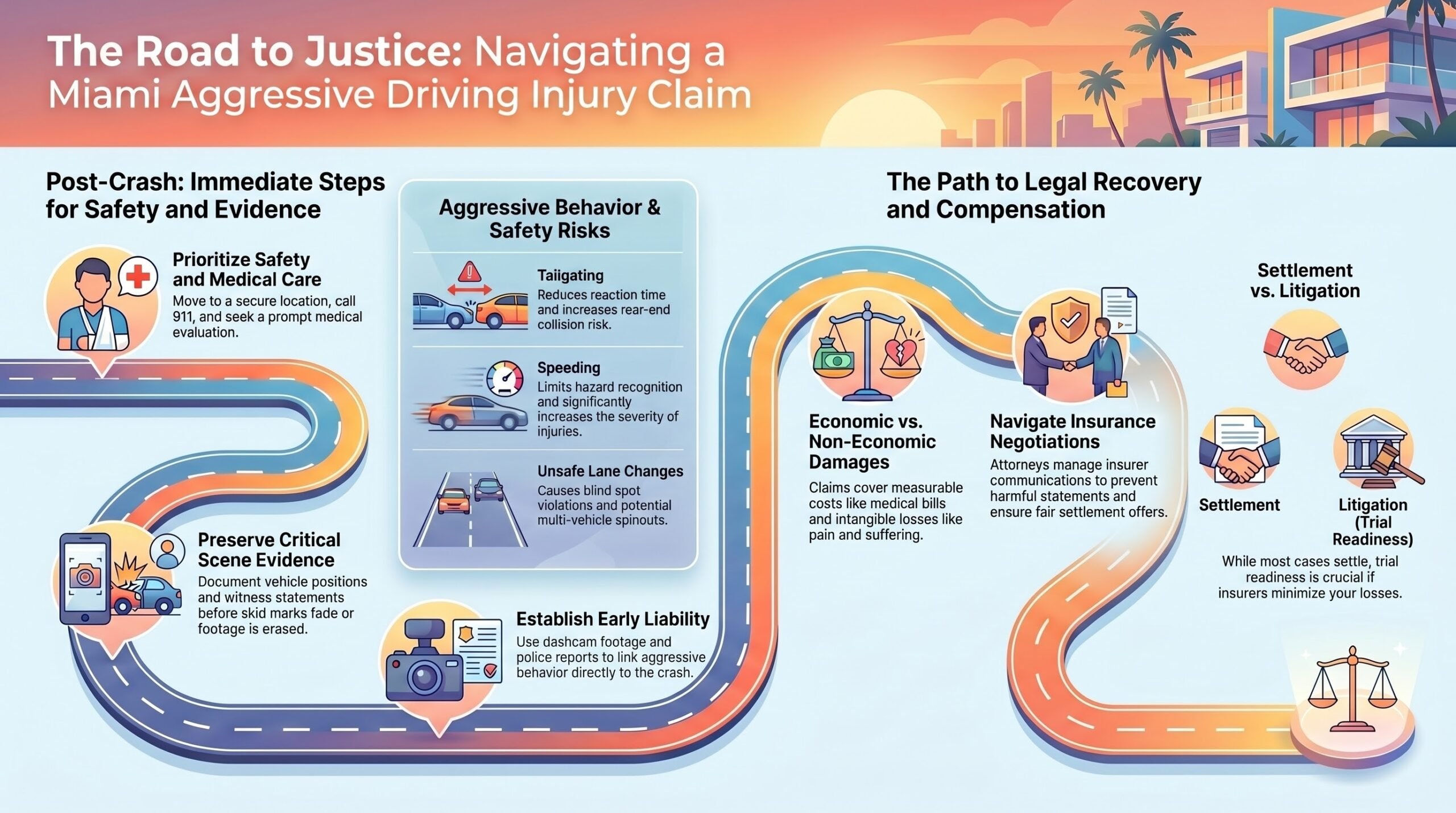
- After a crash, prioritize safety, call 911, seek medical care, and document vehicle positions, road conditions, and driver statements.
- Quick evidence preservation is critical because skid marks fade, surveillance footage is deleted, and witness memories become less reliable over time.
- A lawyer manages insurer communications, calculates medical bills and lost income, and pursues fair settlement or litigation when necessary.


How We Can Help With Your Miami Aggressive Driving Car Accident Injury Claim
In the aftermath of an aggressive driving collision, effective legal representation can play a pivotal role in protecting an injured person’s rights and advancing a well-supported claim. A Miami lawyer assists by organizing evidence, preserving records, coordinating with medical providers, and managing communications with insurers so the injured person can focus on recovery and family responsibilities.
Representation also includes steady client counseling, which helps individuals make informed decisions with clarity and confidence during a difficult period. Counsel may evaluate damages, review policy terms, prepare persuasive demand materials, and address disputes that could weaken a claim if left unanswered. Through careful settlement forecasting, the legal team can estimate reasonable ranges for claim value and compare proposed resolutions against the likely costs of continued litigation.
This structured guidance supports responsible choices, protects financial interests, and promotes fair outcomes. Throughout the process, the focus remains on service, accountability, and practical advocacy that respects the injured person’s needs and long-term stability.
OUR CONSULTATIONSARE FREE
START YOUR FREE CASE REVIEW

Understanding Miami Aggressive Driving Car Accident Injury Cases
At the outset, understanding Miami’s aggressive-driving car accident injury cases requires close attention to how dangerous driving behaviors lead to preventable collisions and establish legal liability. These matters often involve evidence showing that a driver acted with impatience, hostility, or conscious disregard for others sharing the road. Courts, insurers, and advocates evaluate conduct, injuries, and surrounding circumstances to determine responsibility and compensation.
A careful review of the psychology of aggressive driving can help explain why certain drivers make unsafe choices under pressure, yet the legal focus remains on observable actions and the resulting harm. In Miami, urban traffic patterns may intensify conflicts among motorists, pedestrians, and cyclists, underscoring the importance of timely investigation.
Medical records, witness statements, video footage, and vehicle data can clarify how the event unfolded and how victims were affected. For those committed to serving injured community members, understanding these cases supports informed guidance, accountability, and a stronger path toward recovery after serious roadway harm.
Common Causes of Miami Aggressive Driving Car Accidents
Common causes of Miami aggressive driving accidents often include tailgating, speeding through traffic, and unsafe lane changes, all of which increase the risk of sudden collisions. Road rage incidents also contribute materially, as hostile or impulsive behavior can cause drivers to ignore traffic laws and safe driving practices. Identifying these patterns is important when evaluating how aggressive conduct leads to serious crashes and resulting injuries.
Tailgating And Following Too Closely
Tailgating places immediate and unnecessary pressure on the driver ahead, while sharply reducing the time available to react to sudden braking, lane changes, or road hazards. This aggressive behavior often reflects impatience and disregard for the shared duty every motorist owes others on Miami roads.
When a driver follows too closely, even a minor traffic interruption can produce a rear-end collision with serious consequences. Proper following distance allows space for perception, decision-making, and controlled braking, especially in heavy traffic or poor weather. Tailgate prevention begins with consistent attention, calm judgment, and respect for surrounding vehicles.
Drivers who leave adequate room help protect passengers, pedestrians, cyclists, and fellow motorists from avoidable harm. In injury claims, evidence of tailgating may support a finding that the trailing driver acted negligently and failed to operate the vehicle responsibly.
Speeding Through Traffic
Speeding through traffic often accompanies other aggressive driving behaviors, including following too closely, because both reduce the margin for safe response and increase the likelihood of a collision. In Miami, this conduct places motorists, passengers, cyclists, and pedestrians at heightened risk, especially where congestion and sudden stops are common.
Drivers who exceed safe speeds have less time to recognize hazards, judge distance, and brake effectively. The resulting crashes frequently involve severe injuries, substantial property damage, and preventable disruption to families and communities. Public safety efforts consequently emphasize speed limit enforcement as a practical means of discouraging reckless behavior and protecting those who share the road.
Sound roadway planning and traffic flow optimization may also reduce frustration, support orderly movement, and encourage safer driving decisions that better serve everyone in the community.
Unsafe Lane Changes
Among the more dangerous forms of aggressive driving, unsafe lane changes create a substantial risk of collision on Miami roadways. These maneuvers often occur when drivers weave between lanes without signaling, misjudge surrounding traffic, or force entry into narrow gaps. Illegal merging near exits, intersections, and construction zones can leave nearby motorists with little time to react.
Blind spot violations are especially hazardous because they place unsuspecting drivers, passengers, and motorcyclists in immediate danger. A sudden lateral movement may trigger sideswipe crashes, spinouts, or multi-vehicle impacts, particularly on congested highways.
From a public safety perspective, careful lane discipline, proper signaling, and patient decision-making help protect everyone sharing the road. When aggressive lane changes cause injury, affected individuals may require legal guidance to pursue accountability and support recovery after serious losses.
Road Rage Incidents
Escalating tension behind the wheel often turns routine traffic conflicts into road rage incidents that place Miami motorists at serious risk. These events frequently begin with tailgating, abrupt braking, use of the horn, or verbal altercations that quickly intensify. Drivers consumed by anger may swerve, block lanes, or pursue another vehicle, disregarding traffic laws and public safety. In dense Miami traffic, such conduct endangers passengers, pedestrians, cyclists, and nearby families who share the road.
From a public safety perspective, road rage reflects a breakdown in judgment and self-control. Even a brief confrontation can produce devastating collisions, severe injuries, and lasting emotional harm. Careful documentation, witness statements, and prompt legal guidance can help injured individuals protect their rights while supporting accountability and safer conduct throughout the broader community.


Legal Rights of Miami Aggressive Driving Car Accident Injury Victims
A person injured in a Miami aggressive driving car accident has important legal rights under Florida law, including the right to pursue compensation for medical expenses, lost income, property damage, and pain and suffering when another driver’s misconduct caused the crash. These protections reflect Florida’s commitment to accountability, community safety, and fair Victim compensation for those harmed by reckless behavior.
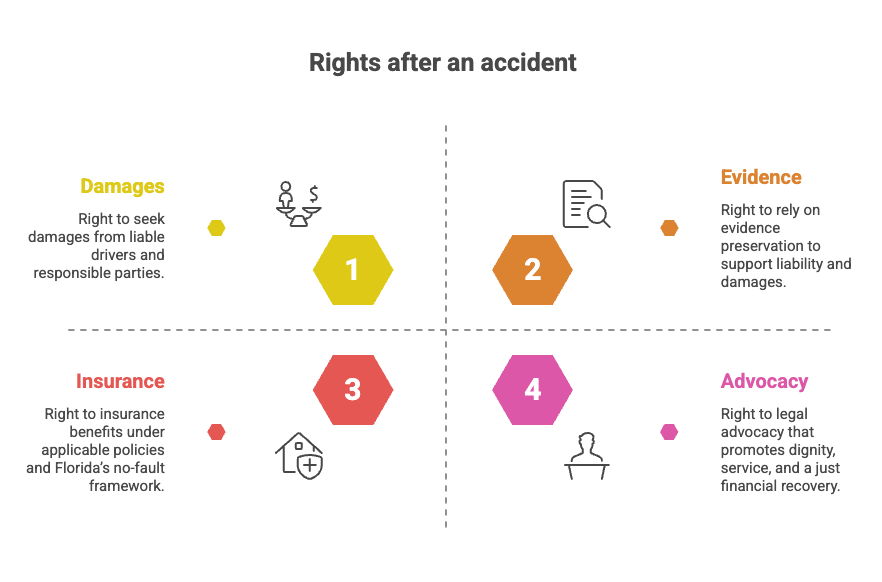
Florida law protects Miami aggressive driving crash victims with rights to compensation, accountability, and fair recovery for the harm they suffer.
- The right to seek damages from liable drivers and, in some cases, additional responsible parties.
- The right to rely on Evidence preservation to support liability, damages, and the full extent of harm.
- The right to insurance benefits available under applicable policies and Florida’s no-fault framework.
- The right to legal advocacy that promotes dignity, service, and a just financial recovery.
When aggressive driving causes severe injury, permanent impairment, or death, Florida law may permit broader recovery through a personal injury or wrongful death claim. These rights help injured people protect their families, restore stability, and encourage safer conduct on Miami roads.
Steps to Take After a Miami Aggressive Driving Car Accident Injury
After a Miami aggressive driving car accident injury, the initial priority is to ensure immediate safety by moving to a secure location and contacting emergency services when necessary. It is also important to gather critical evidence, including photographs, witness statements, and details about the vehicles and the scene, as this information may support a future claim. Prompt medical attention should follow, as timely evaluation protects both health and the accuracy of injury documentation.
Ensure Immediate Safety
In the immediate moments following a Miami aggressive-driving collision, personal safety should take priority over all other concerns. Those involved should assess immediate dangers, including fire, oncoming traffic, leaking fuel, or unstable surroundings, before taking further action. If possible, vehicle stabilization should be attempted by shifting into park, activating the hazard lights, and setting the parking brake.
When conditions remain unsafe, scene evacuation should occur promptly and calmly, with injured occupants moved only when a greater danger exists. Individuals should guide children, older adults, and others needing assistance to a protected area away from traffic. Emergency services should be contacted without delay so medical and law enforcement personnel can respond. Remaining composed, alert, and attentive to others helps reduce further harm and supports an orderly response that protects everyone present.
Gather Critical Evidence
At the scene, preserving and collecting evidence can materially affect any later insurance claim or injury case arising from an aggressive-driving collision in Miami. If conditions allow, photographs should document vehicle positions, skid marks, debris, roadway conditions, traffic signals, and visible damage. Time, location, weather, and any statements made by involved drivers should be noted carefully and accurately.
Those assisting the injured or supporting accountability should also preserve footage from dash cameras, nearby businesses, or residential security systems before recordings are erased. They should collect witness statements from bystanders who observed speeding, tailgating, unsafe lane changes, or other hostile driving behavior.
Contact information for all drivers, passengers, and witnesses should be obtained, along with insurance details and the responding officer’s name, badge number, and report reference.
Seek Medical Attention
Seek prompt medical evaluation, even when injuries appear minor, because aggressive driving collisions often cause harm that is not immediately visible. A physician can identify concussions, internal injuries, spinal trauma, and soft tissue damage before symptoms worsen. Early treatment also creates records that support insurance claims and legal review, while protecting the injured person’s long-term well-being.
Those assisting after a crash should encourage transportation to an emergency room, an urgent care clinic, or a primary care doctor without delay. If mobility is limited, telemedicine follow-up may help maintain continuity of care. Providers may recommend imaging, medication, expert referrals, and post-accident rehabilitation to restore function safely.
Careful adherence to medical instructions demonstrates responsibility, strengthens recovery, and helps families, caregivers, and advocates respond wisely to the injured person’s changing needs over time.
How a Miami Aggressive Driving Car Accident Injury Lawyer Can Help You
Navigate through the aftermath of an aggressive driving collision with counsel that can identify liability, preserve vital evidence, and protect the injured person’s legal and financial interests. A Miami aggressive-driving car accident injury lawyer evaluates police reports, witness statements, video footage, and vehicle data to build a clear account of the misconduct.
Knowledge of traffic psychology may help explain why dangerous behavior occurred and how negligence can be demonstrated.
- Investigates crash facts quickly, before evidence disappears or memories fade.
- Communicates with insurers to reduce pressure, prevent harmful statements, and clarify settlement timelines.
- Calculates present financial losses, including treatment costs, lost income, and property damage.
- Prepares the claim for negotiation or litigation, with attention to service, accountability, and community safety.
Through organized advocacy, counsel helps injured people make informed decisions and avoid procedural mistakes. This support allows families to focus on recovery while a structured legal strategy advances compensation and reinforces safer conduct on Miami roads.
Long-Term Effects of Miami Aggressive Driving Car Accident Injuries
Aggressive driving collisions in Miami may produce lasting injuries that extend well beyond the initial recovery period. Common long-term effects include chronic pain complications, persistent emotional trauma aftereffects, and a reduced ability to manage daily tasks and routine responsibilities. These consequences often affect medical needs, employment stability, and overall quality of life for an extended time.
Chronic Pain Complications
Following a Miami aggressive driving collision, chronic pain can persist long after fractures have mended and visible injuries have faded, often affecting the neck, back, shoulders, or limbs. Soft tissue damage, nerve irritation, and Chronic inflammation may continue to limit mobility, sleep, and daily functioning for injured individuals and those who support their recovery.
These complications often require ongoing Pain management through medical evaluation, physical therapy, medication, and rehabilitative care. Some people develop a reduced range of motion, recurring headaches, or radiating discomfort that interferes with work, household tasks, and community service.
When pain becomes constant, treatment needs may extend for months or years, increasing financial strain and caregiving demands. Careful documentation, timely treatment, and consistent follow-up can help demonstrate the full extent of lasting physical harm after a serious crash.
Emotional Trauma Aftereffects
How deeply emotional trauma affects a person after a Miami aggressive driving collision may not be immediately apparent, particularly when physical injuries receive the most immediate medical attention. Survivors may later experience persistent fear, intrusive memories, sleep disruption, irritability, and emotional numbness. These reactions can reflect PTSD symptoms and other stress-related conditions that merit careful evaluation and compassionate support.
For those committed to helping others, recognizing these aftereffects is vital to meaningful care. Emotional trauma may strain relationships, diminish a sense of safety, and complicate recovery long after visible wounds begin to mend. Mental health professionals often recommend counseling, trauma-informed therapy, peer support, and practical coping strategies tailored to the individual’s circumstances. Early attention to psychological harm can promote stability, resilience, and a fuller recovery over time for many survivors.
Reduced Daily Function
In the months after a Miami aggressive driving collision, reduced daily function may become one of the most disruptive long-term consequences of an injury. Survivors often face reduced mobility, chronic pain, and weakness that interfere with routine tasks once completed without thought.
These impairments can affect bathing, dressing, driving, meal preparation, childcare, and employment duties. As daily limitations increase, injured individuals may require assistance from relatives, friends, or professional caregivers, placing additional strain on households already trying to recover.
Reduced independence may also limit participation in community service, family support, and other meaningful responsibilities. Medical treatment, rehabilitation, and adaptive equipment may improve function, but recovery is often uneven and prolonged. Careful documentation of these changes can help demonstrate the full human and practical cost of the collision.
Proving Liability in Miami Aggressive Driving Car Accident Injury Cases
Establishing liability in a Miami aggressive driving car accident case requires clear evidence that a driver acted unreasonably and that the driver’s conduct directly caused the collision and resulting injuries. Proof often begins with police reports, scene photographs, vehicle damage patterns, and traffic camera footage. A dash cam recording may reveal speeding, tailgating, unsafe lane changes, or road rage behaviors immediately before impact.
Attorneys also examine medical records, accident reconstruction findings, and electronic data when available. Witness credibility can strongly affect the outcome, especially when independent observers consistently describe reckless conduct. Skid marks, debris fields, and roadway conditions may help connect the aggressive act to the crash sequence. In some cases, cell phone records or prior traffic citations support a broader pattern of dangerous driving.
By organizing reliable evidence and presenting it clearly, injured individuals are better positioned to pursue accountability and protect the well-being of their families and communities after serious roadway harm occurs.
Dealing With Insurance Companies After a Miami Aggressive Driving Car Accident Injury
Once liability evidence has been gathered, interactions with insurance companies often become the next major issue after a Miami aggressive driving car accident injury. Insurers may appear cooperative, yet their priorities often center on limiting financial exposure rather than fully addressing the injured person’s losses and ongoing needs.
Careful communication is thus vital. Insurance representatives may use claim tactics designed to minimize the seriousness of injuries, shift blame, or encourage quick resolutions before medical conditions are fully understood. They may also request recorded statements, which can later be narrowly interpreted or used to challenge their consistency.
For families committed to helping an injured loved one recover with dignity, organized records, accurate medical documentation, and measured responses can protect both health and financial stability. A disciplined approach also supports fair treatment, especially when aggressive driving has disrupted work, caregiving, and daily responsibilities. Thoughtful advocacy helps preserve resources that may be needed for long-term support and community well-being.
What to Expect During a Miami Aggressive Driving Car Accident Injury Claim Process
A Miami aggressive-driving car accident injury claim typically begins with prompt reporting, medical evaluation, and filing the necessary insurance notices. The process then depends heavily on the collection of evidence and documentation, while negotiations with the insurance company often unfold over weeks or months. If a fair resolution is not reached, the claim may proceed toward settlement discussions or formal litigation.
Initial Claim Steps
Handling the early stages of a Miami aggressive driving car accident injury claim typically begins with prompt medical evaluation, careful documentation of the collision, and timely notice to the appropriate insurance carriers. Early action helps protect health, preserve rights, and support an orderly claims timeline for everyone involved.
After notice is given, insurers usually assign adjusters, open investigations, and request basic information about injuries, treatment, and losses. Counsel may guide communications, explain policy provisions, and help injured individuals avoid statements that could unfairly reduce recovery. As the medical condition and financial impact become clearer, the claim may progress toward settlement discussions.
When appropriate, counsel may prepare a demand letter outlining the nature of the harm and the compensation sought. Throughout these initial steps, patience, cooperation, and consistent follow-through often serve the broader interests of all parties.
Evidence And Documentation
Preserving evidence is often central to a Miami aggressive driving car accident injury claim, because the strength of the case may depend on how clearly fault, injury, and resulting losses can be shown. Helpful documentation may include photographs, surveillance footage, police reports, medical records, repair estimates, and employment records reflecting missed work. Prompt collection can protect accuracy and support those seeking accountability and care.
An attorney may also organize witness statements, obtain electronic data when available, and maintain a clear chain of custody for physical evidence. Consistent medical documentation often helps connect symptoms to the crash and shows how daily responsibilities were affected. When records are thorough and preserved correctly, the claim is better positioned for careful review. This orderly approach can responsibly serve injured people, families, and the broader community.
Insurance Negotiation Timeline
Once evidence has been gathered and organized, attention often turns to the insurance negotiation timeline and the sequence of events that may shape an aggressive driving car accident injury claim in Miami. Initial notice is typically followed by claim review, requests for records, and evaluation of medical progress.
During this claims timeline, insurers may request statements, bills, wage information, and proof of ongoing care. Responses should be timely, accurate, and guided by a commitment to protecting the injured person’s interests and future needs.
Negotiations often continue as treatment develops and damages become clearer. Settlement deadlines may arise from policy terms or legal filing limits, so careful calendar management is crucial. Consistent communication, respectful follow-up, and organized documentation can support productive discussions and help all parties move responsibly toward a fair resolution.
Settlement Or Litigation
Deciding between settlement and litigation often marks a significant turning point in a Miami aggressive driving car accident injury claim. Attorneys generally assess liability, damages, and insurer conduct before recommending either path. Settlement may provide faster relief, reduced expense, and greater privacy for injured individuals and their families.
When negotiations continue, counsel may employ careful negotiation tactics, supported by medical records, witness statements, and accident reconstruction evidence. If insurers minimize harm or dispute fault, litigation may become necessary to protect the claimant’s interests and promote accountability. Trial readiness then becomes crucial because thorough preparation can strengthen bargaining power even before a courtroom appearance occurs.
Throughout either process, clear communication, realistic expectations, and disciplined documentation help injured people make informed decisions that support recovery, stability, and the broader well-being of those who depend on them.
Compensation for Miami Aggressive Driving Car Accident Injury Damages
Accountability is central when evaluating compensation for Miami aggressive-driving car-accident injury damages, because the law allows injured parties to recover both economic and non-economic losses caused by another driver’s reckless conduct. A careful claim review often includes emergency treatment, rehabilitation costs, property losses, medical liens, and lost income arising from time away from work.
Compensation also depends on evidence that clearly connects the aggressive driving behavior to the injuries sustained. Police reports, witness statements, medical records, photographs, and expert analysis may strengthen the presentation of damages and support a fair valuation. In many cases, insurers attempt to minimize payouts, making organized documentation especially important for those seeking to protect household stability and continue caring for others.
An attorney may help calculate damages, address disputed liability, communicate with insurers, and pursue the maximum available recovery under Florida law. This process promotes accountability while helping injured individuals rebuild with dignity, stability, and purpose.
Economic vs Non-Economic Damages in Miami Aggressive Driving Car Accident Cases
In Miami aggressive-driving car accident cases, damages are generally divided into economic categories, such as medical expenses and lost income, and non-economic categories, such as pain and suffering. This distinction affects how compensation is calculated, presented, and challenged during an injury claim. Establishing the value of either type of damage often requires records, testimony, and other evidence that connects the collision to the claimed losses.
Economic Damage Categories
Several categories of economic damages may arise in a Miami aggressive driving car accident case, each tied to measurable financial loss caused by the collision. These damages often include emergency care, hospital bills, rehabilitation costs, prescription expenses, and anticipated future medical treatment supported by records or expert opinion. They may also include lost wages when injuries prevent a person from working, attending appointments, or returning to prior duties.
In service-minded communities, documenting these losses can help families remain stable as they continue to care for others. Economic damages frequently include property damage, such as vehicle repair or replacement, towing, storage fees, and the value of personal items damaged in the crash. Depending on the facts, additional losses may include transportation expenses, household services, and other out-of-pocket costs directly resulting from the aggressive driving incident.
Non-Economic Losses
Pain and disruption often define the non-economic losses that follow a Miami aggressive driving collision, even when those harms do not appear on a bill or wage statement. These damages concern the human consequences of injury, including physical suffering, emotional distress, inconvenience, and diminished enjoyment of daily living.
A detached review of non-economic harm considers how injuries alter relationships, independence, sleep, mobility, and peace of mind. In severe cases, a victim may face lasting anxiety, scarring, or loss of companionship that affects the household’s ability to care for one another.
Pain valuation addresses these intangible burdens in a structured way, while life adjustment reflects the practical changes required after trauma. Collectively, such losses recognize that service to injured people includes acknowledging hardships beyond strictly financial consequences and personal dignity matters.
Proving Damage Value
How is damage value established after a Miami aggressive driving crash when some losses are documented by records and others are measured through human impact? In these cases, a careful damage appraisal separates economic damages from non-economic damages and supports a fair evaluation of the claim. Economic losses are usually proven through medical bills, wage records, repair estimates, and expert opinions regarding future losses, including ongoing treatment or diminished earning capacity.
Non-economic damages require different proof. Their value is often supported by medical findings, testimony from treating providers, photographs, daily journals, and statements from family members who observe pain, limitations, and emotional strain. A thorough presentation connects the aggressive driving collision to each category of harm. By documenting both measurable expense and personal suffering, the injured person is better positioned to seek accountable, service-minded recovery.
When a Miami Aggressive Driving Car Accident Injury Case Goes to Trial vs Settlement
Determining whether a Miami aggressive driving car accident injury case proceeds to trial or resolves through settlement depends on the strength of the evidence, the severity of the injuries, and the parties’ willingness to accept a reasonable outcome. Strong documentation, credible witnesses, and clear liability often encourage settlement, especially when insurers recognize the likely value of the claim and the need to compensate the injured person fairly.
A case may move toward a jury trial when fault is disputed, damages are minimized, or settlement offers fail to address medical costs, lost income, and future care needs. A trial can provide a public forum for accountability, but it also requires more time, expense, and uncertainty.
Settlement usually offers faster relief and allows families to focus on recovery and service to others. In some matters, related criminal issues may be subject to plea bargaining, yet the civil injury claim remains separate. Careful evaluation helps determine which path best serves justice, stability, and community well-being.
The Statute of Limitations for Miami Aggressive Driving Car Accident Injury Cases
In Florida, the statute of limitations imposes a strict deadline for filing a Miami aggressive driving car accident injury lawsuit, and missing that deadline can bar recovery regardless of the claim’s substance. For injured people and the families supporting them, this rule underscores the need for prompt attention to legal timelines, documentation, and preservation of evidence after a crash.
Florida law may apply different deadlines depending on the type of claim asserted, the injuries involved, and whether a wrongful death action is at issue. These nuances of the statute matter because even a strong case can fail if filed late. Certain filing exceptions may extend or pause the deadline in limited situations, such as delayed discovery issues, incapacity, or circumstances involving absent defendants.
However, exceptions are narrowly applied and should not be assumed. A careful review of dates, medical treatment history, insurance communications, and accident facts helps guarantee compliance and protects the ability to pursue accountability and meaningful civil recovery.
When to Contact a Miami Aggressive Driving Car Accident Injury Lawyer
After an aggressive driving crash in Miami, early contact with a car accident injury lawyer is often vital to protecting a potential claim. Prompt action may help preserve photographs, witness information, surveillance footage, and medical records before important details are lost. This urgent timing also supports accurate reporting and helps injured people respond appropriately to insurer requests.
Contact is especially important when injuries require treatment, when fault is disputed, when multiple vehicles are involved, or when the other driver acted recklessly. Families seeking to serve and protect loved ones should also consider reaching out when a victim cannot work, faces mounting expenses, or receives pressure to settle quickly. Consultation benefits may include clearer guidance on documentation, deadlines, and communication practices that reduce avoidable mistakes.
Early legal contact can also assist with identifying responsible parties and evaluating the full scope of losses. In many situations, waiting creates unnecessary risk, while timely attention supports an orderly, informed path forward for everyone involved.
Why You Need an Experienced Miami Aggressive Driving Car Accident Injury Lawyer
Given the complex factual and insurance issues that often follow an aggressive-driving collision, the value of an experienced Miami aggressive-driving car accident injury lawyer is substantial. Such counsel helps protect injured people from delayed claims handling, disputed liability, and pressure to accept inadequate settlements before the full extent of harm is understood.
An experienced lawyer can organize evidence, preserve witness statements, and work with medical and accident experts to present a clear account of loss. This support promotes fair treatment for victims and helps families focus on recovery and service to one another. Aggressive negotiation is often necessary when insurers minimize injuries or shift blame.
When settlement efforts fail, Trial preparation strengthens the case by developing persuasive documentation, testimony, and legal arguments for the court. Skilled representation also helps make certain deadlines are met, damages are calculated accurately, and the client’s voice is presented with dignity. In serious cases, that guidance can materially affect both accountability and financial stability.
How to Choose the Right Miami Aggressive Driving Car Accident Injury Lawyer for Your Case
Selecting the right Miami aggressive driving car accident injury lawyer requires careful attention to experience, case focus, and professional judgment. A careful review should consider whether the lawyer regularly handles collision claims involving reckless conduct, severe injuries, and disputed liability. Past results, courtroom readiness, and clear communication can indicate dependable representation for those seeking justice for injured individuals and families.
Other important factors include Attorney traits such as integrity, responsiveness, patience, and respect for clients’ goals. A qualified lawyer should explain legal options plainly, outline realistic expectations, and maintain steady contact throughout the claim. Reviewing Fee structures is also crucial because clients should understand contingency terms, litigation costs, and how expenses are handled if recovery is delayed.
Independent reviews, professional standing, and consultation impressions may further help determine whether the lawyer offers the discipline, compassion, and strategic ability needed to protect the injured and support meaningful recovery and accountability.
About The Law Offices of Anidjar & Levine
At The Law Offices of Anidjar & Levine, injured individuals can seek representation from a firm known for handling personal injury and motor vehicle collision claims throughout Florida.
The firm serves people facing difficult recoveries after aggressive-driving crashes, offering legal guidance designed to protect their rights and pursue appropriate compensation.
Its attorneys and staff emphasize responsive service, careful case preparation, and practical support during each stage of a claim.
This approach reflects a commitment to helping injured people restore stability for themselves and those who depend on them.
Public information, including client testimonials, often highlights communication, accessibility, and attention to clients’ immediate needs.
The firm also demonstrates values beyond litigation through community outreach efforts that reflect a service-oriented mission.
By combining legal advocacy with a broader concern for community well-being, The Law Offices of Anidjar & Levine presents itself as a resource for Floridians seeking principled, organized, and compassionate representation after serious traffic-related injuries statewide.
Frequently Asked Questions
Can Aggressive Driving Accidents Affect Immigration Status or International Travel Plans?
Yes, aggressive driving accidents can affect immigration status or international travel plans, depending on any criminal charges, unresolved warrants, or court noncompliance. A detached review would note that immigration consequences may arise if the incident involves serious injuries, reckless conduct, or substance use. Travel restrictions can also follow from pending cases, probation terms, or license suspensions. Careful legal guidance helps individuals protect obligations, serve affected parties responsibly, and preserve future mobility.
Are Dashcams Legal in Miami Car Accident Cases?
Yes, dashcams are generally legal in Miami car accident cases, provided their use complies with Florida law. Their footage may support claims when it meets evidentiary standards for authenticity, relevance, and reliability. However, privacy concerns can arise, especially regarding audio recording, because Florida requires consent in many circumstances. Careful, lawful use helps preserve valuable evidence and promotes fair outcomes for all parties involved in accident-related disputes and court proceedings.
Can Weather Conditions Impact Aggressive Driving Accident Liability in Miami?
Yes, weather conditions can affect liability in aggressive driving accidents in Miami. When wet roads or reduced visibility are present, drivers are expected to use greater caution, slow down, and maintain control. A person who continues speeding, tailgating, or making unsafe lane changes despite hazardous conditions may bear increased fault. Courts and insurers often examine whether each driver adjusted reasonably to the weather, because prudent conduct helps protect others from preventable harm.
What if the Aggressive Driver Was Visiting From Another State?
An out-of-state driver can still be held responsible in Florida if the crash occurred there. Courts usually apply Florida law, though questions of out-of-state jurisdiction may arise when serving notice or enforcing judgments. Insurance coverage conflicts can also complicate recovery, especially if policy limits, exclusions, or reporting rules differ by state. Prompt documentation and coordinated legal review help protect injured people and support a fair, service-oriented resolution.
Do Aggressive Driving Accident Claims Differ for Rideshare Passengers in Miami?
Yes, aggressive driving accident claims can differ for rideshare passengers in Miami. Such cases often involve rideshare liability, which may involve the driver, the rideshare company, or another motorist, depending on the app’s status and insurance layers. Passenger rights remain strong because injured passengers are rarely at fault. Careful claim review helps make certain proper coverage is identified, responsible parties are served, and compensation reflects medical needs, lost income, and recovery.
—————————
Victims of aggressive driving collisions in Miami often face serious physical, financial, and legal challenges.
A qualified Miami Car Accident Attorney can evaluate the circumstances, protect the victim’s rights, and pursue compensation for medical expenses, lost income, and other damages.
With experienced legal guidance, injured individuals are better positioned to make informed decisions and avoid costly mistakes.
The Law Offices of Anidjar & Levine provides focused representation tailored to the specific demands of aggressive driving accident injury claims.