A Miami insurance dispute injury lawyer helps injured claimants respond to delayed payments, coverage denials, and undervalued offers by reviewing policy language, medical records, and insurer communications.
The Law Offices of Anidjar and Levine organizes evidence, protects deadlines, challenges unfair claim handling, and negotiates for fair compensation under Florida law.
When insurers remain unreasonable, the lawyer can prepare the matter for litigation and continued advocacy.
The sections below explain the claims process, legal rights, and crucial steps to strengthen recovery, including when guidance from a Miami Car Accident Lawyer may be helpful.
Main Takeaways
- A Miami injury lawyer reviews policy language, medical records, and insurer correspondence to identify coverage issues, delays, undervaluation, or bad-faith handling.
- Counsel preserves evidence, organizes damages, and prepares complete claim submissions with reports, photos, bills, wage proof, and witness information.
- Lawyers protect clients during insurer investigations by managing communications, avoiding harmful statements, and challenging repeated document requests or biased reviews.
- If a claim is delayed or denied, an attorney negotiates for fair payment, demands written explanations, and disputes unsupported exclusions or low valuations.
- Early legal help clarifies Florida deadlines, policy notice requirements, and options for settlement, mediation, or litigation, often through contingency-fee representation.
How We Can Help With Your Miami Insurance Dispute Injury Claim
Resolve uncertainty early by having a Miami injury lawyer assess the insurance dispute, identify policy issues, and develop a strategy grounded in the facts of the claim.
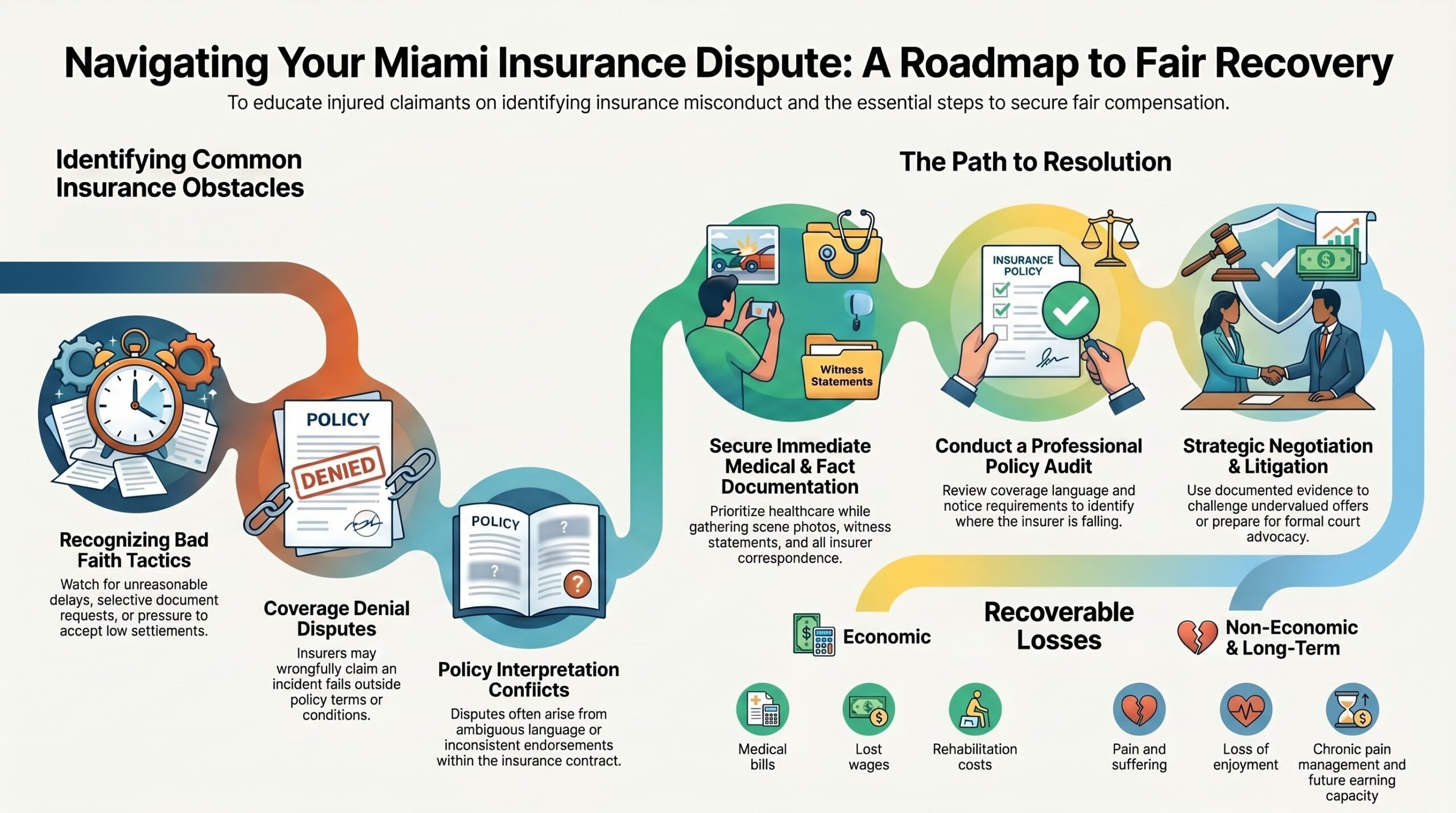
Professional support can protect injured people from delay, undervaluation, and administrative confusion. Counsel reviews correspondence, medical records, repair estimates, and coverage language to determine where the insurer’s position departs from its obligations. Through careful Policy Audits, an attorney identifies exclusions, notice requirements, and benefit limits that may affect recovery. This work helps families make informed decisions while preserving energy for recovery and service to others.
A structured approach also improves communication. The lawyer prepares organized submissions, answers insurer requests, and documents every material exchange to strengthen credibility. When appropriate, Claim Mediation may be used to encourage practical resolution without unnecessary escalation. Throughout the process, legal guidance keeps the claim focused, timely, and supported by evidence, so the injured person can pursue fair treatment with confidence and dignity.
Understanding Miami Insurance Dispute Injury Cases


Understanding Miami insurance dispute injury cases begins with recognizing that these matters often arise when an insurer questions liability, limits coverage, delays payment, or values a claim below what the evidence supports. In these cases, careful review of policy language, medical records, witness accounts, and financial losses helps clarify whether the injured person is receiving fair treatment under applicable Miami coverage standards.
OUR CONSULTATIONSARE FREE
START YOUR FREE CASE REVIEW

A disciplined approach often centers on documentation, communication, and compliance with Claim timelines established by policy terms and Florida law. Attorneys and advocates who serve others focus on preserving evidence, organizing damages, and identifying inconsistencies in an insurer’s position. This process may involve examining exclusions, prior statements, and correspondence to determine whether the carrier acted reasonably. Clear legal guidance can help injured individuals understand their rights, protect their recovery, and pursue resolutions that reflect documented harm, policy benefits, and the broader goal of restoring stability after a serious injury.
Common Causes of Miami Insurance Disputes
Miami insurance disputes often arise from delayed claim payments, which can place injured parties under added financial strain during recovery. They also frequently involve coverage-denial disputes and policy-interpretation conflicts, especially when insurers and claimants disagree on the scope of benefits owed under the policy. In some cases, these matters are further complicated by bad faith tactics, which may include unreasonable delays, inadequate investigations, or improper refusals to pay valid claims.
Delayed Claim Payments


Many insurance disputes in Miami begin with delayed claim payments, a problem that can place injured individuals under immediate financial pressure while medical bills and lost income continue to grow. In many cases, insurers request repeated documentation, prolong internal reviews, or fail to follow reasonable payment timelines. Adjuster delays may also occur when claim representatives carry heavy caseloads or fail to promptly communicate necessary information.
These setbacks can hinder families’ access to treatment, transportation, and household stability, further compounding hardship. A careful legal review often helps identify whether delays stem from administrative inefficiency, poor communication, or potentially improper handling practices. By addressing stalled claims quickly and professionally, an injury lawyer can help protect the claimant’s interests and support a fair process that promotes timely financial relief during recovery and restores peace.
Coverage Denial Disputes
In some disputes, a coverage denial creates the most immediate barrier to financial recovery after an accident. Insurers may refuse benefits by asserting that the incident falls outside the policy’s terms, that required conditions were not met, or that documentation does not support the loss. A claim denial can leave injured people without funds for treatment, wages, and crucial household obligations.
Coverage denial disputes often center on policy exclusions, disputed accident facts, coverage lapses, or disagreements over who qualifies as an insured. In Miami, these issues may arise after vehicle collisions, premises injuries, or other serious events affecting families and communities. Careful review of the policy, correspondence, and claim records helps determine whether the denial is supported or should be promptly challenged through proper legal and procedural channels.
Bad Faith Tactics
Recognizing bad faith tactics is vital because an insurer’s misconduct can turn a valid claim into a prolonged financial crisis. In Miami disputes, these tactics often include unreasonable delays, selective requests for documents, low settlement pressure, and unexplained communication gaps that burden injured people and the families supporting them.
A detached review often reveals patterns in which profit is placed above fair treatment. Agent misconduct may involve discouraging prompt reporting, withholding claim updates, or diverting claimants away from medical documentation that supports losses. Policy misrepresentation can also mislead insured parties about available benefits, deadlines, or duties after an accident. When these actions interfere with recovery, the dispute becomes more than administrative frustration. It raises concerns about accountability, ethical claims handling, and the insurer’s obligation to act fairly toward vulnerable policyholders and their communities.
Policy Interpretation Conflicts
Arising from ambiguous policy language, interpretation conflicts often become a central cause of insurance disputes in Miami. When insurers and policyholders assign different meanings to coverage terms, exclusions, or deadlines, disagreements can delay needed support for injured people and their families. These conflicts frequently stem from contract ambiguity, incomplete definitions, or endorsements that appear inconsistent with the main policy.
In many cases, policy ambiguity affects whether treatment, lost income, or other damages will be covered. Courts may examine the policy as a whole, the parties’ intent, and established legal standards to resolve competing interpretations. Careful review by counsel can clarify obligations, protect legitimate claims, and promote fair outcomes. This process helps guarantee that service-minded individuals receive the benefits and stability their coverage was meant to provide.
Legal Rights of Miami Insurance Dispute Injury Victims
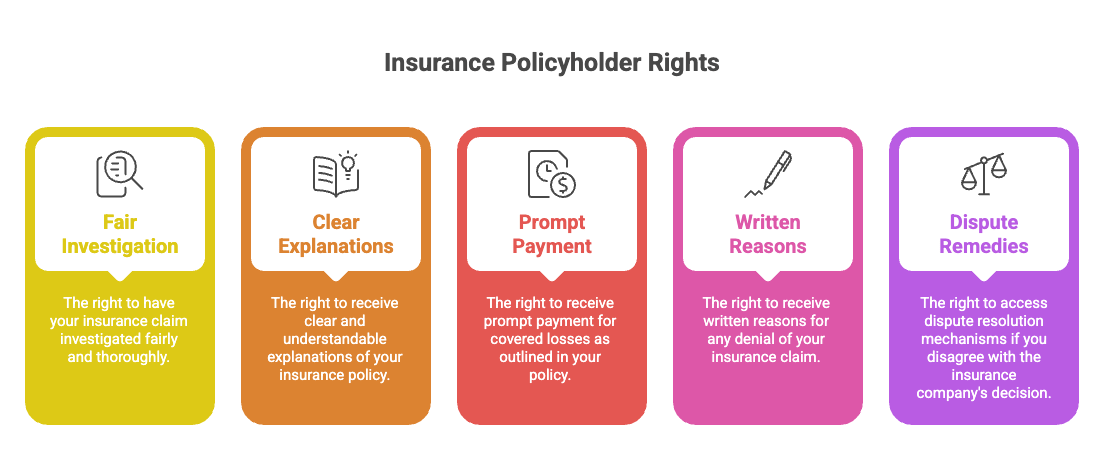
When an insurer delays, underpays, or wrongfully denies a valid injury claim, Miami victims retain important legal rights under Florida law and the applicable policy. These rights exist to protect injured people and the families, caregivers, and community members who support their recovery. Legal representation may help enforce policy benefits, explain coverage obligations, and preserve compliance with Claim timelines.
Key rights often include:
- Fair claim investigation
- lear policy explanations
- Prompt payment of covered losses
- Written reasons for denial
- Access to dispute remedies
Florida law may also allow policyholders to challenge unfair settlement practices and seek contractual damages when benefits are owed. In some matters, additional relief may be available if wrongful conduct causes measurable financial harm. Victims generally also have the right to review policy language, question unsupported valuation methods, and request documentation relevant to the insurer’s decision. These protections promote accountability and help injured individuals pursue stability, access to treatment, and dignified support after serious losses.
Steps to Take After a Miami Insurance Dispute Injury
After a Miami insurance dispute injury, prompt medical care is vital to protect both health and any future claim. Careful documentation of the incident, including injuries, expenses, and communications with insurers, helps preserve crucial evidence and establish a clear record. Early contact with an injury lawyer can provide guidance on legal options, deadlines, and the steps needed to respond effectively to disputed coverage or liability.
Seek Immediate Medical Care
In the hours immediately following an injury related to a Miami insurance dispute, prompt medical attention should be sought. Immediate evaluation can protect health, stabilize hidden complications, and support a safer recovery path for those involved. When symptoms appear severe, urgent transport to an emergency department may be appropriate, especially if there is bleeding, head trauma, breathing difficulty, or intense pain. Even minor injuries should be assessed promptly, as delayed care can worsen conditions and hinder proper treatment.
Physicians, urgent care providers, and medical experts can identify developing problems and recommend medication, imaging, or rehabilitation as needed. If travel becomes difficult after initial care, a telemedicine follow-up may help monitor symptoms, adjust instructions, and encourage steady recuperation while preserving continuity of medical oversight.
Document The Incident
At the earliest practical opportunity, thorough documentation of the incident should be treated as a central step following a Miami insurance dispute injury. Accurate records can preserve facts, support community accountability, and assist those working to protect the injured person’s interests. Notes should identify the date, time, location, weather conditions, visible hazards, and all parties involved.
If possible, the injured person or a trusted helper should gather witness statements while memories remain fresh. Clear scene photos should capture property damage, bodily injuries, traffic controls, lighting, and surrounding conditions from multiple angles. Copies of medical discharge papers, receipts, repair estimates, and insurer correspondence should be organized into a single secure file. Consistent documentation often reduces confusion, discourages misrepresentation, and strengthens the factual foundation needed for a fair insurance review process later.
Contact An Injury Lawyer
When an insurance dispute begins to affect medical care, lost wages, or the overall handling of a claim, consultation with a Miami injury lawyer becomes a practical next step. Counsel can review policy language, correspondence, and medical records and then determine whether delay, denial, or undervaluation has occurred. Through a free consultation, injured individuals and the family members assisting them can better understand legal options and deadlines.
An attorney may also communicate directly with insurers, organize supporting evidence, and protect the claim from procedural mistakes. Many firms offer contingency representation, which allows clients to pursue accountability without upfront legal fees. This step often strengthens negotiation efforts and, when necessary, prepares the matter for litigation. Early legal guidance helps preserve rights, supports recovery, and promotes a fair resolution for all involved parties.
How a Miami Insurance Dispute Injury Lawyer Can Help You
After a serious accident, insurance disputes often become a second source of stress, particularly when an injured person is trying to recuperate while facing delayed responses, denied claims, or reduced settlement offers. A Miami insurance dispute injury lawyer helps by reviewing policies, organizing evidence, and communicating with insurers from a position of informed authority. This support is especially valuable when claims involve medical negligence, disputed liability, or complex damages that require claim mediation. Legal guidance can protect dignity and preserve resources for convalescence and family responsibilities.
Legal guidance during insurance disputes can ease stress, protect dignity, and help injured families focus on recovery.
A lawyer may assist by:
- analyzing coverage terms and exclusions carefully
- gathering records, statements, and expert support
- challenging unfair denials or undervalued offers
- negotiating toward fair claim mediation outcomes
- preparing litigation when insurers refuse accountability
Through these efforts, counsel helps injured individuals pursue fair compensation while reducing administrative burdens. In service-minded communities, this advocacy can also promote accountability, encourage ethical insurance practices, and help families focus on recovery, stability, and meaningful support for others.
Long-Term Effects of Miami Insurance Dispute Injuries
Miami insurance dispute injuries can produce lasting consequences that extend well beyond the initial accident and claims process. Many individuals face chronic pain that limits daily function, emotional trauma that disrupts stability and relationships, and ongoing medical needs that complicate recovery. These effects often create serious financial recovery struggles, particularly when lost income, treatment costs, and contested insurance benefits continue over time.
Chronic Pain Challenges
Enduring pain often becomes one of the most disruptive long-term effects of injuries tied to insurance disputes, extending far beyond the initial accident and medical treatment. Persistent discomfort may limit mobility, reduce stamina, and interfere with daily responsibilities, including work, caregiving, and community service. Many injured individuals require ongoing medical evaluations, physical therapy, and carefully monitored medication plans to maintain function and prevent further decline.
Effective recovery often depends on consistent pain management strategies that address practical limitations over time. Physicians may recommend rehabilitation exercises, Sleep management techniques, and structured activity pacing to reduce flare-ups. Support groups can also provide useful guidance by connecting individuals with others who share similar experiences and reliable coping methods. In disputed claims, thorough documentation of symptoms, treatment needs, and functional restrictions remains crucial for demonstrating the true extent of chronic pain.
Emotional Trauma Impact
Uncertainty often shapes the emotional toll of injuries involved in insurance disputes, especially when recovery is delayed by financial pressure and unresolved claims. Individuals may experience persistent anxiety, irritability, sleep disruption, and a diminished sense of safety, even after visible wounds begin to mend. These reactions can affect relationships, caregiving capacity, and the ability to remain engaged in community service or family responsibilities.
Over time, untreated distress may deepen into depression, social withdrawal, or trauma-related symptoms that interfere with daily functioning. Therapeutic interventions, including counseling, trauma-informed care, and support groups, can help restore stability and resilience. Stigma reduction also remains crucial because emotional suffering is often minimized when injuries are not outwardly apparent. Compassionate recognition of these effects supports more complete recovery and encourages timely, appropriate care for all.
Financial Recovery Struggles
Many injured individuals face prolonged financial strain when insurance disputes interrupt wage replacement, delay medical reimbursements, or reduce access to needed treatment. When benefits are withheld, families often absorb the costs of transportation, rehabilitation, medications, and household support, even as their income is reduced. Over time, unpaid balances may grow into medical debt, limiting stability and increasing pressure on caregivers who are trying to help responsibly.
These disputes can also damage a person’s credit score, especially when providers send unpaid accounts to collections before coverage questions are resolved. Financial recovery may then require years of budgeting, negotiation, and delayed life plans. A careful legal response can help clarify responsibility, challenge unfair denials, and protect resources, allowing injured individuals and those assisting them to focus on restoration, dignity, and long term recovery.
Proving Liability in Miami Insurance Dispute Injury Cases
Establishing liability in a Miami insurance dispute injury case requires clear evidence that another party owed a duty of care, breached that duty, and directly caused the resulting harm. This often involves police reports, medical records, photographs, witness accounts, and other documentation that show how the incident occurred and why the injuries resulted.
To serve injured individuals responsibly, legal analysis must connect facts to recognized standards of conduct. Proof may also require expert testimony to explain medical causation, accident mechanics, or the long-term impact of trauma. Florida’s comparative negligence rules can affect recovery when more than one party shares fault, making careful factual evaluation crucial. Attorneys consequently examine timelines, physical evidence, maintenance records, and prior complaints to identify preventable misconduct.
In many cases, consistent treatment history and credible statements strengthen the argument that the injury was real, foreseeable, and linked to the defendant’s actions rather than unrelated conditions or later events. Such proof supports fair accountability.
Dealing With Insurance Companies After a Miami Insurance Dispute Injury
Strategizing communications with insurance companies after a Miami injury demands caution, consistency, and a clear understanding of the claim’s value. Adjusters often appear cooperative, yet their role is to protect the company’s interests, not to fully account for losses affecting injured people and the families they support through service-oriented lives.
Careful recordkeeping strengthens credibility. Written summaries of calls, copies of medical bills, wage documentation, and repair estimates help prevent disputes over facts. Claimants should avoid casual statements, broad authorizations, or quick acceptance of funds before damages are understood. These steps reduce exposure to common insurance tactics designed to minimize compensation.
Measured communication also matters. Responses should remain factual, polite, and limited to verified information. Attention to settlement timing is equally important because early offers may undervalue ongoing treatment, future limitations, or nonfinancial harm. When advocates intervene, they can buffer pressure, organize evidence, and pursue fair outcomes that better protect injured individuals and those who depend upon them.
What to Expect During a Miami Insurance Dispute Injury Claim Process
A Miami insurance dispute injury claim process typically begins with filing the initial claim and providing supporting records that establish the basis for compensation. The insurer then conducts an investigation, reviews medical documentation and liability evidence, and may present settlement offers that require careful evaluation and negotiation. If a fair resolution is not reached, the process may advance toward litigation, where formal preparation becomes crucial.
Filing The Initial Claim
At the outset of a Miami insurance dispute injury claim, the injured party typically files a notice of claim with the applicable insurer and provides basic information about the accident, the injuries involved, and the medical treatment received to date. This opening step helps preserve rights and establish clear timelines for claims under the policy and Florida law.
A careful submission often includes a documentation checklist, such as incident reports, photographs, witness details, medical records, billing statements, and proof of lost income. Accurate dates, complete contact information, and consistent descriptions can reduce preventable delays. Many injured individuals also keep a written record of symptoms, appointments, and expenses so those assisting them can respond responsibly and efficiently. Early legal guidance may help organize materials, confirm filing requirements, and support a more orderly beginning to the claim process.
Insurance Company Investigation
Once the initial claim is submitted, the insurer generally begins its investigation by reviewing the reported facts, examining available records, and evaluating whether the claim falls within the policy’s terms and limits. Adjusters may request medical documentation, accident reports, photographs, witness statements, and recorded interviews to verify injuries, liability, and damages.
During this stage, careful organization and truthful responses often support a clearer presentation of the claim. However, some insurers may employ claim tactics that narrow the scope of review or emphasize gaps in documentation. In certain cases, investigator bias may affect how statements, prior conditions, or treatment delays are interpreted. A Miami insurance dispute injury lawyer often helps identify unfair handling, preserve key evidence, and make certain that the investigation remains grounded in accuracy, fairness, and the broader responsibility to treat injured people with due regard.
Negotiating Settlement Offers
Evaluating settlement offers typically marks a pivotal phase in a Miami insurance dispute injury claim, because the insurer’s proposed payment often reflects its position on liability, medical damages, lost income, and future needs. During this stage, careful review helps protect the injured person’s long-term well-being and the family members who may rely on that recovery. Effective negotiation strategies often include documenting ongoing treatment, clarifying disputed facts, and presenting credible support for future expenses.
Settlement timing also matters, since accepting payment too early may overlook complications, while waiting without purpose can delay needed support. A disciplined, service-minded approach focuses on fairness, accuracy, and practical outcomes. Legal counsel commonly communicates counteroffers, explains policy limits, and evaluates whether the insurer is responding in good faith to the full scope of documented harm.
Preparing For Litigation
When settlement efforts do not produce a fair resolution, preparation for litigation becomes the next practical step in a Miami insurance dispute injury claim. Counsel generally organizes pleadings, timelines, and witness information, emphasizing the preservation of evidence from the outset. Medical records, photographs, correspondence, and policy documents are reviewed carefully to support a clear theory of liability and damages.
During this stage, the legal team may consult expert witnesses, including physicians, accident reconstruction experts, or financial professionals, depending on the issues at hand. Discovery requests, depositions, and court deadlines require disciplined attention and steady communication. This process can feel demanding, yet orderly preparation often protects the injured person’s interests and promotes accountability. By approaching litigation with diligence and respect for the facts, the claim is positioned for principled advocacy before the court.
Compensation for Miami Insurance Dispute Injury Damages
Many injury claims in Miami involve disputes with insurers over the full value of damages, especially where medical costs, lost income, and ongoing treatment needs are substantial. In these matters, compensation often depends on a thorough claim valuation supported by records, expert opinions, and consistent documentation reflecting the claimant’s condition and recovery trajectory.
A careful review of policy language, treatment history, and future care recommendations helps establish a persuasive demand. Effective settlement negotiation may resolve disagreements before trial, conserving resources and allowing injured individuals to focus on recuperation and family responsibilities. When insurers question causation, necessity of care, or the extent of disability, detailed evidence becomes crucial to protect the claim’s integrity.
Legal counsel often coordinates medical narratives, wage verification, and other evidence to present a clear, service-minded case for fair compensation. This structured approach promotes accountability, respects the claimant’s needs, and supports informed decisions throughout the dispute process in Miami injury matters.
Economic vs Non-Economic Damages in Miami Insurance Dispute Cases
In Miami insurance dispute cases, damages are generally divided into economic and non-economic categories, each serving a distinct purpose in measuring loss. Economic damages typically include medical expenses, lost income, and other documented financial costs, while non-economic damages address pain and suffering, emotional distress, and diminished quality of life. Disputes often arise over how these losses are calculated, valued, and supported by evidence during the claims process.
Economic Damage Categories
Clarity is vital in distinguishing economic from non-economic damages in Miami insurance dispute cases, because each category serves a different function in valuing a claim. Economic damages generally reflect measurable financial losses supported by bills, employment records, repair estimates, and other objective documentation.
Common categories include medical expenses, rehabilitation costs, prescription charges, lost wages, diminished earning capacity, and property damage. In service-oriented advocacy, careful documentation helps insurers, courts, and legal representatives assess what was actually spent or lost as a result of the injury. Future medical treatment and anticipated income disruption may also qualify when reliable evidence supports those projections. These damages are intended to restore financial stability, not to address personal suffering. A disciplined review of records, timelines, and expert opinions often determines whether the claimed amounts are complete, accurate, and reasonably connected to the underlying incident.
Non-Economic Loss Valuation
Several forms of non-economic loss may arise in Miami insurance dispute cases, yet their valuation differs from economic damages because they compensate for intangible harm rather than direct financial expense. These losses may include physical suffering, emotional distress, loss of enjoyment, and diminished personal relationships. Pain Valuation often depends on medical records, treatment duration, symptom severity, and credible testimony describing daily limitations. Courts and insurers may also consider
Life Impact, including reduced independence, disrupted family roles, and the inability to participate fully in work, service, or community activities. Because no invoice measures these harms, valuation requires careful judgment anchored in evidence and consistency. A Miami injury lawyer may present organized documentation and witness accounts to show how an injury affects dignity, routine functioning, and long-term well-being in meaningful, service-centered ways.
Insurance Dispute Challenges
Against this backdrop, insurance dispute challenges in Miami often center on how carriers evaluate economic damages with relative precision while contesting non-economic damages as more subjective and less predictable. Medical bills, wage records, and future care estimates often support the valuation of claims, creating a measurable foundation for review. By contrast, pain, emotional distress, and loss of enjoyment may invite skepticism, especially when insurers seek to limit exposure.
This divide can complicate settlement negotiations and delay fair resolution for injured people and their families. A careful legal presentation often helps by connecting personal suffering to credible evidence, witness testimony, and consistent treatment history. In service-oriented representation, the focus remains on protecting dignity, clarifying losses, and pursuing compensation that reflects both documented financial harm and the human impact of injury for affected communities.
When a Miami Insurance Dispute Injury Case Goes to Trial vs Settlement
When a Miami insurance dispute injury case develops, the path toward settlement or trial usually turns on the strength of the evidence, the extent of the injuries, and the insurer’s willingness to value the claim fairly. In many matters, settlement dynamics favor resolution when liability is clear, medical documentation is consistent, and both sides recognize the practical benefit of avoiding prolonged conflict.
A case may proceed to trial when the insurer denies responsibility, minimizes damages, or refuses to negotiate in good faith. At that stage, trial strategy becomes crucial. Counsel may organize witness testimony, medical opinions, and financial evidence to present a coherent account of harm and needed recovery. A trial can offer accountability and a public decision, yet it also brings greater expense, delay, and uncertainty. Settlement, by contrast, may provide faster relief and reduce stress for injured people and their families. A careful evaluation of risks, goals, and available evidence usually guides the most service-minded course of action.
The Statute of Limitations for Miami Insurance Dispute Injury Cases
Why does timing matter so much in a Miami insurance dispute injury case? Florida law imposes strict statute deadlines that can determine whether an injured person may pursue compensation at all. In many disputes, the filing timeline begins when the injury occurred or when the loss should reasonably have been discovered. Missing a deadline can prevent a claim from moving forward, regardless of its value.
Careful attention to these limits serves injured individuals, families, and the wider community by preserving fair access to accountability. Various factors may affect how the statute of limitations applies, including policy language, the type of insurance involved, and whether a bad-faith dispute arose after the original injury claim. Certain circumstances can pause or extend the filing timeline, but those exceptions are limited and fact-specific. Because insurers often evaluate claims closely, accurate records, prompt notice, and compliance with procedural requirements can help protect a claimant’s position under Florida law and support an orderly resolution process.
When to Contact a Miami Insurance Dispute Injury Lawyer
In the early stages of an insurance dispute, contacting a Miami insurance dispute injury lawyer is often prudent as soon as an insurer delays payment, questions coverage, requests extensive documentation, or offers a settlement that appears inconsistent with the claimed losses.
Early legal contact may also be appropriate after a denial letter, repeated adjuster changes, or confusing policy language that prevents a family from planning next steps. Prompt review can help preserve records, organize communications, and identify filing duties that may arise under policy terms or Florida law. This timing matters for people seeking to protect household stability while continuing to care for others affected by the injury.
It is especially important when there are statute exceptions, multiple insurers, or emergency timelines involving medical bills, property damage, or notice requirements. Reaching out before statements are given or releases are signed can reduce avoidable mistakes and support a more orderly response to the dispute. Early guidance also helps document damages thoroughly and responsibly.
Why You Need an Experienced Miami Insurance Dispute Injury Lawyer
Secure legal representation from an experienced Miami insurance dispute injury lawyer often makes a material difference in how a claim is investigated, valued, and resolved. Insurers may question causation, minimize damages, or rely on restrictive readings of coverage. Experienced counsel recognizes Policy nuances, identifies supporting evidence, and presents losses in a clear, credible manner that protects the injured person’s interests.
Such representation also helps families and community-minded individuals preserve resources that may be needed for treatment, caregiving, and daily stability. A seasoned lawyer monitors Claim timelines, responds to insurer requests, and reduces the risk of harmful delays, omissions, or statements taken out of context. When disputes escalate, skilled advocacy strengthens negotiations and prepares the matter for litigation if necessary. This level of legal guidance promotes accountability, encourages fair evaluation, and helps assure that injured people receive the benefits or compensation available under the law. It also supports informed decisions during a difficult period.
How to Choose the Right Miami Insurance Dispute Injury Lawyer for Your Case
How should an injured person evaluate a Miami insurance dispute injury lawyer when the outcome of a claim may depend on careful strategy and disciplined advocacy? A prudent review begins with the lawyer’s experience handling disputed injury claims, including denials, undervaluation, and bad faith conduct. The lawyer’s communication style also matters because clear guidance helps clients make informed, service-minded decisions during stressful periods.
An injured person should also examine the lawyer’s preparation habits, courtroom readiness, and record of negotiated resolutions. Local networking can strengthen a case, especially when medical providers, expert witnesses, and investigators must coordinate efficiently. Fee transparency is equally important, since a clear explanation of costs and contingency terms promotes trust and responsible planning. Reviews, professional standing, and responsiveness may reveal whether the lawyer treats each matter with diligence and respect. The right choice is often a lawyer who combines technical skill, ethical discipline, and steady commitment to the client’s recovery and long-term stability.
About The Law Offices of Anidjar & Levine
After considering the qualities that distinguish effective counsel in a disputed injury claim, attention naturally turns to the firm itself and the role it may play in protecting an injured person’s interests. The Law Offices of Anidjar & Levine presents itself as a practice focused on responsive service, careful case preparation, and practical guidance for people facing medical, financial, and legal strain after an accident.
Its firm history reflects a commitment to advocating for injured individuals throughout Florida, with an emphasis on communication and accessibility. The attorneys and staff are commonly described as attentive to questions, deadlines, and the day-to-day burdens clients carry while recovering. In that respect, the firm’s approach aligns with the values of those who seek not only compensation but also meaningful support during a difficult period.
Client testimonials frequently highlight professionalism, consistency, and compassion. Collectively, those observations suggest a firm structured to serve injured people with diligence, respect, and steady legal advocacy.
Frequently Asked Questions
How Much Does Hiring a Miami Insurance Dispute Injury Lawyer Cost?
Hiring costs vary, but many injury lawyers charge contingency fees, meaning payment comes only from a recovery, often around 25% to 40%. Some matters involve hourly rates ranging from $200 to $500 or more, depending on experience and complexity. A careful review of the fee agreement helps individuals protect resources, make informed decisions, and secure legal support that may advance fair outcomes for those they seek to serve.
Can I Switch Lawyers During My Insurance Dispute Injury Case?
Yes, a person may change attorneys during an insurance dispute injury case, because client rights generally allow new counsel at almost any stage. That decision should be handled carefully, with attention to fees, case strategy, and upcoming deadlines. A smooth shift often requires written notice, transfer of records, and coordination between firms. When the change supports clearer communication and stronger advocacy, it can better serve the injured person’s interests overall.
Will My Miami Insurance Dispute Injury Case Become Part of the Public Record?
Yes, such a case may become part of the public recordability process if a lawsuit is filed in court. Court pleadings, motions, and many orders are generally accessible, although certain documents may be sealed for strong legal reasons. If the matter resolves through private settlement before filing, confidentiality concerns are often easier to protect. Careful legal guidance helps individuals serve their interests while preserving privacy wherever the law permits.
Can Social Media Posts Affect My Insurance Dispute Injury Claim?
Yes, social media posts can affect an insurance dispute injury claim. Insurers and opposing parties may use photos, comments, and location tags as digital evidence to challenge the severity of an injury, credibility, or reported limitations. Even seemingly harmless updates may create privacy concerns and unintended inconsistencies. A careful, service-minded claimant benefits from limiting online activity, reviewing account settings, and ensuring all public statements remain accurate, measured, and fully consistent with documented facts.
Do I Need a Lawyer for a Denied Insurance Claim Appeal?
A lawyer is not always required for an insurance claim appeal, yet legal representation often strengthens the appeal process. An attorney can identify policy errors, gather persuasive evidence, and present arguments with precision. This support is especially valuable when a claimant seeks fair treatment and hopes to protect others from similar harm. If the denial involves significant losses, disputed facts, or intricate policy language, legal guidance is usually prudent.
—————————
Handling a Miami insurance dispute injury claim requires prompt action, strong evidence, and a clear understanding of your legal rights. Victims often face pushback from insurers while also dealing with medical care, lost wages, and uncertainty about their recovery.
An experienced Miami insurance dispute injury lawyer can help protect a claimant’s interests, assess the full value of damages, and pursue fair compensation. Law Offices of Anidjar & Levine offers knowledgeable representation and strategic guidance at every stage of the claims process, including matters related to Miami Car Accident Lawyer services.