A Fort Myers insurance dispute injury lawyer, including The Law Offices of Anidjar and Levine, assists claimants when insurers delay, deny, or underpay valid claims after an accident.
Counsel reviews policy language, medical records, denial letters, and insurer communications to identify coverage issues, preserve evidence, and document losses accurately.
Legal guidance also helps manage deadlines, negotiations, mediation, and litigation when necessary, and addresses bad-faith conduct and related financial harm.
The sections that follow explain the claim process, common disputes, and available legal remedies.
Learn more from a Fort Myers Car Accident Lawyer.
Main Takeaways
- A Fort Myers insurance dispute injury lawyer reviews policies, denial letters, and claim files to identify improper delays, denials, underpayments, or coverage inconsistencies.
- They gather medical records, billing records, proof of wage loss, photographs, and witness statements to document injuries, liability, and the full value of losses.
- Counsel manages insurer communications, claim deadlines, and negotiation strategy, helping avoid errors and improve chances of a fair settlement.
- If disputes continue, a lawyer can use mediation, expert valuation, and litigation to challenge bad faith conduct and pursue policy benefits.
- They also explain coverage decisions, exclusions, subrogation issues, and legal remedies so injured clients understand their rights and options.
How We Can Help With Your Fort Myers Insurance Dispute Injury Claim
In the aftermath of an accident, an insurance dispute can quickly become one of the most difficult barriers to a fair recovery. Effective legal support helps injured people pursue needed resources while protecting their ability to care for their families and communities.
A Fort Myers injury lawyer can assist by organizing records, documenting losses, and presenting a clear demand supported by medical evidence and financial detail. Counsel can communicate with insurers, answer delay tactics, and challenge unfair evaluations that minimize the harm suffered. This guidance often reduces confusion around medical liens, billing issues, and settlement timelines, allowing clients to make informed decisions at each stage. The lawyer may also coordinate with treatment providers, gather witness statements, and preserve other evidence that strengthens the claim.
When negotiations stall, legal counsel can prepare the matter for stronger advocacy, always with attention to dignity, accountability, and the practical support injured individuals need to move forward with stability and confidence.
Understanding Fort Myers Insurance Dispute Injury Cases
Insurance dispute injury cases in Fort Myers often arise when an insurer questions liability, disputes the extent of medical harm, or offers compensation that does not reflect the full impact of an accident. These cases require careful review of policy terms, medical records, witness statements, and loss documentation to determine whether the claim has been handled fairly and in good faith.


A clear understanding of the process helps families, caregivers, and community-minded individuals respond with patience and purpose. Many insurance myths can mislead injured people into believing that early offers are final or that legal guidance creates unnecessary conflict. In reality, informed advocacy often promotes accountability and supports a more full recovery. Settlement timelines vary according to treatment progress, factual disputes, and insurer cooperation, so realistic expectations are crucial. By understanding rights, duties, and available evidence, injured parties are better prepared to pursue fair outcomes that protect their well-being and ability to continue serving others.
Common Causes of Fort Myers Insurance Disputes
OUR CONSULTATIONSARE FREE
START YOUR FREE CASE REVIEW

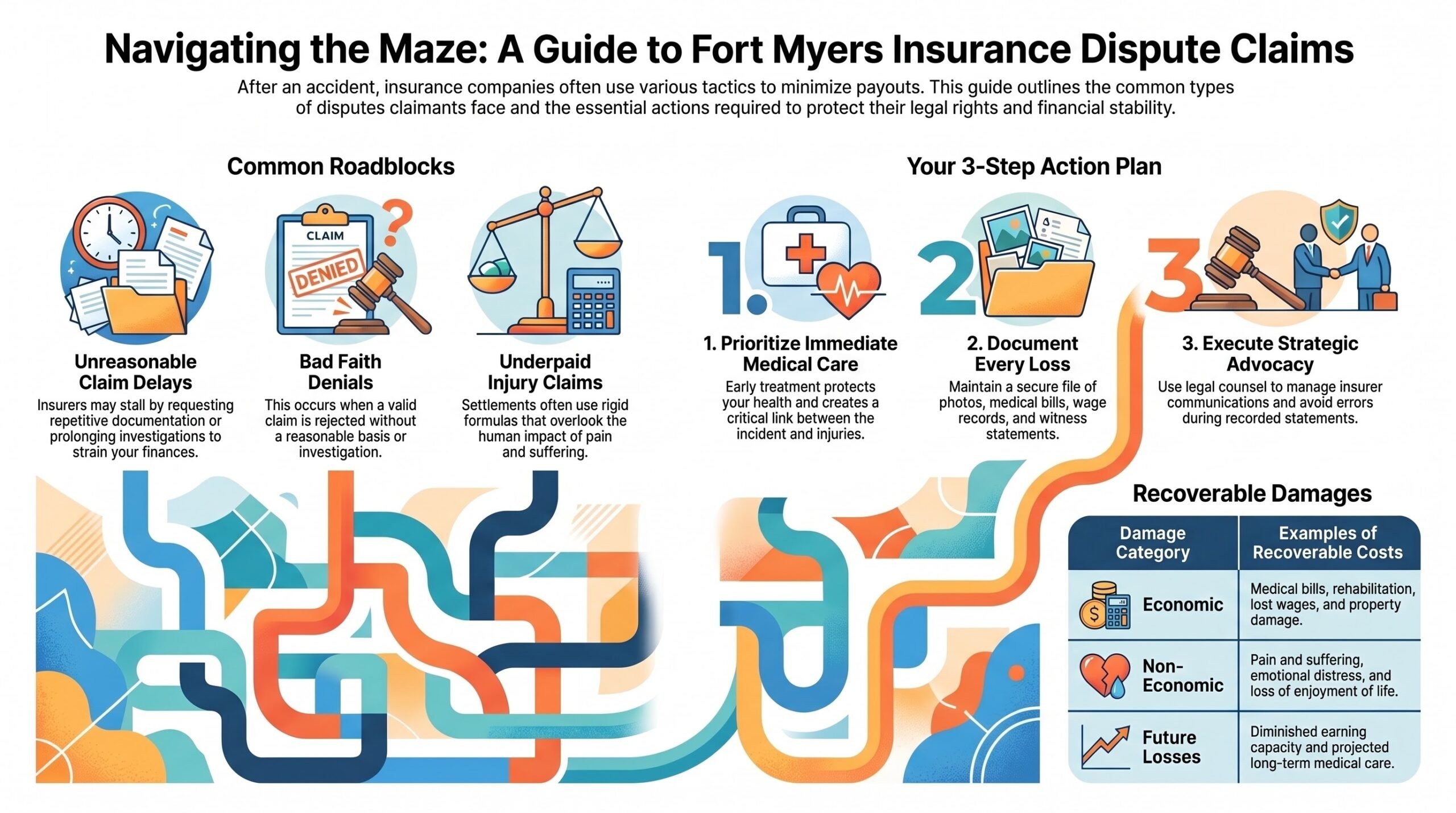
Fort Myers insurance disputes often arise from delayed claim payments, which can place unnecessary financial strain on injured parties during recovery. They also frequently involve policy coverage disputes and bad-faith denials, in which insurers contest their obligations or reject valid claims without adequate justification. In many cases, underpaid injury claims further intensify these conflicts, leaving claimants with compensation that does not reflect the full extent of their losses.
Delayed Claim Payments
Frustrating claimants and straining financial recovery, delayed claim payments often arise when carriers prolong investigations, dispute medical necessity, request repetitive documentation, or fail to process clear evidence within a reasonable time. These payment delays can leave injured individuals unable to meet treatment costs, household obligations, or transportation needs, despite timely notice and cooperation.


In Fort Myers cases, a claim backlog, understaffed departments, administrative errors, and poor communication frequently contribute to slow disbursement. Service-minded advocates recognize that prompt payment supports recovery, family stability, and access to continued care. When insurers delay without adequate explanation, careful recordkeeping, persistent follow-up, and organized submission of medical records, wage information, and invoices may help move the matter forward. Professional legal guidance can also encourage accountability and press for fair handling in accordance with applicable claims standards.
Policy Coverage Disputes
Beyond delayed payments, many disputes arise from disagreements over what a policy actually covers and whether a reported loss falls within its terms. These conflicts often develop when policy language is unclear, endorsements are misunderstood, or insurers and policyholders interpret obligations differently after an injury-related event.
In Fort Myers, policy coverage disputes may involve coverage gaps, disputed definitions, and policy exclusions that limit benefits for medical care, lost income, or other damages. A careful review of declarations, endorsements, and conditions is often necessary to determine whether the claimed loss is covered under the contract. When families seek help after serious injuries, clarity about coverage becomes crucial to supporting recovery and continued care. Legal guidance can help identify applicable provisions, explain contested terms, and pursue a fair resolution under the policy’s written terms.
Bad Faith Denials
Bad faith denials arise when an insurer rejects a valid claim without a reasonable basis, fails to conduct an adequate investigation, or relies on strained interpretations of policy language to avoid payment. Such conduct may reflect Bad faith practices that place financial interests above fair treatment and timely decision-making. In Fort Myers disputes, a wrongful Claim denial can leave injured people and their families without the support needed to restore stability and continue serving their communities.
Common Insurance tactics include ignoring relevant evidence, delaying responses, misrepresenting policy terms, or requesting unnecessary documentation to create obstacles. These actions may violate Consumer rights and undermine the duty of good faith owed under Florida law. Careful review of communications, records, and claim-handling patterns often helps determine whether an insurer acted improperly or unreasonably.
Underpaid Injury Claims
Underpaid injury claims occur when an insurer acknowledges coverage yet offers compensation that does not reasonably reflect the claimant’s medical expenses, lost income, future care needs, or pain and suffering. This often results from claim undervaluation, incomplete review of records, disputed necessity of treatment, or rigid internal formulas that overlook the human impact of injury.
In Fort Myers disputes, settlement pressure may also lead injured people to accept less than their circumstances require, especially when bills mount and recovery limits daily function. A careful legal review can identify overlooked damages, challenge unsupported reductions, and present evidence with discipline and clarity. By pursuing a fair assessment, counsel helps protect resources needed for treatment, stability, and family well-being, while encouraging insurers to honor obligations with greater accuracy, consistency, and respect for those harmed.
Legal Rights of Fort Myers Insurance Dispute Injury Victims
Fairness often becomes the central issue when an injured person in Fort Myers faces an insurance dispute after an accident. Florida law grants important protections, including the right to pursue policy benefits, challenge unfair claim denials, and demand good faith conduct from insurers.
These rights matter in cases involving vehicle collisions, premises liability, Medical malpractice, and disputed long-term losses affecting families and caregivers.
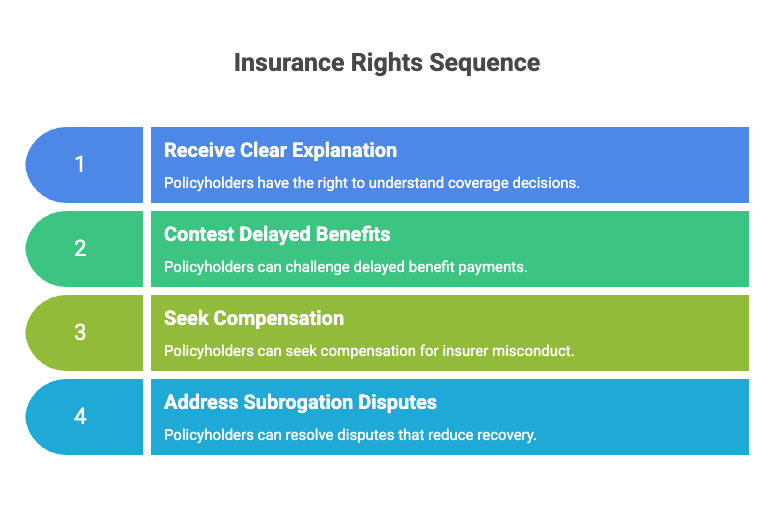
- The right to receive a clear explanation of coverage decisions and exclusions.
- The right to contest delayed, denied, or underpaid benefits through legal channels.
- The right to seek compensation when insurer misconduct causes additional financial harm.
- The right to address Subrogation disputes that reduce a fair recovery.
A careful review of policy language, medical records, and claim communications often reveals whether an insurer acted improperly. When rights are protected, injured people are better positioned to secure the resources needed for treatment, stability, and continued service to loved ones and the wider Fort Myers community.
Steps to Take After a Fort Myers Insurance Dispute Injury
After a Fort Myers insurance dispute injury, prompt medical care is generally the first priority, both to protect recovery and to create a clear record of treatment. It is also important for the injured party to document physical injuries, medical expenses, lost income, and other related losses accurately and consistently. When notifying the insurer, careful communication is advisable, as early statements may affect how the claim is reviewed and contested.
Seek Immediate Medical Care
Seek prompt medical evaluation, even when an injury appears minor, because early treatment protects both health and the integrity of any insurance claim. Emergency responders can assess whether urgent transport is necessary and apply triage protocols that prioritize hidden or worsening conditions. Prompt attention also reduces the risk that pain, bleeding, concussion symptoms, or internal injuries will be overlooked during a stressful moment.
A physician or an emergency department can identify injuries that may not be immediately visible, initiate appropriate care, and provide guidance on follow-up treatment. This step supports recovery, preserves functional ability, and helps an injured person remain able to care for family, coworkers, and the broader community. In Fort Myers, timely medical care demonstrates prudence, responsibility, and respect for everyone affected by the incident and its consequences.
Document Injury And Losses
Prompt medical treatment should be followed by careful documentation of every injury-related detail and financial loss tied to the incident. Organized records help preserve facts, support community-minded decision-making, and reduce later disputes about the extent of harm. Useful materials include dated photographs, treatment summaries, receipts, mileage logs, repair estimates, and written notes describing pain, limitations, and missed responsibilities.
Additional evidence may strengthen the overall picture of loss. Witness statements can clarify how the event occurred and how injuries affected daily service to family, work, or volunteer commitments. A property appraisal may establish the value of damaged items when estimates differ. Maintaining copies in one secure file, with dates and provider names, allows a legal advocate to assess damages accurately and present a clear, credible account when questions arise later.
Notify Insurer Carefully
Notify the insurer with care, because early statements often shape how a claim is reviewed and valued. A person should report the incident promptly, yet avoid guessing about fault, injuries, or future recovery. Clear facts, delivered respectfully, help preserve credibility while protecting the claim from unnecessary dispute.
When communicating, limited disclosures are often wise until medical evaluation and documentation are complete. Copies of correspondence, claim numbers, adjuster names, and deadlines should be organized carefully for future reference. If a recorded statement is requested, cautious statements remain crucial, because incomplete information can be misunderstood or used to minimize compensation. Those who serve others often benefit from a measured approach that supports honesty, accountability, and fairness. Early legal guidance may also help prevent avoidable errors and strengthen the overall claim.
How a Fort Myers Insurance Dispute Injury Lawyer Can Help You
In the aftermath of an injury, insurance disputes can quickly become a significant obstacle to recovering fair compensation. A Fort Myers insurance dispute injury lawyer helps injured individuals protect their rights, organize evidence, and respond strategically to insurer tactics.
Through careful analysis, the lawyer identifies coverage issues, documents losses, and pursues full payment with professionalism and resolve.
- Reviews policies, claim files, and denial letters for inconsistencies
- Uses Expert valuation to measure medical costs, income loss, and damages
- Guides Insurance mediation when negotiation may resolve the dispute efficiently
- Prepares litigation when insurers refuse to act in good faith
This guidance benefits people who value responsibility to their families and communities, and to those who depend on their support. By managing deadlines, communications, and legal procedure, counsel reduces avoidable mistakes and strengthens the claim’s presentation. When necessary, the lawyer advocates firmly in court, seeking accountability and a result that reflects the claim’s true value and practical needs.
Long-Term Effects of Fort Myers Insurance Dispute Injuries
Fort Myers insurance dispute injuries often produce consequences that extend well beyond the initial event, affecting physical health, emotional stability, and daily functioning. Many individuals face chronic pain challenges and emotional trauma that interfere with treatment, employment, and routine responsibilities over time. These injuries may also create lasting financial strain, as medical expenses, lost income, and continued care needs accumulate.
Chronic Pain Challenges
Enduring pain often becomes one of the most disruptive long-term consequences of injuries tied to an insurance dispute, affecting far more than physical comfort alone. Persistent symptoms may interfere with daily routines, reduce mobility, and create serious activity limitations that hinder work, caregiving, and community service.
Many injured individuals also experience sleep disruption, which can intensify discomfort and weaken concentration over time. Chronic fatigue often follows, making ordinary responsibilities harder to complete consistently and with care. Effective pain management often requires ongoing medical evaluation, physical therapy, medication oversight, and practical adjustments at home or in the workplace. When pain remains unresolved, a person’s ability to support family members, assist neighbors, or participate in meaningful service may decline substantially. These challenges demonstrate why long-term pain warrants careful documentation and consistent professional attention.
Emotional Trauma Impact
Persistent physical limitations often coincide with less visible psychological harm, and emotional trauma may continue long after the initial injury and the insurance dispute itself. Many injured individuals experience anxiety, depression, sleep disruption, and post-traumatic stress, especially when recovery feels uncertain or disputed. These effects can weaken confidence, reduce patience, and make ordinary responsibilities feel overwhelming.
Emotional suffering also affects the ability to care for others with steadiness and compassion. Family members may notice withdrawal, irritability, or fearfulness, which can contribute to relationship strain and isolation. In some cases, unresolved trauma interferes with treatment participation, communication, and trust in professionals. Careful documentation, supportive counseling, and consistent advocacy may help injured people regain stability, preserve dignity, and strengthen their capacity to remain present for those who depend on them.
Lasting Financial Strain
Many injured individuals face financial strain that continues well beyond the immediate medical emergency and the resolution of an insurance dispute. Lost wages, reduced earning capacity, and ongoing treatment often combine to create Medical debt that burdens entire households. Families may redirect savings intended for education, housing, or caregiving toward basic recovery needs, limiting their ability to support others in meaningful ways.
Long-term instability may also affect future security. Retirement disruptions can occur when injured workers withdraw savings early, pause contributions, or accept lower-paying employment because of permanent limitations. Credit damage, missed payments, and increased dependence on relatives or community assistance may follow. In Fort Myers cases, careful legal guidance can help clarify damages, protect financial interests, and support a more stable path forward for injured individuals and the families who rely on them.
Proving Liability in Fort Myers Insurance Dispute Injury Cases
Establishing liability in Fort Myers insurance dispute injury cases requires clear evidence showing how the incident occurred, who owed a duty of care, and how that duty was breached. Courts and fact finders often examine accident reports, photographs, surveillance footage, medical records, and witness statements to determine whether negligent conduct caused harm and disrupted a person’s ability to serve family and community.
Strong Causation proof connects the breach directly to the injury, distinguishing the event from preexisting conditions or unrelated factors. Medical opinions, expert reconstruction, and documented timelines can clarify this connection. Liability apportionment may also become important when multiple parties share responsibility, such as drivers, property owners, contractors, or employers. In those situations, each party’s actions are measured against the applicable standard of care. Consistent documentation, prompt evaluation, and reliable testimony help build a persuasive record. A well-supported liability case promotes accountability and helps injured individuals pursue resources needed for recovery and continued service to others.
Dealing With Insurance Companies After a Fort Myers Insurance Dispute Injury
Once liability and causation are supported by credible evidence, attention often turns to the insurance company’s response to the claim. Insurers may request recorded statements, broad authorizations, or additional records that appear routine but can affect valuation. A careful, service-minded approach emphasizes honesty, restraint, and protection of the injured person’s interests while preserving respectful communication.
Effective dealings with insurers usually depend on organized medical documentation, clear timelines, and consistent descriptions of symptoms, treatment, and daily limitations. Adjusters often assess gaps in care, prior injuries, and whether losses are supported by records rather than assumptions. During claim negotiation, advocates commonly present evidence concisely, promptly correct inaccuracies, and avoid unnecessary speculation. They also monitor settlement communications for delays, low offers, or attempts to minimize harm.
By remaining professional, responsive, and detail-oriented, an injured person and counsel can better address insurer tactics while keeping the focus on fair compensation and responsible recovery support for everyone involved.
What to Expect During a Fort Myers Insurance Dispute Injury Claim Process
A Fort Myers insurance dispute injury claim process typically begins with filing the initial claim, followed by the insurance company’s review of the facts, records, and claimed losses. The next stage often involves negotiation and settlement talks, during which the parties assess liability, damages, and the strength of the supporting evidence. If a fair resolution is not reached, the matter may proceed to litigation, where formal court procedures can shape the outcome of the claim.
Filing The Initial Claim
In the early stage of a Fort Myers injury claim, the initial filing typically begins with notice to the insurance company, supported by basic facts about the accident, the injuries involved, and the losses already known. This step often includes Initial documentation such as incident reports, medical records, photographs, wage information, and contact details for witnesses. Clear, organized submission helps create a dependable foundation for those seeking fair treatment and responsible resolution. Attention to Claim timelines is also important, because policies and Florida law may impose deadlines for notice, forms, and supporting materials. A Fort Myers injury lawyer may assist by carefully preparing the claim, identifying missing records, and presenting damages in a complete manner. Early accuracy can reduce avoidable disputes and support a more orderly path toward recovery for injured individuals.
Insurance Company Investigation
After the initial claim is submitted, the insurance company typically begins its own investigation to evaluate liability, damages, and coverage. Adjusters may review accident reports, medical records, photographs, witness statements, and policy language. They may contact the injured person, medical providers, or other involved parties to verify facts and assess the extent of losses.
This stage often requires careful attention to evidence preservation, because missing records or inconsistent statements can affect the outcome. Insurers may also employ claim tactics designed to limit exposure, such as requesting broad authorizations or seeking recorded statements early. A Fort Myers injury lawyer often helps organize documentation, protect the claimant’s rights, and make certain communications remain accurate and respectful. This support can strengthen a claim while allowing injured individuals to focus on recovery and serving their families and communities.
Negotiation And Settlement Talks
During negotiation and settlement talks, the insurance company and the injured party’s representative typically assess the strength of the evidence, the scope of damages, and the practical risks of continued dispute. They review medical records, wage loss information, policy terms, and witness statements to determine a fair range for resolution. Effective settlement strategies often focus on presenting organized evidence, identifying shared interests, and addressing concerns affecting families and community well-being.
If direct discussions stall, structured mediation tactics may help both sides clarify priorities and test reasonable options in a guided setting. Counteroffers are common, and patience is usually necessary as each position is evaluated. Throughout this stage, careful communication can protect the claim’s value while encouraging an outcome that supports recovery, accountability, and stability for everyone affected.
Possible Litigation Steps
When settlement efforts fail to resolve a Fort Myers injury claim, the dispute may proceed into litigation, where formal court procedures govern how the parties present evidence, challenge legal positions, and seek a binding outcome. A complaint is filed, the defendant responds, and both sides begin discovery, exchanging records, documents, and sworn testimony. Motions may ask the court to decide specific issues before trial, helping narrow disputes and protect resources. Judges often require pretrial mediation, giving parties another structured chance to reach a fair resolution that serves everyone involved. In some cases, other forms of alternative dispute resolution may also be considered. If no agreement is reached, trial preparation continues through witness disclosures, exhibit review, and scheduling orders. The court then hears the case and enters judgment.
Compensation for Fort Myers Insurance Dispute Injury Damages
Clarity is essential in evaluating compensation for Fort Myers insurance dispute injury damages, because the value of a claim often depends on both the severity of the injury and the insurer’s handling of the loss. Careful review of policy terms, treatment records, and claim correspondence helps determine whether payment reflects the actual harm and the carrier’s obligations under Florida law.
A thorough damages assessment may include unresolved medical liens, future care needs, rehabilitation costs, and other losses tied directly to the disputed injury claim. In some matters, delayed, denied, or unreasonable claim practices may warrant closer scrutiny of bad-faith conduct, and in rare cases, punitive damages may become relevant under strict legal standards. A Fort Myers injury lawyer often gathers billing records, expert opinions, and insurer communications to present a complete picture of the loss. This disciplined approach supports fair resolution, protects injured individuals from avoidable financial strain, and promotes accountability that can benefit families and the broader community.
Economic vs Non-Economic Damages in Fort Myers Insurance Dispute Cases
In Fort Myers insurance dispute cases, damages are generally divided into economic and non-economic categories, each serving a distinct role in measuring loss. Economic damages typically include medical expenses, lost income, rehabilitation costs, and other quantifiable financial losses, while non-economic damages may involve pain and suffering, emotional distress, and loss of enjoyment of life. Establishing the value of either category often depends on records, expert analysis, and credible evidence that connects the injury to its financial and personal consequences.
Economic Damage Categories
Among the primary issues in a Fort Myers insurance dispute, economic damages refer to the measurable financial losses caused by an injury. These categories typically include medical expenses, rehabilitation costs, lost wages, and property damage, each supported by records, invoices, or employment documentation. Their purpose is to restore the injured person’s financial position as accurately as possible after a harmful event.
In many cases, attorneys and insurers examine both current and future expenses when valuing a claim. Hospital bills, medication costs, therapy, transportation for treatment, and diminished earning capacity may all qualify when evidence shows a direct connection to the injury. Careful documentation serves families, caregivers, and community members by promoting fair reimbursement and responsible claim resolution. A clear presentation of these losses often strengthens negotiations and helps protect long-term financial stability.
Non-Economic Loss Examples
Compensation for non-economic losses addresses the human consequences of an injury that do not appear on bills or wage statements. These damages reflect how harm disrupts daily life, relationships, and a person’s ability to care for others with consistency and dignity.
Examples often include Emotional distress, physical discomfort, anxiety, sleep disruption, scarring, and loss of enjoyment of hobbies, family activities, or community service. Pain valuation considers the severity and duration of symptoms and recognizes limitations that reduce independence and participation. Non-economic losses may also involve embarrassment, grief, loss of companionship, and strain within a household. In serious cases, Future suffering becomes a central concern, especially when long-term pain, trauma, or permanent impairment alters the injured person’s quality of life and their capacity to contribute meaningfully to loved ones.
Proving Damage Value
Clarity is essential when proving the value of damages in Fort Myers insurance dispute cases, because the strength of a claim often depends on how clearly each loss can be documented and linked to the injury. Economic damages are usually supported by medical bills, wage records, repair estimates, and expert damage appraisal. Non-economic damages require a more careful presentation of pain, emotional distress, diminished enjoyment of life, and lasting limitations.
A disciplined claim review often uses forensic valuation to measure future losses and test whether the insurer’s assessment is complete. Physicians, vocational experts, and financial professionals may help establish credible ranges for both present and long-term harm. When records are organized and testimony is consistent, injured people are better positioned to pursue fair compensation that supports recovery, stability, and continued service to their families and communities.
When a Fort Myers Insurance Dispute Injury Case Goes to Trial vs Settlement
Determining whether a Fort Myers insurance dispute injury case proceeds to trial or resolves through settlement depends on the strength of the evidence, the scope of the damages, and the insurer’s willingness to act in good faith. Strong medical records, credible witness accounts, and clear policy language often encourage productive settlement talks before extensive litigation costs develop for either side.
When liability is disputed, losses are substantial, or the insurer minimizes valid claims, a jury trial may become necessary to secure fair compensation. Trial allows a neutral fact finder to evaluate disputed evidence, expert testimony, and the full impact of the injury on the injured person’s life and ability to serve others. Settlement, however, can offer faster resolution, lower expense, and greater privacy, which may benefit families seeking stability. Careful case evaluation helps determine which path best protects financial recovery and accountability. The decision should reflect practical realities, the client’s goals, and the broader interest of justice in the community.
The Statute of Limitations for Fort Myers Insurance Dispute Injury Cases
Whether a Fort Myers insurance dispute injury case ends in settlement or proceeds to trial, the time allowed to bring the claim remains a controlling legal issue. Florida law imposes filing deadlines that can determine whether an injured person may seek compensation at all. Missing the applicable period may bar recovery, even when liability and damages appear clear.
In insurance dispute injury matters, the relevant limitation period can vary depending on the nature of the claim, the policy issues involved, and the facts surrounding the injury. Careful attention to dates, records, and notice requirements often serves both the injured person and the broader goal of fair accountability. Some cases may involve statute exceptions, such as delayed discovery, minority, incapacity, or other legally recognized circumstances. Even so, exceptions are narrowly applied and should not be assumed. A timely, well-documented claim helps preserve evidence, supports honest resolution, and protects the interests of all parties involved.
When to Contact a Fort Myers Insurance Dispute Injury Lawyer
Seek legal guidance promptly when an insurance carrier delays payment, disputes coverage, undervalues documented losses, or requests statements and records that may affect the outcome of an injury claim. Early attention helps protect rights, preserve evidence, and prevent avoidable missteps during a stressful period for injured individuals and the families they support.
A Fort Myers insurance dispute injury lawyer should be contacted after a denial letter, unexplained claim silence, partial payment, or pressure to accept a quick settlement. Immediate consultation is also appropriate when medical treatment is ongoing, future care remains uncertain, or lost income complicates financial planning. Prompt legal review may help clarify policy terms, organize records, and address deadlines before the dispute deepens. Contact is equally prudent when multiple insurers are involved, liability is contested, or communication becomes confusing and burdensome. Timely action supports informed decisions, promotes fair claim handling, and helps injured people remain focused on recovery while continuing to care for others.
Why You Need an Experienced Fort Myers Insurance Dispute Injury Lawyer
In insurance disputes arising from personal injury claims, the value of experienced legal representation is often most apparent when policy language, medical evidence, and liability issues intersect. An experienced Fort Myers insurance dispute injury lawyer evaluates these issues with precision, identifies weaknesses in an insurer’s position, and protects the injured party from tactics designed to reduce or delay payment.
Such counsel strengthens insurance negotiation by assembling persuasive documentation, interpreting exclusions, and presenting damages in a clear, credible manner. Experience also matters when negotiations fail. A lawyer with developed courtroom strategy can prepare witnesses, challenge questionable expert opinions, and frame the case in a way that supports full and fair compensation. This guidance often helps families and caregivers focus on recovery and service to others rather than procedural burdens. In intricate disputes, seasoned representation promotes accountability, preserves legal rights, and increases the likelihood of a resolution that accurately reflects the injury’s true impact.
How to Choose the Right Fort Myers Insurance Dispute Injury Lawyer for Your Case
For a claimant facing a contested injury claim, choosing the right Fort Myers insurance dispute injury lawyer requires careful attention to litigation experience, case results, and the attorney’s ability to manage complex insurer tactics. A careful review of courtroom history, negotiation strength, and knowledge of Florida insurance law helps identify counsel prepared to protect injured people and support fair outcomes.
Practical evaluation should include interviews with attorneys and references, as well as a clear discussion of fees, communication practices, and expected timelines. A qualified lawyer should explain strategy plainly, listen closely, and demonstrate respect for the claimant’s goals, including financial recovery that can ease burdens on families and caregivers. Reviewing disciplinary records, client feedback, and familiarity with Local resources may also reveal whether the attorney can effectively coordinate evidence, medical support, and expert insight. By comparing credentials with responsiveness and professionalism, a claimant can select representation equipped to challenge delay, undervaluation, or wrongful denial with disciplined advocacy.
About The Law Offices of Anidjar & Levine
Among Fort Myers personal injury firms, The Law Offices of Anidjar & Levine is recognized for representing injured clients in disputes involving insurance carriers, liability claims, and accident-related losses. The firm’s history reflects a sustained commitment to advocacy, responsive communication, and practical legal guidance for people facing physical, financial, and emotional hardship after serious incidents.
Its attorneys and staff approach each matter with careful preparation and a service-centered outlook, helping clients pursue fair compensation and reduce confusion throughout the legal process. This commitment is often reflected in client testimonials that describe accessibility, professionalism, and attention to individual needs.
The firm handles a range of accident and injury matters, including cases involving motor vehicle collisions, premises liability, wrongful death, and contested insurance claims.
Frequently Asked Questions
Can I Change Lawyers During My Insurance Dispute Injury Case?
Yes, a claimant may change lawyers during an insurance dispute injury case. To switch counsel, the claimant typically retains new counsel, and both attorneys then complete and file substitution documents with the court or insurer as required. The claimant should review any fee obligations, case deadlines, and transfer of records before making the change. Careful planning helps protect continuity, supports effective advocacy, and better serves the claimant’s legal and personal interests.
Will My Insurance Dispute Claim Affect My Credit Score?
Usually, an insurance dispute claim does not directly affect a credit score, because insurers generally do not report claim activity to credit bureaus. The main credit impact arises only if unpaid medical bills, repair balances, or related debts enter collections. Claim reporting within insurance databases may influence future premiums or underwriting decisions, but it is separate from credit scoring. Careful payment management helps protect financial stability and supports responsible recovery for others.
Are Insurance Dispute Settlements in Florida Considered Taxable Income?
Florida insurance dispute settlements are not automatically taxable income. Their treatment depends on taxability rules and the settlement components involved, which may include compensation for physical injuries, emotional distress, lost wages, interest, or punitive damages. Amounts for physical injuries are often excluded, while wages, interest, and punitive damages are commonly taxable. Careful documentation helps individuals serve their families responsibly, and professional tax guidance supports accurate reporting and compliance.
Can Social Media Posts Hurt My Insurance Dispute Injury Claim?
Yes, social media posts can damage an insurance dispute injury claim. Insurers may use photos, comments, or location tags to challenge reported injuries, credibility, or daily limitations. Privacy settings offer limited protection because shared content can still be obtained and reviewed. Careful evidence preservation is crucial, including existing posts and messages. A prudent claimant avoids discussing the case online and acts with honesty, caution, and respect for all parties involved.
Do I Need to Pay Legal Fees Upfront for Representation?
Often, legal fees are not paid upfront because many representatives use contingency arrangements and collect payment only if recovery occurs. However, retainer expectations vary by firm, case type, and scope of service. A careful review of the representation agreement helps a person understand costs, expenses, and payment timing. Seeking clear terms at the outset supports informed decisions, protects resources, and allows attention to remain on serving others and recovery.
—————————
Insurance dispute injury claims in Fort Myers often involve intricate policy terms, disputed liability, and aggressive insurer tactics. A qualified lawyer can protect a claimant’s rights, gather supporting evidence, and pursue fair compensation through negotiation or litigation when necessary.
With timely action and informed legal guidance, injured individuals are better positioned to address delays, denials, and undervalued claims. An experienced Fort Myers Car Accident Lawyer from the Law Offices of Anidjar and Levine can provide dedicated representation to those facing these challenging insurance disputes.