An insurance dispute arises when an insurer refuses to pay, delays, or undervalues a valid injury claim. In Florida, insurers have a legal duty to evaluate claims fairly, investigate promptly, and pay benefits when the policy and evidence support coverage. When an insurer fails that duty — through unreasonable denial, delay, or misrepresentation — policyholders may pursue additional remedies under Florida Statute §624.155, including damages beyond the original policy limits.
The Law Offices of Anidjar & Levine help people injured in Gainesville challenge unfair insurance denials, delays, and undervalued claims. Our team reviews policies, medical records, insurer correspondence, deadlines, and loss documentation to identify coverage and protect your rights.
We manage adjuster communications, preserve evidence, gather reports, photographs, witness details, wage records, and medical opinions, then negotiate with documentation and law.
If your insurer disputes fault, treatment, or payment, the sections below explain how these claims are built and challenged by a Gainesville Car Accident Lawyer.
Legal Term Defined
What Is an Insurance Dispute?
An insurance dispute is a disagreement between a policyholder and an insurance company over whether a claim should be paid, how much should be paid, or how quickly it should be resolved. In Florida, common insurance disputes arise after car accidents, slip-and-fall injuries, or property damage when an insurer challenges medical necessity, disputes fault, applies a policy exclusion, or delays payment without a valid reason. Policyholders have the right to challenge unfair decisions through negotiation, mediation, arbitration, or litigation — and, in cases of bad-faith conduct, through Florida Statute §624.155.
Main Takeaways
- A Gainesville insurance dispute injury lawyer reviews policies, medical records, deadlines, and insurer communications to identify coverage problems.
- Legal support can challenge denied, delayed, or undervalued injury claims with organized evidence and policy-based responses.
- Common disputes involve medical necessity, fault, late notice, exclusions, lost income, treatment value, or unfair claim delays.
- Injured policyholders may demand clear explanations, challenge unfair valuations, and seek representation before statements or settlement agreements.
- Early legal help preserves evidence, tracks deadlines, manages adjuster contact, and supports negotiation for fair claim consideration.
How We Can Help With Your Gainesville Insurance Dispute Injury Claim
When an insurance company delays, undervalues, or denies a valid injury claim, we can step in to protect your rights and pursue the compensation you are owed. We review your policy, medical records, correspondence, and loss documentation to identify coverage, missed deadlines, and unfair claim practices. Through denied claim handling, we prepare clear responses, challenge unsupported decisions, and present the facts needed to move your claim forward.
For an in-depth look at how Florida’s no-fault PIP system creates the first layer of coverage — and where insurer disputes most often begin — read: Florida PIP Insurance Explained.
We also focus on evidence preservation, because strong proof often determines whether an insurer honors its obligations. We help gather accident reports, photographs, witness information, medical opinions, wage records, and communications before important details are lost. Our team — which includes lawyers, investigators, and medical and legal support professionals — manages insurer contact, tracks deadlines, and negotiates from a position supported by documentation and law. You deserve steady guidance while you recover and serve your family, workplace, or community. We carry the legal burden, so you can focus on recovering, stability, and the people who rely on you.
Understanding Gainesville Insurance Dispute Injury Cases
Although every claim turns on its own facts, Gainesville insurance disputeinjury cases often arise after an insurer questions coverage, minimizes the value of medical treatment, disputes fault, or delays payment without a valid reason. We help you understand what the policy promises, what the law requires, and what steps may protect your recovery.
When we review a dispute, we look closely at policyholder rights, available benefits, medical documentation, communications with adjusters, and claim timeline basics. These details matter because missed deadlines, unclear statements, or incomplete records can affect payment. We also consider whether the insurer has evaluated the evidence fairly and responded within required timeframes.
Our role is to bring order to a stressful process, so you can focus on recovery and serving your family, work, and community. We advocate for accountability, clear answers, and the full consideration your injury claim warrants under the policy and applicable law.
Gainesville Insurance Disputes: How Florida’s Claim Environment Affects Your Recovery
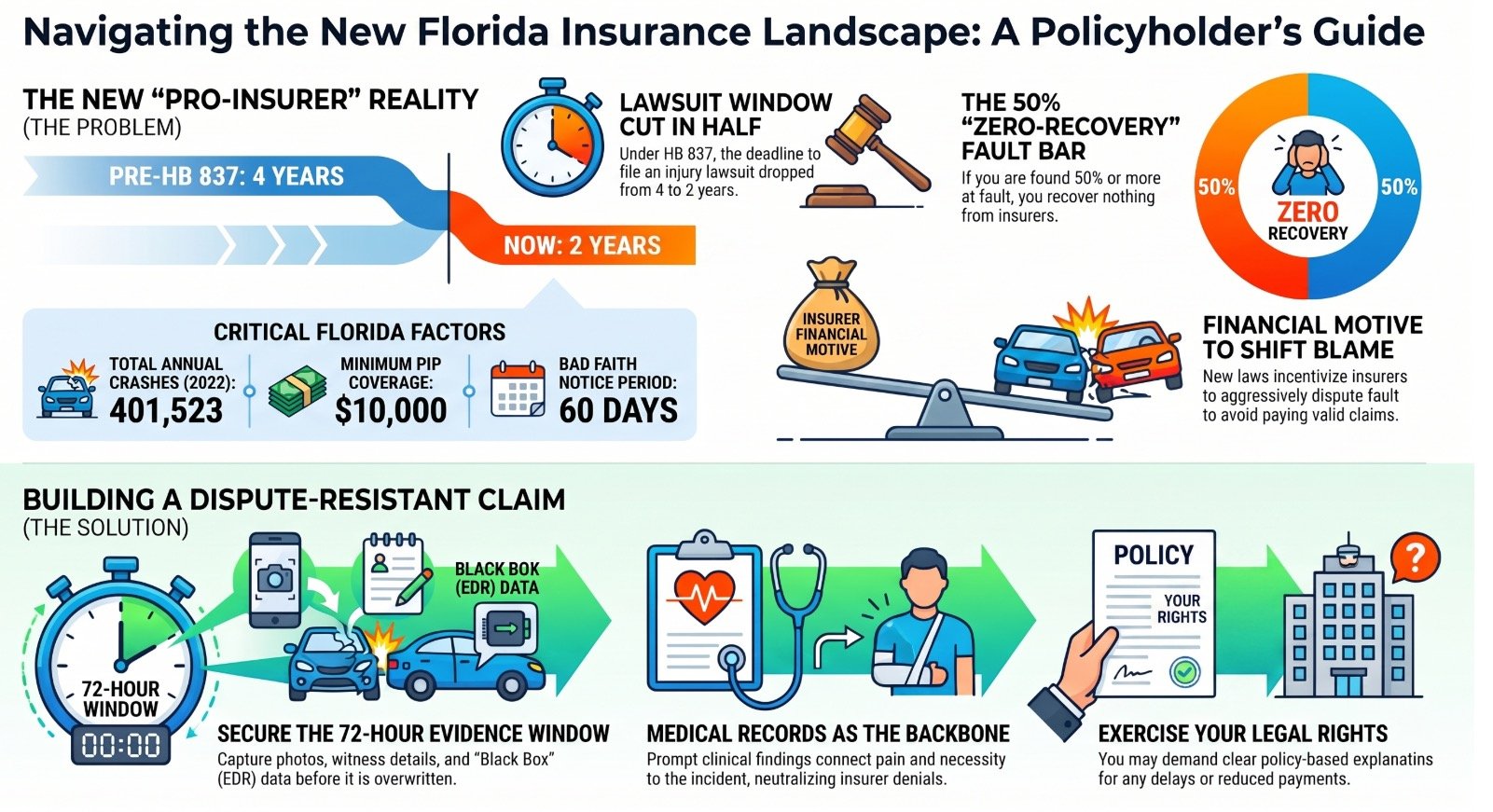
Florida’s combination of minimum-coverage requirements, high crash volume, and recent tort reform creates one of the most dispute-prone insurance environments in the country. According to the FLHSMV 2022 Florida Traffic Crash Facts, Florida recorded 401,523 total crashes and more than 253,888 injuries in 2022 — every one of those crashes generating at least one insurance claim that an adjuster must evaluate. NHTSA data shows distracted driving killed 3,308 people nationally in 2022, producing serious injury claims with complex medical histories that give insurers maximum opportunity to dispute necessity, causation, and value.
Under Florida’s 2023 tort reform (HB 837), the personal injury lawsuit deadline was cut to two years and a 50% comparative fault bar now gives insurers a concrete financial incentive to shift blame and deny claims rather than negotiate fairly. When a dispute escalates to bad faith, Florida Statute §624.155 requires a 60-day Civil Remedy Notice before suit can be filed — a procedural window insurers can exploit if policyholders do not move promptly. Physical and digital crash evidence can vanish within 24 to 72 hours. Understanding these pressures from the start is the foundation of a successful insurance dispute claim.
Common Causes of Gainesville Insurance Disputes
We commonly see insurance disputes in Gainesville arise when insurers deny coverage, delay claim payments, or undervalue injury-related losses. We help you determine whether the issue involves policy exclusions, incomplete investigations, disputed medical evidence, or bad-faith practices. By understanding these causes early, we can better protect your rights and pursue the benefits you are owed.
Coverage Denial Reasons
After an injury claim is filed, an insurer may deny coverage for reasons that range from policy exclusions to alleged gaps in documentation. We often see denials based on disputed medical necessity, late notice, questions about how the injury occurred, or claims that treatment falls outside covered benefits. Policy interpretation issues can also arise when insurers read ambiguous terms narrowly, while you reasonably expect protection under the policy. We review denial letters carefully, compare stated reasons against the policy, and identify whether the insurer applied the correct standards. Coverage denial timelines matter because deadlines can affect appeals, evidence preservation, and your ability to challenge an improper decision. When we serve injured clients, we focus on building a clear record that supports accountability and fair coverage.
Delayed Claim Payments
Often, delayed claim payments occur when an insurer repeatedly requests additional information, reassigns adjusters, disputes the value of medical treatment, or fails to make a timely coverage decision. When you are recovering from an injury, these delays can strain your ability to pay providers, replace income, and continue caring for those who depend on you. We review the timeline, policy coverage, and claim documentation to identify where the process has stalled. Complete records, clear medical bills, and prompt responses can reduce avoidable delays, but the insurer must still handle the claim in accordance with required standards. We help you organize evidence, communicate with the carrier, and press for a decision that reflects the documented losses. Timely payment matters because recovery requires stability, accountability, and reliable support.
Bad Faith Practices
Delayed payments can become bad faith when an insurer lacks a reasonable basis for its conduct or ignores facts that support your claim. We help you recognize conduct that crosses the line from delay into unfair treatment. Bad faith may appear when adjusters misstate coverage, withhold required explanations, or use policy language disputes to avoid obligations the insurer should honor. It can also arise from lapses in claim investigation, such as failing to review records, interview witnesses, or consider evidence you promptly provided. When you are focused on recovery and service to your family or community, these tactics create unnecessary strain. We examine the insurer’s actions, compare them to its duties, and pursue accountability when the company places its interests above your lawful rights under the policy.
Disputed Injury Valuations
When an insurer disputes the value of your injury claim, the disagreement may involve far more than a simple difference of opinion. We often see carriers reduce settlement valuation by questioning medical necessity, recovery timelines, lost income, or the lasting effect of pain on daily life. You merit a careful review that honors the harm you have endured and protects your ability to serve your family and community.
We examine insurer documentation, compare it against medical records, employment evidence, and expert opinions, then identify gaps or unfair assumptions. Strong damage calculation requires attention to both present losses and future needs. We use focused negotiation strategies to challenge undervaluation, present credible proof, and pursue a resolution that reflects the full measure of your injuries.
Your Legal Rights After a Gainesville Insurance Dispute Injury
After a serious injury, injured people in Gainesville have the right to expect fair treatment from insurance companies, including a prompt review of their claim, a reasonable investigation, and payment of benefits when the policy and facts support coverage. We help you protect those rights while you focus on recovery, family, and community responsibilities.
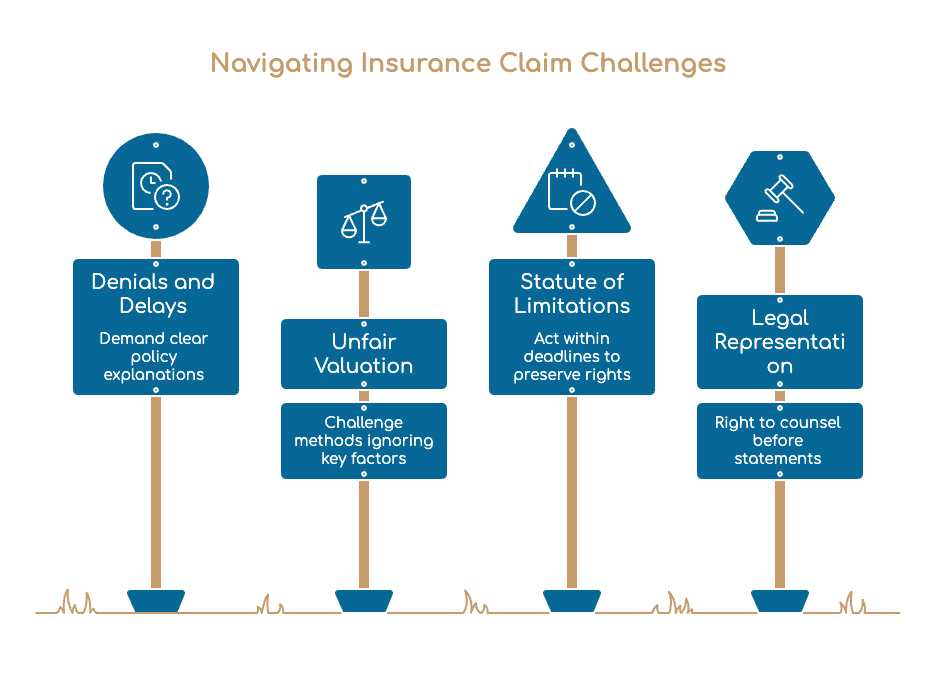
- You may demand clear explanations for denials, delays, or reduced payments, including the policy language the insurer relies on.
- You can challenge unfair valuation methods and negotiation tactics that ignore medical records, lost income, pain, or long-term limitations.
- You must act within the applicable statute of limitations, because missed deadlines can weaken or eliminate your ability to pursue compensation.
- You have the right to legal representation before giving recorded statements, signing releases, or accepting settlements.
We stand with injured neighbors by building organized claims, preserving evidence, and pressing insurers to honor valid obligations.
Why Do Gainesville Insurance Dispute Injuries Happen?
Knowing your legal rights is only part of protecting an injury claim, because insurance disputes often begin long before an insurer issues a formal denial. We often see disputes arise when injured people trust that the claims process will honor their needs, yet insurers may interpret coverage narrowly, question medical care, or undervalue losses.
Policy misrepresentation can also create conflict when a policyholder receives unclear explanations about benefits, exclusions, or duties after an accident. When families are already focused on recovering and serving those who depend on them, confusing policy language can leave them vulnerable.
Insurance companies may also use negotiation tactics that delay fair resolution, pressure quick settlements, or shift blame onto the injured person. These practices can turn a valid injury claim into a prolonged dispute. We recognize that these conflicts happen when financial interests compete with the real human need for medical care, stability, and accountability after a serious injury in Gainesville.
What Should You Do After a Gainesville Insurance Dispute Injury?
After a Gainesville insurance dispute injury, act quickly to protect your well-being, your records, and your legal position. Seek prompt medical care, document your injury thoroughly, and preserve any communications with the insurer. Contact an attorney early, so your claim is handled with care and strategic attention.
Seek Prompt Medical Care
When an injury occurs and an insurance dispute may follow, treat medical care as both a health priority and a crucial step in protecting the claim. Seek evaluation immediately, even when symptoms seem manageable, because delays can worsen conditions and weaken the insurer’s view of causation. Prompt treatment also allows providers to connect pain, limitations, and necessary care to the incident with greater precision.
Keep medical appointments, follow treatment instructions, and report new symptoms quickly. Injury documentation begins with clinical findings, not personal notes alone. Medical expense tracking should start early, and related insurance paperwork should be preserved. A policy coverage review can then clarify benefits, deadlines, and available support.
Document Your Injury
Medical care creates the foundation for your claim, but clear injury documentation strengthens the facts that support it. Record symptoms, limitations, missed work, and daily challenges as soon as possible. Accident documentation should include photographs of visible injuries, damaged property, hazardous conditions, and any equipment or vehicle involved. Also preserve discharge papers, prescriptions, test results, and instructions from every provider.
An injury timeline helps connect your condition to the event and shows how recovery affects your responsibilities, including family, work, and community service. Write dates, pain levels, treatments, and setbacks with accuracy. Save emails, letters, and messages from insurers. When you organize these details early, you protect the truth, reduce confusion, and support a fair evaluation of your claim.
Contact an Attorney
Reach out to an attorney early in a Gainesville insurance dispute injury claim. We can help you protect your rights while you focus on recovery and serving those who rely on you. Insurers often move quickly, so we review policy terms, identify deadlines, and preserve evidence of liability before it disappears or becomes harder to prove.
We also build a negotiation strategy that reflects your medical needs, lost income, and long-term limitations. When adjusters request statements or offer early settlements, we help you respond with care and accuracy. You should not have to manage pressure alone while injured. By contacting counsel promptly, we can organize records, communicate with the insurer, and pursue fair compensation with disciplined, professional advocacy from the start of your claim.
Critical Evidence in a Gainesville Insurance Dispute Injury Case
When we evaluate your Gainesville insurance dispute injury case, we focus on evidence that proves liability, damages, and the insurer’s obligations. Key materials often include medical records, accident scene evidence, insurance policy documents, and witness statements. We use these records to build a clear, well-documented claim to challenge unfair denials, delays, or underpayments.
For a detailed explanation of why medical documentation is the backbone of every successful claim, read: Why Medical Records Matter in Personal Injury Cases.
Medical Records
In a Gainesville insurance dispute injury case, your treatment records often serve as the foundation for proving the nature, severity, and cause of your injuries. We review emergency notes, diagnostic imaging, medical expert reports, therapy records, prescriptions, and follow-up plans to show how your condition developed and why continued care matters. These records help us connect your injury to the event, document limitations, and answer insurer claims that treatment was unnecessary or unrelated. When appropriate, we may consult an independent doctor to strengthen medical opinions and address disputed findings. A careful case file review also helps identify missing records, inconsistent entries, or gaps in treatment that insurers may challenge. By organizing this evidence clearly, we support your claim and protect your ability to obtain fair compensation.
Accident Scene Evidence
Medical records explain the injury, but evidence from the accident scene helps prove how it happened. We gather and preserve this evidence because it can clarify fault, support your account, and protect the truth when an insurer questions responsibility. Photos of vehicle positions, damaged property, roadway hazards, lighting, skid marks, debris, and visible injuries can show conditions before they change. Video documentation from phones, nearby businesses, traffic cameras, or dash cameras may capture movement, timing, and conduct that witnesses later recall imperfectly. Police report details can also identify parties, note statements, record citations, and document observations made shortly after the incident. When we review this material, we look for consistency, missing facts, and facts that strengthen your claim.
Insurance Policy Documents
Although accident-scene evidence helps establish what happened, insurance policy documents show which coverage may apply after the injury. We review these records to understand the insurer’s duties, your available benefits, and the conditions that may affect payment. A careful review of policy wording helps us identify the promises the insurer made and the obligations you must satisfy.
We also examine the interpretation of exclusions, because insurers may rely on unclear or narrow provisions to deny a valid claim. By comparing the policy to the facts, we can challenge unfair readings and protect the resources intended to help you recover. Coverage limits matter as well, since they define the funds available for medical care, lost income, and related losses. Strong claim documentation supports this analysis and helps us present your position clearly.
For information on filing insurance consumer complaints with the state, see: Florida Department of Financial Services — Insurance Claims.
Witness Statements
When an injury claim depends on disputed facts, witness statements can provide the independent detail needed to support your position. We gather accounts from people who saw the incident, observed your injuries, or heard relevant statements afterward. These accounts may clarify timing, conditions, conduct, and the impact on your daily responsibilities. In insurance disputes, witness corroboration can challenge an adjuster’s assumptions and strengthen the evidence we present on your behalf. We also focus on credibility verification, including consistency, opportunity to observe, and potential bias. By preserving statements early, we help prevent memories from fading or changing under pressure. If you serve your family, workplace, or community while recovering, reliable witnesses can help show how the injury disrupted those commitments and why fair compensation matters.
Event Data Recorder (EDR) Evidence in Insurance Dispute Cases
In insurance disputes arising from vehicle crashes, Event Data Recorder (EDR) data — the vehicle’s black box — is frequently the most objective and insurer-resistant piece of evidence available. Most passenger vehicles manufactured after 2012 record pre-crash speed, braking force, throttle input, steering angle, and seat-belt status in the seconds before impact. When an insurer disputes how an accident occurred, challenges the severity of the collision, or attempts to shift fault to the injured driver, EDR data can refute those arguments with engineering-grade precision.
We send formal spoliation letters immediately upon retention, demanding that all parties preserve vehicle EDR systems before ignition cycling can overwrite the data. If an insurer conducted its investigation without retrieving available EDR data, that failure may itself support a claim of inadequate investigation.
Learn more: How Black Box Data Can Help Your Car Accident Case. Federal background on EDR regulation: NHTSA Event Data Recorders.
Long-Term Effects of Gainesville Insurance Dispute Injuries
We help you recognize how injuries in Gainesville insurance disputes can cause lasting harm, including chronic pain complications that affect work, mobility, and daily life. We also consider the financial recovery challenges that arise when insurers undervalue future losses or delay payment. By addressing ongoing medical needs early, we can build a stronger claim that reflects the full impact of your injury.
Chronic Pain Complications
Because chronic pain can outlast the visible signs of an injury, insurers often dispute its severity, cause, or connection to the original accident. We help you address these challenges by focusing on consistent medical documentation, credible pain diagnosis, and clear treatment timelines. Chronic pain may affect mobility, concentration, sleep, and the ability to care for others, even when imaging appears limited or inconclusive. We work to show how symptoms developed, why they persist, and how they relate to the Gainesville accident at issue. Providers may track nerve pain, soft tissue damage, headaches, or spinal complications over months, not days. When insurers minimize these conditions, we present evidence that reflects your daily limitations and medical needs, so your claim receives careful, informed, and fair consideration.
Financial Recovery Challenges
Chronic pain and other lasting complications often create financial strain that continues long after initial treatment begins. We recognize how unpaid benefits, delayed claims, and reduced earning capacity can limit your ability to support yourself and serve those who depend on you. When an insurer disputes injury-related losses, we evaluate the policy, document the financial impact, and identify available remedies for the policyholder. We also develop a negotiation strategy that accounts for lost income, diminished household stability, and the practical burdens created by the dispute. You should not have to accept an undervalued resolution simply because the process feels exhausting. We work to present clear evidence, challenge unfair claim positions, and pursue recovery that supports your long-term financial security while preserving dignity, responsibility, and service to others in your community.
Ongoing Medical Needs
As the effects of a disputed injury continue, ongoing medical needs can become one of the most important parts of your claim. We examine future treatment, therapy, medication, mobility support, and expert care, because these needs often shape the true value of your recovery. When you serve your family, workplace, or community, interrupted care can limit your ability to help others with stability and dignity. Insurers may cite wrongful denial reasons, dispute medical necessity, or rely on policy limit caps to reduce payment. We challenge those positions with records, physician opinions, and documented care plans. By connecting present symptoms to future expenses, we help protect your access to care. Your claim should reflect not only today’s bills, but also the support you will likely need tomorrow.
Proving Liability in Gainesville Insurance Dispute Injury Cases
When an injury claim becomes an insurance dispute, liability often becomes the central issue that determines whether the insurer must pay. We focus on proving who caused the harm, how the incident occurred, and why the resulting injuries warrant recognition under the applicable policy and law.
We begin with evidence preservation, because photographs, reports, damaged property, medical records, witness information, and digital data can quickly disappear. When we protect this information early, we strengthen your ability to serve the truth and pursue accountability.
For context on how Florida courts evaluate the value of injury claims — which forms the baseline for measuring whether an insurer’s offer is reasonable — read: Average Car Accident Settlement in Florida.
In disputed cases, expert testimony may also become crucial. Accident reconstruction experts, medical professionals, engineers, or safety experts can explain facts that require technical knowledge. Their opinions can connect unsafe conduct to your injuries, clarify the extent of harm, and address competing explanations.
Dealing With Insurance Companies After a Gainesville Insurance Dispute Injury
After an injury claim turns into a dispute, insurance companies may protect their financial interests by limiting communication, delaying decisions, or challenging the value of your losses. We help you respond with discipline, accuracy, and a service-minded focus on restoring stability for you and those who depend on you.
We start with a policy review because coverage language controls which benefits may be owed. We also organize medical documentation to show the full connection between the incident, treatment, limitations, and ongoing needs. When insurers question a witness’s credibility, we examine consistency, perspective, and supporting facts rather than allowing unfair assumptions to shape the claim.
Delayed payments can place serious pressure on households, caregivers, and community responsibilities. We work to keep communications clear, preserve important records, and challenge positions that lack factual support. By managing insurer contact carefully, we protect your claim while allowing you to focus on recovery and serving the people who rely on you.
What to Expect During a Gainesville Insurance Dispute Injury Claim Process
We guide you through the Gainesville insurance dispute injury claim process, beginning with proper claim filing steps and careful evidence gathering. We will explain how documentation supports your position, how negotiations with insurers typically unfold, and why timely responses matter. When disagreements persist, we assess dispute-resolution options and help you pursue the most effective path forward.
Claim Filing Steps
Although every case turns on its own facts, a Gainesville insurance dispute injury claim usually begins with prompt notice to the insurer, careful documentation of the injury, and a clear demand for the benefits owed under the policy. We help you identify applicable coverage, submit required forms, and track claim timelines so no deadline quietly harms your recovery. We also guide insurer communication, ensuring adjusters receive accurate information without unnecessary statements that could be misused. From the outset, we emphasize evidence preservation, while leaving detailed proof issues for later review. If the insurer delays, underpays, or refuses benefits, we prepare denial appeals that present your position firmly and professionally. Our role is to serve your needs, reduce confusion, and move the claim toward a fair resolution.
Evidence and Documentation
When an insurer questions your claim, strong evidence often determines whether the dispute moves toward payment or further resistance. We help you gather records that show what happened, how you were hurt, and why coverage applies. Medical reports, bills, photographs, witness statements, police reports, and repair estimates can create a clear timeline. Surveillance footage may confirm the circumstances of the accident, the condition of the property, or the conduct of another party. We also review email communication, claim notices, policy letters, and adjuster messages to identify inconsistencies or missed obligations. Saving every document, noting conversations, and avoiding gaps in treatment supports the process. Careful documentation serves the truth, protects your credibility, and helps us present your injury claim with accuracy, order, and purpose from the beginning.
Negotiating With Insurers
Strong documentation gives a claim structure, but negotiation determines how the insurer responds to that proof. We evaluate the carrier’s position, compare it with the losses you have sustained, and develop a settlement strategy that protects your interests. During negotiations, we may address medical costs, lost income, future care, and the personal impact of the injury. We also use the documentation timeline to show how events developed and why the claim has value.
Expect insurers to question facts, request clarification, or offer less than the claim warrants. We respond with focused evidence, firm communication, and a clear explanation of damages. Our role is to guide the discussion, reduce pressure on you, and pursue a result that supports your recovery and continued service to others.
Dispute Resolution Options
If negotiations do not resolve the dispute, we help you evaluate the next available options and choose a path that fits the claim’s value, evidence, and risks. We may recommend mediation sessions, in which a neutral mediator guides a focused discussion and helps both sides consider practical resolutions. This process can preserve resources, reduce conflict, and support a fair outcome for those depending on your recovery.
We also review policy terms for arbitration clauses, since some contracts require disputes to be heard outside court. If arbitration applies, we prepare testimony, medical evidence, and documentation of damages with care. When litigation becomes necessary, we file suit, manage deadlines, and advocate firmly. At every stage, we explain your options so you can serve your family, clients, and community with confidence.
Compensation for Gainesville Insurance Dispute Injury Damages
Although every insurance dispute turns on its specific policy language and facts, compensation in a Gainesville injury claim often centers on the losses the insurer failed to pay, delayed, or undervalued. We review the coverage, claim history, and denial reasons to identify what should have been paid and why. This may include medical bills, rehabilitation costs, lost income, property-related losses, and expenses tied to future treatment.
We also examine whether policy exclusions were applied correctly, since insurers sometimes rely on broad interpretations that do not match the policy or the evidence. When an injury affects daily life, mobility, or the ability to care for others, pain damages may also become part of the disputed claim. Our role is to present the full record clearly, connect each loss to the covered event, and pursue the benefits you are owed. We work to help restore stability, accountability, and practical support after an insurer fails to act fairly.
Economic vs. Non-Economic Damages in Gainesville Insurance Dispute Cases
We help you separate economic damages, such as medical bills and lost income, from non-economic losses, including pain, suffering, and diminished quality of life. In Gainesville insurance dispute cases, this distinction matters because insurers often challenge both the amount and the proof supporting each category. We build damage claims with clear documentation, credible evidence, and a focused presentation that supports the full value of your losses.
Defining Economic Damages
Identify economic damages by tracing the direct financial losses caused by an injury or insurance dispute. We review what you paid, what you lost, and what you will likely owe because the insurer delayed, denied, or undervalued coverage. These damages often include medical bills, recovery costs, prescription expenses, lost wages, reduced earning capacity, transportation for treatment, and necessary household assistance.
We also examine documentation that supports each figure. Health record gaps can create questions about treatment needs, so we help connect care, expenses, and the disputed event. Claim payment timelines matter because delayed payments may worsen financial strain and affect recoverable losses. By organizing bills, income records, estimates, and correspondence, we build a clear picture of economic damages that helps you pursue fair reimbursement while continuing to serve your family and community.
Understanding Non-Economic Losses
Understanding non-economic losses requires looking beyond receipts and wage records to the personal impact of an injury or insurance dispute. We consider how harm changes your daily life, relationships, autonomy, and ability to serve your family or community. These losses may include pain and suffering, emotional distress, inconvenience, loss of enjoyment, and diminished dignity after a serious event.
In Gainesville insurance dispute cases, we treat these damages with care because they are real, even when they cannot be measured by an invoice. Florida damages caps may affect certain claims, so we evaluate how the law applies to your circumstances. By clearly understanding non-economic losses, we help ensure your claim reflects not only the financial costs but also the human consequences of the harm you have endured.
Proving Damage Claims
In Gainesville insurance dispute cases, proving a claim requires clear evidence of both financial loss and personal harm. We help you gather medical bills, wage records, repair estimates, and receipts that show economic damages with precision. We also document non-economic harm, including pain, reduced mobility, emotional strain, and loss of daily function, through treatment notes and credible personal accounts. When insurers question the extent of harm, we may use surveillance footage, expert testimony, and witness statements to clarify what happened and how your life changed. Our role is to present evidence that serves your recovery and protects your dignity. By connecting each loss to the injury, we build a claim that insurers, mediators, or courts can evaluate fairly and responsibly under Florida law.
When a Gainesville Insurance Dispute Injury Case Goes to Trial vs. Settlement
When an insurer refuses to make a fair offer, a Gainesville insurance dispute injury case may need to move toward trial, but many claims still resolve through settlement before a jury hears the evidence. We help you weigh both paths with discipline, purpose, and a clear understanding of your goals.
Settlement can protect time, reduce uncertainty, and provide resources that support recovery, family stability, and continued service to others. Trial may become necessary when the insurer denies responsibility, undervalues losses, or ignores credible evidence. We build a trial strategy early, not because every case should be tried, but because preparation creates leverage for settlement.
As your case progresses, we evaluate medical proof, witness testimony, expert opinions, and the insurer’s defenses. We explain risks plainly, prepare you for each step, and pursue the outcome that best honors your needs while holding the insurer accountable for its obligations under the policy.
Florida Laws That May Affect Your Gainesville Insurance Dispute Case
Florida law can shape every stage of your Gainesville insurance dispute, from notice deadlines and policy interpretation to bad faith remedies and trial procedure. We help you understand how these rules affect recovery, documentation, and negotiations while you focus on healing and supporting those who depend on you. Florida insurance laws affect deadlines, coverage, negotiations, and recovery throughout your Gainesville insurance dispute.
- Coverage duties: Insurers must evaluate claims fairly, explain denials, and honor policy terms when evidence supports payment.
- Florida PIP benefits: These benefits may apply after a motor vehicle crash, but medical proof and billing compliance matter.
- UM/UIM coverage: This protection can help when an at-fault driver lacks enough insurance, yet insurers may still contest value.
- Good-faith standards: Florida law allows scrutiny of claim handling when an insurer delays, underpays, or refuses to provide a reasonable resolution.
We review the policy, medical records, and claim file, then build a clear strategy that protects your rights and promotes a fair result.
The Statute of Limitations for Gainesville Insurance Dispute Injury Cases
Deadlines often determine whether an injured person can pursue an insurance dispute, even when the underlying claim has strong evidence. In Gainesville injury matters, we must consider both the deadline for the injury claim and any separate deadline tied to the insurance policy. Under Florida’s 2023 tort reform (HB 837, effective March 24, 2023), you generally have two years from the injury date to file a personal injury lawsuit. Claim deadlines may also appear in policy provisions or required notices, and missing one can limit recovery independently of the statutory deadline.
Florida’s statute of limitations varies by claim type, so we treat timing as a central issue from the beginning. Some cases may involve statute tolling, which can pause or extend a deadline under specific circumstances, such as delayed discovery, minority, incapacity, or certain acts by another party. However, tolling rules are narrow and fact-dependent. If your dispute involves bad faith conduct, Florida Statute §624.155 also requires a Civil Remedy Notice to be served at least 60 days before filing suit — an additional procedural step that must be handled correctly.
Because insurance disputes often arise after medical treatment, investigation, and negotiations, time can pass quickly. We encourage careful recordkeeping and prompt review, so your service to your family and community is not undermined by an avoidable procedural barrier.
How a Gainesville Insurance Dispute Injury Lawyer Can Help You
After an insurance dispute begins, we help you identify the legal issues, preserve vital evidence, and respond to the insurer’s position with a clear strategy. Our role is to protect your ability to recover while you focus on restoring health, family, and service to others. We build each case with disciplined preparation and practical judgment.
- Claim strategy: We review coverage, liability, medical facts, and policy language to plan the strongest path forward.
- Evidence preservation: We secure records, photographs, witness information, repair estimates, and communications before details are lost.
- Insurer communication: We handle written and verbal exchanges, reduce confusion, and press for fair, timely evaluation.
- Damage documentation: We accurately document medical bills, lost income, future care needs, and personal losses.
When to Contact a Gainesville Insurance Dispute Injury Lawyer
Knowing how we can help is only part of the decision — knowing when to involve us can affect the strength of your claim. Contact us as soon as an insurer delays communication, disputes medical treatment, questions liability, or offers less than your documented losses. Early guidance helps preserve records, organize medical bills, and identify signs of undervaluation before they influence your recovery.
We also encourage you to reach out before giving recorded statements, signing releases, or accepting any settlement. These steps can limit your ability to serve your family, your work, and your community after an injury. We can assist with policy deadline tracking, claim notice requirements, and documentation requests, so preventable timing issues do not weaken your position.
If the insurance process begins to feel unclear, adversarial, or unusually slow, timely contact allows us to evaluate the dispute and help you make informed decisions before pivotal opportunities pass.
Why You Need an Experienced Gainesville Insurance Dispute Injury Lawyer
When an insurer challenges your injury claim, experience can determine whether the dispute moves toward a fair resolution or becomes more difficult to correct. We understand how delays, denials, and reduced offers affect your recovery, your family, and your ability to continue serving others.
At Anidjar & Levine, the depth of that experience is measurable. Glen Levine is Board Certified in Civil Trial — the highest designation the Florida Bar awards, recognizing demonstrated excellence in courtroom litigation — and the firm employs two board-certified civil trial lawyers on staff. Both founding partners hold Martindale-Hubbell’s AV Preeminent rating, the highest peer-recognized designation for legal ability and professional ethics. Mr. Levine also holds an AVVO rating of 10 out of 10 (“Superb”). These credentials matter in insurance dispute cases because insurers are aware of who they are negotiating against — and firms with demonstrated trial readiness command different settlement conversations than firms without it.
An experienced Gainesville insurance dispute injury lawyer brings structure to a confusing process. We focus on building evidence that supports the full value of your claim, including medical records, witness accounts, expert opinions, and accident documentation. We also review communications from the insurer to identify unfair assumptions, missing facts, or improper claim handling.
Insurance disputes often turn on policy interpretation, especially when insurers rely on technical language to limit payment. We examine coverage exclusions, deadlines, and claim requirements so your position is presented clearly and firmly. With experienced advocacy, we help protect your rights, strengthen your claim, and pursue the benefits your policy and circumstances may allow.
How to Choose the Right Gainesville Insurance Dispute Injury Lawyer for Your Case
For many injured clients, the right lawyer is the one who can evaluate both the injury claim and the insurance dispute with equal care. Look for counsel who understands medical evidence, policy language, deadlines, and the tactics insurers may use to limit payment. A strong lawyer will explain possible strategies, identify weaknesses early, and help you make decisions that protect your recovery.
Credentials matter in this evaluation. Board Certification in Civil Trial — the designation held by Glen Levine since 2019 — is the highest level of evaluation the Florida Bar performs, signaling that the attorney has passed rigorous testing, demonstrated substantial courtroom experience, and earned peer endorsement in the specialty. An AV Preeminent rating from Martindale-Hubbell reflects the highest recognition for both legal ability and ethics by fellow attorneys and judges. An AVVO score of 10/10 (“Superb”) confirms that standing through independent client and peer review. These are not marketing claims — they are third-party verifications that the attorneys backing your case have the skill and standing to compete at the highest level.
Client communication matters equally. You deserve a lawyer who respects how often you want updates, whether by phone, email, or meetings, and who answers questions clearly. Fee structure transparency is equally important — before you choose representation, understand costs, contingency terms, and any expenses that may affect the final recovery. The right advocate helps you pursue fair treatment while allowing you to focus on recovery and supporting others.
Real Reviews From Our Clients!
Richard Powers ★★★★★
“My insurance company disputed everything — the treatment, the timeline, the value of my injuries. Anidjar & Levine came in, organized all of my records, handled every communication with the insurer, and pushed back on every low offer with real evidence. The difference between what the insurer originally offered and what we ultimately recovered was significant. I am so grateful I made the call.”
DY Projects ★★★★★
“I had been going back and forth with my insurance company for months before I called Anidjar & Levine. They immediately identified where the insurer was stalling and put together a documented response that moved things forward fast. They communicated clearly throughout the entire process and never let me feel lost. I would recommend this firm to anyone dealing with an insurance dispute.”
Maddie Dalby ★★★★★
“The team at Anidjar & Levine understood the complexity of my claim from day one. They reviewed my policy carefully, explained exactly what I was entitled to, and fought the insurer’s low valuation with thorough medical documentation and expert support. I felt protected, informed, and genuinely cared for throughout the process. Outstanding firm.”
About The Law Offices of Anidjar & Levine
Founded in 2005 by Marc Anidjar and Glen Levine, the firm began as a two-person operation working out of a construction office conference room. Over the past 20 years, that modest start has grown into one of Florida’s most recognized personal injury practices — with more than $1 billion recovered in settlements for injury clients across the state. We bring that same determination and depth of experience to every case we handle.
Marc Anidjar — Senior Partner
Marc Anidjar oversees the day-to-day operations of the firm and has settled thousands of cases across nearly two decades of practice, handling every type of personal injury and insurance dispute matter for clients throughout Florida. He earned his Bachelor of Science from the University of Florida in 1999 and his Juris Doctor from Nova Southeastern University, Shepard Broad School of Law in 2003.


Glen Levine — Senior Partner
Glen Levine is a founding partner and oversees all of the firm’s litigation. In 2019, Mr. Levine became Board Certified in Civil Trial — the highest level of evaluation by the Florida Bar, denoting excellence in civil trial practice. He is consistently AV Rated by Martindale-Hubbell, the highest preeminence designation the service awards, reflecting top-tier legal ability and professional ethics. AVVO has rated Mr. Levine 10 out of 10 (“Superb”). He received the “Lawyer of Distinction” designation in 2017, 2018, and 2019; was named to Florida Trend Magazine’s “Legal Elite” list in 2017; was recognized by the Miami Herald as a Top Rated Lawyer in South Florida in 2015; and was a finalist in the personal injury category for “South Florida Leaders in the Law” in 2013.
With more than 50,000 clients served and 419 years of combined legal experience across our team, we have the resources, knowledge, and depth to handle even the most complex insurance disputes. Our results reflect that commitment: we recovered more than $20 million for a single family in Jacksonville and secured more than $6 million for another family in a separate case. We also obtained a recovery for a family in Broward County that was recognized as one of the top ten settlements of the year in Florida.
Our team includes lawyers, investigators, and medical and legal support professionals who thoroughly investigate each case, build a well-supported record, and pursue the full value of every client’s losses. With two board-certified civil trial lawyers on staff, your case is backed by the highest credentials Florida law allows. We are available 24 hours a day, 7 days a week, with offices in Fort Lauderdale, Miami, West Palm Beach, Fort Myers, Tampa, Orlando, and Jacksonville.
We are also deeply invested in the communities we serve. For 15 years, we have participated in Christmas on Las Olas, and we proudly sponsor the KISS Cares radiothon, raising money for Joe DiMaggio Children’s Hospital. We also support the Scripps Howard Foundation’s “If You Give a Child a Book” campaign, MADD, the Jewish Federation, Special Compass, and dozens of other local causes across Florida. We proudly sponsor the Miami Dolphins, Miami Heat, Florida Panthers, and Tampa Bay Lightning.
Past results do not guarantee a similar outcome in future cases. Each case is evaluated individually based on its unique facts and circumstances.
Frequently Asked Questions
Can I Switch Lawyers During My Gainesville Insurance Dispute Case?
Yes, you can switch lawyers during your insurance dispute case. Timing matters, especially near deadlines, hearings, or settlement talks. Review fee transfer issues, secure case file access, and sign a new counsel retainer before ending prior representation. We will work to protect the continuity of your strategy, reduce delays, and keep your claim focused, so you can continue serving your family, work, and community with confidence.
Will My Insurance Dispute Case Affect My Future Premiums?
Yes, an insurance dispute can affect future premiums, depending on your claims history, policy type, and insurer practices. Insurers may review disputes, payouts, or claim frequency when setting future rates, though they must follow applicable law. We help you understand the premium impact before decisions create unintended policy consequences. We can guide you in protecting valid benefits while reducing avoidable risks, so you can continue serving others with stability and confidence.
Are Gainesville Insurance Dispute Consultations Confidential?
Yes, consultations are confidential. We protect what you share through attorney-client privilege, nondisclosure duties, and strict legal ethics. During a confidential intake, we ask only what we need to understand your claim, assess options, and serve your interests responsibly. You can speak openly about policy issues, claim denials, injuries, and concerns. We will not disclose sensitive information unless you authorize it or law requires disclosure.
Can I Handle a Small Insurance Dispute Without an Attorney?
Yes, you can handle a small insurance dispute without an attorney if the amount is limited, facts are clear, and you are comfortable documenting losses. Review the policy, organize evidence, and use negotiation strategies in writing. Alternative options include mediation, a supervisor review, or a state insurance complaint. If delays, denials, or bad faith conduct appear, consider legal guidance to protect your ability to serve others responsibly.
Do Insurance Dispute Lawyers Offer Virtual Case Consultations?
Yes, many insurance dispute lawyers offer virtual consultations, allowing you to review your claim, policy, and correspondence without travel. We can help you understand deadlines, evidence requirements, and potential recovery options, so you can serve your household or community responsibly. Before scheduling, ask about confidentiality, document submission, and upfront fees. A focused online meeting often clarifies whether negotiation, appraisal, or litigation may be appropriate for your situation.
How Long Do I Have to File an Insurance Dispute Injury Claim in Florida?
Under Florida’s 2023 tort reform (HB 837, effective March 24, 2023), you generally have two years from the date of injury to file a personal injury lawsuit. However, insurance disputes may also involve separate policy notice deadlines — some policies require prompt notice of the accident, treatment, or potential claim within days of the incident. If your dispute involves bad faith conduct under Florida Statute §624.155, a Civil Remedy Notice must be served on the insurer at least 60 days before filing suit. Missing any of these deadlines can permanently reduce or eliminate your recovery. We track every applicable deadline from the first day we are retained.
How Does Florida’s Modified Comparative Fault Rule (HB 837) Affect My Insurance Dispute Claim?
Florida’s modified comparative fault rule (effective March 24, 2023) affects the underlying liability claim that often drives an insurance dispute. Under HB 837, if you are found 50% or more at fault for the accident, you recover nothing — not from the at-fault driver and not from your own insurer in a related claim. Insurers now have a direct financial incentive to shift blame onto injured policyholders, because doing so can eliminate the obligation to pay entirely. We counter fault-shifting arguments with crash reports, EDR data, witness accounts, and medical evidence — protecting both the underlying claim and the insurance dispute built on top of it.
If you are facing an insurance dispute after an injury in Gainesville, The Law Offices of Anidjar & Levine is ready to protect your rights and pursue the compensation you are owed.
Insurers often delay, undervalue, or deny valid claims, but you do not have to manage the process alone.
Our team can review your case, gather evidence, handle communications, and advocate for a fair outcome.
Contact our Gainesville Car Accident Lawyer today to discuss your claim and your next steps.