A Miami taxi accident injury lawyer assists by evaluating liability, preserving evidence, and managing the claim from the start. Law Offices of Anidjar and Levine can help review police reports, witness statements, dispatch records, medical documentation, and lost income evidence.
Counsel also handles insurer communications, protects against harmful statements, and seeks compensation for medical expenses, wage loss, and other damages. Prompt legal guidance is important because evidence can disappear, and deadlines apply.
You can also learn more from a Miami Car Accident Lawyer. The sections below explain these issues in greater detail.
Main Takeaways
- A Miami taxi accident injury lawyer investigates liability using police reports, witness statements, camera footage, driver records, and vehicle maintenance history.
- The lawyer handles insurer communications, paperwork, and deadlines so you can focus on medical treatment and recovery.
- Early case evaluation reviews injuries, lost income, insurance coverage, and Florida filing deadlines to assess claim strength.
- Prompt medical care, crash reporting, photographs, witness information, and ride records help preserve evidence and support compensation claims.
- An attorney pursues compensation for medical bills, lost wages, and other damages through negotiation or litigation when necessary.


How We Can Help With Your Miami Taxi Accident Injury Claim
After a Miami taxi accident, injured passengers, drivers, and pedestrians often face medical expenses, lost income, and uncertainty about who is legally responsible. A Miami taxi accident lawyer can help by organizing records, preserving evidence, and managing contact with insurers so injured people can focus on recovery and caring for their families.
The firm’s role is practical and service-driven. Counsel evaluates damages, gathers witness statements, reviews transportation documents, and works with medical providers to present a clear claim. Strong client communication helps each person understand available options, required steps, and important deadlines. The lawyer also addresses questions about the settlement timeline, explains factors that may affect progress, and prepares every matter for negotiation or litigation if needed.
By handling paperwork, advocating for fair compensation, and providing steady guidance, legal counsel supports injured people with professionalism and respect. This assistance promotes stability, protects rights, and helps families move forward after a serious collision.
OUR CONSULTATIONSARE FREE
START YOUR FREE CASE REVIEW

Understanding Miami Taxi Accident Injury Cases
Building on the practical support legal counsel provides, it is helpful to understand how Miami taxi accident injury cases are evaluated and why these claims often involve more than a standard vehicle collision. These matters may include commercial insurance policies, company oversight, driver qualification records, and municipal requirements that shape liability and compensation analysis for injured passengers, pedestrians, and other motorists.
A careful review often considers medical documentation, witness statements, dispatch data, vehicle maintenance history, and whether the driver was operating within approved service areas. Taxi fares, trip logs, and electronic payment records can help confirm the ride’s timing and business purpose. Regulatory changes may also affect licensing standards, insurance obligations, and compliance duties imposed on taxi operators.
Because these cases can involve both individual negligence and corporate responsibility, a thorough legal assessment helps protect community members, promote accountability, and support fair recovery for those harmed in service-related transportation incidents throughout Miami.

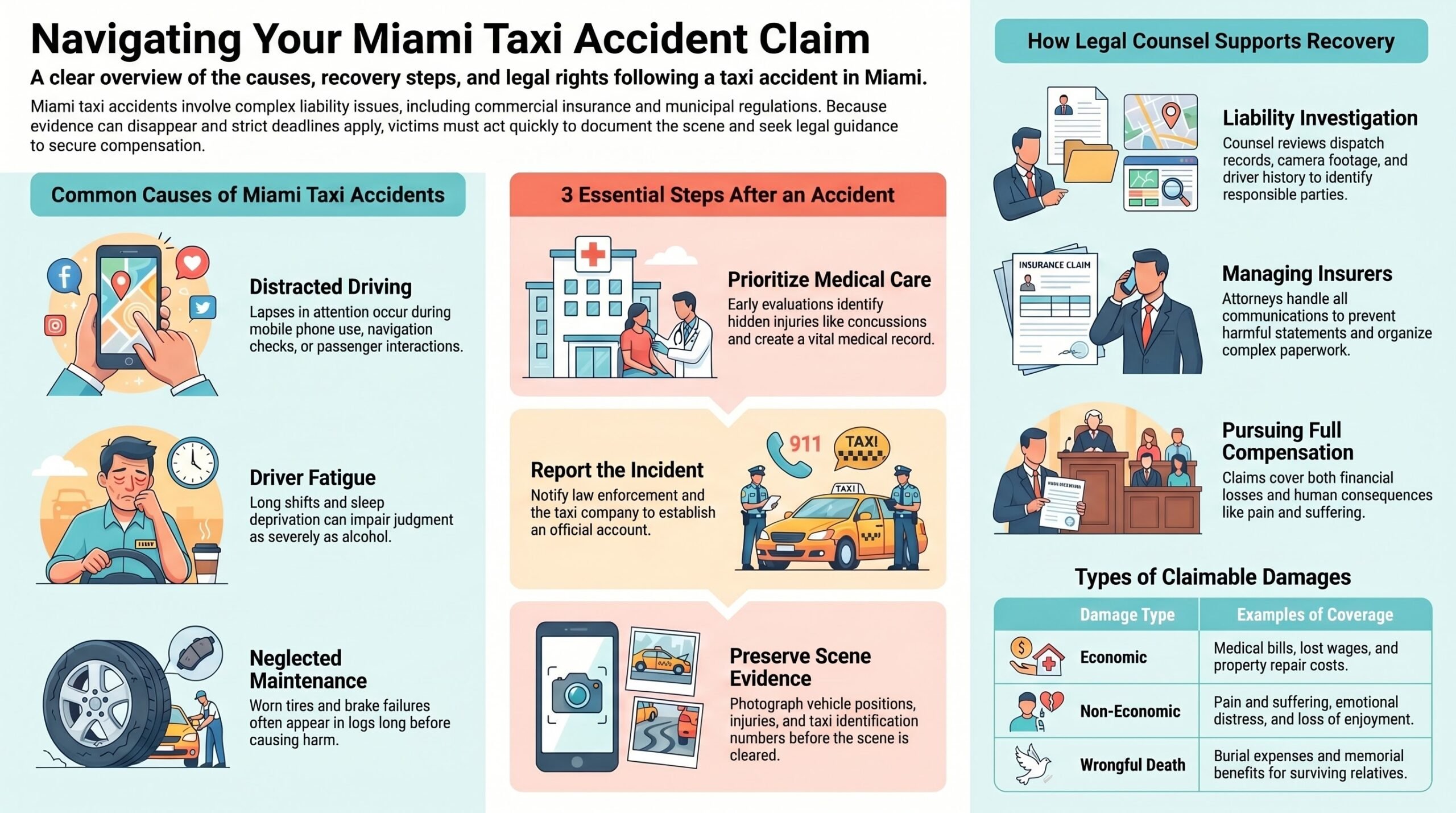
Common Causes of Miami Taxi Accidents
Several factors frequently contribute to taxi accidents in Miami, often arising from preventable driver and vehicle-related issues. Common examples include distracted driving, speeding, reckless actions, and fatigue among commercial drivers who operate long hours under demanding conditions. Poor vehicle maintenance also remains a significant concern, as mechanical failures can increase the risk of serious collisions.
Distracted Taxi Driving
Distracted taxi driving remains a significant cause of accidents in Miami, where drivers often navigate through dense traffic, frequent passenger interactions, and constant route changes. In this setting, even brief lapses in attention can place riders, pedestrians, cyclists, and nearby motorists at serious risk. Common distractions include checking a mobile phone for dispatch updates, reading navigation prompts, adjusting in-cab systems, and responding to passenger distractions, such as during conversations or fare-related questions.
When attention shifts from the road, the driver may miss traffic signals, sudden stops, or people entering crosswalks. These incidents often leave injured individuals facing medical expenses, missed work, and lasting hardship. Careful driving practices, clear communication, and a strict focus help protect the public and reflect the duty taxi operators owe to everyone sharing Miami’s roads each day.
Speeding And Reckless Maneuvers
On Miami’s congested streets, speeding and reckless moves frequently contribute to serious taxi accidents. When drivers exceed safe limits, they reduce stopping distance, narrow reaction time, and increase the force of impact. Abrupt lane changes, unsafe turns, and improper passing place passengers, pedestrians, and nearby motorists at avoidable risk.
Professional drivers are expected to protect the public through caution, patience, and strict compliance with traffic laws. Yet some taxi operators attempt evasive moves to make up time, bypass congestion, or respond poorly to sudden traffic conditions. Such conduct can violate safety standards and trigger speeding penalties, civil liability, and severe injuries. A careful legal review often examines vehicle speed, witness statements, camera footage, and roadway patterns to determine how reckless choices caused harm and what recovery may be available.
Fatigued Commercial Drivers
Fatigue among commercial drivers remains a significant cause of taxi accidents in Miami, where long shifts, irregular schedules, and dense traffic can steadily erode alertness. When driver fatigue develops, reaction time slows, judgment weakens, and routine decisions become less reliable under pressure.
In service-centered transportation, passengers, pedestrians, and other motorists depend on attentive operation at all hours. Yet sleep deprivation can impair concentration as seriously as alcohol, increasing the likelihood of missed signals, delayed braking, and unsafe lane changes. Commercial drivers may also underestimate their exhaustion, especially when financial demands or back-to-back fares encourage extended hours. A careful legal review often examines scheduling patterns, rest opportunities, witness accounts, and electronic data to determine whether fatigue contributed to a crash and harmed those the transportation industry is meant to protect.
Poor Vehicle Maintenance
Many taxi accidents in Miami can be traced to poor vehicle maintenance, a preventable condition that compromises safety long before a collision occurs. When fleet owners or drivers delay routine vehicle inspections, vital systems may deteriorate unnoticed, placing passengers, pedestrians, and other motorists at risk. Worn components often appear in maintenance logs long before they contribute to serious harm, which is why careful recordkeeping matters. Brake failures can reduce stopping ability in heavy traffic, while excessive tire wear can cause blowouts, skidding, or loss of control during sudden maneuvers.
Those entrusted with transporting the public are expected to act with diligence because dependable service begins with safe equipment. Proper maintenance protects lives, supports accountability, and reflects a commitment to serving the community responsibly on every trip throughout Miami.


Legal Rights of Miami Taxi Accident Injury Victims
Accountability is a central principle in Miami taxi accident cases, and injured victims generally have the legal right to pursue compensation when a taxi driver, cab company, or another party caused the crash. These rights often include recovery for medical costs, lost income, pain, and other measurable losses. Liability may also arise from negligent hiring, weak driver background checks, poor supervision, or policies that place profits over public safety.
Even fare disputes can become relevant when they distract a driver or escalate unsafe conduct.
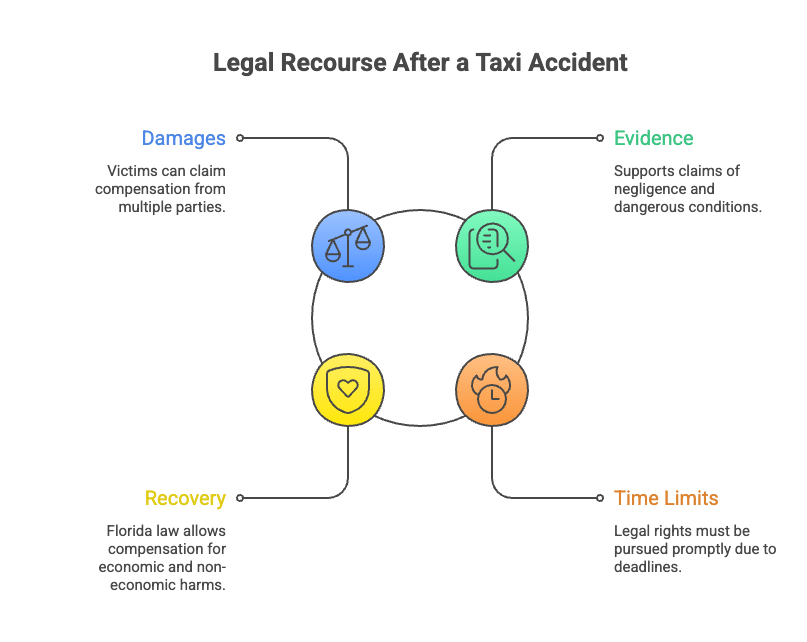
- Victims may seek damages from all responsible parties, not only the taxi driver.
- Evidence can support claims involving company negligence, vehicle defects, or dangerous road conditions.
- Florida law may allow recovery for both economic and certain non-economic harms.
- Time limits apply, so legal rights must be evaluated carefully and without delay.
A careful legal review helps clarify responsibility and supports outcomes that promote accountability, safety, and fair treatment for injured community members.
Steps to Take After a Miami Taxi Accident Injury
After a Miami taxi accident injury, prompt medical care is often the first priority, both to protect health and to create a clear record of the harm suffered. The incident should also be reported to law enforcement and, when applicable, to the taxi company to establish an official account of the crash. In addition, preserving photographs, witness information, medical records, and other crucial evidence can materially affect any later insurance claim or legal action.
Seek Immediate Medical Care
Seeking prompt medical attention should be a priority after a Miami taxi accident injury, even if symptoms seem minor or delayed. An urgent evaluation can identify internal injuries, concussions, soft tissue damage, or spinal trauma before conditions worsen and place additional burdens on loved ones. Early examination also creates clear medical records that connect symptoms to the crash and support appropriate treatment decisions.
Physicians may recommend imaging, consultant referrals, follow-up visits, and pain management tailored to the person’s condition and daily responsibilities. Consistent care helps protect long-term health, encourages recovery, and reduces the risk of complications that could limit one’s ability to work or serve others. When emergency symptoms arise, such as severe pain, dizziness, breathing difficulty, or numbness, immediate care is especially important for safety and well-being.
Report The Taxi Crash
Once immediate medical needs have been addressed, the taxi crash should be reported to law enforcement and, when appropriate, to the taxi company and relevant insurers. A prompt report creates an official record, helps public servants respond appropriately, and supports accountability for everyone affected.
When officers arrive, those involved should provide accurate facts without speculation or assigning blame. Police reports often influence how insurers evaluate the collision and how later claims are reviewed. If any bystanders observed the incident, their contact information may help authorities obtain witness statements to clarify disputed details. Notice to the taxi company should also be timely, especially when a driver is working during the crash. Careful reporting can help protect injured individuals while promoting an orderly process that serves the broader community fairly and responsibly.
Preserve Key Evidence
Documenting and preserving evidence should begin as soon as conditions are safe, because the details of a Miami taxi accident can change quickly or disappear entirely. Helpful action often includes photographing vehicle positions, visible injuries, street conditions, traffic signs, and any taxi identification numbers before vehicles are moved or debris is cleared away.
Receipts, ride-app records, dash-camera footage, and medical notes may also support a clear account of what occurred. Names and contact information for witnesses should be gathered carefully, with attention to witness protection and respect for privacy. If nearby businesses or intersections have surveillance cameras, prompt requests may help secure recordings before deletion. Early forensic preservation can strengthen future insurance claims or legal review, while also helping those responsible respond in a manner that serves injured people fairly and promptly.
How a Miami Taxi Accident Injury Lawyer Can Help You
Piloting the aftermath of a taxi accident often requires more than basic insurance knowledge, particularly when liability is disputed or multiple parties may share responsibility. A Miami taxi accident injury lawyer provides structured guidance that protects injured people and supports fair outcomes, even where cabfare disputes or language barriers complicate communication with drivers, companies, insurers, and witnesses.
- Investigates liability by reviewing police reports, driver records, vehicle maintenance, witness accounts, and camera footage to identify every responsible party.
- Handles insurer communications to prevent harmful statements, organize documentation, and press for compensation that reflects medical costs, lost income, and related losses.
- Coordinates evidence and deadlines by preserving records, obtaining expert opinions when needed, and ensuring claims comply with Florida procedural requirements.
- Advocates through negotiation or litigation with a service-minded focus on accountability, clear communication, and practical solutions that help families regain stability after a disruptive event and move forward confidently.
Long-Term Effects of Miami Taxi Accident Injuries
Miami taxi accident injuries can produce lasting consequences that extend well beyond the initial recovery period. Victims may face chronic pain challenges and emotional trauma impacts that interfere with daily functioning, personal stability, and overall quality of life. In many cases, these ongoing conditions also contribute to reduced work capacity, creating significant financial and occupational burdens over time.
Chronic Pain Challenges
Beyond the immediate injuries sustained in a taxi collision, chronic pain can become one of the most disruptive long-term consequences for an injured person. Persistent neck, back, joint, or nerve pain may limit mobility, reduce stamina, and interfere with daily responsibilities, including work, caregiving, and community service. Over time, many individuals require ongoing medical evaluation, rehabilitative care, and structured Pain management to maintain function and preserve independence.
These lasting symptoms often require substantial Lifestyle adjustments. Household tasks, transportation needs, exercise routines, and sleep habits may all need to be modified to prevent worsening discomfort. In severe cases, chronic pain can restrict earning capacity and complicate basic personal care. Careful documentation, consistent treatment, and informed legal guidance may help injured individuals pursue resources necessary to support long-term recovery and stability.
Emotional Trauma Impacts
After a taxi accident, emotional trauma may persist long after visible injuries have begun to mend. Survivors may experience anxiety, disrupted sleep, intrusive memories, and a lingering sense of vulnerability in everyday settings. These effects can complicate psychological recovery, particularly when medical treatment addresses physical harm but leaves emotional distress insufficiently supported.
Long-term trauma may also alter family dynamics, as loved ones adjust routines, offer care, and respond to mood changes or social withdrawal. Children and spouses may feel uncertainty, while the injured person may struggle to communicate needs with clarity and patience. Compassionate counseling, structured support, and consistent follow-up often help restore stability. A careful legal evaluation may recognize these lasting consequences, emphasizing that recovery involves the whole person, not merely the mending of bodily injuries.
Reduced Work Capacity
Many taxi accident injuries produce limitations that extend well into a person’s working life, reducing stamina, mobility, concentration, or the ability to perform repetitive tasks safely. These impairments may prevent return to prior duties, especially in physically demanding or high-responsibility roles that require steady attention and endurance.
Over time, reduced work capacity can lead to lower productivity, missed opportunities for advancement, and lower long-term earnings. Some individuals need modified schedules, assistive equipment, or permanent restrictions that alter how they contribute to employers, clients, and the broader community. In more serious cases, a career shift becomes necessary, requiring retraining and careful planning. Medical records, vocational evaluations, and employer documentation often help demonstrate the full effect on future employability. A thorough legal review can connect these lasting losses to the accident and support appropriate compensation.
Proving Liability in Miami Taxi Accident Injury Cases
Establishing liability in a Miami taxi accident injury case requires a careful examination of how the crash occurred, who owed a duty of care, and whether that duty was breached. Evidence often includes police reports, witness accounts, photographs, electronic trip data, and maintenance records. These materials help clarify whether a taxi driver, another motorist, a vehicle owner, or a transportation company acted negligently.
In service to injured passengers and families, a thorough review may also consider Taxi medallions, dispatch practices, driver fatigue, vehicle inspections, and compliance with local safety rules. Fare disputes may appear unrelated, yet they can reveal distraction, aggression, or improper conduct just before impact. Liability may rest with multiple parties when negligent hiring, poor supervision, or defective repairs contributed to the collision.
Medical records and expert analysis can further connect the injuries to the crash. A disciplined investigation preserves facts, supports accountability, and helps affected individuals pursue justice while promoting safer transportation practices across the wider community.
Dealing With Insurance Companies After a Miami Taxi Accident Injury
In the aftermath of a Miami taxi accident injury, communications with insurance companies often shape the course of a claim as much as the underlying facts of the collision. Insurers may appear cooperative, yet early statements, document requests, and settlement discussions can affect an injured person’s ability to secure fair support for medical and financial needs.
A careful approach helps protect both the individual and those who depend on that person’s well-being. Records should be organized, correspondence preserved, and responses measured. Claim negotiation often involves questions about treatment, lost income, and fault allocation, and insurers may rely on adjuster tactics designed to narrow the value of losses. Those tactics can include requesting broad authorizations, emphasizing minor inconsistencies, or encouraging quick resolutions before the full impact of injuries is known.
Clear communication, accurate documentation, and informed advocacy often improve interactions with insurers while keeping attention on recovery, accountability, and the resources needed to serve family and community.
What to Expect During a Miami Taxi Accident Injury Claim Process
A Miami taxi accident injury claim typically begins with an initial evaluation of the incident, the parties involved, and the available insurance coverage. The process then focuses on gathering evidence, establishing liability, and documenting medical treatment to connect the injuries to the crash and assess the full extent of damages. Many claims conclude through settlement negotiations, although some proceed to litigation when liability, compensation, or both remain in dispute.
Initial Claim Evaluation
At the outset of a Miami taxi accident injury claim, the initial evaluation focuses on whether the available facts support liability, causation, and measurable damages. During the initial interview, counsel typically reviews the incident, injuries, medical care, insurance information, and immediate practical concerns.
This stage also helps establish a realistic claim timeline, so injured individuals and families can plan responsibly while continuing to serve their households and communities. Attorneys may assess treatment status, lost income, policy limits, and whether notice requirements or filing deadlines could affect the matter. They also explain communication procedures, anticipated decisions, and the client’s role in preserving consistency and credibility. A careful evaluation promotes informed expectations, identifies urgent legal needs, and allows the claim to begin on an organized, service-minded foundation that respects both recovery and accountability under Florida law.
Evidence And Liability
Clarity becomes especially important during the evidence and liability phase of a Miami taxi accident injury claim, because the strength of the case often depends on how completely the underlying facts can be documented and verified.
At this stage, legal representatives typically gather police reports, witness statements, photographs, dispatch records, surveillance footage, and vehicle inspection data. Each item should be preserved with a clear chain of custody, so authenticity can be defended if questioned. Liability analysis may involve the taxi driver, the cab company, another motorist, or even a maintenance provider. Investigators compare timelines, roadway conditions, and traffic law compliance to identify how the collision occurred. Florida’s comparative negligence rules may also affect recovery when multiple parties share fault. A careful, service-minded approach helps ensure accountability, protect community trust, and support a fair resolution for everyone involved.
Medical Treatment Documentation
Once liability has been examined, attention generally turns to medical treatment documentation, which helps connect the collision to the injuries being claimed. Providers’ records, diagnostic images, prescriptions, and therapy notes can show when symptoms began, how they changed, and what care was reasonably necessary after the taxi crash.
Clear documentation often includes appointment dates, physician recommendations, work restrictions, and treatment timelines. Consistent follow-up may strengthen credibility, while unexplained gaps can raise questions about causation. Claim files may also include mileage logs, pharmacy receipts, and correspondence regarding billing disputes, especially when charges appear inconsistent or duplicate. For those focused on helping injured people recover with dignity, organized records support accurate communication with insurers and health providers. Careful documentation can also reduce confusion, protect access to treatment, and clarify the practical effects of injury.
Settlement And Litigation
Resolution often begins with settlement discussions, although some Miami taxi accident claims proceed into litigation when fault, damages, or insurance coverage remains disputed. During settlement, counsel generally exchanges evidence, evaluates losses, and communicates with insurers to seek terms that fairly address medical costs, lost income, and future needs. Effective mediation strategies may help parties resolve disagreements while preserving time and resources for recovery.
If negotiations fail, litigation may involve filing suit, conducting discovery, taking depositions, and presenting motions before trial. Each stage requires careful organization, credible documentation, and attention to procedural deadlines. Courts may encourage further settlement conferences even after a lawsuit begins. When a verdict is entered, appellate considerations can arise if legal errors affected the outcome. Throughout the process, disciplined advocacy supports accountability and aims to secure meaningful relief for injured individuals.

Compensation for Miami Taxi Accident Injury Damages
Accountability becomes central when evaluating compensation for Miami taxi accident injury damages, because the full extent of a victim’s losses often reaches far beyond the initial medical emergency. A careful claim considers hospital care, rehabilitation, medication, transportation to treatment, and the practical support an injured person may require while recovering. When a collision causes lasting impairment, compensation may also address diminished earning capacity and the cost of future assistance needed to preserve safety, dignity, and daily function.
In fatal cases, surviving relatives may pursue wrongful death recovery, including farewell benefits tied to burial and memorial expenses. Courts may also consider punitive damages when evidence shows gross negligence, reckless conduct, or conscious disregard for public safety. Because taxi crashes can involve drivers, companies, insurers, and maintenance providers, a thorough investigation is crucial. Proper valuation helps families obtain resources that support recovery, stability, and responsible long-term care after a serious Miami taxi accident.
Economic vs Non-Economic Damages in Miami Taxi Accident Cases
Miami taxi accident claims commonly involve two broad categories of compensation, economic damages and non-economic damages. Economic damages generally include measurable financial losses such as medical expenses, lost wages, and reduced earning capacity, while non-economic damages may include pain and suffering, emotional distress, and loss of enjoyment of life. The value of either category depends on the quality of the supporting evidence, including medical records, employment documentation, expert opinions, and other proof that connects the losses to the accident.
Economic Damage Categories
In taxi accident claims, economic damages refer to the measurable financial losses caused by the collision, while non-economic damages address the harder-to-quantify effects on an injured person’s daily life and well-being.
Economic damage categories commonly include medical expenses, rehabilitation costs, prescription charges, and future treatment needs supported by records or expert review. They may also cover lost wages when injuries prevent a person from working, as well as reduced earning capacity if recovery limits future employment. Property damage is another recognized category, including repair or replacement costs for a vehicle, phone, or other belongings affected in the crash. In service-minded communities, careful documentation of these losses can help injured individuals restore stability, meet obligations to their families, and pursue accountability through an organized, evidence-based claim process under Florida law.
Non-Economic Loss Examples
Beyond documented financial losses, taxi accident claims may also involve non-economic damages that address personal harm not reflected in bills or wage statements. These losses often reflect the human consequences of an injury and the ways it can disrupt daily life, relationships, and the ability to care for others.
Examples include pain and suffering, emotional distress, anxiety, depression, loss of enjoyment of life, and physical impairment. A person may struggle with sleep, mobility, confidence, or participation in family and community activities. In severe cases, injuries may alter intimacy, companionship, or shared household roles, giving rise to loss of consortium claims by a spouse. Such damages recognize that recovery involves more than finances. They acknowledge the dignity, service, and well-being affected after a serious Miami taxi accident.
Proving Damage Value
Valuation is a central issue in taxi accident claims because the strength of any demand depends on the quality of the proof supporting both economic and non-economic damages. Economic losses are usually shown through medical bills, wage records, repair estimates, and expert opinions addressing future losses. Non-economic harm, including pain, emotional distress, and reduced quality of life, requires a more careful damage appraisal based on treatment notes, testimony, and daily limitations.
A careful presentation of these categories helps insurers, judges, and juries understand the full human and financial impact of the collision. Service-minded advocates often promptly gather records, clearly organize evidence, and connect each loss to the accident with credible supporting evidence. Strong proof not only improves valuation, but also promotes fair outcomes for injured people and the families who care for them.
When a Miami Taxi Accident Injury Case Goes to Trial vs Settlement
Whether a Miami taxi accident injury claim proceeds to trial or resolves through settlement depends on several practical and legal factors, including the severity of the injuries, the clarity of fault, the amount of available insurance coverage, and the willingness of the parties to negotiate in good faith. Strong evidence often increases Settlement leverage, especially when medical records, witness statements, and expert opinions clearly support the injured person’s losses.
A settlement is often preferred when it can provide timely compensation, reduce legal expense, and spare families additional stress. Trial may become necessary when insurers dispute liability, minimize damages, or refuse fair payment despite substantial proof. In those situations, counsel evaluates Jury dynamics, the credibility of witnesses, and how a Miami jury may respond to disputed facts. Service-minded representation focuses on securing resources that help the injured person recover and continue supporting others. Each path requires careful judgment, disciplined preparation, and a commitment to a just outcome.
The Statute of Limitations for Miami Taxi Accident Injury Cases
Even when liability and damages are strong enough to support a settlement or trial, a Miami taxi accident injury claim remains subject to strict filing deadlines under Florida law. These deadlines determine whether an injured person may pursue compensation at all, regardless of how compelling the evidence may appear. For families and community-minded individuals seeking accountability, understanding time limits helps preserve the ability to serve injured loved ones responsibly.
Florida law applies different limitation periods depending on the facts, the parties involved, and the type of harm alleged. Certain statute nuances may affect claims involving wrongful death, minors, government entities, or delayed discovery of an injury. In some matters, required notices or procedural steps can further shorten practical filing deadlines. Missing the applicable deadline can result in dismissal, leaving medical costs, lost income, and other burdens unaddressed. Careful attention to dates, records, and claim classification is consequently vital in Miami taxi accident cases and in preserving legal rights.
When to Contact a Miami Taxi Accident Injury Lawyer
In the aftermath of a taxi collision, prompt communication with a Miami taxi accident injury lawyer can help protect an injured person’s legal and practical interests before vital evidence is lost. Early consultation is often appropriate soon after medical needs are addressed, especially when police reports, witness statements, photographs, and electronic trip data may shape the claim.
Timely contact may also be prudent when insurers request recorded statements, when liability is disputed, or when several parties could share responsibility, such as the driver, the taxi company, or another motorist. A lawyer can review deadlines, preserve documentation, and identify immediate steps that support an orderly recovery process. Prompt guidance may also assist with venue selection when facts connect the case to different courts or jurisdictions. For individuals focused on caring for family members and supporting their community, obtaining legal guidance early can reduce avoidable setbacks and help ensure that important decisions are made with reliable information, care, and foresight throughout the claims process.
Why You Need an Experienced Miami Taxi Accident Injury Lawyer
Because taxi accident claims often involve commercial insurance policies, contested liability, and overlapping sources of evidence, retaining an experienced Miami taxi accident injury lawyer can materially affect the strength and direction of a case. Such representation helps preserve records, identify responsible parties, and prevent insurers from minimizing harm or unfairly shifting blame.
An experienced lawyer also understands how injuries affect families, caregiving duties, and the broader well-being of a community. By documenting medical treatment, lost income, future care needs, and Farewell costs when a fatal crash occurs, counsel presents a claim that reflects the full human and financial impact. Skilled advocacy also improves Settlement timing by anticipating disputes, organizing evidence early, and pressing for fair resolution without unnecessary delay. When negotiations fail, experienced counsel is prepared to litigate effectively and uphold accountability. This level of guidance supports injured people and those assisting them, while protecting legal rights and promoting a more just recovery process overall.
How to Choose the Right Miami Taxi Accident Injury Lawyer for Your Case
How should a person evaluate legal representation after a taxi crash in Miami when the stakes may include substantial medical costs, disputed fault, and commercial insurance issues? A careful review should begin with the lawyer’s experience handling transportation injury claims, knowledge of local courts, and record of negotiating with commercial carriers and insurers.
A responsible selection process also considers communication practices, responsiveness, and the attorney’s ability to explain legal options clearly. Client expectations should be discussed early, including timelines, likely challenges, and the evidence needed to support a damages claim. Fee structures merit close attention, especially contingency terms, litigation expenses, and the handling of costs if recovery is limited. It is also prudent to examine professional reputation through reviews, disciplinary history, and peer recognition. A suitable Miami taxi accident injury lawyer demonstrates preparation, honesty, and a service-minded commitment to protecting injured people while pursuing fair compensation with diligence, strategy, and respect.
About The Law Offices of Anidjar & Levine
Client-centered advocacy defines The Law Offices of Anidjar & Levine, a Florida personal injury firm that represents individuals harmed in serious traffic collisions, including taxi accidents in Miami. The firm focuses on responsive representation, practical guidance, and thorough case preparation, helping injured people pursue compensation while they concentrate on recovery and family responsibilities.
Its approach reflects a service-driven mission rooted in accessibility, communication, and respect for each client’s circumstances. The firm’s history shows sustained work on behalf of accident victims across Florida, with attention to both immediate needs and long-term consequences. Attorneys and staff coordinate closely, gather evidence diligently, and address insurers with discipline and persistence. This structure supports efficient case management and informed decision-making throughout the claims process.
Client testimonials often describe professionalism, compassion, and consistent updates, indicating a practice that values trust as much as results. For those seeking dependable counsel after a Miami taxi accident, the firm offers a credible, established option.

Frequently Asked Questions
Can Tourists File a Miami Taxi Accident Injury Claim in Florida?
Yes, tourists may file a Miami taxi accident injury claim in Florida when another party’s negligence caused harm. Florida law generally permits nonresidents to pursue compensation for medical costs, lost income, and related damages. No special tourist immunity prevents a valid claim from being made, though procedural rules and deadlines still apply. If language, travel, or documentation issues arise, consular assistance may help facilitate communication, record-gathering, and coordination during the legal process.
Are Rideshare and Taxi Accident Claims Handled Differently in Miami?
Yes, rideshare and taxi accident claims in Miami are often handled differently. The distinction usually turns on insurance coverage, driver status, and the company’s operational model. Rideshare cases may involve layered policies that depend on app activity, while taxi claims often rely on commercial carrier coverage. Liability standards also vary in practice, especially when determining employer responsibility, vehicle ownership, and the duty owed to passengers and others needing fair recovery.
What if the Taxi Driver Was Uninsured or Underinsured?
If the taxi driver was uninsured or underinsured, recovery may still be available through uninsured motorist or underinsured motorist coverage, depending on the injured person’s policy and the taxi company’s insurance. A careful review of all applicable policies is crucial. In some cases, additional claims may exist against other responsible parties. Prompt investigation helps protect evidence, clarify coverage issues, and support a result that meaningfully serves the injured person’s needs.
Can I Sue if a Defective Taxi Part Caused the Crash?
Yes, a claim may be brought if a defective taxi part caused the crash. In such cases, product liability law may permit recovery against the part maker, distributor, or maintenance provider. Evidence of manufacturer negligence, unsafe design, or faulty production can support the case. A careful investigation helps identify responsible parties, preserve proof, and pursue compensation that may assist the injured person and others affected by the incident.
Do Miami Taxi Accidents Involving Pedestrians Follow Different Injury Claim Rules?
Yes, pedestrian injury claims from taxi accidents can follow somewhat different rules. They often require close analysis of pedestrian comparative fault, right-of-way evidence, and the extent to which the taxi driver, the company, or another entity shares responsibility. If a public roadway defect or signal issue contributed, municipal liability rules may also apply, including strict notice deadlines. Careful documentation helps protect injured pedestrians and supports a claim that serves accountability and fair recovery.
—————————
Miami taxi accident injury claims often involve intricate liability issues, insurance challenges, and significant physical, emotional, and financial consequences. A qualified lawyer can evaluate the facts, protect the victim’s legal rights, and pursue fair compensation through negotiation or litigation when necessary.
An experienced Miami Car Accident Lawyer can provide focused legal guidance for those injured in taxi accidents in Miami. Prompt action and informed representation can make a meaningful difference in the outcome of a claim.