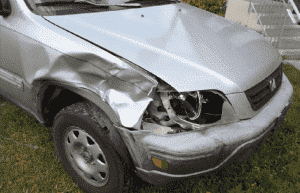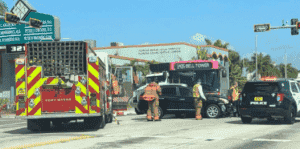
Law Offices of Anidjar and Levine assists injured passengers, drivers, and pedestrians after taxi crashes by investigating how the collision occurred, identifying liable parties, and preserving essential evidence such as driver logs, dispatch records, black box data, medical records, and witness statements.
Legal counsel also manages insurer communications, evaluates damages, and pursues compensation for medical costs, lost income, pain, and long-term limitations under Florida law. The sections below explain the process, rights, and factors that can affect recovery, and how a Fort Myers Car Accident Lawyer may help.
Main Takeaways
- A Fort Myers taxi accident injury lawyer investigates the crash, identifies liable parties, and preserves key evidence before records or footage disappear.
- Important evidence includes police reports, witness contacts, black box data, dispatch logs, maintenance records, and photographs of vehicles, injuries, and road conditions.
- Taxi accident claims may involve the driver, taxi company, fleet owner, other motorists, and multiple insurance policies with overlapping coverage issues.
- Prompt medical evaluation documents injuries, detects hidden trauma, supports treatment, and strengthens any claim for compensation after a taxi collision.
- An attorney can handle insurer communications, calculate damages such as medical costs and lost income, and meet deadlines for filing claims or lawsuits.


How We Can Help With Your Fort Myers Taxi Accident Injury Claim
Evaluating a Fort Myers taxi accident injury claim begins with a careful review of how the crash occurred, who may be legally responsible, and the full extent of the injured person’s losses. Legal counsel supports this process by gathering records, preserving evidence, and organizing facts so the claim reflects the harm suffered and the care now required.
Effective representation also includes Passenger interviews, review of driver logs, vehicle maintenance records, dispatch communications, and insurance materials. These steps help identify inconsistencies, confirm timelines, and present a clear account to insurers or opposing parties. Counsel can address complications that may distract from the injury claim, including Fare disputes, billing questions, or disagreements about trip details.
By managing communication, calculating damages, and preparing persuasive documentation, an attorney allows injured individuals and their families to focus on recuperation and supporting one another. This structured guidance promotes accountability, protects legal interests, and advances a fair financial recovery after a serious taxi collision.
OUR CONSULTATIONSARE FREE
START YOUR FREE CASE REVIEW

Understanding Fort Myers Taxi Accident Injury Cases
In Fort Myers, taxi accident injury cases often involve a layered review of transportation rules, negligence principles, and insurance obligations that differ from those in many ordinary traffic collisions. These matters may require close attention to driver licensing, vehicle ownership, company oversight, and applicable Taxi regulations.
A careful evaluation often focuses on whether a taxi operator, fleet owner, or another party failed to uphold a duty of care owed to passengers, pedestrians, or occupants of other vehicles. Evidence may include dispatch records, maintenance documentation, trip data, witness statements, and medical findings that clarify the extent of harm. Insurance questions can be more involved because commercial policies, personal coverage issues, and liability limits may overlap.
Even Fare disputes can be relevant when they help establish passenger status, trip timing, or interactions prior to the incident. For those committed to protecting others, understanding these legal and factual layers supports informed decisions and a more responsible path toward accountability and recovery.
Common Causes of Fort Myers Taxi Accident
Several recurring factors contribute to taxi accidents in Fort Myers, each of which can materially increase the risk of injury. Distracted taxi drivers, speeding and aggressive driving, and poor vehicle maintenance are often cited as preventable causes of serious collisions. Hazardous road conditions may also play a substantial role, particularly when drivers and transportation companies fail to respond appropriately to known roadway risks.
Distracted Taxi Drivers
Among the most preventable causes of Fort Myers taxi accidents, driver distraction remains a persistent and serious safety concern. Taxi drivers often work in demanding environments that require constant attention to traffic conditions, pedestrian activity, navigation, and passenger needs. Even a brief lapse can place others at risk and undermine public trust in transportation services.
Common forms of distraction include phone distraction, in-vehicle dispatch systems, eating, and adjusting navigation devices while driving. Passenger interference may also divert attention when riders ask urgent questions, create commotion, or attempt to direct routes at unsafe moments. Professional drivers are expected to manage these pressures with care, patience, and sound judgment. When distraction contributes to a collision, injured individuals may face medical costs, lost income, and lasting hardships that affect families and the broader community.
Speeding And Aggressive Driving
Too often, speeding and aggressive driving contribute directly to Fort Myers taxi accidents, especially when drivers feel pressure to complete more fares in less time. When a taxi operator exceeds posted limits, follows too closely, or changes lanes abruptly, the margin for error narrows, and the risk to passengers, pedestrians, and nearby motorists rises markedly.
Such conduct may include reckless handling, tailgating behavior, sudden braking, and unsafe turns at intersections. These actions can reflect impatience, poor judgment, or disregard for public safety, all of which undermine the duty of care owed to others. For individuals and families seeking to protect their community, understanding these patterns matters. Identifying aggressive driving as a contributing cause can support accountability, encourage safer transportation practices, and help prevent similar harm from affecting others in Fort Myers.
Poor Vehicle Maintenance
Routine maintenance failures can create serious safety hazards in Fort Myers taxi operations, particularly when worn brakes, damaged tires, faulty lights, or navigation problems are left unaddressed. When taxi companies delay repairs, passengers, pedestrians, and other motorists face preventable risks that can lead to devastating collisions and lasting harm.
Careful vehicle inspections help identify mechanical issues before they endanger the public. Maintenance records may also reveal whether an owner ignored repeated warnings, skipped scheduled service, or placed profits above community safety. In many taxi accident claims, poor upkeep becomes a central factor because a reasonably maintained vehicle is less likely to fail during ordinary use.
By emphasizing accountability and proper care, injured individuals and their advocates support safer transportation practices for everyone who depends on taxis in Fort Myers each day.
Hazardous Road Conditions
Roadway hazards can play a significant role in Fort Myers taxi accidents, particularly when potholes, uneven pavement, poor drainage, faded lane markings, or obstructed signs interfere with safe travel. These conditions may reduce a driver’s ability to react, maintain control, or identify hazards in time to protect passengers, pedestrians, and other motorists.
During heavy rain, slippery pavement and drainage failures can increase stopping distances and contribute to skidding or hydroplaning. Construction zones, loose debris, and damaged shoulders may also force sudden evasive actions, placing nearby road users at risk.
When public agencies or contractors fail to address known defects, serious collisions may follow. Careful investigation often helps identify whether hazardous road conditions contributed to the crash and whether injured individuals may pursue accountability through a civil claim under Florida law.


Legal Rights of Fort Myers Taxi Accident Injury Victims
Accountability often begins with a clear understanding of the legal protections available after a collision. Fort Myers taxi accident injury victims may hold negligent drivers, taxi companies, or other responsible parties financially accountable under Florida law. Passenger rights generally include the right to pursue damages for medical costs, lost income, pain, and reduced quality of life.
Compensation timelines matter because delay can affect evidence, insurance negotiations, and statutory filing limits.
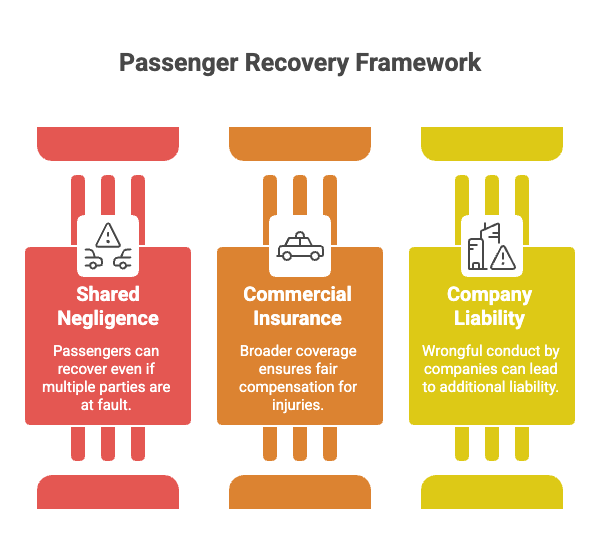
- A harmed passenger may seek recovery even when the taxi driver was not the only negligent party involved.
- Commercial insurance policies often provide broader coverage, which can support fair compensation for injuries and related losses.
- Wrongful conduct by a company, such as poor hiring or unsafe maintenance, may create additional grounds for liability.
These rights help injured individuals protect their households while encouraging safer transportation practices that benefit the wider community. In many cases, legal guidance strengthens accountability, preserves dignity, and supports meaningful recovery for those harmed.
Steps to Take After a Fort Myers Taxi Accident Injury
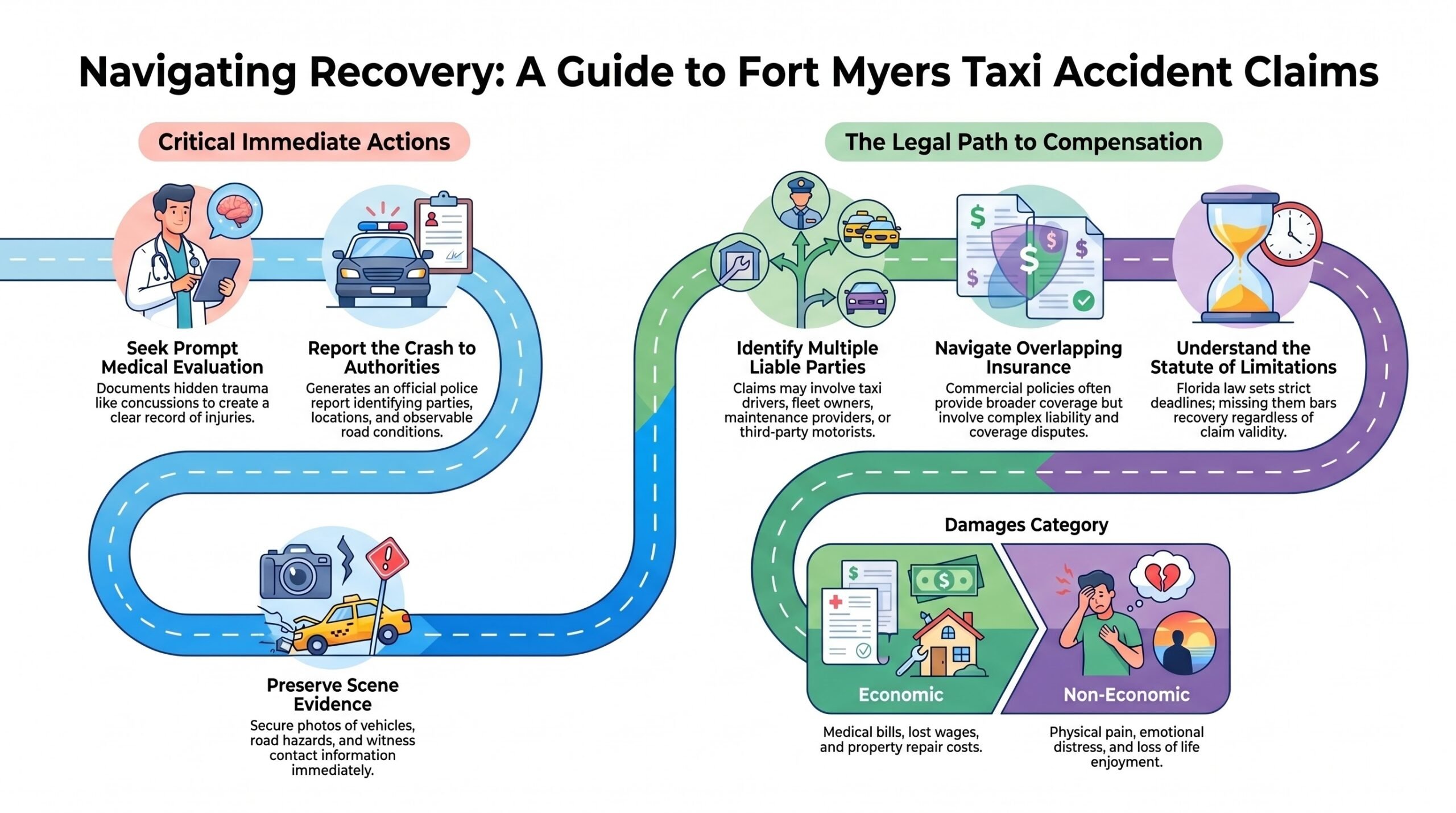
After a Fort Myers taxi accident injury, certain immediate actions can protect both health and any future legal claim. Priority is generally given to obtaining prompt medical care and reporting the taxi crash to the appropriate authorities, as these steps help document the incident and its effects. It is also important to preserve photographs, contact information, medical records, and other relevant evidence that may support a clear account of what happened.
Seek Immediate Medical Care
Why is immediate medical evaluation so important following a Fort Myers taxi accident injury? Prompt treatment protects health, identifies hidden trauma, and creates a clear record of injuries from the outset. Some conditions, including concussions, internal bleeding, and soft tissue damage, may worsen before obvious symptoms appear.
An immediate diagnosis allows physicians to detect urgent complications and initiate appropriate care without delay. This step also helps injured individuals remain able to support loved ones and meet responsibilities to others. Medical professionals may recommend imaging, pain management, specialist referrals, and follow-up scheduling to monitor recovery and prevent setbacks.
Careful adherence to treatment instructions demonstrates a responsible commitment to recovery and community service. In serious collisions, emergency evaluation can reduce long-term harm and improve the likelihood of a safer, steadier recovery for every affected person.
Report The Taxi Crash
In the immediate aftermath of a Fort Myers taxi accident, the crash should be reported to law enforcement as soon as conditions permit. Prompt reporting helps public servants respond effectively, protect everyone at the scene, and create an official account of what occurred. When officers arrive, those involved should provide accurate, respectful information without guessing or exaggerating details.
A timely report often leads to police reports that identify the parties, location, and observable conditions. It may also assist officers in collecting witness statements while memories remain fresh. If emergency dispatch has not been contacted, a report should still be made through the appropriate local agency. This step supports community safety, promotes accountability, and helps guarantee that injured passengers, pedestrians, and drivers are treated with fairness, dignity, and care.
Preserve Evidence And Records
Evidence preservation becomes a vital safeguard once immediate medical and reporting needs have been addressed. A person involved in a Fort Myers taxi accident should collect photographs of vehicles, injuries, road conditions, skid marks, traffic signals, and the taxi’s identifying information. Receipts, medical records, repair estimates, and correspondence should be organized promptly to support later review.
Witness names and contact details should be secured, and written recollections prepared while memories remain fresh. To strengthen chain preservation, damaged personal items should be stored without alteration, and any surveillance or dashcam footage should be requested promptly before it is routinely deleted.
Digital backups of photographs, videos, and documents help prevent loss and enable advocates, insurers, and legal counsel to accurately evaluate the incident. Careful recordkeeping also protects the broader interests of injured passengers and families.
How a Fort Myers Taxi Accident Injury Lawyer Can Help You
After a taxi collision, an experienced Fort Myers taxi accident injury lawyer can assess the facts of the case, identify liable parties, and explain the legal options available under Florida law. Counsel may evaluate taxi liability, protect passenger rights, gather records, interview witnesses, and communicate with insurers so injured people and their families can focus on helping one another and restoring stability.
A lawyer’s assistance often includes:
- Reviewing police reports, driver histories, maintenance records, and company policies to determine whether the taxi driver, cab company, another motorist, or a third party contributed to the crash.
- Calculating damages, organizing medical documentation, and presenting a clear claim that reflects losses such as treatment costs, lost income, and other accident-related expenses.
- Negotiating with insurance carriers and, when necessary, preparing a lawsuit to seek fair compensation through settlement discussions or court proceedings.
This guidance can bring structure, accountability, and informed advocacy during a difficult period for everyone involved.
Long-Term Effects of Fort Myers Taxi Accident Injuries
Fort Myers taxi accident injuries may produce lasting consequences that extend well beyond the initial recovery period. Many individuals face chronic pain challenges and emotional trauma that interfere with daily functioning, medical progress, and overall quality of life. In serious cases, these effects also reduce earning capacity, creating financial strain that can persist for years.
Chronic Pain Challenges
Often, chronic pain becomes one of the most disruptive long-term consequences of a taxi accident injury, affecting far more than the initial area of physical harm. It may persist for months or years, limiting mobility, reducing stamina, and interfering with basic daily tasks that once seemed routine.
For many injured individuals, Chronic pain also complicates rehabilitation by slowing progress and increasing dependence on ongoing care. Treatment barriers may arise when symptoms are difficult to measure, providers disagree about appropriate care, or insurers challenge the need for continued treatment.
As a result, injured passengers may struggle to maintain employment, complete household responsibilities, or participate in service-oriented roles within their families and communities. Careful medical documentation and consistent follow-up often become vital in addressing these continuing physical limitations over time.
Emotional Trauma Impact
Physical pain is only one part of the long-term harm that may follow a taxi accident, as many injured individuals also experience lasting emotional trauma that affects daily function and overall recovery. Survivors may develop anxiety, depression, sleep disturbance, or post-traumatic stress that lingers well after visible injuries begin to recover.
Emotional suffering can alter concentration, confidence, and the ability to feel safe in ordinary settings, including traffic, crowded spaces, or medical appointments. Some individuals withdraw from social activities, while others become irritable, fearful, or emotionally numb, creating relationship strain within families and caregiving networks. These effects may interfere with treatment participation and reduce overall quality of life.
Compassionate legal guidance often recognizes these invisible injuries, helping injured people pursue support, validation, and resources that promote meaningful, sustained restoration over time.
Reduced Earning Capacity
In the aftermath of a serious taxi accident, reduced earning capacity may become one of the most significant long-term consequences, particularly when injuries limit a person’s ability to return to the same type of work or maintain prior hours and responsibilities. This loss often extends beyond immediate lost wages, affecting promotions, training opportunities, and future stability. Individuals who once served others through physically demanding or highly skilled roles may face permanent restrictions, reduced productivity, or forced career changes.
The career impact can be substantial, especially when pain, cognitive limitations, or emotional distress interfere with consistent performance. Careful evaluation of medical records, vocational evidence, and anticipated employment trends is often necessary to measure these losses accurately. Understanding reduced earning capacity helps families pursue fair compensation and protect their ability to continue supporting others with dignity.
Proving Liability in Fort Myers Taxi Accident Injury Cases
Establishing liability in a Fort Myers taxi accident case requires a careful review of how the collision occurred, who breached a legal duty, and whether that conduct directly caused the injured party’s losses. This analysis often begins with police reports, witness statements, photographs, surveillance footage, and data from a vehicle black box, when available. Each source can help clarify speed, braking, signal use, and driver attentiveness before impact.
Liability may rest with the taxi driver, another motorist, a taxi company, or more than one party. Evidence of distracted driving, fatigue, improper vehicle maintenance, or violations of traffic laws can support a claim. Florida’s comparative negligence rules may also affect recovery if an injured person is found partly responsible.
In service to those seeking accountability and support, a thorough investigation helps identify responsible parties and preserves essential facts. Clear proof of duty, breach, causation, and damages remains central to building a strong injury case.
Dealing With Insurance Companies After a Fort Myers Taxi Accident Injury
After a Fort Myers taxi accident, communications with insurance companies often become an essential part of the injury claim process. Insurers may request recorded statements, medical authorizations, or broad access to personal records. A careful response helps protect the injured person’s interests while preserving accurate information for review.
A service-minded approach values honesty, documentation, and respectful persistence. Claimants should keep copies of bills, treatment records, repair estimates, and correspondence because organized evidence supports credibility in policy negotiations. Insurance representatives may question fault, injuries, or coverage limits, especially when multiple policies apply to a taxi driver, company, or third party.
A sound claim strategy often includes limiting unnecessary statements and avoiding quick settlements before the full impact of injuries is understood. Legal guidance can help evaluate offers, identify unfair tactics, and communicate clearly with adjusters. By approaching insurers thoughtfully, injured individuals are better positioned to protect their recovery and support those who rely on them daily.
What to Expect During a Fort Myers Taxi Accident Injury Claim Process
A Fort Myers taxi accident injury claim typically begins with an initial evaluation of the facts, the available insurance coverage, and the extent of the claimant’s damages. The process then turns to liability and evidence, while the medical treatment timeline often plays a significant role in showing the full scope and duration of the injuries. Depending on the strength of the evidence and the parties’ positions, the matter may conclude through settlement negotiations or proceed into litigation.
Initial Claim Evaluation
At the outset of a Fort Myers taxi accident injury claim, the initial evaluation focuses on the basic facts of the collision, the nature of the injuries, and the parties who may bear legal responsibility. During this stage, counsel typically reviews available records, listens carefully to the injured person’s account, and identifies immediate concerns that affect care, communication, and next steps.
This review also helps establish a practical claim timeline, allowing families and advocates to understand how the process may unfold. Early discussions often address medical treatment, insurance contacts, lost income, and the broader impact on the injured person’s ability to support others.
A preliminary settlement strategy may be outlined, not as a final position, but as a thoughtful framework for pursuing fair compensation while preserving dignity, stability, and informed decision-making throughout.
Liability And Evidence
In matters of liability and evidence, the claims process focuses on determining how the taxi collision occurred and which parties may be legally responsible. Attorneys and insurers examine police reports, witness statements, photographs, traffic camera footage, and vehicle data to assess driver negligence or other contributing conduct. They may also review hiring records, maintenance logs, dispatch communications, and company policies when a taxi operator or transportation business could share fault.
When facts are disputed, forensic reconstruction may help clarify speeds, points of impact, visibility, and roadway conditions. This analysis can strengthen a clear, service-minded presentation of the events and support fair accountability. Evidence preservation is vital because missing records or altered vehicles can weaken a claim. A careful investigation helps protect injured people and promotes responsible conduct within the community.
Medical Treatment Timeline
Following a Fort Myers taxi accident, the medical treatment timeline often begins with emergency evaluation and continues through follow-up care, diagnostic testing, and rehabilitative services as symptoms develop or persist. Physicians may order imaging, prescribe medication, or recommend specialist consultations to identify injuries that are not immediately apparent.
As treatment progresses, providers document pain levels, mobility limits, and response to care, creating a clear record of medical needs. Some individuals require physical therapy, pain management, or surgery, followed by post op recovery plans tailored to daily functioning and long-term mend. Regular appointments help establish follow-up milestones, allowing caregivers and families to support consistent attendance and communication.
Careful adherence to treatment recommendations often strengthens continuity of care, promotes safer recovery, and helps assure that the injured person’s condition is fully understood.
Settlement Or Litigation
Once medical treatment begins to clarify the full scope of the injury, attention often turns to whether a Fort Myers taxi accident claim will be resolved through settlement negotiations or proceed to litigation. Attorneys typically assess liability, damages, insurance limits, and medical evidence before advising on settlement negotiations. A fair settlement may reduce delay, control costs, and allow injured individuals to focus on recovery and family responsibilities.
When insurers dispute fault, minimize injuries, or refuse reasonable payment, litigation may become necessary. Filing suit opens formal discovery, depositions, motion practice, and possible mediation, each step designed to gather facts and test legal positions.
Counsel then develops a Trial strategy based on the record, witness testimony, and expert analysis. Along either path, effective representation seeks accountability, financial stability, and outcomes that help injured people continue to serve others with dignity.
Compensation for Fort Myers Taxi Accident Injury Damages
Accountability becomes central when evaluating compensation for Fort Myers taxi accident injury damages, because the full value of a claim depends on both the severity of the injuries and the circumstances that caused them. A careful review often considers driver negligence, company oversight, insurance coverage, and whether another party contributed to the collision.
In service-minded communities, fair compensation helps injured people restore stability and continue caring for family members, coworkers, and neighbors. Claims may also address lasting limitations, necessary support, and the disruption caused by treatment and recovery. When misconduct rises beyond ordinary negligence, punitive damages may be considered to discourage similar conduct and promote safer transportation practices.
In some cases, farewell compensation may be referenced when a loss has deeply altered a household’s future and responsibilities. Strong documentation, credible witness accounts, and prompt legal guidance often strengthen a claim, helping assure that responsible parties meet their obligations under Florida law with integrity, fairness, and accountability.
Economic vs Non-Economic Damages in Fort Myers Taxi Accident Cases
Fort Myers taxi accident claims generally involve two primary forms of compensation, economic damages and non-economic damages. Economic damages include measurable financial losses such as medical expenses, lost income, and other accident-related costs, while non-economic damages address pain, suffering, and the broader personal impact of the injury. The value of either category depends on the quality of the evidence presented, including medical records, wage documentation, and testimony concerning the extent of the harm.
Economic Damage Categories
In taxi accident cases, damages are generally divided into two broad categories: economic and non-economic losses. Economic damages refer to measurable financial harm caused by the collision. These losses often include emergency care, hospital bills, rehabilitation costs, medication expenses, and future medical treatment that can be reasonably anticipated.
They also include lost wages when an injured person cannot work during recovery, as well as diminished earning capacity if long-term limitations affect employment. In many Fort Myers claims, property damage is another important category, covering repair or replacement of a vehicle, phone, or other personal items harmed in the crash.
Careful documentation of receipts, invoices, employment records, and expert evaluations helps demonstrate these losses clearly. This approach supports fair compensation and helps injured individuals restore stability while continuing to care for others.
Non-Economic Losses Explained
Beyond direct financial costs, non-economic damages address the personal consequences of a taxi accident that do not appear on bills or wage statements. These losses recognize human suffering and the ways an injury can diminish a person’s daily experience, relationships, and ability to participate fully in family and community life.
In Fort Myers taxi accident cases, non-economic damages may include physical pain, emotional distress, anxiety, loss of enjoyment of life, scarring, and reduced companionship. They also reflect life disruption, such as interrupted routines, missed milestones, and the inability to provide care or support to others as before.
Because these harms are deeply personal, pain valuation considers the nature, duration, and seriousness of the suffering involved. This category seeks to acknowledge dignity, hardship, and lasting personal impact after harm.
Proving Damages Value
Assigning a fair value to damages requires more than listing losses, because each category must be supported by reliable evidence and tied to the specific effects of the taxi accident. Economic damages are typically proven through medical bills, wage records, repair estimates, and expert opinions addressing future losses.
Non-economic damages require a different showing, often relying on treatment notes, testimony from family members, and documentation describing pain, emotional distress, and reduced daily function.
In Fort Myers taxi accident cases, careful damage apportionment may also be necessary when preexisting conditions or multiple parties are involved. A thorough presentation helps insurers, judges, and juries understand how the collision altered the injured person’s ability to work, care for others, and participate in community life. Strong proof supports a result grounded in fairness and service.
When a Fort Myers Taxi Accident Injury Case Goes to Trial vs Settlement
After a Fort Myers taxi accident, most injury claims are resolved through settlement, but some proceed to trial when the parties cannot agree on liability, damages, or both. Settlement often benefits injured people by reducing delays, expenses, and stress, while still providing compensation for medical care, lost income, and related needs. Strong evidence, credible witnesses, and clear documentation can improve Settlement leverage during negotiations and encourage a fair resolution.
A trial becomes more likely when insurers dispute fault, minimize injuries, or refuse to make a reasonable payment. In those situations, formal discovery, expert testimony, and courtroom presentation may be necessary to protect the injured person’s interests. Jury dynamics also matter because jurors may respond differently to evidence, credibility, and the parties’ conduct.
A careful attorney evaluates risk, cost, and likely outcomes before advising whether settlement or trial better supports accountability, financial recovery, and the broader goal of helping the injured person move forward with stability.
The Statute of Limitations for Fort Myers Taxi Accident Injury Cases
In Florida, the statute of limitations sets a strict deadline for filing a lawsuit arising from a Fort Myers taxi accident injury, and missing that deadline can bar recovery regardless of the claim’s underlying validity. This time limit often depends on the nature of the injury claim, the parties involved, and the date the harm became known or should have been discovered.
Because injured passengers, pedestrians, and families may seek accountability to protect others from similar harm, careful attention to the nuances of the statute is crucial. Some cases involve filing exceptions, including circumstances related to minors, delayed discovery of injuries, or claims against governmental entities, each of which may alter deadlines or notice requirements.
Insurance negotiations do not necessarily pause the limitations period, and waiting can weaken evidence, witness recollection, and case value. A disciplined review of dates, records, and procedural rules helps preserve the ability to pursue compensation and uphold responsibility within the community for all.
When to Contact a Fort Myers Taxi Accident Injury Lawyer
At the earliest practical stage, contacting a Fort Myers taxi accident injury lawyer can materially affect the strength and direction of a claim. Early contact is often appropriate after emergency needs are addressed, especially when facts are uncertain, injuries may worsen, or multiple parties could share responsibility. Prompt legal guidance helps preserve immediate documentation, including photographs, witness information, medical records, and communications with insurers.
Reaching out soon after a collision also supports accurate injury timelines, which can become important when symptoms appear days later, or treatment continues over time. This step may be particularly prudent when a taxi company, rideshare affiliate, maintenance provider, or another driver may be involved. Families focused on protecting others and acting responsibly often benefit from early clarity about reporting obligations, medical follow-up, and record preservation.
Waiting too long can allow memories to fade, evidence to disappear, and avoidable confusion to shape the claim before the injured person fully understands the situation and resulting needs.
Why You Need an Experienced Fort Myers Taxi Accident Injury Lawyer
Why does experience matter so much in a Fort Myers taxi accident case? An experienced lawyer understands how quickly evidence can disappear, how insurers attempt to reduce payouts, and how Taxi liability may involve multiple parties, including drivers, cab companies, maintenance providers, or third-party motorists. This depth of knowledge allows a claim to be built with precision and urgency.
Experience also strengthens protection of Passenger rights after a serious collision. A seasoned attorney can evaluate medical records, calculate long-term losses, and identify whether regulatory violations contributed to the crash. Such legal guidance helps injured people focus on recovery while someone capable of managing negotiations, documentation, and deadlines handles them.
In matters involving public safety and community well-being, effective representation serves a broader purpose. It promotes accountability, encourages safer transportation practices, and helps ensure that those harmed by negligence are treated fairly. In Fort Myers, that level of advocacy can make a significant difference after a taxi accident.
How to Choose the Right Fort Myers Taxi Accident Injury Lawyer for Your Case
How can an injured person determine which Fort Myers taxi accident injury lawyer is best suited to handle a complicated claim? A careful evaluation begins with the lawyer’s experience handling taxi collision cases, knowledge of local regulations, and ability to identify every potentially liable party. Because these claims may involve drivers, cab companies, insurers, and maintenance providers, strong investigative skills are crucial.
An injured person should also review the lawyer’s record of clear communication, courtroom readiness, and respectful client service. A qualified attorney explains legal options plainly, responds promptly, and approaches each matter with diligence and integrity. It is also wise to ask whether the lawyer has handled issues connected to commercial transportation, including licensing requirements, vehicle inspections, and even fare disputes when they affect liability or credibility.
Choosing counsel with practical experience, compassion, and disciplined case preparation can help protect the injured person’s interests while supporting a fair and service-minded resolution for everyone involved.
About The Law Offices of Anidjar & Levine
Client-centered representation remains a defining feature of The Law Offices of Anidjar & Levine in Fort Myers taxi accident cases.
The firm approaches injury claims with an emphasis on responsiveness, clear communication, and practical guidance for people seeking to protect injured passengers and families.
Its attorneys and staff aim to reduce burdens by addressing insurance issues, gathering evidence, and explaining legal options with professionalism and respect.
The firm’s history reflects years of advocacy for injured Floridians and a sustained commitment to accessible legal service.
In taxi accident matters, that background supports careful case preparation, informed negotiation, and readiness for litigation when necessary.
Client testimonials often describe attentive service, timely updates, and a genuine concern for each person’s recovery and stability.
Those accounts reinforce the firm’s reputation for serving clients in a manner that values dignity, accountability, and results.
For those seeking principled legal help, the firm offers an experienced, service-oriented option throughout Southwest Florida.
Frequently Asked Questions
Can I Sue if I Was Injured While Riding in a Rideshare-Taxi Hybrid?
Yes, an injured passenger in a rideshare-taxi hybrid may have grounds to sue, depending on how the incident occurred. Liability usually turns on the negligence standard, including whether the driver, the company, or another party failed to exercise reasonable care. Recovery often depends on available insurance coverage, which can vary by vehicle status and business model. A careful legal review helps clarify responsible parties and supports accountability for those harmed.
Are Taxi Accident Settlements Taxable in Florida?
Taxi accident settlements in Florida are not always taxable. Compensation for physical injuries is generally excluded from income, while interest, punitive awards, and certain emotional distress payments may be taxable damages. Lost wages can also create tax consequences depending on the claim. Careful settlement structuring may help distinguish taxable from non-taxable portions. Because each case affects recovery differently, prudent review by a tax professional or attorney best serves injured individuals.
What if the Taxi Driver Was an Independent Contractor, Not an Employee?
If the taxi driver was an Independent Operator rather than an employee, liability may extend beyond the driver, but it often requires closer factual review. Liability Allocation depends on contract terms, company control, vehicle ownership, insurance coverage, and the company’s role in dispatching or supervising services. A careful investigation helps injured parties identify every responsible party for compensation, which supports fair recovery and better protects those seeking to support their families.
Can Tourists File Fort Myers Taxi Accident Claims After Returning Home?
Yes, tourists can often file taxi accident claims after returning home, provided that Florida courts have proper jurisdiction and the filing deadlines remain open. Their location does not usually bar recovery, though jurisdiction issues may affect where proceedings occur and how evidence is gathered. Careful attention to statute limitations is crucial, because missing a deadline can defeat an otherwise valid claim. Prompt legal guidance helps preserve records, witness accounts, and service to others through accountability.
Do Taxi Accidents Involving Uninsured Drivers Affect My Claim Options?
Yes, taxi accidents involving uninsured drivers can affect available claim options, but recovery may still be possible through other coverage sources. An injured person may pursue compensation through the taxi company’s insurance, personal uninsured motorist coverage, or other liable parties, depending on the facts. Policy limits often shape the total recovery available. Careful documentation and prompt legal review help protect the injured person’s ability to secure fair compensation for all losses.
—————————
Fort Myers taxi accident claims often involve intricate liability issues, serious injuries, and difficult insurance disputes. Injured individuals may benefit from understanding their rights, preserving evidence, and seeking prompt legal guidance.
An experienced Fort Myers taxi accident injury lawyer can evaluate the facts, identify responsible parties, and pursue full compensation under Florida law.
In some cases, guidance from a Fort Myers Car Accident Lawyer may also be helpful when navigating the aftermath of a collision.
Law Offices of Anidjar and Levine provides focused representation designed to protect clients’ interests and help them move forward after a harmful taxi accident.