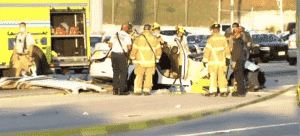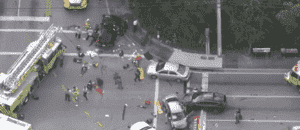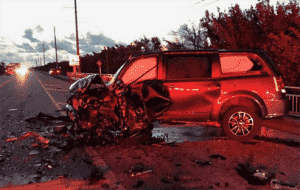
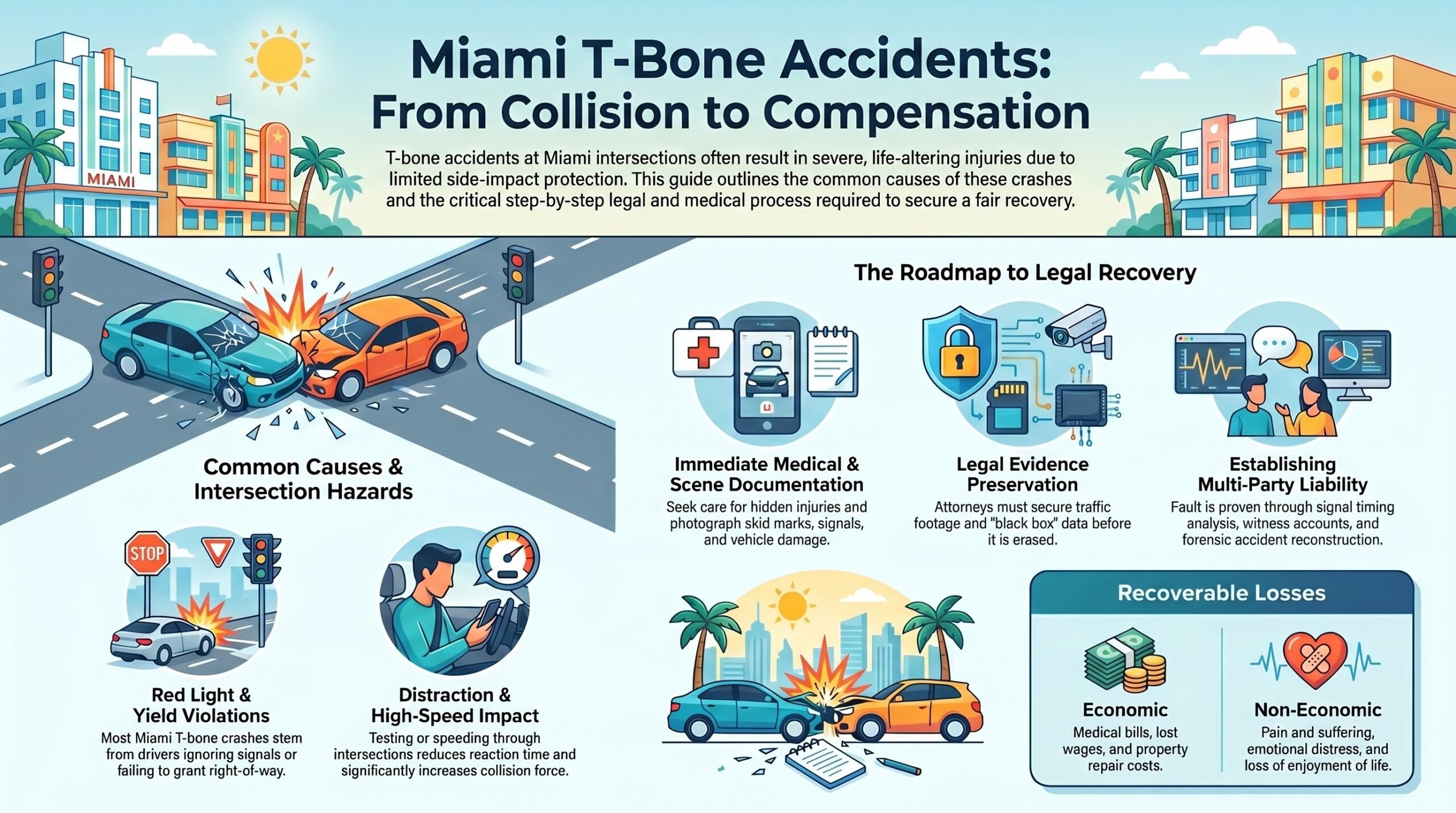
A Miami T-bone car accident injury lawyer, including Law Offices of Anidjar and Levine, helps preserve photographs, witness accounts, police reports, and traffic footage before crucial evidence disappears.
Counsel also addresses insurer communications, investigates right of way, signal timing, skid marks, and vehicle damage, and works to prove fault.
Legal representation may support compensation for medical expenses, lost income, property damage, pain, and future care needs.
The sections that follow explain the claim process, common causes, and practical next steps with guidance from a Miami Car Accident Attorney.
Main Takeaways
- Seek immediate medical care after a Miami T-bone crash to identify hidden injuries and create records linking your injuries to the collision.
- Preserve evidence by photographing the intersection, vehicle damage, skid marks, signals, debris, and visible injuries, and by collecting witness contact information.
- A Miami T-bone accident lawyer can quickly secure police reports, traffic camera footage, phone records, and event data before evidence disappears.
- Proving fault often depends on right-of-way rules, signal timing, vehicle damage patterns, witness statements, and accident reconstruction analysis.
- Compensation may include medical bills, rehabilitation, lost wages, property damage, pain and suffering, and future care for lasting injuries.


How We Can Help With Your Miami T-Bone Car Accident Injury Claim
Chart a course through the aftermath of a side-impact collision with informed legal guidance, and a Miami T-bone car accident injury lawyer can help protect the injured person’s rights from the outset. Counsel provides structured support that allows injured people and their families to focus on recovery while important claim tasks move forward with care and discipline.
Legal representation often begins with Evidence Preservation, including securing crash reports, photographs, witness statements, medical records, and available digital data before details are lost. The lawyer also manages insurer communications, prepares organized documentation of losses, and helps prevent avoidable missteps that could weaken a claim.
Through careful case development, counsel identifies practical Settlement Strategies to resolve matters efficiently while honoring the full scope of harm experienced. When service to others matters, this guidance can reduce stress, promote accountability, and create a clearer path toward financial stability, continued treatment, and protection of the injured person’s long-term interests and dignity.
OUR CONSULTATIONSARE FREE
START YOUR FREE CASE REVIEW

Understanding Miami T-Bone Car Accident Injury Cases
Because side-impact crashes often occur in a matter of seconds, understanding Miami T-bone car accident injury cases requires close attention to how the collision happened, who had the right of way, and whether traffic laws were violated. These cases often depend on careful review of police reports, witness statements, roadway markings, vehicle damage, and surveillance footage to determine how events unfolded.
A proper evaluation also considers intersection dynamics, including signal timing, lane positioning, visibility, and each vehicle’s movement before impact. Injury assessment may involve biomechanical analysis, which helps explain how force traveled through the occupant’s body and why certain trauma occurred. This information can support a clearer picture of damages, treatment needs, and long-term limitations.
For individuals committed to helping others recover and rebuild, understanding these legal and medical elements is crucial. It enables accurate claims presentation, promotes accountability, and supports fair outcomes for injured people and their families after serious collisions.
Common Causes of Miami T-Bone Car Accidents
Common causes of Miami T-bone car accidents involve driver conduct at intersections, where a single mistake can lead to a severe side-impact collision. Red light violations, distracted driving errors, and failure to yield frequently place vehicles directly in the path of crossing traffic. Speeding through intersections further reduces reaction time and increases the force of impact, making these crashes especially dangerous.
Red Light Violations
Ignoring a red light is one of the leading causes of T-bone collisions in Miami, particularly at busy intersections where cross traffic has little time to react. When a driver enters unlawfully, the striking vehicle often hits the side of another car, where occupant protection is reduced, and injuries can be severe.
These crashes frequently occur near schools, commercial corridors, and service routes, where pedestrian signals and turning movements increase the need for strict compliance. Traffic cameras may document the violation, but they cannot prevent the harm once a vehicle proceeds against the light. For those committed to protecting others, red-light obedience reflects a basic responsibility to passengers, pedestrians, and neighboring motorists. Careful intersection conduct helps preserve safety, reduce preventable trauma, and support a more dependable transportation environment for everyone.
Distracted Driving Errors
Distraction undermines safe driving at intersections, where even a brief lapse in attention can lead to a violent T-bone collision. Drivers who glance at a phone, adjust navigation, eat, or engage in passenger distraction may miss cross traffic, changing signals, or vehicles already entering the intersection.
Texting hazards are especially serious because they combine visual, manual, and cognitive inattention. A driver may travel dozens of feet without meaningful awareness, leaving little time to brake or maneuver away from danger. Similar risks arise when attention shifts to children, conversations, or items inside the vehicle.
For communities committed to protecting others, distracted driving reflects a preventable breach of responsibility. Careful focus, hands-free preparation, and limiting nonessential tasks before moving through intersections can markedly reduce these devastating side-impact crashes and related harm.
Failure To Yield
Overlooking the right-of-way at a Miami intersection can trigger a sudden T-bone collision when one driver enters another vehicle’s travel path without sufficient time or space to avoid impact. Failure to yield often occurs during left turns, at stop signs, or when motorists misjudge approaching traffic and disregard established yielding protocol.
This conduct reflects a breakdown of intersection etiquette and poses preventable danger to passengers, pedestrians, and other drivers. Responsible roadway use depends on careful observation, patience, and respect for traffic controls that ensure safe movement. When a driver fails to yield as required, the resulting side impact can cause severe injuries because vehicle doors offer limited protection. In these cases, a careful legal review may help injured individuals understand liability, document losses, and pursue support for recovery and future care.
Speeding Through Intersections
By accelerating through intersections, motorists reduce the time available to perceive cross traffic, respond to changing signals, and stop safely before entering another vehicle’s path. This conduct greatly increases the likelihood of a T-bone collision, particularly when visibility is limited or when nearby drivers reasonably rely on the lawful right of way.
Speeding also disrupts safe judgment during lane changes, high-speed turning, and responses to sudden pedestrian movement. Even slight miscalculations become dangerous when traffic signal timing is misunderstood or ignored. In busy Miami corridors, a driver who attempts to beat a yellow light may strike the side of a vehicle lawfully proceeding through the intersection.
Recognizing this pattern helps families, caregivers, and advocates support safer driving practices, promote accountability, and protect community members from preventable, life-altering harm and future losses.


Legal Rights of Miami T-Bone Car Accident Injury Victims
In the aftermath of a Miami T-bone collision, injured victims generally have the right to pursue compensation for medical expenses, lost income, property damage, and other losses caused by another party’s negligence. Florida law may also allow recovery for pain, suffering, and diminished earning capacity, though comparative negligence can reduce an award when fault is shared, and statutory caps may limit recoverable damages.
After a Miami T-bone crash, victims may seek compensation for medical costs, lost wages, property damage, and other negligence-related losses.
Victims may hold negligent drivers, employers, vehicle owners, or other responsible parties accountable when evidence supports liability.
Their legal rights often include access to insurance benefits and, when warranted, civil litigation that seeks fair financial relief for families and caregivers.
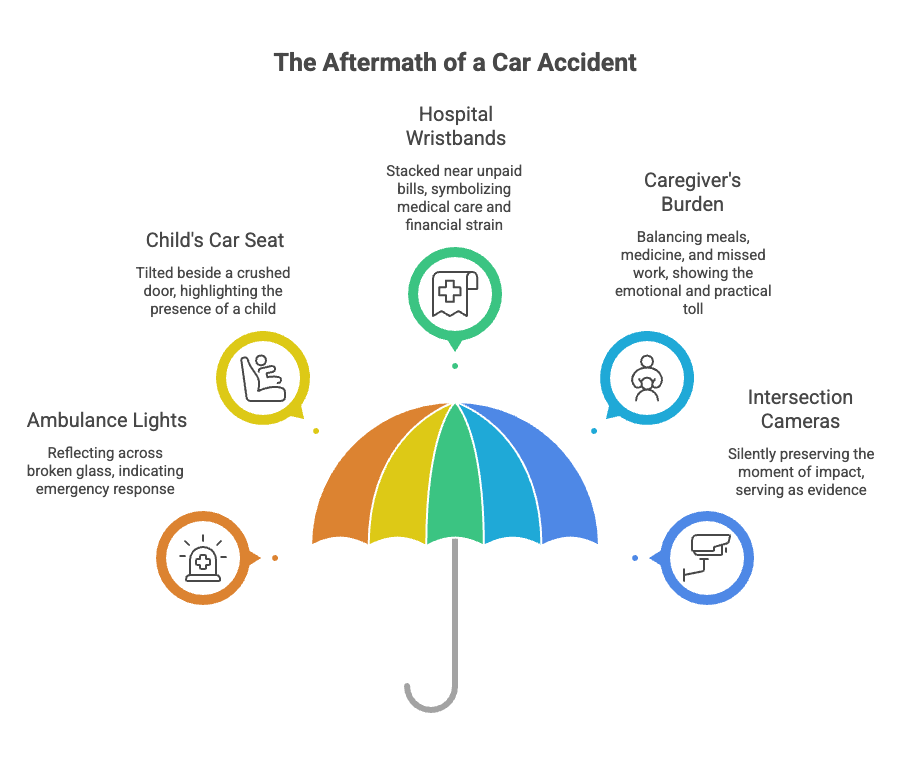
- Ambulance lights reflecting across broken glass at dusk
- A child’s car seat tilted beside a crushed door
- Hospital wristbands stacked near unpaid household bills
- A caregiver balancing meals, medicine, and missed work
- Intersection cameras silently preserve the moment of impact
These protections help injured people rebuild stability and continue serving those who depend on them.
Steps to Take After a Miami T-Bone Car Accident Injury
After a Miami T-bone car accident, certain immediate actions can protect both recovery and any future injury claim. Priority is generally given to obtaining prompt medical care and carefully documenting the crash scene, including vehicle damage, road conditions, and visible injuries. Early contact with a Miami lawyer may also help preserve evidence, clarify legal options, and support the injured party through the claims process.
Seek Immediate Medical Care
Prompt medical evaluation is often pivotal following a Miami T-bone car accident, even when injuries appear minor at first. Hidden trauma, including concussions, internal bleeding, soft tissue damage, and spinal injuries, may worsen without prompt attention. An urgent assessment by emergency personnel, an urgent care clinic, or a physician can identify conditions requiring immediate treatment and help protect long-term health.
Medical providers may also recommend imaging, medication, physical therapy, or referrals to consultants based on presenting symptoms. Following all instructions carefully, keeping appointments, and maintaining a follow-up schedule can support recovery and demonstrate a consistent effort to mend responsibly.
For those focused on serving loved ones and their wider community, seeking timely care also reduces the risk of preventable complications that could limit future ability to help others effectively.
Document The Crash Scene
Once immediate medical needs have been addressed, attention should turn to preserving clear evidence from the scene of a Miami T-bone collision. Photographs should capture vehicle positions, traffic signals, skid marks, debris patterns, roadway conditions, and visible injuries from multiple angles. Careful forensic photography can help create an accurate visual record that supports later review by insurers, medical providers, and investigators.
Witness names, phone numbers, and brief statements should also be gathered when possible, as timely observations may help clarify how the impact occurred. Notes should identify the date, time, weather, location, and any statements made by involved drivers.
Timestamping photographs and videos is especially valuable because it helps establish sequence and credibility. Organized documentation serves not only the injured person but also everyone seeking a fair and accurate understanding.
Contact A Miami Lawyer
In the days following a Miami T-bone collision, contacting an experienced car accident lawyer can help protect important legal and insurance-related interests. Prompt action allows counsel to preserve evidence, coordinate communications, and reduce the risk of harmful statements to insurers. A timely legal consultation also helps families understand deadlines, medical documentation needs, and possible avenues for compensation.
A Miami lawyer can evaluate liability, clearly explain rights, and advise on practical next steps to support recovery and long-term stability. Many firms discuss fee structures at the outset, which can help injured people make informed decisions without added confusion.
When someone is focused on caring for others, dependable legal guidance can create space for recuperation, responsible planning, and fair treatment throughout the claims process and any necessary litigation ahead.
How a Miami T-Bone Car Accident Injury Lawyer Can Help You
After a T-bone collision, a Miami car accident injury lawyer can provide vital guidance by evaluating liability, preserving necessary evidence, and managing communication with insurers. Counsel often conducts witness interviews, reviews police reports, gathers medical records, and secures traffic camera footage before details fade or disappear. This support helps injured people focus on recovery while protecting their ability to pursue fair compensation.
A lawyer may assist by:
- Inspecting the damaged intersection, where skid marks, broken glass, and signal patterns may reveal fault.
- Organizing photographs, repair estimates, and treatment records into a clear narrative.
- Handling insurer calls to avoid harmful statements.
- Calculating losses with care, including wages and necessary services.
- Leading settlement negotiations with persistence and preparation.
When liability is disputed, legal counsel can present facts clearly and advocate for an outcome that supports stability, accountability, and the injured person’s capacity to continue serving family, work, and community with confidence and dignity.
Long-Term Effects of Miami T-Bone Car Accident Injuries
T-bone collisions can produce consequences that extend well beyond the initial medical treatment period. Many injured individuals face chronic pain challenges, emotional trauma that affects daily functioning, and lasting mobility limitations that interfere with work and routine activities. These long-term effects often require continued medical care, rehabilitation, and careful legal evaluation of future damages.
Chronic Pain Challenges
Many victims of Miami T-bone collisions face chronic pain that persists long after visible injuries have begun to heal. Ongoing discomfort in the neck, back, shoulders, or hips can limit mobility, reduce stamina, and complicate routine caregiving, work duties, and community service. Pain often contributes to chronic fatigue and sleep disruption, weakening concentration and slowing physical recovery over time.
These challenges may require sustained medical treatment, including rehabilitation, pain management, and careful activity modification. Some individuals develop inflammation, nerve irritation, or joint instability that interferes with lifting, driving, or standing for extended periods.
When pain becomes a daily barrier, practical support from family, faith communities, and service-minded advocates can help preserve dignity and maintain access to necessary care. Thorough documentation remains important for treatment planning and legal evaluation.
Emotional Trauma Impact
Persistent physical pain is often accompanied by psychological distress that can remain long after a Miami T-bone collision. Survivors may experience anxiety, sleep disruption, intrusive memories, and post-traumatic stress that affects family relationships, work performance, and daily judgment. These emotional injuries can also burden caregivers, who often endeavor to provide steady support while managing their own concerns and exhaustion.
Professional intervention may be necessary when fear, irritability, or sadness persists for months. Mental health treatment, including trauma-focused therapy and grief counseling, can help individuals process loss, restore stability, and rebuild confidence.
Care teams, faith communities, and service-minded advocates often play an important role by recognizing symptoms early and encouraging compassionate care. Addressing emotional trauma thoroughly may improve recovery outcomes and strengthen a survivor’s ability to recover in life again.
Lasting Mobility Limitations
For some survivors, reduced mobility becomes one of the most disruptive long-term consequences of a Miami T-bone collision. Injuries to the hips, knees, spine, or nerves may limit walking, standing, climbing stairs, and basic household tasks. These restrictions often affect employment, caregiving responsibilities, and participation in community life.
Long-term rehabilitation may include gait retraining, strength building, pain management, and carefully supervised physical therapy. Some individuals require assistive devices such as canes, walkers, braces, or wheelchairs to preserve safety and independence. Even with consistent treatment, stiffness, weakness, and reduced range of motion can remain for years. A careful legal evaluation often considers these lasting limitations because future medical needs, home modifications, and diminished earning capacity may substantially increase the injury’s overall impact on daily life.
Proving Liability in Miami T-Bone Car Accident Injury Cases
How is liability established after a Miami T-bone collision? Liability is typically established through a careful review of traffic laws, scene evidence, and the conduct leading to the impact. Investigators examine intersection signals, skid marks, vehicle damage, surveillance footage, and electronic data to determine which driver failed to yield or obey a control device. In serious cases, forensic reconstruction helps explain speed, the angle of impact, and opportunities for avoidance.
Courts and attorneys also assess witness credibility, because statements from drivers, passengers, pedestrians, and first responders can confirm or challenge physical evidence. Police reports may identify citations, road conditions, and driver observations, although independent corroboration remains important. Medical records can connect the collision mechanics to specific injuries, supporting a consistent account of events.
When comparative negligence is raised, each party’s actions are weighed to determine whether shared fault exists. A disciplined liability analysis helps injured people pursue accountability and supports informed decisions that protect community safety and responsible conduct.
Dealing With Insurance Companies After a Miami T-Bone Car Accident Injury
Handling insurance issues after a Miami T-bone collision requires caution, because early communications can affect the value and direction of an injury claim. Insurers often seek recorded statements, broad medical authorizations, or quick settlements before the full extent of harm is understood. Careful documentation, measured responses, and consistent records help protect the injured person while preserving accurate information for review.
Effective adjuster communication should remain factual, brief, and respectful. An injured person should avoid speculation about fault, minimize neither pain nor limitations, and keep copies of every letter, email, bill, and estimate. Prompt notice to the carrier is important, yet cooperation does not require accepting pressure or unclear requests. During claim negotiation, advocates who prioritize service to others often emphasize honesty, organization, and patience.
These practices can support fair treatment, reduce misunderstandings, and help families focus on recovery while safeguarding their legal rights and financial interests after a serious collision.
What to Expect During a Miami T-Bone Car Accident Injury Claim Process
A Miami T-bone car accident injury claim typically begins with prompt notice to insurers, collection of accident records, and confirmation that filing deadlines are met. The process then turns to liability and evidence, including police reports, witness statements, medical documentation, and other facts used to assess fault and damages throughout treatment. As the medical timeline becomes clearer, the claim may proceed toward settlement negotiations or, when necessary, formal litigation.
Initial Claim Steps
Begin by securing immediate medical evaluation and preserving all accident-related records, because these early actions often shape the strength of a Miami T-bone car accident injury claim. Prompt treatment creates a clear timeline, supports recovery, and helps families continue serving loved ones without unnecessary disruption.
Next, the injured person commonly notifies the insurer, opens the claim, and gathers essential documentation. This often includes photographs, medical bills, repair estimates, police reports, and witness statements. A lawyer may then help organize communications, track deadlines, and prepare forms required by carriers and providers.
During this stage, careful recordkeeping is crucial because adjusters may request updates about treatment, missed work, and out-of-pocket expenses. Early guidance also helps avoid preventable mistakes and promotes a more orderly, service-minded recovery process for everyone involved thereafter.
Liability And Evidence
Establishing liability is a central phase of a Miami T-bone car accident injury claim, because compensation often depends on showing which driver failed to yield, obey a traffic signal, or maintain a proper lookout. Investigators often review police reports, intersection camera footage, vehicle damage, and skid marks to identify how the collision occurred.
Attorneys may also evaluate witness credibility, since independent observations can clarify who entered the intersection unlawfully or ignored visible hazards. When accounts conflict, forensic reconstruction may help explain speed, point of impact, and vehicle movement with greater objectivity.
Phone records, event data, and nearby surveillance can further strengthen the factual record. A careful review of evidence supports fair accountability, protects injured people from unfounded blame, and helps claims proceed with a service-minded focus on truth, responsibility, and community safety for everyone.
Medical Treatment Timeline
Once liability evidence begins to clarify how the intersection collision occurred, attention often turns to the injured person’s medical treatment timeline, because the course of care can strongly affect both physical recovery and the value of the claim.
Care commonly starts with emergency evaluation, imaging, and pain control, followed by referrals to consultants, physical therapy, or orthopedic care as symptoms develop. Providers usually document diagnoses, restrictions, prognosis, and treatment responses, creating a record that helps others understand the person’s needs.
Consistent follow-up appointments often matter because missed visits can interrupt recovery and create questions about the severity of the injury. In many cases, medication management also becomes important, especially when pain, inflammation, sleep disruption, or anxiety affects daily functioning. As treatment progresses, updated records often show whether the condition improves, stabilizes, or requires further supportive care.
Settlement Or Litigation
In many Miami T-bone accident claims, the next phase involves determining whether the matter can be resolved through settlement negotiations or must proceed into litigation. Attorneys typically review medical records, lost income, evidence of liability, and future care needs before presenting a demand. Insurers may respond with counteroffers, and a mediated settlement can provide a structured opportunity to resolve disputes while protecting the injured person’s interests.
If negotiations fail, litigation may become necessary to secure fair compensation and accountability. The process may include filing a lawsuit, conducting discovery, taking depositions, consulting experts, and attending court hearings. Throughout each step, counsel often advises clients on risks, timelines, and likely outcomes. Although many cases still resolve before trial, some require presentation before a jury trial to obtain a just result for everyone involved.
Compensation for Miami T-Bone Car Accident Injury Damages
Accountability is a central concern after a Miami T-bone collision, particularly when the impact causes substantial physical, financial, and personal harm. Compensation may help restore stability by addressing medical bills, rehabilitation costs, property damage, and lost wages arising from the crash. In some cases involving extreme misconduct, courts may also consider punitive damages to promote public safety and deter similar wrongdoing.
A careful claim often depends on prompt investigation, reliable medical documentation, and clear proof connecting the collision to the injured person’s losses. Attorneys frequently work with witnesses, records, and accident reconstruction professionals to present a complete account of liability and resulting harm. This process can support fair payment through settlement negotiations or, when necessary, through trial.
For families and community-minded individuals, pursuing compensation is not solely a private matter. It can also reinforce responsibility on Miami roads and encourage safer driving practices that protect others from preventable intersection injuries in the future.
Economic vs Non-Economic Damages in Miami T-Bone Car Accident Cases
In Miami T-bone car accident cases, damages are generally divided into economic and non-economic categories, each serving a distinct role in a claim. Economic damages typically include measurable losses such as medical expenses, lost income, and property damage, while non-economic damages may involve pain and suffering, emotional distress, and loss of enjoyment of life.
The value of both forms of damages often depends on the strength of the evidence, including bills, wage records, medical opinions, and other documentation that supports the extent of the harm.
Economic Damage Categories
After a Miami T-bone collision, recoverable damages are generally divided into two categories: economic damages, which compensate for measurable financial losses, and non-economic damages, which address the human consequences that do not have a fixed price tag. Economic damage categories typically include medical expenses, rehabilitation costs, future treatment needs, lost wages, reduced earning capacity, and property damage. They may also cover transportation to medical appointments, household assistance, rental vehicle charges, and other out-of-pocket costs directly tied to the crash.
In serious cases, accountants, physicians, and vocational experts help calculate these amounts with care and accuracy. This documentation serves a broader purpose by promoting accountability and helping injured people secure resources needed for recovery, family stability, and continued service to others while financial burdens are fairly identified and addressed.
Non-Economic Loss Examples
Human loss often defines the true weight of a Miami T-bone collision, even when no invoice can fully measure it. Non-economic losses concern the personal harm that follows serious injury, affecting daily function, relationships, and dignity. Examples include physical pain, emotional distress, anxiety, depression, sleep disruption, and diminished enjoyment of life. A person may also experience embarrassment from scarring, fear of driving, or isolation caused by lasting limitations.
In severe cases, injuries alter family roles and weaken companionship, guidance, and intimacy within a household. These harms may support a claim for loss of consortium when a spouse is materially affected. Careful pain valuation recognizes that service-minded families often bear invisible burdens, including grief, frustration, and reduced ability to participate in caregiving, worship, volunteer work, and community life.
Proving Damages Value
At the valuation stage, a Miami T-bone accident claim depends on credible evidence linking the collision to both financial loss and personal harm. Economic damages are usually established through medical bills, wage records, repair invoices, and expert opinions regarding future treatment or reduced earning capacity. This evidence valuation process helps demonstrate measurable losses accurately and fairly.
Non-economic damages require a different form of proof. Medical narratives, therapy records, photographs, family observations, and the injured person’s daily limitations can support pain monetization without resorting to speculation. Insurers and courts may weigh the severity, duration, and life impact of symptoms when assigning value.
A careful presentation serves not only the claimant, but also the broader goal of accountability, community safety, and responsible compensation after preventable harm for all involved.
When a Miami T-Bone Car Accident Injury Case Goes to Trial vs Settlement
In many Miami T-bone car accident injury claims, the path to settlement or trial depends on how clearly liability can be established, how fully the injuries are documented, and whether the parties can agree on the value of the losses involved. When evidence strongly supports fault and damages, insurers may be more willing to resolve the matter through settlement. This can reduce delay, control costs, and provide injured people with the resources needed to restore stability and continue caring for others.
A case may proceed to trial when the defense disputes fault, questions medical causation, or minimizes the long-term impact of the injuries. In a jury vs. settlement analysis, counsel evaluates risk, credibility, and the likelihood that jurors will understand the full human and financial consequences.
Effective trial preparation often strengthens settlement discussions by signaling readiness, organization, and commitment. If fair compensation is not offered, trial may become the necessary path toward accountability and meaningful recovery.
The Statute of Limitations for Miami T-Bone Car Accident Injury Cases
After a Miami T-bone car accident, the statute of limitations sets the legal deadline for filing a personal injury lawsuit, and missing that deadline can bar recovery regardless of the strength of the underlying claim. In Florida, these filing deadlines generally require prompt attention because courts strictly enforce them and rarely permit late actions.
A careful review of dates, records, and the identity of all responsible parties helps preserve the ability to pursue compensation that may support medical care, household stability, and other needs. Certain statute exceptions can affect the calculation, including cases involving minors, delayed discovery of injuries, or defendants who cannot be located.
Claims against government entities may involve additional notice requirements and shorter procedural timeframes. Because each case turns on specific facts, accurate deadline analysis remains crucial. Timely action protects the injured person’s rights and also promotes orderly resolution, helping families and communities focus resources on recovery, accountability, and service to those harmed.
When to Contact a Miami T-Bone Car Accident Injury Lawyer
Legal deadlines matter, but the point at which counsel should be contacted often arises much sooner in a Miami T-bone car accident case. Prompt communication is often prudent after emergency needs are addressed, especially when injuries, disputed fault, or significant property damage are present. Early intervention can help preserve photographs, witness details, crash reports, and other records that may become harder to obtain with time.
Contact may also be appropriate when insurers request statements, medical treatment is ongoing, or questions arise about claim timelines and required documentation. Families who value responsible service to others often benefit from obtaining clear guidance before misunderstandings complicate the process.
If a collision involves a government vehicle, uninsured motorists, or catastrophic harm, the need to reach out may become even more urgent because additional notice requirements may apply. In many situations, waiting for full recovery is unnecessary. Seeking timely legal direction can support orderly decision-making and protect important information.
Why You Need an Experienced Miami T-Bone Car Accident Injury Lawyer
Beyond the immediate disruption caused by a side-impact collision, the value of experienced legal representation often becomes apparent when liability is disputed, injuries are serious, or insurers attempt to minimize the claim. In these matters, experienced counsel helps protect the injured person’s rights while advancing a case strategy grounded in evidence, deadlines, and long-term needs.
A Miami T-bone collision often raises intricate questions about fault, traffic signals, witness credibility, and the full extent of medical harm. An attorney can coordinate investigations, preserve records, consult qualified experts, and present damages in a clear, responsible manner. This support is especially important when a victim faces mounting expenses, lost income, and the burden of ongoing treatment.
For families and community-minded individuals seeking justice with integrity, legal guidance can provide structure, accountability, and peace of mind. Strong representation helps guarantee that recovery efforts are not undermined by delay, confusion, or unfair settlement pressure after such trauma.
How to Choose the Right Miami T-Bone Car Accident Injury Lawyer for Your Case
In selecting counsel for a Miami T-bone car accident claim, careful attention should be given to the attorney’s experience with side-impact collisions, familiarity with Florida injury law, and record of handling disputed liability cases. A qualified lawyer should understand evidentiary issues, insurance tactics, and the practical demands of litigation within the Miami jurisdiction.
Prospective clients should also review communication practices, professional reputation, and the willingness to explain each stage of the claim honestly and respectfully. Because many injured people seek justice not only for themselves but also to protect their families and communities, service-minded representation matters.
The attorney should evaluate medical evidence carefully, assess future losses responsibly, and pursue fair compensation without unnecessary delay. A clear discussion of Attorney fees is vital, including contingency arrangements, litigation costs, and how expenses are handled if recovery is limited. An informed choice often rests on trust, preparation, and a demonstrated commitment to responsible advocacy for those harmed by another driver’s negligence.
About The Law Offices of Anidjar & Levine
For individuals seeking representation after a side-impact collision, The Law Offices of Anidjar & Levine is a Miami personal injury firm that assists accident victims with claims involving serious injuries, disputed fault, and insurance negotiations.
The firm provides guidance intended to reduce confusion, protect legal rights, and support families facing medical, financial, and practical burdens after a crash.
Its approach emphasizes responsive communication, case preparation, and service-minded advocacy throughout the claims process.
Drawing on its firm history, the practice presents itself as a resource for people who need informed counsel and steady direction during a difficult period.
Attorneys and staff work to gather evidence, address insurers, and pursue compensation aligned with each client’s losses.
Publicly available client testimonials often describe professionalism, accessibility, and attention to individual concerns, which may matter to those seeking dependable representation.
In serious T-bone accident cases, that combination of experience and structured support can help injured individuals pursue accountability while focusing on recovery and community responsibilities.
Frequently Asked Questions
Can I Recover Damages if I Was Partially at Fault?
Yes, damages may still be recoverable when a person is partially at fault. Under comparative negligence, recovery is reduced according to fault apportionment, meaning compensation reflects each party’s share of responsibility. If another party contributed to the harm, the injured person may pursue damages for losses that remain attributable to that party. Careful documentation and a clear assessment of conduct help support a fair, service-minded outcome for all involved.
Will My Immigration Status Affect My Accident Injury Claim?
Immigration status does not automatically bar an accident injury claim, and many injured individuals may still seek compensation under state law. However, immigration implications can affect case strategy, documentation, and interactions with insurers or opposing counsel. Benefits eligibility may also differ depending on the type of recovery pursued. Careful legal guidance helps protect rights, reduce risk, and support fair treatment while advancing the injured person’s broader welfare and stability.
Can I Switch Lawyers During an Ongoing Car Accident Case?
Yes, a person may change counsel during an ongoing car accident case. This usually occurs through attorney substitution, which transfers representation from one lawyer to another without ending the claim. The individual should review any fee agreement, case deadlines, and potential costs before making that decision. A careful handoff helps protect evidence, preserve strategy, and guarantee continued service to those relying on fair, competent legal advocacy throughout the process.
Are Accident Settlements Taxable Under Florida or Federal Law?
Generally, accident settlements are not taxable under Florida law, and federal law also excludes most injury compensation for physical injuries. However, taxable settlements may arise when amounts cover punitive damages, interest, or previously deducted medical expenses. Compensation for lost wages can also trigger tax consequences in some circumstances. Those assisting injured individuals should encourage careful settlement review, because proper allocation and documentation help protect recipients and support compliant, informed financial decisions.
Can Social Media Posts Hurt My T-Bone Accident Injury Claim?
Yes, social media posts can harm a T-bone accident injury claim. Insurers and defense counsel may use comments, photos, evidence, or location tags to dispute injuries, fault, or credibility. Privacy settings offer limited protection because shared content can still be obtained through other users or legal discovery. A prudent claimant acts carefully online, avoids discussing the crash, and refrains from posting activities that may appear inconsistent with reported limitations.
—————————
A Miami T-bone collision can leave injured victims facing significant medical, financial, and legal challenges.
Understanding the causes of these crashes, the rights available under Florida law, and the steps that protect a claim is crucial.
With experienced legal guidance, victims may pursue fair compensation and focus on recovery.
A Miami Car Accident Attorney from Law Offices of Anidjar & Levine represents individuals in Miami with a practical, informed approach designed to protect their interests and strengthen their injury claims.