A Florida medical malpractice stroke lawyer at The Law Offices of Anidjar and Levine evaluates whether a provider’s failure to recognize symptoms, order imaging, administer treatment, monitor changes, or communicate findings caused or worsened neurological injury. The claim generally requires proof of a provider-patient relationship, a departure from the professional standard of care, causation, and legally recognized damages. Relevant evidence may include medical records, imaging, treatment timelines, witness accounts, and qualified expert opinions. Potential compensation may address medical expenses, rehabilitation, lost income, disability, and future care. For additional guidance, consult a Florida Personal Injury Lawyer regarding the facts and legal considerations of the claim.
Main Takeaways
- A Florida medical malpractice stroke lawyer evaluates whether delayed diagnosis, inadequate monitoring, medication errors, or treatment failures violated the applicable standard of care.
- Potential claims generally require proving a provider-patient relationship, breach, medical causation, and legally recognized damages.
- Important evidence includes medical records, imaging, medication histories, monitoring data, communications, witness accounts, and a detailed symptom timeline.
- Recoverable damages may include medical expenses, rehabilitation, lost income, diminished earning capacity, pain, disability, and future care needs.
- Florida notice requirements and filing deadlines apply, so prompt legal guidance can help preserve evidence and obtain qualified medical opinions.


How We Can Help With Your Florida Medical Malpractice Stroke Injury Claim
When a stroke may have resulted from negligent medical care, a Florida medical malpractice attorney can help the injured patient and family evaluate the circumstances, identify responsible providers, and pursue available compensation. Counsel may begin with Evidence Preservation, securing medical records, imaging, monitoring data, prescriptions, communications, and relevant witness accounts before information is lost or altered.
A focused Medical Review can then examine whether providers recognized warning signs, ordered appropriate testing, communicated crucial findings, and delivered timely treatment. This review helps clarify the medical timeline and identify issues that require further investigation without drawing premature conclusions.
The legal team may also coordinate Damages Calculation to assess treatment costs, rehabilitation, lost income, future care, and the personal consequences of lasting impairment. With those details established, counsel can develop a Settlement Strategy suited to the claim’s evidence and the family’s needs. Throughout the process, respectful guidance, organized communication, and careful preparation can help protect the patient’s interests while supporting a fair resolution.
OUR CONSULTATIONSARE FREE
START YOUR FREE CASE REVIEW

Understanding Florida Medical Malpractice Stroke Injury Cases
Understanding a Florida medical malpractice stroke injury case requires examining whether a healthcare provider’s conduct departed from the accepted standard of care and whether that departure contributed to the stroke or worsened its effects. The evaluation commonly includes medical records, witness accounts, diagnostic findings, and testimony from qualified professionals.
Stroke symptoms, including sudden weakness, speech difficulty, vision changes, or confusion, may require immediate assessment. Records can show whether clinicians recognized red flags, ordered appropriate testing, monitored changes, and provided timely emergency response. Attorneys and medical reviewers may also examine patterns of misdiagnosis, delayed referrals, incomplete histories, or failures to communicate important findings.
A successful claim generally requires proof of duty, breach, medical causation, and legally recognized damages. Damages may involve rehabilitation, lost income, continuing care, disability, and diminished quality of life. Because stroke effects can be extensive and permanent, careful documentation helps clarify the patient’s needs and supports compassionate advocacy for the injured individual and family.
Common Causes of Florida Medical Malpractice Stroke
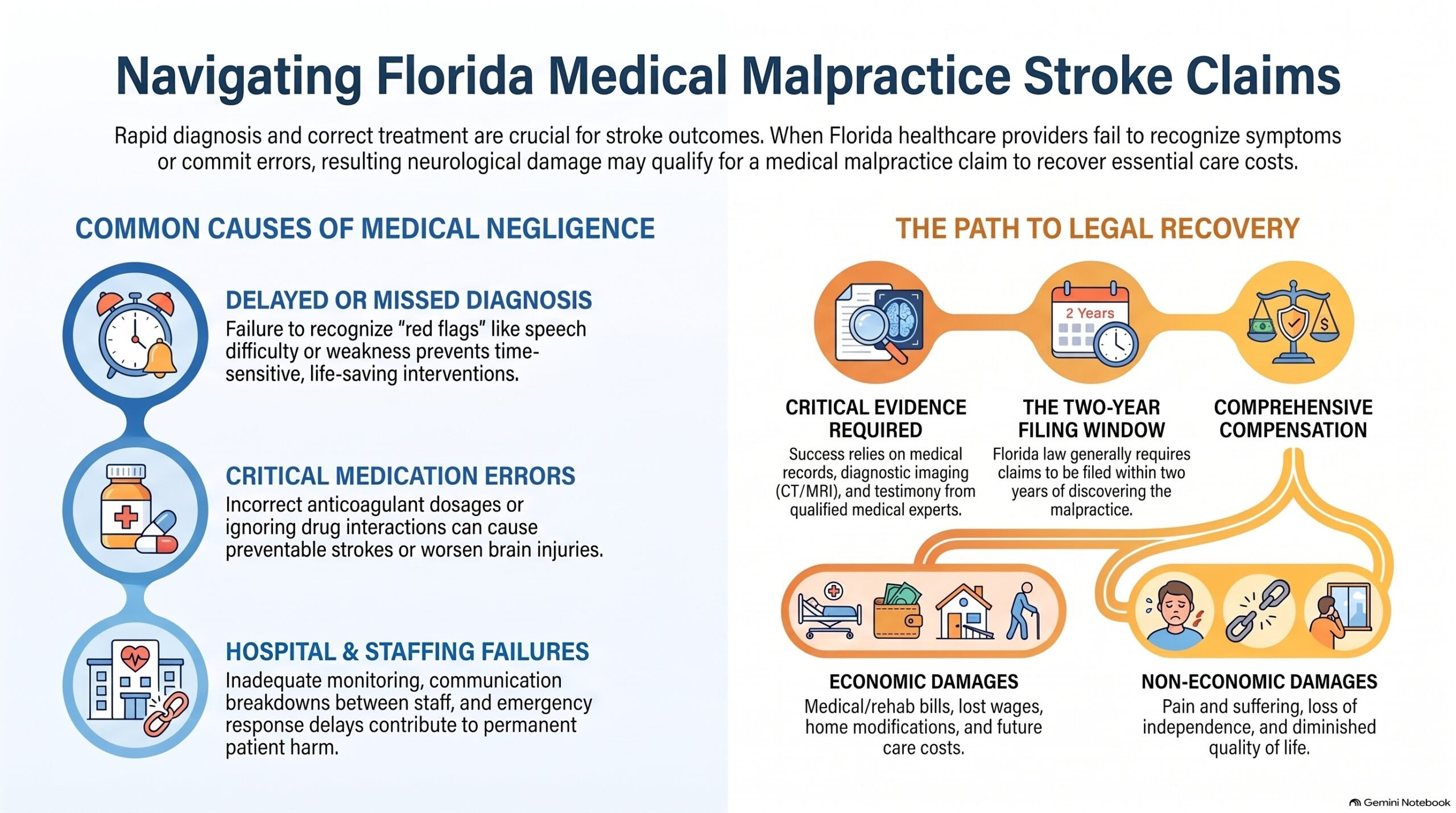
Common causes of stroke-related medical malpractice may include delayed diagnosis, medication errors, and inadequate management of known risk factors. Hospital negligence, including failures in monitoring, communication, or timely treatment, may also contribute to preventable harm. These circumstances require careful review of the medical record to determine whether the standard of care was breached.
Delayed Stroke Diagnosis
A delayed stroke diagnosis can occur when medical professionals fail to recognize warning signs, obtain appropriate imaging, or promptly evaluate changes in a patient’s neurological condition. Misdiagnosis patterns may include attributing sudden weakness, speech difficulty, dizziness, or confusion to fatigue, migraine, intoxication, or another less serious condition. In some cases, inadequate history-taking or failure to consult a neurologist contributes to an incomplete assessment. Imaging delays impact treatment opportunities because time-sensitive interventions may become unavailable as brain injury progresses. Emergency departments and other healthcare settings generally require coordinated triage, neurological examinations, diagnostic testing, and timely reassessment when symptoms evolve. When these steps are overlooked, a patient may experience preventable harm. Medical records, witness accounts, and diagnostic timelines can help determine whether the delayed diagnosis resulted from a breach of professional standards.
Medication Errors
When medication errors occur, patients at risk of stroke may experience preventable complications or lose crucial treatment opportunities. Errors can involve prescribing the wrong drug dosage, overlooking contraindications, or failing to account for interactions with other prescriptions. In some cases, anticoagulant mistakes may cause excessive bleeding; in others, inadequate anticoagulation may allow a dangerous clot to develop. Similar concerns arise when medications intended to control blood pressure, heart rhythm, or cholesterol are administered improperly, discontinued without appropriate instructions, or given to the wrong patient. Healthcare professionals generally have responsibilities to verify orders, review relevant medical information, monitor responses, and communicate changes clearly. When a medication error contributes to a stroke or worsens its outcome, medical records and treatment timelines may help determine whether negligent conduct played a role.
Mismanaged Risk Factors
Poorly managed stroke risk factors can increase the likelihood of a preventable stroke or delay appropriate intervention. Clinical negligence may occur when healthcare professionals fail to identify or address hypertension, diabetes, atrial fibrillation, high cholesterol, or prior transient ischemic attacks. Medication mismanagement, including incorrect prescriptions, inadequate follow-up, or failure to explain warning signs, can further increase the risk to patients. Appropriate diet control and counseling may also be necessary for individuals whose conditions are affected by sodium, glucose, or cholesterol intake. Care monitoring should include timely reassessment, documentation, and communication when risk factors change. When these responsibilities are overlooked, patients and families may face serious consequences. A qualified Florida medical malpractice attorney can review medical records to determine whether substandard risk management contributed to a stroke and whether legal remedies may be available.
Hospital Negligence
Hospital negligence may contribute to a preventable stroke when staff fails to recognize neurological changes, monitor patients appropriately, or provide timely diagnostic testing and treatment. Hospital staffing errors can place patients under the care of inadequately supervised personnel or leave important units understaffed during periods of high demand. These conditions may increase the risk of warning signs, abnormal key readings, or medication complications being overlooked. Emergency response delays can also limit access to imaging, clot-dissolving medication, or mechanical treatment within time-sensitive windows. In addition, failures to communicate changes between nurses and physicians may prevent coordinated care. Hospitals are generally expected to maintain reasonable procedures for monitoring, escalation, and documentation. When departures from those standards cause injury, the circumstances may warrant review by a Florida medical malpractice attorney.
Don’t Wait. Call Our Florida Personal Injury Lawyers Now!


Legal Rights of Florida Medical Malpractice Stroke Injury Victims
Florida stroke injury victims may have legal rights when a healthcare provider’s negligent failure to diagnose, treat, or respond to stroke symptoms causes additional recovery. Florida law may permit an injured patient to pursue compensation for medical expenses, rehabilitation, lost income, diminished earning capacity, and pain or disability. A claim generally requires evidence of a provider-patient relationship, a breach of the applicable professional standard, and harm connected to that breach.
Florida stroke victims may pursue compensation when negligent medical care causes delayed treatment, additional recovery, or worsened impairment.
Potentially significant considerations include:
- Emergency care standards governing timely evaluation and treatment
- Informed consent issues involving material risks, alternatives, or omitted information
- Medical records, imaging, test results, and treatment timelines
- Notice requirements and the statute of limitations applicable to the claim
A qualified attorney can help preserve evidence, obtain independent medical opinions, and assess whether negligence contributed to delayed intervention or worsened impairment. Families and caregivers may support the process by documenting changes in function, expenses, and continuing care needs. Legal guidance can also help protect a vulnerable patient’s interests while promoting accountability within healthcare.
Why Do Stroke Injuries from Medical Malpractice Happen in Florida?
When healthcare providers fail to recognize stroke symptoms, order appropriate testing, or begin timely treatment, preventable brain injury may result. Florida medical malpractice stroke injuries can arise from delayed triage, missed warning signs, inaccurate diagnoses, or failure to activate emergency protocols. Time-sensitive treatment may be delayed when clinicians fail to obtain appropriate imaging, overlook medication risks, or consult other experts. Patient Communication Breakdowns may also contribute when symptoms, medical history, or changes in condition are not accurately documented and shared among caregivers. In hospitals, inadequate monitoring can allow neurological deterioration to continue without timely intervention. Errors during discharge planning may further expose patients to complications when follow-up instructions or warning signs are not explained clearly. Although post-stroke rehabilitation cannot reverse all damage, prompt assessment and coordinated treatment may limit lasting impairment. These injuries often result from combined failures in communication, supervision, documentation, and clinical judgment, rather than from a single isolated mistake or unavoidable outcome.
What Should You Do After a Stroke Injury from Medical Malpractice in Florida?
After a suspected medical malpractice stroke injury, the patient should seek immediate medical care to address urgent health needs and establish a record of treatment. The patient or a representative should document injuries, symptoms, diagnoses, and related expenses. Consulting a qualified stroke lawyer can help assess potential negligence, preserve evidence, and explain available legal options.
Seek Immediate Medical Care
Prompt medical care should be obtained immediately if a person experiences symptoms of a possible stroke following medical treatment, including sudden weakness, facial drooping, speech difficulty, confusion, vision changes, or loss of balance. Call 911 immediately rather than attempting to drive the individual to an emergency department. Emergency responders can begin evaluation, provide supportive treatment, and communicate essential information to hospital personnel before arrival. A caregiver should note when symptoms began or when the person was last known to be well, since treatment decisions may depend on timing. Medical personnel should receive a complete account of recent procedures, medications, and known conditions. Keep records, including discharge instructions and treatment information, safely and without delaying emergency care. Prompt evaluation may reduce permanent harm and establish a reliable medical timeline for subsequent legal review.
Document Your Injuries
Documenting the stroke injury should begin as soon as the individual’s immediate medical needs are addressed. A detailed record can help preserve accurate information about symptoms, treatment, and recovery while events are still clear.
Injury timeline tracking should include the date and time symptoms appeared, when medical assistance was requested, and the facilities or providers involved. The individual or a trusted caregiver should record diagnostic tests, treatments, medications, changes in condition, and significant conversations with healthcare personnel.
Symptom severity documentation should describe weakness, numbness, speech difficulty, confusion, vision changes, pain, mobility limitations, and cognitive effects. Photographs, discharge papers, prescriptions, appointment records, and rehabilitation notes should be retained in an organized file. Caregivers may also document daily assistance needs, missed work, and changes in ordinary activities.
Consult A Stroke Lawyer
When should a stroke survivor or caregiver consult a Florida medical malpractice lawyer? Consultation is appropriate when delayed diagnosis, inadequate treatment, or communication failures may have contributed to preventable harm. A lawyer can review whether reported stroke symptoms received timely emergency evaluation and whether clinicians followed accepted standards of care.
Early legal guidance also helps preserve liability evidence, including witness accounts, treatment timelines, imaging results, and communications with healthcare providers. The survivor or caregiver should request complete records and avoid altering original notes. Careful review of medical record accuracy may reveal missing entries, inconsistent times, or documentation that conflicts with observed events.
A qualified attorney can explain potential claims, deadlines, and the need for medical expert support. Prompt consultation allows families to protect rights while focusing on recovery, informed decision-making, and continued services to meet the survivor’s needs.
Critical Evidence in a Florida Medical Malpractice Stroke Injury Case
A Florida medical malpractice stroke injury case often depends on evidence showing what providers knew, when they knew it, and how they responded. The relevant record may establish whether delayed diagnosis or treatment contributed to the patient’s harm.
Essential evidence commonly includes:
- Medical records documenting symptoms, evaluations, decisions, and communications
- Diagnostic imaging, including scans that may reveal missed or delayed findings
- Expert testimony addressing the applicable standard of care and causation
- A treatment timeline connecting pivotal events with the resulting injury
Medical Records
Medical records provide crucial evidence in a Florida medical malpractice stroke injury case because they establish the patient’s condition, the treatment provided, and the timing of events. Progress notes, nursing observations, medication records, consultation reports, and discharge summaries may reveal whether symptoms were recognized and addressed promptly. These documents can clarify communications among healthcare professionals and identify changes in the patient’s neurological status. Accurate Treatment timelines help determine when warning signs appeared, when decisions were made, and whether delays affected the outcome. Records may also show informed consent discussions, follow-up instructions, and compliance with established procedures. A qualified attorney can organize these materials for review and identify inconsistencies or omissions. Medical records provide the factual foundation for expert testimony regarding the applicable standard of care, potential breaches, and resulting harm.
Diagnostic Imaging
Diagnostic imaging can corroborate the timeline and clinical findings documented in the medical record during a suspected stroke. CT scans may identify bleeding or other urgent abnormalities, while MRI studies can reveal ischemic injury that might not appear on initial imaging. Angiography and perfusion studies may also help show vessel blockage, impaired blood flow, or the potential benefit of timely intervention. In a Florida medical malpractice claim, images and radiology reports can be compared with symptoms, examination findings, medication records, and documented treatment decisions. A careful review of medical records may identify delays in ordering, interpreting, communicating, or acting on imaging results. Preserved images, timestamps, reports, and communication logs can clarify whether information was available when essential decisions were made. Expert witness testimony may later address the significance of imaging without replacing the underlying evidence.
Expert Testimony
How expert testimony is evaluated can materially affect a Florida medical malpractice stroke-injury case. Qualified medical professionals may explain the applicable standard of care, whether a healthcare provider’s conduct departed from that standard, and whether the departure probably caused the patient’s injury. Their opinions can clarify medical records, diagnostic findings, and intricate neurological issues for judges and juries.
Expert Qualification is vital. The witness should possess appropriate education, training, experience, and familiarity with the relevant specialty and clinical circumstances. Courts may examine whether the proposed opinions rest on dependable methods and sufficient facts.
Rule Compliance also matters. Florida procedural requirements govern expert disclosures, supporting materials, testimony, and admissibility. Counsel must present opinions that are focused, supported, and responsive to the legal issues. Careful expert analysis promotes accurate decision-making and helps injured patients pursue accountability responsibly.
Treatment Timeline
When a stroke is suspected, the treatment timeline can become essential evidence in a Florida medical malpractice injury case. Records may show when symptoms began, when staff recognized warning signs, and how promptly diagnostic testing, consultation, and treatment occurred. Treatment delays can support proof of causation when medical experts explain that earlier intervention would likely have reduced neurological harm. A careful review also compares the documented care with applicable hospital protocols and the patient’s individualized plan. Care plan adherence may demonstrate appropriate monitoring, medication administration, and escalation of concerns. Conversely, documentation gaps can obscure important events, including changes in consciousness, key signs, or communication with family members. Attorneys and expert witnesses may organize these details into a chronological account to help determine whether a provider’s conduct fell below the accepted standard of care and caused injury.
Don’t Wait. Call Our Florida Personal Injury Lawyers Now!
Long-Term Effects of Florida Medical Malpractice Stroke Injuries
Florida medical malpractice stroke injuries may cause lasting physical disability, chronic pain, and reduced independence. Cognitive and emotional changes can affect communication, memory, judgment, mood, and relationships. These consequences may also create ongoing medical, rehabilitation, personal-care, and financial needs that require careful assessment.
Physical Disability And Pain
Physical disability and persistent pain can become enduring consequences of a stroke caused or worsened by medical malpractice. Weakness, paralysis, impaired balance, and limited coordination may restrict walking, self-care, employment, and participation in family responsibilities. Some individuals require chronic rehabilitation, including physical, occupational, or speech-related support to preserve function and prevent further decline. Ongoing pain management may involve medication, therapy, assistive devices, and coordinated evaluation for complications such as muscle spasticity or nerve pain. Disability accommodations can help affected people navigate homes, workplaces, transportation, and public services with greater safety and independence. These limitations may also create emotional distress, particularly when daily activities and future plans are altered. Caregivers and legal representatives may document treatment needs, functional losses, expenses, and professional recommendations when evaluating long-term harm and available remedies.
Cognitive And Emotional Changes
Cognitive and emotional changes may persist after a stroke linked to medical malpractice, even when physical recovery appears stable. Survivors may experience memory loss, reduced concentration, slowed reasoning, or difficulty organizing ordinary tasks. Changes in speech, judgment, and problem-solving can affect independence and relationships. Depression, anxiety, irritability, emotional numbness, or sudden mood shifts may also develop, sometimes without clear awareness of the change. These effects can alter a person’s ability to communicate needs, participate in decisions, or maintain previously meaningful roles. Long term cognitive difficulties may require patience, structured routines, and careful communication from family members, caregivers, and advocates. Consistent emotional support can help survivors manage distress and preserve dignity. Documentation of these changes may clarify their impact on daily functioning and personal relationships.
Ongoing Medical And Financial Needs
Over time, stroke injuries associated with medical malpractice may create continuing medical and financial needs that extend well beyond the initial hospitalization. Survivors may require physical, occupational, and speech therapy, making Rehab expenses a substantial and recurring burden. Some individuals need medications, adaptive equipment, transportation, or modifications to maintain safety and independence at home. Severe impairments can also create lifetime support needs, particularly when mobility, communication, memory, or judgment remain affected. Lost wages may arise when a survivor cannot return to previous employment or must reduce hours, while family members may leave work to provide assistance. Documented caregiver needs can include personal care, supervision, meal preparation, and transportation. Careful evaluation of projected expenses and functional limitations helps identify resources and supports that promote dignity, stability, and long-term well-being.
Proving Liability in Florida Medical Malpractice Stroke Injury Cases
To prove liability in a Florida medical malpractice stroke injury case, the injured patient generally must establish that a healthcare provider owed a duty of care, breached the applicable professional standard, and caused the stroke or related harm. Evidence may include medical records, neurological evaluations, treatment timelines, medication histories, and testimony concerning symptoms that should have prompted timely action. A qualified attorney may consult experts to assess whether diagnosis, monitoring, referral, treatment, or informed-consent practices met accepted standards.
Expert witness qualifications are significant because Florida law generally requires competent expert testimony to explain the applicable standard and how the alleged deviation contributed to injury. Experts may address causation, including whether earlier intervention probably would have improved or reduced neurological damage. Providers may assert Medical negligence defenses, such as unavoidable complications, reasonable clinical judgment, patient noncompliance, or preexisting conditions. The patient must respond with reliable evidence that distinguishes those explanations from preventable harm and that documents resulting disabilities, care requirements, and losses. Clear, organized proof helps courts evaluate accountability and supports service to affected individuals.
Dealing With Insurance Companies After a Florida Medical Malpractice Stroke Injury
After a stroke injury in Florida, insurance companies may request statements, medical authorizations, and other information before evaluating a claim. A patient or family member should respond carefully, because incomplete or speculative answers may create confusion about the injury, treatment, or resulting limitations. Insurance communication tactics can include requesting recorded interviews, broad authorizations, or explanations regarding prior medical conditions. Legal counsel may help determine which requests are appropriate and how communications should be handled.
Claim documentation basics include preserving medical records, billing statements, rehabilitation recommendations, employment information, and written observations concerning daily impairments. Documents should be organized chronologically and reviewed for accuracy before submission. Communications with adjusters should remain factual, respectful, and limited to necessary information. No settlement, release, or authorization should be signed without understanding its potential effect on legal rights. Prompt attention to these matters can protect the injured person’s interests while allowing family members and advocates to focus on necessary care and support.
What to Expect During a Florida Medical Malpractice Stroke Injury Claim Process
A Florida medical malpractice stroke injury claim typically begins with an initial case evaluation and a careful review of relevant medical records. Attorneys may consult expert witnesses to assess whether the healthcare provider breached the applicable standard of care and caused the stroke-related injuries. The claim may conclude through settlement negotiations or proceed to trial if the parties cannot reach an agreement.
Initial Case Evaluation
During an initial case evaluation, a Florida medical malpractice stroke lawyer reviews the circumstances surrounding the stroke, the medical care provided, and the resulting injuries or losses. The discussion commonly addresses symptoms, treatment decisions, communication with healthcare professionals, and the timeline leading to the injury. Gathering medical documents helps establish the basic facts, while statements from the patient, family members, and caregivers may clarify changes in condition and daily needs. The lawyer also considers potential filing deadlines, responsible parties, and whether the available information supports further investigation. Securing expert review may be necessary to assess whether the care met applicable professional standards and whether a departure contributed to the stroke injury. The evaluation provides a structured opportunity to explain legal options, practical concerns, and the service-focused steps required to protect the patient’s interests.
Medical Records Review
Medical records review establishes the factual foundation for a Florida medical malpractice stroke injury claim by examining the patient’s symptoms, diagnoses, treatment decisions, communications, and changes in condition. The review may include emergency department notes, nursing documentation, imaging reports, laboratory results, medication lists, discharge instructions, and follow-up records. Particular attention is given to medication timing, neurological assessments, documented warnings, and the response to reported symptoms. Records can reveal whether concerning changes were recognized, communicated, and addressed within appropriate timeframes. A structured chronology helps identify gaps, conflicting entries, delayed interventions, or departures from documented procedures. It also supports causation analysis by connecting alleged care failures with the stroke, resulting injuries, and required services. The process preserves relevant evidence while protecting the patient’s privacy and dignity.
Expert Witness Testimony
When expert witnesses evaluate a Florida medical malpractice stroke claim, they assess whether the healthcare provider’s conduct met the applicable standard of care and whether any breach caused or contributed to the patient’s recovery injuries. Their opinions may address diagnosis, treatment decisions, monitoring, informed consent, and the timing of emergency intervention. Through expert selection, attorneys identify qualified physicians whose specialties and experience correspond to the disputed care. Credential verification confirms licensure, board certification, clinical practice, academic background, and prior testimony history. The expert reviews medical records, imaging, laboratory results, facility policies, and deposition testimony before preparing a reasoned opinion. During deposition or court testimony, the witness clearly explains conclusions, answers opposing counsel’s questions, and distinguishes documented facts from assumptions. This testimony helps establish the medical issues requiring legal evaluation.
Settlement Or Trial
Settlement or trial represents a significant decision point in a Florida medical malpractice stroke injury claim. After reviewing medical records, expert opinions, and available evidence, the legal team may recommend pursuing a negotiated resolution or preparing for courtroom litigation. A negotiation strategy should address liability, treatment needs, lost earnings, future care, and the patient’s long-term quality of life. Case value depends on the strength of the evidence, the severity of the injury, and documented financial and personal losses. Settlement can provide a defined outcome without the uncertainty of a trial, although it may require accepting less than the claimed amount. If negotiations fail, trial permits a judge or jury to evaluate the evidence and damages. Throughout either path, careful preparation helps protect the patient’s interests and support responsible advocacy for affected families.
Compensation for Florida Medical Malpractice Stroke Injury Damages
A successful Florida medical malpractice claim involving a stroke may result in compensation for damages caused by negligent diagnosis, delayed treatment, or other failures to meet the standard of care. Recoverable compensation may cover the patient’s ongoing medical needs, rehabilitation needs, assistance with daily activities, and other consequences resulting from the injury. A claim may also recognize harm experienced by family members when Florida law permits recovery for qualifying losses. The available amount depends on medical evidence, causation, prognosis, and the strength of documentation supporting each requested damage. Comparative negligence may affect recovery if the defense proves that the patient’s own conduct contributed to the outcome. The court may reduce an award according to the assigned percentage of responsibility. If the matter proceeds to trial, jury evaluation can influence how testimony, records, and life-impact evidence are assessed. A Florida medical malpractice lawyer can organize supporting evidence, identify responsible parties, and pursue compensation that reflects the injury’s lasting effects.
Economic vs Non-Economic Damages in Florida Medical Malpractice Stroke Cases
Economic damages may include medical treatment, rehabilitation, lost income, and future care costs resulting from a stroke. Non-economic damages address less tangible effects, such as pain, emotional distress, disability, and diminished quality of life. Calculating total compensation requires evaluating documented financial losses alongside the stroke’s lasting personal and functional consequences.
Economic Damages Explained
When a medical error contributes to a stroke, Florida law distinguishes between economic and non-economic damages when evaluating the injured patient’s losses. Economic damages reflect documented financial consequences, including emergency treatment, hospitalization, rehabilitation, prescription medication, assistive equipment, transportation, and future medical care. They may also include lost wages, reduced earning capacity, and costs associated with household or personal assistance when the stroke limits daily functioning. Financial records, medical opinions, employment documentation, and life-care projections can help establish these losses. Comparative negligence may affect the recoverable amount if the patient’s conduct is found to have contributed to the harm. Settlement timing can influence how future expenses are calculated and whether sufficient resources remain available for ongoing care. Careful preparation helps protect the patient’s long-term financial stability and interests.
Non-Economic Damages Considered
Non-economic damages address the human consequences of a stroke that cannot be measured through bills or pay records, including pain, emotional distress, loss of independence, disfigurement, and diminished quality of life. In Florida medical malpractice cases, these losses may arise when negligent diagnosis or treatment causes lasting neurological harm. Non-economic damages recognize how impaired mobility, communication, memory, or emotional stability can affect family relationships and daily participation. Evidence may include medical records, rehabilitation observations, testimony from relatives, and accounts from caregivers describing changes in behavior or functioning. Proving pain does not require a financial receipt; it requires credible evidence connecting the suffering to the medical error and resulting injury. The assessment remains distinct from economic losses and focuses on personal impact rather than expenses, wages, or projected financial needs.
Calculating Stroke-Related Compensation
In evaluating stroke-related compensation, a Florida medical malpractice claim generally separates financial losses from the personal harm caused by the injury. The Economic losses breakdown may include emergency treatment, rehabilitation, prescription medication, lost income, diminished earning capacity, and necessary home modifications. Documentation such as medical records, invoices, employment statements, and expert assessments helps establish these amounts. Future medical costs require careful projection because stroke survivors may need ongoing therapy, assistive equipment, personal care, or additional procedures. Qualified professionals may calculate expected expenses and account for inflation and life expectancy. Non-economic damages address pain, emotional distress, disability, disfigurement, loss of independence, and reduced enjoyment of life. Florida law may limit or otherwise affect recoverable damages depending on the defendant and applicable circumstances, making individualized legal evaluation important for a fair outcome.
When a Florida Medical Malpractice Stroke Injury Case Goes to Trial vs Settlement
Most Florida medical malpractice stroke injury claims resolve through settlement, but some proceed to trial when the parties cannot agree on liability or the value of damages. Settlement can provide a defined recovery, reduce uncertainty, and help an injured person access supportive care sooner. A Settlement Negotiation Strategy may involve medical records, expert opinions, rehabilitation projections, lost earnings, and documented changes in daily functioning. The claimant typically weighs the security of an agreed payment against the possibility of a larger, smaller, or unsuccessful trial result.
At trial, each side presents evidence concerning the provider’s conduct, the alleged connection to the stroke, and the resulting harm. Trial Verdict Factors may include witness credibility, expert consistency, the clarity of medical documentation, and the persuasiveness of damages evidence. A verdict may also require considerable time and impose emotional demands on the individual and family. Legal counsel generally evaluates case strength, projected needs, and personal priorities before recommending settlement or trial, while keeping the injured person’s long-term welfare central.
Don’t Wait. Call Our Florida Personal Injury Lawyers Now!
Florida Laws That May Affect Your Florida Medical Malpractice Stroke Case
Florida law governs nearly every stage of a medical malpractice stroke case, including the applicable standard of care, pre-suit requirements, filing deadlines, and limits on recoverable damages. These rules help courts evaluate whether a provider’s conduct departed from accepted practice and caused preventable harm. Counsel typically reviews medical records, obtains Expert consultation, and complies with pre-suit investigation and notice procedures before litigation begins.
Important considerations may include:
- Florida’s medical negligence standards require proof of a breach, causation, and legally recognized damages.
- Presuit procedures may require notifying prospective defendants and allowing an opportunity to respond.
- Statute-of-limitations may affect non-economic damages, attorneys’ fees, evidence, and other aspects of recovery.
- Comparative-fault principles can reduce compensation when a claimant’s conduct contributed to the injury.
Additional laws may govern hospital responsibility, emergency treatment, informed consent, and the admissibility of expert testimony. Because statutes and case interpretations can change, prompt review by qualified counsel supports accurate evaluation and helps families pursue accountability while preserving resources for continued care, rehabilitation, and community service.
The Statute of Limitations for Florida Medical Malpractice Stroke Injury Cases
Although a stroke injury may be discovered long after the treatment that caused it, Florida medical malpractice claims generally must be filed within a legally defined period. Florida typically allows a two-year period from when the patient knew, or reasonably should have known, about the injury and its possible medical cause. An outside limit generally bars claims more than four years after the alleged malpractice, even if the injury was discovered later. Exceptions may apply, including situations involving fraud, concealment, misrepresentation, or cases involving minors. Special rules can also affect claims against government-owned healthcare providers, which may require additional notice before filing. Filing Deadlines should therefore be evaluated promptly, because missing a statutory period can permanently prevent recovery. Comparative Negligence may reduce damages when a claimant’s conduct contributed to the harm, although it does not ordinarily extend the limitations period. Accurate medical records, treatment dates, and discovery facts are important when determining which deadline controls.
How a Florida Medical Malpractice Stroke Lawyer Can Help You
A Florida medical malpractice stroke lawyer can evaluate whether negligent diagnosis, treatment, or monitoring contributed to the stroke and identify the parties who may be legally responsible. The lawyer may explain the Misdiagnosis consequences, including preventable neurological injury, rehabilitation needs, lost income, and continuing care expenses. Through Expert review, counsel can analyze medical records, imaging, laboratory results, medication decisions, and hospital procedures to determine whether providers met applicable standards.
A lawyer may also:
- Consult qualified physicians and other experts regarding causation and the required standard of care.
- Organize evidence connecting delayed intervention or improper treatment to the patient’s injuries.
- Calculate medical costs, caregiving needs, reduced earning capacity, and other recoverable losses.
- Communicate with insurers and opposing parties while protecting the patient’s legal interests.
This assistance can help families understand complicated medical information and pursue accountability on behalf of an injured person. Counsel may develop a clear case strategy, explain available remedies, and present supported claims through negotiation or litigation when appropriate.
When to Contact a Florida Medical Malpractice Stroke Lawyer
Prompt consultation with a Florida medical malpractice stroke lawyer may be appropriate when a patient suffers a stroke after symptoms were overlooked, testing was delayed, treatment was improperly provided, or warning signs were not adequately monitored. A consultation can also be considered when medical records contain unexplained gaps, providers offer conflicting accounts, or the patient experiences substantial disability, requires rehabilitation, or incurs financial losses after the event.
Timing matters because Florida’s Statute of limitations may restrict how long a patient or authorized representative has to pursue a medical malpractice claim. Since the deadline can depend on when the injury was discovered and other specific circumstances, obtaining legal guidance promptly can help preserve available options. A Free legal consultation may allow the patient or family to discuss the timeline, identify potentially relevant evidence, and understand whether further review is warranted. Records, discharge instructions, diagnostic results, witness information, and billing documents should be retained and organized for that initial discussion.
Why You Need an Experienced Florida Medical Malpractice Stroke Lawyer
Because stroke malpractice claims often involve detailed medical and legal issues, experienced representation can be vital to evaluating whether a provider departed from the accepted standard of care. A qualified lawyer can examine emergency-room records, imaging, medication histories, neurological assessments, and consultation timelines to identify missed symptoms, delayed treatment, or inadequate monitoring. This review may clarify whether earlier intervention could have reduced lasting harm.
Experienced counsel also understands Insurance denial tactics that may minimize disability, dispute causation, or shift responsibility among providers. Legal guidance can help protect a patient’s rights while communicating with insurers and healthcare institutions. Evidence preservation tips are equally important and include securing complete medical records, maintaining treatment documentation, preserving billing information, and recording functional changes after the stroke. These measures can support a reliable case evaluation and help demonstrate damages. By handling complicated procedural and evidentiary demands, counsel allows injured individuals and their families to focus on recovery, rehabilitation, and continued service to others.
How to Choose the Right Florida Medical Malpractice Stroke Lawyer for Your Case
Selecting the right Florida medical malpractice stroke lawyer requires careful evaluation of the attorney’s experience, resources, and approach to detailed medical evidence. A qualified lawyer should understand stroke diagnosis, treatment delays, hospital protocols, and the standards governing emergency and neurological care. Reviewing relevant case results, professional credentials, and access to independent medical experts can help families assess whether counsel is prepared to investigate complicated facts.
Prospective clients should also discuss Client communication expectations before signing an agreement. Clear information about response times, case updates, decision-making authority, and legal fees can support a productive relationship during a demanding process. The lawyer should explain potential claims, evidence requirements, litigation risks, and realistic outcomes without making unsupported promises.
Time-sensitive evaluation is equally important because Florida law may impose strict deadlines. A prompt consultation allows counsel to assess the statute-of-limitations countdown, preserve records, identify witnesses, and determine whether notice requirements apply. Careful selection helps protect the injured person’s interests while promoting accountability and informed service.
About The Law Offices of Anidjar & Levine
The Law Offices of Anidjar & Levine represents individuals and families seeking compensation for suspected medical negligence, including failures in stroke diagnosis, treatment, and follow-up care.
The firm evaluates whether healthcare providers recognized warning signs, ordered appropriate testing, provided timely treatment, and communicated essential information to patients or families.
Its legal team offers Experienced Advocacy for clients confronting serious injuries, long-term disabilities, or wrongful death claims.
Attorneys may review medical records, consult with qualified medical professionals, identify responsible parties, and assess damages, including medical expenses, rehabilitation costs, lost income, and diminished quality of life.
Each case requires careful review because medical malpractice claims involve intricate standards, deadlines, and evidentiary requirements.
Client Communication remains an important part of the firm’s approach.
Clear explanations can help families understand potential legal options, case developments, and the documentation needed to support a claim.
By pursuing accountability, the firm seeks to assist affected individuals while promoting careful, responsible medical treatment throughout Florida.
Initial consultations may help determine whether further investigation is appropriate.

Frequently Asked Questions
Can I Afford a Florida Medical Malpractice Stroke Lawyer Without Upfront Payment?
Yes, a qualified Florida medical malpractice stroke lawyer may accept a case without upfront payment through a contingency fee arrangement. The attorney generally receives payment only if compensation is recovered, with the percentage and responsibility for litigation expenses explained in a written agreement. Some firms may also offer payment plans for costs not covered by the contingency arrangement. Prospective clients should request a detailed fee contract and discuss eligibility, case expenses, and potential obligations before proceeding.
Will My Stroke Malpractice Case Remain Confidential Throughout the Legal Process?
A stroke malpractice case is not automatically confidential throughout the legal process. Patient privacy rights generally protect medical information, but filings, hearings, and evidence may become accessible through public court records. An attorney can request sealed documents, protective orders, or redactions when legally justified. Court record confidentiality depends on judicial rulings and applicable law. The client should discuss privacy concerns early and understand that complete secrecy cannot be guaranteed.
Can Family Members Participate in Decisions About My Florida Stroke Malpractice Claim?
Family members may participate in decisions about a Florida stroke malpractice claim when the patient authorizes their involvement. Shared decision-making can help assess settlement offers, litigation risks, and personal priorities, while preserving the patient’s control. Attorneys must follow consent requirements and protect confidential information. If the patient lacks decision-making capacity, legally recognized guardian authority or another valid representative may permit family participation, subject to court rules and applicable law.
What Happens if the Healthcare Provider Responsible for My Stroke Has Closed?
If a healthcare provider responsible for a stroke has closed, a claim may still proceed against applicable insurers, owners, employers, or successor entities. Determining what to do if the provider is gone requires prompt legal investigation, including identifying successor entities and reviewing licensing or corporate records. The filing claims timeline remains essential because Florida deadlines can bar recovery. Counsel can advise how to locate records, preserve evidence, and identify responsible parties while supporting the affected patient and family.
Can a Prior Medical Condition Affect My Florida Medical Malpractice Stroke Lawsuit?
A prior medical condition can affect a Florida medical malpractice stroke lawsuit, but it does not automatically defeat the claim. Preexisting conditions may influence whether negligence caused the stroke, worsened its consequences, or accelerated an existing risk. The claimant generally needs proof of causation supported by healthcare documentation and expert medical review. Physicians may distinguish the patient’s expected outcome from harm attributable to improper diagnosis, treatment, or delayed intervention, guiding fair assessment of damages.
—————————
Florida stroke malpractice cases require a careful review of medical records, treatment decisions, and the timing of critical interventions.
An experienced Florida medical malpractice stroke lawyer can evaluate whether a healthcare provider breached the applicable standard of care and caused preventable harm.
Florida Personal Injury Lawyer The Law Offices of Anidjar and Levine helps injured patients and families understand their legal options, identify potentially responsible parties, and pursue compensation within Florida’s strict deadlines.
Prompt legal evaluation may help preserve important evidence and protect the right to seek recovery.