The Law Offices of Anidjar and Levine help T-bone car accident victims pursue compensation by proving fault, documenting injuries, and handling insurance pressure from the start. Our team reviews police reports, medical records, photos, witness accounts, vehicle damage, and available footage to identify liable parties and protect crucial evidence. We also evaluate medical costs, lost income, pain, and future care needs while managing insurer communications. Below, our Gainesville Car Accident Lawyer explains how these claims work and what steps can strengthen your case.
Main Takeaways
- A Gainesville T-bone accident lawyer investigates fault using police reports, witness statements, crash photos, vehicle damage, and camera footage.
- Common T-bone crash causes include running red lights, failing to yield, distracted driving, speeding, and improper turns.
- Injury claims may seek compensation for medical care, future treatment, lost wages, reduced earning ability, and pain and suffering.
- A lawyer can manage insurance paperwork, deadlines, adjuster communications, and settlement negotiations to challenge undervalued offers.
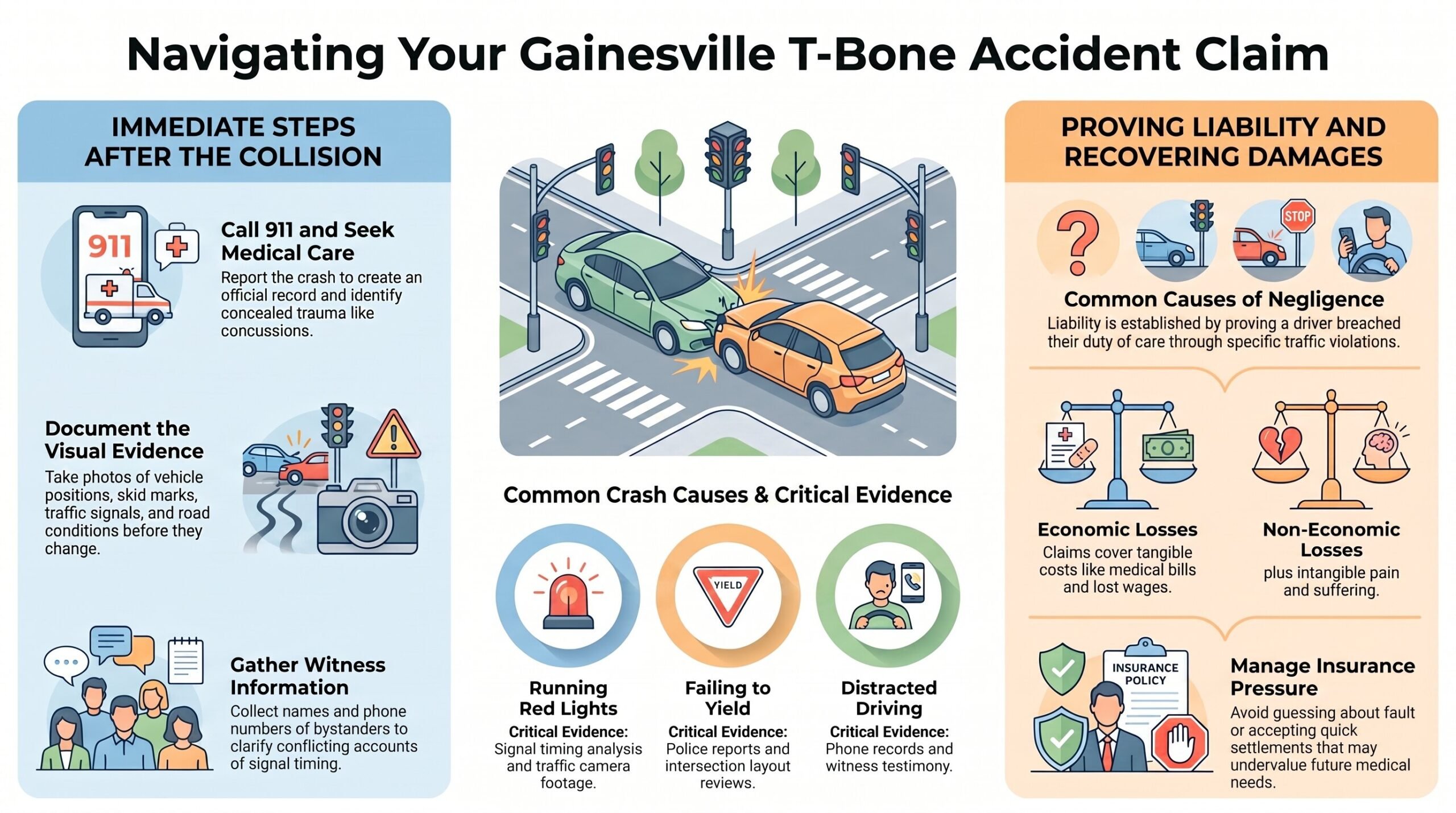
- After a T-bone crash, call police, seek medical help, document the scene, gather witness information, and avoid guessing about fault.


How We Can Help With Your Gainesville T-Bone Car Accident Injury Claim
After a T-bone collision, we can help you build a strong injury claim by identifying every liable party, preserving critical evidence, and calculating the full value of your losses.
We review police reports, medical records, photos, witness accounts, and vehicle damage to determine how the crash happened and who should be held responsible.
Our team provides Insurance paperwork help, so you can focus on recovery and serving your family, workplace, and community.
We handle insurance paperwork so you can focus on healing, family, work, and your community.
We also manage communications with insurers, track deadlines, and challenge attempts to undervalue your injuries.
When needed, we develop a Court evidence strategy that organizes proof clearly and persuasively.
This may include expert opinions, crash reconstruction, treatment documentation, and testimony preparation.
Throughout the process, we explain your options, answer your questions, and pursue compensation for medical care, lost income, pain, and future needs.
We protect your claim with diligence, precision, and purpose.
OUR CONSULTATIONSARE FREE
START YOUR FREE CASE REVIEW

Understanding Gainesville T-Bone Car Accident Injury Cases
When a side-impact crash occurs, a Gainesville T-bone car accident injury case often turns on how the vehicles entered the intersection, who had the right of way, and whether either driver violated a traffic law. We examine the scene, vehicle damage, signal timing, and available records to understand the collision clearly and accurately.
We also focus on how the crash affected you, your family, and the people who depend on your care. Medical records, work limitations, and daily responsibilities help us show the full impact of the injury.
Witness testimony collection can clarify what happened before impact, especially when drivers give conflicting accounts.
Comparative negligence analysis is also crucial because Florida law may reduce compensation if you share fault. We evaluate these issues early, protect evidence, and build a claim that reflects both liability and damages.
Our goal is to help you pursue accountability with care, discipline, and purpose after a serious collision.
Common Causes of Gainesville T-Bone Car Accident
We often see T-bone crashes occur when drivers run red lights, fail to yield, drive distracted, or speed through intersections.
These choices place you and other motorists directly in the path of severe side-impact collisions.
We evaluate these common causes carefully because identifying the negligent conduct can help establish liability and support your injury claim.
Running Red Lights
Because T-bone collisions often happen at intersections, running red lights remains one of the most dangerous causes of these crashes in Gainesville. When a driver enters against a signal, your vehicle may have little time to avoid a side-impact crash.
We examine how the violation occurred and focus on evidence preservation before key evidence disappears.
Traffic light cameras, nearby business footage, and vehicle damage patterns can help establish the sequence of events. We also gather witness statements from people who saw the signal phase or the driver’s conduct.
When needed, signal timing analysis can confirm whether the light changed properly and whether the at-fault driver ignored it.
Failing To Yield
At Gainesville intersections, a driver’s failure to yield can quickly place your vehicle in the path of a side-impact collision. We often see these crashes occur when motorists ignore traffic control signs, misjudge another vehicle’s right-of-way, or enter a roadway without proper caution.
When you’re hurt, we examine the intersection layout, police reports, witness statements, and any available camera footage to establish how the driver’s choice caused the impact.
We also address comparative fault arguments that insurers may raise to reduce your recovery. By carefully documenting the sequence of events and the emergency response, we help show why the yielding driver bore responsibility.
Our goal is to serve you with steady guidance, protect your claim, and pursue the compensation your injuries require after a serious T-bone collision.
Distracted Driving
Too often, distracted driving turns a routine Gainesville intersection into the scene of a serious T-bone crash. When a driver looks away, reaches for a device, or lets a conversation divide attention, the duty to protect others on the road is neglected.
We often see phone use and text messaging interfere with a driver’s ability to notice traffic signals, cross traffic, pedestrians, and cyclists. These choices can leave careful motorists and families facing painful injuries and difficult recoveries.
We also examine surrounding conduct, including whether the distracted driver ignored tailgating laws or failed to adjust for weather hazards that required greater attention.
Speeding Through Intersections
Speeding through intersections often works alongside distraction to create violent T-bone collisions in Gainesville.
When a driver enters too fast, there’s little time to recognize a changing light, a turning vehicle, or a pedestrian crossing with the right of way.
We help you understand how speed affects stopping distance, impact force, and reaction time, especially in cases involving traffic signal violations.
These facts matter when we evaluate intersection liability and identify who failed to protect others on the road.
If you or someone you serve was injured in this kind of crash, we closely examine signal timing, skid marks, camera footage, and witness accounts.


Legal Rights of Gainesville T-Bone Car Accident Injury Victims
After a T-bone crash in Gainesville, victims have the right to seek compensation when another driver’s negligence caused their injuries. We help you understand those rights so you can protect your health, your family, and your ability to serve others.
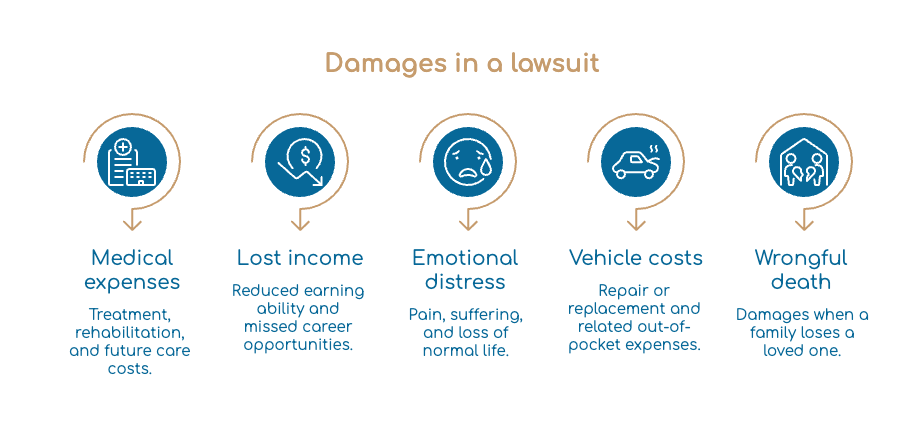
You may pursue damages for losses that affect daily life, work, and long-term stability.
- Medical treatment, rehabilitation, and future care needs
- Lost wages, reduced earning ability, and missed opportunities
- Pain, suffering, emotional distress, and loss of normal life
- Vehicle repair or replacement, plus related out-of-pocket costs
- Wrongful death damages occur when a family loses a loved one
We also evaluate insurance coverage, liability disputes, and evidence that supports your claim.
A sound negotiation strategy can strengthen your position before trial becomes necessary.
We explain attorney fees clearly, so you know how representation works.
When insurers minimize harm, we advocate firmly for fair compensation.
What Should You Do After a Gainesville T-Bone Car Accident Injury?
After a T-bone collision, we must act quickly to protect your safety, preserve evidence, and support any future injury claim. We start by checking for injuries, promptly calling the police, and ensuring the crash is properly reported.
We also document the scene, including vehicle positions, visible damage, road conditions, and witness information whenever possible.
Check For Injuries
Check yourself and everyone involved for injuries as soon as the vehicles come to a stop, even if the collision seems minor at first.
We should look for visible injuries, including bleeding, swelling, burns, or signs of broken bones, while speaking calmly to each person.
If someone appears confused, dizzy, short of breath, or in severe pain, we should avoid moving them unless immediate danger requires it.
First responders can assess the scene safely, but our careful observations may help them provide faster medical attention.
We should remember that concealed trauma, such as internal bleeding, neck injuries, or concussions, may not appear right away.
Encourage everyone to remain still, breathe slowly, and report any symptoms, because prompt care can protect health and support later injury claims.
Call the police quickly
Once we’ve checked for injuries, we should call 911 quickly and report the T-bone collision to law enforcement, especially when anyone is hurt, vehicles block traffic, or property damage appears significant.
We can calmly provide the location, number of vehicles, visible hazards, and whether we need officers to request EMS response.
Quick reporting helps protect everyone nearby and creates an official record that may later support your injury claim.
We should remain cooperative, answer questions truthfully, and avoid guessing about fault or the severity of injury.
If bystanders offer help, we can ask officers to record witness statements, since prompt information often preserves important details.
While we serve others at the scene, we must follow police directions and keep safety, dignity, and accountability at the center of our actions.
Document The Scene
While we wait for officers to arrive, we should document the T-bone accident scene as thoroughly and safely as possible.
We can help protect everyone’s interests by taking clear photographs of vehicle positions, damage, skid marks, debris, traffic signals, road signs, and visible injuries.
We should also note weather and lighting, because rain, glare, darkness, or poor visibility may explain how the collision occurred.
If it’s safe, we can record short videos showing the intersection, lane markings, and surrounding conditions before anything changes.
The collection of witness statements should begin respectfully by asking nearby drivers, passengers, or pedestrians for their names, phone numbers, and what they saw.
We shouldn’t argue or assign blame.
Instead, we preserve facts that may later help injured people pursue fair accountability and needed support.
How a T-Bone Injury Lawyer Can Help You
After a side-impact collision, a Gainesville T-bone car accident injury lawyer can help you protect your rights, document your losses, and pursue compensation from the party responsible for the crash. We guide you through each step, so you can focus on recovery and service to those who depend on you.
Protect your rights after a Gainesville T-bone accident while focusing on recovery and those who rely on you.
- Gathering evidence, including photos, reports, and vehicle data
- Conducting witness interviews to clarify fault and timing
- Establishing damages through medical records, wages, and expenses
- Building a case strategy tailored to liability and insurance issues
- Communicating with insurers to reduce pressure and protect your claim
We also identify all responsible parties, preserve deadlines, and present your claim with accuracy and purpose.
When you’re trying to care for family, coworkers, or community members, legal burdens can get in the way. We shoulder those tasks, explain your options clearly, and work to secure a fair result.
Long-Term Effects of Gainesville T-Bone Car Accident Injuries
We help you understand how T-bone collision injuries can lead to lasting consequences, including chronic pain, reduced mobility, and limitations in daily activities.
We also account for ongoing medical costs, from follow-up care and physical therapy to prescription needs and visits with medical professionals.
Chronic Pain Management
Chronic pain can become one of the most difficult long-term effects of T-bone accident injuries, especially when damage to the neck, back, shoulders, hips, or nerves doesn’t fully recover.
We help you understand how ongoing pain may affect work, family duties, caregiving, and daily service to others.
Effective care often requires coordinated treatment, not isolated visits.
Physical therapy options may strengthen injured areas, reduce strain, and support safer movement patterns without increasing symptoms.
Medication management plans can also help control inflammation, nerve pain, and muscle spasms while reducing the risks associated with overuse or dependence.
We encourage you to carefully document symptoms, treatment appointments, and pain-related limits.
This record can support your medical care and strengthen your injury claim after a Gainesville T-bone accident.
Reduced Mobility Issues
When joint damage, fractures, nerve injuries, or soft tissue trauma limit movement, reduced mobility can affect nearly every part of life after a Gainesville T-bone accident. We appreciate that difficulty walking, standing, lifting, or driving can interfere with your work, caregiving, worship, and service to others.
These limitations may require assistive devices, modified duties, transportation support, or Home modification to preserve independence and safety.
We also recognize how reduced mobility can affect your ability to contribute to your household and community consistently and with dignity.
When we evaluate these injuries, we consider how restrictions influence daily routines, long-term function, and future opportunities.
If lasting impairment prevents reliable employment, disability benefits may become an important part of protecting your stability and ability to move forward.
Ongoing Medical Costs
Reduced mobility often brings continuing treatment needs, and those medical expenses can place lasting pressure on your finances after a Gainesville T-bone accident.
We recognize that you may need surgery, therapy, pain management, mobility devices, and follow-up care while you continue to care for your family, work, and community responsibilities.
These costs can grow quietly, especially when complications limit your ability to serve others or earn a steady income.
We use a medical records review to document your diagnosis, treatment history, prognosis, and expected future care.
That evidence helps us explain why your claim should include future compensation for reasonable medical needs, not just bills already received.
Proving Liability in Gainesville T-Bone Car Accident Injury Cases
Because T-bone crashes often occur in intersections, proving liability requires a careful review of right-of-way rules, traffic signals, driver conduct, and physical evidence from the scene. We help you establish what happened by gathering police reports, crash photographs, vehicle damage patterns, and available camera footage.
Strong evidence from the intersection can help clarify fault and support your T-bone crash claim.
These details can show whether another driver ran a red light, failed to yield, turned improperly, or drove while distracted.
We also recognize the value of eyewitness testimony, especially when those witnesses can confirm signal timing, lane position, or unsafe behavior before impact.
In some cases, comparative negligence may become an issue if the other side claims you share responsibility. We address those arguments directly by connecting reliable evidence to each driver’s actions.
Our role is to build a clear, organized liability presentation so you can pursue accountability with confidence, protect your recovery, and continue focusing on the people and responsibilities that matter most.
Dealing With Insurance Companies After a Gainesville T-Bone Car Accident Injury
After a T-bone accident, insurance companies may contact you quickly, often before you understand the full extent of your injuries or losses. We help you respond with care because early statements can affect your recovery and your ability to serve your family, work, and community.
Insurers may use insurance claim tactics that shift blame, minimize medical needs, or question the force of impact. We review communications, preserve evidence, and address documentation disputes before they weaken your position.
When adjusters create settlement pressure, we remind you that quick payment may not reflect future treatment, lost income, or lasting pain.
We also examine coverage limitations, including policy exclusions, liability limits, and available uninsured or underinsured motorist benefits.
You shouldn’t have to manage these issues alone while healing. We stand between you and the insurer, protect your rights, and pursue a result that reflects your actual losses and needs.
What to Expect During a Gainesville T-Bone Car Accident Injury Claim Process
We begin your claim with an initial case evaluation to identify liability, damages, and available insurance coverage.
We then file the insurance claim, gather evidence and documentation, and build a record that supports your position.
As the process moves forward, we handle settlement negotiations with a clear strategy to ensure you’re prepared for each stage.
Initial Case Evaluation
When a side-impact collision disrupts your life, an initial case evaluation helps us identify the facts, legal issues, and potential sources of compensation involved in your Gainesville T-bone accident claim.
We listen to your account, review crash details, and determine how the collision affected your health, work, and service to others.
Medical documentation is central because treatment records connect your injuries to the impact and show the care you need moving forward.
We also examine vehicle damage, witness information, roadway conditions, and any early communications you have received.
During this stage, we explain the insurance timeline in general terms, so you understand crucial deadlines without moving into claim filing.
Our goal is to provide clear guidance, preserve important evidence, and help you make informed decisions.
Insurance Claim Filing
Three steps shape the start of a Gainesville T-bone accident insurance claim: identifying the available coverage, notifying the proper insurers, and presenting the claim with accurate supporting information. We guide you through each step so your claim begins with order and purpose.
Early communication helps protect deadlines and reduces confusion among carriers, especially when multiple policies may apply.
We also help establish a practical claim timeline, so you know when insurers may request insurance documentation, review medical records, or respond to the demand.
While evidence of liability matters, we focus here on submitting the claim correctly and preserving your position.
Evidence And Documentation
After filing the insurance claim, the next focus is building a clear record that supports what happened, who bears responsibility, and how the crash affected your life.
We gather police reports, medical records, repair estimates, photographs, video footage, and employment documentation to connect the collision to your losses.
Witness statements can clarify traffic signals, vehicle positions, speed, and driver conduct before impact.
We also address preservation of evidence, including damaged vehicles, event data, surveillance recordings, and phone records when appropriate.
Because useful proof can disappear quickly, we act promptly and organize each item with care.
This process helps us present your claim accurately, while honoring your need for stability, accountability, and continued service to those who depend on you each day.
Settlement Negotiations
Prepare for settlement negotiations by understanding that the insurer will review liability, medical treatment, property damage, lost income, and the long-term effect of your injuries before making an offer.
We help you approach this process with patience, preparation, and a service-minded focus on restoring stability.
Evidence preservation remains vital because photos, witness statements, crash reports, and medical records can strengthen your position.
If property damage is in dispute, an insurance appraisal may help clarify repair costs or the vehicle’s value.
When a liability dispute arises, we address fault arguments with documented facts and careful analysis.
We also calculate future care needs and reduced earning capacity when supported.
Strong documentation gives us leverage in settlement, allowing us to negotiate firmly while guiding you toward informed decisions that protect your recovery.
Compensation for Gainesville T-Bone Car Accident Injury Damages
Seek full compensation for the losses a T-bone crash imposes, because the financial impact often extends far beyond the initial emergency room visit. We help you evaluate available sources of recovery, explain Insurance coverage basics, and identify policies that may apply when another driver’s carelessness disrupts your ability to serve your family, workplace, or community.
We also guide you through a claim timeline overview, so you understand each stage, from reporting the collision to reviewing settlement offers. Insurers may attempt to limit payment, dispute fault, or undervalue the seriousness of your injuries.
We respond with organized evidence, medical documentation, witness statements, and a clear presentation of liability.
Our goal is to pursue compensation that reflects the full consequences of the crash, not just the most obvious bills. You merit steady guidance, careful preparation, and advocacy focused on restoring stability after a preventable Gainesville T-bone accident.
Economic vs Non-Economic Damages in Gainesville T-Bone Car Accident Cases
We separate your damages into economic losses, such as medical bills and missed wages, and non-economic losses, such as pain and emotional harm.
We use records, expert opinions, and clear evidence to show how the crash affected your finances, health, and daily life.
Medical Bills And Wages
After a t-bone collision in Gainesville, the financial impact often reaches far beyond the first emergency room bill.
We help you identify economic damages tied to treatment, rehabilitation, prescriptions, medical equipment, and follow-up care.
We also document lost wages when injuries keep you from serving your workplace, clients, family, or community.
Accurate records matter because insurance payouts often depend on clear proof of expenses, income loss, and future financial needs.
We review bills, pay records, employer statements, and medical opinions to build a complete claim.
Fault determination also affects recovery, so we closely examine crash evidence and liability issues.
When we present these losses with precision, we help protect your financial stability while you focus on restoring your responsibilities.
Pain And Emotional Harm
Pain can turn a Gainesville t-bone accident into a daily burden that doesn’t appear neatly on a bill or wage statement. We recognize that non-economic damages address the human cost of injury, including physical discomfort, emotional distress, sleep disruption, anxiety, and reduced enjoyment of daily life.
These harms can affect how you work, care for your family, serve your community, and maintain relationships after the crash.
We also understand that post-accident stress may require Trauma support and steady mental health recovery. You shouldn’t have to minimize fear, frustration, or grief because those losses lack a fixed price.
In t-bone accident cases, we consider how pain and emotional harm interfere with your routines, independence, and sense of safety, while treating your experience with dignity and care.
Proving Damage Values
Damage values in a Gainesville t-bone accident case depend on clear proof, careful documentation, and a practical explanation of how the collision changed your life.
We separate economic losses, such as Medical records, property damage, lost income, and treatment costs, from non-economic harms, including pain, anxiety, reduced independence, and loss of consortium.
We use accepted valuation methods to connect each loss to the crash, not speculation.
Your records, photographs, repair estimates, and employment history help show measurable harm.
For personal losses, we focus on witness credibility, daily limitations, and consistent medical findings.
When injuries may affect your future, we prepare future projections for care, earning capacity, and household needs.
Our goal is to present your damages with accuracy, dignity, and service-focused commitment.
When a Gainesville T-Bone Car Accident Injury Case Goes to Trial vs Settlement
While many Gainesville T-bone car accident injury cases resolve through settlement, we prepare each claim as though a trial may become necessary. This approach helps us serve you with diligence, because insurers often evaluate risk based on the strength of the evidence we build. We examine liability, medical records, witness testimony, vehicle damage, and long-term care needs before advising whether a settlement offer reflects your losses.
A clear Trial strategy also supports a productive settlement timeline. When the defense sees that we’re ready to present our case in court, negotiations may become more focused and fair. Still, we don’t recommend a trial unless it serves your interests.
Trials can require more time, testimony, and personal involvement, while settlements may provide certainty and privacy. We explain each option, answer your questions, and help you make informed decisions. Our goal remains steady: protect your recovery, honor your experience, and pursue accountability with care.
The Statute of Limitations for Gainesville T-Bone Car Accident Injury Cases
Because filing deadlines can control your right to recover compensation, we evaluate the statute of limitations early in every Gainesville T-bone car accident injury case. In Florida, injured people generally have a limited period to file a negligence lawsuit after a crash, and missing that deadline can bar recovery, even when liability appears clear. We review the crash date, injury discovery, insurance activity, and any prior legal steps to determine the controlling timeline.
Some cases involve tolling circumstances, such as a defendant leaving the state, a minor victim, or other legally recognized delays. We examine those issues carefully, but we don’t rely on exceptions unless the facts support them.
For families pursuing wrongful death claims, a separate deadline usually applies from the date of death, not the collision date. By tracking these dates carefully, we help protect your ability to seek accountability and to continue supporting those who depend on you.
How a Gainesville T-Bone Car Accident Injury Lawyer Can Help You
After a side-impact crash, you should contact a Gainesville T-bone car accident injury lawyer as soon as you’ve received urgent medical care and reported the collision. Early contact helps us protect what matters, including your health, your financial stability, and your ability to serve your family and community while you recover.
We can begin Evidence preservation before vehicles are repaired, roadway conditions change, or camera footage disappears.
We can also help identify drivers, passengers, nearby residents, first responders, and business owners who may be able to provide witness statements while their memories remain clear.
These early steps can reduce confusion later and help document how the crash affected your work, caregiving duties, and daily responsibilities.
You should also reach out if an insurer calls, requests a recorded statement, or offers a quick settlement.
We can review communications, explain deadlines, and help you make informed choices without unnecessary delay or pressure.
When to Contact a Gainesville T-Bone Car Accident Injury Lawyer
An experienced Gainesville T-bone car accident injury lawyer can recognize liability issues, injury patterns, and insurance tactics that often arise in side-impact collisions. We can recognize that these crashes can leave you facing pain, uncertainty, and responsibilities to your family and community.
When another driver’s Wrongful conduct causes harm, we work to connect the facts with the legal standards that support your claim.
We also understand why Evidence preservation matters. Skid marks, vehicle damage, traffic camera footage, witness statements, and crash reports can fade or disappear quickly.
By acting promptly, we help protect information that may show how the collision occurred and who should be held accountable.
Medical documentation is equally important because it links your injuries to the crash and supports the care you need.
While Attorney selection is a personal decision, experience can help ensure your case receives focused attention, disciplined preparation, and a clear path toward fair recovery.
How to Choose the Right Gainesville T-Bone Car Accident Injury Lawyer for Your Case
Choosing the right Gainesville T-bone car accident injury lawyer means looking for a legal team that understands both the mechanics of side-impact crashes and the practical demands of injury claims. We should focus on counsel who acts quickly, communicates clearly, and treats your recovery as the central concern.
The right lawyer understands side-impact crashes, moves quickly, communicates clearly, and keeps your recovery at the center.
A strong lawyer will prioritize evidence collection from the outset, including crash reports, vehicle damage, medical records, roadway conditions, and available video footage.
We also want a team that knows how to secure witness statements before memories fade, because these accounts may clarify speed, right-of-way, traffic signals, and driver behavior.
You should ask how the lawyer evaluates fault, handles insurer pressure, and explains each step in plain terms.
We look for responsiveness, organized case management, and a willingness to prepare every claim as though a trial may become necessary.
The right choice helps protect your interests while you focus on recovery and supporting those who rely on you.
About The Law Offices of Anidjar & Levine
When a side-impact crash disrupts your health, work, and family responsibilities, The Law Offices of Anidjar & Levine can help you pursue the compensation you need. We recognize that serving others often means you put your own recovery last, so we focus on protecting your claim while you focus on recuperation.
We provide clear legal representation options for Gainesville T-bone accident victims, including help with insurance claims, evidence collection, medical documentation, and settlement negotiations. If litigation becomes necessary, we’re prepared to present your case with discipline and care.
Our firm values client-centered communication. We keep you informed, answer your questions, and explain each step before decisions arise. You shouldn’t have to manage legal pressure alone while trying to care for your household, patients, students, coworkers, or community. We’re here to handle the legal work, safeguard your rights, and seek a result that supports your recovery.
Frequently Asked Questions
Can Traffic Camera Footage Help My Gainesville T-Bone Accident Case?
Yes, Traffic Camera footage can help your Gainesville T-bone accident case by showing signal timing, vehicle positions, speed, and right-of-way violations.
We use this evidence to support your account, clarify disputed facts, and serve your recovery with precision.
Its Evidentiary Value depends on quality, preservation, and relevance, so we act quickly to request footage before it’s deleted or overwritten by the responsible agency or nearby systems.
What if the Other Driver Was Visiting From Another State?
If the other driver was visiting from another state, we can still pursue your claim in Florida, where the crash occurred.
Jurisdictional liability often allows local courts to hear the case, and the driver’s insurance should respond.
We’ll identify coverage, preserve evidence, and coordinate out-of-state witnesses when needed.
You help ensure justice is served by acting promptly, documenting losses, and letting us manage deadlines, service, and negotiations.
Are Gainesville Intersection Design Flaws Relevant to My T-Bone Crash?
Yes, intersection design flaws can matter in your T-bone crash. We examine whether poor visibility, confusing traffic control, a missed lane, or inadequate lane signaling contributed to the collision.
When roadway design misleads careful drivers, responsibility may extend beyond the other motorist.
We’ll help you identify evidence, preserve records, and assess whether public agencies or contractors failed in their duty to keep the intersection reasonably secure for all.
Can Passengers File Separate Claims After a T-Bone Collision?
Yes, passengers can file separate claims after a T-bone collision.
We help you assess each passenger’s injuries, losses, and available coverage, including Spare Insurance claims when appropriate.
Because drivers, vehicle owners, or other parties may share responsibility, Separate fault apportionment can protect each claim’s value.
We gather evidence, coordinate medical documentation, and pursue compensation while respecting your commitment to care for others and restore stability after harm.
Do Child Car Seat Injuries Affect a T-Bone Accident Claim?
Yes, child car seat injuries can affect a T-bone accident claim because they may show injury severity, crash force, and the child’s need for future care.
We review common childhood injuries, such as head trauma, fractures, and restraint-related bruising, while helping you document treatment and caregiver impact.
We also address insurance coverage considerations, including policy limits, medical payments coverage, and liability disputes, so you can pursue needed support responsibly.
—————————
If you were injured in a Gainesville T-bone car accident, The Law Offices of Anidjar and Levine is ready to protect your rights and pursue the compensation you qualify for.
Our Gainesville Car Accident Lawyer can investigate the crash, gather evidence, handle insurers, and build a claim focused on your medical costs, lost income, and other damages.
You don’t have to manage this process alone. Contact us today to discuss your case and learn how we can help.