The Law Offices of Anidjar and Levine assist injured claimants when insurers delay payments, deny valid claims, undervalue losses, misrepresent coverage, or conduct inadequate investigations.
These cases often require review of policy terms, claim timelines, medical records, settlement demands, and insurer communications.
Counsel may preserve evidence, evaluate whether the insurer acted reasonably, and protect deadlines under Florida law.
Whether you need help with an insurance dispute or guidance from a Florida Car Accident Lawyer, understanding these issues helps clarify the next steps, the required evidence, and the legal options available.
Main Takeaways
- A Florida bad faith insurance injury lawyer reviews claim delays, denials, communications, policy terms, and insurer conduct.
- Bad faith may involve unreasonable denials, delayed offers, misrepresentation, inadequate investigations, or unfair undervaluing of injury claims.
- Strong cases depend on policy language, claim timelines, settlement demands, medical records, bills, photos, and witness evidence.
- Florida bad faith claims focus on whether the insurer acted fairly, honestly, and in a timely manner under applicable legal duties.
- Prompt legal review is important because deadlines and statutes of limitations can affect the right to recover damages.
How We Can Help With Your Florida Bad Faith Insurance Injury Claim
When an insurer fails to handle an injury claim fairly, the consequences can affect medical care, financial stability, and the ability to recover compensation. A Florida bad-faith insurance injury lawyer can assist by reviewing the claim history, identifying delays, evaluating denials, and preserving evidence supporting the injured person’s position. This support often starts with careful analysis of Coverage documentation, including policy terms, correspondence, medical records, bills, and prior communications with the insurer.
Counsel may also coordinate with medical providers, financial professionals, and witnesses to present the claim clearly and responsibly. A focused settlement strategy can help ensure that demands reflect the full extent of harm, including future treatment needs and related losses. By managing communications with the insurer, legal counsel helps protect the claimant from misstatements or pressure. This guidance allows injured individuals and their families to seek accountability while maintaining focus on recovery, service, and long-term stability.
Understanding Florida Bad Faith Insurance Injury Cases


After recognizing how legal counsel can support a disputed injury claim, it is important to understand what makes a Florida bad faith insurance case legally distinct. Such a case concerns whether an insurer failed to honor duties owed to an injured person or policyholder under Florida law. These duties require fair consideration, timely evaluation, and honest handling of claims under the purchased protection.
OUR CONSULTATIONSARE FREE
START YOUR FREE CASE REVIEW

Florida bad faith matters often depend on the full claim history, including communications, medical records, settlement demands, and Policyholder documentation. Careful records help clarify whether the insurer acted reasonably when evaluating liability, damages, and available coverage. They also assist those serving injured individuals by preserving facts needed for informed decisions.
The Statute of Limitations is another crucial consideration because legal rights may be lost if action is delayed. A clear understanding of deadlines, evidence, and insurer obligations allows advocates to pursue accountability while maintaining disciplined, service-centered representation in injury disputes.
Common Causes of Florida Bad Faith Insurance


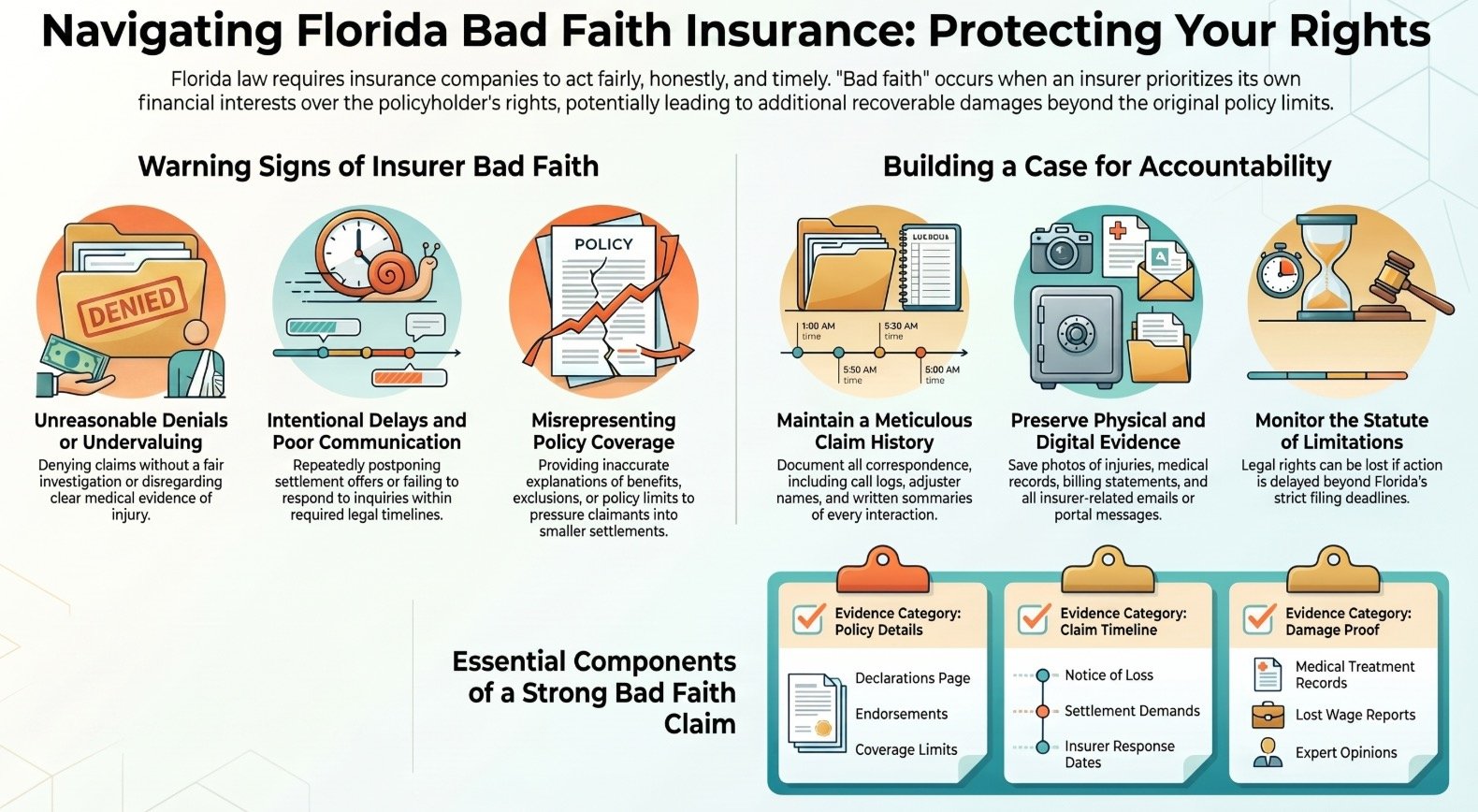
Common causes of bad faith insurance in Florida include unreasonable claim denials, delayed settlement offers, misrepresentation of policy coverage, and inadequate claim investigations. These practices may prevent injured claimants from receiving timely and fair compensation under an applicable insurance policy. A careful review of the insurer’s conduct, communications, and claim-handling process is often necessary to identify whether bad faith may have occurred.
Unreasonable Claim Denials
Although an insurer may deny a claim for legitimate coverage reasons, an unreasonable claim denial can indicate bad faith when the decision is not supported by the policy, the facts, or Florida law. Such denials may arise when adjusters disregard medical evidence, misread policy terms, or reject liability without a fair investigation. Proper Claim communication helps injured people understand the stated basis for denial and whether the insurer honored required compliance timelines. Careful review of insurer documentation may reveal inconsistent reasoning, missing evidence, or conclusions reached before all relevant information was considered. In coverage disputes, a denial should reflect a balanced evaluation, not a search for technical grounds to avoid responsibility. When denial practices undermine fair treatment, legal review may help protect the claimant’s rights and recovery.
Delayed Settlement Offers
When an insurer delays a settlement offer despite clear evidence of liability and damages, the delay may suggest an attempt to pressure the injured person into accepting less than the claim is worth. In Florida injury claims, timely evaluation matters because medical bills, lost wages, and recovery needs can place serious strain on a household. Settlement communication logs may show whether adjusters responded promptly, requested necessary information, or remained silent without justification. Repeated postponements, vague status updates, or shifting demands can reflect insurer delay tactics rather than fair claim handling. A careful review of dates, correspondence, and documented damages helps determine whether the delay served a legitimate purpose. Professionals who serve injured clients can use this evidence to promote accountability, protect dignity, and pursue a resolution grounded in fairness.
Misrepresenting Policy Coverage
If an insurer gives an inaccurate explanation of available benefits, exclusions, or policy limits, the injured person may lose the ability to make informed decisions about a claim. Misrepresenting policy coverage can occur when an insurer states that a loss is not covered, narrows coverage through improper policy interpretation, or understates available limits without a lawful basis. Such conduct may pressure a claimant into accepting less than the policy provides. In Florida, truthful communication about coverage supports consumer protection rights and helps ensure fair treatment after an injury. A bad-faith insurance injury lawyer may examine policy language, written communications, and settlement positions to determine whether the insurer distorted its coverage obligations. Accurate coverage information is necessary because claimants often rely on insurers to act with fairness, honesty, and diligence.
Inadequate Claim Investigations
Misrepresenting coverage often overlaps with another common form of insurer misconduct: an inadequate claim investigation. In Florida injury claims, an insurer must evaluate facts, medical records, liability evidence, and damages with reasonable care. An Unfair investigation may occur when adjusters ignore witnesses, delay inspections, disregard treating providers, or reach conclusions before reviewing essential claim documentation. These practices can deprive injured people of timely benefits and place additional burdens on families, caregivers, and professionals trying to support recovery. A thorough investigation should identify valid losses, confirm policy obligations, and promote fair resolution. When an insurer fails to gather or consider available evidence, the claim decision may reflect self-interest rather than good faith. Such conduct can support a bad faith claim when it causes unnecessary harm or delay.
Legal Rights of Florida Bad Faith Insurance Injury Victims
Although insurance companies hold significant control over claim decisions, Florida law gives injury victims important rights when an insurer acts in bad faith. These rights help protect people who depend on fair benefits for medical care, lost income, and recovery support. They also guide families, advocates, and professionals who serve injured individuals through difficult claims.
Florida law helps protect injury victims when insurers unfairly delay, deny, or undervalue valid claims.
Florida victims may have rights involving:
- Fair evaluation of policy coverage disputes, based on the policy language and available evidence.
- Timely communication, including compliance with applicable claim handling timelines and reasonable requests for updates.
- Pursuit of damages when an insurer unreasonably delays, denies, or underpays a valid claim.
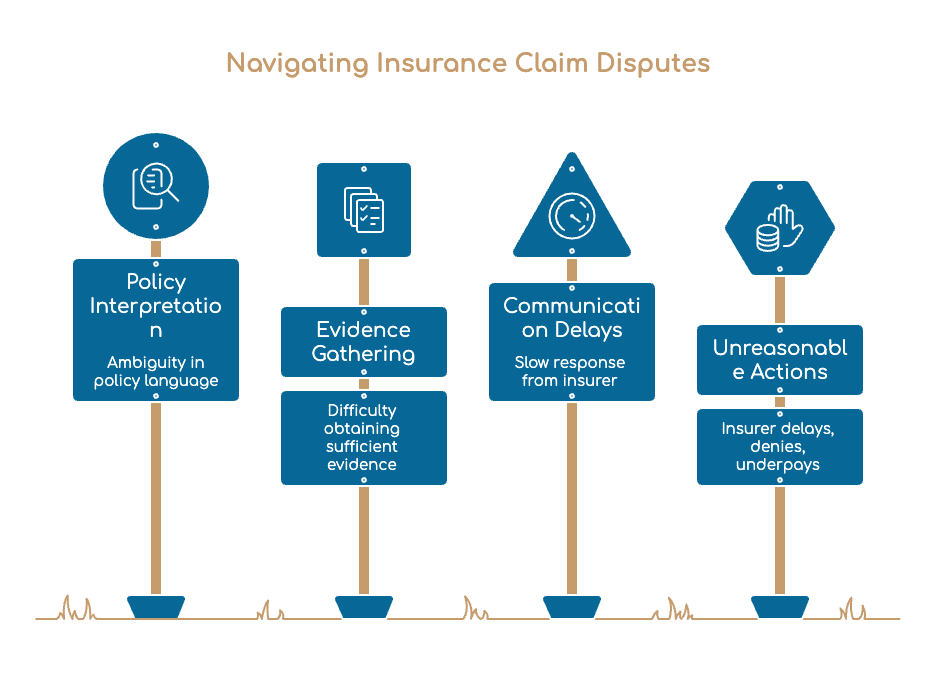
These protections encourage accountability and promote responsible insurance practices. A bad faith claim may allow recovery beyond the original policy benefits when legal standards are met. Each case depends on the insurer’s conduct, the coverage owed, and the documented harm caused by unfair claim practices under Florida law.
Why Do Florida Bad Faith Insurance Injuries Happen?
Bad faith insurance injuries often occur when an insurer places its financial interests ahead of a policyholder’s right to fair claim handling. In Florida, these injuries may arise when carriers delay decisions, deny valid claims, undervalue losses, or fail to communicate honestly. Such conduct can leave injured people without needed medical care, income support, or resources to stabilize their lives.
Unfair Claim Handling may also develop when adjusters ignore policy terms, overlook witness statements, or rely on incomplete medical reviews. These failures can distort the true value of a claim and prolong hardship for families already facing physical and financial strain. Injury Evidence Collection plays a central role because insurers may minimize harm when records, photographs, expert opinions, or treatment histories are disregarded. Bad faith often reflects poor training, pressure to reduce payouts, or institutional practices that reward delay over fairness, undermining the insurer’s duty to act with care and integrity.
What Should You Do After a Florida Bad Faith Insurance Injury?
After a suspected Florida bad faith insurance injury, the claimant should begin by documenting the insurance claim, including communications, deadlines, and claim decisions. Relevant injury evidence should be preserved, such as medical records, photographs, repair estimates, and any proof of financial loss. Legal counsel should be contacted promptly, as early guidance may help protect the claimant’s rights and strengthen any potential bad-faith claim.
Document Your Insurance Claim
When an insurer delays, undervalues, or denies a valid injury claim in Florida, careful documentation becomes one of the most important steps in protecting the claimant’s position. A complete claim file should include policy correspondence, claim numbers, adjuster names, payment records, denial letters, and written summaries of all phone calls. Dates, times, and the substance of each communication should be recorded promptly.
Medical documentation should also be organized, including treatment records, prescriptions, diagnostic results, referrals, and billing statements. These materials help show the connection between the injury, the care received, and the losses claimed. While evidence preservation may involve broader physical proof, claim documentation focuses on creating an accurate written record. This disciplined approach supports accountability and assists counsel in evaluating potential bad faith conduct.
Preserve Injury Evidence
Beyond written claim records, physical and digital evidence should be preserved to show how the injury occurred, how serious it was, and how the insurer responded to the claim. An injured person may safeguard photographs of the scene, damaged property, medical devices, torn clothing, and visible injuries as recovery progresses. Surveillance footage from businesses, homes, or traffic cameras may be erased quickly, so timely requests can protect information that serves truth and accountability. Digital messages, call logs, emails, claim portal entries, and payment notices should be stored in secure, dated formats. Caregivers, coworkers, or witnesses may also provide useful observations about pain, limitations, and daily needs. Evidence should be organized before any policy deadline to support a clear record for fair evaluation and responsible service to the injured person.
Contact Legal Counsel
For a person harmed by an insurer’s unfair claim handling, contacting legal counsel can help protect rights before deadlines, communications, or settlement pressure create additional risk. Counsel can review policy language, claim history, medical records, and insurer correspondence to determine whether bad-faith concerns exist. A careful attorney may also identify missing documents, improper delays, undervalued losses, or statements that could affect recovery. When supporting an injured person, caregivers or family members may help gather records and prepare questions, using a case evaluation checklist to organize facts.
Exploring legal consultation options can clarify possible next steps without forcing immediate decisions. Prompt guidance may also preserve evidence, manage insurer contact, and reduce confusion while the injured person focuses on treatment, stability, and responsible planning.
Critical Evidence in a Florida Bad Faith Insurance Injury Case
Critical evidence in a Florida bad faith insurance injury case often determines whether the insurer’s conduct can be shown as unreasonable, delayed, or unfair under the circumstances.
- Policy language and coverage limits
- Claim handling timeline and settlement demand records
- Injury documentation and proof of damages
These materials help establish what the insurer knew, when it knew it, and whether it responded to the claim with appropriate urgency and fairness.
Policy Language And Limits
When evaluating a Florida bad faith insurance injury case, the policy language and applicable limits provide the foundation for determining the insurer’s duties, the scope of coverage, and the financial exposure at issue. The declarations page, insuring agreement, exclusions, endorsements, and conditions show what protection was purchased and how the insurer was required to respond. Clear limits also help measure whether a settlement opportunity reasonably fell within available coverage, serving both the injured person and the insured facing personal risk. In coverage disputes, careful review may reveal that the insurer relied on strained interpretations or overlooked provisions that favored protection. Policy terms can also expose wrongful delay when coverage was apparent, limits were known, and prompt action could have prevented unnecessary harm or increased exposure for those relying on fair treatment.
Claim Handling Timeline
After the policy terms and limits are identified, the claim handling timeline shows how the insurer responded to the duties created by that coverage. It records when notice was received, when adjusters acted, what information was requested, and whether communications were timely, complete, and fair. In a Florida bad-faith injury case, this sequence can reveal delay, neglect, or a failure to give proper attention to the insured and the injured claimant.
A careful insurance policy review helps connect each event to the insurer’s obligations. Dates, letters, emails, call notes, inspection records, and claim log entries should be organized with disciplined evidence preservation. This record allows counsel to assess whether the insurer investigated responsibly, evaluated available facts, and moved the claim forward with the care required by Florida law.
Settlement Demand Records
Why do settlement demand records carry such weight in a Florida bad faith insurance injury case? They show whether the insurer had a fair opportunity to resolve a claim within Policy limits and protect the insured from excess exposure. A complete demand record may include the written offer, deadline, proof of delivery, referenced medical documentation, and any conditions for acceptance. These materials help align claim timelines with insurer communications, showing when the carrier received key information and how it responded. For advocates committed to serving injured people and insured families, these records clarify whether settlement efforts were reasonable, timely, and made in good faith. They also reveal delays, incomplete responses, or unexplained refusals that may support a broader evaluation of the insurer’s conduct under Florida law and applicable standards.
Injury And Damage Proof
Settlement demand records gain force when they are supported by clear proof of injury and damages. In a Florida bad faith insurance injury case, this proof should show both the harm suffered and the insurer’s opportunity to evaluate it fairly. Medical records help establish diagnosis, treatment, prognosis, and the connection between the accident and the claimed losses. Photo evidence may preserve visible injuries, vehicle damage, unsafe conditions, or property loss before conditions change. Timeline documentation organizes essential events, including treatment dates, missed work, communications, and claim decisions, so the insurer’s conduct can be measured against known facts. Witness statements may confirm pain, limitations, impact on daily service, or accident details. Together, these materials create a reliable record that supports accountability and fair claim handling under Florida law.
Long-Term Effects of Florida Bad Faith Insurance Injuries
Bad faith insurance conduct in Florida can extend an injured person’s hardship well beyond the initial claim dispute. Delayed payments or improper denials may contribute to delayed medical recuperation, increased financial strain, and reduced access to necessary treatment. These pressures can also affect emotional health, particularly when uncertainty, debt, and unresolved injuries persist over time.
Delayed Medical Recovery
When an insurer delays or wrongfully denies benefits after an injury, the medical consequences can extend far beyond the original harm. Delayed Medical Recovery may occur when necessary evaluations, therapies, surgeries, or consultant referrals are postponed while a claim remains unresolved. Denied evidence and delayed treatment can allow inflammation, nerve damage, mobility loss, or psychological distress to worsen, making recovery more challenging. In bad-faith matters, policy misquotes or coverage disputes may interfere with timely authorization for care, despite clear medical need. For injured individuals, this delay can reduce the effectiveness of treatment plans and increase the risk of chronic pain or permanent impairment. A careful legal review helps identify whether insurer conduct contributed to avoidable medical setbacks, supporting accountability and protecting the injured person’s path toward restored health, dignity, and compassionate care.
Financial Strain Impacts
As unpaid benefits continue to accrue, financial strain can become one of the most damaging long-term effects of insurer misconduct following a serious injury. Families may face rising medical bills, reduced income, transportation costs, and the need to pay out of pocket for necessary care. Budgeting strain can force difficult choices between treatment, housing, utilities, and basic household needs. When claims are delayed, undervalued, or wrongfully denied, injured individuals may exhaust savings or rely on credit, creating obligations that continue long after the claim dispute ends. Coverage misunderstandings can further worsen the burden, especially when policy language is unclear or insurer communications omit important details. For advocates, caregivers, and legal professionals, recognizing these financial pressures helps ensure injured people receive informed support and guidance.
Emotional Health Consequences
Although financial losses are often easier to measure, the emotional well-being consequences of Florida bad faith insurance conduct can be equally significant over time. When valid claims are delayed, denied, or undervalued, injured individuals may experience persistent stress, distrust, and feelings of abandonment during periods of genuine need. These responses can interfere with sleep, family stability, medical treatment, and daily responsibilities. For those already coping with pain or disability, unresolved insurance disputes may complicate trauma coping and slow anxiety recovery. Service-oriented professionals should recognize that emotional harm is not secondary; it can shape decision-making, resilience, and the ability to pursue care. A Florida bad-faith insurance injury lawyer may help document these effects, connecting legal accountability to the broader goal of restoring dignity, security, and practical support.
Proving Liability in Florida Bad Faith Insurance Injury Cases
Proving liability in Florida bad faith insurance injury cases requires evidence that the insurer failed to handle a claim with the care, diligence, and fairness required under the circumstances. This often involves showing that benefits were delayed, denied, or undervalued without a reasonable basis, despite clear proof of injury, coverage, or damages. Courts and counsel may examine policy language, claim evaluations, medical records, settlement history, and internal procedures to determine whether the insurer acted responsibly.
Faulty coverage disputes can be central when an insurer relies on strained interpretations of policy terms to avoid payment. Insurer communication logs may reveal delays, inconsistent explanations, ignored evidence, or failure to respond within required timeframes. Liability is strengthened when the record shows that the insurer placed its own financial interests above the insured’s lawful rights. For injured persons and those assisting them, careful documentation helps establish the truth and supports accountability under Florida law.
Dealing With Insurance Companies After a Florida Bad Faith Insurance Injury
When an insurer’s conduct suggests bad faith after an injury claim, every interaction with the company should be handled with care and documented thoroughly. Injured policyholders, and those assisting them, should keep communications respectful, factual, and limited to verified information. Adjusters may request statements, medical updates, or settlement discussions, but responses should not be rushed or speculative.
Policyholder Documentation is important when questions arise about delay, denial, undervaluation, or unfair pressure. Letters, emails, call logs, claim forms, medical bills, and repair estimates should be preserved in organized records. These materials may help reveal patterns of unreasonable conduct.
Wrongful Claim Negotiation can occur when an insurer relies on incomplete information, provides misleading explanations, or uses coercive tactics to reduce payment. A careful approach protects the injured person’s interests while preserving dignity and fairness. Legal guidance may help guarantee that communications remain accurate, deadlines are respected, and the insurer’s obligations are addressed without unnecessary conflict.
What to Expect During a Florida Bad Faith Insurance Injury Claim Process
A Florida bad faith insurance injury claim typically begins with an initial evaluation of coverage, damages, and the insurer’s handling of the underlying injury claim. The process then centers on the insurer’s response timeline, the strength of evidence and documentation, and whether the carrier acted reasonably under Florida law. Depending on those factors, the claim may proceed toward settlement negotiations or formal litigation.
Initial Claim Evaluation
Before a Florida bad faith insurance injury claim can be evaluated, the underlying injury claim, insurance coverage, claim history, and insurer conduct must be reviewed in detail. This stage helps determine whether the insurer had a fair opportunity to resolve the claim and whether its actions served the insured’s interests. Medical records review is used to assess injury severity, treatment needs, causation, and documented damages. Policy coverage analysis identifies available benefits, exclusions, limits, duties, and conditions that may affect recovery. Claim communications, settlement demands, investigation materials, and payment decisions are also examined for consistency and reasonableness. A careful evaluation supports responsible advocacy, protects injured individuals, and promotes accountability when an insurer’s conduct may have fallen below Florida’s required standards of good faith and fair dealing in practice.
Insurer Response Timeline
After the initial claim evaluation is complete, the insurer’s response timeline becomes a central measure of how the claim is handled under Florida bad-faith principles. Florida insurers are expected to respond promptly, especially when an injured person’s needs are clear and time-sensitive. Claim communication should show whether the insurer is reviewing the matter carefully, requesting necessary information, or delaying without a sound basis. During this stage, a policy review helps identify coverage duties, response obligations, and any deadlines affecting the claim. Consistent documentation habits also support accountability, as each contact, request, and response may reflect the insurer’s good-faith effort or lack thereof. For those serving injured individuals, monitoring the timeline helps protect dignity, stability, and fair treatment throughout the claim process.
Evidence And Documentation
When a Florida bad-faith insurance injury claim enters the evidence and documentation stage, the strength of the claim often depends on the quality, completeness, and timeliness of the records collected. Attorneys typically organize medical records, policy materials, claim correspondence, payment logs, photographs, and repair or treatment estimates. A Document checklist helps verify that no critical item is overlooked, especially when serving an injured person whose needs require careful attention. Accurate records can show whether the insurer investigated fairly, communicated promptly, and considered available proof. Witness statements may also clarify the details of the accident, the effects of the injury, and the insurer’s conduct during the claim. Each item should be preserved in its original form when possible, with dates and sources clearly identified. Careful documentation supports a disciplined review before any subsequent procedural decisions are made.
Settlement Or Litigation
Although many Florida bad faith insurance injury claims resolve through settlement discussions, the decision to settle or litigate depends on the insurer’s conduct, the available evidence, and the value of the underlying injury claim. Counsel may review the policy timeline to identify missed deadlines, inadequate investigations, or unfair refusals to pay. These findings can be leveraged in negotiations by showing that continued resistance may expose the insurer to greater liability. Settlement may serve an injured person by providing timely resources for care, stability, and recovery. Litigation may become necessary when the insurer denies responsibility, minimizes damages, or fails to act in good faith. Throughout either path, the claim should be prepared as though court review is possible, ensuring that each decision supports accountability, fairness, and diligent advocacy.
Compensation for Florida Bad Faith Insurance Injury Damages
Accountability is central to any claim involving bad faith insurance conduct, because compensation may extend beyond the value of the original injury claim. When an insurer fails to act fairly, promptly, or with due regard for the insured’s interests, Florida law may permit recovery tied to the harm caused by that misconduct. A careful Damages calculation may consider the unpaid claim amount, excess judgment exposure, consequential losses, and attorney’s fees where authorized by statute or contract.
Policy limit analysis is often important because bad faith may arise when an insurer could have resolved a claim within available coverage but failed to do so responsibly. The evaluation should examine claim handling, settlement opportunities, communications, and whether the insurer placed its own interests ahead of the person it promised to protect. For injured individuals and families, compensation can serve a restorative purpose, helping preserve dignity, stability, and access to care after preventable insurance misconduct.
Economic vs Non-Economic Damages in Florida Bad Faith Insurance Cases
In Florida bad faith insurance cases, damages are generally assessed by separating measurable economic losses from non-economic harms that require careful valuation. Economic damage categories may include medical expenses, lost income, property loss, and other financial consequences tied to the insurer’s misconduct. Non-economic harm valuation and the broader task of proving bad faith losses depend on clear evidence, credible documentation, and a precise link between the insurer’s conduct and the claimant’s injury.
Economic Damage Categories
Economic damages in a Florida bad faith insurance case refer to measurable financial losses caused by an insurer’s failure to handle a claim fairly, promptly, or in good faith. These losses may include unpaid policy benefits, medical expenses, lost wages, reduced earning capacity, property damage, and out-of-pocket costs incurred while pursuing rightful coverage. For injured persons and those assisting them, careful documentation of damages is required, including bills, receipts, employment records, repair estimates, and correspondence showing delayed or denied payment. Collateral sources, such as health insurance or disability benefits, may affect how recoverable amounts are evaluated under Florida law, but they do not excuse improper claim conduct. Economic damage analysis hence centers on proving the financial harm directly tied to the insurer’s breach of duty.
Non-Economic Harm Valuation
Valuing non-economic harm in a Florida bad faith insurance case requires a separate analysis from documented financial losses because these damages address human consequences that do not appear on invoices or wage statements. Such harm may include pain, emotional distress, loss of dignity, diminished independence, or disruption of family and community roles. A careful damages calculation considers the severity, duration, and daily effect of these losses, while remaining grounded in reliable context. Cause evidence and medical records may help show how an insurer’s failure worsened suffering or prolonged uncertainty. For those committed to serving injured people, this evaluation should respect the person’s lived experience without overstating it. Settlement valuation often depends on presenting non-economic harm with clarity, restraint, and a complete understanding of its human importance.
Proving Bad Faith Losses
After non-economic harm is identified and measured, the next task is proving how both financial and human losses were caused by the insurer’s bad faith conduct. Economic damages may include excess judgments, unpaid benefits, added litigation costs, lost wages, and medical expenses traceable to delayed or denied coverage. Non-economic damages require careful proof of distress, disruption, and diminished stability affecting the injured person’s life.
Florida bad faith standards require more than dissatisfaction with a claim decision. The proof must show that the insurer failed to act fairly and honestly toward its insured, considering all circumstances. Evidence benchmarks may include claim notes, settlement communications, expert opinions, timelines, and testimony. When organized with care, this evidence helps courts distinguish ordinary disputes from harmful insurer misconduct.
When a Florida Bad Faith Insurance Injury Case Goes to Trial vs Settlement
When a Florida bad faith insurance injury case reaches a pivotal stage, the dispute may resolve through settlement or proceed to trial depending on the evidence, the insurer’s conduct, and the value of the underlying claim. Settlement often becomes appropriate when insurer negotiations produce a fair resolution that protects the injured person’s financial recovery and avoids additional delay.
A trial may be necessary when the insurer refuses to acknowledge clear responsibility, undervalues losses, or contests the impact of its conduct. Damages evidence, including medical records, wage-loss documentation, expert opinions, and claim-handling materials, may shape both settlement valuation and trial strategy. Counsel may assess whether a jury could understand the harm caused by delayed or denied benefits, as well as the broader consequences for a person seeking stability. The decision should reflect disciplined preparation, careful risk analysis, and a commitment to pursuing an outcome that serves the injured person’s needs with integrity.
Florida Laws That May Affect Your Florida Bad Faith Insurance Case
Florida bad faith insurance cases are shaped by specific statutes, procedural rules, and court decisions that define an insurer’s obligations and an injured person’s available remedies. Florida law generally requires insurers to evaluate claims fairly, communicate honestly, and attempt reasonable resolution when liability is clear.
These duties matter because injured individuals often depend on timely benefits to restore stability and continue serving family, work, and community responsibilities.
- Florida’s civil remedy process may require formal notice before certain bad faith claims proceed, allowing the insurer an opportunity to correct wrongful conduct.
- Policy language remains central, especially when disputes involve Coverage vs damages, because a covered loss must be distinguished from the value of harm suffered.
- Accurate documentation is required because claim-filing errors can weaken allegations of unreasonable delay, denial, or underpayment.
Courts also consider the insurer’s conduct as a whole. Careful legal guidance can help preserve rights while promoting fair accountability.
The Statute of Limitations for Florida Bad Faith Insurance Injury Cases
Time limits are a critical factor in any Florida bad faith insurance injury case, because even a well-supported claim can be barred if it is not filed within the applicable statutory period. In Florida, bad faith claims often depend on the type of insurance, the underlying injury case, and when the insurer’s wrongful conduct became actionable. Courts may examine whether coverage was established, whether liability was clear, and whether damages were determined before the limitations period began.
Because delay can harm both claimants and the people they seek to support, careful calendaring is necessary. A sound Settlement negotiation strategy should account for filing deadlines, not merely the pace of insurer discussions. Evidence collection tips include preserving policy documents, claim correspondence, medical records, settlement demands, and proof of insurer delays or refusals. Timely organization helps protect the claim and supports responsible advocacy for injured individuals and their families in moments of significant need.
How a Florida Bad Faith Insurance Injury Lawyer Can Help You
A Florida bad faith insurance injury lawyer can help determine whether an insurer failed to act fairly, promptly, and reasonably after an injury claim was presented. This evaluation may include reviewing policy duties, claim correspondence, medical records, settlement offers, and the insurer’s stated reasons for delay or denial.
Legal guidance can support an injured person by identifying patterns that may show unfair claim handling, including Underpayment disputes and communication delays.
A lawyer may also help organize evidence so the claim reflects both legal standards and the practical needs of the injured person and family.
- Assessing whether the insurer properly investigated the injury claim before making decisions.
- Reviewing settlement conduct to determine whether payment offers were reasonable under the circumstances.
- Preparing documentation that clearly and responsibly presents losses, with respect for those affected.
Through careful analysis, a Florida bad-faith insurance injury lawyer helps ensure accountability, encouraging insurers to honor their obligations and treat claimants fairly.
When to Contact a Florida Bad Faith Insurance Injury Lawyer
When should an injured person seek legal guidance after an insurer delays, denies, or undervalues a claim? Contact timing matters, especially when unanswered calls, repeated requests, or shifting explanations begin to affect access to care, income, or stability. A prompt consultation may help preserve important facts while memories, correspondence, and deadlines remain manageable.
Early attention to claim documentation can also support a more orderly review of the insurer’s conduct. Injured people who serve families, workplaces, or communities often benefit from keeping careful records of payments, denials, adjuster statements, repair estimates, and treatment-related expenses. Clear insurer communication should be saved, including letters, emails, claim portal messages, and notes from phone calls.
Medical records retention is equally important. Treatment plans, diagnostic results, billing statements, and physician restrictions may show the claim’s value and the consequences of delay. Legal guidance is often appropriate once the insurer’s actions appear inconsistent, unexplained, or harmful.
Why You Need an Experienced Florida Bad Faith Insurance Injury Lawyer
Prompt legal guidance is only the first step, because bad faith insurance matters often require a careful review of both the underlying injury claim and the insurer’s handling of that claim. An experienced Florida bad faith insurance injury lawyer can evaluate whether the carrier investigated fairly, communicated properly, and responded to settlement demands within a reasonable time. This work helps protect injured people who depend on insurance benefits for treatment, stability, and daily support.
These cases often turn on organized proof. Evidence preservation, medical records, and claim documentation may show what the insurer knew, when it knew it, and whether its conduct placed its interests above the insured’s welfare. Skilled legal involvement can also identify missed deadlines, incomplete evaluations, or unjustified delays that might otherwise go unnoticed. For families, caregivers, and advocates seeking to serve an injured person well, experienced counsel provides structure, accountability, and a clear path toward addressing harmful insurance practices with care.
How to Choose the Right Florida Bad Faith Insurance Injury Lawyer for Your Case
Choosing the right Florida bad faith insurance injury lawyer begins with a careful review of the lawyer’s experience in both injury litigation and insurance claim misconduct. A qualified lawyer should understand how insurers delay, undervalue, or deny valid claims, while also recognizing the physical, financial, and personal harm suffered by injured people.
Prospective clients should consider whether the lawyer has handled cases involving serious injuries, disputed coverage, and unreasonable settlement practices. Strong Client communication is also key, because individuals harmed by bad faith conduct often need clear updates, honest guidance, and respectful answers during a difficult process.
Fee transparency should be evaluated before representation begins. A dependable lawyer should explain costs, contingency arrangements, and potential case expenses in direct terms. The selection should also reflect the lawyer’s ability to prepare evidence, negotiate firmly, and pursue litigation when necessary. Careful choice helps protect the injured person’s rights and supports a service-focused path toward accountability.
About The Law Offices of Anidjar & Levine
The Law Offices of Anidjar & Levine represents injured people throughout Florida in matters involving insurance disputes, personal injury claims, and allegations of bad faith conduct. Its work reflects a commitment to protecting those who are placed at a disadvantage by insurers, negligent parties, or complex legal systems. The firm’s approach emphasizes careful investigation, organized case preparation, and direct communication with clients who need steady support during difficult periods.
The Anidjar Levine history is rooted in advocacy for individuals and families seeking fair treatment after serious harm. In bad-faith insurance matters, the firm evaluates claim handling, policy obligations, communication delays, and denial practices to determine whether an insurer has failed its duties. Its attorneys provide client-first guidance by explaining legal options, answering concerns, and pursuing accountability with disciplined attention to detail. This service-oriented model helps clients understand the process while allowing the legal team to focus on securing appropriate outcomes.
Frequently Asked Questions
Can I Change Lawyers During a Florida Bad Faith Insurance Case?
Yes, a claimant may change lawyers during such a case. Switching counsel is generally allowed, but court approval may be required if litigation is pending. Existing notice requirements should be observed, including informing the former attorney, opposing counsel, and the court. Fee agreements and liens must be reviewed carefully. The change should be managed to avoid delays, protect service-focused goals, and limit any damage to the claim.
Are Bad Faith Settlement Funds Taxable in Florida?
Bad-faith settlement funds in Florida may be taxable, depending on the nature of the underlying claim and the allocated damages. Settlement proceeds for physical injury may be excluded, while Taxable damages often include interest, emotional distress unrelated to the injury, punitive damages, or portions of attorneys’ fees. A careful tax review serves claimants, families, and fiduciaries by protecting resources. Qualified tax counsel should evaluate the settlement agreement before funds are distributed.
Can My Insurer Cancel My Policy After a Bad Faith Claim?
An insurer generally cannot cancel a policy solely because a policyholder pursued a bad faith claim. Florida law imposes cancellation limits, requiring valid grounds and proper notice to the insurer. The bad faith timeline may overlap with underwriting actions, but retaliation can invite scrutiny. If a cancellation is improperly processed, policy reinstatement may be available through regulatory complaints, negotiation, or litigation. Those assisting injured persons should promptly and carefully preserve notices, communications, and payment records.
Do Florida Bad Faith Claims Apply to Uninsured Motorist Coverage?
Yes, Florida bad faith claims can apply to uninsured motorist coverage when an insurer fails to handle, assess, or resolve a valid claim fairly. The claimant generally must satisfy statutory notice requirements before pursuing such a claim. Those assisting injured persons should ensure documentation, liability evidence, and damages are clearly presented. Courts assess whether the insurer acted reasonably and with proper regard for the insured’s interests under the circumstances.
Can I File a Bad Faith Claim Against My Own Insurer?
Yes, a bad faith claim may be filed in Florida against one’s own insurer when the carrier violates statutory duties, such as failing to investigate, evaluate, or settle fairly. Claim eligibility depends on the policy, coverage, damages, and whether required notice procedures were followed. Those assisting injured people should document communications, preserve evidence, and seek qualified review, because these claims require careful proof of unreasonable conduct and resulting harm.
—————————
Bad faith insurance claims in Florida require prompt action, careful documentation, and informed legal guidance. When insurers delay, deny, or undervalue valid injury claims, victims may have legal options to pursue compensation and accountability. An experienced Florida bad faith insurance injury lawyer can evaluate the insurer’s conduct, protect the claimant’s rights, and build a strong case.
The Law Offices of Anidjar and Levine provides focused representation for injured clients facing unfair insurance practices, including those involving a Florida Car Accident Lawyer.