The Law Offices of Anidjar and Levine can help crash victims document PTSD-related trauma, connect symptoms to the collision, and pursue compensation for therapy, medication, lost income, reduced earning capacity, and pain and suffering.
A Florida Car Accident Lawyer can gather medical records, mental health evaluations, witness accounts, and expert opinions while protecting claimants from broad releases, premature offers, and insurer efforts to minimize psychological harm.
The sections below explain crucial rights, evidence, deadlines, and claim strategies.
Main Takeaways
- A Florida PTSD car accident lawyer can help document trauma through medical records, therapy notes, evaluations, and witness observations.
- PTSD claims may include compensation for therapy, medication, lost income, reduced earning capacity, and pain and suffering.
- Legal counsel can protect you from adjusters seeking broad releases, recorded statements, or premature settlements that undervalue psychological harm.
- Strong claims connect PTSD symptoms to the crash through prompt treatment, consistent care, and evidence of daily life limitations.
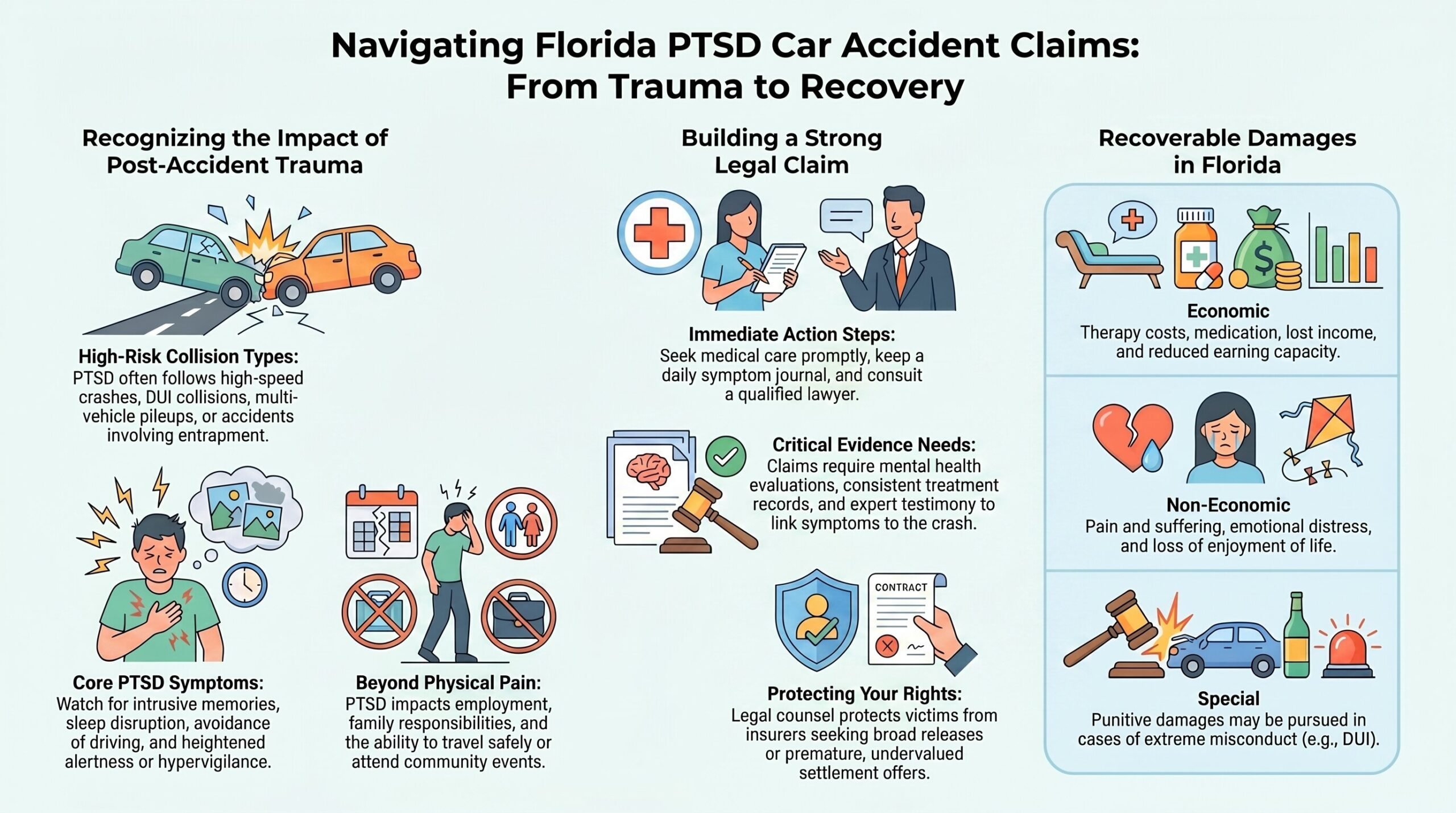
- PTSD may follow high-speed crashes, drunk driving collisions, distracted driving accidents, pileups, rollovers, entrapment, or other traumatic events.


How We Can Help With Your Florida PTSD Car Accident Injury Claim
After a serious collision, post-traumatic stress disorder can affect medical treatment, employment, daily routines, and the ability to travel safely. A Florida PTSD car accident injury lawyer can help organize the claim with careful attention to evidence, deadlines, and the client’s long-term needs. Counsel may gather treatment records, document symptoms, interview witnesses, and coordinate with qualified Florida mental health providers to present the full impact of trauma.
Legal assistance also helps protect the injured person from Insurance adjusters’ tactics, including requests for broad medical releases, premature settlement offers, or statements that minimize psychological harm. A lawyer can communicate with insurers, calculate damages tied to therapy, lost income, and reduced functioning, and prepare the claim for negotiation or litigation. This support allows the injured person, family members, and caregivers to focus on stability, recovery, and service to others while the legal burden is handled with diligence, discretion, and purpose.
OUR CONSULTATIONSARE FREE
START YOUR FREE CASE REVIEW

Understanding Florida PTSD Car Accident Injury Cases
Many Florida PTSD car accident injury cases involve more than the physical injuries documented in emergency rooms or diagnostic reports. Survivors may face intrusive memories, sleep disruption, avoidance, heightened alertness, or difficulty returning to work, caregiving, worship, and community service. These conditions can interfere with daily responsibilities and may require careful evaluation by qualified mental health professionals.
In Florida injury claims, PTSD must be supported through consistent medical records, credible testimony, treatment history, and evidence showing how the condition affects ordinary life. Car accident stress may intensify when a person must manage appointments, financial pressure, and family obligations while attempting recovery. Insurance delays can further complicate the process, especially when emotional injuries are questioned or minimized.
A PTSD claim is strongest when the full human impact is documented with discipline and accuracy. This approach helps ensure that unseen harm receives serious consideration within the legal process and appropriate care remains central.
Common Causes of Florida PTSD Car Accident
Several types of serious crashes in Florida may contribute to PTSD, particularly when the event involves extreme danger, sudden impact, or lasting physical injury. High-speed collisions, drunk driving crashes, distracted driving accidents, and multi-vehicle pileups often create conditions that intensify fear, helplessness, and psychological distress. These causes are commonly examined in PTSD-related car accident injury claims, especially when the trauma continues to affect daily life, work, and medical recovery.
High-Speed Collisions
When a crash occurs at highway speeds, the sudden force can create a violent and disorienting event that increases the risk of post-traumatic stress symptoms. Survivors may later experience intrusive memories, fear of travel, sleep disruption, or heightened anxiety when passing similar roadways. In Florida, high-speed collisions often occur on interstates, expressways, and major corridors where limited reaction time worsens the impact.
Nighttime traffic may add reduced visibility, fatigue, and confusion at the scene, which can intensify a person’s sense of danger. A thorough crash investigation may help identify speeding, unsafe lane changes, road conditions, and other contributing factors. For those serving injured people, recognizing the psychological harm linked to these collisions is crucial when evaluating recovery needs, damages, and supportive legal guidance.
Drunk Driving Crashes
Because impaired drivers often react slowly and unpredictably, drunk driving crashes can create especially frightening circumstances for injured occupants and witnesses. These collisions may involve abrupt lane departures, wrong-way travel, or failures to brake, leaving victims with lasting fear tied to the event. For those serving injured individuals, understanding DUI accident liability requires careful attention to impairment evidence, including officer observations, toxicology results, field testing, and recorded admissions.
Collision causation also remains important because alcohol use must be connected to the negligent driving that produced the crash. Witness statements may help describe erratic movement, slurred speech, odor of alcohol, or the driver’s conduct before impact. When PTSD follows such an event, organized documentation can support both accountability and compassionate recovery. Florida claims may also examine punitive damages.
Distracted Driving Accidents
Although distraction may last only a few seconds, a driver who looks away from the road can cause a violent collision with lasting psychological consequences. In Florida, distracted driving may involve texting violations, handheld device use, navigation adjustments, eating, or conversations that divert attention from traffic conditions. A crash caused by inattention can leave an injured person with intrusive memories, sleep disruption, fear of driving, and heightened vigilance. These symptoms may interfere with employment, caregiving, and community service responsibilities.
When evaluating such claims, attorneys may review phone records, witness statements, crash reports, and vehicle data to determine whether distraction contributed to the impact. Careful documentation helps connect negligent conduct to PTSD-related harm, supporting accountability and access to treatment for those affected and their families after a serious collision.
Multi-Vehicle Pileups
A multi-vehicle pileup can expose crash victims to repeated impacts, blocked escape routes, and sudden uncertainty about additional collisions. In Florida, these crashes may occur on congested highways, during sudden storms, or when one driver’s negligence triggers a chain reaction. For injured individuals, the psychological effects may be severe, especially when they must wait for rescue while hearing alarms, shouting, or approaching traffic.
PTSD claims arising from pileups often require careful review because fault may involve several drivers, commercial carriers, or road conditions. Witness statements, vehicle damage, emergency reports, and medical records can help clarify how the event unfolded.
Those serving affected clients should recognize that trauma may continue long after physical injuries improve, making prompt documentation and compassionate legal guidance essential after a significant collision.


Legal Rights of Florida PTSD Car Accident Injury Victims
When PTSD develops after a Florida car accident, the injured person may have the right to seek compensation for both psychological harm and related financial losses.
Florida law may permit recovery for therapy costs, medication, lost income, reduced earning capacity, and pain and suffering when evidence links the condition to the crash.
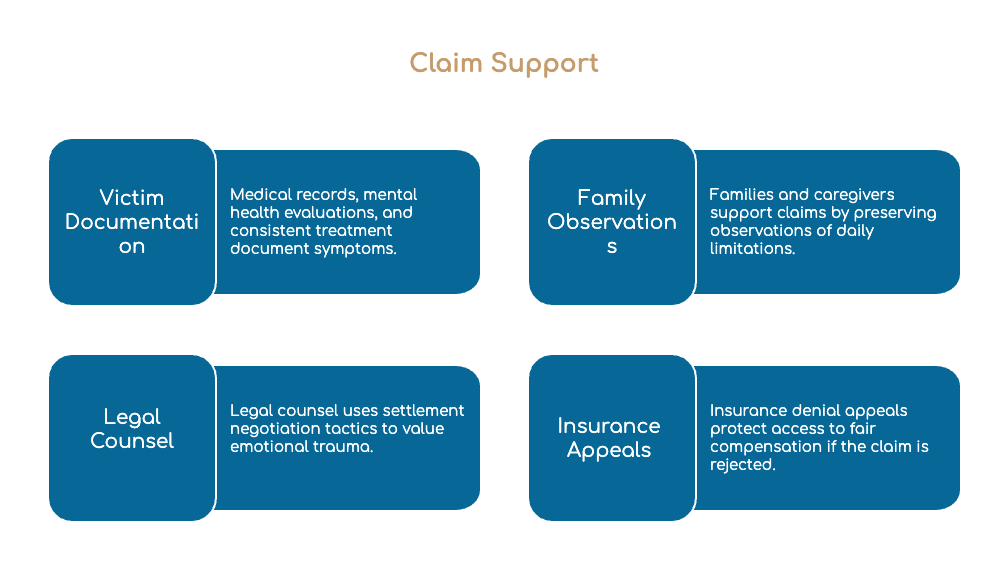
- Victims may document symptoms through medical records, mental health evaluations, and consistent treatment.
- Families and caregivers may support the claim by preserving observations that show daily limitations.
- Legal counsel may use settlement negotiation tactics to value emotional trauma alongside physical injuries and economic damages.
- If an insurer rejects or undervalues the claim, insurance denial appeals may help protect access to fair compensation.
These rights serve not only the injured person, but also those who depend on stability, care, and restored dignity after trauma. Timely action can preserve evidence, meet deadlines, and guide compassionate recovery efforts.
Why Do Florida PTSD Car Accident Injuries Happen?
Legal rights after a Florida crash often depend on understanding how PTSD develops and why certain collisions leave lasting psychological harm. PTSD may arise when a person experiences intense fear, helplessness, serious injury, or the threat of death during a collision. Severe impacts, rollovers, pedestrian strikes, entrapment, or crashes involving children can overwhelm normal coping responses. Accident timing may also affect emotional trauma, especially when a crash occurs during routine caregiving, work travel, or family responsibilities.
The causes of PTSD are not limited to physical injury. Sudden sensory memories, perceived loss of control, prior trauma, and prolonged medical treatment may contribute to persistent symptoms. Witness availability can help clarify what occurred, while gaps in evidence may complicate settlement negotiations. Insurance disputes may further intensify distress when an injured person’s condition is called into question. For those committed to serving others, recognizing these causes supports fair evaluation, compassionate assistance, and accountability following traumatic collisions in Florida.
What Should You Do After a Florida PTSD Car Accident Injury?
After a Florida car accident, a person experiencing PTSD symptoms should seek immediate medical care to address both physical and psychological injuries. The individual should also document symptoms, treatment, and daily limitations, as these records may support an injury claim. Contacting a qualified lawyer can help protect legal rights, preserve evidence, and assess potential compensation.
Seek Immediate Medical Care
Because PTSD symptoms may not appear immediately, prompt medical attention after a Florida car accident is essential to protect both health and any future injury claim. An emergency room evaluation can identify physical trauma, rule out urgent complications, and create a timely medical record connecting the crash to the person’s condition. Medical providers may also note anxiety, shock, sleep disturbance, or emotional distress observed during treatment, which can support later PTSD symptom documentation without requiring the injured person to repair the condition alone.
For those committed to caring for family, clients, patients, or community members, early treatment helps preserve the ability to serve responsibly. Follow-up with a primary care physician or mental health professional should occur as directed, ensuring concerns are addressed before symptoms worsen or become harder to evaluate.
Document PTSD Symptoms
While medical treatment creates an important record, careful symptom documentation helps show how PTSD affects daily life following a Florida car accident. A person may keep a dated journal noting Sleep problems, panic episodes, avoidance behaviors, irritability, and concentration issues. Entries should describe triggers, duration, intensity, and how symptoms affected work, caregiving, school, or community responsibilities.
If flashbacks not previously experienced begin after the crash, that change should be recorded clearly. Useful diary-tracking tips include writing soon after symptoms occur, using consistent scales for severity, and saving messages, calendars, or notes about missed activities that confirm disruption. The record should also include appointments, medication changes, counseling sessions, and recommendations to create a treatment timeline. Accurate documentation supports providers, helps loved ones respond appropriately, and preserves a factual account of recovery.
Contact A Lawyer
When should a person contact a lawyer after developing PTSD symptoms from a Florida car accident? Legal guidance should be sought promptly, especially when symptoms affect work, caregiving duties, relationships, or daily responsibilities. Early attorney consultation can help preserve evidence, identify liable parties, and ensure compliance with Florida filing deadlines. A lawyer may also explain how emotional trauma connects to physical injuries, medical care, and financial losses.
The injured person should continue to document symptoms through medical records, therapy notes, prescriptions, and personal observations. This documentation may support a claim by showing the duration, severity, and practical impact of PTSD. For those committed to serving family, clients, or community, timely legal action can protect recovery needs while allowing attention to remain on restoration and responsible obligations.
Critical Evidence in a Florida PTSD Car Accident Injury Case
Vital evidence in a Florida PTSD car accident injury case helps connect the collision, the psychological harm, and the resulting damages. Essential proof may include: 1. Medical diagnosis records 2. Mental health treatment history 3. Accident scene evidence 4. Expert witness testimony. Each category can strengthen the claim by demonstrating the injury’s severity, cause, and lasting impact.
Medical Diagnosis Records
Following a serious collision, medical diagnosis records often provide the foundation for proving that post-traumatic stress disorder is a legitimate injury rather than a general emotional reaction. These records may include emergency evaluations, primary care notes, psychiatric assessments, diagnostic impressions, and referrals that connect symptoms to the crash. Clear Stressor Identification is especially important because it helps distinguish accident-related trauma from unrelated life events or prior conditions.
Providers may record intrusive memories, avoidance, hypervigilance, sleep disruption, or functional impairment, creating a timeline that supports causation and severity. Therapy Documentation can further show consistency between reported symptoms and clinical observations, without addressing treatment strategy. For injured Floridians, organized records allow advocates, insurers, and courts to evaluate PTSD claims with fairness, discipline, and respect for human suffering.
Mental Health Treatment
Medical diagnosis records may establish that PTSD exists, but mental health treatment often shows how deeply the condition supports daily life after a Florida car accident. Therapy notes, psychiatric evaluations, medication histories, and progress reports can demonstrate persistent fear, sleep disruption, avoidance, and impaired concentration. When symptoms overlap with traumatic brain injuries, careful treatment coordination helps clarify which conditions affect memory, mood, and behavior.
This coordination may involve counselors, physicians, neurologists, and rehabilitation providers, each contributing observations that reflect the claimant’s functional limits. Consistent attendance, documented setbacks, and adjusted care plans may strengthen the evidentiary record. For those serving injured people, organized insurance documentation can also show the necessity, duration, and cost of care, allowing decision-makers to understand the human impact with accuracy and dignity.
Accident Scene Evidence
When a Florida car accident gives rise to a PTSD claim, evidence from the crash scene may help connect the traumatic event to the claimant’s later psychological symptoms. Photographs of vehicle damage, roadway conditions, debris, and emergency response activity can show the force and seriousness of the collision. A police report may document impact points, citations, injuries, and the officer’s observations, providing an early record for later review.
A witness statement can also preserve how the crash occurred, including sounds, visible fear, confusion, or immediate distress. Insurance documentation may verify reported losses, timelines, and communications made soon after the event. For those serving injured individuals, careful preservation of scene evidence supports a fair evaluation of the trauma and helps ensure that the claimant’s experience is accurately understood.
Expert Witness Testimony
Accident scene evidence may show the severity of a collision, but expert witness testimony often explains how that event produced lasting psychological harm. In a Florida PTSD car accident case, qualified mental health professionals may describe diagnosis, symptoms, treatment needs, and the connection between trauma and the crash. Their opinions can help attorneys, insurers, and jurors understand why a survivor struggles with driving, employment, sleep, or relationships after impact.
Medical experts may also address preexisting conditions and distinguish prior stress from crash-related injury. This testimony can shape the PTSD claim timeline, especially when ongoing therapy or delayed symptoms affect proof. It may also guide compensation strategy options, including demands for treatment costs, lost income, and non-economic damages, while supporting a fair outcome for the injured person.
Long-Term Effects of Florida PTSD Car Accident Injuries
Long-term PTSD after a Florida car accident may involve chronic anxiety symptoms that persist well beyond the physical recovery period. These symptoms can affect employment, relationships, driving ability, and other aspects of daily life, often creating measurable personal and financial consequences. Ongoing treatment needs, including therapy, medication, and psychiatric evaluation, may become central issues in estimating the full value of an injury claim.
Chronic Anxiety Symptoms
Chronic anxiety symptoms after a Florida car accident can persist well beyond the initial physical recovery period, affecting the injured person’s ability to drive, work, sleep, and manage daily responsibilities. These symptoms may include persistent fear, irritability, a rapid heartbeat, muscle tension, and heightened alertness when exposed to traffic, sudden noises, or reminders of accidents. In injury claims, documented anxiety can help explain why recovery requires sustained medical care, counseling, or trauma-focused treatment.
Providers may also evaluate medication side effects, since fatigue, dizziness, or impaired concentration can complicate treatment planning. Workplace stressors may intensify symptoms, particularly when job duties involve travel, strict deadlines, or public interaction. A careful legal review considers medical records, therapy notes, and professional opinions to support fair recognition of long-term psychological harm.
Impact On Daily Life
When PTSD follows a Florida car accident, its impact on daily life may extend into routines that once required little thought or effort. A person may avoid driving certain routes, entering busy intersections, or riding as a passenger, which can limit their ability to meet work, caregiving, and community responsibilities. The Workplace daily routine may become harder to maintain when concentration declines, irritability increases, or sudden reminders of the crash interrupt tasks.
Family members, coworkers, and service providers may notice reduced patience, missed obligations, or withdrawal from supportive relationships. Sleep-disruption habits can further affect punctuality, decision-making, and physical stamina, especially when nightmares or nighttime wakefulness lead to daytime fatigue. Over time, these limitations may reduce independence and place added strain on those who rely on the injured person for consistent care.
Ongoing Treatment Needs
Although symptoms may fluctuate after a Florida car accident, PTSD often requires sustained treatment to address fear responses, sleep disruption, avoidance behaviors, and impaired concentration. Ongoing care may include trauma-focused therapy, medication management, and regular clinical review, especially when symptoms interfere with work, family obligations, or community service.
Consistent symptom documentation helps providers measure progress, adjust interventions, and identify setbacks related to driving, medical visits, or reminders of the crash. In a legal claim, expert evaluation may support causation proof by explaining how the collision contributed to the psychological injury and continuing limitations. Treatment plan adherence is also significant because missed appointments or inconsistent care can weaken recovery and complicate damage assessment. Long-term support allows injured individuals to regain stability while preserving accurate records of their needs.
Proving Liability in Florida PTSD Car Accident Injury Cases
In a Florida PTSD car accident injury case, liability depends on evidence showing that another party’s negligence caused the crash and that the crash contributed to the claimant’s psychological injury.
Proof may include crash reports, witness statements, traffic camera footage, vehicle damage analysis, and medical records connecting the traumatic event to diagnosed PTSD symptoms. Attorneys often evaluate whether a driver violated traffic laws, drove distracted, followed too closely, or failed to yield, since these facts help establish fault.
For those committed to serving injured people with care, proving liability also requires attention to how PTSD affects daily function, work capacity, and relationships. Mental health evaluations, treatment histories, and consistent provider notes can support causation and damages.
Insurance settlement strategies may be guided by the strength of this evidence, while Trial preparation ensures that testimony, expert opinions, and documentary evidence are organized if litigation becomes necessary to achieve fair accountability under Florida law.
Dealing With Insurance Companies After a Florida PTSD Car Accident Injury
After a crash that results in PTSD symptoms, communication with insurance companies should be handled with caution and clear documentation. Adjusters may request recorded statements, broad medical releases, or quick settlements before the full psychological impact is understood. An injured person’s representatives should keep organized records of therapy visits, diagnoses, medications, work limitations, and daily disruptions, since these details may support the seriousness of emotional harm.
Careful attention is also needed when police reports raise issues, such as incomplete narratives, incorrect fault descriptions, or missing witness information. These concerns should be addressed with supporting evidence rather than speculation. In severe cases involving fatal collisions, PTSD-related damages may intersect with Wrongful death claims brought by surviving family members.
Insurance discussions should remain respectful, factual, and service-focused, especially when families are vulnerable. Legal guidance can help protect privacy, prevent harmful statements, and ensure communications reflect the true scope of the injury.
What to Expect During a Florida PTSD Car Accident Injury Claim Process
A Florida PTSD car accident injury claim typically begins with an initial case evaluation, where the facts of the crash, medical history, and psychological symptoms are reviewed. The process often requires careful PTSD evidence collection, followed by insurance claim negotiations focused on liability, damages, and the long-term effects of trauma. If a fair settlement cannot be reached, the claim may proceed toward trial, where the evidence is presented for a formal decision.
Initial Case Evaluation
During an initial case evaluation, a Florida PTSD car accident injury lawyer reviews the collision, the reported psychological symptoms, and the available evidence to determine whether the claim may support compensation. This meeting helps clarify the client’s needs, legal concerns, and service goals. The lawyer may ask about medical care, counseling, work disruption, family impact, and prior mental health history.
Symptoms documentation is discussed to understand how trauma has affected daily functioning. The lawyer also explains timelines for filing, potential barriers to a claim, and the role of insurance negotiations. Preliminary evidence collection may be identified, including existing records, without fully developing the proof strategy. This early review allows the lawyer to assess liability, damages, and whether further investigation may responsibly support the injured person’s claim.
PTSD Evidence Collection
When a PTSD claim moves beyond the initial review, evidence collection becomes the foundation for proving how the crash caused or worsened psychological injury. Attorneys often gather trauma documentation, including mental health records, diagnostic notes, treatment plans, prescriptions, and provider observations showing symptoms such as avoidance, sleep disruption, anxiety, or intrusive memories.
They may also collect crash reports, photographs, employment records, and witness statements; these materials help connect functional changes to the accident. Careful organization supports caregivers, family members, and professionals who seek to understand the claimant’s needs without speculation. Counsel also monitors insurance deadlines, because missed dates can weaken an otherwise valid claim. If records are incomplete or benefits are denied, claim appeal options may require supplemental evidence, updated evaluations, or clarifying statements from treating providers.
Insurance Claim Negotiations
After evidence has been gathered and organized, insurance claim negotiations often become the next major stage in a Florida PTSD car accident injury claim. During this phase, the insurer reviews medical records, psychological evaluations, accident reports, and financial losses to assess the claim’s value. A lawyer may present liability proof, explain how PTSD affects daily function, and address challenges raised by adjusters.
Careful evidence preservation remains important because insurers may question causation, symptom severity, or the reasonable connection between treatment and the crash. Negotiations may involve written demands, responses, and revised positions, all of which require patience and disciplined communication. For injured people and those serving them, this process should remain focused on truthful documentation, fair evaluation, and respectful advocacy that protects the claimant’s legal interests.
Settlement Or Trial
Although many Florida PTSD car accident injury claims resolve through settlement, some proceed toward litigation when liability, causation, damages, or insurance coverage remain disputed. During settlement review, attorneys evaluate medical records, psychological evaluations, lost income evidence, and the claimant’s long-term need for care. Mediation options may allow both sides to discuss a resolution before trial, often reducing delays and emotional strain for injured individuals and their supportive families.
If a settlement is not reached, the case may move toward discovery, hearings, and trial preparation. At trial, evidence must show how the crash caused or worsened PTSD and how the condition affects daily functioning. Jury verdicts can provide accountability, but outcomes remain uncertain. Careful guidance helps claimants pursue fair compensation while protecting dignity throughout the process.
Compensation for Florida PTSD Car Accident Injury Damages
For individuals who develop PTSD after a motor vehicle collision in Florida, compensation may address both the financial and personal consequences of the condition. A claim may include treatment needs, ongoing psychological care, medication management, and the disruption PTSD creates in daily functioning. Careful documentation from mental health providers, physicians, and family members can help establish how the crash changed the injured person’s life.
A Florida PTSD car accident injury lawyer may also evaluate available insurance coverage, liability evidence, and any conduct that increased the harm. When insurers undervalue trauma or dispute its connection to the collision, Insurance denial appeals may become necessary to protect the injured person’s rights.
In rare cases involving extreme misconduct, punitive damages claims may also be considered. The goal is to pursue fair accountability while helping the injured person access resources that support recovery, stability, and continued service to family, work, and community.
Economic vs Non-Economic Damages in Florida PTSD Car Accident Cases
In Florida PTSD car accident cases, damages are generally divided into economic and non-economic categories, each addressing different consequences of the injury. Economic damages may include medical costs, therapy expenses, and lost income, while non-economic damages address pain and suffering, emotional distress, and reduced quality of life. This distinction helps clarify the value of a claim, particularly when psychological trauma affects both financial stability and daily functioning.
Medical Costs
After a serious collision, medical costs often form the foundation of a Florida PTSD car accident claim because they provide documented proof of the care required to diagnose, treat, and manage psychological trauma. These expenses may include emergency evaluations, psychiatric assessments, counseling, medication, and follow-up appointments. For those serving injured clients or vulnerable community members, careful review of records helps connect necessary care to the crash.
Symptom documentation can show the frequency, severity, and progression of anxiety, nightmares, avoidance, or panic responses. A consistent treatment plan may also support the need for ongoing therapy or medication management. In Florida claims, these economic damages are typically measured through bills, receipts, and provider statements, offering concrete evidence of financial harm caused by PTSD-related medical care after the accident.
Lost Income
Medical records may establish the necessity for PTSD treatment, but employment records often show how that condition affects a person’s ability to generate income. Lost income may include missed work, reduced hours, demotion, loss of commissions, or inability to return to a prior position. In Florida car accident claims, attorneys often review pay stubs, tax returns, employer statements, and attendance records to calculate this economic damage. Workplace accommodations, such as modified schedules or remote duties, may also demonstrate ongoing earning restrictions.
Strong symptom documentation can connect job disruption to PTSD-related concentration problems, panic episodes, or travel limitations. These records support insurance negotiation strategies by showing measurable financial harm rather than general distress. A careful presentation helps ensure the injured person’s service, stability, and livelihood are fairly considered.
Pain And Suffering
Pain and suffering damages address the personal impact of PTSD that may not appear on a pay stub, invoice, or medical bill. In Florida car accident cases, these non-economic damages may reflect anxiety, sleep disruption, emotional withdrawal, loss of enjoyment, and strain on family relationships. Unlike lost income, their value depends on credible proof and a clear explanation of daily limitations.
Evidence collection may include mental health records, provider opinions, personal journals, witness statements, and documentation showing changes in routine or community involvement. These materials help demonstrate how trauma affects a person’s capacity to serve, work, and maintain meaningful obligations. During settlement negotiations, insurers may challenge subjective harm, so careful presentation is crucial. A well-supported claim can connect PTSD symptoms to the crash and help justify fair compensation.
When a Florida PTSD Car Accident Injury Case Goes to Trial vs Settlement
When a Florida PTSD car accident injury case is evaluated for resolution, the decision to settle or proceed to trial often depends on the strength of the evidence, the severity of the psychological harm, and the willingness of the insurance company to offer fair compensation. Settlement may benefit the injured person by providing timely support, privacy, and reduced uncertainty, especially when treatment records, expert opinions, and evidence of daily-life impact are clear.
Trial may become necessary when the insurer disputes the diagnosis, minimizes trauma, or undervalues long-term care needs. In some situations, insurance bad-faith concerns may arise if the carrier delays, denies, or refuses a reasonable evaluation despite compelling evidence.
At trial, witness credibility can strongly influence how jurors assess testimony from the injured person, family members, medical providers, and mental health experts. A careful legal strategy helps support PTSD evidence responsibly while protecting dignity and promoting accountability.
Florida Laws That May Affect Your Florida PTSD Car Accident Case
After evaluating whether a settlement or trial is appropriate, Florida law shapes how a PTSD car accident injury claim may be proven, valued, and pursued. These rules guide responsible advocacy, helping injured people seek care while respecting duties to insurers, medical providers, and public programs.
- Comparative negligence rules may reduce recovery when evidence shows the injured person shared fault for the crash, making careful investigation critical.
- Florida’s no-fault insurance system may require initial use of personal injury protection benefits, especially for medical treatment connected to emotional trauma.
- PTSD damages often require credible medical evidence, consistent treatment records, and testimony showing how the condition affects work, family responsibilities, and service to others.
- Medicaid lien impacts can affect final compensation when public benefits are paid for accident-related care, requiring proper resolution before funds are distributed.
These legal factors can influence strategy, documentation, and negotiation throughout the claim, without changing the need for compassionate, disciplined representation.
The Statute of Limitations for Florida PTSD Car Accident Injury Cases
Under Florida law, strict filing deadlines can determine whether a PTSD car accident injury claim may proceed, regardless of the seriousness of the emotional trauma involved. Most negligence claims arising from motor vehicle collisions must be filed within the period set by Florida’s statute of limitations. When PTSD develops after a crash, the filing period may still be measured from the accident date, not from the date symptoms become fully understood.
The distinction between statute and tolling is important. A statute sets the standard deadline, while tolling may pause or extend that period in limited situations, such as certain incapacity or claims involving minors. These exceptions are narrow and fact-specific.
Evidence deadlines also matter. Medical records, mental health evaluations, witness statements, and crash documentation can become harder to secure over time. For individuals committed to helping injured people, recognizing these time limits supports timely action, preserves proof, and protects the injured person’s legal rights.
How a Florida PTSD Car Accident Injury Lawyer Can Help You
How can legal guidance make a measurable difference in a PTSD car accident injury claim? A Florida attorney can organize evidence, explain damages, and present the psychological impact with disciplined clarity. This support may help injured people, caregivers, and service-minded families pursue accountability without losing focus on recovery.
- Medical documentation is reviewed to connect diagnosis, treatment, limitations, and prognosis to the collision, creating a clear foundation for the claim.
- Witness statements, crash records, employment effects, and daily-life changes are assembled to show how PTSD affects service, family duties, and community participation.
- An insurance negotiation strategy is developed to address undervalued emotional trauma, disputed causation, and settlement offers that do not reflect long-term needs.
- If litigation becomes necessary, counsel can prepare pleadings, coordinate expert input, and present evidence in a structured manner.
Through these efforts, a lawyer helps translate suffering into legally recognized proof for fair consideration.
When to Contact a Florida PTSD Car Accident Injury Lawyer
Legal guidance is most effective when sought early, especially when PTSD symptoms begin interfering with medical care, work, family responsibilities, driving, or daily routines. After a Florida car accident, delayed action can make it harder to connect emotional injuries with the collision, particularly when symptoms develop gradually. A person should consider contacting a lawyer when panic, avoidance, nightmares, irritability, or a recurring Traumatic Memory affects recovery or service to others.
Early communication also helps preserve records, identify witnesses, and document changes in behavior before evidence becomes less clear. During Client Intake, a law office may gather medical history, accident details, treatment information, and examples of daily limitations. This process can help organize facts while the injured person focuses on counseling, medical appointments, and family obligations.
Contact may also be appropriate when an insurance adjuster requests statements, questions psychological treatment, or offers a settlement before the full impact of PTSD is understood.
Why You Need an Experienced Florida PTSD Car Accident Injury Lawyer
Because PTSD claims often depend on evidence that is less visible than a broken bone or surgical injury, an experienced Florida PTSD car accident injury lawyer can play an important role in proving the full impact of the collision. Such representation helps connect trauma symptoms to the crash through treatment records, expert opinions, and careful documentation of daily limitations.
A lawyer may also address issues involving medical billing, lost income, pain management, and future care needs, ensuring that the claim reflects both immediate harm and ongoing recovery. During insurance negotiation, counsel can respond to attempts to minimize psychological injuries or attribute symptoms to unrelated causes.
This advocacy may support a more accurate settlement, especially when insurers require objective evidence of emotional distress. For injured individuals and families focused on recovery, guidance from knowledgeable counsel can reduce burdens, protect legal rights, and help pursue compensation that supports treatment, stability, and dignity after trauma.
How to Choose the Right Florida PTSD Car Accident Injury Lawyer for Your Case
Selecting the right attorney requires careful attention to experience, case strategy, and the lawyer’s understanding of trauma-related injury claims. A Florida PTSD car accident injury lawyer should have a record of handling cases involving psychological harm, medical documentation, and disputed causation. This background helps the attorney present PTSD as a serious injury requiring support, treatment, and fair compensation.
Families and caregivers often seek counsel who respects the injured person’s dignity while managing the legal burden. Strong Client communication is essential, including clear updates, honest expectations, and timely responses. The lawyer should also explain contingency fees, so clients understand payment obligations before representation begins.
Because insurance denials are common in PTSD-related claims, the attorney should be prepared to challenge incomplete reviews, biased evaluations, or unsupported conclusions. Careful selection allows the injured person to receive steady advocacy while focusing on recovery, stability, and the support needed to move forward.
About The Law Offices of Anidjar & Levine
The Law Offices of Anidjar & Levine represents car accident victims throughout Florida, including individuals whose injuries involve PTSD and other trauma-related conditions.
The firm’s attorneys understand that psychological injuries can affect work, family responsibilities, medical care, and daily stability.
Their role is to help injured clients pursue accountability while allowing them to focus on recovery and service to their households and communities.
Through a structured Client consultation process, the firm evaluates the collision, medical documentation, evidence of emotional distress, insurance issues, and the client’s practical needs.
This early review helps identify available claims and potential barriers.
The attorneys then use case strategy planning to develop a focused approach to negotiations or litigation, supported by records, expert insights, and damage analysis.
The Law Offices of Anidjar & Levine also assists with insurer communications, deadlines, and documentation, providing organized legal support during a difficult period for injured Floridians.
Frequently Asked Questions
Can PTSD Develop Weeks or Months After a Florida Car Accident?
Yes. PTSD may develop weeks or months after a Florida car accident, especially when initial shock masks distress. Delayed symptoms can include nightmares, avoidance, anxiety, or impaired daily functioning. A clear PTSD timeline supported by medical documentation helps connect the condition to the crash. Expert testimony may further explain the delayed onset, guide a fair evaluation, and support those serving injured individuals with accuracy, compassion, and professional responsibility throughout the claims process.
Can Children Recover Compensation for PTSD After a Florida Car Accident?
Yes, children may recover compensation for PTSD after a car accident when evidence shows accident-related trauma, measurable emotional damages, and legal eligibility under applicable injury standards. Caregivers, medical providers, and advocates can help document symptoms, treatment needs, school disruption, and behavioral changes. Insurance settlements may include therapy costs and related losses, but claims require careful proof, age-sensitive evaluation, and responsible guidance focused on the child’s recovery.
Will My PTSD Diagnosis Affect My Ability to Drive Again?
A PTSD diagnosis does not automatically prevent a person from driving again. Ability depends on symptoms, functional stability, and provider guidance. Intrusive memories, panic, avoidance, or dissociation may require treatment before safe driving resumes. A clinician may recommend a treatment timeline, gradual exposure, or temporary limits. Driving clearance is typically based on safety, consistency, and response to care, especially when the person serves family, work, or community responsibilities.
Can Pre-Existing Anxiety Impact a Florida PTSD Car Accident Claim?
Yes. Pre-existing anxiety can impact a claim, but it does not automatically defeat recovery. A claimant may still recover damages if the crash aggravated anxiety triggers or caused new PTSD symptoms. Medical records, treating providers, and consistent documentation help distinguish prior conditions from accident-related harm. Insurers may argue symptoms existed before, or limit payment under liability coverage, so careful proof is pivotal to serve the claimant’s needs fairly and effectively.
Do Florida Courts Recognize PTSD Without Visible Physical Injuries?
Yes. Florida courts may recognize PTSD without visible physical injuries, but recovery depends on the facts and applicable Florida PTSD standards. A claimant generally must show that the condition is genuine, causally connected to the crash, and supported by expert medical testimony. Courts often examine diagnosis, treatment history, symptom severity, and functional impact. Those serving injured individuals should carefully document trauma, preserve records, and obtain qualified clinical opinions early.
—————————
PTSD after a Florida car accident can affect every part of a victim’s life, from medical care and work to daily stability.
A qualified injury lawyer can evaluate the claim, document psychological harm, and pursue compensation from the responsible parties.
The Law Offices of Anidjar and Levine provide legal guidance focused on protecting victims’ rights and building strong cases as a Florida Car Accident Lawyer.
Prompt legal support can help injured individuals move forward with greater confidence and financial security.