The Law Offices of Anidjar and Levine, a Florida car accident head and brain injury law firm, investigates liability, preserves crash evidence, and coordinates medical documentation to establish causation and severity. Counsel may pursue compensation for treatment, rehabilitation, lost income, reduced earning capacity, pain, and long-term support. Because symptoms can emerge gradually, victims should obtain prompt medical care and avoid recorded statements or broad insurance releases without informed guidance. Florida deadlines, comparative fault, and insurance requirements may affect recovery. Learn more from a Florida Personal Injury Lawyer about available legal support and case strategies.
Main Takeaways
- A Florida head and brain injury lawyer investigates liability, preserves evidence, and identifies all potentially responsible parties after a car accident.
- Medical records, diagnostic testing, witness statements, photographs, and employment documentation help establish causation, severity, and financial losses.
- Compensation may include medical expenses, rehabilitation, lost wages, diminished earning capacity, pain, suffering, and long-term care needs.
- Avoid recorded statements, broad medical releases, or premature settlements before understanding the injury’s full medical and financial impact.
- Prompt legal guidance helps address Florida deadlines, insurance requirements, comparative fault, seatbelt arguments, and claim negotiations.


How We Can Help With Your Florida Car Accident Head & Brain Injury Claim
A Florida car accident lawyer can help individuals pursue compensation for head and brain injuries by investigating the collision, identifying liable parties, and documenting the full extent of the resulting harm. Counsel may collect crash reports, photographs, witness statements, medical records, employment evidence, and other materials that clarify responsibility and financial impact.
A legal representative can also communicate with insurers, evaluate settlement offers, and address disputes concerning coverage, causation, or injury severity. Understanding the Insurance disputes timeline helps preserve deadlines and supports timely responses to requests for information. Counsel may review whether drivers, vehicle owners, employers, manufacturers, or other parties violated Florida traffic laws or contributed to unsafe conditions.
For individuals committed to serving injured community members, careful preparation promotes informed decisions and respectful advocacy. A lawyer can coordinate with medical professionals and financial specialists when appropriate, while maintaining organized records. This support allows the claimant to focus on treatment as the legal process proceeds.
OUR CONSULTATIONSARE FREE
START YOUR FREE CASE REVIEW

Understanding Florida Car Accident Head & Brain Injury Cases
Understanding Florida car accident head and brain injury cases requires attention to both the immediate symptoms and the possibility of lasting impairment. These injuries may involve concussions, traumatic brain injuries, bleeding, memory loss, impaired judgment, or changes in emotional control. Symptoms can appear immediately or develop gradually, making prompt medical evaluation important even when visible injuries seem minor.
A case generally depends on medical documentation, diagnostic testing, treatment records, and evidence describing how the injury affects work, relationships, independence, and daily responsibilities. Treatment options may include emergency care, medication, rehabilitation, cognitive therapy, counseling, and long-term monitoring. The appropriate plan depends on the injury’s severity and the individual’s recovery.
A sound settlement strategy considers current expenses and future needs, including continuing treatment, lost earning capacity, assistive services, and permanent limitations. Careful evaluation helps protect an injured person’s interests while supporting fair compensation. Legal guidance may also help families organize evidence, communicate with insurers, and pursue accountability through appropriate procedures.
Common Causes of Florida Car Accident Head & Brain Injuries
Head and brain injuries in Florida car accidents commonly result from distracted driving, speeding, reckless driving, and other hazardous roadway conduct. Failure to wear seatbelts can increase the severity of trauma, while impaired driving may cause collisions through delayed reactions and poor judgment. Understanding these causes helps clarify how negligent behavior may contribute to serious injuries and potential legal claims.
Distracted Driving
Distracted driving is a significant cause of Florida car accidents that result in head and brain injuries. Cellphone use, including texting, calling, navigation, and social media activity, can divert a driver’s eyes, hands, or attention from traffic. Even brief driver distraction may prevent a motorist from recognizing stopped vehicles, pedestrians, traffic signals, or changing road conditions. Other distractions include eating, adjusting entertainment systems, reaching for objects, and engaging with passengers. When a distracted driver causes a collision, occupants may suffer concussions, traumatic brain injuries, skull fractures, or other serious harm. Prompt medical evaluation can identify injuries that are not immediately apparent. Documentation of cellphone activity, witness observations, and available video evidence may help establish what occurred and support injured individuals seeking appropriate assistance, accountability, and recovery.
Speeding And Reckless Driving
Speeding and reckless driving are common causes of Florida car accidents involving head and brain injuries. Excessive speed reduces reaction time, increases stopping distance, and intensifies the force transferred during impact. Aggressive maneuvers, street racing, tailgating, and driving under the influence can similarly produce sudden collisions that cause concussions, traumatic brain injuries, or other serious harm.
Fatigue may further impair judgment and vehicle control. Sleep Disorders can contribute to drowsy driving, particularly when a driver ignores symptoms or fails to obtain appropriate treatment. After a collision, injured individuals and families may require coordinated medical care, rehabilitation, and practical support while pursuing accountability. Documentation of police reports, medical findings, witness statements, and available Auto Insurance coverage can help evaluate legal options and protect the injured person’s interests throughout the recovery process.
Failure To Wear Seatbelts
Although seatbelts cannot prevent every injury, failing to use them greatly increases the risk of head and brain trauma in a Florida car accident. Occupants who remain unrestrained may strike the windshield, dashboard, or another passenger, or may be ejected from the vehicle. Seatbelt compliance can thus affect the severity of documented injuries and the evaluation of a claim. Florida’s comparative-fault principles may permit insurers or defendants to raise negligence defenses, arguing that an injured person’s conduct contributed to the harm. Such arguments do not automatically eliminate recovery, particularly when the crash resulted from another driver’s misconduct. Liability exceptions may also apply depending on the vehicle, occupant’s age, medical circumstances, or available evidence. Careful investigation, medical documentation, and compassionate legal guidance help clarify responsibility while supporting the needs of injured individuals and their families.
Impaired Driving
Impaired driving is a significant cause of Florida car accidents involving head and brain injuries. Alcohol, drugs, and certain medications can reduce reaction time, coordination, and awareness, creating impaired judgment behind the wheel. A driver may fail to maintain a lane, misjudge traffic conditions, or ignore signals, increasing the likelihood of a violent collision and traumatic injury.
Law enforcement may investigate suspected impairment through traffic observations, sobriety checkpoints, breath tests, blood alcohol tests, and field sobriety tests. These procedures can help establish whether intoxication contributed to a crash. However, injury victims and their families may require additional evidence, including witness statements, surveillance footage, toxicology results, and accident-reconstruction analysis. Prompt legal guidance can help preserve relevant information, clarify responsibility, and support efforts to obtain medical care and appropriate compensation after a preventable collision.
Don’t Wait. Call Our Florida Personal Injury Lawyers Now!


Legal Rights of Florida Car Accident Head & Brain Injury Victims
Florida car accident victims who suffer head or brain injuries may have the legal right to pursue compensation from a negligent party. Florida law may permit recovery for medical treatment, lost income, rehabilitation, pain, and reduced earning capacity. An attorney can help preserve evidence, identify responsible parties, and protect the victim’s interests throughout the claim.
Florida car accident victims with brain injuries may pursue compensation for medical care, lost income, rehabilitation, pain, and reduced earning capacity.
Potential legal rights may include:
- Requesting compensation for past and future medical expenses
- Seeking damages for lost wages and diminished earning ability
- Pursuing payment for physical pain and emotional suffering
- Obtaining records that support the Car Accident Timeline
- Participating in Settlement Negotiations or trial proceedings
Victims generally should avoid recorded statements or premature settlement decisions before understanding the injury’s full impact. Florida’s deadlines and insurance requirements can affect the claim, making prompt legal guidance important. A qualified lawyer may also coordinate with medical professionals, family members, and caregivers so that necessary support remains available. By serving the injured person’s interests, legal counsel can pursue accountability while helping secure resources for long-term recovery.
Why Do Florida Car Accident Head & Brain Injuries Happen?
How do Florida car accident head and brain injuries happen? They commonly result from sudden acceleration, deceleration, or direct impact during a collision. A driver’s or passenger’s head may strike a handwheel, window, head restraint, or deployed airbag. Even without visible contact, violent movement can cause the brain to shift within the skull, producing a concussion or more serious traumatic injury. Rollover crashes and side impacts may increase these risks, particularly when occupants lack proper restraint.
Symptoms can emerge immediately or develop gradually, making an Emergency room evaluation important when injury is suspected. Medical professionals assess brain trauma red flags, including worsening headache, repeated vomiting, confusion, unequal pupils, seizures, or loss of consciousness. Recovery varies because concussion recovery timelines depend on injury severity, age, prior conditions, and treatment needs. When symptoms persist, neuropsychological testing benefits may include identifying problems with memory, attention, processing speed, and emotional regulation that routine examinations may not reveal.
Don’t Wait. Call Our Florida Personal Injury Lawyers Now!
What Should You Do After a Florida Car Accident Head & Brain Injury?
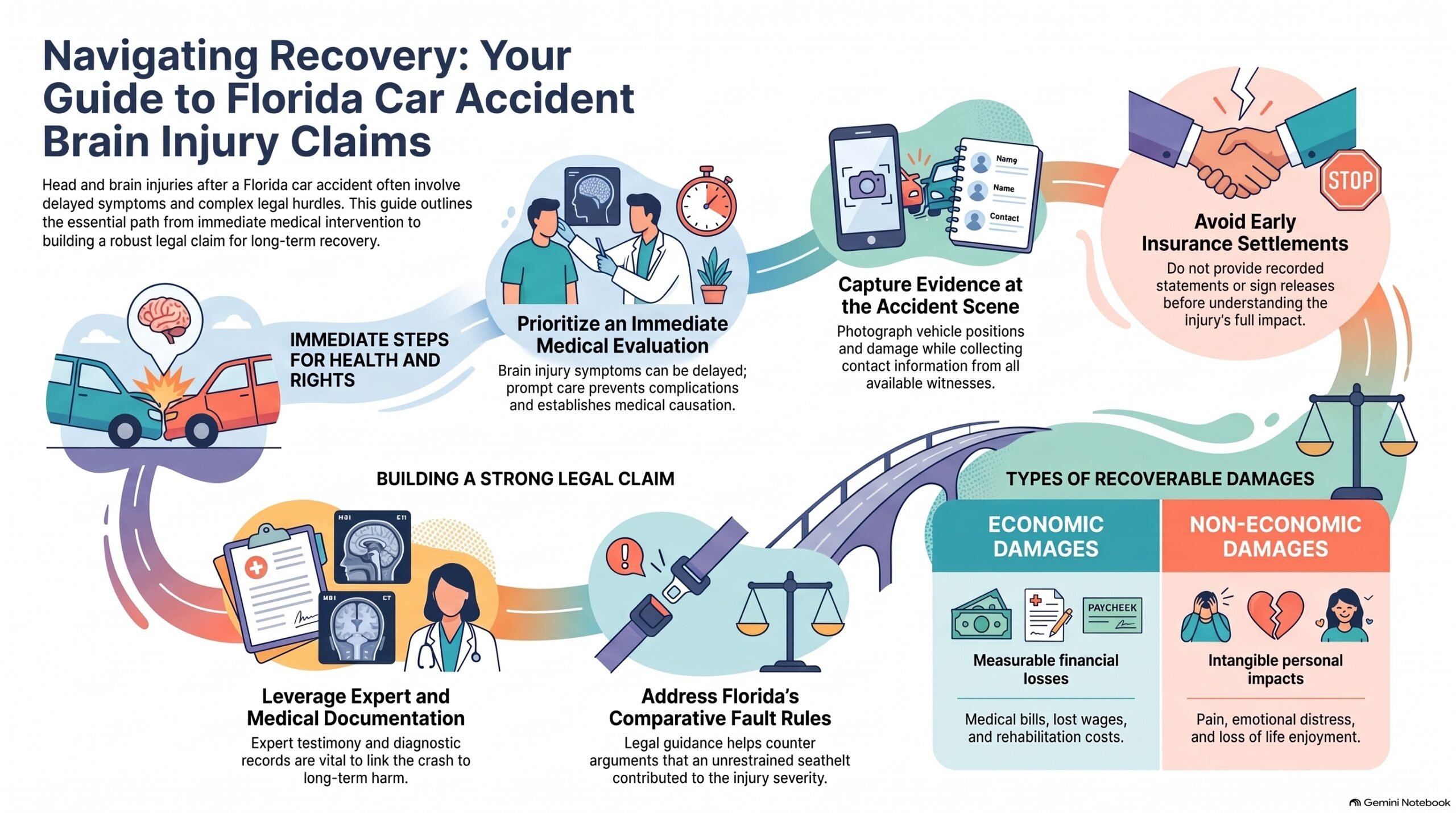
After a Florida car accident involving a head or brain injury, the injured person should seek immediate medical care, even if symptoms initially appear minor. Documenting the accident scene, including injuries, vehicle damage, and witness information, may help preserve important evidence. Consulting a brain injury lawyer can also clarify legal rights and potential compensation.
Seek Immediate Medical Care
When a person experiences a head impact, loss of consciousness, confusion, severe headache, or other neurological symptoms in a car accident, immediate medical care is essential, even if the injury initially appears minor. A qualified healthcare professional can identify concussions, bleeding, swelling, and other conditions that may worsen without prompt treatment. The injured person should follow emergency personnel’s instructions and seek evaluation at an emergency department or urgent care facility, depending on the severity of symptoms. Medical documentation can establish when symptoms began, what examinations revealed, and which treatment was recommended. This record may support an injury claim and help prevent disputes concerning causation. Delaying care can allow serious complications to develop and may contribute to insurance claim denials. Follow-up appointments should be attended, prescribed restrictions observed, and worsening symptoms reported immediately to medical providers.
Document the Accident Scene
If the injured person’s condition permits, documenting the accident scene can preserve crucial evidence concerning how the collision occurred and who may be responsible. A safe observer should photograph vehicle positions, roadway conditions, traffic signals, visible damage, debris, and any relevant skid marks. Images should include both wide and detailed views, without entering traffic or disturbing evidence. Witnesses’ names and contact information should be recorded, along with concise accounts of what they observed. Collect Evidence Locally by obtaining available surveillance information, incident numbers, and identifying details for responding officers, while respecting privacy and safety requirements. The injured person or a trusted representative should Preserve Medical Reports, discharge instructions, prescriptions, diagnostic results, and billing records. Notes should promptly and accurately document symptoms, changes in condition, and missed activities.
Consult a Brain Injury Lawyer
Because a head or brain injury can involve delayed symptoms, disputed causation, and substantial long-term consequences, consulting a Florida brain injury lawyer may help protect the injured person’s legal and financial interests. Counsel can explain reporting obligations, coordinate with medical providers, and help ensure treatment records accurately document cognitive, emotional, and physical changes. Legal guidance may also support the preservation of evidence, including photographs, vehicle data, witness information, surveillance footage, and relevant communications. A lawyer can evaluate available insurance coverage, communicate with adjusters, and help prevent premature settlements that fail to account for future care, lost earning capacity, or rehabilitation needs. If an insurer unreasonably delays payment, misrepresents coverage, or refuses a supported claim, counsel may investigate potential insurance bad faith. Prompt consultation can help families serve the injured person responsibly while preserving legal options.
Critical Evidence in a Florida Car Accident Head & Brain Injury Case
A strong head and brain injury claim depends on timely, reliable evidence connecting the crash to the reported harm.
Essential evidence may include:
- Medical records documenting diagnosis, treatment, and prognosis
- Accident scene photographs, vehicle damage, and police reports
- Witness statements describing the collision and observed symptoms
- Expert medical testimony addressing causation and long-term effects
- Employment and rehabilitation records showing functional limitations
Together, these materials can clarify liability, establish the severity of the injury, and support the damages claimed.
Medical Records
Medical records provide critical evidence in a Florida car accident head and brain injury case by documenting the injury, its progression, and the treatment required. Emergency department notes, diagnostic imaging, expert evaluations, therapy records, and medication histories can establish when symptoms appeared and how they affected daily functioning. Consistent documentation may clarify the connection between the collision and reported cognitive, physical, or emotional limitations. In cases involving disputed liability, records can support a claimant’s account without relying solely on witness credibility. They also help demonstrate the cost and duration of necessary care, which may reduce insurance delays and provide a sound foundation for settlement negotiations. Accurate, complete records enable legal professionals to present the injured person’s needs responsibly and help insurers and courts evaluate damages based on documented medical evidence.
Accident Scene Evidence
When properly preserved, accident scene evidence can help establish how a Florida collision occurred and whether the impact plausibly caused a head or brain injury. Investigators may document vehicle damage, skid marks, debris, roadway conditions, traffic signals, lighting, and obstructions. Photographs should capture both close details and broader perspectives before vehicles or property are moved. Measurements, event-data records, surveillance footage, and available 911 information may further clarify speed, force, visibility, and timing. Careful photograph analysis can help distinguish impact patterns from later damage and support reconstruction of the collision. Physical evidence may also assist in evaluating eyewitness credibility without relying solely on uncertain recollections. Prompt preservation is important because weather, repairs, traffic, and routine cleanup can quickly alter or destroy relevant conditions, complicating a fair evaluation of responsibility and causation of injury.
Witness Statements
Witness statements can provide pivotal evidence in a Florida car accident head and brain injury case by clarifying how the collision occurred and what symptoms appeared afterward. Independent observers may describe vehicle positions, impact force, visible confusion, loss of balance, or complaints of headache and dizziness. Their accounts can help establish that symptoms were present at the scene, particularly when the injured person could not communicate clearly. Promptly collected names, contact information, and written or recorded statements may preserve details that otherwise fade. Witnesses should distinguish personal observations from assumptions and avoid exaggerating uncertain facts. Attorneys may use consistent accounts during settlement negotiations to challenge disputed liability or symptom claims. Such statements can also support insurance documentation, police reports, and timelines while helping families present accurate information when seeking appropriate care and accountability.
Expert Medical Testimony
Although witness accounts can describe what occurred at the crash scene, expert medical testimony can explain how the collision caused a head or brain injury and how that injury affects the victim’s health. A qualified expert witness may review medical records, imaging, emergency reports, and treatment history to establish a reliable diagnosis of brain injury. The testimony can link symptoms such as memory loss, headaches, impaired concentration, or personality changes to the impact, rather than to unrelated conditions. This analysis addresses clinical causation, a crucial issue when insurers or opposing parties question whether the crash produced the claimed harm. Medical opinions may also explain future treatment, rehabilitation, and functional limitations. When presented clearly, expert testimony strengthens proof of negligence and helps decision-makers evaluate the victim’s needs with accuracy, fairness, and compassion.
Long-Term Effects of Florida Car Accident Head & Brain Injuries
Long-term head and brain injuries from Florida car accidents may cause lasting cognitive and memory changes that affect work, education, and daily responsibilities. Injured individuals may also face ongoing physical limitations and emotional challenges requiring sustained support. Continued medical care, rehabilitation, and monitoring may be necessary to address evolving symptoms and preserve functional abilities.
Cognitive and Memory Changes
Cognitive and memory changes can emerge after a Florida car accident, particularly when a traumatic brain injury disrupts the areas responsible for attention, processing speed, learning, or recall. Survivors may forget appointments, lose track of conversations, or require additional time to understand instructions. Some struggle to organize tasks, find familiar words, or retain newly learned information, even when prior abilities were strong. These limitations can affect employment, education, household responsibilities, and participation in legal or medical decisions. Fatigue and driving may intensify concentration problems, creating additional safety concerns that require careful evaluation. The impact on survivors often extends to family members and caregivers, who may need to provide reminders, supervision, or communication support. Neuropsychological testing, medical documentation, and structured routines can help identify needs and guide the provision of appropriate services.
Physical and Emotional Challenges
Physical and emotional challenges may persist long after a Florida car accident head or brain injury, affecting nearly every aspect of daily life. Physical limitations can reduce mobility, endurance, coordination, and the ability to complete household or workplace responsibilities. Persistent headaches, dizziness, sensitivity to noise, and disrupted balance may make ordinary activities exhausting or unsafe.
Emotional changes can be equally significant. Irritability, anxiety, depression, diminished confidence, and difficulty regulating reactions may strain relationships and interfere with employment. Post-accident insomnia can intensify fatigue, concentration problems, and emotional distress, creating a cycle that affects recovery and independence. Financial stress during recovery can be especially difficult when injuries reduce income while increasing household demands. Family members, employers, and support networks can assist by providing patience, practical accommodations, and respectful encouragement as affected individuals rebuild stability and daily functioning.
Ongoing Medical Care
Ongoing medical care may be necessary after a Florida car accident causes a head or brain injury, particularly when symptoms continue or emerge over time. Treatment may include follow-up appointments with a neurologist to monitor memory loss, headaches, seizures, balance problems, or changes in behavior. Physicians may recommend brain imaging when symptoms worsen or new concerns arise, to help identify complications and guide treatment decisions. Rehabilitation can involve physical, occupational, speech, or cognitive therapy, depending on the injury’s effects. Rehabilitation costs may continue for months or years, especially when a person requires assistive services or supervision. Medical records should document treatment, limitations, and anticipated needs. A healthcare team may also provide a long-term prognosis, although recovery can remain uncertain. Consistent care supports safety, independence, and informed planning for affected individuals and their families.
Proving Liability in Florida Car Accident Head & Brain Injury Cases
When a Florida car accident causes a head or brain injury, proving liability requires evidence connecting another party’s negligent conduct to both the crash and the resulting harm. A careful investigation may examine traffic laws, vehicle damage, roadway conditions, surveillance footage, police reports, and electronic data. Witness statements can clarify speeds, traffic signals, driver behavior, and events immediately before impact. Medical records are equally important because head and brain injuries may appear gradually or involve intricate symptoms. Physicians can explain the diagnosis, necessary treatment, prognosis, and relationship between the collision and the injury. Documentation of prior health conditions may also help distinguish accident-related harm from unrelated problems. Liability may involve a negligent driver, vehicle owner, employer, manufacturer, or another responsible entity, depending on the facts. An attorney can organize this evidence, protect the injured person’s rights during insurance negotiations, and present a clear claim focused on accountability and the patient’s long-term needs.
Dealing With Insurance Companies After a Florida Car Accident Head & Brain Injury
Insurance companies often respond to Florida car accident head and brain injury claims with detailed questions about the collision, medical treatment, and the injured person’s prior health. Their representatives may request recorded statements, medical authorizations, photographs, employment information, and documentation concerning symptoms. Injured individuals should provide accurate information but should avoid speculation, minimizing symptoms, or signing broad releases without informed guidance.
A careful review of the basics of negligence helps clarify how the crash occurred, which conduct caused the harm, and what evidence supports responsibility. Insurers may also raise comparative fault, asserting that the injured person contributed to the collision or failed to use reasonable care. Such allegations can affect the available recovery, making consistent medical records, witness accounts, crash evidence, and treatment documentation important.
A qualified attorney can communicate with adjusters, protect private information, evaluate settlement proposals, and help secure that the injured person’s needs remain central. This support allows families and caregivers to focus on rehabilitation while preserving a fair opportunity to address medical costs, lost income, and continuing limitations.
What to Expect During a Florida Car Accident Head & Brain Injury Claim Process
A Florida head and brain injury claim typically begins with an initial case evaluation to assess liability, injuries, and potential damages. The process then involves gathering evidence and medical records, followed by negotiations with the responsible insurer. If negotiations do not produce an appropriate resolution, the matter may conclude through a settlement or proceed to trial.
Initial Case Evaluation
How does an initial case evaluation shape a Florida car accident head and brain injury claim? It establishes whether the circumstances, injuries, and potential legal issues warrant further representation. During this meeting, a lawyer generally listens to the injured person’s account, identifies possible responsible parties, and considers deadlines that could affect the claim. The evaluation also addresses diagnosis and treatment, including whether symptoms such as memory problems, headaches, or impaired concentration may require continuing care. Counsel may explain communication expectations, potential sources of compensation, and the importance of following medical recommendations. Early guidance concerning evidence preservation can help prevent accidental loss of relevant information without prematurely analyzing specific records. A careful evaluation allows the legal team to serve the injured person effectively while developing a practical strategy tailored to the claim’s circumstances.
Evidence And Medical Records
When a Florida car accident claim involves a head or brain injury, evidence and medical records provide the foundation for evaluating causation, severity, and financial impact. Attorneys typically gather crash reports, photographs, vehicle data, employment records, and witness interviews to establish how the collision occurred and how symptoms developed. Complete medical documentation may include emergency evaluations, imaging, neurological examinations, treatment plans, therapy notes, prescriptions, and prognostic opinions. Consistent reporting helps link cognitive, physical, or emotional limitations to the accident and accurately identify prior conditions. Records also support documenting damages, including medical expenses, lost income, rehabilitation needs, and necessary future care. Careful organization can expose inconsistencies in insurance tactics and strengthen preparation for negotiating settlements. Because privacy rules and deadlines apply, preserving communications and authorizing timely collection of records remain critical throughout the claim process.
Insurance Negotiations
Insurance negotiations in a Florida car accident head and brain injury claim typically start after the insurer reviews the crash evidence, medical records, and documented losses. Adjusters may assess liability, treatment consistency, projected care needs, lost income, and the impact of cognitive or neurological limitations on daily life. Policy limits can limit available compensation, even when documented harm is substantial. Demand letters commonly organize supporting evidence, explain damages, and identify the amount requested. During discussions, insurers may use negotiating tactics such as disputing causation, minimizing symptoms, requesting additional records, or emphasizing preexisting conditions. Claim valuation requires careful analysis of current expenses, future medical needs, rehabilitation, and functional losses. A qualified representative can communicate accurately, protect the injured person’s interests, and help ensure that meaningful information is presented for fair consideration.
Settlement Or Trial
A Florida car accident head and brain injury claim may conclude through a negotiated settlement or proceed to trial if the parties cannot reach a fair resolution. During settlement discussions, the injured person’s legal team presents medical records, prognosis evidence, lost-income documentation, and other Settlement Leverage Points. The process is not a Plea Bargain Strategy; it requires a careful evaluation of damages, liability, and future care needs. If negotiations produce acceptable terms, the parties sign an agreement, and the claim ends without trial. If disputes remain, litigation may involve discovery, expert testimony, depositions, and a courtroom decision. A trial can provide accountability, but it also involves uncertainty, expense, and delay. Counsel generally explains each option so that the injured person and their family can make informed decisions that protect their long-term well-being.
Compensation for Florida Car Accident Head & Brain Injury Damages
Head and brain injuries from a Florida car accident may support compensation for medical treatment, lost income, reduced earning capacity, and the ongoing effects of physical or cognitive impairment. A claim may also address rehabilitation, assistive services, necessary transportation, and care required because symptoms persist or worsen. Documentation from physicians, therapists, employers, and family members can help establish how the injury affects daily responsibilities and future independence. In appropriate cases, compensation may include damages for pain, emotional distress, loss of enjoyment, and diminished quality of life. Punitive damages may be available when the at-fault conduct involved intentional wrongdoing or gross negligence, rather than ordinary carelessness. The settlement timeline depends on medical stability, investigative needs, disputed liability, insurer conduct, and the extent of projected losses. A careful evaluation can help protect an injured person’s interests while preserving resources for ongoing care. Florida deadlines and procedural requirements should be addressed promptly by qualified legal counsel.
Economic vs Non-Economic Damages in Florida Car Accident Head & Brain Cases
Economic damages may include medical expenses, lost income, rehabilitation costs, and other measurable financial losses resulting from a head or brain injury. Non-economic damages address less tangible harm, including pain, emotional distress, cognitive limitations, and diminished quality of life. Establishing these losses generally requires medical documentation, expert opinions, employment records, and evidence connecting the injury to the accident.
Economic Damages Explained
Florida car accident claims involving head or brain injuries may include both economic and non-economic damages, each addressing different forms of harm. Economic damages compensate measurable financial losses caused by the injury. They may include emergency treatment, hospitalization, diagnostic testing, medication, rehabilitation, assistive equipment, and future medical care. Lost wages, reduced earning capacity, transportation expenses, and necessary household assistance may also qualify when supported by reliable evidence. Medical records, bills, employment documentation, expert opinions, and life-care projections help establish the amount and duration of these losses. Attorneys may use insurance negotiation strategies to present organized proof and challenge incomplete evaluations. Settlement calculation methods often compare documented expenses, anticipated costs, and income losses while accounting for Florida’s applicable liability rules. Careful preparation helps protect injured individuals and their families.
Non-Economic Damages Valued
Although economic damages address documented financial losses, non-economic damages compensate for the less measurable effects of a head or brain injury after a Florida car accident. These damages may reflect pain, emotional distress, diminished enjoyment of life, sleep disruption, and changes in family relationships. Their value depends on the injury’s severity, duration, treatment demands, and impact on ordinary activities, rather than on invoices alone. Liability proof remains important because responsibility must be established before meaningful compensation can be pursued. During insurance negotiation, counsel may present a structured account of how symptoms affect daily functioning and personal well-being. Settlement valuation thus requires careful judgment, recognizing that no fixed formula can fully measure human consequences. A fair assessment should respect the injured person’s dignity while seeking resources that support recovery, stability, and continued participation in family and community life.
Proving Brain Injury Losses
To establish brain injury losses after a Florida car accident, the injured person must connect the collision to both measurable financial harm and ongoing personal consequences. Economic damages may include emergency treatment, rehabilitation, medication, adaptive equipment, lost wages, reduced earning capacity, and anticipated medical care. Medical records, expert opinions, employment documentation, and receipts can help demonstrate the amount and necessity of these losses. Non-economic damages address pain, cognitive impairment, emotional distress, loss of enjoyment, and diminished independence. Testimony from family members, coworkers, and treating professionals may clarify how symptoms affect daily life. During settlement negotiation, organized evidence can support a complete valuation rather than an early, inadequate offer. In fatal cases, Wrongful death claims may seek qualifying survivors’ financial losses and the deceased person’s final injury-related damages.
Don’t Wait. Call Our Florida Personal Injury Lawyers Now!
When a Florida Car Accident Head & Brain Injury Case Goes to Trial vs Settlement
When a Florida car accident causes a head or brain injury, the decision to pursue settlement or proceed to trial depends on the strength of the evidence, the severity of the injury, and the parties’ willingness to accept a fair resolution. A settlement may provide timely compensation, privacy, and greater control over uncertainty. It can also help an injured person obtain medical care and support without enduring extended litigation.
Trial may become necessary when insurers deny responsibility, undervalue documented losses, or dispute the connection between the crash and cognitive limitations. In a Personal injury case, legal strategy should account for medical opinions, treatment records, witness testimony, and projected future needs. Counsel also evaluates courtroom procedure, evidentiary challenges, and trial readiness before recommending litigation.
Serving an injured person requires an individualized assessment rather than pressure toward either outcome. Negotiations may continue throughout the case, while trial preparation strengthens the ability to pursue a fair result.
Florida Laws That May Affect Your Florida Car Accident Head & Brain Case
Florida laws governing car accident claims can materially affect a head or brain injury case, including the deadlines for filing suit, standards for proving fault, and limits on available compensation. Other rules may influence how evidence is presented and which parties may be responsible. Pivotal considerations include:
Florida car accident laws shape brain injury claims through deadlines, fault standards, evidence requirements, and available compensation.
- Comparative fault rules may reduce recovery when an injured person contributed to the collision.
- Negligent entrustment liability may apply when an owner knowingly allows an unsafe or unqualified driver to operate a vehicle.
- Florida’s no-fault system may require initial medical benefits to be provided through personal injury protection coverage.
- Serious injuries can permit claims against an at-fault driver beyond those benefits, subject to legal requirements.
- Insurance coverage, medical documentation, and expert testimony can affect valuation and resolution.
These laws can determine whether compensation supports rehabilitation, ongoing treatment, lost earning capacity, and dependable care. Careful legal evaluation also helps families and advocates protect an injured person’s interests while pursuing accountability from responsible parties. Each case requires analysis of its facts, available coverage, and applicable Florida authorities.
The Statute of Limitations for Florida Car Accident Head & Brain Injury Cases
Generally, a Florida car accident head or brain injury claim must be filed within the statute of limitations established by Florida law, and missing that deadline can bar recovery regardless of the injury’s severity. The applicable period may differ depending on whether the case involves negligence, a government entity, or another legal theory. Recent legislative changes may also affect deadlines, so the accident date and responsible parties require careful evaluation.
Insurance claim timelines are separate from court filing deadlines. Prompt notice to an insurer may be required under a policy, but such notice does not necessarily extend the statute of limitations. Immediate medical documentation can establish when symptoms appeared, connect those symptoms to the collision, and preserve evidence of evolving impairment. Records should include examinations, diagnostic testing, treatment recommendations, and missed work.
Because head and brain injuries may develop gradually, delaying action can compromise both legal rights and proof. Preserving records, identifying witnesses, and confirming the controlling deadline supports a timely, responsible response for injured individuals and their families.
How a Florida Car Accident Head & Brain Lawyer Can Help You
A Florida car accident head and brain injury lawyer can protect a claimant’s legal rights while building evidence needed to establish the injury, its cause, and its long-term effects. Counsel may coordinate medical records, expert opinions, witness statements, and accident reports to present a complete account of the harm.
A Florida brain injury lawyer builds the evidence needed to establish causation, long-term effects, and the full scope of harm.
A lawyer can assist by:
- Identifying potentially responsible parties and applicable insurance coverage.
- Managing communications with insurers and opposing counsel.
- Evaluating lost income, treatment costs, and anticipated care needs.
- Performing a careful Damages calculation that accounts for cognitive and emotional limitations.
- Developing a Settlement strategy based on evidence, liability, and projected losses.
Legal representation also helps preserve documentation, address disputed medical findings, and present the claimant’s functional limitations clearly. Counsel can negotiate with insurers or prepare the matter for litigation when an offer does not reflect the injury’s full consequences. This work supports claimants and their families while promoting accountability and protecting resources needed for rehabilitation, ongoing care, and household stability.
When to Contact a Florida Car Accident Head & Brain Injury Lawyer
Prompt legal guidance should be considered as soon as a collision produces symptoms associated with a head or brain injury, even when those symptoms initially appear minor. Headaches, dizziness, confusion, memory problems, nausea, vision changes, or unusual fatigue may develop gradually and warrant prompt medical attention and legal consultation.
A Florida car accident head and brain lawyer may be contacted after emergency treatment, particularly when medical records indicate a possible concussion, traumatic brain injury, or related condition. Early consultation can help preserve important evidence, identify responsible parties, and clarify available coverage without disrupting necessary care. It may also help an injured person understand documentation requirements for medical expenses, lost income, and pain and suffering.
Time limits should receive immediate attention. Insurance claim deadlines and Florida filing rules can affect the ability to pursue compensation. A consultation is also appropriate when an insurer requests a statement, offers a settlement, disputes medical treatment, or attributes symptoms to a prior condition. Prompt action supports informed decisions and protects recovery efforts.
Why You Need an Experienced Florida Car Accident Head & Brain Lawyer
Because head and brain injuries can involve delayed symptoms, disputed diagnoses, and long-term effects, an experienced Florida car accident head and brain lawyer can provide valuable guidance throughout the claim. Such counsel can organize medical records, consult with qualified experts, and establish the link between the injury and the collision when insurers question causation. This assistance may help protect an injured person’s access to treatment and preserve evidence needed to document cognitive, emotional, and physical limitations.
An experienced lawyer can also evaluate available insurance coverage, identify procedural deadlines, and respond to tactics intended to reduce or deny legitimate compensation. Insurance denial appeals may require carefully supported arguments, additional medical documentation, and a clear explanation of policy obligations. In settlement discussions, informed settlement negotiation tactics can address future care, lost earning capacity, rehabilitation, and the assistance a family member may provide. By managing these demanding responsibilities, counsel allows injured individuals and their families to focus on recovery while pursuing a fair, evidence-based resolution.
How to Choose the Right Florida Car Accident Head & Brain Lawyer for Your Case
Selecting the right Florida car accident head and brain lawyer requires careful review of the attorney’s experience with traumatic brain injuries, concussion claims, and other neurological conditions. A qualified attorney should understand how symptoms may emerge gradually, affect employment, and require continuing medical care. Prospective clients should examine professional credentials, relevant case experience, and the resources available for investigating intricate injuries.
Effective Client communication is equally important. The lawyer should explain legal options clearly, respond within reasonable periods, and ensure that the injured person or family understands each decision. During an initial consultation, questions about case timelines can reveal whether the attorney provides realistic expectations rather than unsupported assurances. Discussion should also address settlement readiness, including how medical evidence, future costs, and functional limitations may influence negotiations. Finally, the attorney should describe an insurance strategy for addressing coverage disputes, liability arguments, and pressure to accept inadequate compensation. A careful selection process helps families secure informed, compassionate representation focused on protecting long-term interests.
About The Law Offices of Anidjar & Levine
The Law Offices of Anidjar & Levine represents individuals injured in Florida car accidents, including those who suffer head trauma, concussions, and traumatic brain injuries.
The firm’s legal team evaluates medical records, accident reports, and other evidence to help determine how an injury occurred and what compensation may be available.
During a free consultation, attorneys can discuss the circumstances of a collision, identify potential sources of liability, and explain the legal process.
A careful case strategy may address medical expenses, lost income, rehabilitation needs, and the effects of cognitive or emotional changes.
Because brain injuries may develop or become apparent over time, the firm considers both immediate and future consequences.
Client resources can help injured individuals understand important legal and medical considerations while their claims proceed.
The firm also communicates with insurers and other parties, allowing clients to focus on treatment and recovery.
Each matter receives an assessment based on its specific facts, documentation, and long-term impact.
Frequently Asked Questions
Can I Afford a Florida Car Accident Head and Brain Injury Lawyer?
Many injured people can afford legal representation because personal injury lawyers commonly work on a contingency fee basis, meaning payment is typically based on a settlement or verdict rather than upfront fees. Cost factors may include case intricacy, medical evidence, litigation expenses, and the attorney’s percentage. Payment plans may be available for expenses not covered by the agreement. Free consultations allow potential clients to review options, understand obligations, and determine whether representation serves their recovery and family’s interests.
Will My Case Remain Confidential During the Legal Process?
Generally, a client’s communications with a lawyer remain confidential throughout the legal process. Attorney-client privilege protects private discussions, case evaluations, medical information, and litigation strategy from disclosure, subject to limited legal exceptions. Privacy protections also govern records and communications, although court filings, discovery, and testimony may become accessible when required. The lawyer should explain the limits of confidentiality, obtain informed consent before sharing information, and recommend secure communication practices from the outset.
Can Family Members Pursue Compensation if the Injured Victim Cannot?
Family members may pursue compensation when an injured victim lacks capacity, but authority generally depends on guardianship, power of attorney, or applicable state law. If the victim later dies, an authorized representative may bring a Wrongful Death Claim on behalf of eligible relatives, while the estate may seek Surviving Expenses and other losses incurred before death. Courts typically require medical evidence, legal standing, and documentation establishing financial and caregiving relationships.
What Happens if the At-Fault Driver Has No Insurance?
If the at-fault driver has no insurance, the injured person may pursue compensation through uninsured motorist coverage if it is included in the applicable auto policy. This coverage can address medical expenses, lost income, and other documented losses, subject to policy limits and exclusions. The uninsured impacts may also require investigating the driver’s assets or other responsible parties. A qualified attorney can preserve evidence, evaluate available coverage, and help protect the injured person’s ability to obtain fair compensation.
Can I Change Lawyers if I Am Dissatisfied With My Current Representation?
Yes, an injured person generally may change counsel if dissatisfied with current representation. The individual should first review the engagement agreement, especially the provisions addressing fees, case expenses, and termination procedures. A private consultation with prospective counsel can clarify deadlines, ethical obligations, and potential conflicts. Written notice may be required, and court approval may be required after litigation begins. Prompt action helps preserve evidence, protect legal rights, and prevent disruption to the claim or recovery process.
—————————
Florida car accident head and brain injuries can lead to significant medical, financial, and personal challenges.
Victims may need ongoing treatment, rehabilitation, and support while navigating insurance disputes and potential long-term impairments.
Prompt legal guidance can help preserve evidence, assess damages, and protect available rights under Florida law.
The Law Offices of Anidjar and Levine assist injured individuals in pursuing informed, strategic claims.
A consultation with a Florida Personal Injury Lawyer may clarify legal options and support a stronger path toward appropriate compensation.