When your insurer delays, denies, or underpays a valid claim, Florida law gives you recourse — we build the record that holds them accountable.
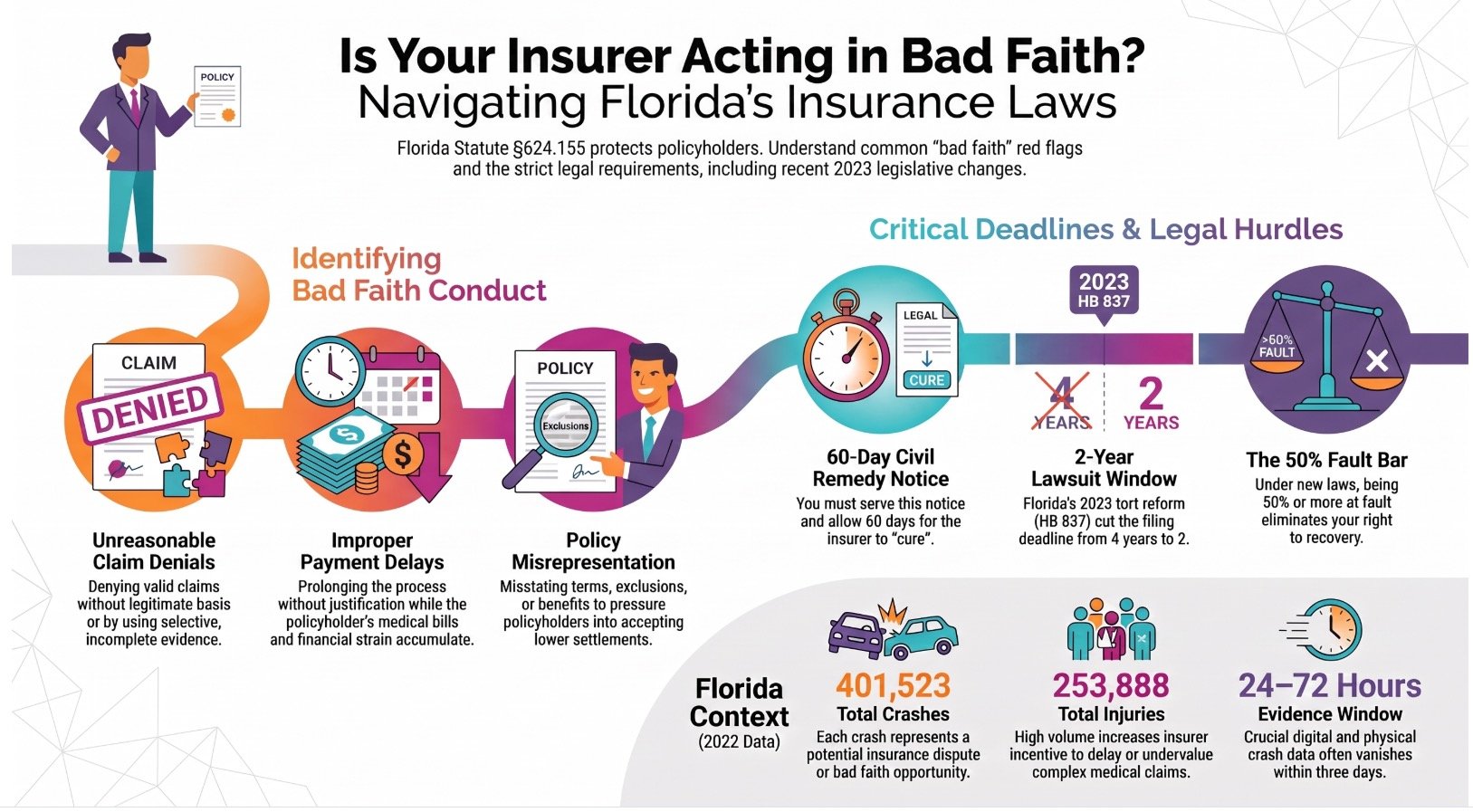
Under Florida Statute §624.155, an insurer that handles a policyholder’s claim without good faith — by unreasonably delaying payment, denying a valid claim, or failing to investigate with reasonable care — may be liable for damages beyond the original policy limits. Before filing suit, Florida law requires policyholders to serve the insurer with a Civil Remedy Notice (CRN) through the Department of Insurance and allow 60 days to cure the violation.
The Law Offices of Anidjar & Levine help people injured in Gainesville challenge insurers that delay, underpay, deny, or misrepresent valid claims.
Our team reviews policy language, medical records, adjuster notes, payment history, and correspondence to identify bad faith conduct under Florida law.
We preserve crucial evidence, document claim timelines, calculate damages, and pursue fair compensation through negotiation or litigation.
If your insurer’s conduct harmed your recovery, we can explain your rights, immediate steps, and the claim path ahead.
For related injury claims after a crash, speak with a Gainesville Car Accident Lawyer.
Legal Term Defined
What Is Insurance Bad Faith?
In Florida, bad faith is a legal claim that arises when an insurer fails to handle a policyholder’s claim with the honesty, fairness, and promptness required by law. Florida Statute §624.155 allows policyholders to sue when their insurer unreasonably delays, denies, or undervalues a valid claim. A successful bad faith action can produce damages exceeding the original policy limit — including consequential harm caused by the delay or denial, attorney’s fees, and interest. Florida also requires a 60-day Civil Remedy Notice before suit may be filed.
Main Takeaways
- A Gainesville bad-faith insurance injury lawyer evaluates delays, undervaluation, or wrongful denials under Florida bad-faith law.
- Legal support includes reviewing policy language, medical records, adjuster notes, payment history, and insurer correspondence.
- Evidence preservation is critical, including emails, letters, claim notes, medical bills, photos, offers, and denial records.
- Damages may include medical expenses, lost income, harm from delayed treatment, financial strain, future care, and emotional distress.
- A lawyer can organize the claim, handle communications with the insurer, and pursue fair compensation through negotiation or litigation.
How We Can Help With Your Gainesville Bad Faith Insurance Injury Claim
When an insurer delays, undervalues, or wrongfully denies a valid injury claim, we can step in to protect your rights and demand accountability. We serve you by taking on the burden of communication, organizing your claim records, and identifying the conduct that hindered your recovery. Our team reviews policy language, medical records, adjuster notes, payment history, and correspondence to build a clear picture of what should have happened.
For a detailed explanation of how Florida’s no-fault PIP system works — and how insurer disputes often begin at the PIP claim stage — read: Florida PIP Insurance Explained.


We also focus on evidence preservation from the start, because missing records, lost photographs, or incomplete medical documentation can weaken an otherwise strong claim. Through careful calculation of damages, we assess medical expenses, lost income, future care needs, and the broader impact on your daily life. We prepare every claim with discipline, so you can focus on improving and serving your family, work, and community while we pursue fair compensation through negotiation or litigation.
Understanding Gainesville Bad Faith Insurance Injury Cases
OUR CONSULTATIONSARE FREE
START YOUR FREE CASE REVIEW

After we identify how an insurer’s conduct affected your claim, we examine whether that conduct may qualify as bad faith under Florida law. We look at the insurer’s duties, the claim history, and the information available when decisions were made. This process helps you understand whether the carrier handled your injury claim with fairness, diligence, and respect.
We also focus on understanding insurers’ tactics because subtle claim-handling choices can reduce the value of legitimate losses. Preserving evidence remains important, including letters, emails, estimates, policy documents, and claim notes. We guide you in documenting medical records so your treatment, limitations, and recovery needs remain clear.
Our role is to help you protect your rights while maintaining a service-minded approach toward your family, providers, and community. When we evaluate bad faith, we do not rely on assumptions. We build a careful record that supports accountability and helps move your claim forward.
Gainesville Bad Faith Insurance Claims: Why the Stakes Are Higher Than They Appear


Florida’s insurance landscape gives insurers powerful incentives to delay, dispute, and minimize claims — and recent legislative changes have made the problem worse for injured policyholders. According to the FLHSMV 2022 Florida Traffic Crash Facts, Florida recorded 401,523 total crashes and more than 253,888 injuries in 2022 — each crash generating at least one insurance claim that an adjuster must evaluate, and each injury claim a potential dispute. NHTSA data shows distracted driving alone killed 3,308 people nationally in 2022, producing serious injury claims whose medical complexity gives insurers maximum opportunity to dispute causation, necessity, and value.
Under Florida’s 2023 tort reform (HB 837), the personal injury lawsuit deadline was cut to two years, and a 50% comparative fault bar now gives insurers a clear financial incentive to shift blame rather than pay. Before a bad faith lawsuit can even be filed, Florida Statute §624.155 requires a 60-day Civil Remedy Notice — a procedural window insurers can use to forestall accountability. Physical and digital evidence from the original crash can vanish within 24 to 72 hours, and without it, the insurer’s disputed account of events goes unchallenged. Understanding these pressures is the first step to pushing back against them.
Common Causes of Gainesville Bad Faith Insurance
We often see bad-faith insurance when an insurer unreasonably denies your claim, delays payment without justification, or fails to conduct a proper investigation. We also look closely at whether the insurer misrepresented policy terms, because unclear or inaccurate explanations can prevent you from receiving the benefits owed. As we examine these common causes, we will help you recognize conduct that may indicate unfair claim handling.
Unreasonable Claim Denials
Although insurers have the right to investigate claims, they cannot deny valid injury claims without a reasonable ground. We often see denials issued when insurers overlook medical records, misstate policy terms, or rely on selective evidence to minimize your harm. When you have acted responsibly and provided support for your claim, the insurer must evaluate the facts fairly and in good faith.
We help you identify whether the denial reflects a legitimate coverage issue or an improper effort to avoid paying a reasonable settlement. If policy ambiguity exists, insurers should not interpret unclear language only in their favor while disregarding your rights. By challenging unreasonable denials, we protect injured people, support fair accountability, and help ensure insurance promises serve the individuals and families they were meant to protect.
Delayed Claim Payments
When an insurer delays payment without a valid reason, the financial pressure on an injured person can grow quickly. We see these delays affect medical care, household stability, and the ability to return to normal routines. You may face overdue bills while the insurer requests more time, repeats administrative steps, or cites policy ambiguity without explaining its position. In these situations, delay can become more than an inconvenience — it may reflect bad faith when the insurer has the information needed to act. We help you press for timely decisions, clear communication, and fair payment under the policy. If needed, we pursue dispute resolution to compel accountability and protect your recovery. Prompt action can preserve benefits, reduce hardship, and support the service you provide to your family and community.
Inadequate Claim Investigations
Because a fair claim decision depends on a complete review, an insurer’s inadequate investigation can place your recovery at serious risk. We often see carriers overlook witness statements, ignore accident details, or review medical records without the care your circumstances merit. When that happens, we help you protect the truth through prompt preservation of evidence, organized documentation, and careful review of all insurance communications.
You serve your family and community by seeking accountability after harm, and we support that effort with disciplined preparation. We identify missing facts, challenge unsupported conclusions, and build a negotiation strategy grounded in verified information. If an insurer reaches a decision before completing a reasonable investigation, we work to show how that conduct affected your claim and pursue the relief the law allows.
Misrepresented Policy Terms
A misstatement about policy terms can distort your understanding of coverage, deadlines, exclusions, or available benefits at a pivotal point in the claims process. We see how inaccurate explanations can pressure you into accepting less than the policy provides, especially when injuries have disrupted your ability to serve your family, workplace, or community. Policy ambiguity may exist, but an insurer cannot use unclear language as a shield for unfair conduct. We examine the written policy, claim communications, and the timing of each representation to determine whether the insurer misstated its obligations or minimized its benefits. When misrepresented terms affect claim settlement, we work to correct the record and protect your right to fair consideration. You are entitled to accurate guidance, honest communication, and accountability when an insurer’s statements undermine your recovery.
Your Legal Rights After a Gainesville Bad Faith Insurance Injury
If an insurer mishandles a valid claim, injured people in Gainesville have legal rights that may allow them to seek compensation beyond the policy’s original benefits. We can help you understand how Florida law protects people when insurers delay, underpay, deny, or misrepresent claims without proper justification.
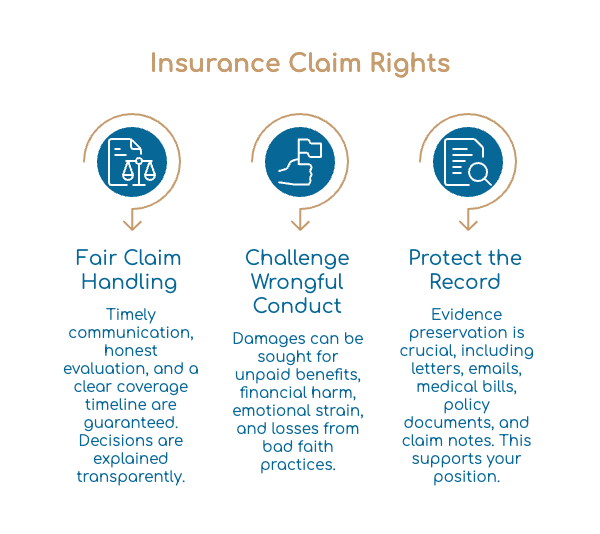
- Right to fair claim handling: You are entitled to timely communication, honest evaluation, and a clear coverage timeline that shows how decisions were made.
- Right to challenge wrongful conduct: We may seek damages tied to unpaid benefits, financial harm, emotional strain, and other losses caused by bad faith practices.
- Right to protect the record: Evidence preservation matters, including letters, emails, medical bills, policy documents, and claim notes that support your position.
When we stand with injured people, we serve the broader community by encouraging accountability, fairness, and responsible insurance practices. Your rights merit careful review before any final decision.
Why Do Gainesville Bad Faith Insurance Injuries Happen?
Why do bad faith insurance injuries happen in Gainesville? We often see them arise when insurers place financial interests ahead of the people they agreed to protect. A policyholder may suffer harm when an insurer delays payment, denies a valid claim, or fails to investigate with reasonable care. These failures can disrupt medical care, household stability, and the ability to serve family or community responsibilities.
Coverage misinterpretation is another common cause. An insurer may read policy language too narrowly, ignore important facts, or apply exclusions without a fair basis. Poor claim handling can also create serious damage, especially when adjusters overlook evidence, miss deadlines, or communicate unclear reasons for denial. We recognize that you rely on insurance to provide support during vulnerable moments. When an insurer acts unfairly, the injury extends beyond paperwork — it affects trust, resources, and the dignity people experience when seeking benefits they paid for.
What Should You Do After a Gainesville Bad Faith Insurance Injury?
After a Gainesville bad faith insurance injury, act quickly to protect your claim and strengthen the record. Document claim communications, preserve injury evidence, and avoid steps that could weaken your position. Connect with legal counsel as early as possible so you understand your rights and the insurer’s obligations.
Document Claim Communications
Start building a clear record as soon as the insurer contacts you, because claim communications often reveal whether the company handled your Gainesville injury claim fairly. Save every letter, email, text, voicemail, and claim portal message in one organized file. Record dates, names, titles, phone numbers, and the substance of each conversation, especially when an adjuster makes a promise or requests more information. These communication timelines help us identify delays, shifting explanations, or unreasonable demands that may show bad faith. Also keep copies of forms submitted, coverage statements, settlement offers, and denials. Repair evidence related to claim discussions, estimates, or insurer instructions should remain tied to the message that prompted it. Careful documentation lets us serve your interests with accuracy, accountability, and purpose.
Preserve Injury Evidence
Strong communication records work best when you also preserve evidence proving the injury, the loss, and the insurer’s response to both. Save medical records, discharge papers, prescriptions, repair estimates, bills, and every document showing how the injury affected daily responsibilities. Time-stamped photos of injuries, damaged property, unsafe conditions, and recovery progress can help confirm what happened and when. If someone witnessed the incident, ask for a witness statement while memories are still clear. Keep clothing, broken equipment, packaging, or other physical items in a safe place without altering them. By organizing evidence early, we help protect the truth, support fair treatment, and serve everyone involved with accuracy, integrity, and respect during the claim process.
Contact Legal Counsel
Reach out to legal counsel as soon as you suspect delay, denial, or unfair pressure from an insurer. Early guidance helps protect your rights as you continue to meet your medical, family, and work responsibilities. Counsel can review policy language, claim communications, and deadlines before the insurer shapes the record against you.
We help build a case strategy that reflects your losses, treatment needs, and the insurer’s conduct. We also create a documentation checklist that includes medical records, photographs, bills, wage information, adjuster emails, and denial letters. By acting promptly, we preserve evidence, reduce errors, and position your claim for negotiation, litigation, or accountability under Florida bad-faith insurance law when necessary.
Critical Evidence in a Gainesville Bad Faith Insurance Injury Case
We help you identify the evidence that can show how the insurer handled your injury claim and whether it acted in bad faith. Key records often include insurance policy documents, claim communication records and settlement offer history, medical treatment evidence, and vehicle data from the original crash.
For an in-depth look at why medical documentation is the backbone of every successful claim, read: Why Medical Records Matter in Personal Injury Cases.
Insurance Policy Documents
In a Gainesville bad-faith insurance injury case, the insurance policy documents define the duties, limits, exclusions, and claim-handling obligations that govern the dispute. We review the declarations page, endorsements, coverage forms, and amendments to determine what protection you purchased and what the insurer promised to provide. These documents help us measure the carrier’s conduct against the written contract, including proof obligations and any required timelines for benefits, notice, investigation, or payment. When we serve injured people, we must ground every argument in the policy’s actual language, not assumptions. Clear policy review can reveal misapplied exclusions, ignored coverage grants, or improper limits. By organizing these materials early, we protect your rights, support accountability, and prepare a focused bad faith claim.
Claim Communication Records
Because bad faith often appears in the insurer’s words and omissions, claim communication records can become some of the most important evidence in a Gainesville bad faith insurance injury case. We review letters, emails, portal messages, recorded call notes, and billing communication logs to identify delays, shifting explanations, or ignored information. These records help us show whether the insurer handled your claim with fairness, accuracy, and respect for its duties.
We also examine how each response affected negotiation strategy — a vague denial or late request can pressure you unfairly. When communications reference proof of damages, missed deadlines, or treatment timelines, they may reveal whether the insurer considered the claim honestly. By preserving these records, we protect your ability to serve your family, restore stability, and seek accountability.
Medical Treatment Evidence
When an insurer questions the value or cause of an injury, evidence of medical treatment often becomes the foundation of a bad-faith claim. We gather records that include diagnoses, treatment plans, referrals, imaging, prescriptions, therapy progress, and physicians’ opinions. These materials connect the injury to the incident and help you present the full human and financial impact of delayed or denied benefits.
We also compare medical documentation with liability evidence, because consistency strengthens credibility. If the insurer ignored clear records, minimized objective findings, or relied on incomplete reviews, that conduct may support your claim. During settlement negotiation, well-organized treatment evidence gives us leverage to show what the insurer knew, when it knew it, and why a fair evaluation required prompt, careful action.
Settlement Offer History
Medical treatment evidence establishes the value of the injury, but the settlement offer history shows how the insurer responded to that evidence. We review each demand, counteroffer, delay, and denial to determine whether the company acted fairly when you needed it to handle matters responsibly. Strong liability proof and complete medical records often require an insurer to reassess risk and make a reasonable offer. When offers remain unreasonably low despite clear evidence, that pattern may support a bad faith claim. We also examine timing, communication, and whether the insurer explained its valuation in a meaningful way. This history matters because it reveals conduct, not just numbers. By preserving letters, emails, and negotiation notes, we help show whether the insurer served the claim with diligence, honesty, and respect.
Event Data Recorder (EDR) Evidence in Bad Faith Insurance Cases
In bad-faith cases arising from auto accidents, one of the most powerful pieces of evidence the insurer may have ignored — or deliberately avoided — is the Event Data Recorder (EDR), commonly called the vehicle’s “black box.” Most passenger vehicles manufactured after 2012 contain an EDR that captures speed, braking force, throttle position, steering input, and seat-belt status in the seconds before impact. This data can definitively establish how the crash happened — and when an insurer denies or undervalues a claim by disputing the nature of the collision, the EDR record can expose that position as unreasonable.
We send formal spoliation letters immediately upon retention, demanding preservation of all EDR systems before data is overwritten when the ignition is cycled. If an insurer conducted its investigation without retrieving available EDR data, that investigative failure may itself constitute evidence of inadequate claim handling.
Learn more about how this data is used: How Black Box Data Can Help Your Car Accident Case.
For the federal regulatory background, see: NHTSA Event Data Recorders.
Long-Term Effects of Gainesville Bad Faith Insurance Injuries
We recognize that bad faith insurance conduct can leave you facing delayed medical treatment, worsening injuries, and avoidable complications. We also see how denied or delayed benefits can create financial strain, especially when medical bills, lost income, and daily expenses continue to grow. We consider the emotional distress you endure as well, because prolonged uncertainty can affect your health, stability, and ability to move forward.
Delayed Medical Treatment
Because insurers often control access to approvals, payments, and provider networks, a delayed claim decision can quickly become a delay in medical treatment. When necessary care stalls, your condition may worsen, recovery may take longer, and preventable complications can arise. We see how missed deadlines and claim pressure can force injured people to wait for imaging, therapy, surgery, or medical evaluations that should occur promptly. As advocates who value service, we focus on how these delays affect your health, daily function, and ability to care for others. Bad-faith conduct may occur when an insurer ignores records, delays authorization, or demands repeated documentation without a fair reason. We help you document the timeline, connect the delay to medical harm, and pursue accountability with diligence and purpose. Your care should not wait.
Financial Strain
Often, bad faith insurance delays create financial strain that lasts far beyond the initial injury. We recognize how unpaid medical bills, reduced income, and mounting household expenses can limit your ability to care for yourself and support those who depend on you. When an insurer unreasonably delays or denies benefits, protect your financial position with careful evidence preservation and accurate claim timeline documentation. These records can show when bills arrived, when wages were lost, and when the insurer failed to act responsibly. We also consider future costs, including ongoing treatment, rehabilitation, and necessary support services. By addressing these losses directly, we help you pursue compensation that reflects the full economic impact and preserves resources needed to continue serving your family and community.
Emotional Distress
When an insurer mishandles a valid injury claim, the emotional impact can become as serious as the financial harm. We understand how delayed benefits, denied care, and repeated uncertainty can leave you feeling powerless while you try to recover and support others who rely on you. Emotional distress may include anxiety, depression, sleep disruption, fear, and loss of daily stability.
We help connect these harms to the insurer’s conduct through careful documentation. Proving emotional damages often requires consistent medical records, counseling notes, personal journals, family observations, and testimony showing how your life changed. Evidence of mental anguish can also show how bad-faith conduct prolonged suffering beyond the original injury. By presenting these facts clearly, we work to protect your dignity and pursue accountability.
Proving Liability in Gainesville Bad Faith Insurance Injury Cases
To prove liability in a Gainesville bad-faith insurance injury case, we must show that the insurer failed to handle the claim with the fairness, diligence, and honesty that Florida law requires. We evaluate whether the company investigated promptly, considered the available facts, and placed the insured’s interests on equal footing with its own.
The liability standard focuses on the insurer’s conduct under the circumstances, not merely on whether it made a wrong decision. We must connect unreasonable delay, denial, undervaluation, or failure to settle with actual harm to you. This requires organized evidence, including policy language, claim records, medical documentation, settlement communications, and, when needed, expert analysis.
For context on how Florida courts evaluate injury claim values — which forms the baseline for measuring insurer underpayment — read: Average Car Accident Settlement in Florida.
The burden of proof rests on the party bringing the claim. We work to meet that burden by building a clear record that shows what the insurer knew, when it knew it, and how its choices caused preventable loss.
Dealing With Insurance Companies After a Gainesville Bad Faith Insurance Injury
After we identify the conduct that may establish insurer liability, we focus on how you should communicate with the insurance company going forward. We help you protect your claim by keeping every statement clear, accurate, and documented. Do not guess about facts, accept pressure, or provide recorded comments without guidance. Insurance company tactics may include delay, selective requests for information, or language that shifts responsibility back to you.
We encourage you to continue receiving medical care, preserving records, and reporting changes that affect your losses. At the same time, we manage communications so the insurer cannot use confusion or emotion against you. Our settlement strategy centers on evidence, fairness, and accountability — not haste. When you serve your family, patients, clients, or community, you are entitled to a process that respects your responsibilities. We work to keep the insurer focused on its obligations while you focus on recovery and the people who depend on you.
What to Expect During a Gainesville Bad Faith Insurance Injury Claim Process
We begin by reviewing your policy and claim history to identify what the insurer owed and where it failed to act properly. We then document insurer misconduct, negotiate for injury compensation, and press for a fair resolution based on the evidence. If the insurer still refuses to meet its obligations, we can file a bad faith lawsuit to protect your rights.
Reviewing Your Policy and Claim
When a Gainesville bad faith insurance injury claim begins, we review the policy and claim file to identify what the insurer promised, what it received, and how it responded. We examine policy language to confirm coverage, exclusions, duties after loss, deadlines, and limits that may affect your recovery. We then perform a claim assessment, comparing the insurer’s position with the facts available at the time decisions were made. This helps us understand whether the carrier evaluated your needs fairly and served its obligations with care. We also consider insurer tactics that may influence payout negotiation, including narrow interpretations, repeated information requests, or undervaluation of injuries. By organizing these issues early, we help you move forward with purpose, accountability, and a clear view of the claim’s direction.
Documenting Insurer Misconduct
As the claim record develops, we document insurer misconduct by preserving the facts that show how the carrier handled your claim and whether it acted fairly. We gather denial letters, adjuster notes, medical records, payment histories, and communication logs to create a clear timeline. This helps us evaluate claim handling, identify delays, and compare each decision with the policy language. We also examine policy interpretation to determine whether the insurer relied on a reasonable reading or engaged in strained reasoning to limit liability. When misconduct patterns emerge, such as repeated requests for documents already provided or unexplained reversals, we carefully mark them. Our goal is to protect your ability to seek accountability while honoring your need for steady, respectful guidance during a difficult process.
Negotiating Injury Compensation
After documenting insurer misconduct, the negotiation phase focuses on connecting that conduct to the full value of your injury claim. We present claim documentation that shows medical needs, lost income, pain, and the insurer’s handling failures. Through careful preservation of evidence, we protect records, messages, bills, and witness details that support your position. We manage insurer communication so your statements remain accurate, consistent, and centered on recovery.
During settlement negotiation, we press for compensation that reflects both the injury and the harm caused by delay, denial, or unfair pressure. We help you evaluate offers with discipline, not fear, and explain whether a proposal serves your long-term needs. Our role is to advocate firmly while keeping your goals, dignity, and service to others in focus.
Filing a Bad Faith Lawsuit
If the insurer still refuses to resolve the claim fairly, filing a bad faith lawsuit shifts the dispute into a formal legal process. We prepare the complaint, identify the insurer’s misconduct, and connect each wrongful act to the harm you suffered. We also review the coverage investigation, claim timeline, correspondence, policy language, and settlement conduct to show where the insurer failed its duties.
During litigation, we may exchange evidence, question witnesses, and seek internal claim materials that reveal how decisions were made. We guide you through each step, because pursuing accountability can protect not only your recovery, but also the standards that help others receive fair treatment. If the insurer continues denying responsibility, we present the case in court and ask for the damages the law allows.
Compensation for Gainesville Bad Faith Insurance Injury Damages
In a Gainesville bad faith insurance claim, compensation can extend beyond the amount the insurer should have paid under the policy. When an insurer delays, denies, or undervalues a valid claim, we help you pursue recovery that reflects the full harm caused by that misconduct. This may include unpaid benefits, interest, attorney’s fees, litigation costs, and other losses directly tied to the carrier’s failure to act fairly.
We also focus on building a clear record. Strong economic documentation can show how the insurer’s conduct affected bills, income, credit, or access to needed care. Just as important, we recognize that you may need emotional support while facing financial pressure and uncertainty.
Our role is to protect your rights, present the claim with discipline, and seek accountability from the insurer. By doing so, we help you move forward while honoring the broader purpose of insurance: serving people when they need protection most.
Economic vs. Non-Economic Damages in Gainesville Bad Faith Insurance Cases
We distinguish economic losses, such as medical bills, lost income, and repair costs, from non-economic harm, including pain, distress, and reduced quality of life. In Gainesville bad faith insurance cases, we help you connect each category of damage to the insurer’s wrongful conduct. We also focus on establishing the value of damages through records, expert analysis, and clear evidence.
Economic Losses Explained
Calculate the financial harm first, because economic losses often form the foundation of a Gainesville bad faith insurance injury claim. We identify measurable costs that an insurer should have considered, including medical bills, rehabilitation expenses, lost wages, reduced earning capacity, property damage, and necessary out-of-pocket costs. When we serve injured people, we help you organize records so the economic loss calculation reflects the full burden placed on your household.
Strong proof of damages matters. We gather invoices, wage statements, tax records, treatment plans, pharmacy receipts, and expert evaluations when needed. These documents show what the claim is worth and why delayed, denied, or underpaid benefits caused real financial harm. By presenting clear numbers, we help hold the insurer accountable and protect your ability to recover.
Non-Economic Harm
Although economic losses show the measurable cost of an insurer’s misconduct, non-economic harm captures the personal impact that does not appear neatly on a bill or wage statement. We recognize that delayed or denied benefits can deepen anxiety, strain family relationships, and leave you feeling abandoned when support should be present. In Gainesville bad faith cases, these harms may arise during policy interpretation disputes or prolonged coverage dispute resolution, especially when an insurer’s conduct disrupts your recovery and sense of security.
We view non-economic harm as part of the full human cost, not an afterthought. When we serve clients facing unfair insurance practices, we focus on how the misconduct affected their dignity, peace of mind, daily lives, and trust in the protection the policy promised.
Proving Damage Value
When an insurer’s bad-faith conduct causes harm, proving the value of the damages requires more than listing unpaid bills or describing distress. We help you connect economic damages, such as medical expenses, lost income, and future care, to the insurer’s unreasonable delay, denial, or underpayment. We also evaluate non-economic damages, including pain, anxiety, loss of dignity, and disruption to family life, with evidence that shows the real human impact.
Strong evidence preservation supports every category of loss. We gather records, correspondence, expert opinions, and witness statements before essential details fade. During settlement negotiation, we present damages in a clear, organized manner, showing both measurable financial harm and personal consequences. Our goal is to honor your experience, protect your rights, and pursue value that reflects the full scope of harm.
When a Gainesville Bad Faith Insurance Injury Case Goes to Trial vs. Settlement
Because each bad faith insurance case turns on the insurer’s conduct, the strength of the evidence, and the damages at stake, we evaluate settlement and trial strategies from the start rather than treating them as separate paths. We work with you to identify what resolution best serves your needs, your family, and the broader goal of accountability.
Settlement may provide certainty, privacy, and faster access to funds for medical care, lost income, or long-term support. Trial may become necessary when the insurer refuses to value the claim fairly or continues to deny responsibility despite clear proof. We assess trial risk factors, including disputed facts, witness credibility, expert testimony, document history, and the time required to reach a courtroom.
We also consider the impact of jury verdicts because a verdict can influence compensation, leverage, and future claim handling. Our role is to prepare every case thoroughly, so settlement discussions remain informed and trial remains a credible option.
Florida Laws That May Affect Your Gainesville Bad Faith Insurance Case
Trial and settlement strategy depends heavily on Florida law, which defines an insurer’s duties, deadlines, and exposure to unfair claim-handling claims. We assess these rules carefully because your claim may affect medical stability, family support, and the ability to serve others with dignity.
- Good-faith duties: Florida bad faith law requires insurers to handle claims honestly, promptly, and with due regard for your interests.
- Proof of misconduct: We look for insurer bad faith through claim notes, coverage positions, delay patterns, undervaluation, and communications that ignore clear evidence.
- Financial consequences: Florida statutes may create attorney fees implications, interest exposure, and other remedies when an insurer’s conduct causes avoidable harm.
We also guide evidence preservation steps, including saving letters, emails, medical bills, repair estimates, and recorded communications. When we understand the governing law early, we can protect the record, present the claim firmly, and pursue accountability with purpose.
For information on filing insurance consumer complaints with the state, see: Florida Department of Financial Services — Insurance Claims.
The Statute of Limitations for Gainesville Bad Faith Insurance Injury Cases
Although deadlines can vary by claim type and procedural history, Florida’s statute of limitations can significantly affect a Gainesville bad-faith insurance injury case, so we evaluate timing at the outset. Under Florida’s 2023 tort reform (HB 837, effective March 24, 2023), the deadline to file a personal injury lawsuit against the at-fault party is two years from the crash date — and a weakened or time-barred underlying injury claim reduces your bad faith leverage significantly.
Before filing a bad faith lawsuit under Florida Statute §624.155, you must first serve a Civil Remedy Notice on the insurer and file it with the Florida Department of Insurance, giving the carrier 60 days to cure the alleged violation. Coverage denial timelines also matter because a bad faith claim may not fully accrue until coverage and damages are sufficiently established — but waiting costs you evidence, witness memory, and negotiating position. Do not wait.
Keep claim letters, emails, medical bills, repair estimates, policy documents, and notes from phone calls. Save envelopes and electronic timestamps. By carefully tracking dates, we help protect your opportunity to seek justice while respecting the legal limits governing these claims.
How a Gainesville Bad Faith Insurance Injury Lawyer Can Help You
A Gainesville bad faith insurance injury lawyer can help you identify whether the insurer mishandled your claim, document the harm caused by that conduct, and pursue the compensation available under Florida law. We review communications, policy terms, medical records, and payment history to determine whether the carrier placed its interests above yours.
We also help you present a clear record, so your claim reflects the full impact on your health, work, and ability to serve those who depend on you.
- Claim review: We evaluate appeals of delays, underpayments, misrepresentations, and unfair claim denials.
- Evidence development: We gather evidence showing how bad-faith conduct increased losses and hardship.
- Resolution planning: We develop a policy negotiation strategy to secure fair compensation while preparing for litigation if needed.
Our role is to protect your rights, reduce confusion, and pursue accountability with disciplined, purposeful action.
When to Contact a Gainesville Bad Faith Insurance Injury Lawyer
When an insurer delays payment, undervalues your injuries, denies a valid claim, or stops communicating, contact a Gainesville bad faith insurance injury lawyer before the dispute causes deeper financial harm. Contact timing matters because early guidance can protect your rights, preserve deadlines, and prevent avoidable mistakes in written or recorded communications.
Act when you receive a denial letter, repeated requests for unnecessary documents, an unfair settlement offer, or inconsistent explanations about coverage. Prompt action supports the preservation of evidence, including claim correspondence, medical records, payment logs, policy documents, and notes from phone calls. These materials help us understand what happened and identify patterns of unreasonable conduct.
Early involvement also allows us to develop a legal strategy that supports your recovery and protects the people who depend on you. If you are focused on recovery, supporting family, or continuing your work in the community, we can help address the claim dispute.
Why You Need an Experienced Gainesville Bad Faith Insurance Injury Lawyer
Once you recognize signs of bad faith, experienced legal counsel can make the difference between a stalled claim and a focused path toward recovery. We help you protect your right to fair treatment while you continue caring for your family, your health, and your community.
Insurers often control documents, timelines, and messaging. We address evidence preservation early, review policy duties, and identify conduct that may show unreasonable delay, denial, or underpayment. Careful claim communication also matters — we manage responses, reduce misstatements, and keep pressure on the carrier to explain its position.
Experience strengthens negotiation leverage because insurers know when counsel can document damages, challenge excuses, and prepare for litigation. We also build a settlement strategy that reflects your losses, future needs, and available legal remedies. With focused advocacy, we work to turn an unfair process into a disciplined demand for accountability and meaningful compensation for you.
How to Choose the Right Gainesville Bad Faith Insurance Injury Lawyer for Your Case
Because bad faith claims demand both insurance knowledge and litigation judgment, choose a Gainesville lawyer who can evaluate the policy, the claim history, and the insurer’s conduct with precision. Look for counsel who treats your case as a responsibility to restore fairness, not merely a dispute over payment.
Start with policy review. Your lawyer should identify coverage, exclusions, deadlines, and duties that shape the claim. Next, ask how the firm handles evidence preservation, including letters, claim notes, medical records, repair estimates, and communications with adjusters. Strong damage documentation also matters, because losses must be clear, organized, and supported.
You should also evaluate client communication. You merit direct updates, practical answers, and honest guidance about risks and options. The right lawyer will prepare for negotiation while remaining ready to file suit if the insurer refuses to act fairly, and will keep your needs central throughout.
Real Reviews From Our Clients!
Anna T. ★★★★★
“My insurance company kept asking for more documentation even though I had already provided everything — and when they finally responded, the offer was insulting. Anidjar & Levine recognized immediately that this was bad faith conduct, filed the necessary notices, and fought to get me what my policy actually owed. They were compassionate, organized, and absolutely relentless. I cannot recommend them enough.”
Stephen P. ★★★★★
“After my accident, my insurer dragged the process out for months while my medical bills piled up. I finally called Anidjar & Levine and everything changed. They took over all communications, documented every delay, and pushed back hard. The resolution I received was far beyond what the insurer had offered on its own. If your insurance company is giving you the runaround, call this firm.”
Jackie Sheen ★★★★★
“I had no idea I had the right to sue my own insurance company for the way they handled my claim. Anidjar & Levine explained everything clearly, walked me through the process step by step, and made sure the insurer was held accountable. They treated me like a person, not a case number, and the results showed it. Truly grateful for this team.”
About The Law Offices of Anidjar & Levine
Founded in 2005 by Marc Anidjar and Glen Levine, the firm began as a two-person operation working out of a construction office conference room. Over the past 20 years, that modest start has grown into one of Florida’s most recognized personal injury practices — with more than $1 billion recovered in settlements for injury clients across the state. We bring that same determination and depth of experience to every case we handle.
The Law Offices of Anidjar & Levine brings focused legal representation to policyholders and injured individuals in Gainesville facing unfair insurance practices. We recognize that serving others often means protecting families, restoring stability, and holding insurers accountable when they delay, deny, or undervalue valid claims.
Our local attorney history reflects years of work across Florida communities, where we have helped clients navigate difficult injury and insurance disputes. Through client-focused advocacy, we listen to your concerns, explain your options, and pursue the compensation you are owed with careful attention to every detail.
We also assist you through the claims-handling process, from reviewing policy language to challenging bad-faith conduct. Our team provides practical guidance on injury documentation, including how to preserve medical records, photographs, repair estimates, and communications with insurers. When you need steady guidance, we are prepared to stand with you and work toward a fair resolution.
Past results do not guarantee a similar outcome in future cases. Each case is evaluated individually based on its unique facts and circumstances.
Frequently Asked Questions
Can Bad Faith Claims Involve Health, Auto, or Homeowner’s Insurance?
Yes, bad-faith claims can involve health coverage, auto insurance, or homeowners insurance when insurers delay, deny, or underpay valid claims. We help you assess whether an auto denial, refusal to authorize medical treatment, or payment below policy limits violates legal duties. We focus on accountability, because fair insurance practices protect families, patients, and communities. When insurers place profits over obligations, we pursue remedies that serve justice.
Will Filing a Bad Faith Claim Raise My Insurance Premiums?
Filing a bad faith claim should not automatically raise your premiums. We help you understand the impact of claims because insurers must base premium increases on lawful underwriting factors, not retaliation. If you are serving your family or community and need coverage protected, we examine policy terms, claim history, and insurer conduct. You should not face punishment for enforcing rights. When increases occur, we review whether the carrier can justify them with legitimate reasons.
Can I Sue My Own Insurance Company for Bad Faith?
Yes, you can sue your own insurance company for bad faith when it unreasonably denies, delays, or underpays a valid claim. We encourage you to keep an evidence checklist that includes the policy, claim correspondence, estimates, medical records, and payment history. Before acting, we recommend an attorney consultation so you understand deadlines, notice requirements, damages, and whether the insurer violated its duty to treat you fairly.
Are Bad Faith Insurance Claims Public Record in Florida?
Yes, bad-faith insurance claims can become part of the public record in Florida when filed in court. Pleadings, motions, orders, and some insurer correspondence may be accessible through court records. However, confidentiality rules can protect settlement terms, privileged communications, medical information, or sealed documents. We encourage careful review before filing, because public access may affect privacy, strategy, and the people you aim to serve responsibly.
What if My Insurer Blamed a Third-Party Adjuster?
Your insurer cannot simply use a third-party adjuster as a shield to avoid accountability. We would examine the policy, communications, claim notes, and authority given to the adjuster. If the insurer controlled decisions, delayed payment, or ignored evidence, third-party responsibility may not defeat your claim. We help you identify who acted unfairly, preserve records, and demand that every responsible party answer for harm caused to your family.
What Steps Must I Take Before Filing a Bad Faith Insurance Lawsuit in Florida?
Before filing a bad faith lawsuit under Florida Statute §624.155, you must serve a Civil Remedy Notice (CRN) on the insurer and file it with the Florida Department of Insurance. This gives the insurer 60 days to cure the alleged violation by paying the claim or correcting its conduct. Only after that window expires without a cure can you file suit. Missing this step can bar your bad faith claim entirely. We handle the CRN process and track every deadline from the day we take your case.
How Does Florida’s 2023 Tort Reform (HB 837) Affect Underlying Injury Claims That Lead to Bad Faith Disputes?
Florida’s HB 837 (effective March 24, 2023) directly affects the underlying injury claims that often give rise to bad faith disputes. The law cut the personal injury lawsuit filing window from 4 years to two years, and it adopted a modified comparative fault rule under which being found 50% or more at fault bars recovery entirely. Because insurers now have stronger tools to delay, dispute, and reduce injury payouts, the frequency and stakes of bad faith conduct have increased. We monitor both the injury claim and the insurer’s handling conduct simultaneously to protect your position on both fronts.
If you are facing unfair delays, denials, or undervalued payments after an injury claim, we are ready to help.
A Gainesville bad faith insurance injury lawyer from The Law Offices of Anidjar & Levine can review your policy, protect your rights, and pursue the compensation you are owed.
We understand how insurers operate, and we know how to hold them accountable.
If your claim involves a vehicle collision, our Gainesville Car Accident Lawyer can also help you explore your legal options.
Contact us today for a free consultation about your bad faith insurance injury claim.