The Law Offices of Anidjar and Levine help injured passengers, drivers, pedestrians, and cyclists pursue compensation after a rideshare crash.
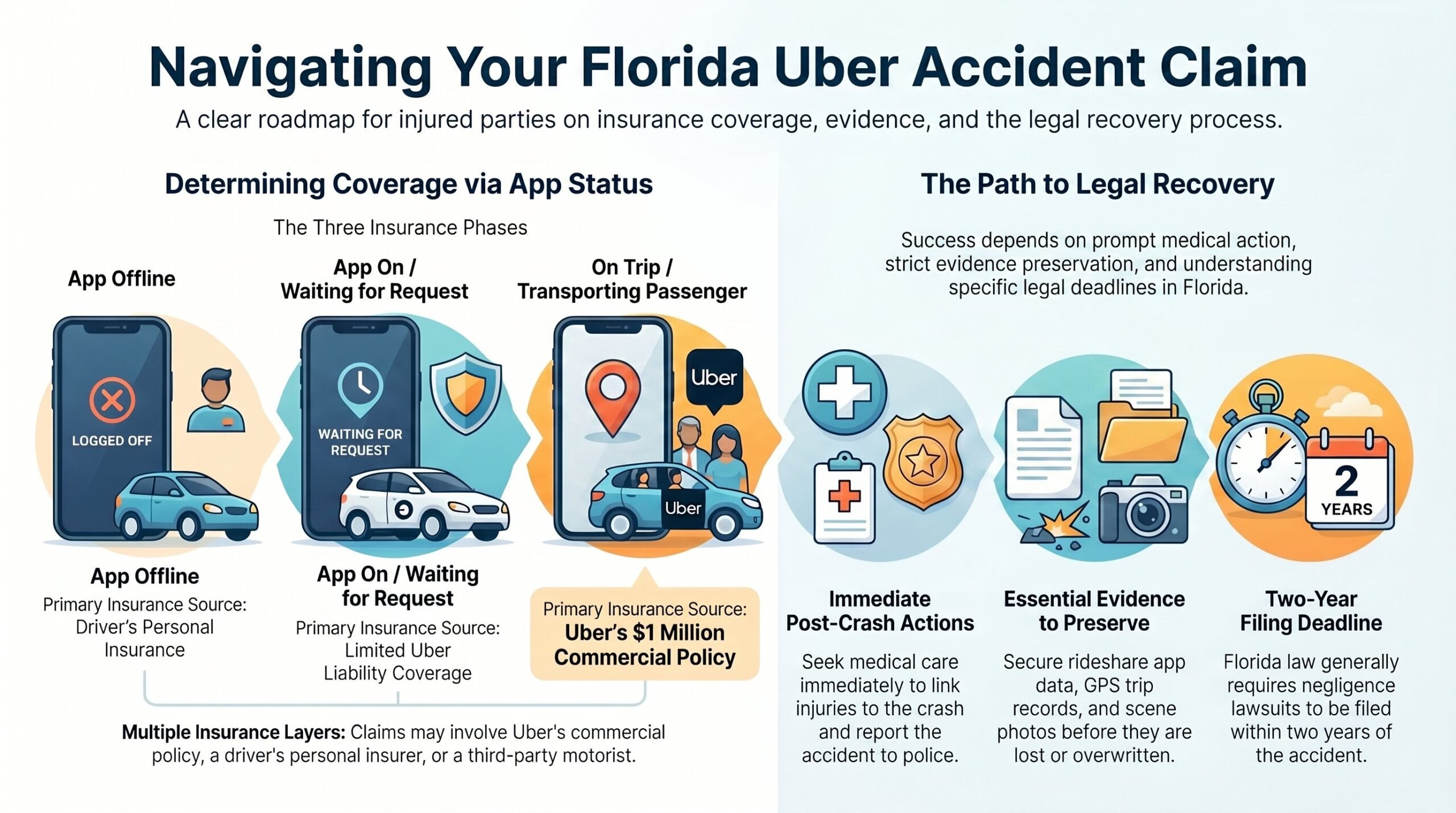
Legal support may include preserving Uber trip data, reviewing police reports, gathering witness statements, documenting injuries, and identifying insurance coverage based on the driver’s app status.
Claims may involve Uber’s commercial policy, a personal insurer, or another motorist’s coverage.
A Florida Car Accident Lawyer can help evaluate how strong evidence and medical records may shape settlement value, liability findings, and the next important steps.
Main Takeaways
- A Florida Uber accident injury lawyer can preserve trip data, gather evidence, and communicate with insurers.
- Liability often depends on whether the Uber driver was offline, waiting, or transporting a passenger.
- Available coverage may include Uber’s commercial policy, the driver’s insurance, or another motorist’s policy.
- Prompt medical care and thorough documentation help link injuries to the crash and support the claim’s value.
- An attorney can prepare settlement demands, evaluate offers, and file a lawsuit if compensation is unfair.


How We Can Help With Your Florida Uber Accident Injury Claim
After an Uber accident in Florida, an injured person may face medical bills, lost income, insurance disputes, and uncertainty about which party is responsible for compensation. A Florida Uber accident injury lawyer can provide organized guidance while protecting the claimant’s interests with care and diligence. The lawyer may gather records, review rideshare information, preserve digital trip data, and communicate with insurers to reduce unnecessary burden on the injured person and family.
This support can include collecting Witness testimony, coordinating a vehicle inspection, documenting injuries, and evaluating the crash’s impact on work, caregiving duties, and daily responsibilities. The lawyer may also prepare settlement demands, evaluate offers, and pursue legal action when fair compensation is not provided. Through steady advocacy, the legal team serves the injured person by seeking accountability, clarity, and financial recovery. This allows the claimant to focus on medical treatment, household needs, and the path toward physical and personal stability after the collision.
OUR CONSULTATIONSARE FREE
START YOUR FREE CASE REVIEW

Understanding Florida Uber Accident Injury Cases
When an Uber collision occurs in Florida, the injury claim often depends on the driver’s status, the available insurance coverage, and the facts showing how the crash happened. These cases may involve Uber’s commercial policy, the driver’s personal policy, or another motorist’s coverage, depending on whether the driver was offline, waiting for a ride request, or transporting a passenger.
A careful review helps determine who may be responsible and what compensation may be pursued for medical care, lost income, and related losses. Liability evidence can include trip records, police reports, witness statements, photographs, and digital data from the Uber platform. Strong medical documentation is equally important because it links the injuries to the collision and supports the claim’s value.
For individuals focused on helping an injured person recover, understanding these elements can guide timely action, protect important records, and support a fair, well-documented claim in Florida.
Common Causes of Florida Uber Accident
Common causes of Florida Uber accidents often include distracted rideshare drivers, speeding, and other reckless driving behaviors. Poor vehicle maintenance may also contribute to collisions, particularly when brakes, tires, or safety systems are neglected. Unsafe pickups and drop-offs can create additional hazards for passengers, pedestrians, and nearby motorists.
Distracted Rideshare Drivers
Because rideshare work relies heavily on mobile technology, distracted driving is a significant factor in many Uber accidents in Florida. Drivers may glance at navigation, accept ride requests, read messages, or adjust route information while transporting passengers. Even brief inattention can prevent a driver from noticing pedestrians, cyclists, traffic signals, or changing road conditions. For those committed to serving injured individuals, these facts underscore the importance of a careful review of evidence, including trip data, phone records, and witness statements.
Clear phone safety tips, such as setting navigation before movement and limiting manual device use, may reduce preventable harm. Practical app alerts guidance can also encourage safer responses to notifications. When distraction contributes to a collision, liability may involve the driver and, in some cases, other responsible parties, depending on the circumstances and available evidence.
Speeding And Reckless Driving
Although rideshare drivers often face pressure to complete trips efficiently, speeding and reckless driving pose serious risks to passengers, pedestrians, and other motorists. In Florida’s busy urban corridors, a driver who exceeds posted limits, changes lanes aggressively, or follows too closely may reduce the time needed to recognize hazards and respond safely. Such conduct can be especially dangerous near airports, entertainment districts, and school zones, where vulnerable travelers may be present.
Reckless behavior may also include traffic signal violations, unsafe turns, or ignoring right-of-way rules. When crashes occur, investigators may review trip data, witness statements, roadway conditions, and speeding enforcement records to determine whether unsafe driving contributed to the harm. Responsible legal evaluation helps injured persons seek accountability while supporting safer transportation standards for the community.
Poor Vehicle Maintenance
Over time, inadequate vehicle maintenance can turn routine Uber trips into dangerous situations when critical systems fail without warning. Rideshare drivers depend on safe brakes, reliable tires, working lights, and properly serviced engines to protect passengers, pedestrians, and other motorists. Vehicle defects may develop when inspections are skipped, warning signs are ignored, or repairs are delayed to keep a vehicle in service.
Brake failure can prevent timely stopping in traffic, while tire blowouts may cause sudden loss of control at highway speeds. Oil leaks can also create engine hazards, reduce performance, or leave slippery residue on the roadway. In Florida Uber accident claims, maintenance records, repair invoices, and inspection histories may help identify negligence and support accountability for those harmed by preventable mechanical failures.
Unsafe Pickups and Drop-offs
Mechanical defects are not the only hazards that can make an Uber ride unsafe; the moments before and after a trip can also pose serious risks. Rideshare pickup issues often arise when drivers stop in traffic lanes, block bike paths, or require passengers to cross busy streets. In Florida, crowded entertainment districts, airports, hotels, and beach areas can increase confusion and limit safe stopping space.
Unsafe drop-offs may expose riders to passing vehicles, poor lighting, uneven pavement, or isolated locations. Responsible drivers should use reasonable passenger safety measures, including selecting lawful stopping areas, confirming the rider’s location, and avoiding sudden actions near curbs. When these duties are ignored, passengers, pedestrians, and other motorists may suffer preventable injuries, and liability may extend to negligent parties under applicable law.


Legal Rights of Florida Uber Accident Injury Victims
When an Uber crash occurs in Florida, injured passengers, drivers, pedestrians, and occupants of other vehicles may have legal rights that depend on fault, insurance status, and the rideshare driver’s activity at the time of the collision. Those rights may include seeking payment for medical care, lost income, pain, disability, and other verified losses. Evidence preservation is often crucial, including app records, trip status, witness information, photographs, and medical documentation.
Liability coverage may vary if the driver was offline, awaiting a ride request, traveling to a passenger, or transporting someone.
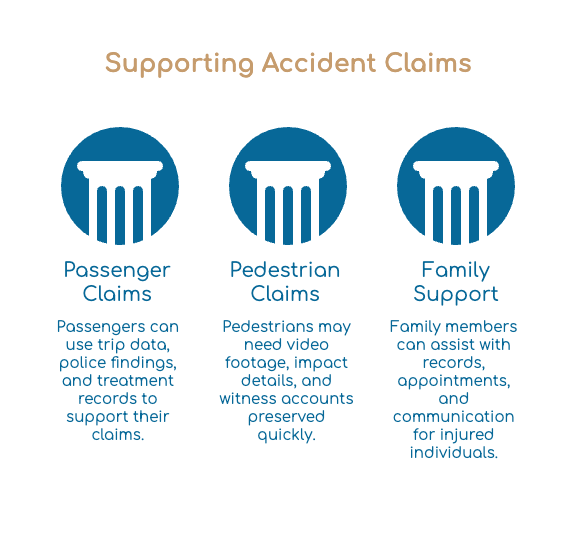
- A passenger in the rear seat may rely on trip data, police findings, and treatment records to support a claim.
- A pedestrian near a curb may need video footage, impact details, and witness accounts preserved quickly.
- A family member helping an injured person may assist with records, appointments, and communication.
These rights serve recovery, accountability, and orderly resolution.
Why Do Florida Uber Accident Injuries Happen?
Understanding the rights of injured parties also requires examining the causes of Uber-related collisions in Florida. These injuries often arise from distracted driving, speeding, unsafe lane changes, fatigue, or drivers rushing to accept fares. Some crashes involve unfamiliar routes, heavy tourism traffic, poor weather, or congestion near airports, hotels, and entertainment districts. Passengers, pedestrians, cyclists, and occupants of other vehicles may suffer harm when a rideshare trip is managed without adequate care.
Rideshare liability issues can become intricate because responsibility may involve the Uber driver, another motorist, a vehicle owner, or, in limited circumstances, the rideshare company’s insurance structure. The driver’s app status at the time of the crash may affect available coverage. App incident reporting can help document timing, trip details, and parties involved, although it does not replace a full investigation. Understanding these causes helps advocates, caregivers, and legal professionals better serve injured individuals with informed guidance.
What Should You Do After a Florida Uber Accident Injury?
After a Florida Uber accident, an injured person should take prompt steps to protect both personal recovery and any potential legal claim. Seeking medical care, reporting the crash, and documenting losses can create important records that clarify what happened and how the injury caused harm. These actions may also help preserve evidence, establish damages, and support a more accurate evaluation of liability.
Seek Medical Care
Why is prompt medical care so important following a Florida Uber accident? An injured passenger, driver, or pedestrian should seek an Emergency evaluation as soon as possible, even when pain seems minor. Some conditions, including concussions, internal injuries, and soft tissue damage, may worsen after hours or days. Medical professionals can identify urgent risks, recommend follow-up treatment, and help protect the person’s long-term ability to work, care for family, and serve others responsibly.
Consistent symptom logging also matters. The injured person should note pain levels, mobility limits, dizziness, sleep disruption, and emotional changes. This practice supports accurate care and clear communication with providers. Thorough injury documentation, including diagnoses, treatment plans, prescriptions, and therapy records, may also become important when the person later seeks fair compensation.
Report The Crash
At the scene of a Florida Uber accident, the crash should be reported promptly to law enforcement, especially when anyone is injured, property damage is significant, or the vehicles create a traffic hazard. A responding officer can secure the area, coordinate emergency assistance, and prepare an official crash report. That report may later help clarify how the collision occurred and which parties were involved.
Those present should remain cooperative, respectful, and truthful when speaking with officers. If it is safe, the Uber driver, passengers, and other motorists should identify potential sources of information, including Witness statements and dashcam footage. These materials can assist authorities in understanding the sequence of events. Reporting the crash also serves the broader public, helping protect others from continuing roadway risks.
Document Your Losses
Once immediate medical and safety concerns are addressed, injured Uber passengers, drivers, or occupants of other vehicles should begin documenting all losses related to the crash. Careful records can help protect the injured person’s ability to seek fair compensation and support those working on the claim. Documentation should include medical bills, prescription costs, therapy expenses, lost wage records, transportation costs, and photographs of visible injuries or damaged property.
Individuals should also keep a daily record of pain levels, mobility limitations, missed responsibilities, and how the injury affects service to family, work, and community. Evidence preservation is critical, including app screenshots, ride receipts, insurance letters, and repair estimates. When possible, witness statements should be collected promptly, because memories may fade and contact information can become difficult to locate.
Critical Evidence in a Florida Uber Accident Injury Case
Critical evidence in a Florida Uber accident injury case often determines how fault, damages, and insurance responsibility are evaluated.
- Rideshare app data and driver history records may show trip status, route details, prior safety issues, and driver activity.
- Crash scene evidence and medical injury documentation can preserve the physical impact, visible vehicle damage, roadway conditions, and the full extent of the claimant’s injuries.
Rideshare App Data
Preserve rideshare app data immediately after a Florida Uber accident because it can show when the driver accepted the ride, whether the app was active, the vehicle’s route, GPS movement, trip status, and communications tied to the ride. This information may clarify insurance coverage, driver availability, passenger status, and the timing of important events. Attorneys often seek this evidence through preservation letters, subpoenas, or discovery requests directed to Uber and other involved parties.
Because data retention policies may limit how long records remain accessible, prompt action protects facts that can serve injured people and support a fair claim. Privacy concerns should be addressed carefully, with requests tailored to relevant trip details rather than unrelated personal information. Accurate app records can strengthen accountability and help resolve disputed accident circumstances.
Driver History Records
Beyond rideshare app data, driver history records may reveal patterns that help explain how a Florida Uber accident occurred and whether warning signs existed before the crash. These records may include prior traffic citations, license status, crash history, background check results, deactivation notices, customer complaints, and documented safety concerns.
When reviewed carefully, they can show whether a driver had repeated unsafe conduct or ignored corrective instructions. They may also help evaluate violations of company policy, including failures to meet driving standards or reporting requirements. In some cases, the records may clarify whether alleged passenger negligence affected the trip or whether the driver’s prior conduct remained the central concern. For injured riders and responsible caregivers, this evidence supports a fair assessment of accountability and helps protect others from preventable harm.
Crash Scene Evidence
When an Uber crash occurs, the physical evidence at the scene can provide a clear and immediate record of how the collision unfolded. Photographs of vehicle positions, skid marks, traffic signals, debris fields, and road conditions may help establish impact angles and driver conduct. Witness names, police observations, and nearby camera locations can also preserve facts before memories fade or evidence disappears.
In Florida rideshare claims, this material may help address Uber liability defenses, including arguments that another driver caused the collision or that the Uber driver was not actively providing a ride. Scene evidence may also assist in resolving app location disputes, especially when GPS data conflicts with roadway facts. Careful preservation supports fair evaluation, accountability, and service to injured individuals seeking lawful recovery.
Medical Injury Documentation
After the crash scene has been documented, medical records often become the primary evidence linking the collision to a person’s injuries. Prompt evaluation, diagnostic testing, treatment notes, prescriptions, and medical expert referrals can show both the nature of the harm and the need for ongoing care. These records may also clarify whether symptoms appeared immediately or developed over time, which can be important when insurers review causation.
In a Florida Uber case, medical documentation should be considered alongside witness statements, police reports, and ride status details. Taken as a whole, these materials help determine which liability coverage may apply and whether the injured person’s losses are fully supported. Careful organization of records allows advocates, caregivers, and legal professionals to serve the injured person with accuracy, diligence, and informed compassion.
Long-Term Effects of Florida Uber Accident Injuries
Florida Uber accident injuries may produce long-term consequences that extend well beyond initial medical treatment. Chronic pain complications, mobility limitations, and disability challenges can affect employment, daily routines, and overall independence. Emotional trauma may also persist, requiring careful evaluation when determining the full impact of an injury claim.
Chronic Pain Complications
Chronic pain is one of the most serious long-term complications that may follow an Uber accident in Florida, particularly when injuries involve the neck, back, joints, nerves, or soft tissue. Persistent pain can disrupt sleep, concentration, employment, caregiving duties, and ordinary household responsibilities, creating ongoing burdens for injured passengers, drivers, or pedestrians. Medical providers may recommend physical therapy, diagnostic evaluations, injections, or medication management to reduce symptoms and support recovery.
However, pain that continues for months may require careful documentation, consistent treatment, and evaluation by medical experts. For those committed to serving family members, clients, or communities, chronic pain can limit reliability and increase dependence on others. In legal claims, these complications may affect damages related to future care, lost income, and diminished quality of life.
Mobility And Disability Challenges
When serious injuries affect the spine, hips, knees, ankles, or lower extremities, an Uber accident may lead to lasting mobility limitations or permanent disability. These impairments can restrict walking, standing, lifting, driving, and other daily functions critical to independence. Injured passengers, drivers, or pedestrians may require wheelchairs, braces, canes, home modifications, or continued physical rehabilitation. Accessible transportation options can become necessary for medical visits, employment, caregiving duties, and community participation.
In some cases, a person may need workplace accommodation, including modified schedules, ergonomic equipment, reassigned tasks, or remote work arrangements. Attorneys evaluating long-term damages often consider reduced earning capacity, future medical needs, assistive devices, and the cost of supportive services. Careful documentation helps demonstrate how mobility challenges affect practical service, household responsibilities, and quality of life.
Emotional Trauma Effects
Beyond physical harm, an Uber accident may cause emotional trauma that persists long after the crash scene has cleared. Survivors may experience fear of travel, sleep disruption, intrusive memories, irritability, or avoidance of vehicles and busy roads. In serious cases, a PTSD diagnosis may follow, particularly when the person witnessed severe injury or felt trapped during the collision.
These effects can interfere with employment, caregiving, community involvement, and family stability. For individuals committed to serving others, untreated trauma may reduce patience, focus, and emotional availability. Long-term therapy, counseling, and supervised mental health care can help recover function and document the injury’s impact. A Florida Uber accident injury lawyer may evaluate these losses when seeking compensation for recovery needs and future support.
Proving Liability in Florida Uber Accident Injury Cases
Proving liability in a Florida Uber accident injury case requires a careful review of how the crash occurred, who owed a duty of care, and whether that duty was breached. Responsibility may rest with the Uber driver, another motorist, a vehicle owner, or another party whose conduct created danger. A lawyer may examine traffic reports, rideshare app data, vehicle damage, roadway conditions, and medical records to identify the cause of harm.
Prompt evidence preservation is critical because digital trip records, dash camera footage, and vehicle data may be lost or overwritten. Witness statements can also clarify speed, distraction, traffic signals, and driver behavior before impact.
For injured passengers, pedestrians, or other motorists, this process serves the broader purpose of accountability and safer community travel. Establishing liability requires linking negligent conduct to specific injuries, relying on facts rather than assumptions, so that the responsible party can be clearly identified under Florida law.
Dealing With Insurance Companies After a Florida Uber Accident Injury
After a Florida Uber accident injury, insurance issues often become complicated because multiple policies may apply depending on the driver’s app status at the time of the crash. The driver’s personal insurer, Uber’s commercial coverage, and the policies of other involved motorists may each raise separate questions about responsibility. Careful communication with adjusters is vital because statements, medical descriptions, and early settlement discussions can affect the value of a claim.
An attorney may review coverage positions, preserve helpful records, and prevent pressure tactics that undermine an injured person’s recovery. A sound settlement strategy considers medical needs, lost income, future care, and the full effect of the injury on daily service to family, work, and community.
At the same time, trial preparation can strengthen negotiations by showing insurers that the claim is supported, organized, and ready for formal litigation if fair compensation is not offered. This balanced approach promotes accountability and helps protect the injured person’s dignity.
What to Expect During a Florida Uber Accident Injury Claim Process
A Florida Uber accident injury claim typically begins with reporting the accident, followed by gathering crucial evidence such as medical records, witness information, and app-based trip details. The insurance claim review then determines available coverage, liability issues, and the extent of documented losses. If a fair settlement cannot be reached, the claim may proceed to litigation, in which a lawsuit seeks compensation through the court process.
Reporting The Accident
When a crash involving an Uber vehicle occurs, prompt reporting helps create the base for any Florida injury claim. The injured passenger, driver, or other impacted person should notify law enforcement, Uber, and the appropriate insurance carriers as soon as reasonably possible. This step creates an official record, alerts involved parties to potential coverage issues, and helps preserve access to benefits.
During this stage, a claimant may also be directed toward medical care, emotional support options, and available transportation assistance. If a vehicle is unusable, rental reimbursement claims may need early notice under the applicable policy. Clear, respectful communication is important, especially when others are hurt or distressed. A Florida Uber accident injury lawyer can help ensure reports are accurate, complete, and submitted within required deadlines.
Gathering Key Evidence
Once the initial reports are made, the claims process often turns to collecting evidence explaining how the Uber accident occurred and how the injuries developed. This stage may include preserving photographs of vehicle damage, roadway conditions, traffic signals, rideshare app details, and any visible injuries. Medical documentation is especially important because it connects treatment, diagnosis, and future care needs to the collision.
Witness statements may also help clarify driver conduct, passenger observations, or the actions of other motorists. When evidence is gathered carefully, it supports a more complete understanding of the harm suffered and the responsibilities involved. For those committed to serving injured individuals, this process reflects diligence, fairness, and respect for accurate facts before any further decisions on claims are made in the matter.
Insurance Claim Review
After the relevant evidence is organized, the insurance claim review typically begins with an evaluation of coverage, liability, and damages. Insurers may examine whether the Uber driver was logged into the app, awaiting a ride request, or transporting a passenger, as each status can affect available coverage. Filing insurance documentation accurately is crucial, as incomplete forms, missing medical records, or unclear wage-loss information may slow the review.
A careful process supports preventing claim delays while helping injured persons, families, and caregivers understand what information is needed. Coverage dispute resolution may be required when insurers disagree about which policy applies or how responsibility should be assigned. Managing policy limits is also important, particularly when medical expenses, lost income, and ongoing care needs exceed available insurance coverage.
Settlement Or Lawsuit
As the insurance review develops, the claim may move toward settlement negotiations or, if necessary, a lawsuit in civil court. The Insurance evaluation often shapes this decision because it measures liability, coverage, medical damages, lost income, and future care needs. A fair settlement can provide timely resources for the injured person, helping caregivers, families, and service-focused supporters meet practical needs with stability.
If the insurer disputes fault or undervalues harm, litigation may allow a formal presentation of facts before a court. Evidence preservation remains critical during both paths, including rideshare data, medical records, witness statements, photographs, and communications with insurers. Throughout this stage, careful legal guidance can help protect deadlines, assess offers, and pursue a result that reflects the full impact of the accident.
Compensation for Florida Uber Accident Injury Damages
When an Uber accident causes injury in Florida, compensation may depend on the injured person’s losses, the available insurance coverage, and the legal status of the Uber driver at the time of the crash. A careful review may consider Uber’s insurance policy, the driver’s personal coverage, and any other responsible party. Economic recovery often requires organized proof, including medical documentation, wage records, repair estimates, and receipts connected to necessary care or transportation.
Property damage may also be evaluated, especially when a vehicle, phone, mobility aid, or other important item was harmed. A service-focused legal team may help preserve records, communicate with insurers, and identify coverage that supports the injured person’s recovery. A settlement strategy should reflect the severity of the injuries, the strength of the evidence, and the long-term effect on daily life. Careful preparation can help ensure that compensation discussions are grounded in verified losses and responsible advocacy.
Economic vs Non-Economic Damages in Florida Uber Accident Cases
In Florida Uber accident cases, damages are generally divided into economic losses and non-economic losses, each serving a distinct role in compensation. Economic damages address measurable financial harm, while non-economic damages account for personal losses that are harder to quantify. Establishing the value of both categories requires clear evidence, careful documentation, and a reasoned assessment of how the accident affected the injured person’s life.
Economic Damages Explained
Economic damages measure the financial losses an injured Uber passenger, driver, pedestrian, or other claimant suffers as a result of a rideshare accident in Florida. These losses may include emergency treatment, hospitalization, surgery, medication, rehabilitation, assistive devices, lost income, reduced earning capacity, transportation to appointments, and necessary household services. Accurate medical records help connect treatment costs to the collision, while wage documentation supports income-related claims.
Careful claim filing also helps identify available insurance coverage, including Uber’s policy, a driver’s personal policy, or other responsible sources. Evidence preservation remains important because receipts, invoices, employment records, and repair estimates can affect settlement valuation. For injured individuals and those assisting them, organized documentation allows a lawyer or insurer to evaluate measurable financial harm with greater accuracy, accountability, and fairness.
Non-Economic Damages Explained
Non-economic damages address the personal, non-financial harm caused by a Florida Uber accident, including pain, suffering, emotional distress, inconvenience, loss of enjoyment of life, and the lasting impact of physical limitations. These losses may affect daily routines, family responsibilities, spiritual commitments, and the ability to serve others consistently and with dignity.
Unlike medical bills or lost wages, these harms do not come with fixed receipts. Careful Evidence preservation can help document how injuries changed a person’s life after the crash. Rideshare app privacy concerns may arise when trip data, communications, or location records relate to the incident. Vehicle defect proof may also support the broader context of harm, while witness statement gathering can reflect visible pain, mobility limits, or emotional changes observed after the accident.
Proving Damage Value
Because every compensable loss must be supported by reliable proof, proving damage value in a Florida Uber accident case requires a clear distinction between economic and non-economic damages. Economic damages may include medical bills, lost income, reduced earning capacity, rehabilitation costs, and transportation expenses, each documented through records, invoices, employment data, and expert opinions.
Non-economic damages address pain, emotional distress, disability, disfigurement, and diminished quality of life, often supported by medical narratives, witness observations, and daily impact evidence. Liability basics also affect valuation, since access to coverage may depend on the driver’s app status and the responsible parties. A comparative fault analysis can reduce recovery if the injured person shares responsibility. Careful documentation helps advocates present losses accurately, supporting fair compensation while honoring the injured person’s dignity and needs.
When a Florida Uber Accident Injury Case Goes to Trial vs Settlement
When a Florida Uber accident injury case reaches settlement discussions or trial preparation, the outcome often depends on the strength of the evidence, the extent of the injuries, the available insurance coverage, and the willingness of each party to negotiate in good faith. Many claims resolve through settlement because it can provide faster support for medical needs, lost income, and family stability. Effective settlement negotiation tactics may include presenting organized medical records, clear evidence of liability, and a realistic calculation of future losses.
A trial becomes more likely when fault is disputed, damages are undervalued, or insurers refuse to offer fair compensation. In that setting, counsel may develop a jury trial strategy focused on witness credibility, accident reconstruction, medical testimony, and the human impact of the injuries. A careful attorney evaluates whether settlement or trial better serves the injured person’s recovery, dignity, and long-term security while remaining prepared for both paths.
Florida Laws That May Affect Your Florida Uber Accident Case
Florida law can materially influence an Uber accident injury case, particularly in how fault is assigned, insurance coverage is applied, and compensation is pursued. These rules help protect injured passengers, drivers, pedestrians, and families seeking practical recovery after harm.
- Comparative Negligence may reduce compensation when an injured person shares responsibility, like debris scattered across an intersection after several drivers made unsafe choices.
- Rideshare insurance requirements may determine whether Uber’s policy, the driver’s personal coverage, or another insurer responds, depending on whether the app was off, waiting, or transporting a rider.
- No Fault Exemptions may allow claims beyond personal injury protection when injuries meet required thresholds, such as lasting impairment, significant scarring, or serious functional loss.
A Florida Uber accident injury lawyer may assess these laws carefully, coordinate evidence, and help ensure that responsible parties are held accountable while the injured person receives informed, service-focused guidance.
The Statute of Limitations for Florida Uber Accident Injury Cases
After an Uber accident in Florida, the statute of limitations can determine how long an injured person has to file a lawsuit seeking compensation. In most Florida negligence cases, this deadline is two years from the date of the accident. If the claim is not filed within that period, the injured person may lose the right to pursue damages through the court system.
This deadline matters because Uber accident cases often involve several parties, including drivers, passengers, insurers, and transportation network companies. Timely action also helps preserve Common Evidence, such as photographs, witness information, trip data, police reports, and vehicle damage records. Medical Records are equally important, as they help connect the injuries to the crash and show the care required.
Those serving injured individuals should understand that prompt attention to deadlines supports fairness, accountability, and orderly resolution. Exceptions may apply in limited situations, but delay can seriously weaken an otherwise valid claim.
How a Florida Uber Accident Injury Lawyer Can Help You
A skilled Uber accident injury lawyer can evaluate the facts of a Florida rideshare crash, identify the responsible parties, and determine which insurance coverage may apply. This support helps injured riders, drivers, pedestrians, and families pursue recovery with care and purpose, while reducing confusion during a difficult claim.
- Liability proof: Counsel may examine trip records, driver conduct, road conditions, and witness statements, like assembling scattered pieces across an intersection after impact.
- Evidence strategy: The lawyer can preserve app data, photographs, police reports, and vehicle information before key details fade or become unavailable.
- Medical documentation: Treatment records, physicians’ opinions, and recovery timelines can link injuries to the crash and support a fair calculation of damages.
When to Contact a Florida Uber Accident Injury Lawyer
When injuries, insurance questions, or disputed facts arise from a rideshare crash, contacting a Florida Uber accident injury lawyer as soon as practical can protect important legal and financial interests. Early guidance may be appropriate after any collision involving pain, missed work, passenger injuries, unclear driver status, or communication from an insurer seeking statements.
Prompt contact also supports timely medical treatment, because delayed care may affect both recovery and claim evaluation. A lawyer can help the injured person understand the importance of consistent documentation while allowing medical professionals to focus on treatment and recovery.
It is also important to preserve crash evidence before it disappears. Rideshare trip records, photographs, witness information, vehicle damage, police reports, and app-based data may become harder to obtain over time. For those committed to caring for family members, patients, coworkers, or communities, timely legal contact can help maintain stability while important next steps are addressed.
Why You Need an Experienced Florida Uber Accident Injury Lawyer
Timely legal contact is only one part of protecting an injury claim, because Uber accident cases often involve layered insurance coverage, disputed liability, and evidence controlled by multiple parties. An experienced Florida Uber accident injury lawyer helps bring order to these issues through focused Case Strategy, careful Evidence Gathering, and steady claim management.
These cases may require reviewing app data, trip status, police reports, medical records, witness statements, and driver histories. Without organized Evidence Gathering, important facts may be lost or misunderstood. A lawyer also evaluates whether Uber’s policy, the driver’s personal insurer, or another party may be responsible.
Effective Insurance Negotiation depends on clear liability analysis and complete Damage Proof. Medical expenses, lost income, reduced earning capacity, pain, and long-term care needs must be documented carefully. Skilled legal guidance enables injured people to pursue fair compensation while maintaining focus on healing, family responsibilities, and the broader goal of restoring stability after harm.
How to Choose the Right Florida Uber Accident Injury Lawyer for Your Case
Choosing the right Florida Uber accident injury lawyer requires attention to experience, case focus, and the ability to manage detailed rideshare claims. A qualified attorney should understand Uber’s insurance structure, driver status issues, and Florida negligence law. This knowledge helps protect injured individuals and supports their recovery through careful, service-minded guidance.
The lawyer’s approach to evidence preservation is especially important. Prompt action may help secure trip records, app data, witness statements, vehicle information, and medical documentation. These materials can clarify liability and strengthen the claim before key details are lost.
A sound settlement strategy also matters. The attorney should evaluate medical costs, lost income, future care needs, and the personal impact of the injury before negotiating with insurers. Clear communication, organized case management, and a history of handling rideshare injury matters can help families choose counsel prepared to pursue fair compensation with diligence, respect, and professional care.
About The Law Offices of Anidjar & Levine
The Law Offices of Anidjar & Levine represents injured individuals throughout Florida in personal injury matters, including Uber accident claims involving complex insurance and liability issues.
The firm approaches each matter with disciplined preparation, careful investigation, and an understanding of how rideshare collisions affect victims, families, and communities that rely on safe transportation.
Its attorneys provide guidance to help clients make informed decisions and reduce the burden of managing claims alone.
Through a client-focused strategy, the firm emphasizes communication, documentation, and advocacy tailored to the facts of each accident.
A thorough case evaluation may include reviewing police reports, medical records, driver status, insurance coverage, and the conduct of all potentially responsible parties.
The firm’s work reflects a commitment to service, accountability, and practical support during difficult circumstances.
Pursuing fair compensation, it assists injured clients seeking stability, medical care, and a path forward after an Uber accident in Florida.
Frequently Asked Questions
Can I Sue Uber Directly After a Florida Accident?
Yes, an injured person may sue Uber directly after a Florida accident, but Uber liability depends on the driver’s app status, insurance coverage, and evidence of corporate fault. Often, claims proceed against Uber’s insurer rather than Uber itself. Those assisting an injured person should preserve trip records, police reports, and medical documentation. Claim deadlines are strict, so prompt legal evaluation is critical to protect recovery options and service-related responsibilities.
Does Uber’s Insurance Apply if the App Was Off?
No, Uber’s insurance generally does not apply if the app was off. In that situation, app off liability usually falls on the driver’s personal auto insurance because the driver was not logged into Uber’s platform or available for rides. Insurance coverage limits depend on the personal policy, and some policies exclude commercial activity. A careful review helps injured persons pursue the appropriate source of coverage with diligence and accountability.
What if I were injured as an Uber Eats Driver?
An injured Uber Eats driver may have claims depending on app status, delivery phase, and fault. Uber Eats Coverage can apply during active deliveries, but limits and exclusions vary. If another motorist caused the crash, that driver’s insurer may be responsible. Driver Liability also matters when the courier’s own conduct contributed. A careful review of records, police reports, and insurance policies helps protect the driver’s ability to recover appropriate damages.
Can Tourists File Florida Uber Accident Injury Claims?
Yes, tourists may file Florida Uber accident injury claims when an Uber-related crash causes harm within the state. Tourist eligibility generally depends on where the collision occurred, the injured person’s role, and available insurance coverage. Proof of residency is not usually required to pursue a claim, though identification, travel records, medical documentation, and crash evidence may be needed. Prompt action helps protect rights, preserve evidence, and support fair service to injured visitors.
Are Uber Accident Settlements Taxable in Florida?
Uber accident settlements in Florida are generally not taxable when they compensate physical injuries or related medical expenses. Federal law often treats these amounts under damages exclusions, but taxable personal portions may arise from lost wages, emotional distress unrelated to physical injury, or punitive damages. Settlement wording matters greatly. Individuals assisting injured passengers should encourage careful documentation and review by a qualified tax professional, ensuring obligations are understood before funds are distributed.
—————————
Florida Uber accident injury claims often involve complicated insurance issues, disputed liability, and strict filing deadlines.
A qualified lawyer can help protect a victim’s rights, gather evidence, evaluate damages, and pursue fair compensation through negotiation or litigation.
The Law Offices of Anidjar and Levine provide focused legal guidance for injured rideshare passengers, drivers, and others affected by negligence, including those seeking help from a Florida Car Accident Lawyer.
Prompt legal support can strengthen a claim and help victims move forward with greater confidence.