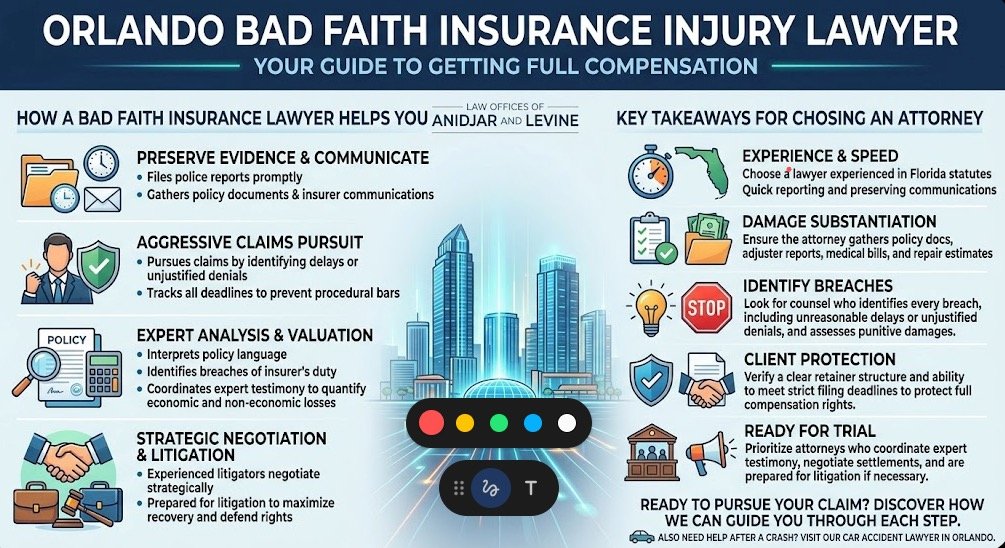
We protect Orlando policyholders by aggressively pursuing bad-faith insurance claims, preserving every piece of evidence, and leveraging expert analysis to secure full compensation.
The Law Offices of Anidjar and Levine files police reports promptly, gathers policy documents, medical bills, and insurer communications, and tracks all deadlines to prevent procedural bars.
We interpret policy language, identify breaches of the insurer’s duty, and coordinate expert testimony to quantify economic and non-economic losses.
Our experienced litigators negotiate strategically and are prepared for litigation, ensuring your rights are defended and your recovery maximized; continue to discover how we can guide you through each step. If you also need help after a crash, visit our Car Accident Lawyer in Orlando.
Main Takeaways
- Choose a lawyer experienced in Florida bad‑faith statutes who can quickly file a police report and preserve all insurer communications.
- Ensure the attorney can gather and organize policy documents, adjuster reports, medical bills, and repair estimates to substantiate damages.
- Look for counsel who will identify every breach of duty, including unreasonable delays or unjustified denials, and assess punitive damages.
- Verify the lawyer offers a clear retainer structure and can meet strict filing deadlines to protect your right to full compensation.
- Prioritize attorneys who can coordinate expert testimony and negotiate settlements, and prepare for litigation if necessary.
How We Can Help With Your Orlando Bad Faith Insurance Injury Claim
We evaluate your case promptly, gather evidence, and identify every breach of duty by the insurer. We then construct a thorough policy negotiation plan that reflects the full scope of your injury and the insurer’s obligations. Our team reviews the contract language, extracts relevant provisions, and aligns them with statutory duties, ensuring that no violations go unnoticed.


We develop a settlement strategy that balances immediate relief with long‑term protection, presenting clear, data‑driven arguments to the insurer’s adjusters. Throughout the process, we keep you informed, explaining each step and its impact on your claim’s value. By coordinating medical records, expert testimony, and financial loss calculations, we reinforce your position and deter further bad‑faith conduct.
Our disciplined approach maximizes recovery while preserving your right to pursue further action if needed. Trust that we act with diligence, integrity, and a steadfast commitment to serving your best interests.
Understanding Orlando Bad Faith Insurance Injury Cases
OUR CONSULTATIONSARE FREE
START YOUR FREE CASE REVIEW

When an insurer delays or denies a legitimate claim, it often signals a breach of the duty of good faith and fair dealing that we must dissect thoroughly. We examine each element of a bad‑faith injury case, beginning with policy interpretation. By reviewing the contract language, we identify the insurer’s obligations and pinpoint inconsistencies between the policy’s promises and the insurer’s actions.
Our team then assesses the claimant’s damages, documenting medical expenses, lost wages, and pain and suffering to establish a solid factual foundation. During settlement negotiations, we leverage this evidence to demand a fair resolution, emphasizing the insurer’s duty to act promptly and honestly. We also consider statutory penalties and potential punitive damages, ensuring that the settlement reflects both economic loss and the principle of accountability.
Throughout, we maintain transparent communication, guiding clients through each step of the process while protecting their rights and interests.
Common Causes of Orlando Bad Faith Insurance Injuries


We see that delayed claim payments, improper claim denials, inadequate investigation efforts, and failure to defend properly are the primary ways insurers breach their duty to policyholders. These actions often leave injured parties without necessary resources and force them into costly litigation. By recognizing these common causes, we can better protect our rights and hold insurers accountable.
Delayed Claim Payments
Although insurers often claim they’re processing claims promptly, delayed claim payments remain a frequent source of bad‑faith injuries in Orlando. We see that payment delays often stem from an inflated claim backlog, which insurers use to justify slow disbursements. When a policyholder’s legitimate request sits in a queue for weeks or months, the financial strain can be severe, especially for those already coping with injury or loss. We explain that such delays violate the duty of good faith and fair dealing, and they can trigger statutory penalties. By documenting each missed deadline and the insurer’s rationale, we help clients demonstrate a pattern of neglect. Our approach emphasizes clear communication, diligent record‑keeping, and strategic negotiation to secure timely compensation.
Improper Claim Denials
Delayed claim payments often mask a deeper issue: insurers frequently issue improper denials that breach their duty of good faith. We see these denials arise when adjusters interpret policy language narrowly, then deny coverage without a legitimate basis. Often, the insurer applies settlement pressure to compel a low‑ball offer, hoping the claimant will accept before the claimant recognizes the full extent of loss.
In some cases, the company threatens to rescind the policy, suggesting the contract can be terminated if the claim proceeds. We must scrutinize each denial, request the specific policy provision cited, and demand a clear, documented rationale. By challenging these tactics, we protect policyholders’ rights and uphold the standards of fair insurance practice.
Inadequate Investigation Efforts
Insurers often skim over the facts, conducting only a cursory review of the claim before deciding on coverage. We see this pattern repeatedly, and it erodes trust between policyholders and providers. When investigators rely on insufficient evidence, they miss vital details that could establish liability or the severity of injury. Flawed forensics further compounds the problem, producing reports that lack credibility and mislead adjudicators.
Our team emphasizes thorough documentation, site inspections, and expert interviews to counter these shortcuts. By demanding comprehensive data, we protect claimants from premature denials and ensure that every legitimate injury receives the attention it merits. This disciplined approach safeguards both clients and the integrity of the insurance process.
Failure to Defend Properly
When an insurance company fails to mount a proper defense, we see claimants left to shoulder legal costs and face unfavorable settlements that could have been avoided. We recognize that inadequate insurer communication often fuels coverage disputes, leaving policyholders without clear guidance on their rights. Our team emphasizes that insurers must promptly appoint competent counsel, keep claimants informed, and actively challenge improper liability theories.
When these duties are neglected, claimants incur unnecessary expenses and may accept reduced offers under pressure. We advise clients to document every interaction, request detailed explanations of defense strategies, and pursue bad‑faith claims when insurers breach their duty. By holding insurers accountable, we protect the interests of those we serve and uphold equitable resolution of coverage disputes.
Legal Rights of Orlando Bad Faith Insurance Injury Victims
If you’ve suffered an injury and your insurer is refusing to honor a legitimate claim, you have specific legal rights that protect you from bad‑faith practices. We must understand that consumer protections exist to curb policy ambiguity and ensure insurers act in good faith. By recognizing those safeguards, we can hold insurers accountable and secure the compensation we merit.
- Demand a transparent claim assessment – request a detailed explanation of any denial, citing statutory consumer‑protection provisions.
- Invoke the duty of fair dealing – remind the insurer that policy ambiguity cannot be used to evade contractual obligations, and that courts will interpret unclear terms against the insurer.
- Pursue bad‑faith litigation – file a lawsuit seeking punitive damages, attorney fees, and interest when the insurer’s conduct breaches fiduciary duties.
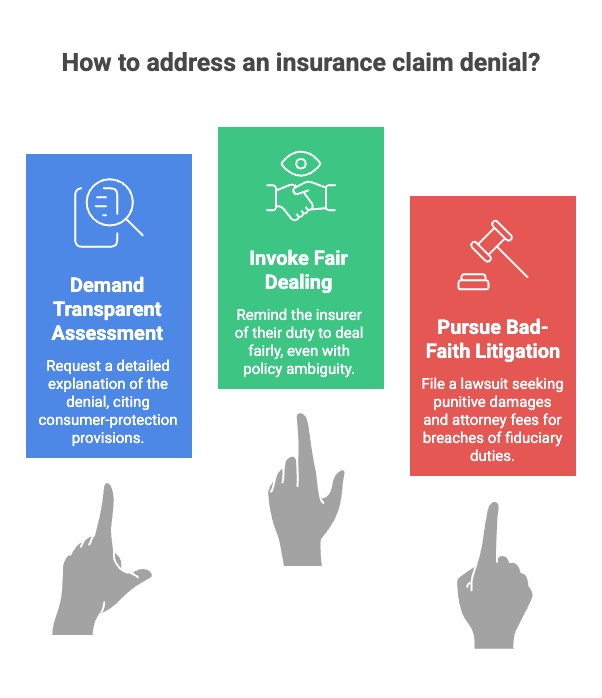
These steps empower us to confront unfair practices, protect our rights, and promote equitable treatment for all injury victims in Orlando.
Steps to Take After an Orlando Bad Faith Insurance Injury
We should file an immediate police report to create an official record of the incident, then gather all relevant insurance documentation, including policy statements, claim forms, and correspondence. Promptly consulting a bad‑faith attorney guarantees we preserve our rights and strengthen our case. These steps lay the groundwork for a decisive response to the insurer’s actions.
Document File Immediate Police Report
We should promptly file an immediate police report after an Orlando bad‑faith insurance injury because doing so creates an official record that can be crucial for any subsequent legal or claims proceedings. We gather accurate police documentation and guarantee immediate reporting, noting every detail of the incident, parties involved, and any injuries sustained. We advise contacting law enforcement promptly, providing clear statements, and requesting a copy of the report for our files.
We also advise preserving the report’s reference number and any officer notes, as these become indispensable evidence when confronting insurers who may deny or delay settlement. By acting swiftly, we protect our client’s rights, reinforce credibility, and lay a solid foundation for any future litigation or negotiation.
Gather Insurance Documentation
After filing the police report, we turn our attention to assembling the insurance paperwork that will support your claim. We begin by locating the policy declaration page, which outlines coverage limits and any policy exclusions that may affect recovery. Next, we request a copy of the adjuster’s report and any correspondence from the insurer, ensuring that all communications are dated and preserved.
We also gather medical bills, repair estimates, and receipts for out‑of‑pocket expenses, as these documents substantiate damages. While compiling these records, we track claim timelines, noting deadlines for filing and responding to insurer requests. By organizing this evidence methodically, we create a thorough file that strengthens your position and facilitates prompt, fair resolution.
Consult a Bad‑Faith Attorney Quickly
When an insurer delays or denies a claim, we must act swiftly to protect our rights, so the first step is to schedule a consultation with a seasoned bad‑faith attorney. An urgent consultation guarantees we preserve evidence, meet filing deadlines, and prevent the insurer from gaining leverage. We will discuss the substance of the case, outline potential strategies, and evaluate the impact of delayed payments on our client’s recovery.
During this meeting, we also review retainer options and select a fee structure that aligns with our client’s financial situation while guaranteeing dedicated representation. By securing counsel promptly, we demonstrate commitment to serving those harmed by bad‑faith practices and strengthen our position for a favorable resolution.
How an Orlando Bad Faith Insurance Lawyer Can Help You
If you’re confronting an insurer that refuses to honor a valid claim, we can step in to challenge the denial and protect your rights. Our team conducts thorough policy interpretation to identify the precise language that obligates the insurer to pay. We then engage in settlement negotiation, leveraging our proficiency to secure a fair resolution without unnecessary delay.
By focusing on your best interests, we guarantee that every action aligns with a commitment to serve those who need justice.
- Detailed policy interpretation – we dissect the contract to reveal hidden obligations and expose bad‑faith tactics.
- Strategic settlement negotiation – we craft compelling offers that reflect true damages and pressure insurers toward compliance.
- Litigation readiness – we prepare evidence and arguments so that, if settlement fails, we can file a resilient claim for bad‑faith damages.
Our approach combines legal rigor with a dedication to helping you recover what you merit.
Long-Term Effects of Orlando Bad-Faith Insurance Injuries
We recognize that chronic pain from bad‑faith insurance injuries often requires ongoing management, and we’ll explain how it can affect daily life and treatment plans. We also address the emotional and psychological impact, noting that stress, anxiety, and depression may develop as a direct result of unresolved claims. Finally, we outline the financial and employment consequences, highlighting how lost wages, medical expenses, and reduced earning capacity can persist long after the initial injury.
Chronic Pain Management
Managing chronic pain after a bad‑faith insurance injury requires a thorough, multidisciplinary approach that addresses both physical symptoms and the psychological impact of prolonged distress. We guide patients through structured pain coping techniques, emphasizing paced activity, mindfulness, and supportive therapy to rebuild function without reliance on excessive medication.
Opioid alternatives, such as physical therapy, nerve‑block procedures, and non‑opioid pharmacologic options, are integrated into individualized plans that respect each client’s goals and capacity to serve others. We coordinate with physicians, therapists, and case managers to monitor progress, adjust interventions, and guarantee compliance with treatment objectives.
This collaborative model reduces dependency on high‑risk drugs, promotes sustainable recovery, and safeguards the client’s ability to contribute positively to their community.
Emotional and Psychological Impact
When a client endures a bad‑faith insurance injury, the emotional fallout can be as debilitating as the physical harm, often persisting long after medical wounds have mended. We recognize that post-traumatic stress frequently emerges, manifesting as intrusive memories, heightened anxiety, and avoidance of reminders related to the claim.
Depression symptoms may develop concurrently, including persistent low mood, loss of interest, and fatigue that interferes with daily responsibilities. As a team dedicated to serving others, we monitor these psychological effects and encourage early counseling and peer support to mitigate long‑term damage. By integrating mental‑health assessments into our case strategy, we help clients regain stability, preserve relationships, and maintain the resilience needed to steer through ongoing legal challenges.
Financial and Employment Consequences
If a policyholder’s claim is delayed or denied in bad faith, the financial ripple effects can extend far beyond the immediate loss of benefits, often eroding savings, depleting emergency funds, and forcing reliance on high‑interest credit. We see clients facing economic hardship as medical bills mount and insurance payments stall, driving them to tap retirement accounts or take out costly loans.
In many cases, the strain precipitates job loss, either because the injured party cannot perform vital duties or because employers reduce hours to cut costs. We advise proactive budgeting, seeking interim assistance, and documenting all financial impacts to strengthen a claim. By addressing these consequences early, we help preserve stability for families and maintain the capacity to serve others despite adversity.
Proving Liability in Orlando Bad Faith Insurance Car Accident Injury Cases
Although insurers often claim they’ve fulfilled their duties, we must demonstrate that they acted in bad faith by withholding or denying legitimate claims after a car accident injury. In Orlando, proving liability requires a methodical approach that blends statutory analysis with factual evidence. We begin by establishing the insured’s duty to act in good faith, then show how that duty was breached through unreasonable delays, insufficient investigation, or unjustified denial.
Comparative fault analysis helps us allocate responsibility, ensuring the insurer cannot hide behind the plaintiff’s partial negligence. We gather medical records, police reports, and repair estimates to construct a clear injury timeline.
Expert testimony becomes crucial when interpreting intricate medical findings or accident reconstruction data; experts can articulate why the insurer’s actions lacked a reasonable basis. By presenting a cohesive narrative supported by credible experts, we compel the court to recognize the insurer’s bad‑faith conduct and award appropriate remedies.
Compensation for Orlando Bad Faith Insurance Damages
Having established the insurer’s breach of good‑faith duties, we now turn to the remedies available for the damages they caused. We can pursue compensatory damages that cover medical expenses, lost wages, and property loss, ensuring the victim’s financial stability. In addition, we may seek punitive damages to punish the insurer’s egregious conduct and deter future violations. Emotional distress is also compensable, recognizing the psychological toll of prolonged denial and deceptive practices.
Our strategy includes quantifying these losses with thorough documentation, expert testimony, and clear causation links. By presenting a comprehensive claim, we aim to secure a settlement that fully addresses both economic and non‑economic harms. This approach reflects our commitment to serving clients with integrity, while upholding the legal standards that protect policyholders from bad‑faith actions. Ultimately, we endeavor for a resolution that restores justice and provides meaningful relief.
The Statute of Limitations for Orlando Bad Faith Insurance Injury Cases
Because the clock starts ticking the moment the insurer’s bad‑faith conduct causes injury, we must act promptly to preserve our client’s right to sue. In Orlando, the statute of limitations for bad‑faith injury claims typically runs two years from the date the injury occurs, though the exact filing deadline can shift if the plaintiff discovers the injury later. We thus monitor claim deadlines closely, ensuring that no procedural bar defeats the client’s recovery.
Courts may toll the period if the insurer conceals pivotal information, but we cannot rely on that relief; we must file within the statutory window. Our team reviews medical records, policy language, and correspondence to pinpoint the precise moment the injury began, then calculates the filing deadline accordingly. By adhering to these timelines, we safeguard the client’s entitlement to compensation and uphold the duty to serve those harmed by insurance misconduct.
Why You Need an Experienced Orlando Bad Faith Insurance Lawyer
When insurers act in bad faith, the legal landscape can be complex and time‑sensitive, so we must bring seasoned skill to protect your rights. We know that steering policy interpretations requires an attorney who can dissect dense contract language and identify breaches that a layperson might overlook. Our experience equips us to craft settlement strategies that balance swift resolution with full compensation, ensuring that insurers cannot exploit procedural loopholes.
By leveraging precedent and deep knowledge of Florida statutes, we anticipate counter‑arguments and position our case for maximum leverage. This proactive approach prevents costly delays and protects the financial interests of those we serve. In every negotiation, we prioritize transparency, keeping you informed while we advocate assertively on your behalf. Ultimately, an experienced Orlando bad-faith insurance lawyer safeguards your claim, secures your rightful recovery, and upholds the integrity of the insurance system.
How to Choose the Right Orlando Bad Faith Insurance Lawyer for Your Case
Selecting the right Orlando bad‑faith insurance lawyer requires a systematic assessment of experience, track record, and communication style. We begin by reviewing each attorney’s history with bad‑faith claims, noting successful settlements and verdicts that reflect deep knowledge of Florida insurance law. In the attorney selection process, we also verify that the lawyer’s practice focuses on consumer protection, ensuring their advocacy aligns with our commitment to serving others.
Next, we evaluate the fee structure, preferring transparent arrangements—whether contingency, hourly, or hybrid—that protect clients from unexpected costs while incentivizing diligent representation. We ask for clear explanations of how fees are calculated and whether expenses will be advanced. Finally, we consider accessibility: prompt responses, regular updates, and a collaborative approach demonstrate that the lawyer will keep us informed throughout the case.
By applying these criteria, we secure a competent, ethical advocate who can effectively steer intricate bad‑faith disputes.
About the Law Offices of Anidjar and Levine
Our firm, the Law Offices of Anidjar and Levine, brings decades of focused experience to Orlando’s bad‑faith insurance litigation, and we’ve built a reputation for decisive advocacy and measurable results.
We trace our firm’s history to a commitment to serving policyholders facing unfair practices, and we have cultivated client relations grounded in transparency, responsiveness, and trust.
Our team combines seasoned litigators with skilled negotiators, ensuring each case receives thorough analysis and strategic execution.
We prioritize clear communication, regular client updates, and explanations of intricate legal concepts in plain terms.
By leveraging deep knowledge of insurance statutes and precedent, we secure favorable settlements and verdicts that restore financial stability for those we represent.
Our approach reflects a dedication to ethical practice, accountability, and the pursuit of justice for every client who seeks our assistance.
This steadfast focus distinguishes us as a leading Orlando bad‑faith insurance law firm.
Frequently Asked Questions
Can I Claim Bad Faith if My Insurer Denied a Pre‑Existing Condition Claim?
We can assert a bad‑faith claim when your insurer denies a pre‑existing condition request if the denial conflicts with the policy’s language and the insurer’s duty to act in good faith. Examine the policy interpretation and any preexisting disputes, documenting how the insurer’s decision deviates from contractual obligations. Gather medical records, denial letters, and correspondence to demonstrate unreasonable treatment. If the insurer’s actions appear arbitrary or lack a reasonable basis, you likely have a viable bad‑faith claim.
Do Bad Faith Claims Affect My Future Insurance Premiums?
We can assure you that a bad‑faith claim may raise your premiums, because insurers often view such litigation as a risk indicator. When you file, the event becomes part of your claims history, and underwriters may adjust rates accordingly. However, policy shopping can mitigate the impact; by comparing offers, you can find carriers that weigh your overall profile rather than a single dispute. Ultimately, the effect varies by state regulations and insurer underwriting practices.
What Evidence Proves an Insurer Acted in Bad Faith?
We prove an insurer acted in bad faith by presenting documented communications that reveal unreasonable delays, unjustified denials, or misrepresentations, and by mapping a claims timeline that shows the insurer deviated from policy obligations or industry standards. We gather emails, letters, and recorded calls, then align them with filing dates, response deadlines, and settlement offers. This evidence demonstrates a pattern of neglect or deceit, establishing the insurer’s bad‑faith conduct.
Can I Sue an Insurer for Emotional Distress Alone?
We can tell you that you may sue an insurer for emotional distress alone, but success depends on proving the distress stems directly from the insurer’s conduct. Courts often require a showing of emotional damages that are severe and verifiable, and they may award punitive remedies if the insurer acted with reckless disregard for your welfare. We recommend documenting all communications, medical records, and the insurer’s actions to establish a compelling claim.
Is There a Deadline to File a Bad Faith Claim After Settlement Denial?
We must file a bad‑faith claim within the statute-of-limitations period, typically two years from the insurer’s denial, though exact limits vary by state. Tolling doctrines may pause the clock if you’re engaged in settlement negotiations or if the insurer’s conduct prevents timely filing. We advise you to verify your jurisdiction’s specific deadline and any applicable tolling triggers promptly, because missing the filing window can extinguish your claim.
—————————
We stand ready to protect your rights and secure the compensation you merit. The Law Offices of Anidjar and Levine brings deep knowledge of Orlando bad-faith insurance law, enabling us to navigate intricate claims efficiently and ensure no detail is overlooked. By partnering with us, you gain a dedicated team committed to rigorous advocacy and strategic litigation.
If you need support after a crash, visit our Car Accident Lawyer in Orlando.
Trust our proven track record to deliver decisive results and uphold the standards of justice you rightfully expect.