
The Law Offices of Anidjar and Levine help victims document hidden trauma, connect delayed symptoms to the crash, and pursue compensation from negligent parties. These cases often require emergency records, diagnostic imaging, witness statements, crash evidence, and expert review to address insurance disputes over timing, severity, or causation.
Legal support from a Florida Car Accident Lawyer may also help evaluate medical costs, lost income, future care, and comparative negligence issues.
The sections below explain how these claims are built and protected.
Main Takeaways
- A Florida internal bleeding car accident lawyer can gather records, crash reports, witness statements, and expert opinions to support your claim.
- Internal bleeding symptoms may be delayed, so prompt medical care and clear documentation are critical after a crash.
- Claims often require proving negligence, causation, injury severity, medical costs, lost income, and future care needs.
- Insurance companies may dispute timing, severity, or causation, especially when symptoms appeared after the crash.
- Common causes include high-speed impacts, seat belt trauma, airbag force, pedestrian crashes, and sudden deceleration.


How We Can Help With Your Florida Internal Bleeding Car Accident Injury Claim
After a serious Florida car accident, internal bleeding may require urgent medical care and a carefully developed injury claim. A Florida internal bleeding car accident injury lawyer can help by gathering medical records, crash reports, witness statements, and expert opinions that clarify how the collision caused harm. This work supports Proving Negligence by identifying careless driving, unsafe conduct, or other failures that contributed to the injuries.
The lawyer may also evaluate medical costs, lost income, future care needs, and the broader impact on the injured person’s ability to serve family, workplace, and community responsibilities. During Insurance Negotiations, legal counsel can present organized evidence, respond to disputed claims, and challenge settlement offers that fail to reflect the seriousness of the injury. By managing deadlines, communications, and documentation, the lawyer allows the injured person and loved ones to focus on treatment, recovery, and practical support during a difficult period after the crash.
OUR CONSULTATIONSARE FREE
START YOUR FREE CASE REVIEW

Understanding Florida Internal Bleeding Car Accident Injury Cases
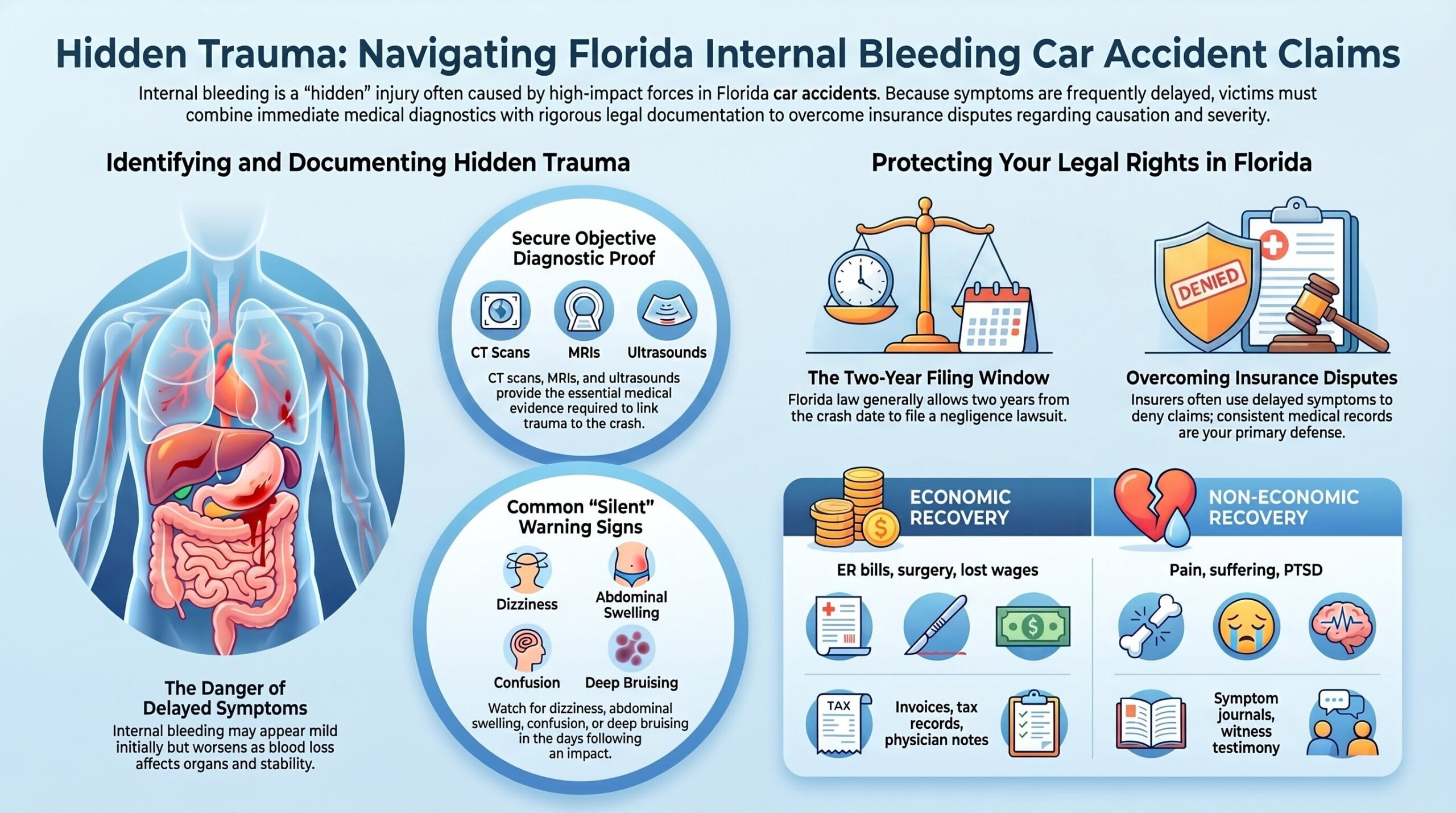
Although internal bleeding may not be immediately visible, it can become one of the most serious injuries linked to a Florida car accident. These cases often require careful evaluation because symptoms may initially appear mild, then worsen as blood loss affects organs, tissues, or overall stability. A delayed diagnosis can complicate treatment, increase medical costs, and affect the strength of a legal claim.
In these matters, documentation is vital. Medical records, diagnostic testing, physician opinions, and recovery timelines help establish the connection between the crash and the injury. Because internal bleeding may not be obvious at the scene, insurance disputes can arise over severity, timing, or causation. Those serving injured individuals must understand the importance of prompt medical care and thorough preservation of evidence. A Florida internal bleeding injury case often involves substantial health concerns, financial pressure, and long-term recovery needs, requiring careful legal attention and steady support for the injured person.
Common Causes of Florida Internal Bleeding Car Accident
Internal bleeding after a Florida car accident often results from severe impact forces that damage organs, blood vessels, or surrounding tissue. Common causes include high-speed vehicle collisions, seat belt trauma, airbag deployment force, and pedestrian crash injuries. Each cause may create distinct medical and legal issues, requiring careful evaluation of crash dynamics, injury patterns, and available evidence.
High-Speed Vehicle Collisions
When a high-speed vehicle collision occurs, the sudden transfer of force can place extreme pressure on the body’s organs, blood vessels, and soft tissues. This violent impact may cause internal bleeding even when outward injuries appear limited. Florida crashes involving speeding, highway impacts, or forceful intersection collisions often require prompt medical evaluation to identify hidden trauma. Those serving injured victims should understand that delayed symptoms, including dizziness, weakness, abdominal pain, or confusion, may signal a serious condition.
Seat belt failure may increase the risk of blunt-force injuries, though each crash requires careful factual review. Insurers may use insurance denial tactics, arguing that symptoms were unrelated or that treatment was delayed. Thorough documentation, medical records, and accident evidence help protect the injured person’s rights and support proper accountability.
Seat Belt Trauma
Because a seat belt restrains the body during a crash, the force of impact may concentrate across the chest, abdomen, and pelvis, creating a risk of internal bleeding or organ injury. Seat belt injuries may include bruising, rib trauma, abdominal wall damage, or harm to the liver, spleen, or intestines. In Florida collisions, these injuries can be difficult to detect immediately, especially when a person appears stable but later develops pain, dizziness, or swelling.
Medical evaluation helps identify hidden bleeding and supports timely care. For those serving injured individuals, careful documentation is important. Photographs of bruising, emergency records, vehicle damage, and surveillance footage may help show how restraint forces affected the body. Such evidence can help explain the severity of trauma after a crash.
Airbag Deployment Force
Airbags deploy with significant force during a collision, and that sudden impact can contribute to internal bleeding or organ trauma in certain Florida car accidents. Although airbags are designed to reduce fatal injuries, the rapid expansion may strike the chest, abdomen, or ribs with enough pressure to harm vulnerable tissues. Older adults, children, and occupants seated too close to the dashboard may face a greater risk.
Medical evaluation is important when dizziness, abdominal pain, bruising, weakness, or shortness of breath appear after a crash. Caregivers, responders, and advocates can support injured persons by encouraging prompt documentation and follow-up care. Understanding how insurance Adjusters Work may also help preserve claims, since Pain And Suffering Evidence often includes treatment records, photographs, symptom journals, and testimony from those providing daily assistance.
Pedestrian Crash Injuries
Beyond injuries linked to vehicle safety systems, pedestrians struck by cars in Florida may suffer internal bleeding from the direct transfer of crash force to the body. The absence of structural protection leaves the abdomen, chest, pelvis, and head vulnerable to blunt trauma, especially when impact occurs at higher speeds. Internal organ damage may not be immediately visible, which makes careful medical evaluation critical after any pedestrian collision.
Those serving injured individuals should recognize symptoms such as dizziness, abdominal swelling, confusion, or worsening pain as potential warning signs. Severe impacts may also cause Neurological Complications when bleeding or trauma affects the brain. In fatal cases, surviving family members may need guidance regarding Wrongful Death Benefits, including support for medical costs, funeral expenses, and related losses under Florida law.


Legal Rights of Florida Internal Bleeding Car Accident Injury Victims
When internal bleeding follows a Florida car accident, the injured person may have legal rights to pursue compensation from the at-fault driver, an insurance carrier, or another responsible party. These rights may include recovery for emergency care, hospitalization, surgery, lost income, diminished earning ability, and pain caused by the injury.
Families caring for an injured loved one may also seek guidance on deadlines, insurance obligations, and evidence preservation.
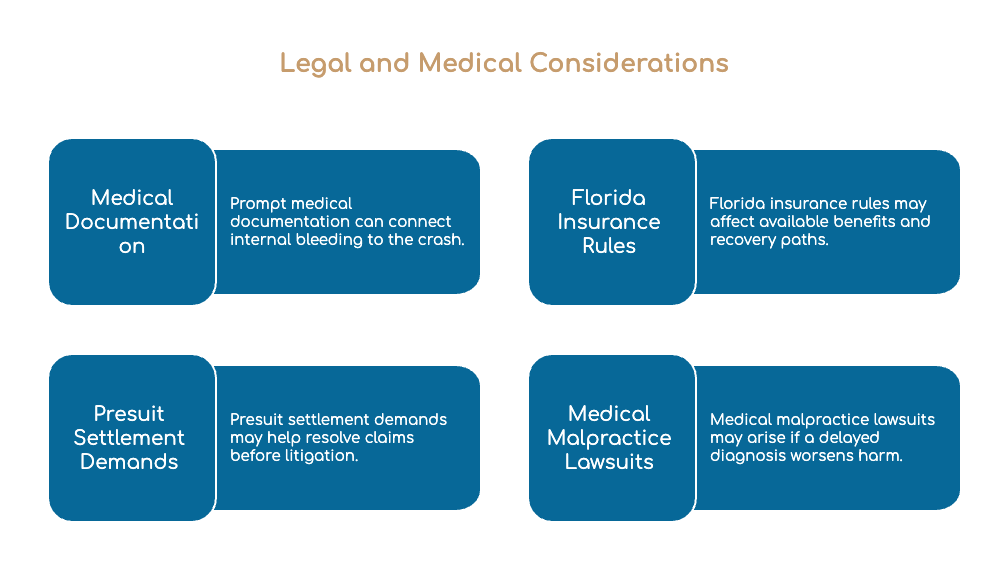
- Prompt medical documentation can connect internal bleeding to the crash.
- Florida insurance rules may affect available benefits and recovery paths.
- Presuit settlement demands may help resolve claims before litigation.
- Medical malpractice lawsuits may arise if a delayed diagnosis worsens harm.
A lawyer may evaluate police reports, medical records, expert opinions, and policy limits to identify responsible parties. Careful legal action can protect the victim’s dignity, support household stability, and help caregivers focus on recovery while the claim proceeds with purpose, discipline, and compassion.
Why Do Florida Internal Bleeding Car Accident Injuries Happen?
Although internal bleeding may not appear immediately after a crash, it often results from the violent transfer of force through the body during a collision. In Florida car accidents, blunt trauma can damage blood vessels and organs when the body strikes a wheel, dashboard, seat belt, airbag, or door frame. Rapid deceleration may also cause organs to shift abruptly, stretching or tearing internal tissue.
These injuries may occur in rear-end, head-on, side-impact, rollover, and high-speed collisions. Pedestrians, motorcyclists, and older adults may face heightened risks because their bodies may absorb impact with less protection or resilience. For those serving injured individuals, understanding these causes helps explain why symptoms can be serious even when outward wounds appear limited.
Disputes may arise when delayed symptoms lead to an insurance claim denial. Careful Pain documentation can help connect developing complaints to the crash, particularly when internal injuries progress silently after the initial trauma.
What Should You Do After a Florida Internal Bleeding Car Accident Injury?
After a Florida car accident involving suspected internal bleeding, the injured person should seek emergency medical care without delay, even if symptoms seem limited at first. The crash should also be documented through photographs, witness information, police reports, and medical records, as these materials may become important evidence. Once immediate health concerns are treated, contacting an injury lawyer can help protect legal rights, preserve claims, and guide the next steps.
Seek Emergency Medical Care
Because internal bleeding may not be immediately visible, any person involved in a Florida car accident should seek emergency medical care as soon as symptoms appear or whenever the crash involved significant force. Prompt evaluation allows physicians to identify hidden injuries, stabilize the patient, and reduce the risk of worsening harm. Symptoms such as dizziness, abdominal pain, fainting, weakness, confusion, or deep bruising should be treated as serious warning signs.
Emergency responders can provide immediate assessment, oxygen, fluids, and transport when needed. Ambulance treatment notes may later reflect the person’s condition before hospital arrival. Emergency room documentation can also record diagnostic testing, physician observations, and treatment decisions. For those focused on protecting family, coworkers, or community members, timely medical attention supports both recovery and responsible caregiving after a serious crash.
Document The Crash
Once immediate medical needs are addressed, documenting the crash can help preserve important facts before evidence is lost or memories fade. A responsible person at the scene should photograph vehicle positions, roadway conditions, debris, skid marks, traffic signals, and visible injuries, while avoiding interference with medical responders. Emergency evidence collection may also include saving torn clothing, damaged personal items, dash camera footage, and the names of responding agencies.
If the injured person cannot participate, a family member, friend, or other trusted helper may record observations with care and accuracy. Secure witness accounts by gathering names, phone numbers, and brief statements from bystanders who saw the collision or its aftermath. Clear documentation supports truth, accountability, and the injured person’s ability to receive appropriate assistance later.
Contact An Injury Lawyer
Within a short time after the crash, an injured person should consider contacting a Florida car accident injury lawyer, especially when internal bleeding is suspected or diagnosed. Legal guidance can help protect the person’s health, financial stability, and ability to serve family responsibilities during recovery. A lawyer may address Insurance adjuster tactics, including early-settlement pressure, recorded-statement requests, or efforts to minimize the impact of delayed symptoms.
Counsel can also preserve documentation of severe injury, such as emergency records, imaging results, surgical notes, and physicians’ opinions. This evidence may be essential when proving the connection between the collision and internal bleeding. An attorney can communicate with insurers, evaluate available coverage, and help meet filing deadlines. Prompt action supports a more organized claim and reduces the risk of avoidable mistakes.
Critical Evidence in a Florida Internal Bleeding Car Accident Injury Case
Essential evidence in a Florida internal bleeding car accident injury case can establish the severity of the trauma, the timing of symptoms, and the connection between the crash and the injury. Essential materials often include:
- Emergency medical records
- Diagnostic imaging results
- Crash scene evidence
- Witness statements
Emergency Medical Records
When internal bleeding is suspected after a Florida car accident, emergency medical records often become the foundation of the injury claim. These records show when symptoms appeared, what complaints were reported, and how medical personnel responded during the first important hours. They may document pain, dizziness, low blood pressure, bruising, abdominal tenderness, or other warning signs that support the connection between the crash and the injury. For those serving injured people, these details help preserve truth, accountability, and timely care.
Emergency records also assist with insurance review, settlement evaluation, and litigation preparation. They may influence fault determination criteria by linking trauma to the collision timeline. Accurate documentation can also support claims for future medical bills when ongoing care, monitoring, or additional treatment becomes necessary after hospital discharge.
Diagnostic Imaging Results
After emergency medical records establish the early timeline of symptoms and care, diagnostic imaging results often provide the objective evidence needed to confirm internal bleeding after a Florida car accident. CT scans, ultrasounds, MRIs, and related reports may identify organ injury, fluid accumulation, vascular damage, or worsening conditions requiring urgent intervention. This evidence helps connect the collision to the hidden trauma, especially when symptoms were subtle or initially attributed to less serious causes.
Delayed diagnosis can make imaging comparisons particularly important, as later studies may reveal progression that earlier evaluations missed. Clear Medical documentation should include the date, the reason for the study, the radiologist’s findings, the treating physician’s notes, and follow-up recommendations. When carefully preserved, these records support a fair assessment of injury severity, treatment needs, and long-term consequences.
Crash Scene Evidence
Although medical records show the nature of the injury, crash scene evidence helps explain how internal bleeding may have occurred in a Florida car accident. Vehicle damage, skid marks, debris fields, road conditions, traffic controls, and impact points may reveal the force and direction of the collision. Photographs, measurements, and police diagrams can assist in connecting crash mechanics to abdominal, chest, or pelvic trauma.
This evidence supports damage evaluation by showing whether the collision involved substantial force consistent with serious internal harm. It may also strengthen the documentation of pain when visible scene conditions align with the injured person’s reported symptoms. In insurance negotiation, clear scene evidence can reduce disputes about causation and fault. During trial preparation, organized crash materials help present a reliable account focused on accountability and proper care.
Witness Statements
Physical evidence from the crash scene can show how a collision occurred, but witness statements may explain what happened before, during, and immediately afterward. Independent observers may describe vehicle speed, traffic signals, driver behavior, visible pain, or requests for emergency help. In an internal bleeding claim, these accounts can support the timeline from impact to symptoms, Medical diagnosis, and urgent treatment. Accurate statements also strengthen documentation accuracy, especially when police reports or medical records leave gaps.
A lawyer may compare witness accounts with photographs, crash reports, and medical findings to identify consistency or conflict. Reliable statements can guide insurance company communications by limiting speculation and correcting unfair assumptions. They may also influence settlement negotiation strategies, as credible witnesses can help establish fault, injury severity, and the need for fair compensation.
Long-Term Effects of Florida Internal Bleeding Car Accident Injuries
Internal bleeding after a Florida car accident can create lasting medical concerns, particularly when a delayed diagnosis or severe trauma increases the risk of organ damage. Injured individuals may also face chronic pain, reduced mobility, and ongoing treatment needs that affect daily life and long-term recovery. Emotional trauma, including anxiety and distress related to the crash and its medical consequences, may further influence the overall value and intricacy of an injury claim.
Organ Damage Risks
When internal bleeding follows a serious Florida car accident, organs may be deprived of oxygen, compressed by accumulating blood, or directly harmed by the force of the collision. The liver, spleen, kidneys, lungs, and intestines can suffer lasting impairment when bleeding is not controlled quickly. Late diagnosis may allow tissue death, infection, reduced organ function, or the need for major surgical removal.
In some cases, medical negligence, including failure to order imaging, monitor essential signs, or respond to worsening symptoms, can increase the risk of permanent damage. Statute violations involving unsafe driving, impaired operation, or failure to perform traffic duties may also establish responsibility for the crash. Those serving injured people should recognize organ damage as a serious consequence requiring prompt evaluation, careful documentation, and coordinated medical follow-up. Early legal review helps protect claims.
Chronic Pain Issues
Although emergency treatment may control bleeding after a Florida car accident, chronic pain can remain long after the initial injury appears stable. Internal bleeding may damage muscles, nerves, organs, and surrounding tissues, creating persistent abdominal, back, chest, or pelvic pain that interferes with work, caregiving, and daily service to others. Medical treatment delays can worsen inflammation, scarring, or pressure-related injury, making timely evaluation and follow-up care crucial.
Physicians may recommend imaging, medication, therapy, or expert care to identify the source and reduce lasting limitations. Insurance adjuster tactics may minimize chronic pain by claiming symptoms are unrelated, exaggerated, or unsupported by records. Careful documentation, consistent treatment, and clear medical opinions help connect ongoing pain to the crash and protect an injured person’s ability to recover needed support.
Emotional Trauma Impacts
Physical pain is not the only lasting consequence of internal bleeding after a Florida car accident, because the experience may also produce significant emotional trauma. Survivors may relive the collision, fear driving, or struggle with sleep, concentration, and trust in daily routines. These symptoms can limit work, family caregiving, and community service, even after visible injuries have improved. Timely post-crash therapy may help injured individuals process fear, grief, and loss of control with structure and dignity. When symptoms suggest post-traumatic stress, PTSD treatment can provide tools for managing triggers, reducing avoidance, and restoring stability. Attorneys reviewing damages should recognize that emotional harm may require documentation, professional evaluation, and ongoing care. A complete injury claim should account for psychological recovery alongside medical treatment.
Proving Liability in Florida Internal Bleeding Car Accident Injury Cases
In Florida car accident cases involving internal bleeding, proving liability requires a clear showing that another party’s negligent conduct caused the crash and the resulting injury. Attorneys often examine police reports, witness statements, crash scene photographs, vehicle damage, traffic camera footage, and medical records to connect the collision to the internal trauma. When serving injured clients, careful investigation helps preserve facts that may otherwise be lost.
Florida’s comparative negligence rules may reduce compensation if the injured person is found partly responsible. For that reason, liability analysis must address speeding, distracted driving, impaired driving, unsafe lane changes, or failure to yield. Medical documentation is also important because internal bleeding may not be immediately visible, yet it can reflect serious force from the impact.
If a party destroys or fails to preserve relevant proof, evidence, spoliation litigation may become necessary. Establishing responsibility with accuracy supports accountability and helps protect the injured person’s lawful claim.
Dealing With Insurance Companies After a Florida Internal Bleeding Car Accident Injury
After liability evidence has been gathered, communications with insurance companies often become a central part of a Florida internal bleeding car accident injury claim. Insurers may request statements, medical authorizations, or recorded accounts, and each response can affect the value of the claim. Careful handling helps protect the injured person while supporting an accurate review of the harm suffered.
Internal bleeding often creates urgent treatment needs, ongoing monitoring, and uncertainty about future complications. For that reason, dealing with medical bills requires organized records, clear documentation, and attention to whether charges relate to the crash. Insurance representatives may also evaluate personal injury protection benefits, bodily injury coverage, and available uninsured motorist protection.
A lawyer may assist by presenting medical evidence, challenging incomplete evaluations, and negotiating coverage limits when losses exceed initial offers. This measured approach helps ensure that insurers address the full impact of the injury, rather than focusing only on early expenses or limited documentation.
What to Expect During a Florida Internal Bleeding Car Accident Injury Claim Process
A Florida internal bleeding car accident injury claim typically begins with medical diagnosis and documentation, which establishes the nature and severity of the injury. The process then moves to filing the insurance claim, liability assessment, and evidence review, including crash reports, medical records, witness statements, and related evidence of damages. Depending on the strength of the claim and the insurer’s response, the matter may proceed toward settlement negotiations or litigation.
Medical Diagnosis And Documentation
When internal bleeding is suspected after a Florida car accident, medical diagnosis and documentation become central to both treatment and any later injury claim. Emergency physicians may order imaging studies, blood tests, life-sign monitoring, and surgical consultations to identify bleeding that is not visible externally. Delayed symptom recognition can occur when dizziness, abdominal pain, weakness, or confusion develops hours after the crash, making prompt follow-up care critical. Medical records should clearly connect the collision, symptoms, examination findings, diagnostic results, and treatment decisions.
Accurate documentation helps caregivers understand the patient’s condition while preserving objective evidence for legal evaluation. Incomplete records may create openings for insurance denial tactics, especially when insurers question causation, timing, or severity. Consistent reporting to medical providers supports a clearer, more reliable injury history.
Insurance Claim Filing
Clear medical documentation often becomes the foundation for filing an insurance claim involving internal bleeding after a Florida car accident. The claimant’s file should include emergency records, imaging results, surgical notes, discharge instructions, and follow-up evaluations. Medical evidence preservation helps ensure that adjusters receive a complete picture of the injury, treatment course, and continuing needs. Timely submission of claim forms, billing records, and physician statements may reduce avoidable delays.
Pain management documentation also plays an important role, detailing prescribed medications, therapy recommendations, activity limits, and the effects of symptoms on daily functioning. A careful presentation of claims allows insurers to evaluate damages with greater accuracy. When documentation is organized and consistent, those assisting the injured person can better support recovery, stability, and access to appropriate compensation under Florida insurance procedures.
Liability And Evidence Review
After the claim file is assembled, liability and evidence review become a central part of evaluating a Florida internal bleeding car accident injury claim. The review typically examines crash reports, medical records, witness accounts, vehicle damage, photographs, and available video. Negligence standards guide whether a driver failed to use reasonable care, such as speeding, distraction, impairment, or unsafe lane changes.
Those who serve an injured person may also consider how delayed symptoms, emergency treatment, and diagnostic findings connect the collision to internal bleeding. Insurers often raise common defenses, including disputes over causation, injury severity, or prior medical conditions. Comparative fault may reduce recovery if the injured person shares responsibility. Careful organization of evidence supports accurate valuation and informed insurance negotiations, while helping to ensure the claimant’s needs are presented with diligence and respect.
Settlement Or Litigation
Once liability, damages, and insurance coverage are evaluated, the claim may move toward settlement negotiations or, if necessary, litigation. In many Florida internal bleeding injury claims, insurance negotiation begins with a demand package that explains medical findings, causation, lost income, future care needs, and the human impact on daily responsibilities. A fair resolution can help the injured person obtain resources for recovery while reducing stress on family members and caregivers.
If the insurer disputes fault, minimizes treatment, or refuses to make an adequate payment, the attorney may file a lawsuit and begin trial preparation. This stage can include discovery, depositions, expert review, mediation, and ongoing risk evaluation. Throughout the process, counsel works to protect the client’s dignity, document losses clearly, and pursue an accountable resolution.
Compensation for Florida Internal Bleeding Car Accident Injury Damages
Pursuing compensation for internal bleeding after a Florida car accident requires careful documentation of the injury, the treatment received, and the financial and personal losses caused by the crash. Because internal bleeding may require emergency surgery, hospitalization, monitoring, or prolonged recovery, the claim should be supported by medical records, physician opinions, diagnostic imaging, and consistent follow-up care.
A Florida injury lawyer may evaluate all available insurance coverage, identify liable parties, and present a claim that reflects the seriousness of the trauma. When an insurer delays, undervalues, or wrongfully denies a valid claim, insurance bad faith may become a separate concern requiring firm action. In severe cases, internal bleeding may lead to fatal complications, making Wrongful death claims necessary for surviving family members. Compensation efforts should be organized, timely, and evidence-based, helping injured individuals and grieving families pursue accountability while preserving dignity, stability, and access to necessary care after the collision.
Economic vs Non-Economic Damages in Florida Internal Bleeding Car Accident Cases
In Florida internal bleeding car accident cases, damages are generally divided into economic losses, such as medical bills and lost wages, and non-economic losses, including pain and emotional distress. Economic damages often rely on records, invoices, and employment documentation, while non-economic damages require careful presentation of how the injury affected daily life. Proving damage value depends on credible evidence, medical support, and a clear connection between the crash and the claimed harm.
Medical Bills And Lost Wages
After a Florida car accident causes internal bleeding, medical bills and lost wages often become the most immediate financial pressures in an injury claim. Economic damages may include ambulance transport, emergency surgery, hospitalization, imaging, follow-up care, prescriptions, and pain management referrals when treatment is medically necessary. Lost wages may also be recovered when the injury prevents the person from working, reduces hours, or limits future earning capacity.
Careful documentation helps establish the full financial impact. Medical records, billing statements, employer wage reports, tax records, and physician work restrictions can support these losses. Insurers may raise Comparative fault defenses to reduce payment, arguing the injured person shared responsibility for the crash. A detailed economic damages claim helps protect available compensation and supports those working to restore stability after serious injury.
Pain And Emotional Distress
When internal bleeding follows a Florida car accident, the harm often extends beyond hospital bills and missed income. Pain, fear, sleep disruption, and loss of normal daily function may affect the injured person’s dignity, relationships, and ability to serve family or community responsibilities. These non-economic damages recognize human suffering that cannot be measured by receipts alone.
Compensation calculation may consider the severity of the injury, length of recovery, invasive treatment, and lasting physical limitations. Emotional distress may also arise from uncertainty about hidden complications or future health risks. In insurance negotiation, these harms require careful presentation because carriers may undervalue suffering when no direct invoice exists. A Florida internal bleeding injury claim should account for both visible losses and the deeper personal impact.
Proving Damage Value
Pain and emotional distress gain legal force only when they are tied to reliable proof of damage value. In Florida internal bleeding car accident cases, economic damages may include ambulance bills, hospitalization, surgery, follow-up care, rehabilitation, lost income, and reduced earning capacity. Non-economic damages address suffering, fear, loss of normal life, and the burden placed on family relationships.
Evidence collection must begin early because records, photographs, wage data, and witness accounts can clarify both financial loss and human impact. Strong medical documentation for internal bleeding claims links symptoms, diagnosis, treatment, and future risks to the crash. When this proof is organized carefully, insurers and courts can evaluate the claim with greater accuracy, allowing compensation to reflect both measurable costs and deeply personal harm while supporting fair service to the injured.
When a Florida Internal Bleeding Car Accident Injury Case Goes to Trial vs Settlement
Although many Florida internal bleeding car accident injury cases resolve through settlement, some claims proceed to trial when liability, causation, damages, or insurance coverage remain disputed. A careful settlement negotiation may allow the injured person to secure compensation without the delay, expense, and uncertainty of courtroom litigation. This process often depends on strong medical proof, clear documentation of losses, and credible testimony regarding how the injury has affected daily life and service to family, work, and community.
When settlement efforts do not produce a fair result, the trial strategy becomes important. Counsel may present physicians, accident reconstruction evidence, and financial records to show the seriousness of internal bleeding and its consequences. Insurance leverage can affect whether an insurer reevaluates risk before trial. If the case reaches a jury verdict, the outcome may provide compensation, but it also carries uncertainty for every party involved. Preparation supports informed decisions at each stage.
Florida Laws That May Affect Your Florida Internal Bleeding Car Accident Case
Because Florida law controls how fault, insurance benefits, and filing deadlines are evaluated, an internal bleeding car accident case may depend as much on legal rules as on medical evidence. These rules can shape recovery, guide negotiations, and help protect an injured person’s ability to receive care.
- Comparative Negligence may reduce compensation if the injured person shares responsibility for the crash.
- Fault Apportionment determines how liability is divided among drivers, vehicle owners, employers, or other responsible parties.
- Insurance Deadlines can affect access to personal injury protection benefits and other available coverage.
- Damage Caps may influence certain categories of recovery, depending on the claim and parties involved.
A careful legal review can help identify all responsible sources of compensation while supporting the injured person’s medical and practical needs. For families, caregivers, and advocates focused on service, understanding these rules can promote informed decisions, timely action, and stronger protection for the injured person.
The Statute of Limitations for Florida Internal Bleeding Car Accident Injury Cases
After considering fault rules, insurance deadlines, and available sources of compensation, the filing deadline for a Florida car accident injury case involving internal bleeding must be addressed with equal care. Florida generally allows two years from the date of the crash to file a personal injury lawsuit based on negligence. When internal bleeding is involved, prompt action is especially important because medical findings, witness accounts, and crash evidence may become harder to preserve with time.
Different deadlines may apply in related matters. Wrongful death claims generally must be filed within two years from the date of death, not necessarily the collision date. If the crash occurred during work duties, Workers’ compensation options may involve separate notice and filing requirements that can arise much sooner. Government vehicle claims may also require advance written notice. Those serving an injured person should treat every deadline as firm, since late filing can prevent recovery regardless of injury severity.
How a Florida Internal Bleeding Car Accident Injury Lawyer Can Help You
When internal bleeding follows a Florida car accident, an injury lawyer can help connect the medical, insurance, and legal issues that often determine the value of the claim. This assistance supports injured people and families who must focus on recovery, caregiving, and daily responsibilities.
- Reviews medical records, diagnostic findings, and physician opinions to document the severity of internal injuries.
- Identifies liable parties, available coverage, and evidence needed to establish fault under Florida law.
- Responds to insurance tactics that may minimize symptoms, dispute causation, or pressure early resolution.
- Handles Settlement negotiation with a structured demand that reflects treatment costs, lost income, and future needs.
A lawyer may also coordinate expert input, preserve evidence of the accident, and calculate damages with care. By managing communications and legal strategy, counsel helps protect the injured person’s position while allowing family members, providers, and advocates to continue serving the person’s recovery with greater stability and confidence.
When to Contact a Florida Internal Bleeding Car Accident Injury Lawyer
Legal support is often most effective early in a Florida internal bleeding car accident claim, particularly while medical findings, crash evidence, and insurance communications are still developing. A lawyer should be contacted soon after emergency treatment, especially when hospitalization, diagnostic imaging, surgery, or ongoing Pain management becomes necessary. Early consultation may help protect records that show how the injury affected health, work, caregiving duties, and daily responsibilities.
Contact is also appropriate when symptoms worsen after discharge, medical providers order follow-up testing, or family members must coordinate care for an injured person. Internal bleeding can involve delayed complications, so prompt legal guidance may help prevent important timelines from being overlooked.
A lawyer may also be contacted when Insurance delays interfere with access to benefits, payment of medical bills, or communication about coverage. Seeking guidance early allows injured individuals and their families to focus on recovery while preserving information needed for a potential claim in Florida.
Why You Need an Experienced Florida Internal Bleeding Car Accident Injury Lawyer
Because internal bleeding may involve complicated medical findings and disputed causation, an experienced Florida internal bleeding car accident injury lawyer can be important in evaluating the full scope of a claim. These injuries may not appear immediately, yet they can lead to surgery, extended monitoring, lost income, and lasting physical limitations. Careful injury documentation helps connect symptoms, diagnostic testing, treatment, and future needs to the crash.
A knowledgeable lawyer can also address legal deadlines that may affect a person’s ability to seek recovery. When insurers question the timing or severity of internal bleeding, effective insurance negotiation can help present the claim clearly and with supporting evidence.
This work may reduce the risk of Delayed compensation, which can burden injured people and the families or caregivers supporting them. By organizing records, consulting medical evidence, and evaluating damages, counsel helps protect the injured person’s interests while promoting fair treatment through the legal process.
How to Choose the Right Florida Internal Bleeding Car Accident Injury Lawyer for Your Case
Selecting the right Florida internal bleeding car accident injury lawyer requires careful attention to the lawyer’s experience with serious trauma claims, medical evidence, and disputed insurance issues. A suitable attorney should understand how hidden injuries progress, how hospital records support causation, and how delayed symptoms may affect liability evaluations.
Families may also consider whether the lawyer emphasizes Client Communication, because injured people often need clear updates while focusing on recovery. Strong representation should include prompt Preservation of Evidence, such as securing crash reports, witness statements, vehicle data, and imaging records before evidence becomes unavailable.
The lawyer’s role should support, not replace, Medical Decision Making by helping clients understand how treatment documentation may affect a claim. Effective counsel should also show skill in Insurance Negotiation, especially when carriers question the severity of internal injuries or the need for future care. Careful selection helps protect the injured person’s rights while promoting responsible advocacy.
About The Law Offices of Anidjar & Levine
For individuals seeking guidance after a serious Florida car accident, the Law Offices of Anidjar & Levine provides representation focused on injury claims involving significant medical harm, insurance disputes, and long-term recovery needs.
The firm assists clients with internal bleeding injuries by evaluating medical records, accident evidence, liability issues, and available insurance coverage.
Its Client intake process is designed to identify urgent needs, preserve critical information, and connect injured individuals with legal support as soon as possible.
The firm’s approach includes case strategy planning tailored to the facts, including treatment timelines, wage loss, future care requirements, and the conduct of negligent parties.
The Law Offices of Anidjar & Levine also emphasizes communication, responsiveness, and service to clients and families facing difficult circumstances.
By handling insurer contact, documentation, and claim development, the firm allows injured individuals to focus on recovery while their legal interests are protected with care and diligence.
Frequently Asked Questions
Can Seat Belt Bruising Indicate Possible Internal Bleeding?
Yes, seat belt bruising can indicate possible internal bleeding, especially when seat belt marks appear across the abdomen, chest, or neck. Such bruising may signal an elevated risk of injury after a crash. Caregivers, responders, and advocates should watch for warning signs, including worsening pain, dizziness, fainting, weakness, or abdominal swelling. Because delayed symptoms are common, medical evaluation is prudent even when the person initially appears stable and alert after the collision.
Which Medical Tests Diagnose Internal Bleeding After a Crash?
Medical tests for suspected internal bleeding after a crash commonly include diagnostic imaging, such as CT scans, ultrasound, X-rays, or MRI, depending on injury location and urgency. Bloodwork tests may measure hemoglobin, hematocrit, clotting function, and organ markers to identify blood loss or trauma-related complications. Clinicians may also monitor essential signs and perform physical examinations. Prompt evaluation helps caregivers protect patients, guide treatment decisions, and reduce the risk of delayed, life-threatening consequences.
Can Internal Bleeding Symptoms Appear Days After an Accident?
Yes, internal bleeding symptoms can appear days after an accident, depending on internal injury timelines and the organs or vessels affected. Caregivers should note delayed symptom awareness, because pain, dizziness, weakness, bruising, abdominal swelling, or confusion may develop gradually. Any worsening condition after trauma warrants prompt medical evaluation, even if initial symptoms seemed minor. Responsible observation and timely referral can help protect injured persons from serious, preventable complications.
Should I Follow up if ER Doctors Cleared Me?
Yes, a person should schedule a follow-up appointment after ER clearance, especially if pain, weakness, dizziness, or bruising develops. Symptom tracking helps identify changes that may not have been visible during initial testing. Understanding the reasons for ER release, such as stable signs or negative scans, supports informed decisions. A document request for records, imaging, and discharge notes helps the patient, caregivers, and future providers coordinate responsible care.
Can Children Show Different Internal Bleeding Symptoms?
Yes, children can show different internal bleeding symptoms, and caregivers should recognize symptom variation tied to age differences. Infants may show poor feeding, lethargy, swelling, or unusual crying, while older children may report abdominal pain, dizziness, weakness, or headache. Delayed reporting is common because children may minimize discomfort or lack the words to describe it. Pediatric signs such as pale skin, vomiting, confusion, or rapid breathing require prompt medical evaluation.
—————————
Internal bleeding after a Florida car accident can create serious medical, financial, and legal challenges.
Prompt legal guidance may help victims protect their rights, document losses, and pursue compensation from responsible parties.
An experienced attorney can manage insurance communications, investigate liability, and build a claim supported by medical evidence.
The Law Offices of Anidjar and Levine provides knowledgeable representation through a Florida Car Accident Lawyer for injured clients seeking accountability and recovery after severe collision-related injuries.