
A Florida Car Accident Lawyer with The Law Offices of Anidjar and Levine helps victims build claims after crashes involving speeding, tailgating, unsafe lane changes, road rage, or distracted aggressive driving.
Legal support may include preserving crash reports, witness statements, video footage, medical records, evidence of vehicle damage, and insurer communications.
These claims often require proof of duty, breach, causation, and losses, while addressing comparative fault disputes.
The sections below explain central rights, evidence needs, and claim strategies in greater detail.
Main Takeaways
- A Florida aggressive driving injury lawyer can help prove duty, breach, causation, and losses after a crash.
- Key evidence may include police reports, witness statements, video footage, medical records, citations, and photos of vehicle damage.
- Aggressive driving evidence can include speeding, tailgating, unsafe lane changes, road rage, threats, or distracted driving.
- Compensation may cover medical bills, lost income, rehabilitation, pain and suffering, future care, and reduced earning capacity.
- A lawyer can handle insurer disputes, comparative fault arguments, employer liability issues, and settlement negotiations.


How We Can Help With Your Florida Aggressive Driving Car Accident Injury Claim
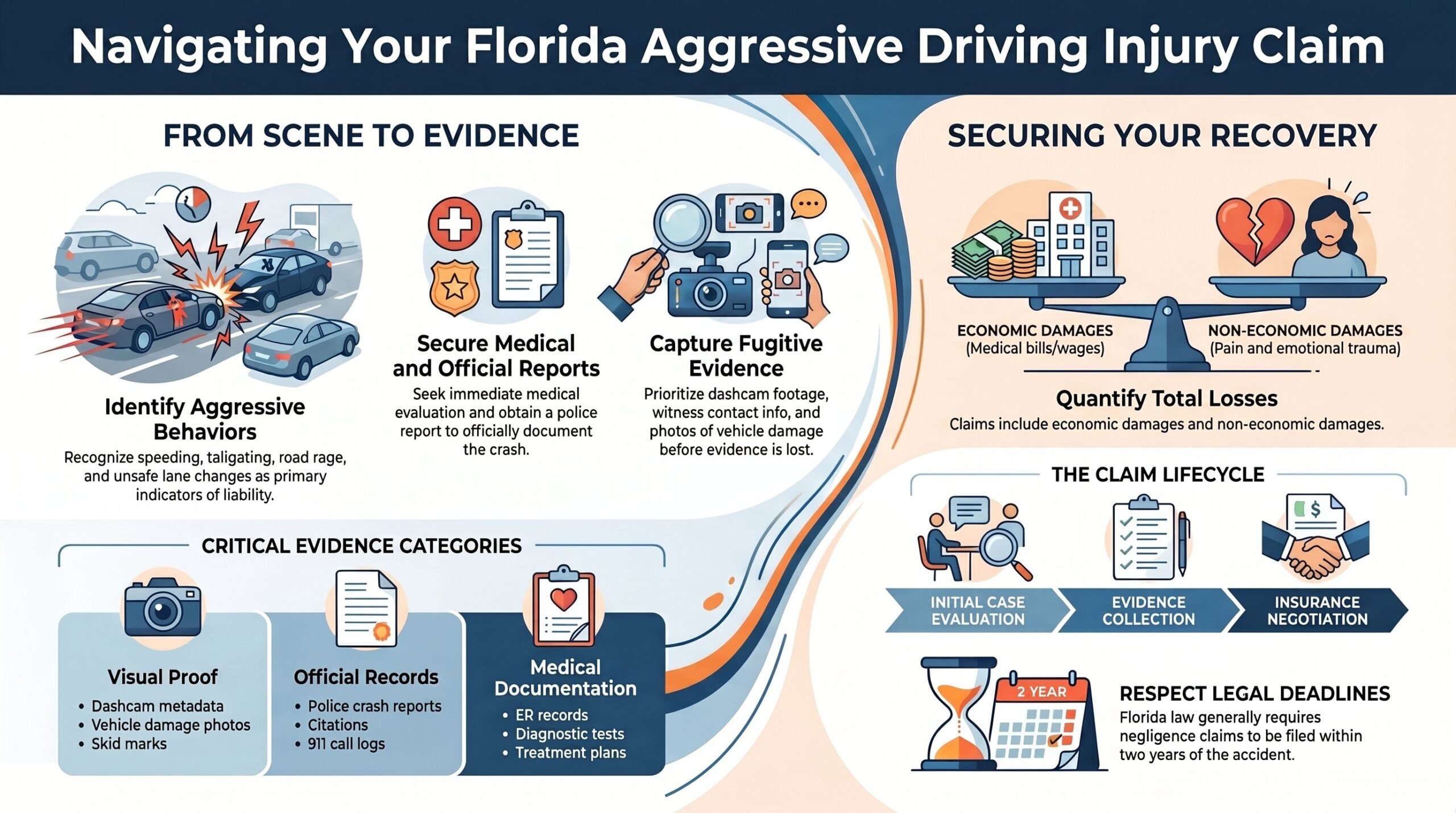
An aggressive driving crash in Florida can leave an injured person facing medical treatment, insurance disputes, lost income, and uncertainty about how to prove fault. A Florida aggressive driving car accident injury lawyer can help by organizing evidence, communicating with insurers, and protecting the claimant from avoidable errors that may reduce recovery. The legal team may gather crash reports, witness statements, video footage, medical records, and vehicle damage documentation to build a clear claim.
Careful advocacy also addresses Insurance claim tactics, including delayed responses, low settlement offers, or attempts to shift blame. Because Florida comparative fault may reduce compensation when an injured person is assigned partial responsibility, precise presentation of facts is vital. Counsel can evaluate damages, document ongoing care needs, and negotiate for a resolution that reflects the full impact of the collision. This support allows injured individuals and their families to focus on recovery, service, and practical responsibilities.
OUR CONSULTATIONSARE FREE
START YOUR FREE CASE REVIEW

Understanding Florida Aggressive Driving Car Accident Injury Cases
After reviewing how legal representation can support a claim, it is important to understand what makes aggressive driving cases distinct under Florida law and insurance practice. These matters often involve more than a simple traffic mistake, because the conduct may show a disregard for the safety of others. For injured people, caregivers, and families seeking to serve and protect one another, that distinction can affect how fault, damages, and insurance coverage are assessed.
Florida injury claims commonly require careful proof of duty, breach, causation, and loss. Evidence may include crash reports, witness accounts, vehicle damage, medical records, and available video. When the aggressive driver was working, additional issues may arise, including employer liability.
A business may also face scrutiny for Negligent hiring if it places an unsafe driver in a position of public risk. Understanding these case features helps ensure accountability is pursued with accuracy, fairness, and respect for those harmed.
Common Causes of Florida Aggressive Driving Car Accidents
Aggressive driving crashes in Florida often arise from conduct that places speed, impatience, or hostility above public safety. Common causes include speeding and tailgating, unsafe lane changes, road rage incidents, and distracted aggressive driving, each of which can sharply reduce reaction time and increase collision severity. Identifying these causes is critical when evaluating fault, liability, and the evidence needed to support an injury claim.
Speeding And Tailgating
Speeding and tailgating often occur in tandem in Florida aggressive-driving crashes, creating a dangerous combination of reduced reaction time and increased collision force. When a driver exceeds the posted limit while following another vehicle too closely, even a brief slowdown can lead to a severe rear-end impact. These actions also pressure other motorists, increasing fear and confusion on already busy roads.
Proper Road rage etiquette requires patience, safe spacing, and a willingness to yield rather than intimidate. Drivers who serve their communities well recognize that every vehicle may carry families, workers, or vulnerable passengers. Speeding and tailgating become more dangerous when combined with the hazards of distracted driving because attention shifts away from traffic flow. Careful documentation may help clarify fault and support injury claims after such collisions.
Unsafe Lane Changes
Unsafe lane changes often follow the same impatient mindset seen in speeding and tailgating, especially when a driver attempts to force a path through traffic without allowing adequate clearance. In Florida traffic, this conduct may involve abrupt merging, failure to signal, drifting across marked lines, or cutting off nearby vehicles.
These decisions can leave careful drivers, passengers, cyclists, and pedestrians with little time to react, increasing the risk of side-impact crashes and chain-reaction collisions. Dashcam evidence may help clarify vehicle positions, signal use, and timing when fault is disputed. Investigators may also consider lane bias, road design, and witness accounts. Traffic stop disputes can arise when drivers deny unsafe movement, making objective documentation important for injured persons seeking accountability and appropriate support.
Road Rage Incidents
When hostility takes over behind the wheel, a traffic dispute can escalate into a road rage incident that creates serious danger for everyone nearby. In Florida, road rage may involve tailgating, blocking another vehicle, shouting threats, or using a car to intimidate others. These actions often leave careful motorists, passengers, cyclists, and pedestrians with little time to react.
Self-defense driving encourages drivers to avoid engagement, create distance, and seek a safe location rather than respond to provocation. After a collision, a crash investigation may examine witness statements, vehicle damage, traffic camera footage, and driver conduct to determine whether anger contributed to the impact. Legal evaluation can help injured people pursue accountability while supporting safer roads for the broader community throughout Florida, especially where aggressive conduct harms innocent travelers.
Distracted Aggressive Driving
How can a moment of inattention become more dangerous when paired with aggressive driving? Distracted aggressive driving occurs when a motorist combines risky moves with divided attention, creating a serious threat to others. In Florida, texting violations and phone distraction may contribute to speeding, tailgating, unsafe lane changes, and delayed braking. A driver who looks away to read a message can miss stopped traffic, pedestrians, cyclists, or vehicles lawfully entering an intersection.
When impatience or hostility is already influencing decisions, distraction reduces the ability to correct errors before harm occurs. Those committed to protecting injured people often recognize these cases as preventable. Evidence such as phone records, witness statements, dash camera footage, and crash data may help show how distraction and aggression combined to cause a collision.


Legal Rights of Florida Aggressive Driving Car Accident Injury Victims
After an aggressive driving crash in Florida, injured victims may have the right to seek compensation for medical expenses, lost income, pain and suffering, and other losses caused by the at-fault driver’s conduct.
These rights can support recovery while allowing families, caregivers, and community members to focus on practical service and stability.
- Medical and financial recovery: Victims may seek damages for emergency care, rehabilitation, future treatment, reduced earning capacity, and necessary support services resulting from the crash.
- Claim protection: Prompt preservation of evidence, including photographs, witness statements, police reports, and medical records, can strengthen the claim and help establish responsibility.
- Fair resolution: Careful insurance negotiation strategies may address disputed liability, undervalued injuries, and settlement pressure, while protecting the victim’s interests.
A Florida injury claim should be handled with diligence, documentation, and respect for the person harmed, ensuring that lawful remedies remain available.
Why Do Florida Aggressive Driving Car Accident Injuries Happen?
Many aggressive driving injuries in Florida occur because a motorist chooses speed, impatience, or intimidation over safe roadway conduct. These crashes often result from tailgating, unsafe lane changes, running red lights, brake-checking, racing, or refusing to yield. In congested areas, a single reckless decision can cause serious harm to nearby drivers, passengers, pedestrians, cyclists, and service workers.
Florida’s traffic conditions can intensify these risks. Heavy tourism, commuter pressure, construction zones, and distracted driving may combine with anger or frustration behind the wheel. When an aggressive driver causes a collision, injuries may include spinal trauma, fractures, brain injuries, internal damage, or lasting soft tissue harm.
These cases can become more difficult when fault is disputed, witnesses give conflicting accounts, or Insurance delays affect access to benefits. Careful medical documentation helps connect injuries to the crash and supports an accurate understanding of losses, treatment needs, and long-term effects on the injured person’s life.
What Should You Do After a Florida Aggressive Driving Car Accident Injury?
After a Florida aggressive driving car accident injury, the injured person should take prompt steps to recover health, preserve evidence, and support any potential legal claim. Immediate medical care, a timely crash report, and careful documentation can help establish the nature of the injuries and the circumstances of the collision. These actions may also reduce disputes over fault, causation, and damages as the matter progresses.
Seek Immediate Medical Care
When an aggressive driving crash occurs in Florida, prompt medical care is one of the most important steps an injured person can take. Even when injuries appear minor, shock and adrenaline may hide serious harm, including concussion, internal bleeding, or soft tissue damage. Immediate safety steps should include moving to a secure location when possible, checking passengers, and requesting an EMS evaluation without delay.
Medical responders can identify urgent conditions, stabilize the injured, and determine whether transport is necessary. As part of a Florida post-crash checklist, timely treatment also protects vulnerable passengers, pedestrians, and others who may need assistance. Hospital documentation, diagnostic testing, and follow-up instructions create a clear record of injuries and treatment needs. That record may later support access to care, benefits, and legal accountability.
Report The Crash
Report the crash to law enforcement as soon as it is safe to do so, especially if the collision caused injury, death, vehicle damage, or a dangerous roadway condition. A prompt report helps protect injured occupants, pedestrians, and other drivers who may remain at risk after aggressive conduct. When officers respond, they can secure the scene, arrange emergency assistance, and create an official record of the incident.
This record may later assist with settlement preparation, insurance review, and accountability for unsafe driving behavior. Delays in reporting can create confusion about what occurred and may complicate access to benefits if medical treatment or medication delays follow the collision. Those involved should provide accurate, calm information, avoid speculation, and, when possible, request the report number before leaving.
Document The Evidence
At the crash scene, evidence should be documented as carefully as safety permits because aggressive driving cases often depend on details that may disappear quickly. Injured persons, passengers, or helpers may photograph vehicle positions, skid marks, traffic signals, road defects, debris, and visible injuries, while avoiding interference with emergency responders. Witness names, phone numbers, and brief observations should be recorded promptly, since later recollections may fade.
If another driver was tailgating, weaving, speeding, or making threats, those facts should be noted, along with the time and location. Spoliation of evidence preservation may require saving damaged property, repair records, phone data, and video recordings before they are altered or lost. The importance of dashcam metadata should not be overlooked, as timestamps, GPS data, and file history can support a reliable account for insurers, investigators, and counsel.
Critical Evidence in a Florida Aggressive Driving Car Accident Injury Case
Critical evidence in a Florida aggressive-driving car-accident injury case may determine how fault, causation, and damages are established. Key forms of proof often include: 1. police crash reports, 2. traffic camera footage and witness statements, and 3. vehicle damage photos. Each item can help reconstruct the collision, verify reckless conduct, and support the injured party’s claim for compensation.
Police Crash Reports
After an aggressive driving collision in Florida, the police crash report often becomes one of the first structured records of what happened. It may identify drivers, witnesses, road conditions, citations, insurance details, and the officer’s observations at the scene. For injured people seeking fair treatment, this report can help caregivers, advocates, and attorneys understand how reckless actions harmed another person.
Crash report accuracy matters because errors in vehicle positions, statements, or timing can affect an injury claim. Officer fault findings may also influence early insurance evaluations, although they are not always conclusive in court. A careful review can reveal omissions, inconsistent narratives, or overlooked witnesses. When corrections are needed, prompt action helps preserve a reliable record that supports accountability, service, and a just recovery process.
Traffic Camera Footage
How can traffic camera footage clarify the actions that led to an aggressive driving collision in Florida? It may show speeding, unsafe lane changes, tailgating, red-light violations, or sudden braking before impact. This footage can provide an objective timeline, helping attorneys evaluate liability and preserve accountability when injured people need careful support.
In serious cases, video evidence may strengthen injury claims by confirming reckless conduct that paper records alone cannot fully explain. For families pursuing Wrongful death claims, footage may help establish how a driver’s dangerous choices caused fatal harm. Attorneys may seek nearby intersection, highway, toll, or business camera recordings before they are erased. During settlement negotiations, clear footage can reduce disputes, encourage responsible resolution, and help ensure those harmed are not overlooked.
Witness Statements
While traffic camera footage can provide an objective record of an aggressive-driving collision, witness statements may explain details that the video does not fully capture. Independent observers may describe speeding, tailgating, unsafe lane changes, horn use, or threatening gestures before impact. Their accounts can help clarify driver intent and the sequence of events, especially when the injured person cannot provide a complete description.
Attorneys often evaluate eyewitness credibility by considering the witness’s location, visibility, attention, and lack of personal interest in the claim. Statement consistency is also important, as repeated accounts that align with police reports, emergency calls, and other evidence may strengthen the case. Promptly gathered statements can preserve important observations and support a fair outcome for injured individuals seeking accountability under Florida law after an aggressive driving crash.
Vehicle Damage Photos
Vehicle damage photos can serve as powerful physical evidence in a Florida aggressive driving car accident injury case because they show the location, severity, and direction of impact. These images may help explain whether a driver followed too closely, changed lanes recklessly, or struck another vehicle with excessive force. Clear photographs taken before repairs, from multiple angles, can support witness accounts, police findings, and medical evidence.
They also assist attorneys and insurers in examining how damages are proven, especially when injury patterns match vehicle deformation. For individuals serving injured clients or their families, promptly preserving these photos helps protect the record. Because insurance claim timelines can move quickly, early documentation may prevent disputes over causation, repair costs, and the seriousness of the collision under Florida law.
Long-Term Effects of Florida Aggressive Driving Car Accident Injuries
The long-term effects of aggressive driving car accident injuries in Florida may extend far beyond the initial collision and emergency treatment. Victims can face chronic pain challenges, emotional trauma, and ongoing medical needs that affect daily function, employment, and overall quality of life. These lasting consequences often become central issues in evaluating the full scope of an injury claim.
Chronic Pain Challenges
After an aggressive driving collision in Florida, chronic pain can become one of the most disruptive long-term consequences for an injured person. Persistent neck, back, joint, or nerve pain may limit mobility, reduce work capacity, and interfere with caregiving responsibilities. Those serving injured individuals should recognize that pain often requires consistent medical attention, not isolated treatment visits.
Medication management may involve careful monitoring, dosage adjustments, and coordination among physicians to reduce risks while preserving function. Physical therapy, injections, or expert referrals may also be necessary if symptoms persist. Thorough insurance documentation is required, including medical records, treatment plans, diagnostic findings, and notes describing daily limitations. Clear records help connect ongoing pain to the collision, support appropriate care, and assist legal evaluation of long-term damages in Florida injury claims.
Emotional Trauma Aftermath
Although physical injuries may be more visible, emotional trauma following an aggressive driving collision in Florida can create serious and lasting consequences. Victims may experience post-accident anxiety, intrusive memories, sleep disruption, or fear of traveling on busy roads. These reactions can affect employment, caregiving responsibilities, and participation in community life. Some individuals also struggle with survivor’s guilt, especially when passengers, pedestrians, or other motorists suffered greater harm.
Such emotional burdens may cause withdrawal, irritability, reduced concentration, and strained family relationships. For those committed to serving others, these changes can interfere with reliability, patience, and confidence. Recognizing psychological harm is crucial when evaluating the full impact of a crash. A careful legal review may help document these losses and support a claim that reflects their enduring effects.
Ongoing Medical Needs
Serious injuries from aggressive driving collisions in Florida often require medical care that continues long after the initial emergency treatment. Survivors may need repeated surgeries, pain management, neurological evaluations, mobility support, or counseling to regain stability. Effective rehabilitation planning can help coordinate physicians, therapists, social workers, and family caregivers so treatment remains consistent and purposeful. Long-term care may also include medication monitoring, assistive devices, and transportation support for medical appointments.
When injuries limit physical or cognitive abilities, Workplace accommodation may be necessary to preserve employment and dignity. These measures can include modified duties, adjusted schedules, remote work options, or ergonomic equipment. Careful documentation of ongoing medical needs helps clarify the full impact of the crash and supports informed decisions about recovery, service, and legal accountability for injured individuals.
Proving Liability in Florida Aggressive Driving Car Accident Injury Cases
In an aggressive driving collision, proving liability requires more than showing that a crash occurred. The injured person must establish that another driver breached a duty of reasonable care through conduct such as tailgating, unsafe lane changes, speeding, running red lights, or hostile driving maneuvers. Evidence may include police reports, witness statements, traffic camera footage, vehicle damage patterns, event data recorder information, and medical records linking injuries to the impact.
Florida law also requires careful attention to Comparative negligence, because fault may be divided between multiple drivers. A thorough liability analysis can help protect an injured person’s claim when the opposing party alleges shared responsibility. Attorneys may examine roadway conditions, timing, driver behavior, and applicable traffic laws to build a reliable account of what happened.
Clear proof of fault also supports insurance coverage negotiation, while preserving focus on the harmed person’s needs, accountability, and access to resources necessary for recovery and community stability.
Dealing With Insurance Companies After a Florida Aggressive Driving Car Accident Injury
Insurance companies often become involved quickly after a Florida aggressive driving crash, and their early communications can affect the direction of an injury claim. Adjusters may request recorded statements, medical authorizations, or quick settlement discussions before the full extent of injuries is known. An injured person, or a family assisting with care, should understand that insurers evaluate claims with financial interests in mind.
Careful communication helps protect accurate documentation of medical treatment, lost income, vehicle damage, and daily limitations. In severe cases, insurers may also address Wrongful death claims, where surviving family members face both legal duties and profound personal loss. Counsel can help ensure that responses remain accurate, complete, and consistent with available evidence.
Insurance disputes may also involve questions tied to Florida venue rules, especially when multiple parties, counties, or corporate defendants are involved. Proper guidance supports orderly claim handling while helping injured individuals and families preserve dignity, stability, and access to lawful compensation.
What to Expect During a Florida Aggressive Driving Car Accident Injury Claim Process
A Florida aggressive-driving car accident injury claim often begins with an initial case evaluation, in which the facts, injuries, and available legal options are assessed. The process then typically involves evidence collection, insurance claim negotiations, and review of liability, damages, and coverage issues. Depending on the strength of the evidence and the insurer’s response, the potential settlement timeline may vary noticeably.
Initial Case Evaluation
During the initial case evaluation, a Florida aggressive driving car accident injury lawyer reviews the facts of the collision, the available evidence, the injured person’s medical condition, and the potential sources of compensation. This consultation helps determine whether negligent, reckless, or intentionally hostile driving conduct contributed to the harm suffered. The lawyer may explain Insurance claim basics, including notice requirements, policy limits, and communications with insurers.
Attention also turns to Medical documentation basics, because accurate treatment records support both causation and damages. The evaluation generally includes discussion of pain levels, work limitations, vehicle damage, and prior relevant health issues. For those serving injured individuals, this stage provides structure, direction, and realistic expectations. It also identifies urgent deadlines, available benefits, and next procedural steps in the claim.
Evidence Collection Process
Once representation begins, the evidence collection process focuses on preserving information that may prove how aggressive driving caused the crash and the resulting injuries. Counsel may obtain police reports, traffic citations, 911 records, crash photographs, vehicle damage images, and witness statements. When available, dash camera footage, surveillance video, event data recorder information, and cell phone records may help show speeding, tailgating, unsafe lane changes, or road rage conduct.
Medical documentation is also gathered to connect the collision to diagnosed injuries, treatment needs, work restrictions, and long-term limitations. Attorneys may organize records, bills, and provider opinions to support the claim with accuracy and care. This preparation helps protect the injured person’s position before insurance negotiation begins, while keeping the focus on truth, accountability, and responsible service.
Insurance Claim Negotiations
After the evidence has been organized, insurance claim negotiations typically begin with a demand package that explains liability, injuries, medical treatment, lost income, and other damages. The demand letter should link aggressive driving to the collision, using records, witness statements, photographs, and medical documentation. Settlement leverage often depends on the clarity of fault, the seriousness of harm, and the claimant’s ability to address insurer defenses. Adjusters may argue comparative negligence, disputed treatment, preexisting conditions, or limited policy coverage.
A careful response can protect the injured person’s position while promoting fair resolution. Attorneys serving injured Floridians evaluate each offer, identify omissions, and present reasoned counterarguments. This process requires patience, documentation, and disciplined advocacy focused on restoring stability for the person harmed and their family.
Potential Settlement Timeline
How long a Florida aggressive driving car accident injury claim may take depends on the facts of the crash, the severity of the injuries, the available insurance coverage, and the pace of medical recovery. A straightforward claim may be resolved in months, while disputed liability, ongoing treatment, or permanent impairment can prolong negotiations.
Legal representatives often track settlement factors, including medical records, wage loss, vehicle damage, witness statements, and policy limits, to decide when a demand should be presented. Insurers may request additional documentation, question causation, or dispute treatment costs, and some insurer delay tactics may slow resolution. A patient, service-focused approach helps protect the injured person’s long-term needs. Settlement should generally wait until damages are reasonably understood, so compensation reflects present losses and future care with fairness and accountability.
Compensation for Florida Aggressive Driving Car Accident Injury Damages
When aggressive driving causes a crash, injured parties in Florida may seek compensation for the financial and personal losses tied to the collision. Recovery often depends on proof of fault, the severity of injuries, available insurance, and the documented impact of the crash. A careful claim presentation may include police reports, witness statements, medical records, photographs, and expert opinions showing how reckless conduct caused harm.
Insurance coverage limits can strongly affect the amount available through settlement, even when damages are substantial. If losses exceed available coverage, additional sources may need to be reviewed, including other policies or responsible parties. In cases involving especially reckless behavior, such as racing, intentional intimidation, or repeated dangerous actions, punitive damages claims may also be considered under Florida law.
These claims are not routine, but they may serve an accountability function when conduct shows a conscious disregard for safety. A lawyer can help preserve evidence and evaluate recovery options.
Economic vs Non-Economic Damages in Florida Aggressive Driving Car Accident Cases
Economic damages in Florida aggressive driving car accident cases often include measurable losses, such as medical bills, rehabilitation costs, and lost wages. Non-economic damages address less tangible harm, including pain, emotional distress, and the effect of injuries on daily life. Establishing the value of both categories requires careful proof, supported by records, expert opinions, and evidence showing the full impact of the crash.
Medical Bills And Lost Wages
After an aggressive driving collision, the financial impact on an injured person can begin immediately through emergency care, follow-up treatment, missed work, and reduced earning capacity. Medical bills may include ambulance transport, diagnostic testing, surgery, therapy, medication, and future care needs. Lost wages may cover time away from employment, diminished hours, or impaired ability to perform prior duties.
In Florida aggressive driving cases, these economic damages require organized documentation, including records, invoices, employer statements, and medical opinions. A careful Negotiation strategy considers the full cost of care, the person’s work history, and anticipated limitations. Insurers may raise liability defenses, including comparative fault, disputed causation, or claims that treatment was excessive. Clear proof helps protect recovery and supports fair compensation for practical losses.
Pain And Emotional Distress
Beyond medical bills and lost income, an aggressive driving collision may cause pain, anxiety, sleep disruption, emotional distress, and a reduced ability to participate in daily life. These harms are often classified as non-economic damages because they affect human dignity, stability, and well-being rather than direct financial loss. In Florida aggressive driving cases, such suffering may influence how attorneys evaluate the full impact of a crash on an injured person and their family.
Careful post-crash documentation can help preserve information about daily limitations, ongoing discomfort, mood changes, and interrupted responsibilities. A service-focused legal team may consider these effects when reviewing legal settlement options, while recognizing that each person’s recovery is different. The goal is to account for losses that medical invoices alone cannot fully reflect after serious harm occurs.
Proving Damage Value
When an aggressive driving crash causes injury, proving damage value requires a clear division between measurable financial losses and the personal harm that does not appear on a bill. Economic damages may include medical expenses, rehabilitation costs, vehicle loss, and a Lost earnings calculation supported by pay records, tax documents, and work restrictions. Non-economic damages address pain, emotional distress, loss of enjoyment, and reduced daily function.
In Florida aggressive driving cases, Causation evidence connects these losses to the collision, not to prior conditions or unrelated events. Medical records, expert opinions, witness statements, and consistent treatment history help establish that connection. A careful presentation allows insurers, judges, or juries to see both the practical costs and the human impact, supporting fair recovery for the injured person.
When a Florida Aggressive Driving Car Accident Injury Case Goes to Trial vs Settlement
Although many Florida aggressive-driving car accident injury cases resolve through settlement, some require trial when liability, damages, or insurance coverage remain disputed. A trial may become necessary when an insurer undervalues medical needs, challenges the injured person’s account, or refuses to recognize the harm caused by reckless roadway conduct.
A lawyer’s Trial strategy often begins long before the courtroom, through evidence organization, witness preparation, and careful assessment of case risks. Effective jury persuasion depends on presenting facts with dignity, clarity, and respect for the injured person’s experience. At the same time, readiness for trial can create settlement leverage, encouraging the opposing side to conduct a more responsible evaluation.
Settlement may serve the injured person by providing certainty, privacy, and faster access to needed resources. However, negotiation tactics should remain grounded in documented losses, credible proof, and a willingness to proceed if fairness is not offered. Each path requires disciplined judgment.
Florida Laws That May Affect Your Florida Aggressive Driving Car Accident Case
Florida law can shape an aggressive-driving car accident case from the initial insurance claim through any subsequent lawsuit. Courts and insurers examine conduct, injury causation, and coverage terms carefully, especially when reckless lane changes, tailgating, or speeding harmed others.
- Comparative negligence may reduce compensation if the injured person is found partly responsible. A careful review can help protect fair recovery for those seeking care, stability, and support.
- Fault determination often depends on police reports, witness accounts, video evidence, vehicle damage, and medical records. These facts help show whether aggressive conduct caused the collision and resulting injuries.
- Insurance policy exclusions may affect payment when an insurer argues that intentional or criminal conduct falls outside coverage. Policy language, driver intent, and case facts require close evaluation.
Understanding these laws helps injured people, families, and advocates make informed decisions while pursuing accountability after a serious Florida aggressive driving crash.
The Statute of Limitations for Florida Aggressive Driving Car Accident Injury Cases
After an intense driving crash, the statute of limitations can determine whether an injured person may file a lawsuit for damages. In Florida, most negligence claims arising from motor vehicle collisions must be filed within two years of the crash date. If the injured person dies, a wrongful death action generally must also be filed within two years, starting from the date of death.
These deadlines matter because cases involving intense driving may involve serious injuries, contested facts, and conduct beyond ordinary carelessness. Evidence related to speeding, tailgating, unsafe lane changes, or road rage may affect liability, the Comparative negligence defense, and eligibility for punitive damages. Missing the filing deadline can prevent a court from hearing the claim, no matter the harm suffered.
Those serving injured individuals should recognize that timely action preserves legal options, supports careful documentation, and helps ensure that accountability remains possible within Florida’s strict civil filing requirements.
How a Florida Aggressive Driving Car Accident Injury Lawyer Can Help You
Meeting Florida’s filing deadlines is only one part of protecting an injury claim, and a Florida fierce driving car accident injury lawyer can help evaluate the full scope of legal and factual issues involved. This guidance may support injured people and their families as they seek stability, accountability, and fair treatment after preventable harm.
- Investigation support: The lawyer may review crash reports, witness statements, vehicle damage, medical records, and available camera footage to identify evidence of speeding, tailgating, unsafe lane changes, or road rage.
- Case valuation: The lawyer may assess medical expenses, lost income, future care needs, pain, and other losses, helping ensure that the claim reflects the true impact of the collision.
- Negotiation strategy: The lawyer may communicate with insurers, address liability disputes, respond to low settlement offers, and, if necessary, prepare the claim for litigation.
Through organized advocacy, legal counsel can help protect a claimant’s position.
When to Contact a Florida Aggressive Driving Car Accident Injury Lawyer
When should an injured person seek legal guidance following an aggressive driving collision? Contact should occur as soon as emergency medical needs are addressed and the injured person is stable. Early outreach allows a timely case review, while facts remain clear and witnesses may still be available. For individuals committed to protecting family members, passengers, or others harmed in the crash, prompt action can support orderly decision-making.
Florida claims may be affected by Statute deadlines, insurance notice requirements, and changing evidence. A lawyer can help identify urgent steps to preserve evidence, including photographs, vehicle damage records, dash camera footage, and medical documentation.
Early guidance may also provide Insurance claim tips, such as avoiding incomplete statements or quick settlement discussions before the full impact of the injury is known. Waiting too long can make important records harder to obtain, especially when roadway videos or business surveillance may be erased within days or weeks after the collision.
Why You Need an Experienced Florida Aggressive Driving Car Accident Injury Lawyer
Because aggressive driving cases often involve disputed facts and serious injuries, experienced legal representation can be critical to building a strong Florida injury claim. A lawyer can identify evidence showing unsafe conduct, such as tailgating, unlawful lane changes, speeding, or road rage, while preserving information that may otherwise be lost. This work helps injured people, their families, and caregivers pursue accountability with order and purpose.
An experienced attorney can also manage Insurance documentation, medical record retrieval, witness coordination, and accident analysis. These tasks are essential because insurers often challenge the extent of injuries, the need for treatment, or the connection between the crash and the harm suffered. Legal guidance helps make certain deadlines are met, damages are properly supported, and communications are handled carefully. For individuals focused on recovery and caring for others affected by the crash, counsel provides structure, advocacy, and a disciplined path toward fair compensation under Florida law.
How to Choose the Right Florida Aggressive Driving Car Accident Injury Lawyer for Your Case
Selecting the right Florida aggressive driving car accident injury lawyer requires careful attention to experience, case strategy, and the attorney’s ability to handle contested liability claims. The lawyer should understand how aggressive driving behaviors, such as speeding, unsafe lane changes, and tailgating, affect injury claims and insurance disputes. A thorough Client consultation and case strategy discussion can help identify whether the attorney listens carefully, explains legal options, and prioritizes the injured person’s needs with respect and service-minded care.
A qualified lawyer should also promptly evaluate evidence, including police reports, witness statements, vehicle damage, and medical records. Clear communication is vital, especially when victims and families need guidance during recovery. Fee transparency and contingency options should be addressed early, so the client understands costs before proceeding. The right choice is often a lawyer who combines legal skill, preparation, and compassion while pursuing accountability for harmful conduct on Florida roads.
About The Law Offices of Anidjar & Levine
The Law Offices of Anidjar & Levine represents injured clients throughout Florida in car accident cases involving aggressive driving, including crashes caused by speeding, unsafe lane changes, tailgating, and reckless roadway conduct.
The firm serves individuals and families seeking accountability after preventable harm, offering focused legal support that respects each client’s needs, responsibilities, and recovery goals.
Its attorneys evaluate evidence, insurance issues, medical documentation, and liability disputes to develop a case strategy suited to the facts of each claim.
The firm also communicates with insurers, calculates damages, and prepares cases for settlement negotiations or litigation when necessary.
Clients receive guidance on the legal process, expected timelines, and the fee agreement before representation begins.
This approach helps injured people make informed decisions while reducing uncertainty during a difficult period.
Through organized advocacy and attentive service, the firm works to protect clients’ rights and pursue compensation that supports recovery and stability after serious crashes.
Frequently Asked Questions
Can Dashcam Footage Be Recovered After an Aggressive Driving Crash?
Yes, dashcam footage can often be recovered after an aggressive-driving crash, depending on the device’s condition, storage settings, and prompt evidence preservation. A crash investigation may involve retrieving memory cards, cloud backups, overwritten files, or data from damaged devices through qualified technicians. Those assisting injured persons should act quickly, avoid altering the device, and document the transfer of custody. Timely recovery can help clarify reckless conduct, vehicle movements, and responsibility.
Do Aggressive Driving Accidents Affect Future Car Insurance Rates?
Yes, aggressive driving accidents can affect future car insurance rates. Insurers often review fault determinations, citations, claim amounts, and accident risk history when setting premiums. In Florida insurance claims, a crash involving speeding, tailgating, unsafe lane changes, or road rage may signal elevated risk. For those serving injured parties or families, accurate documentation helps clarify responsibility, protect benefits, and support fair evaluation during insurance review and renewal decisions.
Can Passengers File Claims After Aggressive Driving Collisions?
Yes, passengers may file claims after aggressive driving collisions when another party’s negligence caused their injuries. They may seek compensation through the at-fault driver’s insurance, the driver of their own vehicle, or other responsible parties. Careful documentation supports fair outcomes, especially when Faulty surveillance evidence or issues with witness statements complicate liability. Those assisting injured passengers should preserve records, encourage medical evaluation, and support timely legal review for protection.
Are Rental Car Drivers Liable for Aggressive Driving Crashes?
Yes, rental car drivers may face civil liability when aggressive driving causes a crash. Their duties remain the same as those of any motorist, including protecting passengers, other drivers, and pedestrians. A rental policy or liability waiver usually does not excuse reckless conduct. Rental companies may also face negligent entrustment claims if they knowingly provide a vehicle to an unsafe driver. Each claim depends on evidence, contract terms, and applicable law.
Can Aggressive Driving Charges Impact a Civil Injury Claim?
Yes, aggressive driving charges can influence a civil injury claim by supporting fault, strengthening the Evidence Burden, and shaping Settlement Negotiation. However, the charge alone does not guarantee compensation, because civil liability still depends on proof of causation and damages. Comparative Negligence may reduce recovery if the injured person also acted carelessly. Legal Deadlines remain essential, since missed filing periods can prevent service-driven accountability and financial recovery.
—————————
Aggressive driving collisions in Florida can cause serious injuries, financial losses, and complex legal disputes.
A qualified Florida Car Accident Lawyer can evaluate liability, preserve evidence, handle insurers, and pursue fair compensation for medical care, lost income, and related damages.
The Law Offices of Anidjar and Levine provides knowledgeable guidance to injured victims and their families.
Prompt legal support can protect important rights and help move a claim toward an effective resolution.