The Law Offices of Anidjar and Levine help Florida car accident victims establish liability, preserve evidence, and pursue compensation. Counsel may investigate the crash, review medical and employment records, communicate with insurers, and evaluate damages such as treatment costs, lost income, property damage, pain, and permanent impairment. Florida’s no-fault rules, comparative fault standards, insurance requirements, and filing deadlines can affect recovery. Early legal guidance from a Florida Personal Injury Lawyer can help protect your rights and avoid damaging statements while addressing claims, evidence, and attorney selection.
Main Takeaways
- A Florida car accident lawyer investigates fault, preserves evidence, and identifies all potentially liable parties.
- Attorneys help pursue compensation for medical expenses, lost income, property damage, rehabilitation, pain, and lasting impairment.
- Florida’s no-fault insurance rules, PIP benefits, serious-injury requirements, and uninsured-motorist coverage may affect recovery options.
- Strong claims connect injuries and losses to the crash using medical records, photographs, police reports, witness statements, and employment documentation.
- Prompt legal guidance helps meet deadlines, address comparative fault, evaluate settlement offers, and avoid making statements or signing releases that could weaken recovery.


How We Can Help With Your Florida Car Accident Claims & Compensation Injury Claim
When a Florida car accident causes injuries, an experienced attorney can protect the injured person’s rights while pursuing the compensation available under state law. Counsel can investigate the collision, preserve photographs and records, identify responsible parties, and organize evidence showing how the injuries affected the individual’s health and daily responsibilities.
An attorney can also explain Insurance claim timelines, communicate with insurers, and help prevent avoidable statements or documentation errors that could weaken the claim. Medical records, employment information, repair estimates, and other relevant materials may be reviewed to establish a clear factual foundation.
Through careful preparation, counsel can develop settlement negotiation strategies that address liability, medical expenses, lost income, and other documented losses. If an insurer proposes an inadequate resolution, the attorney can assess available legal options and explain the potential benefits and risks of further action. This support allows injured individuals and their families to focus on recovery while a qualified advocate handles communications, deadlines, and claim-related responsibilities with diligence.
OUR CONSULTATIONSARE FREE
START YOUR FREE CASE REVIEW

Understanding Florida Car Accident Claims & Compensation Injury Cases
Florida car accident injury cases generally require proof of fault, legally compensable harm, and compliance with applicable insurance and filing requirements. A claim may involve medical expenses, lost income, property damage, rehabilitation costs, and compensation for lasting impairment or pain. The injured person typically must establish a causal link between the collision and the claimed injuries using reliable evidence, including medical records, diagnostic results, employment documentation, and witness accounts.
Comparative fault laws can reduce recovery when an injured party shares responsibility for the incident. The applicable percentage may affect the amount awarded, making accurate factual development especially important. Insurance documentation tips include preserving policy information, claim correspondence, photographs, repair estimates, medical bills, and payment records in an organized file. Statements to insurers should remain factual and consistent, without speculation about fault or long-term prognosis. Timely reporting and adherence to Florida’s filing deadlines also protect potential rights. Careful preparation helps attorneys and support professionals evaluate claims fairly and pursue compensation that addresses the person’s documented needs.
Common Causes of Florida Car Accident Claims & Compensation
Florida car accident claims commonly arise from distracted driving, speeding, reckless conduct, and impaired driving. Weather conditions and road hazards may also contribute to collisions, particularly when drivers fail to adjust their behavior to changing circumstances. Identifying the cause of an accident is necessary when evaluating liability, injuries, and potential compensation.
Distracted Driving Accidents
Distracted driving accidents occur when a driver’s attention shifts away from the roadway, reducing the ability to recognize hazards, maintain lane position, or respond promptly to changing traffic conditions. Common distractions include texting, adjusting navigation systems, eating, grooming, and conversations with passengers. Mobile phone violations may provide evidence that a driver was interacting with a device shortly before a collision. Visual, manual, and cognitive distractions can also contribute to Traffic signal confusion, delayed braking, missed pedestrians, or improper turns. Individuals injured in these crashes may face medical expenses, lost income, rehabilitation needs, and lasting emotional effects. A careful claim review can examine witness accounts, phone records, vehicle data, surveillance footage, and police reports. Legal guidance may help affected individuals pursue fair compensation while supporting accountability and community safety.
Speeding And Reckless Driving
When drivers exceed posted speed limits or operate vehicles with conscious disregard for others’ safety, their conduct can materially increase the likelihood and severity of a collision. Speeding reduces reaction time, extends stopping distances, and can transform a minor impact into a catastrophic event. Reckless Lane Changes, aggressive passing, tailgating, and ignoring traffic signals may further endanger motorists, passengers, pedestrians, and cyclists. In Florida car accident claims, attorneys may examine Speeding Evidence, such as roadway cameras, vehicle data, witness accounts, skid marks, and crash reconstruction findings. Establishing the driver’s conduct can help determine fault and support compensation for medical treatment, lost income, property damage, and other resulting losses. A careful investigation also preserves evidence and assists injured individuals and families in pursuing accountability through appropriate legal channels.
Impaired Driving Collisions
Impaired driving collisions occur when alcohol, prescription medication, illegal drugs, or other substances diminish a driver’s judgment, coordination, reaction time, or ability to maintain control. These crashes can cause severe injuries because impaired motorists may ignore signals, misjudge distances, or respond too slowly to developing hazards. For injured individuals and families, identifying impairment may be important to fault determination and compensation claims. Evidence can include officer observations, witness accounts, impaired-driving BAC test results, arrest records, and toxicology results. Sobriety checkpoints and other enforcement efforts may also generate relevant documentation, although admissibility depends on legal requirements. A qualified attorney can help preserve evidence, evaluate liability, communicate with insurers, and pursue recovery of medical expenses, lost income, rehabilitation costs, and other damages, while treating affected individuals with dignity and care.
Weather And Road Hazards
Weather and road hazards can substantially increase the risk of car accidents in Florida by reducing visibility, limiting traction, and creating unexpected obstacles for motorists. Heavy rain may cause hydroplaning, while standing water can conceal damaged pavement and weaken vehicle control. Tropical storms and hurricanes may also bring flooding, fallen branches, debris, and disabled traffic signals. Drivers who continue traveling despite dangerous conditions may fail to adjust their speed, increase their following distance, or use their headlights appropriately. Risk can become greater when fatigue and sleepiness reduce attention and reaction time. Prescription medication impacts may also cause dizziness, blurred vision, or delayed responses, particularly when warnings are disregarded. Individuals injured in weather-related collisions may benefit from documenting conditions, obtaining medical care, and preserving evidence. Legal professionals can help injured people and their families understand available compensation options and seek appropriate assistance.
Don’t Wait. Call Our Florida Personal Injury Lawyers Now!


Legal Rights of Florida Car Accident Claims & Compensation Injury Victims
Florida car accident injury victims have legal rights that may include pursuing compensation for medical expenses, lost income, property damage, pain and suffering, and other accident-related losses.
These rights help injured individuals obtain support, protect their families, and pursue fair treatment.
- Victims may seek damages from responsible drivers, employers, insurers, or other liable parties.
- A Faulty Vehicle may support a Product Liability claim against a manufacturer, distributor, or seller when a defect contributed to injury.
- Individuals generally have rights to obtain medical care, preserve evidence, review settlement offers, and receive informed legal guidance.
- Florida’s comparative-fault rules and applicable filing deadlines can affect recovery, making timely evaluation important.
A person serving injured community members should encourage prompt documentation, including medical records, wage information, photographs, witness details, and insurance communications. Legal counsel can assess liability, calculate losses, communicate with insurers, and pursue negotiation or litigation when appropriate. Victims should avoid signing releases or accepting payments before understanding their claims.
Why Do Florida Car Accident Claims & Compensation Injuries Happen?
Understanding the causes of car accident injuries helps identify responsible parties and establish the evidence needed to support a Florida claim. Common causes include distracted driving, speeding, impaired driving, unsafe lane changes, and failure to yield. Some crashes result from inadequate vehicle maintenance, defective parts, poor roadway design, or hazardous construction conditions. Weather may contribute, but it does not automatically excuse negligent conduct when reasonable precautions were possible.
Injuries can involve fractures, spinal damage, traumatic brain injuries, internal bleeding, or lasting emotional harm. Their severity often depends on impact force, vehicle size, seat-belt use, and the victim’s prior health. Determining causation requires careful evaluation of the collision circumstances, medical documentation, witness accounts, and police reports. Financial consequences may include treatment expenses, lost income, recovery costs, and ongoing care. Insurance coverage can affect available compensation, particularly when multiple drivers, commercial vehicles, or uninsured motorists are involved. A thorough factual assessment helps protect injured individuals and supports fair claim resolution.
What Should You Do After a Florida Car Accident Claims & Compensation Injury?
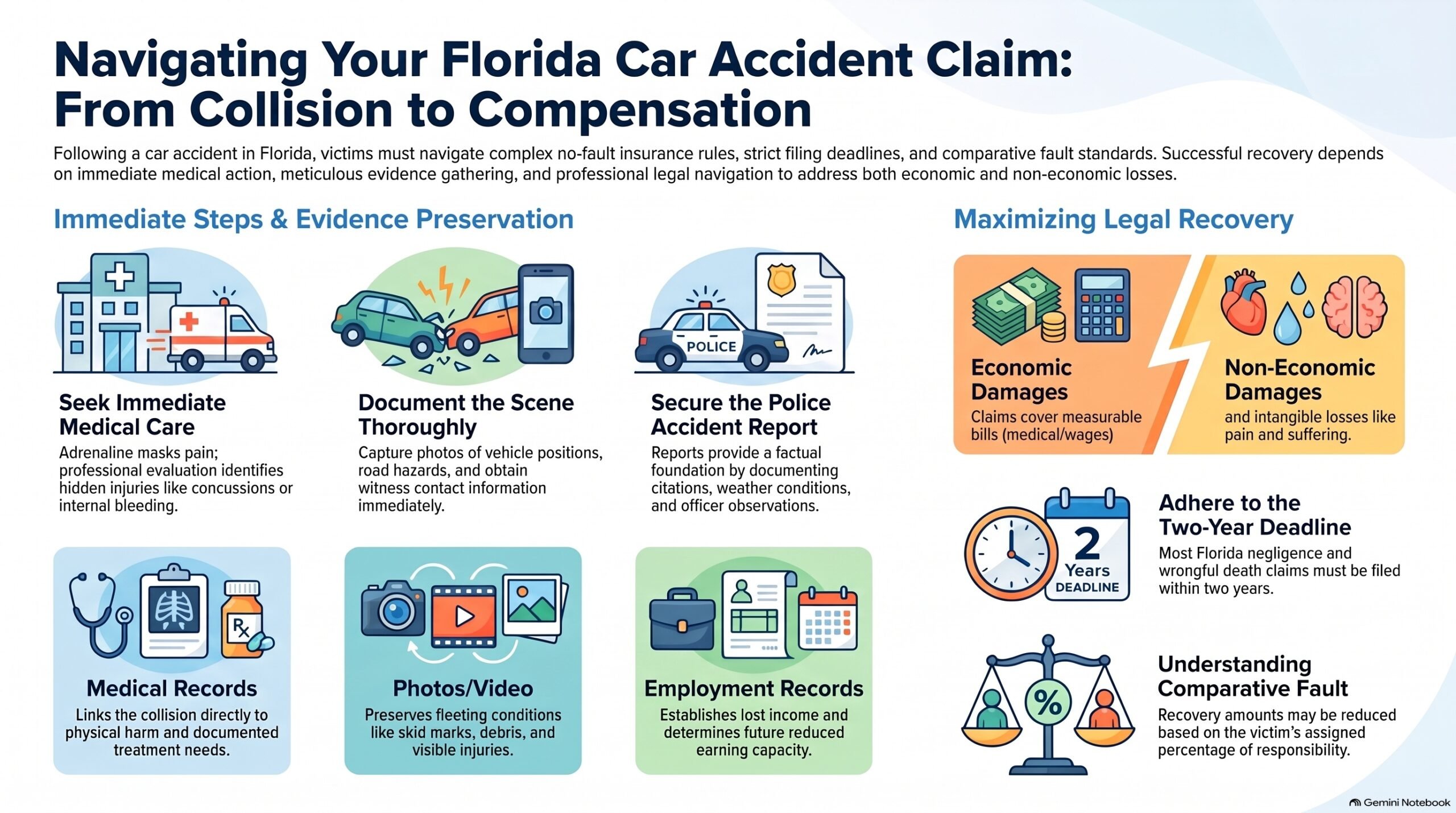
After a car accident in Florida, the injured person should seek immediate medical care, even if symptoms initially appear minor. The accident scene should be documented with photographs, witness information, and relevant vehicle or roadway details. Consulting a Florida attorney can help protect legal rights and support the evaluation of potential claims and compensation.
Seek Immediate Medical Care
Prompt medical evaluation should be a priority for anyone involved in a Florida car accident, even when injuries appear minor or symptoms are not immediately noticeable. Adrenaline can temporarily mask pain, while conditions such as concussions, internal bleeding, and soft-tissue injuries may worsen without treatment. An injured person should obtain Emergency treatment when symptoms are severe, including loss of consciousness, difficulty breathing, significant bleeding, or intense pain. Otherwise, prompt evaluation by a physician or urgent-care provider remains important. Medical professionals can identify hidden injuries, recommend appropriate care, and explain the need for follow-up appointments. Individuals should follow medical instructions carefully and avoid dismissing persistent symptoms. Medical documentation, including examination findings, diagnoses, prescriptions, and treatment plans, may also help establish the nature and seriousness of accident-related injuries for a later claim.
Document The Accident Scene
When conditions permit, individuals involved in a Florida car accident should document the scene before vehicles or other evidence are moved. Photographs should show vehicle positions, traffic signals, lane markings, road conditions, debris, skid marks, visible injuries, and surrounding property. Images from several distances and angles can preserve details that may later clarify how the collision occurred.
Vehicle damage documentation should include each affected area, broken parts, deployed airbags, and interior impacts. Individuals should record the date, time, location, weather, and any apparent hazards without speculating about fault. Witness statement collection should include names, telephone numbers, addresses, and brief accounts of what each person observed. If witnesses consent, their statements may be recorded accurately. Documentation should never compromise safety; injured individuals should receive care, and dangerous traffic areas should be avoided. Originals should be preserved securely.
Contact A Florida Attorney
Preserving photographs, witness information, and other accident-scene evidence can help clarify the circumstances of a collision, but legal guidance may be necessary to protect the injured person’s interests. A Florida attorney can review medical records, insurance communications, and other available evidence to identify responsible parties and assess potential compensation. Prompt consultation may also help prevent missed deadlines, incomplete claims, or statements that could weaken the injured person’s position. Many firms offer a Free consultation, allowing the individual or a supporting family member to discuss the accident without an initial financial commitment. During a case assessment, the attorney may explain applicable Florida law, insurance procedures, and realistic recovery options. Professional representation can also reduce administrative burdens, enabling injured individuals to focus on medical treatment while their legal interests receive careful, timely attention.
Critical Evidence in a Florida Car Accident Claims & Compensation Injury Case
A Florida car accident injury claim may depend on preserving reliable evidence, including:
- Police accident reports; 2. Medical treatment records; 3. Witness contact information; and 4. Photos and video evidence.
Together, these materials can help establish liability, document injuries, and support the full compensation sought by the injured party.
Police Accident Reports
Police accident reports often provide essential evidence in a Florida car accident injury claim by documenting the collision, identifying the involved parties, and recording the responding officer’s observations. The report may include statements from drivers and witnesses, roadway conditions, vehicle positions, apparent damage, citations, and an initial description of how the crash occurred. Although it does not conclusively determine fault, it can provide valuable evidence of liability when compared with photographs, testimony, and other available information. An attorney may review the report for inconsistencies, omitted facts, or indications that another driver violated traffic laws. The report can also influence a settlement strategy by helping evaluate responsibility, damages, and negotiation positions. Because errors may occur, prompt review and requests for correction can help preserve an accurate account of the collision.
Medical Treatment Records
When a Florida car accident causes injuries, medical treatment records can provide important evidence linking the collision to the claimed physical harm and documenting the need for care. These records may include emergency room notes, physician evaluations, treatment plans, medication records, diagnostic testing, therapy reports, and discharge instructions. Together, they can establish when symptoms began, how providers assessed the injuries, and whether recommended care was followed. Consistent documentation may also help demonstrate the seriousness of the condition, required treatment, and related medical expenses. Gaps, unexplained delays, or inconsistent statements can create questions about causation or the extent of harm. Patients should provide complete and accurate histories, attend scheduled appointments, and retain bills and related records. Authorized copies may assist legal professionals in presenting a clear, evidence-based injury claim.
Witness Contact Information
Because independent accounts can clarify how a collision occurred, witness contact information may constitute important evidence in a Florida car accident injury claim. Witnesses as Evidence can help establish traffic conditions, vehicle movements, impact circumstances, and statements made immediately afterward. A claimant or representative should prioritize locating contact information, including names, telephone numbers, email addresses, and physical addresses, before memories fade or witnesses become unavailable. Obtaining statements should be handled carefully, with accurate documentation of each person’s observations rather than speculation or leading questions. Written or recorded accounts may assist an attorney in evaluating liability and responding to disputed facts. Early preservation efforts can support preserving testimony through interviews, affidavits, or other appropriate legal procedures. Witnesses should be treated respectfully, informed of the claim’s purpose, and asked to provide truthful information voluntarily.
Photos And Video Evidence
Photos and video evidence can provide critical documentation in a Florida car accident injury claim by preserving conditions that may change or disappear after the collision. Images should capture vehicle damage, road hazards, traffic signals, weather conditions, lane markings, debris, and visible injuries from multiple angles. Video may document nearby traffic patterns, statements made at the scene, or conduct suggesting fault. This material can strengthen Liability proof when reviewed alongside police documentation, medical records, and witness statements. Each file should retain its original date, time, and location information whenever possible. A claimant should avoid altering images, posting them publicly, or recording unsafe conditions. Prompt collection also helps preserve evidence before vehicles are repaired, injuries evolve, or roadway conditions change. Legal guidance may clarify which materials best support the claim.
Don’t Wait. Call Our Florida Personal Injury Lawyers Now!
Long-Term Effects of Florida Car Accident Claims & Compensation Injuries
Florida car accident injuries may produce chronic pain, reduced mobility, or permanent disability that affects a person’s ability to work and maintain daily activities. Emotional and mental trauma, including anxiety, depression, or post-traumatic stress, may also persist long after physical recovery. These lasting conditions may require ongoing medical treatment and incur substantial expenses, which can influence the evaluation of a compensation claim.
Chronic Pain and Disability
When injuries from a Florida car accident cause persistent pain or lasting physical limitations, their effects may extend far beyond the initial treatment period. Chronic pain can restrict mobility, reduce endurance, and interfere with ordinary activities, including driving, household responsibilities, and personal care. The Workplace impact may include missed shifts, reduced productivity, modified duties, or an inability to return to the prior occupation. Medical evaluation and consistent treatment are important for documenting symptoms, functional restrictions, and prognosis during long-term recovery. Disability documentation, including physician reports, diagnostic findings, therapy records, and employment information, can help establish the nature and duration of limitations. A Florida car accident claim may seek compensation for continuing medical care, rehabilitation, lost income, reduced earning capacity, necessary accommodations, and other expenses associated with permanent or disabling injuries.
Emotional and Mental Trauma
Emotional and mental trauma after a Florida car accident can persist long after physical injuries have stabilized, affecting sleep, concentration, confidence, and the ability to resume ordinary activities. Some individuals experience anxiety while driving, intrusive memories, irritability, depression, or heightened alertness in traffic. These stress-related symptoms may interfere with employment, relationships, caregiving responsibilities, and participation in community life. Professional evaluation can identify conditions such as post-traumatic stress disorder and help establish appropriate counseling or behavioral treatment. A person seeking compensation should communicate symptoms accurately and maintain treatment documentation, including diagnoses, recommendations, attendance, and reported functional limitations. Consistent records may help connect psychological harm to the collision and demonstrate its effect on daily living. Supportive family members and advocates can encourage care without minimizing the individual’s experience.
Ongoing Medical Expenses
Although some accident-related injuries improve with treatment, others require ongoing medical care that may continue for months or years. These conditions can involve physical therapy, prescription medication, diagnostic monitoring, doctor visits, assistive equipment, or future surgery. Medical records and professional opinions can help establish how an injury affects daily functioning and what care may be reasonably necessary and restorative. Documented bills, treatment plans, and projected expenses may also clarify long-term injury costs when evaluating a claim. A careful assessment should account for both current obligations and anticipated healthcare needs, rather than focusing solely on immediate invoices. Insurance settlement options may include negotiated payments, structured settlements, or litigation when available compensation does not adequately reflect ongoing harm. Because future expenses can be difficult to calculate, injured individuals may benefit from organized documentation and qualified legal guidance when seeking fair compensation.
Proving Liability in Florida Car Accident Claims & Compensation Injury Cases
Proving liability in a Florida car accident injury claim requires evidence showing that another party’s negligence caused the crash and resulting damages. Relevant proof may include photographs, traffic-camera footage, vehicle damage, police reports, witness statements, and medical records linking injuries to the collision. A claimant generally must establish that the responsible driver owed a duty of care, breached that duty, and caused measurable harm. Comparative negligence may reduce recovery when multiple parties contributed to the incident.
The facts can become more complicated in truck accident cases, where maintenance records, driver logs, and employer oversight may be significant. Uber liability may depend on the driver’s status, trip activity, and applicable coverage provisions. In fatal crashes, Wrongful death claims require evidence addressing both negligence and the survivors’ legally recognized losses. An attorney may also examine insurance bad faith when an insurer’s conduct independently violates its obligations, while preserving evidence and protecting the injured person’s interests throughout the claim.
Dealing With Insurance Companies After a Florida Car Accident Claims & Compensation Injury
Once liability evidence has been preserved, dealing with insurance companies becomes a separate and carefully managed part of a Florida car accident injury claim. An insurer may request statements, medical records, employment information, or authorization forms while evaluating responsibility and damages. Injured individuals should provide accurate information but avoid speculation, unnecessary details, or recorded statements before receiving informed guidance.
A careful review of Policy Coverage Limits helps clarify the potential sources of compensation and prevents unrealistic expectations. Florida’s no-fault system may initially involve personal injury protection benefits, but serious injuries can create additional claims against an at-fault driver. Uninsured Motorist Options may also provide protection when the responsible driver lacks adequate insurance or cannot be identified.
Insurance representatives serve the carrier’s financial interests, not the injured person’s long-term needs. Professional assistance can help preserve documentation, assess settlement offers, and identify coverage issues without compromising the claim. Clear communication and patience support fair treatment while protecting the claimant’s ability to seek appropriate compensation.
What to Expect During a Florida Car Accident Claims & Compensation Injury Claim Process
A Florida car accident injury claim typically begins with an initial case evaluation to assess liability, damages, and available evidence. The process then involves documenting medical treatment, negotiating with insurance companies, and evaluating any settlement offers. If negotiations do not produce a fair resolution, the claim may proceed to trial.
Initial Case Evaluation
During an initial case evaluation, a Florida car accident injury lawyer reviews the circumstances of the collision, the available evidence, and the extent of the injured person’s losses. The discussion typically addresses accident reports, photographs, witness accounts, and insurance communications. Evidence preservation may involve identifying materials that should be secured before they become unavailable or altered. A preliminary liability investigation considers driver conduct, roadway conditions, vehicle damage, and potentially responsible parties. The lawyer may also examine medical records to understand how the reported injuries relate to the crash, without determining future treatment needs at this stage. If an insurance dispute appears likely, the lawyer explains possible coverage issues, claim deadlines, and communication concerns. The evaluation concludes with an assessment of legal options, practical risks, and steps for protecting the claim.
Medical Treatment Documentation
Accurate medical treatment documentation establishes how the reported injuries developed after a Florida car accident and supports the connection between the collision and the claimed losses. During the injury claim process, the individual should preserve emergency-room records, diagnostic results, prescriptions, therapy notes, and invoices. Each provider’s observations can clarify symptoms, treatment recommendations, limitations, and recovery progress. Consistent follow-up care may demonstrate that complaints were addressed responsibly rather than ignored or minimized. Records should also describe Chronic pain, functional restrictions, and changes affecting work or daily activities. When lasting impairment is suspected, disability evidence may include physician assessments, employment limitations, and rehabilitation evaluations. Emotional trauma documentation, including counseling records and documented anxiety or sleep disruption, can explain psychological effects. A complete, organized medical history helps present the individual’s needs accurately and responsibly.
Insurance Negotiations
When insurance negotiations begin, the injured person’s claim is evaluated through policy provisions, liability evidence, medical records, and documented financial losses. A representative may request additional documentation, question treatment decisions, or assess whether another party contributed to the collision. The damages calculation generally considers emergency care, ongoing treatment, lost income, property damage, and anticipated future medical needs. Coverage must also be examined carefully because policy limits can restrict the available recovery, particularly when injuries are substantial or multiple claimants are involved. A disciplined settlement strategy relies on organized evidence, accurate valuation, and clear communication regarding liability and harm. Insurance adjusters may present early offers that do not reflect the claim’s full value. Experienced guidance helps protect the injured person’s interests while negotiations proceed and information is exchanged.
Settlement Or Trial
Settlement discussions may resolve a Florida car accident injury claim without formal litigation, but the decision should reflect the claim’s evidence, projected damages, available insurance coverage, and the injured person’s recovery status. Evidence preservation supports credible valuation and strengthens settlement negotiations by documenting liability, medical treatment, lost income, and future care needs. Counsel may recommend continued negotiations when an offer fairly addresses documented losses and avoids the expense and uncertainty of trial. If meaningful disputes remain, a risk assessment can compare potential recovery, litigation costs, credibility concerns, and delays. A jury trial strategy may then involve securing expert testimony, presenting clear evidence, and explaining the injury’s effect on the claimant’s daily life. Throughout the process, representatives should provide careful guidance, protect the claimant’s interests, and pursue a resolution that supports recovery and long-term stability.
Compensation for Florida Car Accident Claims & Compensation Injury Damages
Florida car accident injury compensation is intended to address the financial, physical, and personal losses caused by another party’s negligence. A claim may seek payment for medical treatment, rehabilitation, lost income, reduced earning capacity, property damage, and the continuing effects of an injury on daily life. The available recovery depends on the evidence, insurance coverage, applicable liability rules, and the severity and permanence of the harm.
When an accident causes death, surviving relatives may need guidance regarding Wrongful Death Eligibility, including the relationship to the deceased and the losses legally recognized under Florida law. Prompt documentation can preserve important evidence and clarify the family’s rights.
Claimants should also evaluate Settlement Timeline Options. Some matters resolve after medical care and records are complete, while others require extended negotiations or litigation. An attorney can help injured individuals and families assess offers, communicate with insurers, and pursue a result that supports recovery and accountability without making unsupported promises about compensation.
Economic vs Non-Economic Damages in Florida Car Accident Claims & Compensation Cases
Florida car accident claims may include economic damages, such as medical expenses, lost income, and vehicle repair costs. Non-economic losses, such as pain, emotional distress, and diminished quality of life, require careful review rather than straightforward receipts. Calculating total compensation involves reviewing both categories, supported by evidence concerning the accident’s immediate and long-term effects.
Economic Damages Explained
Economic damages are the measurable financial losses a person may incur after a car accident, including medical expenses, lost income, property damage, and anticipated future costs. These losses may include emergency treatment, hospital care, rehabilitation, prescription medication, and transportation for necessary appointments. Wage records, employment documentation, and evidence of missed work can help establish income-related losses. Vehicle repair or replacement expenses may also qualify when supported by estimates, invoices, and ownership records. Future medical needs and reduced earning capacity often require professional evaluation and reliable projections. Insurance coverage limits can affect available recovery, making accurate valuation and timely notice important. Effective injury paperwork management helps organize bills, records, claim forms, and correspondence. A careful review of these documents supports complete submissions and helps ensure that responsible parties and insurers consider each verifiable financial loss.
Non-Economic Losses
Although non-economic losses do not appear as itemized bills, they may represent a significant part of compensation in a Florida car accident claim. These damages address personal consequences that lack a precise market price, including physical pain, emotional distress, inconvenience, mental anguish, and diminished enjoyment of life. In some cases, a serious injury can affect relationships, independence, confidence, and the ability to participate in valued activities. A surviving family may also pursue non-economic damages in a wrongful death action, subject to Florida law and the claimant’s relationship to the deceased. Documentation from healthcare providers, family members, coworkers, and personal journals may help demonstrate these effects. Legal counsel can present this evidence responsibly and incorporate it into a settlement strategy that recognizes the injured person’s full human experience.
Calculating Total Compensation
When evaluating a car accident claim, total compensation generally combines economic damages with non-economic damages, subject to the facts of the injury and applicable Florida law. Economic damages may include emergency treatment, rehabilitation, medication, lost wages, property damage, and reasonably supported future expenses. Medical records, billing statements, employment documentation, and expert testimony can help establish these amounts and demonstrate their connection to the collision.
Non-economic damages address losses that lack a fixed monetary value, including pain, emotional distress, disability, disfigurement, and reduced enjoyment of life. A careful pain assessment, consistent treatment history, and testimony regarding daily limitations may support this portion of the claim. Florida’s comparative negligence rules and statutory requirements can affect recovery. A thorough evaluation considers liability, insurance coverage, medical prognosis, and both present and anticipated needs before assessing a fair settlement.
When a Florida Car Accident Claims & Compensation Injury Case Goes to Trial vs Settlement
A Florida car accident injury case may resolve through a negotiated settlement or proceed to trial if the parties cannot agree on liability or fair compensation. Settlement discussions allow the injured person and the insurer to avoid the uncertainty of court, reduce expenses, and reach a resolution sooner. Counsel may present medical records, income documentation, and other evidence supporting the requested amount.
Trial preparation becomes necessary when negotiations fail, or disputed facts remain significant. A lawyer develops a Trial Strategy, identifies persuasive evidence, and prepares the client for questioning. Witness Testimony may clarify how the collision occurred, the extent of injuries, and the effect on daily responsibilities. Expert opinions can also help explain medical conditions or future care needs.
At trial, a judge or jury evaluates the evidence and determines whether compensation is warranted. The process may require substantial time and impose emotional demands. Legal guidance helps the injured person make an informed decision while preserving dignity, preparation, and a commitment to achieving a fair outcome.
Don’t Wait. Call Our Florida Personal Injury Lawyers Now!
Florida Laws That May Affect Your Florida Car Accident Claims & Compensation Case
Florida car accident claims and compensation cases are governed by laws that can affect liability, available insurance benefits, filing deadlines, and the amount of recoverable damages.
Understanding these rules helps injured people receive informed, responsible assistance.
- Traffic violation statutes: Evidence that a driver violated speeding, signaling, or right-of-way requirements may support a negligence claim, although the surrounding facts still matter.
- Fault determination rules: Florida generally compares each party’s responsibility. A claimant’s percentage of fault can reduce the damages awarded.
- Insurance requirements: Florida’s no-fault system may provide personal injury protection benefits, while serious injuries can permit claims against an at-fault driver. Policy language and coverage limits require careful review.
- Damage categories: Compensation may involve medical expenses, lost income, property damage, and qualifying non-economic losses. Documentation and medical evidence strengthen evaluation.
These laws can influence negotiations, settlement decisions, and trial preparation. A knowledgeable lawyer can organize evidence, explain available remedies, and help clients pursue fair outcomes while serving their practical needs. Counsel may also identify coverage disputes or statutory defenses.
The Statute of Limitations for Florida Car Accident Claims & Compensation Injury Cases
Because filing deadlines can determine whether a claim proceeds at all, the statute of limitations is a significant consideration in Florida car accident injury cases. Under current Florida law, many negligence claims must generally be filed within two years after the accident. Wrongful death claims commonly have a two-year deadline, while claims involving a governmental entity may require shorter notice periods and different procedures. Exceptions can alter when the period begins or pauses, particularly in cases of minors, delayed discovery, or legally recognized incapacity. Because deadlines are fact-specific, an Attorney Consultation should occur promptly, even when injuries initially appear minor. Early Evidence Preservation can protect medical records, photographs, witness information, vehicle data, and communications. Insurance Bad Faith concerns and Settlement Negotiations do not automatically extend the filing deadline. A claimant should not assume that ongoing discussions with an insurer preserve legal rights. Careful calendar tracking and timely action help protect access to compensation and support responsible service to injured individuals and their families.
How a Florida Car Accident Claims & Compensation Lawyer Can Help You
Often, a Florida car accident claims and compensation lawyer begins by evaluating the circumstances of the collision, the available evidence, the extent of the injuries, and the insurance coverage involved.
The lawyer then provides disciplined guidance intended to protect the injured person’s interests and support a fair resolution.
- Through evidence preservation, counsel helps secure photographs, medical records, witness statements, vehicle data, and other materials before they become unavailable.
- The lawyer manages communications with insurers, addressing insurance disputes and challenging inaccurate statements, inadequate valuations, or improper interpretations of coverage.
- Applying effective Negotiation tactics, counsel presents documented losses and medical consequences while seeking compensation that reflects the claim’s full value.
- If settlement efforts fail, a carefully developed trial strategy organizes testimony, exhibits, legal arguments, and damages evidence for court proceedings.
This representation also relieves clients from unnecessary administrative burdens, allowing them to focus on recovery and family responsibilities. Counsel serves as an informed advocate, promoting accountability while treating all participants with professionalism and respect.
When to Contact a Florida Car Accident Claims & Compensation Lawyer
Prompt legal guidance can protect a claim before evidence is lost or insurance positions become difficult to challenge. A Florida car accident claims and compensation lawyer may be contacted immediately after a collision involving significant injury, disputed fault, or extensive property damage. Early consultation can help preserve photographs, medical records, witness information, and vehicle evidence while these details are still available.
Legal advice is also appropriate when an insurer requests a recorded statement, offers a quick settlement, delays payment, or questions medical treatment. A lawyer can clarify deadlines, explain available remedies, and help prevent communications from weakening the injured person’s position. Families should seek counsel promptly for wrongful death claims because evidence, financial documentation, and statutory requirements require careful attention.
Representation may become particularly important after a claim is denied or undervalued. Assistance with insurance denial appeals can address policy language, supporting records, and procedural requirements. Prompt contact is advisable whenever uncertainty, financial pressure, or communication with an insurer makes informed decision-making difficult.
Why You Need an Experienced Florida Car Accident Claims & Compensation Lawyer
An experienced Florida car accident claims and compensation lawyer can provide informed guidance when liability, medical expenses, and insurance coverage are disputed. Legal experience helps identify responsible parties, preserve essential evidence, and calculate compensation for treatment, lost income, property damage, and continuing care. A qualified advocate can also apply effective Negotiation Tactics when insurers question fault or minimize the value of a claim. This representation may reduce procedural errors and protect an injured person from making statements that could weaken recovery. When a collision causes a fatality, counsel can explain available Wrongful Death Claims and help eligible relatives pursue funeral costs, financial losses, and other legally recognized damages. Experienced legal assistance also supports respectful communication with medical providers, insurers, and families during difficult circumstances. By managing deadlines, documentation, and settlement discussions, counsel enables affected individuals to focus on recovery and serving those who depend on them while pursuing a fair and lawful resolution.
How to Choose the Right Florida Car Accident Claims & Compensation Lawyer for Your Case
Choosing the right Florida car accident claims and compensation lawyer requires careful consideration of the attorney’s experience, resources, and approach to representing injured clients. A suitable lawyer should understand Florida traffic laws, insurance practices, liability standards, and procedures affecting personal injury claims. Reviewing professional experience with comparable collisions can help determine whether the attorney is prepared to investigate evidence, assess damages, and address disputed responsibility.
Potential clients should evaluate Client communication priorities before making a decision. Clear explanations, timely updates, and respectful responses can help injured individuals and families participate meaningfully in their cases. The initial consultation may also reveal whether the lawyer listens carefully and provides realistic guidance rather than unsupported assurances.
Fee agreement clarity is equally important. The written agreement should explain contingency fees, case-related expenses, payment responsibilities, and circumstances that could affect the client’s recovery. Comparing qualifications, communication practices, and fee terms enables an informed choice focused on competent, ethical service and the client’s long-term interests.
About The Law Offices of Anidjar & Levine
The Law Offices of Anidjar & Levine represents individuals seeking compensation for Florida car accidents and related personal injury claims.
Its attorneys assess the circumstances of each matter, identify potentially responsible parties, and explain available legal options in clear terms.
The firm may assist with claims involving vehicle damage, medical expenses, lost income, ongoing treatment, and other losses supported by the evidence.
A client-first service approach emphasizes communication, careful preparation, and attention to each person’s immediate and long-term needs.
Legal professionals may gather records, consult relevant experts, communicate with insurers, and pursue negotiations or litigation when appropriate.
Their work is intended to reduce administrative burdens while protecting a client’s opportunity to seek fair compensation.
The firm offers free case reviews to help individuals understand whether legal representation may be suitable for their circumstances.
Because deadlines and procedural requirements can affect a claim, prompt consultation may help preserve relevant evidence and support informed decisions throughout the process.
Frequently Asked Questions
Can I File a Claim if the At-Fault Driver Was Uninsured?
A person may file a claim after an uninsured driver causes a crash in Florida. Florida PIP benefits generally cover initial medical expenses and a portion of lost income, regardless of fault. Additional compensation may be available through the injured person’s uninsured coverage, if included in the auto policy. Claimants should promptly document injuries, treatment, expenses, and liability, then review policy terms and deadlines with a qualified attorney to protect their rights.
Will My Car Accident Claim Affect My Immigration Status?
A car accident claim generally does not affect a person’s immigration status, because seeking compensation for injuries or property damage is a lawful civil matter, not an immigration violation. However, each individual’s circumstances may differ, particularly if criminal charges, fraudulent documents, or disputed employment issues are involved. Victim Support can help identify available Legal Options, while an immigration attorney should assess any status-specific concerns before statements, settlements, or court proceedings are finalized.
Can Passengers File Separate Florida Car Accident Claims?
Yes. Passengers can generally file separate Florida car accident claims for their injuries, even when they are in the same vehicle. Each passenger has separate claimant rights and may pursue compensation from the at-fault driver’s liability insurer, the vehicle owner’s policy, or available personal injury protection coverage. Insurance coverage options depend on policy terms, fault, and injury severity. Medical documentation and timely notice help protect each passenger’s claim. Counsel can clarify applicable deadlines and procedures.
What Happens if I Was Injured in a Rental Car?
A person injured in a rental car should obtain medical care, report the collision, and preserve the rental agreement, insurance details, photographs, and witness information. Responsibility may depend on the other driver’s negligence, the renter’s conduct, and applicable Rental insurance coverage, including personal policies, credit-card benefits, or the rental company’s protection. Medical expenses reimbursement may come from insurance or a legal claim. Prompt professional guidance helps protect deadlines and coordinate claims.
Can I Pursue Compensation for a Defective Vehicle Part?
Yes, an injured person may pursue compensation if a defective part contributed to the crash or resulting harm. Potential claims may involve the manufacturer, distributor, retailer, or another responsible entity, depending on the evidence and applicable law. Compensation options can include medical expenses, lost income, rehabilitation costs, pain and suffering, and other damages. Preserving the vehicle, obtaining records, documenting injuries, and consulting qualified counsel can help establish liability and protect the claim.
—————————
Florida car accident claims may involve medical expenses, lost wages, property damage, and lasting physical or emotional harm.
Understanding available legal rights and acting promptly can help protect an injured person’s ability to seek fair compensation.
An experienced Florida car accident claims and compensation lawyer can investigate the collision, communicate with insurers, and build a case supported by documented evidence.
The Law Offices of Anidjar and Levine provide knowledgeable legal guidance to help accident victims pursue the compensation their circumstances warrant.
Learn more from a Florida Personal Injury Lawyer.