The Law Offices of Anidjar and Levine helps injured crash victims investigate whether a defective restraint system worsened their injuriesA Daytona Beach Car Accident Lawyer may preserve the vehicle, collect repair and recall records, review crash data, and identify liable parties, such as manufacturers, suppliers, or repair facilities.
Legal support also includes documenting medical losses, wage impacts, and insurance issues while pursuing settlement or litigation.
The sections below explain major causes, rights, evidence needs, and timing considerations.
Main Takeaways
- Daytona Beach airbag failure lawyers investigate design defects, manufacturing errors, maintenance history, crash dynamics, and vehicle preservation.
- Claims may involve defective crash sensors, faulty airbag modules, wiring problems, improper repairs, recalls, or supplier quality issues.
- Evidence often includes crash data, repair records, medical records, witness statements, photographs, recall history, and insurance documentation.
- Responsible parties may include vehicle manufacturers, parts suppliers, distributors, repair facilities, or others connected to the failed airbag system.
- Victims may seek compensation for medical bills, lost income, rehabilitation, pain, suffering, and reduced earning capacity.


How We Can Help With Your Daytona Beach Airbag Failure Injury Claim
When an airbag fails to deploy or deploys improperly during a crash, the resulting injury claim may involve complex questions about vehicle design, manufacturing defects, maintenance history, and crash dynamics. A Daytona Beach airbag failure lawyer can help organize the claim with disciplined attention to evidence, deadlines, and accountable parties. The legal team may collect repair records, preserve the vehicle, consult qualified experts, and determine whether a manufacturer, distributor, repair facility, or another party may be responsible.
Support may also include reviewing medical records, proof of wage loss, and Insurance documentation to present the harm clearly and accurately. For injured individuals and families focused on recovery and service to others, this guidance can reduce confusion while protecting legal rights. If an insurer disputes liability, undervalues damages, or rejects the claim, counsel may prepare Claim denial appeals, respond to adverse arguments, and pursue available remedies through settlement negotiations or litigation when necessary.
OUR CONSULTATIONSARE FREE
START YOUR FREE CASE REVIEW

Understanding Daytona Beach Airbag Failure Injury Cases
Because an airbag system is designed to work within seconds of a collision, any failure can raise serious questions about how the vehicle was built, maintained, inspected, or repaired. In Daytona Beach injury cases, the central issue is often whether the missing or improper deployment made the harm worse than it should have been. These claims require careful attention to medical records, vehicle condition, impact details, and the sequence of events before and after the crash.
A thorough case review may include Crash scene documentation, witness statement collection, photographs, repair records, and preservation of the vehicle for inspection. Each step helps clarify what occurred and supports those seeking accountability on behalf of an injured person. Legal analysis may also consider whether multiple parties share responsibility, including manufacturers, service providers, or others connected to the vehicle. By organizing evidence early, a claim can better serve the injured person’s needs and support a fair evaluation of damages.
Common Causes of Daytona Beach Airbag Failure
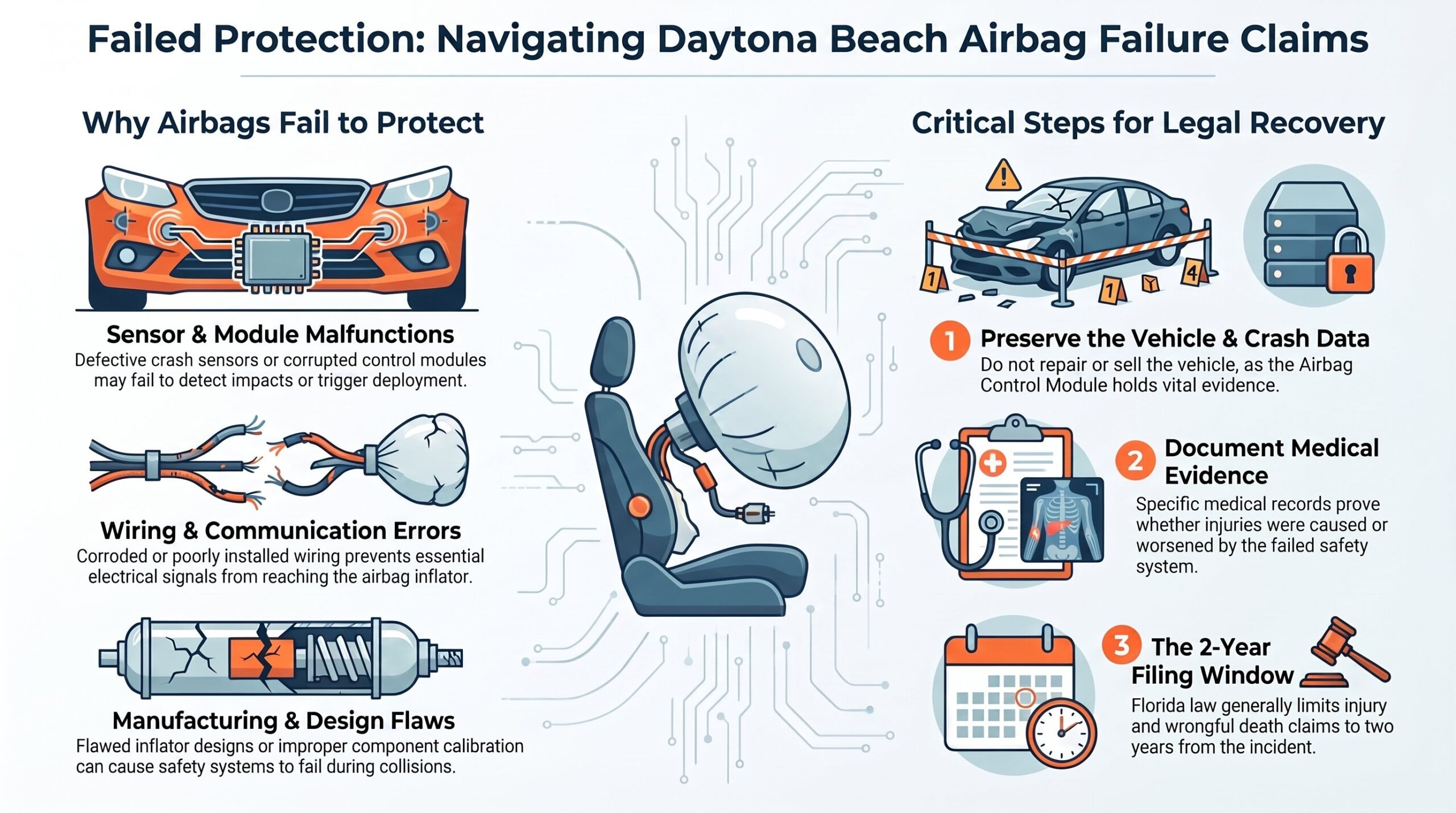
Airbag failure in Daytona Beach crashes can result from several mechanical, electrical, or design-related defects. Common causes include defective crash sensors, faulty airbag modules, wiring system problems, and manufacturing design defects that prevent timely deployment. Identifying the specific source of the failure is important for determining liability and evaluating the strength of an injury claim.
Defective Crash Sensors
Defective crash sensors are a frequent cause of airbag failure because they control whether the airbag system recognizes a collision and deploys at the proper moment. When these sensors are damaged, poorly installed, or exposed to corrosion, they may misread crash forces or fail to send an activation signal. In Daytona Beach collisions, this defect can leave occupants without expected protection, increasing the risk of serious harm.
Crash sensor calibration is also essential, since inaccurate settings may prevent deployment during a qualifying impact or cause deployment unnecessarily. Faulty safety recalls may reveal known sensor defects that manufacturers, dealers, or repair providers failed to address. Careful investigation can determine whether negligent design, maintenance, or inspection contributed to the failure, helping injured individuals pursue accountability.
Faulty Airbag Modules
The control module serves as the command center of a vehicle’s airbag system, receiving crash data and determining whether deployment is required. When this module is defective, corrupted, or improperly calibrated, it may misread an Airbag sensor signal and prevent timely inflation during a serious collision. In other cases, the module may store fault codes that are ignored during maintenance, leaving occupants without essential protection.
Installation errors, including use of incompatible replacement parts or failure to properly program the module, can also compromise the system’s response. For families, caregivers, and community members who rely on safe transportation, such failures may create preventable harm. A careful investigation can identify whether the module’s condition contributed to an airbag failure and help establish accountability for those responsible for safety.
Wiring System Problems
Because an airbag system depends on uninterrupted electrical communication, damaged wiring can prevent essential signals from reaching the control module or the inflators when they are needed. In Daytona Beach crashes, wiring problems may arise from prior collision repairs, improper maintenance, water intrusion, or long-term vehicle wear. Intermittent wiring can create inconsistent connections, causing warning lights to appear briefly or the system to fail without clear notice.
Corrosion issues near connectors, floorboards, guidance columns, or sensor locations may also weaken signal transmission. These failures matter because occupants rely on safety systems to respond instantly during severe impacts. Careful investigation may include diagnostic scans, inspection of harnesses, and review of repair history. Identifying wiring-related failures helps injured individuals, families, and advocates pursue accountability with accurate evidence.
Manufacturing Design Defects
When an airbag system contains a flawed design or manufacturing weakness, it may fail even when the vehicle appears properly maintained. Defects may arise from unsafe inflator designs, weak module housings, improper venting, or components that cannot withstand expected crash forces. In other cases, sensor calibration errors may prevent timely deployment or cause deployment under inappropriate conditions.
Supplier quality issues can also affect parts produced outside the vehicle manufacturer’s direct control, including crash sensors, wiring connectors, and inflator materials. These failures may place occupants at unnecessary risk during collisions where protection should have been provided. Careful investigation often requires reviewing recall histories, production records, engineering specifications, and component testing. Identifying the defect helps determine accountability and supports efforts to protect others from similar preventable harm in future crashes.


Legal Rights of Daytona Beach Airbag Failure Injury Victims
After an airbag fails to deploy or inflates improperly during a Daytona Beach collision, an injured person may have the right to pursue compensation from the parties responsible for the defect or failure. These rights may include claims against manufacturers, distributors, repair facilities, or other entities that placed an unsafe product into public use.
A careful legal review can help protect the victim’s dignity, medical stability, and family responsibilities.
- Compensation may address medical expenses, lost income, rehabilitation needs, pain, suffering, and reduced earning capacity.
- Wrongful death eligibility may allow surviving relatives to seek damages when a fatal injury is linked to airbag failure.
- Related auto warranty disputes may support evidence that the vehicle or safety system did not perform as promised.
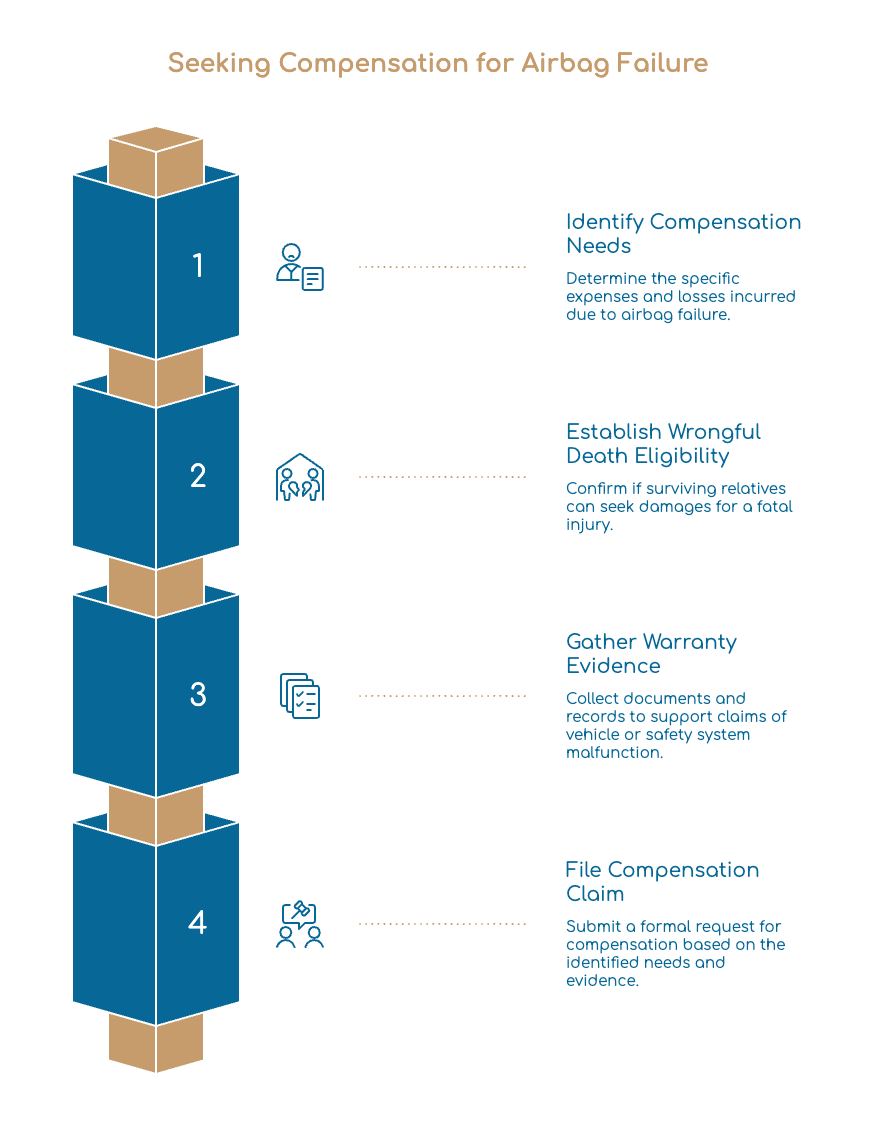
A lawyer may also preserve evidence, consult safety experts, and communicate with insurers. Timely action is important, as Florida law limits how long injured persons generally have to file claims.
Why Do Airbag Failure Injuries Happen at Daytona Beach?
Why do airbags fail in serious Daytona Beach collisions? These injuries often arise when a vehicle’s safety system does not deploy, deploys late, or deploys with excessive force. Causes may include defective sensors, faulty wiring, poor module programming, manufacturing errors, or inadequate crash testing. In some cases, prior repairs, flood damage, or improper part replacement may interfere with the restraint system’s performance.
A careful Vehicle recall investigation may reveal whether the manufacturer had notice of similar defects, service bulletins, or safety campaigns affecting the same model. Engineers and safety professionals may also examine crash data, event recorders, and physical damage patterns to determine whether the airbag should have activated. An Insurance coverage review may identify available benefits, liability policies, or product-related coverage issues. Understanding these causes helps protect injured people, supports accountability, and assists families, advocates, and professionals who seek responsible answers after preventable harm in the community.
What Should You Do After a Daytona Beach Airbag Failure Injury?
After a Daytona Beach airbag failure injury, the injured person should seek prompt medical care, even if symptoms appear limited at first. Crash evidence, including the vehicle, photographs, repair records, and witness information, should be preserved before it is lost or altered. An attorney can evaluate potential claims, identify responsible parties, and protect the injured person’s rights during the investigation.
Seek Medical Care
Prompt medical attention is required when an airbag fails during a Daytona Beach crash, even if the injuries initially appear minor. A physician can evaluate hidden trauma, including concussion, internal bleeding, chest injury, burns, or fractures that may worsen without treatment.
Emergency symptom tracking helps caregivers note dizziness, numbness, breathing problems, changes in pain, confusion, or loss of consciousness to enable timely intervention. Follow-up visits also support recovery by ensuring that new symptoms are addressed before they become serious.
Documenting injury timeline begins with the first examination and continues through referrals, diagnostic tests, therapy, and prescribed restrictions. Accurate medical records help treating providers understand progression, protect the patient’s health, and clarify how the crash affected daily functioning. Delaying care can make diagnosis harder and may complicate later injury claims.
Preserve Crash Evidence
When an airbag fails to deploy or deploys improperly, preserving crash evidence should begin as soon as safety and medical needs allow. A responsible party or caregiver may photograph the vehicles, dashboard, steering wheel, airbag compartment, seat belts, skid marks, debris, and visible injuries. The vehicle should not be repaired, sold, or destroyed until its condition is documented, because the restraint system may contain crucial information.
Any damaged child seats, clothing, or personal items should be saved in a secure place. Police reports, medical records, and towing information should be gathered promptly. Witness statements can also help clarify how the collision occurred and whether the airbag malfunctioned. Clear evidence may later support efforts to negotiate insurance coverage accurately, fairly, and with respect for the injured person’s recovery.
Contact An Attorney
In the days following a suspected airbag failure, contacting an attorney can help protect the injured person’s rights and maintain the value of a potential claim. Legal counsel can coordinate evidence preservation, communicate with insurers, and help ensure deadlines are met. An attorney may also collect witness statements, spot traffic violations. Record property damage, secure vehicle maintenance records.
These steps can clarify whether a defective airbag, negligent driver, repair issue, or manufacturer error contributed to the harm. For families and caregivers focused on recovery and service to the injured, legal guidance can reduce unnecessary burdens while supporting accountability. Prompt representation may also help prevent the vehicle from being altered, repaired, or destroyed before qualified experts inspect it, strengthening the foundation for fair compensation.
Critical Evidence in a Daytona Beach Airbag Failure Injury Case
Critical evidence in a Daytona Beach airbag failure injury case often determines whether the failure is linked to a defect, a maintenance issue, or a crash-related malfunction. Key materials may include:
- Crash event data and information from the airbag control module
- Vehicle inspection records, repair history, and component preservation
- Medical evidence documenting injuries consistent with airbag nondeployment or improper deployment
Crash Event Data
After a serious collision, crash event data can become central evidence in a Daytona Beach airbag failure injury case. This information may show vehicle speed, braking, turning input, seatbelt use, and impact timing, helping investigators understand whether the airbag system should have deployed. When reviewed with Emergency response records, crash reports, photographs, and dashcam footage, the data can support a clearer timeline of what occurred before and during impact.
For injured occupants and those assisting them, quickly preserving this evidence is an important act of care because vehicles may be repaired, sold, or destroyed. Legal professionals may send preservation notices, coordinate inspections, and work with qualified experts to interpret the findings. Reliable crash data can help identify defects, challenge disputed accounts, and promote accountability.
Airbag Control Module
Because the airbag control module may record and preserve information about a crash, it often becomes a pivotal source of evidence in a Daytona Beach airbag failure injury case. This module can help determine whether the airbag system detected impact forces, sent deployment commands, or reflected fault conditions before collision. For injured occupants and those in recovery, this evidence may clarify whether a defect, delayed deployment, or nondeployment contributed to the harm.
Legal review may also address claims of Driver neglect, maintenance records, or misuse when manufacturers or insurers attempt to shift responsibility. Insurance tactics, communication logs, and preservation demands can be important when protecting the module from alteration or loss. Careful handling allows qualified experts to analyze data while maintaining evidentiary integrity for settlement negotiations or litigation.
Vehicle Inspection Records
Vehicle inspection records can complement airbag control module data by indicating whether the vehicle’s restraint system, electrical components, sensors, warning lights, or related repairs were reviewed before the crash. These records may include vehicle maintenance logs, dealership service notes, recall inspections, diagnostic reports, and repair invoices. In a Daytona Beach airbag failure case, they help clarify whether a defect was ignored, misdiagnosed, or never disclosed to the owner.
Post-accident documentation may also preserve the vehicle’s condition before repairs, salvage, or disposal compromise evidence. When insurance claim denials arise, inspection records can support a careful review of causation and responsibility. Eyewitness statements may further confirm warning lights, unusual sounds, or repair history, helping advocates serve injured persons with accuracy, diligence, and accountability.
Injury Medical Evidence
Medical records form a central foundation of a Daytona Beach airbag failure injury case, as they link the crash event to the physical harm the injured person claims. Emergency room notes, imaging results, surgical reports, rehabilitation records, and physician assessments can show whether injuries are consistent with a failed deployment, delayed deployment, or excessive force. Treatment documentation also helps identify the severity of trauma, the need for ongoing care, and the practical burdens placed on the injured person and family.
Clear records support accurate liability timelines by showing when symptoms appeared, when treatment began, and how conditions progressed. For those seeking to serve an injured community member, organized medical evidence allows legal and medical professionals to evaluate harm responsibly, preserve dignity, and pursue accountability with care.
Long-Term Effects of Daytona Beach Airbag Failure Injuries
Airbag failure injuries in Daytona Beach may cause long-term harm that extends well beyond the immediate crash aftermath. Chronic pain complications, lasting mobility challenges, and emotional trauma effects can interfere with medical recovery, employment, and daily independence. These ongoing consequences often become central issues when evaluating damages, treatment needs, and the full impact of a defective or failed airbag.
Chronic Pain Complications
When an airbag fails to deploy properly or deploys with excessive force, the resulting injuries may lead to chronic pain that persists long after the crash scene is cleared. Individuals may experience ongoing neck, back, shoulder, chest, or nerve-related pain that interferes with caregiving, employment, and daily responsibilities. Repetitive injury can develop when weakened tissue is strained during ordinary tasks, creating cycles of treatment and reduced function.
These conditions may require medication, therapy, injections, or expert care, placing added pressure on households already facing financial instability. Insurance disputes often arise when insurers question the source, severity, or duration of pain after an airbag-related crash. Some injured workers may also need workplace accommodations, such as modified duties or adjusted schedules, to continue contributing safely while managing persistent symptoms.
Lasting Mobility Challenges
After a serious collision involving airbag failure, lasting mobility challenges can limit an injured person’s ability to walk, climb stairs, drive, work, or perform routine household tasks. Spinal injuries, fractures, joint damage, or nerve impairment may require long recovery periods and substantial daily assistance. Caregivers, medical providers, and community support teams often help assess practical needs, including wheelchair accessibility planning for homes, vehicles, workplaces, and public environments.
These adjustments may involve ramps, widened doorways, modified bathrooms, adaptive equipment, or transportation changes. Injured individuals may also need rehabilitation therapy options, such as physical therapy, occupational therapy, gait training, or strength conditioning. Documenting these limitations helps clarify future care needs, lost earning capacity, and reasonable accommodations, thereby supporting a more complete evaluation of long-term damages after an airbag-failure injury.
Emotional Trauma Effects
Although physical injuries often receive immediate attention, emotional trauma can become one of the most persistent long-term effects of a Daytona Beach airbag failure. Survivors may experience anxiety, sleep disruption, fear of driving, irritability, or intrusive memories connected to the crash. These Trauma aftereffects can interfere with work, caregiving, medical appointments, and community responsibilities.
Family coping may also become strained when loved ones must provide reassurance, transportation, financial support, or patience during recovery. In service-oriented households, the injured person may struggle to accept help after having previously supported others. Insurance stress can intensify these burdens, especially when claims are delayed, disputed, or minimized. Careful documentation of emotional symptoms, counseling needs, and daily limitations can help clarify the full impact of the injury.
Proving Liability in Daytona Beach Airbag Failure Injury Cases
Because airbag failure claims often involve both crash dynamics and product performance, proving liability requires a detailed investigation into how the restraint system should have functioned and why it did not. Attorneys may review crash data, vehicle maintenance records, recall history, design specifications, and medical evidence to determine whether a defect, improper installation, or inadequate warning contributed to the injuries.
Liability may rest with a manufacturer, parts supplier, repair facility, or another responsible party whose conduct failed to meet applicable standards of negligence. Expert analysis can help explain whether the airbag should have deployed, deployed late, or deployed with excessive force. In service to injured individuals and their families, this evidence should be organized with care, accuracy, and respect for the harm suffered. Florida’s comparative fault rules may also affect recovery if another driver or the injured person is alleged to have contributed to the crash or resulting injuries.
Dealing With Insurance Companies After a Daytona Beach Airbag Failure Injury
When an airbag fails during a serious collision, insurance companies may quickly begin evaluating the claim while important evidence is still at risk of being lost. Adjusters may request statements, medical authorizations, or early settlement discussions before the full impact of the injury is known. Careful communication helps protect the injured person and supports a responsible search for fair recovery.
Documenting Medical Costs is especially important, including emergency treatment, hospitalization, rehabilitation, medication, follow-up care, and anticipated future needs. Accurate records assist those reviewing the claim and help prevent undervaluation of necessary care. The process may also require identifying Coverage Limits under auto policies, uninsured motorist coverage, umbrella policies, or potential product liability insurance connected to the airbag system.
A Daytona Beach airbag failure lawyer may help manage insurer contact, preserve essential records, and reduce pressure on the injured person, allowing attention to remain on health, service, and family responsibilities.
What to Expect During a Daytona Beach Airbag Failure Injury Claim Process
A Daytona Beach airbag failure injury claim typically begins with an initial case evaluation, where the facts, injuries, and potential liable parties are reviewed. The process then moves into evidence collection, including vehicle inspections, medical records, crash reports, and expert analysis, followed by structured settlement negotiations with insurers or manufacturers. If a fair resolution is not reached, the claim may proceed to litigation and trial, where liability, damages, and defective airbag performance are presented in court.
Initial Case Evaluation
During an initial case evaluation, a Daytona Beach airbag failure lawyer reviews the crash circumstances, injury records, vehicle information, and any available evidence showing how the airbag allegedly failed to deploy or deployed improperly. The lawyer assesses whether the injuries appear to be connected to a restraint system defect, a negligent repair, or another responsible party.
This meeting also helps identify urgent concerns, including medical needs, Insurance claim timelines, and communication with insurers. A careful fault investigation may begin conceptually, focusing on who owed a duty of care and how that duty may have been breached. The attorney may explain potential legal options, the expected stages of the claim, and service-centered support available to the injured person. This evaluation allows a measured strategy to form before formal action proceeds.
Evidence Collection Process
After the initial case evaluation, evidence collection typically becomes a central focus of a Daytona Beach airbag failure injury claim. Attorneys may gather crash reports, medical records, vehicle inspection findings, and product information to understand how the airbag system performed. This process often includes preserving the vehicle prior to repairs or disposal, so that qualified reviewers can examine sensors, control modules, and deployment patterns.
Careful attention may also be given to details of Witness interviews, including statements from passengers, bystanders, first responders, or repair personnel. Camera footage retrieval may involve requesting recordings from traffic cameras, nearby businesses, residences, or dash devices. Each step supports a complete record, helping those responsible for the claim serve the injured person with diligence, accuracy, and respect for the facts.
Settlement Negotiation Steps
Once the evidence record is sufficiently developed, settlement negotiations may begin with a detailed presentation of the claim to the insurer, manufacturer, dealership, repair provider, or other responsible party. This demand typically summarizes liability facts, medical treatment, lost income, impairment, future care needs, and the human impact on the injured person and family.
Supporting insurance documentation, repair records, photographs, expert findings, and medical bills may be organized to show why compensation is warranted. Counsel may evaluate each response, identify disputed issues, and adjust Pretrial case strategy to protect the claimant’s position. Negotiations often include counteroffers, requests for clarification, and discussion of liens or subrogation interests. A fair resolution should account for present harm, anticipated needs, and the dignity of service owed to those injured by defective safety systems.
Litigation And Trial
If settlement efforts do not produce a fair result, a Daytona Beach airbag failure injury claim may proceed into litigation, where the injured person’s allegations are presented through a formal lawsuit. The process may include pleadings, discovery, depositions, motions, and preparation for trial. Attorneys may address evidence preservation early, ensuring the vehicle, airbag module, crash data, maintenance records, and medical documentation remain available for review. This care supports a fair process and helps protect the injured person’s ability to seek accountability.
During trial preparation, expert witness roles often become central. Engineers, accident reconstruction experts, and medical professionals may explain whether the airbag failed, why injuries occurred, and how the harm affected daily life. At trial, a judge or jury evaluates the evidence and determines liability and damages.
Compensation for Daytona Beach Airbag Failure Injury Damages
When an airbag fails to deploy or deploys improperly during a collision in Daytona Beach, the resulting injuries may support a claim for substantial compensation. Recovery may depend on identifying responsible parties, including vehicle manufacturers, component suppliers, repair facilities, or other negligent drivers. A lawyer may assess crash records, product history, maintenance documents, and medical findings to connect the defective airbag system to the harm suffered.
Insurance negotiation often requires a clear presentation of liability, causation of injury, and future care needs. Evidence preservation is equally important, since the vehicle, airbag module, event data recorder, photographs, and witness accounts may help establish what occurred. For injured individuals and families focused on restoring stability, compensation can provide important support during recovery.
Legal representation may help ensure that insurers and manufacturers evaluate the claim fairly, rather than minimizing the consequences of a failed safety device. Timely action can protect rights and strengthen the overall claim.
Economic vs Non-Economic Damages in Daytona Beach Airbag Failure Cases
Damages in Daytona Beach airbag failure cases are generally divided into economic losses, such as medical bills and lost wages, and non-economic losses, such as pain and emotional distress. This distinction helps clarify both the measurable financial impact and the personal harm caused by a defective or malfunctioning airbag. Calculating total compensation requires a careful review of records, injury severity, long-term effects, and the evidence linking the airbag failure to the victim’s losses.
Medical Bills And Lost Wages
Recovering compensation in a Daytona Beach airbag failure case often requires a clear distinction between economic and non-economic damages. Medical bills and lost wages fall within economic damages because they can be measured through records, invoices, and employment documentation. These losses may include emergency treatment, surgery, rehabilitation, follow-up care, medication, and reduced earnings during recovery.
When an airbag fails to deploy or deploys improperly, the injured person may need careful documentation to show how the defect increased financial harm. Insurance coverage disputes can arise when carriers question treatment costs or wage loss claims. A driver fault investigation may also affect payment sources, especially when multiple parties share responsibility. Clear evidence helps legal advocates serve injured individuals by preserving the financial support needed for care, stability, and recovery.
Pain And Emotional Distress
Although financial losses can be documented through bills and wage records, pain and emotional distress in a Daytona Beach airbag failure case require a different type of proof. These harms may include chronic discomfort, sleep disruption, anxiety while riding in vehicles, or loss of confidence during daily activities. Attorneys may rely on medical notes, therapy records, witness statements, and consistent personal accounts to show how the failed airbag affected the injured person’s life.
A Faulty diagnosis can complicate this evidence, especially when symptoms were minimized or linked to another cause. Likewise, an insurance delay may worsen stress by leaving a harmed individual without timely support. Careful documentation helps present these non-economic damages with dignity, accuracy, and respect for the person’s lived experience.
Calculating Total Compensation
Total compensation in a Daytona Beach airbag failure case is typically evaluated by separating economic damages from non-economic damages, then examining how both categories reflect the full effect of the injury. Economic damages may include emergency care, surgery, rehabilitation, medication, lost wages, reduced earning capacity, and future medical needs. Non-economic damages address pain, emotional distress, disfigurement, loss of enjoyment, and the daily burdens placed on injured individuals and their families.
A thorough review helps ensure the claim honors the person’s recovery, dignity, and long-term support needs. Faulty crash documentation can weaken proof of causation, making investigation and expert analysis important. Insurance claim delays may also impact financial stability, requiring clear records, consistent medical evidence, and strong advocacy to pursue fair compensation.
When a Daytona Beach Airbag Failure Injury Case Goes to Trial vs Settlement
Often, a Daytona Beach airbag failure injury case is resolved through settlement when the evidence clearly shows a defect, the injuries are well documented, and the responsible parties recognize the risk of a trial. Settlement can spare an injured person added strain, preserve resources, and provide funds needed for care, rehabilitation, and family stability. Attorneys may negotiate with manufacturers, insurers, or other parties after reviewing medical records, vehicle data, expert opinions, and projected future losses.
A case may proceed to trial when liability is disputed, compensation offers are insufficient, or a defendant refuses to accept responsibility. During the Jury selection process, both sides seek fair jurors who can consider the facts without bias. The trial evidence presentation may include crash reconstruction, airbag system analysis, medical testimony, and documentation of daily limitations. Trial can offer accountability, but it also involves uncertainty, time, and careful preparation focused on serving justice.
Florida Laws That May Affect Your Daytona Beach Airbag Failure Case
Understanding Florida law is essential in a Daytona Beach airbag failure case because state rules can affect who may be held liable, how long an injured person has to file a claim, and what compensation may be available. These laws help determine whether responsibility rests with an automaker, parts supplier, repair facility, governmental entity, or another negligent party.
Key legal principles may include:
- Comparative Negligence, which can reduce compensation if the injured person is found partly responsible for the crash or resulting harm.
- Product liability rules, which may allow claims based on defective design, manufacturing defects, or inadequate warnings involving the airbag system.
- Sovereign Immunity, which can limit or shape claims involving public vehicles, road maintenance, or government-related conduct.
For families, caregivers, and advocates seeking to protect injured people, these rules provide structure. A careful legal review can identify accountable parties and support a claim focused on recovery, safety, and responsible service.
The Statute of Limitations for Daytona Beach Airbag Failure Injury Cases
After identifying the Florida laws that may shape an airbag failure claim, the filing deadline becomes a central issue in preserving the injured person’s rights. In Florida, most injury claims must be filed within 2 years of the crash, including claims involving defective airbags, faulty seat belts, or related vehicle safety systems. If the injured person dies, the wrongful death deadline is generally two years from the date of death.
These deadlines matter because evidence can fade, vehicles may be repaired or destroyed, and records concerning recall impacts may become harder to obtain. A delayed filing can prevent recovery, even when the defect appears serious, and the harm is clear. Certain circumstances may affect when the period begins, such as delayed discovery of a defect, but exceptions are limited. Prompt attention helps preserve accountability, supports public safety, and serves families seeking justice. Florida deadlines should be evaluated early and carefully.
How a Daytona Beach Airbag Failure Lawyer Can Help You
A Daytona Beach airbag failure lawyer can help identify the parties responsible for a defective safety system, preserve crucial evidence, and develop a claim that reflects the full extent of the injured person’s losses. This support may include evaluating crash data, coordinating expert review, and examining whether a manufacturer, repair facility, or parts supplier contributed to the failure.
A Daytona Beach airbag failure lawyer can help protect evidence, assess liability, and pursue recovery after a defective safety system causes harm.
- Reviewing Insurance claim timelines to help protect procedural rights and prevent avoidable delays.
- Collecting vehicle repair documentation, maintenance records, recall notices, and inspection findings.
- Communicating with insurers, opposing parties, and experts while the injured person focuses on recovery.
Through careful case development, the lawyer may also document medical expenses, lost income, diminished earning capacity, and the human impact of impaired mobility or lasting pain. For those committed to caring for injured family members, this guidance can provide structure, accountability, and a practical path toward financial recovery after a preventable safety failure.
When to Contact a Daytona Beach Airbag Failure Lawyer
When an airbag fails to deploy, deploys late, or causes unexpected injury during a collision, legal guidance should be sought as soon as the injured person’s immediate medical needs are addressed. Early contact helps preserve information that may support accountability and protect those harmed from preventable confusion.
A lawyer may be contacted when there are visible airbag defects, unexplained dashboard warnings, severe injuries, or questions about prior service. Witness statements, insurance delays, and inconsistent accident reports can make prompt review especially important. Vehicle recalls, repair documentation, crash photographs, and medical records may also require careful preservation to prevent loss, alteration, or oversight.
Families, caregivers, and community members assisting an injured person should encourage timely legal consultation when fault is unclear or a vehicle safety system appears to have failed. Prompt action can help ensure responsible parties, insurers, and manufacturers are addressed through proper procedures while the injured person focuses on treatment and recovery.
Why You Need an Experienced Daytona Beach Airbag Failure Lawyer
Because airbag failure cases often involve complex questions of vehicle design, crash dynamics, maintenance history, and product liability, an experienced Daytona Beach airbag failure lawyer can provide essential guidance from the outset. Such cases may require prompt preservation of the vehicle, review of event data, coordination with engineers, and careful analysis of whether the airbag should have deployed or operated differently.
Counsel can help injured individuals and families serve the broader purpose of accountability by identifying responsible parties, including manufacturers, suppliers, repair facilities, or others in the distribution chain. Safety recall research and examination of vehicle maintenance history may reveal patterns of defect, missed repairs, or overlooked warnings.
An experienced lawyer also understands how insurers and corporate defendants may dispute causation or minimize harm. Through organized investigation, evidence development, and legal strategy, representation can support a claim that is accurate, responsible, and focused on meaningful recovery after a preventable safety failure.
How to Choose the Right Daytona Beach Airbag Failure Lawyer for Your Case
Selecting the right Daytona Beach airbag failure lawyer requires careful review of the attorney’s experience with defective vehicle systems, product liability claims, and serious crash injury litigation. A qualified lawyer should understand how airbag sensors, control modules, crash data, and manufacturer warnings may affect liability. Families seeking justice for an injured person should look for Right Lawyer Credentials, including trial experience, knowledge of automotive defects, and a record of handling intricate injury claims.
The lawyer should also act quickly to support Evidence Preservation. Damaged vehicles, electronic data, repair records, photographs, and witness statements can help show whether an airbag failed to deploy, deployed late, or caused additional harm. A careful attorney will coordinate inspections, consult appropriate experts, and protect the claim from avoidable delays.
Compassionate service also matters. The right advocate should communicate clearly, respect the client’s burden, and pursue accountability through disciplined preparation and attention to every detail of the case.
About The Law Offices of Anidjar & Levine
As injured clients face the consequences of a serious crash, The Law Offices of Anidjar & Levine provides legal representation focused on accountability, preparation, and client support.
The firm assists people in Daytona Beach who believe an airbag failed to deploy, deployed improperly, or worsened their injuries during a collision.
Its attorneys investigate crash evidence, review vehicle records, consult qualified experts, and identify responsible parties, including manufacturers, distributors, repair facilities, or negligent drivers.
The firm also monitors key deadlines, helping clients preserve their right to seek compensation under Florida law.
The Law Offices of Anidjar & Levine emphasizes service by keeping clients informed, answering client FAQs, and handling communications with insurers and opposing parties.
This approach allows injured individuals and their families to focus on medical care and recovery.
Through organized case preparation and attentive guidance, the firm works to pursue fair results for those harmed by defective safety systems.
Frequently Asked Questions
Can Recalled Airbags Affect My Daytona Beach Injury Claim?
Yes, recalled airbags can materially affect a Daytona Beach injury claim. A recall may support evidence of a defect, strengthen negligence or product liability arguments, and influence claim payout estimates. However, the injured person must still prove causation, damages, and responsible parties. Those assisting victims should also consider product liability deadlines, insurance disputes, and preservation of the vehicle, because prompt documentation can protect recovery and promote accountable service.
Do Airbag Failure Cases Require Expert Witness Testimony?
Yes, airbag failure cases commonly require expert witness testimony. Engineers, accident reconstruction experts, and medical professionals may explain whether the system malfunctioned, how the crash forces affected deployment, and how injuries resulted. Courts rely on qualified experts to summarize expert testimony, establish evidentiary standards, and guide fair evaluation. This evidence helps advocates serve injured people responsibly, while presenting reliable proof that supports accountability, compensation, and informed decision-making.
Can Used or Salvaged Airbags Cause Legal Complications?
Yes, used or salvaged airbags can create significant legal complications. They may raise questions about crashworthiness, negligent repair, product defects, and chain of custody. If removed, altered, or discarded, parties may face evidentiary spoliation concerns. Insurance coverage may also be disputed when nonapproved components were installed. Those assisting injured people should preserve records, invoices, and parts so that responsibility can be evaluated carefully and claims can proceed with reliable evidence.
What if My Airbag Deployed Too Late?
If an airbag deployed too late, the Late Deployment may indicate a defect in the sensors, software, or crash-recognition systems. Investigators would examine Medical Impacts, crash data, Warranty Records, and the Vehicle Timeline to determine whether earlier deployment could have reduced harm. Those assisting an injured person should preserve the vehicle, obtain treatment records, and avoid repairs before inspection. Prompt documentation supports accountability and helps clarify responsibility for preventable injuries.
Are Rental Car Companies Liable for Defective Airbags?
Yes, rental car companies may be liable for defective airbags when evidence shows negligent maintenance, ignored recalls, inadequate inspections, or failure to remove unsafe vehicles from service. Liability depends on notice, control, and the use of reasonable care to protect renters and the public. Manufacturers or repair facilities may also share responsibility. Insurers and defendants often raise shared fault defenses, so documented maintenance records and recall history become highly important.
—————————
Airbag failure claims require careful investigation, clear evidence, and timely legal action.
Injured victims in Daytona Beach may have claims against manufacturers, repair facilities, or other responsible parties, depending on the facts of the crash.
A qualified Daytona Beach Car Accident Lawyer can evaluate liability, preserve vital evidence, and pursue compensation for medical costs, lost income, and related damages.
The Law Offices of Anidjar and Levine provides focused legal guidance for those harmed by defective or failed airbag systems.