

The Law Offices of Anidjar and Levine can review whether a spill, wet entryway, obstructed aisle, or damaged floor in a pharmacy contributed to an injury. The assessment may consider what pharmacy staff knew, whether reasonable inspections or warnings were provided, and how the fall affected the injured person. Photographs, witness accounts, incident reports, surveillance footage, and medical records may help clarify the circumstances. Each claim depends on its evidence and applicable law. A Daytona Beach Personal Injury Lawyer can explain important considerations and possible next steps.
Main Takeaways
- A Daytona Beach pharmacy fall may support a premises liability claim if a hazardous condition caused injury and the pharmacy failed to respond reasonably.
- Common hazards include spills, rainwater, cluttered aisles, damaged flooring, and poorly lit walking areas.
- Liability may depend on whether the pharmacy knew or should have discovered the hazard through reasonable inspections.
- Preserve evidence by photographing the scene, recording witness details, requesting incident reports, and promptly asking the pharmacy to retain surveillance footage.
- Seek medical care and consult a Florida premises liability lawyer to discuss your circumstances, deadlines, and potential compensation.
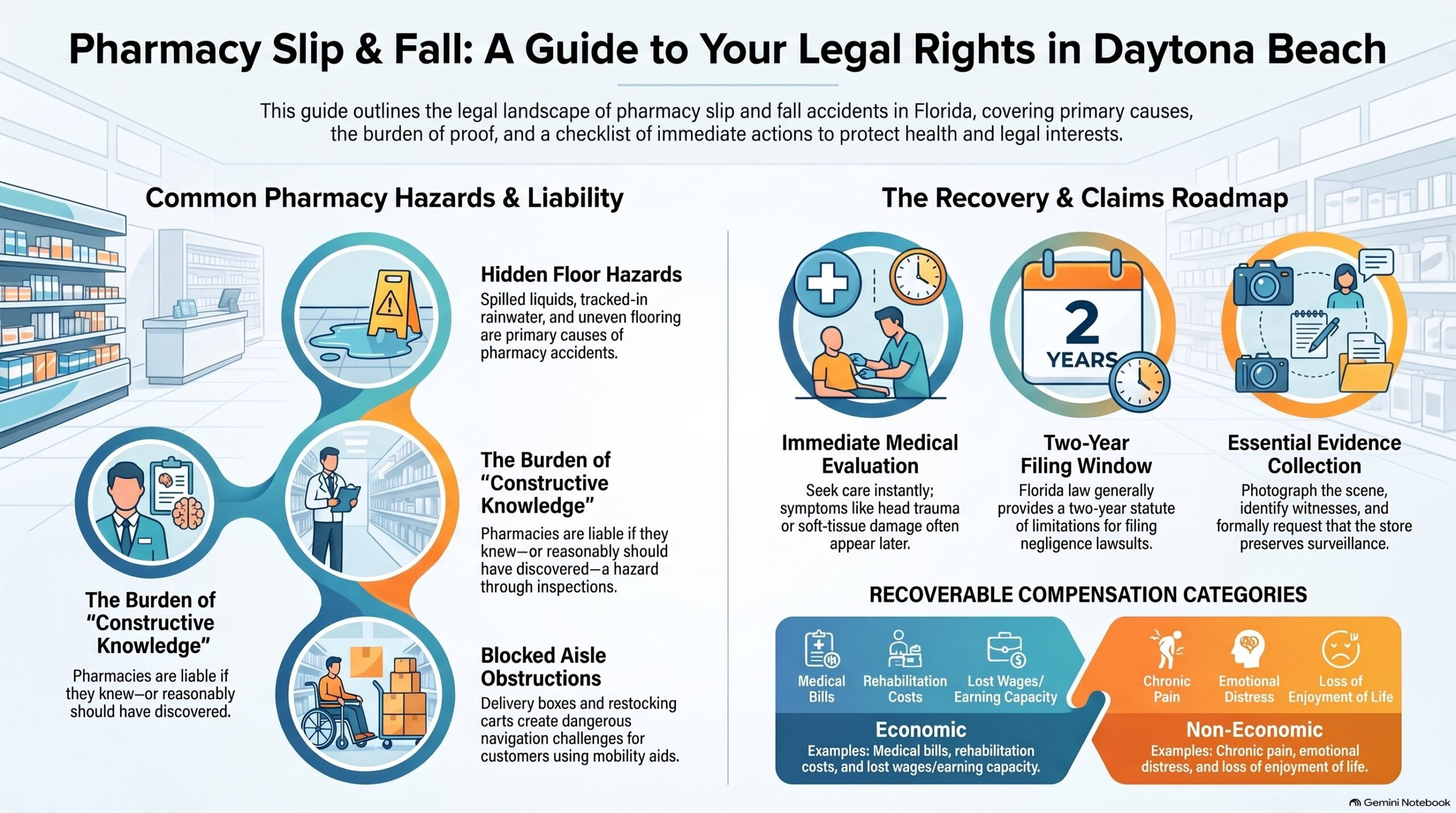


How We Can Help With Your Daytona Beach Slip & Fall Pharmacy Injury Claim
A slip and fall in a pharmacy can cause serious injuries, particularly when spills, damaged flooring, or other hazards are left unaddressed. After an incident, an injured person may need clear guidance as they manage medical care, missed work, and uncertainty about next steps. A Daytona Beach slip-and-fall lawyer can help organize the matter and explain available options in a measured, practical way.
Legal support may include reviewing incident reports, photographs, witness accounts, and medical records to assess Claim eligibility. Counsel can also explain how pharmacy responsibilities relate to the circumstances, including reasonable inspection, cleanup, and warnings about known hazards. This review helps identify relevant evidence and clarify what information may be needed.
An attorney may communicate with the pharmacy or its insurer, track deadlines, and present documented losses for consideration. The process can reduce avoidable confusion and allow the injured person to focus on recovery. Each claim depends on its specific facts, and no outcome can be guaranteed. Clear advice supports informed decisions throughout the process.
OUR CONSULTATIONSARE FREE
START YOUR FREE CASE REVIEW

Understanding Daytona Beach Slip & Fall Pharmacy Injury Cases
When a pharmacy customer is injured in a fall, the circumstances surrounding the hazard and the store’s response are central to understanding the case. An evaluation considers where and when the incident occurred, what conditions were present, and whether the business had a reasonable opportunity to address them. Records, photographs, witness accounts, and incident reports may help establish a reliable timeline and clarify how the event unfolded.
Pharmacy safety protocols and Retail inspection schedules can provide important context. They may show how staff were expected to monitor customer areas, document inspections, and respond to reported concerns. A comparison between written procedures and actual practices can help determine whether reasonable care was exercised. The customer’s medical records may also link the fall to the reported injuries and document the required treatment.
Each case depends on its specific evidence and applicable legal standards. A careful review can help injured customers understand their options while supporting fair, accountable practices that protect others who rely on local pharmacy services.
Common Causes of Daytona Beach Slip & Fall Pharmacies
Slip-and-fall hazards in pharmacies may include spilled liquids and wet entryways that create slick walking surfaces. Cluttered aisles can obstruct customers’ paths, while uneven flooring may cause a sudden loss of balance. Identifying these conditions is important when evaluating how a pharmacy accident occurred.
Spilled Liquids
Spilled liquids can create hazardous conditions in Daytona Beach pharmacies, where customers may encounter leaks from refrigerated products, broken bottles, or drinks and other items dropped in an aisle. These Liquid Spill Sources can leave floors slick, especially when clear liquids are difficult to see against tile or polished surfaces. A customer focused on locating medication may not notice a spill before stepping into it, increasing the risk of a sudden fall and related injuries.
Pharmacy staff can reduce these hazards through prompt inspections and consistent Cleanup Protocols. When a spill is reported or discovered, employees should secure the affected area, remove the liquid with suitable materials, and verify that the floor is dry before reopening the aisle. Clear procedures and timely responses help protect customers while supporting a safer environment for people seeking necessary health products and services.
Wet Entryways
Rain can make pharmacy entryways hazardous when customers track water inside or wet footwear leaves moisture on smooth flooring. During coastal storms and brief showers, repeated foot traffic can spread water beyond the entrance before staff notices the condition. Entryway floor mats can absorb moisture and provide traction, but they must be secured, inspected, and either dried or replaced when saturated. A curled edge or soaked mat may create an additional trip or slip hazard. Pharmacies can adopt rainy day precautions, including checking entrances at regular intervals, promptly drying wet areas, and placing clear warning signs while cleanup is underway. These measures help protect customers, employees, and visitors who may have limited mobility or be carrying purchases. Consistent monitoring and timely maintenance can reduce foreseeable risks at the threshold.
Cluttered Aisles
When merchandise, delivery boxes, or restocking carts obstruct pharmacy aisles, customers may have difficulty seeing or avoiding hazards on the floor. Aisle obstruction can force shoppers to turn abruptly, step around objects, or enter areas with limited visibility. In a busy pharmacy, these conditions may be especially challenging for older adults, people using mobility aids, and customers carrying baskets or prescriptions. Responsible merchandise placement helps preserve clear walking paths and allows customers to move through the store safely. Pharmacy staff can reduce risks by promptly removing boxes, securing carts during restocking, and keeping promotional displays outside primary routes. Regular aisle checks may also identify clutter before it causes a fall. When an obstruction contributes to an injury, the circumstances, store practices, and available evidence can help clarify whether reasonable care was taken.
Uneven Flooring
Uneven flooring in a Daytona Beach pharmacy can create a tripping hazard, particularly where customers expect a continuous, level walking surface. Raised tiles, worn floor coverings, loose mats, and damaged concrete may catch a person’s foot or interfere with the use of mobility aids. These conditions can be especially concerning for older customers and people carrying prescriptions or other purchases.
Changes in floor height may also occur at entrances, between departments, or near refrigeration units. Clear markings and properly maintained surface changes can help customers recognize these changes and move through the store safely. A regular Flooring inspection can identify cracked surfaces, loose materials, and other defects before they contribute to a fall. When hazards are identified, timely repairs, temporary barriers, and appropriate warnings can protect customers and help ensure a safer environment for pharmacy staff and visitors.
Don’t Wait. Call Our Florida Personal Injury Lawyers Now!


Legal Rights of Daytona Beach Slip & Fall Pharmacy Injury Victims
A person injured in a Daytona Beach pharmacy slip-and-fall may have the right to seek compensation if a dangerous condition caused the fall and the pharmacy failed to take reasonable steps to address it. Premises liability basics require examining whether the pharmacy knew, or reasonably should have known, of the hazard and whether its response was appropriate. Pharmacy safety duties include taking reasonable measures to protect customers and visitors from foreseeable harm.
A claim may seek payment for documented losses, subject to the facts and applicable law.
Relevant evidence can include:
- A photograph showing a slick floor near the prescription counter
- A dated incident report describing the fall and reported injuries
- Medical records connecting treatment to the accident
The injured person may also need to show that the condition caused the injury and that the requested damages are supported. Prompt documentation can help preserve important details. A qualified attorney can assess potential rights, explain deadlines, and help pursue a fair resolution while respecting the needs of everyone involved.
Why Do Slip-and-Fall Pharmacy Injuries Happen in Daytona Beach?
Pharmacy slip-and-fall injuries in Daytona Beach often occur when spills, tracked-in rainwater, leaking products, or recently cleaned floors create hazards that are not promptly addressed. These conditions may become more dangerous in busy aisles, where customers carry baskets, compare products, or move between service counters and checkout areas. Poor Store Layout can narrow walking paths, obscure sightlines, or place merchandise in ways that obstruct safe passage. Uneven flooring, loose mats, inadequate lighting, and cluttered displays can also increase the risk of a fall.
Staff Training is another important factor. Employees who are not prepared to identify hazards, follow inspection routines, or respond promptly to reported spills may allow unsafe conditions to persist. Pharmacy operations can involve frequent stocking, deliveries, and customer traffic, making consistent floor monitoring crucial. When maintenance practices, store design, or staff procedures fail to account for these demands, customers may face preventable hazards while seeking medications and other necessary services.
What Should You Do After a Slip-and-Fall Pharmacy Injury in Daytona Beach?
After a slip-and-fall at a pharmacy, the injured person should seek prompt medical care, even if symptoms initially seem minor. The incident should be reported to the pharmacy’s management, and a copy of any written report should be requested. Photographs of the hazard, the surrounding area, and any visible injuries can help document the scene.
Seek Medical Care
Prompt medical care is essential after a slip-and-fall at a Daytona Beach pharmacy, even when an injury initially appears minor. Some conditions, including head trauma, fractures, and soft-tissue damage, may not be immediately apparent. An Urgent evaluation can help identify injuries early and guide appropriate treatment. The injured person should describe the fall, symptoms, and any changes in their condition accurately to the healthcare provider. Following medical instructions and attending follow-up appointments can support recovery and help clinicians monitor developing symptoms. Medical records may also document the nature and timing of reported injuries. If symptoms worsen or new concerns arise, prompt reassessment is important. Seeking care protects the injured person’s health and helps ensure that appropriate support is available during recovery.
Report The Fall
Once immediate medical needs have been addressed, the injured person should report the fall to a pharmacy manager or another responsible employee as soon as practical. A prompt report helps the pharmacy respond to a potential hazard and creates a record of the incident. The person should explain when and where the fall happened, describe the injury, and identify any immediate assistance needed. They should remain factual and avoid guessing about the cause. To notify the pharmacy manager, the injured person can ask an employee to contact the manager directly if one is not present. They should request written acknowledgment of the report, including the report’s date and the recipient’s name. If the pharmacy uses an incident form, the person should review it carefully and retain a copy when available.
Document The Scene
A written report creates a record of the fall, while careful scene documentation can preserve details that may otherwise be lost. If the injured person can do so safely, photographs should show the hazard, surrounding floor, warning signs, and nearby displays. Images should capture both close details and the wider Store layout, including the route through the pharmacy and the location of the fall. The person should note the date, time, lighting, weather, and any visible liquid, debris, or uneven flooring. The footwear choice and condition of the shoes should also be recorded, without altering or discarding them. Witness names and contact information may help preserve independent accounts. Staff should be asked to retain relevant surveillance footage. Documentation should never delay medical care or create further risk.
Don’t Wait. Call Our Florida Personal Injury Lawyers Now!
Critical Evidence in a Daytona Beach Slip & Fall Pharmacy Injury Case
Evidence can help establish how a pharmacy hazard developed and whether it contributed to the fall.
Important records and observations may include:
- An incident report documenting when and where the fall occurred
- Surveillance footage showing the area before and after the incident
- Photographs of the hazard and statements from witnesses who saw the fall or its aftermath
These materials can help clarify the circumstances of the injury and the pharmacy’s response.
Incident Reports
When a slip-and-fall occurs in a Daytona Beach pharmacy, the incident report can help establish how the event was documented and what store personnel observed. A report may identify the date, time, location, reported hazard, and employees who responded. Its Report Contents may also include statements from the injured person or witnesses, as well as any steps taken to address the condition. These details may help clarify the sequence of events and whether the pharmacy received timely notice of a potential danger.
Incident Documentation should be reviewed for accuracy and completeness. Missing details, conflicting accounts, or delayed preparation may affect how the record is interpreted. A copy may not be provided immediately, so the injured person can record personal recollections and the contact information of witnesses. Preserving those details can support a careful review of the incident and help determine what further evidence may be relevant.
Surveillance Footage
Beyond the incident report, surveillance footage may provide an independent record of the conditions and events surrounding a pharmacy slip-and-fall in Daytona Beach. Cameras may show when a spill or other hazard appeared, how long it remained, and whether employees inspected or addressed it. Video may also document the fall, the surrounding area, and actions taken immediately afterward, helping establish a timeline for review. Video preservation is important because many systems automatically overwrite recordings after a limited period. A prompt written request can help identify and retain relevant footage before it is lost. Coverage may be incomplete, however, due to camera blind spots, obstructed views, or limited recording angles. A careful review can clarify what the footage establishes and what other evidence may be needed to assess responsibility and support an injured person’s claim.
Hazard Photographs
Photographs taken soon after a pharmacy slip-and-fall in Daytona Beach can document the hazard and surrounding conditions before they change. Images may show a spill, misplaced merchandise, a damaged floor, or warning signs, as well as the area’s lighting and layout. A clear Camera angle can establish the hazard’s location and scale without obscuring relevant details. Wide views provide context, while closer images may capture surface conditions. If safe, photographs from several positions can help preserve an accurate record for later review. The original files should be retained because photo metadata may indicate when and where images were created, although such information can require verification. Accurate, unaltered photographs can help those evaluating the incident understand what conditions existed and assess whether further investigation is needed to support accountability and safer pharmacy premises.
Witness Statements
Witness statements can provide an independent account of a pharmacy slip-and-fall in Daytona Beach, helping clarify how the incident occurred and what conditions were present. Customers, employees, delivery workers, or other visitors may have observed the hazard, the fall, or events immediately afterward. Their accounts can help establish whether a spill, misplaced item, or other danger was visible and how long it may have remained.
Witness credibility depends on factors such as the person’s opportunity to observe, consistency, and relationship to those involved. Each witness should be asked for contact information and a clear description of what they saw, without pressure to speculate. Prompt statement preservation is important because memories can fade and contact details may be lost. Recorded or written accounts, collected lawfully, can help preserve relevant details for a careful review of the injury claim.
Long-Term Effects of Daytona Beach Slip & Fall Pharmacy Injuries
A pharmacy slip-and-fall can cause lasting injuries that extend well beyond the initial recovery period. Some people experience chronic pain or mobility limitations that affect daily activities and independence. Emotional distress may also persist, particularly when the injury disrupts work, family responsibilities, or routine life.
Chronic Pain
How can a slip-and-fall in a Daytona Beach pharmacy continue to affect someone long after the initial injury? For some injured people, pain persists after bruises, sprains, or fractures have begun to recover. Ongoing discomfort may stem from damaged tissues, aggravated joints, or nerve involvement, and its severity can vary over time. Chronic pain can interfere with concentration, family responsibilities, and participation in ordinary routines, placing added strain on both the injured person and those who provide support.
A healthcare professional may recommend pain management through medication, physical therapy, or other appropriate care, depending on the diagnosis. Consistent evaluation can help identify changes and guide treatment decisions. Sleep disruption is also common when pain worsens at night or makes it difficult to find restful positions. Medical records documenting symptoms, treatment, and their effects may help clarify the injury’s continuing consequences.
Mobility Limitations
Persistent pain after a pharmacy slip-and-fall may also limit a person’s ability to walk, stand, or climb stairs safely. Injuries to the hip, knee, ankle, or back can affect balance and reduce the distance a person can travel without assistance. These restrictions may interfere with routine activities, including shopping, attending appointments, and helping family members. A treating provider can assess functional limits and recommend appropriate care, such as physical therapy or mobility aids. Assistive devices, including canes or walkers, may support safer movement when used as directed. In some cases, home modifications, such as grab bars or improved lighting, can reduce hazards and make daily tasks more manageable. Documented mobility limitations may also help explain how an injury affects a person’s independence and ongoing needs.
Emotional Distress
Although physical injuries may receive the most immediate attention, a pharmacy slip-and-fall in Daytona Beach can also have lasting emotional effects. Some injured customers experience Anxiety after falls, including persistent worry about walking on wet floors, entering crowded stores, or suffering another accident. These reactions may interfere with routine errands and reduce a person’s confidence in public settings. Fear of pharmacies can also develop, particularly when the fall occurred near a medication counter or aisle. A person may delay filling prescriptions or depend on others for necessary purchases, potentially affecting health and independence. Family members and caregivers can help by recognizing these changes and supporting gradual, safe returns to everyday activities. When distress persists or disrupts daily life, professional counseling may help address its effects and support recovery alongside appropriate medical care.
Proving Liability in Daytona Beach Slip & Fall Pharmacy Injury Cases
Establishing liability in a Daytona Beach pharmacy slip-and-fall case requires evidence that the business failed to exercise reasonable care and that this failure caused the customer’s injuries. The injured person generally must show a dangerous condition existed, such as a spill, misplaced merchandise, or a wet floor, and that the condition contributed to the fall. Evidence may include photographs, incident reports, surveillance footage, witness statements, and medical records.
Notice requirements are also central. A pharmacy may be responsible if its employees knew about the hazard and failed to address it within a reasonable time. Liability may also arise when constructive knowledge can be established, meaning the condition existed long enough that reasonable inspections should have discovered it. Inspection logs, cleaning schedules, and testimony about store practices can help clarify whether staff acted appropriately.
A careful investigation can preserve relevant evidence and identify responsible parties. The focus remains on establishing the hazard, the business’s knowledge, and the connection between its conduct and the customer’s injuries.
Dealing With Insurance Companies After a Daytona Beach Slip & Fall Pharmacy Injury
After a slip-and-fall at a pharmacy in Daytona Beach, an injured customer may be contacted by an insurer seeking information about the incident. The insurer may represent the pharmacy or another party, and its interests may differ from the customer’s. Careful communication with the Adjuster can help preserve accurate information while avoiding unsupported assumptions about how the fall occurred or the extent of the resulting harm.
An injured person may provide basic details, but should review requests before supplying documents or signing forms. Recorded statements can be used to evaluate a claim, so the customer may wish to understand the questions and consider obtaining legal guidance before responding. Answers should remain truthful, limited to what the person recalls, and clear about any uncertainty. Medical records, photographs, receipts, and notes about the incident may help the customer communicate consistently. The injured person should avoid speculation, minimize neither symptoms nor limitations, and keep copies of correspondence. Respectful, measured communication can protect the customer’s interests while allowing insurers to assess the reported injury fairly.
What to Expect During a Daytona Beach Slip & Fall Pharmacies Injury Claim Process
A Daytona Beach pharmacy slip-and-fall claim typically begins with an evaluation of the incident, the injuries, and the available evidence. The process may then involve gathering records and witness accounts, followed by settlement negotiations with the responsible parties or their insurers. If negotiations do not produce a fair resolution, filing a lawsuit may be the next step.
Initial Case Evaluation
What happens during an initial case evaluation for a pharmacy slip-and-fall claim in Daytona Beach? During an Initial Case Evaluation, an attorney reviews the circumstances of the fall, the reported injuries, and the treatment received. The discussion may cover when and where the incident occurred, what the pharmacy knew or should have known about the hazard, and how the injury affected daily activities and work. The attorney also considers deadlines, potential responsible parties, and whether the available facts support pursuing compensation. This assessment helps determine Claim Viability without guaranteeing a specific outcome. The injured person can ask questions about the process, possible challenges, and the attorney’s role. A careful evaluation supports informed decisions and helps guarantee that a claim is pursued responsibly, with attention to the person’s recovery and practical needs.
Evidence Collection
When a pharmacy slip-and-fall claim proceeds, evidence collection helps establish how the hazard arose, whether the pharmacy knew or should have known about it, and how the fall caused the injury. Records may include incident reports, cleaning logs, inspection schedules, and employee statements. Photographs or video can document the spill, warning signs, floor conditions, and surrounding area before conditions change. Evidence Preservation is important because surveillance footage may be routinely erased, and damaged items or footwear may require careful storage. Medical records, treatment notes, and witness accounts can help connect the fall to reported injuries. Chain of custody documentation should identify who collected, handled, and stored each item, preserving its reliability for review. Organized collection supports a fair assessment of responsibility and helps protect the interests of injured customers and the community they serve.
Settlement Negotiations
After evidence has been gathered, settlement negotiations may begin with the pharmacy’s insurer or legal representative. The injured person’s attorney typically presents a demand supported by records documenting the fall, medical treatment, lost income, and other relevant losses. Demand evaluation involves reviewing the evidence, estimating potential damages, and considering disputed issues such as notice of a hazardous condition. The insurer may accept the demand, reject it, or propose a lower amount. A counteroffer strategy should reflect the strength of the documentation and the injured person’s needs, while allowing room for measured discussion. Negotiations may require several exchanges before the parties reach an agreement. Any proposed settlement should be reviewed carefully, including its terms and effect on future claims. Clear communication helps the injured person make an informed decision.
Filing a Lawsuit
If settlement negotiations do not resolve a pharmacy slip-and-fall claim, the injured person may file a lawsuit in Florida court. The complaint identifies the parties, describes the hazardous condition and resulting injuries, and states the legal basis for seeking compensation. Filing deadlines are important because missing the applicable limit may prevent recovery. A lawyer can assess the facts and determine which deadline applies.
The court venue generally depends on where the fall occurred and which court has authority over the claim. After filing, the pharmacy or other defendants receive notice and may respond. The case may then proceed through discovery, where both sides exchange records, take testimony, and evaluate evidence. Settlement discussions can continue during litigation. If no agreement is reached, the parties may present their positions at trial, where a judge or jury decides liability and damages.
Compensation for Daytona Beach Slip & Fall Pharmacy Injury Damages
Compensation for a pharmacy slip-and-fall in Daytona Beach may cover medical expenses, lost income, reduced earning capacity, and pain and suffering. The amount depends on the injury’s severity, the treatment required, and how the incident affects the injured person’s daily responsibilities. Records from healthcare providers, employers, and witnesses can help document the effects and support a clear account of the loss.
Some injuries require continuing treatment, rehabilitation, or assistance with routine activities. When supported by medical evidence, projected future care may be considered alongside expenses already incurred. A careful assessment can also account for time away from work and lasting limitations that affect the person’s ability to earn income.
Compensation timelines vary according to the recovery process, the availability of records, and whether the pharmacy disputes responsibility. A thorough review helps guarantee that the claim reflects the person’s needs rather than an incomplete early estimate. Resolving a claim should not require overlooking ongoing treatment or the practical support needed for recovery. The injured person’s documented circumstances guide a fair evaluation.
Economic vs Non-Economic Damages in Daytona Beach Slip & Fall Pharmacy Cases
Economic damages may include medical expenses, lost income, and other quantifiable costs resulting from a pharmacy slip-and-fall. Non-economic damages address less tangible harm, such as pain, emotional distress, and reduced quality of life. Establishing either category generally requires evidence linking the losses to the incident and supporting their extent.
Economic Losses
In a Daytona Beach pharmacy slip-and-fall case, damages may include both economic losses and non-economic harm. Economic losses are measurable financial costs resulting from the fall and any resulting injuries. They may include reasonable medical expenses, such as emergency care, follow-up appointments, medication, rehabilitation, and necessary medical equipment. Records, bills, and payment statements can help document these costs. If an injury prevents a person from working, Lost wages may cover income missed during recovery. Evidence of time away from work and prior earnings may support that claim. An injury that limits future work opportunities may also cause reduced earning capacity. Evaluating that loss can require employment records, medical opinions, and other evidence about likely future income. Careful documentation helps clarify the financial impact and supports a fair evaluation of the claim.
Non-Economic Harm
Beyond measurable financial costs, a slip-and-fall at a Daytona Beach pharmacy may also cause non-economic harm that affects a person’s daily life. Emotional suffering may include fear, anxiety, frustration, or distress connected to the injury and its effects. These experiences can make routine activities more difficult, particularly when pain or limited mobility disrupts a person’s independence and ability to meet responsibilities. Loss of enjoyment may arise when an injured person can no longer participate in hobbies, family gatherings, community service, or other meaningful pursuits. The impact varies according to the injury and the individual’s circumstances. Unlike medical bills or lost income, these harms do not have a direct price tag, yet they may represent a significant part of the overall loss. Recognizing this distinction helps explain how an accident can affect well-being beyond financial consequences.
Proving Damages
Establishing damages in a Daytona Beach pharmacy slip-and-fall case requires evidence linking the fall to both financial losses and personal harm. Economic damages may include medical bills, prescription costs, lost wages, and reduced earning capacity. Receipts, pay records, treatment notes, and other Damage documentation can help show the amount and cause of these losses. When injuries require continuing care, medical opinions and treatment plans may support estimates of future expenses.
Non-economic damages address harm that does not have a direct monetary value, such as pain, emotional distress, and limitations on daily activities. Consistent medical records and clear accounts of how the injury affects work, family responsibilities, and community involvement may help explain these effects. A careful record of both categories allows decision-makers to assess the full impact of the fall and evaluate compensation fairly.
Don’t Wait. Call Our Florida Personal Injury Lawyers Now!
When a Daytona Beach Slip & Fall Pharmacy Injury Case Goes to Trial vs. Settlement
Whether a Daytona Beach pharmacy slip-and-fall case proceeds to trial or settles depends on the strength of the evidence, the extent of the injuries, and the parties’ willingness to agree on compensation. A settlement may provide a more predictable resolution and reduce the time, expense, and uncertainty associated with a trial. Negotiations can occur at different stages, making settlement timing a key strategic consideration as medical information and other evidence develop.
Trial may be considered when the parties dispute responsibility, the value of the losses, or whether a proposed offer fairly addresses the injured person’s needs. At trial, each side presents evidence and arguments, and the jury evaluates the case. Jury deliberation dynamics can make the outcome difficult to predict, even when the evidence appears persuasive.
The decision requires careful assessment of the risks and benefits of each path. A lawyer can explain available options, prepare the case for either outcome, and help the injured person pursue a resolution that supports recovery and future needs. The choice remains specific to the facts and goals of the individual case.
Florida Laws That May Affect Your Daytona Beach Slip & Fall Pharmacy Case
The decision to settle or proceed to trial in a Daytona Beach pharmacy slip-and-fall case may depend, in part, on Florida laws governing premises liability, evidence, and damages. Under premises liability standards, a store’s duties may depend on the injured person’s status and whether the business knew or should have known about a dangerous condition. Evidence can help clarify how the hazard arose and whether reasonable care was taken.
Relevant details may include:
- A spilled liquid near a pharmacy counter, with no warning sign
- Security footage showing how long a hazard remained on the floor
- Inspection records documenting staff checks and cleanup efforts
Florida’s comparative negligence may reduce a claimant’s recovery if the claimant’s own conduct contributed to the fall. The court or insurer may assess each party’s share of responsibility based on the available evidence. Florida law also limits recoverable damages to losses supported by proof, such as medical expenses, lost income, and pain. Careful documentation can help clarify these issues and support fair treatment of injured customers.
The Statute of Limitations for Daytona Beach Slip & Fall Pharmacy Injury Cases
How long an injured customer has to file a lawsuit after a pharmacy slip-and-fall depends on Florida’s statute of limitations and the circumstances of the claim. In many negligence cases, Florida law generally provides a 2-year statute of limitations from the date of injury to bring a lawsuit. Missing the Limitations deadline may prevent recovery, regardless of the seriousness of the harm or the pharmacy’s role.
The deadline can depend on when the injury occurred and whether special legal rules apply. Florida recognizes limited tolling exceptions that may pause or extend the filing period in certain circumstances, such as a claimant’s age or a defendant’s absence from the state. These exceptions are fact-specific and should not be assumed to apply.
A person injured in a pharmacy fall may need time to focus on medical care and family responsibilities, but delay can affect the ability to preserve a claim. Keeping records of the incident and treatment can help clarify relevant dates. Prompt attention to the applicable deadline supports informed decisions and accountability.
How a Daytona Beach Slip & Fall Pharmacies Lawyer Can Help You
After a pharmacy slip-and-fall, an attorney can assess whether unsafe property conditions caused the injury and identify the evidence needed to support a claim. The attorney may examine incident reports, photographs, surveillance footage, and witness accounts to clarify how the hazard arose and whether the pharmacy had a reasonable opportunity to address it.
This careful review can help injured customers pursue accountability while encouraging safer conditions for others.
- A damp aisle, a leaking cooler, or liquid tracked across a polished floor may reveal how a fall occurred.
- A missing warning sign or obstructed walkway may show that a preventable hazard was left unaddressed.
- Cleaning logs, maintenance records, and employee statements may help establish when staff learned of the danger.
A lawyer can compare the available evidence with Pharmacy inspection protocols and applicable premises liability standards. The attorney may also organize medical records and document how the injury affects daily responsibilities, treatment, and recovery. By presenting a clear account of the conditions and resulting harm, counsel can support an informed claim and promote careful attention to customer safety.
When to Contact a Daytona Beach Slip & Fall Pharmacy Lawyer
Prompt legal guidance can help preserve evidence and clarify options after a pharmacy fall. A person who is injured in a Daytona Beach pharmacy should consider contacting a lawyer as soon as immediate medical needs are addressed. Early contact can help ensure that important details, such as the location of a hazard, witness names, and incident reports, are recorded while memories are still clear. Photographs, receipts, and medical records may also help document the event and its effects.
Consultation Timing may depend on the severity of the injury, whether the store has been notified, and whether treatment is ongoing. A lawyer can explain relevant deadlines and discuss practical next steps without requiring the person to delay necessary care. If the fall affected another person, timely guidance may also help a family member or caregiver understand how to support that individual.
Attorney Availability can vary, so requesting an appointment promptly may help avoid unnecessary delays. Records should be kept organized for review.
Why You Need an Experienced Daytona Beach Slip & Fall Pharmacies Lawyer
An experienced Daytona Beach slip-and-fall lawyer can help assess whether a pharmacy’s conduct contributed to an injury and identify the evidence needed to support a claim. Pharmacy aisles, entryways, and waiting areas may present hazards when spills, loose flooring, or misplaced merchandise are not addressed promptly. A lawyer can examine incident reports, photographs, witness accounts, and available surveillance footage to clarify how the fall occurred and whether reasonable precautions were taken.
Knowledge of Pharmacy safety inspection standards and premises maintenance protocols can help evaluate whether a pharmacy followed appropriate practices. Counsel may also review inspection records, cleaning schedules, and notice of prior hazards, then explain how those materials relate to the injured person’s circumstances. This work can help preserve relevant evidence and present a clear account of the event, the resulting harm, and its impact on daily life. By handling legal and investigative tasks, an experienced lawyer can allow an injured person to focus on recovery while seeking accountability through proper channels.
How to Choose the Right Daytona Beach Slip & Fall Pharmacies Lawyer for Your Case
Choosing the right Daytona Beach slip-and-fall lawyer for a pharmacy injury case requires careful consideration of the attorney’s experience, investigative approach, and communication practices. A suitable lawyer should understand premises liability claims and know how to examine hazards such as spills, uneven flooring, or poorly maintained aisles. The attorney’s ability to secure incident reports, preserve surveillance footage, and identify relevant witnesses may affect how effectively the case is evaluated.
Attorney credentials should be reviewed, including licensing, relevant case experience, and disciplinary history. A prospective client can ask how the lawyer assesses evidence, explains potential challenges, and approaches negotiations or litigation. These discussions help clarify whether the attorney’s methods align with the injured person’s needs and circumstances.
Clear communication expectations also matter. The lawyer should describe who will provide updates, how questions will be handled, and what timelines may apply. A thoughtful selection process can help an injured person focus on recovery while ensuring the claim receives careful, responsible attention.
About The Law Offices of Anidjar & Levine
The Law Offices of Anidjar & Levine represents people injured in accidents, including slip-and-fall incidents, in Daytona Beach.
The firm assists clients seeking accountability when hazardous conditions in pharmacies and other public spaces cause harm.
Its work may include reviewing incident details, gathering available evidence, and explaining potential legal options.
Each matter depends on its specific facts, and no particular outcome can be guaranteed.
The firm’s history reflects a practice focused on representing injured people and helping them find their way through the legal process.
For individuals facing medical expenses, missed work, or uncertainty about next steps, clear communication can help them make informed decisions.
The firm’s attorneys assess claims, address questions, and provide guidance about relevant procedures and deadlines.
Attorney values include preparation, professional conduct, and attention to each client’s circumstances.
These principles can help make certain that concerns are heard and that clients understand the progress of their cases.
By pursuing claims through appropriate legal channels, the firm seeks to serve injured individuals while respecting the evidence and applicable law.

Frequently Asked Questions
Can I File a Claim if I Fell in a Pharmacy Parking Lot?
A person may be able to file a claim after falling in a pharmacy parking lot, depending on the cause of the fall and who was responsible for the area. Liability may arise if a property owner or operator failed to address a hazardous condition or provide adequate warnings. Prompt documentation can preserve evidence of a fall injury, including photographs, witness details, and medical records. Parking lot maintenance records may also help establish whether reasonable care was exercised.
What if I Slipped While Shopping With a Child?
A shopper who slips while accompanying a child may still pursue a claim if a store’s unsafe condition caused the fall and the shopper suffered injury. The presence of a child does not automatically establish fault, but Child supervision and stroller safety may be relevant if the store argues the shopper was distracted. Evidence such as photographs, witness details, incident reports, and medical records can help clarify responsibility and support a careful assessment of the claim.
Can a Pharmacy Be Responsible for a Fall Caused by a Contractor?
A pharmacy may be responsible for a fall caused by a contractor when its own actions or omissions contributed to the hazard. Under premises liability principles, responsibility may depend on whether the pharmacy knew, or reasonably should have known, about the danger and failed to address or warn customers. Contractor negligence may also create liability for the contractor. Evidence about the work, safety measures, inspections, and notice can help determine each party’s responsibility.
Do I Need to Attend a Medical Examination Requested by the Pharmacy’s Insurer?
Attendance may be required, but the obligation depends on the claim, applicable law, and any court order or policy terms. An Independent medical examination arranged by the pharmacy’s insurer is generally not treatment; it is an assessment for evaluating the injury claim. Before insurer examination_attendance, the injured person should review the request and consult their attorney about deadlines, scope, transportation, and consequences of refusing. They should answer accurately and keep records of all communications.
Can I Pursue a Claim if I Fell at a Pharmacy Inside a Grocery Store?
A person may pursue a claim after falling at a pharmacy inside a grocery store if unsafe conditions caused the injury and the responsible party failed to take reasonable steps to address them. Responsibility may involve the pharmacy, grocery store, or both, depending on control of the area. Pharmacy floor maintenance and medication pickup safety records may help establish notice. Prompt medical care, photographs, witness details, and legal guidance can support a careful evaluation.
—————————
A pharmacy slip-and-fall can cause serious injuries, medical expenses, and lasting disruption.
Determining responsibility may require evidence of the hazard, notice, and the property owner’s response.
Prompt legal guidance can help preserve records, assess available compensation, and address insurer communications.
The Law Offices of Anidjar and Levine represent injured people in Daytona Beach, and a Daytona Beach Personal Injury Lawyer can review the circumstances of a fall.
Each claim depends on its facts, and timely action can help protect important legal rights.

