The Law Offices of Anidjar and Levine can investigate a Daytona Beach car accident, identify potentially responsible parties, and explain an injured person’s legal options. Useful evidence may include police reports, photographs, witness accounts, medical records, and available camera footage. An attorney can also review insurance coverage, organize documented losses, and communicate with insurers. Compensation may include medical expenses, rehabilitation, lost income, and eligible non-economic damages. The sections below explain common causes of crashes, victims’ rights, factors to consider when choosing legal counsel, and how a Daytona Beach Personal Injury Lawyer may assist.
Main Takeaways
- A Daytona Beach car accident lawyer can assess liability, insurance coverage, evidence, and potential compensation.
- Seek medical care promptly and keep records linking your injuries and treatment to the collision.
- Preserve photos, witness details, dashcam footage, and other evidence; request nearby surveillance promptly.
- A lawyer can investigate driver negligence and potential responsibility of vehicle owners or other parties.
- Florida deadlines and insurance requirements may affect your claim, so ask a lawyer about timely next steps.


How We Can Help With Your Daytona Beach Car Accident Injury Claim
A Daytona Beach car accident lawyer can help injured individuals pursue compensation by investigating the crash, identifying responsible parties, and documenting the resulting losses. Legal support can also help clients manage the demands of a claim while they focus on recovery and family responsibilities.
A tailored Claim Strategy may include organizing records, evaluating available insurance coverage, and presenting a clear account of how the collision affected the client. Counsel can prepare supporting materials, address insurers’ questions, and evaluate settlement proposals against documented losses. This careful approach helps guarantee that important details receive appropriate attention.
Consistent Case Communication allows clients to understand important developments, available options, and expected next steps. A lawyer can explain procedures in plain language, address concerns, and coordinate requests for information. When additional documentation is needed, timely guidance can help clients provide it without unnecessary confusion.
OUR CONSULTATIONSARE FREE
START YOUR FREE CASE REVIEW

Understanding Daytona Beach Car Accident Injury Cases
Understanding how Daytona Beach car accident injury cases proceed can help injured individuals make informed decisions about their claims. Each case requires an assessment of the harm suffered, available evidence, and the parties who may be legally responsible. Medical records, treatment plans, wage information, and documented effects on daily activities can help establish the extent of an injury and its financial consequences.
Local conditions may also shape how a claim is evaluated. Tourist Driver Risks can complicate investigations when visitors are unfamiliar with local roads or leave the area before all details are gathered. Seasonal Accident Patterns may affect traffic volume and the availability of witnesses or records. These factors do not determine liability, but they can influence the collection and review of evidence.
A careful process helps protect injured people while respecting the interests of everyone involved. Timely documentation, clear communication, and informed decisions can support a fair resolution, whether through settlement discussions or court proceedings.
Common Causes of Daytona Beach Car Accidents
Daytona Beach car accidents commonly result from distracted driving, speeding, and other reckless behavior that reduces a driver’s ability to respond safely. Impaired driving can further compromise judgment and reaction time, increasing the risk of serious collisions. Heavy traffic and congestion also contribute to crashes, particularly when drivers follow too closely or make sudden movements.
Distracted Driving
Distracted driving occurs when a motorist’s attention shifts from the road, even briefly, and can contribute to serious collisions in Daytona Beach. Phone Distraction may involve texting, checking notifications, or using navigation while a vehicle is moving. These actions divert visual, manual, or mental attention from traffic conditions and can delay a driver’s response to changing hazards. Dashboard Distraction also presents risks when motorists adjust entertainment systems, climate controls, or vehicle settings instead of monitoring the roadway. Even hands-free devices can draw attention away from driving when conversations become demanding. In busy areas, a moment of inattention may affect passengers, pedestrians, cyclists, and other motorists. Drivers who remain focused help protect everyone sharing the road. After a collision, identifying possible distractions may help clarify how the incident occurred and inform appropriate next steps.
Speeding and Reckless Driving
When drivers exceed safe speeds or disregard traffic laws, they have less time to respond to hazards and may lose control of their vehicles. In Daytona Beach, speeding can be especially dangerous near busy intersections, pedestrian crossings, and areas where traffic conditions change quickly. Reckless Driving Tactics, such as tailgating, unsafe lane changes, and ignoring signals, can place other motorists, passengers, cyclists, and pedestrians at risk. These choices may contribute to severe collisions and injuries that affect families and communities. Florida law may impose Speeding Penalties, with consequences depending on the circumstances and prior violations. Drivers who cause crashes through excessive speed or reckless conduct may also face civil liability for resulting harm. Careful driving and respect for traffic rules help protect everyone sharing the road.
Impaired Driving
Because alcohol, prescription medications, and other substances can impair judgment, coordination, and reaction time, impaired driving can make ordinary traffic conditions dangerous. A driver affected by these substances may misread signals, drift out of their lane, or fail to respond promptly to hazards. Such conduct can cause serious injuries to passengers, pedestrians, and other motorists in Daytona Beach.
Florida law prohibits driving while impaired, and suspected violations may lead to criminal charges and civil claims. DUI checkpoint procedures must comply with legal requirements, including neutral selection methods and proper notice. Evidence from an arrest, toxicology testing, or witness accounts may help establish how impairment contributed to a collision. In some cases, dram shop liability may apply when an establishment unlawfully serves alcohol to a person whose intoxication later contributes to a crash.
Heavy Traffic and Congestion
Beyond impaired driving, heavy traffic and congestion can also contribute to car accidents in Daytona Beach. Seasonal traffic surges bring more visitors and vehicles onto local roads, increasing delays and limiting the space drivers have to react. Near popular attractions, intersections, and highway entrances, traffic may become congested, leading to sudden stops and lane changes that increase collision risk. Drivers who follow too closely or become distracted while waiting in traffic may have less time to respond to hazards. Bottleneck route planning can help motorists identify congested corridors and choose safer alternatives when conditions permit. Local agencies and community organizations can also support road safety by sharing timely traffic information and encouraging patient driving. These measures help protect residents, visitors, and others who rely on Daytona Beach roads each day.
Don’t Wait. Call Our Florida Personal Injury Lawyers Now!


Legal Rights of Daytona Beach Car Accident Injury Victims
Daytona Beach car accident injury victims have legal rights that may allow them to seek compensation when another party’s negligence causes harm. These rights can help injured people address medical needs, lost income, and other documented losses while protecting their ability to make informed decisions. Florida law sets deadlines and requirements for pursuing a claim, so timely action and careful recordkeeping can be important.
Depending on the circumstances, victims may be entitled to:
- Seek payment for medical expenses, rehabilitation, lost wages, and eligible non-economic damages.
- Present evidence supporting a claim, including treatment records, bills, and relevant communications.
- Challenge an insurer’s assessment and obtain legal guidance before accepting a settlement.
- Pursue available coverage when the at-fault driver has limited insurance or is among uninsured motorists.
Comparative negligence may reduce recoverable damages if an injured person shares responsibility, but it does not automatically eliminate the right to seek compensation. A careful review can clarify applicable coverage, deadlines, and options. Preserving records and responding promptly can also support a fair resolution.
Why Do Car Accident Injuries Happen in Daytona Beach?
Understanding the causes of a crash can help explain how an injury occurred and what evidence may be relevant to a claim. In Daytona Beach, collisions may result from driver behavior, roadway conditions, or a combination of factors. Speeding, distracted driving, impaired judgment, and failure to yield can reduce a driver’s ability to respond safely to changing traffic.
Seasonal tourism can increase traffic volume, bring unfamiliar drivers to local roads, and create congestion near beaches, hotels, and attractions. These conditions may heighten the risk of rear-end collisions, intersection crashes, and conflicts between vehicles and pedestrians. Road design can also affect safety. Limited visibility, confusing intersections, inadequate lighting, or poorly marked crossings can make hazards harder to detect, particularly after dark or in heavy traffic.
Weather, construction, and vehicle defects may further contribute to a collision. Identifying the circumstances that led to an injury can clarify how responsibility may be assessed and help make certain that affected people receive informed, respectful support.
Don’t Wait. Call Our Florida Personal Injury Lawyers Now!
What Should You Do After a Car Accident Injury in Daytona Beach?
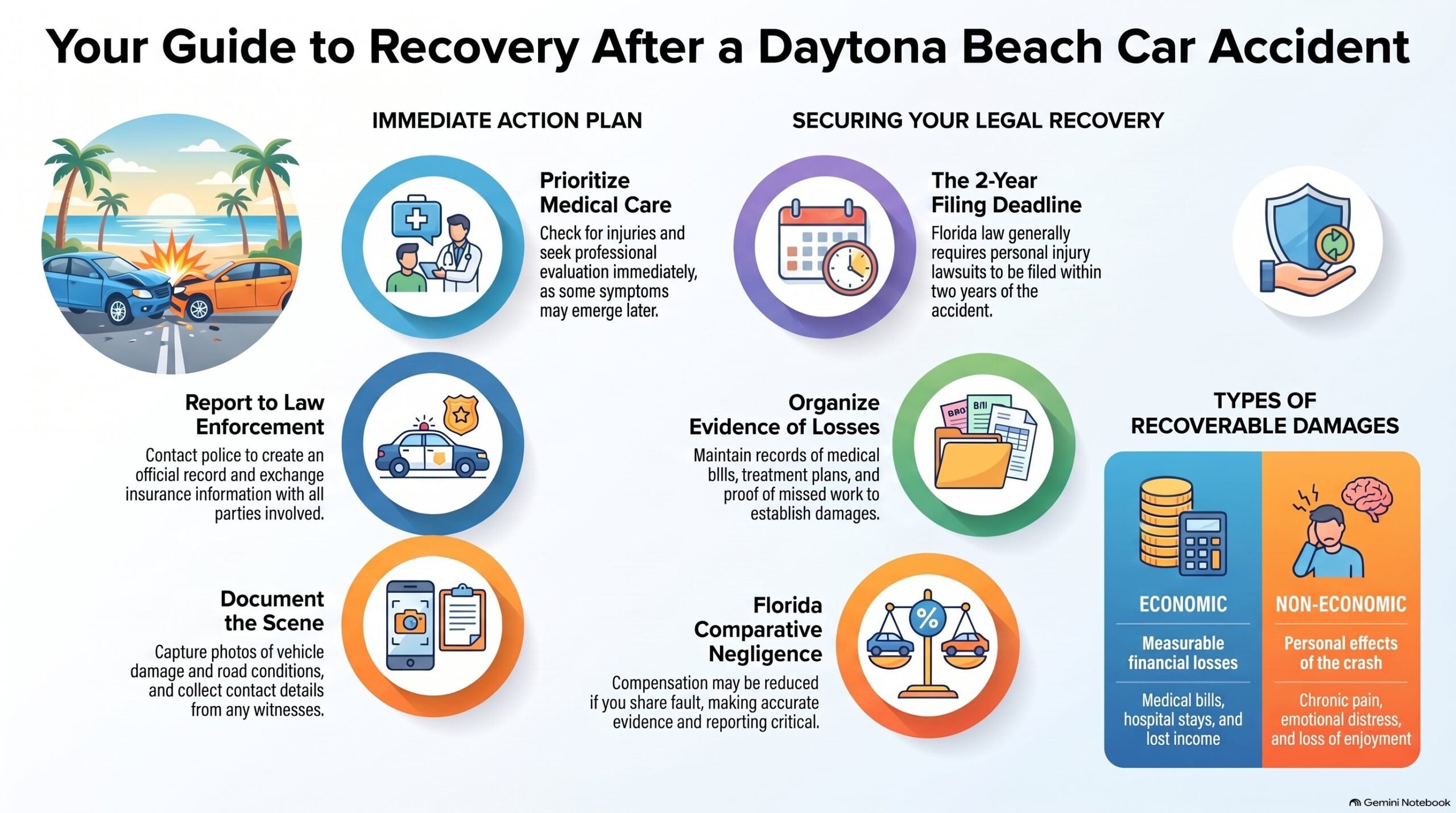
After a car accident in Daytona Beach, those involved should first check for injuries and request emergency medical assistance as needed. They should report the crash to law enforcement and provide accurate information about what occurred. When it is safe, documenting the scene with photographs and witness details can help preserve important evidence.
Check for Injuries
Anyone involved in a Daytona Beach car accident should check for injuries before evaluating vehicle damage or discussing fault. If it is safe to approach, a person should look for visible wounds and ask occupants whether they are hurt. Check breathing and responsiveness, but avoid moving anyone who may have a head, neck, or back injury unless immediate danger requires it. A calm voice and clear instructions can help injured people remain still while assistance is arranged. Seek medical help promptly for serious symptoms, loss of consciousness, difficulty breathing, heavy bleeding, or suspected fractures. Even injuries that seem minor may require professional evaluation because some symptoms emerge later. If an occupant is unresponsive or in immediate danger, emergency services should be contacted, and bystanders should follow the dispatcher’s directions while protecting everyone from further harm.
Report the Accident
When a car accident in Daytona Beach causes injury, the crash should be reported promptly to law enforcement. A police response creates an official record and allows officers to assess immediate safety concerns. If anyone needs urgent medical care, emergency services should be requested without delay. Drivers should cooperate with responding officers and provide accurate, factual information about what occurred, without guessing or assigning blame.
Those involved should exchange information, including names, contact details, driver’s license numbers, vehicle registration, and insurance information. If a driver cannot communicate safely or leaves before officers arrive, the other party should notify the authorities and provide any available details. A report number and instructions for obtaining the report may be requested from the responding agency. Prompt reporting supports accountability, helps protect injured people, and gives insurers and other responsible parties a reliable starting point for reviewing the collision.
Document the Scene
Photographs can preserve details of a Daytona Beach crash that may change or disappear once vehicles are moved and debris is cleared. If it is safe, an injured person or witness can document the positions of vehicles, damage, skid marks, traffic signals, road signs, and visible injuries. Images should include both wide views of the scene and close details, without delaying medical care or increasing danger. Safe positioning is critical; anyone taking photographs should stay clear of moving traffic and follow directions from emergency personnel. Weather awareness also matters, since rain, glare, or poor visibility can affect road conditions and image quality. Witness names and contact details, along with the time and location, can help preserve useful context. Original files should be kept unchanged and shared only with appropriate representatives, including investigators or legal counsel.
Critical Evidence in a Daytona Beach Car Accident Injury Case
A Daytona Beach car accident injury claim may depend on evidence that documents how the crash occurred and the resulting harm.
Essential records and accounts can include:
- Police crash reports
- Medical treatment records
- Witness statements
- Photos and video
Together, these materials can help establish liability and support an assessment of damages.
Police Crash Reports
How can an injured person establish what happened after a Daytona Beach car accident? A police crash report can provide an important starting point. It may identify the drivers and witnesses, document the location and time, describe vehicle damage, and summarize statements or observations made at the scene. These details can help clarify how the collision unfolded and support a careful review of potential responsibility.
The report is not necessarily a complete or final account. Officers may not witness the crash, and errors or missing information can affect how the record is understood. A timely Report request can help an injured person obtain the document and assess its contents. If factual inaccuracies appear, record corrections may be requested through the appropriate agency. Preserving the report and related scene evidence can assist those evaluating the claim and seeking a fair resolution.
Medical Treatment Records
When an accident causes injury, medical treatment records can help establish the nature and extent of the harm. These documents may include emergency department notes, diagnostic imaging, prescriptions, therapy records, and follow-up evaluations. Collectively, they can show when symptoms began, what care was provided, and how the injury affected daily activities. Consistent treatment documentation may also help connect an injury to the collision and clarify the need for continued care.
Accurate record retention is important because missing dates or incomplete files can complicate an injury claim. Patients may request copies from each treating facility and keep bills, discharge instructions, and referral documents. Provider coordination can help ensure that relevant records are collected from multiple professionals and that treatment histories are consistent. Careful organization supports a clear review of the evidence while allowing providers to focus on appropriate patient care.
Witness Statements
Witness statements can provide an independent account of how a Daytona Beach collision occurred and what happened immediately afterward. A person who saw the crash may describe vehicle movements, traffic conditions, and actions taken by those involved. These details can help clarify disputed facts and support a fair assessment of an injury claim.
Witness credibility depends on factors such as the person’s opportunity to observe, consistency, and possible relationship to the parties. Investigators may record contact information and ask witnesses to describe events in their own words. Prompt statement preservation can reduce the risk of memories fading or being influenced by later discussions. Notes should identify when and where the account was given and who recorded it. Careful handling of witness accounts helps preserve reliable evidence and supports an accurate review of responsibility and resulting harm.
Photos and Video
Photographs and video can preserve details of a Daytona Beach crash that may change or disappear before investigators review the scene. Images of vehicle damage, road conditions, traffic signals, skid marks, and visible injuries can help explain how the collision occurred and document its immediate effects. Clear, dated photographs taken from several angles may also support a consistent account of the event.
Dashcam Footage can show vehicle movements and roadway conditions in the moments before impact. Surveillance Videos from nearby businesses, homes, or traffic systems may capture additional perspectives, but recordings can be overwritten or deleted. Prompt requests can help preserve relevant footage before it is lost. Witnesses and injured people should avoid entering unsafe areas to collect evidence. A lawyer can help identify useful recordings, obtain them lawfully, and organize visual evidence for insurers or a court.
Long-Term Effects of Daytona Beach Car Accident Injuries
Car accident injuries may have effects that persist long after initial treatment, including chronic pain and lasting mobility limitations. Some individuals also experience emotional or cognitive changes that affect daily activities and relationships. The nature and duration of these effects vary according to the injuries and the recovery process.
Chronic Pain
Although some injuries improve with treatment, a Daytona Beach car accident can leave a person with chronic pain that persists for months or longer. Ongoing discomfort may follow damage to muscles, nerves, joints, or other tissues, and its effects can extend beyond the original injury. Pain may disrupt sleep, concentration, and daily routines, placing added strain on family relationships and work responsibilities. Identifying Pain flare triggers, such as prolonged activity, stress, or cold weather, can help a person and care providers recognize patterns and plan appropriate responses. Effective chronic pain management may involve coordinated medical care, prescribed therapies, and regular reassessment as symptoms change. Accurate records of pain levels, treatment, and related expenses can also help document the injury’s continuing impact. A supportive approach respects each person’s needs and recovery pace.
Lasting Mobility Limitations
Persistent pain can accompany lasting mobility limitations after a Daytona Beach car accident, but restricted movement may also result from injuries to bones, joints, nerves, or the spinal cord. These conditions can affect walking, balance, strength, or the ability to perform routine tasks. Some people require ongoing physical therapy, mobility aids, or adaptive equipment to maintain independence and participate in daily activities. Home modifications, such as ramps, widened doorways, and accessible bathrooms, may also be necessary. Accessible transportation can help injured individuals reach medical appointments, work, and community services when driving or entering standard vehicles is difficult. The extent of these needs depends on the injury and recovery. Medical assessments and rehabilitation plans can document functional limits and identify practical support, helping individuals and caregivers plan for long-term safety and access.
Emotional And Cognitive Effects
After a Daytona Beach car accident, emotional and cognitive effects may persist even after physical injuries begin to recover. Some injured people experience anxiety, depression, sleep disruption, or post-traumatic stress, particularly when reminders of the collision trigger distress. These symptoms can interfere with work, relationships, and daily responsibilities, making consistent support important.
Cognitive changes may include reduced concentration, slowed information processing, and memory difficulties. Such problems can affect decision-making and the ability to manage routine tasks. Their causes may include a head injury, pain, medication, or emotional strain, so professional assessment can help identify appropriate care. Family members, employers, and caregivers can support recovery by recognizing changes and encouraging treatment without judgment. Medical records and evaluations may also document how these lasting effects influence a person’s functioning and future needs.
Proving Liability in Daytona Beach Car Accident Injury Cases
Proving liability in a Daytona Beach car accident injury case requires evidence that another party acted negligently and that this conduct caused the injuries. Establishing fault may involve examining driver behavior, vehicle condition, road features, and the sequence of events leading up to the impact. Relevant records can include police reports, photographs, traffic camera footage, witness statements, and medical documentation. These materials help clarify how the collision occurred and connect specific actions to the harm suffered.
In complicated cases, Accident reconstruction experts may analyze vehicle damage, skid marks, and other physical evidence to assess speed, movement, and points of impact. Investigators may also consider whether roadway design, poor maintenance, or inadequate signage contributed to the crash. Liability can extend beyond the driver when evidence supports responsibility on the part of another party, such as a vehicle owner or a public entity. Careful preservation of evidence and objective analysis can help injured people pursue accountability and protect their ability to seek appropriate compensation under applicable law.
Dealing With Insurance Companies After a Daytona Beach Car Accident Injury
When an injured person files a claim after a Daytona Beach car accident, insurance companies may investigate the collision, assess damages, and negotiate a settlement. Their representatives may request statements, medical records, photographs, and other information to evaluate the reported injuries and losses. Clear, accurate communication can help prevent misunderstandings, but an injured person need not speculate about facts or provide unconfirmed details.
Recorded Calls may be used to document conversations, so the claimant should listen carefully to each question and keep responses factual. If a request is unclear or concerns sensitive medical history, the person may seek guidance before responding. Settlement offers should be reviewed in light of current treatment, anticipated care, lost income, and other documented effects of the crash.
Claim Releases require particular attention because signing one may end the right to pursue further compensation for covered injuries. A careful review can help make certain the terms are understood before acceptance, supporting informed decisions and fair treatment.
What to Expect During a Daytona Beach Car Accident Injury Claim Process
A Daytona Beach car accident injury claim typically begins with a review of the collision, available evidence, and potential insurance coverage. Medical care and records help document the injuries and their effects, while insurers assess the claim during negotiations. The process may conclude with a settlement or proceed to a lawsuit if the parties cannot reach an agreement.
Initial Claim Review
After a Daytona Beach car accident, the initial claim review helps determine how the injury claim will proceed. During this stage, the insurer or legal representative gathers basic facts about the collision, including when and where it occurred, who was involved, and which parties may bear responsibility. Claim eligibility depends on applicable deadlines, the circumstances of the crash, and the available evidence. Coverage verification identifies relevant insurance policies, limits, exclusions, and potential sources of compensation. The injured person may be asked to provide a statement or documents supporting the reported events. Careful review helps prevent misunderstandings and ensures the claim is directed appropriately. A lawyer can explain the process, clarify requests, and protect the claimant’s interests while communicating with insurers. This early assessment establishes a foundation for informed decisions and orderly claim handling.
Medical Care And Records
Prompt medical care can support recovery and create a clear record of injuries related to a Daytona Beach car accident. An injured person should seek an appropriate evaluation promptly, even when symptoms initially seem mild. Medical professionals can identify conditions that may worsen over time and recommend suitable care. Provider credentials matter when selecting clinicians, particularly when expert assessment or rehabilitation is needed. Consistent appointments and adherence to medical instructions can support continuity of care and help document how injuries affect daily activities. Patients should describe symptoms accurately, report changes, and keep copies of visit summaries, test results, prescriptions, and bills. Organized records can help explain the connection between the collision, diagnosed injuries, and care received. When several providers are involved, maintaining a timeline of appointments and recommendations can make the medical history easier to understand.
Insurance Negotiations
Once medical care and injury records are organized, the claim may move into negotiations with the involved insurance companies. An adjuster typically reviews the available evidence, including treatment records, crash reports, wage information, and statements about how the collision occurred. The insurer may request additional documentation or question whether particular losses resulted from the accident. Clear, consistent records can help address these issues and support an informed evaluation.
Negotiations may involve discussions about medical expenses, lost income, future care needs, and other documented effects of the injury. The adjuster’s Settlement Authority determines the amount that the adjuster may approve without further company review. Policy Limits also matter because they define the maximum coverage available under the applicable policy. A careful review of these factors helps injured people understand how insurers assess claims and what information may influence their evaluation.
Settlement Or Lawsuit
When negotiations do not resolve a Daytona Beach car accident claim, the injured person may need to decide whether to accept a settlement or pursue a lawsuit. A settlement can provide compensation without a trial, but its terms should be reviewed carefully. The injured person generally waives the right to seek additional damages for the same injuries upon signing a release. Settlement timelines vary according to medical treatment, evidence gathering, and insurer responses. If the parties remain apart, filing a lawsuit may allow formal discovery and a court decision, though the process can take longer and involve added costs. Mediation preparation can help both sides assess evidence, damages, and possible outcomes before trial. Legal guidance can clarify available options and support an informed decision that protects the injured person’s interests and recovery.
Compensation for Daytona Beach Car Accident Injury Damages
The compensation available after a Daytona Beach car accident depends on the injuries, financial losses, and evidence establishing fault. A claim may cover medical care, rehabilitation, prescription costs, and other expenses related to the collision. Records from healthcare providers and proof of payment can help establish the extent and duration of treatment.
When injuries affect employment, compensation may reflect missed work and reduced future income. Lost earning capacity may be relevant when lasting limitations prevent a person from returning to prior duties or earning at the same level. Employment records, wage history, and professional assessments can help document these effects.
A claim may also address the injury’s impact on daily activities, independence, and relationships. A diminished quality-of-life valuation considers how ongoing pain or physical restrictions alter a person’s ordinary routines. Careful documentation can help present these changes accurately. Each case requires an individual assessment of liability, medical evidence, and the long-term consequences of the accident. 148 words
Economic vs Non-Economic Damages in Daytona Beach Car Accident Cases
In Daytona Beach car accident cases, damages generally include economic losses, such as medical expenses and lost income, and non-economic harm, such as pain and reduced quality of life. Each category reflects a different effect of the collision and may require distinct evidence. Proving losses with records, expert assessments, and other supporting documentation can help establish the compensation sought.
Economic Damages
Economic damages compensate Daytona Beach car accident victims for measurable financial losses caused by their injuries. These losses may include emergency care, hospital stays, medication, rehabilitation, and future treatment supported by medical evidence. Keeping bills, receipts, and records helps document expenses and clarify the financial impact of an injury.
Lost income may be recoverable when injuries prevent a person from working during recovery. If those injuries limit future employment or reduce the ability to earn at the previous level, diminished earning capacity may also be considered. Pay records, employer statements, and professional assessments can help establish these losses.
A careful accounting can include reasonable transportation costs for medical appointments and necessary out-of-pocket expenses. A lawyer may review documentation, consult relevant professionals, and present a supported calculation. Accurate records can help guarantee that a claim reflects the financial burdens an injured person faces.
Non-Economic Damages
Although medical bills and lost income can be calculated from records, non-economic damages address the personal effects of a Daytona Beach car accident. These damages recognize harm that does not have a direct price, including physical discomfort, emotional distress, and changes to daily life. Pain and Suffering may reflect ongoing pain, anxiety, or limitations caused by an injury. Loss of Enjoyment can apply when a person can no longer participate in activities, relationships, or routines that previously brought meaning and satisfaction. Unlike economic damages, these losses are not measured by receipts or wage statements. Their purpose is to acknowledge the broader impact of an accident on an injured person’s well-being and independence. In evaluating a claim, the distinction helps explain why compensation may address both financial costs and significant personal consequences.
Proving Your Losses
How can an injured person establish the full extent of losses after a Daytona Beach car accident? A clear claim separates economic damages from non-economic harm and supports each with reliable evidence. Economic losses may include medical bills, rehabilitation costs, lost wages, and reduced future earning capacity. Loss documentation can include invoices, pay records, tax returns, treatment notes, and written assessments from qualified professionals. Consistent records help show how the collision affected the person’s finances and daily responsibilities.
Non-economic damages address pain, emotional distress, and loss of enjoyment of life. These effects may be supported by treatment records, personal accounts, and observations from people familiar with the injured person’s circumstances. Damages valuation considers the evidence, the duration and severity of harm, and applicable legal standards. Careful preparation enables a fair assessment while helping injured people pursue accountability.
Don’t Wait. Call Our Florida Personal Injury Lawyers Now!
When a Daytona Beach Car Accident Injury Case Goes to Trial vs. Settlement
In Daytona Beach, a car accident injury case may resolve through settlement or proceed to trial, depending on the evidence, the parties’ positions, and whether an agreement can be reached. Settlement allows the parties to resolve the claim without a courtroom decision. Negotiations may address the injured person’s documented losses, the strength of available evidence, and the uncertainty of continued litigation. Any proposed agreement should be reviewed carefully so its terms and consequences are understood before acceptance.
If the parties cannot agree, a trial gives each side an opportunity to present evidence and question witnesses. Courtroom testimony may include accounts from the injured person, witnesses, and qualified professionals. After considering the evidence and arguments, jurors may engage in Jury deliberation and reach a verdict. A trial can require more time and preparation, and its outcome is not guaranteed. The choice between settlement and trial depends on the case’s circumstances and the parties’ informed assessment of risks, needs, and objectives.
Florida Laws That May Affect Your Daytona Beach Car Accident Case
Florida law can shape how a Daytona Beach car accident claim is evaluated, including which insurance benefits may apply, how fault is assigned, and how long an injured person has to file a claim.
These rules help establish a consistent process while protecting the rights of everyone involved.
- No-fault coverage: Florida drivers generally turn first to personal injury protection insurance for covered medical expenses and lost income, regardless of who caused the collision. Eligibility and policy limits affect available benefits.
- Comparative negligence: Fault may be divided among parties. An injured person’s compensation can be reduced by their share of responsibility, so evidence about each person’s conduct matters.
- Required insurance: Drivers must carry the specified coverage, but minimum limits may not adequately cover serious injuries. Additional policies may provide another source of recovery.
- Evidence and reporting: Medical records, crash reports, photographs, and witness accounts can help clarify how the collision occurred and support fair consideration of a claim.
Understanding these rules can help injured people make informed decisions and pursue accountability responsibly.
The Statute of Limitations for Daytona Beach Car Accident Injury Cases
Time limits can determine whether an injured person may pursue compensation after a Daytona Beach car accident. Florida generally requires a personal injury lawsuit to be filed within two years of the crash. Missing this period can result in the loss of the right to seek damages in court, regardless of the seriousness of the injuries or the strength of the evidence.
Filing deadlines may differ when a claim involves a government entity, a wrongful death, or another legally distinct circumstance. Such cases can carry additional notice requirements or separate time limits. The date an injury is discovered may also matter in limited situations, although ordinary crash claims typically use the accident date.
Deadline exceptions are narrow and depend on specific facts, such as a claimant’s age or legal incapacity. They should not be assumed to extend the time available. Promptly preserving records and identifying the applicable deadline can help injured people protect their rights while directing attention toward recovery and family responsibilities.
How a Daytona Beach Car Accident Lawyer Can Help You
After identifying the filing deadline, an injured person may need to address insurance claims, preserve evidence, and evaluate the full extent of the losses. A Daytona Beach car accident lawyer can organize these tasks while protecting the claimant’s interests. Through Local Case Assessment, counsel can review crash reports, available witness accounts, medical records, and relevant Florida law to identify issues affecting responsibility and potential recovery.
A lawyer may also coordinate with insurers and help make sure that communications remain accurate and supported by documentation. Attorney Communication can clarify the process, explain options, and help the injured person make informed decisions without losing sight of family, work, or community responsibilities.
Counsel may assist by:
- Gathering and preserving photographs, reports, and other evidence.
- Reviewing medical expenses, lost income, and anticipated care needs.
- Preparing claim materials and responding to insurer requests.
- Evaluating settlement proposals against documented losses.
This support can provide structure during a difficult period and help the claimant pursue fair treatment while focusing on recovery and obligations to others.
When to Contact a Daytona Beach Car Accident Lawyer
Prompt legal guidance can be important when an accident causes injuries, fault is disputed, or an insurer requests a recorded statement or broad medical authorization. A person may also benefit from speaking with counsel when medical treatment is ongoing, missed work creates financial strain, or the available evidence is incomplete. Early consultation can help preserve records, identify deadlines, and clarify which steps may protect a claim while the injured person focuses on recovery and family responsibilities.
Legal advice may be especially useful before signing a release, accepting a settlement, or responding to questions about the crash. These decisions can affect future options, particularly when the full extent of an injury is not yet known. A prospective client can ask about attorney qualifications, experience handling similar Florida claims, communication practices, and fee arrangements. Promptly seeking an informed assessment does not require immediate commitment. It gives the person a clearer understanding of the available choices and helps ensure that decisions are made with relevant information rather than under pressure.
Why You Need an Experienced Daytona Beach Car Accident Lawyer
Because Florida car accident claims can involve disputed fault, complicated insurance rules, and evidence that may become harder to obtain, an experienced Daytona Beach car accident lawyer can help protect an injured person’s interests. Counsel can investigate the collision, preserve records, identify witnesses, and organize medical and financial documentation. These steps may help clarify how the crash occurred and how injuries affect a person’s ability to work, care for family, and contribute to the community.
An attorney can also handle communications with insurers and assess settlement offers against documented losses. Florida’s comparative fault rules and insurance requirements can affect the value and handling of a claim, so careful legal analysis matters. Trial experience may strengthen preparation for negotiations and provide a path forward if a fair resolution is not reached. Local knowledge can help counsel understand area roads, courts, and practical issues that may arise in Daytona Beach cases. By managing legal demands, counsel can help injured people focus on recovery and their responsibilities to others.
How to Choose the Right Daytona Beach Car Accident Lawyer for Your Case
Choosing the right Daytona Beach car accident lawyer requires more than comparing advertisements or selecting the first available firm. A careful review can help an injured person find counsel whose approach fits the needs of the case and supports a fair recovery.
Choosing a Daytona Beach car accident lawyer calls for careful research and a thoughtful review of your case’s needs.
Attorney experience is an important consideration. Prospective clients can ask whether a lawyer regularly handles car accident claims, understands Florida’s insurance rules, and has managed cases involving similar injuries or disputed fault. They should also clarify who will handle daily case work and how legal fees are structured.
Communication style matters throughout a claim. A lawyer should explain available options in clear terms, respond to questions within a reasonable time, and provide updates as the case develops. During an initial consultation, the client can assess whether the lawyer listens carefully and treats concerns with respect.
Comparing several qualified lawyers may reveal differences in preparation, accessibility, and case strategy. The choice should rest on informed judgment, realistic expectations, and confidence in the lawyer’s ability to advocate responsibly.
About The Law Offices of Anidjar & Levine
The Law Offices of Anidjar & Levine represents people injured in car accidents, including those in Daytona Beach.
The firm assists clients seeking compensation after collisions and provides guidance throughout the claims process.
Its attorneys evaluate the circumstances of accidents, explain available legal options, and communicate with insurers on clients’ behalf.
This support can help injured people focus on medical care and practical recovery needs while their claim is addressed.
Firm history reflects the practice’s work representing individuals and families in personal injury matters across Florida.
The firm handles cases involving serious injuries and reviews each matter according to its specific facts, losses, and legal issues.
Clients can discuss questions with the legal team and receive information about the steps involved in pursuing a claim.
Community involvement is another part of the firm’s public presence.
Its service-oriented approach recognizes that accident injuries affect not only individuals but also households and communities.
By helping clients understand their rights and pursue appropriate remedies, the firm seeks to provide useful support after disruptive events.
Frequently Asked Questions
Can I Recover Compensation if I Was a Passenger in a Daytona Beach Car Accident?
A passenger injured in a Daytona Beach car accident may recover compensation from an at-fault driver, including the driver of the vehicle carrying the passenger. Passenger Injury Claims may cover medical expenses, lost income, and other legally recognized losses. Florida’s Shared Fault Rules can affect recovery if the passenger contributed to the accident, though passengers are not automatically barred from compensation. Liability, insurance coverage, and deadlines depend on the facts and applicable law. A prompt legal review can clarify available options.
What Happens if an Uninsured Driver Caused My Daytona Beach Car Accident?
If an uninsured driver causes a Daytona Beach crash, injured people may seek compensation through their own Florida uninsured motorist coverage, if they purchased it. This coverage may pay for eligible bodily injuries, subject to policy limits and terms. The at-fault driver may also face uninsured driver liability, but collecting damages can be difficult if that person lacks assets. Prompt medical care, careful recordkeeping, and timely legal guidance can help protect a claimant’s rights.
Can I File a Claim After a Hit-And-Run Accident in Daytona Beach?
Yes, an injured person may file a claim after a hit-and-run accident in Daytona Beach, including through applicable insurance coverage. Reporting the Accident promptly to law enforcement and the insurer helps preserve evidence and meet deadlines. Identifying the Driver can strengthen a claim, but the driver’s unknown status does not automatically prevent recovery. The injured person should document injuries, vehicle damage, witness details, and medical expenses, then review available coverage with qualified counsel.
Are Car Accident Settlements Taxable in Florida?
Car accident settlements in Florida are generally not taxable when they compensate for physical injuries or illness. Settlement Taxability depends on what each payment covers: amounts for lost wages, interest, or punitive damages may be taxable under federal law. The recipient should review the settlement agreement and consult a qualified tax professional to determine IRS Reporting obligations. Careful reporting helps preserve compliance while allowing recipients to focus on their recovery and responsibilities to others.
Can I Pursue a Claim if a Loved One Died in a Daytona Beach Car Accident?
A claim may be pursued after a loved one dies in a Daytona Beach car accident if the death resulted from another party’s negligence. Under Florida law, the personal representative generally files the wrongful death action on behalf of eligible surviving family members and the estate. Wrongful death eligibility depends on the survivor’s relationship to the deceased and applicable legal requirements. Estate representative duties include investigating the loss, identifying beneficiaries, and managing recoverable damages through the proper legal process.
—————————
A car accident can leave Daytona Beach victims facing medical expenses, lost income, and uncertainty about their legal options.
Prompt medical care and careful documentation can help protect both health and a potential injury claim.
An experienced attorney can assess the circumstances, explain applicable rights, and manage communications with insurers.
The Law Offices of Anidjar and Levine represent injured people pursuing compensation, including those seeking guidance from a Daytona Beach Personal Injury Lawyer.
Each case depends on its facts, so timely legal guidance can help victims make informed decisions.