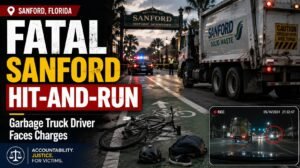
The Law Offices of Anidjar and Levine, a Daytona Beach truck accident law firm, investigates whether a wide-turn truck driver failed to signal, misjudged clearance, entered an unsafe lane, or overlooked nearby traffic.
A lawyer may preserve camera footage, electronic data, driver logs, maintenance records, photographs, and witness statements before evidence disappears.
Representation can also address trucking-company negligence, insurance communications, medical expenses, lost income, and long-term disability.
Florida comparative-negligence rules and filing deadlines may affect recovery.
For more information, visit our Daytona Beach Truck Accident Lawyer page, which explains liability, evidence, damages, and legal options.
Main Takeaways
- A Daytona Beach wide-turn truck accident lawyer investigates driver, trucking company, maintenance, and roadway factors that may have caused your injuries.
- Evidence may include traffic footage, truck-camera data, driver logs, police reports, photographs, vehicle damage, medical records, and witness statements.
- Liability can involve unsafe lane changes, inadequate signaling, blind-spot failures, improper training, fatigue, distracted driving, or negligent vehicle maintenance.
- An attorney can preserve time-sensitive evidence, identify responsible parties, communicate with insurers, and protect you from damaging statements.
- Potential compensation may include medical expenses, lost income, reduced earning capacity, property damage, pain, and future care needs.


How We Can Help With Your Daytona Beach Wide Turn Truck Accident Injury Claim
When a wide-turn truck collision causes injuries in Daytona Beach, an attorney can help establish liability, protect the injured person’s legal rights, and pursue appropriate compensation. The legal team can promptly preserve evidence, identify witnesses, review traffic footage, and examine vehicle maintenance and driver records. These steps help investigate fault liability while reducing the risk that important information will be lost or overlooked.
An attorney can communicate with insurers, handle claim-related correspondence, and guard against statements that could be used to minimize the injury claim. Medical records, employment information, property damage documentation, and professional evaluations may support an accurate assessment of losses. The legal team can calculate compensation damages involving treatment costs, lost income, reduced earning capacity, pain, and continuing care needs.
OUR CONSULTATIONSARE FREE
START YOUR FREE CASE REVIEW

Understanding Daytona Beach Wide Turn Truck Accident Injury Cases
Understanding a Daytona Beach wide-turn truck accident injury case requires examining how the truck’s size, turning path, and driver’s actions contributed to the collision. The evaluation typically includes police reports, traffic footage, vehicle damage, witness statements, and medical records. These materials may clarify whether the truck crossed lanes, struck a nearby vehicle, or created a hazard for pedestrians and cyclists.
Injury claims can involve fractures, spinal trauma, head injuries, or lasting emotional effects. A careful assessment also considers treatment costs, lost income, rehabilitation needs, and future limitations. Florida’s legal rules may affect fault allocation, deadlines, and available compensation. Implied Consent generally concerns a driver’s agreement to chemical testing under Florida law, and related test evidence may influence a broader case when impairment is alleged.
Auto Insurance coverage must be reviewed separately for the truck, its carrier, and other involved vehicles. A service-focused legal review helps preserve evidence, communicate with insurers, and pursue a fair resolution while respecting the injured person’s circumstances.
Common Causes of Daytona Beach Wide Turn Truck Accident
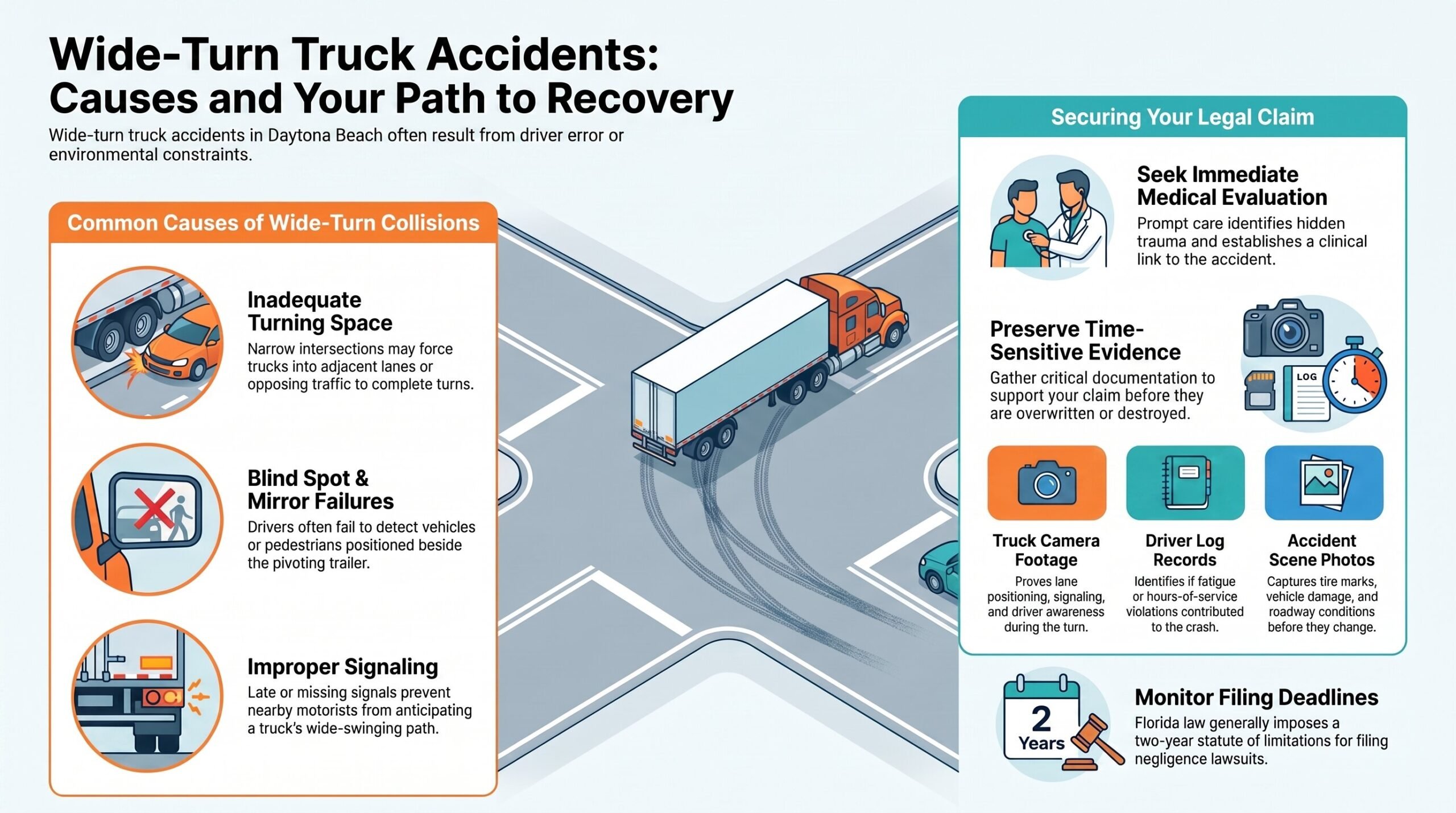
Wide-turn truck accidents in Daytona Beach may result from limited turning space, inadequate mirror checks, or improper turn signaling. Distracted truck drivers can further increase the risk by failing to monitor surrounding vehicles, pedestrians, and roadway conditions. These contributing factors are examined to clarify how preventable errors may lead to serious collisions.
Limited Turning Space
Limited turning space can make it difficult for a commercial truck driver to complete a turn without entering adjacent lanes, crossing into opposing traffic, or striking nearby vehicles and property. Narrow intersections, improperly designed corners, construction barriers, parked vehicles, and crowded commercial entrances may restrict the path required by a truck’s trailer. When available space is inadequate, a driver may need to swing widely or pause within an intersection, increasing risks for motorists, pedestrians, cyclists, and nearby businesses.
Road markings can clarify lane boundaries and turning paths, but faded or confusing markings may contribute to dangerous positioning. Signal visibility also matters because concealed or poorly placed traffic signals can prevent timely decisions. Municipal planning, roadway maintenance, and attentive driving each serve the public by reducing hazards associated with constrained turns and protecting all road users.
Inadequate Mirror Checks
Inadequate mirror checks can prevent a commercial truck driver from detecting vehicles, cyclists, pedestrians, or fixed objects positioned beside the cab or trailer during a turn. Before and during the turn, drivers must systematically inspect available mirrors and account for areas that remain difficult to observe. Distracted driving habits, including adjusting equipment or focusing on unrelated activity, can interrupt that process and increase the likelihood of a collision.
Effective blind spot awareness requires understanding how the trailer’s path changes as the tractor pivots, particularly near curbs, intersections, and adjacent travel lanes. These precautions also support lane change safety because consistent mirror use helps identify road users who may be hidden from direct view. When mirror checks are inadequate, vulnerable people may face preventable dangers, and affected parties may require legal guidance after a crash.
Improper Turn Signaling
Clear and timely turn signals are important when a commercial truck requires additional roadway space to complete a turn. When a driver signals too late, fails to signal, or activates the wrong indicator, nearby motorists may misinterpret the truck’s intended path. This confusion can become especially dangerous during a wide right turn, when the truck may initially move left before entering the turn. Proper signaling gives drivers, cyclists, and pedestrians more time to maintain a safe distance and avoid entering the truck’s turning area. Distracted driving can contribute to missed signaling duties or delayed responses, while poor hazard awareness may prevent a driver from recognizing how much advance warning is necessary. Consistent signaling, combined with careful observation, supports safer roadways and helps protect those traveling through Daytona Beach.
Distracted Truck Drivers
Truck drivers who divert their attention from traffic conditions may fail to recognize hazards while preparing for or completing a wide turn. Text messaging, route searches, adjusting dispatch applications, and other visual tasks can cause a driver to look away during crucial seconds. Even brief inattention may obscure a vehicle positioned beside the trailer, a pedestrian entering a crosswalk, or a signal changing before the turn begins.
Hands-free distractions, including phone conversations, voice commands, and in-cab communications, can also reduce concentration and delay a driver’s response. These distractions may contribute to improper lane positioning, failure to check mirrors, or inadequate clearance. When a wide-turn collision occurs, investigators may examine phone records, electronic logs, witness accounts, and camera footage to determine whether divided attention affected the driver’s decisions.
Don’t Wait. Call Our Daytona Beach Truck Accident Lawyers Now.


Legal Rights of Daytona Beach Wide Turn Truck Accident Injury Victims
When a wide-turn truck accident causes injury, victims in Daytona Beach may have the right to seek financial compensation from parties whose negligence contributed to the collision. Legal rights may include pursuing claims for medical expenses, lost income, rehabilitation, pain, and other documented losses.
A careful review can help preserve evidence and identify responsible parties.
- Victims may seek compensation through an insurance claim or civil lawsuit.
- They may request payment for current and future treatment, reduced earning capacity, and related household support.
- Comparative negligence defenses may reduce recovery if another party is alleged to share responsibility.
- Attorneys can evaluate available damages limits, liability coverage, filing deadlines, and settlement terms.
Injured individuals generally have the right to consult counsel before accepting an insurer’s offer or providing a recorded statement. Prompt guidance can support informed decisions, protect legal interests, and help families obtain resources needed for recovery. A qualified Daytona Beach truck accident attorney can explain procedures and advocate for fair treatment.
Why Do Daytona Beach Wide Turn Truck Accident Injuries Happen?
Understanding the causes of wide-turn truck injuries can help identify how a collision occurred and which parties may bear responsibility. Commercial trucks require substantial space to turn, and injuries often occur when drivers misjudge clearance, fail to signal, or swing across adjacent lanes without monitoring nearby traffic. Blind spots can conceal motorcycles, bicycles, and smaller vehicles, while excessive speed or distraction may reduce a driver’s ability to respond.
Improper training may leave a driver unfamiliar with turning techniques, roadway conditions, or federal safety requirements. Fatigue, impairment, and pressure to meet delivery schedules can further contribute to unsafe decisions. Mechanical problems, including defective brakes, steering components, or mirrors, may also increase collision risks.
In some cases, Negligent Hiring may be involved when an employer places an unqualified or improperly licensed driver behind the wheel. Employer Liability can arise when company policies, inadequate supervision, or maintenance failures contribute to the crash. Weather, construction, and limited visibility may compound these hazards.
Don’t Wait. Call Our Daytona Beach Truck Accident Lawyers Now.
What Should You Do After a Daytona Beach Wide Turn Truck Accident Injury?
After a Daytona Beach wide-turn truck accident injury, the injured person should seek immediate medical care, even if symptoms initially appear minor. The accident should be reported to law enforcement, and relevant details should be documented while evidence remains available. Medical records, photographs, witness information, and other documentation may help establish the nature and extent of the injuries.
Seek Immediate Medical Care
Seek immediate medical care following a wide-turn truck accident, even if the injuries initially appear minor. A medical evaluation can identify internal trauma, fractures, soft-tissue damage, or neurological problems that may not be immediately apparent. Prompt treatment also helps protect the injured person’s recovery and provides clinical records describing the accident-related condition.
Headaches, dizziness, confusion, nausea, weakness, and unusual fatigue may indicate a concussion or another brain injury. Concussion treatment options depend on symptom severity and can include rest, monitoring, restricted activities, follow-up examinations, and consultative care. Injured individuals should follow medical instructions and avoid returning to demanding tasks prematurely.
Documenting symptom timelines can help healthcare providers recognize changes and adjust treatment. Patients should record when symptoms began, their intensity, triggers, prescribed care, and any worsening signs, while seeking emergency assistance for severe or rapidly developing symptoms.
Report The Truck Accident
Promptly reporting the truck accident to local law enforcement creates an official record of the collision and allows officers to document vehicle positions, roadway conditions, witness information, and apparent violations. A driver or passenger should provide a clear, factual account without speculating about fault or minimizing symptoms. The incident number and responding agency should be retained for future communication with insurers, medical providers, or legal representatives.
If officers cannot respond, the injured person should ask about the appropriate method for filing a report under Florida procedures. Dashcam limitations may affect what authorities can determine, particularly when camera angles, obstructions, or recording gaps conceal the truck’s path. A timely report supports a fair comparative negligence assessment by preserving neutral observations and identifying each participant’s conduct. Witnesses should be encouraged to cooperate with investigators.
Document Injuries And Evidence
When a wide-turn truck accident causes injury, the injured person should document medical conditions and preserve available evidence as soon as circumstances permit. Medical evaluation should occur promptly, even when symptoms initially appear minor. Treatment records, prescriptions, diagnostic images, bills, work restrictions, and photographs of visible injuries can help establish the injury’s progression and financial impact. The injured person should also preserve clothing, vehicle damage, roadway photographs, witness contact information, surveillance leads, and communications with insurers.
A written account of pain, limitations, and missed responsibilities may provide useful contemporaneous evidence. Counsel can gather documentation, compare liability defenses, and evaluate how turning procedures, signals, visibility, and traffic conditions affect responsibility. Counsel may also determine insurance coverage, identify policy limits, and protect evidence before it is lost, altered, or destroyed.
Don’t Wait. Call Our Daytona Beach Truck Accident Lawyers Now.
Critical Evidence in a Daytona Beach Wide Turn Truck Accident Injury Case
Essential evidence may establish how the wide-turn collision occurred and who bears responsibility, including:
- Truck camera footage;2. Accident scene photos; 3. Driver log records; and 4. Witness statements.
A Daytona Beach truck accident lawyer can evaluate these materials to identify inconsistencies, document violations, and support the injured party’s claim.
Truck Camera Footage
Truck camera footage can provide objective evidence of how a commercial vehicle approached, entered, and completed a wide turn in Daytona Beach. Recordings may show lane positioning, signal use, speed, braking, mirror checks, and whether the driver crossed into an adjacent travel lane. This information can support driving behavior analysis and clarify disputed accounts of the collision. Footage from forward-facing, side-facing, or cab-mounted cameras may also reveal traffic conditions and the timing of a cyclist’s or motorist’s movements.
Investigators can preserve the original files, review timestamps, and compare the recording with driver statements and company policies. Because many systems overwrite data, prompt legal action may help secure relevant evidence. Properly authenticated footage can assist in evaluating commercial vehicle liability and presenting a clear, reliable account to those affected.
Accident Scene Photos
Accident scene photos can preserve important evidence in a Daytona Beach wide-turn truck accident injury case before vehicles, roadway conditions, and debris are moved or altered. Images should capture the truck’s position, tire marks, vehicle damage, lane markings, traffic signs, lighting, weather, and nearby obstacles from several angles. Photographs of turning clearance may help show whether the truck crossed into another lane or forced a smaller vehicle onto the shoulder.
Clear images of injuries and property damage can also support the claimed severity of harm. Prompt photo evidence preservation reduces the risk that important details will disappear before investigators arrive. Attorneys may use these images in a liability impact analysis, comparing physical evidence with witness accounts and other available records to clarify fault, support negotiations, and assist the injured person’s recovery.
Driver Log Records
Beyond photographs and other physical evidence, driver log records may provide a detailed account of a commercial truck operator’s hours, rest periods, and driving activity before a wide-turn collision. These records can help establish whether fatigue, excessive driving, or scheduling pressure affected the operator’s ability to navigate safely. Electronic logging devices may preserve timestamps, duty-status changes, vehicle movement, and potential violations of federal hours-of-service requirements.
Investigators may also compare log entries with dispatch records, fuel transactions, inspection reports, and delivery schedules to identify inconsistencies. The records can reveal whether the motor carrier followed Driver training standards and company safety policies concerning rest, route planning, and wide-turn procedures. Preserving this information promptly is important because electronic data may be overwritten or altered under ordinary business practices.
Witness Statements
When available, witness statements can provide an independent account of how a commercial truck approached, initiated, and completed a wide turn. Observers may describe the truck’s speed, signaling, lane position, clearance, and whether the driver appeared to check surrounding traffic. Promptly recorded statements can preserve details that may fade or change as time passes. Investigators may compare these accounts with vehicle positions, traffic-camera footage, and physical evidence during Scene reconstruction.
Witness observations can also clarify whether a passenger vehicle was visible, stopped appropriately, or forced into another lane. Consistent testimony may support damage assessments and help identify disputed points in insurance documentation. Legal representatives may evaluate witness credibility, perspective, and potential bias alongside medical records and other case materials. This careful review assists injured individuals and their families in pursuing accountability.
Long-Term Effects of Daytona Beach Wide Turn Truck Accident Injuries
Long-term injuries from a Daytona Beach wide-turn truck accident may result in chronic pain, reduced mobility, or permanent disability that affects daily activities and employment. Emotional and mental health effects, including anxiety, depression, and trauma-related symptoms, may also result in after physical recovery. Ongoing medical expenses can include treatment, rehabilitation, medication, assistive equipment, and future care needs.
Chronic Pain and Disability
A wide-turn truck accident can cause injuries that develop into chronic pain, reduced mobility, and permanent disability. Victims may require continuing medical care, physical therapy, assistive devices, or surgery as symptoms persist. These limitations can interfere with standing, lifting, driving, and other daily activities, while preventing a return to the same occupation. Physicians may recommend Medication management to control pain safely and preserve function, although treatment plans often require monitoring and adjustment.
When previous duties are no longer practical, job retraining may help an injured person pursue suitable employment within documented physical restrictions. Long-term damages can include medical expenses, lost earning capacity, home modifications, and assistance with personal care. Thorough records of diagnoses, treatment, functional limitations, and future care needs can help establish the full extent of disability and support informed legal guidance.
Emotional and Mental Health
Following a wide-turn truck accident, emotional and mental health effects may persist even after visible injuries begin to recover. Survivors may experience anxiety, depression, irritability, sleep disruption, or heightened alertness around large vehicles and intersections. Some may avoid driving, traveling, or routine activities, limiting employment, family involvement, and community service. These reactions can affect concentration and relationships, even when others cannot see the underlying distress.
Supportive family members, trusted friends, and patient caregivers can help by listening without judgment and encouraging consistent routines. Professional trauma counseling may assist survivors in processing frightening memories and developing coping strategies suited to their circumstances. Prompt attention to emotional changes can promote stability and reduce isolation. A mental health professional can also identify symptoms requiring additional support and coordinate appropriate care while respecting each survivor’s privacy, dignity, and autonomy.
Ongoing Medical Expenses
Although initial treatment may address the most immediate injuries, wide-turn truck accident survivors can face ongoing medical expenses for months or years. Continuing costs may include expert visits, physical therapy, prescription medications, diagnostic testing, medical equipment, home assistance, and future surgeries. Some injuries also reduce mobility or earning capacity, creating additional financial pressure while treatment continues. Accurate documentation of bills, treatment recommendations, and projected needs can help establish the full scope of damages.
Proving fault standards may require evidence showing that the truck driver or company breached a duty and caused the collision. Establishing negligence elements can support recovery for both past and reasonably anticipated medical expenses. A Daytona Beach attorney may consult physicians, life-care planners, and economists to present reliable projections and pursue compensation that supports long-term recovery and responsible care.
Proving Liability in Daytona Beach Wide Turn Truck Accident Injury Cases
When a wide-turn truck collision occurs in Daytona Beach, proving liability requires establishing how the driver, trucking company, or another responsible party failed to exercise reasonable care. Evidence may include traffic-camera footage, vehicle damage patterns, witness statements, police reports, and the truck’s electronic data. These materials can show whether the driver failed to signal, misjudged clearance, entered an unsafe lane, or violated traffic regulations.
A trucking company may share responsibility if it encouraged unsafe schedules, neglected maintenance, hired an unqualified driver, or failed to provide proper training. Investigators may also examine inspection records, dispatch communications, and applicable safety requirements. Medical evidence documentation connects the crash to diagnosed injuries, treatment, limitations, and anticipated care, helping establish the harm caused by the conduct.
Although an insurance negotiations strategy is addressed separately, accurate liability evidence provides the factual foundation for evaluating a claim. Preserving records promptly and consulting qualified professionals can help protect injured individuals and support a fair, accountable resolution.
Dealing With Insurance Companies After a Daytona Beach Wide Turn Truck Accident Injury
Insurance companies may contact an injured person soon after a Daytona Beach wide-turn truck accident to obtain statements, discuss medical treatment, or propose an early settlement. An injured person should respond cautiously, because seemingly routine comments may be interpreted as admissions or used to minimize the claim. Written communications, recorded interviews, and medical authorizations should be reviewed before signing or providing them.
An insurer’s initial offer may not reflect the full extent of medical expenses, lost income, rehabilitation needs, or continuing impairment. Appropriate Negotiation tactics include documenting damages, preserving accident-related records, communicating through designated representatives, and evaluating whether the proposed amount reasonably addresses documented losses.
Settlement timelines can vary according to treatment progress, evidence availability, liability disputes, and insurer responsiveness. A careful approach allows the injured individual to protect personal interests while maintaining respectful, professional communication. Legal guidance may help identify unreasonable requests, assess proposed terms, and support an informed decision that serves the person’s long-term recovery.
What to Expect During a Daytona Beach Wide Turn Truck Accident Injury Claim Process
A Daytona Beach wide-turn truck accident injury claim typically begins with an initial case evaluation to assess liability, injuries, and potential damages. The process may then involve collecting evidence, communicating with insurers, and negotiating a settlement based on the documented losses. If negotiations fail to produce a fair resolution, the matter may proceed to trial.
Initial Case Evaluation
During an initial case evaluation, a Daytona Beach wide turn truck accident attorney reviews the collision circumstances, available evidence, medical records, and potential sources of liability to determine whether a viable injury claim exists. The discussion typically addresses how the turn occurred, reported injuries, treatment status, insurance communications, and the client’s immediate concerns. Legal consultations may clarify applicable deadlines, responsible parties, and realistic options without promising a particular result.
The attorney may also explain evidence preservation, including the importance of retaining relevant documents and avoiding statements that could affect the claim. A preliminary evaluation helps identify significant legal and factual issues, assess whether representation is appropriate, and establish practical next steps. Clients generally receive guidance on medical follow-up, communications, and protecting their interests while the matter proceeds.
Evidence Collection Process
In a Daytona Beach wide turn truck accident injury claim, the evidence collection process establishes how the collision occurred, who may be responsible, and how the injuries affected the claimant. Counsel may obtain photographs, traffic-camera recordings, witness statements, police reports, vehicle data, and trucking-company records. Documents concerning driver training, route instructions, inspection history, maintenance, and hours of service can clarify whether operational failures contributed to the crash.
Medical records, diagnostic results, treatment notes, and employment documentation help demonstrate the claimant’s physical limitations and financial losses. This information supports a careful Negligence analysis and damages calculation. It may also anticipate liability defenses, including comparative fault or sudden-emergency arguments. Preserving electronic evidence promptly is important because some recordings and device data may be overwritten or lost. Witness cooperation can further strengthen an accurate reconstruction.
Insurance Negotiations
Once the evidence has been assembled, insurance negotiations address how the claim may be valued and resolved. The injured party’s representative typically presents medical records, wage documentation, property damage reports, and other materials supporting liability and losses. Evidence preservation remains important because insurers may question whether records, vehicle conditions, or electronic data accurately reflect the collision.
Adjusters review the circumstances, including the truck’s turning path, driver conduct, company policies, and possible Faulty truck equipment. They may request statements, authorizations, or additional documentation before evaluating responsibility. A careful response protects the claimant from inconsistent descriptions and prevents relevant information from being overlooked. Communications should remain factual, organized, and supported by available proof. Professional negotiation focuses on documented injuries, necessary care, financial effects, and applicable insurance coverage while safeguarding the claimant’s interests throughout the claim process.
Settlement Or Trial
When insurance negotiations do not resolve a Daytona Beach wide-turn truck accident claim, the injured party may consider whether continued settlement discussions or litigation is more appropriate. A settlement can provide predictable compensation, reduce delays, and avoid the uncertainty of presenting evidence before a jury. However, the amount offered should be evaluated against medical expenses, lost income, future care, and other documented damages. Insurance negotiation tactics may include disputing liability, minimizing injuries, or emphasizing alleged comparative fault.
Trial may be necessary when an insurer refuses to make a fair offer. Litigation allows formal discovery, testimony from witnesses and medical professionals, and judicial resolution. Nevertheless, jury verdict risks include an unfavorable decision, prolonged proceedings, and additional litigation expenses. A careful assessment of evidence, applicable deadlines, and the injured person’s practical needs can help determine which course better supports recovery and accountability.
Compensation for Daytona Beach Wide Turn Truck Accident Injury Damages
Victims of wide-turn truck accidents in Daytona Beach may pursue compensation for the financial and personal losses caused by their injuries. Recoverable damages may include medical treatment, rehabilitation, prescription expenses, lost income, reduced earning capacity, and property damage. Documentation such as hospital records, invoices, wage statements, and expert assessments can help establish the extent of these losses.
Non-economic damages may also address pain, emotional distress, disability, disfigurement, and diminished enjoyment of life. Their value depends on the injury’s severity, duration, effect on daily activities, and prognosis. In wrongful death cases, surviving relatives may seek eligible losses connected to the decedent’s support, services, and companionship.
The settlement timeline varies according to medical recovery, liability disputes, insurance communications, and the completeness of supporting evidence. A careful evaluation may prevent premature resolution before future needs are understood. A Daytona Beach wide-turn truck accident lawyer can organize documentation, communicate with insurers, and pursue compensation that reflects the victim’s needs while protecting the interests of affected families.
Economic vs Non-Economic Damages in Daytona Beach Wide Turn Truck Accident Cases
Economic damages may include medical expenses, lost income, property damage, and other objectively documented financial losses. Non-economic damages generally address pain and suffering, emotional distress, disability, and diminished quality of life. Calculating total compensation requires evaluating both categories, supported by the accident’s evidence and the injured person’s circumstances.
Economic Damages
A wide-turn truck accident in Daytona Beach may create substantial economic damages, which are the measurable financial losses resulting from the collision. These damages can include emergency transportation, hospital services, physician visits, medication, rehabilitation, and other necessary medical care. If injuries prevent a person from working, recoverable losses may also include past lost wages, reduced earning capacity, and employment benefits.
Property damage, vehicle repairs, replacement transportation, and damaged personal items may be included as well. Documentation is fundamental. Medical records, invoices, pay statements, repair estimates, and tax documents can help establish the amount and connection to the crash. Investigators may examine whether faulty signage or road design contributed to the collision, potentially identifying additional responsible parties. Careful evaluation helps preserve resources for affected individuals and their families.
Non-Economic Damages
When a wide-turn truck collision causes pain, emotional distress, or a diminished quality of life, non-economic damages may address losses that do not have a fixed dollar value. These damages can include physical discomfort, anxiety, loss of enjoyment, disfigurement, inconvenience, and disruption to personal relationships. Unlike medical bills or documented earnings, they require evidence describing how injuries affect daily living and future activities. During liability determination, testimony from the injured person, family members, and medical professionals may help establish the collision’s human impact.
A fault percentage can influence whether recovery is available and how responsibility is assigned under applicable law. In insurance negotiations, carriers may challenge subjective losses, making a careful claim strategy important. Clear records, consistent accounts, and respectful advocacy can help present these harms for fair consideration.
Calculating Total Compensation
Calculating total compensation in a Daytona Beach wide-turn truck accident requires separating documented economic losses from non-economic harm and evaluating how each relates to the injured person’s recovery. Economic damages may include emergency treatment, rehabilitation, medication, lost income, reduced earning capacity, property damage, and anticipated medical needs. Records, employment documentation, expert opinions, and medical projections help establish these amounts. Non-economic damages address pain, emotional distress, disability, disfigurement, loss of enjoyment, and disruption of family relationships.
Their valuation depends on the injury’s severity, duration, prognosis, and effect on daily life rather than fixed invoices. Preserving evidence and obtaining witness statements can clarify liability, the truck’s turning path, and the injury’s consequences. A careful assessment considers applicable insurance coverage, comparative fault, and future losses, promoting fair compensation for recovery.
When a Daytona Beach Wide Turn Truck Accident Injury Case Goes to Trial vs Settlement
Because wide-turn truck crashes often involve disputed fault and substantial injuries, the decision to pursue settlement or proceed to trial requires a careful evaluation of the evidence. A settlement may provide compensation sooner, reduce uncertainty, and spare an injured person the demands of courtroom testimony. However, an offer should reflect medical needs, lost income, future care, and the strength of available proof.
Trial may become appropriate when insurers deny responsibility, undervalue damages, or dispute how the collision occurred. Counsel may examine turning procedures, witness accounts, vehicle damage, photographs, and expert opinions to present a clear, service-oriented case. Comparative negligence allegations can affect negotiations and the potential recovery, making careful preparation critical.
Mediation often provides a structured opportunity to resolve the dispute without trial. The mediation timeline may depend on treatment progress, document collection, and the parties’ readiness to negotiate. If discussions fail, litigation continues toward trial, where a judge or jury evaluates evidence and determines the outcome. Throughout, informed decisions should protect the injured person’s interests.
Florida Laws That May Affect Your Daytona Beach Wide Turn Truck Accident Case
Florida laws may affect nearly every aspect of a Daytona Beach wide-turn truck accident case, including liability, available damages, and the deadline for filing a lawsuit.
Key considerations may include:
- Comparative negligence rules may reduce compensation when an injured person or another party shares responsibility. Evidence concerning signals, visibility, lane positioning, and traffic conduct can influence that allocation.
- Trucking companies and drivers may have Safety inspection duties involving vehicle maintenance, brake systems, tires, lighting, and required inspection records. Violations may support negligence claims when they contributed to a collision.
- Florida statutes and regulations may govern commercial licensing, cargo securement, driver hours, turning procedures, and employer responsibility. Federal trucking standards may also apply, depending on the vehicle and operation.
- Damage rules may address medical expenses, lost income, property damage, pain, and future care needs. Public entities or multiple businesses may introduce additional notice and liability requirements.
A careful review of crash reports, surveillance footage, electronic records, maintenance documents, and witness accounts can help clarify legal responsibility and support fair treatment for injured community members.
The Statute of Limitations for Daytona Beach Wide Turn Truck Accident Injury Cases
When a person is injured in a Daytona Beach wide-turn truck accident, Florida law generally imposes a specific deadline for filing a personal injury lawsuit. In many negligence cases, the limitations period is two years from the date of the crash. Claims involving wrongful death, government entities, minors, or unusual injury circumstances may follow different deadlines and procedural requirements. Missing the applicable deadline can permanently bar recovery, even when liability appears clear. An injured person should promptly identify the crash date, potential defendants, insurance information, and medical treatment history. An Injured victim checklist can help organize these crucial facts while preserving calendar reminders for important legal dates. Evidence preservation steps should include photographing vehicles and roadway conditions, obtaining medical records, retaining damaged property, and recording witness information. Prompt attention supports accurate evaluation and protects the individual’s opportunity to seek compensation. Because deadlines can vary, timely review of the circumstances remains important for protecting rights and serving the injured person’s interests.
How a Daytona Beach Wide Turn Truck Accident Lawyer Can Help You
A Daytona Beach wide-turn truck accident lawyer can provide structured legal guidance from the initial investigation through settlement negotiations or trial. The lawyer’s role may include:
A Daytona Beach wide-turn truck accident lawyer guides clients through investigation, liability assessment, negotiations, and trial preparation.
- Preserving detailed evidence, including vehicle data, roadway conditions, photographs, witness statements, and available video footage.
- Identifying responsible parties, such as drivers, carriers, maintenance providers, or manufacturers, and evaluating applicable insurance coverage.
- Applying Comparative negligence principles to assess how each party’s conduct may affect liability and potential recovery.
- Preparing documented damages that address medical expenses, lost income, rehabilitation needs, property losses, and other legally recognized harm.
The lawyer can organize records, communicate with insurers, and protect the injured person from unsupported requests that could undermine a claim. During settlement negotiation, counsel evaluates proposed terms against the evidence and projected losses rather than relying on pressure or speculation. If resolution is not appropriate, the lawyer can present a coherent case through pleadings, discovery, expert testimony, and trial advocacy. This support allows injured individuals and their families to focus on recovery while their interests are represented with diligence and accountability.
When to Contact a Daytona Beach Wide Turn Truck Accident Lawyer
Prompt legal attention can help preserve evidence and protect the rights of anyone injured in a wide-turn truck crash. A Daytona Beach attorney should be contacted as soon as practical, particularly when injuries require medical treatment, a passenger is involved, or fault is disputed. Early consultation allows an injured person or their family to understand deadlines, communications, and necessary documentation without making avoidable statements.
Immediate legal guidance may also matter when the trucking company, insurer, or driver requests a recorded statement or settlement discussion. Truck accident myths can lead people to assume that a truck automatically has priority during a wide turn or that minor initial symptoms eliminate a claim. Reliable advice helps replace those assumptions with an evidence-based assessment.
Those who witnessed the collision should be identified promptly. Preserve witness contact information, photographs, medical records, vehicle details, and available surveillance footage. Contact is especially important when roadway conditions, turning space, signage, or vehicle positioning may change or become difficult to verify.
Why You Need an Experienced Daytona Beach Wide Turn Truck Accident Lawyer
Because wide-turn truck crashes often involve disputed positioning, visibility, and right-of-way issues, an experienced Daytona Beach wide turn truck accident lawyer can provide focused legal analysis that a general injury practitioner may not offer. Such counsel can examine surveillance footage, vehicle data, driver logs, inspection records, and witness accounts to reconstruct the collision accurately.
This experience also helps identify responsible parties and evaluate employer liability when inadequate training, scheduling pressure, negligent supervision, or maintenance failures contributed to the crash. Injured Workers and other victims may face medical expenses, lost income, rehabilitation needs, and lasting disabilities, making careful damage assessment critical.
A lawyer familiar with Car Accident Basics can distinguish ordinary traffic negligence from commercial trucking violations and preserve evidence before it disappears. The office may also organize a legal document checklist covering reports, bills, employment records, insurance information, and communications. This structured representation helps protect victims’ interests while supporting fair, informed resolutions.
How to Choose the Right Daytona Beach Wide Turn Truck Accident Lawyer for Your Case
Selecting the right Daytona Beach wide turn truck accident lawyer requires more than comparing advertisements or consultation fees. A qualified attorney should demonstrate experience handling commercial vehicle collisions, including cases involving blind spots, improper signaling, inadequate clearance, and driver fatigue. Reviewing consultation materials can help identify whether the lawyer explains legal options clearly, answers questions directly, and establishes realistic expectations.
Potential clients should examine the firm’s investigative resources, communication practices, and history of serving injured people. The attorney should be prepared to preserve vehicle data, obtain surveillance footage, interview witnesses, and consult appropriate safety professionals. These steps can be crucial when trucking companies and insurers dispute responsibility.
Choosing legal fees requires careful attention to the representation agreement. Clients should understand whether the lawyer works on a contingency basis, which expenses may be deducted, and whether any payment is required if recovery is unsuccessful. A suitable lawyer should also provide respectful guidance while protecting the client’s interests throughout the claim.
About The Law Offices of Anidjar & Levine
The Law Offices of Anidjar & Levine represents individuals injured in wide-turn truck accidents and other serious vehicle collisions in Daytona Beach.
The firm evaluates each matter through a structured truck accident investigation that may include reviewing crash reports, vehicle positioning, surveillance footage, electronic records, and witness statements.
This process helps identify evidence of driver negligence, such as improper lane changes, inadequate signaling, distraction, or failure to account for surrounding traffic.
Its legal team also assesses medical documentation, lost income, property damage, and the long-term effects of an injury.
That information supports a settlement negotiation strategy designed to present a well-documented claim to insurers and opposing parties.
When litigation becomes necessary, attorneys prepare cases for court while maintaining consistent communication with clients and their families.
The firm’s client representation experience includes intricate commercial vehicle claims requiring coordination with trucking companies, insurers, investigators, and medical professionals.
Its services are intended to help injured individuals pursue accountability and informed resolutions after preventable collisions.
Frequently Asked Questions
Can Wide-Turn Truck Accidents Involve Multiple Liable Parties?
Wide-turn truck accidents can involve multiple liable parties, depending on how the collision occurred and which failures contributed. Potentially responsible parties may include the truck driver, trucking company, vehicle owner, maintenance provider, cargo loader, or manufacturer. Evidence such as surveillance footage, driver logs, inspection records, and witness statements can clarify each party’s role. Comparative Negligence may reduce recovery when an injured person shares fault, while Shared Liability determines how responsibility is allocated among defendants.
What Types of Trucks Commonly Cause Wide-Turn Accidents in Daytona Beach?
Common sources of wide-turn accidents in Daytona Beach include tractor-trailers, delivery trucks, dump trucks, garbage trucks, concrete mixers, and large buses. Their extended wheelbases and limited visibility require careful handling, particularly near intersections and crowded commercial areas. Mechanical problems, including Brake Guard failure and truck-trailer defects, may worsen turning hazards. Evidence can help determine whether drivers, trucking companies, manufacturers, maintenance providers, or other responsible parties failed to protect affected road users and pedestrians.
Are Wide-Turn Truck Accident Claims Different From Other Truck Accident Claims?
Yes, wide-turn truck accident claims can differ because they often involve specialist questions about turning clearance, blind spots, signaling, lane positioning, and a driver’s duty to yield. However, they still require proof of negligence, causation, and damages, as in other truck cases. Insurers may raise liability defenses involving comparative fault or alleged sudden hazards. Surveillance footage, vehicle data, witness accounts, and driver logs may be especially important in establishing what occurred.
Can Passengers File Claims After a Daytona Beach Wide-Turn Truck Accident?
Yes, passengers may file claims after a Daytona Beach wide-turn truck accident if another party’s negligence caused their injuries. Passenger standing generally supports recovery because occupants are not responsible for the driver’s conduct, although comparative fault may affect damages in limited circumstances. Insurance claims should document medical treatment, lost income, and related expenses. Timeline evidence, including photographs, surveillance, and witness accounts, can clarify vehicle movements and strengthen a passenger’s claim before filing deadlines expire.
What Safety Technology Helps Prevent Wide-Turn Truck Accidents?
Safety technology that helps prevent wide-turn truck accidents includes Velocity tracking systems, which identify excessive speed and alert drivers before navigating through intersections or making turns. Cutting-edge driver support features, including blind-spot detection, side-object alerts, surround-view cameras, and automatic emergency braking, improve awareness of nearby vehicles, cyclists, and pedestrians. Turn-assist systems can provide additional warnings when trailers track across adjacent lanes. Proper training and attentive driving remain critical safeguards.
—————————
Wide-turn truck accidents can result in serious injuries and complex liability disputes involving truck drivers, trucking companies, insurers, and other parties.
Victims may be entitled to compensation for medical expenses, lost income, property damage, and other related losses.
Prompt legal guidance can help preserve evidence, evaluate fault, and protect important deadlines.
The Law Offices of Anidjar and Levine can review the circumstances of a collision and explain available legal options.
Learn more from a Daytona Beach Truck Accident Lawyer for informed representation throughout the injury claim process.