
The Law Offices of Anidjar and Levine investigates whether negligent maintenance, defective parts, overloading, driver conduct, or roadway conditions caused a truck brake failure collision.
Counsel may preserve electronic data, inspection records, surveillance footage, photographs, and damaged components before they are lost.
Legal representation can address insurers and pursue compensation for medical expenses, lost income, property damage, pain, and long-term limitations.
Fatal crashes may support wrongful death claims.
Learn more from a Daytona Beach Truck Accident Lawyer about victims’ rights, evidence, deadlines, and how potential liability is evaluated.
Main Takeaways
- A Daytona Beach truck brake failure lawyer can investigate maintenance records, inspection histories, driver qualifications, and electronic vehicle data.
- Potentially responsible parties may include trucking companies, drivers, maintenance providers, brake-part manufacturers, and insurers.
- Important evidence includes crash reports, photographs, witness information, surveillance footage, damaged components, and onboard diagnostic data.
- Claimants may seek compensation for medical expenses, lost income, property damage, pain, and other legally recognized losses.
- Prompt medical care, evidence preservation, and legal advice can help address insurance communications, comparative fault, and Florida deadlines.


How We Can Help With Your Daytona Beach Truck Brake Failure Accident Injury Claim
When a truck’s brake failure causes a collision, an experienced Daytona Beach truck accident lawyer can investigate the incident, identify the parties responsible, and pursue compensation for the injured person’s losses. Legal assistance may include reviewing crash reports, driver qualifications, maintenance records, inspection histories, and company policies to determine whether neglected repairs, defective components, improper loading, or inadequate training contributed to the event.
Counsel can coordinate Evidence Preservation by promptly requesting electronic logs, onboard diagnostic data, surveillance footage, photographs, and vehicle components before they are altered, discarded, or repaired. This process helps protect information that may clarify how the failure occurred and who had responsibility for preventing it.
The legal team can also communicate with insurers, document medical expenses and lost income, and seek damages supported by the available evidence. If a fatality occurred, the firm may assist eligible relatives with Wrongful Death Claims, addressing funeral costs, financial losses, and other legally recognized harm while treating the family with dignity throughout the process.
OUR CONSULTATIONSARE FREE
START YOUR FREE CASE REVIEW

Understanding Daytona Beach Truck Brake Failure Accident Injury Cases
Understanding a Daytona Beach truck brake failure accident injury case requires examining how the collision occurred, whether the braking problem was foreseeable, and which parties may bear legal responsibility. The assessment typically considers the injured person’s medical records, treatment needs, lost income, and continuing effects on daily life. Liability may involve a trucking company, driver, maintenance provider, manufacturer, or another responsible entity, depending on the available proof and applicable law.
Evidence preservation tips include photographing vehicles and roadway conditions, obtaining witness contact information, retaining damaged property, and requesting relevant inspection, maintenance, and electronic driving records. Prompt preservation can prevent important information from being lost or altered. A careful review also determines whether insurance coverage applies and whether deadlines could affect the ability to pursue compensation.
When a fatality occurs, surviving family members may need guidance regarding Wrongful death claims, including eligible damages and statutory requirements. Legal professionals can help organize evidence, communicate with involved parties, and serve affected individuals with diligence and respect.
Common Causes of Daytona Beach Truck Brake Failure Accident
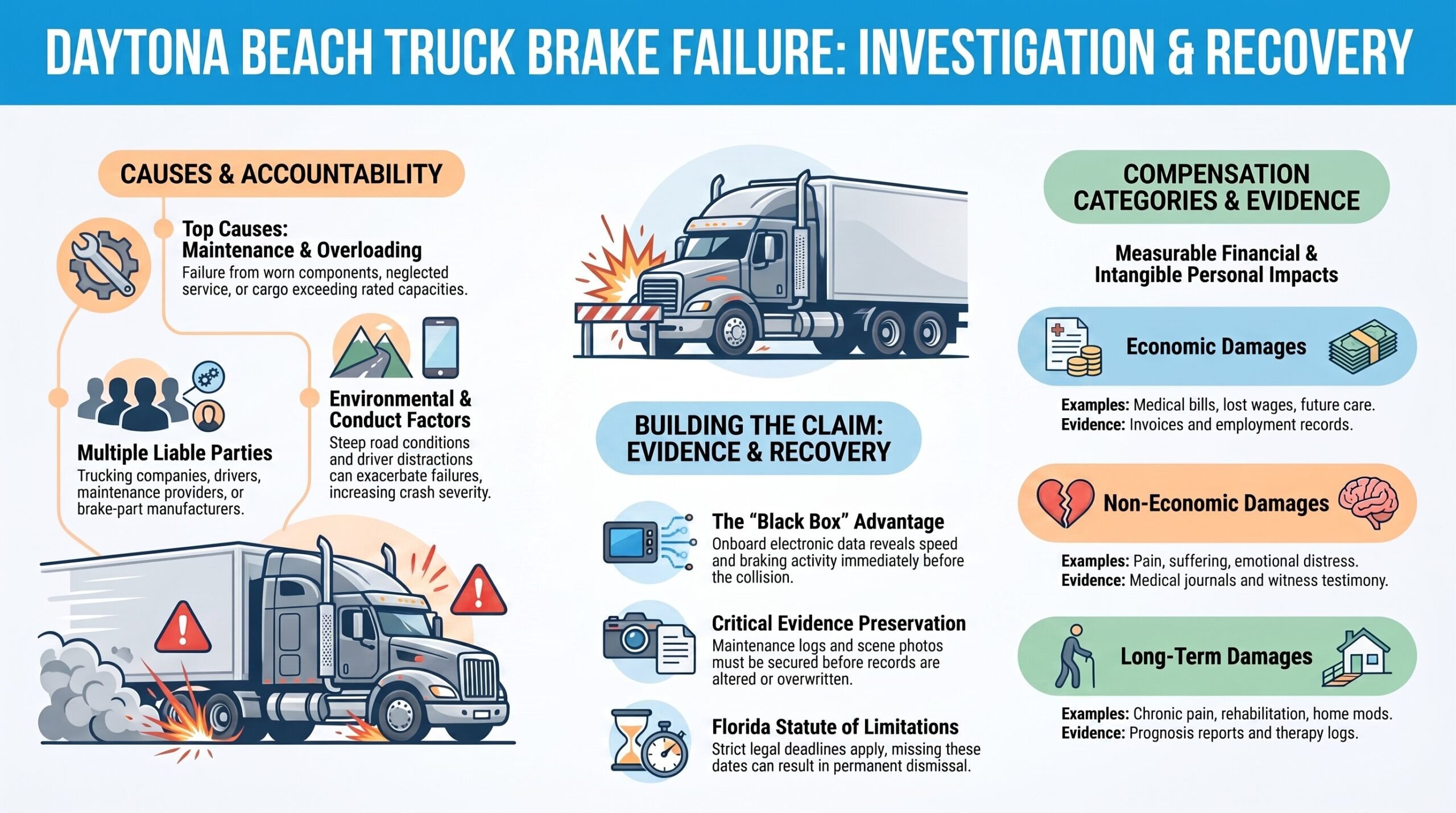
Common causes of Daytona Beach truck brake failure accidents include poor maintenance and worn brake components that reduce stopping power. Overloaded cargo can place excessive strain on braking systems, while steep road conditions may further increase stopping distances and heat-related wear. Identifying these contributing factors is critical when evaluating liability and potential negligence in a truck accident case.
Poor Brake Maintenance
Poor brake maintenance is a substantial cause of truck brake failure accidents in Daytona Beach. Commercial vehicles require consistent inspections and documented service to help confirm reliable operation on busy roads. When carriers or operators fail to follow preventive maintenance schedules, they may miss fluid checks, system adjustments, and required safety evaluations. Inadequate recordkeeping can also mask recurring problems from fleet managers and drivers who depend on accurate information to protect the public.
Responsible maintenance includes following service intervals established for each vehicle and responding promptly to inspection findings. It also requires manufacturer recall compliance, since recalled components or systems may present known safety risks. Employers that disregard these responsibilities can expose drivers, passengers, and other motorists to preventable harm. After a crash, maintenance records may help determine whether neglected duties contributed to the failure.
Worn Brake Components
Worn brake components can considerably reduce a truck’s ability to stop safely, even when inspections and service records appear current. Brake pads, shoes, drums, rotors, and related hardware may deteriorate through repeated use, heat exposure, corrosion, or delayed replacement. As friction surfaces thin or become uneven, stopping distances can increase and braking may become unpredictable, particularly during emergency maneuvering.
Brake wear detection requires more than reviewing maintenance paperwork; it may involve measuring component thickness, identifying scoring, and evaluating hydraulic or air-brake performance. Drivers and fleet personnel should also recognize dashboard warning signs, unusual noises, vibration, pulling, or changes in pedal pressure. Prompt reporting and qualified repairs can help protect motorists, passengers, and pedestrians. When worn components contribute to a collision, investigators may examine inspection practices, repair decisions, and responsible parties.
Overloaded Cargo
When cargo exceeds a truck’s rated capacity, the added weight can substantially impair braking performance and increase the risk of a collision. Excessive loads require greater stopping distance and place additional strain on brake components, tires, suspension systems, and related equipment. A truck may also respond unpredictably when its weight is unevenly distributed, making emergency driving actions more difficult. Federal and state Weight Limits are intended to protect motorists, pedestrians, and commercial drivers by controlling these risks.
Proper Cargo Securing is equally important because shifting materials can alter the vehicle’s balance and create sudden demands on the braking system. Carriers, drivers, and loading personnel may share responsibility when inspection procedures, weight calculations, or securement practices are neglected. Documentation, maintenance records, and loading evidence can help establish how an overloaded vehicle contributed to a Daytona Beach accident.
Steep Road Conditions
Steep road conditions can place extraordinary demands on a truck’s braking system, particularly during extended descents or sudden changes in grade. Gravity increases vehicle speed, while repeated braking can generate heat, reduce friction, and contribute to brake fade. Drivers who descend too quickly or fail to use lower gears may lose stopping capacity before reaching level ground. Proper route planning, controlled speed, and appropriate use of engine brakes can reduce these risks. Carriers should also schedule Brake system inspections and address worn linings, damaged components, or inadequate adjustment before operation.
Federal trucking regulations require commercial vehicles to remain properly maintained and operated safely under varying road conditions. When steep terrain combines with neglected maintenance or unsafe driving, a truck may become difficult to control, creating preventable hazards for occupants and other roadway users.


Legal Rights of Daytona Beach Truck Brake Failure Accident Injury Victims
Truck brake failure accident victims in Daytona Beach may have legal rights to seek compensation when negligent maintenance, defective parts, improper inspections, or other preventable conditions contributed to the crash. A claim may address medical expenses, lost income, property damage, pain, and other legally recognized losses. The responsible parties could include a trucking company, driver, maintenance provider, manufacturer, or insurer, depending on the available evidence.
Victims and their families may protect those rights by taking several careful steps:
- Obtain prompt medical evaluation and retain records documenting treatment, limitations, and prognosis.
- Report the collision appropriately and support preserving witness statements before memories fade or evidence changes.
- Consult a qualified attorney regarding deadlines, insurance communications, and comparative fault defenses.
An attorney can investigate maintenance records, inspection documents, electronic data, and accident reports while communicating with insurers on the victim’s behalf. Early legal guidance may help preserve evidence and clarify potential sources of compensation. Each case requires an individualized assessment of liability, injuries, and applicable Florida law.
Why Do Daytona Beach Truck Brake Failure Accident Injuries Happen?
Understanding the causes of these collisions can help clarify which parties may be responsible for resulting injuries. Truck brake failure accidents may occur when brake components are worn, improperly adjusted, contaminated, or inadequately maintained. Defective parts, negligent repairs, excessive cargo weight, and overlooked inspection requirements can also reduce stopping ability, particularly on busy Daytona Beach roads.
Driver conduct may further increase the likelihood and severity of a crash. Driver distraction causes can include mobile-device use, fatigue, navigation tasks, or attention diverted from changing traffic conditions. Excessive speed, following too closely, and delayed reactions may leave insufficient distance to respond when brakes malfunction. In addition, poor traffic signal compliance can place a disabled truck in conflict with vehicles or pedestrians entering an intersection lawfully.
Weather, roadway defects, and limited visibility may compound these hazards. Investigators generally examine maintenance records, inspection reports, loading practices, vehicle data, witness accounts, and surrounding conditions to determine how the failure developed and who may have contributed.
What Should You Do After a Daytona Beach Truck Brake Failure Accident Injury?
After a Daytona Beach truck brake failure accident, the injured person should seek immediate medical care, even when symptoms initially appear minor. The accident should be reported to law enforcement, and medical records, witness information, photographs, and other evidence should be documented promptly. These steps can protect the person’s well-being and preserve important information for evaluating potential liability.
Seek Immediate Medical Care
When a brake failure causes an injury in a Daytona Beach truck accident, the injured person should obtain immediate medical care, even if the symptoms initially appear minor. Prompt evaluation can identify concealed trauma, establish an appropriate treatment plan, and connect symptoms to the collision. Medical personnel should receive a complete account of pain, limitations, and any changes that develop after the crash. The injured person should preserve medical records, follow treatment plans, attend recommended appointments, and promptly report worsening symptoms.
These steps support recovery and help caregivers provide effective assistance. If possible, a trusted companion can help organize discharge instructions, medications, and follow-up dates. The injured person or a designated helper should also document witness statements and photographic proof when health permits, preserving details without delaying necessary treatment or placing anyone at risk.
Report The Accident
Reporting the Daytona Beach truck accident promptly helps create an accurate record of the brake failure, injuries, and surrounding circumstances. The injured person, or a trusted representative, should notify law enforcement and request an official crash report. Emergency personnel can evaluate safety concerns, identify apparent injuries, and record statements while events remain recent. Witness statements are urgent because memories may change, so witnesses should provide accurate contact information and describe what they observed without speculation.
If available, dashcam footage preservation should receive immediate attention through a clear request to the vehicle owner or operator. The individual should avoid admitting fault or guessing about the truck’s mechanical condition. Cooperation with investigators supports public safety and may help protect other road users while preserving a reliable account for later review.
Document Evidence Quickly
Prompt documentation can help establish how the Daytona Beach truck brake failure occurred and how the injury affected the individual. After receiving medical attention, the injured person or a designated representative should photograph the vehicles, roadway, visible injuries, property damage, and relevant warning signs, without disturbing evidence. Notes should record the date, time, location, weather, traffic conditions, symptoms, medical visits, and conversations with responding officers or witnesses. Witness statement preservation is important because memories can change, and contact information may become unavailable.
A representative may also request securing surveillance footage from nearby businesses, traffic cameras, residences, or vehicle systems before recordings are overwritten. The person should retain medical records, bills, employment documentation, repair estimates, and insurance correspondence. Organized copies can help attorneys, insurers, and service providers evaluate responsibility and needs.
Critical Evidence in a Daytona Beach Truck Brake Failure Accident Injury Case
Important evidence may establish whether inadequate maintenance or mechanical failure caused the Daytona Beach truck brake accident, including:
- Brake inspection records and driver maintenance logs;
- Black box data documenting speed, braking, and vehicle performance;
- Accident scene evidence, such as skid marks, damage patterns, and photographs.
Together, these materials can help clarify fault, identify safety violations, and support an injury claim.
Brake Inspection Records
When a truck’s brakes fail in Daytona Beach, inspection records may provide key evidence of whether the vehicle was properly maintained and whether a dangerous defect should have been discovered. These records can show brake inspection timing, the components examined, identified deficiencies, and corrective work recommended or completed. They may also establish whether inspections occurred at legally required intervals or after reported safety concerns. Driver responsibility documentation can help clarify which inspections were assigned to the driver, carrier, fleet manager, or outside repair facility.
Comparing recorded findings with post-crash evidence may reveal neglected wear, incomplete repairs, or inaccurate certifications. Preserving these documents promptly is important because records can be altered, lost, or overwritten. A careful review may help determine accountability and support injured individuals seeking fair compensation and meaningful protection from preventable harm.
Driver Maintenance Logs
Driver maintenance logs may provide a detailed account of brake-related concerns identified during a truck’s operation in Daytona Beach. Entries may record warning signs such as reduced braking performance, unusual noises, fluid leaks, or repeated requests for repairs. These records can help establish whether a driver reported a potential hazard and whether responsible parties responded promptly. They may also reveal patterns suggesting Brake System Defects that were known before the collision.
Investigators and legal representatives can compare log entries with repair invoices, inspection materials, and company policies to assess compliance with Federal Safety Standards. Preserving original logs is important because later alterations or missing pages may affect their reliability. Careful review can help clarify notice, maintenance decisions, and accountability while supporting an injured person’s effort to seek appropriate assistance and compensation.
Black Box Data
Electronic control module data may provide important evidence in a Daytona Beach truck brake failure accident injury case. Often called black box data, these electronic records may show vehicle speed, braking activity, engine performance, and warning events before a collision. Properly preserved data can help clarify whether braking systems responded as expected and whether mechanical concerns developed before impact. Investigators may compare this information with Brake maintenance records to evaluate inspection schedules, repairs, and unresolved defects.
They may also use driver log verification to determine whether hours of service, fatigue, or operational conditions influenced the event. Because data can be overwritten, altered, or lost during repairs, timely preservation requests are important. A qualified legal team can coordinate with appropriate experts, protect relevant records, and present findings that support fair treatment for injured individuals.
Accident Scene Evidence
Accident scene evidence can help reconstruct how a Daytona Beach truck brake failure occurred and identify factors that contributed to the collision. Investigators may document skid marks, vehicle positions, roadway conditions, debris, traffic signals, lighting, and visible damage before the scene changes. Photographs and measurements can help determine whether braking occurred, how far the truck traveled, and whether mechanical failure or another hazard played a role. Eyewitness statements may clarify the truck’s speed, warning signs, sounds, and driver actions immediately before impact.
Preservation tips include requesting prompt scene documentation, securing available surveillance footage, retaining damaged parts, and avoiding repairs or disposal before qualified professionals inspect them. Accurate records can support a fair evaluation of fault, damages, and safety concerns while helping affected individuals pursue appropriate assistance.
Long-Term Effects of Daytona Beach Truck Brake Failure Accident Injuries
Truck brake failure injuries may produce chronic pain conditions that continue to affect mobility, sleep, and daily activities long after the initial accident. Emotional trauma, including anxiety and post-traumatic stress, may also require professional treatment and ongoing support. Long-term rehabilitation can involve physical therapy, medical monitoring, and substantial adjustments to work and personal routines.
Chronic Pain Conditions
When injuries from a Daytona Beach truck brake failure accident do not recover as expected, they may develop into chronic pain conditions that persist for months or years. Back injuries, nerve damage, joint trauma, and complex regional pain syndrome can limit mobility, employment, and daily activities. Ongoing symptoms may require coordinated care from physicians, physical therapists, pain specialists, and other professionals dedicated to helping injured individuals regain function. Treatment records can document diagnosis, prescribed therapies, medication effects, and continuing limitations.
A careful legal review may also examine whether Workplace policy compliance and Vehicle inspection standards were followed before the collision. Evidence regarding maintenance, driver conduct, medical expenses, lost income, and future care needs can help clarify the long-term consequences. Prompt evaluation may support informed decisions about treatment and available legal remedies.
Emotional Trauma
Emotional trauma following injuries in a Daytona Beach truck brake failure accident may persist long after visible wounds have recovered. Survivors may experience anxiety, depression, irritability, sleep disturbances, or recurring memories of the collision. Some develop fear of driving, heightened vigilance around commercial vehicles, or difficulty resuming ordinary responsibilities. These reactions can affect relationships, employment, and confidence, even when physical symptoms appear manageable.
Professional therapy support may help an injured person identify trauma-related patterns and develop safe coping strategies. Counseling can also assist family members who are adapting to changes in behavior or emotional availability. Support groups may provide understanding from people who have endured serious accidents, reducing isolation without replacing individualized care. Documentation of emotional symptoms and treatment may help clarify their significance when evaluating the accident’s long-term consequences and the services required for recovery.
Long-Term Rehabilitation
Long-term rehabilitation after injuries in a Daytona Beach truck brake failure accident may require coordinated medical care extending well beyond initial treatment. A recovery plan can include physical therapy, occupational therapy, pain management, psychological counseling, and periodic evaluations by physicians. Some injured individuals need mobility devices, home modifications, vocational assistance, or continuing support from family and community caregivers. Accurate documentation of symptoms, treatment compliance, limitations, and future medical needs helps clarify the lasting effects of trauma.
Legal review may also examine Truck maintenance records, repair histories, driver reports, and independent safety inspections to determine whether preventable defects contributed to the collision. Because rehabilitation costs can continue for years, early assessment of projected care, lost earning capacity, and necessary services may help protect an injured person’s access to appropriate assistance and long-term stability.
Proving Liability in Daytona Beach Truck Brake Failure Accident Injury Cases
Proving liability in a Daytona Beach truck brake failure accident injury case requires evidence establishing that a negligent act or omission caused the collision and resulting injuries. Relevant evidence may include photographs, event data, maintenance records, inspection reports, driver statements, and testimony from qualified mechanical or trucking professionals.
Liability may rest with a driver who ignored warning signs, an employer that permitted unsafe operation, or a maintenance provider that failed to repair defective brakes. Negligent hiring can support a claim when a carrier placed an inadequately qualified driver behind the wheel. Records may also reveal whether a company maintained a meaningful safety culture, completed required vehicle inspections, and followed trucking compliance standards.
A thorough investigation can connect the brake failure to a specific breach of duty and establish the seriousness of resulting harm. Medical documentation, rehabilitation records, and testimony regarding future limitations may help demonstrate damages. Preserving evidence promptly is critical because vehicles, electronic records, and maintenance materials can change or disappear.
Dealing With Insurance Companies After a Daytona Beach Truck Brake Failure Accident Injury
Once liability evidence has been preserved, the injured person must also handle communications with insurers carefully. Adjusters may request recorded statements, medical authorizations, employment information, or detailed accounts of the collision. A claimant should provide accurate basic facts but should avoid speculation, admissions, or comments about recovery before receiving legal guidance. Even seemingly harmless statements can be interpreted as reducing the insurer’s responsibility.
Insurance representatives may also offer an early settlement. Such offers should be reviewed cautiously because future treatment, lost income, and lasting limitations may not yet be fully understood. Counsel can help evaluate whether the proposal reflects the injury’s actual consequences and whether relevant evidence has been considered.
Records concerning maintenance failures, Faulty trucking standards, inspection violations, and proof of driver negligence may be important when communicating with insurers. Organized documentation can support a clear demand and reduce confusion. Respectful, limited communication helps protect the injured person while preserving the ability to seek fair compensation for those affected.
What to Expect During a Daytona Beach Truck Brake Failure Accident Injury Claim Process
A Daytona Beach truck brake failure injury claim typically begins with an initial assessment of the accident, injuries, liability, and potential damages. The process then involves gathering evidence, investigating the truck and maintenance history, and negotiating with the insurance company regarding compensation. If negotiations do not produce a fair resolution, the injured party may consider settlement or trial options.
Initial Claim Assessment
During the initial claim assessment, a Daytona Beach truck brake failure accident injury claim is reviewed to determine how the collision occurred, who may be legally responsible, and whether the available evidence supports compensation. The assessment typically considers reported injuries, medical treatment, lost income, and the relationship between the brake failure and resulting harm. Potentially responsible parties may include the truck driver, carrier, maintenance provider, manufacturer, or other entities, depending on the circumstances.
Faulty Equipment Reports can help identify whether inspection, repair, or manufacturing concerns warrant further legal attention. Witness Statement Collection may clarify traffic conditions, vehicle movements, warnings, and the sequence of events. This early review also helps establish appropriate next steps, protect the injured person’s interests, and determine whether settlement discussions or formal legal action should proceed.
Evidence And Investigation
Evidence and investigation in a Daytona Beach truck brake failure accident injury claim typically focus on preserving and analyzing information that may establish how the failure occurred and who bears responsibility. Investigators may examine the truck, brake components, maintenance records, inspection reports, electronic data, and photographs documenting roadway conditions and visible damage. Witness statement preservation can help protect recollections before memories fade, while surveillance footage requests may identify the vehicle’s movements, traffic conditions, and events immediately before the collision.
Accident reports, driver logs, dispatch records, and employment materials may also clarify compliance with safety requirements. Qualified professionals can evaluate whether inadequate maintenance, defective parts, improper loading, or driver conduct contributed to the incident. Prompt evidence collection supports a thorough factual review and helps protect the injured person’s ability to pursue appropriate legal remedies.
Insurance Company Negotiations
When negotiating a Daytona Beach truck brake failure accident injury claim, the injured person can anticipate the trucking company’s insurer to review the available evidence, evaluate potential liability, and establish the value of the claimed losses. The insurer may examine maintenance records, inspection reports, driver logs, medical documentation, photographs, and witness statements. Liability Evidence should connect the brake failure to a preventable condition, inadequate repairs, or Driver Negligence. Investigators may also assess whether the carrier and driver complied with applicable Federal Regulations and Safety Standards.
The insurer could request recorded statements, medical authorizations, or additional documentation before responding to a demand. An injured person should provide accurate information while avoiding speculation or admissions that could weaken the claim. Careful organization and professional communication can help ensure that losses and supporting facts receive appropriate consideration.
Settlement Or Trial Options
Settlement or trial may resolve a Daytona Beach truck brake failure accident injury claim, depending on the strength of the evidence, the parties’ willingness to negotiate, and the extent of the injured person’s losses. During settlement discussions, counsel evaluates medical records, repair histories, maintenance logs, and available insurance coverage. Evidence preservation and timely collection of witness statements can create negotiation leverage while clarifying how the brake failure occurred.
The trucking company or insurer may raise liability defenses, including alleged driver conduct, improper maintenance by another party, or preexisting injuries. If negotiations produce a fair agreement, settlement can provide compensation without courtroom uncertainty. If the parties cannot resolve disputed fault or damages, the claim may proceed to trial, where a judge or jury evaluates testimony and evidence before determining responsibility and compensation.
Compensation for Daytona Beach Truck Brake Failure Accident Injury Damages
Compensation for injuries caused by a Daytona Beach truck brake failure may cover medical expenses, lost income, reduced earning capacity, property damage, and pain and suffering. The recoverable sum depends on the injuries, financial consequences, and evidence establishing responsibility. A claim may involve workplace liability when a commercial driver, trucking company, or maintenance provider failed to meet safety obligations. It may also involve a product defect if faulty brakes, components, or manufacturing contributed to the collision.
Accident reconstruction can help determine braking conditions, vehicle speed, maintenance history, and causation. Medical records, employment documentation, repair estimates, and witness accounts may further support the requested compensation. An attorney can evaluate potentially responsible parties, preserve relevant evidence, and explain available legal remedies. Clear attorney-client communication helps ensure that the injured person understands case developments, risks, and documentation requirements. Prompt assistance may also help protect important evidence and support a fair resolution for those affected by the crash.
Economic vs Non-Economic Damages in Daytona Beach Truck Brake Failure Accident Cases
Daytona Beach truck brake failure claims may include economic damages, such as medical expenses, lost income, property damage, and future treatment costs. Non-economic losses can involve pain and suffering, emotional distress, disability, and diminished quality of life. Fair compensation requires evaluating documented financial harm alongside the severity and lasting effects of the injury.
Economic Damage Categories
When a truck’s brake failure causes a collision in Daytona Beach, the resulting damages are generally divided into economic and non-economic categories. Economic damages represent measurable financial losses supported by records, invoices, and other documentation. They may include emergency treatment, hospital services, physician visits, prescription medications, rehabilitation, medical equipment, and reasonably anticipated future care. Lost wages, reduced earning capacity, and expenses for transportation, household assistance, or necessary vehicle repairs may also qualify.
Medical evidence collection helps establish the nature, duration, and cost of injury-related treatment. A careful review of employment records and financial documentation can clarify income losses. Liability insurance coverage may affect how these damages are pursued and paid, particularly when commercial policies, multiple insurers, or coverage limits are involved. Accurate valuation helps protect an injured person’s recovery.
Non-Economic Losses
Non-economic losses reflect the personal effects of a truck brake failure accident that cannot be calculated through bills or employment records. They may include physical pain, emotional distress, mental anguish, loss of enjoyment, disfigurement, and diminished quality of life. A person who once worked, traveled, or cared for family members may face lasting limitations after the collision. Evidence such as medical observations, treatment records, personal journals, and witness statements can help document these effects.
Testimony from relatives, coworkers, and healthcare professionals may further explain changes in daily functioning, relationships, and emotional well-being. Comparative fault disputes can influence how responsibility is evaluated, making consistent accounts and reliable evidence important. These losses concern the human consequences of injury, rather than documented financial expenditures, and require careful attention from those assisting affected individuals.
Calculating Fair Compensation
Calculating fair compensation in a Daytona Beach truck brake failure accident requires evaluating both economic and non-economic damages arising from the collision. Economic damages may include emergency treatment, rehabilitation, medication, property repairs, lost wages, reduced earning capacity, and anticipated medical care. Documentation such as invoices, employment records, medical evaluations, and repair estimates helps establish these measurable losses.
Non-economic damages address pain, emotional distress, disfigurement, loss of enjoyment, and disruption of family relationships. Their value depends on the injury’s severity, duration, and effect on daily life rather than fixed receipts. Liability evidence, including maintenance records, inspection reports, and mechanical findings, can influence whether compensation is recoverable. Witness statements may clarify braking problems, driver conduct, and crash circumstances. A careful assessment supports fair recovery and responsible service to affected individuals.
When a Daytona Beach Truck Brake Failure Accident Injury Case Goes to Trial vs Settlement
The decision to take a Daytona Beach truck brake failure injury case to trial or pursue a settlement depends on the strength of the evidence, the severity of the injuries, and the parties’ willingness to accept litigation risks. A settlement may provide timely financial support while avoiding uncertainty, public proceedings, and the demands placed on an injured person and family. The settlement timeline can vary according to medical progress, document collection, insurer responses, and the negotiation strategy used by counsel.
Trial may become appropriate when liability or damages remain strongly disputed, or when an insurer refuses to offer fair compensation. Trial readiness requires organized records, qualified experts, credible witnesses, and careful preparation for testimony. At trial, jury persuasion depends on presenting clear evidence showing how brake failure caused the collision and affected the injured person’s life. A representative should explain each option, identify practical risks, and support an informed decision that protects the client’s needs and preserves dignity throughout the process.
Florida Laws That May Affect Your Daytona Beach Truck Brake Failure Accident Case
Because truck brake failure cases involve state traffic rules, federal safety standards, and insurance requirements, Florida law may influence both liability and available compensation. Florida’s negligence rules may assign responsibility among the truck driver, motor carrier, maintenance provider, manufacturer, or other parties. Comparative fault can reduce an injured person’s recovery when evidence shows that person contributed to the collision.
Important legal considerations may include:
- Commercial drivers and carriers must follow applicable inspection, maintenance, loading, and operating requirements.
- Vehicle owners and companies may face responsibility for negligent maintenance, unsafe equipment, or inadequate supervision.
- Insurers may investigate policy coverage, fault, medical records, and property damage before offering payment.
Evidence preservation is critical. Photographs, electronic control module data, inspection records, maintenance invoices, witness information, and damaged brake components may help establish what failed and who knew about the danger. Prompt coordination with qualified professionals can protect relevant evidence and support a fair evaluation. These rules help attorneys serve injured individuals by presenting accurate facts while addressing each responsible party’s legal obligations.
The Statute of Limitations for Daytona Beach Truck Brake Failure Accident Injury Cases
Time limits may determine whether an injured person can pursue compensation after a Daytona Beach truck brake failure accident. Florida law generally establishes deadlines for filing personal injury claims, although the applicable period can vary according to the injury, defendant, and circumstances. Claims involving government entities may require earlier notice, while wrongful-death actions follow their own statutory framework. Missing a deadline can result in dismissal, regardless of the seriousness of the harm or the strength of available evidence.
Prompt attention also supports a thorough Truck accident investigation before physical evidence disappears, maintenance records are altered, or witnesses become difficult to locate. Early witness statement preservation can help document what occurred and protect important recollections. An injured person or family member should identify the accident date, potential defendants, medical treatment, and relevant insurance information without delay. Because exceptions and deadline calculations can be complicated, timely review of the facts and applicable Florida statutes is essential for protecting a potentially valid claim and serving the interests of all affected parties.
How a Daytona Beach Truck Brake Failure Accident Lawyer Can Help You
When a Daytona Beach truck brake failure accident causes injury or property damage, a qualified truck accident lawyer can evaluate the circumstances and identify potentially responsible parties. The lawyer may coordinate with investigators, review maintenance histories, and explain available legal remedies while treating affected individuals with dignity and respect.
A Daytona Beach truck accident lawyer can investigate brake failures, identify responsible parties, and pursue fair compensation for injured individuals.
- Evidence development: Counsel can seek inspection records, driver logs, electronic data, photographs, and witness accounts before relevant materials disappear. Jurisdictional Evidence Preservation may require prompt action across multiple locations or entities.
- Responsibility analysis: A lawyer can assess whether negligent maintenance, defective parts, inadequate training, or improper loading contributed to the failure. This review may also support broader efforts involving Preventing Workplace Injuries.
- Claim administration: Counsel can organize medical documentation, property-loss records, insurance communications, and settlement negotiations. If necessary, the lawyer can present the evidence in court and advocate for fair compensation.
Through careful preparation, legal counsel helps protect clients’ interests, promotes accountability, and supports safer transportation practices without shifting responsibility onto injured individuals.
When to Contact a Daytona Beach Truck Brake Failure Accident Lawyer
Prompt legal guidance may be appropriate immediately after a Daytona Beach truck brake failure accident, particularly when injuries, fatalities, significant property damage, or disputed facts are involved. Early evidence preservation can be essential because vehicle conditions, maintenance records, roadway conditions, and electronic data may change or disappear. A lawyer can help identify relevant materials and communicate preservation requests before evidence is altered.
Florida evidence rules may affect how photographs, repair records, inspection reports, and statements are collected and later evaluated. Accident documentation tips include obtaining medical records, recording visible injuries, photographing vehicles and surroundings, and maintaining a dated account of events. The Witness identification process should begin promptly, while recollections remain clear. Contact is also appropriate when an insurer seeks a recorded statement, proposes a settlement, or questions the reported cause. Timely assistance can help protect an injured person’s ability to pursue appropriate benefits and support, while allowing families and affected communities to address immediate needs responsibly.
Why You Need an Experienced Daytona Beach Truck Brake Failure Accident Lawyer
An experienced Daytona Beach truck brake failure accident lawyer can provide focused guidance in a case involving complicated evidence, multiple potentially responsible parties, and serious injuries. Such counsel can examine maintenance records, inspection reports, driver conduct, loading practices, and electronic data to determine how the failure occurred. This investigation may help identify trucking companies, maintenance contractors, manufacturers, or other entities whose actions contributed to the collision.
An attorney can also protect an injured person from premature statements and confusing insurance communication. Clear guidance may preserve important evidence while insurers evaluate liability and damages. Counsel can coordinate medical documentation, address vehicle repair timelines, and explain how property losses relate to the broader claim.
For clients experiencing post-accident stress, a lawyer can recommend appropriate coping strategies and help organize communications so recovery remains the priority. Experienced representation also supports fair evaluation of lost income, treatment needs, and long-term limitations, while serving the client’s interests with diligence, compassion, and accountability throughout the legal process.
How to Choose the Right Daytona Beach Truck Brake Failure Accident Lawyer for Your Case
Choosing the right Daytona Beach truck brake failure accident lawyer requires careful consideration of the attorney’s experience with commercial vehicle collisions and complex liability disputes. A qualified lawyer should understand maintenance records, inspection requirements, driver responsibilities, and claims involving trucking companies, manufacturers, repair facilities, or insurers. Reviewing prior case results may help evaluate whether the attorney has effectively investigated mechanical failures and pursued fair compensation for injured people and their families.
Potential clients should also discuss Client communication expectations before representation begins. Clear information about response times, case updates, decision-making, and availability can support a productive working relationship. The lawyer should explain legal fees, anticipated expenses, timelines, and the responsibilities of each party in understandable terms.
A document evidence checklist can help organize medical records, photographs, crash reports, repair invoices, witness information, employment records, and communications with insurers. Careful preparation allows counsel to preserve evidence promptly, identify responsible parties, and build a claim focused on accountability and service to those affected by preventable truck accidents.
About The Law Offices of Anidjar & Levine
The Law Offices of Anidjar & Levine represents individuals and families pursuing compensation after serious truck accidents, including collisions involving suspected brake failure.
The firm evaluates each matter through structured investigation strategies designed to identify mechanical defects, maintenance failures, driver conduct, and regulatory violations.
Its legal team may coordinate with accident reconstruction professionals and other qualified investigators to clarify how a crash occurred.
Early evidence preservation is emphasized because inspection records, electronic data, photographs, witness accounts, and damaged components may become unavailable or altered.
Attorneys assess available insurance coverage, analyze liability defenses, and address insurance tactics that could minimize or delay a valid claim.
They also examine the responsibilities of trucking companies, maintenance providers, manufacturers, and other potentially responsible parties.
The firm’s approach is intended to provide informed guidance while protecting clients’ legal interests throughout negotiations or litigation.
Individuals seeking assistance can request a case evaluation to discuss applicable deadlines, documentation, and potential avenues for recovery after a Daytona Beach truck accident.

Frequently Asked Questions
Can I Still File a Claim if the Truck Driver Received No Traffic Citation?
A No Citation does not prevent a claim after a truck brake failure accident. A traffic citation is only one potential piece of evidence, not a requirement for proving negligence or liability. Investigators may examine maintenance records, inspection reports, driver conduct, vehicle condition, witness statements, and medical documentation. The injured person should preserve evidence, avoid settling prematurely, and consult a qualified attorney promptly because filing deadlines and available legal remedies vary by jurisdiction and circumstances.
What Happens if the Truck Involved in the Accident Was Owned by a Government Agency?
Government ownership can change how an injured person pursues compensation, but it does not automatically wipe out a valid claim. Whether sovereign immunity applies depends on the agency, conduct, and applicable statutory exceptions. Government liability coverage may provide payment, yet special notice requirements, shorter time limits, damage limits, and administrative procedures often govern. A qualified attorney can identify the responsible entity, preserve evidence, calculate losses, and ensure required notices and filings are completed accurately.
Can a Brake Failure Accident Affect My Ability to Obtain Future Employment?
A brake failure accident can affect future employment, but the impact depends on its circumstances and legal outcome. Employers may review work history, driving records, licensing status, and background checks, particularly for transportation, public safety, or service positions. A civil claim alone typically does not establish misconduct or prevent hiring. However, criminal charges, license restrictions, or findings of negligence may require disclosure and could influence an employer’s decision. Accurate, consistent explanations remain important.
Are Truck Brake Manufacturers Responsible for Defective Replacement Parts?
Truck brake manufacturers may be responsible for defective replacement parts when a design, manufacturing, or warning defect causes injury and the part was used as intended. Product defect liability can apply even after the original sale. A warranty breach may create additional claims if the component failed to meet stated assurances. Recall responsibility depends on known risks and regulatory duties, while aftermarket oversight may determine whether another supplier shares liability.
Can Family Members Pursue a Claim After a Fatal Truck Brake Failure Accident?
Family members may pursue a Wrongful Death claim after a fatal truck brake failure accident, depending on state law and their relationship to the deceased. Eligible survivors can include spouses, children, or other dependents, while representatives may recover damages for medical expenses, funeral costs, lost income, and loss of companionship. Prompt Evidence Collection is crucial, including maintenance records, inspection reports, electronic data, photographs, witness statements, and defective-part documentation.
—————————
Victims of truck brake failure accidents in Daytona Beach may suffer serious injuries, financial losses, and uncertainty about their legal options.
Determining liability often requires a thorough review of maintenance records, inspection practices, driver conduct, and potentially defective equipment.
An experienced Daytona Beach Truck Accident Lawyer can assess the evidence, identify responsible parties, and pursue appropriate compensation.
The Law Offices of Anidjar and Levine provide informed legal guidance while protecting each client’s rights throughout the claims process.