

The Law Offices of Anidjar and Levine can investigate a reported hazard at a grocery store or supermarket, preserve surveillance footage and other evidence, and explain potential legal options. A claim generally requires evidence that a dangerous condition caused the fall and that the store knew or should have known about it. Medical records, witness accounts, inspection logs, and photographs may help clarify responsibility and losses. Florida deadlines and comparative negligence rules may affect recovery. Learn more from a Daytona Beach Personal Injury Lawyer.
Main Takeaways
- A Daytona Beach grocery-store slip-and-fall lawyer can assess whether a hazardous condition caused your injury and whether the store knew or should have known about it.
- Evidence may include incident reports, photographs, witness accounts, surveillance footage, inspection logs, warning signs, and medical records.
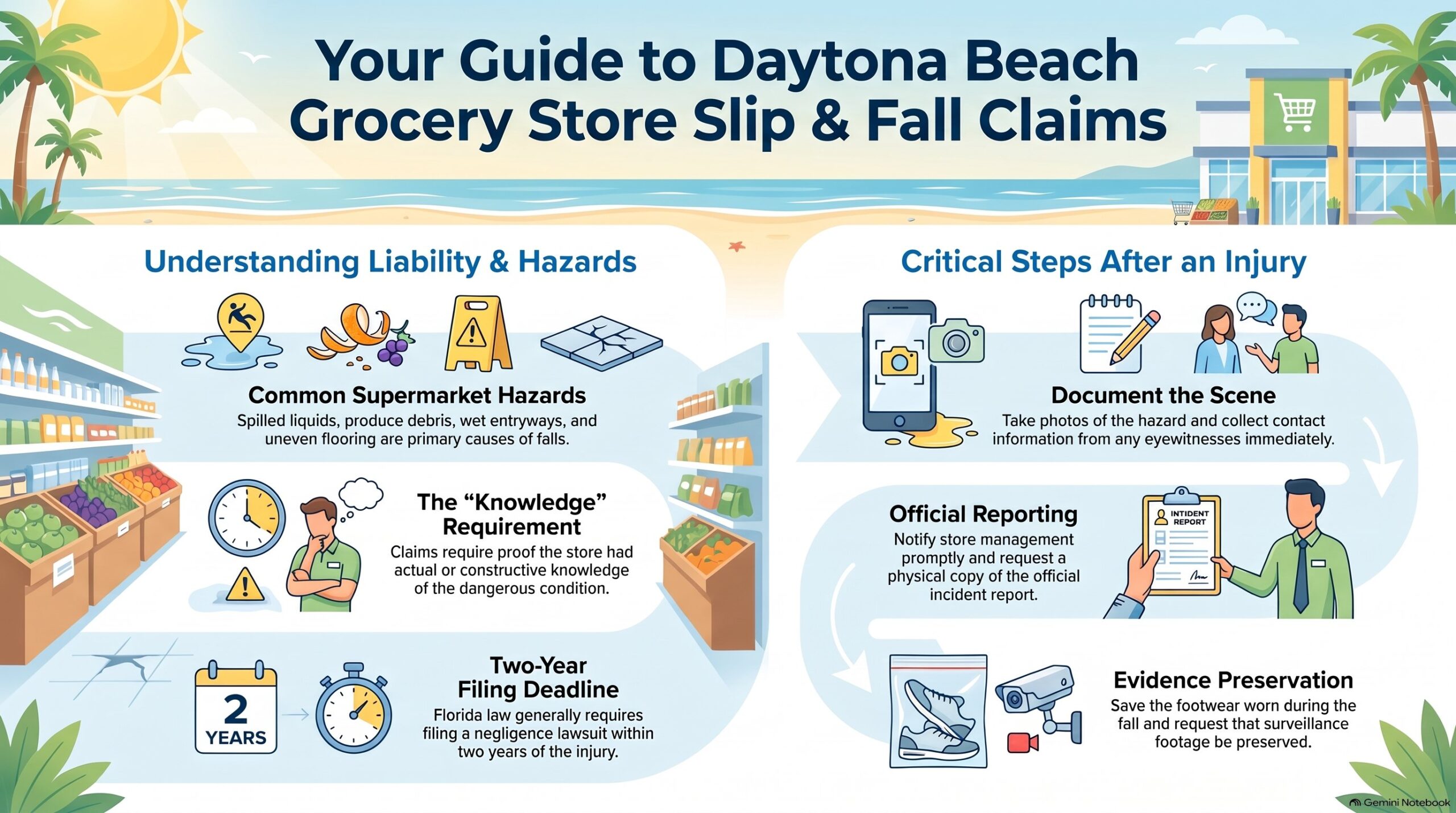
- Report the fall promptly, seek medical care, document the scene if it is safe, and request that the store preserve any relevant surveillance footage.
- A lawyer can organize records, communicate with insurers, track deadlines, and explain how Florida comparative negligence rules may affect a claim.
- Florida filing deadlines apply, and the time to sue depends on the circumstances; get legal advice promptly.


How We Can Help With Your Daytona Beach Slip & Fall Grocery & Supermarkets Injury Claim
When a shopper is injured in a grocery store fall, the conditions that caused the fall and the store’s response can affect the strength of the claim. A Daytona Beach attorney can help organize the next steps, allowing the injured person to focus on recovery while ensuring important information isn’t overlooked.
Counsel may gather incident reports, photographs, witness accounts, and available video before evidence is lost. Medical records and expense documentation can also help show how the fall affected the shopper’s health and daily responsibilities. The attorney can communicate with store representatives and insurers, review their responses, and explain options in clear terms.
A carefully managed Claim Timeline helps track reporting requirements, document requests, and other important deadlines. This support can reduce avoidable delays and help the client make informed decisions at each stage. By examining the store’s handling of the incident and pursuing appropriate follow-up, counsel can promote Store Accountability while treating the injured shopper with respect and care.
OUR CONSULTATIONSARE FREE
START YOUR FREE CASE REVIEW

Understanding Daytona Beach Slip & Fall Grocery & Supermarkets Injury Cases
Grocery and supermarket slip-and-fall cases in Daytona Beach often depend on whether a hazardous condition caused the injury and whether the store knew, or should have known, about it. Evaluating a claim requires examining the circumstances surrounding the incident, the resulting harm, and the store’s response to potential safety concerns.
Evidence may include incident reports, photographs, witness accounts, medical records, and records showing when employees last checked the area. A consistent Store Inspection process can help establish whether staff had a reasonable opportunity to identify and address a dangerous condition. The absence of documented checks may also be relevant, depending on the facts.
Florida law generally requires proof that the business had actual or constructive knowledge of the condition. Constructive knowledge may be supported by evidence that the hazard existed long enough to be discovered or occurred regularly. Hazard Prevention practices and timely corrective action can inform the assessment, but each case turns on its specific evidence and applicable legal standards.
Common Causes of Daytona Beach Slip & Fall Grocery & Supermarkets
Grocery and supermarket slip-and-fall incidents may result from spilled liquids, produce debris, or wet entryways that create hazardous walking surfaces. Uneven flooring can also cause customers to lose their footing, particularly when defects are difficult to see. Identifying these common hazards helps clarify how unsafe conditions may contribute to a fall.
Spilled Liquids
Spilled liquids can create sudden hazards in Daytona Beach grocery stores and supermarkets, particularly in aisles where shoppers may not see a wet surface before stepping onto it. Liquid spill sources include leaking containers, dropped beverages, damaged packaging, and fluids tracked inside during rainy weather. A thin or clear spill may be difficult to notice, especially under bright store lighting or amid routine shopping activity. Staff members responsible for customer safety generally need to promptly identify wet areas, restrict access when appropriate, and remove the liquid without delay. Effective cleanup protocols may include placing warning signs, using appropriate absorbent materials, thoroughly drying the floor, and verifying that no residue remains. When inspection or response is delayed, shoppers may encounter an avoidable slipping hazard while moving through the store.
Produce Debris
As shoppers select fresh produce, loose items can fall onto grocery store floors and create a slip hazard. Grapes, berries, leafy greens, and pieces of fruit may be difficult to see, particularly in busy aisles or beneath display tables. A shopper who steps on this debris can lose balance and suffer injuries ranging from bruises to fractures.
Grocery stores can reduce these risks through regular Produce inspection and prompt debris cleanup. Employees should check areas around produce displays, remove dropped items, and document completed inspections according to store procedures. Clear responsibilities and consistent monitoring help prevent hazards from remaining on the floor unnoticed. When a store fails to address visible produce debris on the produce within a reasonable time, an injured shopper may have grounds to examine whether inadequate maintenance contributed to the fall. Witness accounts, photographs, and incident records may help clarify what occurred.
Wet Entryways
Rain tracked in by customers, leaking umbrellas, and water blown through open doors can leave grocery store entryways slick. In Daytona Beach, sudden showers and humid conditions may increase moisture near entrances, creating hazards for shoppers, employees, and delivery personnel. Stores can reduce these risks through effective Entry matting, prompt cleanup, and regular inspection of high-traffic areas. Mats should be positioned securely, replaced or dried when saturated, and sized to capture water before it spreads across the floor. Proper rainwater drainage outside the entrance can also limit the amount of water customers may carry indoors. When staff members identify wet areas, timely warnings and temporary barriers can help protect visitors while cleanup occurs. Consistent maintenance and clear procedures support safer access for everyone entering the store, particularly during periods of heavy rain or frequent customer traffic.
Uneven Flooring
Uneven flooring can create a tripping hazard in Daytona Beach grocery stores and supermarkets, particularly where customers push carts through crowded aisles. Raised tiles, cracked surfaces, loose mats, and abrupt changes in floor height may catch a shopper’s foot or disrupt a cart’s movement. Tile junctions between departments or flooring materials require careful maintenance because small gaps or lips can be difficult to notice when customers are focused on shopping. Spills and debris may also conceal defects, increasing the risk of a fall. Store operators can reduce these hazards through routine Flooring inspection, prompt repairs, and clear warnings while work is underway. When a fall occurs, photographs, incident reports, and witness accounts may help establish the floor’s condition and whether reasonable steps were taken to protect customers from foreseeable danger.
Don’t Wait. Call Our Florida Personal Injury Lawyers Now!


Legal Rights of Daytona Beach Slip & Fall Grocery & Supermarkets Injury Victims
When a grocery-store hazard causes a fall in Daytona Beach, injured shoppers may have the right to seek compensation from the business responsible for the premises. These Legal Rights depend on the facts, applicable Florida law, and evidence showing the property owner or operator failed to meet a legal duty. A claim may address documented losses, while the injured person’s own conduct can affect recovery under Florida’s comparative negligence rules.
Victims may consider these steps:
- Obtain prompt medical evaluation and follow prescribed care.
- Preserve photographs, receipts, clothing, and other relevant records.
- Report the incident to store management and request a copy of the report.
- Identify witnesses and retain their contact information.
- Consult a qualified attorney about options and Claim Deadlines.
Florida law generally sets a time limit for filing negligence lawsuits, and exceptions may apply. Missing the applicable deadline can prevent recovery, so timely legal guidance matters. A careful review can help protect a victim’s interests while supporting fair accountability and informed decisions.
Don’t Wait. Call Our Florida Personal Injury Lawyers Now!
Why Do Slip-and-Fall Grocery & Supermarket Injuries Happen in Daytona Beach?
Grocery and supermarket slip-and-fall injuries in Daytona Beach often occur when hazards are created or left unaddressed in customer areas. Spilled liquids, dropped produce, and leaking refrigeration units can leave floors slick, while loose mats, damaged tiles, and cluttered aisles may create tripping hazards. Busy stores can make these conditions harder to notice, particularly when employees do not inspect customer areas regularly or respond promptly to reported problems.
Other risks stem from the way merchandise and store spaces are maintained. Unsafe shelving may allow products to fall into walkways or leave fixtures protruding into customer paths. Poor lighting can conceal spills, uneven flooring, and changes in floor level, making hazards difficult to identify. Narrow aisles, misplaced carts, and boxes left during restocking may further restrict safe movement. These incidents are not always preventable, but attentive maintenance, timely cleanup, clear walkways, and adequate lighting can reduce foreseeable risks and help protect customers, employees, and other visitors.
What Should You Do After a Slip-and-Fall at a Grocery & Supermarket?
After a slip-and-fall at a grocery store, the injured person should seek prompt medical care, even if the injury initially appears minor. The incident should be reported to store management, and a copy of any written report should be requested. If it is safe to do so, photographs of the hazard and surrounding area, along with witness contact information, can help document the scene.
Get Medical Care
Prompt medical care is essential after a slip-and-fall in a Daytona Beach grocery store, even if the injury initially seems minor. A person who falls should seek an Emergency evaluation if they experience severe pain, a head impact, dizziness, bleeding, or difficulty moving. For less urgent symptoms, a prompt appointment with a qualified healthcare provider can identify injuries that may not be immediately apparent. Medical professionals can recommend appropriate tests, document symptoms, and create a care plan based on the individual’s condition. Following that plan, including any treatment follow-up, supports recovery and helps prevent complications. The injured person should describe how the fall occurred and report all symptoms accurately, even if they seem unrelated. Keeping copies of visit summaries, prescriptions, and bills can also help maintain an organized record of care.
Report The Incident
Once immediate medical needs are addressed, the injured person should report the fall to a store manager or other responsible employee as soon as practical. Promptly notify the store so staff can respond, address any ongoing hazard, and create an incident report. The injured person should describe when and where the fall occurred and explain the resulting symptoms without guessing about the cause or making unsupported statements. A companion may help communicate if pain, stress, or medical needs make it difficult to speak clearly. The person should provide accurate contact information and ask how the report will be recorded. Before leaving, request a copy of the completed incident report or written confirmation that the report was made. If staff decline, note the refusal and the employee’s name, then follow up through the store’s customer service channel.
Document The Scene
If the injured person can do so safely, documenting the scene can help preserve details that may change or disappear before the fall is investigated. The person or a willing companion can photograph the hazard, including the substance or object, its location, nearby warning signs, and the surrounding aisle. Wide views and close-up images may show both the broader setting and specific conditions. Photos should be taken without moving or touching the hazard, and store staff should be notified promptly so others can be protected. The injured person can also note the date, time, store location, and names of witnesses. Preserve Footwear by keeping the shoes worn during the fall in their original condition; avoid cleaning or altering them. These records may help clarify what happened and support a fair review.
Critical Evidence in a Daytona Beach Slip & Fall Grocery & Supermarkets Injury Case
Evidence can help establish how a grocery-store fall occurred and what harm it caused.
Relevant materials may include:
- Incident reports
- Surveillance footage
- Witness statements
- Medical records
- Photographs of the hazard and scene
Prompt preservation is important because footage and other records may be lost or altered over time.
Incident Reports
How quickly a grocery store documents a slip-and-fall can affect the availability and reliability of important evidence. An incident report may record the date, time, location, reported hazard, and actions taken by employees. It can also identify witnesses and preserve the injured person’s account while details remain fresh. A clear, accurate report helps the store respond responsibly and may assist those evaluating how the injury occurred.
The injured person should request a copy and note the names of employees involved. The report should be reviewed for errors or missing information, and any correction should be requested in writing. Report retention practices matter because routine schedules may determine how long records remain available. Manager signatures can help identify who reviewed or approved the report, but do not by themselves, establish that every entry is complete or accurate. Independent records may also be relevant.
Surveillance Footage
Surveillance footage can provide an independent record of the conditions and events surrounding a grocery store slip and fall in Daytona Beach. Video may show a spill, misplaced merchandise, warning signs, or changes to the floor before and after an incident. It can also help establish how long a hazard remained and whether staff had an opportunity to address it. Camera coverage varies by store, and some areas may not be recorded or may have obstructed views. Because systems may overwrite recordings automatically, prompt requests to preserve relevant footage can be important. Video retention policies differ, so the available period may be limited. A careful review can clarify what the recording does and does not establish, helping those responsible evaluate the circumstances fairly and support a reliable assessment of the injured person’s claim.
Witness Statements
Witness statements can clarify what happened during a slip-and-fall at a grocery store in Daytona Beach. Shoppers or employees may have seen a spill, a warning sign, or the moments before and after a fall. Their accounts can help establish how long a hazard remained and whether store staff had notice of it. Witness credibility depends on factors such as the person’s opportunity to observe, consistency, and independence from the parties. Prompt statement preservation is important because memories may fade, and witnesses can become difficult to locate. Names and contact details should be recorded, and accounts should be documented accurately, without leading questions or pressure. These steps support a fair review of the event and help guarantee that relevant observations are available to those evaluating responsibility and seeking a safe, accountable outcome for everyone involved.
Medical Records
Medical records are essential evidence in a Daytona Beach grocery store slip-and-fall case because they document the injuries, treatment, and recovery following the incident. Prompt medical attention can create a clear timeline linking reported symptoms to the fall. Records may include emergency department notes, diagnostic imaging, physician assessments, prescriptions, and rehabilitation plans. Collectively, these materials help explain the nature and severity of an injury, as well as its effect on daily activities and work.
Accurate record retrieval and chart organization can make this evidence easier to review. Providers, dates, and treatment details should be arranged consistently, while missing or conflicting information may require clarification. Medical records can also document prior conditions, allowing the injury’s progression to be assessed fairly. Careful handling protects privacy and supports a complete, reliable account for those evaluating the claim.
Long-Term Effects of Daytona Beach Slip & Fall Grocery & Supermarkets Injuries
A grocery store slip-and-fall can have effects that persist long after initial treatment, including chronic pain and reduced mobility. Some injuries may cause lasting nerve damage, affecting sensation or coordination. Ongoing medical needs and limits on daily activities can also create emotional and financial strain.
Chronic Pain And Mobility
How long do the effects of a grocery-store fall last? Recovery depends on the injuries, the person’s health, and the care received. Some shoppers regain normal movement within weeks, while others experience persistent pain or reduced mobility for months or longer. Injuries to the back, hips, knees, or shoulders may make walking, standing, and completing daily tasks difficult.
A treating provider can assess ongoing symptoms and recommend appropriate care. Pain management may involve medication, physical therapy, or other clinically supported approaches. When balance or walking remains impaired, mobility aids such as canes or walkers may help reduce strain and support safer movement. Their use should follow professional guidance.
These limitations can affect work, household responsibilities, and the ability to assist family or community members. Documented treatment, symptoms, and functional changes can help clarify the injury’s continuing impact.
Lasting Nerve Damage
When a grocery-store fall injures nerves, symptoms may persist after bruises and other visible injuries have recovered. A person may experience numbness, tingling, burning sensations, weakness, or heightened sensitivity in an affected area. These problems can interfere with balance, grip, and routine tasks, making appropriate medical assessment important. Nerve injuries vary in severity, and recovery depends on the type and extent of damage. Nerve regeneration may occur gradually, but some injuries leave lasting changes in sensation or movement. Physicians may use examinations and diagnostic tests to identify the affected nerves and guide treatment. Neuropathy management can include medication, physical therapy, protective measures, and regular follow-up. Accurate records of symptoms and care help clarify how the injury affects daily function and support informed decisions about ongoing treatment and recovery needs.
Emotional And Financial Strain
Beyond physical injuries, a serious grocery-store fall can create lasting emotional and financial strain. Persistent pain or reduced mobility may disrupt sleep, limit independence, and make routine errands feel difficult. Some injured people also experience anxiety about returning to the store or fear another fall, which can affect confidence and social participation. These changes may influence family relationships as relatives take on transportation, caregiving, or household responsibilities. Family Stress can increase when recovery takes longer than expected or daily routines must be reorganized. Medical appointments, rehabilitation, prescriptions, and lost income may place sustained pressure on Household Budgeting. A person may need to reduce work hours or postpone necessary expenses while treatment continues. Recognizing these effects can help families seek practical support and plan for needs that extend beyond immediate medical care.
Proving Liability in Daytona Beach Slip & Fall Grocery & Supermarkets Injury Cases
Proving liability in a Daytona Beach grocery store slip-and-fall case requires evidence that the store failed to exercise reasonable care to address a hazardous condition. The injured person generally must show that a dangerous condition existed, caused the fall, and resulted in harm. Evidence may include photographs, witness statements, incident reports, and records documenting the condition and its duration.
The store’s knowledge of the hazard is often central. A claim may rely on evidence that employees created the condition, knew about it, or should have discovered it through reasonable care. Under the constructive notice standard, the hazard must have existed long enough, or occurred often enough, that appropriate attention could have identified it. Store inspection protocols, cleaning logs, and employee testimony can help establish whether inspections were timely and effective.
Prompt documentation can preserve important details, including spill location, warning signs, lighting, and footwear. Medical records may connect the fall to reported injuries and support a clear account of the event.
Dealing With Insurance Companies After a Daytona Beach Slip & Fall Grocery & Supermarkets Injury
After documenting a grocery store fall and its apparent cause, an injured person may need to communicate with the store’s insurer. Insurer communication boundaries can help protect accurate information while keeping discussions focused. The injured person may provide basic details, such as the date, location, and contact information, but should avoid guessing about how the fall occurred or describing injuries before receiving appropriate medical evaluation. Any written communication should be factual and consistent with available records.
Recorded statement risks merit careful consideration. An adjuster may request a recorded account, but questions about timing, visibility, footwear, or prior symptoms can be difficult to answer precisely while the person is recovering. A statement given without preparation may omit relevant context or be interpreted differently than intended. The injured person can request the request in writing, clarify its purpose, and seek legal guidance before agreeing. Prompt, courteous communication supports orderly handling of the matter while preserving the person’s ability to make informed decisions.
What to Expect During a Daytona Beach Slip & Fall Grocery & Supermarkets Injury Claim Process
A Daytona Beach grocery store slip-and-fall claim typically begins with an evaluation of the incident, injuries, and available legal options. The process may then involve collecting evidence, documenting losses, and negotiating with the store or its insurer for a settlement. If negotiations do not resolve the claim, the injured person may proceed to trial preparation.
Initial Case Evaluation
During an initial case evaluation, a Daytona Beach slip-and-fall lawyer reviews how the grocery store incident occurred, the reported injuries, and the available evidence. This Initial consultation gives the injured person an opportunity to explain the event, their medical concerns, and the practical effects on their daily life. The lawyer may ask about the store visit, the location of the fall, and any communications with store staff. These details help assess the viability of a case and identify legal issues that may affect a potential claim. The evaluation also provides an opportunity to discuss the process, potential challenges, and the responsibilities involved in pursuing compensation. A careful, respectful review helps ensure the person understands the available options before deciding how to proceed. No outcome is guaranteed, and the assessment may change as additional information becomes available.
Evidence Collection
Evidence collection helps establish how a grocery store fall occurred and whether the store knew, or should have known, about the hazard. An investigation may gather incident reports, surveillance footage, inspection logs, cleaning schedules, and witness statements. These records can show the hazard’s condition, how long it persisted, and the steps employees took. Photographs of the scene and the injured person’s visible injuries may also document relevant details. Preserving footwear and clothing can help retain material that may clarify the circumstances of the fall. Medical records can connect reported injuries to the incident and describe subsequent treatment. Maintaining the chain is crucial when physical items or digital records are collected, stored, and reviewed. A careful, organized record helps those evaluating the claim assess the available facts accurately and fairly.
Settlement Negotiations
Once the available records and other relevant facts have been reviewed, settlement negotiations may begin with the grocery store or its insurer. The injured person’s representative may present a demand supported by evidence of the fall, medical care, lost income, and other documented losses. The store or insurer may respond with questions, dispute responsibility, or propose a different amount. A careful Negotiation strategy considers the strength of the evidence, the likely costs of continued proceedings, and the injured person’s needs, without overstating the claim. Settlement timing can vary because negotiations may require updated treatment information, further review, or several rounds of offers. Any proposed agreement should be evaluated for its terms, including whether it resolves all claims and how payment will be handled. The injured person decides whether to accept a settlement.
Trial Preparation
If settlement negotiations do not resolve a grocery store slip-and-fall claim, the case may proceed toward trial. Preparation begins with reviewing medical records, incident reports, photographs, store policies, and witness accounts. The legal team may organize evidence to show how the hazard arose, whether employees knew or should have known about it, and how the fall caused documented injuries. The injured person may prepare for deposition and courtroom testimony by reviewing events carefully and answering questions truthfully. Counsel may also consult medical or safety experts and develop clear exhibits for the court. Mock jury selection can help assess potential jurors’ perspectives and refine questions for the formal selection process. Throughout preparation, the parties evaluate risks, meet court deadlines, and ensure evidence is presented accurately, supporting a fair and informed decision.
Compensation for Daytona Beach Slip & Fall Grocery & Supermarkets Injury Damages
Compensation after a grocery store or supermarket slip-and-fall in Daytona Beach may cover medical expenses, lost income, reduced future earning capacity, and pain and suffering. The amount depends on the injury’s documented effects and the evidence connecting those effects to a hazardous condition the property owner knew about or should have addressed. Damage valuation may consider treatment records, physician opinions, wage documentation, and the expected duration of recovery. A careful review helps guarantee that the claim reflects both current needs and foreseeable consequences.
Florida law may impose compensation limits or reduce recovery when the injured person shares responsibility for the fall. The store’s maintenance practices, warning signs, inspection records, and response to reported hazards can influence how responsibility is assessed. Claims should be supported by accurate records and presented with attention to the injured person’s circumstances. A measured assessment can help the parties evaluate a fair resolution while preserving the claimant’s ability to seek appropriate support for recovery and daily responsibilities.
Economic vs Non-Economic Damages in Daytona Beach Slip & Fall Grocery & Supermarkets Cases
In grocery and supermarket slip-and-fall cases, economic losses may include medical expenses, lost income, and other documented costs. Non-economic damages may address pain, emotional distress, and reduced quality of life. Establishing either category generally requires evidence connecting the injuries and losses to the fall.
Economic Losses
A slip-and-fall in a Daytona Beach grocery store can result in both economic and non-economic losses, and Florida law treats these categories differently. Economic losses are measurable financial costs linked to the injury. They may include emergency care, hospital treatment, medication, rehabilitation, and future medical expenses supported by evidence. If the injured person cannot work, records of missed shifts, reduced earnings, or diminished work capacity may support a claim for Wage Replacement. Documentation from employers and medical providers can help establish the amount and duration of income loss.
Economic damages may also account for the need for assistance at home. When an injury prevents ordinary tasks, reasonable costs for Household Services, such as cleaning or meal preparation, may be relevant. Receipts, invoices, and other reliable records help show these expenses. Careful documentation assists courts and insurers in evaluating the financial impact.
Non-Economic Harm
Beyond documented financial costs, a grocery store slip-and-fall may cause non-economic harm not captured by bills or lost wages. These effects can include physical pain, discomfort, and limitations that interfere with ordinary routines. Emotional distress may also arise when an injured person feels anxiety about walking through stores, fears another fall, or struggles with changes in independence. Such experiences can affect relationships, household responsibilities, and participation in community life. Loss of enjoyment may occur when pain or restricted mobility prevents a person from pursuing hobbies, attending gatherings, or serving others in familiar ways. Unlike medical expenses or missed income, these harms do not have a fixed price. Their significance depends on how the injury affects the person’s daily life, well-being, and ability to maintain meaningful connections.
Proving Damages
Proving damages in a Daytona Beach grocery store slip-and-fall case requires evidence linking the fall to specific losses. Economic damages may include medical bills, rehabilitation costs, lost wages, and reduced future earning capacity. Records such as invoices, pay statements, treatment notes, and expert assessments can help document these amounts. Future care needs should be supported by medical opinions that explain the expected treatment and its likely cost.
Non-economic damages address losses without a fixed monetary value, including pain, emotional distress, and limitations on daily activities. Consistent treatment records and credible accounts of how injuries affect ordinary responsibilities may help establish these harms. A careful damage valuation considers both categories, avoids unsupported estimates, and accounts for the person’s circumstances. Clear documentation helps decision-makers assess the full impact while supporting a fair, evidence-based resolution.
Don’t Wait. Call Our Florida Personal Injury Lawyers Now!
When a Daytona Beach Slip & Fall Grocery & Supermarkets Injury Case Goes to Trial vs Settlement
Whether a Daytona Beach grocery-store slip-and-fall case settles or proceeds to trial depends on the strength of the evidence, the extent of the injuries, and the parties’ willingness to resolve disputed issues. A settlement may provide a more predictable resolution and avoid the time and uncertainty of presenting the case in court. Negotiations can address documented medical expenses, lost income, and other supported losses while allowing both sides to assess litigation risks.
Trial may be considered when the parties disagree about responsibility, the seriousness of the injuries, or the value of the claim. At trial, each side presents evidence and witnesses, and a jury evaluates credibility and the facts. Jury decision factors may include whether the store had notice of a hazard, how it responded, and whether the evidence supports the claimed harm.
The Trial timeline varies with case intricacy, court scheduling, and preparation needs. A careful evaluation helps injured people make informed choices while preserving their ability to seek a fair resolution.
Florida Laws That May Affect Your Daytona Beach Slip & Fall Grocery & Supermarkets Case
The choice between settlement and trial is shaped in part by Florida laws governing grocery-store slip-and-fall claims. These rules help determine what evidence matters and how responsibility may be assessed.
A careful review can support fair outcomes and encourage safer stores for customers and employees.
- Florida Statutes section 768.0755 generally requires proof that the store had actual or constructive knowledge of a transitory foreign substance and should have taken action.
- Evidence may include inspection records, surveillance footage, witness accounts, and the duration a hazard was present.
- Comparative negligence may reduce an injured person’s recoverable damages if that person’s own conduct contributed to the fall.
- Florida Statutes section 768.81 generally applies comparative fault principles in negligence cases, affecting how damages are allocated.
- Store policies and safety practices may inform the evidence, but a policy violation alone does not establish liability.
Each case depends on its facts. Preserving relevant records and documenting conditions can help clarify disputed issues and promote responsible safety practices.
The Statute of Limitations for Daytona Beach Slip & Fall Grocery & Supermarkets Injury Cases
Because evidence and witness recollections can become harder to obtain over time, injured customers should pay close attention to the deadline for filing a Daytona Beach grocery-store slip-and-fall lawsuit. Under Florida law, a negligence action generally must be filed within two years of the date the injury occurred. Missing this deadline can prevent an injured person from pursuing compensation, regardless of the seriousness of the harm or the store’s responsibility.
The filing period may differ when a claim involves a government-owned property or another special legal circumstance. Deadline exceptions and claim tolling may apply in limited circumstances, such as when a defendant cannot be located or the injured person is legally incapacitated. These rules are fact-specific, and they do not automatically extend the time to file.
Customers who have fallen in a supermarket should record the date of the incident and promptly preserve any relevant records. Careful attention to the applicable deadline helps protect the ability to seek accountability and support recovery without imposing avoidable burdens on others.
How a Daytona Beach Slip & Fall Grocery & Supermarkets Lawyer Can Help You
A Daytona Beach slip-and-fall grocery and supermarket lawyer can investigate how the hazard arose, identify evidence that may be lost, and assess whether the store failed to take reasonable steps to protect customers. The lawyer can explain how Florida premises-liability rules apply and organize the facts supporting a claim. This work may include reviewing:
A lawyer can investigate the hazard, preserve key evidence, and assess whether the supermarket took reasonable steps to protect customers.
- Store inspection practices and floor-check records.
- Supermarket safety policies for spills, displays, and warning signs.
- Surveillance footage, incident reports, and photographs.
- Witness accounts and employee statements.
- Medical records documenting injuries and related expenses.
When to Contact a Daytona Beach Slip & Fall Grocery & Supermarkets Lawyer
After a slip-and-fall at a grocery store in Daytona Beach, contacting a lawyer promptly can help preserve evidence and clarify whether the store may be legally responsible. Early legal consultation is especially important when an injury requires medical care, the hazard was removed, or store personnel have requested a statement. A lawyer can explain relevant deadlines and identify records that may help establish what happened, including incident reports, photographs, and witness contact information. The injured person should seek medical attention first and keep copies of treatment records and related expenses.
When considering representation, attorney selection criteria may include experience with premises liability claims, familiarity with Florida law, clear communication, and transparent fee terms. A prospective client can ask how the lawyer evaluates grocery store incidents and what information is needed for an initial review. Prompt contact does not require a commitment to pursue a claim. It allows the person to understand the available options and make informed decisions while the details are still fresh.
Why You Need an Experienced Daytona Beach Slip & Fall Grocery & Supermarkets Lawyer
An experienced Daytona Beach slip-and-fall lawyer can help assess whether a grocery store failed to address a hazardous condition and whether that failure caused the injury. Attorney experience matters because these cases may require the examination of inspection practices, cleanup records, incident reports, and witness accounts. A lawyer can organize relevant evidence, identify questions about how long a spill or obstruction remained, and explain how the facts relate to the store’s responsibilities.
Local knowledge can also help place an incident in context, including familiarity with area courts, procedures, and the practical needs of injured residents. By investigating promptly, counsel may help preserve useful records and document conditions before they change. This work can reduce the burden on an injured person and allow family members to focus on care and recovery.
A careful legal review can clarify available options, potential challenges, and the steps needed to pursue accountability. The goal is to support a fair process while helping protect the injured person’s interests.
How to Choose the Right Daytona Beach Slip & Fall Grocery & Supermarkets Lawyer for Your Case
Choosing the right Daytona Beach slip-and-fall grocery and supermarket lawyer requires careful consideration of experience, communication, and investigative approach. Attorney experience with retail premises claims can help a prospective client assess whether counsel understands how to examine store conditions, preserve evidence, and identify responsible parties. Relevant experience should include handling falls involving spills, damaged flooring, inadequate warnings, or unsafe displays.
A careful selection process also considers how the lawyer communicates. Clear explanations of case stages, potential challenges, and client responsibilities can support informed decisions. The lawyer should be prepared to listen respectfully, answer questions directly, and treat the injured person’s needs with care.
Before entering an agreement, a prospective client should review fee structures, including how fees are calculated and whether case expenses may be charged separately. Written terms should be understandable and complete. It may also help to ask who will manage routine communications and how updates will be provided. Comparing these practical factors can help a client choose representation suited to the case and its demands.
About The Law Offices of Anidjar & Levine
The Law Offices of Anidjar & Levine represents people injured in premises liability incidents, including slip-and-fall accidents at grocery stores and other businesses.
Its work includes evaluating accident circumstances, explaining legal options, and pursuing compensation claims when negligence has caused harm.
For Daytona Beach shoppers, this may involve examining store conditions, incident reports, witness accounts, and available evidence to clarify how a fall occurred.
The firm’s history reflects its focus on representing injured people and helping them seek accountability.
Its attorneys handle matters involving unsafe property conditions and communicate with clients about case developments, potential challenges, and important decisions.
The attorney philosophy emphasizes attentive service, careful preparation, and advocacy guided by each client’s circumstances.
This approach can help individuals understand the process while they address medical needs and other consequences of an injury.
Each case depends on its facts, applicable law, and supporting evidence.
The firm can review a potential claim and discuss available next steps.

Frequently Asked Questions
Can I File a Claim if I Slipped in a Grocery Store Parking Lot?
A person may file a claim after slipping in a grocery store parking lot, but the likelihood of recovery depends on the evidence and applicable law. The injured party generally must show that a dangerous condition caused the fall and that the store knew, or reasonably should have known, about it but failed to respond appropriately. Parking lot hazards and weather-related falls require careful evaluation, including documentation of the scene, injuries, witnesses, and medical treatment.
What if I Fell While Shopping With a Child or Caregiver?
A fall while shopping with a child or caregiver may support a premises liability claim if a hazardous condition caused the injury and the store knew or should have known about it. Child supervision does not automatically prevent recovery, though the circumstances may be examined. Caregiver testimony can help document the fall, the hazard, and its immediate effects. Medical records, photographs, and incident reports may also provide relevant evidence. A qualified attorney can assess the facts and applicable deadlines.
Can a Store Be Liable if I Slipped on a Product I Dropped?
A store may be liable if it knew or reasonably should have known that a dropped product created a hazard and failed to address it by timely spill cleanup or by providing a warning. However, the injured person’s actions also matter. Under Florida’s comparative negligence, damages may be reduced by the plaintiff’s share of responsibility, and recovery may be barred if that share exceeds the defendant’s. Evidence about notice, inspection practices, and cleanup timing can clarify liability.
Do I Need to Report My Fall to the Store Before Leaving?
A person who falls in a store should report the incident to management before leaving, if physically able. The store may prepare an Incident report, but the injured person should request a copy or record its identifying details. They should also preserve witness statements and contact information, photograph the hazard and surrounding area, and seek medical care. Prompt reporting creates a useful record, though it does not replace legal advice or guarantee a claim’s outcome.
Can I Pursue a Claim if I Was Visiting Daytona Beach From Another State?
Yes, an out-of-state visitor may pursue a claim for a fall that occurred in Daytona Beach. The case generally follows Florida law and may involve out-of-state jurisdiction considerations, including where proceedings must occur and whether the visitor must return for hearings or testimony. Promptly reporting the incident, preserving photographs and receipts, and retaining travel documentation can help establish the timeline and support the claim. A Florida attorney can explain applicable deadlines and procedures.
—————————
A grocery store slip-and-fall can lead to lasting injuries, medical expenses, and uncertainty about what comes next.
The circumstances of each claim matter, including the hazard, how long it existed, and whether the store took reasonable steps to address it.
A Daytona Beach Personal Injury Lawyer can review the available evidence, explain potential legal options, and handle communications with insurers.
The Law Offices of Anidjar and Levine can help injured shoppers understand the process and pursue a claim.

