

The Law Offices of Anidjar and Levine can investigate which drivers or other parties may have caused a Daytona Beach rideshare collision and identify insurance policies that may apply. Evidence may include crash reports, trip and app records, photographs, witness accounts, and medical documentation. Coverage can depend on whether the rideshare driver was awaiting a request, traveling to a pickup, or carrying a passenger. Florida comparative-fault rules may affect compensation. The following sections explain liability, evidence, legal rights, and when to seek guidance from a Daytona Beach Personal Injury Lawyer.
Main Takeaways
- A Daytona Beach rideshare accident lawyer can investigate the crash, preserve evidence, and explain claim deadlines and potential insurance coverage.
- Potentially at-fault parties may include the rideshare driver, another motorist, a vehicle owner, a maintenance company, or the rideshare company.
- Liability depends on each party’s conduct and its contribution to the collision and injuries.
- Trip data, crash reports, photos, witness accounts, medical records, and vehicle damage can help establish responsibility.
- Seek prompt medical care, report the crash, and keep treatment records, receipts, and communications with the insurer.
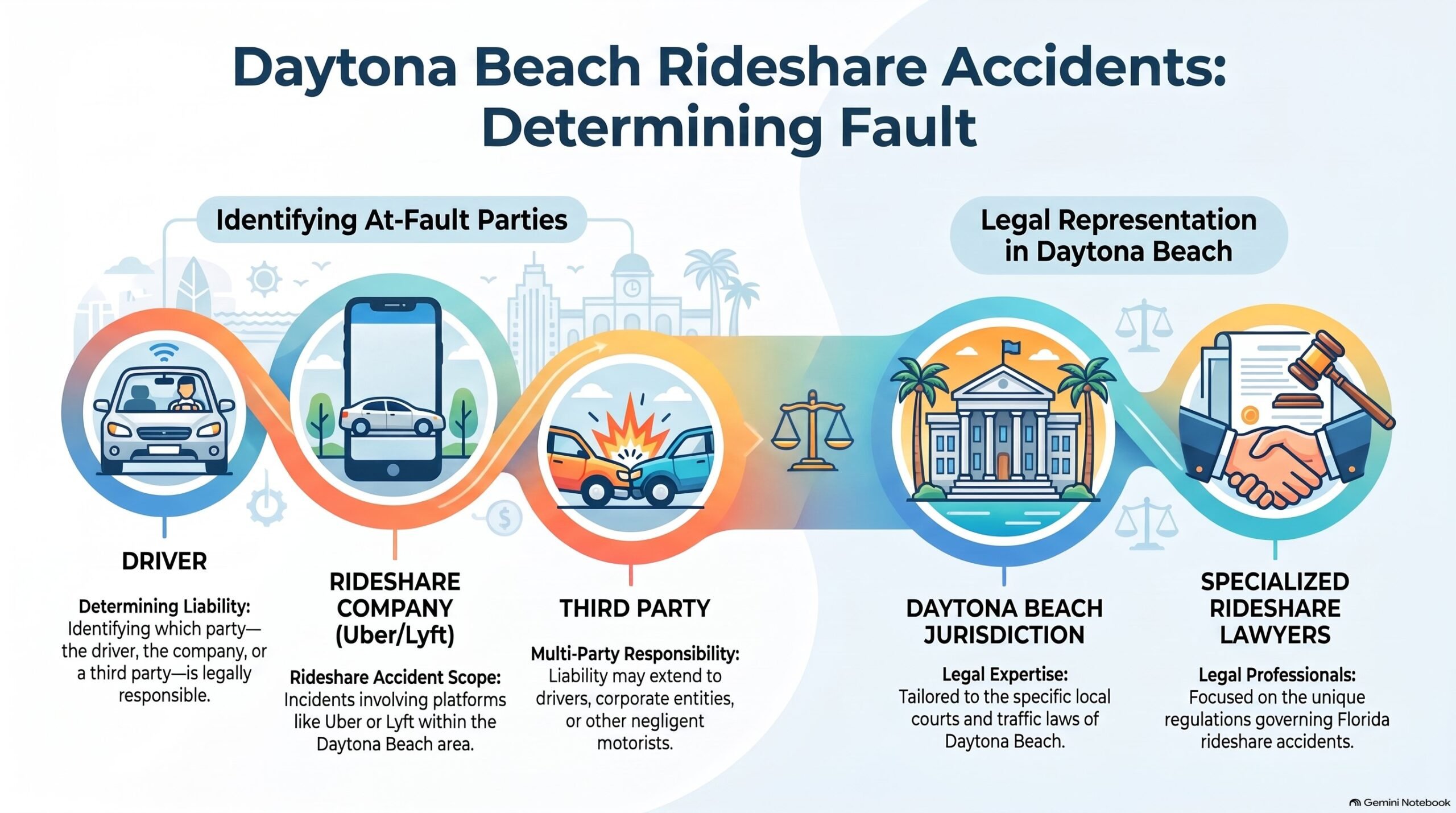


How We Can Help With Your Daytona Beach Rideshare Accident At-Fault Parties Injury Claim
When a rideshare crash causes serious injuries, identifying every responsible party is essential to pursuing a claim. Legal Representation can help an injured passenger, driver, or other road user understand available options and take informed steps toward recovery. Counsel can review records, preserve relevant evidence, and communicate with insurers while the injured person focuses on medical care and daily responsibilities.
Support may include organizing medical bills, documenting missed work, and gathering statements or photographs related to the collision. An attorney can explain deadlines, assess potential coverage, and prepare claim-filing materials with careful attention to accuracy. Clear guidance may also help clients respond to requests from insurance companies without overlooking important details.
A service-oriented legal team can keep clients informed, answer questions promptly, and coordinate with medical providers when appropriate. By managing procedural tasks and explaining each decision, counsel can reduce uncertainty during a difficult period. This assistance allows injured people and their families to direct more energy toward treatment, stability, and mutual support.
OUR CONSULTATIONSARE FREE
START YOUR FREE CASE REVIEW

Understanding Daytona Beach Rideshare Accident At-Fault Parties Injury Cases
Determining fault in a Daytona Beach rideshare accident requires examining how the collision occurred and which parties contributed to it. A careful review may consider the conduct of the rideshare driver, another motorist, the rideshare company, or an entity responsible for vehicle maintenance. Each party’s legal responsibility depends on the available evidence and the circumstances of the trip.
These cases can involve Complicated Liability because insurance coverage and responsibility may vary depending on whether the driver was logged into the app, had accepted a ride, or was transporting a passenger. Records such as trip data, communications, and insurance documents may help establish the applicable coverage and clarify each party’s role.
When more than one person or organization may have contributed to an injury, Multiple Defendants may be involved in a claim. Identifying all responsible parties can support a fair assessment of damages and help protect an injured person’s access to appropriate compensation. A fact-based investigation also promotes accountability and safer service for the community.
Common Causes of Daytona Beach Rideshare Accident At-Fault Parties
Rideshare accidents in Daytona Beach may result from distracted driving, speeding, reckless actions, or impaired operation. Unsafe passenger pickups can also create hazards when drivers stop abruptly or obstruct traffic. Identifying the cause helps clarify which parties may bear responsibility for the resulting injuries.
Distracted Driving
Distracted driving is a common cause of rideshare crashes in Daytona Beach, where drivers may divide their attention among traffic, a phone, a navigation app, a passenger, or a rideshare platform. Phone distraction can occur when a driver reads messages, accepts a trip, or enters information while driving. Even brief attention shifts may prevent a driver from noticing changing road conditions or another person’s actions. Navigation distraction may arise when a driver studies a route, adjusts directions, or searches for a pickup location instead of maintaining awareness. Passengers and other road users can also contribute to distraction when a driver responds to questions or conversation. Rideshare companies may have records that help clarify a driver’s activity before a collision. Establishing what diverted attention can help identify responsible parties and support those affected.
Speeding and Reckless Driving
When drivers exceed safe speeds or disregard traffic laws, they may cause serious rideshare collisions in Daytona Beach. Speeding reduces the time available to respond to traffic changes and increases the force of impact, potentially causing severe injuries to passengers, other motorists, cyclists, and pedestrians. Speed Thresholds depend on posted limits and conditions such as congestion, weather, visibility, and road design. A driver may travel too fast for those conditions even while remaining below the posted limit. Reckless Actions, including abrupt lane changes, unsafe passing, and tailgating, can further endanger people sharing the road. Rideshare drivers are responsible for operating vehicles with reasonable care, while other motorists may also contribute to a crash. Evidence such as witness accounts, vehicle damage, and available trip records can help clarify how speed or dangerous driving contributed.
Impaired Driving
Impaired driving can make a Daytona Beach rideshare trip dangerous by slowing reaction time, weakening judgment, and reducing a driver’s ability to control the vehicle. Alcohol, illegal drugs, and some prescription medications may affect a rideshare driver’s ability to transport passengers safely. A driver who chooses to operate a vehicle while impaired may be held responsible for a resulting collision, depending on the evidence and applicable law. Investigators may review witness accounts, vehicle records, and observations made at the scene. Sobriety checkpoint procedures and alcohol impairment testing can also provide relevant evidence when conducted lawfully. Passengers and other road users may suffer serious injuries when an impaired driver fails to respond to traffic conditions. Prompt reporting and careful documentation can help preserve information needed to assess responsibility and support those affected.
Unsafe Passenger Pickups
Unsafe passenger pickups can create hazards even when a rideshare driver is sober and attentive. In Daytona Beach, drivers may stop near hotels, event venues, or busy commercial areas where traffic and pedestrian activity compete for limited space. Curbside congestion can prompt a driver to pause in a travel lane, block a sightline, or make an abrupt movement while locating a waiting passenger. Hazardous loading zones, including areas near intersections, driveways, or bike lanes, can expose passengers and other road users to the risk of collisions. A passenger who enters from the traffic side may also be struck by passing vehicles. Responsibility may depend on where the driver stopped, whether the passenger selected a safe meeting point, and how each person acted. Safer pickup choices can reduce risks to everyone nearby.
Don’t Wait. Call Our Florida Personal Injury Lawyers Now!


Legal Rights of Daytona Beach Rideshare Accident At-Fault Parties Injury Victims
After a Daytona Beach rideshare crash, injured passengers, drivers, and other road users may have legal rights to seek compensation, even if they share some responsibility for the collision. Florida’s comparative fault rules may reduce recovery according to an injured person’s share of responsibility.
A careful review of available evidence and insurance policies can clarify potential claims and protect the interests of everyone affected.
- Passenger rights: Passengers may pursue compensation from responsible drivers or applicable policies, regardless of which vehicle they occupied.
- Rideshare coverage: Available insurance may depend on the driver’s app status and whether a trip was accepted or underway.
- Shared responsibility: A person found partly at fault may still recover damages, subject to Florida law and applicable limits.
- Claim documentation, including medical records, crash reports, and policy details, can help establish losses and identify responsible parties.
Those seeking to support injured people should encourage prompt medical attention and preservation of relevant records. Legal guidance can help clarify deadlines, coverage disputes, and fair allocation of responsibility without assuming fault before the facts are established.
Why Do Daytona Beach Rideshare Accident At-Fault Parties Injuries Happen?
Daytona Beach rideshare accidents that injure at-fault parties can result from driver distraction, speeding, fatigue, impaired judgment, or failure to yield. These behaviors may occur when a driver checks a navigation app, searches for a passenger, or rushes to complete a trip. Even a brief lapse can prevent a driver from noticing a pedestrian, cyclist, or vehicle in time to avoid impact.
Seasonal tourism can increase traffic volume and introduce unfamiliar drivers to busy streets, beach access routes, and event areas. Congestion may encourage risky lane changes or sudden stops, while roadway design, including intricate intersections and limited visibility, can make hazards harder to anticipate. Poor weather, inadequate lighting, and construction may further reduce a driver’s ability to respond safely.
Injuries can affect the rideshare driver and others involved, regardless of who caused the collision. Understanding common contributing factors helps communities, transportation providers, and drivers support safer travel and reduce preventable harm.
What Should You Do After a Daytona Beach Rideshare Accident Involving At-Fault Parties and Injuries?
After a Daytona Beach rideshare accident, injured parties should seek prompt medical care, even if their symptoms initially appear minor. They should report the crash to law enforcement and the rideshare company, providing accurate information about what occurred. Preserving photographs, witness details, medical records, and app-related communications can help document the incident.
Seek Medical Care
Prompt medical evaluation is important after a rideshare accident, even when an injured person feels well or has no visible wounds. Some injuries, including concussions and internal trauma, may not become apparent immediately. A timely assessment can identify hidden conditions and help establish an appropriate treatment plan. If Emergency symptoms arise, such as difficulty breathing, severe pain, confusion, or loss of consciousness, the injured person should seek emergency care without delay. Otherwise, a prompt visit to a physician or urgent care clinic can provide guidance on symptoms and necessary testing. The patient should accurately describe the collision and any changes in physical or emotional well-being. Following medical advice and attending follow-up appointments can support recovery and reveal complications that develop later. Consistent care also helps clinicians document progress and adjust treatment when needed.
Report The Crash
Once immediate medical needs have been addressed, the crash should be reported promptly to law enforcement and the rideshare company. A police report can document the collision and help establish an official account for everyone involved. The injured person should provide accurate information, describe observed injuries, and request the report number and instructions for obtaining a copy. The rideshare company should also receive notice through its app or customer support channel, in accordance with its incident reporting process. If the injured person cannot make these calls, a trusted representative may assist, with permission when possible. Emergency contacts can be notified so they can provide practical support, communicate with family, or help coordinate follow-up care. Prompt, factual reporting supports public safety and helps the relevant parties respond appropriately without delaying medical treatment or making unsupported conclusions about fault.
Preserve Evidence
Preserving evidence can help clarify how a Daytona Beach rideshare crash occurred, who may be responsible, and how the collision affected the injured person. If medically safe, the injured person or a trusted companion can photograph vehicle damage, road conditions, traffic signs, visible injuries, and the surrounding area. Names and contact details for witnesses should be recorded promptly while memories are still clear. The Evidence preservation timeline matters because vehicles may be repaired, video overwritten, and physical conditions changed.
The injured person should retain medical records, discharge instructions, receipts, and communications with insurers or the rideshare company. Digital evidence retention may require promptly requesting that the platform preserve trip details, driver information, messages, and GPS data. Relevant dashcam, surveillance, or phone footage should also be saved securely. Evidence should not be altered or posted publicly. A lawyer can help identify records and seek preservation through appropriate channels.
Don’t Wait. Call Our Florida Personal Injury Lawyers Now!
Critical Evidence in a Daytona Beach Rideshare Accident At-Fault Parties Injury Case
Reliable evidence can help establish how a rideshare crash occurred, who may be responsible, and the extent of resulting injuries. Relevant records may come from the driver, the rideshare platform, the crash scene, witnesses, and medical providers.
Promptly preserving these materials can support a clearer assessment of an injury claim.
- Driver and app records, including trip status, route data, driver communications, and platform records, may clarify whether the driver was working and what occurred before the collision.
- Crash scene evidence, including photographs, vehicle damage, road conditions, traffic signals, and police reports, can help document the circumstances of the crash.
- Witness statements: Contact information and timely accounts from passengers, bystanders, or other drivers may provide independent details about events leading up to the collision.
- Medical documentation, including examination notes, diagnostic results, treatment records, and follow-up care, can link injuries to the crash and demonstrate their impact.
Driver And App Records
Which records can clarify who caused a rideshare crash? Driver and app records can show what the driver was doing before, during, and after a trip. App activity may identify whether the driver was logged in, waiting for a request, traveling to a pickup, or carrying a passenger. Trip timestamps can help establish when those stages began and ended, allowing investigators to compare the driver’s account with the ride’s recorded sequence. The platform may also retain route data, driver communications, and trip status changes. Driver records, including training materials, driving history, and prior safety complaints, may provide relevant context about conduct or company oversight. These materials can help injured people and their representatives assess responsibility carefully and pursue a fair resolution. Preservation requests may be important because digital records can be deleted or overwritten.
Crash Scene Evidence
Photographs, roadway markings, and nearby surveillance footage can help reconstruct a Daytona Beach rideshare crash. Scene photography should document vehicle positions, damage, skid marks, debris, traffic signals, and sight obstructions before conditions change. These details may clarify how the collision occurred and which parties may bear responsibility, including a rideshare driver or another motorist. Investigators can also record roadway measurements, such as distances between vehicles, impact points, and lane boundaries. Accurate measurements help preserve the scene’s layout for later review and comparison with vehicle damage or other physical evidence. Nearby business cameras or traffic systems may capture the moments before or after impact, but recordings can be overwritten quickly. Prompt preservation requests and careful documentation can protect reliable evidence, support injured people seeking accountability, and help decision-makers assess the circumstances fairly.
Witness Statements
Witness statements can help clarify how a Daytona Beach rideshare accident occurred and identify the parties who may be at fault. Passengers, nearby pedestrians, drivers, and other observers may describe vehicle movements, traffic signals, conversations, or events immediately before impact. Their accounts can help distinguish the rideshare driver’s conduct from that of another motorist or a third party. Eyewitness credibility depends on factors such as the person’s vantage point, opportunity to observe, consistency, and possible bias. Investigators may compare statements with physical evidence and other available records. Prompt statement preservation is important because memories can fade and witnesses may become difficult to locate. Recording contact details and obtaining a clear account of the incident soon after the collision can support a fair review and help identify responsible parties. Witnesses should provide accurate information without speculation.
Medical Documentation
Medical documentation can connect injuries to a Daytona Beach rideshare accident and help establish their severity, treatment needs, and effect on daily activities. Records may include emergency evaluations, diagnostic imaging, physician notes, prescriptions, and rehabilitation reports. Collectively, these materials can show when symptoms began, how they changed, and what care providers recommended.
Treatment timelines help clarify whether medical attention was sought after the collision and whether later symptoms were reported consistently. Prompt, accurate records may also help distinguish accident-related conditions from prior health concerns. Provider coordination can help ensure that relevant information is shared among treating professionals and that records present a coherent account of care. For injured people, organized documentation can support informed decisions and help responsible parties understand the practical consequences of the crash. Missing appointments or incomplete records may complicate efforts to assess injuries and future needs.
Long-Term Effects of Daytona Beach Rideshare Accident At-Fault Parties Injuries
Injuries from a rideshare accident may have effects that continue well beyond initial treatment. Some people experience chronic pain or lasting limits on mobility that interfere with work and daily activities. Emotional trauma may also persist, affecting well-being and recovery.
Chronic Pain
Chronic pain can persist long after a Daytona Beach rideshare accident, even when visible injuries have mended. It may result from soft-tissue damage, nerve irritation, or other trauma sustained in the collision. Symptoms can fluctuate, making daily responsibilities difficult to manage and affecting a person’s ability to remain dependable at work, home, or in community service.
Pain management may involve coordinated medical care, prescribed treatment, and follow-up evaluations. Keeping records of symptoms, appointments, and related expenses can help clarify the condition’s duration and impact. Sleep disruption is also common, as discomfort may interfere with rest and contribute to fatigue, reduced concentration, or emotional strain. These effects warrant careful attention from providers and insurers evaluating the injury. Consistent documentation can support informed decisions about ongoing care and the losses associated with persistent pain.
Lasting Mobility Limits
Persistent pain may also accompany lasting mobility limits after a Daytona Beach rideshare accident. Injuries to the spine, hips, legs, or joints can reduce a person’s ability to walk, stand, climb stairs, or complete routine tasks. Some limitations improve with treatment, while severe injuries may cause permanent impairment and require ongoing rehabilitation. These changes can affect work, caregiving, and participation in community life. Adaptive equipment, such as braces, walkers, or wheelchairs, may support safer movement and greater independence. A home may also need modifications, including ramps or accessible bathrooms. Accessible transportation can help injured people reach medical appointments, employment, and necessary services. When another party’s negligence caused the collision, records of treatment, functional restrictions, and future care needs may help establish the long-term impact of the injuries and support a claim for appropriate compensation.
Emotional Trauma
After a Daytona Beach rideshare accident, emotional trauma may continue long after physical injuries begin to recover. Survivors may experience anxiety, recurring memories, or PTSD symptoms that interfere with work, relationships, and daily responsibilities. Sleep disruption can worsen concentration and mood, making routine tasks more difficult. Some people avoid driving or riding in vehicles, while others feel distressed near accident locations or when hearing traffic sounds. These reactions can affect family members and caregivers, who may need to provide practical support while respecting the survivor’s pace. Mental health professionals can assess symptoms and recommend counseling or other appropriate care. Consistent treatment may help survivors regain a sense of safety and stability. Documenting emotional effects and seeking timely support can also clarify the lasting impact and inform recovery planning.
Proving Liability in Daytona Beach Rideshare Accident At-Fault Parties Injury Cases
Proving liability in a Daytona Beach rideshare accident requires identifying each party whose actions may have contributed to the crash and establishing how those actions caused the injuries. This process may involve examining the conduct of the rideshare driver, another motorist, a vehicle owner, or a company responsible for vehicle maintenance. Each potential defendant’s role should be assessed using applicable Negligence Standards, including whether reasonable care was exercised under the circumstances.
Evidence can include crash reports, photographs, witness statements, vehicle damage, and available app or trip records. Medical documentation may help connect the collision to specific injuries, while qualified experts can clarify how the crash occurred. A careful investigation also considers whether more than one party contributed to the harm.
Liability Allocation depends on the evidence and applicable law, which may assign responsibility among multiple parties. Establishing each contribution supports a fair account of what happened, helps injured people pursue appropriate remedies, and preserves accurate information for the legal process.
Dealing With Insurance Companies After a Daytona Beach Rideshare Accident At-Fault Parties Injury
When a Daytona Beach rideshare accident involves multiple potentially responsible parties, insurance coverage may depend on who caused the crash and whether the driver was using the app at the time. The rideshare driver’s personal insurer, the rideshare company’s coverage, and another motorist’s policy may each have a role. Injured people seeking support should preserve relevant records and communicate carefully with every insurer. They may be asked to provide statements, medical information, or details about the collision. Responses should remain accurate and consistent, since unclear or incomplete information can complicate coverage decisions. Insurers may dispute responsibility, question whether an injury is related to the crash, or deny a claim. A policy’s policy limits can also restrict the amount available, even when losses are substantial. A lawyer can help identify applicable coverage, review insurer communications, and explain options for addressing disputes. This guidance can help injured people protect their interests while focusing on recovery and the needs of those who depend on them.
What to Expect During a Daytona Beach Rideshare Accident At-Fault Parties Injury Claim Process
A rideshare injury claim typically begins with an initial case review to assess the available evidence and identify potentially at-fault parties. The claim is then developed through evidence gathering and documentation of the injuries and losses. Depending on the facts and settlement discussions, the matter may be resolved through settlement or proceed to trial.
Initial Case Review
During an initial case review, a Daytona Beach rideshare accident lawyer examines how the crash occurred, the injuries involved, and which parties may bear legal responsibility. The discussion typically covers the date, location, sequence of events, medical care, and effects on daily activities. The lawyer may ask about available photographs, witness details, police records, and communications with insurers or the rideshare company. Confidentiality safeguards help protect information shared during this preliminary discussion, while conflict screening checks whether the lawyer can ethically consider the matter. The review also gives the injured person an opportunity to ask about the claim process, expected documentation, and possible next steps. Based on the information provided, counsel can explain whether further investigation may be appropriate and identify records that could help assess the injury claim.
Identifying At-Fault Parties
After the initial review, the next step is to determine who may be legally responsible for the crash and resulting injuries. A Daytona Beach rideshare collision may involve several parties, including the rideshare driver, another motorist, or a vehicle owner who permitted unsafe use. Vehicle ownership can affect responsibility when a maintenance failure or permission to drive contributed to the incident. The investigation may also consider the driver’s status in the rideshare app, since coverage can vary depending on whether the driver was waiting for a request, traveling to pick up a passenger, or completing a trip. Corporate liability may arise when the rideshare company’s conduct or policies contributed to the harm, although its role depends on the facts and applicable law. Identifying each potentially responsible party helps clarify the claim process and supports fair accountability.
Building Your Claim
Building a rideshare accident claim begins with organizing evidence that connects the crash, the responsible parties, and the resulting injuries. Records may include photographs, witness accounts, police reports, rideshare trip details, and medical documentation. These materials help clarify how the collision occurred and which individuals or companies may bear responsibility.
A careful claim also documents the full effect of the injuries. Treatment records, wage information, and evidence of daily limitations can support an accurate Claim valuation. When several parties or insurance policies are involved, reviewing coverage and liability evidence helps prevent important sources of compensation from being overlooked.
A sound Negotiation strategy depends on a well-supported account of losses and responsibility. Counsel may gather additional records, consult qualified experts, and assess disputed facts. This organized process allows injured people to pursue fair compensation while preserving accurate information for everyone involved.
Settlement Or Trial
Once the evidence and losses are documented, a rideshare injury claim may proceed toward settlement or trial. Settlement discussions may involve the injured person, the rideshare driver, insurance carriers, and other potentially responsible parties. Negotiation Strategies can include presenting medical records, wage documentation, and evidence of how injuries affect daily responsibilities. A fair agreement may resolve the claim without court proceedings, but settlement is not guaranteed. If the parties cannot agree, the case may proceed to trial, where each side presents evidence and arguments. Jury Verdict Factors can include fault, injury severity, credibility, and the consistency of medical treatment. A verdict may determine liability and damages, though appeals or collection issues can affect the outcome. Throughout the process, informed decisions can help protect the injured person’s interests and support accountability.
Compensation for Daytona Beach Rideshare Accident At-Fault Parties Injury Damages
When a rideshare driver or another party causes a crash in Daytona Beach, injured people may seek compensation for losses linked to the collision. The available recovery depends on the injuries, their effects, and the evidence connecting those effects to the crash. A claim may address reasonable medical expenses already incurred, as well as anticipated treatment, rehabilitation, medication, and other necessary services. Future care needs may require support from medical records and assessments by qualified professionals.
Compensation may also account for time away from work and reduced ability to earn income. Income replacement can be relevant when injuries prevent a person from returning to the same duties or schedule. Records from employers and healthcare providers can help document these limitations. In serious cases, lasting physical restrictions may affect future work opportunities and daily responsibilities.
A careful evaluation can help identify responsible parties and applicable insurance coverage. By gathering records and explaining the injured person’s needs, legal counsel may help pursue a recovery that supports treatment, stability, and continued participation in family and community life.
Economic vs Non-Economic Damages in Daytona Beach Rideshare Accident At-Fault Parties Cases
Rideshare accident claims may include economic damages, such as medical expenses and lost income, as well as non-economic damages for pain, suffering, and loss of normal activities. The types and value of recoverable damages depend on the circumstances of the crash and the injuries involved. Clear records and other reliable evidence can help establish and prove these losses.
Economic Damages
Economic damages compensate an injured person for measurable financial losses caused by a Daytona Beach rideshare accident. These losses may include Medical expenses for emergency care, hospital treatment, medication, rehabilitation, and necessary follow-up visits. They may also include lost wages when injuries prevent a person from working during recovery. If the injuries limit future employment, documented reductions in earning capacity may be considered.
Other recoverable costs can include transportation to medical appointments, assistive equipment, and reasonable expenses for household services made necessary by the injury. To evaluate these amounts, an injured person may gather bills, receipts, pay records, tax documents, and statements from employers or providers. Clear documentation helps show how the crash created specific financial costs. A careful review can support a fair assessment while helping the injured person pursue compensation responsibly.
Non-Economic Damages
In addition to measurable financial losses, a person injured in a Daytona Beach rideshare accident may seek non-economic damages for harm that does not have a direct price tag. These damages address the personal effects of an injury, rather than expenses such as medical bills or lost income. They may include physical pain, emotional distress, anxiety, and reduced ability to participate in ordinary activities. Loss of enjoyment may arise when an injury prevents someone from pursuing hobbies, family routines, or community service that previously gave meaning to daily life. Relationship strain may also occur when pain, stress, or limited mobility affects interactions with family members and friends. The value of these harms is not calculated through a fixed invoice, but they remain important parts of the overall impact an accident can have on an injured person.
Proving Your Losses
To recover damages after a Daytona Beach rideshare accident, an injured person must show both the extent of the losses and how the at-fault party’s conduct caused them. Medical records, bills, diagnostic reports, and treatment plans can document injuries and expenses. Future care costs may require opinions from treating physicians or qualified experts who explain anticipated treatment and its likely expense.
Economic damages include medical costs, lost income, and reduced earning capacity. Wage loss calculations may rely on pay records, tax returns, employer statements, and evidence of missed work. Non-economic damages, such as pain, emotional distress, and diminished enjoyment of life, require evidence of how injuries affect daily activities and relationships. Consistent records and credible testimony can help clarify these effects. Careful documentation supports a fair assessment and helps responsible parties understand the harm caused.
Don’t Wait. Call Our Florida Personal Injury Lawyers Now!
When a Daytona Beach Rideshare Accident At-Fault Parties Injury Case Goes to Trial vs. Settlement
Whether a Daytona Beach rideshare injury case proceeds to trial or settles depends on the strength of the evidence, the parties’ assessment of fault, and the available insurance coverage. Settlement may resolve a claim without the uncertainty, expense, and time associated with a courtroom proceeding. It can also provide injured people with a defined recovery while allowing the parties to avoid further dispute. However, an offer may not reflect the documented losses or the circumstances of the crash, so careful evaluation is critical.
When negotiations do not produce an acceptable agreement, trial may offer a path to seek a decision from a judge or jury. Trial preparation includes organizing records, identifying witnesses, and presenting evidence about responsibility and harm. The process can be demanding, and jury verdicts are not guaranteed. Each option carries distinct risks and benefits. A considered decision should account for the injured person’s needs, the available proof, and the practical value of continued negotiations, with the goal of reaching a fair resolution.
Florida Laws That May Affect Your Daytona Beach Rideshare Accident At-Fault Parties Case
The choice between settlement and trial is shaped in part by Florida laws governing fault, insurance, and injury claims. These rules can affect which losses are recoverable and how responsibility is assessed after a rideshare collision. A careful review may help injured people pursue fair treatment while supporting accurate, accountable claims.
- PIP coverage rules: Florida’s no-fault system generally requires eligible drivers to seek initial medical and wage-loss benefits through personal injury protection, subject to policy limits and statutory conditions.
- Comparative negligence standard: A person’s recovery may be reduced by their share of fault. Florida’s modified comparative negligence law generally bars recovery when a person is found more than 50 percent at fault.
- Rideshare insurance: Available coverage may depend on the driver’s app status, including whether a trip was accepted or a passenger was aboard. Applicable policy limits can differ across these periods.
- Serious injury threshold: Claims for pain and suffering may require proof of a qualifying injury under Florida law. Medical records and professional assessments can clarify whether that standard is met.
These provisions guide evidence review, negotiations, and decisions about pursuing a claim.
The Statute of Limitations for Daytona Beach Rideshare Accident At-Fault Parties Injury Cases
After a Daytona Beach rideshare accident, injured people generally have a limited period to file a lawsuit against parties whose negligence caused their injuries. Florida law sets deadlines for personal injury claims, and the applicable period can depend on when the injury occurred and the legal basis of the case. Missing the Limitations deadline may prevent an injured person from pursuing compensation in court, even when evidence supports the claim.
The deadline may also differ when a claim involves a government entity, a wrongful death, or another legally distinct circumstance. Certain filing exceptions may pause or alter the time limit, such as when an injured person is a minor or a defendant cannot be located. These rules are fact-specific, and exceptions do not apply automatically. Rideshare cases may involve multiple potentially responsible parties, but that intricacy does not necessarily extend the filing period. Prompt attention to the relevant dates helps protect the interests of injured people and those who depend on them.
How a Daytona Beach Rideshare Accident At-Fault Parties Lawyer Can Help You
When a rideshare crash causes serious injuries, an attorney can help identify the parties whose conduct may have contributed to the collision and pursue claims against them. A lawyer can examine driver actions, company records, insurance policies, and roadway conditions to determine which claims may be supported by evidence. This work can help injured people seek accountability while protecting the interests of passengers, other motorists, and families affected by the crash.
An attorney can investigate a rideshare crash, identify potentially responsible parties, and help injured people pursue evidence-supported claims.
Legal support may include:
- Preserving trip data, vehicle records, photographs, and witness statements.
- Evaluating whether the rideshare driver, another motorist, a vehicle owner, or another entity may bear responsibility.
- Reviewing available insurance coverage and explaining potential claim options.
- Organizing medical documentation and calculating losses to present a clear account of the harm.
A lawyer can also explain the Legal Fee Structure before representation begins and maintain consistent Attorney Communication about case developments. By coordinating evidence and claim details, counsel can reduce confusion and help clients make informed decisions throughout the process.
When to Contact a Daytona Beach Rideshare Accident At-Fault Parties Lawyer
Prompt legal guidance can be important when a rideshare crash causes injuries, disputed fault, or uncertainty about insurance coverage. A passenger, driver, pedestrian, or other affected person may benefit from contacting counsel soon after receiving necessary medical care. Early consultation can help preserve trip details, witness information, photographs, and communications before records become difficult to obtain. It may also clarify which parties or insurance policies could be relevant, without requiring an immediate decision to pursue a claim.
Contact is especially timely when an insurer requests a recorded statement, offers a settlement, or questions how the collision occurred. A person should avoid signing releases or accepting payment without understanding the potential effect on future claims. Attorney selection should reflect the circumstances of the crash, the person’s communication needs, and the lawyer’s familiarity with rideshare-related insurance issues. Prompt, informed advice can support fair treatment and help injured people make considered choices while protecting their ability to assist investigators and comply with applicable deadlines.
Why You Need an Experienced Daytona Beach Rideshare Accident At-Fault Parties Lawyer
An experienced Daytona Beach rideshare accident lawyer can help identify every potentially responsible party and determine how overlapping insurance policies may apply. This analysis may include the rideshare driver, another motorist, the transportation company, or a vehicle owner. Each party’s role and available coverage can affect how an injured person seeks compensation.
A lawyer can also preserve trip records, app data, witness accounts, and other evidence that may clarify how the collision occurred. Prompt, careful investigation supports Driver Accountability by connecting conduct, such as unsafe driving, to the resulting harm. It can also reveal whether Corporate Oversight, including screening, training, or safety practices, warrants examination.
For people who rely on rideshare services or seek to protect others from preventable harm, clear responsibility matters. An experienced attorney can explain the claims process, address disputes over fault, and coordinate communications with insurers. This guidance can help injured parties pursue appropriate recovery while allowing them to focus on medical care and daily needs.
How to Choose the Right Daytona Beach Rideshare Accident At-Fault Parties Lawyer for Your Case
Choosing the right Daytona Beach rideshare accident lawyer requires careful evaluation of the attorney’s experience with rideshare claims, knowledge of applicable insurance coverage, and ability to investigate disputed liability. A careful selection can help an injured person pursue accountability while protecting the interests of passengers, drivers, and others affected by the crash.
Attorney credentials should include relevant personal injury experience, a clear record of handling complicated claims, and familiarity with Florida procedures. The attorney should explain how the investigation may identify responsible drivers, rideshare companies, or other parties without promising a particular outcome. Prospective clients can ask who will manage the case, what evidence may be needed, and how potential insurance issues will be addressed.
Client communication also matters. A suitable lawyer should provide timely updates, answer questions in understandable terms, and set realistic expectations about deadlines and next steps. Comparing consultations, reviewing fee arrangements, and evaluating whether the attorney listens carefully can help a person make an informed choice. This approach supports a fair process for everyone involved.
About The Law Offices of Anidjar & Levine
For those evaluating legal representation after a rideshare crash, The Law Offices of Anidjar & Levine provides information about its personal injury practice and approach to client matters.
The firm represents people injured in accidents and explains how legal guidance may help them understand available options.
Its work may include reviewing crash details, identifying potentially responsible parties, and communicating with insurers.
Firm History can help prospective clients understand the practice’s background and development.
The firm describes its experience handling personal injury matters, including cases involving transportation and roadway incidents.
Each claim depends on its own facts, so past work does not guarantee a particular result.
Client Values are reflected in clear communication, attentive service, and respect for the circumstances affecting injured people and their families.
For clients who value helping others, a careful legal process can also support accountability and safer practices.
The firm can explain its services, fees, and case procedures during an initial consultation, allowing individuals to make informed decisions about representation.
Frequently Asked Questions
Can I File a Claim if I Was a Passenger in the Rideshare Vehicle?
Yes, a rideshare passenger may file a claim for injuries caused by a driver’s negligence. Potential coverage can include the rideshare driver’s policy, the company’s applicable insurance, or another at-fault motorist’s coverage, depending on the circumstances. Promptly reporting the crash, preserving injury documentation, and obtaining medical care can support an accurate review. A qualified attorney can assess available passenger insurance, identify responsible parties, and explain filing deadlines and options.
What if the At-Fault Driver Was Uninsured or Underinsured?
If the at-fault driver lacks adequate insurance, an injured rideshare passenger may seek compensation through applicable Uninsured Motorist Coverage or the rideshare company’s insurance, depending on policy terms and circumstances. Underinsured Driver Claims may also be available when the driver’s limits do not cover documented losses. Coverage can depend on the driver’s status during the trip and other insurance policies. A careful review can identify potential sources of recovery and protect the passenger’s interests.
Can Multiple Parties Share Responsibility for a Rideshare Accident?
Yes. Multiple parties may share responsibility for a rideshare accident, depending on the evidence and each party’s conduct. A rideshare driver may be liable for Distracted driving, while another motorist, the rideshare company, or a vehicle owner may also bear responsibility. Vehicle maintenance failures could implicate the owner or a service provider. Investigators assess the circumstances, applicable insurance coverage, and state law to determine how fault is allocated and which parties may owe compensation.
Does Rideshare Coverage Apply While a Driver Is Waiting for a Ride Request?
Rideshare coverage may apply while a driver is waiting for a ride request, but protection depends on the platform’s app-based coverage periods and the driver’s status in the app. During this period, a company policy may provide limited liability coverage if personal insurance does not respond. The applicable driver liability limits vary by state and policy terms. A careful review helps identify available coverage and supports fair treatment of everyone affected.
Can I Pursue a Claim if I Was Visiting Daytona Beach From Another State?
Yes, an out-of-state visitor may pursue a claim for injuries caused by a rideshare crash in Daytona Beach. Because the collision occurred in Florida, Florida jurisdiction will generally govern the case, even if the injured person lives elsewhere. The person should preserve medical records, trip details, witness information, and insurance communications. Claim deadlines may limit the time to file, so prompt legal guidance can help protect the visitor’s rights and support a fair resolution.
—————————
Rideshare accident claims in Daytona Beach can involve multiple potentially responsible parties, including drivers, rideshare companies, and other motorists.
Identifying liability, preserving evidence, and understanding available insurance coverage are crucial steps toward pursuing compensation.
Injured victims should seek medical care and avoid making assumptions about fault before the facts are reviewed.
The Law Offices of Anidjar and Levine can assess the circumstances, explain legal options, and help clients pursue a claim based on the evidence and applicable Florida law.
For additional guidance, a Daytona Beach Personal Injury Lawyer can help you understand your next steps.

