

The Law Offices of Anidjar and Levine can investigate how a hazard in a Daytona Beach big-box or discount store caused an injury, and whether the retailer knew of it or should have discovered it. This review may include surveillance footage, inspection records, witness accounts, medical documentation, and store communications. Florida comparative negligence rules and legal deadlines may affect a claim. Prompt evidence preservation can support a clearer assessment of responsibility and losses. The following information explains essential rights, practical steps, and considerations for choosing a Daytona Beach Personal Injury Lawyer.
Main Takeaways
- A Daytona Beach slip-and-fall lawyer can assess whether a big-box or discount store failed to address a hazardous condition.
- Claims may depend on what caused the fall, what the store knew or should have discovered, and how it responded.
- Preserve evidence promptly, including photos, witness details, incident reports, and surveillance footage before it is lost.
- Seek medical care, document symptoms and expenses, and keep records of injuries, treatment, and lost income.
- Florida comparative negligence and filing deadlines may affect recovery; a lawyer can explain how they apply to your circumstances.


How We Can Help With Your Daytona Beach Slip & Fall Big-Box & Discount Injury Claim
After a fall in a Daytona Beach big-box or discount store, an attorney can investigate the incident, preserve relevant evidence, and assess whether the retailer failed to maintain reasonably safe premises. This support can help an injured person understand available options while allowing store staff and witnesses to provide information promptly.
Counsel may request incident reports, surveillance footage, inspection records, and other materials before they are lost or routinely deleted. The attorney can also organize medical records, document expenses, and communicate with the retailer or its insurer, reducing the burden on someone focused on recovery. These steps help clarify Retailer responsibility and whether the circumstances support claim eligibility.
A careful review can identify unanswered questions, explain relevant deadlines, and outline practical next steps without promising a particular result. When appropriate, the attorney may negotiate for a fair resolution or prepare the matter for further proceedings. Clear guidance enables injured customers to make informed decisions and seek accountability through a measured, evidence-based process.
OUR CONSULTATIONSARE FREE
START YOUR FREE CASE REVIEW

Understanding Daytona Beach Slip & Fall Big-Box & Discount Injury Cases
Understanding a Daytona Beach slip-and-fall injury claim involving a big-box or discount store begins with examining the conditions that caused the fall and the retailer’s response. These cases assess whether the store acted reasonably to protect visitors and whether its conduct contributed to the injury. Retailer duty generally requires reasonable care in maintaining premises, monitoring conditions, and responding appropriately to known or discoverable risks. The specific facts matter, including what the retailer knew, when it learned of a concern, and what steps it took.
A claim also requires evidence that connects the store’s conduct to the harm and documents the resulting losses. Records, photographs, witness accounts, and medical documentation may help clarify disputed facts. Florida’s comparative negligence rules can affect recovery if an injured person’s own conduct contributed to the incident. The allocation of responsibility depends on the evidence and applicable law. A careful review can help injured visitors understand their options and pursue fair treatment while preserving accurate information for any claim. The analysis remains specific to each case.
Common Causes of Daytona Beach Slip & Fall Big-Box & Discount
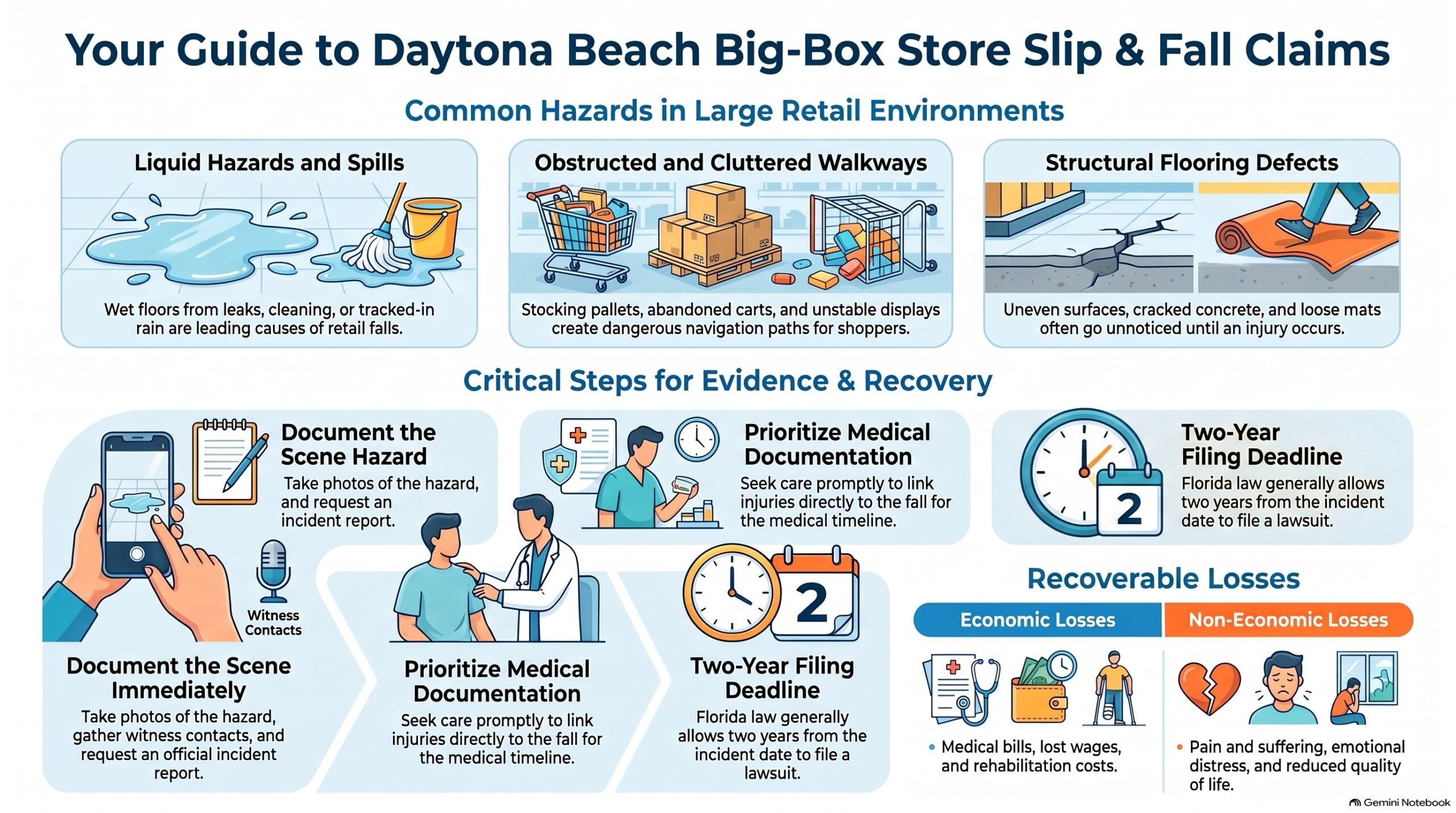
Slip-and-fall hazards in big-box and discount stores may include wet floors from cleaning or tracked-in rain, as well as spills left in aisles. Cluttered walkways can obstruct customers’ paths, while uneven flooring may create an unexpected tripping surface. These conditions can pose risks when store staff do not identify and address them promptly.
Wet Store Floors
Wet floors in big-box and discount stores can create serious fall hazards when spills, tracked-in rainwater, leaks from refrigeration units, or recently mopped surfaces are left without timely cleanup or clear warnings. Store operators can reduce these risks by inspecting entrances and other moisture-prone areas, promptly addressing leaks, and using floor drying equipment after cleaning. Warning signs should be visible from approaching walkways, while barriers may be appropriate when a surface remains unsafe. Employees should follow consistent procedures for reporting wet conditions and confirming that floors are dry before reopening affected areas. Slip-resistant footwear can offer additional protection, but it does not replace reasonable maintenance. When a fall occurs, the condition of the floor, inspection records, warnings, and response time may help clarify whether the store took appropriate steps to protect customers and staff.
Spills in Aisles
Spills in store aisles can result from dropped merchandise, leaking containers, damaged packaging, or food and beverages carried by customers. In big-box and discount stores, liquid products may leak from damaged containers, while broken packaging can spill powders, oils, or other substances onto the floor. These hazards may be difficult to notice when they blend with flooring or are hidden beneath shelves and displays. Store personnel responsible for customer safety generally need to identify spills promptly, restrict access when appropriate, and arrange effective cleanup. Regular aisle inspections can help detect hazards before customers encounter them, particularly in areas with frequently handled goods. When a spill remains unattended, a shopper may lose footing and suffer injuries. The circumstances, duration, and store response can be relevant when evaluating a fall.
Cluttered Walkways
When merchandise, stocking materials, or shopping carts obstruct an aisle, customers may have limited space to move safely. In big-box and discount stores, cluttered walkways can force shoppers to make sudden turns, step around obstacles, or navigate through crowded areas. These conditions may be especially difficult for customers who use mobility aids or are assisting children. Stores generally benefit from keeping aisles clear, promptly removing abandoned carts, and scheduling restocking to minimize hazards during business hours. Unstable merchandise displays may spill products into walking paths, while boxes or promotional stands can narrow access to necessary routes. Blocked emergency exits pose an additional safety risk, as they can impede evacuation during an emergency. When a fall occurs, the placement and duration of an obstruction may help clarify whether reasonable inspection and cleanup procedures were followed.
Uneven Flooring
Uneven flooring in big-box and discount stores can create trip hazards that are difficult to notice while customers focus on merchandise or navigate through crowded aisles. Raised tiles, cracked concrete, loose mats, and worn flooring may catch a customer’s foot or destabilize a cart. Flooring changes between sales areas, entrances, and storage sections can also create abrupt height changes if poorly installed or maintained. These hazards may result from inadequate inspections, delayed repairs, or building movement. Store operators should promptly identify defects, restrict access when necessary, and arrange suitable repairs. Surface leveling can reduce abrupt changes and improve safe passage for customers, employees, and visitors. When a fall occurs, photographs, incident reports, and witness details may help establish the condition and whether reasonable precautions were taken.
Don’t Wait. Call Our Florida Personal Injury Lawyers Now!


Legal Rights of Daytona Beach Slip & Fall Big-Box & Discount Injury Victims
A slip-and-fall in a Daytona Beach big-box or discount store may give an injured customer the right to pursue compensation if a dangerous condition caused the fall and the store failed to take reasonable steps to address it. Under premises liability law, the injured person generally must establish that the store knew or should have known about the hazard and had a reasonable opportunity to respond. A claim may seek payment for documented losses, subject to the evidence and applicable law.
Potential rights and responsibilities include:
- Requesting medical evaluation and retaining treatment records.
- Reporting the incident and seeking a copy of any store report.
- Preserving photographs, receipts, and witness contact information.
- Seeking compensation for medical costs, lost income, and other proven harm.
- Reviewing how Comparative negligence may affect recovery if the customer shares responsibility.
Florida deadlines and evidence requirements can affect a claim. Prompt legal guidance may help protect the injured person’s interests while supporting fair accountability and safer service to the community.
Why Do Daytona Beach Slip & Fall Big-Box & Discount Injuries Happen in Daytona Beach?
Understanding why these injuries occur can help clarify how a store’s safety practices may affect a slip-and-fall claim. Big-box and discount stores often manage heavy customer traffic, frequent deliveries, and large inventories, creating conditions that require consistent attention. Spilled liquids, dropped merchandise, loose packaging, and tracked-in rainwater can make floors hazardous when not promptly addressed. Carts, pallets, and products left in walkways may also obstruct customers or conceal dangerous surface conditions.
Store procedures can influence whether these risks are identified and corrected. Effective employee training helps staff recognize hazards, follow inspection routines, and respond appropriately to reported problems. Aisle design may contribute to incidents when displays narrow walking paths, merchandise blocks sightlines, or crowded layouts make hazards difficult to see. Inadequate lighting and worn flooring can further increase risk. These circumstances do not automatically establish liability; the relevant facts include the hazard’s source, the store’s knowledge, and whether reasonable safety measures were taken to protect visitors.
Don’t Wait. Call Our Florida Personal Injury Lawyers Now!
What Should You Do After a Daytona Beach Slip-and-Fall Big-Box & Discount Injury?
After a slip and fall in a big-box or discount store, the injured person should report the incident to store management and request that it be documented. They should also photograph the hazard and visible injuries, preserve relevant records, and seek prompt medical care. Once immediate needs are addressed, legal guidance can help clarify available options and important deadlines.
Report the Fall
When a shopper slips or falls in a Daytona Beach big-box or discount store, the incident should be reported to a manager as soon as it is safe to do so. Prompt staff notification gives the store an opportunity to address an unsafe condition and may help protect other customers from harm. The shopper or a companion can explain where and when the fall occurred, describe the apparent hazard, and identify any witnesses who are willing to speak with staff. A clear, factual account supports accurate incident reporting without speculation or blame. The shopper may ask that the report be completed and request information about how to obtain a copy. If employees are unavailable, the shopper can contact the store’s customer service desk or corporate office. Reporting should not delay necessary assistance.
Document Your Injuries
Once the fall has been reported, the injured shopper should document any symptoms and visible injuries as soon as practical. Clear photographs can record bruising, swelling, cuts, or other changes, with dates noted when possible. The shopper should also preserve relevant clothing and footwear in their current condition, since these items may help show how the incident affected them.
A symptom journal can provide a consistent record of pain, mobility limits, sleep disruption, and changes in daily activities. Entries should identify when symptoms began, how they developed, and any steps taken to relieve them. Medical records and appointment details can support a Medical timeline, helping organize evaluations, diagnoses, and treatment. Accurate, timely documentation can assist healthcare providers in understanding the shopper’s condition and help preserve a reliable account of recovery for those reviewing the incident.
Seek Legal Guidance
Because a slip-and-fall claim may involve store policies, surveillance footage, and disputed accounts of the incident, an injured shopper may benefit from seeking legal guidance promptly. A lawyer can explain how Florida premises-liability rules may apply, identify evidence that should be preserved, and clarify potential deadlines. Early advice may also help prevent avoidable errors when communicating with a retailer or insurer. Understanding legal consultations can help an injured shopper prepare for an initial meeting. The shopper may bring photographs, medical records, incident reports, witness details, and a timeline of events. Preparing questions for counsel about fees, case strategy, likely challenges, and expected next steps can make the discussion more useful. Careful guidance can support an informed decision while helping the injured person protect their interests and continue meeting responsibilities to others.
Critical Evidence in a Daytona Beach Slip & Fall Big-Box & Discount Injury Case
Strong evidence can help establish how a fall occurred and whether the store knew, or should have known, about a hazardous condition. Prompt documentation may preserve details that could otherwise be lost.
Essential records and accounts may include:
- Photos of the scene, hazard, and surrounding area
- Surveillance footage covering the incident and nearby activity
- Store inspection and maintenance logs
- Contact details for witnesses
- Incident reports and related store communications
Incident Scene Photos
Photographs taken at the scene can preserve details that may change or disappear before a Daytona Beach slip-and-fall claim is investigated. Images may document the substance or object involved, its location, nearby warning signs, lighting, and the condition of the floor. Wide views can show the surrounding area, while close-up images may capture specific hazards. Different camera angles can clarify distances and sightlines without altering the scene. Photo metadata, including timestamps and device details, may help establish when and how images were created. A careful record can support a fair assessment of what happened and help those responsible for serving customers identify safety concerns. Images should be preserved in their original form, with copies stored securely. If possible, photographs should be taken promptly and without disturbing the condition being documented.
Surveillance Video
Surveillance video can provide a time-stamped account of conditions and activity before and after a slip-and-fall in a Daytona Beach big-box or discount store. Footage may show when a spill or other hazard appeared, how customers and employees moved through the area, and whether the condition remained present after the incident. This evidence can help clarify disputed accounts and support a fair evaluation of an injured person’s claim.
Video retention is often limited, so prompt requests may be important before relevant recordings are overwritten or deleted. A preservation request can identify the incident date, approximate time, and location, while seeking footage from nearby cameras. Camera blindspots may leave parts of the scene unrecorded, and video may not capture the hazard clearly. Other evidence can help establish what the footage does not show.
Store Inspection Logs
Where surveillance footage may show what happened in a store aisle, inspection logs can indicate whether employees checked the area before the fall and recorded any hazards. These records may document inspection frequency, the time of each check, the employee responsible, and any corrective action taken. In a Daytona Beach slip-and-fall case, a missing entry or a long gap between inspections may raise questions about whether the store followed its safety procedures. A complete log may also show that staff identified a spill, obstruction, or other condition and responded promptly. Log retention matters because routine records may be overwritten or discarded under store policies. A timely preservation request can help prevent relevant documents from being lost. Careful review may clarify whether the business took reasonable steps to protect customers and others using the premises.
Witness Contact Details
Witness contact details can be important in a Daytona Beach slip-and-fall case involving a big-box or discount store, particularly when accounts of the incident differ. Witness identification should include each person’s name, telephone number, email address, and a brief description of what the person observed. Store employees, shoppers, and nearby vendors may have seen the hazard, the fall, or events immediately afterward. Their accounts can help clarify when a spill or obstruction occurred, whether warnings were in place, and how staff responded.
Prompt contact preservation matters because memories may fade and people may become difficult to locate. A responsible representative can promptly record statements, preserve relevant messages, and document efforts to reach each witness. Information should be gathered respectfully, without pressure or promises. Accurate, organized records can support a fair assessment of the incident and help protect the interests of those seeking accountability.
Long-Term Effects of Daytona Beach Slip & Fall Big-Box & Discount Injuries
A slip and fall in a big-box or discount store can lead to effects that persist well beyond the initial injury. Some victims experience chronic pain and reduced mobility that interfere with daily activities and work. Lasting emotional effects, including anxiety about falling again, may also affect their quality of life.
Chronic Pain
Chronic pain can persist long after a slip-and-fall injury in a Daytona Beach big-box or discount store, even when the initial damage appears minor. Ongoing discomfort may involve the back, joints, or soft tissue and can disrupt sleep, concentration, and daily responsibilities. Symptoms may fluctuate, making it difficult to identify Pain flare triggers such as prolonged standing, repetitive tasks, stress, or changes in activity. A treating clinician can assess persistent symptoms, recommend appropriate care, and document how pain affects ordinary routines. Pacing strategies, including planned rest periods and gradual adjustments to demanding tasks, may help individuals manage symptoms without overexertion. Consistent records of pain levels, treatment, and functional effects can support informed medical decisions. For injured shoppers, timely evaluation also helps clarify the nature of the condition and its expected course.
Reduced Mobility
When a slip-and-fall injury in a Daytona Beach big-box or discount store affects the back, hip, knee, or ankle, reduced mobility may persist even after the initial injury has healed. Stiffness, weakness, or limited joint movement can make walking, standing, and climbing stairs difficult. These limitations may affect daily routines, work duties, and the ability to assist family or community members. Recovery plans may include physical therapy, home modifications, or considerations for mobility aids, guided by qualified health professionals. A cane, brace, or walker may support safer movement when medically appropriate. Accessible store navigation also matters: clear aisles, stable flooring, reachable products, and nearby seating can help customers move through retail spaces more safely. Documented mobility limitations may inform treatment decisions and help explain the injury’s continuing effects on ordinary activities.
Lasting Emotional Effects
Beyond physical limitations, a serious slip-and-fall injury in a Daytona Beach big-box or discount store may have lasting emotional effects. Fear of another fall can develop during routine activities, including shopping, walking through crowded aisles, or entering unfamiliar buildings. These Anxiety triggers may lead an injured person to avoid places that resemble the accident scene or to depend on others for tasks once completed independently. Persistent pain, disrupted sleep, and uncertainty about recovery can also contribute to distress. For some people, social withdrawal follows when mobility concerns or embarrassment make gatherings difficult. These changes may affect family relationships, work, and participation in community life. Compassionate support from relatives, health professionals, and others can help preserve dignity and connection. Recognizing emotional effects alongside physical injuries supports a fuller understanding of recovery and its practical needs.
Proving Liability in Daytona Beach Slip & Fall Big-Box & Discount Injury Cases
Proving liability in a Daytona Beach slip-and-fall at a big-box or discount store requires evidence that the business failed to exercise reasonable care and that this failure caused the injury. Evidence may show that a hazardous condition, such as a spill, loose flooring, or debris, existed and that store personnel knew or reasonably should have discovered it. The duration the hazard persisted, inspection practices, and prior reports can help establish notice.
Photographs, video footage, witness accounts, incident reports, and medical records may document the condition and its consequences. Maintenance records can reveal whether inspections and repairs were completed consistently. Employee training materials may show whether staff were instructed to identify hazards, respond promptly, and document corrective action. A careful review of these materials can clarify whether reasonable safety procedures were followed.
The injured person’s account should be recorded accurately, including the location, circumstances, and resulting symptoms. Preserving relevant evidence promptly can support a fair assessment of responsibility and help protect the rights of those affected.
Dealing With Insurance Companies After a Daytona Beach Slip & Fall Big-Box & Discount Injury
Once evidence of a store’s responsibility has been gathered, communication with its insurance company can affect how a Daytona Beach slip-and-fall claim is evaluated. The insurer’s adjuster may request details about the incident, injuries, and prior medical history. A claimant can respond accurately while limiting discussion to relevant facts and avoiding speculation. Adjuster tactics may include seeking inconsistencies, emphasizing gaps in treatment, or suggesting that the injured person shared responsibility. These questions do not establish that the claimant caused the fall, but careless answers may complicate a fair assessment.
Recorded statements merit particular care. Before agreeing to provide one, an injured person may consult an attorney to understand the request and prepare a precise account. Medical records, photographs, incident reports, and receipts can help support clear communication. Promptly preserving these materials also helps prevent important details from being lost. Respectful, measured contact with the insurer can protect the claimant’s interests while allowing the company to review the available evidence responsibly.
What to Expect During a Daytona Beach Slip & Fall Big-Box & Discount Injury Claim Process
A Daytona Beach slip-and-fall claim involving a big-box or discount store typically begins with an initial review of the incident and the available facts. Evidence collection can clarify how the hazard arose, while settlement negotiations address potential compensation and liability. If the parties cannot reach an agreement, the process may proceed to trial preparation.
Initial Claim Review
During the initial claim review, the insurer for a Daytona Beach big-box or discount store typically examines how the fall occurred, what the store knew about the hazard, and whether its response was reasonable. The review also considers whether the injured person was lawfully on the premises and whether the circumstances support Claim eligibility under applicable law. The insurer may assess the reported injuries, treatment needs, and claimed losses to develop an early case valuation. That estimate can change as the claim progresses and additional information becomes available. The store’s insurer may question whether its conduct contributed to the fall or whether other factors played a role. A careful review helps clarify the issues in dispute and the potential scope of responsibility. It does not, by itself, determine the final outcome or resolve the claim.
Evidence Collection
Evidence collection helps establish how a fall occurred and whether a store had notice of the hazard. A Daytona Beach slip-and-fall claim may involve gathering incident reports, witness contact details, and photographs of the floor, warning signs, lighting, and the surrounding area. Store surveillance footage can show conditions before and after the incident, but it may be routinely erased, so a prompt preservation request can be important. Medical records document reported injuries, treatment, and related expenses. Receipt preservation may help identify the store, visit date, and purchases, while clothing retention can preserve stains, tears, or other physical evidence. The injured person should keep original items secure and avoid altering them. These materials can help counsel assess responsibility and injury claims, while respecting the privacy and cooperation of witnesses and others affected.
Settlement Negotiations
Once the available records and other materials clarify the circumstances of a fall, settlement negotiations may begin with the store or its insurer. A representative may review incident reports, photographs, medical records, and information about the store’s inspection practices before evaluating responsibility and potential damages. A Demand letter can outline the injured person’s account, documented losses, and requested resolution. The store or insurer may accept the proposal, reject it, or respond with a different amount. Negotiations can involve questions about fault, treatment, future care, and the effect of injuries on daily activities. A counteroffer strategy should reflect the available evidence and the person’s documented needs, rather than pressure to settle quickly. Clear communication helps parties evaluate options, preserve the injured person’s interests, and make a considered decision about whether an agreement is appropriate.
Trial Preparation
If settlement negotiations do not resolve a Daytona Beach slip-and-fall claim, the case may proceed toward trial, where preparation focuses on presenting the facts and addressing disputed issues. The legal team reviews medical records, incident reports, photographs, store inspection logs, and other evidence to establish how the fall occurred and what harm resulted. It may consult qualified experts to explain safety practices or the extent of an injury. Witness preparation helps guarantee that the injured person and other witnesses understand courtroom procedures and can provide clear, truthful testimony. During Jury selection, attorneys and the court identify jurors who can assess the evidence fairly. The parties also organize exhibits, prepare questions, and anticipate arguments from the store’s defense. Careful preparation supports an accurate presentation and helps the court evaluate the claim.
Compensation for Daytona Beach Slip & Fall Big-Box & Discount Injury Damages
A slip-and-fall injury at a Daytona Beach big-box or discount store may lead to compensation for medical expenses, lost income, reduced earning capacity, and pain and suffering. The available recovery depends on the injury, its effects, and the evidence connecting the incident to the store’s conduct.
Compensation may address ambulance services, hospital treatment, medication, rehabilitation, and other reasonable expenses related to the fall. Lost wages may also be considered when injuries prevent an employee from working, while reduced earning capacity may apply if lasting limitations affect future employment. Future care needs, including continued therapy or assistive services, can be relevant when supported by medical evidence.
A claim may also seek damages for physical pain, emotional distress, and disruption to daily activities. Records, witness accounts, photographs, and professional assessments can help establish the nature and extent of harm. Each case requires an individualized review, and no particular outcome is guaranteed. Prompt documentation can help preserve accurate information about losses and recovery.
Economic vs Non-Economic Damages in Daytona Beach Slip & Fall Big-Box & Discount Cases
In Daytona Beach big-box and discount store slip-and-fall cases, economic damages may include medical expenses, lost income, and other documented financial losses. Non-economic damages address harm such as pain, emotional distress, and reduced quality of life. Establishing both categories generally requires evidence that connects the fall to the claimed losses.
Economic Losses
When a slip-and-fall at a Daytona Beach big-box or discount store causes injury, damages may include both economic losses and non-economic harm. Economic losses are measurable financial costs resulting from the injury and its effects on work and daily responsibilities. They may include reasonable medical bills, prescription expenses, rehabilitation costs, and necessary transportation to treatment. Records such as invoices, pay statements, and medical documentation can help establish these amounts.
Lost Wages may be claimed when an injured person misses work during recovery. If the injury limits future employment or reduces the ability to earn income, evidence may also support a claim for diminished Earning Capacity. Relevant proof can include employer records, tax documents, and qualified professional assessments. Careful documentation helps clarify the financial impact and supports a fair evaluation of the injured person’s needs.
Non-Economic Harm
Beyond documented financial costs, a slip-and-fall may cause non-economic harm that affects an injured person’s daily life and well-being. In Daytona Beach big-box and discount stores can disrupt routines, limit independence, and make ordinary activities difficult. Emotional distress may include anxiety, frustration, embarrassment, or concern about recovery and future mobility. These effects can influence relationships, sleep, and confidence in public spaces, even when they do not appear on bills or receipts. Loss enjoyment of hobbies, family gatherings, exercise, or community activities may also follow when pain or physical restrictions persist. Non-economic damages address these personal consequences, which differ from measurable losses such as medical expenses and missed wages. Recognizing this harm reflects the broader impact an unsafe condition may have on a person’s life and ability to participate fully.
Proving Your Damages
Clear documentation helps establish the full extent of harm after a slip-and-fall at a Daytona Beach big-box or discount store. Economic damages include measurable losses such as medical bills, prescription costs, lost wages, and reduced earning capacity. Receipts, pay records, treatment notes, and expert assessments can support these claims. Future expenses may include ongoing care, rehabilitation, or necessary changes to daily living, and should be supported by qualified medical opinions. Non-economic damages address less tangible effects, including pain, emotional distress, and reduced enjoyment of life. Consistent treatment records and statements from people familiar with the injured person’s daily limitations may help explain these effects. A careful Damages calculation considers both categories, avoids duplication, and connects each claimed loss to the incident. Organized evidence can help decision-makers assess the claim fairly.
Don’t Wait. Call Our Florida Personal Injury Lawyers Now!
When a Daytona Beach Slip & Fall Big-Box & Discount Injury Case Goes to Trial vs Settlement
In a Daytona Beach slip-and-fall case involving a big-box or discount store, settlement may resolve the claim without the cost and uncertainty of trial. A negotiated resolution can provide compensation sooner and reduce the demands of continued litigation. It may also allow the injured person to focus on recovery while avoiding testimony and a public hearing. However, settlement requires agreement on the value and terms of the claim, and the store or insurer may dispute responsibility or damages.
If negotiations do not produce an acceptable outcome, the case may proceed to trial. Jury decision factors can include the credibility of witnesses, the clarity of incident evidence, and the connection between the fall and claimed losses. Trial timeline expectations vary with court scheduling, case intricacy, and pretrial proceedings, so resolution may take longer than settlement. A trial also carries uncertainty because the jury determines the outcome. Counsel can explain these options and help the injured person assess which path best serves their needs.
Florida Laws That May Affect Your Daytona Beach Slip & Fall Big-Box & Discount Case
When a slip-and-fall occurs at a big-box or discount store in Daytona Beach, Florida, the law may shape how responsibility and compensation are determined. Under premises liability standards, an injured customer generally must show that a dangerous condition caused the fall and that the store had actual or constructive knowledge of it. Evidence may include inspection records, incident reports, photographs, surveillance footage, and witness accounts.
Key legal considerations may include:
- Whether a spill, obstruction, or damaged surface created an unreasonable hazard.
- Whether the store knew about the condition or should have discovered it through reasonable care.
- Whether warning signs or timely cleanup could have reduced the risk.
- Whether the customer’s conduct contributed to the incident.
- Whether medical records connect the fall to documented injuries and losses.
Florida comparative negligence may reduce compensation when an injured person shares responsibility. The percentage assigned to each party can affect recovery, making accurate evidence important. These rules also support safer shopping environments and responsible service to the public. Each case depends on its facts, and legal outcomes cannot be guaranteed.
The Statute of Limitations for Daytona Beach Slip & Fall Big-Box & Discount Injury Cases
After a slip-and-fall at a big-box or discount store in Daytona Beach, the time allowed to file a personal injury lawsuit may be limited by Florida’s statute of limitations. For many negligence claims, Florida law generally provides a two-year period from the date of the incident to file suit. Missing that deadline can result in dismissal, even when the injured person has substantial evidence of unsafe conditions.
Deadline calculation can depend on the facts, including when the injury occurred and whether a different legal rule applies. A claim involving a government entity, for example, may require earlier notice and compliance with separate procedures. Certain circumstances may also pause or alter the ordinary filing period.
Exception deadlines are fact-specific and should not be assumed to apply automatically. The injured person should preserve incident reports, medical records, photographs, and witness information, and promptly confirm the applicable time limit. Acting within the required period helps protect the ability to seek accountability and pursue compensation for losses caused by a preventable hazard.
How a Daytona Beach Slip & Fall Big-Box & Discount Lawyer Can Help You
A Daytona Beach slip-and-fall lawyer can investigate a big-box or discount store accident, identify potentially responsible parties, and help preserve evidence before it is lost. This work can support an injured person’s effort to seek accountability while reducing the burden on family members and caregivers.
Counsel may assist by:
- Requesting incident reports, surveillance footage, and store maintenance records.
- Examining whether a hazardous condition existed and how long it remained.
- Identifying employees, contractors, or property owners whose conduct may matter.
- Organizing medical records, wage information, and other loss documentation.
- Communicating with insurers and evaluating settlement proposals.
Attorney Advocacy can help make certain that relevant facts receive careful attention and that the injured person’s account is presented clearly. A lawyer can also explain applicable legal standards, assess disputed evidence, and coordinate information from witnesses and qualified professionals. With a considered Claim Strategy, counsel can address liability and damages in a manner grounded in the available evidence. This guidance may allow an injured person to focus on recovery and responsibilities to loved ones, while pursuing a fair resolution through appropriate legal channels.
When to Contact a Daytona Beach Slip & Fall Big-Box & Discount Lawyer
Prompt legal guidance can help preserve evidence and clarify available options after a fall at a big-box or discount store. A person may contact a Daytona Beach slip and fall lawyer soon after receiving medical attention, especially if the incident involved a wet floor, damaged merchandise, or an obstructed aisle. Early consultation gives counsel an opportunity to identify time-sensitive records, such as surveillance footage, incident reports, and witness details, before they become unavailable. It can also help the injured person understand deadlines and avoid statements or actions that could complicate a claim.
When selecting counsel, the person can review attorney qualifications, including experience with premises liability matters and familiarity with Florida law. A prompt discussion may clarify what information to gather, how to communicate with the store or insurer, and whether further investigation is appropriate. Those seeking accountability while helping prevent similar hazards can share accurate observations and preserve relevant documents. Contacting a lawyer does not require a decision to pursue litigation; it provides an informed assessment of available next steps.
Why You Need an Experienced Daytona Beach Slip & Fall Big-Box & Discount Lawyer
When a fall occurs in a big-box or discount store, an experienced Daytona Beach slip-and-fall lawyer can help assess whether the business failed to address a hazardous condition or provide adequate warning. Such an assessment may clarify whether Store Negligence contributed to the incident and identify evidence needed to establish responsibility. These locations often have extensive aisles, frequent inventory movement, and established inspection procedures, making records and witness accounts important to understanding how a hazard arose and how long it remained.
A lawyer can also explain how Florida law applies to the specific facts of the case, including the injured person’s responsibilities and any possible limits on recovery. A sound Legal Strategy may involve preserving surveillance footage, reviewing inspection logs, documenting injuries, and obtaining relevant statements before evidence is lost. This work can help present a clear account of the event and its consequences. By addressing legal and practical concerns, counsel can allow an injured person to focus on treatment and daily needs while pursuing a fair resolution.
How to Choose the Right Daytona Beach Slip & Fall Big-Box & Discount Lawyer for Your Case
Choosing the right Daytona Beach slip-and-fall lawyer for a big-box or discount store case requires careful attention to the attorney’s experience, communication, and approach to evidence. Attorney experience with retail premises claims can help them identify relevant safety policies, inspection records, and surveillance footage. A prospective client may ask how similar cases were handled and what evidence could support the claim. The answers should be clear, specific, and grounded in the facts rather than promises of a particular result.
Communication style also matters. A lawyer should explain the process, respond within reasonable timeframes, and make legal developments understandable. This can help an injured person make informed decisions while managing medical care and other responsibilities. The lawyer should also listen carefully, treat the client with respect, and recognize how pursuing accountability may help improve safety for others. Before choosing counsel, the client can review the fee agreement, clarify who will handle the case, and confirm how updates will be provided. These steps support a considered decision.
About The Law Offices of Anidjar & Levine
The Law Offices of Anidjar & Levine represents injured people, including those pursuing claims following slip-and-fall incidents in Daytona Beach.
The firm’s work includes helping clients understand their legal options, document losses, and seek compensation when a property owner’s negligence contributes to an injury.
For people who value serving others, this work reflects the role legal advocacy can play in supporting individuals and families during difficult periods.
Firm History provides context for the firm’s development and its focus on representing people facing injury-related challenges.
Clients considering counsel may also review Attorney Credentials, including relevant education, licensing, and experience, to assess whether a lawyer is suited to their circumstances.
In a retail fall claim, counsel may investigate the hazard, preserve available evidence, and communicate with insurers.
The facts and applicable law shape each case, so outcomes cannot be guaranteed.
Prospective clients can contact the firm to discuss their situation, learn about its process, and determine whether representation may be appropriate.
Frequently Asked Questions
Can I File a Claim if I Fell at a Big-Box Store While Using a Mobility Aid?
A person may file a claim after falling at a big-box store while using a mobility aid, but recovery depends on evidence that a hazardous condition contributed to the injury and that the store failed to address it reasonably. Mobility Aid Accessibility may be relevant if blocked routes, unsafe surfaces, or inadequate access contributed. Fall Evidence, including photographs, witness details, incident reports, and medical records, can help establish what happened. A local attorney can assess deadlines and options.
What if the Store’s Property Manager, Rather Than the Retailer, Is Responsible for Maintenance?
The property manager may be liable if it controlled the area, had a duty to inspect or repair hazards, and failed to act reasonably. Property manager liability depends on evidence about who knew or should have known of the dangerous condition. Maintenance contract terms can clarify each party’s responsibilities, but the contract alone may not determine liability. The injured person should preserve records, report the incident, and seek legal guidance promptly.
Can a Store Be Liable if I Slipped on a Product I Accidentally Dropped?
A store may be liable, but a customer’s accidental spill does not automatically establish responsibility. The incident creates a customer-created hazard, and liability may depend on whether employees knew or reasonably should have discovered it and had time to address it. The injured person’s conduct also matters. Under comparative negligence, compensation may be reduced if the customer’s carelessness contributed to the fall. Evidence, including surveillance footage and witness accounts, can clarify the circumstances.
Does Workers’ Compensation Apply if I Fell While Shopping During a Work Errand?
Workers’ compensation may apply when an employee falls while shopping on a work errand, but coverage depends on the circumstances. Employer authorization, the errand’s purpose, and whether the employee remained within assigned duties are important factors. A personal detour may affect eligibility, while an injury during a direct work-related task may qualify. The employee should promptly report the incident, preserve relevant records, and seek guidance from the employer or a qualified professional.
Can I Pursue a Claim if the Fall Happened in a Store’s Parking Lot?
A person may pursue a claim after falling in a store’s parking lot if unsafe conditions caused the injury and the store or property owner failed to take reasonable steps to address them. Relevant evidence may include Parking lot maintenance records, lighting conditions, photographs, witness accounts, and incident reports. Prompt medical care and documentation can support the claim. Liability depends on the circumstances, applicable law, and proof of negligence.
—————————
A slip-and-fall at a big-box or discount store in Daytona Beach can lead to serious injuries and difficult questions about liability.
Prompt medical care, careful documentation, and timely legal guidance can help protect an injured person’s rights.
The Law Offices of Anidjar and Levine can review the circumstances, explain available options, and pursue a claim when the evidence supports one.
A Daytona Beach Personal Injury Lawyer can help evaluate the case based on its specific facts, preserve important evidence, and address applicable deadlines.

