A Daytona Beach jackknife truck accident lawyer can investigate how the trailer lost control and identify potentially responsible parties, including the driver, trucking company, maintenance provider, or cargo loader.
The Law Offices of Anidjar and Levine may help preserve electronic logs, vehicle data, photographs, skid marks, medical records, and witness accounts before evidence disappears.
Legal guidance from a qualified Daytona Beach Truck Accident Lawyer can also address insurer communications, comparative negligence, medical expenses, lost income, and lasting disabilities.
Further information explains victims’ rights, claim procedures, and factors involved in selecting qualified representation.
Main Takeaways
- A Daytona Beach jackknife truck accident lawyer can investigate driver, trucking company, maintenance, loading, roadway, and equipment responsibility.
- Attorneys may preserve electronic logs, vehicle data, photographs, skid marks, inspection records, and witness accounts before evidence disappears.
- Medical documentation can connect fractures, spinal injuries, head trauma, and lasting limitations to the jackknife collision.
- Lawyers can handle insurer communications, evaluate settlement offers, and protect injured people from unfair claim tactics.
- Florida deadlines and comparative negligence rules may affect recovery, making prompt legal evaluation important after a truck accident.


How We Can Help With Your Daytona Beach Jackknife Truck Accident Injury Claim
When a jackknife truck accident occurs in Daytona Beach, an experienced truck accident lawyer can provide structured guidance throughout the injury claim process. The lawyer may begin by reviewing medical records, crash reports, employment information, and communications with insurers to identify practical next steps. Coordination with healthcare providers can help document treatment while protecting the injured person’s ability to focus on recuperation and family responsibilities.
Evidence Preservation is also vital. Counsel may send formal notices, request vehicle and driver records, and work to secure photographs, electronic data, surveillance footage, and witness statements before relevant materials disappear. Investigators can examine roadway conditions, maintenance history, loading practices, and company policies when appropriate.
A lawyer can communicate with insurers, evaluate settlement proposals, and explain available options without pressuring the claimant. Comparative Negligence issues may affect recovery, so counsel can organize facts showing how responsibility should be assigned. Through careful preparation, the legal team supports accountability and helps protect the claimant’s interests throughout the process.
OUR CONSULTATIONSARE FREE
START YOUR FREE CASE REVIEW

Understanding Daytona Beach Jackknife Truck Accident Injury Cases
Understanding a Daytona Beach jackknife truck accident injury case requires examining how the crash occurred, what injuries resulted, and which parties may bear legal responsibility. A careful review may include collision photographs, roadway conditions, vehicle data, medical records, and witness accounts. These materials can clarify whether Fatigue and braking performance affected the truck’s movement and whether established safety procedures were followed.
Injury cases may involve fractures, spinal trauma, head injuries, or lasting limitations that affect work and daily activities. Medical evaluation helps document the connection between the collision and the claimed harm, while treatment records assist in evaluating future care needs. Responsibility may extend beyond the driver to a carrier, maintenance provider, manufacturer, or other entity, depending on the evidence.
Driver training programs, supervision practices, inspection records, and compliance with federal and state requirements may also receive attention. A thorough assessment supports fair treatment for injured individuals and helps identify the information needed to pursue accountability through negotiation or litigation.
Common Causes of Daytona Beach Jackknife Truck Accident
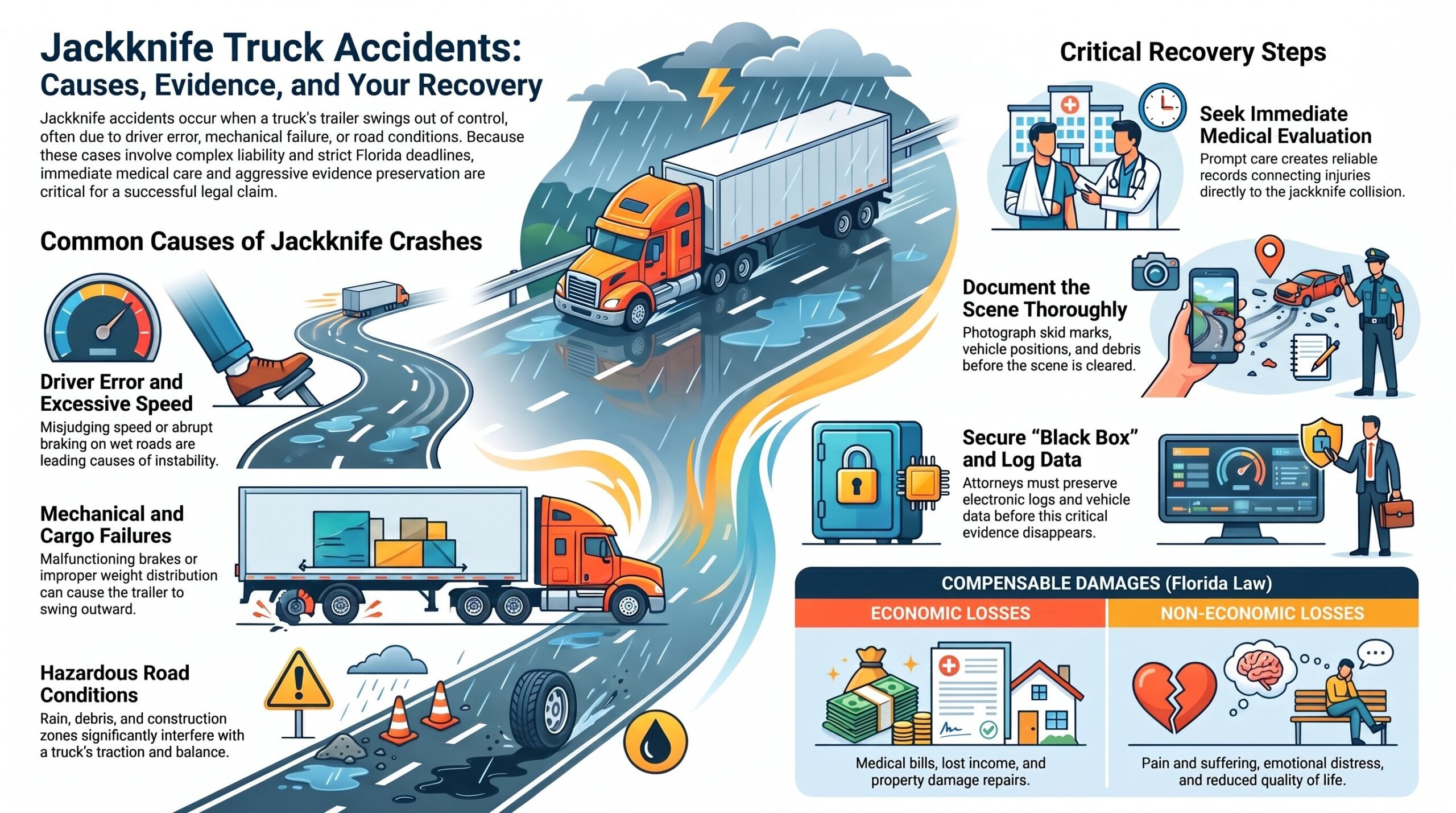
Daytona Beach jackknife truck accidents may result from driver error, excessive speed, improper braking, or hazardous road conditions. Each factor can disrupt a truck’s stability and cause the trailer to swing sharply toward the cab. Identifying the contributing cause is important when evaluating liability and the resulting injuries.
Driver Error
Driver error is a leading factor in Daytona Beach jackknife truck accidents, particularly when a truck operator misjudges speed, follows traffic too closely, or brakes abruptly on wet or congested roads. Distracted Driving, including texting, adjusting equipment, or monitoring navigation systems, can prevent timely recognition of changing traffic conditions. Fatigue may also impair judgment and coordination, especially when a driver disregards Regulated Hours or fails to obtain adequate rest between shifts.
Improper mirror use, unsafe lane changes, and inadequate awareness of trailer movement can further increase the risk of a jackknife. Employers and carriers may have responsibilities to provide training, enforce safety procedures, and monitor compliance. Careful investigation can help identify whether driver conduct, inadequate supervision, or other contributing circumstances caused the collision and resulting injuries.
Excessive Speed
Excessive speed can greatly increase the likelihood and severity of a jackknife truck accident in Daytona Beach. When a commercial vehicle travels too fast, its momentum can overwhelm the driver’s ability to maintain directional control, particularly during curves, sudden traffic changes, or roadway hazards. The trailer may begin moving independently of the tractor, creating a dangerous angle that threatens nearby motorists, pedestrians, and other road users.
Responsible operation requires careful speed selection based on traffic, weather, visibility, and cargo conditions. Effective Load management and proper weight distribution can support stability, but these safeguards cannot compensate for unreasonable speed. Driver training should emphasize hazard recognition, conservative decision-making, and compliance with posted limits. Transportation companies also have a duty to encourage safe schedules and supervision, helping protect the public from preventable jackknife crashes and their lasting consequences.
Improper Braking
Improper braking can cause a jackknife truck accident when sudden, uneven, or excessive braking disrupts the tractor-trailer’s stability. A malfunctioning Brake System may apply braking force inconsistently between the tractor and trailer, causing the trailer to swing outward while the tractor continues forward. Drivers may also contribute by braking abruptly, failing to account for cargo weight, or relying on brakes that require adjustment or replacement. Inadequate maintenance can increase these risks, particularly when worn components, air-pressure problems, or defective parts reduce stopping control.
Regular Safety Inspections can identify mechanical concerns before a truck enters service, while proper training can help drivers apply braking techniques suited to traffic conditions and vehicle loads. Investigators may examine maintenance records, onboard data, and witness accounts when determining whether improper braking caused the collision and resulting harm.
Hazardous Road Conditions
Hazardous road conditions can cause a jackknife truck accident when rain, standing water, debris, uneven pavement, or sharp roadway defects interfere with traction and vehicle stability. Foggy visibility may prevent commercial drivers from recognizing hazards early enough to brake or guide safely. Intersection hazards, including worn markings, sudden traffic changes, and pooled water, can increase the risk of trailer swing during turns or emergency guidance. Construction zones may narrow travel lanes, shift traffic patterns, and expose uneven surfaces that challenge a truck’s balance.
Road debris, such as fallen cargo or damaged vehicle parts, can force abrupt braking and trigger loss of control. Drivers and trucking companies have responsibilities to adjust speed, inspect routes, and respond cautiously. Evidence concerning warnings, maintenance, weather, and roadway design may help affected individuals understand liability and pursue appropriate assistance.
Don’t Wait. Call Our Daytona Beach Truck Accident Lawyers Now.


Legal Rights of Daytona Beach Jackknife Truck Accident Injury Victims
When a jackknife truck accident occurs in Daytona Beach, injured victims may have legal rights to seek compensation from the parties responsible for causing the collision. Potential recovery may include medical expenses, lost income, rehabilitation, property damage, and pain and suffering. A timely investigation can preserve evidence, including the Truck black box, driver logs, maintenance records, photographs, and witness accounts.
Victims may benefit from understanding their rights before communicating extensively with insurers. Florida insurance tactics can include early settlement offers, requests for recorded statements, or disputed evaluations of injury severity.
Legal guidance may help protect a claim and identify all responsible parties.
- Accountability for negligent conduct
- Support during medical recovery
- Protection from unfair claim practices
- Resources for affected families
Florida law imposes deadlines and procedural requirements that can affect recovery. A qualified attorney may evaluate liability, coordinate evidence preservation, communicate with insurers, and pursue a fair resolution through negotiation or litigation. Prompt attention can help safeguard the victim’s future and provide responsible advocacy during a difficult period.
Why Do Daytona Beach Jackknife Truck Accident Injuries Happen?
Don’t Wait. Call Our Daytona Beach Truck Accident Lawyers Now.
Why do jackknife truck accidents occur in Daytona Beach? These crashes often result when a tractor’s trailer swings sharply, causing the driver to lose control and threatening nearby motorists, pedestrians, and passengers. Several preventable conditions may contribute.
Driver fatigue, including excessive hours of operation, can delay reactions and impair judgment. Speeding, distracted driving, abrupt braking, and failure to account for rain, traffic, or roadway curves may also destabilize a combination vehicle. Mechanical defects create additional risks when trucking companies neglect vehicle maintenance or fail to complete required vehicle inspections. Brake problems, worn tires, handling defects, and coupling failures can make controlled braking difficult.
Improper cargo distribution is another significant cause. Loading violations, unsecured freight, or an overweight trailer may shift the vehicle’s center of gravity, increasing the likelihood of a jackknife. Poor training, inadequate supervision, and pressure to meet delivery schedules can compound these hazards. Identifying these contributing factors helps clarify how negligent practices may endanger Daytona Beach communities and create serious injuries for innocent people.
What Should You Do After a Daytona Beach Jackknife Truck Accident Injury?
After a Daytona Beach jackknife truck accident injury, the injured person should seek immediate medical care, even if symptoms initially appear minor. The accident scene should be documented through photographs, witness information, medical records, and other relevant evidence. Consulting a truck accident lawyer can help protect legal rights and determine whether compensation may be available.
Seek Immediate Medical Care
Prompt medical evaluation is important for anyone injured in a Daytona Beach jackknife truck accident, even if the injury initially appears minor. Adrenaline can mask symptoms, while conditions such as internal bleeding, concussions, and spinal injuries may worsen without timely treatment. An injured person should allow emergency responders to assess the condition and should follow medical professionals’ instructions regarding transportation, testing, and follow-up care. A prompt examination also creates reliable medical records connecting reported symptoms to the collision.
Those records can assist healthcare providers in coordinating treatment and may support later insurance or legal review. Immediate Documentation should include discharge instructions, prescriptions, diagnoses, and scheduled appointments. The Police Report may identify responding agencies and emergency actions, but medical care should remain the priority. Delaying treatment can harm health and complicate recovery.
Document The Accident Scene
When medical needs are addressed, documenting the Daytona Beach jackknife truck accident scene can preserve important evidence before vehicles, debris, and road conditions change. If safety permits, the injured person or a trusted companion should photograph the roadway, traffic signals, skid marks, cargo, vehicle positions, and visible hazards. Vehicle damage photos should capture each affected area from multiple distances and angles, without placing anyone near active traffic or unstable equipment. Notes can record the date, time, weather, lighting, road surface, and apparent sequence of events while details remain fresh.
Scene witness backup may include names, telephone numbers, brief statements, and photographs from bystanders who observed the collision. Copies of official incident information and relevant camera footage should also be preserved. Documentation should never delay emergency care or create additional danger.
Consult A Truck Accident Lawyer
Preserved scene evidence can help a Daytona Beach truck accident lawyer evaluate how the jackknife occurred, identify potentially responsible parties, and determine which insurance policies may apply. After receiving medical care, an injured person may benefit from consulting counsel before providing detailed statements to insurers or accepting a settlement. A lawyer can organize police reports, photographs, witness accounts, vehicle data, and trucking company records while protecting important deadlines.
Medical documentation should reflect diagnoses, treatment recommendations, restrictions, and expected recovery needs. Medication tracking and pain management records may help demonstrate the injury’s ongoing effects and support a complete damages assessment. Counsel can also coordinate with medical providers, explain available legal options, and communicate respectfully with involved parties. Early guidance allows the injured person to focus on recovery while preserving a fair opportunity to pursue compensation.
Don’t Wait. Call Our Daytona Beach Truck Accident Lawyers Now.
Critical Evidence in a Daytona Beach Jackknife Truck Accident Injury Case
Critical evidence can clarify how a Daytona Beach jackknife truck accident occurred and support a victim’s claim for accountability and compensation.
- Truck damage documentation may reveal the collision’s force and direction.
- Skid mark analysis can indicate braking, speed, and loss of control.
- Driver log records may expose hours-of-service violations or fatigue.
- Witness statements can preserve essential observations before memories fade.
Truck Damage Documentation
Documenting truck damage promptly can preserve critical evidence in a Daytona Beach jackknife truck accident injury case. Photographs should capture the truck from multiple angles, including crushed panels, separated components, broken lights, tire positions, and damage to any involved vehicle. Images should be taken before repairs, towing, or evidence disposal alter the condition. Photo evidence handling requires preserving original files, recording when and where each image was captured, and maintaining a clear chain of custody.
A qualified professional may inspect the truck for mechanical defects, loading issues, or maintenance concerns that photographs cannot establish alone. Repair estimates, invoices, inspection records, and towing documentation should also be secured. Insurance claim deadlines can affect access to records and compensation, so timely notice and organized preservation support a fair investigation.
Skid Mark Analysis
Skid marks can provide important evidence in a Daytona Beach jackknife truck accident injury case by showing how the truck responded before impact. Their length, direction, and location may help reconstruction professionals evaluate speed, braking, guidance, and the sequence of events. Differences between marks can also indicate whether the tractor and trailer moved separately during the jackknife.
Scene photography should capture each mark with measurements, roadway conditions, traffic signs, and reference points, because weather and traffic can quickly alter this evidence. Investigators may compare the markings with vehicle damage and witness accounts to assess whether evasive action was timely and controlled. This analysis can support a clear presentation of responsibility and injury circumstances. Documented findings may further assist insurance negotiations by countering unsupported claims about fault or unavoidable loss of control.
Driver Log Records
Driver log records can provide important evidence in a Daytona Beach jackknife truck accident injury case by showing whether the commercial driver complied with hours-of-service requirements before the collision. Electronic logging device data may reveal driving periods, rest breaks, duty changes, and possible falsification. Investigators can compare these entries with dispatch records, fuel receipts, toll transactions, and vehicle telematics to identify inconsistencies suggesting fatigue or excessive scheduling.
Data privacy requirements may govern access, storage, and disclosure, so authorized requests and careful handling are critical. When available, dashcam evidence can help correlate recorded driving time with roadway events, though it should be examined separately from log entries. A thorough review may clarify whether regulatory violations contributed to unsafe operation, supporting a fair evaluation of injury claims and accountability.
Witness Statements
Witness statements can provide critical evidence in a Daytona Beach jackknife truck accident injury case by preserving firsthand accounts of the collision and events immediately before it. Independent observers may describe the truck’s speed, lane position, braking, cargo movement, weather conditions, and driver conduct before the trailer swung across traffic. Their accounts can clarify disputed facts and support findings of negligence or 3rd party liability involving a carrier, loading company, or maintenance provider.
Witness contact information should be collected promptly because memories may fade and observers can become difficult to locate. Investigators may compare these accounts with physical evidence, surveillance footage, electronic data, and the police report. Consistent testimony can strengthen an injured person’s claim and help decision-makers evaluate damages, responsibility, and appropriate support for those affected.
Long-Term Effects of Daytona Beach Jackknife Truck Accident Injuries
Jackknife truck accident injuries may produce chronic pain, reduced mobility, and permanent disability that affect a person’s daily activities and ability to work. Survivors may also experience emotional and psychological trauma, including anxiety, depression, or post-traumatic stress. These lasting conditions can create ongoing medical, rehabilitation, and financial needs that require careful evaluation.
Chronic Pain And Disability
Chronic pain and disability can persist long after a Daytona Beach jackknife truck accident, even when initial injuries appeared manageable. Spinal damage, fractures, nerve impairment, and soft-tissue injuries may gradually restrict movement, employment, and ordinary daily responsibilities. Some individuals require ongoing physical therapy, medication management, mobility assistance, or corrective procedures. Documented medical evaluations can establish how symptoms developed, whether limitations are permanent, and what future care may reasonably cost.
Evidence preservation remains important, including treatment records, diagnostic images, employment documentation, and testimony concerning functional changes. Although motorcycle collisions involve different vehicle dynamics, similar principles apply when demonstrating lasting impairment and its effects on a person’s ability to serve family, coworkers, and community. A qualified attorney can coordinate medical and vocational evidence, identify responsible parties, and pursue compensation addressing continuing care, reduced earning capacity, and necessary accommodations.
Emotional And Psychological Trauma
Following a Daytona Beach jackknife truck accident, emotional and psychological trauma may continue even after visible injuries begin to recover. Survivors may experience anxiety, intrusive memories, sleep disruption, irritability, or fear when traveling near commercial vehicles. Nighttime visibility concerns can intensify distress, particularly when the collision occurred under poor lighting or involved sudden loss of control. Questions about driver fatigue, roadway conditions, and preventability may also contribute to anger, guilt, or persistent uneasiness.
Some individuals avoid driving, highways, or familiar locations, limiting independence and social participation. Others may develop symptoms consistent with acute stress or post-traumatic stress disorder. Recognition from family members, employers, and community supporters can help reduce isolation. A qualified mental-health professional may evaluate symptoms and recommend counseling or other appropriate trauma-informed care.
Ongoing Medical And Financial Needs
Emotional recovery after a Daytona Beach jackknife truck accident may occur alongside long-term medical and financial challenges. Survivors may require surgeries, rehabilitation, prescription medication, mobility equipment, and ongoing counseling. These services can create expenses that continue long after an insurance settlement offer appears sufficient. Careful documentation of treatment, work limitations, household assistance, and anticipated care helps establish the full scope of damages.
Legal counsel may assist with Negotiating Medical Bills, reviewing insurance coverage, and pursuing compensation for future medical needs and reduced earning capacity. When a collision causes a fatality, eligible relatives may also seek Wrongful Death Benefits for funeral costs, lost financial support, and related losses. Coordinated support from medical professionals, financial advisors, and legal representatives can help families protect vital resources while focusing on recovery and stability.
Proving Liability in Daytona Beach Jackknife Truck Accident Injury Cases
Proving liability in a Daytona Beach jackknife truck accident requires establishing how the truck’s loss of control occurred and which party’s conduct caused the collision. Evidence may show that a driver’s excessive speed, unsafe maneuver, distraction, or impaired judgment initiated the event. In other cases, a trucking company, maintenance provider, cargo loader, or vehicle manufacturer may share responsibility.
Witness credibility can significantly affect how conflicting accounts are evaluated. Dashcam footage, traffic-camera recordings, photographs, electronic logging data, and driver communications may help clarify timing and movement. An accident reconstruction specialist can analyze skid marks, vehicle damage, roadway conditions, and truck dynamics to explain how the jackknife developed.
Truck maintenance records may reveal neglected brakes, worn tires, steering defects, or other conditions that increased the risk of losing control. Investigators may also examine loading procedures, training, supervision, and compliance with safety regulations. Careful preservation and evaluation of this evidence supports accurate accountability and helps protect injured individuals and their families.
Dealing With Insurance Companies After a Daytona Beach Jackknife Truck Accident Injury
Insurance companies may respond quickly after a Daytona Beach jackknife truck accident, but their early involvement does not necessarily reflect the injured person’s interests. Adjusters may request recorded statements, broad medical authorizations, or detailed accounts before the full extent of harm is known. Injured individuals should answer truthfully while avoiding speculation, minimizing symptoms, or signing documents without informed review.
Medical documentation can help establish treatment, limitations, prognosis, and financial losses. It should be preserved carefully, including emergency records, diagnostic results, prescriptions, therapy notes, and work restrictions. Consistent reporting to healthcare providers may reduce opportunities for disputes about the injury’s seriousness or cause.
Understanding common insurance tactics is also important. An insurer may emphasize prior conditions, question treatment gaps, or present an early settlement that does not account for continuing needs. A qualified Daytona Beach truck accident attorney can communicate with insurers, protect relevant evidence, and help injured people make informed decisions while they focus on recovery and supporting their families.
What to Expect During a Daytona Beach Jackknife Truck Accident Injury Claim Process
A Daytona Beach jackknife truck accident injury claim generally begins with an initial evaluation of the injuries, liability, and available insurance coverage. The process then involves gathering accident evidence, documenting damages, and negotiating appropriate compensation with the insurers. If negotiations do not produce a fair resolution, the injured party may need to prepare for litigation.
Initial Claim Evaluation
During an initial claim evaluation, a Daytona Beach truck accident lawyer examines the jackknife collision, the resulting injuries, and the available evidence to determine whether the claim has legal and financial value. The lawyer typically discusses the client’s account, medical condition, treatment needs, work limitations, and immediate financial concerns. This review helps identify potentially responsible parties, applicable insurance coverage, and deadlines that could affect recovery.
The lawyer may also explain evidence preservation, including the importance of protecting relevant records and communications without turning the consultation into a full evidence-gathering investigation. If representation is appropriate, the lawyer outlines possible strategies, anticipated challenges, and the expected role of insurance negotiation. The evaluation also allows the client to understand fees, responsibilities, and realistic outcomes before deciding whether to proceed with legal assistance.
Gathering Accident Evidence
Several forms of evidence may be needed to establish how a jackknife truck crash occurred and who should be held responsible. Investigators may review photographs, traffic-camera recordings, vehicle damage, skid marks, weather conditions, and roadway design. Police reports and witness statements can help clarify the truck’s movements, while electronic logging data, inspection records, maintenance files, and driver training materials may reveal contributing violations or equipment problems. Medical records and employment documentation can establish the nature and consequences of resulting injuries.
When ordinary records are unavailable, alternative documentation sources may include nearby business video, cellular location data, dispatch communications, and social media posts. An attorney may coordinate with accident reconstruction professionals and trucking-safety experts while preserving relevant evidence. This process supports identifying responsible parties, including drivers, carriers, maintenance providers, manufacturers, and other entities.
Negotiating Insurance Compensation
When a jackknife truck accident injury claim reaches the insurance stage, the insurer typically evaluates fault, coverage, medical documentation, and the extent of the claimant’s losses before making or responding to a settlement demand. A representative may request records, statements, wage information, and repair estimates, then challenge disputed liability or the necessity of treatment. Counsel can organize evidence, communicate with adjusters, and present a demand that accounts for medical expenses, lost income, continuing care, and non-economic harm.
Negotiations may involve several counteroffers rather than an immediate resolution. Claimants should compare settlement vs trial by considering timing, expense, uncertainty, and potential recovery, while making informed decisions based on documented needs. Handling property damage claims separately can help address vehicle losses without obscuring the injury-related compensation sought for the affected individual and family.
Preparing For Litigation
Preparing for litigation in a Daytona Beach jackknife truck accident injury claim requires organized evidence, a clear understanding of the legal issues, and realistic expectations about the process. The injured party may need to preserve photographs, crash reports, witness information, vehicle data, employment records, and all medical documentation. Counsel typically reviews liability, insurance coverage, comparative negligence, and the extent of damages before filing a complaint.
During discovery, each side exchanges evidence, answers written questions, and may participate in depositions. Insurance Adjuster Tactics can include delayed responses, disputed treatment, or settlement offers that undervalue long-term harm. Medical Record Gaps may create challenges, making consistent treatment and documented explanations important. Mediation could resolve the dispute, but preparation for trial remains critical. A legal team helps the claimant meet deadlines, protect credibility, and present the strongest case for fair compensation.
Compensation for Daytona Beach Jackknife Truck Accident Injury Damages
Compensation for injuries caused by a jackknife truck accident in Daytona Beach may cover medical expenses, lost income, reduced future earning capacity, property damage, and pain and suffering. The available recovery depends on documented injuries, treatment needs, insurance coverage, and evidence establishing another party’s responsibility.
An injured person may seek reimbursement for emergency care, hospitalization, rehabilitation, medication, transportation, and necessary future treatment. Wage records and employment documentation can help demonstrate income lost during recovery or limitations affecting continued employment. Property-related losses may include vehicle repairs, replacement costs, and personal belongings damaged in the collision.
Families may also pursue Wrongful Death Lawsuits when a jackknife crash causes a fatality. Before resolving a claim, legal review may help prevent premature decisions, particularly Accepting Liability Releases that could waive additional rights. A qualified attorney can communicate with insurers, preserve relevant evidence, and pursue fair compensation while considering the injured person’s long-term needs. Prompt action may also protect deadlines governing injury and death claims.
Economic vs Non-Economic Damages in Daytona Beach Jackknife Truck Accident Cases
Economic damages in Daytona Beach jackknife truck accident cases may include medical expenses, lost income, property damage, and other documented financial losses. Non-economic damages address less tangible harm, such as pain and suffering, emotional distress, and diminished quality of life. Calculating total compensation requires evaluating both categories and determining how the accident’s effects have impacted the injured person’s present and future needs.
Economic Damages Explained
When a jackknife truck accident occurs in Daytona Beach, economic damages generally refer to the measurable financial losses caused by the collision. These damages may include emergency treatment, hospitalization, medication, rehabilitation, and future medical care supported by medical evidence. They can also cover lost wages, diminished earning capacity, property damage, transportation costs, and necessary household assistance. Accurate documentation, including invoices, pay records, repair estimates, and medical reports, helps establish the value of each claim.
Insurance settlement timelines may vary according to liability investigations, medical improvement, and negotiations with insurers. A qualified attorney can organize evidence and communicate with affected families while protecting their interests. Florida injury caps may affect certain claims, although their application depends on the defendant, legal theory, and specific facts. As a result, individualized legal review remains critical.
Non-Economic Damages Explained
Beyond documented financial losses, a person injured in a Daytona Beach jackknife truck accident may seek non-economic damages for the physical pain, emotional distress, mental anguish, inconvenience, and reduced quality of life caused by the collision. These damages address harms that invoices cannot fully measure, including lasting fear, sleep disruption, disfigurement, disability, and diminished enjoyment of family or community activities. A fact finder may consider medical evidence, testimony from relatives, treatment records, and the injury’s effect on ordinary routines.
Trucking company responsibility may influence the evaluation when unsafe policies, inadequate supervision, or negligent maintenance contributed to the crash. Punitive damages claims are separate and generally require proof of intentional misconduct or conduct showing conscious disregard for safety. Applicable Florida law, evidence, and case circumstances determine whether recovery is available.
Calculating Total Compensation
In a Daytona Beach jackknife truck accident case, total compensation generally combines economic and non-economic damages supported by the available evidence. Economic damages may include emergency treatment, rehabilitation, medication, lost wages, reduced earning capacity, property damage, and anticipated medical care. Non-economic damages address pain, emotional distress, disfigurement, loss of enjoyment, and diminished quality of life. Valuation depends on injury severity, recovery duration, permanence, and the accident’s effect on family responsibilities and daily independence.
Insurance Claim Timing can influence available coverage, negotiation leverage, and compliance with applicable deadlines. Evidence Preservation is vital; medical records, wage documentation, photographs, witness accounts, vehicle data, and trucking-company records may establish both liability and losses. A careful assessment prevents overlooked damages and supports a resolution that fairly serves the injured person’s needs while accounting for future consequences.
When a Daytona Beach Jackknife Truck Accident Injury Case Goes to Trial vs Settlement
A Daytona Beach jackknife truck accident injury case may resolve through settlement or proceed to trial, depending on the strength of the evidence, the parties’ willingness to negotiate, and the severity of the claimed losses. Settlement can provide a defined recovery without the uncertainty, delay, and expense of courtroom proceedings. It may also help injured individuals address medical needs and family responsibilities sooner.
Trial may become necessary when liability or damages remain disputed, or when an insurer refuses to offer a fair amount. Counsel may undertake Trial verdict preparation by organizing testimony, medical records, photographs, expert opinions, and financial documentation. A careful jury selection strategy can help identify impartial jurors who will evaluate the evidence responsibly.
Whether negotiating or litigating, the legal team generally explains risks, potential outcomes, and expected timelines. The injured person retains authority over settlement decisions. A trial verdict is determined by the jury and may be appealed, while a settlement typically becomes final under its written terms.
Florida Laws That May Affect Your Daytona Beach Jackknife Truck Accident Case
Florida laws can affect nearly every aspect of a Daytona Beach jackknife truck accident claim, including liability, filing deadlines, available compensation, and the evidence required to establish fault. State negligence principles may reduce recovery when an injured person shares responsibility. This comparative negligence analysis makes accurate fact development critical.
Federal trucking rules may also govern driver hours, inspection duties, cargo securement, and maintenance. Violations can support a negligence claim, particularly when records show preventable safety failures. Depending on the conduct involved, punitive damages may be available for intentional misconduct or gross negligence.
Important concerns include:
- Protecting an injured person’s dignity, safety, and financial stability
- Preserving evidence before vehicles, logs, and electronic data disappear
- Identifying every responsible carrier, driver, contractor, or manufacturer
- Seeking accountability when careless conduct harms families and communities
Evidence preservation can include photographs, witness information, medical records, onboard data, dispatch communications, and inspection materials. A qualified attorney can coordinate investigations, explain applicable Florida law, and pursue a fair resolution while respecting the needs of those affected.
The Statute of Limitations for Daytona Beach Jackknife Truck Accident Injury Cases
Although the circumstances of a Daytona Beach jackknife truck accident may require extensive investigation, an injured person must file a claim within the applicable statute of limitations. In Florida, personal injury claims generally must be filed within two years of the accident. Different deadlines may apply to wrongful death claims, claims involving governmental entities, or cases involving special legal circumstances. Missing the governing deadline can permanently bar recovery, even when evidence strongly supports the injured person’s position.
The Insurance claim timeline should consequently be treated separately from the court-filing deadline. Insurance negotiations, medical treatment, and an insurer’s investigation do not automatically extend the limitations period. Prompt documentation of injuries, expenses, witnesses, and trucking records can help preserve an accurate account while the claim is evaluated. Early attention also allows sufficient time for fault dispute resolution when responsibility is contested among drivers, trucking companies, maintenance providers, or other parties. Because deadlines depend on specific facts, timely legal information may protect a person’s opportunity to seek accountability.
How a Daytona Beach Jackknife Truck Accident Lawyer Can Help You
When a jackknife truck accident causes injuries or property damage, legal counsel can help identify responsible parties, preserve essential evidence, and pursue compensation under applicable Florida law.
A Daytona Beach jackknife truck accident lawyer can coordinate a careful case assessment and explain available legal remedies without placing additional burdens on an injured person or family.
- Evidence collection may include photographs, vehicle data, driver records, maintenance files, witness accounts, and surveillance footage.
- Liability analysis can examine driver conduct, trucking-company policies, loading practices, equipment defects, and roadway conditions.
- Insurance negotiation can address medical expenses, lost income, property damage, ongoing treatment, and other documented losses.
- Case preparation can present organized facts that support accountability and protect the interests of vulnerable accident victims.
Counsel may also consult accident-reconstruction professionals, medical providers, and economic experts when technical proof is necessary. By managing communications and legal documentation, representation allows affected individuals to focus on recovery and serving their families. The lawyer’s role remains grounded in lawful advocacy, accurate valuation, and a commitment to pursuing fair compensation through appropriate channels.
When to Contact a Daytona Beach Jackknife Truck Accident Lawyer
Prompt legal guidance may be appropriate as soon as a jackknife truck accident results in an injury, death, significant property damage, or uncertainty about fault. Early consultation can help an injured person, surviving family, or concerned supporter understand practical next steps while information remains available.
A lawyer may be contacted from the Accident Scene when medical needs are addressed and immediate safety is secure. Prompt advice can help preserve relevant photographs, witness accounts, vehicle data, and other materials through careful Evidence Collection. It may also clarify communications with insurers and identify issues involving multiple vehicles or responsible parties.
Contact should not be delayed while injuries develop or losses become clearer. Florida’s Statute Limits and applicable Filing Deadlines can restrict the time available to pursue a claim, and different circumstances may create different periods. Legal guidance is especially important after hospitalization, a fatality, disputed responsibility, a commercial vehicle inspection, or an insurer’s request for a recorded statement. Acting promptly supports informed decisions and protects the ability to seek appropriate accountability.
Why You Need an Experienced Daytona Beach Jackknife Truck Accident Lawyer
An experienced Daytona Beach jackknife truck accident lawyer can provide focused guidance in a case involving complicated vehicle dynamics, extensive evidence, and potentially multiple liable parties. Such counsel can analyze braking patterns, load distribution, road conditions, driver conduct, and maintenance records to clarify how the collision occurred.
Knowledge of Truck safety standards may help identify violations involving inspection procedures, cargo securement, hours of service, or equipment maintenance. A lawyer can also coordinate prompt Evidence preservation steps, including securing photographs, electronic logging data, vehicle event records, surveillance footage, and witness statements before materials disappear or are altered.
Experienced representation can help injured individuals and families communicate with insurers, transportation companies, and investigators without sacrificing their legal interests. Counsel may identify all potentially responsible parties, assess medical and financial consequences, and pursue accountability through appropriate channels. This support allows clients to focus on recovery and serving their families while a qualified advocate manages the demanding legal process with diligence and objectivity.
How to Choose the Right Daytona Beach Jackknife Truck Accident Lawyer for Your Case
Selecting the right Daytona Beach jackknife truck accident lawyer requires careful consideration of experience, resources, and professional judgment. A qualified attorney should demonstrate familiarity with commercial trucking regulations, collision investigations, and the medical consequences of serious injuries. Reviewing prior results may provide context, but professional integrity and individualized attention remain equally important.
During an initial consultation, prospective clients should assess Client communication practices, including response times, explanations, and availability for important decisions. The lawyer should provide a realistic case timeline, identify potential challenges, and explain how evidence will be preserved. An organized evidence checklist may include crash reports, photographs, electronic logging data, maintenance records, witness statements, and medical documentation.
Fee arrangements also require clear discussion. Contingency fees can reduce upfront financial pressure, but the agreement should state the percentage, case expenses, and responsibility for costs if recovery is unsuccessful. A lawyer committed to serving injured people will offer candid guidance, protect the client’s interests, and pursue accountability without promising a particular outcome.
About The Law Offices of Anidjar & Levine
The Law Offices of Anidjar & Levine represents individuals injured in Daytona Beach truck accidents, including collisions involving jackknife maneuvers and other commercial vehicle failures.
The firm assesses how driver conduct, carrier practices, maintenance issues, and roadway conditions may have contributed to a crash.
Its attorneys apply Florida Negligence principles when evaluating liability, damages, and available insurance coverage.
Early Evidence Preservation can be important because vehicle data, maintenance records, surveillance footage, driver logs, and witness accounts may become unavailable.
The firm may coordinate investigations, communicate with insurers, and consult qualified professionals to clarify technical and medical issues.
This preparation supports a focused Legal Strategy tailored to each client’s circumstances and objectives.
When a dispute cannot be resolved through negotiation, the firm’s experience with Truck Accident Trials may help clients understand the litigation process and potential outcomes.
Its work emphasizes informed decision-making, responsible advocacy, and attention to the practical needs of injured individuals and their families throughout a claim.
Frequently Asked Questions
Can a Jackknife Truck Accident Cause a Commercial Driver’s License Suspension?
Yes, a jackknife truck accident can contribute to commercial driver’s license suspension, particularly when investigators identify reckless driving, impaired operation, serious traffic violations, or preventable safety violations. The outcome depends on state and federal regulations, the driver’s record, and available liability investigation evidence. An Ohio CDL suspension, for example, may follow convictions for qualifying offenses or disqualifying conduct. Authorities generally review crash reports, citations, inspection records, electronic logs, and witness accounts before imposing penalties.
What Types of Trucks Are Most Likely to Jackknife on Daytona Beach Roads?
Tractor-trailers, especially those hauling heavy or unevenly distributed loads, are most likely to jackknife on Daytona Beach roads. Their long trailers become difficult to control during tight turns, sudden stops, or lane changes. Contributing factors include poor braking, tire blowouts, trailer failures, and driver distraction. Construction zones can further increase risk by narrowing lanes and altering traffic patterns. Careful inspections, attentive driving, and appropriate speed help protect all road users.
Can Passengers or Witnesses Provide Helpful Testimony After a Jackknife Crash?
Passengers and witnesses can provide helpful testimony after a jackknife crash. Passenger statements may describe vehicle movements, braking, speed, warnings, and injuries before impact. Witness timelines can clarify traffic conditions, lane positions, visibility, and how quickly the truck began folding. Their accounts may support physical evidence, identify inconsistencies, and assist investigators in evaluating responsibility. Each person should record observations promptly, avoid speculation, and communicate accurately with authorized investigators or legal representatives.
How Do Weather and Road Conditions Affect Jackknife Accident Investigations?
Weather and road conditions can greatly affect a jackknife accident investigation by influencing traction, visibility, braking distance, and vehicle control. Investigators typically examine rainfall, standing water, wind, pavement defects, lighting, and roadway maintenance records. Eyewitness accounts may clarify how conditions changed before the collision, while Damage documentation can help distinguish impact forces from weather-related loss of control. These findings may establish whether driver conduct, equipment failure, or environmental hazards contributed to the crash.
Can a Jackknife Truck Accident Affect My Ability to Renew My Vehicle Insurance?
A jackknife truck accident can affect vehicle insurance renewal, particularly if the policyholder caused the collision or filed a substantial claim. Insurers may impose premium increases, restrict coverage, or decline renewal after reviewing driving history, loss severity, and prior claims. Insurance claim denials may occur when policy terms, reporting requirements, or liability evidence create disputes. Prompt reporting, accurate documentation, and cooperation with the insurer can help protect coverage and support fair claim evaluation.
—————————
A jackknife truck accident can result in serious injuries, significant property damage, and challenging insurance disputes.
Victims in Daytona Beach may benefit from promptly consulting an experienced Daytona Beach Truck Accident Lawyer who can preserve evidence, identify responsible parties, and pursue appropriate compensation.
The Law Offices of Anidjar and Levine provides guidance throughout the claims process, from investigation through negotiation or litigation.
Because legal deadlines may apply, injured individuals should seek a case evaluation promptly to help protect their rights and potential recovery.