The Law Offices of Anidjar and Levine investigates whether driver conduct, vehicle failures, cargo issues, or roadway conditions contributed to a truck collision on Daytona Beach roads and highways. The review may include crash reports, photographs, witness accounts, maintenance records, and electronic data before evidence is lost. Depending on the facts, a truck driver, carrier, maintenance provider, or public entity may bear responsibility. Florida law sets deadlines and applies comparative negligence rules that can affect recovery. The sections below explain important causes, evidence, and legal options, and you can also learn more from a Daytona Beach Personal Injury Lawyer.
Main Takeaways
- A Daytona Beach truck accident lawyer can investigate crashes on local roads, highways, and commercial routes.
- Road design, poor signage, obstructed sightlines, or hazardous intersections may contribute to a collision.
- Investigators can review crash reports, photographs, witness accounts, vehicle inspections, and roadway conditions.
- Potentially responsible parties may include the truck driver, carrier, maintenance provider, cargo handler, or public entity.
- Prompt legal guidance can help preserve evidence, explain deadlines, and assess potential compensation under Florida law.


How We Can Help With Your Daytona Beach Truck Accident Roads & Highways Injury Claim
A truck accident on Daytona Beach roads or highways can leave injured people facing significant medical expenses, lost income, and difficult insurance claims. A focused legal team can help reduce that burden by organizing claim documents, communicating with insurers, and explaining available options in clear terms. This support allows injured people and their families to concentrate on recovery and important responsibilities.
An initial legal consultation can help clarify potential Claim eligibility and identify practical next steps. Counsel may review accident records, insurance information, and documented losses to assess whether a claim can proceed. When appropriate, the team can handle negotiations, respond to insurer requests, and pursue a fair resolution based on the available evidence.
Each situation requires careful attention to the person affected, not only the paperwork involved. A lawyer can provide consistent updates, answer questions, and help clients make informed decisions without pressure. This service-oriented approach offers guidance throughout the claims process while protecting the client’s interests and respecting individual circumstances.
OUR CONSULTATIONSARE FREE
START YOUR FREE CASE REVIEW

Understanding Daytona Beach Truck Accident Roads & Highways Injury Cases
When a commercial truck collision occurs on a Daytona Beach road or highway, the circumstances of the crash can shape how an injury claim is evaluated. A careful review considers the location, roadway conditions, and available evidence to establish how the collision affected those involved. Road design may influence visibility, turning space, lane changes, and the room available for vehicles to respond. Traffic patterns can also help explain how vehicles moved through an intersection, corridor, or highway entrance at the relevant time.
Injury cases may require medical records, photographs, witness accounts, and official reports to clarify the sequence of events and the extent of harm. Investigators may examine vehicle damage and roadway measurements alongside relevant records. This process can help distinguish documented facts from assumptions and identify the parties whose conduct or responsibilities require further review. For injured people and their families, a well-supported account can help them seek fair compensation and address ongoing care needs. Each claim depends on its specific evidence and applicable law.
Common Causes of Daytona Beach Truck Accident Roads & Highways
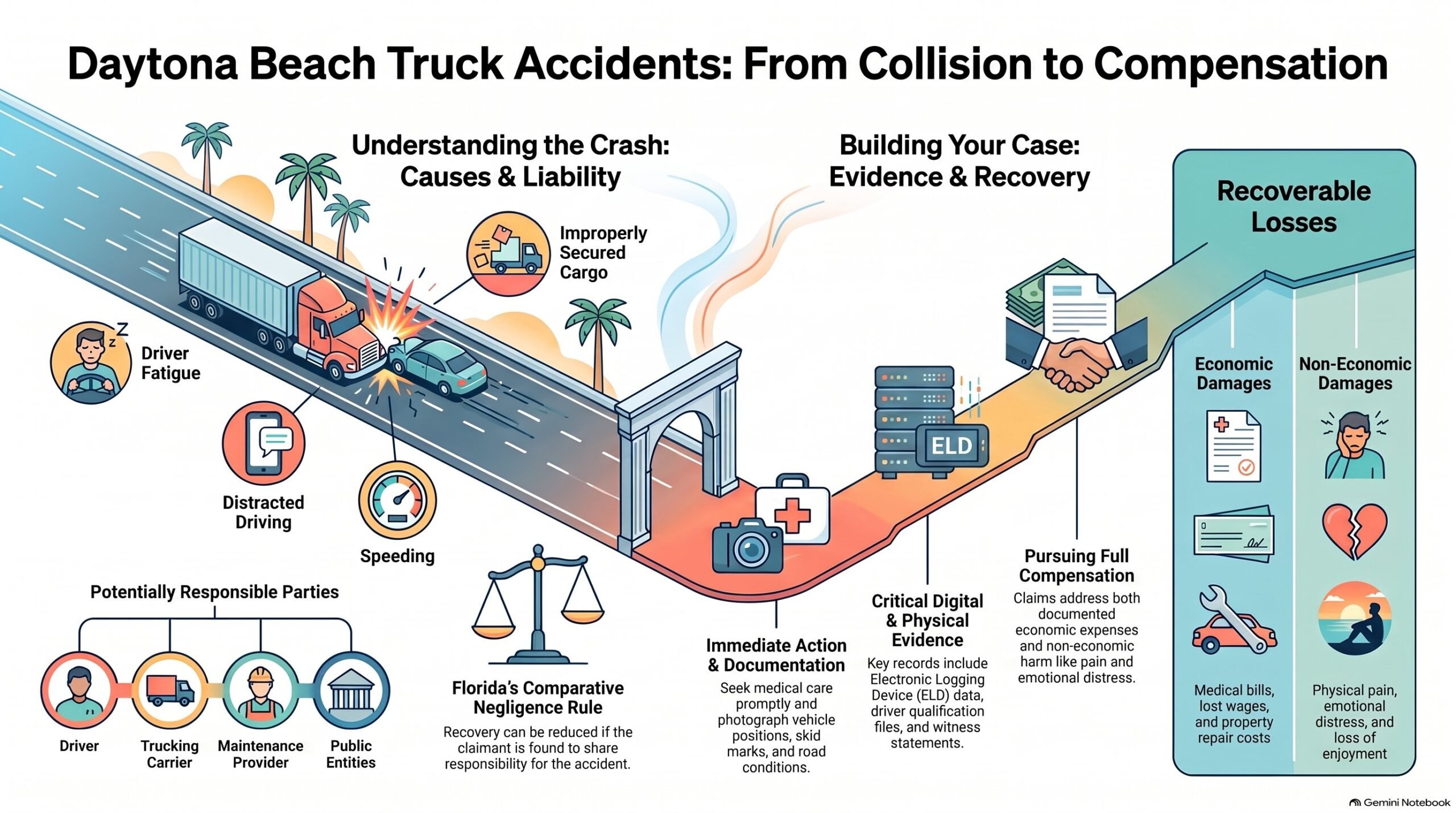
Truck accidents on Daytona Beach roads and highways can result from driver fatigue or distraction, speeding, and other unsafe driving practices. Improperly loaded cargo may shift or fall, while poor vehicle maintenance can contribute to equipment failures. Identifying the cause is an important step in understanding how a collision occurred and who may be responsible.
Driver Fatigue and Distraction
Driver fatigue and distraction can impair a commercial driver’s judgment, reaction time, and ability to maintain control on Daytona Beach roads and highways. Long shifts, inadequate rest, and demanding schedules may contribute to reduced alertness, even when a driver appears capable of continuing a trip. Signs of cabin fatigue include frequent yawning, heavy eyelids, difficulty focusing, and missing traffic cues. These warning signs may indicate that a driver needs to stop and rest before continuing.
Distraction can also divert attention from roadway conditions. Dashboard distraction sources may include navigation systems, dispatch messages, mobile devices, and vehicle controls. When drivers interact with these systems while moving, they may overlook changing signals, nearby vehicles, or hazards. Trucking companies and drivers can help protect the public by supporting rest requirements, limiting nonessential device use, and maintaining clear safety procedures.
Speeding and Unsafe Driving
Speeding and other unsafe driving practices can turn routine travel on Daytona Beach roads and highways into a serious risk of truck accidents. Commercial trucks require greater stopping distance and may be difficult to steer quickly, making excessive speed especially dangerous in traffic, at intersections, and on wet pavement. Posted speed limits provide vital guidance, but drivers must also adjust their speed for road conditions, congestion, visibility, and vehicle size. Aggressive passing can expose nearby motorists to sudden lane changes, reduced following space, or collisions when a truck cannot brake or respond in time. These behaviors may endanger occupants of passenger vehicles, pedestrians, and other road users. Careful driving helps protect the wider community and reduces preventable harm. When a crash occurs, investigators may examine speed, traffic conditions, and driver conduct to determine how it happened.
Improper Cargo Loading
When cargo is improperly loaded or secured, a commercial truck can become unstable on Daytona Beach roads and highways. Uneven load distribution may shift the vehicle’s center of gravity, increasing the risk of a rollover or loss of control during turns, sudden stops, or lane changes. Inadequate Cargo securement can allow freight to slide or fall, creating hazards for nearby motorists and pedestrians. These incidents may lead to serious injuries, traffic disruptions, and damage to surrounding vehicles. Loading practices should account for the cargo’s weight, dimensions, and movement during transit. Drivers, carriers, and loading companies may each have responsibilities for ensuring that freight is balanced and restrained in accordance with applicable requirements. When improper loading contributes to a crash, investigators may examine shipping records, loading procedures, and the condition of the cargo restraints.
Poor Vehicle Maintenance
Poor vehicle maintenance can make commercial trucks dangerous on Daytona Beach roads and highways by allowing critical systems to fail. When carriers or drivers neglect inspections and repairs, worn components may compromise a truck’s ability to stop, guide, or remain stable in traffic. Brake Failure can result when brake pads, lines, or other parts are not serviced promptly, increasing stopping distances and the risk of collisions. Tire Blowouts may occur when tires are worn, underinflated, or damaged, potentially causing a driver to lose control at highway speeds. Maintenance records and inspection reports can help establish whether required care was provided and whether a mechanical defect contributed to a crash. Identifying these issues can support accountability and help injured people seek appropriate compensation after a serious truck accident.
Don’t Wait. Call Our Florida Personal Injury Lawyers Now!


Legal Rights of Daytona Beach Truck Accident Roads & Highways Injury Victims
Truck accident victims injured on Daytona Beach roads and highways may have the right to pursue compensation from parties whose negligence caused the collision. Depending on the evidence, responsible parties may include a truck driver, motor carrier, maintenance provider, or another entity. Florida law sets deadlines and standards that can affect a claim, so preserving records and obtaining qualified legal guidance may help protect a victim’s interests.
Victims may seek damages for medical expenses, lost income, reduced earning capacity, pain and suffering, and other legally recognized losses.
Their rights may include:
- Requesting relevant crash, employment, vehicle, and insurance records to establish responsibility and document losses.
- Challenging an insurer’s unfair handling of a valid claim; Insurance bad faith may warrant separate legal review.
- Understanding comparative negligence, which may reduce recovery when a claimant shares fault, subject to applicable Florida law.
A careful claim can also support family members and communities by promoting accountability. Each case depends on its facts, available evidence, and governing law.
Why Do Daytona Beach Truck Accident Injuries on Roads & Highways Happen?
Understanding why these collisions occur can help explain how liability may arise on Daytona Beach roads and highways. Truck crashes often result from a combination of driver decisions, vehicle conditions, and roadway circumstances. Fatigue, distraction, speeding, impaired driving, or inadequate training can reduce a driver’s ability to respond to traffic and maintain control of a large vehicle. Poor maintenance, worn tires, or defective brakes may also contribute to a loss of control.
Roadway design can create additional risks when narrow lanes, limited sightlines, confusing merges, or poorly maintained surfaces leave truck drivers little room to maneuver. Heavy traffic near commercial areas and highway interchanges may increase the chance of abrupt stops or unsafe lane changes. Weather hazards, including heavy rain, standing water, and reduced visibility, can make braking and guiding more difficult, especially for fully loaded trucks. Identifying the factors involved can clarify how preventable conduct or unsafe conditions may have contributed to injuries affecting drivers, passengers, and others on the road.
What Should You Do After a Daytona Beach Truck Accident Roads & Highways Injury?
After a truck accident on a Daytona Beach road or highway, injured individuals should seek medical care promptly, even if their symptoms appear minor. They should document the scene when it is safe to do so, including vehicle damage, road conditions, and witness information. Contacting a truck accident lawyer can help preserve evidence and clarify available legal options.
Get Medical Care
Because some injuries from a Daytona Beach truck accident may not be immediately apparent, anyone involved should seek prompt medical evaluation, even if symptoms seem minor. A timely assessment can identify conditions that may worsen without treatment, including head, neck, or internal injuries. If severe pain, difficulty breathing, confusion, or other urgent symptoms occur, the injured person should be taken to an Emergency room or emergency services should be contacted. For less urgent concerns, a physician can examine the person and recommend appropriate care. Following medical instructions and attending scheduled appointments supports recovery and helps prevent complications. A provider may arrange expert referrals when further evaluation or treatment is needed. Medical records can also establish when symptoms began and how they developed, providing useful information for those assisting with the person’s recovery and related needs.
Document The Scene
If it is safe to do so, documenting the scene can preserve important details about a Daytona Beach truck accident. Safe positioning should come first: injured people and bystanders should remain away from traffic and avoid approaching damaged vehicles or spilled cargo. Once the area is secure, photographs may record vehicle positions, damage, skid marks, debris, traffic signals, road conditions, and nearby landmarks. Images should include both wide views and close details without obstructing emergency responders. Notes can capture the time, location, direction of travel, and weather conditions, including rain, glare, or poor visibility. Witnesses’ names and contact information may also help preserve independent accounts. If taking photographs or notes would create danger or delay medical care, those tasks should be left to responders or completed later when conditions permit.
Contact A Truck Accident Lawyer
When should an injured person contact a truck accident lawyer? As soon as practical after receiving necessary medical care, especially when injuries, disputed fault, or substantial losses are involved. Early legal guidance can help preserve evidence, identify responsible parties, and manage communications with trucking companies and insurers. Prompt action also allows counsel to review records before important details become difficult to verify.
A lawyer can explain available options and help an injured person understand deadlines that may affect a claim. During a Free consultation, the person can describe the collision, ask about the legal process, and learn what information may be useful. Attorney availability and experience with commercial vehicle cases are practical considerations when selecting counsel. By seeking informed guidance, an injured person may protect personal interests while pursuing fair accountability and supporting safer roads for the wider community.
Don’t Wait. Call Our Florida Personal Injury Lawyers Now!
Critical Evidence in a Daytona Beach Truck Accident Roads & Highways Injury Case
Evidence can help establish how a truck crash occurred and whether the driver’s or carrier’s conduct contributed to the injuries. Essential records and accounts may include scene photographs, electronic logging data, driver qualification files, and witness statements.
Three evidence categories warrant particular attention:
- Crash scene photographs can document vehicle damage, road conditions, traffic controls, and visible skid marks.
- Electronic logging data and driver qualification records may help assess hours of service, driving history, and required qualifications.
- Witness statements can provide independent accounts of the collision and events immediately before it.
Crash Scene Photographs
Photographs taken at a Daytona Beach truck crash can preserve details that may disappear as vehicles are moved and roadways are cleared. Images of vehicle positions, damage, skid marks, debris, traffic signals, and surrounding road conditions can help clarify how a collision occurred. Wide views establish the scene’s layout, while close images document specific damage or roadway features. Camera angles should capture relevant details from multiple directions without obscuring scale or context. Timestamp verification can help establish when images were taken and whether they correspond to the reported crash. Investigators may also compare photographs with witness accounts, vehicle inspections, and roadway records. Careful documentation can support a fair assessment of responsibility and injury claims, helping affected people pursue appropriate remedies while preserving reliable evidence for those reviewing the case.
Electronic Logging Data
Beyond scene photographs, electronic logging data can help establish what a truck driver was doing before a collision on a Daytona Beach highway. Electronic logging devices record driving time and related duty-status information, helping investigators assess whether federal hours-of-service limits were followed. The records may also show when a vehicle was moving, stopped, or operating near the crash location. Comparing this information with dispatch records, fuel receipts, toll transactions, and other time-stamped evidence can reveal logbook discrepancies or gaps that warrant further review. Because electronic records may be overwritten or lost, prompt steps to preserve ELD data retention are important. A careful examination can clarify whether fatigue, scheduling pressure, or another operational factor contributed to the collision. Preserving reliable evidence supports a fair investigation and helps protect injured people and others who share the roads in Daytona Beach.
Driver Qualification Records
When a Daytona Beach truck collision raises questions about a driver’s fitness or qualifications, the driver qualification file can provide important information. These records may show whether the carrier reviewed the driver’s employment history, driving record, medical certification, and required training before assigning commercial routes. Driver qualification standards help establish what screening and documentation federal rules require. A careful review may reveal missing materials, expired credentials, or unresolved safety concerns that could bear on whether the driver was prepared to operate the truck safely.
Qualification file retention requirements also matter, as records may be subject to specific retention periods. Their availability can help clarify what the carrier knew and when it knew it. Preserving and examining these materials supports a fair assessment of responsibility and may help protect injured people seeking answers and accountability.
Witness Statements
Driver qualification records can show whether a truck operator met required standards, while witness statements may help explain how the collision unfolded on Daytona Beach roads. Independent accounts can clarify vehicle positions, traffic signals, speeds, weather conditions, and actions immediately before impact. These details may support an injured person’s effort to establish what happened and identify safety concerns that could affect others. Witness credibility depends on factors such as the observer’s location, opportunity to see events, consistency, and possible bias. Investigators may compare accounts with photographs, roadway evidence, and electronic data rather than relying on one recollection. Prompt statement preservation is important because memories can fade and contact information may become difficult to obtain. A careful record of each account can help attorneys assess conflicting evidence and present a clearer, more reliable description of the crash.
Long-Term Effects of Daytona Beach Truck Accident Roads & Highways Injuries
Truck accident injuries on Daytona Beach roads and highways can produce lasting effects that continue well beyond initial treatment. Some individuals experience chronic pain and mobility limitations that interfere with daily activities and work. Emotional trauma may also persist, affecting well-being and recovery.
Chronic Pain
Chronic pain can persist long after a Daytona Beach truck accident, even after fractures or other visible injuries have recovered. Soft-tissue damage, nerve irritation, and persistent inflammation may cause ongoing discomfort that affects concentration, mood, and daily routines. Symptoms can fluctuate, making it difficult to predict when pain will intensify or how long relief will last. Sleep disruption may follow, leaving an injured person fatigued and less able to manage ordinary responsibilities or support family members. A clinician can assess symptoms, document their course, and recommend appropriate Pain management, which may include medication, therapy, or other evidence-based care. Consistent treatment and follow-up help identify changes and reduce the risk of unmanaged symptoms. Accurate medical records also clarify the injury’s continuing effects for insurers, care providers, and others assisting with recovery.
Lasting Mobility Limitations
Persistent pain may accompany lasting mobility limitations after a Daytona Beach truck accident, particularly when injuries affect the spine, joints, or nerves. Reduced strength, limited range of motion, or impaired balance can make routine activities difficult, including walking, climbing stairs, and completing household tasks. Some individuals require ongoing rehabilitation to preserve function and learn safer movement techniques. Depending on the injury, Adaptive equipment such as braces, walkers, or wheelchair-accessible home features may support greater independence. Accessible transportation can also help injured people reach medical appointments, work, and community services. These needs may change over time as recovery progresses or permanent impairment becomes clearer. Medical evaluations and treatment records can document functional restrictions, anticipated care, and related expenses. Such information helps families, providers, and legal representatives assess practical support needs and plan for long-term assistance.
Emotional Trauma
Emotional trauma may persist long after a Daytona Beach truck accident, even when physical injuries begin to recover. Survivors may experience anxiety, sleep disturbances, intrusive memories, or fear of traveling on roads where the collision occurred. These reactions can interfere with work, relationships, and daily responsibilities, placing additional strain on families and caregivers. Post-traumatic stress may develop after a serious crash, although symptoms and their duration vary among individuals. A qualified mental health professional can assess these concerns and recommend appropriate care, such as counseling or other evidence-based treatment. Consistent support from relatives, employers, and community services may help survivors feel understood without pressuring them to recover on a fixed schedule. Emotional recovery can take time, and recognizing psychological injuries alongside physical harm supports more complete, compassionate assistance for affected people.
Proving Liability in Daytona Beach Truck Accident Roads & Highways Injury Cases
Proving liability in a Daytona Beach truck accident requires evidence showing how the crash occurred and who failed to meet a legal duty of care. Investigators may review police reports, photographs, roadway measurements, vehicle data, and witness accounts to reconstruct the events. Their findings can identify whether a truck driver, motor carrier, maintenance provider, or another party contributed to the collision.
Relevant evidence may include driver logs, inspection records, training materials, and information about cargo loading. These records can help establish whether fatigue, unsafe operation, mechanical failure, or improper loading played a role. Road conditions also require careful examination. Road design defects, hazardous intersections, inadequate signage, or obstructed sightlines may indicate a public entity’s responsibility, depending on the facts and applicable law.
Preserving evidence promptly is important because vehicles may be repaired, records may be lost, and physical conditions can change. A thorough, impartial investigation can clarify responsibility and support a fair assessment of the injuries and losses involved.
Dealing With Insurance Companies After a Daytona Beach Truck Accident Roads & Highways Injury
After a Daytona Beach truck accident involving a roadway hazard, insurance companies may investigate whether the driver, trucking company, or public entity contributed to the crash. Adjusters may review collision reports, vehicle records, maintenance documents, and evidence regarding road conditions. Their inquiries can help identify available coverage, but their interests may differ from those of injured people seeking fair compensation.
An insurer may request recorded statements or ask for medical authorizations soon after the collision. Before responding, an injured person should understand what is being requested and how the information may be used. Accurate, consistent details matter, while speculation about fault or injuries can create avoidable disputes. Relevant photographs, treatment records, and correspondence should be preserved.
Policy limits may affect the amount available, particularly when several parties or claimants are involved. Coverage may also differ among the truck driver, motor carrier, and responsible roadway entity. Careful communication helps protect the injured person’s interests, support a fair resolution, and preserve resources needed for recovery and continued community participation.
What to Expect During a Daytona Beach Truck Accident Roads & Highways Injury Claim Process
A Daytona Beach truck accident injury claim typically begins with an initial review of the circumstances, potential liability, and available insurance coverage. Evidence collection then helps establish how the crash occurred and the extent of the injuries, providing a basis for settlement negotiations. If the parties cannot reach an agreement, litigation may follow before the claim is resolved.
Initial Claim Review
During the initial claim review, a Daytona Beach truck accident lawyer examines how the collision occurred, the injuries involved, and the available evidence. This assessment helps clarify the potential legal issues and the practical steps that may follow. The lawyer may discuss the client’s account, the location and timing of the crash, and how the injuries have affected daily responsibilities. Initial claim review also considers whether another party may bear responsibility and whether the circumstances support a claim under Florida law. Claim eligibility can depend on factors such as fault, injury severity, applicable deadlines, and the client’s relationship to the injured person. The lawyer can explain available options, likely procedural requirements, and possible limitations without promising a particular outcome. This early guidance helps clients make informed decisions and pursue accountability through an appropriate process.
Evidence Collection
Evidence collection helps establish how a truck crash occurred, who may be responsible, and how the injuries affected the claimant. In a Daytona Beach roads and highways claim, the process may include gathering photographs, witness statements, police reports, medical records, and information about road conditions. Records from the truck, such as driver logs, inspection reports, and electronic data, may also help clarify events leading up to the impact. Evidence Preservation is important because vehicles, roadway conditions, and digital records can change or disappear. A lawyer may send formal requests to protect relevant materials and, when appropriate, arrange inspections. Forensic Reconstruction may help qualified experts analyze vehicle damage, physical evidence, and crash data. These steps can provide a reliable account of the incident and document the claimant’s injuries, treatment, and resulting limitations for the claim file.
Settlement Negotiations
Once the available records establish the likely cause of a Daytona Beach truck crash and the extent of the injuries, settlement negotiations may begin with the insurer or other responsible parties. The injured person’s representative typically presents a demand supported by medical records, wage information, repair estimates, and evidence of how the injuries affect daily responsibilities. A considered Negotiation strategy accounts for future treatment needs, disputed liability, and the risks of accepting an early offer before the medical outlook is clear. Insurers may request additional documentation or propose a lower amount, requiring careful review and a reasoned response. Settlement timelines vary with injury recovery, record availability, and the number of parties involved. Throughout discussions, clear communication can help keep the claim focused on fair compensation and the injured person’s practical needs.
Litigation and Resolution
If settlement negotiations do not resolve a Daytona Beach truck accident claim, the injured person may pursue a lawsuit in civil court. Litigation generally begins with filing a complaint and serving the defendants, who may respond and dispute liability or damages. Both sides then exchange evidence, take depositions, and consult qualified experts regarding the collision, injuries, and financial losses. This discovery process helps clarify contested facts and may create further opportunities for resolution. Mediation Strategy can support constructive discussions with a neutral mediator, although participation does not guarantee agreement. If settlement remains unavailable, the case proceeds toward trial. Courtroom Preparation includes organizing records, preparing witnesses, and presenting evidence that supports the claim. The judge or jury evaluates the evidence and determines responsibility and compensation. Throughout the process, careful preparation can help protect the injured person’s interests and pursue accountability.
Compensation for Daytona Beach Truck Accident Roads & Highways Injury Damages
Compensation after a truck accident on a Daytona Beach road or highway may cover medical expenses, lost income, reduced future earning capacity, property damage, and pain and suffering. These damages address the practical effects of a collision and may help injured people and their families manage recovery. The available compensation depends on the evidence, the severity of the injuries, and the circumstances of the crash.
Medical costs may include emergency care, surgery, rehabilitation, medication, and anticipated treatment. Lost wages can account for income missed during recovery, while diminished earning capacity may apply when lasting injuries limit a person’s ability to work or advance professionally. Property damage may include repair or replacement of a vehicle and other items harmed in the collision.
A claim may also seek compensation for physical pain, emotional distress, and disruption to daily activities. Records, employment information, and professional assessments can help establish the extent of these losses. Careful documentation supports a fair evaluation and helps guarantee that the injured person’s needs remain central throughout the process.
Economic vs Non-Economic Damages in Daytona Beach Truck Accident Roads & Highways Cases
Truck accident damages may include economic losses, such as medical expenses, lost income, and property damage, as well as non-economic harm, including pain and emotional distress. The value of each category depends on the injuries and their effects on the person’s daily life. Supporting records, expert assessments, and other evidence can help establish the extent of these damages.
Economic Losses
After a truck accident on a Daytona Beach road or highway, losses may include both measurable financial costs and harm that does not have a direct dollar value. Economic losses are financial expenses and reductions in income that can be documented through records, bills, and other evidence. They may include emergency care, hospital treatment, rehabilitation, prescription medication, and necessary medical equipment. Repair or replacement costs for a damaged vehicle and other personal property may also qualify. Lost income can reflect wages missed during recovery, while reduced earning capacity may apply when lasting injuries limit a person’s ability to perform previous work or earn at the same level. Documentation from employers, medical providers, and financial records can help establish these amounts. Careful accounting supports a claim that addresses practical needs and helps protect a household’s financial stability.
Non-Economic Harm
Non-economic harm refers to the personal effects of a Daytona Beach truck accident that do not appear on bills or pay records. These losses may include physical pain, emotional distress, and reduced ability to participate in ordinary activities. A person who once volunteered, cared for family members, or supported neighbors may find those responsibilities difficult after an injury. Loss of Enjoyment can reflect the inability to pursue valued hobbies, social activities, or community service. Relationship Strain may develop when pain, stress, or changed responsibilities affect interactions with partners, relatives, and friends. Unlike medical expenses or lost wages, these harms do not have a direct price on a receipt. Florida law may allow eligible injured people to seek compensation for certain non-economic losses, in addition to documented economic damages, depending on the circumstances of the case.
Proving Damages
Establishing the value of a Daytona Beach truck accident claim requires evidence that connects the collision to specific losses. Economic damages may include medical expenses, lost wages, reduced earning capacity, and property repair costs. Damage documentation such as invoices, treatment records, pay statements, and repair estimates helps show the amount and cause of each expense. Financial forecasting may also be needed when injuries affect future employment or require ongoing care. Non-economic damages address losses that lack a fixed price, including pain, emotional distress, and a reduced ability to participate in daily life. Medical assessments, personal accounts, and testimony from people familiar with the injured person’s routine can help describe these effects. A careful claim evaluation considers both categories, avoids unsupported estimates, and presents evidence that allows insurers or a court to assess the full impact.
Don’t Wait. Call Our Florida Personal Injury Lawyers Now!
When a Daytona Beach Truck Accident Roads & Highways Injury Case Goes to Trial vs. Settlement
A Daytona Beach truck accident injury case may be resolved through settlement or decided at trial, depending on the evidence, the parties’ positions, and the strength of the legal claims. Settlement discussions can occur before or during a lawsuit. The parties may compare the available evidence, documented losses, and likely trial outcomes when evaluating proposed terms. A settlement can provide a definitive resolution without requiring witnesses to testify in court, but it depends on the parties’ agreement.
If negotiations do not produce acceptable terms, the case may proceed to trial. Each side presents evidence and examines witnesses. Trial testimony may address how the collision occurred, the injuries sustained, and the effect on daily life. After closing arguments, jurors consider the evidence during Jury deliberations and reach a verdict. A trial can offer a formal decision, though its outcome is uncertain and the process may take time. The choice between settlement and trial depends on case-specific circumstances and informed evaluation.
Florida Laws That May Affect Your Daytona Beach Truck Accident Roads & Highways Case
Whether a Daytona Beach truck accident claim settles or proceeds to trial, Florida law shapes how fault, damages, and deadlines are assessed. Several legal principles may influence how an injured person’s losses are evaluated and how responsibility is assigned. Understanding these rules can help clarify the issues that matter when seeking accountability and supporting those affected by a serious collision.
- Negligence: Florida negligence rules require evidence that a party failed to use reasonable care and that the failure contributed to the crash and resulting harm. Trucking companies, drivers, maintenance providers, or other parties may be examined.
- Shared responsibility: Under comparative fault rules, an injured person’s recovery may be reduced by that person’s percentage of responsibility. Evidence about road conditions, vehicle operation, and safety practices can affect this assessment.
- Recoverable losses: Applicable law governs which damages may be claimed, including medical expenses, lost income, and pain and suffering. Records and qualified testimony can help establish the nature and extent of these losses.
These principles provide a framework for evaluating a claim, while the facts determine how they apply.
The Statute of Limitations for Daytona Beach Truck Accident Roads & Highways Injury Cases
Because Florida law sets firm deadlines for filing injury claims, the time limit can affect a Daytona Beach truck accident case as much as evidence of fault or damages. For many negligence claims, Florida generally allows a 2-year period from the date of the accident to file suit. A claim filed after the applicable Limitations Deadline may be barred, even when the injured person has substantial losses or the truck driver’s conduct appears clear.
The deadline may differ if a crash results in death, involves a government entity, or raises another legal issue. Government-related claims may require notice within a shorter period, and wrongful-death actions have their own filing limit. Certain Filing Exceptions may pause or extend a deadline, such as when the injured person is a minor or the defendant cannot be located, but these rules depend on specific facts.
Prompt attention to dates preserves the opportunity to seek accountability and pursue compensation for medical needs, lost income, and other harm.
How a Daytona Beach Truck Accident Roads & Highways Lawyer Can Help You
Meeting the filing deadline is only one part of pursuing a truck accident claim; building a well-supported case also requires careful investigation and legal analysis. A Daytona Beach roads and highways lawyer can examine how roadway conditions, public maintenance, and commercial driving practices contributed to a collision. This work can help injured people seek accountability while supporting safer travel for the wider community.
- Identify responsible parties: The lawyer can assess Roadway Jurisdiction to determine whether a city, county, state agency, trucking company, or another party controlled the location or conduct at issue.
- Preserve and evaluate evidence: Investigators may review crash reports, vehicle data, maintenance records, photographs, and witness accounts before relevant information is lost.
- Analyze roadway factors: Reviewing Route Design, signage, sight lines, and repair history can clarify whether a hazardous condition contributed and whether a responsible party failed to address it.
The lawyer can then organize the evidence, explain available legal options, and present a documented claim for appropriate compensation.
When to Contact a Daytona Beach Truck Accident Roads & Highways Lawyer
After a truck collision involving a roadway hazard, prompt legal guidance can help preserve evidence and clarify who may be responsible. Contacting a Daytona Beach truck accident roads and highways lawyer soon after the crash may help protect important records, including photographs, witness details, vehicle data, and reports about road conditions. Such evidence can change as vehicles are repaired, debris is cleared, or witnesses become harder to locate.
Prompt consultation is also important when injuries require ongoing care or the cause of the collision is disputed. A lawyer can review the circumstances, identify potential parties, and explain practical next steps while the injured person focuses on recovery and family responsibilities. Early contact may be especially useful when a government agency, trucking company, or insurer is involved.
Claim deadlines vary depending on the facts and the parties involved. Waiting too long may limit available options, so legal advice should be sought promptly, even when the full extent of injuries or losses is not yet known.
Why You Need an Experienced Daytona Beach Truck Accident Roads & Highways Lawyer
When a truck crash involves a roadway hazard, an experienced Daytona Beach truck accident roads and highways lawyer can help determine how the road’s condition, the truck driver’s conduct, and other factors contributed to the collision. This review may identify Roadway design flaws, inadequate maintenance, obstructed signs, or dangerous intersection patterns that increased the risk of a serious crash.
Truck collisions often involve complicated evidence, including driver logs, vehicle data, inspection records, roadway plans, and witness accounts. A lawyer can preserve relevant materials, assess whether public agencies or private contractors may share responsibility, and explain how applicable rules affect a claim. This work helps injured people and their families seek accountability while supporting safer roads for the wider community.
An experienced attorney can also coordinate with qualified investigators and experts to examine how the collision occurred. By connecting reliable evidence to the harm suffered, counsel can present a clear account of responsibility and pursue compensation for medical care, lost income, and other documented losses.
How to Choose the Right Daytona Beach Truck Accident Roads & Highways Lawyer for Your Case
Choosing the right Daytona Beach truck accident roads and highways lawyer requires careful attention to the attorney’s experience with roadway-related claims and complicated truck collisions. A qualified lawyer should understand how road design, maintenance, signage, and commercial vehicle conduct may contribute to a crash. This background can help identify responsible parties and preserve evidence that supports a fair resolution.
Before making a decision, injured people and their families can review Attorney credentials, including licensing, relevant case experience, and disciplinary history. They may ask how the lawyer investigates roadway hazards, works with qualified experts, and communicates case developments. Clear answers can indicate whether the attorney is prepared to handle the specific circumstances.
The fee structure should also be explained in writing, including how legal fees and case expenses are handled. Prospective clients can compare terms and ask questions before signing an agreement. Choosing carefully helps people pursue accountability while protecting their ability to focus on recovery and the needs of others who depend on them.
About The Law Offices of Anidjar & Levine
The Law Offices of Anidjar & Levine represents people injured in truck accidents and their families, including those facing claims involving roadway conditions.
The firm handles matters involving serious injuries, disputed liability, and the effects of a collision on a household.
Its attorneys may investigate the crash, gather available records, communicate with insurers, and explain legal options so clients can make informed decisions.
Firm history provides context for the firm’s work, while each case requires attention to its own facts, deadlines, and evidence.
In roadway-related truck claims, relevant issues may include road design, maintenance, visibility, signage, and the conduct of drivers or other responsible parties.
The firm’s role is to assess potential claims and pursue available remedies under applicable law.
Community involvement reflects a commitment to serving people beyond individual cases.
For families dealing with the aftermath of a collision, clear guidance and responsive communication can help them understand the process and focus on recovery.
Frequently Asked Questions
Can I File a Claim if a Truck Accident Damaged My Vehicle but Caused No Injuries?
Yes, a driver may file a Property damage claim after a truck crash even when no one is injured. The claim can seek payment for reasonable repair costs or, if the vehicle is a total loss, its fair market value. Available insurance coverage may include the truck operator’s or company’s policy, or the driver’s own collision coverage. Promptly documenting damage, preserving records, and notifying the relevant insurer can help protect the claim.
What if a Truck Accident Occurred on a Private Road or Construction Site?
A truck accident on a private road or construction site may still support a claim, depending on who controlled the area and caused the collision. Private Road Liability can involve property owners, trucking companies, contractors, or maintenance providers. Construction Site Hazards, such as poor traffic controls, obstructed signs, or unsafe vehicle routes, may indicate negligence. Evidence should be preserved promptly, and an attorney can help identify responsible parties and protect the injured person’s rights.
Can I Pursue a Claim if a Truck’s Cargo Caused the Crash?
Yes, an injured person may pursue a claim if a truck’s cargo caused the crash. Cargo securement failures, overloaded trailers, or shifting cargo impacts can contribute to collisions and may support claims against the driver, trucking company, cargo loader, or other responsible parties. Liability depends on the evidence, including inspection records, photographs, and witness accounts. Prompt investigation can help preserve evidence and clarify responsibility, supporting fair compensation for those affected.
Are Truck Accident Claims Different When the Truck Is Owned by a Government Agency?
Yes. Claims involving government-owned trucks may follow different procedures because sovereign immunity can limit when and how an agency may be sued. A claimant may need to provide formal notice to the responsible agency before filing a lawsuit, and the notice deadline can be much shorter than the ordinary injury-claim deadline. The applicable rules depend on the agency and circumstances, so prompt legal review can help preserve a claim and support accountability.
Can Family Members Bring a Claim After a Fatal Truck Accident?
Yes. Eligible family members or the personal representative of the deceased person’s estate may bring a wrongful death claim after a fatal truck accident. The claim may seek compensation for losses suffered by surviving relatives, including lost support and companionship. A separate survival action may recover damages the deceased could have pursued for injuries and losses before death. Florida law sets specific rules and deadlines, so prompt legal review can help protect the family’s rights.
—————————
Truck accidents on Daytona Beach roads and highways can leave victims facing serious injuries, mounting expenses, and difficult insurance disputes.
Understanding legal rights and preserving evidence may help protect a claim, but each case depends on its facts and applicable law.
The Law Offices of Anidjar and Levine can review the circumstances, explain available options, and handle communications with insurers.
Speaking with a Daytona Beach Personal Injury Lawyer can help injured people make informed decisions as they pursue compensation for documented losses.