

The Law Offices of Anidjar and Levine can help policyholders review coverage, organize evidence, and respond to disputed claim decisions involving storm and weather damage. Storm losses may involve roof damage, flooding, hail, or hazards that also cause injuries. Prompt notice, photographs, repair estimates, medical records, and careful compliance with policy requirements can support an accurate evaluation. Legal guidance may clarify deadlines, responsibilities, and available dispute options, although outcomes depend on policy terms and evidence. If storm-related hazards caused injuries, a Daytona Beach Personal Injury Lawyer may also help explain potential legal options. The sections below explain these issues and possible next steps.
Main Takeaways
- A Daytona Beach storm-damage lawyer can review your policy, claim records, and the insurer’s coverage decision.
- Report damage promptly, follow policy requirements, and keep copies of insurer communications and submitted documents.
- Photograph damage, preserve original files, and collect itemized repair estimates, receipts, and relevant storm records.
- Request a written explanation if the insurer denies or limits coverage, and compare its assessment with repair evidence.
- A lawyer can explain dispute options and deadlines; outcomes depend on policy terms, evidence, and applicable law.


How We Can Help With Your Daytona Beach Property Claim Storm & Weather Damage Injury Claim
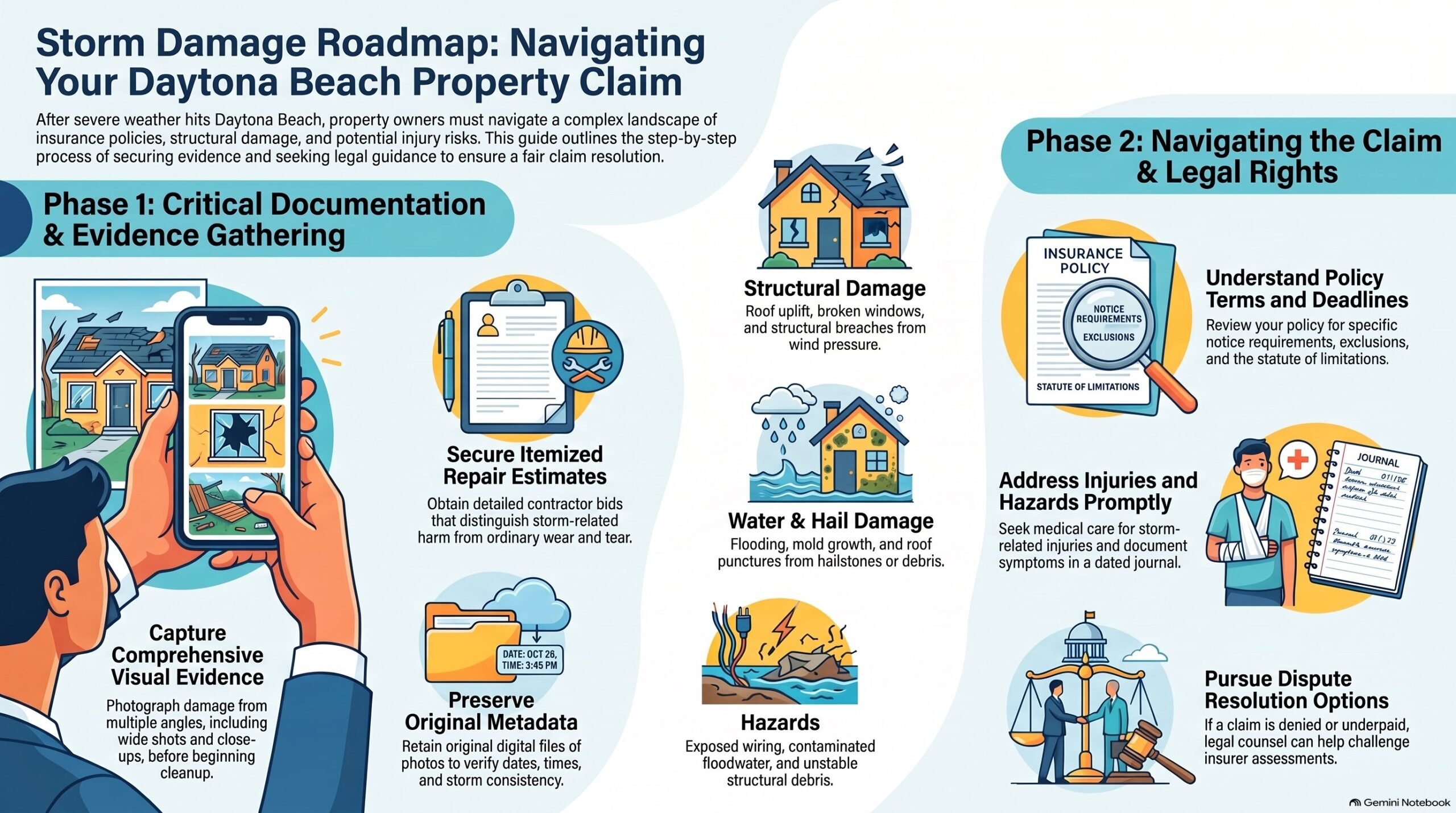
Storms can leave Daytona Beach property owners facing substantial repair costs, disputed insurance coverage, and uncertainty about what to do next. A property damage lawyer can provide organized guidance while helping owners pursue a fair resolution. The process may begin with a careful review of the policy, available records, photographs, repair estimates, and communications with the insurer. This coverage analysis can clarify relevant terms, deadlines, exclusions, and the documentation needed to support a claim.
Claim preparation may include organizing evidence, identifying missing information, and presenting losses in a clear, accurate format. Counsel can communicate with the insurer, respond to requests, and explain the basis for disputed decisions. When repair costs or covered losses remain contested, a lawyer can assess available options and advise the property owner about practical next steps.
This support allows owners to focus on restoring their homes or businesses and serving their families, employees, and communities. Each matter requires individual attention, and outcomes depend on the policy language and evidence available.
OUR CONSULTATIONSARE FREE
START YOUR FREE CASE REVIEW

Understanding Daytona Beach Property Claim Storm & Weather Damage Injury Cases
When severe weather damages a home or business in Daytona Beach, understanding the property claim process can help owners make informed decisions. A claim generally requires clear documentation of the damage, timely notice to the insurer, and cooperation with reasonable requests for information. Owners may preserve photographs, repair estimates, receipts, and records of communications to support an accurate account of losses. Policies differ, so coverage, exclusions, deadlines, and duties after a loss should be reviewed carefully.
Storm-related property cases can also affect tenants, employees, neighbors, and people who depend on local services. Community shelter access and reliable emergency communication systems may help protect residents while repairs are pending. Property owners who serve the public may need to coordinate safe access, communicate closures, and maintain critical operations where possible. When an insurer disputes coverage, valuation, or the cause of damage, a careful review of the policy and claim record can clarify the issues. Legal guidance may help owners understand available options and meet applicable requirements.
Common Causes of Daytona Beach Property Claim Storm & Weather Damage
Storm damage to Daytona Beach properties can result from hurricane-force winds, heavy rainfall, and flooding, each of which may affect roofs, structures, and personal belongings. Hail and windborne debris can cause additional impact damage, while lightning can cause fires or electrical failures. Tornadoes can produce concentrated, severe destruction that complicates property damage assessments and insurance claims.
Hurricane-Force Winds
Hurricane-force winds can damage Daytona Beach properties by tearing off roofing materials, breaking windows, and allowing rain to enter the building. Wind pressure may loosen shingles, lift roof edges, or displace entire sections when connections are weak or materials have deteriorated. Roof uplift is especially concerning near roof corners and eaves, where wind forces can intensify. Once the building envelope is breached, interior finishes, furnishings, and electrical systems may sustain additional damage. The extent of loss depends on wind speed, construction quality, maintenance history, and protective features such as shutters and reinforced openings. Property owners can help protect occupants and support a clear claim by documenting visible damage, preserving damaged materials when safe to do so, and arranging prompt professional inspections. A qualified assessment can identify hidden structural issues and clarify which repairs are necessary.
Heavy Rainfall And Flooding
Heavy rainfall can overwhelm drainage systems and cause water to enter Daytona Beach properties through roofs, windows, doors, and low-lying openings. Flooding may also occur when streets, canals, or nearby waterways cannot carry excess runoff away from homes and businesses. The condition of local drainage infrastructure can affect how quickly water accumulates and whether it reaches a building. Once inside, standing water can damage flooring, walls, electrical systems, and personal belongings, while prolonged moisture may contribute to mold growth. Floodwater contamination is another serious concern, particularly when water mixes with sewage, chemicals, or debris. Property owners should avoid contact with potentially contaminated water and document visible damage when it is safe to do so. Prompt reporting and careful records can help clarify the cause and extent of a storm-related property claim.
Hail And Flying Debris
Beyond water intrusion, hail and windborne debris can cause significant damage to properties in Daytona Beach during severe weather. Hailstones may crack shingles, dent metal roofing, break skylights, and damage siding or exterior fixtures. Wind can propel branches, loose building materials, and other objects into homes and commercial structures, creating openings that allow further exposure to the elements. Roof puncture patterns and debris impact zones can help show where damage occurred and whether the observed conditions are consistent with a reported storm. A careful inspection may document affected materials, identify concealed damage, and distinguish storm-related harm from ordinary wear. Photographs, repair estimates, and maintenance records can support a property claim. Clear, timely documentation helps insurers assess losses and assists property owners seeking fair consideration, while protecting occupants and preserving safe, usable spaces.
Lightning And Tornadoes
Lightning strikes can ignite fires, damage electrical systems, and destroy appliances or other equipment in Daytona Beach properties. A resulting surge may affect wiring and connected devices even when the structure shows no visible damage. Lightning Safety measures, including unplugging sensitive electronics when storms approach, can reduce exposure, but property owners should document damage and arrange a qualified inspection after an event.
Tornadoes can tear roofing from buildings, break windows, and send debris into homes and businesses. Wind-driven rain may then damage interiors and belongings. Tornado Preparedness includes identifying safe shelter, securing outdoor items, and maintaining an emergency plan. After a tornado, occupants should avoid unstable structures and report hazards promptly. Photographs, repair records, and insurer communications can help establish the scope and cause of covered losses. Timely professional assessment may support safe repairs and accurate claim review.
Don’t Wait. Call Our Florida Personal Injury Lawyers Now!


Legal Rights of Daytona Beach Property Claim Storm & Weather Damage Injury Victims
When a storm damages a home or business in Daytona Beach, property owners may have legal rights under their insurance policies and Florida law. Those rights can help owners pursue fair consideration of covered losses while restoring safe, useful spaces for families, employees, and neighbors.
A careful review of the policy and claim record can clarify available options.
- Policyholders may request a written explanation when an insurer denies or limits a claim.
- Florida consumer protections require insurers to handle claims in accordance with applicable legal standards.
- Policy interpretation may determine whether specific storm damage falls within coverage or an exclusion.
- Owners may seek legal guidance to assess deadlines, document disputes, and understand potential remedies.
Insurers generally must evaluate claims fairly and communicate relevant decisions. If a disagreement persists, the policyholder may pursue available dispute resolution procedures or legal action, subject to the policy terms and applicable statutory requirements. Promptly preserving photographs, repair estimates, correspondence, and other records can support an accurate review. Legal counsel can help clarify responsibilities without promising a particular outcome. These steps may also support timely repairs that protect occupants and the wider community.
Why Do Daytona Beach Property Claim Storm & Weather Damage Injuries Happen?
Understanding a property owner’s rights is only part of addressing a storm claim; the damage itself can also create conditions that injure occupants, workers, or visitors. In Daytona Beach, strong winds, heavy rain, flooding, and lightning may weaken buildings and disrupt vital services. Roof damage can allow water to enter, while fallen branches, broken glass, and scattered debris pose hazards around homes and businesses. Floodwater may conceal uneven surfaces, electrical dangers, or contaminated materials, increasing risks for people entering affected areas.
Injuries also occur when maintenance is delayed or temporary repairs fail. Loose exterior materials, unstable structures, and poorly marked hazards can endanger residents, contractors, emergency personnel, and neighbors who assist after severe weather. Storm preparedness and building resilience help reduce these risks through sound construction, routine maintenance, clear warnings, and accessible evacuation plans. Even with preventive measures, unexpected weather can expose weaknesses that place people in danger. Understanding these causes helps communities recognize how property damage can affect public safety and individual well-being.
What Should You Do After a Daytona Beach Property Claim Storm & Weather Damage Injury?
After a storm-related injury, the injured person should seek prompt medical care, even if symptoms initially seem minor. They should document injuries and preserve relevant photographs, records, and other evidence. The incident should also be reported to the property owner or manager and, when appropriate, to the insurer.
Seek Medical Care
Storm damage can create hazards such as unstable structures, exposed wiring, broken glass, and contaminated water, causing injuries that may not be immediately apparent. Anyone exposed to these dangers should move to a safe location and seek prompt medical care, even if symptoms initially seem minor. A qualified medical professional can assess injuries, identify delayed effects, and recommend appropriate treatment. Emergency services should be contacted for severe bleeding, difficulty breathing, loss of consciousness, or other urgent symptoms. Patients should describe how the incident occurred and disclose relevant health conditions so providers can make informed decisions. They should follow treatment instructions, attend follow-up appointments, and ask questions about medication management, including possible side effects or interactions. Timely care supports recovery, helps prevent complications, and allows injured individuals to return safely to their responsibilities.
Document Your Injuries
When a storm-related injury occurs on someone else’s property, clear documentation can help establish what happened and how the injury affected the person. After receiving medical care, the injured individual can keep records describing the condition and its progression. A Personal symptom journal may note pain levels, mobility limits, sleep disruption, and changes in daily activities. Entries should be dated and factual, avoiding speculation about causes or outcomes. Medical records, discharge instructions, prescriptions, bills, and photographs of visible injuries can also help create a reliable account. A treatment timeline should list appointments, recommended care, follow-up visits, and any missed or delayed treatment, with brief explanations where appropriate. Organized documentation can help professionals understand the full impact of the injury and support those seeking a fair resolution while respecting the need for accurate, consistent information.
Report the Incident
Prompt reporting can create an accurate record of a storm-related injury on another person’s property. Once immediate medical needs are addressed, the injured person or a representative should notify the property owner, manager, or responsible organization as soon as practical. The report should state when and where the incident occurred, describe the hazardous condition, and identify any known witnesses. Written notice, such as an email, can help establish when the report was made; a copy should be retained. Photographs and medical records may support the account, but safety must come first. If severe weather has displaced occupants, Emergency contacts can assist with medical care, notifying family, and providing temporary shelter. Those helping should avoid speculation about fault and provide accurate information. Prompt, factual communication can support responsible follow-up and preserve relevant details for a potential claim.
Don’t Wait. Call Our Florida Personal Injury Lawyers Now!
Critical Evidence in a Daytona Beach Property Claim Storm & Weather Damage Injury Case
A well-supported storm damage claim depends on evidence that documents the loss, establishes the weather conditions, and supports the repair costs.
Essential materials may include:
- Photographs of storm damage
- Weather records
- Repair estimates
- Witness statements
Together, these records can help clarify how the damage occurred and the extent of the resulting loss.
Storm Damage Photographs
Photographs can provide essential evidence in a Daytona Beach storm damage claim by showing the condition of a property before repairs or cleanup alter it. Images should document damage to roofs, windows, walls, belongings, and surrounding areas from several angles. Wide views can establish location, while close-ups may reveal details such as cracks, water intrusion, or displaced materials. Where safe, photographs taken promptly after the event can help preserve an accurate record for insurers, contractors, and others evaluating the loss. Photo metadata, including dates and times, may help establish when images were captured, so original files should be retained. Image backups in secure locations can reduce the risk of accidental loss. Clear, unaltered photographs and organized files can assist property owners in presenting a complete account and supporting a fair assessment of necessary repairs.
Weather Records
Weather records can help establish the conditions that caused or worsened property damage during a Daytona Beach storm. NOAA storm archives may document a storm’s path, timing, and reported intensity, while Doppler radar records can show the movement and concentration of rain bands. These sources may help clarify whether wind, flooding, hail, or another weather event affected a specific property. Their value depends on how closely the records correspond to the location and time of the reported damage. A property owner or representative may preserve relevant dates, official alerts, and available local observations for comparison with photographs and other evidence of the claim. Reliable weather information can assist insurers, investigators, and legal professionals in evaluating events fairly. Careful documentation also supports accurate decisions that respect affected residents and the wider community.
Repair Estimates
When storm damage affects a Daytona Beach property, repair estimates can help show the work needed and its likely cost. Detailed estimates identify damaged materials, necessary repairs, labor, and projected expenses. They can help determine whether the proposed work addresses the full extent of the loss, rather than only the visible surface damage. Contractor bids provide useful comparisons of pricing and repair methods, while scope comparisons can reveal differences in what each proposal includes. Photographs, measurements, and itemized descriptions may support these assessments and clarify why particular repairs are necessary. Property owners serving tenants, customers, or community members may also need timely, safe repairs to restore access and prevent further damage. Estimates should be reviewed for omissions, inconsistent quantities, and unsupported charges, then preserved with related claim records for accurate evaluation and resolution.
Witness Statements
Witness statements can provide important evidence in a Daytona Beach property claim involving storm damage and injuries. People who saw the storm, observed property conditions, or witnessed an incident may help clarify when the damage occurred and how an injury happened. Their observations can support a careful review of repair estimates, photographs, medical records, and other claim materials.
Witness credibility depends on factors such as firsthand knowledge, consistency, and the ability to recall events accurately. A statement should distinguish direct observations from assumptions and avoid exaggeration. Prompt statement preservation can help retain details before memories fade or witnesses become difficult to contact. Relevant information may include the witness’s contact details, the date and location of the event, and a clear account of what was observed. Organized, accurate statements can assist those evaluating a claim and help guarantee that affected property owners and injured people receive fair consideration.
Long-Term Effects of Daytona Beach Property Claim Storm & Weather Damage Injuries
Storm- and weather-related injuries may have lasting effects, including chronic pain and reduced mobility that interfere with daily activities. Some individuals also experience persistent psychological effects, such as anxiety or trauma-related distress. These long-term consequences may require ongoing treatment and should be considered when evaluating a property claim.
Chronic Pain
Chronic pain can develop after storm-related property damage forces a person to navigate through debris, climb over damaged structures, or perform urgent repairs. Injuries sustained during these tasks may continue to cause discomfort after immediate hazards have passed. Persistent pain can affect concentration, household responsibilities, and the ability to assist family members or neighbors during recovery. Sleep disruption may further impair daily functioning and make symptoms harder to manage. A healthcare provider can assess the source of ongoing pain, recommend appropriate treatment, and document how the condition affects routine activities. Pain management may involve medication, therapy, or other supervised care, depending on the injury and individual needs. When property damage contributes to an injury, records of treatment, symptoms, and related expenses can help clarify the lasting effects for an insurance claim or legal review.
Reduced Mobility
In addition to persistent pain, injuries sustained while responding to storm or weather damage may limit a person’s mobility over the long term. Damage to the back, hips, knees, or legs can make walking, standing, and climbing stairs difficult. These restrictions may interfere with daily tasks, work responsibilities, and the ability to assist family or neighbors after a disaster. Medical guidance can help determine safe activity levels and identify rehabilitation needs. Accessible home modifications, such as grab bars, ramps, and widened pathways, may reduce the risk of falls and support greater independence. Careful selection of mobility aids should reflect the person’s strength, balance, living environment, and treatment plan. A physician or rehabilitation professional can assess appropriate options. When storm-related injuries affect movement, documenting limitations and related expenses may also help clarify the practical consequences of property damage.
Lasting Psychological Effects
Psychological effects can persist long after storm-related injuries and property damage have been addressed. Survivors may experience post-traumatic stress, recurring memories, sleep disruption, heightened alertness, or distress when severe weather returns. These reactions can interfere with work, family responsibilities, and community involvement, even after physical recovery. Anxiety management may require professional counseling, medical care, and consistent support from relatives, neighbors, or service organizations. Affected individuals may benefit from documenting symptoms and seeking qualified help when emotional distress limits daily activities. Property claim disputes can add strain by prolonging uncertainty about repairs, expenses, and housing stability. Legal guidance may help clarify available options and reduce administrative pressure, allowing individuals to focus on recovery. Recognizing lasting psychological harm supports compassionate assistance and a more complete understanding of storm-related losses for Daytona Beach residents.
Proving Liability in Daytona Beach Property Claim Storm & Weather Damage Injury Cases
Proving liability in a Daytona Beach storm-damage claim requires more than showing that severe weather damaged a property or caused an injury. The injured person generally must establish that a responsible party failed to use reasonable care and that this failure contributed to the harm. Evidence may include photographs, maintenance records, inspection reports, witness statements, and documentation of the property’s condition before and after the storm.
Responsibility can depend on ownership, lease arrangements, and control of the premises. A property owner or manager may be accountable for hazards that could have been addressed through reasonable inspection or timely repairs, such as loose materials, blocked walkways, or exposed wiring. Building code violations may support a claim, although a violation alone does not automatically prove liability. Weather records and expert assessments can help distinguish unavoidable storm effects from preventable conditions. Prompt investigation can preserve evidence and clarify how the hazard developed. Establishing these facts helps injured people seek accountability while supporting safer properties for residents, visitors, and workers.
Dealing With Insurance Companies After a Daytona Beach Property Claim Storm & Weather Damage Injury
After a storm-related property injury in Daytona Beach, insurance companies may investigate the incident and assess whether a policy covers the resulting losses. Their review may involve the property owner, injured visitors, witnesses, and available records. Clear, accurate communication can help protect the interests of everyone affected while allowing the insurer to evaluate the claim fairly.
Policyholders should promptly report the event, provide truthful information, and preserve relevant photographs, repair records, medical documentation, and correspondence. They should avoid speculation about how the injury occurred or the full extent of losses before reliable information is available. Preserving Policy Compliance means following notice requirements, cooperating reasonably with the insurer, and keeping copies of submitted materials. Careful attention to policy terms also helps avoid coverage exclusions, since delayed reporting, unsupported statements, or failure to follow required procedures may create disputes over coverage.
When questions arise about policy language or requests for information, a qualified attorney can help clarify obligations and protect the injured person’s interests without misrepresenting the facts.
What to Expect During a Daytona Beach Property Claim Storm & Weather Damage Injury Claim Process
A storm damage claim generally begins with promptly reporting the loss to the insurer and documenting property damage, expenses, and related losses. The insurer then reviews the claim, policy terms, and supporting evidence before determining coverage and payment. If disputes or delays arise, the policyholder may need to provide further documentation or pursue available resolution options.
Report the Damage
Report storm or weather damage to the insurer promptly, following the policy’s required notice procedures and documenting the date the claim was submitted. The insurer may request basic information about the event, affected areas, and immediate safety concerns. A claim representative can explain the next steps, arrange an inspection, and identify any deadlines or cooperation requirements under the policy. Property owners should provide access for the inspection and respond accurately to reasonable requests. Emergency mitigation may be necessary to prevent further harm, such as arranging temporary protection or addressing an active leak, while avoiding unnecessary repairs before the insurer can assess the damage. Contractor coordination can help schedule appropriate work and inspections. When urgent conditions require action, the owner should notify the insurer and retain relevant service records for the claim file.
Document Your Losses
Thorough documentation can help establish the extent and cause of storm damage during a Daytona Beach property claim. Property owners can photograph or record damaged areas before making nonemergency repairs, capturing wide views and close details. Dated images, videos, and written notes may show when damage appeared and how it affected the property. A Personal property inventory should list affected belongings, including descriptions, approximate purchase dates, and estimated values. Receipts, warranties, and available payment records can help support those entries. Owners may also keep copies of repair estimates, invoices, and records of materials or services used to protect the property from further harm. If displacement is necessary, temporary housing expenses and related receipts should be organized with other claim documents. Clear, consistent records can assist those responsible for evaluating the reported loss.
Review the Insurance Claim
Once the necessary records are assembled, property owners can review the insurer’s claim evaluation against the reported damage and supporting evidence. This review helps determine whether the estimate reflects the full scope of storm-related harm, including damage to structures and belongings, as well as necessary repairs. A careful Policy review clarifies applicable limits, deductibles, exclusions, and conditions that may affect payment. Coverage analysis can then compare those policy terms with inspection findings, photographs, repair estimates, and receipts. Property owners may also check whether the insurer accounted for temporary protective measures and reasonable costs incurred to prevent further loss. Organized records and clear comparisons support an accurate understanding of the claim’s status and the insurer’s stated basis for its evaluation. This process enables informed decisions and responsible planning while preserving resources for household recovery and community responsibilities.
Resolve Disputes and Delays
When an insurer disputes the extent of storm damage or delays a decision, property owners can compare the stated reasons with the policy, inspection findings, and supporting records. A clear response may include dated photographs, repair estimates, contractor reports, and receipts for temporary protection. During claim negotiation, organized evidence can help clarify disagreements about covered damage, repair costs, or policy terms. Written communication also creates a reliable record of requests and responses. If the insurer does not provide a timely explanation or decision, the owner can ask about the claim’s status and applicable deadlines. Continued inaction may warrant escalating the delay through the insurer’s complaint process or to a Florida insurance regulator. Prompt, accurate documentation supports fair review and helps preserve resources needed to restore the property and protect occupants and neighbors.
Compensation for Daytona Beach Property Claim Storm & Weather Damage Injury Damages
Compensation for storm and weather damage in Daytona Beach depends on the policy’s coverage, the cause and extent of the loss, and the evidence supporting the claim. Insurers generally assess covered damage to structures and personal property in accordance with the policy’s limits, deductibles, and conditions. Clear photographs, repair estimates, receipts, and inspection records can help establish the scope of damage and support a fair evaluation.
Policy exclusions may limit payment for certain causes or types of loss, while disputes over the amount of damage may require further review. The appraisal process can provide a means to resolve disputes over the value of covered property damage, subject to the policy’s terms. A property owner should review the insurer’s decision carefully and preserve documents relevant to the claim. When coverage or valuation remains contested, legal guidance can help identify available remedies and guarantee the claim receives appropriate consideration. Timely, accurate documentation also supports efforts to restore the property to a safe, functional condition for occupants and the wider community.
Economic vs Non-Economic Damages in Daytona Beach Property Claim Storm & Weather Damage Cases
Storm and weather damage claims may include economic damages, such as repair costs, temporary housing expenses, and losses tied to damaged property. Non-economic losses may also be relevant when the event causes harm that is not readily measured by receipts or repair estimates. Establishing either type of claim requires evidence that connects the loss to the storm and supports its nature and value.
Economic Damage Costs
Economic damages in a Daytona Beach storm or weather-related property claim are the measurable financial losses caused by damage to a home or other property. These costs may include reasonable repairs, replacement materials, debris removal, and expenses for temporary protection against further harm. When a property cannot be safely occupied, emergency relocation costs may include temporary lodging, transportation, and necessary storage. Owners who operate a business from damaged premises may also document lost income and added operating expenses associated with Business interruption. Receipts, invoices, contracts, photographs, and reliable income records can help establish the amount and cause of each claimed loss. Insurers may review whether expenses were necessary, reasonable, and related to the covered event. Careful records support accurate evaluation and help property owners seek funds needed to restore homes, services, and business operations.
Non-Economic Losses
Unlike repair bills or lost income, non-economic losses are personal effects that do not have a direct, readily calculated dollar value. In Daytona Beach storm and weather damage cases, these effects may include Emotional distress caused by displacement, uncertainty, or disruption to daily routines. A damaged home can also compromise privacy and security and hinder the ability to care for family members or to welcome others. Loss of enjoyment may arise when a property can no longer support the activities or gatherings that gave it meaning. These harms differ from economic damages, such as repair expenses, because they concern the human impact of property damage rather than measurable financial costs. Their significance depends on the circumstances and the ways the damage affects those who live in or rely on the property.
Proving Each Claim
To support a property damage claim after a storm or other weather event, the evidence should connect each claimed loss to the damage and establish its extent. Repair estimates, invoices, photographs, inspection reports, and weather records can document economic losses, including the cost of necessary repairs, damaged belongings, and additional living expenses. Records created before the event may help distinguish storm damage from preexisting conditions. Policy interpretation determines which losses are covered, subject to exclusions, limits, and notice requirements. Non-economic losses may be harder to establish because distress or disruption is less readily measured; contemporaneous notes and relevant professional records may clarify their impact. The appraisal procedure can address disagreements about the amount of physical damage, but it may not resolve coverage disputes. Organized evidence helps insurers, adjusters, and decision-makers assess claims fairly and efficiently.
Don’t Wait. Call Our Florida Personal Injury Lawyers Now!
When a Daytona Beach Property Claim Storm & Weather Damage Injury Case Goes to Trial vs. Settlement
When a storm or severe weather event damages property in Daytona Beach, a claim may be resolved through settlement or proceed to trial if the parties cannot agree on liability or the amount of compensation. Settlement can provide a defined payment and avoid the time, expense, and uncertainty of a courtroom proceeding. Before accepting an offer, the property owner may compare it with documented repair costs, temporary living expenses, and other supported losses. A lawyer can assess whether the proposed terms fairly address the claim and explain any release of future demands.
If negotiations fail, trial allows both sides to present evidence and question witnesses before a judge or jury. Courtroom testimony preparation helps witnesses clearly explain events and damages while responding accurately to questions. Jury deliberation dynamics may affect how evidence is evaluated, so the outcome cannot be guaranteed. A trial may take longer and require additional preparation, but it can provide a formal decision when agreement remains out of reach. Each path involves practical tradeoffs for owners seeking to restore property and protect those who depend on it.
Florida Laws That May Affect Your Daytona Beach Property Claim Storm & Weather Damage Case
Florida law can shape how a Daytona Beach property owner reports, documents, and pursues a storm- or weather-damage claim. State requirements work alongside the insurance policy, so owners should review both before making decisions. The applicable rules may affect how insurers investigate losses, evaluate evidence, and explain coverage determinations.
Florida law and policy terms work together to shape how insurers investigate and evaluate storm damage claims.
Key issues may include:
- Prompt notice: Policy terms and Florida requirements may call for timely notice and cooperation during the investigation.
- Proof of loss: Insurers may request forms, repair estimates, photographs, or other records supporting the claimed damage.
- Policy exclusions: Exclusions and coverage limits can affect whether wind, water intrusion, or related damage is covered.
- Appraisal clauses: When the parties dispute the amount of a covered loss, an appraisal clause may provide a process for resolving valuation disputes.
Careful records can help owners provide accurate information and support neighbors or household members affected by severe weather. A qualified professional can explain how current Florida law and specific policy language apply to the facts, without assuming that every storm-related loss is covered.
The Statute of Limitations for Daytona Beach Property Claim Storm & Weather Damage Injury Cases
Because filing deadlines can affect a property owner’s ability to pursue compensation, the applicable statute of limitations should be reviewed promptly after storm or weather damage in Daytona Beach. Florida law sets time limits for bringing property-related lawsuits, and the period may depend on the type of claim, when the damage occurred, and the governing legal rules. Missing a deadline can prevent recovery in court, even when the damage is substantial.
A separate timeline may apply to notifying an insurer and submitting a claim under a homeowners policy. Policy deadlines can be shorter than the period allowed for filing a lawsuit, so owners should review the policy and document when the damage was discovered. Storm claims may also involve disputes about the cause or extent of loss, making accurate records important to preserving a clear account.
Because statutes and insurance terms can change, a property owner should confirm the deadlines that apply to the specific loss. Prompt attention helps protect the ability to seek compensation and supports responsible planning for repairs and community needs.
How a Daytona Beach Property Claim Storm & Weather Damage Lawyer Can Help You
A Daytona Beach property claims lawyer can help property owners assess storm damage, interpret insurance policy requirements, and organize evidence to support a claim. Through careful Policy interpretation, counsel can explain applicable limits, deadlines, and coverage exclusions, helping owners understand how policy language relates to documented losses. This guidance can support a fair review while protecting resources needed to restore homes and serve families, employees, tenants, or community members affected by severe weather.
A property claim lawyer can clarify policy requirements and help organize evidence for a fair review of storm damage.
A lawyer may assist by:
- Reviewing the policy and explaining relevant provisions in clear terms.
- Organizing photographs, repair estimates, inspection reports, and receipts.
- Communicating with the insurer and responding to requests for claim information.
- Evaluating the insurer’s decision and identifying issues that may warrant further review.
Counsel can also coordinate with qualified contractors or other professionals when additional damage documentation is needed. By presenting a well-supported account of the loss, a lawyer can help reduce confusion and keep discussions focused on the policy and available evidence. This assistance allows property owners to make informed decisions while pursuing repairs and maintaining responsibilities to those who rely on them.
When to Contact a Daytona Beach Property Claim Storm & Weather Damage Lawyer
After a storm or severe weather event, property owners should consider contacting a Daytona Beach property claim lawyer when damage is extensive, coverage is unclear, or the insurer disputes the claim. Early guidance can help them understand reporting deadlines, document visible losses, and communicate accurately with the insurer. Prompt advice is also useful when a property serves tenants, employees, or community members who depend on safe and reliable facilities.
Legal consultation may be appropriate if an adjuster’s estimate appears incomplete, payment is delayed, or a denial does not address the policy terms and evidence. Owners should preserve photographs, repair records, receipts, and insurer correspondence while taking reasonable steps to prevent further harm. Emergency mitigation planning can protect occupants and limit additional damage, but urgent work should be documented before and during repairs whenever possible.
Policy renewal timing also matters. If a loss occurs near renewal, owners may seek clarification about notice requirements, outstanding repairs, and how claim activity could affect coverage.
Why You Need an Experienced Daytona Beach Property Claim Storm & Weather Damage Lawyer
When storm damage leads to a disputed or underpaid property claim, an experienced Daytona Beach property claim lawyer can help owners assess the insurer’s position and identify gaps in its review. Storm losses can affect homes, businesses, and the people who depend on them, making a fair resolution important to community stability.
An attorney can examine policy language, damage estimates, inspection records, and claim correspondence to determine whether the insurer’s decision aligns with the evidence. Careful Policy interpretation may clarify coverage limits, exclusions, deadlines, and obligations that are difficult to assess without legal guidance. An attorney can also organize supporting documentation and communicate with the insurer on the property owner’s behalf.
Attorney experience with weather-related claims can help identify overlooked damage, incomplete investigations, or unsupported reductions in payment. When necessary, counsel may explain available dispute procedures and help owners understand the potential consequences of each option. This focused support allows property owners to make informed decisions while protecting resources needed to repair damaged property and maintain safe, usable spaces.
How to Choose the Right Daytona Beach Property Claim Storm & Weather Damage Lawyer for Your Case
Choosing the right Daytona Beach property claim storm and weather damage lawyer requires careful attention to relevant experience, communication, and the ability to evaluate evidence. A careful selection can help property owners pursue a fair resolution while protecting the resources needed to restore homes and businesses.
Prospective clients should review Attorney credentials, including Florida licensure, disciplinary history, and experience handling storm-related insurance disputes. They can ask how the lawyer investigates damage, documents losses, and responds when an insurer questions coverage or repair estimates. Clear explanations of the claim process and realistic assessments of possible outcomes can indicate whether counsel is prepared to serve the client’s interests.
Fee structures should be discussed before representation begins. The lawyer should explain how fees and case expenses are calculated, when payment is due, and whether any costs remain the client’s responsibility if the claim is unsuccessful. Comparing these terms, communication practices, and relevant experience allows property owners to make an informed decision and choose counsel suited to their circumstances.
About The Law Offices of Anidjar & Levine
The Law Offices of Anidjar & Levine represents Florida clients in property damage disputes, including claims involving storms and other severe weather.
The firm assists property owners seeking fair consideration of damage claims and answers about the process.
Its work may include reviewing policy terms, documenting losses, communicating with insurers, and pursuing available legal remedies when a claim is delayed, underpaid, or denied.
Firm history reflects a practice serving individuals and families across Florida in matters involving insurance and personal harm.
For Daytona Beach property owners, local storm conditions can create complicated questions about coverage, repair costs, and evidence.
The firm’s attorneys assess each matter based on its facts and applicable policy language rather than assuming every claim follows the same course.
The attorney philosophy emphasizes preparation, clear communication, and attention to clients’ concerns.
By explaining options and outlining practical next steps, the firm seeks to help property owners make informed decisions while their homes or businesses are being restored.
Representation is tailored to the circumstances of each claim.
Frequently Asked Questions
Does Homeowners Insurance Cover Temporary Housing After Storm Damage in Daytona Beach?
Homeowners insurance may cover temporary housing after storm damage in Daytona Beach if the home becomes uninhabitable because of a covered loss. This protection is commonly referred to as Additional Living Expenses or Loss of Use. It may reimburse reasonable, necessary costs above normal household expenses, subject to policy limits, deductibles, and documentation requirements. Coverage generally does not apply when damage is excluded, or the home remains safe to occupy. A careful policy review can clarify eligibility.
Can I Choose My Own Contractor for Storm-Related Property Repairs?
Yes, a homeowner can generally choose a contractor for storm-related repairs, subject to the terms of the insurance policy and applicable law. Contractor selection rights do not guarantee that an insurer will approve every estimate or pay costs beyond covered amounts. The homeowner should review the insurer’s scope, obtain written estimates, and confirm repair contractor credentials, licensing, and insurance. Clear records and prompt communication can help protect the claim and support safe, durable repairs for the household.
What Should I Do if My Property Suffers Additional Damage Before Repairs Begin?
If a property sustains additional damage before repairs begin, the owner should take reasonable steps to prevent further loss and promptly notify the insurer. Documenting new damage with dated photographs, videos, receipts, and written notes can establish when and how conditions changed. Updating your insurance claim allows the adjuster to reassess the scope of repairs and coverage. The owner should preserve damaged materials when practical and avoid permanent repairs until the insurer has inspected them.
Can I Dispute an Insurer’s Preferred Repair Estimate?
Yes. A policyholder may dispute an insurer’s preferred repair estimate when it omits necessary work, understates damage, or relies on inaccurate pricing. Challenging repair valuations requires a careful comparison of the insurer’s scope with contractor assessments, policy terms, and applicable building requirements. Documenting estimate discrepancies with dated photographs, invoices, measurements, and written professional opinions can support a clear request for reconsideration. The policyholder should follow claim deadlines and preserve all supporting records.
How Can I Protect My Belongings From Mold After a Hurricane?
To protect belongings from mold after a hurricane, remove wet items from standing water and begin drying them promptly. Move belongings to a clean, dry, well-ventilated area, separating damp materials from unaffected possessions. Use fans and dehumidifiers when electricity and conditions are safe, and discard porous items that remain saturated or show mold. Prevent mildew by cleaning hard surfaces, documenting damage, and contacting qualified restoration professionals before disturbing extensive contamination.
—————————
Storm and weather damage claims can involve complicated policy terms, disputed causes, and strict deadlines.
Property owners in Daytona Beach should document damage, preserve relevant records, and review their insurance obligations before accepting a settlement or denying further action.
The Law Offices of Anidjar and Levine can assess a claim, explain available options, and address disputes with an insurer.
If related injuries occurred during the storm or cleanup, a Daytona Beach Personal Injury Lawyer may also help explain potential legal options.
Timely legal guidance may help protect a property owner’s rights and support a fair evaluation of covered losses.

