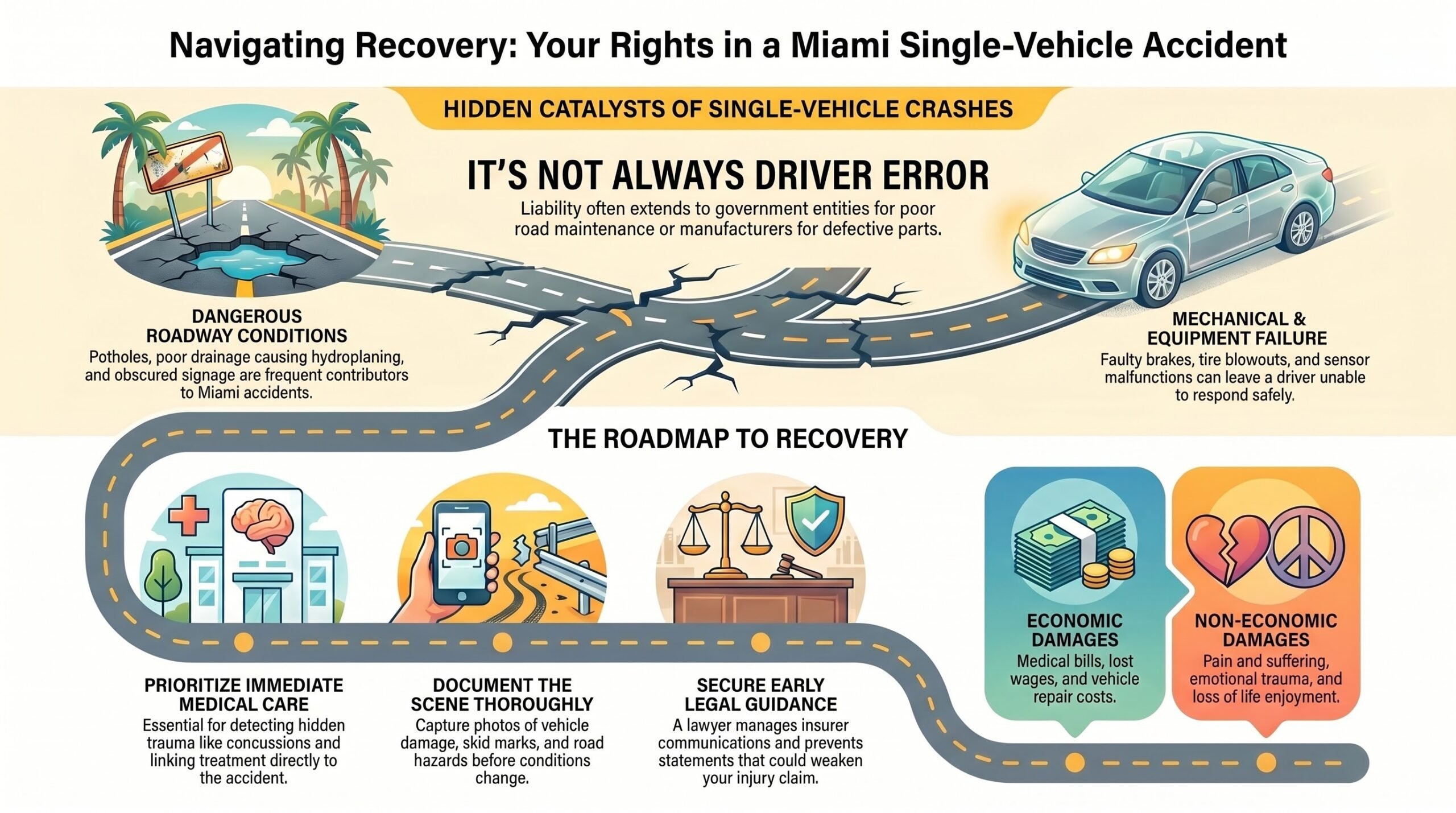
Law Offices of Anidjar and Levine assesses whether factors beyond the driver, such as road hazards, defective parts, negligent repairs, or poor roadway maintenance, contributed to the crash.
Counsel preserves evidence, reviews police and medical records, manages insurer communications, and identifies available insurance benefits and potential claims.
Early legal guidance from a Miami Car Accident Attorney can protect rights, document current and future losses, and improve case preparation.
The sections below explain the process, rights, and crucial decisions involved.
Main Takeaways
- A Miami single-vehicle accident lawyer investigates whether road defects, vehicle failures, or negligent maintenance contributed to the crash.
- Immediate medical care is essential to detect hidden injuries, protect health, and create records linking treatment to the accident.
- Strong claims rely on preserved evidence, including photos, witness information, police reports, vehicle data, and roadway condition documentation.
- An attorney handles insurer communications, reviews available coverage, and helps prevent statements that could weaken your injury claim.
- Early legal guidance helps identify liable parties, calculate current and future losses, and protect filing deadlines and recovery rights.


How We Can Help With Your Miami Single Vehicle Car Accident Injury Claim
After a single-vehicle crash in Miami, an injured person may face immediate uncertainty about medical treatment, insurance coverage, and the steps required to protect a valid injury claim. Legal counsel can provide steady guidance by organizing records, preserving evidence, and communicating with insurers so the injured person can focus on recovery and family responsibilities.
A firm serving Miami clients can review available policies, explain post-accident benefits, and identify documentation needed to support damages. It can coordinate with medical providers, gather employment information, and present a clear demand that reflects current and future losses. Counsel may also manage insurer requests, prevent harmful statements, and address disputes that delay progress.
When questions arise about settlement timelines, legal guidance can offer realistic expectations based on the available evidence and the insurer’s response. Through careful preparation and consistent advocacy, representation helps injured people pursue fair financial support while preserving dignity, stability, and the ability to continue serving those who depend on them.
OUR CONSULTATIONSARE FREE
START YOUR FREE CASE REVIEW

Understanding Miami Single Vehicle Car Accident Injury Cases
In many Miami injury claims, a single-vehicle crash is not necessarily a simple matter of driver error or isolated fault. These cases often require careful review of the full circumstances, including roadway design, visibility conditions, traffic control measures, and weather effects that may have contributed to the event and the resulting injuries.
A proper understanding of these claims begins with recognizing that legal responsibility may extend beyond the person behind the wheel. Investigators, insurers, and legal counsel may examine maintenance records, site conditions, vehicle data, and official reports to determine whether another party played a meaningful role.
This process matters because injured people and their families often seek accountability not only for themselves, but also to promote safer conditions for others in the community. In Miami, single-vehicle injury cases consequently demand thorough factual analysis, informed legal evaluation, and a disciplined approach to identifying every factor that may affect recovery, liability, and long-term consequences.
Common Causes of Miami Single Vehicle Car Accidents
Several factors frequently contribute to single-vehicle accidents in Miami, including preventable driver conduct and hazardous external conditions. Common causes include distracted driving hazards, speeding and other reckless behavior, poor road conditions, and sudden vehicle equipment failure. Identifying these contributing factors is crucial when evaluating liability, the severity of injuries, and the legal options available after a crash.
Distracted Driving Hazards
Distracted driving remains a leading cause of single-vehicle car accidents in Miami, often turning an ordinary trip into a sudden loss of control. A driver who looks away to check a mobile device, adjust navigation, or manage in-car settings may drift out of their lane or miss a roadway hazard. Even brief inattention can produce serious harm.
Cognitive distraction also undermines safe driving when a motorist’s mind is focused on calls, messages, passengers, or personal stress rather than traffic conditions. In service to community safety, it is important to recognize that distraction affects judgment, reaction time, and awareness. When attention is divided, a vehicle may strike a curb, barrier, tree, or pole without another car being involved. Preventive habits help protect drivers, passengers, and the public.
Speeding And Recklessness
Accelerating beyond a safe speed sharply increases the likelihood of a single-vehicle crash in Miami, particularly on crowded urban roads, curved ramps, and wet pavement. Excess speed reduces reaction time, lengthens stopping distance, and makes steering corrections more difficult when a driver encounters a sudden hazard.
Speeding psychology also plays a role. Some drivers overestimate their skill, underestimate risk, or feel pressure to arrive quickly, causing judgment to erode. Recklessness intensifies this danger when motorists weave, tailgate, or ignore traffic signals and warnings. Such conduct can cause a vehicle to collide with a barrier, median, tree, or parked car without involving another driver. For families and advocates seeking safer streets, understanding these behaviors supports prevention, accountability, and informed legal action after a serious Miami single-vehicle collision.
Poor Road Conditions
On Miami roads, poor road and surface conditions can pose a serious risk of a single-vehicle crash, even when no other motorist is involved. Uneven pavement, missing signage, obscured lane markings, loose gravel, and standing water may cause a driver to lose control with little warning. In a community focused on protecting others, attention to safe infrastructure remains vital. Proper drainage maintenance can reduce hydroplaning hazards during sudden storms, while timely repairs may prevent tires from striking dangerous depressions.
When a road defect contributes to a collision, investigators often examine maintenance records, notices of the hazard, and whether reasonable corrective action was taken. These facts may become important in pothole litigation and other claims involving public agencies or private entities responsible for roadway upkeep and public safety efforts.
Vehicle Equipment Failure
In many Miami single-vehicle crashes, equipment failure plays a significant role when a vital component stops working as intended, leaving a driver unable to respond safely. Faulty brakes, tire blowouts, steering defects, and lighting failures can quickly turn an ordinary trip into a serious collision.
These incidents may arise from poor maintenance, defective manufacturing, or an overlooked brake recall, leaving the vehicle unsafe on busy roads. A sensor malfunction can also interfere with warning systems, stability control, or airbag deployment, reducing the driver’s ability to prevent harm.
When investigators identify equipment failure, they often examine repair records, recall notices, and evidence of product design. This careful review helps families understand what happened and supports efforts to hold responsible parties accountable while promoting safer vehicles for the community overall.


Legal Rights of Miami Single Vehicle Car Accident Injury Victims
Accountability often remains a central issue after a single-vehicle collision in Miami, particularly when an injured driver or passenger assumes that no legal claim exists simply because only one vehicle was involved. Florida law may still protect victims when hazardous roads, defective parts, negligent maintenance, or poor signage contributed to the crash.
Common insurance myths and wrongful assumptions can prevent families from recognizing valid claims and available compensation.
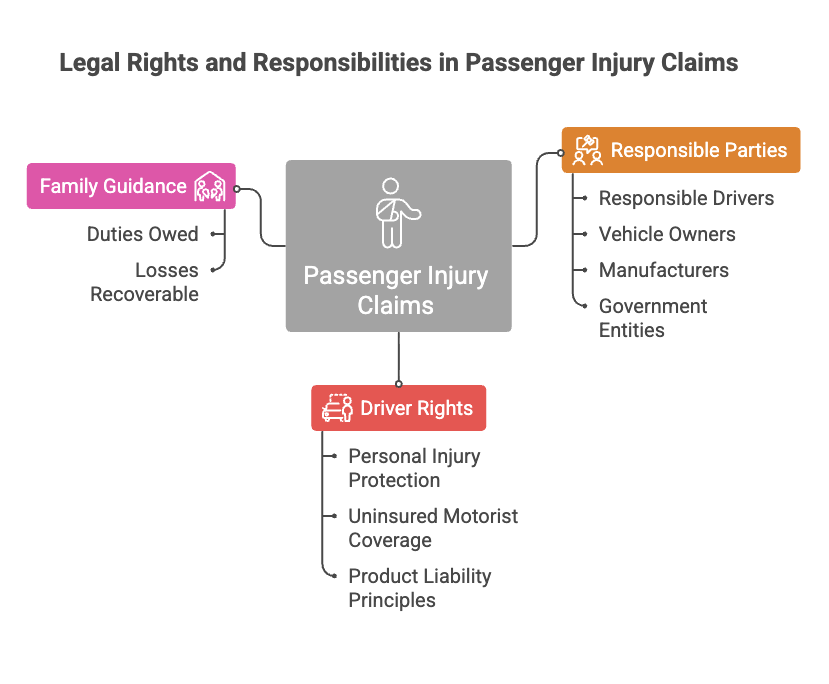
- Injured passengers may pursue claims against responsible drivers, vehicle owners, manufacturers, or government entities when evidence supports liability.
- Drivers may retain rights under personal injury protection, uninsured motorist coverage, or product liability principles in appropriate circumstances.
- Families seeking to serve and protect loved ones often benefit from clear legal guidance that identifies duties owed and losses recoverable.
Potential damages can include medical expenses, lost income, reduced earning capacity, pain and suffering in qualifying cases, and other measurable harms. A careful legal review helps determine whether another party’s conduct materially caused the injury.
Steps to Take After a Miami Single-Vehicle Car Accident Injury
After a Miami single-vehicle car accident injury, prompt action can protect both health and any future legal claim. Crucial early measures include seeking immediate medical care, documenting the accident scene with care, and preserving any available evidence. It is also often advisable to contact a Miami lawyer, who can assess the circumstances and help restore the injured person’s interests.
Seek Immediate Medical Care
Prompt medical evaluation should be treated as a priority following a Miami single-vehicle accident, even when injuries appear minor at first. An urgent evaluation can identify hidden trauma, support timely treatment, and reduce the risk of complications that could affect a victim’s ability to care for others and fulfill daily responsibilities.
Medical professionals are trained to recognize delayed symptoms such as internal bleeding, concussion, soft tissue damage, and spinal injuries that may worsen over time. Seeking care promptly also creates a clear record of injuries, treatment recommendations, and ongoing limitations, which may become important when questions arise about the collision’s impact.
Following discharge instructions, attending follow-up appointments, and monitoring new pain or functional changes can protect both health and long-term recovery. Immediate care serves the injured person and those who depend on them.
Document The Accident Scene
Preserve the accident scene through careful documentation whenever physical condition and surrounding circumstances allow. A person involved in a Miami single-vehicle collision should promptly record visible details, as road conditions, debris patterns, weather, and lighting can change quickly after impact. It is helpful to photograph damage to the vehicle, nearby property, skid marks, traffic signs, and any hazards that may have contributed to the crash.
If other individuals observed the incident, it is wise to collect witness statements and obtain names and contact information. Notes should include the time, location, lane position, direction of travel, and any statements made by responding officers or emergency personnel. Thorough documentation can support an accurate understanding of events and may assist insurers, medical providers, and others in addressing the injured person’s needs afterward.
Contact A Miami Lawyer
In the days following a Miami single-vehicle collision, contacting a lawyer can help an injured person better understand legal rights, insurance obligations, and potential sources of compensation. Counsel may review police reports, medical records, photographs, and witness information, then identify whether roadway defects, vehicle malfunctions, or negligent maintenance contributed to the crash.
A Miami lawyer may also protect an injured person from harmful statements to insurers and missed filing deadlines. During a free consultation, the attorney can explain available claims, expected evidence, and the likely timeline. A clear discussion of the fee structure helps the person plan responsibly while focusing on recovery and service to loved ones. Early legal guidance often supports informed decisions, preserves important evidence, and promotes accountability in the aftermath of preventable harm.
How a Miami Single Vehicle Car Accident Injury Lawyer Can Help You
After a single-vehicle collision, a Miami car accident injury lawyer can evaluate the facts of the crash, identify every potentially liable party, and determine whether road hazards, vehicle defects, negligent maintenance, or another party’s conduct contributed to the incident. Counsel also gathers Medical records, reviews insurance policies, and tracks Claim timelines so injured people can make informed decisions while focusing on recovery and service to their families and communities.
A lawyer may assist by:
- Investigating police reports, photographs, witness statements, and roadway conditions for overlooked evidence.
- Coordinating with experts to assess vehicle failures, dangerous property conditions, or governmental negligence.
- Managing insurer communications, settlement demands, and court filings with accuracy and professionalism.
Through careful case preparation, counsel helps protect legal rights, document losses, and present a clear claim supported by evidence. This guidance can reduce confusion, promote accountability, and create a structured path toward fair compensation after a serious Miami single-vehicle accident for victims.
Long-Term Effects of Miami Single Vehicle Car Accident Injuries
Single-vehicle car accident injuries in Miami may produce lasting consequences that extend well beyond the initial recovery period. Many individuals face chronic pain challenges and emotional trauma that affect daily functioning, personal relationships, and overall stability. In more serious cases, reduced mobility risks may limit independence and create ongoing medical, financial, and occupational difficulties.
Chronic Pain Challenges
Lingering well beyond the initial collision, chronic pain is among the most disruptive long-term consequences of a Miami single-vehicle accident injury. It can arise from spinal damage, nerve compression, soft tissue trauma, or joint injuries that do not fully mend. Persistent discomfort often limits mobility, weakens independence, and interferes with daily responsibilities, including work and caregiving.
Many injured individuals also face sleep disruption, reduced stamina, and difficulty completing routine tasks safely. Effective pain management may require coordinated medical care, physical therapy, medication oversight, and adaptive strategies that support function over time. When symptoms persist, careful documentation becomes important for demonstrating the full extent of harm and the ongoing need for treatment. A thorough legal evaluation may help affected individuals pursue resources that sustain recovery and protect long-term well-being and stability.
Emotional Trauma Impact
Emotional trauma can remain a significant long-term consequence of a Miami single-vehicle accident injury, even when physical wounds begin to improve. Survivors may experience PTSD symptoms, persistent anxiety, sleep disruption, flashbacks, or fear related to driving and daily routines.
These psychological effects can influence relationships, work performance, and the ability to support loved ones and participate fully in community life. In some cases, survivors also struggle with guilt, isolation, or unresolved loss after the crash. Professional mental health treatment, including grief counseling, may help individuals process trauma and restore emotional stability over time.
Careful documentation of emotional harm is often important when evaluating the full impact of an accident injury. A thorough legal claim may consider these lasting effects alongside medical needs, other measurable losses, and future treatment costs.
Reduced Mobility Risks
Over time, reduced mobility may become one of the most disruptive long-term effects of a Miami single-vehicle accident injury. Damage to the spine, joints, muscles, or nerves can limit walking, lifting, standing, and other daily tasks that once seemed routine. Such limitations often require ongoing medical care, physical therapy, and careful planning to preserve independence and safety.
Families committed to serving an injured loved one may need to coordinate transportation, rehabilitation schedules, and practical support within the home. In many cases, assistive devices help restore function, while home modifications reduce hazards and improve access.
When mobility loss affects employment, caregiving, and community participation, the financial burden can grow steadily. A clear legal assessment may help injured individuals pursue resources needed for treatment, adaptation, and long-term stability after serious collision injuries.
Proving Liability in Miami Single Vehicle Car Accident Injury Cases
Establishing liability in a Miami single-vehicle car accident injury case often requires a careful review of facts that may not be obvious at the scene. An injured person may appear solely responsible, yet evidence can reveal external causes, including dangerous road design, poor maintenance, defective vehicle parts, or negligent repairs by others.
To serve injured individuals and families responsibly, a thorough investigation usually examines crash reports, photographs, surveillance footage, electronic vehicle data, witness statements, and roadway conditions. Experts may evaluate tire failures, brake defects, steering malfunctions, or airbag performance, which can support a product liability claim against a manufacturer or distributor.
In other cases, government entities or contractors may share responsibility for missing signs, unsafe shoulders, or roadway debris. Florida’s comparative fault rules can also affect recovery when multiple contributing factors exist. Because liability often depends on technical details and prompt preservation of evidence, careful legal analysis is crucial to identify all responsible parties and protect the injured person’s interests.
Dealing With Insurance Companies After a Miami Single Vehicle Car Accident Injury
Navigate through insurance communications carefully after a Miami single-vehicle car accident injury, because early statements and claim decisions can materially affect the outcome of a case. Insurers often request recorded statements, broad medical authorizations, and quick resolutions that may not reflect the full extent of harm. A disciplined response helps protect the injured person, the family, and anyone who depends on a responsible financial recovery.
A careful review of policy language, correspondence, and documentation can reduce avoidable errors and strengthen credibility. Adjusters may raise claim denials based on coverage disputes, delayed treatment, or alleged driver fault, even when facts remain incomplete. Concerns about bad faith may arise if an insurer ignores evidence, misrepresents benefits, or delays communication without justification.
Attention to medical liens is also crucial because reimbursement interests can affect net recovery. Thoughtful settlement timing matters, since resolving a claim too early may leave future treatment, wage loss, and service-related obligations underfunded for others.
What to Expect During a Miami Single-Vehicle Car Accident Injury Claim Process
A Miami single-vehicle car accident injury claim typically begins with the initial filing, followed by the collection of records, witness statements, and other evidence needed to support the claim. The process then moves into investigation and insurance negotiations, where liability, damages, and coverage are carefully evaluated. If a fair resolution is not reached, the matter may proceed to settlement discussions in earnest or to litigation in court.
Initial Claim Filing
After a Miami single-vehicle crash, the initial claim filing typically begins by notifying the appropriate insurance carrier, gathering basic accident details, and submitting preliminary documentation identifying the injuries, property damage, and known losses. This early step helps establish the claim, preserve communication, and clarify available benefits under the policy. Attention to filing deadlines is vital because missed dates may limit recovery or delay assistance to those affected.
A careful documentation checklist often includes the crash report number, insurance information, medical visit summaries, repair estimates, wage-loss information, and contact details for the involved parties. Clear, timely submission supports efficient claim handling and helps insurers evaluate immediate needs. Many claimants also benefit from legal guidance, which can promote accuracy, reduce administrative strain, and protect the injured person’s ability to pursue fair compensation.
Evidence And Investigation
Once the initial claim has been opened, attention generally shifts to the evidence and investigation stage, where the facts of a Miami single-vehicle crash are examined in greater detail. Attorneys and support staff typically gather police reports, medical records, photographs, witness statements, and roadway documentation to understand how the event occurred and how injuries affected the person involved. They may also request vehicle inspections, data preservation for onboard systems, and surveillance footage before it is lost.
In more intricate cases, forensic reconstruction professionals can evaluate speed, impact angles, visibility, and road conditions. This stage often includes reviewing maintenance history, weather reports, and possible hazards such as debris or defective signage. A careful investigation helps clarify responsibility, supports accurate documentation, and positions those assisting the injured person to advocate thoughtfully and in a service-minded manner.
Insurance Negotiation Steps
Navigate carefully through the negotiation phase, and focus on presenting a well-documented demand to the insurance carrier and responding to its evaluation of the claim. This stage often includes medical records, repair estimates, wage loss information, and a concise explanation of liability and damages.
The insurer may request clarification, question treatment, or apply claim tactics designed to limit exposure. Effective advocacy emphasizes accuracy, professionalism, and steady communication that protects the injured person’s interests while respecting everyone involved. Attention to negotiation timing also matters, because discussions held before treatment stabilizes may undervalue future needs.
A structured response to each insurer’s position helps build credibility and encourages meaningful review. Throughout this process, careful preparation supports informed decisions and promotes a fair assessment of the losses caused by the crash.
Settlement Or Litigation
If negotiations do not produce an acceptable outcome, a Miami single-vehicle car accident injury claim may proceed toward settlement on revised terms or into litigation through the court system. Counsel typically evaluates Comparative Costs, available evidence, and likely recovery before recommending a path that best protects the injured person and supports responsible decision making.
Settlement may occur through direct talks, mediation, or other Alternative Dispute methods that encourage resolution without trial. Litigation involves pleadings, discovery, motions, and possible trial preparation, often requiring careful Timing Strategies as medical treatment develops and damages become clearer. Attorneys also consider Jury Preferences in the local venue, because community attitudes can influence risk and case value. Throughout either process, clear communication, organized records, and service-minded advocacy help maintain focus on accountability, recovery, and practical results.
Compensation for Miami Single Vehicle Car Accident Injury Damages
Accountability often begins with a careful assessment of the losses caused by a Miami single-vehicle accident. Compensation may be pursued when negligence by another party, a defective roadway condition, or a vehicle malfunction contributed to the crash. A careful review of records, witness accounts, and expert findings helps establish the full scope of harm and supports responsible advocacy.
In these matters, counsel may evaluate comparative settlements to measure how similar claims were resolved and to guide realistic expectations. When evidence shows especially reckless conduct by a manufacturer, contractor, or other liable party, punitive awards may also become relevant under limited circumstances. Insurance policy limits, liability disputes, and the strength of documentation often influence the amount ultimately recovered.
A disciplined claim presentation can help injured individuals obtain support that promotes treatment, stability, and continued service to their families and communities. Prompt action also helps preserve evidence and protect legal options after a serious crash.
Economic vs Non-Economic Damages in Miami Single Vehicle Car Accident Cases
In Miami single-vehicle car accident cases, recoverable damages are generally divided into economic and non-economic categories. Economic damages typically include measurable financial losses, such as medical expenses, lost income, and property damage, while non-economic damages address harms like pain, suffering, and diminished quality of life. Establishing the full value of these losses often requires clear documentation, credible testimony, and evidence that directly connects the damages to the accident.
Economic Damage Categories
For a person injured in a Miami single-vehicle crash, economic damages generally refer to the measurable financial losses caused by the accident. These categories often include emergency care, hospitalization, surgery, rehabilitation, medication, follow-up appointments, and anticipated future medical treatment supported by records or expert opinion.
Economic damages may also include lost wages when injuries prevent a return to work, as well as reduced earning capacity if long-term limitations affect future employment. In addition, property damage commonly covers vehicle repair or replacement, as well as other personal items damaged in the collision. Necessary out-of-pocket expenses, such as transportation to medical visits or household assistance during recovery, may also qualify. Careful documentation helps ensure these losses are accurately identified, allowing responsible parties and insurers to evaluate the claim fairly and thoroughly.
Non-Economic Loss Valuation
Valuation of non-economic losses centers on harms that do not appear on bills or wage records, yet often represent a substantial part of a Miami single-vehicle accident claim. These damages address human consequences such as physical suffering, emotional strain, diminished enjoyment of daily activities, and the disruption of family relationships.
A careful pain assessment considers the severity, duration, and practical impact of symptoms on everyday functioning. It also examines how injuries require life adjustments, including limits on mobility, sleep, self-care, recreation, and community involvement. Because these losses affect dignity and quality of life, they are assessed with close attention to the injured person’s overall experience. In service-oriented legal representation, understanding non-economic harm helps ensure the claim reflects not only financial costs but also the personal burdens borne after the crash.
Proving Recoverable Damages
Clarity is essential when proving recoverable damages in a Miami single-vehicle accident case, because compensation depends on credible evidence linking each claimed loss to the crash. Economic damages usually include medical bills, rehabilitation costs, lost income, and future care needs, all supported by records, invoices, and employment documentation. Non-economic damages, such as pain, emotional distress, and loss of enjoyment, often require consistent treatment notes, witness statements, and expert testimony.
Because Florida functions within a comparative jurisdiction framework, the claimant’s degree of fault can reduce recovery. For that reason, careful documentation serves not only the injured person but also family members and caregivers seeking stability after a serious event. A disciplined presentation of damages helps courts, insurers, and advocates measure losses fairly and responsibly, in service of meaningful recovery for everyone involved.
When a Miami Single Vehicle Car Accident Injury Case Goes to Trial vs Settlement
In many Miami single-vehicle car accident injury cases, the decision to proceed to trial or settle depends on the strength of the evidence, the extent of the injuries, and the insurer’s willingness to offer fair compensation. Settlement is often preferred when liability is reasonably clear, and negotiations can provide timely support for medical care, lost income, and household stability.
Trial may become necessary when the insurer disputes fault, minimizes injuries, or refuses to fairly value future losses. A jury trial may be requested when community judgment could better reflect the human impact of the harm. In some circumstances, a bench trial may be appropriate if legal issues are central and a judge’s focused review is advantageous. Careful preparation remains crucial in either path.
Witness testimony, medical records, accident reconstruction, and expert opinions can shape outcomes. The chosen course should promote accountability, protect resources, and support the injured person’s long-term recovery and ability to serve others.
The Statute of Limitations for Miami Single Vehicle Car Accident Injury Cases
Whether a Miami single-vehicle car accident injury claim is resolved through settlement or presented at trial, the time allowed to file suit can determine whether recovery remains available at all. Florida law sets specific filing deadlines for negligence actions, and missing them may bar an injured person from pursuing compensation, regardless of the claim’s underlying worth.
Careful attention to timing serves injured individuals, families, and the broader goal of accountability. In many cases, the limitations period begins on the date of the accident, but certain facts may affect that calculation. Claims involving wrongful death, governmental entities, or delayed discovery may be subject to different rules, notice requirements, or shorter time frames.
Some statute exceptions may pause or extend the period in limited circumstances, yet those exceptions are narrowly applied. Because insurers and opposing parties may raise a late filing as a complete defense, accurate calendar management and prompt document preservation remain vital to protecting any potential claim.
When to Contact a Miami Single Vehicle Car Accident Injury Lawyer
Contacting a Miami single-vehicle car accident injury lawyer as early as possible often helps protect both legal rights and vital evidence. Prompt contact is especially important when injuries appear delayed, insurance questions arise, or road hazards, vehicle defects, or poor signage may have contributed to the crash.
An attorney may be contacted after emergency medical care, once basic facts are gathered, and before recorded statements are given. Early guidance can support responsible decision-making, help preserve photographs, repair records, witness information, and medical documentation, and encourage respectful communication with all parties involved.
For individuals focused on caring for family members or serving their communities, timely legal support can reduce avoidable burdens and create space for recovery. It is also prudent to seek post-accident counseling when emotional distress affects daily functioning. In addition, a statute consultation may help clarify filing deadlines and related procedural requirements, allowing injured persons to respond in an informed, orderly, and service-minded manner after a collision.
Why You Need an Experienced Miami Single Vehicle Car Accident Injury Lawyer
Why does experience matter so much after a single-vehicle crash in Miami? An experienced lawyer recognizes that these cases often involve more than driver error. Road defects, poor signage, vehicle malfunctions, and negligent maintenance may all contribute. Careful investigation helps protect injured people and promotes accountability that benefits the broader community.
Experienced counsel also understands Local statutes, insurance rules, and evidentiary demands that can shape recovery. This knowledge supports accurate claim valuation, timely filing, and stronger responses to insurers’ blame-shifting. A seasoned lawyer can gather crash reports, electronic data, medical records, and expert opinions in a coordinated way.
That preparation often influences Settlement timelines by reducing avoidable delays and clarifying damages early. It also helps families focus on recovery, service, and stability while legal matters are handled with discipline. In complex Miami claims, practical experience provides structure, foresight, and advocacy that less-seasoned representation may struggle to deliver under pressure.
How to Choose the Right Miami Single Vehicle Car Accident Injury Lawyer for Your Case
Experience provides a strong foundation, but selecting the right Miami single-vehicle car accident injury lawyer requires a careful review of qualifications, case history, and client service. Effective attorney selection often begins with examining licensure, courtroom experience, negotiation results, and familiarity with Florida insurance disputes involving road defects, vehicle failure, or hazardous conditions.
A thoughtful Client interview helps reveal whether counsel communicates clearly, responds promptly, and treats injured people with dignity. Prospective clients should ask how the lawyer investigates crashes, preserves evidence, works with experts, and explains fees. It is also wise to consider whether the firm has the resources to manage medical records, insurer contact, and litigation deadlines without sacrificing personal attention.
Reviews, referrals, and professional reputation may further clarify consistency and trustworthiness. The right lawyer should combine legal expertise with steady guidance, helping families pursue accountability and financial recovery so they can continue to care for themselves and others after a serious collision.
About The Law Offices of Anidjar & Levine
At The Law Offices of Anidjar & Levine, injured clients may find a legal team focused on personal injury representation, with close attention to case preparation, client communication, and practical support throughout the claims process.
The firm serves individuals and families who need guidance after serious collisions, including single-vehicle accidents in Miami. Its approach emphasizes responsiveness, accessibility, and respect for each client’s circumstances.
The firm’s history reflects a commitment to advocating for injured people across Florida and helping them pursue compensation through informed legal action.
Attorneys and staff work to gather evidence, explain legal options, and coordinate with insurers, medical providers, and other parties involved in a claim.
This service-oriented model may appeal to readers who value helping others by connecting them with dependable legal assistance.
Client testimonials often highlight communication, professionalism, and sustained attention to individual needs, offering additional perspective on the firm’s reputation and day-to-day client care.
Frequently Asked Questions
Can Passengers File Claims After a Single Vehicle Accident in Miami?
Yes, passengers may file claims after a single vehicle accident in Miami if another party’s negligence, including the driver’s, caused the crash. Passenger rights generally permit recovery for medical expenses, lost income, and pain and suffering through available insurance or a liability claim. Claim timelines matter because Florida law and policy deadlines can limit recovery. Prompt reporting, medical evaluation, and careful documentation help protect those seeking to serve injured passengers effectively.
What if Poor Road Conditions Caused the Single Vehicle Crash?
Poor road conditions may create a valid claim when they substantially caused a single-vehicle crash. Liability can rest with a government entity or contractor if hazardous signage, drainage failures, broken pavement, or unaddressed debris contributed to the incident. A careful investigation often reviews maintenance records, prior complaints, photographs, and expert analysis. Prompt action serves injured people well, because claims against public bodies usually involve strict notice requirements and shorter deadlines.
Can Tourists Injured in Miami single-vehicle accidents pursue compensation?
Yes, tourists injured in single-vehicle accidents in Miami may pursue compensation when another party’s negligence contributed to the crash. Their visitor status does not create tourist immunity for defendants, nor does it bar a valid injury claim. They may seek damages for medical care, lost income, and related harm, although medical liens can affect recovery. Prompt legal review helps preserve evidence, identify liable parties, and protect the injured visitor’s rights.
Are Rental Car Accidents Handled Differently From Personal Vehicle Accidents?
Yes, rental car accidents are often handled differently from personal vehicle accidents. They may involve rental liability issues, contractual obligations, and multiple layers of insurance, which can complicate fault and coverage analysis. Insurer disputes are also more common because rental companies, personal insurers, and credit card providers may each deny responsibility. Careful review of the rental agreement, policy terms, and the facts of the accident helps injured parties protect their rights and pursue fair compensation.
How Do Black Box Data and Dashcams Affect Accident Claims?
Black box data and dashcams can materially strengthen accident claims by providing objective event data and video evidence. They often clarify speed, braking, maneuvering, road conditions, and driver actions in the moments before impact. This information helps insurers, attorneys, and courts assess fault more accurately and serve injured parties fairly. When preserved properly, such evidence may also challenge inaccurate statements, reduce disputes, and support a more timely resolution.
—————————
A Miami single-vehicle car accident can leave injured victims facing medical expenses, lost income, and difficult legal questions.
With a clear understanding of their rights and the proper steps after a crash, they are better positioned to protect a claim.
An experienced Miami Car Accident Attorney can evaluate the facts, identify liable parties, and pursue fair compensation.
Law Offices of Anidjar and Levine provides focused guidance and advocacy for those steering through these serious and often complicated accident cases.