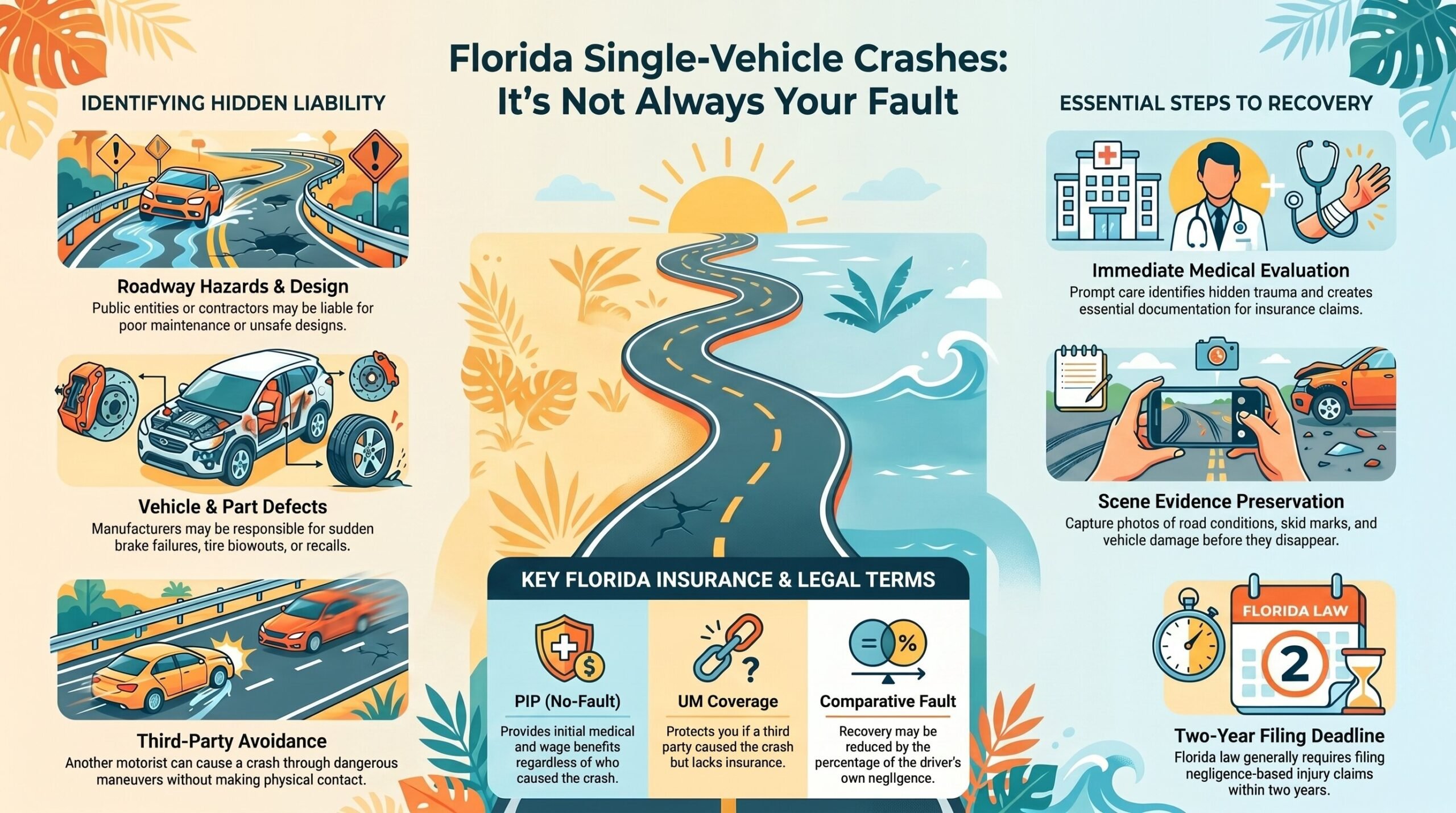
The Law Offices of Anidjar and Levine helps injured drivers and passengers evaluate insurance benefits, preserve evidence, and identify all responsible parties after a single-vehicle crash in Florida. These cases may involve driver conduct, vehicle defects, roadway hazards, poor maintenance, weather, or another motorist, leading to an avoidance action.
A Florida Car Accident Lawyer can review crash reports, medical records, witness statements, vehicle data, and coverage options such as PIP, UM, or third-party claims.
The sections below explain the crucial steps: rights, causes, evidence, and claim.
Main Takeaways
- A Florida single-vehicle accident lawyer investigates fault beyond the driver, including roadway defects, vehicle failures, maintenance issues, or another driver’s actions.
- Key evidence includes crash reports, medical records, photos, witness statements, vehicle damage, dashcam footage, and roadway condition documentation.
- Injured drivers should seek immediate medical care, follow treatment plans, preserve evidence, and track symptoms after the crash.
- Florida claims may involve PIP benefits, uninsured motorist coverage, third-party liability, and comparative negligence issues.
- Legal guidance helps protect insurance claims, avoid damaging mistakes, and identify all available sources of financial recovery.


How We Can Help With Your Florida Single Vehicle Car Accident Injury Claim
When a single vehicle accident causes serious injuries, determining what happened and who may be legally responsible often requires a careful investigation. A Florida single-vehicle car accident injury lawyer can help injured drivers, surviving passengers, and grieving families gather evidence, preserve records, and identify potential sources of recovery. This work may include reviewing crash reports, medical documentation, vehicle data, roadway conditions, maintenance issues, and witness statements.
Legal support also helps protect clients from mistakes that can weaken a claim. Counsel can communicate with insurers, organize documentation, calculate losses, and address questions about medical bills, lost income, and long-term care needs. In insurance negotiations, a lawyer can present the claim clearly and respond to efforts to reduce or deny compensation. Guidance is also important because claim timelines can affect available options. Prompt action protects the injured person’s interests while the focus remains on recovery and service to those harmed.
OUR CONSULTATIONSARE FREE
START YOUR FREE CASE REVIEW

Understanding Florida Single Vehicle Car Accident Injury Cases
Although only one vehicle may be involved, a Florida single-vehicle car accident can still raise complicated legal and insurance issues. Injured drivers or passengers may need guidance to understand rights, duties, and available compensation. These cases often require careful review of the crash report, medical records, vehicle condition, roadway information, and any available witness statements. The goal is to identify every responsible source of recovery while helping the injured person move forward with dignity.
Insurance coverage basics are especially important in Florida, where personal injury protection, bodily injury coverage, uninsured motorist coverage, and optional policy benefits may affect a claim. The Fault determination process may also involve factors beyond the driver’s actions, including the potential responsibility of vehicle owners, employers, maintenance providers, or public entities, when supported by evidence. A knowledgeable injury lawyer can organize the facts, communicate with insurers, and protect the claimant from unfair conclusions during evaluation.
Common Causes of Florida Single Vehicle Car Accidents
Single-vehicle accidents in Florida may result from several distinct factors, each requiring careful evaluation to determine responsibility and available legal options. Common causes include distracted driving, hazardous road conditions, vehicle defects, and impaired driving, all of which can materially affect how an injury claim is assessed. Identifying the cause is crucial because the facts may involve driver conduct, roadway maintenance issues, or third-party liability.
Distracted Driving
Because a momentary lapse in attention can alter a vehicle’s path, distracted driving is a leading cause of single-vehicle car accidents in Florida. Texting and Driving, Phone Use, navigation adjustments, eating, or reaching for objects can pull a driver’s eyes, hands, or judgment away from safe operation. In a single-vehicle crash, that distraction may lead to striking a guardrail, tree, median, sign, or parked vehicle, often before corrective action is possible.
Those who serve injured individuals should recognize that distraction is not limited to deliberate misconduct; it may involve routine habits that create preventable danger. Evidence may include phone records, witness statements, vehicle data, or surveillance footage. Identifying a distraction can help explain how the collision occurred and support accountability for the harm caused. Florida claims require careful evaluation.
Hazardous Road Conditions
Driver distraction is not the only factor that can cause a vehicle to leave its lane, lose traction, or collide with a fixed object. Hazardous road conditions may also contribute to a serious single-vehicle crash, particularly when drivers encounter dangers with little time to respond. In Florida, heavy rain, standing water, eroded shoulders, debris, poor lighting, faded lane markings, and missing warning signs can create conditions that threaten public safety.
Road design may also play a role when sharp curves, inadequate drainage, or unsafe passages increase the risk of losing control. Agencies and contractors responsible for roadway maintenance are expected to follow applicable safety standards. When they fail to correct known hazards, injured motorists may need guidance in identifying responsibility and pursuing accountability.
Vehicle Defects
When a crucial vehicle component fails without warning, a motorist may lose control even while driving with reasonable care. Defective brakes, guidance systems, suspension parts, or electrical components can create sudden emergencies that leave little time to react. Engine failure may cause a vehicle to stall in traffic or lose power on a curve, increasing the risk of a collision with a fixed object.
Tire blowouts are especially dangerous at highway speeds, where a rapid loss of pressure can pull the vehicle off the roadway. In Florida single vehicle accident cases, careful review of maintenance records, recall notices, and product history may reveal whether a manufacturer, repair facility, or parts supplier contributed to the crash. Identifying such failures helps injured people seek accountability and support for recovery.
Impaired Driving
How can impairment turn a routine trip into a single-vehicle crash within seconds? Alcohol, controlled substances, prescription medication, or fatigue can weaken judgment, slow reaction time, and reduce vehicle control. In Florida, an impaired driver may drift from a lane, overcorrect, strike a fixed object, or leave the roadway without involving another vehicle. These crashes often require careful review of medical records, witness accounts, toxicology results, and officer observations.
Issues such as breathalyzer accuracy may affect how responsibility is evaluated, especially when results conflict with physical evidence. Speeding enforcement can also become relevant because impaired drivers frequently misjudge speed and distance. For victims and families seeking to serve recovery and accountability, understanding impairment helps identify preventable conduct, available insurance coverage, and legal claims after a serious single-vehicle accident.


Legal Rights of Florida Single Vehicle Car Accident Injury Victims
Although a crash involving only one vehicle may appear straightforward, an injured person in Florida may still have important legal rights to pursue compensation. These rights may involve personal injury protection benefits, uninsured or underinsured motorist coverage, or claims against responsible third parties when facts support liability. Comparative negligence may affect recovery, yet it does not automatically prevent compensation. Insurance bad faith may also arise when an insurer fails to evaluate, investigate, or fairly pay a valid claim.
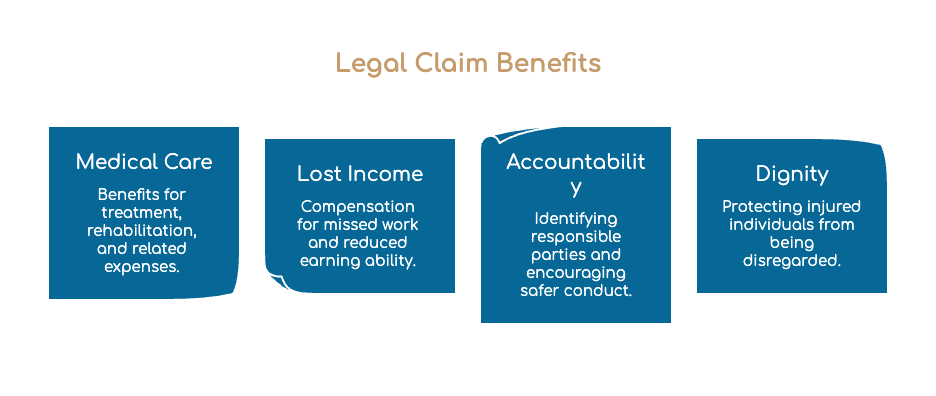
A single-vehicle crash may still entitle you to valuable rights to compensation under Florida law.
- Medical care: Victims may seek benefits for necessary treatment, rehabilitation, and related expenses.
- Lost income: Compensation may address missed work, reduced earning ability, and financial strain.
- Accountability: A claim may help identify responsible parties and encourage safer conduct within the community.
- Dignity: Legal action may protect an injured person from being disregarded during recovery.
A careful legal review can help preserve evidence, meet deadlines, and support a fair outcome.
Why Do Florida Single Vehicle Car Accident Injuries Happen?
Understanding the legal rights of an injured person often begins with examining why the single-vehicle crash occurred. These incidents may result from unsafe road design, poor maintenance, defective vehicle components, or the actions of another driver that prompted avoidance maneuvers without contact. In Florida, weather-related crashes are also common, as heavy rain, standing water, and sudden storms can reduce traction and control.
Driver fatigue, distraction, excessive speed, or impairment may contribute to loss of control, but the cause is not always limited to the injured driver’s actions. Nighttime visibility can make hazards harder to detect, especially when lighting is inadequate, lane markings are faded, or debris remains on the roadway. Careful investigation may reveal whether a business, manufacturer, government entity, or other party failed in a duty of care. Identifying these factors helps determine responsibility and supports informed, service-focused legal guidance after serious injury.
What Should You Do After a Florida Single Vehicle Car Accident Injury?
After a Florida single-vehicle car accident injury, the injured person should seek immediate medical care, even when symptoms appear minor. The crash scene should be carefully documented, including photographs, witness statements, road conditions, and any visible hazards. An attorney can then evaluate the circumstances, preserve important evidence, and explain potential legal options.
Seek Immediate Medical Care
Prompt medical attention is often the most important first step for anyone injured in a Florida single-vehicle car accident, even when symptoms appear minor at the scene. Emergency treatment can identify hidden trauma, including concussions, internal injuries, spinal damage, or soft tissue injuries that may worsen without timely care. A careful medical evaluation also creates reliable symptom documentation, which may later help explain the nature, timing, and progression of the injury.
For individuals focused on serving family, work, or community responsibilities, early treatment supports a safer recovery and reduces the risk of preventable complications. Follow-up care should be attended as directed, and all prescribed restrictions should be taken seriously. Delays in care may weaken medical conclusions and complicate any related injury claim later.
Document The Crash Scene
At the crash location, careful documentation can preserve details that may quickly disappear after a single-vehicle car accident in Florida. If safe to do so, the injured person or a trusted helper should photograph vehicle damage, skid marks, debris, road defects, traffic signs, weather conditions, lighting, and nearby hazards. Names and contact information for witnesses should be recorded promptly, along with the responding agency and report number when available.
Victim documentation should include the time of the crash, vehicle position, statements made at the scene, and any visible injuries. Clothing, damaged property, and medical discharge papers should be kept in a secure place. In the days that follow, injury symptom tracking can help show changes in pain, mobility, sleep, or concentration, supporting a clear account of recovery.
Speak With An Attorney
Once the crash scene has been documented and medical care is underway, legal guidance can help protect the injured person from avoidable mistakes. A prompt legal consultation allows an attorney to review the facts, preserve evidence, and identify potential sources of recovery. In a single vehicle accident, fault may involve road defects, defective parts, unsafe construction zones, or another driver who left the scene.
An attorney can also examine auto insurance coverage, including personal injury protection, uninsured motorist benefits, and collision provisions. This review helps the injured person understand available support while focusing on recovery and family responsibilities. Legal counsel may communicate with insurers, track deadlines, and discourage premature statements. Thoughtful representation can serve the injured person’s interests with diligence, accuracy, and care.
Critical Evidence in a Florida Single Vehicle Car Accident Injury Case
Critical evidence in a Florida single-vehicle car accident injury case can clarify how the crash occurred, whether roadway conditions contributed, and what damages resulted. Key forms of evidence often include:
- Police crash reports
- Photos and videos
- Witness statements
- Vehicle damage evidence
Each item may help establish liability, support injury claims, and strengthen the injured person’s position during an insurance or legal dispute.
Police Crash Reports
Because a single vehicle crash may leave few independent witnesses, the police crash report often becomes one of the most important early records in a Florida injury case. It may identify road conditions, weather, driver statements, suspected impairment, citations, and the responding officer’s initial conclusions. The police narrative can help clarify whether a hazard, vehicle defect, medical event, or evasive action contributed to the crash.
Careful accident documentation also supports those assisting an injured person with practical insurance claim tips, including timely notice and consistent reporting. If dashcam footage is mentioned, counsel can act quickly to request preservation before it is lost. Although not always admissible in full, the report may guide investigation, reveal gaps, and help responsible advocates serve the injured with accuracy.
Photos And Videos
When a Florida single-vehicle crash is investigated, photos and videos can preserve details that written descriptions may not fully capture. Images of vehicle damage, roadway conditions, debris fields, skid marks, traffic signs, lighting, and weather conditions may help explain how the incident occurred. Video from dash cameras, nearby businesses, or roadway systems may also show the vehicle’s path before impact.
Scene safety should remain the priority, and no one should enter a dangerous area to obtain images. When gathered appropriately, visual evidence can support medical evaluations, insurance documentation, and later legal review. Time-stamped photographs may also show changing conditions, such as rain, poor visibility, or roadway hazards. These materials can assist attorneys, insurers, and investigators in evaluating fault, causation, and damages with greater accuracy.
Witness Statements
In a Florida single-vehicle car accident injury case, witness statements can provide important context that physical evidence alone may not establish. A bystander, passenger, responding officer, or nearby property owner may describe road conditions, driver behavior, weather, lighting, or hazards that affected the event. These accounts may help clarify whether an injured person acted reasonably, whether another driver contributed without causing the injury, or whether a dangerous condition existed.
Eyewitness credibility is evaluated through proximity, opportunity to observe, attention, bias, and consistency with other evidence. Statement inconsistencies do not always defeat a claim, but they may require careful explanation and comparison. Attorneys serving injured clients often seek timely interviews, written accounts, and recorded statements to preserve details before memory fades and to support a fair, well-documented injury claim.
Vehicle Damage Evidence
Along with witness statements and scene evidence, vehicle damage can help explain how a single-vehicle accident in Florida occurred and whether the resulting injuries are consistent with the forces involved. Photographs, repair estimates, airbag data, crush patterns, and inspection reports may reveal impact direction, vehicle speed, rollover activity, or mechanical failure. This information can assist those serving the injured by identifying responsible parties, preserving claims, and addressing disputed facts with care.
Vehicle damage may also support Witness credibility when physical findings align with a driver’s account or an observer’s description. When paired with medical record organization, damaged evidence can help connect the mechanism of injury to treatment dates, diagnoses, and ongoing limitations. Careful preservation is necessary because repairs, salvage, or disposal may permanently remove proof.
Long-Term Effects of Florida Single Vehicle Car Accident Injuries
Long-term injuries from a Florida single-vehicle car accident may extend beyond initial medical treatment, particularly when chronic pain conditions affect mobility and daily function. Psychological trauma can also develop after a serious crash, creating lasting effects that influence sleep, concentration, and overall stability. When these consequences interfere with employment, reduced earning capacity may become a significant factor in evaluating the full scope of damages.
Chronic Pain Conditions
Chronic pain can become one of the most persistent consequences of a Florida single-vehicle car accident, even when the initial injuries appear manageable. Injuries to the back, neck, joints, or nerves may continue to limit mobility, work capacity, and ability to perform daily responsibilities for months or years. Careful pain management is often necessary, including therapy, diagnostic testing, injections, or long-term medication when medically appropriate.
For those helping an injured person, consistent documentation supports both treatment planning and evidence preservation. Medical records, symptom journals, imaging results, and provider notes may clarify how the condition affects ordinary activities and future needs. These records can also guide insurance negotiation, especially when insurers question ongoing care. A measured legal approach helps connect chronic symptoms to the accident and protect available recovery.
Psychological Trauma
Physical pain is not the only lasting consequence of a Florida single-vehicle car accident, as many injured individuals also experience psychological trauma that affects recovery, judgment, and daily functioning. Anxiety, depression, sleep disruption, flashbacks, and fear of driving may develop after the crash, especially when the event involved serious injury or isolation. Caregivers, advocates, and legal professionals should recognize these symptoms as legitimate harm rather than personal weakness.
Effective post-accident coping may require counseling, medical evaluation, structured support, and consistent documentation of emotional changes. Evidence preservation is also important, including treatment records, personal journals, witness observations, and communications describing behavioral changes. When psychological trauma is carefully identified, injured individuals are better positioned to seek appropriate care, stability, and accountability under Florida law after a single vehicle collision.
Reduced Earning Capacity
When a Florida single-vehicle car accident causes lasting injury, the financial harm may extend well beyond immediate medical bills and missed work. Reduced earning capacity reflects the injured person’s diminished ability to earn income in the future, even after returning to employment. Spinal damage, traumatic brain injury, chronic pain, or mobility limits may prevent prior job duties, reduce hours, or force lower-paying work.
Careful evaluation helps connect functional limitations to long-term wage loss. Vocational rehabilitation may identify realistic employment options, retraining needs, or permanent work restrictions. Medical records, employer statements, tax returns, and insurance documentation can help establish the economic impact. For those serving injured individuals, accurate proof supports fair compensation that addresses future stability, dignity, and practical needs after a serious crash.
Proving Liability in Florida Single Vehicle Car Accident Injury Cases
A single-vehicle crash in Florida does not automatically mean the injured driver is solely responsible for the accident. Liability may involve a negligent road contractor, vehicle manufacturer, maintenance provider, property owner, or another motorist who caused the driver to react and leave the roadway. Establishing responsibility requires careful review of the Crash timeline, including weather conditions, traffic patterns, road defects, witness statements, vehicle data, and emergency response records.
Attorneys serving injured clients often seek evidence that another party failed to exercise reasonable care. Examples may include a defective tire, poor lighting, missing signage, unsecured cargo, or an unsafe construction zone. In some cases, uninsured drivers may flee after forcing a dangerous driving maneuver, leaving behind physical evidence or witness accounts. Proving liability requires disciplined investigation, preservation of evidence, and a clear explanation of how each negligent act contributed to the injury, damages, and resulting need for legal accountability.
Dealing With Insurance Companies After a Florida Single Vehicle Car Accident Injury
After a single-vehicle crash, insurance companies often begin evaluating the claim before the injured person fully understands the cause of the collision or the extent of the damages. Adjusters may request recorded statements, medical authorizations, or early explanations that can later affect coverage decisions. Careful communication helps protect the injured person’s position while allowing necessary information to be provided responsibly.
Florida insurance issues may involve personal injury protection benefits, uninsured motorist coverage, collision coverage, or other available benefits. Each insurer has its own policy-handling procedures, but those procedures must be measured against Florida law and the policy’s terms. Missing claims deadlines can limit or jeopardize available recovery, even when the injury is serious and the need for support is clear.
A lawyer can manage insurer contact, review requests, and help prevent avoidable mistakes. This allows the injured person and family to focus on recovery, stability, and service to others.
What to Expect During a Florida Single Vehicle Car Accident Injury Claim Process
A Florida single-vehicle car accident injury claim typically begins with timely accident reporting, followed by a careful review of the facts surrounding the crash. Liability factors may involve road conditions, vehicle defects, driver conduct, or other contributing circumstances that affect insurance coverage and compensation. Once insurance claims are filed, the process often moves into documentation, evaluation, and negotiation of injury compensation.
Reporting The Accident
Most single-vehicle accident claims in Florida begin with a formal report to law enforcement, especially when the crash involves injury, death, property damage, impairment, a commercial vehicle, or a vehicle that must be towed. Officers document essential facts, identify involved parties, note apparent injuries, and create a crash report that may guide the insurance claim timeline.
Prompt reporting also helps preserve order, protect vulnerable occupants, and ensure injured persons receive necessary aid. A driver should provide accurate information, avoid speculation, and request medical assistance when needed. The report may later help insurers review and determine fault factors without replacing a full liability evaluation. Copies are generally requested after processing, then shared with counsel, insurers, or medical providers as appropriate to support a responsible, service-minded recovery effort.
Investigating Liability Factors
During the liability investigation, the claim process typically shifts from basic accident documentation to a closer review of why the crash occurred and who may bear legal responsibility. Investigators may examine road conditions, vehicle defects, weather, traffic control devices, maintenance history, and the driver’s conduct before impact. This review can identify whether another person, business, government entity, or product manufacturer contributed to the incident. Evidence such as photographs, event data, witness statements, and repair records may help clarify causation.
In Florida, comparative negligence may also affect how responsibility is evaluated if the injured driver’s actions played a role. Careful analysis supports fair decision-making, especially when insurance coverage questions depend on fault findings. This stage helps protect injured persons and promotes accountability for preventable harm in a community.
Filing Insurance Claims
After liability factors have been reviewed, filing insurance claims usually becomes the next structured step in a Florida single-vehicle accident injury case. The process may involve notifying the insurer, identifying available personal injury protection benefits, and submitting medical records, wage information, and accident documentation. Careful attention to deadlines helps protect the injured person’s access to benefits and supports orderly case handling.
Coverage timeline reviews may be used to confirm policy dates, notice requirements, and benefit limits. Claim representatives may request statements or additional proof, which should be handled with accuracy and care. When benefits are delayed or denied, appeals of claim denials may become necessary. This stage requires organized records, consistent communication, and a service-minded focus on protecting the injured person’s critical recovery needs.
Negotiating Injury Compensation
Once the claim record is developed, negotiating injury compensation may begin with a review of medical treatment, lost income, available insurance coverage, and the long-term effects of the crash. In a single vehicle case, the evaluation may also consider roadway conditions, vehicle defects, or negligent maintenance by another party.
A lawyer may present organized evidence to the insurer, respond to questions, and address any Insurance dispute involving fault, policy limits, or the extent of harm. Settlement timelines can vary, especially when medical recovery is ongoing or future care must be estimated with care. For those committed to helping injured people regain stability, careful negotiation promotes accountability and supports fair outcomes. If reasonable offers are not made, litigation may become the next necessary step under Florida law.
Compensation for Florida Single Vehicle Car Accident Injury Damages
Although a single vehicle crash may appear to involve only one driver, compensation for resulting injuries can still depend on several legal and insurance factors. In Florida, an injured person may first turn to Florida PIP benefits, which can provide prompt payment for qualified medical care and lost income, regardless of fault. However, available recovery may be shaped by policy terms, required medical documentation, and insurance coverage limits.
Additional sources may be examined when another party contributed to the crash, such as a negligent vehicle owner, roadway contractor, product manufacturer, or governmental entity responsible for unsafe conditions. A lawyer may review crash evidence, policy language, medical records, and notice requirements to identify every responsible source of payment. This careful approach can help protect the injured person’s stability, while also supporting families, caregivers, and service providers who rely on timely resources during recovery. Proper guidance may prevent overlooked claims and avoid unnecessary financial strain.
Economic vs Non-Economic Damages in Florida Single Vehicle Car Accident Cases
Florida single-vehicle car accident claims may involve both economic losses, such as medical bills and lost income, and non-economic damages, including pain and suffering. These categories require careful valuation, especially when injuries affect daily activities, long-term recovery, or earning capacity. Proving injury damages often depends on medical records, wage documentation, expert opinions, and consistent evidence linking the losses to the crash.
Recoverable Economic Losses
When a single-vehicle crash causes injury, recoverable economic losses generally include the measurable financial harm resulting from the accident. These losses may cover emergency treatment, hospital care, surgery, rehabilitation, medication, diagnostic testing, and necessary follow-up visits. Medical billing records help document the scope and cost of care, allowing insurers, attorneys, and courts to evaluate claimed expenses with greater accuracy.
Lost wages may also be recoverable when injuries prevent a person from working, as well as reduced earning capacity if limitations affect future employment. Property damage, transportation costs for medical care, and out-of-pocket expenses may be included when properly supported. Insurance claim timelines can affect how quickly documentation must be gathered and submitted, making organized records important for those helping an injured person seek fair financial recovery.
Valuing Pain And Suffering
After the financial losses from a single-vehicle crash are identified, the separate issue of pain and suffering requires careful evaluation, as these damages are not measured by bills or wage records. In Florida, non-economic damages may include physical discomfort, emotional distress, loss of enjoyment, and burdens on daily life. A careful medical records review helps connect the injury experience to treatment history, while a liability evidence review may affect how firmly damages are pursued.
Insurance claim strategy often depends on presenting these harms with discipline, compassion, and credible context, especially when the injured person serves family, community, or workplace responsibilities. During settlement negotiations, the pain and suffering value is assessed alongside the severity, duration, and practical impact of the injuries, without duplicating the economic losses claimed.
Proving Injury Damages
In a Florida single-vehicle car accident case, proving injury damages requires a clear separation between economic losses and non-economic harms. Economic damages include measurable costs, such as emergency care, therapy, medication, future treatment, and lost income. Medical documentation supports these claims by linking the injuries to the crash and showing the extent of necessary care. Wage loss calculations may further establish how the injuries affected employment, earning capacity, and household stability.
Non-economic damages address pain, suffering, emotional distress, physical limitations, and loss of enjoyment of life. These harms are demonstrated by treatment records, physicians’ opinions, personal impact statements, and consistent evidence of daily hardship. A careful presentation helps insurers, judges, or juries understand the full human impact while maintaining accuracy, fairness, and respect for injured individuals.
When a Florida Single Vehicle Car Accident Injury Case Goes to Trial vs Settlement
Although many Florida single-vehicle car accident injury claims are resolved through settlement, some proceed to trial when liability, damages, insurance coverage, or comparative fault remain disputed. Settlement timing often depends on medical stability, documented losses, insurer evaluation, and each side’s willingness to reach a fair resolution. A careful evidence strategy may include crash reports, vehicle data, photographs, witness accounts, medical records, and expert opinions explaining how the collision caused the claimed injuries.
When settlement efforts fail, courtroom preparation becomes central. Counsel may organize exhibits, prepare witnesses, address anticipated defenses, and present the injured person’s losses in a clear, service-minded manner. A Trial verdict can provide accountability when an insurer undervalues harm, but it also carries uncertainty, delay, and public scrutiny. For that reason, each case requires measured evaluation, focusing on credible proof, client goals, and the practical path most likely to secure just compensation.
Florida Laws That May Affect Your Florida Single Vehicle Car Accident Case
Several Florida laws can influence how a single-vehicle car accident injury claim is evaluated, including insurance benefits, fault allocation, and filing deadlines. These rules help determine available compensation, responsible parties, and the practical value of a claim.
- No-fault benefits: Florida personal injury protection may provide initial medical and wage benefits, regardless of who caused the crash, subject to policy terms and medical findings.
- Florida comparative fault: If a driver’s own conduct contributed to the accident, compensation may be reduced according to the assigned percentage of fault, affecting recovery for injuries and losses.
- Insurance coverage limits: Available compensation often depends on policy limits, including PIP, uninsured motorist coverage, medical payments coverage, or applicable liability coverage from another responsible party.
- Duties after a crash: Prompt reporting, medical treatment, and cooperation with insurers can preserve evidence and support a fair evaluation, helping injured people and their families pursue the stability they need.
The Statute of Limitations for Florida Single Vehicle Car Accident Injury Cases
When a single-vehicle crash causes injury in Florida, the statute of limitations sets a strict deadline for filing a lawsuit in court. For most negligence-based injury claims arising from crashes after March 24, 2023, Florida law generally allows two years from the date of the accident. Missing this deadline may bar recovery, even when injuries are serious, and the facts appear clear.
This filing period is separate from insurance requirements tied to No Fault Coverage. Injured occupants often must seek initial benefits promptly, and delayed treatment can affect the benefits available to them. Medical bill delays may also create confusion, but unpaid charges do not usually extend the court deadline.
Those assisting an injured person should encourage careful recordkeeping, prompt medical attention, and attention to all claim notices. Special circumstances, including government vehicle involvement, wrongful death, or claims involving minors, may alter timing rules and require earlier action to preserve legal rights under Florida law.
How a Florida Single Vehicle Car Accident Injury Lawyer Can Help You
How can legal representation affect the outcome of a single-vehicle accident injury claim in Florida? A lawyer can evaluate causes beyond driver error, including roadway defects, vehicle failures, unsafe construction zones, or negligent maintenance. This guidance helps injured people and those supporting them pursue accountability with care and purpose.
- Investigation: Counsel can gather crash reports, photographs, witness statements, medical records, and expert opinions to identify liable parties.
- Insurance coverage: An attorney can review policies, uninsured motorist benefits, medical payments coverage, and exclusions that may affect recovery.
- Damages assessment: Legal support can document medical expenses, lost income, reduced earning ability, pain, and long-term care needs.
- Wrongful death claims: When a fatal crash occurs, counsel can help eligible survivors seek compensation while honoring the dignity of the person lost.
Through organized advocacy, a lawyer can protect legal rights and support a fair resolution.
When to Contact a Florida Single Vehicle Car Accident Injury Lawyer
After a single-vehicle crash in Florida, legal guidance should be considered as soon as injuries, disputed facts, insurance complications, or possible third-party fault become apparent. Prompt contact is especially important when medical treatment is needed, police reports contain unclear details, or an insurer requests recorded statements before the injured person understands the claim.
A lawyer may also be contacted when road hazards, defective vehicle parts, negligent maintenance, or unsafe cargo conditions may have contributed to the crash. In incidents involving a Truck Rollover, early review can help preserve evidence before vehicles are repaired, moved, or destroyed.
Timing also matters when Filing Insurance claims, because missed deadlines or incomplete documentation can limit available recovery. Those assisting an injured person should encourage careful recordkeeping, including photographs, medical records, witness information, and insurer communications. Contact is appropriate whenever the situation becomes uncertain, burdensome, or difficult to manage while recovery and family responsibilities continue.
Why You Need an Experienced Florida Single Vehicle Car Accident Injury Lawyer
Protecting an injury claim arising from a single-vehicle crash in Florida often requires more than reporting the accident and submitting medical bills. An experienced attorney can evaluate how fault, road conditions, vehicle defects, uninsured motorist benefits, and personal injury protection may affect recovery. This guidance is especially important when confusion about insurance coverage prevents an injured person from understanding which policy should respond, what deadlines apply, or why a claim is being limited.
Legal representation also helps address medical treatment delays, which can weaken documentation and give insurers grounds to dispute the severity or cause of injuries. A lawyer may coordinate evidence, review crash reports, communicate with carriers, and preserve records that support the injured person’s needs. For families, caregivers, and community-minded individuals focused on well-being and service, experienced advocacy can reduce burdens, promote accountability, and help ensure that available benefits are pursued with diligence, accuracy, and respect.
How to Choose the Right Florida Single Vehicle Car Accident Injury Lawyer for Your Case
Evaluate a Florida single-vehicle car accident injury lawyer by focusing on relevant experience, case strategy, and the ability to identify every potential source of compensation. A qualified attorney should understand how roadway defects, vehicle failures, negligent maintenance, uninsured drivers, or third-party negligence may affect a claim, even when only one vehicle crashed.
Selection should also consider Client communication. The lawyer should explain legal options clearly, provide timely updates, and treat the injured person’s concerns with respect. This steady guidance helps families make informed decisions while they focus on recovery and service to those who depend on them.
The fee structure should be transparent before representation begins. A reputable lawyer will explain contingency fees, litigation costs, and any obligations that may arise if the case does not succeed. Careful review of experience, communication standards, and financial terms allows an injured person to choose counsel prepared to protect their interests.
About The Law Offices of Anidjar & Levine
The Law Offices of Anidjar & Levine represents injured clients throughout Florida in motor vehicle accident claims, including single-vehicle crashes.
The firm assists individuals and families who need steady guidance after serious harm, helping them understand their rights while they focus on recovery and responsibilities to others.
Its attorneys handle Case investigation, insurance communication, liability analysis, and Injury documentation with careful attention to detail.
This support may include reviewing crash reports, medical records, roadway conditions, vehicle defects, and other evidence that may affect a claim.
Through a Legal consultation, potential clients can discuss the circumstances of a crash, available legal options, and the Compensation timeline that may apply to their case.
The firm’s work centers on practical service, preparation, and advocacy.
By managing legal demands and protecting the value of claims, The Law Offices of Anidjar & Levine helps injured Floridians pursue accountability with structure, dignity, and care.
Frequently Asked Questions
Can Passengers File Claims After a Single Vehicle Accident?
Yes, passengers may file claims after a single vehicle accident when injuries result from driver negligence, unsafe road conditions, or vehicle defects. No-fault options may provide initial medical benefits, while additional insurance coverage can support further recovery. Passenger rights generally allow claims without having to bear fault for the crash. A careful claim timeline matters because deadlines affect compensation, documentation, and service to those harmed through preventable conduct.
What if Poor Road Design Caused My Crash?
Poor road design may support a claim when unsafe curves, missing signs, drainage failures, or hazardous lane layouts contributed to the crash. A Wrongful Design claim may involve a government agency, contractor, or engineer responsible for planning or maintaining the roadway. Evidence must connect the defect to the injuries. Comparative Negligence may reduce recovery if the driver also acted carelessly. Prompt investigation helps protect claims and serve injured parties effectively.
Can a Vehicle Defect Support a Single Vehicle Accident Claim?
Yes, a vehicle defect can support a single vehicle accident claim when evidence shows the defect caused or worsened the crash. Product Liability may apply to faulty brakes, tires, handling, airbags, or electronic systems. Crashworthiness claims may arise when a vehicle fails to protect occupants during impact. Investigators typically review maintenance records, recalls, component failures, and expert findings, helping injured people and service-minded advocates pursue accountability with accuracy and care.
Will a Crash Involving an Animal Affect My Injury Claim?
Yes, a crash involving an animal can affect an injury claim, depending on fault, available evidence, and policy terms. Insurers may examine whether the driver acted reasonably, including speed, lookout, and evasive choices. Insurance coverage limits can restrict recovery, even when injuries are serious. Comparative negligence defenses may reduce compensation if careless driving contributed. Prompt documentation, witness information, and medical records help protect the claim and support those seeking fair accountability.
Do Single Vehicle Accident Claims Require Expert Witnesses?
Single vehicle accident claims may require specialists when fault, injury severity, or damages are disputed. Accident reconstruction specialists can explain roadway conditions, vehicle defects, or evasive actions. Medical causation specialists may link injuries to the crash rather than to prior conditions. Evidence preservation, including vehicle data, photographs, and maintenance records, supports accurate conclusions. For those serving injured people, expert testimony can provide clarity, strengthen credibility, and promote a just resolution.
—————————
Single-vehicle accident claims in Florida can involve intricate questions of fault, insurance coverage, road conditions, and available compensation.
Injury victims may benefit from prompt legal guidance, especially when medical expenses, lost income, or long-term recovery are involved.
A qualified Florida Car Accident Lawyer can evaluate the facts, protect legal rights, and pursue fair compensation.
The Law Offices of Anidjar and Levine provide experienced representation for victims seeking informed, effective legal support.