The Law Offices of Anidjar and Levine explains how a Miami Car Accident Lawyer evaluates comparative negligence issues under Florida law when multiple parties may share fault for an accident.
Counsel reviews reports, witness statements, photographs, medical records, and insurance communications to build a clear account and challenge unsupported blame.
Because compensation may be reduced by the claimant’s percentage of fault, careful investigation and organized evidence are crucial.
Legal guidance also helps protect deadlines, evaluate damages, and improve settlement or trial positioning, with further practical points outlined below.
Main Takeaways
- A Miami comparative negligence injury lawyer evaluates each party’s fault and explains how Florida law may reduce compensation by your percentage of blame.
- You may still recover damages in Florida even if you share fault, depending on the facts and applicable comparative negligence rules.
- A lawyer gathers crash reports, medical records, photos, witness statements, video, and electronic data to build a strong liability case.
- Representation helps challenge unfair blame from insurers, document medical costs and lost income, and negotiate a fair settlement.
- If liability is disputed, a lawyer may retain experts, reconstruct the incident, and prepare for jury allocation of fault at trial.
How We Can Help With Your Miami Comparative Negligence Injury Claim
In comparative negligence claims, effective representation begins with a careful evaluation of how fault may be assigned under Florida law. Counsel reviews reports, witness statements, photographs, medical records, and insurance communications to build a clear account of events and protect the client’s ability to pursue recovery.
From that foundation, the legal team identifies evidence that supports liability, documents losses, and explains how comparative damages may affect compensation. They coordinate with medical providers, gather employment information, and organize proof of financial and personal harm with diligence and respect. Strong advocacy also includes direct communication with insurers, careful claim preparation, and practical settlement strategies designed to reduce delays and resist unfair blame-shifting.
When negotiations do not yield a fair result, representation includes filing suit, managing deadlines, and presenting a disciplined case in court. Throughout the process, the focus remains on service, accountability, and helping injured people move forward with stability and confidence.
Understanding Miami Comparative Negligence Injury Cases


Miami comparative negligence injury cases require a clear understanding of how shared fault can affect the outcome of a personal injury claim. In Miami, courts examine each party’s conduct to determine whether comparative fault reduced the injured person’s recovery and to what extent that reduction should apply under governing law.
OUR CONSULTATIONSARE FREE
START YOUR FREE CASE REVIEW

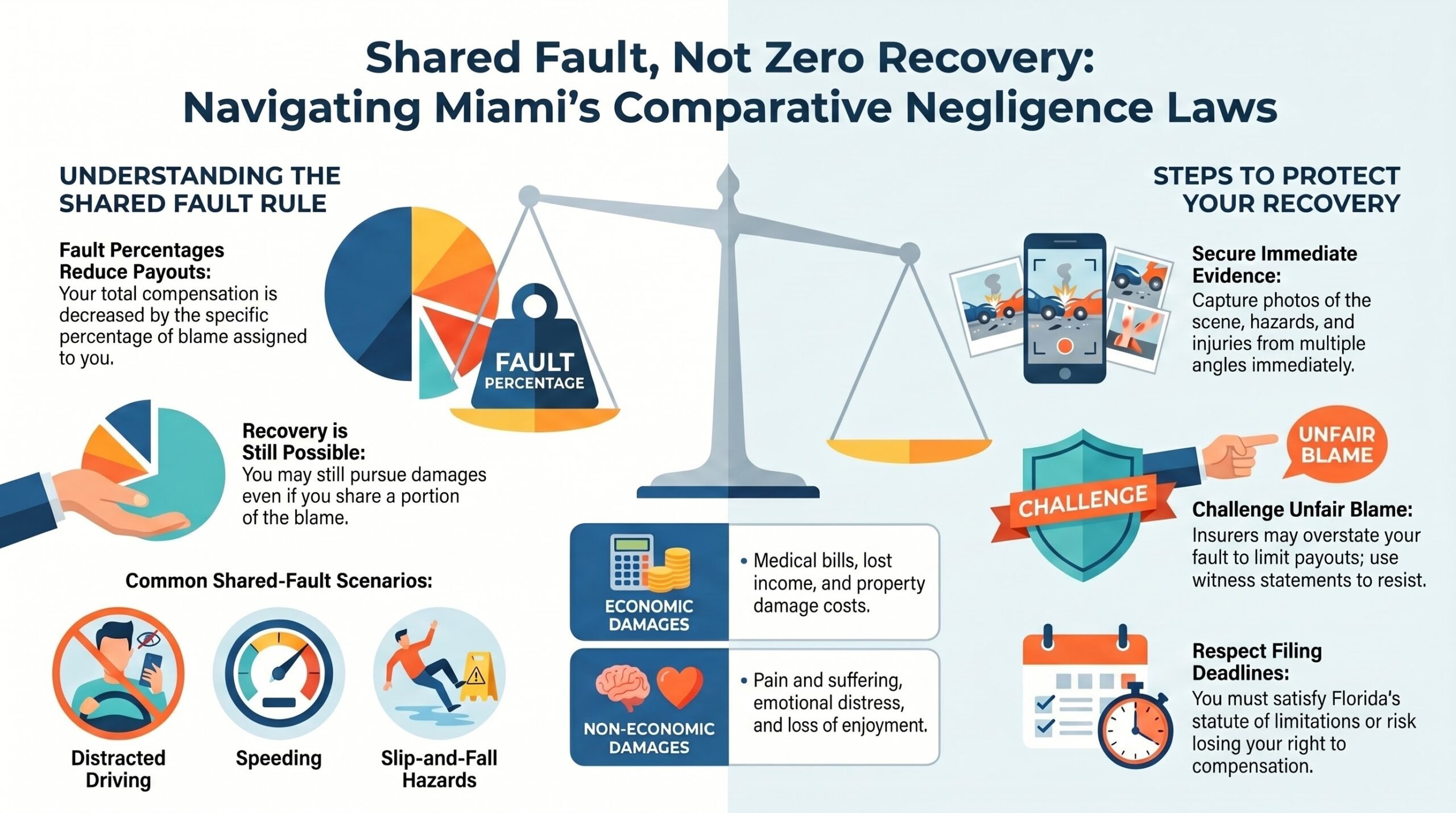
This framework centers on fairness, accountability, and responsible service to those harmed. Evidence such as witness statements, records, expert analysis, and scene documentation may influence how fault percentages are assigned. Once responsibility is evaluated, damage apportionment determines the portion of compensation each party must bear. Even when an injured person shares some blame, recovery may still be available, though it can be reduced by that percentage of fault.
A careful legal review helps clarify rights, obligations, and the practical value of a claim. Understanding these principles allows injured individuals and those assisting them to pursue outcomes that are equitable, informed, and consistent with community-minded care.
Common Causes of Miami Comparative Negligence
Several recurring events often lead to comparative negligence disputes in Miami injury cases, particularly when more than one party may have contributed to the harm. Common examples include distracted driving accidents, speeding and reckless driving, slip and fall hazards, and pedestrian or bicycle collisions. Each of these circumstances may require a careful assessment of conduct, surrounding conditions, and the degree of fault assigned to each party.
Distracted Driving Accidents


Distracted driving remains a leading cause of motor vehicle collisions, often arising when a driver diverts attention from the road to a phone, navigation system, passengers, or other non-driving activity. In Miami, cellphone use frequently reduces reaction time, impairs judgment, and causes drivers to miss traffic signals or important road signs. Even brief lapses can endanger pedestrians, cyclists, and other motorists who rely on attentive, responsible conduct.
Under comparative negligence principles, fault may be shared when a distracted driver and another party each contribute to a crash. Evidence such as phone records, witness statements, surveillance footage, and vehicle data may help clarify responsibility. Careful legal evaluation supports injured individuals and families by identifying each party’s role, promoting accountability, and helping secure fair compensation for losses, treatment needs, and ongoing recovery.
Speeding And Reckless Driving
Beyond inattention, speeding, and reckless driving frequently contribute to serious collisions by reducing a driver’s ability to control a vehicle, respond to changing traffic conditions, and avoid foreseeable hazards. In Miami negligence cases, these actions often increase impact forces, lengthen stopping distances, and narrow the margin for safe decisions. Courts and insurers may examine whether a motorist ignored posted speed limits, violated traffic signals, or exhibited reckless behavior, such as abrupt lane changes, tailgating, or racing through congestion.
Evidence from crash reports, witness statements, and electronic data can clarify how speed affected liability and damages. Effective speed limit enforcement also serves the public by encouraging safer roads, protecting vulnerable travelers, and reinforcing the duty each driver owes to others. These factors may influence comparative fault determinations after a collision.
Slip And Fall Hazards
Slip-and-fall hazards are a frequent source of injury claims in Miami and often raise important questions about comparative negligence. These incidents commonly arise in stores, apartment compounds, parking areas, and public walkways, where property owners owe visitors a duty of reasonable care. Wet floors, inadequate lighting, loose mats, and uneven sidewalks can create dangerous conditions that lead to serious harm.
In comparative negligence cases, insurers and courts may examine whether an injured person was distracted, ignored warning signs, or wore unsafe footwear. Even so, a property owner may still bear substantial responsibility when hazards were known, foreseeable, or left uncorrected. Careful documentation, prompt reporting, and witness statements often help clarify how a fall occurred and support efforts to secure accountability and fair recovery for those affected.
Pedestrian And Bicycle Collisions
Across Miami, pedestrian and bicycle collisions are a significant source of injury claims and often involve detailed comparative negligence analysis. These incidents may arise from speeding drivers, distracted walking, unsafe turns, poor visibility, or failures to yield at crosswalks and intersections. When bicycles are involved, disputed facts often include the use of Bike lanes, traffic signal compliance, and Helmet safety practices.
Comparative negligence may reduce recovery when an injured person is found partially responsible, yet liability can still rest heavily on motorists, property owners, or public entities. Careful investigation serves the broader goal of protecting community members by identifying preventable risks and assigning fair responsibility. Evidence such as surveillance footage, vehicle data, roadway design, witness statements, and medical records often shapes how fault is allocated under Florida law in these serious cases.
Legal Rights of Miami Comparative Negligence Injury Victims
Accountability shapes the legal rights of Miami comparative negligence injury victims because Florida law generally permits an injured person to recover compensation even when that person shares some blame for the accident. Under comparative negligence principles, recovery may be reduced by the claimant’s percentage of fault, making careful statute interpretation important when evaluating liability and damages.
These rights aim to support fairness, responsibility, and meaningful relief for harmed individuals and families.
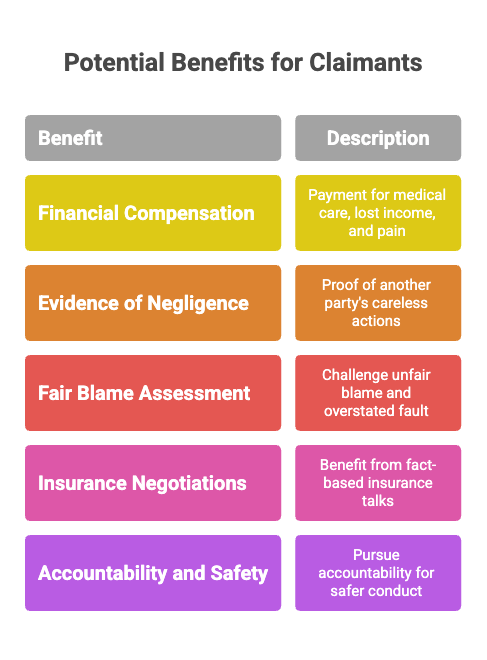
- They may seek payment for medical care, lost income, and pain-related losses.
- They may present evidence showing another party acted carelessly or unreasonably.
- They may challenge unfair blame assessments that overstate personal fault.
- They may benefit from insurance negotiations grounded in documented facts.
- They may pursue accountability that encourages safer conduct and community protection.
Miami victims are also entitled to equal treatment under civil procedures, access to counsel, and a reasoned assessment of evidence. These protections help service-minded families pursue justice while respecting shared responsibility.
Steps to Take After a Miami Comparative Negligence Injury
After a Miami comparative negligence injury, the injured party should seek immediate medical care to safeguard both health and the record of harm. It is also important to gather evidence at the scene, including photographs, witness information, and any relevant details about how the incident occurred. Prompt contact with a Miami lawyer can help preserve legal options and support a clear assessment of fault and damages.
Seek Immediate Medical Care
Seek prompt medical attention, as immediate evaluation protects both health and any future injury claim. After a Miami accident, an urgent assessment can identify internal trauma, concussions, or soft tissue damage that may not appear immediately. Early diagnosis also creates a clear treatment record, which can be important when comparative negligence issues arise.
Those assisting an injured person should prioritize safety, call emergency services when needed, and follow medical instructions carefully. If symptoms seem manageable, a prompt visit to an emergency room, urgent care center, or physician remains advisable. Practical planning matters as well, including transport logistics for ambulance service, a trusted driver, or follow-up appointments. Consistent care demonstrates responsibility, supports recovery, and helps make certain that healthcare providers can document symptoms, limitations, and recommended treatment from the outset.
Gather Evidence At Scene
Document the scene as thoroughly as conditions allow, because contemporaneous evidence often becomes central when fault is disputed under Miami’s comparative negligence rules. If personal safety permits, an injured person should preserve details that may later clarify how the event occurred and how responsibility should be allocated fairly.
Useful steps include photographing evidence from multiple angles, including vehicles, hazards, injuries, traffic controls, weather conditions, and visible property damage. Time, location, and road layout should also be noted carefully. When available, witness statements can provide neutral accounts that support a more accurate reconstruction of events, especially when memories fade. Names and contact information should be gathered respectfully and without confrontation. These efforts help protect the interests of everyone involved, support truthful reporting, and reduce the risk of incomplete or distorted accounts later.
Contact A Miami Lawyer
In the aftermath of a Miami injury incident, early consultation with a qualified lawyer can materially affect how comparative negligence issues are evaluated and presented. Counsel can review facts, identify shared-fault arguments, and help preserve deadlines that may influence recovery.
A Miami lawyer can also guide injured individuals who remain focused on protecting others, including family members, passengers, or coworkers affected by the event. During a free consultation, counsel may explain how insurance statements, medical records, and witness accounts could alter percentage-of-fault findings. Careful legal advice supports informed decisions and reduces preventable mistakes. Reviewing client testimonials may also help determine whether a firm demonstrates consistent service, professionalism, and respect for those facing difficult circumstances. Timely contact often strengthens case preparation and promotes a more accurate presentation of responsibility under Florida law.
How a Miami Comparative Negligence Injury Lawyer Can Help You
When fault is disputed after an accident, a Miami comparative negligence injury lawyer can provide crucial guidance by evaluating the facts, identifying each party’s share of responsibility, and building a strategy designed to protect the injured person’s right to recover compensation. Through careful investigation, counsel supports fair Fault apportionment and strengthens positions during Comparative settlements, helping families pursue accountability while respecting the needs of everyone affected.
- Reviews police reports, records, and witness statements
- Calculates damages tied to medical care and lost income
- Challenges unfair blame from insurers or opposing parties
- Negotiates from evidence, not pressure or speculation
- Prepares the case for court if settlement efforts stall
A lawyer also explains Florida’s comparative negligence rules in clear terms, so injured individuals can make informed decisions that serve their households and communities. By organizing proof, meeting deadlines, and communicating with insurers, counsel reduces avoidable setbacks and protects the integrity of the claim throughout the legal process.
Long-Term Effects of Miami Comparative Negligence Injuries
Miami comparative negligence injuries may produce lasting consequences that extend well beyond the initial recovery period. These effects often include chronic physical limitations and emotional or mental strain, both of which can alter daily functioning and overall quality of life. In many cases, such injuries also reduce earning capacity, creating long-term financial pressures that must be considered in any claim.
Chronic Physical Limitations
Chronic physical limitations often emerge after a serious injury and can alter nearly every aspect of daily life. Individuals may experience reduced strength, restricted range of motion, impaired balance, or lasting fatigue, all of which can hinder their ability to perform work, household duties, and community service. Recovery sometimes requires mobility aids, adaptive equipment, and ongoing pain management to preserve function and independence.
These limitations may also affect the ability to drive, lift objects, stand for extended periods, or safely care for family members. Medical providers often recommend rehabilitation, home modifications, and structured routines to reduce strain and prevent further harm. In comparative negligence cases, careful documentation of chronic physical restrictions can help demonstrate how an injury continues to shape a person’s practical abilities, future care needs, and overall quality of life.
Emotional And Mental Impact
Lasting physical restrictions often extend beyond the body and affect a person’s emotional stability, sense of security, and overall mental wellbeing. After a serious injury, individuals may experience anxiety, depression, sleep disruption, irritability, or persistent fear during ordinary activities. These effects can strain family relationships, weaken community involvement, and diminish confidence in daily decision-making.
A service-minded perspective recognizes that emotional recovery merits the same attention as physical healing. Early evaluation, consistent trauma counseling, and compassionate support networks may help injured people process grief, adjust to changed routines, and rebuild trust in their surroundings. Stigma reduction also remains important because many individuals hesitate to seek mental health care when symptoms are misunderstood or minimized. In comparative negligence cases, these psychological consequences may form a meaningful part of long-term damages.
Reduced Earning Capacity
Many serious injuries do more than interrupt present employment; they can permanently reduce a person’s ability to earn income over time. When physical limitations, chronic pain, or cognitive changes affect performance, an injured person may be unable to return to the same role, schedule, or profession. In Miami comparative negligence cases, reduced earning capacity may be considered separately from lost wages, because it reflects future economic harm rather than past income alone. Careful evaluation often includes medical findings, work history, training, and expected advancement.
Some individuals require career rehabilitation to identify suitable work that is consistent with their new limitations. A thorough damages assessment helps families plan responsibly, supports informed legal advocacy, and promotes fair compensation for diminished opportunities to provide, contribute, and serve others through meaningful long-term employment.
Proving Liability in Miami Comparative Negligence Injury Cases
In Miami comparative negligence injury cases, proving liability requires a careful showing of how the incident occurred, who breached a legal duty, and whether that breach directly caused the claimant’s injuries. Courts and counsel examine police reports, medical records, photographs, video footage, and witness statements to construct a reliable timeline and identify each party’s conduct.
This process also involves applying comparative liability standards to determine whether multiple actors shared responsibility. Evidence must show not only negligence, but also how each omission or unsafe act contributed to the harm suffered. Expert testimony may clarify vehicle dynamics, property hazards, or medical causation when facts are disputed. Effective presentation of evidence supports fair apportionment methods, allowing fault to be assigned in measured percentages rather than broad assumptions.
For individuals focused on helping others recover and move forward, careful liability proof promotes accountability, encourages safer conduct, and strengthens the foundation for a just legal outcome under Florida law in civil claims.
Dealing With Insurance Companies After a Miami Comparative Negligence Injury
After a Miami comparative negligence injury, communications with insurance companies often become a central part of the claim process. Insurers may request recorded statements, medical authorizations, or broad documentation. A careful, service-minded approach helps protect the injured person while preserving accurate information for all parties involved. Clear records, respectful responses, and measured disclosures can reduce misunderstandings and support a fair evaluation of damages.
Insurance representatives may also use claim tactics designed to limit payouts by emphasizing partial fault, minimizing injuries, or questioning treatment choices. Because comparative negligence can reduce compensation, every statement may carry weight. It is often wise for the injured person to review requests closely and respond with precision. Attention to settlement timing is equally important. Early offers may appear helpful, yet they may not reflect the full extent of losses, future care needs, or recovery setbacks. Thoughtful communication and informed review can better serve the injured person’s long-term interests and community responsibilities.
What to Expect During a Miami Comparative Negligence Injury Claim Process
A Miami comparative negligence injury claim generally begins with an initial evaluation of the facts, injuries, and available evidence to determine the claim’s viability. It then proceeds to a fault percentage assessment and a series of insurance negotiation steps, both of which can materially affect the amount of compensation sought or offered. If a resolution is not reached through settlement, the matter may advance to trial for a formal determination of liability and damages.
Initial Claim Evaluation
Clarity is established early during the initial claim evaluation, when counsel reviews the facts of the accident, the nature of the injuries, and any evidence bearing on fault. This initial assessment helps determine whether the claim appears legally viable and what documentation should be gathered promptly.
Medical records, incident reports, photographs, witness information, and insurance details are commonly examined during this stage. Counsel may also identify immediate deadlines, preservation issues, and practical steps that protect the claimant’s position while the matter develops. Careful damage estimation is often undertaken, addressing medical expenses, lost income, property loss, and anticipated care needs. This early review allows individuals and families to plan responsibly, support recovery, and make informed decisions about next steps. It also promotes organized advocacy rooted in service, diligence, and accountability.
Fault Percentage Assessment
Determining each party’s share of fault is a central step in a Miami comparative negligence injury claim, because the percentage assigned to the injured person may directly reduce the damages that can be recovered. Attorneys review accident reports, medical records, photographs, witness statements, and scene details to build a careful account of how the event occurred. In many matters, expert testimony helps explain vehicle dynamics, safety standards, or medical causation, giving decision-makers a clearer basis for evaluating conduct.
If the case proceeds to trial, the jury may be allocated specific percentages to each party after weighing all credible evidence. This stage requires patience, accuracy, and a service-minded commitment to fairness, because a well-supported fault assessment can help injured people and their families understand responsibility and pursue an outcome grounded in facts and law.
Insurance Negotiation Steps
Once the parties’ respective fault percentages have been examined, the claim typically enters negotiations with the insurance carrier, where those findings begin to affect the settlement value in practical terms. Adjusters usually review medical records, wage-loss documentation, repair estimates, and witness statements before issuing an initial response. That response may reflect policy tactics designed to limit exposure, including challenges to causation, treatment necessity, or the claimant’s share of responsibility.
Counsel commonly answers with organized evidence, a demand package, and reasoned explanations that emphasize fairness to all involved. Communication may continue through letters, calls, and supplemental submissions as new records arrive. During this stage, settlement timelines vary according to injury severity, disputed facts, and insurance cooperation. Careful preparation often helps injured individuals protect resources, meet obligations, and support household stability during recovery.
Settlement Or Trial
Evaluate the next phase by recognizing that many Miami comparative negligence injury claims resolve through settlement, while others proceed to trial when fault allocation, damages, or policy limits remain disputed. Counsel typically compares risks, the strength of the evidence, and projected recovery before recommending either path.
Settlement can provide faster relief, lower expense, and more privacy for injured people seeking stability for their families and communities. Mediation benefits often include structured dialogue, realistic valuation, and opportunities to preserve dignity while resolving conflict. Trial becomes necessary when insurers minimize harm or assign unfair percentages of blame. In court, each side presents testimony, records, and expert analysis so a judge or jury can determine responsibility and compensation. Because jury unpredictability remains significant, careful preparation, credible advocacy, and service-minded decision-making guide the choice between a negotiated resolution and a verdict.
Compensation for Miami Comparative Negligence Injury Damages
Accountability often shapes the value of compensation in a Miami comparative negligence injury claim because damages may be reduced in proportion to the injured party’s share of fault. This framework influences comparative settlements and can prompt apportionment disputes when parties disagree about each person’s responsibility. Careful investigation, reliable documentation, and credible testimony often guide a fair valuation.
In practice, compensation depends on proving liability, causation, and the extent of harm within Florida’s comparative negligence rules. Decision-makers review accident reports, medical records, photographs, witness statements, and expert analysis to assign percentages of fault. Those findings can materially change the final recovery available to an injured person and the resources available for family support or community stability. Legal counsel often works to present a clear narrative, challenge unsupported blame, and protect the claimant from exaggerated fault allegations.
A disciplined approach helps make certain compensation reflects actual responsibility under the law while advancing accountability and service to others.
Economic vs Non-Economic Damages in Miami Comparative Negligence Cases
In Miami comparative negligence cases, damages are generally divided into economic losses, such as medical expenses and lost income, and non-economic losses, including pain and suffering and loss of enjoyment of life. Because non-economic harm is less easily measured, its valuation often depends on the severity of the injury, the duration of recovery, and the effect on daily functioning. Any award for either category may then be reduced according to the injured party’s percentage of fault under Florida’s comparative negligence rules.
Economic Damages Explained
Clarity is essential when distinguishing economic damages from non-economic damages in a Miami comparative negligence case. Economic damages are measurable financial losses directly tied to an injury and supported by objective records. These often include medical billing, rehabilitation costs, prescription expenses, and transportation for treatment. They also cover lost wages when a person misses work, along with reduced future earnings if the injury limits long-term employment capacity.
In addition, property loss may be recoverable when a vehicle or other personal item is damaged in the same event. For those committed to helping injured individuals and their families, understanding these categories supports informed advocacy. In comparative negligence matters, the total economic award may be reduced by the claimant’s percentage of fault under Florida law.
Non-Economic Loss Valuation
Perspective becomes especially important when valuing non-economic losses in a Miami comparative negligence case, because these damages do not appear on invoices or payroll records. Instead, they reflect human consequences such as physical discomfort, emotional distress, loss of enjoyment, and diminished relationships, all of which affect a person’s ability to care for others and participate in daily life.
Attorneys and experts often use pain-and-suffering valuation methods alongside medical evidence, testimony, and documented changes in routine. They may also consider quality-of-life metrics, including sleep disruption, mobility limitations, anxiety, and reduced independence. A careful presentation helps decision-makers understand how an injury affects service, family roles, and community involvement. Thorough valuation seeks a fair measure of loss while respecting the injured person’s dignity, function, and long-term well-being.
Comparative Fault Damage Reduction
Once economic and non-economic losses have been identified and valued, comparative fault determines how much of that total may actually be recovered in a Miami injury case. Courts and insurers examine each party’s conduct, then apply fault apportionment to reduce compensation by the claimant’s percentage of responsibility. This reduction affects both financial losses, such as medical bills and lost income, and non-financial harms, including pain, suffering, and loss of enjoyment of life.
A careful presentation of evidence can help guarantee that responsibility is assigned fairly. Records, witness statements, and expert analysis often support a more accurate allocation of blame. Attention to damage mitigation also matters, as reasonable medical care and responsible post-accident decisions can preserve the value of a claim while reflecting a commitment to accountability and service to others.
When a Miami Comparative Negligence Injury Case Goes to Trial vs Settlement
In many Miami comparative negligence injury matters, the path toward settlement or trial depends on the strength of the evidence, the degree of fault assigned to each party, and the extent of the claimed damages. Attorneys often evaluate witness credibility, medical proof, and insurance positions before advising whether a resolution outside court would better serve everyone involved. Careful attention to settlement timing can also influence leverage, costs, and the opportunity for meaningful compromise.
Trial becomes more likely when parties strongly dispute liability, minimize injuries, or disagree about how comparative fault should be applied. In those situations, jury dynamics may shape risk assessments because jurors can respond differently to disputed facts, personal accountability, and community standards of care. Settlement is often favored when evidence is clear, damages are measurable, and both sides wish to reduce uncertainty and preserve resources. A disciplined legal strategy helps injured people pursue accountability while encouraging fair outcomes that support recovery, stability, and responsible decision-making for families and the broader community.
The Statute of Limitations for Miami Comparative Negligence Injury Cases
Under Florida law, the statute of limitations sets a firm deadline for filing a personal injury lawsuit, and that deadline can materially affect a Miami comparative negligence claim. In most negligence actions, the injured party must satisfy applicable filing deadlines or risk losing the opportunity to seek compensation through the courts. This time limit applies even when the fault is shared among multiple parties.
Careful attention to dates serves injured people, families, insurers, and courts by promoting the timely preservation of evidence and the fair evaluation of cases. Although certain circumstances may pause the clock, those tolling exceptions are narrow and fact-specific. Examples may include delayed discovery in limited situations, minority, or incapacity, depending on the claim and governing law. Missing the statutory period can bar recovery regardless of injury severity or community impact. Because comparative negligence reduces damages according to each party’s percentage of fault, compliance with the statute of limitations remains a separate and vital requirement in every Miami injury matter.
When to Contact a Miami Comparative Negligence Injury Lawyer
At the earliest practical stage after an accident, contact with a Miami comparative negligence injury lawyer can materially affect the strength and value of a claim. Early consultation helps preserve evidence, identify witnesses, and prevent avoidable missteps in statements to insurers or other parties. It also supports informed decisions that protect the interests of injured people and the families depending on them.
Prompt action is especially important when liability may be shared. A lawyer can begin evaluating fault allocation while facts remain fresh and records are obtainable. Medical documentation should also be gathered without delay, because treatment notes, diagnoses, and follow-up recommendations often shape how damages are understood. Contact is advisable after serious injuries, disputed accounts of the event, insurance pressure, or any indication that another party may shift blame. Reaching out soon after medical needs are stabilized allows a claim to proceed with greater order, clearer proof, and a stronger foundation for fair recovery under Florida law.
Why You Need an Experienced Miami Comparative Negligence Injury Lawyer
Prompt contact lays the groundwork for a claim, but experienced legal representation often determines how effectively comparative negligence issues are addressed once fault becomes contested. In Miami injury cases, insurers often seek to increase a victim’s share of blame, reducing compensation that could support recovery and continued care for others.
An experienced comparative negligence injury lawyer analyzes records, interviews witnesses, and identifies facts that limit unfair fault allocations. This work is crucial when comparative liability arguments become central to settlement talks or trial preparation. Counsel also develops a legal strategy that connects evidence, medical findings, and applicable law into a coherent presentation.
Skilled representation helps protect the integrity of a claim by anticipating defenses and challenging distorted narratives. It also supports informed decisions at each stage, from documenting losses to evaluating offers. For individuals focused on recuperation and serving their families or communities, experienced advocacy provides structure, protection, and a stronger path toward fair financial recovery.
How to Choose the Right Miami Comparative Negligence Injury Lawyer for Your Case
Case selection in a comparative negligence claim should focus on counsel’s ability to manage disputed fault, evaluate evidence with precision, and present a clear strategy for protecting the client’s recovery. A careful review of prior case results, courtroom experience, and knowledge of Florida negligence rules can help identify capable representation. Lawyers who communicate clearly often strengthen trust and improve decision-making throughout the process.
Prospective clients should also consider how the attorney conducts Client interviews, since attentive listening may reveal important facts about shared liability, damages, and witness credibility. Fee structures merit close review as well, because transparent terms support responsible planning and reduce later conflict. Community-minded individuals often value counsel who treats every matter with dignity, respects deadlines, and remains available to answer questions. An effective Miami comparative negligence injury lawyer should combine legal skill, disciplined preparation, and ethical service, while keeping the client’s best interests at the center of every recommendation made.
About The Law Offices of Anidjar & Levine
After considering the qualities that often distinguish effective counsel in comparative negligence matters, attention may turn to the Law Offices of Anidjar & Levine and the services the firm provides to injured clients in Miami. The firm presents itself as a resource for people facing medical bills, lost income, and uncertainty after an accident, while emphasizing responsive communication and practical guidance throughout the claims process.
Its approach reflects a service-minded commitment to helping clients pursue fair compensation without losing sight of dignity and personal needs. Information about the firm’s history may assist readers who value continuity, professional development, and a sustained presence in Florida personal injury practice.
Client testimonials may also offer insight into how the firm handles communication, accessibility, and case support from intake through resolution. For individuals seeking representation in comparative negligence claims, the Law Offices of Anidjar & Levine may be viewed as a firm focused on advocacy, preparation, and client-centered service.
Frequently Asked Questions
Can Social Media Posts Affect My Comparative Negligence Injury Claim?
Yes, social media posts can affect a comparative negligence injury claim. Courts and insurers may review online posts as digital evidence, evaluating statements, photos, and activity for inconsistencies with reported injuries or conduct. This evidentiary impact can influence fault allocation and damages. A careful claimant serves the process best by avoiding misleading social media content, preserving relevant records, and consulting counsel before discussing the incident or recovery progress publicly or privately.
Do Surveillance Cameras or Dashcams Help Prove Fault Percentages?
Yes, surveillance cameras and dashcams often help prove fault percentages by showing vehicle positions, speeds, signals, and driver conduct before impact. Courts and insurers may rely on video timestamps to compare actions second by second, thereby clarifying each party’s share of responsibility. Their value depends on the authenticity of the footage, image quality, and whether the recording captures the entire event. Prompt preservation also serves others by protecting accurate, fair determinations in contested claims.
Can I Recover Damages if I Was Mostly at Fault?
Yes, a person may recover damages even when mostly at fault, depending on the governing state law. In many jurisdictions, shared fault does not bar a claim, but it does lead to reduced recovery proportional to that person’s responsibility. Some states, however, prohibit recovery once fault reaches a specified threshold. Careful legal evaluation helps clarify available options and supports informed decisions that may protect all affected parties and communities.
How Are Comparative Negligence Rules Applied in Multi-Vehicle Accident Cases?
Comparative negligence in multi-vehicle accident cases is applied by assigning each driver a percentage of fault based on evidence, witness statements, and expert analysis. Courts and insurers examine contributory factors, including speed, distraction, signaling, and road conditions, then use apportionment formulas to divide liability and damages. If one party seeks recovery, that person’s compensation is typically reduced by the assigned share of responsibility, while each defendant pays according to fault.
Will Pre-Existing Injuries Reduce My Compensation in a Comparative Negligence Claim?
Yes, pre-existing conditions may reduce compensation only to the extent they did not result from the incident. A claimant is generally entitled to recover for any aggravation of prior injuries caused by another party’s negligence. Careful review of medical records often determines which portion of the harm existed beforehand and which worsened afterward. In comparative negligence claims, insurers may dispute causation, so clear documentation serves the injured person and supports fair allocation.
—————————
Comparative negligence claims in Miami require careful analysis of fault, evidence, and damages.
Injured individuals may protect their interests by understanding their rights, acting promptly after an accident, and seeking qualified legal guidance when liability is disputed.
A knowledgeable Miami Car Accident Attorney can evaluate the facts, address insurance challenges, and pursue fair compensation under Florida law.
The Law Offices of Anidjar and Levine provides representation focused on clear strategy, thorough preparation, and the practical needs of injured clients.