If the insurer is blaming you for the accident, the fight is not over. We challenge unfair fault allocations and protect what you are owed.
The Law Offices of Anidjar and Levine helps injured people in Tampa protect claims when insurers use comparative negligence to shift blame and reduce compensation.
Our team reviews police reports, medical records, photos, witness statements, treatment gaps, and adjuster arguments to build a clear record of evidence.
We challenge unfair fault allocations, document medical costs, lost income, future care, and daily limitations, and negotiate with disciplined advocacy.
Below, you will see how shared fault affects recovery and how a Tampa Car Accident Lawyer can help.
Main Takeaways
- A Tampa comparative negligence injury lawyer helps protect claims from unfair fault-shifting by insurers.
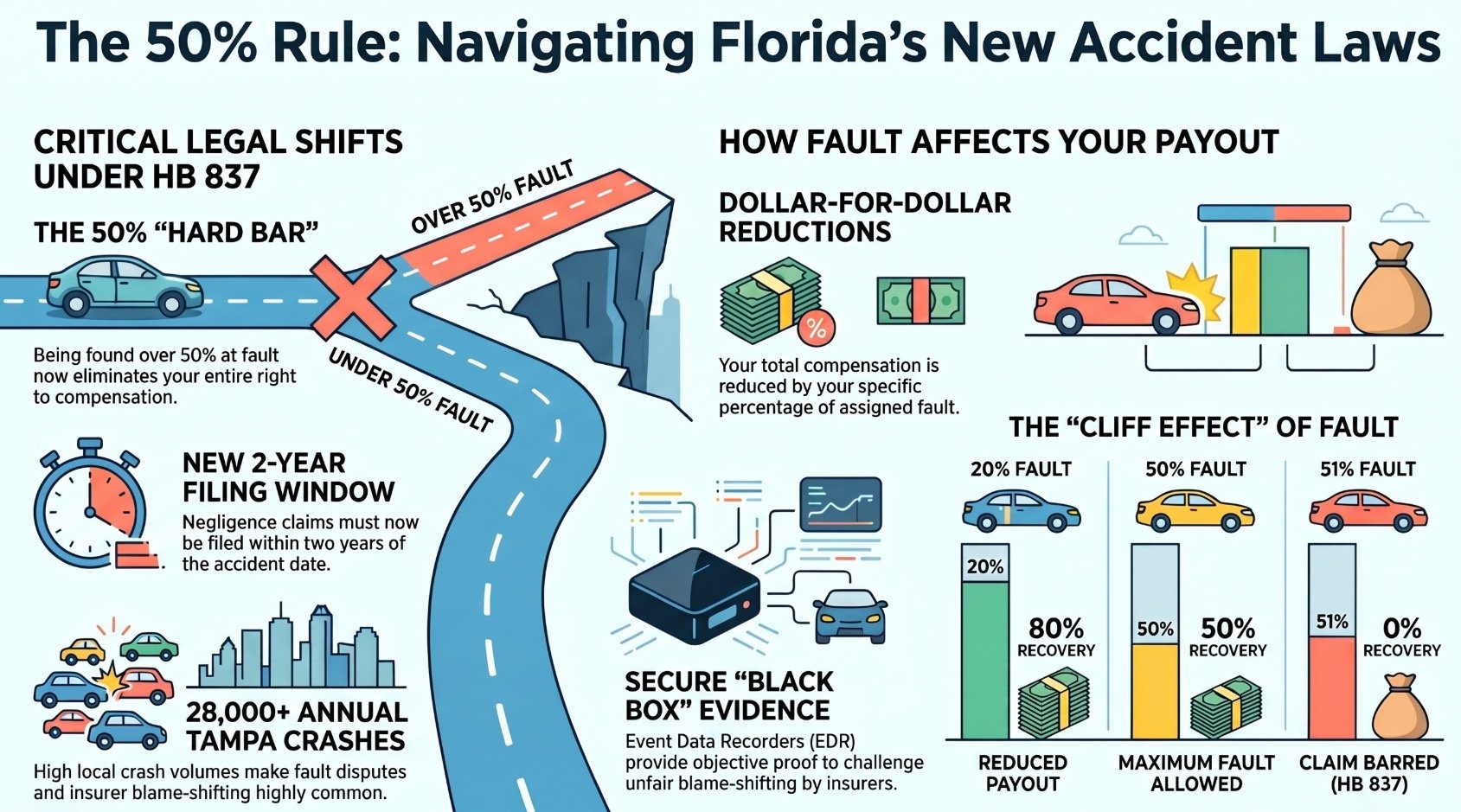
- Florida’s modified comparative negligence rules may reduce compensation based on your assigned percentage of fault — and bar recovery entirely if you exceed 50% fault under HB 837 (2023).
- Strong evidence includes medical records, photos, witness statements, wage information, and documentation of daily limitations.
- Shared-fault cases may involve car crashes, distracted driving, pedestrian injuries, or unsafe property conditions.
- Prompt medical care, evidence preservation, and careful communication with insurers can help protect your recovery.
How We Can Help With Your Tampa Comparative Negligence Injury Claim
When another party argues that you share fault for your injuries, we can help protect your claim from being unfairly reduced or denied. We review the evidence, identify weaknesses in opposing arguments, and build a clear record that supports your account. Our team addresses insurance adjuster tactics that may shift blame, minimize harm, or pressure you into statements that do not reflect what occurred.
We also respond to comparative fault defenses with facts, documentation, and informed advocacy. We gather reports, medical records, witness statements, photos, and expert input when needed. By accurately presenting your role, we help preserve the value of your claim and reduce the risk of unfair blame.
You merit guidance that respects your recovery and your commitment to serving others. We handle communications, deadlines, and negotiations, so you can focus on recuperation while we pursue accountability with discipline, care, and purpose on your behalf.
Contact us today for a free consultation — call 1-800-747-3733.
Understanding Tampa Comparative Negligence Injury Cases


Although fault may seem clear after an accident, Florida law allows multiple parties to share responsibility for the same injury. We help you understand how comparative negligence can affect the value of your claim, especially when an insurer argues that you contributed to your own harm. In Tampa injury cases, the court or insurance company reviews negligence factors, including each party’s conduct, the evidence, and the connection between actions and injuries.
OUR CONSULTATIONSARE FREE
START YOUR FREE CASE REVIEW

We know this process can feel unfair when you are trying to recover while continuing to care for your family, work, and community. Our role is to protect your position, present the facts clearly, and challenge attempts to shift blame without support. Liability allocation matters because your percentage of fault can reduce your compensation. When we evaluate your case, we focus on building a complete record that reflects the truth and supports the recovery you merit under Florida law.
Florida Crash Statistics and the Impact of Comparative Fault on Tampa Injury Claims
Florida’s roads present constant hazards, and Tampa residents bear a disproportionate share of that risk. According to FLHSMV 2022 Florida Traffic Crash Facts, 401,523 crashes occurred statewide in 2022, resulting in 3,535 fatalities and economic losses exceeding $21.4 billion. Hillsborough County, which includes Tampa, records roughly 28,000 to 32,000 crashes annually — placing it consistently among Florida’s highest-volume counties. Research from the Insurance Institute for Highway Safety (IIHS) shows that approximately 30% of U.S. traffic fatalities involve alcohol or drug impairment — a preventable factor that directly affects fault allocation in a Florida comparative negligence case.


Since HB 837 took effect on March 24, 2023, the stakes of fault percentage disputes have grown dramatically: a finding of just over 50% fault now eliminates recovery entirely. With a 2-year filing deadline under Florida’s revised statute of limitations, the window for gathering the evidence to prevent that outcome is limited and shrinks every day after the crash.
Florida Comparative Fault — How Your Fault Percentage Affects Your Recovery
Florida Comparative Fault — How Your Fault Percentage Affects Your Recovery
What HB 837 (2023) means for Tampa injury victims when insurers assign shared blame
100% recovery
80% recovery
60% recovery
50% recovery
$0 — BARRED under HB 837
Florida HB 837 (2023) key impact: Before this law took effect on March 24, 2023, Florida used a pure comparative fault system — a plaintiff could recover even if 99% at fault. HB 837 changed that permanently. Now, insurers have a direct financial incentive to push your assigned fault percentage above 50%, because that single finding eliminates their entire liability. The best defense is an offense: building a thorough, evidence-backed case from the first day that makes a majority-fault finding impossible to sustain.
Common Causes of Tampa Comparative Negligence
We often see comparative negligence when multiple parties contribute to an injury, and we help you determine how fault may be apportioned. Distracted driving accidents, unsafe property conditions, shared fault crashes, and pedestrian injury claims can all involve disputed responsibility. By examining these common causes, we can better explain how your actions, another party’s conduct, and the available evidence may affect your claim.
Distracted Driving Accidents
Distracted driving often turns a preventable moment of inattention into a serious Tampa injury claim, especially when both drivers dispute who had the right of way or who reacted reasonably. We examine how glances at a phone, navigation screen, passenger, or roadway affected each driver’s choices. Distracted texting can support a finding of fault, yet comparative negligence may still apply if you were speeding, following too closely, or failed to avoid danger. We help you gather phone records, witness statements, crash reports, and vehicle data to accurately show what happened. Cell phone penalties may matter, but civil liability requires proof of causation and damages. When we serve injured people, we focus on accountability, fair apportionment, and evidence that protects your claim.
Unsafe Property Conditions
When a fall or injury occurs on unsafe property, comparative negligence often turns on what the property owner knew, what they should have fixed or warned about, and whether the injured person acted reasonably under the circumstances. We see this in premises liability matters involving wet floors, poor lighting, broken stairs, loose mats, uneven walkways, or missing handrails. Your conduct may be reviewed, including whether you noticed posted warnings, followed marked paths, or had a fair opportunity to avoid the danger. Still, owners must use reasonable care to protect visitors, especially when proper hazard identification would have revealed a preventable risk. We help evaluate maintenance records, incident reports, photographs, and witness accounts, so responsibility is measured fairly, and your recovery is not reduced beyond what the evidence supports.
Shared Fault Crashes
Because many Tampa crashes involve mistakes by more than one driver, comparative negligence often focuses on how each person’s choices contributed to the collision. We examine whether a driver followed too closely, ignored traffic signals, made an unsafe turn, or failed to yield when safety required patience. Speeding impacts both fault and injury severity, especially when reduced reaction time turns a preventable event into a serious crash. A lane violation may also matter, including drifting across markings, changing lanes without checking blind spots, or merging without adequate space. We help you understand how insurers may assign blame, and we work to protect your claim from unfair reductions. By identifying responsible conduct with care, we support accountability, promote safer roads, and serve your recovery with purpose.
Pedestrian Injury Claims
Although pedestrian injury claims often involve severe harm, insurers may still argue that the injured person shared responsibility for the crash. We help you address claims that a pedestrian crossed outside a marked crosswalk, ignored traffic signals, or entered the roadway without sufficient caution. In Tampa, comparative negligence can reduce recovery, so we focus on evidence that clarifies what happened and why.
We examine police reports, witness accounts, lighting conditions, vehicle speed, and dashcam evidence to challenge unfair blame. When insurance disputes arise, we present facts demonstrating that a driver’s distraction, speeding, or failure to yield caused preventable harm. We understand these cases affect people, families, and caregivers, so we work to protect your claim while promoting accountability for safer community conduct after serious pedestrian crashes.
Florida’s Modified Comparative Fault Rule — What HB 837 Means for Your Tampa Claim
On March 24, 2023, Florida enacted HB 837, fundamentally changing how fault is allocated in Florida personal injury cases. Before that date, Florida followed a pure comparative fault system — meaning a plaintiff could recover damages even if they were 99% at fault, with recovery simply reduced proportionally. HB 837 replaced that with a modified comparative fault system that introduces a hard threshold: if you are found to be more than 50% at fault for the accident that caused your injuries, you are completely barred from recovering any compensation.
This change has significant practical consequences for Tampa injury victims. Insurers now have a direct financial incentive to argue that you bear the majority of the fault — because a finding of 51% or more eliminates their liability entirely. Tactics that were once used merely to reduce a payout are now used to eliminate it. We respond by building a fact-centered case from the earliest possible moment: securing EDR data, witness accounts, crash reconstruction analysis, and medical documentation before the opposing narrative takes hold.
The modified comparative fault threshold under HB 837 applies to most negligence-based injury claims filed after March 24, 2023. If your claim arises from a crash that occurred on or after that date, the 50% rule applies to your case. Understanding how this rule works — and how insurers exploit it — is essential to protecting the value of your claim from the start.
Florida PIP and No-Fault Coverage in Comparative Negligence Cases
Florida is a no-fault insurance state, which means that after most car accidents, your own Personal Injury Protection (PIP) coverage pays your initial medical bills and a portion of lost wages — regardless of who caused the crash. Florida law requires drivers to carry at least $10,000 in PIP coverage. That coverage pays 80% of your medical bills and 60% of your lost wages up to the policy limit, provided you seek treatment within 14 days of the accident.
However, PIP is only the starting point. To pursue a claim directly against the at-fault driver for pain, suffering, and damages beyond PIP limits, you must meet Florida’s serious injury threshold — meaning the injury must involve a permanent injury, significant and permanent disfigurement, or death. In comparative negligence cases, the interaction between PIP coverage, the serious injury threshold, and the at-fault driver’s liability limits requires careful navigation. We help you understand when to rely on your own PIP policy, when to pursue a third-party claim, and how the other driver’s fault allocation affects the compensation available to you. For more information on your rights as an insurance consumer in Florida, the Florida Department of Financial Services provides guidance on insurance claims and consumer protections.
Legal Rights of Tampa Comparative Negligence Injury Victims
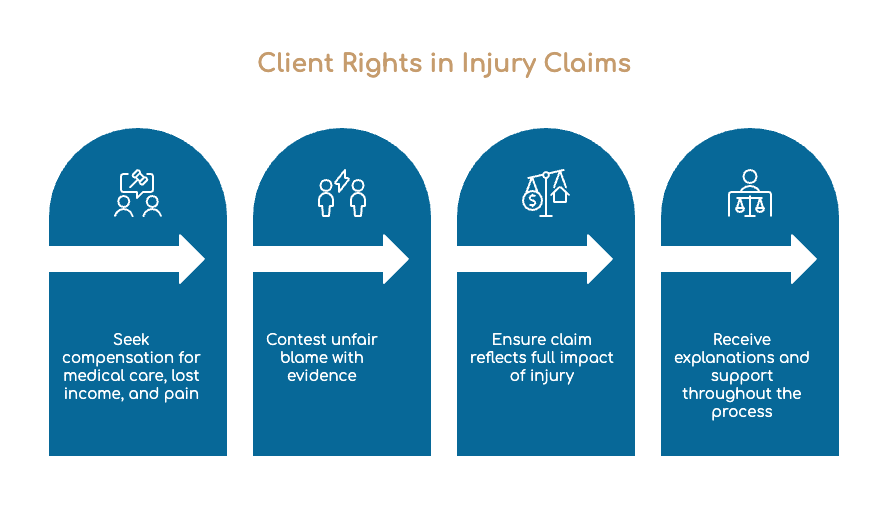
If someone else’s careless conduct injured you in Tampa, Florida, the law may still protect your right to recover compensation even if you share part of the blame. We help you understand how comparative negligence thresholds affect your claim, especially when insurers raise fault percentage disputes to reduce what they owe.
- Right to pursue damages: You may seek payment for medical care, lost income, pain, and service-related losses that affect your ability to care for others.
- Right to challenge fault: We can contest unfair blame by using records, witness statements, expert analysis, and clear evidence.
- Right to fair valuation: Your claim should reflect the full impact of the injury, not only the insurer’s limited assessment.
- Right to legal guidance: We explain each step, protect deadlines, and help you make informed decisions.
We stand with you, so your recovery remains focused, practical, and justice-oriented.
Why Do Tampa Comparative Negligence Injuries Happen?
Why do comparative negligence injuries happen in Tampa when everyone has a duty to act with reasonable care? We see these cases arise because people, businesses, and agencies make choices under pressure, overlook hazards, or fail to follow safety rules. A driver may speed while another fails to yield. A property owner may delay repairs while a visitor ignores warnings. In serving others, we recognize that harm often results from shared decisions, not a single act.
Comparative negligence matters because fault can be apportioned among all parties involved. That division affects compensation, insurance coverage, and the practical value of a claim. Even when injuries are serious, liability limits may restrict recovery unless all responsible parties are identified. We look closely at conduct, timing, safety standards, and available evidence to understand why the injury occurred. By doing so, we help you pursue accountability with fairness, precision, and a clear view of each party’s responsibility.
What Should You Do After a Tampa Comparative Negligence Injury?
After a Tampa comparative negligence injury, we should act quickly to protect your health and your claim. We will focus on seeking medical care, preserving critical evidence, and avoiding mistakes that could increase your assigned share of fault. We should also contact a lawyer promptly, so your rights remain protected from the start.
Seek Medical Care
Because injuries can worsen quickly and evidence can fade, we should seek medical care as soon as possible after a Tampa comparative negligence injury. Immediate medical attention protects your health, supports recovery, and helps responsible people understand the true impact of what happened. We should tell providers about every symptom, even minor discomfort, because delayed pain can signal serious harm. Accurate treatment documentation links the injury to the incident and shows that we acted responsibly. We should also use injury symptom tracking to note pain levels, limitations, and changes in daily function.
These notes help doctors adjust care and help us explain your condition clearly. By attending follow-up appointments, following medical advice, and completing recommended treatment, we prioritize recovery while preserving credibility and accountability.
Preserve Key Evidence
Evidence can shape how fault gets assigned in a Tampa comparative negligence injury claim, so we should preserve it before conditions change or records disappear. We can photograph vehicles, hazards, injuries, weather, lighting, and surrounding landmarks, then save videos, receipts, repair estimates, and damaged property. We should collect names and contact information from witnesses, including those who stopped to help, because service-minded people often provide clear, practical observations. We also need to keep medical instructions, work restrictions, mileage logs, and notes about pain, caregiving needs, and missed duties. These records may support long-term disability planning if recovery affects our ability to serve, work, or provide care. Careful documentation also helps us respond to insurance adjusters’ tactics that may minimize injuries or shift blame unfairly later.
Contact a Lawyer
When a fault may be disputed, we should contact a Tampa comparative negligence injury lawyer as soon as possible to protect our claim and avoid costly mistakes. Early legal guidance helps us serve our family, our recovery, and our future by making informed decisions before insurers shape the narrative. A lawyer can coordinate evidence preservation, secure records, review photographs, and identify liability issues that may affect compensation under Florida law. We should not give recorded statements, sign releases, or accept blame without understanding the consequences. Counsel can also manage witness outreach, locate supportive testimony, and address conflicting accounts with care. By seeking help promptly, we place our claim on stronger footing, reduce preventable risks, and focus our energy on mending and meeting the responsibilities others depend on.
Critical Evidence in a Tampa Comparative Negligence Injury Case
We use pivotal evidence to show how the crash happened, how fault should be divided, and how your injuries affected your life.
Essential proof often includes:
- Accident scene photos
- Witness statements
- Police crash reports
- Medical treatment records
We will help you preserve and present this evidence clearly, so insurers and opposing parties cannot unfairly shift blame onto you.
Accident Scene Photos
How can accident scene photos affect a Tampa comparative negligence injury case? They can help us show what happened before memories fade, vehicles move, or hazards disappear. In comparative negligence claims, insurers often argue you share blame, so clear images may reduce unfair fault assessments.
We recommend capturing photos immediately after calling for medical help and ensuring safety. Photograph skid marks, debris, lighting, weather, traffic signals, vehicle positions, visible injuries, and property damage. Take wide shots first, then closer images that show details.
Camera angle also matters. We should photograph from multiple directions, include landmarks for scale, and avoid altering the scene. When we preserve accurate photos, we strengthen your ability to serve the truth, protect your claim, and support fair accountability under Florida law.
Witness Statements
Because fault can be disputed quickly after an accident, witness statements may become pivotal evidence in a Tampa comparative negligence injury case. We gather accounts from people who saw the collision, heard crucial admissions, or observed unsafe conduct before impact. These statements can help clarify timing, speed, lane position, warnings, lighting, and each party’s conduct.
When we evaluate witness credibility, we consider visibility, distance, attention, bias, memory, and whether the person had a clear opportunity to observe. We also perform statement-consistency checks, comparing each account against photographs, medical facts, and other available evidence. If you have spoken with a witness, preserve names, phone numbers, and exact words used. Careful documentation helps us protect your claim and present a fair, service-minded account of responsibility.
Police Crash Reports
After a crash in Tampa, a police crash report can be one of the first structured records of what happened and who may be responsible. We review this report carefully because it may identify drivers, passengers, witnesses, vehicle positions, citations, road conditions, and the officer’s initial assessment. Although the report does not determine fault on its own, it can guide our investigation and help us provide you with a clearer strategy.
We also compare the report with photographs, dashcam footage, video from nearby businesses, and statements from people who stopped to help. In cases involving private property, the report may raise issues tied to parking lot liability, including traffic flow, signage, lighting, or unsafe design. When details conflict, we work to correct the record and protect your claim.
Medical Treatment Records
When injuries are disputed, medical treatment records often provide the clearest timeline of your condition, symptoms, diagnosis, and recovery needs. We use these records to connect the crash to your harm, address claims that you caused or worsened your injuries, and show how your recovery affects daily service to family, work, and community. Emergency notes, imaging results, physician evaluations, therapy records, prescriptions, and referrals can support diagnosis accuracy and treatment consistency. They also reveal whether you followed medical advice, attended appointments, and reported symptoms promptly. In a comparative negligence case, insurers may search for gaps or inconsistencies. We review the full record, organize essential details, and explain them clearly, so your evidence reflects both your medical reality and your commitment to responsible recovery after injury.
Event Data Recorders and Black Box Evidence in Tampa Comparative Negligence Cases
Most passenger vehicles manufactured after 2012 are equipped with an Event Data Recorder (EDR) — often called a “black box” — that captures critical data in the seconds before and after a collision. EDR data typically includes vehicle speed, brake application, throttle position, steering input, seat-belt status, and airbag deployment timing. In a comparative negligence case, this objective data can be decisive in challenging an insurer’s claim that you were speeding, failed to brake, or otherwise contributed to the crash.
EDR data is not permanent. Depending on the vehicle, it may be overwritten after a subsequent ignition cycle or following another impact event. We send preservation requests and spoliation letters promptly after being retained, demanding that all parties maintain the vehicle in its current condition and avoid any repairs or inspections that could alter the EDR data. We work with certified EDR specialists to perform forensic downloads using equipment approved by the National Highway Traffic Safety Administration (NHTSA). When EDR data supports your account of the crash, it can be among the most powerful tools available to counter a comparative fault argument — providing objective, timestamped evidence that no amount of insurer spin can easily dismiss.
Long-Term Effects of Tampa Comparative Negligence Injuries
We recognize that a comparative negligence injury can affect you long after the initial accident, especially when chronic pain limits daily function. We evaluate how your injuries may reduce earning capacity, interfere with work, and create financial strain over time. We also account for ongoing medical needs, as future treatment can significantly affect the value of your claim.
Chronic Pain Complications
Because chronic pain can outlast the visible signs of trauma, it often becomes one of the most disputed long-term effects in a Tampa comparative negligence injury claim. We help you show how persistent pain limits daily care, mobility, rest, and service to family or community. Insurers may argue that discomfort comes from age, prior conditions, or ordinary strain, and then seek compensation offsets based on your assigned fault. We counter those claims with medical records, treatment history, physician opinions, and consistent testimony about your symptoms. Effective pain management may include therapy, medication, injections, counseling, or expert care, and each need should be documented. When we present chronic pain clearly, we strengthen the connection between the accident, your continuing limitations, and the fair value of your claim.
Reduced Earning Capacity
Although some injuries allow you to return to work, they can still reduce the kind of work you can perform, the hours you can sustain, or the advancement you can realistically pursue. We help you examine how these limits affect your future income, especially when your work supports a family, a mission, or a community role. In comparative negligence cases, reduced earning capacity must be shown with clear economic loss documentation, not assumptions. We gather employment records, prior earnings, job duties, performance history, and wage impact proof to demonstrate how the injury changed your vocational path. Even if you share fault, Florida law may still allow recovery for the portion another party caused. We focus on presenting practical evidence that protects your long-term financial stability.
Ongoing Medical Needs
Plan for long-term medical care early, as injuries linked to Tampa comparative negligence claims can require treatment well beyond the initial emergency visit. We help you consider future surgeries, therapy, medication, assistive devices, and expert care that may affect your recovery and ability to serve your family, workplace, or community. When disputed liability percentages arise, insurers may seek to reduce their responsibility for these ongoing needs. We counter that pressure with clear medical expense documentation, physician opinions, treatment plans, and records showing how the injury limits daily function. We also account for transportation, home modifications, and ongoing rehabilitation when those services support stability and independence. By identifying these needs promptly, we strengthen your claim and help protect resources needed for sustained care.
Proving Liability in Tampa Comparative Negligence Injury Cases
When an injury claim involves shared fault, proving liability requires a focused analysis of what happened, who acted carelessly, and how that conduct caused measurable harm. We help you examine the facts with care, because a fair result depends on clear evidence and sound reasoning.
We look for proof of duty, breach, causation of the accident, and damages. This may include photographs, reports, medical records, witness statements, expert opinions, and physical evidence from the scene. We also evaluate your actions honestly, since comparative negligence can reduce compensation when responsibility is divided.
Our goal is to present the strongest account of how the incident occurred while directly addressing disputed facts. We connect each careless act to the injuries you suffered, including medical needs, lost income, and lasting limitations. By organizing the evidence with purpose, we help you pursue accountability while respecting the serious responsibility that comes with serving others after harm.
Dealing With Insurance Companies After a Tampa Comparative Negligence Injury
After a Tampa injury involving shared fault, insurance companies often examine every statement, record, and gap in treatment to reduce the value of your claim. We help you respond with care, because your goal is not only recovery, but protecting resources that may support your family and community.
We manage evidence requests by reviewing what is relevant, objecting to overbroad demands, and preventing incomplete information from being used unfairly. Strong claim documentation matters, including medical records, wage information, photographs, witness details, and notes about daily limitations. We also watch for insurer missteps, such as misstating Florida’s comparative negligence rules or pressuring you to accept blame without support.
Our negotiation strategy focuses on documented facts, measured communication, and a clear presentation of damages. We do not let adjusters define your story. Instead, we help you preserve credibility, answer appropriately, and pursue fair compensation with discipline and purpose after serious harm.
What to Expect During a Tampa Comparative Negligence Injury Claim Process
We begin a Tampa comparative negligence injury claim by evaluating your case, identifying crucial liability issues, and reviewing how fault percentages may affect your recovery. We then collect evidence, including records, witness statements, and accident details, to build a clear position on responsibility and damages. Once we understand the facts and legal risks, we guide you through settlement negotiations with a focused strategy to protect your claim.
Initial Case Evaluation
Before a Tampa comparative negligence injury claim can move forward, we need to evaluate how the accident happened, who may share fault, and how your injuries have affected your life. We begin by listening to your account, reviewing available records, and identifying immediate concerns that may impact your recovery and responsibilities. Through accident timeline mapping, we organize key events, witness information, medical treatment, and communications with insurers. This helps us understand the claim’s structure without drawing premature conclusions about fault percentages. We also consider an insurance dispute strategy early, because carriers often question injuries, damages, or the sequence of events. Our goal is to protect your position, reduce confusion, and prepare a clear path that supports accountability, fair treatment, and practical service to your needs.
Fault Percentage Review
A clear case evaluation provides the foundation to examine how fault may be distributed among everyone involved. During this review, we assess each party’s conduct, the duties they owed, and how their actions contributed to the injury. We explain how Florida’s comparative negligence rules may affect your recovery, so you can make informed decisions while continuing to focus on caring for yourself and others.
We also prepare for fault reallocation, which can occur when another party argues that your percentage of responsibility should increase. Insurance disputes often arise at this stage, especially when carriers try to reduce payment by shifting blame. We address those arguments directly, protect your position, and work to ensure any assigned fault reflects the actual circumstances of the claim.
Evidence Collection Process
Gathering evidence early helps us preserve the facts that determine how fault gets assigned in a Tampa comparative negligence injury claim. We begin by identifying every source that can clarify what happened, including photos, video footage, incident reports, medical records, witness statements, and property damage documentation. We also carefully consider the elements of negligence because each fact must connect to duty, breach, causation, and damages. When we serve your claim carefully, we protect details that insurance companies may later challenge or minimize. We ask you to share records promptly, avoid altering damaged items, and document symptoms consistently. This process helps us evaluate fault percentage, support your injuries, and present a clear account of responsibility. Strong evidence allows us to advocate with accuracy, fairness, and disciplined preparation.
Settlement Negotiation Steps
Once we have built a reliable evidence record, we begin settlement negotiations by calculating damages, estimating comparative fault, and preparing a demand that explains liability in clear terms. We present medical costs, wage losses, future care needs, and the human impact of your injuries, while showing how the facts support fair compensation. You can expect the insurer to review records, question causation, and raise liability disputes to reduce payment. We respond with documentation, legal analysis, and calm persistence. When insurance tactics involve delay, low offers, or shifting blame, we identify the weakness and answer directly. Throughout negotiations, we keep you informed, evaluate each offer, and advise whether settlement serves your recovery, dignity, and long-term ability to continue helping others. If needed, we prepare for litigation.
Compensation for Tampa Comparative Negligence Injury Damages
When an injury claim involves shared fault, compensation depends on how Florida’s comparative negligence rules apply to the facts. We help you understand how any assigned percentage of responsibility may reduce the recovery available, and we work to present a clear account of what happened. That effort includes careful insurance claim documentation, prompt preservation of records, and a review of witness credibility when statements affect liability.
We approach compensation by building a reliable record that supports your position and addresses defenses before they gain influence. Because insurers may use uncertainty to limit payment, we identify disputed facts, correct inaccurate assumptions, and connect each claim for recovery to evidence. Our role is to provide you with steady guidance, protect your dignity throughout a difficult process, and pursue the strongest lawful outcome. In comparative negligence cases, preparation often determines whether your claim reflects the full measure of responsibility owed by others to you.
Economic vs. Non-Economic Damages in Tampa Comparative Negligence Cases
We separate your damages into economic losses, such as medical bills and lost income, and non-economic losses, such as pain, suffering, and reduced quality of life. We then evaluate how Florida’s comparative negligence rules may reduce your recovery based on your assigned percentage of fault. This distinction helps you understand what compensation may be available and how fault can affect the final amount.
Economic Damages Explained
Although every injury claim depends on its facts, economic damages provide the financial foundation of a Tampa comparative negligence case because they measure the direct monetary losses caused by an accident. We focus on proof that helps you serve your family, meet obligations, and restore stability. Economic losses may include emergency care, follow-up treatment, therapy, prescriptions, medical equipment, lost income, and reduced earning capacity. Calculating medical bills, wage reduction, and future care costs requires records, pay information, expert input, and careful documentation. Negligence allocation affects the final recovery because your compensation may decrease by your percentage of fault. We examine receipts, invoices, employment records, and provider statements to present a clear claim. With disciplined evidence, we help show how the accident changed your financial position.
Non-Economic Losses
Beyond the financial records, non-economic losses address the personal harm that does not appear on an invoice but still affects daily life. We look at pain, emotional distress, loss of enjoyment, sleep disruption, anxiety, and the strain an injury places on family roles or community service. These harms matter because you are more than your medical bills or missed wages. In Florida insurance disputes, we help present these losses with discipline, using medical notes, witness statements, daily journals, photographs, and careful evidence preservation. We also connect the injury’s effects to your routines, responsibilities, and ability to serve others. A strong settlement negotiation strategy should explain these damages clearly, without exaggeration, so insurers understand the full human impact. We build that record early, before memories fade or key details get overlooked.
Fault Reduces Recovery
Non-economic losses show the human cost of an injury, but Florida’s comparative negligence rules determine how much of those losses — and any economic damages — an injured person can actually recover. We help you understand this reduction because fault affects every category of compensation, including medical bills, lost wages, pain, suffering, and future care. Under Florida’s modified comparative fault system, if you carry 20% responsibility, your recoverable damages may fall by 20%. If your fault exceeds the 50% threshold established by HB 837, recovery is barred entirely. We review evidence carefully, protect your account of events, and challenge unfair blame. We also consider insurance liability limits because even a strong claim can face practical payment constraints. Our goal is to serve your recovery with disciplined advocacy and clear guidance.
When a Tampa Comparative Negligence Injury Case Goes to Trial vs. Settlement
When fault is disputed in a Tampa injury claim, the decision to settle or proceed to trial often depends on how clearly each side can prove comparative negligence. We assess the evidence, witness accounts, medical records, and accident reconstruction to determine whether settlement serves your needs or trial is necessary.
Settlement may offer stability, privacy, and faster support for medical care, lost income, and family responsibilities. Strong documentation can increase settlement leverage, especially when the other side faces risk before a jury. We prepare every case as though trial may occur, because readiness often improves negotiations.
Trial may become appropriate when the insurer undervalues your harm, shifts blame unfairly, or refuses to account for the full impact on your life and service to others. Jury verdicts can provide accountability, but they involve uncertainty. We help you weigh risk, timing, and purpose before choosing the path forward with confidence.
Florida Laws That May Affect Your Tampa Comparative Negligence Case
The choice between settlement and trial depends not only on the facts but also on Florida law, which controls how fault, damages, and deadlines affect your claim. We help you understand how these rules shape strategy, evidence, and the value of your case.
Florida law can shape every stage of your claim, from evidence and strategy to recovery and resolution.
- Florida’s modified comparative negligence rule (HB 837, effective March 24, 2023) reduces recovery proportionally when you share fault and bars recovery entirely when assigned fault exceeds 50%.
- Insurance rules may affect payment sources, especially when medical bills, lost wages, and coverage limits influence negotiations.
- Evidence rules matter. If a party destroys or fails to preserve essential proof, spoliation of evidence may support sanctions or adverse inferences against that party.
- Defense strategy matters. We evaluate available comparative negligence defenses, including claims that you ignored hazards, failed to seek care, or contributed to the accident.
When we assess these laws early, we protect your position and prepare a claim grounded in service, accountability, and careful advocacy.
The Statute of Limitations for Tampa Comparative Negligence Injury Cases
Because deadlines can control whether you have any claim at all, we evaluate the statute of limitations as early as possible in every Tampa comparative negligence injury case. In Florida, most negligence injury claims must be filed within 2 years of the incident, under the revised statute enacted by HB 837 (effective March 24, 2023). The correct deadline can also depend on the defendant and any special notice rules. We help you understand filing deadlines so you can protect your ability to seek accountability while continuing to serve your family, patients, clients, or community.
Comparative fault timeline issues also matter. Evidence of each party’s conduct can fade quickly, and delay may make it harder to show how responsibility should be divided. If you may share some fault, timely action still matters because Florida’s rules can reduce — or sometimes bar — recovery depending on your percentage of fault. We encourage prompt review, careful documentation, and attention to every applicable deadline before time limits restrict your options, rights, and remedies.
How a Tampa Comparative Negligence Injury Lawyer Can Help You
After an injury, a Tampa comparative negligence injury lawyer can help you assess fault, preserve evidence, and respond to insurers who may try to shift blame onto you.
We guide you through each step with care, so you can focus on recovery and continue serving those who depend on you.
- We investigate the accident, identify liable parties, and evaluate how Florida’s comparative negligence rules may affect your claim.
- We handle evidence preservation, including photos, witness statements, reports, EDR data, and available video footage, before essential evidence becomes harder to obtain.
- We organize medical documentation to connect your injuries, treatment, limitations, and future care needs to the incident.
- We communicate with insurance companies, challenge unfair fault allegations, and pursue a resolution that reflects your losses.
When responsibility is disputed, we build a clear record, protect your interests, and help you make informed decisions with confidence.
When to Contact a Tampa Comparative Negligence Injury Lawyer
Contact a Tampa comparative negligence injury lawyer as soon as you suspect that another party may blame you for part of the accident, or when an insurer starts asking detailed questions about your actions. We should act early, because statements, photographs, medical records, and witness accounts can affect how responsibility is assigned. If you serve your family, patients, clients, congregation, or community, protecting your recovery also helps you continue that work with stability.
We recommend seeking guidance before giving recorded statements, signing releases, or accepting any payment. An insurance coverage review can clarify available benefits, policy limits, exclusions, and deadlines that may influence your options. We also look for evidence of fault percentage, including traffic reports, scene details, vehicle damage, safety rules, and post-incident communications. Contacting counsel promptly helps preserve critical information while memories remain clear. You do not need to wait until a dispute escalates before asking for direction.
Why You Need an Experienced Tampa Comparative Negligence Injury Lawyer
A single disputed detail can reduce your compensation in a Florida comparative negligence claim, so we need to address fault arguments with precision from the start. When you are injured while trying to work, care for family, or serve your community, the claim should reflect the full impact of your losses. We investigate the facts, secure witness accounts, review records, and challenge assumptions that unfairly shift blame onto you.
Experienced counsel also recognizes insurance tactics designed to minimize responsibility. Adjusters may use statements, medical gaps, or accident reports to argue that your percentage of fault should rise. We respond with evidence, context, and a clear settlement strategy that protects your interests while keeping your goals in focus.
Because comparative negligence directly affects the amount you can recover, preparation matters. We help present your claim with discipline, anticipate defenses, and pursue compensation that supports your recovery and continued ability to serve others.
How to Choose the Right Tampa Comparative Negligence Injury Lawyer for Your Case
In a comparative negligence case, the right lawyer should know how to prove liability while limiting any unfair share of fault assigned to you. We should look for counsel who understands Florida injury law, studies evidence carefully, and explains how each fact may affect recovery. Ask about experience with disputed fault, insurance negotiations, accident reconstruction, medical documentation, and trial preparation.
We also need to evaluate how the lawyer serves clients during a stressful process. Discuss client communication preferences early, including updates via phone, email, text, or meetings, to keep expectations clear. Review the fee agreement structure, costs, and contingency terms before signing, and ask how case expenses are handled. A strong lawyer should answer questions directly, respect your goals, and build a strategy that protects your claim. When we choose carefully, we improve the chance of a fair outcome while staying focused on recovery and responsibilities.
About The Law Offices of Anidjar & Levine
Founded in 2005 by Marc Anidjar and Glen Levine, the firm began as a two-person operation working out of a construction office conference room. Over the past 20 years, that modest start has grown into one of Florida’s most recognized personal injury practices — with more than $1 billion recovered in settlements on behalf of injury clients across the state. We bring that same determination and depth of experience to every case we handle.
Choosing the right legal team also means understanding who will stand behind your claim from the first consultation through resolution. At the Law Offices of Anidjar & Levine, we guide you with disciplined advocacy, clear communication, and respect for the service-minded values that shape your life.
We handle each Tampa comparative negligence case with careful case strategy planning, focused evidence preservation, and thorough fault determination. Our team reviews records, photographs, reports, and witness documentation to identify how liability may be shared and how that affects your recovery.
We also manage insurance handling, so you are not left responding to adjusters or handling confusing requests alone. If settlement discussions do not yield a fair result, we proceed with trial preparation to present your case clearly and responsibly. We work to protect your rights, reduce your burdens, and help you pursue compensation with confidence and purpose after a serious injury.
Frequently Asked Questions
Can Comparative Negligence Affect My Health Insurance Liens?
Yes, comparative negligence can affect your health insurance liens because your reduced recovery may affect the funds available to satisfy them. We evaluate lien priority, plan language, and applicable law, then advocate for reductions that protect your net recovery. If you are serving an injured person, we help you address lien claims responsibly, document fault allocations, and pursue fair resolutions that reflect the actual settlement value after comparative fault applies.
Will Social Media Activity Impact My Comparative Negligence Case?
Yes, social media activity can impact your comparative negligence case. We treat social media evidence with caution because posts, photos, check-ins, and comments may be used by insurers or opposing counsel. We help you understand privacy limitations, since restricted settings do not always prevent discovery. We also evaluate how online activity affects credibility assessment, especially when statements conflict with injury claims, daily limitations, or your commitment to responsible conduct.
Can Tourists File Comparative Negligence Injury Claims in Tampa?
Yes, a Tampa tourist can file a comparative negligence injury claim when another party shares fault. We help you address insurance coverage issues, preserve evidence, and follow comparative negligence filing requirements under Florida law. The visitor claim process often involves medical records, accident reports, and timely notice to insurers. Even if you share some responsibility, you may still recover damages reduced by your percentage of fault under Florida’s rules.
Do Prior Injuries Affect Comparative Negligence Claims?
Yes, prior injuries can affect comparative negligence claims, but they do not automatically defeat your recovery. We examine prior medical records to separate old conditions from new harm, aggravation, or worsened limitations. You should disclose earlier injuries promptly, because credibility matters and omissions can delay settlement timing. We help you document how the incident changed your condition, so insurers cannot unfairly shift responsibility or undervalue the care you now need.
Are Comparative Negligence Settlements Taxable in Florida?
Comparative negligence settlements in Florida are usually not taxable when they compensate you for physical injuries or illness. We will help you distinguish non-taxable damages from taxable portions, such as interest or certain punitive awards. Health insurance payments, liens, and reimbursements may affect your net recovery, so we carefully review medical records and settlement terms. When you are serving others, we ensure your compensation structure protects your financial duties and obligations.
What Is Florida’s Modified Comparative Fault Rule?
Florida’s modified comparative fault rule, enacted through HB 837 and effective March 24, 2023, changed Florida from a pure comparative fault state to a modified comparative fault state. Under this rule, your compensation is reduced proportionally by your assigned percentage of fault. However, if you are found to be more than 50% at fault for the accident, you are completely barred from recovering any compensation. This represents a significant departure from the prior system, which allowed even a mostly-at-fault plaintiff to recover something. Understanding and challenging unfair fault assignments is now more critical than ever.
What Happens If I Am Found More Than 50% at Fault in Florida?
Under Florida’s modified comparative fault rule established by HB 837 (2023), if a court or jury finds that you were more than 50% responsible for the accident causing your injuries, you are completely barred from recovering any damages — even if the other party’s negligence contributed significantly to the crash. This is why insurers now aggressively argue that injured claimants share majority fault. We counter those arguments with early evidence gathering, EDR data, witness statements, and expert analysis to keep your assigned fault percentage below the threshold that would eliminate your recovery entirely.
If you were injured in Tampa and share some fault, you may still have a valid claim. We can review the evidence, address comparative negligence issues, calculate your losses, and deal with the insurance company on your behalf.
At The Law Offices of Anidjar and Levine, we are prepared to protect your rights and pursue the compensation you qualify for.
Contact us today for a free consultation with a Tampa Car Accident Lawyer.