The Law Offices of Anidjar and Levine assess how fault may be shared, gather medical records, photographs, witness statements, and other proof, and work to limit any percentage of blame that could reduce compensation under Florida law.
Counsel also manages insurer communications, preserves evidence, evaluates long-term losses, and prepares for settlement or trial when needed.
Florida’s comparative fault rules can materially affect recovery, and the following sections explain how these claims are evaluated and pursued.
For more information, visit Fort Myers Car Accident Lawyer.
Main Takeaways
- A Fort Myers comparative negligence lawyer helps reduce unfair blame and protect compensation under Florida’s fault-apportionment rules.
- Recovery is typically reduced by your percentage of fault, so proving causation and accurately allocating fault is critical.
- Strong cases rely on medical records, photographs, witness statements, incident reports, and expert analysis linking injuries to the event.
- Prompt medical treatment, scene documentation, and preservation of damaged items and communications can strengthen your claim.
- An attorney manages insurer communications, challenges disputed liability, and prepares for settlement, mediation, or trial if needed.
How We Can Help With Your Fort Myers Comparative Negligence Injury Claim
Establishing a strong comparative negligence claim in Fort Myers requires a careful review of how the accident occurred, what evidence supports the injured party’s account, and how Florida law may affect the amount of compensation available. A legal team can serve by organizing records, securing witness statements, and preserving photographs, reports, and medical documentation that support a clear presentation of facts.
They can also assess immediate and future losses, identify responsible parties, and prepare a claim that accurately and respectfully reflects the client’s needs. Through strategic policy negotiation, counsel can address insurer tactics that may unfairly reduce accountability or delay payment. When disputes arise, they can present persuasive arguments supported by documentation and professional analysis. This disciplined approach helps protect the client’s interests while promoting fair treatment throughout the process. With careful guidance, injured individuals are better positioned to pursue financial recovery and make informed decisions that support their families, stability, and long-term well-being.
Understanding Fort Myers Comparative Negligence Injury Cases


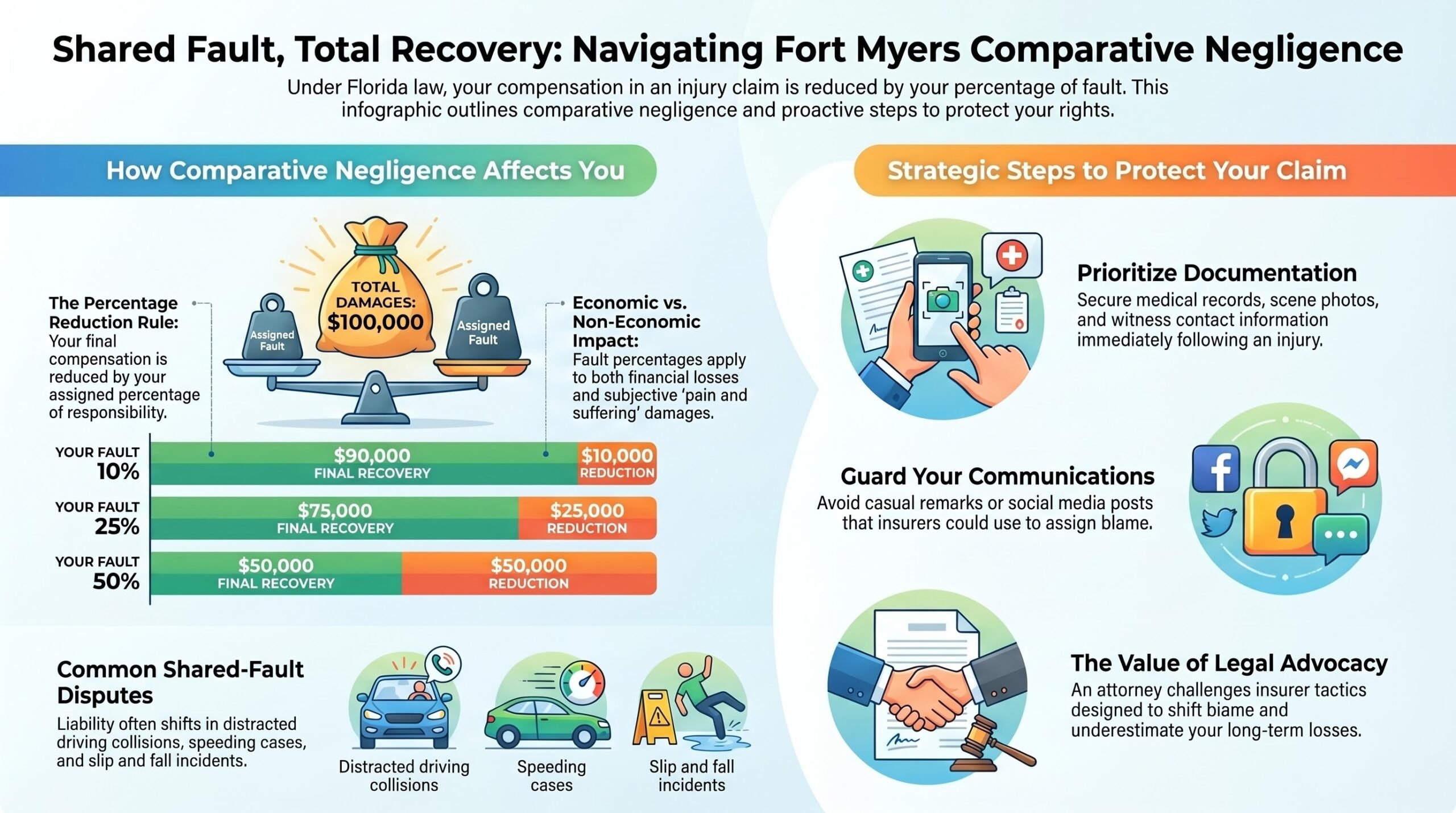
In Fort Myers comparative negligence injury cases, the central question is often how each party’s conduct contributed to the event and the resulting harm. Courts and insurers examine comparative negligence by assigning percentages of fault, then adjusting potential recovery to reflect that shared responsibility under Florida law.
OUR CONSULTATIONSARE FREE
START YOUR FREE CASE REVIEW

A careful review of facts is pivotal to injury causation, because liability depends on proving that specific actions or omissions were substantial factors in producing identifiable losses. Evidence may include medical records, witness statements, photographs, expert opinions, and other documentation that clarifies timing, conduct, and consequences. This process promotes fairness by recognizing that more than one person may have played a role, while still preserving accountability for preventable harm.
For individuals motivated by service, understanding these cases supports informed decisions, respectful advocacy, and practical assistance for those facing physical, financial, and emotional burdens after an accident. It also encourages responsible conduct that protects the broader Fort Myers community.
Common Causes of Fort Myers Comparative Negligence


Common causes of comparative negligence in Fort Myers injury cases include distracted driving collisions, speeding, and other reckless acts that contribute to shared fault. Similar issues arise in slip-and-fall claims, where hazardous conditions and a person’s own actions may both affect liability. Unsafe property conditions also frequently play a central role, particularly when owners fail to address known dangers or provide adequate warnings.
Distracted Driving Collisions
Distracted driving remains a significant cause of motor vehicle collisions in Fort Myers, and it often becomes a central issue when comparative negligence is disputed. In these cases, investigators and counsel examine whether a driver failed to maintain proper attention due to mobile device distraction, in-vehicle technology, eating, or conversations with passengers.
Comparative negligence may also involve pedestrian distractions, especially when an injured person was using a phone, ignoring traffic signals, or stepping into a travel lane without adequate awareness. A careful legal review considers each party’s conduct, roadway conditions, witness accounts, and electronic records when available. This balanced approach helps families, caregivers, and community members understand how fault may be shared, while still protecting the right of injured individuals to pursue fair compensation for losses, treatment needs, and ongoing support.
Speeding And Reckless Acts
Speeding and other reckless acts frequently shape comparative negligence disputes in Fort Myers because they can increase both the likelihood of a crash and the severity of the resulting injuries. When drivers race through intersections, tailgate, weave between lanes, or ignore traffic signals, investigators often examine whether multiple parties contributed to the event and to the harm that followed.
Under comparative negligence principles, a court may assign percentages of fault after reviewing speed estimates, witness statements, road conditions, and braking evidence. These cases also highlight the community value of deterring speeding and consistently enforcing reckless driving laws, which help protect families, pedestrians, cyclists, and other motorists. Careful legal analysis can clarify how excessive speed or aggressive conduct affected reaction time, stopping distance, vehicle control, and the overall scope of preventable loss for others.
Slip And Fall Hazards
Arising from wet floors, uneven walkways, poor lighting, loose handrails, and unmarked hazards, slip-and-fall incidents often present difficult comparative negligence questions in Fort Myers. In many claims, insurers examine whether an injured person noticed warning signs, chose a safer route, or acted with reasonable care under the circumstances.
When wet floors or lighting issues contribute to a fall, responsibility may be shared rather than assigned to a single party. Careful investigation often reviews footwear, distractions, visibility, and the timing of cleanup or notice. This analysis matters because comparative negligence can reduce compensation even when another party played a substantial role. A service-minded legal approach focuses on facts, fairness, and accountability, helping injured people pursue recovery while encouraging safer practices that protect neighbors, visitors, workers, and the broader community.
Unsafe Property Conditions
On many Fort Myers properties, unsafe conditions such as broken stairs, damaged flooring, inadequate security measures, exposed wiring, or neglected maintenance can create circumstances in which fault is disputed after an injury. In these cases, liability often turns on whether owners acted reasonably and whether visitors recognized obvious dangers before proceeding. Careful property maintenance may prevent foreseeable harm, yet disputes still arise when warnings are missing, repairs are delayed, or temporary hazards are overlooked.
Unsafe conditions may also extend beyond structures, including poor lighting, uneven walkways, and hazardous landscaping that obstructs views or creates tripping risks. A comparative negligence analysis may assign responsibility to both parties, depending on each person’s conduct. For those committed to protecting others, understanding these issues supports safer premises and more informed decisions after accidents occur.
Legal Rights of Fort Myers Comparative Negligence Injury Victims
Understanding comparative negligence is vital for injury victims in Fort Myers because Florida law may still allow recovery even when an injured person shares some blame for an accident. Under comparative fault principles, a claimant may pursue compensation if another party also acted negligently, though damage apportionment can reduce the final award according to each party’s percentage of responsibility.
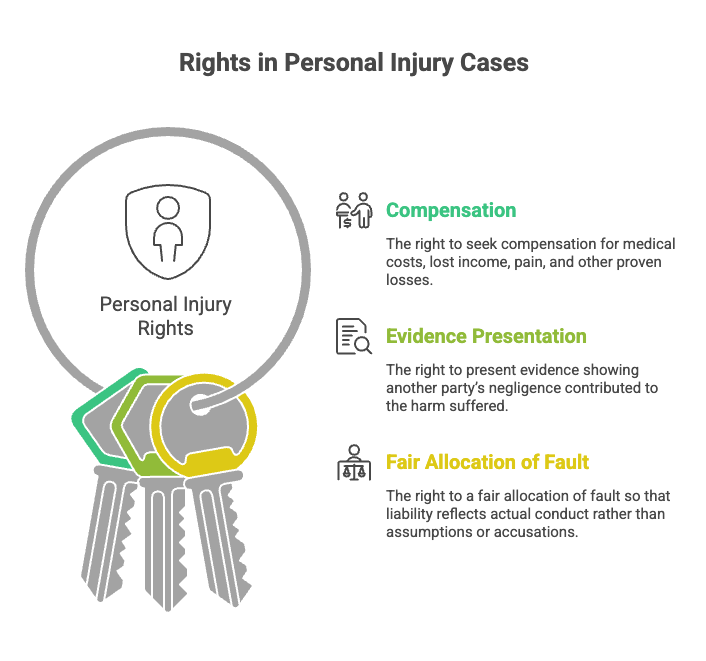
Key legal rights commonly include:
- The right to seek compensation for medical costs, lost income, pain, and other proven losses.
- The right to present evidence showing another party’s negligence contributed to the harm suffered.
- The right to a fair allocation of fault so that liability reflects actual conduct rather than assumptions or accusations.
These protections support accountability and encourage safer conduct within the community. For individuals committed to caring for family members, neighbors, and others in need, these rights may provide an important avenue for securing resources, restoring stability, and advancing the broader good after preventable injury.
Steps to Take After a Fort Myers Comparative Negligence Injury
After a comparative negligence injury in Fort Myers, the injured party should seek immediate medical care to protect both health and the record of treatment. It is also important to document the scene and preserve available evidence, including photographs, witness information, and any official reports. Prompt contact with a Fort Myers lawyer can help ensure that fault issues are properly evaluated and that legal rights are safeguarded from the outset.
Seek Immediate Medical Care
In the immediate aftermath of an accident, seeking prompt medical care should be treated as a priority, even when injuries appear minor. Early evaluation helps identify hidden conditions, supports timely treatment, and protects the well-being of everyone affected by the event.
Emergency personnel and physicians rely on triage protocols to assess symptoms, assign urgency, and deliver appropriate care. Following professional instructions demonstrates prudence and respect for the recovery process. Prompt examination also creates medical documentation linking injuries to the incident, which may be important when comparative negligence issues arise. Delays can worsen physical harm and allow insurers to question whether the accident caused the condition. A thorough medical assessment, adherence to treatment recommendations, and attendance at follow-up appointments show a responsible commitment to health, restoration, and accountability under Florida law.
Document Scene And Evidence
Prompt medical attention should be followed by careful documentation of the accident scene and any available evidence. Clear records may help protect all parties and support an accurate account of what occurred. Useful steps include noting weather, lighting, road conditions, hazards, and the positions of vehicles or individuals.
Photographs should capture injuries, property damage, debris, traffic signs, and surrounding landmarks from multiple angles. Witness names and contact details should be collected respectfully, with brief summaries of what each person observed. Any damaged personal items, clothing, or equipment should be preserved in their original condition whenever possible. Maintaining a reliable chain of custody for physical evidence can reduce later disputes about alteration or loss. Organized notes, timestamps, and secure storage strengthen the credibility of the overall record.
Contact A Fort Myers Lawyer
When questions of fault or shared responsibility begin to affect an injury claim, consultation with a Fort Myers lawyer becomes a prudent next step. A timely legal consultation helps preserve rights, clarify how comparative negligence may influence recovery, and prevent avoidable mistakes during insurer communications.
A lawyer can review medical records, photographs, witness statements, and insurance information, then provide an objective assessment of liability and damages. This guidance often supports families and caregivers who are focused on helping an injured person recover and meet daily needs. During an initial meeting, counsel may also explain the anticipated timeline, necessary documentation, and the firm’s fee structure. Early legal advice can strengthen case preparation, promote informed decision-making, and improve the ability to pursue fair compensation under Florida law after a serious accident.
How a Fort Myers Comparative Negligence Injury Lawyer Can Help You
Handling a comparative negligence claim in Fort Myers often requires careful legal analysis, because an injured person’s compensation may be reduced by the percentage of fault assigned to that person. A Fort Myers comparative negligence injury lawyer assists by evaluating the facts, identifying disputed issues, and protecting the claim from unfair blame-shifting. Through Client interviews and review of Legal resources, counsel develops a factual record that supports a fair allocation of responsibility.
A lawyer’s work commonly includes:
- Investigating accident reports, witness statements, photographs, and medical documentation.
- Negotiating with insurers to challenge exaggerated fault arguments and undervalued settlement offers.
- Preparing persuasive presentations for mediation or trial when resolution is not achieved.
This guidance can help injured people pursue accountability while preserving dignity and service to their families and communities. By organizing evidence and explaining options clearly, counsel enables informed decisions and strengthens the effort to secure just compensation under Florida law.
Long-Term Effects of Fort Myers Comparative Negligence Injuries
Comparative negligence injuries in Fort Myers can produce lasting consequences that extend well beyond the initial accident and medical treatment. Many individuals face chronic pain challenges and emotional recovery struggles, which can affect daily functioning, personal relationships, and overall stability. In more serious cases, these injuries also reduce earning capacity, creating long-term financial pressure that may influence the value and direction of a legal claim.
Chronic Pain Challenges
Persistent pain often becomes one of the most disruptive long-term effects of an injury, extending well beyond the initial recovery period and affecting physical function, concentration, sleep, and overall quality of life. For many injured individuals, chronic flare-ups interfere with work duties, household responsibilities, and consistent participation in community service or caregiving roles.
These ongoing symptoms may require structured Pain management, including physical therapy, medication oversight, and lifestyle adjustments that support daily function. Even when diagnostic findings appear limited, the burden of persistent discomfort can remain substantial and merit careful documentation. In comparative negligence cases, chronic pain may complicate the evaluation of damages because insurers often question severity, duration, or cause. Clear medical records, treatment history, and practical evidence of limitations help demonstrate how persistent pain continues to affect ordinary activities over time.
Emotional Recovery Struggles
The effects of a serious injury often extend beyond physical pain and into a person’s emotional well-being, particularly when daily limitations remain unresolved for months or longer. Many individuals experience frustration, isolation, anxiety, or grief as routines change and independence becomes harder to maintain. These emotional strains may affect family relationships, sleep, concentration, and motivation to continue treatment.
Recovery may also be complicated by therapy barriers, including transportation issues, financial pressure, limited availability of providers, or reluctance to seek counseling. In many cases, strong support networks help reduce emotional distress by offering practical assistance, encouragement, and consistent social connection. When these resources are absent, emotional symptoms may persist and interfere with overall recuperation. Careful documentation of these struggles may help demonstrate the full, long-term impact of an injury on daily life.
Reduced Earning Capacity
Uncertainty often surrounds a person’s ability to return to the same level of work after a serious injury, especially when lasting physical restrictions limit strength, mobility, stamina, or concentration. When those limitations affect job performance, reduced earning capacity may continue long after immediate medical treatment ends. A person may face fewer hours, lower-paying duties, missed promotions, or permanent removal from a prior profession.
In many cases, service-minded workers must consider a difficult career changeover to remain employed while protecting their health. This shift can create financial pressure beyond lost wages already incurred during recovery. Careful evaluation often includes education, work history, vocational options, and expected future income. These factors help show how comparative negligence injuries can diminish long-term financial stability and alter a person’s ability to provide meaningful support to others.
Proving Liability in Fort Myers Comparative Negligence Injury Cases
Establishing liability in a Fort Myers comparative negligence case requires a careful analysis of how the accident occurred, what each party did or failed to do, and whether that conduct directly contributed to the injury. Courts and fact finders examine duty, breach, causation, and damages, while reviewing witness statements, photographs, medical records, expert opinions, and physical evidence from the scene.
A claimant must present credible proof showing that another party acted unreasonably under the circumstances. The defense may respond with burden-shifting arguments that question causation, challenge the severity of harm, or assert that the injured person shares responsibility. Florida’s system then applies comparative apportionment, assigning percentages of fault to each involved party based on the evidence. Clear documentation, consistent testimony, and timely investigation often determine whether liability can be established with confidence. This process supports fair outcomes, accountability, and the broader goal of helping injured individuals and families obtain meaningful relief after preventable harm.
Dealing With Insurance Companies After a Fort Myers Comparative Negligence Injury
Negotiating communications with insurance companies after a Fort Myers comparative negligence injury requires caution, because adjusters often evaluate claims with a focus on minimizing financial exposure and increasing the claimant’s share of fault. Their questions, document requests, and settlement language may be designed to elicit statements that weaken recovery or later support denial strategies.
A careful approach often serves injured people and the families depending on them. Clear records, measured responses, and consistent documentation can strengthen credibility during claim negotiation. Medical updates should be accurate, and casual remarks about pain, activity, or blame should be avoided, because insurers may reinterpret them unfavorably. Written communication is often preferable, since it preserves context and reduces misunderstanding. When comparative negligence is alleged, evidence that reflects the full circumstances of the incident becomes especially important. Legal guidance can help protect the claimant’s position, promote fair treatment, and keep the focus on the losses suffered rather than on arguments crafted to reduce compensation for vulnerable victims.
What to Expect During a Fort Myers Comparative Negligence Injury Claim Process
A Fort Myers comparative negligence injury claim typically begins with an initial case evaluation, during which the relevant facts, injuries, and potential liability issues are reviewed. The process then moves to fault assessment and the collection of evidence and documentation, which are crucial in determining each party’s share of responsibility and the value of the claim. Depending on the strength of that record and the parties’ positions, the matter may conclude through settlement negotiations or proceed to trial.
Initial Case Evaluation
At the outset of a Fort Myers comparative negligence injury claim, the initial case evaluation focuses on the facts surrounding the incident, the nature of the injuries, and the conduct of each party involved. During a free consultation, relevant records, photographs, witness information, and medical documentation are reviewed to understand the event’s impact and the claimant’s current needs. The evaluation also considers timelines, insurance coverage, prior communications, and available evidence that may support recovery. This stage helps identify immediate concerns, preserve important materials, and clarify what services may best protect the injured person and those who depend on that support.
Counsel then outlines a preliminary case strategy, explains the claim process in clear terms, and answers questions so informed decisions can be made with confidence, purpose, and a commitment to responsible advocacy.
Fault Assessment Process
Several factors shape the fault assessment process in a Fort Myers comparative negligence injury claim, and each is examined to determine how responsibility may be allocated among the parties involved. Decision-makers review the conduct of everyone connected to the event and compare whether each person acted with reasonable care under the circumstances.
This process often includes legal analysis of duty, breach, causation, and the practical effect of each party’s actions on the resulting harm. Courts and insurers may apply recognized apportionment methods when assigning percentages of fault, always with attention to fairness and community safety. If litigation proceeds, jury instructions guide jurors on how comparative negligence law should be applied to the facts they are asked to evaluate. The overall goal is a balanced determination that supports accountability, service, and lawful recovery.
Evidence And Documentation
Much of a Fort Myers comparative negligence injury claim turns on the quality of the evidence collected and preserved from the outset. Photographs, incident reports, medical records, witness statements, and digital communications often help clarify how responsibility should be divided. Careful documentation allows advocates, insurers, and experts to evaluate facts accurately while protecting the interests of everyone involved.
Physical evidence may require a documented chain of custody to confirm that items remained unchanged after collection. In some cases, forensic analysis of vehicle damage, surveillance footage, or accident scenes helps explain timing, force, and visibility. Consistent medical documentation also connects injuries to the event and shows how those injuries affect daily service, work, and caregiving responsibilities. Thorough, organized records strengthen credibility and support informed decision-making throughout the claim process for all parties.
Settlement Or Trial
In many Fort Myers comparative negligence injury claims, the case is resolved through settlement after the parties exchange evidence, assess liability, and weigh the likely outcome of litigation. Settlement may provide faster payment, lower costs, and greater privacy, helping injured people and families focus on recovery and service to others.
When negotiations fail, the claim may proceed to trial, where a judge or jury assigns fault percentages and determines damages. In evaluating jury vs settlement, counsel typically considers witness credibility, medical proof, insurance limits, and the risks of an unpredictable verdict. Emotional factors also matter, because some claimants prefer closure while others seek public accountability. A careful attorney prepares for either path, offering clear guidance so informed decisions reflect both legal realities and the claimant’s broader responsibilities to loved ones.
Compensation for Fort Myers Comparative Negligence Injury Damages
When an injury claim involves shared fault, compensation in Fort Myers is generally reduced according to the percentage of responsibility assigned to the injured party. This rule can affect the final recovery available for medical care, lost income, property damage, and other proven losses. A careful review of evidence, witness statements, and expert opinions often determines how fault is allocated and whether a fair payment is possible.
Compensation may also be influenced by insurance limits, policy exclusions, and the presence of medical liens that must be resolved from any settlement or verdict. In uncommon cases involving especially harmful conduct, punitive damages may be pursued, although they are not tied to ordinary negligence. A service-minded legal approach focuses on documenting harm accurately, challenging unfair blame, and protecting the injured person’s ability to move forward responsibly. Clear preparation and disciplined advocacy often improve the likelihood of a just result for families and the broader community alike.
Economic vs Non-Economic Damages in Fort Myers Comparative Negligence Cases
In Fort Myers comparative negligence cases, damages are generally divided into economic losses, such as medical expenses and lost income, and non-economic losses, such as pain, suffering, and reduced quality of life. Economic damages are typically supported by financial records, while non-economic losses require a more careful valuation based on the nature and extent of the injury’s impact. Any recovery may then be reduced in proportion to the injured party’s share of fault under Florida’s comparative negligence rules.
Economic Damages Explained
Clarity is essential to understanding economic damages in a Fort Myers comparative negligence case because these losses represent the measurable financial harm caused by an accident. They commonly include medical bills, rehabilitation costs, property damage, lost wages, and future earnings diminished by lasting injury.
In practice, these damages are documented through records, invoices, employment statements, and expert opinions. Courts and insurers examine whether each expense is reasonable, necessary, and directly connected to the incident. Comparative negligence may reduce recovery if the injured person shares fault, but it does not change the economic nature of the loss itself. For those committed to helping injured neighbors recover and rebuild, understanding economic damages supports informed decisions, responsible advocacy, and a fair evaluation of the financial impact of serious injury for families.
Non-Economic Loss Valuation
Perspective matters in valuing non-economic losses in a Fort Myers comparative negligence case, because these damages address harm that does not appear on a bill or wage statement. They concern human effects such as physical suffering, emotional distress, inconvenience, loss of enjoyment, and changes in relationships or daily function.
A careful review often considers medical records, treatment duration, testimony from family members, and the injured person’s own account of limitations. This process supports pain valuation by showing how injuries alter routines, independence, and overall quality of life. Professional advocacy may also present evidence of anxiety, sleep disruption, or reduced participation in service, work, and community activities. Because these losses are personal and less measurable than economic harm, clear documentation and credible presentation are vital to reaching a fair and compassionate assessment for everyone involved.
Comparative Fault Damage Reduction
Even a modest finding of shared responsibility can substantially reduce a claimant’s recovery in a Fort Myers comparative negligence case, because the percentage of fault assigned to the injured person generally lowers both economic and non-economic damages by that same proportion.
Economic losses, such as medical bills, lost wages, and future care costs, are typically reduced first through straightforward calculation. Non-economic damages, including pain, suffering, and loss of enjoyment, are also subject to the same percentage reduction after jury allocation of fault. This framework reflects legal precedent and encourages careful presentation of evidence, particularly where multiple parties may share blame. For those committed to helping injured neighbors and families rebuild, understanding comparative fault is crucial, because a small shift in assigned responsibility can materially change the resources available for treatment, stability, and continued community support.
When a Fort Myers Comparative Negligence Injury Case Goes to Trial vs Settlement
In many Fort Myers injury cases involving comparative negligence, the decision to proceed to trial or settle often depends on how strongly each side can support its version of the facts and damages. Evidence, witness credibility, medical records, and insurance evaluations often shape whether settlement negotiation appears practical or whether a more assertive trial strategy becomes necessary.
A settlement may serve all involved when liability is reasonably clear, damages are documented, and both parties seek a fair result without extended conflict. Trial may become more likely when fault is sharply disputed, injuries are in question, or an insurer minimizes losses despite substantial evidence. In those situations, counsel evaluates jury appeal, litigation costs, and the risks of an unfavorable verdict. A careful approach helps injured people and their families make informed choices that protect financial recovery while respecting their broader needs. Each path requires preparation, discipline, and a commitment to responsible advocacy and service.
The Statute of Limitations for Fort Myers Comparative Negligence Injury Cases
Timing becomes a controlling issue once a Fort Myers comparative negligence claim is headed toward settlement discussions or trial preparation. Florida law imposes strict filing deadlines, and a missed deadline can prevent an injured person from pursuing compensation, regardless of how strong the underlying facts may be. In comparative negligence matters, these time limits still apply even when fault is divided among multiple parties.
Because each case involves unique facts, careful attention to the nuances of the statute is crucial. The applicable period may depend on the type of injury, the date harm was discovered, and whether a government entity or estate is involved. Certain events can pause or affect the calculation, but those exceptions are limited and should not be assumed. Timely action supports fairness to all sides, preserves evidence, and helps witnesses provide reliable accounts. For people seeking to protect others and act responsibly, understanding limitation periods is a practical step in honoring both legal duties and community well-being.
When to Contact a Fort Myers Comparative Negligence Injury Lawyer
Often, the appropriate time to contact a Fort Myers comparative negligence injury lawyer arrives soon after an accident, particularly when fault may be shared or disputed by insurers, property owners, drivers, or other involved parties. Early communication can help preserve records, witness accounts, photographs, and other facts that may later support a fair evaluation of responsibility and damages.
An immediate consultation is also prudent when injuries require medical treatment, when insurance representatives request statements, or when settlement discussions begin before losses are fully understood. Prompt contact may assist injured individuals and families who are trying to protect their ability to recover while continuing to care for others in their households and communities. Attention to insurance timelines is especially important, because reporting delays, missing documentation, or inconsistent accounts can complicate a claim. Reaching out early may provide structure, encourage careful decision-making, and support an orderly response during a difficult period after an unexpected event.
Why You Need an Experienced Fort Myers Comparative Negligence Injury Lawyer
Given that comparative negligence can reduce compensation when fault is assigned to more than one party, experienced legal representation is often necessary to protect the full value of a personal injury claim. In Fort Myers cases, insurers often attempt to shift blame, minimize injuries, or challenge causation to lower payouts. An experienced attorney evaluates records, secures evidence, and develops a disciplined Case strategy designed to counter those efforts.
Sound representation also helps injured people focus on recovery and continued service to their families and communities. Counsel can identify all liable parties, calculate present and future losses, and present facts persuasively during negotiations or litigation. This guidance reduces costly mistakes, especially when statements, social media activity, or delays could be used to assign greater fault. Fee transparency also matters, because clear expectations support trust and informed decisions throughout the claim. With knowledgeable advocacy, a claimant is better positioned to pursue fair compensation under Florida comparative negligence rules and standards.
How to Choose the Right Fort Myers Comparative Negligence Injury Lawyer for Your Case
In selecting a Fort Myers comparative negligence injury lawyer, careful attention should be directed to experience with fault-allocation disputes, local court practice, and negotiations with insurers that routinely argue shared responsibility. A careful review of prior results in comparable matters may help reveal whether counsel can reduce assigned fault and protect a claimant’s recovery.
Prospective clients should also evaluate communication habits, availability, and professionalism during client interviews. Clear explanations, timely updates, and respectful listening often indicate whether representation will remain organized and service-focused throughout the case. It is also wise to compare fee structures, including contingency percentages, litigation costs, and expense handling if recovery is limited. Community reputation, courtroom readiness, and familiarity with medical evidence should also be weighed. A thoughtful selection process supports accountability, strengthens advocacy, and helps injured individuals pursue compensation in ways that promote fairness, dignity, and responsible stewardship of resources for themselves and others.
About The Law Offices of Anidjar & Levine
For injured individuals seeking legal representation in Fort Myers, The Law Offices of Anidjar & Levine presents a practice focused on personal injury advocacy and client support. The firm handles accident and negligence claims with attention to communication, case preparation, and responsive service for those facing physical, emotional, and financial hardship.
Its attorneys and staff are described as maintaining a service-centered approach that values accessibility and practical guidance throughout the legal process. This emphasis often appears in client testimonials that reference consistent updates, respectful treatment, and a willingness to answer questions clearly.
The firm also reflects a broader commitment to service through community outreach efforts that support local needs and public well-being. For readers seeking a law firm aligned with care, responsibility, and legal diligence, this profile suggests an organization that aims to protect injured people while promoting trust, stability, and informed decision-making during difficult periods. Its record reflects sustained professional commitment.
Frequently Asked Questions
Can Social Media Posts Affect My Comparative Negligence Injury Claim?
Yes, social media posts can affect a comparative negligence injury claim. Photos, comments, and location data may be used to challenge injury severity, credibility, or a party’s share of fault. Although privacy concerns are common, courts may still permit relevant content, subject to evidentiary limits. Careful online conduct helps protect the integrity of a claim and supports a fair outcome for all parties, in service of justice and community trust.
Will My Case Value Change if I Had a Pre-Existing Condition?
Yes, a case value may change if a pre-existing condition affects the extent of harm, treatment needs, or recovery time. The crucial issues are preexisting impact and medical causation, which help determine which injuries were caused by the incident versus which existed before. Careful medical documentation often serves all parties by clarifying aggravation, separating prior symptoms, and supporting a fair valuation based on actual losses and present limitations.
Can I Switch Lawyers During an Ongoing Comparative Negligence Case?
Yes, a person may change counsel during an ongoing comparative negligence case. That decision should be made carefully, because timing considerations can affect case momentum, court deadlines, and settlement discussions. A new attorney typically handles file transfer and communication with prior counsel, including any lien or fee issues. When the current representation no longer serves the client’s interests or ability to help others, a timely shift may be appropriate.
Are Expert Witnesses Always Necessary in Comparative Negligence Injury Claims?
No, expert witnesses are not always necessary in comparative negligence injury claims. Their expert necessity depends on disputed medical causation, accident reconstruction, or technical damages that ordinary evidence cannot explain. In simpler matters, records, photographs, and lay testimony may be sufficient to establish fault and harm. When experts are used, the scope of testimony should remain tightly tied to contested issues, helping courts and insurers reach fair, service-minded outcomes grounded in reliable, understandable evidence.
How Are Legal Fees Structured in Comparative Negligence Injury Cases?
Legal fees in comparative negligence injury cases are often on a contingency basis, meaning counsel is paid only if compensation is recovered. The fee is usually a percentage of the award or settlement, though fee caps may limit that percentage under state law or court rule. Costs for records, experts, and filings may be separate. Careful review of the representation agreement helps injured people protect resources while pursuing accountability for others.
—————————
Comparative negligence claims in Fort Myers often involve disputed facts, shared fault, and insurers seeking to reduce liability. A careful legal approach can protect an injured person’s rights and support a more accurate valuation of damages. By understanding the law, preserving evidence, and acting promptly, claimants place themselves in a stronger position.
The Law Offices of Anidjar and Levine assist clients with clear guidance, strategic advocacy, and focused representation throughout each stage of the claims process, including matters handled by a Fort Myers Car Accident Lawyer.