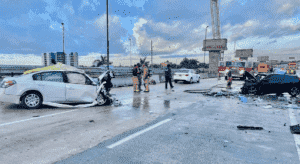
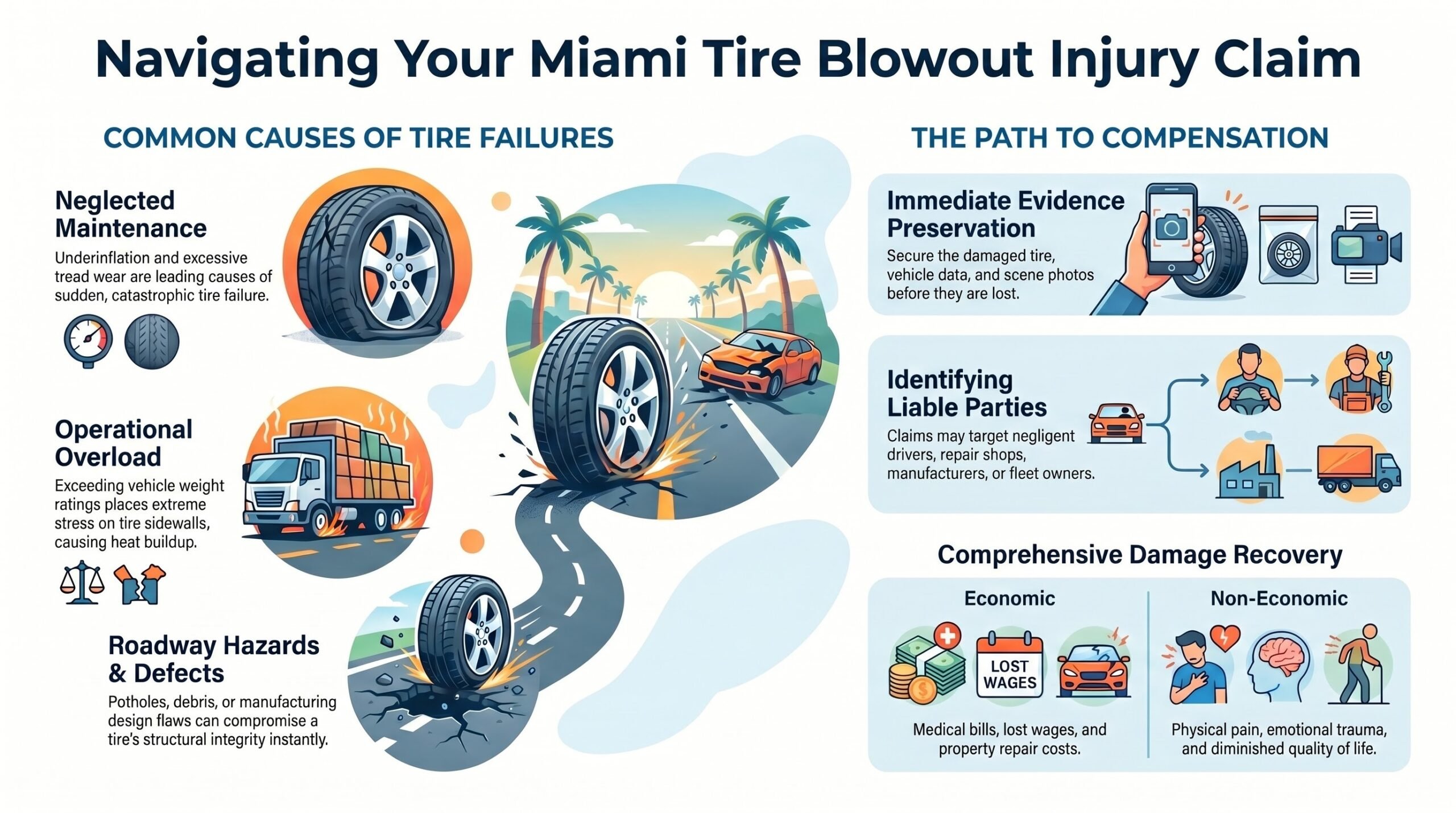
The Law Offices of Anidjar and Levine helps protect a victim’s claim after a tire blowout crash by preserving the damaged tire, vehicle data, crash scene evidence, and maintenance records before they are lost.
Counsel investigates whether underinflation, worn tread, overloading, road hazards, poor repairs, or a defective tire caused the collision. An attorney also deals with insurers, documents medical expenses, lost wages, and pain and suffering, and seeks compensation from every liable party.
For more information, speak with a Miami Car Accident Lawyer.
Main Takeaways
- A Miami tire blowout injury lawyer investigates whether underinflation, worn tread, overloading, road hazards, poor maintenance, or defects caused the crash.
- Prompt medical evaluation is critical after a blowout crash because shock can hide concussions, internal injuries, spinal trauma, and soft tissue damage.
- Strong claims depend on preserving the damaged tire, photos, witness contacts, crash reports, maintenance records, and vehicle electronic data.
- Liability may extend beyond the driver to fleets, repair shops, manufacturers, or others who ignored warning signs or supplied defective components.
- An attorney can pursue compensation for medical bills, lost income, property damage, pain and suffering, and long-term rehabilitation needs.
How We Can Help With Your Miami Tire Blowout Car Accident Injury Claim
After a Miami tire blowout accident, legal representation can help establish the cause of the failure, identify all potentially liable parties, and protect the injured person’s right to pursue compensation. Counsel provides organized guidance, gathers records, preserves physical evidence, and coordinates communication with insurers and other involved parties throughout the claim process.
A law firm serving this community can also examine vehicle history, service documents, recall information, and tire maintenance practices to determine whether neglect, defective products, or improper installation contributed to the event. It can consult qualified experts, document roadway conditions, and calculate losses with care and accuracy. The firm may also advise families on practical steps for emergency preparedness, especially when transportation disruptions affect work, caregiving, or volunteer commitments.
By managing deadlines, negotiations, and documentation requirements, legal counsel allows injured people to focus on recovery and continued service to others while their claims are advanced with diligence, professionalism, and compassion.
Understanding Miami Tire Blowout Car Accident Injury Cases


A clear understanding of Miami tire-blowout car accident injury cases begins with the fact that these collisions often involve more than just a sudden loss of air. They may trigger chain reactions, loss of vehicle control, secondary impacts, and serious injuries affecting drivers, passengers, pedestrians, and other motorists across Miami’s roads.
OUR CONSULTATIONSARE FREE
START YOUR FREE CASE REVIEW

These cases often require close review of physical evidence, medical records, crash reports, and witness accounts to determine how the event unfolded and why the injuries were so severe. Questions may arise regarding the vehicle’s condition, prior tire maintenance, roadway conditions, speed, and weather conditions at the time of impact. A careful legal evaluation helps identify responsible parties and assess the full scope of losses, including emergency care, ongoing treatment, lost income, pain, and diminished quality of life.
For those committed to protecting others and promoting accountability, understanding these cases supports informed action, compassionate advocacy, and meaningful recovery for injured individuals and families after devastating roadway events.
Common Causes of Miami Tire Blowout Car Accident
Several conditions commonly contribute to Miami tire-blowout car accidents, often stemming from preventable vehicle maintenance or operating issues. Underinflated tire pressure, excessive tread wear, road-hazard impacts, and overloaded vehicle weight are frequently identified as leading factors increasing the likelihood of sudden tire failure. A clear understanding of these causes helps frame how liability and accident prevention may be evaluated in these cases.
Underinflated Tire Pressure


Low tire pressure is one of the most common and preventable causes of a tire blowout in Miami car accidents. When a tire is underinflated, its sidewalls flex excessively and generate dangerous heat during everyday travel. That added stress can weaken the tire’s internal structure and cause sudden failure, especially on hot roads or at highway speeds.
Drivers who value the safety of passengers, pedestrians, and other motorists benefit from consistent pressure monitoring and routine maintenance. Manufacturer guidelines, seasonal temperature changes, and monthly inspections all play an important role in maintaining safe operating conditions. Even a modest drop in air pressure can reduce stability, lengthen stopping distance, and increase the risk of losing control. Careful attention to inflation levels helps protect lives and prevent avoidable harm for everyone.
Excessive Tread Wear
Improper inflation is only one condition that can set the stage for a blowout, because excessive tread wear also markedly increases the risk of sudden tire failure in Miami traffic collisions. As tread depth diminishes, the tire loses strength, heat dissipation declines, and braking or turning traction becomes less dependable for everyone sharing the road.
Excessive wear often reflects neglected maintenance, including poor tire alignment, delayed rotation, or suspension problems that place uneven stress on the casing. Drivers may also notice persistent road vibrations, which can signal imbalance or internal tire damage that worsens as miles accumulate. Service-minded vehicle owners who regularly inspect tread, promptly replace worn tires, and address underlying mechanical issues help protect passengers, pedestrians, and neighboring motorists from preventable blowout crashes and the resulting injuries.
Road Hazard Impact
On Miami roadways, sudden contact with potholes, broken pavement, construction debris, or discarded objects can damage a tire with little warning and create conditions for an immediate blowout. These impacts may cut sidewalls, weaken internal belts, or cause rapid air loss, leaving drivers with little time to react safely. Pothole damage is especially dangerous because it may not be visible after the initial strike, yet the tire’s structural integrity can already be compromised.
For families, commuters, and community members who share the road, debris hazards pose a serious public safety concern. A small object can puncture a tire, while larger roadway obstructions may cause a sudden loss of control at highway speeds. Careful inspections, prompt maintenance, and attentive driving can reduce risk, though some hazards arise too suddenly to avoid safely.
Overloaded Vehicle Weight
Excess vehicle weight is another common cause of tire blowouts on Miami roads, particularly when cars, SUVs, vans, or trucks carry more passengers or cargo than their tires are rated to support. Excessive loads increase heat buildup, reduce tire stability, and weaken structural integrity during daily travel.
When overloaded cargo is placed unevenly, the risk increases further. Unequal distribution can create dangerous handling problems, especially during braking, turning, or sudden maneuvers in heavy traffic. Additional axle stress also increases pressure on sidewalls and tread surfaces, accelerating wear and making catastrophic failure more likely. Responsible vehicle owners and operators can better protect passengers, nearby motorists, and the broader community by adhering to manufacturer weight limits, carefully balancing loads, and regularly inspecting tires before transport.
Legal Rights of Miami Tire Blowout Car Accident Injury Victims
Accountability becomes a central concern when a tire blowout causes a serious collision in Miami, because injured victims may have important legal rights under Florida law. Those rights may extend beyond insurance benefits when evidence shows Driver negligence, unsafe maintenance, or Product liability involving a defective tire, wheel, or vehicle component. A careful legal review can identify parties whose conduct endangered others and undermined public safety.
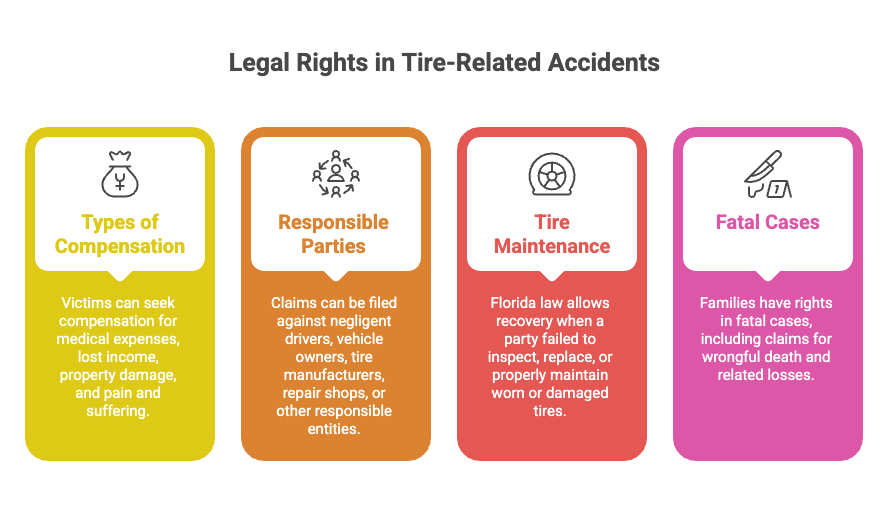
When a Miami tire blowout causes harm, accountability may reach negligent drivers, maintenance failures, and defective vehicle components.
- Victims may pursue compensation for medical expenses, lost income, property damage, and pain and suffering.
- Claims may be brought against negligent drivers, vehicle owners, tire manufacturers, repair shops, or other responsible entities.
- Florida law may allow recovery when a party failed to inspect, replace, or properly maintain worn or damaged tires.
- Families may also have rights in fatal cases, including claims for wrongful death and related losses.
Steps to Take After a Miami Tire Blowout Car Accident Injury
After a Miami tire blowout car accident injury, several immediate steps can help protect both recovery and potential legal claims. Priority is generally placed on obtaining prompt medical care and preserving clear documentation of the accident scene, including vehicle damage, road conditions, and visible injuries. Early contact with a Miami lawyer may also prove important, as legal guidance can help preserve evidence and support an informed response to the incident.
Seek Immediate Medical Care
In the moments following a Miami tire blowout accident, obtaining prompt medical attention should be treated as a priority, even when injuries do not appear severe at the scene. Shock and adrenaline can mask pain, while internal injuries, concussions, soft tissue damage, and spinal trauma may worsen without timely diagnosis and intervention.
An emergency evaluation helps identify hidden harm and creates a clear medical record that connects symptoms to the collision. This step also protects the injured person’s ability to make informed decisions about treatment, work, and daily responsibilities. Physicians may recommend imaging, medication, therapy, or referrals to consultants based on observed symptoms. Consistent follow-up care is equally important because recovery often unfolds over days or weeks. Those assisting injured individuals should encourage compliance with medical advice and monitor changes carefully thereafter.
Document The Accident Scene
Once urgent medical needs have been addressed, careful documentation of the accident scene can preserve facts that may otherwise disappear within minutes. If conditions permit, helpful observers should note the vehicle positions, skid marks, road debris, weather, traffic signals, and any visible tire damage before cleanup begins. Thorough photographic documentation can capture angles, distances, roadway conditions, and property damage with useful clarity.
Names and contact information for witnesses should also be gathered respectfully, since witness interviews may later clarify how the blowout occurred and how other drivers responded. It is also prudent to record the time, location, and any statements made at the scene by involved parties. By preserving objective details early, injured individuals and those assisting them can support an accurate understanding of events and better protect everyone affected.
Contact A Miami Lawyer
Why does early legal guidance matter so much in a Miami tire blowout case? Prompt action helps preserve crucial evidence, identify liable parties, and protect the injured person from costly mistakes. A timely Lawyer consultation allows counsel to review tire defects, maintenance records, road conditions, and insurance issues before details are lost or disputed.
An attorney can also coordinate Miami outreach for investigators, medical providers, and witnesses, helping the claim proceed with order and integrity. This support serves not only the injured individual but also family members who may be taking on new responsibilities after the crash. By addressing deadlines, communications, and potential claims against drivers, manufacturers, or service shops, counsel creates a clearer path toward accountability. Early representation often strengthens the case and allows the injured person to focus on recovery and community obligations.
How a Miami Tire Blowout Car Accident Injury Lawyer Can Help You
After a tire blowout causes a serious collision, a Miami tire blowout car accident injury lawyer can help by evaluating the facts of the crash, identifying all potentially liable parties, and protecting the injured person’s right to seek compensation.
Counsel may also review Tire maintenance records and Emergency preparedness efforts to determine whether negligence contributed to the event.
- The lawyer gathers police reports, witness statements, photographs, and vehicle data to build a clear account of what occurred.
- The lawyer investigates whether a driver, repair shop, manufacturer, or fleet owner failed to act with reasonable care.
- The lawyer calculates damages, communicates with insurers, and resists attempts to minimize valid claims.
- The lawyer guides the injured person through deadlines, legal procedures, and settlement decisions with steady, service-oriented support.
Through careful preparation, legal counsel helps families pursue accountability and the resources needed to restore stability after a preventable crash. This assistance supports informed choices and promotes fair treatment throughout the claims process.
Long-Term Effects of Miami Tire Blowout Car Accident Injuries
The long-term effects of a Miami tire blowout car accident may extend well beyond the initial emergency, affecting multiple areas of a person’s life. Many individuals face chronic pain challenges and lasting mobility limitations, which can interfere with daily activities, employment, and overall independence. In addition, emotional trauma consequences may persist for months or years, influencing mental health, relationships, and long-term recovery.
Chronic Pain Challenges
Persistence of pain often becomes one of the most disruptive long-term consequences of a Miami tire blowout collision, particularly when the crash causes spinal trauma, nerve damage, soft tissue injuries, or aggravated preexisting conditions.
Chronic pain may affect concentration, sleep, emotional stability, and the ability to fulfill responsibilities at home, work, and within the community. In many cases, symptoms continue long after visible injuries appear remedied, creating frustration for both victims and those trying to support them. Effective pain management frequently requires coordinated medical care, including diagnostic evaluation, medication oversight, physical therapy, and behavioral support. A service-minded approach recognizes that persistent suffering can limit participation in family life and charitable commitments. Careful documentation, consistent treatment, and informed legal guidance often play an important role in protecting long-term recovery and stability.
Lasting Mobility Limitations
For many injured individuals, lasting mobility limitations become a defining consequence of a Miami tire blowout collision when damage to the spine, joints, muscles, or nerves interferes with routine movement. Everyday tasks, including walking, climbing stairs, bathing, and driving, may require significant assistance or careful planning. Some individuals must rely on Mobility aids, such as canes, walkers, braces, or wheelchairs, to preserve safety and independence. Others need Home modifications, including ramps, grab bars, widened doorways, or adjusted bathrooms, to reduce fall risks and support daily function.
Ongoing physical therapy, medical monitoring, and personal support often become necessary parts of long-term care. These limitations can affect employment, household responsibilities, and participation in community service, increasing the practical burden on injured individuals and their families alike.
Emotional Trauma Effects
Emotional trauma often remains a serious long-term consequence of a Miami tire blowout collision, particularly when the event involved sudden loss of control, violent impact, or life-threatening injuries. Survivors may experience PTSD symptoms, recurring fear, disturbed sleep, and heightened anxiety while driving or riding in vehicles again.
These effects can interfere with employment, family roles, and the ability to support others in daily life. Some individuals also develop Attachment issues, becoming withdrawn, distrustful, or overly dependent after the crash. Persistent emotional distress may contribute to depression, irritability, and difficulty concentrating, which can delay recovery from physical injuries. Professional counseling, trauma-informed care, and strong community support often play an important role in restoring stability. Careful legal guidance may also help injured people pursue resources needed for long-term emotional recovery and well-being.
Proving Liability in Miami Tire Blowout Car Accident Injury Cases
Establishing liability in a Miami tire blowout car accident injury case requires a careful examination of how the blowout occurred and whether negligence contributed to the failure. Attorneys and investigators review maintenance records, tire age, tread wear, load limits, and road conditions to identify the responsible party and protect those harmed.
Liability may rest with a driver who ignored warning signs, a repair shop that performed unsafe service, or a manufacturer that released defective tires. In some cases, tire defectors and engineers inspect the failed tire for design flaws, weak materials, or production errors. Their findings, supported by expert testimony, can clarify whether the blowout resulted from poor upkeep, overinflation, underinflation, or a hidden defect. Photographs, black box data, witness accounts, and vehicle inspection reports often strengthen the claim.
A clear presentation of this evidence helps injured individuals pursue accountability and promotes safer practices that benefit families, passengers, and the broader Miami community alike.
Dealing With Insurance Companies After a Miami Tire Blowout Car Accident Injury
In the aftermath of a Miami tire-blowout car accident injury, dealing with insurance companies often becomes pivotal to protecting a claim and securing fair compensation. Insurers may request recorded statements, broad medical authorizations, or quick resolutions that appear helpful but may undervalue losses. A careful, service-minded approach emphasizes accuracy, patience, and respect for everyone involved while safeguarding the injured person’s rights.
Effective communication with insurers often depends on organized records, consistent reporting, and a clear understanding of coverage terms. Documentation of medical care, lost income, vehicle damage, and related expenses can support a stronger position during Policy negotiation. Representatives may question fault, injury severity, or treatment needs, making measured responses especially important. A thoughtful Settlement strategy considers present costs, future care, and the broader impact on a household’s stability and ability to serve others. By approaching insurer contact with preparation and discipline, injured individuals can reduce avoidable missteps and better protect their financial recovery and long-term well-being.
What to Expect During a Miami Tire Blowout Car Accident Injury Claim Process
A Miami tire blowout car accident injury claim typically begins with immediate post-accident steps, including medical evaluation, evidence preservation, and notice to the appropriate insurance carriers. From there, the claim investigation process focuses on accident reports, tire condition, vehicle maintenance records, and other evidence relevant to proving liability and damages. As the matter progresses, the settlement and litigation timeline will depend on the strength of the evidence, the extent of the injuries, and the parties’ willingness to resolve the claim without trial.
Immediate Post-Accident Steps
After a Miami tire blowout accident, the first priority is to obtain medical attention and ensure that law enforcement responds to the scene, as these early actions often affect both safety and the strength of a later injury claim. Individuals are generally encouraged to remain calm, accept emergency evaluation, and cooperate fully with responding officers. Accurate medical documentation can connect injuries to the collision and help protect those seeking fair recovery.
Photographs of vehicle damage, roadway conditions, and the failed tire may also preserve useful facts. If possible, contact information from bystanders should be gathered, since witness statements may clarify how the blowout occurred. Prompt notice to the insurer is also expected. These careful steps often support accountability, promote responsible assistance, and help injured people focus on recuperation and stability afterward.
Claim Investigation Process
Once immediate medical needs and scene documentation have been addressed, the claim investigation process generally begins with a close review of how the tire failure happened and who may bear legal responsibility. Attorneys and investigators typically gather available records, preserve the damaged tire and vehicle components, and arrange a forensic inspection to identify signs of tread separation, underinflation, road hazards, or maintenance issues. They may also obtain crash reports, photographs, repair histories, and any electronic data that helps reconstruct the event.
Witness interviews can clarify traffic conditions, driver responses, and observations made before or after the blowout. In many cases, communication with insurers follows, along with requests for additional documentation. Throughout this stage, careful organization and timely follow-up help protect important evidence and support an orderly, service-minded claim review process.
Proving Liability And Damages
Establishing liability and damages in a Miami tire blowout injury claim typically requires evidence that connects the tire failure to the crash and shows the extent of the losses that followed. Attorneys often rely on maintenance records, product history, roadway evidence, photographs, and witness statements to identify whether a driver, manufacturer, repair shop, or another party contributed to the event.
Medical records, employment documentation, and repair estimates help measure damages in a manner that supports fair recovery for those harmed. In many cases, expert testimony from accident reconstruction authorities, engineers, or physicians clarifies how the blowout occurred and how the injuries affected daily life. Florida’s comparative negligence rules may also affect recovery if an injured person is found partly responsible, making careful factual analysis vital to protecting others’ interests.
Settlement And Litigation Timeline
Because the timeline of a Miami tire blowout injury claim depends on the severity of the crash, the available evidence, and the parties involved, the process may move through several stages before reaching a resolution. Early steps often include medical treatment, investigation, document collection, and insurance notice, all of which shape the settlement timeline.
Once losses are assessed, counsel may submit a demand package and begin negotiations. If insurers dispute fault, damages, or product defects, litigation may become necessary. Crucial litigation milestones include filing the complaint, exchanging discovery, taking depositions, consulting experts, and attending mediation. Courts may also schedule hearings that affect progress. Many claims resolve before trial, especially when evidence is organized and damages are well supported. When a trial is required, final resolution may take longer, yet careful preparation serves injured people and their families well.
Compensation for Miami Tire Blowout Car Accident Injury Damages
Accountability often begins with a clear assessment of the losses resulting from a tire-blowout collision. In Miami cases, compensation may address immediate financial burdens, continuing care needs, vehicle repair or replacement, and other documented consequences that disrupt a household’s stability. Careful evaluation helps families protect resources while pursuing a result that supports recovery and future safety.
A lawyer may gather medical records, repair estimates, employment documentation, and expert opinions to establish the full scope of damages. When a defective product is involved, a tire warranty may become relevant, especially if the failure points to manufacturing or design problems. Property-related losses can also include towing charges, storage fees, and rental reimbursement when a damaged vehicle cannot be used. In severe matters, compensation may reflect long-term rehabilitation, home modifications, or diminished earning capacity.
A disciplined claim presentation can strengthen negotiations and encourage responsible parties, insurers, or manufacturers to respond fairly under Florida law and applicable policy terms.
Economic vs Non-Economic Damages in Miami Tire Blowout Car Accident Cases
In Miami tire blowout car accident cases, damages generally fall into two categories: economic and non-economic losses. Economic damages typically include measurable financial harm, such as medical bills, lost income, and property damage, while non-economic damages address less tangible effects, such as pain, suffering, and reduced quality of life. Establishing the value of either category often requires records, testimony, and other evidence that connects the blowout-related crash to the claimant’s specific losses.
Economic Damages Explained
At the outset, economic damages are the measurable financial losses resulting from a Miami tire blowout accident, including medical expenses, lost wages, reduced earning capacity, property damage, and other documented out-of-pocket costs. These damages are grounded in records such as invoices, repair estimates, pharmacy receipts, tax returns, and employer statements. Their purpose is to restore financial stability and help injured individuals continue supporting their families and communities.
In tire blowout cases, economic damages may include emergency treatment, surgery, rehabilitation, medication, transportation to appointments, and vehicle replacement or repair. They can also cover lost wages during recovery and diminished future earnings when injuries limit long-term work ability. A careful damages assessment often relies on medical providers, vocational professionals, and financial documentation to present a clear, credible valuation of measurable loss.
Non-Economic Losses Overview
While economic damages address documented financial loss, non-economic damages concern the human consequences of a Miami tire blowout accident that do not appear on bills or wage records. These losses may include physical pain, emotional suffering, anxiety, inconvenience, loss of enjoyment of daily activities, and reduced quality of life.
In service-oriented legal advocacy, recognizing these harms reflects respect for the injured person’s dignity and lived experience. Non-economic losses often describe how an injury changes relationships, independence, sleep, mobility, and the ability to participate in family or community life. Concepts such as pain valuation and life disruption help frame these intangible effects in a structured way. In Miami tire-blowout cases, this category of damages acknowledges that real harm extends beyond medical expenses and lost income and merits careful consideration under Florida law.
Proving Damage Value
Clarity is essential when proving damage value in a Miami tire blowout car accident case, because the strength of any claim depends on credible evidence that connects the collision to both financial loss and personal harm. Economic damages are usually supported by medical bills, wage records, repair estimates, and expert opinions on tire valuation and depreciation. These records help demonstrate the measurable cost of treatment, property damage, and diminished earning capacity.
Non-economic damages require a different showing, often relying on medical narratives, testimony from family members, and documentation of pain, limitations, and emotional distress. A careful presentation serves injured people by showing how the event altered daily life and future wellbeing. When evidence is organized and consistent, insurers, judges, and juries are better able to assign fair and responsible compensation amounts.
When a Miami Tire Blowout Car Accident Injury Case Goes to Trial vs Settlement
In many Miami tire blowout injury claims, the decision to proceed to trial or resolve the matter through settlement depends on liability disputes, the severity of the injuries, the available evidence, and the amount of insurance coverage at issue. When fault is contested, or a manufacturer, maintenance provider, or driver denies responsibility, litigation may become necessary to secure fair compensation for those harmed.
Settlement timing often turns on medical stability, expert analysis, and insurers’ good-faith evaluation of losses. Early resolution can reduce stress and conserve resources, especially when liability is clear and damages are well documented. However, if settlement offers minimize long-term care needs, lost income, or pain, trial preparation may better protect the injured person’s interests. Jury dynamics also influence strategy, since community attitudes, witness credibility, and technical evidence can shape verdict outcomes. A careful, service-minded legal approach weighs compassion, accountability, and practical risk before recommending settlement or courtroom presentation for injured clients and their families.
The Statute of Limitations for Miami Tire Blowout Car Accident Injury Cases
After a Miami tire blowout crash, strict filing deadlines can determine whether an injured person may pursue compensation at all. Florida law generally limits the time available to file a personal injury lawsuit, and a missed deadline can bar recovery regardless of how serious the harm may be. For families trying to protect another person’s well-being, this rule merits careful attention.
Several statute nuances may affect how the limitations period is calculated. The starting date may depend on when the injury occurred, when damage was discovered, or whether a claim involves wrongful death, a minor, or a government entity. Filing deadlines may also differ for related insurance matters and product liability allegations involving defective tires or vehicle components. Because records can fade and physical evidence can disappear, timely action helps preserve facts that may support accountability. Understanding these time limits allows injured people and those assisting them to make informed decisions and safeguard the opportunity for meaningful recovery.
When to Contact a Miami Tire Blowout Car Accident Injury Lawyer
Filing deadlines define one boundary of a claim, but the point at which legal counsel is contacted can also affect the strength of a Miami tire blowout case. Early action often helps preserve damaged tires, vehicle data, roadway photos, and witness memories before they are lost or altered. Urgent timing may also matter when insurers request statements or offer quick settlements.
Consultation timing is especially important after serious injuries, disputed fault, commercial vehicle involvement, or uncertainty about whether a defective tire, poor maintenance, or dangerous road conditions contributed to the crash. Prompt contact can support orderly record collection, communication with insurers, and protection against avoidable mistakes during a stressful period. It may also help families understand what documents to retain, what expenses to track, and how to respond to requests for information. For people focused on serving and protecting others, timely legal guidance can support careful decision-making and provide a more reliable foundation for any future claim.
Why You Need an Experienced Miami Tire Blowout Car Accident Injury Lawyer
Determining why a tire failed, who had responsibility for its condition, and how the blowout caused the collision often requires legal experience that goes well beyond ordinary crash investigation. An experienced Miami tire-blowout car-accident injury lawyer can analyze service records, product history, inspection reports, and roadway evidence to identify all contributing factors and protect injured people from incomplete or unfair conclusions.
Experience also matters when insurers minimize losses or shift blame onto drivers without fully examining Tire Maintenance practices, defective parts, or negligent repairs. Skilled counsel can preserve crucial evidence, coordinate with experts, value medical and financial harm, and present a clear theory of liability. This disciplined preparation supports fair settlement discussions and, when necessary, a strong Court Strategy grounded in facts. For families seeking accountability and the resources needed to continue caring for others, experienced legal representation provides structure, guidance, and advocacy throughout a difficult recovery process, while protecting long-term interests and promoting meaningful justice.
How to Choose the Right Miami Tire Blowout Car Accident Injury Lawyer for Your Case
Selecting the right Miami tire blowout car accident injury lawyer requires more than reviewing advertisements or general claims of success. A careful evaluation should consider whether the attorney has handled blowout cases involving roadway hazards, vehicle defects, and evidence linked to the Tire Industry. Experience with accident reconstruction, maintenance records, and manufacturer investigations may strengthen a case aimed at protecting injured people and their families.
A qualified lawyer should also communicate clearly, explain legal options honestly, and consistently respect the client’s goals and recovery needs. Reviews, case results, and professional standing may offer useful guidance, but direct consultation often reveals the strongest indicators of competence and integrity. Attention should also be given to Lawyer Costs, including contingency fees, litigation expenses, and the explanation of charges before representation begins. Choosing counsel with proven skill and principled service may help secure accountability, resources, and a more stable path forward after a serious crash.
About The Law Offices of Anidjar & Levine
Among Miami personal injury firms, The Law Offices of Anidjar & Levine is known for representing individuals injured in serious motor vehicle collisions, including accidents involving tire blowouts and related vehicle failures. The firm assists injured people and families who need clear guidance, timely communication, and practical support after disruptive crashes.
Its approach emphasizes responsive service, careful case preparation, and advocacy focused on accountability and recovery. Drawing on its firm history, the practice has built a reputation for helping clients pursue compensation for medical expenses, lost income, property damage, and other accident-related losses. Attorneys and staff aim to reduce burdens by addressing insurers, gathering evidence, and explaining legal options with patience and respect.
Public perception is also shaped by client testimonials that describe accessibility, professionalism, and consistent attention to client needs. For people seeking a law firm committed to service, The Law Offices of Anidjar & Levine presents an established option within Miami personal injury litigation and accident claims.
Frequently Asked Questions
Can Defective Tire Recalls Affect My Miami Blowout Accident Claim?
Yes, defective tire recalls can materially affect a Miami blowout accident claim. They may help establish manufacturer liability by showing the tire contained a known safety defect before the crash occurred. Recalls can also strengthen warranty claims if the product failed despite expected use and maintenance. A careful review of recall notices, service records, and accident evidence often helps injured parties pursue accountability and secure compensation that supports recovery and continued care.
What if a Rental Car’s Tire Blew Out During the Crash?
If a rental car’s tire blew out during the crash, liability may extend beyond the driver. A careful review of the rental agreement can show whether the company assumed maintenance duties or limited responsibility. Insurance coverage must also be examined to determine which policy applies first. To serve injured parties well, evidence should be preserved promptly, including inspection records, recall notices, and the vehicle’s condition, so accountability can be assessed accurately.
Can Weather Conditions Influence Liability in a Tire Blowout Accident?
Yes, weather conditions can influence liability in a tire blowout accident. Liability may shift when rain, heat, or debris contribute, but weather negligence may still exist if a driver ignored known hazards or failed to adjust speed. Courts may also examine road maintenance, tire condition, and prior warnings. A careful review helps identify responsible parties and supports fair recovery for those seeking to protect others from similar preventable harm.
Do Dashcams Help Prove Fault in Miami Tire Blowout Cases?
Yes, dashcams can help prove fault in tire-blowout cases by preserving footage showing vehicle movement, road conditions, driver reactions, and possible maintenance failures before impact. Courts and insurers may find such recordings persuasive when supported by timestamp verification, which helps confirm sequence and timing. This evidence can assist those seeking accountability, strengthen witness testimony, and clarify whether negligent driving, defective tires, or hazardous conditions contributed to the collision.
Can Multiple Parties Share Blame for a Tire Blowout Accident?
Yes, multiple parties can share blame for a tire blowout accident. Liability may extend to a tire maker for manufacturer negligence, a vehicle owner for maintenance lapses, or a repair shop for failing to inspect or properly install components. In some cases, a commercial carrier, distributor, or roadway authority may also bear responsibility. Careful investigation helps identify each contributing act, supporting accountability and fair recovery for those harmed.
—————————
A Miami tire blowout accident can leave injured parties facing medical expenses, lost income, and difficult legal questions.
By understanding the causes of these crashes, the steps required after an accident, and the value of skilled legal guidance, victims are better positioned to protect their interests. The Miami Car Accident Lawyers at The Law Offices of Anidjar & Levine provide focused representation for those pursuing compensation.
Prompt legal action can strengthen a claim and help secure a more stable financial recovery.