The Law Offices of Anidjar and Levine helps an injured person protect a claim when the at-fault driver lacks coverage. Counsel can identify available benefits, including PIP and uninsured motorist coverage, preserve medical and crash evidence, manage insurer communications, and assess liability for all responsible parties.
Prompt legal guidance from a Miami Car Accident Lawyer also helps protect deadlines, document wage loss and treatment, and reduce mistakes that can weaken recovery.
The sections below explain these issues in greater detail.
Main Takeaways
- Seek immediate medical care, report the crash, and preserve photos, witness contacts, police information, and all treatment and expense records.
- A Miami no-insurance car accident injury lawyer can identify sources of recovery, including PIP, uninsured motorist coverage, and potentially liable third parties.
- Your lawyer can investigate fault using police reports, witness statements, surveillance footage, phone records, and vehicle data when liability is disputed.
- Be cautious with insurer adjusters, recorded statements, and medical authorizations, because mistakes can reduce benefits or weaken your injury claim.
- If coverage or compensation is denied, a lawyer can negotiate a settlement, address medical liens, and file suit within applicable deadlines.
How We Can Help With Your Miami No Insurance Car Accident Injury Claim
After a no-insurance crash in Miami, injured individuals often face immediate uncertainty about medical bills, lost income, and the legal options available to them. A dedicated legal team can provide steady guidance by organizing records, communicating with insurers, and protecting clients from avoidable mistakes during a stressful period.
Support often extends beyond paperwork. Counsel may help coordinate medical appointments, document injuries, and connect clients with post-accident counseling when emotional strain affects recovery. They may also assist with practical needs, including arranging alternative transportation so families can continue working, attending treatment, and caring for others without unnecessary disruption.


Throughout the claim process, effective representation keeps the focus on service, stability, and accountability. Attorneys and staff can answer questions promptly, explain each step clearly, and advocate for fair financial recovery. This structured support allows injured people to focus on recovery while their claims are managed with diligence, professionalism, and compassion.
Understanding Miami No Insurance Car Accident Injury Cases
OUR CONSULTATIONSARE FREE
START YOUR FREE CASE REVIEW

Legal support is often more effective when grounded in a clear understanding of how Miami no-insurance car accident injury cases are handled under Florida law. These matters often involve personal injury protection benefits, liability questions, and the careful review of available coverage after a collision.
When an at-fault driver lacks insurance, injured people may need to look to their own policies, including PIP, uninsured motorist coverage, or other applicable benefits. Insurance myths can prevent timely action, especially when individuals assume no recovery is possible without the other driver’s coverage. Policy gaps may also complicate care, wage loss reimbursement, and long-term recovery planning.


A disciplined legal assessment helps identify documentation needs, notice requirements, and possible sources of compensation. In service-oriented communities, this understanding supports informed decisions that protect injured residents and their families. Clear guidance allows advocates to respond responsibly, preserve rights, and pursue practical outcomes with diligence and compassion.
Common Causes of Miami No Insurance Car Accident
Several recurring factors contribute to Miami’s no insurance car accidents, often increasing both the likelihood of a collision and the difficulty of recovering compensation afterward. Common causes include distracted driving incidents, speeding and reckless conduct, uninsured driver negligence, and impaired driving crashes, each of which presents serious legal and safety concerns. A clear understanding of these causes helps frame how liability, damages, and insurance issues may arise in these cases.
Distracted Driving Incidents
Many Miami no-insurance car accidents stem from distracted driving, a persistent problem that reduces a motorist’s ability to recognize hazards and respond in time. In dense traffic, even a brief lapse can leave pedestrians, cyclists, passengers, and other drivers exposed to preventable harm.
Common distractions include mobile distractions, in-car technology, eating, grooming, and conversations that draw attention from the road. Visual, manual, and cognitive interruptions often overlap, impairing judgment at intersections, crosswalks, and stop-and-go lanes. Because uninsured drivers may already create financial uncertainty after a crash, distracted conduct can deepen the burden on injured people and families seeking stability. A careful legal review often examines phone records, witness statements, surveillance footage, and vehicle data to determine whether inattention contributed to the collision and resulting injuries for all involved.
Speeding And Recklessness
On Miami roads, speeding and reckless driving often play a central role in no-insurance car accidents, especially where traffic congestion, sudden lane changes, and frequent stops demand consistent control and attention. Excessive speed shortens reaction time, increases stopping distance, and makes even minor errors far more dangerous for nearby motorists, passengers, and pedestrians. Reckless lane changing further increases the risk by disrupting traffic flow and creating sudden points of conflict that others may struggle to avoid.
These behaviors contribute to severe collisions and are closely associated with speed-related fatalities in urban corridors. A careful review of crash circumstances often shows that impatience, aggressive decision-making, and disregard for roadway conditions escalated preventable harm. Understanding these patterns helps community-minded readers recognize hazards early and support safer conduct throughout Miami streets each day.
Uninsured Driver Negligence
In the context of Miami traffic collisions, uninsured driver negligence often reflects a broader pattern of careless conduct that extends beyond the absence of required coverage. Such drivers may ignore traffic signals, fail to yield, follow too closely, or disregard weather and road conditions, increasing the likelihood of preventable harm to others.
This negligence can intersect with other contributing factors, including faulty roadways and pedestrian negligence, yet the uninsured driver’s own duty of care remains central. When a motorist chooses to drive without insurance, that decision may also reveal disregard for legal responsibilities designed to protect the community. For individuals seeking to help injured victims and their families, understanding these patterns supports a more complete evaluation of liability, damages, and the practical challenges that often follow an uninsured collision in Miami.
Impaired Driving Crashes
Impaired driving remains a leading cause of serious Miami collisions, and the problem is especially significant when the at-fault motorist also lacks insurance coverage. These crashes often involve delayed reaction times, poor judgment, and reckless lane departures that place innocent people in immediate danger. Service-minded communities recognize that alcohol awareness programs and strong enforcement can reduce preventable harm.
Impairment is not limited to alcohol alone. Drug use, including prescription misuse, can substantially affect coordination, attention, and decision-making behind the wheel. When an uninsured impaired driver causes injury, victims may face medical costs, lost income, and a difficult recovery without adequate financial support. Careful legal guidance helps injured individuals pursue available compensation, protect their stability, and hold negligent drivers accountable while promoting safer roads for everyone in Miami.
Legal Rights of Miami No Insurance Car Accident Injury Victims
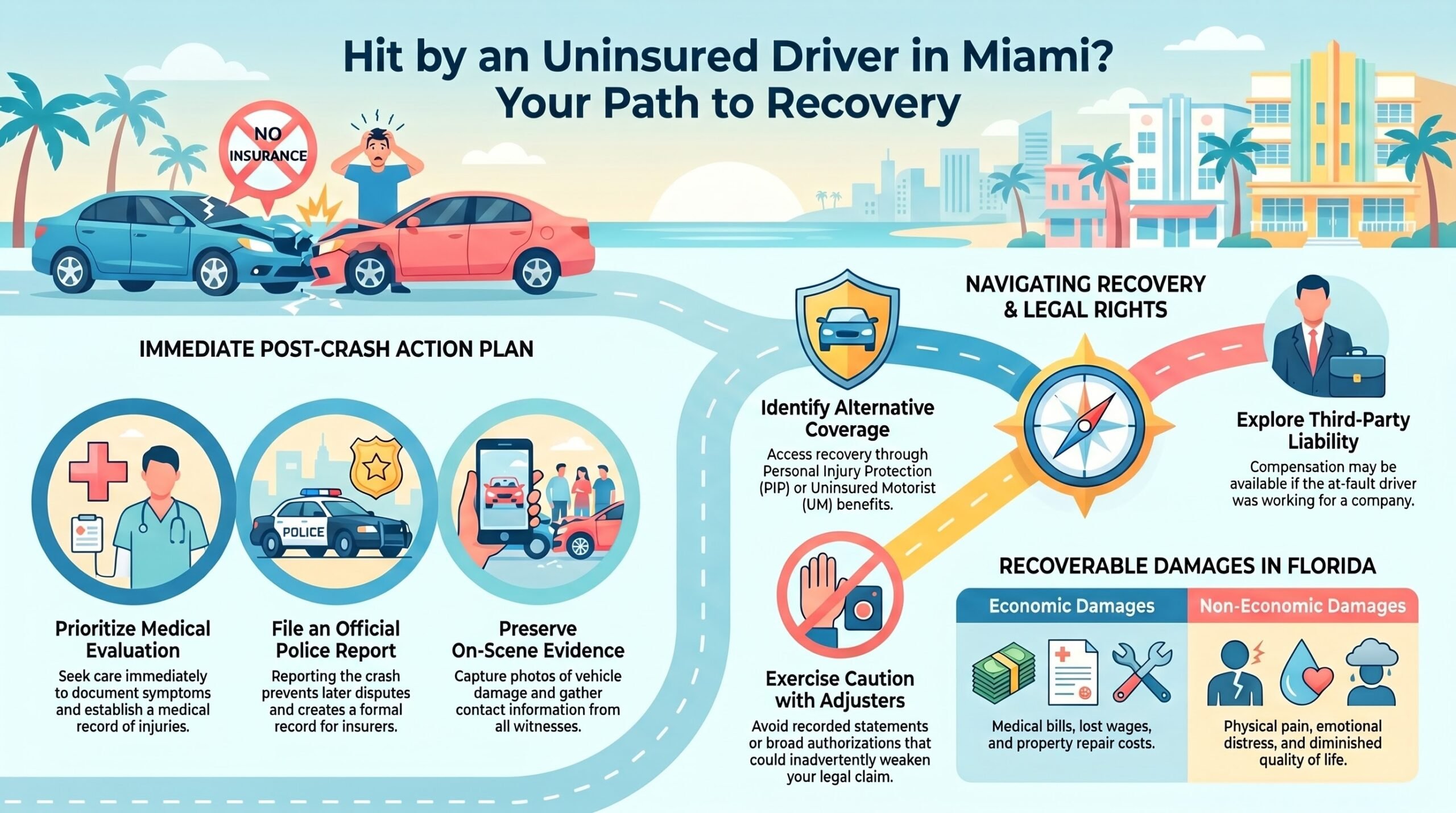
Uncertainty often follows a crash involving an uninsured driver, yet Miami injury victims may still have important legal rights under Florida law. Even without liability coverage from the at-fault driver, injured people may pursue benefits through personal injury protection, uninsured motorist coverage, or a direct civil claim. These rights can protect access to treatment, compensate for lost income, and address other measurable damages, while preserving dignity and stability for families.
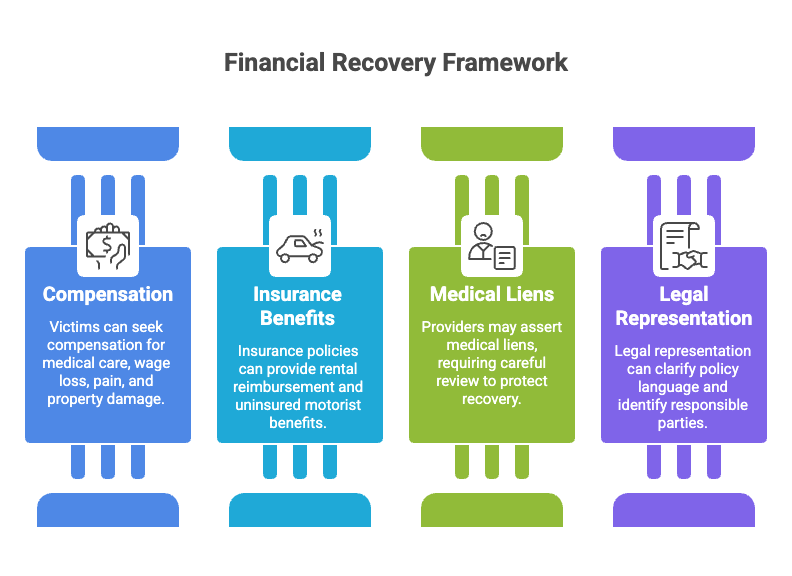
Even after an uninsured-driver crash, Miami victims may still protect their access to treatment, income, and stability through important legal rights.
- Victims may seek compensation for medical care, wage loss, pain, and property damage when supported by evidence.
- Insurance policies may include rental reimbursement and uninsured motorist benefits that reduce financial strain after the collision.
- Providers may assert medical liens, making careful review important to protect any eventual recovery for the injured person.
- Legal representation can help clarify policy language, identify responsible parties, and encourage accountable outcomes that support community well-being.
Florida law imposes deadlines and procedural rules, so timely evaluation often helps preserve justifiable claims and protect vulnerable households.
Steps to Take After a Miami No Insurance Car Accident Injury
After a Miami no insurance car accident injury, certain immediate actions can protect both health and any future claim. Priority is generally given to obtaining prompt medical care and reporting the crash to law enforcement, as these steps help establish the extent of injuries and create an official record. It is also important to gather crucial evidence, including photographs, witness information, and related documents, because early documentation often strengthens a case.
Seek Immediate Medical Care
In the hours immediately following a Miami car accident involving an uninsured driver, prompt medical evaluation should be treated as a priority, even when injuries appear minor at first. An urgent assessment can identify internal injuries, concussions, soft tissue damage, or delayed symptoms that may worsen without timely care. Seeking treatment also helps protect long-term health, which supports a person’s ability to continue caring for family, work, and community responsibilities.
Medical providers should be informed of all pain, dizziness, numbness, and changes in movement or sleep. Clear documentation of symptoms, diagnoses, and treatment recommendations creates an accurate record of the injury’s progression. Attending prescribed follow-up appointments is equally important because consistent care strengthens recovery, monitors complications, and demonstrates that the injured person took responsible steps to address the harm fully.
Report The Crash
At the scene, the crash should be reported to law enforcement as soon as possible, particularly when an uninsured driver is involved, and any injury has occurred. Prompt police notification helps create an official record, supports public safety, and allows officers to assess immediate risks to everyone present, including vulnerable motorists and pedestrians.
A formal report may also protect injured individuals from later disputes about how the collision happened. When a driver lacks coverage, timely reporting can be especially important because insurers often scrutinize uninsured claims closely and may question delays. Clear communication with responding officers should remain accurate, respectful, and limited to known facts. This careful approach may also help expose potential insurance fraud, preserve accountability, and support community-minded efforts to guarantee injured people receive fair consideration under Florida law.
Gather Key Evidence
Every available piece of evidence should be preserved as early as possible because proof often determines how a no-insurance injury claim is evaluated. Helpful actions include photographing vehicle damage, road conditions, visible injuries, traffic signs, and debris before the scene changes. Medical records, repair estimates, towing receipts, and insurance correspondence should be organized carefully and kept accessible.
Those assisting an injured person should also promptly seek witness statements, since memories often fade over time. Contact information for all parties, nearby businesses, and responding officers can support later verification. When available, surveillance footage, dash camera files, phone records, and vehicle data may be reviewed through digital forensics to clarify fault. Thorough evidence-gathering strengthens accountability and helps advocates secure resources that support recovery, stability, and continued service to family and community.
How a Miami No Insurance Car Accident Injury Lawyer Can Help You
Protecting an injured driver’s rights after a crash involving an uninsured motorist often requires prompt legal action and a clear understanding of Florida law. A Miami no-insurance car accident injury lawyer helps by investigating liability, preserving evidence, and identifying all available sources of recovery, including uninsured motorist coverage and other applicable policies. Counsel also addresses medical liens, communicates with insurers, and explains legal fees with transparency so families can make informed choices while focusing on care and community responsibilities.
- Evaluates coverage, fault, and damages with disciplined attention to detail.
- Handles insurer communications to reduce pressure and prevent harmful statements.
- Organizes records, bills, and medical liens to support a credible claim.
- Negotiates resolution or prepares litigation when fair payment is denied.
Through steady advocacy, legal counsel promotes accountability, protects procedural rights, and helps injured people pursue resources needed to restore stability. This guidance often serves both the individual and the broader community by encouraging responsible conduct after serious crashes.
Long-Term Effects of Miami No Insurance Car Accident Injuries
Miami no-insurance car accident injuries can have consequences that extend well beyond the initial recovery period. Many injured individuals face chronic pain that limits daily function, while emotional trauma may affect sleep, concentration, and overall mental health. In addition, the absence of insurance often intensifies lasting financial strain through ongoing medical costs, reduced earning capacity, and other accident-related expenses.
Chronic Pain Challenges
For many injured motorists, chronic pain becomes one of the most disruptive long-term consequences of a no-insurance car accident, especially when treatment is delayed or financial pressure limits access to consistent care. Persistent neck, back, joint, and nerve pain can interfere with mobility, sleep, work performance, and daily responsibilities, creating ongoing hardship for both injured individuals and the families who support them.
Effective recovery often requires consistent medical evaluation, Pain Management strategies, physical therapy, and careful Activity Modification to prevent further strain. When injuries remain untreated, inflammation, stiffness, and reduced function may become more difficult to reverse over time. A well-documented treatment plan can help demonstrate how chronic symptoms affect a person’s ability to serve others, maintain independence, and meet ordinary obligations each day with safety, stability, and dignity.
Emotional Trauma Impact
Uncertainty often shapes the emotional aftermath of a no-insurance car accident, particularly when physical injuries, financial stress, and legal concerns continue long after the collision. Survivors may experience anxiety, disrupted sleep, irritability, and persistent fear during ordinary travel. In more serious cases, post-traumatic stress can interfere with concentration, relationships, and the ability to participate in daily responsibilities.
This emotional burden frequently extends beyond the injured person. Family dynamics may change as loved ones assume caregiving roles, manage emotional strain, or respond to behavioral shifts caused by trauma. Children, spouses, and relatives can be affected by ongoing tension and reduced stability. Compassionate support, counseling, and careful documentation of psychological harm often play an important role in recovery, especially when emotional injuries remain invisible but deeply disruptive over time.
Lasting Financial Strain
Psychological distress is often accompanied by a financial burden that can continue for months or years after a no-insurance car accident injury. Lost income, reduced work capacity, and ongoing treatment needs often create Medical debt that strains entire households. When coverage is absent, families may redirect funds from housing, education, or caregiving responsibilities to meet urgent expenses.
Over time, these pressures may undermine savings goals and cause Retirement disruption, especially for those already living on limited margins. Credit damage, collection actions, and delayed access to necessary care can deepen instability and limit recovery. In many cases, community-minded individuals must postpone plans to support relatives or contribute through service because accident-related costs consume resources. This long-term strain often extends beyond the injured person and affects everyone depending on them.
Proving Liability in Miami No Insurance Car Accident Injury Cases
In Miami, no-insurance car accident injury cases, proving liability requires a careful examination of how the collision occurred and whether another party’s negligence directly caused the claimant’s injuries. Evidence often includes police reports, witness statements, photographs, medical records, and vehicle damage analysis. When facts are disputed, expert reconstruction may clarify speed, impact angles, braking, and roadway conditions with objective detail.
Florida law may also require consideration of comparative liability, meaning each party’s conduct is evaluated to determine whether shared fault contributed to the crash. A thorough investigation helps identify traffic violations, distracted driving, impairment, fatigue, or failure to yield. Attorneys and investigators may review surveillance footage, black box data, phone records, and scene measurements to build a clear account of events.
This careful process serves injured individuals by seeking truth, accountability, and a fair understanding of responsibility. Strong proof of liability can materially affect the ability to recover damages after a serious Miami collision.
Dealing With Insurance Companies After a Miami No Insurance Car Accident Injury
After a Miami no-insurance car accident injury, dealings with insurance companies often become a central part of the recovery process, even when the at-fault driver lacks coverage. Injured individuals are often required to communicate with their own insurer regarding medical benefits, property damage, and other available protections. Clear records, timely notice, and careful statements can help preserve Post Accident Rights and reduce unnecessary disputes.
Insurance adjusters may request recorded statements or broad authorizations that exceed what is reasonably necessary. A measured response, supported by documentation, often protects the injured person while promoting fair treatment. Strong Settlement Negotiation Strategies usually involve organizing medical records, repair estimates, wage loss information, and proof of ongoing limitations. Those assisting injured community members should emphasize honesty, consistency, and patience throughout communications. Professional guidance can also help identify policy benefits, challenge undervaluation, and encourage insurers to act in good faith when evaluating losses and responding to documented demands.
What to Expect During a Miami No Insurance Car Accident Injury Claim Process
A Miami no insurance car accident injury claim typically begins with prompt notice to the applicable insurer, followed by the collection of basic accident, medical, and loss information. The insurer then reviews the claim through its investigation process, while the injured party must present clear evidence establishing the extent of the injury, damages, and related financial losses. As the matter develops, the claim may be resolved through settlement negotiations or proceed to a lawsuit when liability, coverage, or compensation remains in dispute.
Initial Claim Steps
Begin by gathering the vital facts of the collision, including the date, location, vehicle information, photographs, witness names, and any police report number, because these details often shape the course of a Miami no insurance car accident injury claim.
The next step usually involves notifying applicable insurers and seeking prompt medical evaluation, even when injuries seem minor. Careful records of diagnoses, treatment, expenses, lost income, and daily limitations help preserve the claim and support fair recovery. Attention to policy limits and claim deadlines is indispensable because missed requirements can reduce available benefits. Many injured people also organize repair estimates, towing bills, and correspondence into a single file for easier review.
Throughout these initial steps, a lawyer may help protect the claimant’s interests, clearly explain obligations, and promote an orderly process centered on accountability, service, and lawful compensation.
Insurance Investigation Process
In the course of a Miami no-insurance car accident injury claim, the insurance investigation typically focuses on verifying how the collision occurred, identifying available coverage, and evaluating the nature and extent of the claimed losses.
Adjusters commonly review crash reports, photographs, witness statements, and recorded communications. They may compare vehicle damage, inspect the scene, and request forensic reconstruction when fault is disputed. Coverage analysis often includes examining personal injury protection, uninsured motorist provisions, and any policy exclusion that could limit payment. Insurers also look for prior claims, lapses in coverage, and inconsistent accounts. Throughout this process, careful documentation helps protect all parties and supports fair treatment of those affected. A lawyer may monitor deadlines, organize records, and respond to information requests so the claim proceeds efficiently and in a manner that respects community well-being.
Proving Injury Damages
Once the insurer has examined how the crash occurred and what coverage may apply, attention often shifts to proving the value of the injuries that followed. This stage usually depends on organized evidence showing how the collision affected recovery, work, and daily responsibilities. Medical records, physician opinions, diagnostic imaging, treatment plans, and medication history often help establish the nature and extent of harm.
Clear documentation also supports claims for lost income, rehabilitation needs, and future losses tied to lasting limitations. Statements from treating providers, employers, and caregivers may further explain how the injuries changed the person’s ability to serve family, community, and professional obligations. Consistency matters throughout the claim. Gaps in treatment, incomplete records, or conflicting descriptions can weaken the presentation of damages and reduce the insurer’s assessment of the claim.
Settlement Or Lawsuit
After the available evidence has been assembled, a Miami no insurance car accident injury claim typically moves toward either negotiated settlement or formal litigation, depending on the strength of the proof, the parties involved, and the insurer’s willingness to resolve the matter fairly. Counsel often develops a Settlement Strategy that weighs medical costs, lost income, future care, and policy limitations. If negotiations remain productive, resolution may spare injured people added strain while preserving resources for recovery and family support.
When the carrier disputes liability, minimizes harm, or delays payment, filing suit may become necessary to protect the claimant’s interests. A Litigation Timeline generally includes pleadings, discovery, motion practice, mediation, and possibly trial. Throughout either path, careful preparation and service-minded advocacy help pursue accountability, financial stability, and practical relief for all affected.
Compensation for Miami No Insurance Car Accident Injury Damages
No-insurance accident claims in Miami often involve several paths to financial recovery, even when the at-fault driver lacks coverage. A careful review usually begins with available personal injury protection benefits, health insurance, and claims involving uninsured or underinsured motorists coverage. In some situations, attorneys also examine additional liable parties, including vehicle owners, employers, or businesses whose negligence contributed to the crash and resulting injuries.
Compensation may also be supported through strategic coordination of treatment records, billing statements, and insurance communications. Providers may agree to medical liens, allowing injured individuals to receive necessary care while a claim proceeds. This approach can help preserve stability for families focused on recuperation and caring for others. When coverage disputes arise, legal counsel may pursue negotiated resolutions or court action to secure payment from all responsible sources. A disciplined claims strategy, grounded in evidence and service-minded advocacy, often increases the likelihood of a meaningful financial recovery after a Miami no-insurance collision.
Economic vs Non-Economic Damages in Miami No Insurance Car Accident Cases
In Miami, in car accident cases without insurance, damages are generally divided into economic and non-economic categories, each addressing a different type of loss. Economic damages typically include measurable costs, such as medical bills, lost income, and property damage, while non-economic losses concern pain and suffering, emotional distress, and diminished quality of life. Because the value of these damages can be disputed, strong documentation, credible testimony, and clear evidence are often necessary to support the full extent of the claim.
Economic Damages Explained
From a legal and financial standpoint, economic damages are the measurable losses a crash victim incurs, such as medical expenses, lost wages, rehabilitation costs, property damage, and other out-of-pocket expenses directly tied to the collision. In Miami, no uninsured car accident cases; these damages are documented through invoices, receipts, repair estimates, employment records, and expert evaluations. Clear proof helps guarantee that responsible parties are held accountable and that injured individuals receive the support needed for recovery and stability.
Economic damages commonly include medical bills, future treatment expenses, transportation to appointments, household service replacement, and diminished earning capacity when injuries affect long-term work ability. Attorneys and claims professionals often calculate these losses carefully because accurate valuation can protect families from avoidable financial hardship and help them continue serving their communities after a serious crash.
Non-Economic Losses Overview
Intangible harm often plays a central role in Miami no insurance car accident cases, even though it cannot be measured with the same precision as medical bills or lost income. These non-economic losses address the human impact of an injury, including physical pain, emotional distress, anxiety, inconvenience, and diminished enjoyment of daily life.
In a service-minded legal context, recognizing these losses helps honor the burdens that injured people and their families endure beyond financial strain. Pain valuation is thus a conceptual part of understanding overall harm, not merely a mathematical exercise. Jury perceptions may also influence how such losses are viewed within a claim, because lived suffering is often experienced differently from person to person. A careful overview of non-economic damages supports a fuller picture of recovery needs after a serious Miami collision and long-term consequences.
Proving Damage Value
Clarity is indispensable when proving the value of damages in Miami no-insurance car accident cases, because compensation depends on evidence showing both the existence and extent of the claimed harm. Economic damages are typically established through medical bills, wage records, repair estimates, and expert forensic valuation of future losses. Non-economic damages, including pain, emotional suffering, and reduced quality of life, require consistent medical documentation, witness statements, and credible testimony describing daily limitations.
A lawyer serving injured people and their families will carefully organize records, consult qualified experts, and present a coherent damages narrative tied to the collision. This disciplined approach helps insurers, judges, and juries assess fair compensation. Many firms use contingent fees, allowing harmed individuals to pursue justice without paying legal fees upfront during a difficult recovery period after serious crashes.
When a Miami No Insurance Car Accident Injury Case Goes to Trial vs Settlement
In many Miami no insurance car accident injury cases, the decision to resolve a claim through settlement or proceed to trial depends on the strength of the evidence, the seriousness of the injuries, the availability of insurance or other assets, and the willingness of the opposing party to dispute liability or damages. Settlement is often favored when fault is clear, medical records are persuasive, and practical recovery appears achievable. Careful attention to settlement timing may improve leverage and reduce unnecessary expense for all involved.
Trial becomes more likely when liability is denied, damages are minimized, or negotiations fail to reflect the injured person’s losses and future needs. In those circumstances, presenting the case before a jury may be necessary to pursue full accountability. Jury dynamics can influence both risk and potential value, especially when credibility, community standards, and the human impact of the injury are central issues. A disciplined evaluation of both paths helps protect injured individuals and the families depending on them.
The Statute of Limitations for Miami No Insurance Car Accident Injury Cases
After a Miami car accident involving an uninsured driver, strict filing deadlines can determine whether an injured person retains the right to seek compensation through the courts. In Florida, the statute of limitations generally sets the outer boundary for bringing a personal injury lawsuit, and missing that deadline can bar recovery regardless of the seriousness of the harm.
Because these cases often involve medical treatment, insurance issues, and financial strain, careful attention to dates serves both justice and community responsibility. Important records, including crash reports, treatment notes, and proof of losses, should be preserved early so the claim can be evaluated within the required period. Certain statute exceptions may alter the usual timeline in limited circumstances, but those situations are narrowly applied and should never be assumed.
A timely filing helps protect evidence, supports witness recollection, and promotes fair resolution. Respecting filing deadlines allows injured people to pursue accountability while also honoring the orderly administration of the legal system.
When to Contact a Miami No Insurance Car Accident Injury Lawyer
Contacting a Miami no insurance car accident injury lawyer as early as possible often places an injured person in the strongest position to safeguard a claim. Prompt contact is especially important after a crash involving uninsured drivers, disputed facts, serious injuries, or pressure from insurers. Early guidance helps preserve evidence, clarify the post-accident timeline, and support decisions that affect recovery and financial stability.
An attorney should also be contacted when medical treatment begins, symptoms worsen, or work is missed, as these developments can affect the claim’s value and available benefits. Timely legal attention encourages organized medical documentation, accurate reporting, and careful communication with insurance representatives. It may also help an injured person meet notice requirements, avoid preventable mistakes, and respond appropriately if liability is challenged. For families and community-minded individuals seeking fair outcomes, early action supports accountability and helps safeguard that important details are not lost as time passes after a collision and stress.
Why You Need an Experienced Miami No Insurance Car Accident Injury Lawyer
Early legal guidance is only part of the equation because the quality of that representation can strongly affect the outcome of an uninsured motorist claim. In Miami, these cases often involve disputed liability, policy interpretation, medical documentation, and aggressive insurance tactics that can reduce fair compensation.
An experienced lawyer provides more than procedural help. An effective legal strategy can preserve evidence, identify all available sources of recovery, and present losses in a clear, credible manner. This work is especially important when injured people are focused on recovering and supporting their families or communities. Skilled counsel also strengthens Client advocacy by managing communications, challenging unfair denials, and pursuing compensation for treatment costs, lost income, and long-term needs.
Experience matters because uninsured motorist claims rarely resolve on sympathy alone. They depend on preparation, sound judgment, and a disciplined approach that protects injured individuals while advancing accountability, stability, and meaningful recovery after a serious collision.
How to Choose the Right Miami No Insurance Car Accident Injury Lawyer for Your Case
In evaluating potential counsel, an injured person should focus on qualifications that directly affect the handling of uninsured motorist claims in Miami. Relevant experience with no insurance collisions, knowledge of Florida coverage disputes, and a record of organized case preparation are important indicators of reliable representation.
A careful selection process should also consider client communication, because consistent updates help families make informed decisions while caring for others during recovery. An attorney should explain legal options clearly, respond promptly, and show respect for the client’s time and circumstances. Reviewing fee structures is equally important. Clear terms regarding contingency fees, case costs, and settlement deductions reduce confusion and support trust. It is also wise to assess whether the lawyer has access to investigators, medical experts, and negotiation resources that strengthen a claim. By comparing these factors, an injured person can choose counsel equipped to pursue fair compensation with diligence, integrity, and practical skill.
About The Law Offices of Anidjar & Levine
After considering the qualities that distinguish effective legal representation, attention may turn to the law firm itself and the support it offers injured clients. The Law Offices of Anidjar & Levine is known for assisting accident victims through organized legal guidance and responsive communication, which can be especially valuable after a crash involving an uninsured driver.
The firm’s history reflects a practice built around personal injury advocacy and client service. Its attorneys and staff are recognized for maintaining direct contact with clients, helping them understand deadlines, insurance issues, medical documentation, and the progress of a claim. This service-centered approach may appeal to individuals who value helping families recover with dignity and practical support. Client testimonials often describe accessibility, professionalism, and steady guidance during difficult periods.
In matters involving no insurance car accidents in Miami, the firm’s experience, structure, and commitment to attentive representation may provide injured people with dependable assistance as they pursue compensation and stability.
Frequently Asked Questions
Can Undocumented Immigrants File a Miami No Insurance Car Accident Injury Claim?
Yes, undocumented immigrants may file a no-insurance car accident injury claim in Miami, provided they meet applicable eligibility criteria under Florida law. Their immigration status does not automatically bar recovery for injuries, medical costs, or related losses. However, consent issues, insurance limits, and fault determinations can affect outcomes. Careful documentation and timely action are important, and professional legal guidance often helps protect rights while supporting fair, service-oriented case resolution.
Will My Immigration Status Affect My Injury Case or Compensation?
Immigration status does not automatically bar an injury claim or reduce damages. Courts generally focus on liability, medical harm, and documented losses, rather than citizenship. However, case strategy may consider potential immigration consequences if disclosure issues arise during litigation. Compensation limits usually depend on insurance coverage, applicable statutes, and proof of damages, not status alone. Careful legal guidance helps protect rights while advancing a claim with accuracy and dignity.
Can I Recover Damages if the Uninsured Driver Was Working for a Company?
Yes, damages may be recoverable if the uninsured driver was acting within the scope of employment at the time of the crash. In that situation, employer liability may apply under the principles of vicarious responsibility, allowing an injured person to seek compensation from the employer. Recovery depends on the driver’s job duties, the purpose of the trip, and available insurance coverage. Careful investigation helps protect the injured party and support fair compensation for all.
What if the At-Fault Uninsured Driver Fled the Accident Scene?
If the at-fault uninsured driver fled the scene, compensation may still be available through uninsured motorist coverage and other evidence-based claims. A prompt police report is crucial because it helps document facts, identify witnesses, and support compliance with hit-and-run laws. Medical records, photographs, and surveillance footage may strengthen the case. Legal guidance can help protect injured people, preserve evidence, and promptly pursue every available source of recovery.
Are Punitive Damages Available in Miami Uninsured Car Accident Injury Cases?
Yes, punitive damages may be available in Miami uninsured-car-accident injury cases, but only in limited circumstances. Courts generally require clear evidence of intentional misconduct or gross negligence that satisfies Florida’s punitive standards. Ordinary negligence usually does not qualify. In addition, damage caps may restrict the amount awarded, depending on the facts. Careful legal review helps injured individuals understand whether pursuing such damages would meaningfully serve their recovery and accountability goals.
—————————
A Miami no insurance car accident injury claim can present serious legal and financial challenges, particularly when liability, coverage, and damages are disputed. Injured parties benefit from understanding their rights and acting promptly to protect their interests.
With experienced legal guidance, they may pursue available compensation and steer through intricate insurance issues more effectively. Working with a trusted Miami Car Accident Lawyer at the Law Offices of Anidjar & Levine can provide informed representation designed to help clients move forward with greater clarity, protection, and confidence after a collision.