The Law Offices of Anidjar and Levine assists collision victims by documenting vehicle damage, repair history, medical records, and market evidence to pursue compensation for both injury losses and reduced resale value.
Counsel handles insurer communications, protects deadlines, coordinates appraisals, and challenges undervalued offers with organized proof of causation and loss.
Early legal guidance from a Miami Car Accident Lawyer can preserve evidence, clarify comparative fault issues, and improve negotiation outcomes.
The sections below explain the claim process, essential evidence, and timing considerations.
Main Takeaways
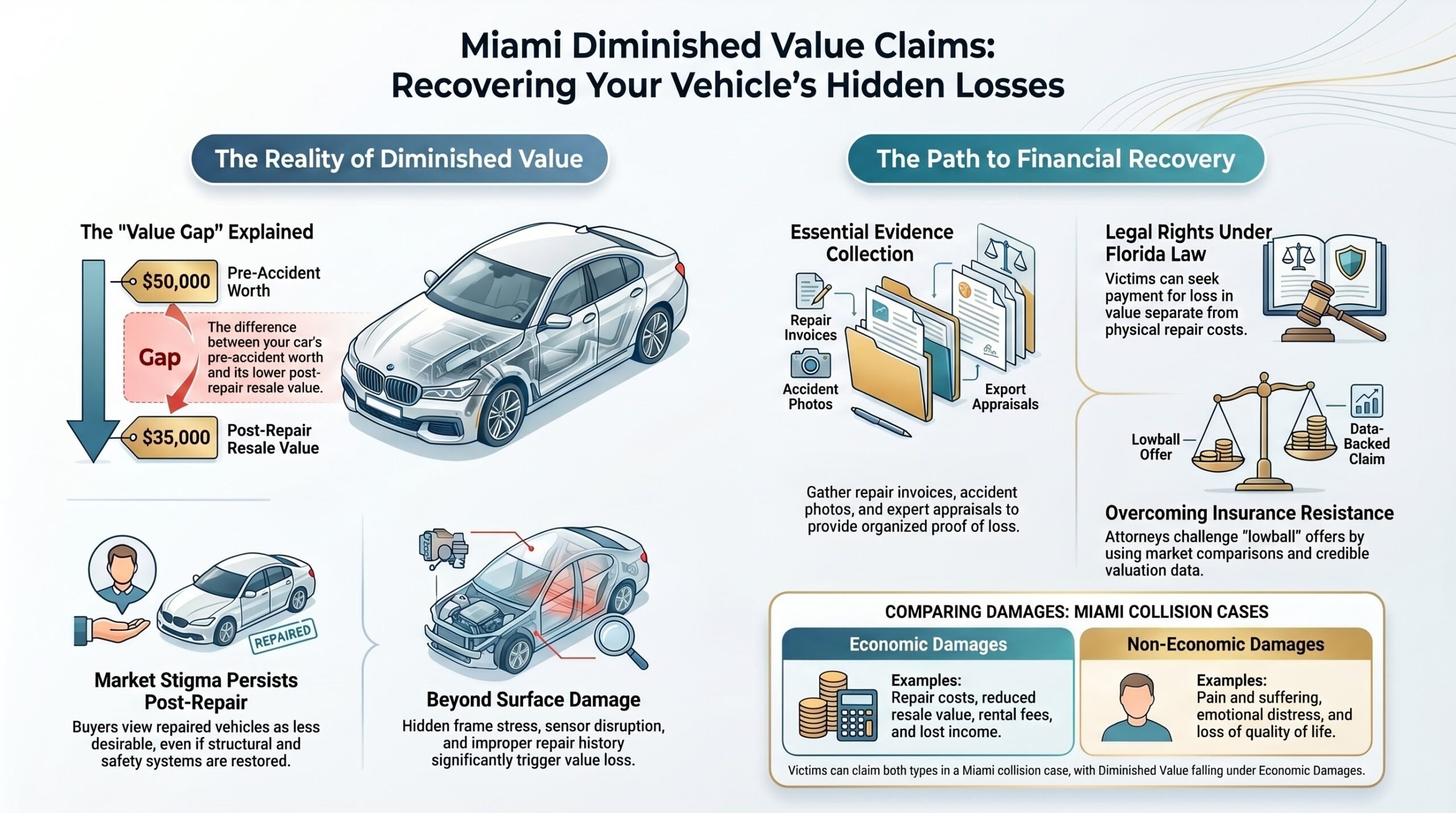
- A Miami diminished value claim injury lawyer helps recover the difference between your car’s pre-accident value and post-repair resale value.
- Lawyers gather repair invoices, photos, market comparisons, and expert appraisals to prove accident-related loss in vehicle value.
- They review police reports, insurance correspondence, and ownership records to identify liability and strengthen your diminished value claim.
- An attorney handles insurer negotiations, challenges lowball offers, and prepares a complete demand package when disputes arise.
- Early legal help protects deadlines, preserves evidence, and clarifies the claim process after an accident involving injuries and vehicle damage.
How We Can Help With Your Miami Diminished Value Claim Injury Claim
After a collision, a diminished value claim often becomes more difficult than many vehicle owners expect, particularly when an insurer disputes the extent of the vehicle’s lost market value. In these matters, dedicated legal guidance can help organize records, meet deadlines, and present a clear demand supported by credible evidence of vehicle valuation. A careful advocate may gather repair invoices, photographs, market comparisons, and expert opinions to show how the crash affected resale value.
Service-focused representation also helps clients shoulder administrative burdens, allowing them to direct more energy toward family responsibilities and emotional recovery. Counsel can communicate with insurers, challenge unfair assumptions, and explain each step in plain language, which often reduces confusion during a stressful period. When negotiations stall, legal professionals can prepare a stronger claim package and pursue available remedies with discipline and respect. This structured support enables clients to make informed decisions and seek fair compensation for the vehicle’s measurable loss.
Understanding Miami Diminished Value Claim Injury Cases


Many Miami diminished value claim injury cases involve more than routine repair disputes, because they require a clear showing that a collision reduced a vehicle’s market value even when repairs were completed. In these matters, the central issue is often diminished valuation, which measures the gap between a vehicle’s pre-accident worth and its post-repair resale value. Even careful repairs may not erase buyer concerns about prior damage.
OUR CONSULTATIONSARE FREE
START YOUR FREE CASE REVIEW

A professional review commonly examines repair records, photographs, mileage, model history, and comparable sales data. This evidence helps demonstrate whether vehicle depreciation increased because the market views a damaged vehicle as less desirable than an undamaged one. Legal guidance can help organize these facts to support a fair insurance claim.
For people focused on serving others, understanding these cases can promote responsible decision-making, protect household finances, and encourage accountability after a collision. Clear documentation often strengthens credibility during negotiations and supports more equitable financial recovery.
Common Causes of Miami Diminished Value Claim
Several factors commonly lead to a diminished value claim in Miami, even when a vehicle has been repaired. Rear-end collision damage and disputed intersection crash liability often reduce market appeal, while flood and storm damage can create lasting concerns about structural and mechanical reliability. In addition, an improper repair history may further lower resale value, as buyers and appraisers frequently view prior substandard work as a significant risk.
Rear-End Collision Damage


In rear-end collisions, diminished value claims often arise because damage extends beyond visible dents and paintwork to the vehicle’s structural integrity, safety systems, and resale appeal. Even modest impacts may cause bumper deformation, hidden frame stress, sensor disruption, and alignment problems that concern careful buyers and appraisers. Repair records can also raise questions about long-term durability and the vehicle’s ability to protect future occupants.
A professional evaluation often considers whether safety features performed as designed, including seatbelt effectiveness, crash sensors, and restraint components. When these systems are inspected, repaired, or replaced, the vehicle may still carry a measurable stigma in the marketplace. For those committed to helping injured people and families recover fully, carefully documenting rear-end damage supports a fair diminished-value claim and promotes accountability after a preventable collision.
Intersection Crash Liability
At busy Miami intersections, diminished value claims frequently follow collisions caused by failure to yield, distracted driving, red-light violations, and improper left turns. These crashes often leave repairable vehicles with lasting market stigma, even after quality work is completed. Determining intersection liability requires a close review of traffic signals, lane positions, witness statements, and camera footage.
When several drivers contribute to the event, fault apportionment becomes crucial to a fair recovery. Insurers may dispute timing, visibility, speed, or right of way, which can reduce or delay compensation. A careful legal evaluation helps protect those seeking to restore financial stability after service to their families, passengers, and the community is interrupted. By clearly identifying negligence and documenting post-repair loss, a diminished value claim can better reflect the vehicle’s true reduction in resale value and market confidence.
Flood And Storm Damage
After major rain events and coastal storms, diminished value claims in Miami often arise when vehicles sustain water intrusion, corrosion, or storm-related mechanical damage. Even when a vehicle appears operable, coastal flooding can affect wiring, sensors, brakes, and electronic systems in ways that concern future buyers. Those market concerns often reduce resale value, regardless of whether the owner continues using the vehicle safely.
For families and workers who depend on reliable transportation to care for others, this loss can create lasting financial strain. A careful diminished-value assessment may document signs of water intrusion, salt exposure, mold risk, and deterioration of hidden components. In Miami, storm-related vehicle damage frequently carries a stigma in the marketplace, making professional evaluation important for those seeking fair compensation and responsible recovery after severe weather events.
Improper Repair History
Exposing a vehicle to poor workmanship, and its market value may decline well beyond the cost of the original repairs. Buyers, appraisers, and insurers often treat an improper repair history as a warning sign because flawed bodywork can conceal structural weakness, safety concerns, and reduced reliability.
In Miami, diminished value matters; improper repairs may include misaligned panels, botched repainting, poor welds, inferior replacement parts, and hidden corrosion left unaddressed after an accident. Even when a vehicle appears presentable, repair records and inspection findings can reveal shortcuts that lower confidence in its condition. Those seeking to protect injured owners and families should recognize that diminished value reflects more than appearance alone. It also accounts for the loss of trust in the vehicle’s workmanship, future performance, and resale prospects in a competitive market.
Legal Rights of Miami Diminished Value Claim Injury Victims
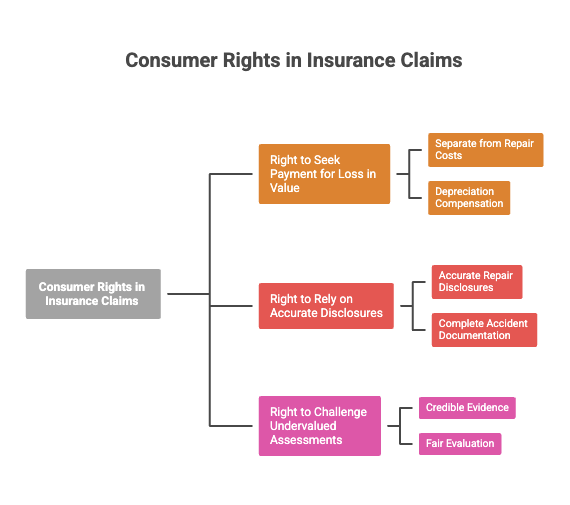
When a vehicle loses market value because of another party’s negligence, Miami injury victims may have the legal right to pursue a diminished value claim in addition to compensation for physical injuries and property damage. Florida law may allow recovery when collision history reduces resale value, even after quality repairs. These rights reflect important Consumer protections and support fair treatment for individuals seeking to restore stability after harm.
Key legal interests often include:
- The right to seek payment for loss in value, separate from repair costs.
- The right to rely on accurate Repair disclosures and complete accident documentation.
- The right to challenge undervalued insurance assessments with credible evidence.
A careful legal evaluation may help determine whether the vehicle’s post-repair condition, title history, and market perception justify additional compensation. In many cases, protecting these rights also serves the broader public good by encouraging accountability, transparency, and respectful claims practices for families, neighbors, and all who depend on safe, honest transportation systems daily.
Steps to Take After a Miami Diminished Value Claim Injury
After a Miami diminished value claim injury, prompt medical care is a crucial first step, both for health and for establishing a clear record of harm. It is also important to document injuries, vehicle damage, and other relevant evidence, as thorough records can strengthen a potential claim. In many cases, contacting a Miami lawyer early helps protect legal interests and supports a more organized response to the claim process.
Seek Immediate Medical Care
Prompt medical evaluation should be treated as a priority, even if injuries appear minor at first. After a collision, hidden conditions such as concussions, internal injuries, or soft tissue damage may worsen without timely attention. An emergency evaluation can identify urgent concerns, protect overall well-being, and guide appropriate treatment from the outset.
Seeking care promptly also supports recovery and the ability to continue serving family, work, and community responsibilities. Physicians can assess symptoms, recommend pain management strategies, and monitor for complications that may not be immediately apparent. Immediate treatment reduces the risk of aggravation and creates a clearer path toward restoration. In Miami, early medical care is especially important because delays may raise questions about the source or severity of injuries. Acting quickly reflects prudence, responsibility, and respect for long-term health and public safety.
Document Injuries And Evidence
In the immediate aftermath of a collision, careful documentation of injuries and physical evidence serves as an essential safeguard for both medical and legal purposes. An individual should photograph visible wounds, vehicle damage, skid marks, debris, and roadway conditions as soon as safely possible. An injury photojournal can help track bruising, swelling, and limited mobility over several days.
It is also beneficial to preserve receipts, treatment notes, repair estimates, and correspondence related to the incident. Names and contact details of bystanders should be collected promptly, as witness statements may clarify how the collision occurred and help maintain an accurate record. If personal notes are kept, they should include pain levels, symptoms, missed obligations, and daily limitations. Thorough records strengthen accountability, support fair evaluation, and help protect the injured person’s broader recovery process.
Contact A Miami Lawyer
Legal guidance becomes particularly important when a collision results in both physical injuries and a diminished value dispute, because insurance carriers may challenge causation, repair quality, or the extent of financial loss. A Miami lawyer can evaluate medical records, repair estimates, and market data, then explain how local statutes may affect deadlines, liability issues, and available compensation.
Prompt contact also helps protect evidence and prevent damaging statements to insurers. Through a phone consultation, counsel may identify weaknesses in the claim, outline documentation needs, and recommend steps that support a fair recovery. This assistance serves injured people by clarifying rights and reducing procedural errors. When serious injuries, disputed repairs, or low settlement offers are involved, retaining a lawyer may improve negotiations and strengthen the presentation of both injury damages and diminished value losses.
How a Miami Diminished Value Claim Injury Lawyer Can Help You
After a vehicle accident, a Miami diminished value claim injury lawyer can provide essential guidance in identifying whether a damaged vehicle has lost market value beyond the cost of repairs. Such counsel helps individuals protect financial stability while pursuing fair treatment from insurers. By examining repair records, accident history, and signs of vehicle depreciation, counsel builds a clear basis for recovery and supports informed decisions for affected families.
- Reviews repair documents and insurance communications for overlooked diminished value losses.
- Coordinates expert appraisals to measure reduced resale value with credible supporting evidence.
- Negotiates firmly with insurers to secure compensation that reflects the vehicle’s true pre-accident value.
A lawyer also explains claim procedures, deadlines, and documentation needs, reducing confusion during a stressful period. When an insurer disputes the amount owed, counsel can organize persuasive evidence and advocate efficiently. This structured assistance allows injured individuals to focus on recovery, service to others, and practical steps toward restoring financial confidence and peace.
Long-Term Effects of Miami Diminished Value Claim Injuries
The long-term effects of injuries from diminished value claims often extend beyond the initial accident and continue to affect daily functioning. Common consequences include chronic pain, lasting emotional trauma, and reduced work capacity, each of which can alter a person’s financial stability and overall quality of life. These ongoing issues are often central to evaluating the full scope of damages in a Miami diminished value claim.
Chronic Pain Challenges
Living with chronic pain often alters far more than physical comfort, as persistent symptoms can disrupt sleep, limit mobility, reduce work capacity, and strain nearly every aspect of daily functioning. For injured individuals in Miami, these lasting effects may continue well after initial treatment ends, requiring consistent pain management and careful medical oversight.
Chronic pain can interfere with household responsibilities, transportation, exercise, and other crucial tasks that support family and community well-being. In many cases, effective care demands ongoing therapy, medication review, and meaningful lifestyle adjustments designed to preserve function and prevent worsening symptoms. Providers, caregivers, and advocates often play an important role by helping injured people maintain routines, access appropriate services, and document the full extent of limitations. Thorough records can clarify how chronic pain affects long-term recovery and daily service to others.
Emotional Trauma Impacts
Persistent injuries may also produce significant emotional trauma, particularly when pain, reduced independence, and financial uncertainty continue for months or years. Individuals may experience anxiety, depression, irritability, sleep disruption, and social withdrawal, all of which can affect family relationships and community involvement. In serious cases, intrusive memories, heightened vigilance, and fear of travel may signal a need for PTSD awareness and careful evaluation.
A service-minded perspective recognizes that emotional suffering merits the same attention as physical harm. Compassionate documentation, counseling referrals, and consistent support can strengthen psychological recovery while preserving dignity. When symptoms remain untreated, they may interfere with recuperation, decision-making, and daily routines. Early recognition often helps injured people access appropriate care, build resilience, and maintain meaningful connections with those who depend on their presence, care, and guidance each day.
Reduced Work Capacity
Over time, serious injuries can reduce a person’s capacity to work by limiting stamina, concentration, mobility, and the ability to perform routine job duties consistently. In service-oriented roles, these limitations may hinder dependable attendance, safe lifting, patient interaction, driving, or the timely completion of critical tasks, resulting in reduced productivity and added strain on coworkers and organizations.
Even when an injured person remains employed, chronic pain, fatigue, and medical appointments may require work accommodations such as modified schedules, reassigned duties, ergonomic equipment, or additional supervision. These adjustments can preserve employment, yet they may also narrow opportunities for advancement and long-term earning potential. A careful legal evaluation often considers how diminished work capacity affects present income, future vocational options, and the injured person’s ability to continue contributing meaningfully to others through reliable service and care.
Proving Liability in Miami Diminished Value Claim Injury Cases
How, then, is liability established in a Miami diminished value claim arising from an injury-related collision? It is typically established through evidence that another party breached a duty of care and directly caused both physical harm and a measurable loss in the vehicle’s value. Police reports, photographs, repair records, surveillance footage, and witness statements often help reconstruct events with clarity.
Florida’s comparative negligence standard may also affect recovery when more than one party shares fault. In such matters, careful analysis is needed to determine each participant’s percentage of responsibility and its impact on damages. Medical records can connect the collision to the injury, while repair documentation can show the severity of structural damage.
Expert testimony is frequently important, especially when accident reconstruction authorities or vehicle valuation professionals explain causation and the extent of diminished market value. A thorough presentation of facts allows injured individuals to pursue accountability while remaining focused on restoration, service, and the well-being of those depending on them.
Dealing With Insurance Companies After a Miami Diminished Value Claim Injury
In the aftermath of an injury-related collision, dealing with insurance companies in a Miami diminished value claim often requires careful documentation, measured communication, and a clear understanding of policy obligations. Insurers typically review repair records, photographs, medical documentation, and statements for consistency, making accuracy crucial when supporting both injury-related losses and the vehicle’s reduced market value.
A disciplined approach often benefits families and communities seeking fair outcomes. Written correspondence can help preserve timelines, reduce misunderstandings, and support effective claim negotiation when adjusters question damages or attempt to narrow valuation methods. Attention to medical liens is also important because outstanding treatment balances may affect how settlement funds are addressed and distributed. Consistent records of appointments, expenses, missed work, and repair estimates can strengthen credibility during discussions with carriers.
Professional guidance may also help identify undervaluation, inappropriate requests, or language that could weaken an injured claimant’s position while maintaining respectful, service-oriented communication throughout the matter.
What to Expect During a Miami Diminished Value Claim Injury Claim Process
A Miami diminished value claim injury process typically begins with an initial case evaluation, in which the facts of the accident, repair history, and potential loss of vehicle market value are reviewed. It then moves to a vehicle damage assessment and insurance claim negotiations, both of which help determine the strength of the claim and the amount that may be recovered. The timeline for settlement and financial recovery can vary, depending on the quality of the evidence, the insurer’s response, and the intricacy of the dispute.
Initial Case Evaluation
At the outset of a Miami diminished value claim, the initial case evaluation typically focuses on the accident details, the extent of the vehicle’s damage, the repair history, and the available evidence supporting a measurable loss in market value. During this stage, counsel generally reviews police reports, photographs, repair invoices, insurance correspondence, and ownership records to identify the claim’s legal and factual foundation. A free consultation often allows injured parties and vehicle owners to ask focused questions, understand eligibility, and receive practical guidance rooted in service and accountability.
The evaluation may also outline a preliminary case timeline, including notice requirements, insurer responses, document collection, and negotiation expectations. By establishing these core facts early, the legal team can protect the client’s interests, promote informed decisions, and prepare the matter for efficient advancement through the claims process.
Vehicle Damage Assessment
Careful vehicle damage assessment marks a pivotal stage in a Miami diminished value claim, because the condition of the vehicle before and after repairs often determines whether a measurable loss in market value can be proven. During this step, professionals typically review repair invoices, photographs, diagnostic reports, and maintenance records to identify the full extent of structural, cosmetic, and mechanical harm. They may compare pre-accident condition, mileage, and vehicle history with the post-repair appearance and performance.
This process helps establish whether lingering defects, replaced panels, frame concerns, or paint inconsistencies could affect buyer perception and resale potential. For individuals committed to protecting others and acting responsibly, a thorough assessment supports accurate documentation, preserves important evidence, and creates a reliable foundation for the remainder of the claim process while promoting fairness.
Insurance Claim Negotiations
During insurance claim negotiations, the insurer typically reviews the repair history, damage documentation, market data, and any expert valuation submitted in support of the diminished-value claim. This review often determines whether the carrier accepts, questions, or minimizes the asserted loss in value.
A Miami diminished value lawyer generally prepares organized evidence, responds to insurer objections, and supports fair policy negotiation through clear, service-minded advocacy. Effective settlement strategies may include presenting comparable sales, repair invoices, photographs, and professional appraisals that show how the vehicle’s market appeal changed after the collision. Insurers may request statements, records, or supplemental inspections before adjusting their position. Careful communication is important because inconsistent descriptions or missing documents can weaken credibility. A disciplined approach helps protect the claimant’s interests while promoting an informed, respectful resolution for all parties.
Settlement And Recovery Timeline
Once negotiations begin to take shape, claimants often want to know how long a Miami diminished value claim may take to resolve and what stages generally affect recovery. The Settlement timeline usually depends on the clarity of liability, repair documentation, appraisal evidence, and insurer responsiveness. Straightforward matters may conclude within weeks, while disputed valuation issues can extend the process for months.
Recovery benchmarks often include vehicle inspection, diminished value assessment, demand submission, insurer review, counteroffer analysis, and final settlement approval. When counsel is involved, each phase is organized to ensure accuracy and fairness, thereby supporting responsible advocacy for all affected parties. Claimants are often advised to preserve repair records, photographs, and correspondence because complete documentation can reduce delay. If negotiations stall, further legal action may lengthen resolution, yet it may also improve the opportunity for a just outcome.
Compensation for Miami Diminished Value Claim Injury Damages
Recovering compensation for a Miami diminished value claim injury damages requires a clear showing that a vehicle’s market value declined after a collision, even when repairs were properly completed. Insurers often challenge the extent of loss, so claimants are commonly served by repair records, photographs, professional valuations, and comparable sales data. These materials help establish the resale impact of an accident history and support a fair demand for payment.
When appraisal disputes arise, a careful legal approach can help clarify the true difference between pre-accident and post-repair value. A lawyer may coordinate independent appraisals, review policy language, and present evidence that addresses insurer objections with accuracy and professionalism. Compensation may depend on the vehicle’s age, condition, mileage, severity of damage, and prior history, each of which affects marketplace perception. By organizing persuasive documentation and advocating with integrity, counsel can assist injured individuals and families in seeking accountability and restoring financial stability after a serious collision event.
Economic vs Non-Economic Damages in Miami Diminished Value Claim Cases
In Miami diminished-value claim cases, economic damages are typically measured by repair costs, loss of market value, and other documented financial losses. Non-economic damages, by contrast, are assessed for less tangible harms, including pain, inconvenience, and the broader impact of the incident on daily life. The distinction between these categories often shapes damage recovery, as each requires different forms of proof and may be treated differently under applicable law.
Economic Loss Calculation
Economic loss analysis in a Miami diminished value claim centers on measurable financial harm, such as the reduction in a vehicle’s market value after a collision, repair expenses not fully compensated, and related out-of-pocket costs. This assessment often relies on repair estimates, dealership appraisals, comparable sales data, and expert opinions addressing market depreciation. A careful calculation helps families, volunteers, and other service-minded individuals recover funds that can be redirected toward daily responsibilities and community commitments.
Relevant losses may include rental charges, towing fees, storage costs, and unreimbursed insurance deductibles when supported by documentation. Attorneys and appraisers typically compare the vehicle’s pre-accident value to its post-repair resale value, then evaluate whether repairs restored safety without eliminating stigma in the marketplace. Thorough records strengthen credibility and support a fair, evidence-based demand during negotiations or litigation.
Non-Economic Harm Factors
Measured financial loss does not always reflect the full effect a collision can have on a vehicle owner, which is why non-economic harm factors are often discussed alongside diminished value issues. These considerations address human consequences that are not captured by repair invoices, resale comparisons, or appraisal formulas alone.
In Miami collision matters, Pain valuation may include physical discomfort, emotional strain, inconvenience, and the stress of ongoing medical care or mobility limitations. Quality of life impacts may include disrupted routines, reduced independence, sleep disturbance, anxiety while driving, and limitations on family, work, or community service activities. A careful review of these factors helps present a fuller picture of harm, especially when an injured person’s ability to serve loved ones or participate in meaningful responsibilities has been materially affected after the incident.
Damage Recovery Differences
Distinguishing between economic and non-economic damages is vital when evaluating recovery after a Miami collision, particularly where a diminished value claim is involved. Economic damages address measurable financial loss, including repair costs, rental expenses, medical bills, lost income, and the vehicle’s reduced resale value after proper repairs. That diminished value often depends on appraisal methods, repair quality, and market perception among cautious buyers.
Non-economic damages differ because they compensate for personal harm that cannot be calculated with invoices alone. These losses may include pain, emotional distress, inconvenience, loss of enjoyment, and other impacts affecting daily life and the ability to care for others. In service-minded legal representation, careful distinction between these categories helps injured people pursue full, fair recovery while preserving accountability and supporting long-term stability for families and communities.
When a Miami Diminished Value Claim Injury Case Goes to Trial vs Settlement
In many Miami diminished-value claim injury cases, the decision to proceed to trial or resolve the matter through settlement depends on the strength of the evidence, the extent of the vehicle’s loss in market value, and the insurer’s willingness to offer fair compensation. Settlement dynamics often favor resolution when appraisals, repair records, and expert opinions clearly demonstrate financial harm, allowing parties to conserve resources and provide timely relief.
When disagreements persist over causation, valuation methods, or the seriousness of related injuries, trial strategy becomes more important. A case may move toward court when an insurer minimizes the reduction in value or challenges the credibility of supporting assessments. In that setting, counsel may present testimony from appraisers, repair professionals, and medical providers to explain how the collision affected both the vehicle and the claimant. Although settlement remains common, trial may better serve fairness when meaningful compensation is withheld, and accountability requires a formal decision based on the full evidentiary record.
The Statute of Limitations for Miami Diminished Value Claim Injury Cases
After a collision causes both physical damage and a measurable loss in resale value, the time allowed to pursue a Miami diminished-value injury claim becomes a pivotal legal concern. Florida law generally imposes strict filing deadlines, and a missed deadline can prevent recovery even when liability appears clear and the loss is well documented.
Because diminished value issues may arise alongside injury and property damage claims, careful attention to the nuances of the statute is vital. The applicable limitation period can depend on the legal theory asserted, the parties involved, and whether an insurer dispute or a direct action against a negligent driver is pursued. Courts expect claims to be brought within the governing period, supported by repair records, appraisals, and other proof showing reduced market value. For individuals focused on helping their families and communities recover responsibly, understanding these timing rules promotes orderly action, preserves evidence, and protects the opportunity to seek fair compensation under Florida law.
When to Contact a Miami Diminished Value Claim Injury Lawyer
At the earliest practical stage, consultation with a Miami diminished value claim injury lawyer is often advisable when a collision has caused both repairable damage and a likely reduction in the vehicle’s market value. Early guidance can help preserve records, identify repair documentation, and place the claim within a clear post-accident timeline. This prompt attention may also support fair communication with insurers while facts remain accessible to all parties.
Contact is also appropriate when repair estimates differ, fault is disputed, or the insurer questions whether diminished value exists after repairs are completed. A vehicle owner may benefit from legal review before providing extensive statements, signing releases, or accepting a settlement that addresses only visible damage. Consultation can likewise be timely after an initial insurance denial, especially when the vehicle’s resale history or condition suggests measurable loss. In service to responsible recovery, early evaluation helps protect documentation and promotes a more orderly claims process for everyone involved.
Why You Need an Experienced Miami Diminished Value Claim Injury Lawyer
For many vehicle owners, an experienced Miami diminished-value claim injury lawyer provides essential guidance when a repaired vehicle still carries a measurable loss of market value. Such counsel helps document the reduction, address insurer resistance, and present persuasive evidence of the vehicle’s true pre-accident value. Experience matters because diminished value claims often involve disputed appraisals, policy interpretation, and strategic negotiation.
A seasoned lawyer also protects the broader interests of clients who seek fair outcomes without unnecessary conflict. By setting clear Client expectations, counsel promotes informed decisions, timely cooperation, and realistic assessments of claim value. Attention to Fee structures further supports transparency, allowing clients to understand financial obligations before the case proceeds. In service-oriented communities, this level of professionalism can ease stress and preserve trust during a difficult period. Skilled legal advocacy thus strengthens the claim, supports accountability, and increases the likelihood that owners recover compensation that reflects the vehicle’s actual diminished market appeal.
How to Choose the Right Miami Diminished Value Claim Injury Lawyer for Your Case
When selecting counsel for a diminished-value matter, a vehicle owner should focus on attorneys who combine relevant claim experience with a clear understanding of insurance valuation disputes. The right lawyer typically has a track record of handling property damage negotiations, appraiser disputes, and insurer resistance to settlements, while communicating with patience and respect.
A careful evaluation should include the attorney’s approach to case assessment, responsiveness, and familiarity with evidence that supports reduced market value after repairs. Client reviews may help reveal whether past clients felt informed, supported, and treated with dignity throughout the process. Attorney fees should also be discussed early, so expectations remain clear and financial concerns do not distract from the claim itself. It is also prudent to confirm whether the lawyer is prepared to negotiate firmly or litigate when necessary. Thoughtful selection can help protect recovery, promote accountability, and support a resolution that serves both practical needs and broader fairness.
About The Law Offices of Anidjar & Levine
Once a vehicle owner has identified the qualities to look for in counsel, the focus often turns to the law firm’s record, client service, and approach to insurance disputes. The Law Offices of Anidjar & Levine is often evaluated by its history, responsiveness, and commitment to guiding injured people and families through difficult financial setbacks with dignity.
In diminished value matters, the firm is generally recognized for pursuing fair compensation while maintaining consistent communication. Its attorneys and staff aim to reduce confusion, answer questions promptly, and address insurer resistance with organized preparation. This service-centered approach may appeal to people who value advocacy that also reflects care for the broader well-being of others affected by a collision.
Prospective clients frequently review client testimonials when evaluating whether the firm’s values align with their own. Those accounts often emphasize accessibility, professionalism, and a steady effort to serve clients with respect, patience, and practical legal support throughout the claims process.
Frequently Asked Questions
Can I File a Diminished Value Claim for a Leased Vehicle?
Yes, a diminished value claim may be filed for leased vehicles, but the right to recover often belongs to the leasing company as legal owner. A lessee should review the lease agreement carefully and seek lessor permission before pursuing payment or settlement. Insurance rules and state law may also affect eligibility. Careful documentation, prompt notice, and cooperative communication help protect all parties and support a fair resolution after a collision.
Does a Repaired Vehicle Still Qualify for Diminished Value Compensation?
Yes, a repaired vehicle may still qualify for diminished value compensation, because the market often discounts any car with an accident history. A post repair appraisal can help measure the loss by comparing pre-accident and current market value. Buyer disclosure requirements also affect resale potential, since informed purchasers frequently offer less. Those seeking to protect others’ interests should preserve repair records, obtain expert documentation, and review applicable insurance policy terms carefully.
Can I Recover Diminished Value Without a Police Accident Report?
Yes, diminished value may still be recoverable without police reports, provided the claimant presents strong alternative documentation. Insurers and courts often consider repair invoices, photographs, witness statements, insurance correspondence, and expert appraisals when evaluating loss in market value. A formal report helps, but its absence is not always fatal. Careful recordkeeping and prompt, honest submission of supporting evidence best serve the claim and protect the interests of all involved parties.
How Is Diminished Value Calculated in Florida Car Accident Claims?
Diminished value in Florida car accident claims is typically calculated by comparing the vehicle’s pre-accident market value to its post-repair value, then applying diminished formulas and market adjustments. Insurers often consider age, mileage, prior condition, damage severity, and repair quality. A qualified appraiser may provide stronger support than an insurer’s internal estimate. This process helps claimants pursue fair compensation while preserving resources that may better serve their families and communities.
Will Filing a Diminished Value Claim Affect My Insurance Premiums?
Filing a diminished value claim does not automatically raise insurance rates, though policy impact depends on the insurer, the claim history, and fault determination. When another driver is clearly responsible, many carriers treat the matter differently than an at-fault collision claim. A careful review of policy terms is advisable. Those assisting affected drivers should encourage documentation, transparency, and prompt communication, because each insurer applies underwriting standards according to its own practices.
—————————
A Miami diminished value claim can involve disputed valuations, insurance resistance, and strict procedural requirements.
With informed legal guidance, injured parties and vehicle owners are better positioned to protect their financial interests and pursue full compensation.
The Law Offices of Anidjar and Levine assist clients by evaluating losses, addressing insurer tactics, and advancing claims efficiently, especially when working alongside a Miami Car Accident Attorney.
Prompt action and experienced representation can make a meaningful difference in the outcome of a diminished value claim and any related injury case.