
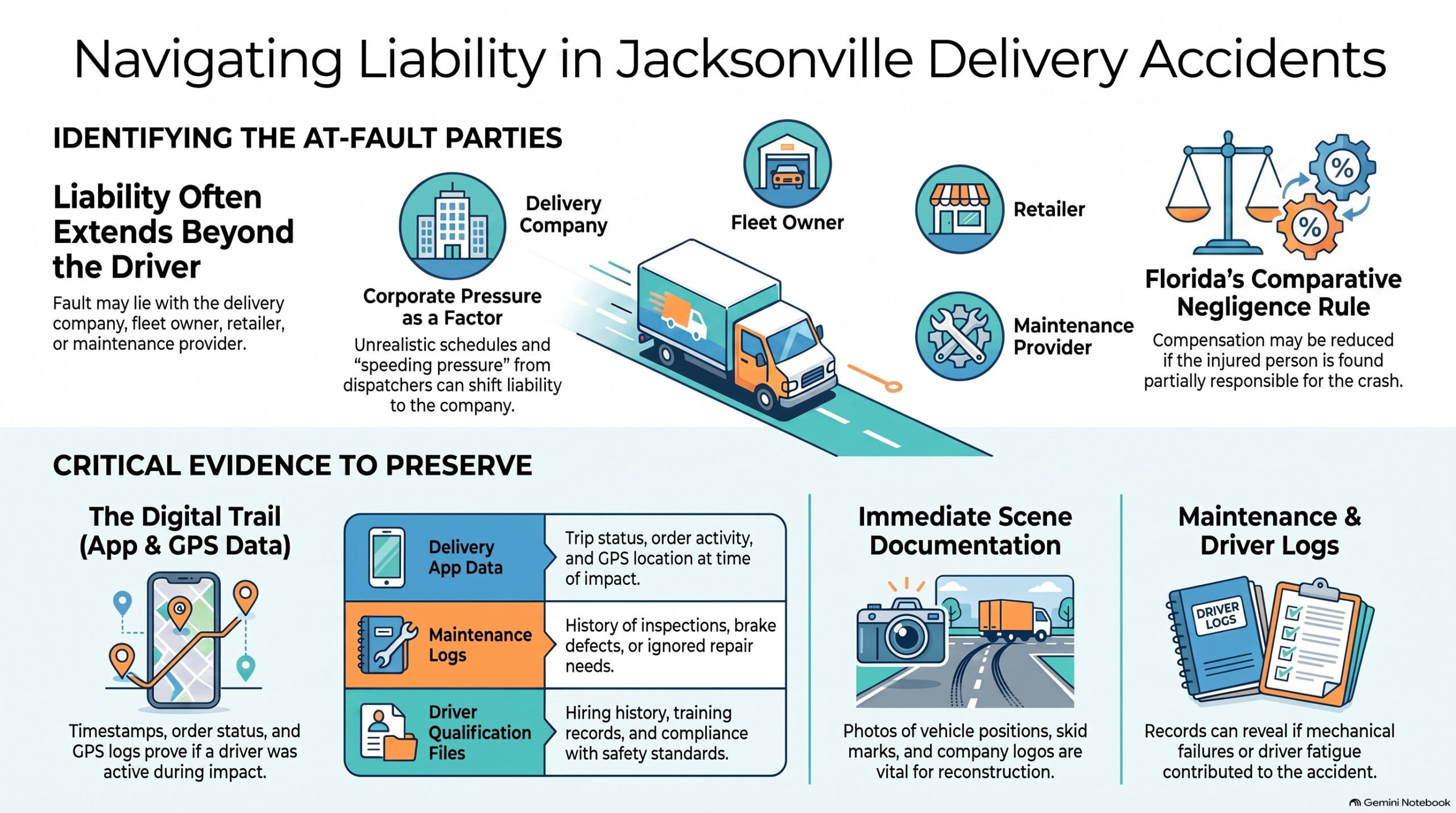
A Jacksonville delivery accident lawyer at The Law Offices of Anidjar and Levine can investigate every potential source of liability, including the driver, delivery company, fleet owner, retailer, maintenance provider, or another motorist. These cases may involve distracted driving, unsafe parking, pressure to speed, inadequate training or supervision, and vehicle defects. Florida’s comparative negligence rules may reduce compensation when multiple parties share responsibility. Prompt evidence preservation, witness identification, and insurance review can help protect your claim. Learn more from a Jacksonville Personal Injury Lawyer about how fault may be established.
Main Takeaways
- Multiple parties may be liable, including the driver, delivery company, fleet owner, maintenance provider, retailer, or another negligent motorist.
- A lawyer can investigate driver distraction, speeding pressure, unsafe parking, poor maintenance, and failures in company training or supervision.
- Key evidence may include phone records, app data, driver logs, dash camera footage, maintenance records, and witness statements.
- Florida’s comparative negligence rules can reduce compensation if the injured person or another party is at fault.
- Prompt medical care, scene documentation, witness information, and early legal help can protect a Jacksonville delivery accident claim.


How We Can Help With Your Jacksonville Delivery Accident At-Fault Parties Injury Claim
Several parties may share responsibility for a Jacksonville delivery accident, including a negligent driver, delivery company, vehicle maintenance provider, or another third party whose conduct contributed to the crash. A lawyer assisting an injured person can help identify sources of compensation, gather records, and coordinate a focused claim strategy. This support may include Evidence preservation letters, requests for delivery logs, inspection histories, driver qualification files, and communications that may clarify events leading up to the collision.
Counsel may also seek video surveillance from nearby businesses, traffic cameras, residences, or fleet systems before footage is overwritten. For individuals committed to caring for families, coworkers, or community members, this organized approach can reduce burdens during recovery. Legal assistance may also involve communicating with insurers, documenting medical harm, valuing wage losses, and preparing settlement demands. When cooperation is limited, counsel can pursue formal discovery and litigation to protect the injured person’s rights.
OUR CONSULTATIONSARE FREE
START YOUR FREE CASE REVIEW

Understanding Jacksonville Delivery Accident At-Fault Parties Injury Cases
When a delivery accident occurs in Jacksonville, fault may depend on the driver’s conduct, the delivery company’s policies, the vehicle’s condition, and the actions of other motorists or businesses involved in the delivery process. These cases often require careful review because several parties may share legal responsibility for a person’s injuries. A claim may involve an employee driver, an independent contractor, a fleet owner, a retailer, or a third party that contributed to unsafe circumstances.
Florida’s Comparative Negligence rules can affect recovery when an injured person or another party bears part of the blame. Accurate Damages Valuation is also crucial, as losses may include medical care, reduced earning ability, pain, disability, and long-term support needs. For families and service-minded communities, these cases are not only about compensation. They also concern accountability, safer practices, and the ability to help injured people restore stability after a disruptive and preventable event.
Common Causes of Jacksonville Delivery Accident At-Fault Parties
Common causes of Jacksonville delivery accidents often involve driver distraction, rushed schedules, poor vehicle maintenance, and unsafe parking choices. These factors can create preventable hazards for motorists, pedestrians, cyclists, and other delivery workers sharing local roads. Identifying the conduct that contributed to a crash is crucial when evaluating liability and pursuing a delivery accident injury claim.
Driver Distraction
Although delivery work often requires constant navigation and communication, driver distraction remains a significant cause of delivery accidents in Jacksonville. A driver may glance at routing software, confirm an address, read a delivery note, or respond to a dispatch message while the vehicle continues moving. Cellphone distraction can reduce awareness of pedestrians, cyclists, stopped traffic, and vehicles entering from side streets. Even brief inattention may prevent timely braking or proper direction, especially in dense commercial areas or residential neighborhoods where people depend on careful drivers for safety.
At-fault parties may include the driver, the delivery company, or another entity that encouraged unsafe communication practices. Evidence may involve phone records, app data, dash cameras, and vehicle systems such as Lane departure avoidance alerts, which can help clarify what occurred before impact.
Speeding Delivery Schedules
Because delivery operations often reward speed and volume, rushed schedules can create unsafe pressure that contributes to delivery accidents in Jacksonville. When drivers are assigned tight routes, unrealistic deadlines, or excessive stops, they may feel compelled to speed, follow too closely, roll through intersections, or make unsafe lane changes. Delivery pressure can weaken judgment, especially when workers believe delays may affect pay, ratings, or continued assignments. Time management failures by companies, dispatchers, or contractors can bear on fault. A careful review of route expectations, delivery logs, app data, and communication records can show whether a driver’s conduct was influenced by unreasonable scheduling demands. For injured people and those serving them, identifying these pressures helps reveal the broader conditions that placed prompt customer service ahead of safety.
Poor Vehicle Maintenance
When delivery vehicles are kept in constant service, poor maintenance can become a serious factor in delivery accidents in Jacksonville. Companies and contractors that serve the public have a duty to inspect, repair, and remove unsafe vehicles from the road. Neglected maintenance may lead to brake defects, delayed stopping, handling problems, lighting failures, or tire tread failures that reduce control in traffic. These conditions can endanger pedestrians, cyclists, customers, and other motorists who rely on responsible delivery practices. Fault may extend beyond the driver when records show missed inspections, ignored warning signs, or pressure to continue using a defective vehicle. Careful review of maintenance logs, repair invoices, and vehicle history can help identify which party failed to uphold safety responsibilities before a harmful collision occurred.
Unsafe Parking Choices
Unsafe parking choices can create dangerous conditions when delivery drivers stop in travel lanes, block bike paths, park near intersections, or obstruct driveways and crosswalks. These decisions may force pedestrians, cyclists, and motorists into unsafe movements, increasing the risk of preventable collisions. In Jacksonville delivery incidents, liability may arise when a driver ignores designated loading zones, misjudges visibility, or creates hazards through improper lane use. Parking lot lighting can also affect fault, especially when poor visibility contributes to backing accidents or pedestrian injuries. Businesses, contractors, and delivery companies may share responsibility if schedules, training practices, or policies encourage rushed stops in unsafe areas. Careful review of parking location, traffic flow, warnings, and company procedures helps identify the parties whose choices failed to protect the public responsibly.
Don’t Wait. Call Our Florida Personal Injury Lawyers Now!


Legal Rights of Jacksonville Delivery Accident At-Fault Parties Injury Victims
After a Jacksonville delivery accident, injury victims may have the right to seek compensation when another party’s negligence caused or contributed to the crash. These rights may include claims for medical expenses, lost income, reduced earning capacity, pain, suffering, and other documented losses. Comparative negligence may affect recovery if the injured person shares partial fault, making careful claim evaluation critical.
Jacksonville delivery accident victims may seek compensation when negligence causes medical costs, lost income, or lasting harm.
Important protections may include:
- Preservation of delivery logs, vehicle data, photographs, and witness statements to prevent evidence spoliation.
- Fair handling of claims, including challenges to unreasonable delays, denials, or insurance bad faith.
- Careful review of settlement timelines, so victims are not pressured into resolving claims before long-term harm is known.
For victims and families focused on recovery and service to others, these rights provide structure during uncertainty. Legal guidance can help protect dignity, accountability, and access to needed care while claims proceed.
Why Do Jacksonville Delivery Accident At-Fault Injuries Happen?
Why do Jacksonville delivery accident injuries happen so often in ordinary traffic conditions? They often arise because delivery drivers work under tight schedules, navigate unfamiliar neighborhoods, and make frequent stops while sharing the road with pedestrians, cyclists, and other motorists. Pressure to complete routes quickly can contribute to speeding, abrupt lane changes, distracted driving, or unsafe parking near homes, businesses, and service areas.
In many cases, responsibility may involve more than one party. A driver may act carelessly, while a delivery company may fail to properly train, supervise, or maintain vehicles. Third-party contractors, vehicle owners, or other drivers may also contribute to the harm. Careful review of insurance policies and collection of medical records help clarify how injuries developed and which sources of responsibility may exist. For those committed to serving injured people, understanding these causes supports fair accountability and helps preserve trust in Jacksonville’s busy delivery network.
What Should You Do After a Jacksonville Delivery Accident At-Fault Parties Injury?
After a delivery accident in Jacksonville, an injured person should seek prompt medical treatment to protect both their health and their injury record. If safely possible, the scene should be documented through photographs, witness information, and details about the delivery vehicle or driver. Legal counsel can then assess fault, preserve evidence, and address communications with insurers or involved companies.
Seek Medical Treatment
Prompt medical treatment is critical when a person is injured in a Jacksonville delivery accident, even if symptoms appear minor at first. A careful evaluation can identify injuries that may not be immediately obvious, including concussions, soft tissue damage, internal trauma, or spinal concerns. Immediate medical assessment also supports appropriate care planning, helping the injured person recover personal health and remain available to family, coworkers, and community responsibilities.
Medical records create an important timeline between the accident and the injury. Consistent documentation of pain symptoms allows healthcare providers to track changes, recommend treatment, and evaluate whether symptoms are worsening. Delays in care may complicate recovery and raise questions about the cause or severity of injuries. Following medical instructions, attending appointments, and reporting new symptoms are prudent steps after injury.
Document The Scene
When safety conditions allow, documenting the accident scene can preserve important details that may later clarify how the Jacksonville delivery accident occurred. Scene Safety should remain the top priority, particularly when traffic, debris, or damaged vehicles pose additional risk. A person may gather Photo Documentation of vehicle positions, visible injuries, skid marks, delivery markings, traffic signals, and property damage. Images should also show the Road Condition, including rain, potholes, poor lighting, construction areas, or obstructed signs. Witness Identification may be important, so names and contact information should be recorded when bystanders are willing to assist. Notes about the delivery vehicle, driver behavior, company logos, and time of day can provide additional context. Careful documentation supports accountability while respecting the needs of everyone affected.
Contact An Attorney
Why should legal guidance be considered early after a Jacksonville delivery accident involving disputed fault? An attorney can evaluate liability, identify responsible parties, and guide injured individuals through decisions that may affect compensation. Delivery crashes often involve drivers, employers, contractors, insurers, or vehicle maintenance companies, making early review important. Counsel can support Evidence Preservation by sending notice letters, securing records, locating witnesses, and protecting electronic data before it is lost. Legal involvement also helps injured people serve their families and communities by reducing avoidable financial strain. An attorney may explain the Settlement Timeline, address insurer communications, and help prevent statements that could weaken a claim. Prompt consultation allows a careful strategy, grounded in documented facts, medical needs, and the duty to pursue fair accountability.
Critical Evidence in a Jacksonville Delivery Accident At-Fault Parties Injury Case
Critical evidence in a Jacksonville delivery accident injury case may help identify the at-fault party, including a driver, a delivery company, or a third-party vehicle owner.
Key proof often includes:
1. driver logs and delivery app data, 2. vehicle damage and repair records, 3. witness statements and scene observations.
This evidence can clarify timing, route activity, impact severity, and conduct before the collision.
Driver Logs
Although delivery companies may rely on tight schedules and rapid route changes, driver logs often provide a structured record of what occurred before a delivery accident in Jacksonville. These records may show shift start times, break periods, vehicle inspections, route assignments, and reported delays. When reviewed carefully, they can help identify whether fatigue, missed inspections, or pressure to continue driving contributed to a preventable collision. Resting driver rest entries may be especially important when determining whether a driver had adequate time away from the road. Traditional logs can also be compared with Deliverable app logs, dispatch notes, and payroll records to identify inconsistencies. For injured individuals and those supporting them, these details may clarify responsibility and preserve accountability among drivers, contractors, employers, or related business entities.
Delivery App Data
When a delivery crash occurs in Jacksonville, app data may provide one of the most detailed records of a driver’s actions leading up to the impact. Platforms often capture trip status, order acceptance, route progress, timestamps, communications, and location signals. This information can help determine whether the driver was actively completing a delivery, deviating from the route, or responding to app prompts. GPS tracking accuracy may become important when evaluating speed, movement, and proximity to the collision scene. However, app location disputes can arise when signal gaps, delayed updates, or device settings create conflicting interpretations. Attorneys may seek preservation of this data before it is altered or lost. A careful review can support injured persons by clarifying responsibility and promoting accountability among drivers, delivery companies, and other involved parties.
Vehicle Damage
Beyond digital records, the physical condition of the vehicles can provide important evidence in a Jacksonville delivery accident at-fault party’s injury case. Crush patterns, paint transfer, broken lights, tire marks, and deployed airbags may help clarify how the impact occurred and which vehicle absorbed the force. This evidence can be especially useful during Liability disputes, when drivers, delivery companies, or insurers offer conflicting accounts. Prompt photographs, inspections, and preservation of damaged parts support a clearer assessment. Repair estimates may also show the severity of the collision, while downtime costs can reflect the broader financial harm caused when a vehicle cannot be used for work or service. Accurate insurance documentation, including claim notes and damage appraisals, may help connect the vehicle damage to the crash and responsible parties.
Witness Statements
Because delivery crashes often unfold quickly, witness statements can provide an objective account of events that the involved drivers may not fully remember or may contest. Bystanders, nearby workers, passengers, or other motorists may describe the vehicle’s speed, lane position, traffic signals, unsafe turns, distractions, or the delivery driver’s conduct before impact. These accounts may help determine whether a company driver, a contractor, another motorist, or multiple parties contributed to the crash.
Immediately collecting witness information at the accident scene preserves details before memories diminish. Names, phone numbers, locations, and recorded observations can support later investigation. Attorneys also evaluate witness credibility by considering vantage point, consistency, bias, lighting, and timing. Reliable statements may strengthen an injury claim and help ensure responsibility is assigned fairly.
Long-Term Effects of Jacksonville Delivery Accident At-Fault Parties Injuries
Long-term injuries from Jacksonville delivery accidents may involve chronic pain complications, reduced mobility challenges, and lasting limitations in daily function. These consequences can affect employment capacity, household responsibilities, and the injured person’s ability to maintain normal routines. Emotional trauma may also develop over time, particularly when physical recovery is prolonged or uncertain.
Chronic Pain Complications
After a delivery accident in Jacksonville, chronic pain can become one of the most disruptive and difficult long-term complications for an injured person. Persistent pain may follow fractures, spinal trauma, soft tissue injuries, or nerve damage, continuing long after initial treatment ends. This condition can affect sleep, concentration, emotional stability, and the ability to participate consistently in work, caregiving, or community responsibilities. Ongoing treatment may include therapy, injections, diagnostic testing, or prescription medication, each of which carries financial and personal burdens. Medication side effects can also interfere with daily judgment, energy, and overall health. When evaluating fault and damages, chronic pain should be documented carefully in medical records, pain journals, and professional opinions to help ensure the injured person’s long-term suffering is not overlooked by insurers or responsible parties.
Reduced Mobility Challenges
When injuries from a Jacksonville delivery accident limit movement, reduced mobility can affect nearly every part of an injured person’s daily life. Simple tasks, such as bathing, cooking, driving, working, or assisting family members, may require adaptive equipment or steady personal support. Fractures, spinal injuries, joint damage, and nerve impairment can restrict walking, lifting, bending, or standing for extended periods. These limitations may also reduce independence, making coordinated care and reliable transportation crucial. For those committed to serving others, such losses can interfere with caregiving roles, employment duties, and community responsibilities. Careful evaluation of mobility restrictions helps identify future medical needs, home modifications, and rehabilitation costs. Strong vehicle safety practices and consistent injury-prevention efforts remain important for reducing severe harm from delivery-related collisions across Jacksonville communities.
Emotional Trauma Impact
Emotional trauma can persist well beyond the physical recovery period following a Jacksonville delivery accident, especially when the collision involved severe impact, sudden danger, or lasting disability. Survivors may experience anxiety, sleep disruption, fear of travel, depression, or difficulty returning to work and family duties. These effects can strain relationships and reduce a person’s ability to serve others with confidence. Proper liability evidence gathering may include medical records, counseling notes, witness accounts, and documentation of behavioral changes. Such records can support Settlement negotiation strategies that address mental suffering, not only visible injuries. Victim support services may connect injured individuals with counseling, transportation help, and community resources. Careful long-term recovery planning can also identify treatment needs, employment limitations, and family responsibilities that require practical accommodations over time.
Don’t Wait. Call Our Florida Personal Injury Lawyers Now!
Proving Liability in Jacksonville Delivery Accident At-Fault Parties Injury Cases
Proving liability in a Jacksonville delivery accident requires a careful review of how the crash occurred, who controlled the delivery activity, and whether any party failed to act with reasonable care. A focused investigation may examine driver conduct, route demands, vehicle maintenance, hiring practices, and company policies that influenced the delivery task. For injured people and those supporting them, this process helps identify responsibility without speculation.
Evidence Preservation is central because delivery logs, app data, dash-camera footage, repair records, and phone records can clarify what happened. Witness Tracking also matters, as nearby drivers, pedestrians, customers, or coworkers may provide accounts that support the facts. Damages Documentation should connect medical treatment, missed work, caregiving needs, and lasting limitations to the collision. If claim handling later suggests insurance bad faith, those concerns may require separate attention. Liability proof, however, begins with reliable facts, organized records, and a disciplined review of each potentially responsible party.
Dealing With Insurance Companies After a Jacksonville Delivery Accident At-Fault Parties Injury
After liability evidence is gathered and organized, communication with insurance companies becomes a significant part of a Jacksonville delivery accident injury claim. Insurers may contact injured individuals, employers, drivers, or witnesses to obtain recorded statements, medical authorizations, or to discuss quick settlements. Careful handling protects the injured person’s interests while promoting an orderly, service-minded resolution.
A lawyer may review policy limits, coverage exclusions, commercial delivery endorsements, and overlapping insurance sources before responding. Clear documentation of medical treatment, lost income, vehicle damage, and daily limitations helps counter efforts to minimize harm. When disputes arise, claim denial appeals may address coverage errors, incomplete investigations, or unfair reliance on disputed facts.
Insurance communications also influence deposition strategy if litigation becomes necessary. Consistent statements, accurate timelines, and preserved evidence can strengthen credibility. By managing correspondence with discipline and purpose, counsel helps reduce confusion, limits unnecessary conflict, and supports a fair evaluation grounded in responsibility, compassion, and documented loss.
What to Expect During a Jacksonville Delivery Accident At-Fault Parties Injury Claim Process
A Jacksonville delivery accident injury claim often begins with an initial case evaluation, followed by a focused investigation into each potentially at-fault party. The process may then involve insurance claim negotiations, where liability, damages, and coverage issues are carefully assessed. If a fair resolution cannot be reached, litigation and settlement discussions may become necessary to pursue appropriate compensation.
Initial Case Evaluation
Typically, the initial case evaluation in a Jacksonville delivery accident claim focuses on identifying all parties who may share legal responsibility for the injury. During this meeting, counsel reviews the collision facts, the delivery context, reported injuries, insurance information, and any immediate losses affecting the injured person or family. The basics of negligence are explained in practical terms, including duty, breach, causation, and damages, so the claimant understands how responsibility may be assessed. The evaluation also addresses evidence preservation, including retaining photographs, medical records, delivery details, witness names, and communications with insurers. This early guidance helps protect the claim while supporting an orderly process. For those committed to serving others, a careful evaluation promotes accountability, responsible decision-making, and fair consideration of every affected person.
Investigating Fault Parties
Once the initial information is gathered, the investigation turns to determining which people, companies, or insurers may bear legal responsibility for the delivery accident. Counsel may examine police reports, photographs, witness statements, vehicle data, and company records to identify traffic rule violations and unsafe conduct. Evidence preservation is often addressed quickly, because delivery logs, app records, dashcam footage, and maintenance files can be lost or overwritten. The review may also consider driver accountability, including training, fatigue, distraction, and compliance with employer policies. Delivery scheduling may receive close attention when deadlines, route pressure, or workload demands appear to have encouraged unsafe driving. By carefully tracing each contributing factor, the investigation supports a claim that serves the injured person’s needs while promoting safer practices for the wider Jacksonville community.
Insurance Claim Negotiations
After the investigation identifies the parties and insurers that may be responsible, the claim often moves into negotiations with insurance carriers. During this stage, counsel may present claim documentation that explains liability, medical treatment, lost income, and the human impact on the injured person’s ability to serve family, work, and community. Insurers may review driver status, delivery app records, employer policies, and available commercial or personal coverage. A coverage dispute can arise when carriers deny responsibility, argue exclusions, or shift blame among multiple policies. Negotiations usually involve measured exchanges, requests for additional records, and evaluation of future care needs. The injured person’s representative seeks a resolution that reflects the evidence, protects dignity, and supports recovery, while preventing insurers from minimizing valid losses or delaying fair consideration.
Litigation And Settlement
When negotiations do not produce a fair resolution, a Jacksonville delivery accident injury claim may proceed to litigation by filing a civil lawsuit. During this stage, attorneys identify responsible parties, exchange discovery, question witnesses, and evaluate whether settlement remains possible. Insurance negotiation tactics may continue, but the process becomes more structured, with deadlines, court oversight, and formal rules of evidence guiding each step.
A careful trial evidence strategy supports both settlement leverage and courtroom readiness. This may include medical records, delivery logs, driver history, expert opinions, accident reconstruction, and testimony from those affected. For injured individuals and families seeking stability, litigation can create a path toward accountability. Many cases still resolve before trial, but preparation allows counsel to pursue fair compensation with discipline and purpose.
Compensation for Jacksonville Delivery Accident At-Fault Parties Injury Damages
Although every delivery accident claim depends on its specific facts, injured parties in Jacksonville may seek compensation from any at-fault party whose negligence contributed to the crash. Potentially responsible parties may include a delivery driver, employer, vehicle owner, contractor, maintenance provider, or other negligent motorist. A careful claim evaluation identifies all available insurance coverage and determines how each party’s conduct affected the harm suffered.
Compensation may be pursued through settlement negotiations or, when necessary, civil litigation. In fatal cases, eligible survivors may bring a Wrongful Death claim to address losses recognized under Florida law. When misconduct appears intentional, reckless, or grossly careless, counsel may also conduct a punitive damages analysis to determine whether enhanced accountability is available.
For those committed to caring for injured clients and families, the compensation process should focus on documentation, accountability, and fair resolution. Strong legal advocacy helps ensure responsible parties do not evade their obligations.
Economic vs Non-Economic Damages in Jacksonville Delivery Accident At-Fault Parties Cases
In Jacksonville delivery accident cases, damages are generally separated into economic categories, such as medical bills, lost wages, and property damage, and non-economic losses, including pain and suffering and diminished quality of life. Each category requires careful evaluation because financial records may establish measurable costs, while personal losses often depend on credible testimony, medical evidence, and case-specific facts. Proving damage value is critical to identifying the full impact of the injury and assigning appropriate financial responsibility among at-fault parties.
Economic Damage Categories
Economic damages in Jacksonville delivery accident cases refer to the measurable financial losses caused by the crash, including medical expenses, lost income, reduced earning capacity, property damage, and other out-of-pocket costs. These losses often begin with emergency care, follow-up treatment, rehabilitation, prescriptions, mobility aids, and transportation to medical appointments. Proof of medical expenses may include bills, insurance statements, treatment records, and provider estimates for future care. Lost wages require wage loss documentation, such as pay stubs, tax records, employer statements, and work schedules showing missed time. Reduced earning capacity may apply when injuries limit future employment or service-oriented work. Property damage can include vehicle repair, replacement, towing, storage, and damaged personal items. Careful records help identify responsible parties and support fair recovery. Such documentation also assists counsel during negotiations or litigation.
Non-Economic Losses
When a delivery accident causes injuries that affect daily life, non-economic losses address the human consequences that cannot be measured by receipts or wage records alone. These losses may include pain, emotional distress, disfigurement, loss of enjoyment, and the strain placed on family relationships. In Jacksonville delivery accident cases, such harm often reflects how an injured person’s ability to work, serve, care for others, and participate in community life has changed. The Comparative Fault Impact may reduce recovery if the injured party shares responsibility for the crash, making careful assessment of conduct important. Although non-economic damages are compensatory, Punitive Damages Potential may arise when reckless or intentional behavior shows disregard for public safety, especially where delivery pressures contributed to dangerous choices or repeated violations.
Proving Damage Value
How can the full value of a Jacksonville delivery accident claim be proven when losses involve both financial records and personal harm? A careful presentation distinguishes economic damages from non-economic damages and shows how both affect daily life. Economic losses may include medical bills, rehabilitation costs, lost income, reduced earning ability, and property damage. These amounts are supported through evidence records, wage statements, repair estimates, and medical documentation. Non-economic losses require a different showing, including pain, emotional distress, reduced mobility, and loss of normal activities. Witness statements, treatment notes, expert opinions, and consistent personal accounts may help connect these harms to the accident. For those serving injured people, accurate valuation requires patience, organized proof, and attention to dignity, ensuring that no meaningful loss is overlooked in negotiations or litigation.
When a Jacksonville Delivery Accident At-Fault Parties Injury Case Goes to Trial vs Settlement
Although many Jacksonville delivery accident injury cases resolve through negotiated settlements, some require trial when the parties dispute fault, damages, insurance coverage, or the legal responsibility of a delivery driver, employer, or third-party contractor. Settlement may provide a practical path when evidence is clear, medical needs are documented, and insurers evaluate the claim fairly. This approach can reduce delays, conserve resources, and allow injured people to focus on recovery and on serving their families, workplaces, and communities.
Trial becomes more likely when a defendant denies responsibility, challenges causation, or undervalues the harm suffered. Attorneys may present witness testimony, delivery records, medical evidence, and expert opinions to explain liability and loss. Comparative Negligence Rules may influence arguments about shared fault, while Damages Calculation Methods help translate medical care, lost income, pain, and future needs into a structured demand. Each path requires disciplined preparation, careful evaluation, and client-centered judgment.
Don’t Wait. Call Our Florida Personal Injury Lawyers Now!
Florida Laws That May Affect Your Jacksonville Delivery Accident At-Fault Parties Case
Several Florida laws may shape a Jacksonville delivery accident case, especially where fault involves a driver, delivery company, app-based platform, vehicle owner, or maintenance contractor. Florida traffic statutes can help identify unsafe conduct, such as speeding, distracted driving, improper lane changes, or failure to yield. These rules may guide investigators, insurers, and courts when deciding whether a party failed to act with reasonable care.
Key legal issues often include:
- Comparative negligence impacts how damages may be reduced when an injured person shares responsibility.
- Vicarious liability may apply when a delivery driver was working within the scope of assigned duties.
- Vehicle ownership and maintenance duties may affect claims against owners, leasing entities, or repair providers.
For individuals and families focused on recovery and service to others, these laws help clarify accountability. A careful review of records, delivery data, contracts, and crash evidence can support a well-grounded claim.
The Statute of Limitations for Jacksonville Delivery Accident At-Fault Parties Injury Cases
In Jacksonville delivery accident injury cases, the statute of limitations sets the deadline for filing a lawsuit against at-fault parties, including drivers, delivery companies, vehicle owners, or other responsible entities. Florida law generally provides a two-year statute of limitations for negligence-based personal injury claims. If the deadline passes, the injured person may lose the right to seek compensation in court, regardless of the seriousness of the harm.
Certain circumstances may affect timing. Claims involving a government vehicle or public employee may require a notice of claim before suit, with separate procedural deadlines. Evidence can also become harder to preserve over time, including delivery logs, app data, inspection records, and witness statements. Comparative fault rules may influence the value of a claim, especially when several parties share responsibility. Prompt attention to filing deadlines helps protect the injured person’s interests while supporting an orderly, accountable resolution process for all involved parties.
How a Jacksonville Delivery Accident At-Fault Parties Lawyer Can Help You
How can a Jacksonville delivery accident at-fault parties lawyer help after a serious collision? The lawyer can provide structured guidance while the injured person focuses on recovery, family duties, and community responsibilities. Delivery crashes often involve drivers, employers, contractors, insurers, and vehicle owners, so careful analysis is crucial.
A lawyer may help by:
- Identifying every potentially responsible party through records, policies, delivery logs, and witness accounts.
- Directing evidence preservation efforts, including vehicle data, photographs, surveillance footage, phone records, and maintenance documents.
- Addressing Comparative negligence issues when insurers argue the injured person partly caused the crash.
This assistance can support a claim that is accurate, organized, and aligned with Florida law. It may also reduce the burden on those trying to serve and support others during a difficult period. By managing communications and documenting losses, counsel helps protect the claim from avoidable disputes and delays.
When to Contact a Jacksonville Delivery Accident At-Fault Parties Lawyer
A person injured in a serious delivery crash should contact a Jacksonville delivery accident at-fault parties lawyer as soon as practical after obtaining necessary medical care. Early contact supports orderly claim development while the injured person focuses on recovery, family responsibilities, and service to others affected by the disruption.
Prompt communication is especially important when vehicles may be repaired, delivery records may change, or roadway conditions may be altered. A lawyer may initiate emergency evidence-preservation requests, identify the companies involved, and track insurance communications before key details become harder to verify. This timing can also help organize medical documentation, accident reports, photographs, and witness contact updates while recollections remain fresh.
A person should not wait for full physical recovery, a denied claim, or pressure from an insurer before seeking guidance. Contact is also appropriate after a fatal crash, disabling injury, commercial vehicle collision, or uncertainty about which party caused the accident and related harm.
Why You Need an Experienced Jacksonville Delivery Accident At-Fault Parties Lawyer
Because delivery accident claims often involve several businesses, insurers, and layers of responsibility, experienced legal guidance can be important to identifying every party that may be at fault. A Jacksonville lawyer can examine driver conduct, employer control, vehicle maintenance, dispatch practices, and third-party contracts to determine how the harm occurred and who should be held responsible.
An experienced advocate also understands how quickly vital proof can disappear. Prompt evidence preservation may protect delivery logs, surveillance footage, app data, maintenance records, and witness statements. This work supports injured people and families seeking stability while continuing to care for others in their homes, workplaces, and communities.
Insurers may raise Negligence defenses to shift blame or reduce payment. Careful legal consultation helps evaluate those arguments, measure damages, and build a settlement strategy grounded in documented facts. With skilled representation, a claim can seek accountability from all responsible parties, not just the most visible driver.
How to Choose the Right Jacksonville Delivery Accident At-Fault Parties Lawyer for Your Case
When selecting legal representation after a delivery accident, the injured person should look for a Jacksonville lawyer with direct experience handling claims involving commercial drivers, delivery platforms, contractors, and multiple insurance carriers. The lawyer’s background should show a careful understanding of fault analysis, policy disputes, and the duties owed by companies that place vehicles on local roads.
A suitable attorney should also demonstrate strong Client communication, explaining legal options in a clear, respectful manner that supports the client’s need for guidance and stability. Billing clarity is equally important, as it allows the injured person to understand fees before making decisions. The firm’s approach to evidence organization should include prompt collection of crash reports, driver records, photographs, witness statements, and delivery data. Counsel should also provide realistic timelines for the case so the client can prepare for medical, financial, and personal obligations while the claim proceeds. Careful selection helps protect both recovery and accountability.
About The Law Offices of Anidjar & Levine
Serving injured clients across Florida, The Law Offices of Anidjar & Levine provides legal representation for people harmed in delivery accidents involving commercial vehicles, app-based drivers, and company-owned fleets.
The firm assists individuals and families seeking accountability after preventable collisions, with attention to the financial, medical, and practical burdens that often follow serious injuries.
Its Legal Experience supports a structured approach to identifying responsible parties, including drivers, employers, contractors, and insurers.
Attorneys develop a Case Strategy based on the facts of each claim, applicable Florida law, and the client’s immediate and long-term needs.
Through careful Evidence Review, the firm examines crash reports, driver records, delivery logs, witness statements, and available video footage.
This process helps clarify liability and damages.
The firm also addresses Insurance Tactics that may delay, undervalue, or dispute valid claims.
Its work reflects a service-focused commitment to protecting injured people and pursuing fair compensation.

Frequently Asked Questions
Can Delivery App Terms of Service Affect My Accident Claim?
Yes, a delivery app’s terms of service may affect an accident claim by defining driver status, insurance obligations, arbitration requirements, and limits on the company’s liability. A reviewing advocate would examine these provisions alongside state law, police reports, and platform records. Litigation timelines can be influenced by notice rules or arbitration clauses. Evidence preservation remains essential, including app data, delivery logs, messages, photos, and witness information, to protect injured persons and support accountability.
Are Rental Vehicles Treated Differently in Delivery Accident Cases?
Yes, rental vehicles may be treated differently because ownership, rental agreements, insurance layers, and delivery app policies can affect liability. Rental vehicle responsibility often depends on who rented the vehicle, whether delivery use was allowed, and whether negligent maintenance contributed. Careful evidence collection, including contracts, app records, photos, and insurance documents, helps identify responsible parties. This process supports injured people while promoting accountable, service-focused claim resolution.
What if a Delivery Driver Was Using Multiple Apps?
If a delivery driver was using multiple apps, responsibility may depend on timing, active orders, and platform control. Multiple App Liability can involve several companies, the driver, and insurers when overlapping requests contributed to unsafe driving. Concurrent Dispatch Coverage may apply if more than one platform had the driver engaged. Those serving injured people should examine app logs, timestamps, GPS data, and communications to identify accountable parties with precision and care.
Can Undocumented Immigrants File Delivery Accident Injury Claims?
Yes, undocumented immigrants may file delivery accident injury claims, because immigration status generally does not eliminate the right to seek compensation for injuries. They should maintain claim documentation, including medical records, witness details, and work information. Statute of limitations still applies, so prompt action is important. Credit eligibility is usually separate from injury recovery. Language assistance can help ensure accurate reporting, informed decisions, and respectful service throughout the process.
Do Delivery Accident Claims Involve Commercial Vehicle Regulations?
Yes, delivery accident claims may involve commercial vehicle regulations when the driver, vehicle, or employer is involved in business-related duties. Federal safety standards can govern vehicle maintenance, driver qualifications, hours of service, and cargo handling. State traffic rules also shape liability by addressing speeding, yielding, distracted driving, and safe operation. A service-focused advocate would carefully examine these requirements, helping injured individuals identify violations that contributed to their harm.
—————————
A Jacksonville delivery accident may involve multiple at-fault parties, including the delivery driver, employer, independent contractor, vehicle owner, or maintenance provider.
Determining liability requires a thorough investigation, careful review of evidence, and knowledge of Florida injury law.
The Law Offices of Anidjar and Levine can assess your case, protect your rights, and pursue compensation for medical expenses, lost income, and other damages.
Prompt guidance from a Jacksonville Personal Injury Lawyer can help preserve critical evidence and strengthen your claim from the beginning.