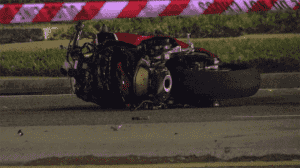
The Law Offices of Anidjar and Levine, a Jacksonville car accident vehicle and equipment failures lawyer, helps injured victims investigate whether brake defects, tire blowouts, handling failures, airbag problems, or poor maintenance contributed to a crash. The firm may preserve damaged parts, maintenance records, inspection reports, photographs, and witness details before evidence is repaired or lost. These cases may involve drivers, owners, repair shops, manufacturers, or commercial operators. Understanding the claim process with a Jacksonville Personal Injury Lawyer can clarify liability, damages, and the next legal steps.
Main Takeaways
- A Jacksonville lawyer can investigate whether vehicle or equipment failure contributed to or worsened your crash.
- Key evidence may include maintenance records, damaged parts, inspection reports, photographs, recalls, and electronic vehicle data.
- Common failure claims involve brakes, tires, steering systems, airbags, lighting, defective parts, and negligent repairs.
- Liability may involve drivers, vehicle owners, repair shops, manufacturers, dealerships, parts suppliers, or commercial operators.
- Prompt legal help can preserve evidence, address comparative negligence defenses, and pursue compensation for injuries and losses.


How We Can Help With Your Jacksonville Car Accident Vehicle & Equipment Failures Injury Claim
When a vehicle or equipment failure contributes to a crash, an injury claim may require more than a standard review of the accident report. A Jacksonville attorney can help injured individuals by organizing their claim, identifying urgent issues, and protecting their ability to seek fair compensation. Early evidence preservation may include securing photographs, maintenance records, damaged parts, inspection reports, and witness information before essential proof is lost.
Medical documentation is also critical, since treatment records connect injuries to the collision and show the extent of ongoing needs. A careful fault investigation can examine driver conduct, repair history, product concerns, and the roles of companies responsible for upkeep or operation. This structured approach allows the claim to serve both accountability and practical support for recovery.
During insurance negotiations, counsel can present evidence clearly, address disputed liability, and pursue compensation that reflects medical costs, lost income, pain, and future care needs.
OUR CONSULTATIONSARE FREE
START YOUR FREE CASE REVIEW

Understanding Jacksonville Car Accident Vehicle & Equipment Failures Injury Cases
Although many collisions appear to result from driver error, vehicle and equipment failures can play a significant role in causing or worsening serious crashes. In Jacksonville injury cases, these claims require careful attention to the vehicle’s condition, maintenance history, repair records, and available physical evidence. A failed component may affect fault, damages, and the parties responsible for compensating an injured person.
Attorneys handling these matters often act quickly to protect evidence before it is lost, repaired, or destroyed. Spoliation of evidence can limit the ability to prove what happened, especially when a vehicle is altered after a crash. Insurers may also raise a Comparative negligence defense, arguing that the injured person or another driver shares responsibility. Because these cases can involve drivers, owners, repair facilities, manufacturers, or commercial operators, a complete evaluation helps identify accountability and supports those seeking recovery with accuracy, diligence, and respect for their needs.
Common Causes of Jacksonville Car Accident Vehicle & Equipment Failures
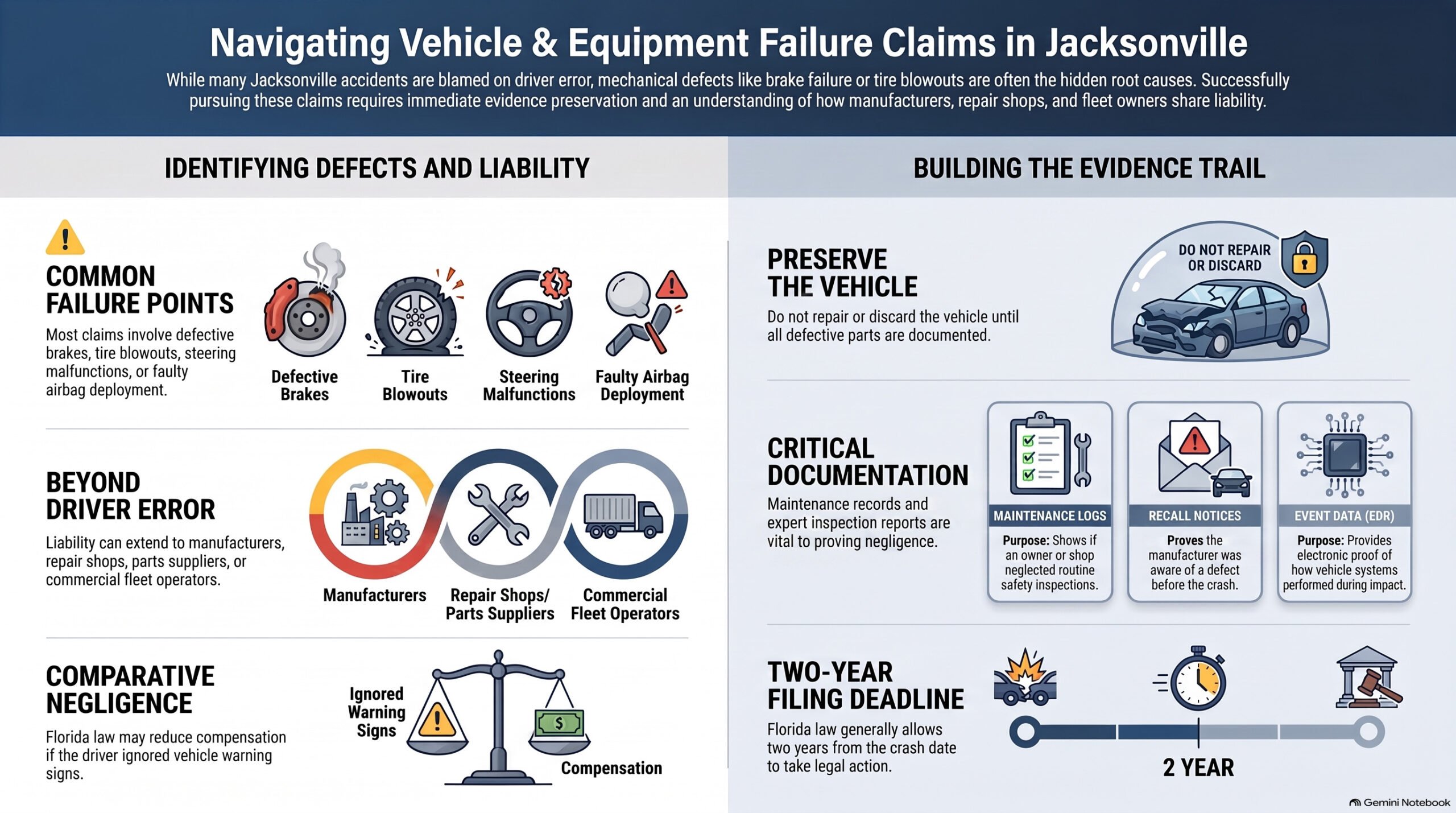
Vehicle and equipment failures in Jacksonville car accidents often arise from preventable mechanical defects or overlooked maintenance issues. Common causes include defective brake systems, tire blowouts, steering component failures, and faulty airbag deployment, each of which can significantly affect vehicle control and occupant safety. Identifying the specific failure and determining whether it resulted from poor maintenance, a design defect, or a manufacturing error is a crucial part of evaluating liability.
Defective Brake Systems
Because braking systems are central to vehicle control, even a minor defect can create a serious risk of collision on Jacksonville roads. Defective Brake Systems may include worn pads, leaking brake lines, faulty calipers, or malfunctioning anti-lock components, all of which reduce stopping power. Brake wear can develop gradually, but if ignored, it may leave a driver unable to respond to traffic, pedestrians, or emergencies. Neglect of maintenance often exacerbates these hazards, particularly when inspections are delayed or warning signs are ignored. In some cases, defective parts may originate from poor manufacturing, improper installation, or inadequate quality control. When system failure contributes to a crash, investigators may review service records, component condition, and repair history to identify responsible parties and support injured individuals seeking accountability.
Tire Blowouts
Tire blowouts present another serious equipment-related hazard, as a sudden loss of tire integrity can cause a driver to lose control within seconds. In Jacksonville crashes, blowouts may result from underinflation, overloading, worn tread, road debris, improper repairs, or manufacturing defects. A careful Tire blowout investigation may examine tire age, maintenance records, vehicle load, crash scene evidence, and whether the tire showed signs of separation or impact damage. These details help determine whether responsibility rests with a driver, service provider, manufacturer, or another party. Driver error causation may also be considered when unsafe speed, ignored warning signs, or poor maintenance contributed to the failure. Accurate fault analysis supports injured people, families, and advocates seeking fair accountability after preventable harm and community safety improvements.
Steering Component Failures
When guiding components fail, a driver may be unable to maintain lane position, avoid obstacles, or respond safely to changing traffic conditions. Steering failures may arise from worn tie rod ends, damaged control arms, loose ball joints, leaking power steering systems, or neglected maintenance. In Jacksonville traffic, even a brief loss of control can place passengers, pedestrians, cyclists, and nearby motorists at serious risk.
Wheel alignment issues may also signal deeper steering or suspension problems, particularly when a vehicle pulls, vibrates, or wears tires unevenly. Those responsible for vehicle care, commercial fleet oversight, or repair work may have duties to identify hazards before harm occurs. Careful investigation can determine whether inspection records, repair practices, or defective parts contributed to the crash, helping injured people seek accountability and the support they need.
Faulty Airbag Deployment
Vehicle control problems are not the only equipment failures that can worsen the outcome of a Jacksonville crash, as faulty airbag deployment may also expose occupants to severe harm. Airbags may fail to deploy, deploy too late, deploy without sufficient force, or deploy unexpectedly when crash conditions do not warrant activation. These failures can increase head, neck, chest, and facial injuries, particularly for children, older adults, and medically vulnerable passengers. In post-crash investigations, service-minded advocates often review event data, sensor performance, recall history, maintenance records, and prior repair work to determine whether a defect contributed to the severity of the injury. Careful liability documentation may identify responsible parties, including manufacturers, parts suppliers, dealerships, or repair facilities, and help preserve claims for those affected.
Don’t Wait. Call Our Florida Personal Injury Lawyers Now!


Legal Rights of Jacksonville Car Accident Vehicle & Equipment Failures Injury Victims
After a crash involving defective parts, failed maintenance, or malfunctioning safety systems, injured victims in Jacksonville may have important legal rights beyond a standard negligence claim against another driver. These rights may involve claims against manufacturers, repair facilities, fleet operators, or other responsible parties whose actions placed the public at risk. Careful Insurance documentation and prompt fault determination can help preserve evidence and clarify available remedies.
Victims may be entitled to pursue compensation for losses that affect health, service to family, and the ability to support others, including:
- Medical treatment, rehabilitation, and future care related to crash injuries.
- Lost income, reduced earning ability, and workplace limitations.
- Pain, suffering, disability, and loss of daily function.
- Property damage and other documented out-of-pocket expenses.
Legal rights also include access to investigation, preservation of defective components, and review of maintenance records. Timely legal guidance helps protect claims before essential deadlines or evidence issues arise.
Why Do Jacksonville Car Accident Vehicle & Equipment Failures Injuries Happen?
Although many crashes appear to result from driver error, Jacksonville car accident injuries involving vehicle and equipment failures often begin with preventable defects, poor maintenance practices, or ignored warning signs. Brake defects, tire blowouts, steering malfunctions, lighting failures, and airbag defects may place occupants, pedestrians, and other motorists in immediate danger.
These failures can arise when manufacturers release unsafe parts, repair shops overlook critical issues, or owners delay necessary service. Commercial vehicles pose additional concerns because worn components may remain in service despite inspection requirements. Failure maintenance records can reveal patterns of neglect, missed repairs, or repeated complaints that were never properly addressed.
In injury cases, understanding causation is essential because responsible parties may dispute how the crash occurred. Insurance claim tactics often focus on shifting blame to the driver or minimizing the role of defective equipment. A careful review of the vehicle’s condition helps determine whether a preventable failure contributed to serious harm.
What Should You Do After a Jacksonville Car Accident Vehicle & Equipment Failures Injury?
After a Jacksonville accident involving a suspected vehicle or equipment failure, an injured person should seek medical care promptly, even when symptoms appear minor. The vehicle, defective parts, maintenance records, photographs, and related evidence should be preserved and documented before repairs or disposal occur. A lawyer can then evaluate the failure, identify responsible parties, and protect the injured person’s ability to pursue compensation.
Seek Medical Care
Seek medical care promptly when a Jacksonville car accident may involve vehicle or equipment failures, even if injuries seem minor at first. A physician can identify conditions that may not be immediately apparent, including concussion symptoms, soft tissue damage, internal injuries, or worsening pain patterns. Timely care also helps treat the injured person’s health, supporting their ability to care for family, coworkers, and others who depend on them.
Follow-up treatment should be completed as directed, because missed appointments may delay treatment and create questions about the seriousness of the injury. Patients should keep symptom logs, noting pain levels, mobility limitations, headaches, sleep disruptions, and changes in daily activity. Accurate records can help medical providers adjust care and may support a clear account of how injuries developed after the crash.
Document Vehicle Defects
Medical treatment records help establish the injury, but evidence from the vehicle may help explain why the crash occurred. After a Jacksonville collision involving suspected equipment failure, the vehicle should be preserved, not repaired or discarded, until vital defects are documented. Photographs should capture tires, brakes, lights, airbags, seatbelts, steering components, fluid leaks, dashboard warnings, and any broken or missing parts. Service records may reveal Obsolete maintenance, missed inspections, or prior complaints about unsafe performance. Recall notice documentation can also show whether the owner, seller, or service provider was aware of a defect before the crash. Those helping an injured person should gather repair invoices, inspection reports, owner manuals, and communications with mechanics or manufacturers, keeping originals safe and copies organized for later review and reference.
Contact A Lawyer
When equipment failure may have contributed to a Jacksonville car accident, legal guidance should be obtained as early as possible to protect evidence and identify responsible parties. An attorney can coordinate vehicle preservation, request maintenance records, and prevent insurers or repair facilities from altering critical components. This careful approach supports Liability determination, especially when defects involve brakes, tires, steering systems, lights, or safety restraints. Counsel may arrange expert inspections to evaluate whether poor maintenance, defective design, improper repairs, or recalled parts caused or worsened the injury. For those committed to serving injured individuals with care and diligence, prompt legal involvement helps ensure that medical needs, financial losses, and accountability are addressed. A lawyer can also manage communications, deadlines, and claim strategy while the injured person focuses on recovery.
Critical Evidence in a Jacksonville Car Accident Vehicle & Equipment Failures Injury Case
Critical evidence in a Jacksonville car accident involving vehicle or equipment failure may establish how the defect occurred, who had responsibility, and whether the failure was preventable.
Critical evidence may include:
- Crash scene photos
- Vehicle maintenance records
- Defective parts evidence
- Expert inspection reports
Each item can help connect mechanical failure to the collision, support liability findings, and strengthen an injured person’s claim for compensation.
Crash Scene Photos
At the crash scene, photographs can preserve facts that may later be altered, removed, or disputed in a Jacksonville vehicle-and-equipment-failure injury case. Images of skid marks, debris fields, damaged guardrails, roadway hazards, fluid leaks, lighting conditions, and the final positions of the vehicles may help explain how a suspected failure contributed to the collision. Property damage documentation can also show impact angles, crushed components, tire condition, broken glass, or detached parts before towing or cleanup changes the scene. When coordinated with witness statement collection, photographs may confirm what bystanders observed and reduce uncertainty about timing, visibility, and vehicle movement. Clear, prompt, and organized scene photography supports a fair review of responsibility and helps injured individuals present reliable evidence with dignity and purpose.
Vehicle Maintenance Records
Because vehicle and equipment failures often develop over time, maintenance records can provide important evidence in a Jacksonville car accident injury case. These records may show whether inspections were completed, repairs were delayed, or known safety concerns were ignored before a crash. Negligent maintenance logs can help establish that an owner, employer, or service provider failed to uphold duties meant to protect drivers, passengers, and the public. When records are incomplete, inconsistent, or altered, those gaps may also support further inquiry. Driver training records may provide related context, especially when safe reporting procedures or pre-trip inspection duties were not properly taught. For injured persons and those assisting them, careful review of maintenance documentation can clarify responsibility and support a claim grounded in accountability, safety, and community care.
Defective Parts Evidence
When a vehicle component fails during normal use, the defective part itself may become central evidence in a Jacksonville car accident injury case. A broken tire, brake assembly, steering component, hitch, or airbag module can help show whether the crash resulted from a manufacturing defect, improper installation, or Negligent Maintenance. Preserving the part in its post-crash condition is important because repair, disposal, or alteration may create issues involving Spoliation of Evidence. Attorneys often act quickly to locate the vehicle, notify responsible parties, and request that damaged components be secured rather than discarded. This evidence may support injured individuals, families, and community members seeking accountability after preventable harm. Careful documentation of the part’s condition can also strengthen claims against owners, repair shops, manufacturers, or other responsible entities.
Expert Inspection Reports
After a suspected vehicle or equipment failure, an expert inspection report can provide important analysis of how a component performed before, during, and after a Jacksonville car accident. These reports may document brake function, tire condition, handling integrity, restraint systems, or electronic controls, allowing injured people and their advocates to understand what occurred. An expert walkthrough of the Accident scene, paired with vehicle diagnostics, can connect physical damage, roadway evidence, and recorded data. This process may identify whether a defect, poor maintenance, improper repair, or installation error contributed to the crash. For families seeking accountability while supporting an injured person’s recovery, the report supports careful liability analysis. It can also help preserve evidence, guide claims decisions, and clarify responsibility among manufacturers, repair shops, owners, or operators.
Don’t Wait. Call Our Florida Personal Injury Lawyers Now!
Long-Term Effects of Jacksonville Car Accident Vehicle & Equipment Failures Injuries
Vehicle and equipment failure accidents in Jacksonville may cause lasting injuries that extend well beyond the initial recovery period. Chronic pain conditions, reduced mobility, and emotional trauma can affect a person’s work capacity, daily routines, and overall quality of life. These long-term effects often require careful medical documentation, consistent treatment, and a clear evaluation of future damages.
Chronic Pain Conditions
Chronic pain can become one of the most disruptive long-term consequences of car accident injuries involving vehicle or equipment failures in Jacksonville. Persistent neck, back, nerve, or joint pain may continue long after emergency treatment ends, affecting work, caregiving, and community responsibilities. When defective brakes, tire blowouts, or malfunctioning safety systems contribute to a crash, the resulting trauma can create ongoing medical needs that require careful documentation. Sleep and fatigue problems often follow, as pain interrupts rest and weakens daily endurance. These conditions may also contribute to post-crash disability, limiting a person’s ability to serve family, clients, or neighbors consistently. Medical records, expert opinions, and treatment history can help establish how chronic pain developed, why it persists, and what support may be necessary for the future.
Reduced Mobility
Persistent pain from a Jacksonville crash can also lead to reduced mobility, especially when injuries affect the spine, hips, knees, shoulders, or lower extremities. Limited mobility may restrict walking, standing, lifting, driving, and other daily activities, often requiring ongoing medical care and practical support. In cases of vehicle or equipment failure, reduced mobility may reflect the severity of trauma caused by defective brakes, tires, airbags, seats, or other safety systems. Care providers and advocates may assess Assistive Device Benefits, including canes, braces, walkers, wheelchairs, and adaptive seating, to preserve independence and reduce the risk of further injury. Some individuals may also require Mobility Vehicle Modifications, such as hand controls, lifts, ramps, or adjusted seating, enabling safer transportation while maintaining access to treatment, work, family duties, and community responsibilities.
Emotional Trauma
After a serious Jacksonville crash involving vehicle or equipment failure, emotional trauma may continue long after visible injuries begin to recover. Survivors may experience anxiety, sleep disruption, fear of driving, irritability, or intrusive memories that affect family responsibilities, employment, and community service. These symptoms can be especially difficult when the crash resulted from a preventable mechanical defect, poor maintenance, or failed safety equipment.
Post-accident counseling may help injured individuals process fear, regain confidence, and develop practical coping strategies. When symptoms meet clinical criteria, PTSD treatment may be necessary to address flashbacks, avoidance, and heightened stress responses. Documentation from mental health providers can also clarify the scope of harm. Legal evaluation may consider these lasting psychological effects when assessing damages arising from negligence and equipment failure.
Proving Liability in Jacksonville Car Accident Vehicle & Equipment Failures Injury Cases
When a crash involves a suspected vehicle or equipment failure, proving liability requires a careful examination of how the defect or malfunction contributed to the collision. Investigators may review maintenance records, recall history, inspection reports, damaged components, and available electronic data to determine whether a manufacturer, repair provider, vehicle owner, or another party failed to meet a required duty of care.
In Jacksonville injury cases, liability may depend on showing that the failure existed before the crash, was reasonably preventable, or resulted from negligent servicing or unsafe design. Notice requirements can also affect claims, especially when public entities, commercial carriers, or product defendants are involved. Prompt preservation of evidence supports a clearer understanding of responsibility.
Accurate insurance communication should remain documented and limited to necessary facts while liability is being evaluated. This careful approach helps protect injured persons, supports fair accountability, and serves the broader goal of making roadways safer for others.
Dealing With Insurance Companies After a Jacksonville Car Accident Vehicle & Equipment Failures Injury
In the early stages of a Jacksonville car accident involving vehicle or equipment failure, insurance companies may seek statements, repair authorizations, recorded interviews, or access to the damaged vehicle before the full cause of the crash is known. These requests should be handled with care, especially when a defective tire, faulty brake system, steering issue, or maintenance failure may have harmed an injured person and affected others on the road.
Insurers often focus on limiting payment, shifting blame, or narrowing the facts before independent review occurs. Careful documentation can help protect the injured person’s interests, including medical records, photographs, repair histories, recall notices, and communications with adjusters. Insurance claim deadlines must also be monitored, because missed dates can harm otherwise valid claims.
When coverage is disputed or denied, coverage appeals may require organized evidence and clear responses. A measured approach helps preserve accountability while supporting fair treatment for those injured through preventable vehicle or equipment failures.
What to Expect During a Jacksonville Car Accident Vehicle & Equipment Failures Injury Claim Process
A Jacksonville vehicle or equipment failure injury claim typically begins with an initial evaluation of the crash facts, injuries, insurance coverage, and potential defect-related issues. The process then centers on preserving evidence, inspecting the vehicle or the failed component, and determining whether liability rests with a driver, a repair provider, a manufacturer, or another responsible party. Depending on the strength of the evidence and the insurer’s position, the claim may proceed toward settlement negotiations or formal litigation.
Initial Claim Evaluation
Why does the initial evaluation matter in a Jacksonville car accident claim involving vehicle or equipment failure? It helps determine whether the injured person may have a viable path to recovery, and whether responsible parties can be identified within applicable deadlines. During this stage, a lawyer reviews the circumstances of the crash, reported injuries, insurance coverage, and available accounts of how the failure affected the collision. The evaluation also considers proof of negligence, including whether a driver, owner, maintenance provider, or manufacturer may have breached a duty of care. Early medical costs are reviewed to understand immediate financial pressure and the seriousness of harm. This first assessment guides practical decisions, protects the claimant’s interests, and allows counsel to serve the injured person with organized, purposeful direction from the beginning of the claim.
Evidence And Inspection
After the initial claim evaluation identifies a possible vehicle or equipment failure, the evidence and inspection stage focuses on preserving the proof needed to determine what happened and who may be responsible. The damaged vehicle, failed component, event data, photographs, and repair records may need to be securely retained before conditions change. Qualified inspectors can examine brakes, tires, control systems, airbags, lighting, or other equipment with care and documentation. Eyewitness statements may help explain warning signs, vehicle behavior, road conditions, or events immediately before impact. Maintenance schedules, service invoices, recall notices, and prior complaints can also show whether the vehicle received appropriate attention. This process supports a disciplined review of facts, allowing injured people, families, and those assisting them to pursue answers with accuracy, fairness, and respect.
Liability Determination
Once inspection findings and records are secured, liability determination focuses on linking the failure to the crash, the injuries, and the parties legally responsible. Investigators assess whether a defective tire, brake, steering system, light, or other component created a foreseeable danger. Proximate cause is evaluated by asking whether the equipment failure directly contributed to the collision and resulting harm, rather than merely existing in the vehicle. Negligence standards guide the review of driver conduct, maintenance practices, repair work, inspections, and manufacturer responsibilities. A careful analysis may identify fault by an owner, employer, mechanic, parts supplier, or vehicle maker. This process helps protect injured people, supports accountable decision-making, and promotes safer conduct for the broader Jacksonville community when determining responsibility under applicable law and documented facts.
Settlement Or Litigation
Although many vehicle and equipment failure claims resolve through settlement, the process typically begins with a detailed presentation of liability, causation, and damages to the responsible insurers or opposing parties. This presentation may include repair records, expert opinions, crash data, medical documentation, and proof of financial losses. A focused Negotiation strategy helps evaluate whether an offer fairly accounts for the injured person’s needs, including ongoing care, lost income, and reduced mobility. When insurers dispute fault, minimize injuries, or reject fair compensation, litigation may become necessary. Trial readiness supports stronger advocacy because evidence is preserved, witnesses are prepared, and legal arguments are developed early. At each stage, the claims process should remain organized, service-centered, and focused on securing appropriate compensation for those harmed.
Compensation for Jacksonville Car Accident Vehicle & Equipment Failures Injury Damages
In a Jacksonville car accident involving vehicle or equipment failure, compensation may depend on the severity of the injuries, the cause of the mechanical defect, and the parties responsible for allowing the unsafe condition to exist. A claim may require careful review of maintenance records, inspection reports, recall notices, and expert findings to establish a causal link between the failure and the resulting harm.
Injury damages may include medical treatment, rehabilitation needs, mobility assistance, and follow-up care required to restore function or preserve quality of life. Lost wages documentation can help establish income disruption when an injured person cannot return to work during recovery. Property repair estimates may also support reimbursement for vehicle damage caused by brake failure, tire defects, handling problems, or other equipment-related hazards.
A Jacksonville vehicle failure lawyer may gather evidence, evaluate insurance coverage, and present a claim that reflects the full consequences of the crash while seeking accountable, service-focused resolution for the injured party.
Economic vs Non-Economic Damages in Jacksonville Car Accident Vehicle & Equipment Failures Cases
In Jacksonville vehicle and equipment failure cases, damages are commonly evaluated as economic losses and non-economic harm. Economic losses may include medical expenses, lost income, repair costs, and other quantifiable financial impacts, while non-economic harm encompasses pain, suffering, and diminished quality of life. Proving these claims requires clear documentation, credible evidence, and a careful assessment of how the failure caused the injured person’s losses.
Recoverable Economic Losses
In a Jacksonville car accident involving vehicle or equipment failure, recoverable economic losses are the measurable financial harm caused by the crash. These losses may include emergency treatment, hospitalization, surgery, rehabilitation, prescription costs, medical equipment, and transportation for necessary care. Documenting medical expenses helps connect each charge to the failure-related collision and supports a clear record for insurers, manufacturers, or other responsible parties.
Economic damages may also include lost income, reduced earning capacity, vehicle repair or replacement, rental costs, and out-of-pocket household assistance. Measuring future wage loss often requires reviewing employment history, medical restrictions, and the injured person’s ability to continue serving family, employers, clients, or the community. Careful documentation allows claims to reflect practical needs and support responsible recovery planning.
Valuing Non-Economic Harm
Non-economic harm in a Jacksonville vehicle or equipment failure case addresses the personal losses that do not appear on invoices, wage records, or repair estimates. These losses may include pain and suffering, anxiety, loss of sleep, reduced independence, and diminished enjoyment of family or community life. Valuation requires careful attention to how an injury changes daily service, caregiving, worship, work routines, and personal dignity. In serious collisions involving failed brakes, tires, {steering} systems, or safety devices, the human impact may extend far beyond physical {recovery}. Courts and insurers may consider injury severity, recovery length, permanent limitations, and emotional distress ratings when assigning value. A balanced assessment respects both measurable evidence and lived consequences, ensuring that the injured person’s hardship is not reduced to medical charges alone. Each circumstance warrants individualized review.
Proving Damage Claims
After the human impact has been identified and valued, the next task is proving each category of loss with reliable evidence. Economic damages may be shown through medical bills, repair invoices, wage records, expert assessments, and documentation of future care needs. Non-economic damages require careful proof through medical opinions, evidence of daily limitations, testimony from credible witnesses, and evidence showing how injuries altered ordinary life. In cases of vehicle or equipment failure, demonstrating negligence often depends on maintenance records, inspection histories, analysis of defective parts, and the conduct of the manufacturer or service provider. Establishing causation links the failure to the crash and the crash to the claimed losses. A well-supported claim helps insurers, courts, and juries understand the full extent of the harm while promoting fair accountability for those injured.
When a Jacksonville Car Accident Vehicle & Equipment Failures Injury Case Goes to Trial vs Settlement
Several factors influence whether a Jacksonville car accident vehicle-and-equipment-failure injury case resolves through settlement or proceeds to trial, including the strength of the evidence, the severity of the injuries, the available insurance coverage, and whether liability is disputed. When a defect, poor maintenance, or a failed component clearly contributes to the crash, settlement negotiations may allow injured individuals to obtain fair compensation without prolonged litigation.
Trial readiness remains important because insurers and opposing parties often evaluate whether the claimant can present persuasive testimony, expert opinions, repair records, and medical proof before a jury. A careful deposition strategy can clarify fault, preserve crucial admissions, and prepare witnesses for later proceedings. In many cases, damages mediation provides a structured setting for discussing medical costs, lost income, pain, and future care needs. If the parties cannot reach a reasonable resolution, trial may become necessary to pursue accountability and protect the injured person’s long-term stability.
Don’t Wait. Call Our Florida Personal Injury Lawyers Now!
Florida Laws That May Affect Your Jacksonville Car Accident Vehicle & Equipment Failures Case
Whether a Jacksonville vehicle or equipment failure case settles or proceeds to trial, Florida law shapes how fault is evaluated, how damages are calculated, and how long an injured person has to bring a claim. These rules guide the responsible service of injured motorists, families, and communities by promoting thorough investigation and fair accountability.
Florida law guides fault, damages, and deadlines in Jacksonville vehicle or equipment failure claims.
- Comparative negligence rules may reduce compensation when an injured person shares responsibility for the crash, including conduct involving unsafe driving or ignored warnings.
- Florida liability standards may apply to negligent maintenance, defective vehicle parts, improper repairs, or failures by manufacturers, sellers, owners, and service providers.
- Evidence of recalls, inspection records, maintenance history, and expert analysis can help determine whether the failure was preventable and who owed a duty of care.
- Available damages may include medical expenses, lost income, diminished earning capacity, pain and suffering, and other proven losses resulting from the collision.
Careful legal evaluation helps align each claim with Florida’s governing requirements.
The Statute of Limitations for Jacksonville Car Accident Vehicle & Equipment Failures Injury Cases
In Jacksonville car accident cases involving vehicle or equipment failures, the statute of limitations sets a strict deadline for filing an injury lawsuit in Florida civil court. For most negligence-based injury claims, Florida law generally allows two years from the date of the crash to bring a lawsuit. Missing this deadline can prevent an injured person from seeking compensation, even when defective brakes, tires, alignment systems, or other failed components contributed to the harm.
Timely action also supports careful preservation of evidence. Vehicle parts may be repaired, discarded, or altered, and traffic crash investigations, maintenance records, recall notices, and inspection findings may become harder to obtain over time. Comparative negligence rules may also affect the value of a claim when more than one party, including a driver, vehicle owner, repair provider, or manufacturer, may share responsibility. Prompt attention to these deadlines helps protect accountability, public safety, and the interests of those injured.
How a Jacksonville Car Accident Vehicle & Equipment Failures Lawyer Can Help You
After a serious crash involving suspected vehicle or equipment failure, a Jacksonville car accident lawyer can help identify what failed, why it failed, and who may be legally responsible. This support can protect injured people while promoting accountability that helps safeguard others on the road.
A lawyer may assist by:
- Reviewing maintenance records, recall notices, repair invoices, and inspection reports to locate defects or negligent service.
- Coordinating qualified experts who can examine brakes, tires, airbags, direction-control systems, and other essential components.
- Applying evidence preservation guidelines so damaged parts, electronic data, photographs, and witness accounts are not lost.
- Addressing Insurance claim denials by presenting organized proof of defect, causation, injuries, and financial losses.
Through careful investigation and claim preparation, legal counsel can pursue compensation from drivers, repair shops, manufacturers, or other responsible parties. This work supports recovery, encourages safer practices, and helps families move forward with dignity.
When to Contact a Jacksonville Car Accident Vehicle & Equipment Failures Lawyer
The Timeline after a crash can ensure the availability of maintenance records, recall notices, event data, photographs, and witness statements. Prompt action also supports Evidence preservation, including inspection of the vehicle, damaged components, and roadway conditions. For families, caregivers, and community members assisting an injured person, timely consultation can help make sure important questions are identified, and practical steps are taken without delay.
Contact is especially important when a mechanic, manufacturer, parts supplier, rental company, trucking operator, or dealership may have contributed to the failure. A careful review can clarify whether vehicle condition, equipment design, or service history requires further investigation under Florida law.
Why You Need an Experienced Jacksonville Car Accident Vehicle & Equipment Failures Lawyer
Because vehicle and equipment failure claims often depend on technical proof, an experienced Jacksonville lawyer can help identify the responsible parties, secure pivotal evidence, and evaluate whether a defect, poor maintenance, or improper repair contributed to the crash. These cases may involve manufacturers, parts suppliers, repair facilities, trucking companies, or vehicle owners, each with different duties to the public.
A seasoned attorney understands how to preserve damaged components, review inspection records, and connect mechanical issues to the injuries suffered. Expert testimony may be needed to explain brake failure, tire separation, turning defects, or electronic system malfunctions in terms a jury can understand. This careful development of proof supports accountability and helps protect others from similar harm.
Experience also shapes settlement strategy. By determining liability, damages, insurance coverage, and litigation risks, counsel can pursue fair compensation while resisting efforts to blame the injured person or minimize the seriousness of preventable equipment failures.
How to Choose the Right Jacksonville Car Accident Vehicle & Equipment Failures Lawyer for Your Case
Selecting the right Jacksonville car accident vehicle and equipment failures lawyer requires careful attention to the attorney’s experience with technically complex injury claims, not just general car accident cases. A strong candidate should understand defective brakes, tire failures, airbag malfunctions, maintenance neglect, and the related liability of manufacturers or repair facilities. This knowledge helps guarantee that injured individuals receive diligent guidance while pursuing accountability that may protect others from similar harm.
Families should evaluate the Client intake process, including how quickly the firm identifies responsible parties, preserves records, and requests accident reports, vehicle data, and maintenance histories. They should also ask about evidence-review timelines, since delayed inspections can weaken a claim if vehicles are repaired, sold, or destroyed. A suitable lawyer should communicate clearly, coordinate with qualified experts, and explain legal options with honesty and care. The choice should reflect competence, organization, and a commitment to advancing the client’s recovery with purpose.
About The Law Offices of Anidjar & Levine
Experience defines the approach of the Law Offices of Anidjar & Levine in handling Jacksonville car accident cases involving vehicle and equipment failures.
The firm’s history reflects a commitment to helping injured people seek accountability when unsafe vehicles, defective parts, or neglected maintenance contribute to serious harm.
Its legal team reviews evidence with care, including repair records, crash reports, inspection findings, and manufacturer information, to identify responsible parties.
The firm’s client focus is grounded in service, communication, and practical support during a difficult period.
Attorneys and staff work to reduce burdens on injured clients while pursuing compensation for medical care, lost income, and other damages.
Their case approach emphasizes preparation, investigation, and advocacy, whether dealing with insurers, repair companies, manufacturers, or other negligent parties.
For Jacksonville residents affected by vehicle and equipment failures, the Law Offices of Anidjar & Levine offers steady guidance, informed representation, and a disciplined pursuit of justice.
Frequently Asked Questions
Can Recalled Car Parts Strengthen My Jacksonville Vehicle Failure Claim?
Yes, recalled car parts may strengthen a vehicle failure claim when they establish Documented Defects linked to the crash or injury. The recall Impact can show that a manufacturer, distributor, or repair provider knew of a safety risk, yet failed to prevent harm. For those serving injured individuals, preserving recall notices, repair records, photographs, and expert findings can help demonstrate causation, notice, and responsibility more precisely.
Who Can Inspect My Vehicle After an Equipment Failure Crash?
A qualified mechanic, accident reconstruction expert, or forensic vehicle engineer can inspect the vehicle after a crash involving equipment failure. They may document damaged components, inspect evidence at the scene, review maintenance records, and preserve parts for testing. Independent expert analysis can help determine whether the brakes, tires, steering, airbags, or other systems failed. This careful review supports those seeking accountability, improvements in public safety, and fair resolution through reliable, objective findings.
Should I Repair My Car Before the Investigation Is Complete?
No, repairs should generally wait until the investigation is complete. Documenting damage, preserving evidence, photographing the scene, and avoiding modifications help ensure investigators can determine whether equipment failure contributed to the crash. A vehicle owner should store the car securely, keep damaged parts, and follow guidance from qualified professionals. This careful approach supports accountability, protects others from similar harm, and preserves the integrity of any insurance or legal review.
Can Maintenance Records Affect My Vehicle Failure Accident Case?
Yes, maintenance records can strongly affect a vehicle failure accident case. They may show whether inspections, repairs, recalls, or warnings were handled responsibly. Missing or altered records can raise spoliation-of-evidence concerns, harming credibility. Complete records also support expert cause analysis, helping determine whether failure resulted from neglect, defective parts, or improper service. Careful preservation of these documents serves truth, accountability, and the needs of those harmed.
What if the Failed Part Was Installed by a Mechanic?
If a failed part was installed by a mechanic, liability may involve improper Mechanic Installation, defective parts, or inadequate inspection. Proof Of Negligence may require service invoices, repair orders, technician notes, witness statements, and expert evaluation. A careful review can show whether the mechanic failed to meet accepted standards. Those assisting an injured person should preserve records, avoid altering the vehicle, and seek qualified guidance promptly to protect the claim.
—————————
Vehicle and equipment failures can make Jacksonville car accident claims especially complex, potentially involving manufacturers, repair shops, insurers, and negligent drivers.
Prompt legal guidance can help preserve evidence, identify responsible parties, and pursue compensation for medical expenses, lost income, and other damages.
The Law Offices of Anidjar and Levine provide focused representation for injured victims throughout the claims process.
Those affected by a defective or poorly maintained vehicle should contact a Jacksonville Personal Injury Lawyer without delay.