The Law Offices of Anidjar and Levine help injured victims evaluate fault, preserve evidence, and pursue compensation after Jacksonville car accidents involving traffic violations, excessive speed, or unsafe driving. These cases may involve police reports, witness statements, camera footage, vehicle damage, medical records, and disputed insurance claims. A Jacksonville Personal Injury Lawyer can help establish the link between injuries and the collision, address comparative negligence arguments, and document losses such as medical expenses, lost income, pain and suffering, and future care needs. The sections below explain these issues in more detail.
Main Takeaways
- A Jacksonville car accident lawyer can evaluate whether speeding or traffic violations caused the crash and injuries.
- Key evidence includes police reports, citations, witness statements, dashcam footage, vehicle damage, and medical records.
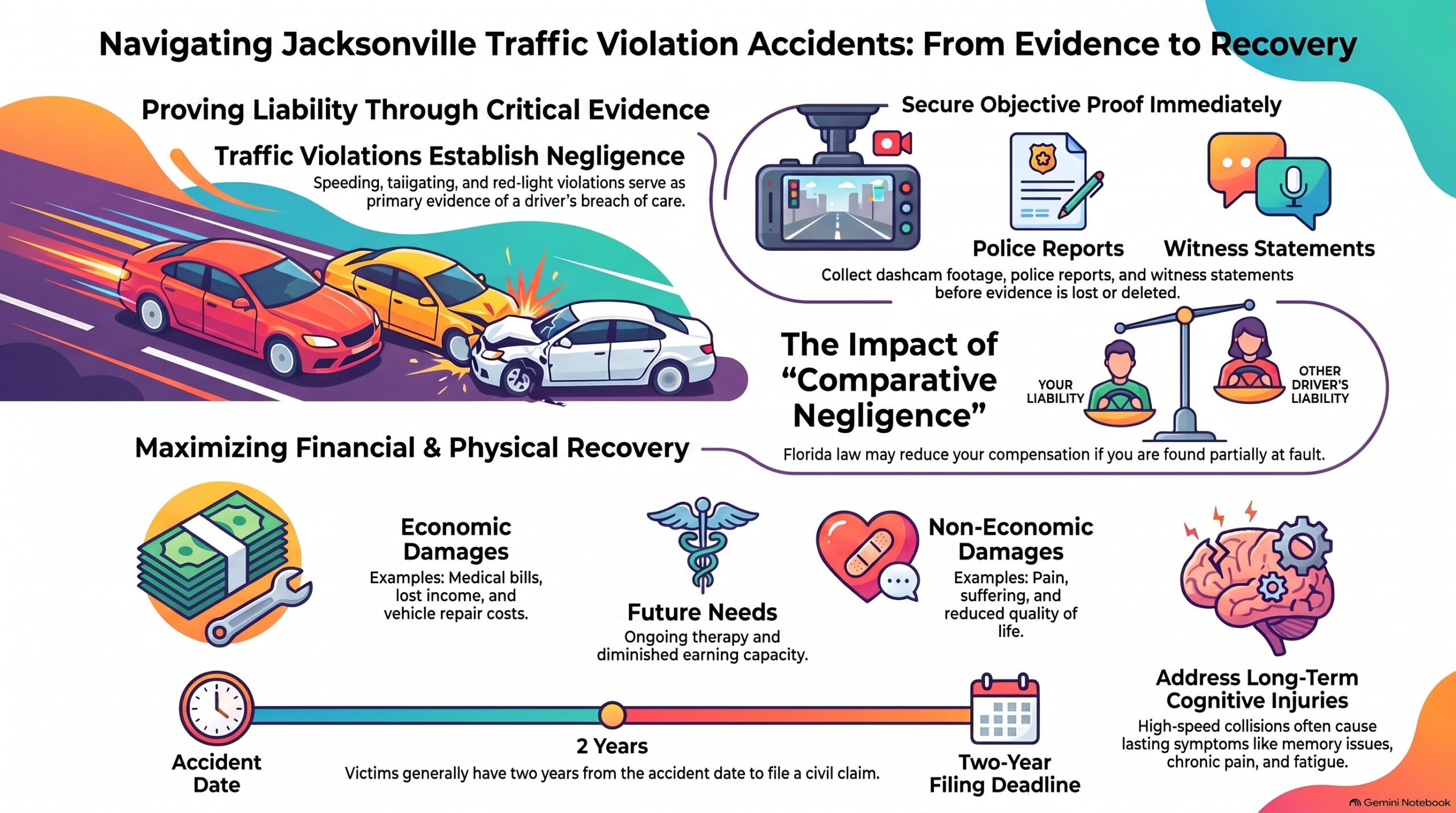
- Speeding, tailgating, red light violations, distracted driving, and unsafe lane changes may support negligence claims.
- Compensation may include medical bills, lost income, pain and suffering, and future care needs.
- Prompt legal help can preserve evidence, manage insurance communications, and protect Florida injury-claim deadlines.


How We Can Help With Your Jacksonville Car Accident Traffic Violations & Speeding Injury Claim
Explore the aftermath of a speeding-related crash with guidance focused on liability, insurance issues, and the full measure of recoverable damages. A Jacksonville car accident traffic violations and speeding lawyer may assist by evaluating the facts of the crash, identifying responsible parties, and building a claim that reflects the injured person’s losses. This support often begins with the preservation of evidence, including vehicle damage, roadway conditions, witness information, camera footage, and police records. Careful medical documentation also helps connect injuries to the collision and shows how treatment, limitations, and future needs affect daily life.
An effective Insurance claim strategy may involve reviewing coverage, addressing adjuster requests, calculating economic and non-economic damages, and responding to attempts to minimize harm. Legal counsel can coordinate with medical providers, investigators, and experts while protecting deadlines and procedural rights. This service-centered approach helps injured individuals and their families pursue accountability, stability, and resources needed for recovery.
OUR CONSULTATIONSARE FREE
START YOUR FREE CASE REVIEW

Understanding Jacksonville Car Accident Traffic Violations & Speeding Injury Cases
When a speeding violation contributes to a Jacksonville car accident, the resulting injury case often turns on how the driver’s conduct affected reaction time, stopping distance, and crash severity. These cases require careful review because the legal issue is not merely whether a citation was issued, but whether excessive speed contributed to the claimed injuries. A responsible assessment considers police reports, witness statements, vehicle damage, medical findings, and available dashcam evidence.
In many claims, disputed fault becomes a central concern, especially when each driver gives a different account of lane position, traffic signal timing, or evasive action. Attorneys, insurers, and investigators may examine whether the speeding driver had sufficient time to perceive danger and respond safely. For injured people and those assisting them, understanding this process helps protect the truth, support accountability, and ensure that compensation discussions are grounded in evidence rather than assumption or blame. Accurate documentation can strengthen efforts toward fair resolution.
Common Causes of Jacksonville Car Accident Traffic Violations & Speeding
Common causes of traffic violations and speeding in Jacksonville car accidents include distracted driving, aggressive lane changes, tailgating, and red-light violations. These behaviors can reduce reaction time, disrupt traffic flow, and increase the likelihood of serious collisions. Understanding how these violations contribute to crashes is vital when evaluating fault, liability, and potential injury claims.
Distracted Driving
Although distracted driving is often treated as a minor lapse in attention, it can create serious legal and safety consequences on Jacksonville roads. Cellphone use, in particular, may prevent a driver from observing traffic signals, slowing vehicles, cyclists, or a distracted pedestrian entering a crosswalk. These failures can lead to citations, liability disputes, and preventable injuries affecting families, workers, and public servants.
In car accident cases, evidence of distracted driving may include call records, witness statements, vehicle data, or surveillance footage. Attorneys evaluating these matters often consider whether the driver failed to exercise reasonable care under local traffic conditions. For those committed to protecting others, recognizing distracted driving as a serious risk supports safer choices, stronger accountability, and a more responsible transportation culture throughout Jacksonville.
Aggressive Lane Changes
Because Jacksonville’s major roadways often carry fast-moving and congested traffic, aggressive lane changes can quickly turn an ordinary commute into a serious collision risk. Drivers who weave between lanes, fail to signal, or cut across traffic without adequate clearance create unsafe driving patterns that endanger motorists, passengers, cyclists, and pedestrians. These actions often leave nearby drivers with limited time to react, especially on highways, bridges, and busy commercial corridors. Aggressive lane changes may also complicate fault determinations, since witnesses, camera footage, lane markings, and vehicle damage can become important evidence. For those committed to serving injured individuals and promoting safer roads, recognizing this conduct is critical. Careful investigation can help identify whether a violation contributed to the crash and support appropriate accountability under Florida law.
Tailgating And Speeding
When drivers follow too closely or exceed posted speed limits, they reduce the time and distance needed to avoid a collision. In Jacksonville, tailgating often becomes dangerous during congestion, highway merging, or sudden slowdowns caused by road work. Speeding can increase impact forces, reduce directional control, and make ordinary hazards harder to manage. Within a Traffic Stop Context, officers may evaluate following distance, estimated speed, road conditions, and driver conduct to determine whether a citation is justified. These behaviors may also contribute to Lane Departure Causes, particularly when a driver reacts late, brakes sharply, or swerves to avoid another vehicle. For those committed to protecting others on the road, lawful spacing and speed discipline remain essential practices that support safety, accountability, and responsible community travel.
Red Light Violations
Red light violations are a major source of intersection crashes in Jacksonville, especially when drivers misjudge signal timing, run yellow lights, or enter the intersection after traffic control devices require a stop. These violations often cause side-impact collisions, pedestrian injuries, and chain-reaction crashes that place lawful road users at serious risk. Traffic light signals exist to organize traffic flow, protect crossing traffic, and give pedestrians a predictable opportunity to cross safely. When drivers disregard them, they undermine Intersection safety and increase the burden on emergency responders, medical providers, and families supporting injured people. Evidence may include signal data, witness statements, camera footage, vehicle damage, and police reports. Careful review can help determine fault, identify contributing conduct, and support accountability for preventable harm on Jacksonville roads.
Don’t Wait. Call Our Florida Personal Injury Lawyers Now!


Legal Rights of Jacksonville Car Accident Traffic Violations & Speeding Injury Victims
After a crash involving speeding or another traffic violation, injured victims in Jacksonville may have the right to pursue compensation from the driver whose unlawful conduct caused their losses. These rights may include recovery for medical expenses, lost income, pain and suffering, and necessary future care.
Families serving injured loved ones should understand that careful action can protect both dignity and financial stability.
- Victims may seek legal accountability when traffic citations, witness accounts, or crash reports show negligent driving.
- Florida injury documentation, including medical records, photographs, and wage records, helps establish the full impact of harm.
- The Comparative negligence defense may reduce recovery if the injured person is found to be partially at fault.
- Prompt legal guidance can preserve evidence, address insurance communications, and support fair evaluation of damages.
These protections help injured residents pursue lawful remedies while focusing on regaining wellness, receiving caregiving support, and restoring community participation after a serious collision.
Why Do Jacksonville Car Accident Traffic Violations & Speeding Injuries Happen?
Because traffic violations often reflect unsafe choices behind the wheel, Jacksonville car accident injuries involving speeding frequently arise from preventable conduct. Drivers may exceed posted limits, follow too closely, run red lights, make unsafe lane changes, or ignore right-of-way rules. These violations reduce reaction time and increase crash force, placing occupants, pedestrians, cyclists, and roadside workers at serious risk.
Injuries also happen when drivers are distracted, impaired, fatigued, or pressured by aggressive traffic conditions. Speeding can turn ordinary roadway conflicts into severe impacts, especially near intersections, construction zones, school areas, and congested corridors. For those committed to serving injured neighbors, understanding these causes supports accountability and safer community practices.
Emergency room documentation may later reflect how crash mechanics relate to fractures, head trauma, spinal injuries, or internal harm. When insurers dispute causation or minimize fault, Insurance denial appeals may focus on violations, crash reports, witness accounts, and medical findings tied to the driver’s unsafe conduct.
What Should You Do After a Jacksonville Car Accident Traffic Violations & Speeding Injury?
After a Jacksonville car accident involving traffic violations or speeding, an injured person should seek immediate medical care, even when symptoms appear minor. The crash should be reported to law enforcement so that an official record can document the location, the parties involved, and any possible violations. Important evidence, including photographs, witness information, medical records, and insurance communications, should be preserved to support any potential injury claim.
Seek Immediate Medical Care
Following a Jacksonville car accident involving traffic violations or speeding, an injured person should seek immediate medical care, even when symptoms appear minor at first. Prompt evaluation supports Emergency response efforts and helps caregivers identify hidden injuries, including concussions, internal trauma, soft tissue damage, or spinal strain. Medical professionals can provide pain management, stabilize urgent conditions, and guide the patient toward appropriate treatment.
For those focused on serving family, coworkers, or community responsibilities, early care helps preserve health and function. It also creates reliable medical records that document injuries, symptoms, treatment needs, and limitations related to the crash. The injured person should attend follow-up appointments, follow provider instructions, and report changing symptoms. Consistent care supports recovery and supports accurate understanding of the injury’s full impact after the collision.
Report The Crash
Report the crash promptly to the appropriate law enforcement agency, especially when injuries, significant vehicle damage, suspected impairment, reckless driving, or speeding are involved. In Jacksonville, an official report helps public responders document roadway conditions, driver statements, apparent violations, and emergency needs. A person committed to protecting others should cooperate respectfully, provide accurate identification and insurance information, and avoid speculation about fault.
When officers issue or decline a citation, the resulting record may affect later claims. Traffic citation review can clarify whether speeding, unlawful lane changes, or other violations influenced the collision assessment. The report may also support a negotiation strategy by providing adjusters with a structured account from a neutral source. Reporting promptly promotes accountability, assists injured people, and preserves orderly resolution through proper civic channels.
Preserve Key Evidence
At the crash scene, preserving critical evidence can help establish how speeding, careless driving, or another traffic violation contributed to the collision. Injured motorists should photograph vehicle positions, skid marks, traffic signals, roadway debris, visible injuries, and license plates when safely possible. Witness names and contact information should be recorded with care, since their observations may later clarify disputed facts. Nearby businesses, homes, buses, or rideshare vehicles may have cameras, so prompt requests can help keep the video secure before it is routinely deleted. Dashcam footage, phone recordings, repair estimates, medical records, and police exchange forms should be stored without alteration. Submit evidence quickly to legal counsel, insurers, or investigators when appropriate. Careful documentation supports accountability, protects vulnerable people, and helps ensure that responsible parties are identified through reliable evidence.
Critical Evidence in a Jacksonville Car Accident Traffic Violations & Speeding Injury Case
Important evidence in a Jacksonville car accident traffic violations and speeding injury case often determines whether liability can be clearly established.
Essential evidence may include:
1. Police crash reports; 2. Traffic camera footage, 3. Witness statements, and 4. Vehicle damage evidence.
Each category can help confirm how the collision occurred, whether speeding or another traffic violation contributed to the crash, and the extent of the resulting harm.
Police Crash Reports
When a Jacksonville car accident involves alleged traffic violations or speeding, the police crash report often becomes one of the first records examined by attorneys, insurers, and investigators. This report may identify cited violations, driver statements, witness information, road conditions, impact points, and preliminary fault observations. Although not always conclusive, it can guide a careful review of whether excessive speed, unsafe lane changes, failure to yield, or distracted driving contributed to harm. For those committed to helping injured individuals, the report supports organized case evaluation and responsible advocacy. It may also reference injury documentation, vehicle damage, and officer observations to help connect conduct to losses. A dashcam review may further clarify disputed details, helping legal teams assess accuracy, preserve evidence, and serve clients with diligence.
Traffic Camera Footage
In many Jacksonville car accident cases involving traffic violations or speeding, traffic camera footage can provide an objective record of how a collision occurred. Cameras near intersections, highways, and public facilities may capture vehicle speed, lane position, signal compliance, and braking behavior before impact. This evidence can help clarify whether a driver ignored a red light, followed too closely, or entered a roadway unsafely. It may also show diverted traffic patterns that contributed to confusion or unsafe actions. Attorneys often act promptly to identify camera locations, request preservation of recordings, and evaluate whether footage supports an injured person’s claim. Careful review also includes confirming video authenticity, timestamps, camera angles, and continuity. When properly obtained and analyzed, traffic camera footage can strengthen accountability and support fair compensation.
Witness Statements
Traffic camera footage may show the mechanics of a crash, but witness statements can explain details the video does not capture. A bystander may describe a driver’s speed, lane changes, braking delay, distracted conduct, or disregard for a traffic signal. These accounts can help clarify disputed facts when injured people, families, insurers, or courts seek a fair understanding of responsibility. Witnesses may also identify inaccuracies in the Police report, such as misstated directions of travel or omitted observations from the scene. Careful collection of names, contact information, and recorded accounts supports later review. A witness credibility assessment considers vantage point, lighting, timing, consistency, and any relationship to the parties. In a speeding or traffic-violation injury case, reliable statements can establish the truth and support service to those harmed.
Vehicle Damage Evidence
Vehicle damage evidence can reveal important facts about speed, impact angle, braking, and the sequence of a Jacksonville crash. Crumpled panels, shattered glass, bumper intrusion, and tire marks may show whether a driver ignored a traffic signal, followed too closely, or exceeded a safe speed. For injured parties and those assisting them, preserving photographs, repair estimates, and inspection records can support a careful review of fault.
Accident Reconstruction experts often compare visible damage with roadway conditions, vehicle weights, and crash dynamics. Through Data Analysis, they may evaluate crush measurements, airbag deployment, and event data recorder information. This evidence can help clarify disputed accounts, strengthen injury claims, and guide fair assessments of responsibility. Prompt documentation is crucial because repairs or disposal may permanently remove valuable proof.
Don’t Wait. Call Our Florida Personal Injury Lawyers Now!
Long-Term Effects of Jacksonville Car Accident Traffic Violations & Speeding Injuries
Long-term injuries from Jacksonville car accidents involving traffic violations or speeding may extend far beyond the initial medical treatment. Chronic pain, cognitive impairments, and reduced physical capacity can affect employment, daily responsibilities, and overall independence. These lasting consequences often create challenges to financial recovery, particularly when ongoing care, lost income, and diminished earning potential must be addressed.
Chronic Pain Complications
Chronic pain complications may develop when high-speed collisions or traffic violation-related crashes in Jacksonville cause injuries that do not recuperate cleanly or place lasting strain on the body. Persistent neck, back, joint, or nerve pain can interfere with caregiving, employment, household duties, and community service. These conditions may require ongoing evaluations, physical therapy, injections, or carefully managed pain medication to maintain function and reduce suffering. Workplace rehabilitation may also become necessary when an injured person cannot safely return to prior duties without modified tasks, ergonomic support, or gradual reconditioning. Long-term pain can increase medical costs and limit daily independence, even when visible injuries appear recuperated. Careful documentation of symptoms, treatment, restrictions, and functional losses helps connect the crash to continuing harm and supports fair legal evaluation.
Cognitive Injury Effects
When a speeding crash or traffic violation collision in Jacksonville causes a head injury, cognitive effects may continue well beyond the initial emergency treatment. An injured person may struggle with memory issues, reduced concentration, slower processing, or difficulty organizing daily responsibilities. These changes can affect communication, caregiving, employment tasks, and the ability to follow medical instructions. Neck pain may also accompany a concussion or traumatic brain injury, increasing fatigue and limiting attention during recovery. Families, advocates, and care providers often recognize subtle shifts first, such as confusion, irritability, or difficulty completing familiar routines. Careful documentation of symptoms, medical evaluations, and functional limitations can help clarify the injury’s lasting impact. For those serving the injured, patience and structured support remain important as cognitive recovery develops over time.
Financial Recovery Challenges
Cognitive limitations after a speeding crash or traffic violation collision can also interfere with financial stability, especially when injuries reduce the ability to work, manage bills, or communicate with insurers. Families in Jacksonville may face delayed wages, rising treatment costs, transportation needs, and pressure from collection notices. Caregivers often serve by organizing records, tracking deadlines, and helping injured persons avoid decisions made under confusion or stress. Budgeting recovery plans can identify urgent household expenses, expected income gaps, and support needs during treatment. Medical expense mapping may also clarify past bills, estimates for future care, therapy costs, and medication requirements. When financial strain overlaps with injury, careful documentation can help connect losses to the crash and support a more complete recovery claim. This process promotes accountability and preserves critical resources.
Proving Liability in Jacksonville Car Accident Traffic Violations & Speeding Injury Cases
Although a traffic citation can be important evidence, proving liability in a Jacksonville car accident involving speeding or another traffic violation requires a careful review of how the driver’s conduct caused the crash and resulting injuries. A responsible legal assessment may examine police reports, witness statements, roadway conditions, vehicle damage, medical records, and available camera footage. These details help show whether excessive speed, running a red light, unsafe lane changes, or following too closely created an unreasonable risk.
Evidence challenges may arise when witnesses disagree, skid marks are unclear, or electronic data is incomplete. In serving injured individuals and their families, careful documentation supports a fair understanding of what occurred and who should be held accountable. Negotiation tactics may also depend on showing a clear connection between the violation and the harm suffered. Strong liability proof helps protect the injured person’s right to recovery while promoting accountability, safer driving, and respect for others on Jacksonville roads.
Dealing With Insurance Companies After a Jacksonville Car Accident Traffic Violations & Speeding Injury
After liability evidence is gathered, insurance companies often become the next major hurdle in a Jacksonville car accident claim involving speeding or another traffic violation. Adjusters may request recorded statements, expansive medical authorizations, or rapid settlements before the full extent of the harm is known. A careful response protects the injured person’s dignity and supports fair treatment, especially when the person’s goals are to recover, provide for their family, and continue serving others.
Medical documentation tips include keeping treatment appointments, accurately reporting all symptoms, saving discharge papers, and keeping copies of bills, prescriptions, imaging reports, and work restrictions. Consistent records help connect the crash to the injuries and reduce disputes over causation or severity.
When an insurer delays, undervalues, or rejects a valid claim without a reasonable basis, concerns about Florida insurance bad faith may arise. Legal guidance can help ensure communications remain accurate, deadlines are met, and settlement discussions reflect the real impact of the injury.
What to Expect During a Jacksonville Car Accident Traffic Violations & Speeding Injury Claim Process
A Jacksonville car accident claim involving traffic violations or speeding typically begins with an initial case evaluation, where liability, injuries, and available damages are reviewed. The process then focuses on collecting evidence, including crash reports, medical records, witness statements, and any evidence of negligent driving. After evidence is assessed, the claim may proceed through insurance negotiations, with settlement or trial options considered based on the strength of the case and the insurer’s position.
Initial Case Evaluation
During an initial case review, a Jacksonville car accident traffic violations and speeding attorney reviews the facts surrounding the collision, the cited conduct, and the injuries claimed by the injured person. This meeting helps determine whether negligence, excessive speed, or another violation may support a personal injury claim. The lawyer may assess accident location, reported statements, medical concerns, insurance coverage, and the client’s immediate needs. Evidence timelines are considered to protect important deadlines, while the impacts of traffic tickets are examined because citations may influence liability, insurance decisions, or settlement discussions. The review also helps the injured person understand potential legal options without adding confusion. A careful, service-minded approach helps ensure the claim is guided by accuracy, responsibility, and attention to the person’s recovery and future stability.
Evidence Collection Process
Once the initial case evaluation identifies the central issues, the evidence collection process begins by securing information that can prove fault, explain the traffic violation, and document the injured person’s losses. This stage may include obtaining crash reports, citation records, witness statements, intersection camera footage, medical records, and vehicle damage documentation. Dashcam recovery can be important when speed, lane position, braking, or traffic signal compliance is disputed. Careful preservation of digital metadata helps confirm when and where photographs, videos, or electronic records were created, supporting their reliability.
A Jacksonville attorney may also review roadway conditions, skid marks, debris patterns, and vehicle event data when available. Each item is organized to serve the injured person’s claim with accuracy, accountability, and respect for the facts needed to evaluate responsibility.
Insurance Claim Negotiations
After the evidence has been gathered and the injuries are medically documented, insurance claim negotiations typically begin with a careful presentation of liability, damages, and the connection between the traffic violation or speeding conduct and the collision. A Jacksonville injury claim may involve reviewing policy coverage, medical expenses, wage loss, repair costs, and future care needs. The insurer may question fault, the severity of the injury, or whether the cited violation directly caused the crash. In response, the claimant’s representative may provide records, expert opinions, and legal analysis to support a fair evaluation. This stage requires patience, accuracy, and a service-minded focus on restoring stability for the injured person. Negotiations also serve as a structured form of dispute resolution, allowing both sides to assess responsibility and compensation before further legal steps become necessary.
Settlement Or Trial Options
If insurance negotiations do not produce a fair resolution, the claim may proceed toward either settlement refinement or litigation. At this stage, counsel evaluates medical records, crash reports, witness statements, and financial losses to determine whether further negotiation serves the injured person’s interests. A renewed settlement demand may address disputed liability, speeding evidence, or the lasting effect of injuries on work and daily service to others. If resolution remains unlikely, evidence preservation becomes central, including photographs, vehicle data, surveillance footage, and expert analysis. Counsel then develops a trial strategy focused on proving negligence, causation, and damages before a judge or jury. Throughout the process, the injured party is advised on risks, timelines, and potential outcomes, allowing informed decisions with dignity, purpose, and care.
Compensation for Jacksonville Car Accident Traffic Violations & Speeding Injury Damages
When a Jacksonville car accident involves speeding or another traffic violation, the injured person may be entitled to compensation for losses caused by the collision. Recovery often depends on showing how the violation contributed to the crash, why the harm was reasonably connected to that conduct, and whether the available coverage can satisfy the claim. Careful Insurance claim documentation helps present medical records, repair estimates, witness statements, photographs, and other proof in an organized manner that supports fair evaluation.
A lawyer may also assess police reports, citation evidence, crash reconstruction details, and insurer communications to protect the injured person’s position. Mediation settlement discussions can provide a structured setting for resolving disputes without trial, especially when liability is contested or damages require careful explanation. Through disciplined preparation, the claim may be positioned to pursue appropriate payment while honoring the injured person’s need for stability, accountability, and practical assistance after a serious traffic-related collision.
Economic vs Non-Economic Damages in Jacksonville Car Accident Traffic Violations & Speeding Cases
In Jacksonville car accident cases involving traffic violations or speeding, damages are generally separated into economic losses and non-economic harm. Economic losses may include medical bills, lost income, vehicle repairs, and other measurable financial consequences tied to the collision. Non-economic damages address pain, suffering, emotional distress, and reduced quality of life, requiring careful valuation based on the facts of the accident and the severity of the injuries.
Economic Losses Explained
Economic losses in a Jacksonville car accident case refer to the measurable financial harm caused by the crash, particularly where speeding or another traffic violation contributed to the collision. These losses often include medical bills, rehabilitation expenses, prescription costs, vehicle repair or replacement, towing, rental transportation, and other Crash impact costs tied directly to the event. They may also include lost income when an injured person is unable to work while recovering or attending treatment. Wage-loss documentation, such as pay records, employer statements, tax returns, or timekeeping reports, helps establish the value of lost earnings. Careful proof of these damages supports fair accountability and helps ensure that injured individuals, families, and those assisting them can address practical needs with dignity, stability, and responsible financial planning after a serious collision.
Non-Economic Harm
Although financial records can show many losses after a Jacksonville crash, non-economic harm addresses the personal suffering that does not appear on a bill or receipt. In traffic violation and speeding cases, an injured person may endure pain and suffering that affects sleep, mobility, family duties, and community service. Emotional distress impact may include fear of driving, anxiety near intersections, grief over lost independence, or frustration caused by prolonged recovery. These harms matter because crashes can reduce a person’s ability to care for others, participate in worship, volunteer, or maintain steady relationships. A lawyer reviewing non-economic harm considers medical descriptions, personal statements, witness observations, and daily limitations. Such evidence helps show how negligent driving changed the injured person’s life beyond measurable expenses, without confusing suffering with financial loss alone.
Valuing Accident Damages
Calculating accident damages after a Jacksonville crash requires a careful division between measurable financial losses and the personal harm caused by injury. Economic damages may include emergency treatment, surgery, rehabilitation, lost wages, reduced earning capacity, and vehicle repair. These losses are supported through records, invoices, employment documents, and medical opinions. Non-economic damages address pain, emotional distress, disability, inconvenience, and loss of enjoyment, requiring credible testimony and consistent medical evidence.
In speeding and traffic violation cases, liability evidence can strengthen a claim, but valuation still depends on proof. Comparative negligence affects recovery when injured parties share fault, reducing compensation by their assigned percentage of fault. Policy limits coverage may also restrict available payment, even when damages exceed insurance resources. Careful evaluation helps protect injured people and guide fair resolution efforts.
Don’t Wait. Call Our Florida Personal Injury Lawyers Now!
When a Jacksonville Car Accident Traffic Violations & Speeding Injury Case Goes to Trial vs Settlement
When a Jacksonville car accident case involves traffic violations or speeding, the decision to settle or proceed to trial often depends on the strength of the evidence, the severity of the injuries, and the insurance company’s willingness to offer fair compensation. Settlement may serve injured people by providing faster resolution, reduced expense, and greater privacy. Settlement value factors often include medical treatment, lost income, lasting impairment, pain, vehicle damage, and the clarity of fault.
Trial may become necessary when liability is disputed, injuries are undervalued, or the insurer refuses to account for the full human and financial harm. Trial pacing strategies can help present testimony, records, and expert opinions in an organized manner that respects the court’s time and the injured person’s story. A careful legal assessment weighs risk, delay, and likely outcomes, helping the claimant pursue accountability while maintaining a practical focus on recovery and service to family, work, and community needs.
Florida Laws That May Affect Your Jacksonville Car Accident Traffic Violations & Speeding Case
Because Florida law imposes specific duties on drivers, a Jacksonville car accident involving speeding or another traffic violation must be evaluated under both injury-compensation rules and the statutes governing roadway conduct. These laws help identify responsibility, protect injured people, and guide fair accountability after preventable harm.
Florida traffic laws help determine responsibility and protect injured people after preventable collisions.
- Florida comparative fault rules may reduce compensation when an injured person shares responsibility for the crash.
- No-fault insurance may require initial medical and wage claims to be made through personal injury protection benefits, regardless of who caused the collision.
- The speed statute requires drivers to travel at a reasonable and prudent speed, considering traffic, weather, and roadway conditions.
- Evidence of traffic negligence, such as running a red light or an unsafe lane change, may support a claim that the driver breached a duty of care.
These rules assist courts, insurers, and advocates in evaluating conduct, damages, and lawful remedies.
The Statute of Limitations for Jacksonville Car Accident Traffic Violations & Speeding Injury Cases
After a Jacksonville car accident involving speeding or another traffic violation, the statute of limitations sets a strict deadline for filing an injury lawsuit. In most Florida negligence cases arising from crashes, injured people generally have 2 years from the date of the accident to file a civil claim. Missing this deadline can bar recovery, even when the other driver’s conduct was careless or unlawful.
Claim filing timelines may also be affected by related insurance notice requirements, claims against government entities, or the date an injury is discovered. Families caring for an injured loved one should preserve records, medical bills, witness information, and crash documentation promptly, as delays can weaken evidence. Criminal Charge Basics matter as well, since citations or charges for speeding, reckless driving, or other violations may support the facts of the civil case. However, criminal proceedings do not usually pause the civil filing deadline. Timely attention protects the injured person’s legal options.
How a Jacksonville Car Accident Traffic Violations & Speeding Lawyer Can Help You
A Jacksonville car accident traffic violations and speeding lawyer’s role often begins with a careful review of how the crash occurred, what laws were violated, and how those violations contributed to the injuries. This work helps injured people protect their recovery while continuing to care for family, work, and community obligations.
- Investigating fault: The lawyer may examine citations, crash reports, witness statements, roadway conditions, and speed-related evidence to identify negligent conduct.
- Documenting harm: Collecting medical records, wage information, and treatment recommendations helps connect the collision to specific losses.
- Managing communications: The lawyer can communicate with insurers, opposing parties, and legal representatives, reducing confusion and protecting the claimant from potentially damaging statements.
- Pursuing fair resolution: Through organized evidence, settlement preparation, and negotiating claim timelines, the lawyer seeks compensation that reflects medical needs, lost income, and long-term effects.
This support allows the injured person to focus on recovery and responsible service to others.
When to Contact a Jacksonville Car Accident Traffic Violations & Speeding Lawyer
When a crash involves a speeding allegation, traffic citation, or disputed right-of-way issue, an injured person should consider contacting a Jacksonville car accident traffic violations and speeding lawyer as soon as immediately medical needs are addressed. Early contact can support the preservation of evidence, including vehicle damage, roadway conditions, witness information, traffic camera footage, and police records, before important details become harder to confirm.
Legal guidance may also be appropriate when fault is unclear, injuries require ongoing care, or an insurer requests recorded statements. Timely involvement can help ensure that communications remain organized and that insurance negotiation proceeds with accurate documentation. This timing is especially important when the injured person is trying to protect a household, continue caregiving responsibilities, or serve others while recovering. A lawyer can review citations, assess available reports, and identify deadlines that may affect the claim. Prompt action helps preserve options without delaying necessary medical treatment or practical recovery decisions.
Why You Need an Experienced Jacksonville Car Accident Traffic Violations & Speeding Lawyer
Because speeding allegations and traffic violations can strongly influence liability, an experienced Jacksonville car accident traffic violations and speeding lawyer can provide crucial guidance in evaluating how those issues affect an injury claim. Skilled legal counsel can review crash reports, citations, witness statements, Insurance documentation, and medical records to identify facts that support accountability and fair compensation.
This experience is especially important when violations are disputed, when multiple drivers may share fault, or when an insurer attempts to minimize the harm suffered. A lawyer can explain how Florida traffic laws apply to the collision, connect unlawful driving behavior to the injuries, and present evidence in a manner that serves the injured person’s need for stability and support.
How to Choose the Right Jacksonville Car Accident Traffic Violations & Speeding Lawyer for Your Case
Selecting the right attorney requires careful attention to experience, case strategy, and familiarity with how traffic violations and speeding allegations affect car accident claims in Jacksonville. A qualified lawyer should understand crash reports, citation records, insurance tactics, and the practical burdens injured clients face while trying to recover.
An effective evaluation often begins with a clear Client interview strategy. The attorney should ask focused questions about the collision, medical care, witnesses, roadway conditions, and any citations issued. This process helps identify facts that may support liability or challenge unfair fault allegations.
Strong representation also depends on evidence audit planning. Counsel should promptly review police reports, photographs, vehicle damage, traffic camera footage, medical records, and insurer communications. This organized approach can protect important proof before it is lost.
The right lawyer should communicate clearly, act with diligence, and pursue accountability in a manner that supports the client’s recovery, stability, and ability to serve family and community.
About The Law Offices of Anidjar & Levine
For individuals injured in collisions involving traffic violations or speeding allegations, The Law Offices of Anidjar & Levine provides legal representation focused on liability analysis, insurance negotiations, and the practical effects of crash-related injuries.
The firm evaluates police reports, witness accounts, medical records, vehicle damage, and available traffic evidence to understand how a violation may have contributed to a crash.
Its attorneys develop a strategy for each case with attention to the client’s treatment needs, financial losses, and long-term recovery concerns.
This approach supports injured people as they work to restore stability while meeting family, work, and community responsibilities.
The firm handles communications with insurers, documents damages, and prepares claims with an emphasis on accountability.
In Jacksonville speeding and traffic violation cases, The Law Offices of Anidjar & Levine offers structured guidance to help clients make informed decisions and receive effective advocacy after a serious collision.
Frequently Asked Questions
Can a Speeding Ticket Affect My Injury Claim?
Yes, a speeding ticket can affect an injury claim because it may suggest comparative fault. An evaluator may examine evidence preservation, witness statements, insurance notice, and medical records to determine whether speeding contributed to the crash or worsened injuries. A citation does not automatically defeat recovery, but it can reduce compensation. Those serving injured people should address the ticket promptly, document facts carefully, and preserve all supporting information.
Should I Pay My Traffic Ticket After an Accident?
One should not automatically pay a traffic ticket after an accident, as doing so may be treated as an admission. The ticket deadline must still be respected, so legal guidance is prudent. Before deciding, he or she should review police report accuracy, preserve witness statements, and follow insurance steps carefully. A measured response helps protect the injury claim, supports truthful accountability, and serves others by encouraging responsible, informed conduct after a collision.
What if the Other Driver Was Racing?
If the other driver was racing, Racing liability may greatly affect fault, damages, and insurance determinations. Courts and insurers often examine whether reckless speed, competition, or coordinated driving caused the crash. Evidence collection becomes essential and includes witness statements, video footage, vehicle data, police reports, and roadway conditions. Affected individuals should promptly preserve records, cooperate with investigators, and seek qualified legal guidance to protect their claims and support accountability for community safety.
Can Red-Light Camera Footage Support My Case?
Yes, red-light camera footage may support a case by showing signal status, vehicle position, timing, and driver conduct. Its value depends on camera accuracy, chain of custody, and whether the recording satisfies admissibility standards in court. A careful review can help clarify fault, protect injured parties, and support fair accountability. Those serving the public interest should preserve footage promptly, as agencies may retain recordings for only limited periods.
Do Traffic Court Outcomes Impact Civil Claims?
Yes, traffic court outcomes can influence civil claims, but they do not automatically control them. A citation, guilty plea, or dismissal may shape evidence, witness credibility, and insurance investigations. Civil cases apply a different burden of proof, so responsibility may still be argued separately. For those seeking fair recovery and accountability, careful review of the traffic record helps clarify negligence, damages, and the service owed to injured community members.
—————————
A car accident in Jacksonville involving traffic violations or speeding can result in serious medical, financial, and legal consequences.
Victims may be entitled to compensation when another driver’s unlawful conduct causes their injuries.
An experienced Jacksonville Personal Injury Lawyer can investigate the crash, preserve evidence, assess damages, and manage negotiations with insurers.
The Law Offices of Anidjar and Levine offer informed legal guidance to injured parties seeking accountability and fair compensation after a preventable collision.